
Independently Owned, Locally Grown, Community Loved

Member for Whitsunday Amanda Camm has stepped down from her role as Minister for Child Safety and the Prevention of Domestic and Family Violence, in an effort to prioritise her health and wellbeing. The announcement comes a fortnight after Ms Camm returned from six weeks of medical leave following major surgery, with the Whitsunday MP recognising she needed more time to recover. “This has been a considered and deeply personal decision,” Ms Camm said. “Having returned from six weeks of medical leave following major surgery I have come to recognise that my recovery still has some way to go and I need to prioritise my health and wellbeing.” “I sincerely thank the Premier for the opportunity to serve in his Government and for his support of my decision.” Ms Camm added in a presser outside of Parliament house in Brisbane, that the pressures of ministerial work had contributed to her decision to step down. This follows months of intense scrutiny over conditions for children in care and domestic violence prevention funding cuts had reinforced the importance of personal safety, especially in light of the recent attack on Victorian MP Helen Haines. “Public scrutiny and accountability are essential to democracy and to our institutions,” she said. “Harassment, threats, bullying and personal vilification are not and for the past year this has been my experience.” But during her time in the role, Ms Camm oversaw reforms to strengthen child protection, support foster and kinship carers and improve responses to domestic and family violence. Central to her child safety work was the Government’s response to the Child Safety Commission of Inquiry, which delivered 52 recommendations for improving the system. “The landmark Child Safety Commission of Inquiry was the turning point for the Child Safety system,” Ms Camm said. “There is much more work to be done, while early positive signs show we have stabilised numbers in the Residential Care system for the first time.” Her work in domestic and family violence included introducing laws for electronic monitoring of perpetrators to strengthen accountability, alongside her reporting a doubling of calls answered by DVConnect to help more people access support when they needed it. “After sitting with victims of domestic and family violence over many years through opposition and then in the ministry, I’m proud to have been part of delivering change that can help save lives,” Ms Camm said. In a statement following her decision, Premier David Crisafulli praised her work across both portfolios, describing the child safety inquiry’s reform roadmap as her greatest legacy and highlighting improved access to the domestic violence helpline. “I thank Amanda for her service to Queensland firstly as a Shadow Minister and then as a Minister,” Mr Crisafulli said. “Amanda took on an enormous task with a Child Safety system in crisis and a state in need of domestic violence reform. “With her dedication, passion and commitment, she has put Queensland on the road to repair both. “I speak on behalf of the Government, the LNP and all Queenslanders in wishing her the best in her recovery.” Ms Camm will continue serving as the Member for Whitsunday, reaffirming her commitment to the local community. “I remain committed to the people of Whitsunday as their Member of Parliament, and to supporting the Premier and the Government in delivering a fresh start for Queensland,” she said.
Read the full story

By Joseph Borg, Chairman, CANEGROWERS Mackay A firmly enforced bioethanol mandate, backed by increased local sugarcane production, is essential to strengthening Queensland’s industry resilience, regional jobs, and Australia’s long‑term fuel security. Our region holds enormous potential: not only for producing sugar, but for renewable fuel, energy diversification, and national economic security. Queensland’s sugarcane industry has always been a cornerstone of regional prosperity, but today it stands at a crossroads. Global markets are volatile and input costs are rising, and at the same time, Australia faces increasing pressure to reduce emissions, strengthen domestic fuel supplies, and build more resilient regional economies. A properly enforced bioethanol mandate is one of the most effective tools we have to meet these challenges head on. Queensland already has a mandate in place, but compliance remains inconsistent. When fuel retailers fail to meet their obligations, growers, mills, and regional communities lose out on opportunities that should rightfully be flowing into our local economy. Bioethanol is not a theoretical solution: it is a proven, practical, and immediate pathway to cleaner fuel and stronger regional industries and economies. Countries like Brazil and the United States have shown that bioethanol can reduce emissions, stabilise fuel markets, and create thousands of rural jobs. In these countries, and across the world, bioethanol forms a substantially higher portion of retail fuel sales than this country has embraced. Queensland has the same potential, but only if the mandate is taken seriously and enforced with the consistency it deserves. For Mackay, the benefits are clear. Our region is one of Australia’s most productive sugarcane hubs, with the land, infrastructure, climate, and expertise to support a thriving biofuels sector. Increased demand for bioethanol directly translates into increased demand for sugarcane. That means more cane in the ground, more certainty for growers, and more throughput for our mills, and we all know that milling is a volume game. This in turn supports jobs from the paddock to the processing line. But the opportunity extends far beyond economics. A stronger bioethanol industry enhances national fuel security, reducing Australia’s reliance on imported fuels. At a time when global supply chains are increasingly unstable, producing more of our own fuel is not just smart policy, it is essential. Every litre of bioethanol produced in Queensland is a litre of fuel Australia does not have to import. To seize this opportunity, we must also focus on increasing local sugarcane production. The industry cannot diversify, innovate, or expand into new markets without a reliable and growing supply of cane. More cane means more flexibility for mills, more investment in advanced manufacturing, and greater capacity to produce not only sugar and ethanol, but also bioplastics, green electricity, and other high value products. Growers are ready to meet this challenge. With the right policy settings from all levels of government, including a robust and enforced bioethanol mandate, we can plant more cane, improve productivity, and strengthen the long‑term viability of our region. But growers cannot do it alone. We need government to ensure the mandate is upheld, fuel retailers to meet their obligations, and industry partners to continue investing in innovation and infrastructure. Mackay has the land, the people, and the expertise to lead Queensland’s next era of renewable energy and agricultural diversification. What we need now is the policy certainty that comes from a mandate that is not only written into law but actively enforced. A stronger bioethanol mandate is not just good for growers it is good for Queensland, good for regional jobs, and good for Australia’s fuel future. The time to act is now. Bioethanol can use sugarcane by-products including molasses, bagasse, mill mud as well as plant material. Image: AdobeStock
Read the full story
Marketing strategy boils down to answering four questions: What does your business want? > The goal. Who can help you achieve your goal? > The audience. What do you need to tell your audience so that they can help you achieve your goal? > The message. Where do you need to put your message so that your audience sees it? > The delivery. But how do you actually go about answering those Q’s? Like anything, the broad strokes are more complicated in practice but it’s a good framework to come back to when you’re planning your next marketing activity. Start by drilling down + identifying a measurable goal that you can work towards. Vague + lofty goals are okay, but without a clear way to track your progress, achieving them will be pretty tough. For example, tracking how many enquiries you get + the quote conversion rate can be useful info to have as a baseline. That way, if you do a targeted campaign to attract more work, you can see if it meaningfully pushed the needle in the right direction! Next, really empathise with who can help you achieve those goals. Try to build up a target customer in your head. How old are they? What do they want from your business? What are they interested in? The more specific you are, the easier it’ll be to craft messaging that will actually appeal to that person. Once you’ve defined your goal + who can help you achieve it, you’ve got to tell them how to help you do it. Your messaging should be the key information that your audience needs to know about your business. This is where you focus on not only what your customers want to know about you, but how your business is different to all the others out there. Your messaging should change based on the people you’re targeting. Lastly, the delivery. Where does your target market frequent? Do they use socials? Are they constantly listening to the radio? Do they frequent the pub on a Friday arvo? Once you know where they go, you can start figuring out how to get your message there. While socials are a great option, they’re not the only one. Billboards, coasters, or a flyer that sits on a wall somewhere are all effective options. But if that all sounds like too much effort, you can always reach out + talk to us. We’ll help you figure it out 😉 Taren McAuley
Read the full story

It’s interesting how Australian states have different rules and approaches in an attempt to achieve the best result for their citizens.
In Queensland we have the “adult crime, adult time” approach to youth offenders, an approach with which some will agree and others disagree.
Youth crime has become a significant issue throughout the country and certainly became a concern in places like Townsville and Cairns, which led to the change in how sentencing is assessed.
Victoria seems a bit different and it is true that that state has challenges that Queensland doesn’t face.
We don’t seem to have a problem with youth gangs armed with machetes so we do not require the same measures as they do in Victoria.
In Victoria there are special boxes scattered around the place where people can hand in their machetes. Getting machetes off the streets is an important part of the fight against crime in that state. The different approaches also extend to real estate, particularly with the rules around auctions.
In Queensland the seller of a property sets a reserve prior to auction but this price is only revealed to the auctioneer and the sales agent. Queensland law dictates that the reserve price cannot be revealed to any potential buyers.
The rules in NSW and Victoria are different, with Victoria’s law changing in the past week to make it compulsory that sellers make the reserve public seven days prior to the auction.
In one state it is illegal to reveal the reserve and in another state it is compulsory.
Glenn Price, director of Price Buyers Agents, told real estate online publication REB that buyers wanted to know price expectations before spending time checking out a property.
“The buyers I work with all say the same thing. They want to know what the vendor is expecting before they burn a Saturday standing in a backyard for an unrealistic number,” Price told REB.
“If buyers know the number a week out, low-ballers stay at home and people who turn up are serious bidders.”
There were only 500 auctions in Melbourne following the introduction of the new law compared to 700 the week before. Price said that some sellers might now be avoiding auctions because the don’t want to show their hand.
He also pointed out that Queensland was now out of step with Victoria and NSW. Queensland’s auction clearance rate dropped to 17 per cent and Price said the fact that bidders don’t know the reserve could be an issue.
“Based on the clearance numbers right now, Queensland’s market is a bit of trouble; that’s due to a host of other factors. Bidding blind on top of that doesn’t help,” he told REB.
It is worth noting that Price is a buyer’s agent and that role is different to that of a listing agent, who is predominantly focused on getting the best result for the seller.
The argument in favour of leaving the reserve confidential is that the open market is left to determine the true value of a property. That could be higher or lower than the reserve.
It’s also worth remembering that while a seller sets a reserve, where the property will be sold to the highest bidder above that price, the vendor still has the option of selling at a lower price.
Gardian’s auctioneer, Gordon Macdonald, will have a conversation with a seller if bidding stalls and the reserve has not been reached, which enables the vendor to assess the state of play and perhaps lookat bids below that reserve price.
Plenty of buyers would not turn up to an auction if the reserve was revealed and they felt it was too high … only to discover later that the property sold within the buyer’s budget at a price below the reserve.
Too much meddling from governments or not enough?

If you have a soft spot for big dogs and beautiful brindle coats, four-month-old Cozi might just be the perfect addition to your family.
A Mastiff cross, Cozi is an intelligent, fun-loving pup with a gentle nature and plenty of playful energy. She's particularly fond of anything involving water. With her gentle temperament and affectionate nature, Cozi has all the makings of a wonderful family companion.
Still enjoying the fun-filled puppy stage, Cozi will need a family committed to continuing her training and helping her grow into the best girl she can be.
Contact her carer Aaron on 0400 821 800 to arrange a meeting, or email LLTAGSandDogRescue@gmail.com.

Hotel Mackay's beef and chicken are halal certified.
A generous spread, a few good sides and plenty of grilled favourites to go around, Hotel Mackay has given locals yet another reason to gather around the table with the recent addition of its Mackay Butcher’s Feast, a signature sharing experience that puts the grill centre stage.
Made for those who enjoy a little bit of everything, this generous platter brings together five favourites, with plenty to share around the table.
THE MACKAY BUTCHER'S FEAST – $249
Serves 4–6 | Suggested wine pairing: Sisters Run Calvary Hill Shiraz
For those who prefer a steak of their own, the grill menu also features several individual cuts, all cooked to diners' liking and served with a choice of baked potato or chips, plus a side of their choice.
FROM THE GRILL:
Call 07 4863 0564 to book your table and tuck into Mackay’s finest Butcher’s Feast now!
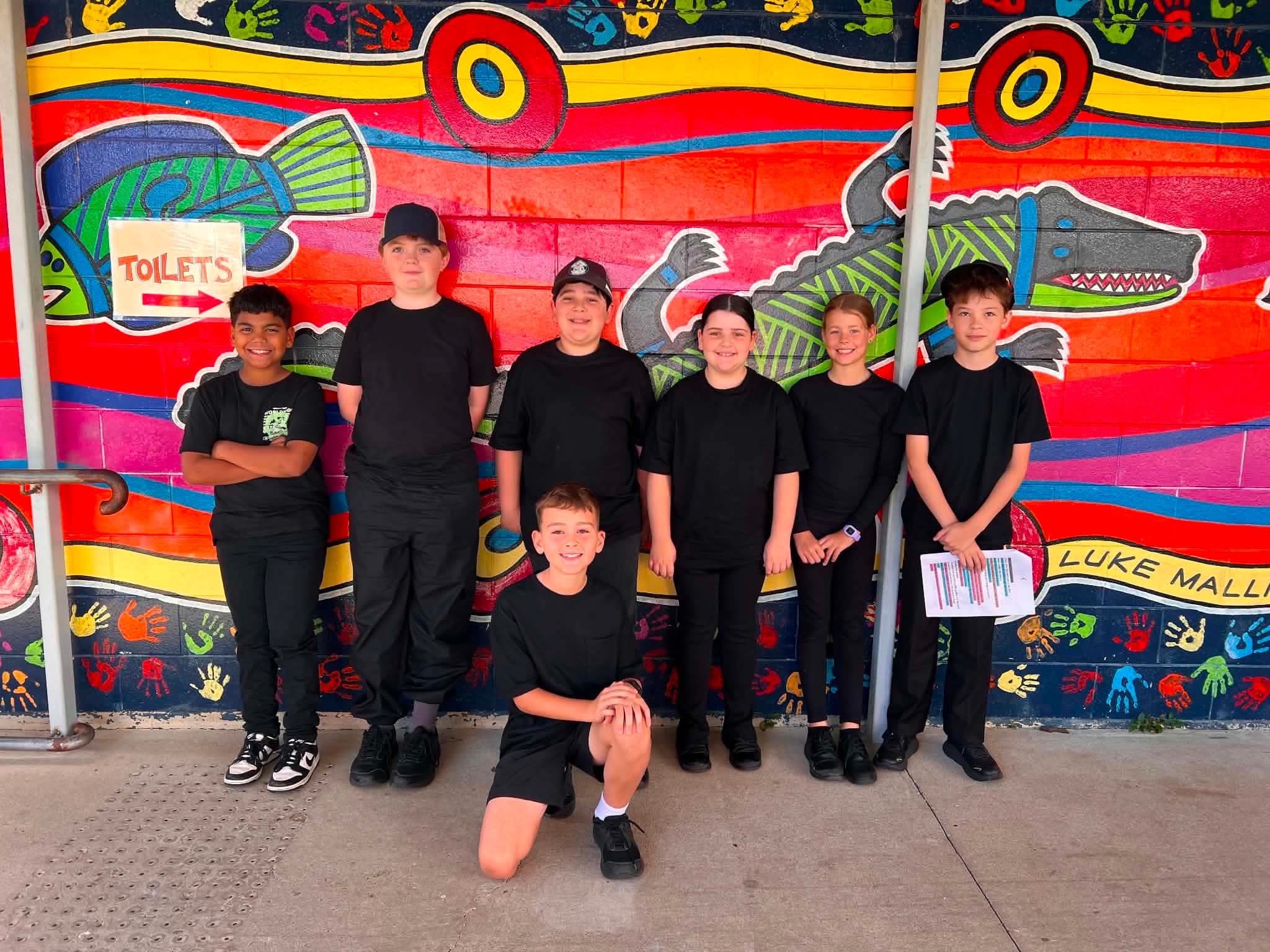
Contributed with thanks by Emmanuel Catholic Primary School Mackay
It has been an exciting time at Emmanuel Catholic Primary School Mackay, with students recently achieving outstanding results at the Opti-MINDS Challenge before coming together for a highly successfulCommunity Engagement Day.
Five Emmanuel teams participated in this year's Opti-MINDS competition, showcasing their creativity, collaboration and problem-solving abilities. Students presented innovative solutions to the Science Engineering and Media Communication long-term challenges, demonstrating weeks of dedicated preparation and teamwork.
On competition day, students also tackled the Spontaneous Challenge, which tested their ability to think critically, communicate effectively and work together under pressure.
Emmanuel students achieved excellent results, with one of the school's Science Engineering teams awarded First Place and earning an invitation to compete at the State Finals in Brisbane. Adding to the celebrations, one of Emmanuel's Media Communication teams received Honours in recognition of their creative and engaging presentation.
Opti-MINDS is a creative problem-solving competition that encourages students to think, create and communicate. Participants work collaboratively in teams to solve a long-term, open-ended challenge and complete a spontaneous challenge on competition day. The event provided a wonderful opportunity for students to develop confidence, resilience and teamwork skills while having fun and learning alongside their peers.
The excitement continued with Emmanuel's annual Community Engagement Day, which lived up to its theme of connection, participation and enjoyment.
WOW! What a fabulous Friday!

The day was a tremendous success, with students enthusiastically participating in a wide range of engaging and enriching activities. From Ballet, Jazz and Hip Hop to basketball, Body Balance, Cutters Care and F45 Fitness, there was truly something for everyone.
Creative minds immersed themselves in Lego, pottery, beading, scrapbooking, chalk drawing, painting, arts and crafts, keyring making and chatterboxes, while others explored sensory activities and enjoyed time in the school's chill-out zones.
A highlight of the day was the sensational Scavenger Hunt, which saw students working alongside their teachers in class groups to solve clues, complete challenges and enjoy quality time together.
Throughout the day, students demonstrated positive attitudes, curiosity, teamwork and problem-solving skills as they challenged themselves, learned new skills and strengthened connections with others. The activities provided valuable opportunities for students to step outside their comfort zones, discover new interests and celebrate the importance of community.
A very special thank you goes to Emmanuel's community partners and staff who generously shared their time, expertise and talents to make the day possible. Their support helped create a memorable experience for students and contributed to the success of a truly wonderful event.
The recent achievements at Opti-MINDS and the success of Community Engagement Day reflect the vibrant spirit of Emmanuel Catholic Primary School Mackay, where students are encouraged to learn, create, collaborate and thrive. Congratulations to all students involved, and best wishes to the First-Place Science Engineering team as they prepare to represent Emmanuel at the State Finals in Brisbane.

PRICE: Contact Agent
It's Addressed: With an exceptional outdoor space and a large, powered shed this near new home is perfectly suited to families seeking a lifestyle with nature on your doorstep. This impressive 4 bedroom, 2 bathroom home, combines modern living with an outstanding outdoor setup. Positioned high on a hill, with an excellent outlook, the property offers privacy, established fruit trees, paddocks and 300m of private creek frontage.


INSIDE AT A GLANCE


OUTSIDE AT A GLANCE


UTILITIES:

Contact Robyn Agius, your local Area Specialist to arrange a private inspection or request further information.
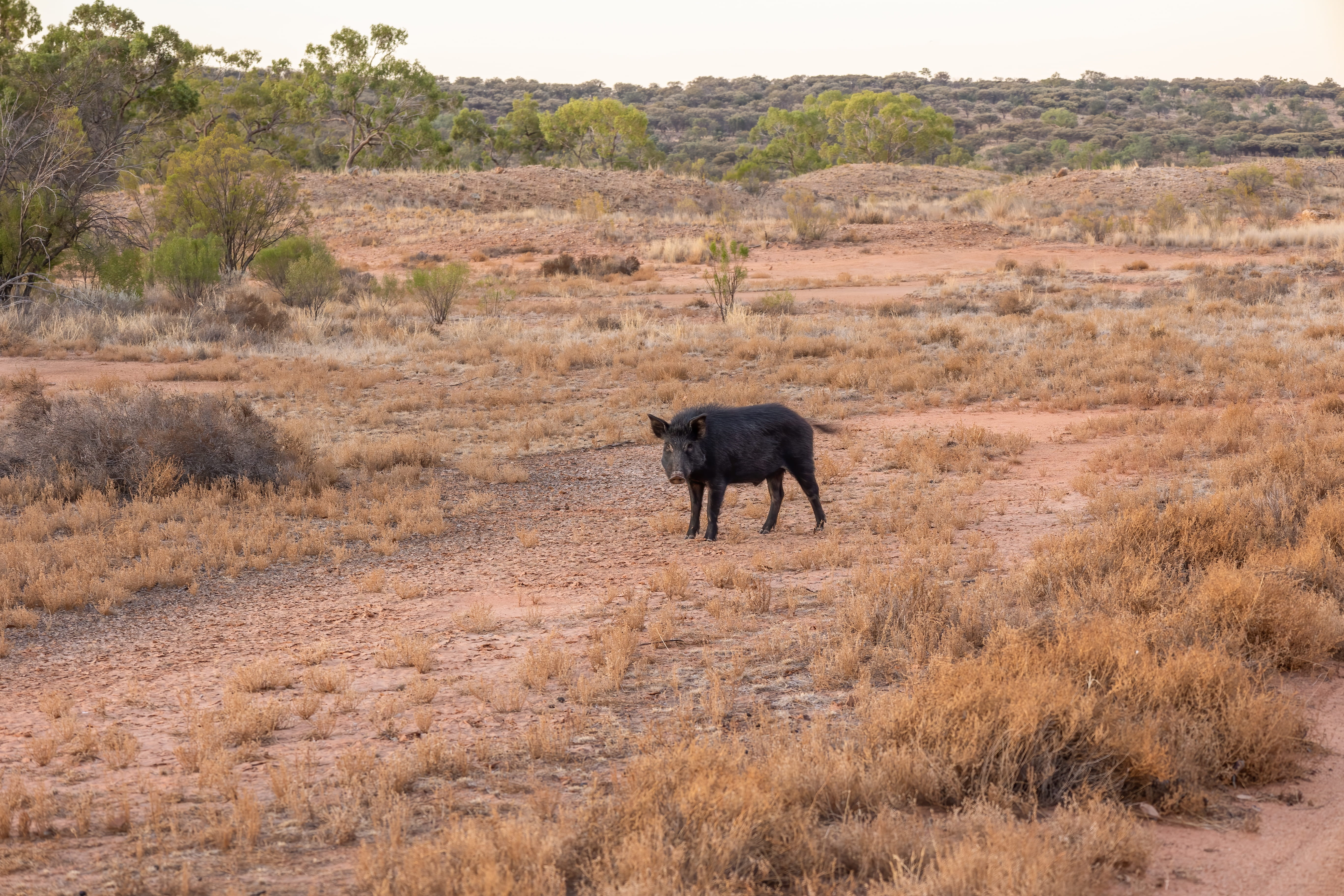
Photo source: Shutterstock
A planned aerial 1080 baiting program targeting feral pigs across Eungella National Park and Cathu State Forest has been postponed, with Mackay Regional Council to hold a public information session before the program is rescheduled.
Originally scheduled for 14th October, the program was postponed due to forecast adverse weather conditions, with the delay also providing an opportunity for further community consultation following concerns raised about the proposed baiting measures.
Member for Mirani Glen Kelly MP said he had been working with relevant authorities to ensure community concerns were heard and residents had access to more information about the program.
“I have been advised that the program includes environmental risk assessments and operational safeguards designed to minimise impacts on native wildlife while addressing the significant damage caused by feral pigs,” Mr Kelly said.
“It is important that we continue to manage feral pig populations effectively while ensuring residents and landholders are properly informed and have an opportunity to raise any concerns.
“I appreciate the cooperation of those involved in allowing further consultation to take place and encourage the community to engage with Mackay Regional Council as it coordinates the next steps.
Council is coordinating the program in partnership with local landholders, with the Queensland Parks and Wildlife Service (QPWS) providing funding support.
Mackay Regional Council said landholders had been requesting feral pig management programs following increased pig activity after successive wet seasons.
The pests have been causing significant damage to properties, agricultural land and the environment, while also posing a threat to primary industry operations across the area.
Environmental risk assessments conducted by the State Government, alongside operational safeguards, have been designed to minimise impacts on native wildlife while addressing the damage caused by feral pigs.
Aerial baiting forms part of a broader coordinated syndicate program, which also includes ground-based control measures such as trapping and shooting.
Mr Kelly acknowledged the importance of managing feral pig populations while ensuring residents and landholders had an opportunity to understand the proposed measures and raise any concerns.
With the postponement, council will work with the Department of Environment, Tourism, Science and Innovation to organise a public information session at Eungella before the program is delivered.
Residents and landholders are encouraged to engage with Mackay Regional Council as it coordinates the next steps.
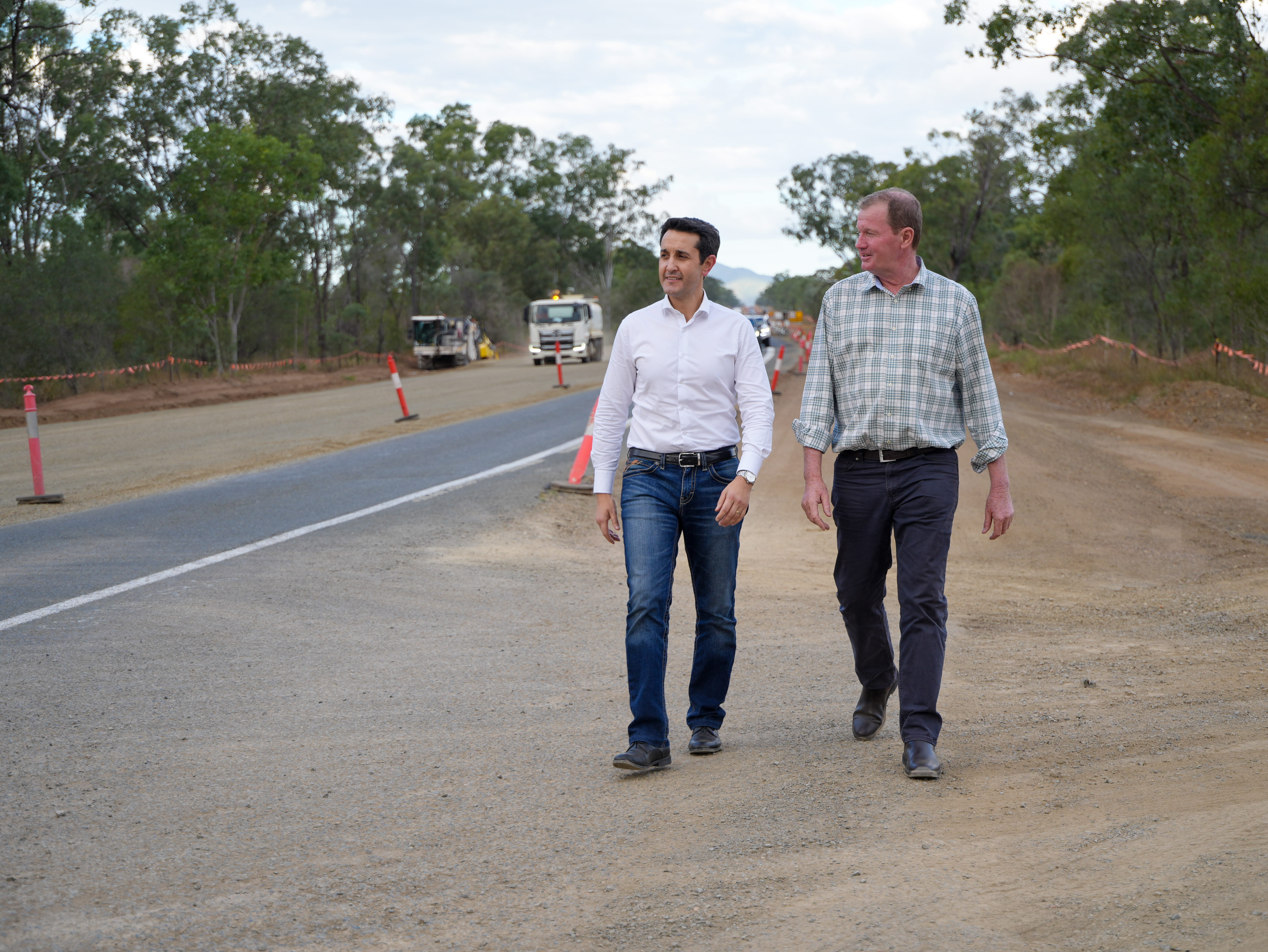
Premier David Crisafulli and Glen Kelly MP at a recent visit on the Bruce Highway between Sarina and Marlborough
By State Member for Mirani Glen Kelly MP
Across the Mirani electorate, roads are more than just a way of getting from A to B. They are the lifelines connecting our communities, supporting local industries and keeping our regional economy moving. Whether it’s families travelling to school, truck drivers transporting goods or tourists exploring our beautiful region, we all rely on safe and reliable roads.
That is why improving our road network has been one of my priorities since being elected. Over the past two years, the Crisafulli Government has been getting on with the job of delivering much-needed road improvements across Central Queensland.
One project locals will have noticed is the microsurfacing works along Mackay–Eungella Road. Our Main Roads crews have been making the most of the warmer months to undertake microsurfacing works across the region, helping extend the life of our roads and improve driving conditions. Microsurfacing involves applying a thin protective layer over the existing road surface. It helps seal minor cracks, prevent water damage and extend the life of the pavement, reducing the need for more expensive repairs.
Importantly, microsurfacing also improves road safety by restoring surface texture and providing better tyre grip, particularly in wet conditions. It's a practical, cost-effective way of maintaining our road network. I appreciate motorists' patience while these works have been underway. Line marking is scheduled for completion by the end of November, weather permitting.
Further south, major upgrades to the Bruce Highway near of Marlborough are well underway. Anyone who regularly travels the Bruce Highway knows how important these improvements are, particularly given the volume of heavy vehicles using this vital freight corridor.
We are also seeing welcome progress along the Peak Downs Highway, with new overtaking lanes and widened pullover bays under construction. These practical improvements will make a real difference to motorists sharing the road with heavy vehicles travelling between Mackay and Moranbah.
While these projects represent important progress, I recognise there is still plenty of work ahead. One road I will continue advocating for is Hay Point Road, which carries significant traffic supporting our coal export terminals.
Road investment isn't simply about bitumen and bridges. It's about road safety, productivity, regional development and keeping our communities connected. After a busy first two years of the Crisafulli Government, we are seeing real progress.
There is still much to do, and I will continue pushing to ensure Mirani receives its fair share of road funding. Regional Queensland deserves roads that are safe, reliable and built for the future.

By Michelle Landry, Federal Member for Capricornia
Early detection saves lives, and when it comes to breast cancer, recognising the warning signs and attending regular screenings can make all the difference.
Pink Ribbon Day is an important reminder for women across Central Queensland to prioritise their breast health and take advantage of the screening services available.
Breast cancer affects thousands of Australian women and their families every year but detecting it early can significantly improve treatment options and survival rates.
I encourage eligible women to access BreastScreen Queensland's free mammogram services and speak with their GP about any changes or concerns.
Living in regional Queensland should never be a barrier to accessing potentially lifesaving healthcare.
Pink Ribbon Day is also an opportunity to celebrate survivors, remember those we have lost and acknowledge the dedicated healthcare professionals, researchers and volunteers supporting families through breast cancer.
Together, we can raise awareness, encourage screening and save lives.

Sarina Landcare celebrated 25 years of environmental conservation with a community fun day at Sarina Community Native Gardens, bringing locals and community groups together last Saturday. Photo source: Sarina Neighbourhood Centre
Environmental awareness and local connections were at the heart of Sarina Landcare's 25th anniversary celebrations, with a Community Fun Day held at Sarina Community Native Gardens last Saturday.
Locals were invited to explore the gardens, visit community stalls and enjoy a morning of family-friendly activities.
Mayor Greg Williamson joined the celebrations, recognising Sarina Landcare's contribution to the region over the past quarter-century.

“For a quarter of a century, Sarina Landcare has played an important role in protecting and restoring our local environment, bringing the community together and encouraging sustainable land management,” Mayor Williamson said.
“Congratulations to everyone involved, past and present, on this fantastic milestone. Thank you to the dedicated volunteers and supporters who continue to make such a positive contribution to our region.”
A representative from Sarina Neighbourhood Centre also thanked the many community groups, organisations and businesses that contributed to the event.
Those involved included Sarina Landcare Catchment Management Association, Sarina Scout Group, Mackay and District Turtle Watch, Reef Catchments, Sarina 4WD and Outdoor Centre, Conservation Volunteers Australia, Sarina Neighbourhood Centre, Sarina Art Gallery, Linda's Taxidermy Display and Wildlife Whitsundays.

Mackay Regional Council's Pest Trailer and Parker the Library Van also attended, while the Lions Club provided food and Lil Daisy Van supplied coffee.
Mayor Williamson and Councillor Ann Baker were acknowledged as special guests, with the event supported by NQ Bulk Ports, Mackay Regional Council, Community Bank Sarina Bendigo Bank and Member for Mirani Glen Kelly.
The celebration marked 25 years of Sarina Landcare's work in the region, recognising the volunteers, supporters and community organisations who continue to contribute to its environmental efforts.

(L-R) Celebrating 25 years of Sarina Landcare : SLCMA Coordinator Saskia von Fahland, Community Bank Sarina Customer Relationship Officer Kylie Schulze, Community Bank Sarina Board Director
Contributed with thanks by Community Bank Sarina Bendigo Bank
For the past 25 years, Sarina Landcare Catchment Management Association (SLCMA) has worked to protect and improve our local environment, bringing together landholders, volunteers, schools and the wider community.
Through its community nursery, school support programs, volunteer opportunities and land management advice, SLCMA assists the community in understanding, protecting and caring for our natural resources.
Community Bank Sarina Bendigo Bank has proudly supported SLCMA with more than $40,000 in Community Grants over many years. This support has enabled nursery improvements and expansions, including solar panels, an undercover workspace for volunteers and visitors and upcoming upgrades such as stainless steel propagating benches, a wash bay and electrical improvements.
“It’s very rewarding to see the positive impact this support has in the community and we look forward to seeing SLCMA continue its great work for the Sarina community for many years to come,” Mrs May said.
The community nursery provides native plants and hands on learning opportunities for schools, landholders, volunteers and community groups to care for our local environment.
Most recently, a Community Grant supported the upgrades and improvements to the Sarina Community Native Gardens including weatherproofing the walking track and installing educational signage to improve visitor experience and accessibility. These upgrades were officially launched at a community fun day celebrating the organisation’s 25-year milestone.
The event brought together local landholders, volunteers, families and the wider Landcare community, with interactive activities, community displays and wildlife experiences showcasing the garden and SLCMA’s ongoing work.
SLCMA Coordinator Saskia von Fahland said ongoing support from Community Bank Sarina had “helped build the organisation’s capacity, improve facilities and create more opportunities for community participation.”
“Upgrades to the nursery have provided a more practical workspace for volunteers and opened up opportunities for workshops, hands-on native plant propagation and youth education programs, helping more people connect with Landcare and learn practical environmental skills,” Ms von Fahland said.
For more information visit SLCMA’s Facebook page. To see how Community Bank Sarina supports local groups and initiatives that make a lasting difference, follow them on Facebook, LinkedIn or Instagram.

OPINION PIECE By Andrew Willcox MP, Federal Member for Dawson
Apparently, when the Albanese Government doesn't like the answer, it simply asks the question again.
Less than 24 hours after the Senate delivered a resounding rejection of Labor's assault on older Australians' private health insurance rebates, Health Minister Mark Butler was back in Parliament introducing the very same legislation.
The arrogance is astounding.
Yesterday, the Coalition, the Greens and independent senators stood together to stop Labor's rebate cuts, with the Senate voting 38 to 23 to remove the Bill from its agenda.
Today, Labor decided that message wasn't worth listening to.
Not the Senate. Not its own concerned backbenchers. Not the thousands of Australians who signed the Coalition's petition. Not the health organisations warning about the consequences.
Just who does this Government think it answers to?
Labor has turned parliamentary democracy into a game of political stubbornness, where the Senate's verdict is treated as an inconvenience and the only opinion that matters is the Government's own.
Across Dawson, I've personally responded to hundreds of emails and met with older constituents terrified of what these changes could mean for their finances.I promised them I would fight this assault on their retirement security. And the Coalition has fought it every step of the way.
Labor's proposal would remove the additional private health insurance rebate available to Australians aged over 65.
For some older couples, that could mean paying more than $1,600 extra every year.
Around 3.2 million older Australians would be affected, including pensioners and self- funded retirees who have spent decades planning carefully for retirement.
These are people with limited disposable income.
They are Australians who have worked, saved, paid their taxes and maintained private health cover, often precisely because they don't want to become another patient waiting months for treatment.
Yet Labor wants them to help deliver $3 billion in Budget savings over four years.
The Government calls this equity. I call it an assault on older Australians who have done everything right.
And the consequences won't stop at their bank accounts.
The Government's own modelling reportedly anticipates up to 78,000 fewer older Australians holding private health insurance by 2029–30 than otherwise expected.
Where will many of those patients go?
Into public hospitals already struggling with elective surgery waiting lists, ambulance ramping and exhausted healthcare workers.
This is cost-shifting dressed up as reform. State governments, taxpayers, nurses and doctors will be left managing the consequences.
Minister Butler called the Senate's decision an "absolute travesty".
I would suggest the real travesty is expecting pensioners to shoulder another financial burden while refusing to reconsider a policy that has attracted such widespread opposition.
The Coalition attempted to stop the legislation being brought back through the House this morning, with Dan Tehan moving to suspend standing orders. Labor pressed ahead.
It's Groundhog Day, except older Australians are being asked to pay for every repeat.
There is a disturbing habit developing in this Government: announce a controversial policy, dismiss the warnings, ignore the backlash and press ahead regardless.
What sort of Government looks at a pensioner struggling to afford their health insurance and decides the problem isn't that they're paying too much, but that the Government isn't taking enough? Older Australians deserve better than a government that treats their concerns as an inconvenience.
The Senate has spoken. The community has spoken. Labor should listen.
And if this Government insists on continuing its assault on older Australians' retirement security, the Coalition will continue fighting it every step of the way.

Being prepared at home can make all the difference if faced with a storm, fire or flood event.
Disaster preparedness starts with a conversation – and on Saturday at Caneland Central, I had the opportunity to help get those conversations going.
As part of Get Ready Queensland Week, I joined the team handing out disaster preparedness packages and encouraging residents to think about how ready their households would be if severe weather came our way.
Here in the Mackay region, we know that storms, cyclones and flooding and or fire can disrupt our lives. We cannot control the weather, but we can take practical steps now to help protect ourselves, our families and our neighbours.
The packages are a useful starting point, but the real value comes from taking them home, reading the information and putting a plan into action.
Think about what your household would need if the power went out or you were unable to get to the shops. Drinking water, non-perishable food, a torch, batteries, essential medication and copies of important documents are all things to consider. Remember to plan for your pets, too.
Have a conversation with your family about how you would stay in touch, where you would go if you needed to leave home and who might need an extra hand.
Preparedness is also about looking out for one another. An older neighbour, someone living alone or a person with limited mobility may appreciate help checking supplies or understanding their options.
Council and emergency services have important roles in disaster management, and household preparation helps support that work. Taking responsibility for the things we can do now puts our whole community in a stronger position.
Thank you to everyone who stopped for a chat on Saturday, and to the staff and volunteers helping our region prepare.
My encouragement is simple: take a little time this week to check your supplies, talk through your plan and make sure you know where to find official warnings and updates.
A little preparation can make a big difference when it matters most.
If you’d like to catch up with your Mackay region councillors in person, then come along to a Let’s Chat – Council Connect session. The next one is at the Calen and District War Memorial Hall on November 3 from 5pm to 6pm.

My daughter has spent this year on her school's senior leadership team, following a selection process that was both thorough and arduous.
Six weeks of leadership training, speeches, interviews, longlists, shortlists and finally, an election by their peers.
There were nerves, tears, courage and heartbreak. You don't put yourself through that particular wringer unless you really want the role.
Watching these young people represent their school, support their peers, and now mentor the next group has been wonderful. They have grown, and they filled these roles with such joy.
It got me thinking about leadership. If you compare the extraordinary process these young people went through to become leaders to the people in business who have found themselves managing teams by accident, or with considerably less preparation.
Someone is brilliant at their job. They know the systems, understand the numbers and have earned their stripes, so they get promoted and are suddenly responsible for people. Then there's small business, where leadership comes with the keys. You're the boss, HR department, bookkeeper and the person everyone looks to for direction. Ready or not.
Last Thursday, Mackay Region Chamber of Commerce held its AGM, including our committee election. Twelve people nominated, with around one hundred members and guests in the room. There was that familiar element of putting yourself forward and hoping your peers would choose you.
It's a brave thing to put yourself forward for election, whatever your age. And the willingness to do so deserves recognition, regardless of the result. Congratulations to our newly elected committee andthank you to everyone who nominated. Volunteering your time and experience to represent our business community deserves recognition.
Watching these elections unfold has reminded me that people arrive at leadership in different ways. Some chase it. Some stumble into it. Others have it thrust upon them. But however you become a leader, knowing how to lead people is something worth learning.
And just as we invest time in identifying future leaders, we should invest in helping them become good ones. After all, if we can spend six weeks preparing teenagers to lead their school, surely we can find a little time to help adults lead their teams.
Ellen Madden
Business Engagement, Events and Communications Manager
Mackay Region Chamber of Commerce
www.mackayregionchamber.com.au

Reclaim the Night is an annual community event bringing people together to raise awareness of gender-based violence and sexual assault, while standing in solidarity for safer homes and public spaces.Photo source: Reclaim the Night - Mackay
Mackay residents are encouraged to come together, stand in solidarity and help raise awareness of gender-based violence and sexual assault at this year's Reclaim the Night event.
Hosted by Zonta Club of Mackay, alongside community partners Mackay Women's Services, The Neighbourhood Hub and The Salvation Army, the annual family-friendly gathering will take place at Bluewater Quay on Friday 30th October, from 5pm to 6.30pm.
Bringing the community together through education, shared experiences and a peaceful march, Reclaim the Night aims to make a stand against gender-based violence and sexual assault in both homes and public spaces.
The event provides an opportunity for people of all ages to show their support for those affected, acknowledge the importance of safer communities and reinforce the message that everyone deserves to feel safe, respected and protected.
The evening will begin at 5pm with a Welcome to Country by Aunty Deb Clark, followed by an opening address from Zonta Club of Mackay President Shirl Russell.
Senior Sergeant Kane Hilderbrand, Officer in Charge of the Domestic Family Violence and Vulnerable Persons Unit, will also address attendees, alongside Barb Hill.
A peaceful Reclaim the Night march will follow, giving community members the opportunity to walk together in support of the cause and demonstrate their commitment to raising awareness.
Entertainment will be provided by local performer Maya Batra, while the Walkerston Rotary Club will offer a free sausage sizzle for attendees.
Originating in Leeds, England, in 1977, Reclaim the Night has grown into a global movement, with events held annually on the last Friday of October, at the end of sexual violence awareness month.
Over the years, the movement has continued to provide communities with an opportunity to speak out against violence, challenge attitudes and encourage meaningful conversations about safety, respectand equality.
For Mackay's organising partners, the event is also an opportunity to bring local services, organisations and residents together behind a shared cause, while ensuring the message reaches beyond the evening itself.
Community members are encouraged to attend, bring their families and friends, listen to the speakers and take part in the peaceful march.
Whether attending to show support, learn more or stand alongside those who have experienced violence, every voice and presence can help strengthen the community's message.
WHAT: Reclaim The Night March
WHEN: Friday, October 30, 5pm To 6.30pm
WHERE: Bluewater Quay, Mackay
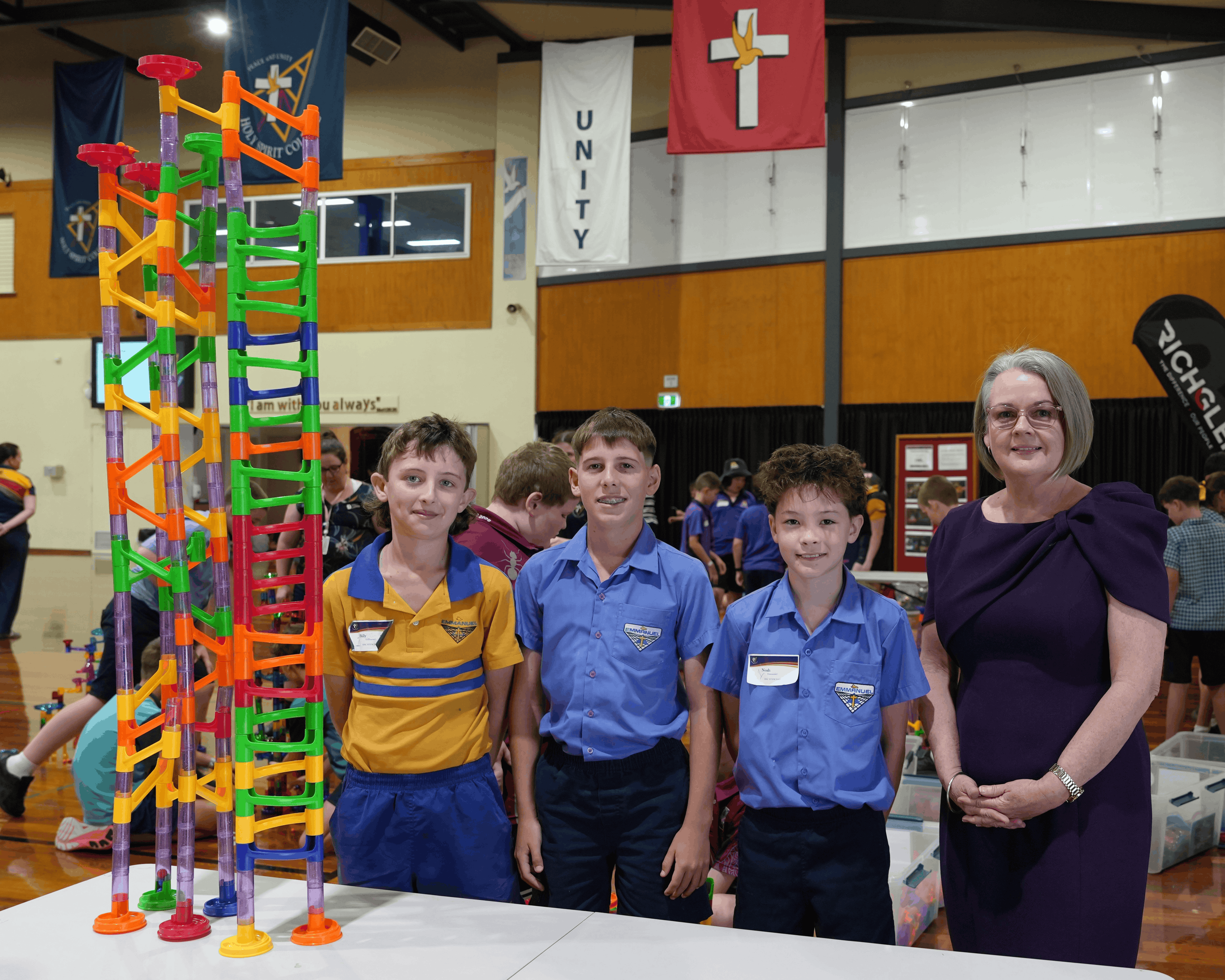
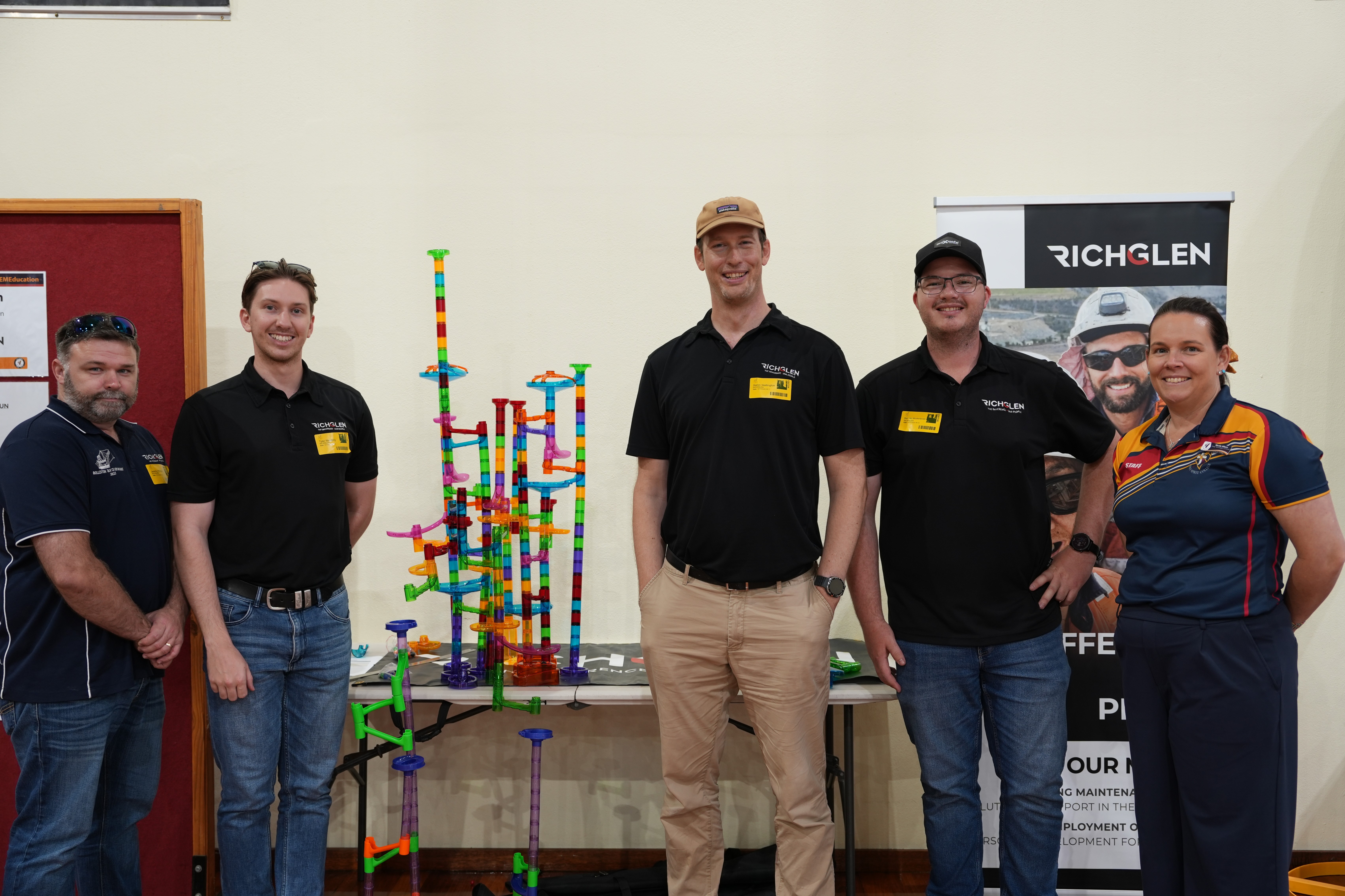
Students from across the Mackay region put their engineering and problem-solving skills to the test during Holy Spirit College's STEM Challenge Day at the Father Bucas Centre, supported by industry partners and the Queensland Minerals and Energy Academy. Photo supplied
Holy Spirit College Mackay is strengthening its reputation as a leader in innovative STEM education, inspiring the next generation of engineers, designers and problem-solvers through a hands-on program that has welcomed more than 85 students from across the region.
Throughout the year, the College has hosted aspiring engineers from 13 Catholic and Education Queensland primary schools, providing students with engaging opportunities to explore science, technology, engineering and mathematics through practical, real-world challenges.
The College's Father Bucas Centre has been transformed into a vibrant hub of creativity and innovation, with students immersed in activities ranging from Structural Engineering and Robotics to Aerodynamics and Energy in Motion.
Participants have designed and constructed treehouses, programmed LEGO robots, tested paper plane designs and engineered intricate marble runs, culminating in a Prototype Challenge where students showcase and test their creations.
These experiences encourage critical thinking, problem-solving, communication, and teamwork while showing how STEM concepts apply to everyday life.
Holy Spirit College Principal Mrs Alison Wales said “STEM education is most powerful when students can take an idea, test it, challenge it and ultimately see the outcome of their thinking”.
“We are proud to facilitate and welcome students from across the Mackay region, supporting the opportunity in how STEM learning can translate into real-world skills and exciting future career pathways.”
Industry partners Richglen, Dalrymple Bay Coal Terminal (DBCT), Key Solutions Group and FMS Group supported STEM Day, engaging with students throughout the event and sharing insights into their industries.
Richglen Electrical Operations Manager Jeremy Phillips said "today's students are tomorrow's engineers, electricians, technicians and leaders”.
“If we can help spark an interest in STEM and show young people the opportunities available right here in our region, then we're making a meaningful investment in Mackay's future,” Mr Phillips said.
"We're proud to have members of our electrical team involved on the day, working alongside students and sharing real-world experiences that bring STEM learning to life."
Holy Spirit College is proud of its approach to STEM education, providing modern facilities, dedicated learning spaces and digital technologies that support students in their learning.
For further information about Holy Spirit College’s curriculum, facilities and approach to learning, visit www.hsc.qld.edu.au.
Publishers Indemnity. Any individual or entity that places advertising, supplies copy material, or submits editorial content to Core Life Publishing agrees and undertakes to ensure that all such material:- Does not infringe upon any copyright, trademark, or other intellectual property rights;- Is free from any content that could be considered defamatory, libelous, or slanderous;- Does not infringe upon any rights related to privacy or breach of confidence;- Contains no obscene, indecent, or otherwise unlawful material;- Complies fully with the Trade Practices Act and all other applicable laws, regulations, or statutes.Furthermore, by submitting or placing such material, these individuals or entities agree to indemnify and hold harmless the publisher, Core Publishing and Events Pty Ltd, and/or its agents from and against any and all investigations, claims, demands, liabilities, damages, costs, or judgments arising out of or in connection with the material provided. All material is believed to be accurate at the time of printing and remains the copyright of Core Publishing and Events Pty Ltd.
© 2026 Mackay and Whitsunday Life Pty Ltd.
