
Independently Owned, Locally Grown, Community Loved
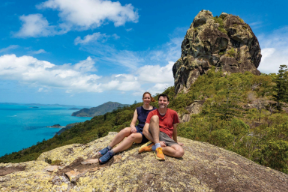
A new guide to walking the Whitsundays has been launched by the family behind the region's much-loved boating "Bible", following more than a decade of research, island adventures and one broken ankle. Published by Windward Publications, Walking The Whitsundays – A Guide to 45 Island and Mainland Walks is a 304-page guide covering 45 walks across the Whitsunday islands, Airlie Beach, Conway National Park and Bowen. Designed as the hiking companion to 100 Magic Miles, it features maps, photographs, elevation profiles and practical information, alongside insights into the region's history, wildlife, geology and culture. Tourism Whitsundays CEO Tim Booth said the book encourages visitors and locals to discover another side of the region. "Walking The Whitsundays encourages people to slow down, explore more deeply and experience a different side of the landscapes, stories and natural beauty that make this region so special," Mr Booth said. Anthony Colfelt said the book grew naturally from a lifetime of walking the Whitsundays with his family. "The walks have always been a big part of our sailing trips," he said. "We have long wanted to include more about them in 100 Magic Miles, but quickly realised they deserved a book in their own right because they are not just for boaties. These walks are for everybody." The guide includes national park island walks, resort island walks and selected mainland tracks around Airlie Beach, Conway National Park and Bowen, including the Whitsunday Ngaro Sea Trail and the new Ngaro Track on Whitsunday Island. The Colfelts began researching the project in 2011, exploring the islands by boat, camping and walking as many tracks as possible while continuing to update new editions of 100 Magic Miles. The project wasn't without setbacks. While photographing Coral Cove on Hamilton Island, Emma Colfelt slipped on a wet rock and broke her ankle, requiring surgery and a lengthy recovery. Much of the book's writing and historical research was completed from bed while she recovered. "Having the book to focus on helped me cope with the pain after surgery and the weeks stuck in bed," she said. Anthony Colfelt said the accident became part of the story behind the book. "It was a reminder that this book was a real family effort," he said. "Researched on foot, refined around the kitchen table and, at one point, written from a sick bed." The guide also explores the Whitsundays' rich history, from the enduring connection of the Ngaro, Gia and Juru people to Country through to early settlers and the pioneers of island tourism. Alongside local stories and wildlife observations, it features previously unpublished historical photographs and images by photojournalist Sharon Smallwood, capturing a side of the region many visitors never experience. Emma Colfelt said she hoped the guide would encourage more people to explore the Whitsundays on foot. "We hope the book inspires people to explore, helps them know what to expect, and enriches their experience of this special place," she said. Walking The Whitsundays – A Guide to 45 Island and Mainland Walks is available now for $49.95 from The Beach Book Boutique in Airlie Beach, News Whitsunday in Cannonvale, Trader Pete's on Hamilton Island, selected local outlets and online at 100magicmiles.com. Photo Captions: Left: Emma and Anthony Colfelt at Whitsunday Cairn, one of the walks featured in the Walking The Whitsundays book. Photograph credit: Felix Colfelt Right: Emma after breaking her ankle during research for the book. Photograph credit: Windward Publications
Read the full story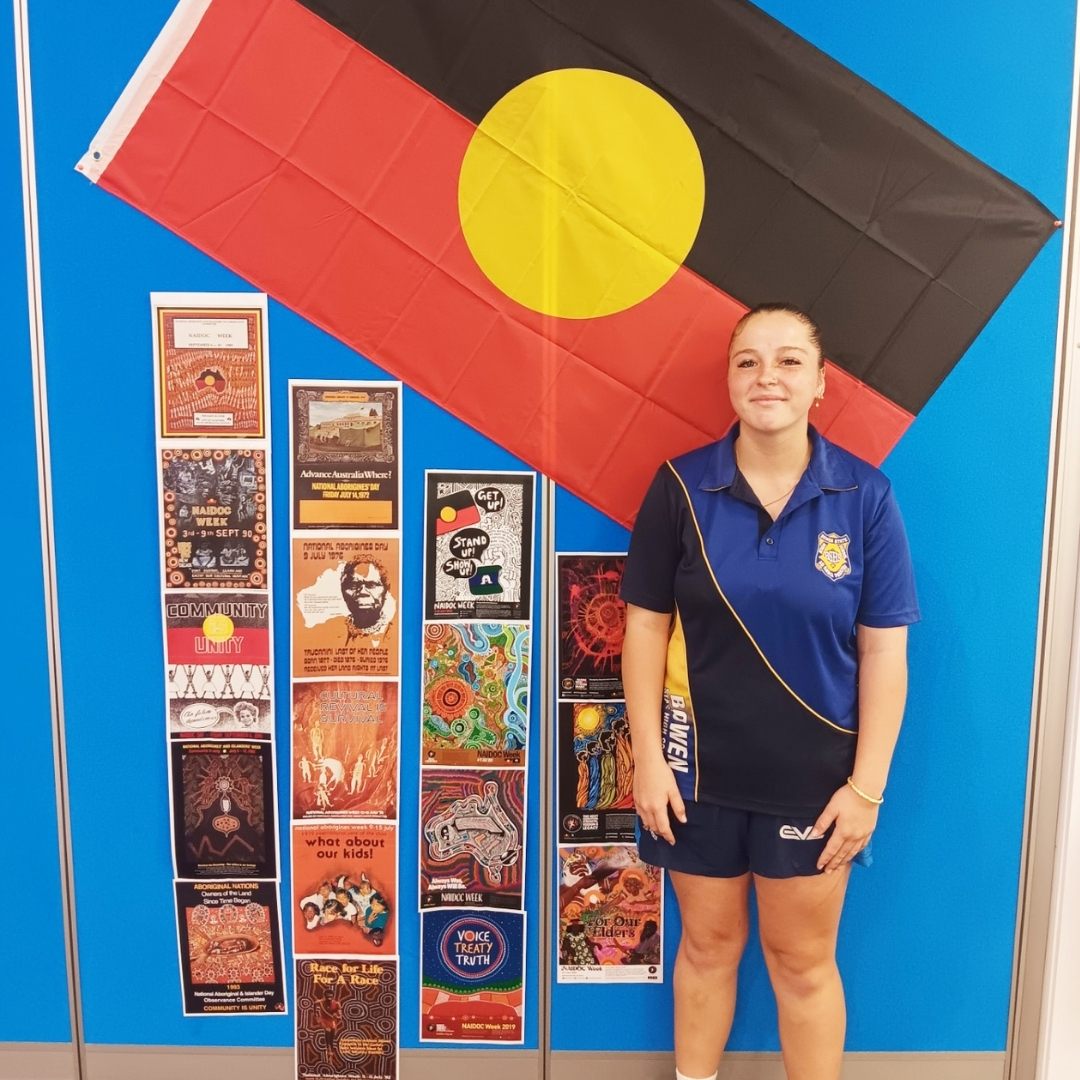
To celebrate NAIDOC Week 2026, a few Bowen State High School Students were asked the question: What does NAIDOC mean to you and why is it important to celebrate? Bowen State High School celebrates every year with a full day of activities, awards, and reflection. Bella Walters (Year 12 Student and 2026 NAIDOC Awardee) What I love most about NAIDOC is seeing everyone come together to celebrate and learn about Aboriginal and Torres Strait Islander cultures. It creates a sense of belonging, respect and pride while strengthening our school community. NAIDOC is important to me because it gives me the opportunity to celebrate my culture, honour the strength and resilience of my ancestors, and share the stories and traditions that have been passed down through generations. It reminds me of where I come from and inspires me to carry my culture forward with pride. I'm proud to represent my culture and show that our history, knowledge, and traditions that continue to thrive. Being able to share my culture with others and help build understanding makes me feel proud to be a First Nations student at Bowen State High School. I hope I lead by showing kindness, respect, and pride in who I am. I want other First Nations students to know they can embrace their culture and chase their goals while staying connected to their identity. Havana Power (Year 9 student and Queensland Aboriginal and Torres Strait Islander Foundation Finalist) To me NAIDOC is a time to celebrate and honour the cultures, histories, and achievements of Aboriginal and Torres Strait Islander peoples. It’s a reminder of the importance of listening and learning about cultures, languages, and stories for future generations. For me it’s an opportunity to learn and show respect to one of the world’s oldest continuing cultures. It’s a time to acknowledge the challenges they have faced and continue to overcome. NAIDOC celebrations at Bowen State High School is a fun, welcoming time when the whole school celebrates Aboriginal and Torres Strait Islander cultures. Some of my favourites include Cultural Ceremonies, Memorial Awards and Community Engagement. This honours and celebrates First Nations culture by bringing students, families, and local Traditional Owners together to promote reconciliation and educate the next generation. Photo captions: Photo 1- Bella Walters Photo 2- Havana Powers Photo Supplied: Robert Harris
Read the full story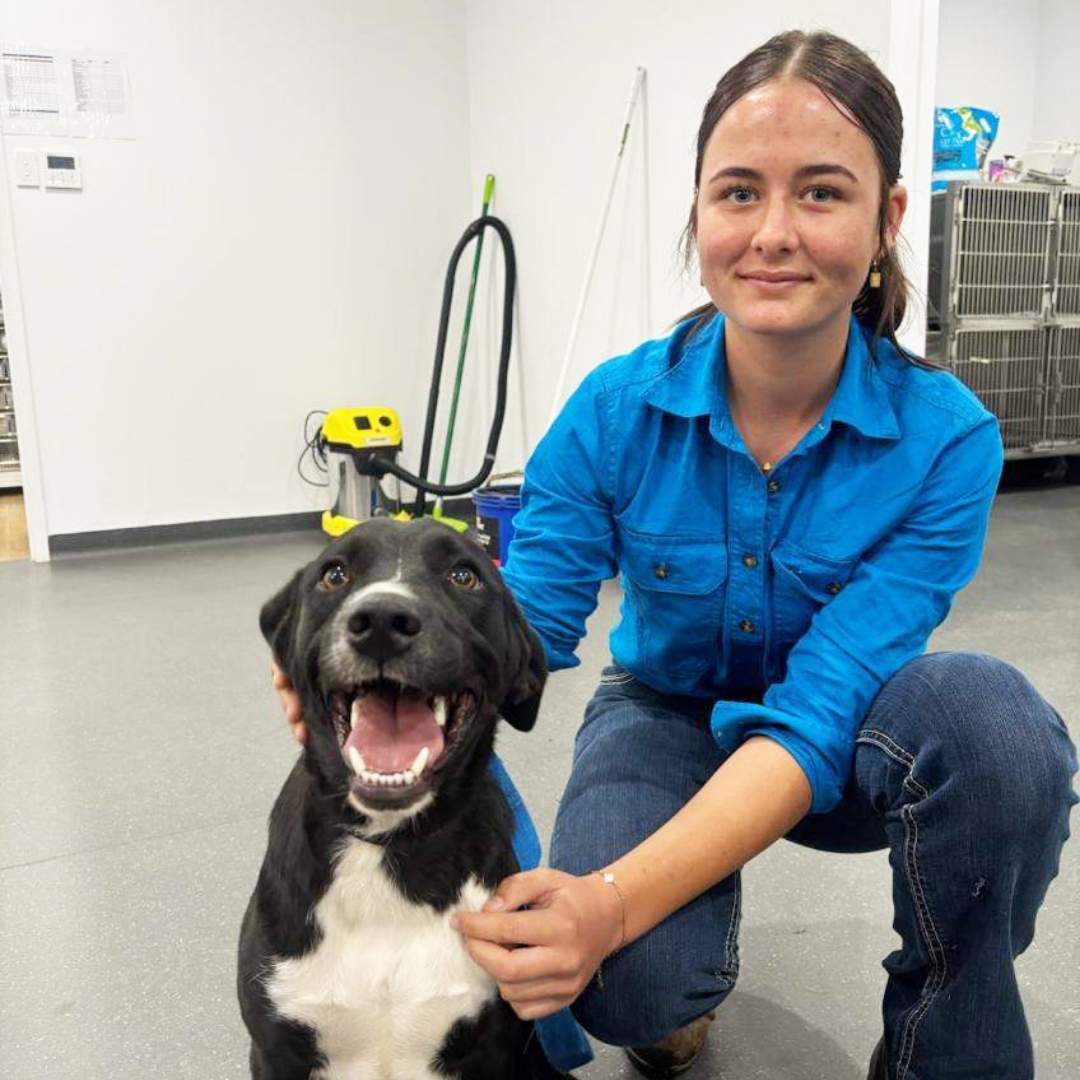
St Catherines Catholic College Year 10s return from school holidays to a week of work experience, set to gear the kids with practical skills and potential taste of the future. The week-long placements form part of the college's Year 10 careers education program, with students spending the year exploring future pathways before stepping into the workplace. This matches local businesses and students, giving them the chance to experience potential career paths before choosing their senior subjects and looking into future study options. “We find that it can lead to better decision-making in their pathway through year 11 and 12 and beyond,” said Tundi Gosselink, VET, Career and Pathways leader. Before students step into a workplace, they're encouraged to explore where their interests and strengths might best fit. Through careers classes, psychometric testing and interviews with people already working in different industries, students begin narrowing down potential career paths before selecting a placement. "It's a really difficult conversation to have, so in preparation they investigate different careers, their own interests and strengths, and how those match different professions,” Mr Gosselink said. The students can pick from the likes of tourism, to trades, admin, agriculture or in the case of Gabby Appleton, animal care. Gabby started her first day at Great Whitsundays Vet this week and can already see herself pursue it as a long-term career. “I think it's more valuable because you're actually doing the job,” Gabby said. “I'm planning on finishing grade 12, then hopefully going to uni and becoming a vet.” Photo caption: Gabby hanging out with her new Furry Friends at Great Whitsundays Vet. Photo Supplied: Gabby Appleton
Read the full story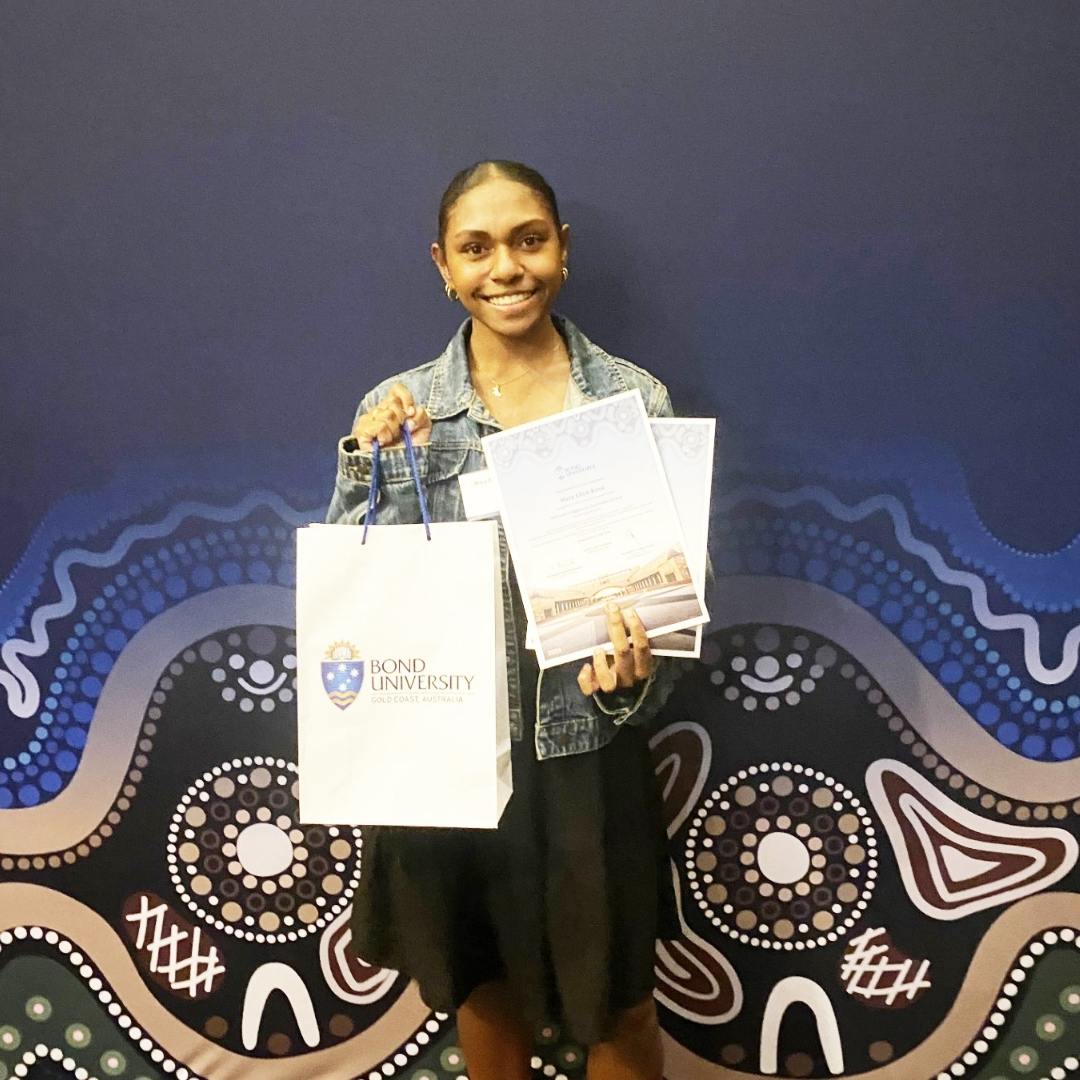
Two Bowen State High School students are being recognised during NAIDOC Week after earning places in Indigenous university programs, giving the next generation of First Nations students a glimpse of what university can offer. Queensland Aboriginal and Torres Strait Island Foundation (QATSIF) scholarship recipients Mary-Ellen Kusu and Kenzie Andersen were selected from a competitive field to attend winter schools at Bond University and James Cook University respectively. "The girls have embraced the opportunity to explore university life,” said Bowen State High School Principal Robert Harris. “Their willingness to leave home to attend these residential camps reflect their commitment to achieving their future goals.” Mary-Ellen attended the 2026 National Indigenous Business School at Bond University on the Gold Coast, enabling her ability to develop a career while strengthening her cultural identity. During this program, she took part in activity pitching ways to improve indigenous inclusion for the 2032 Olympic Games, where her team put together a winning performance. Kenzie attended the JCU Indigenous Winter Program, participating in lectures and practical health workshops, including CPR, first aid and midwifery simulations. She achieved a perfect score on a nursing assignment, confirming nursing is the career she wants to pursue. Photo captions: Photo 1- Mary-Ellen Kusu Photo 2- Kenzie Anderson Photo supplied: Robert Harris
Read the full story
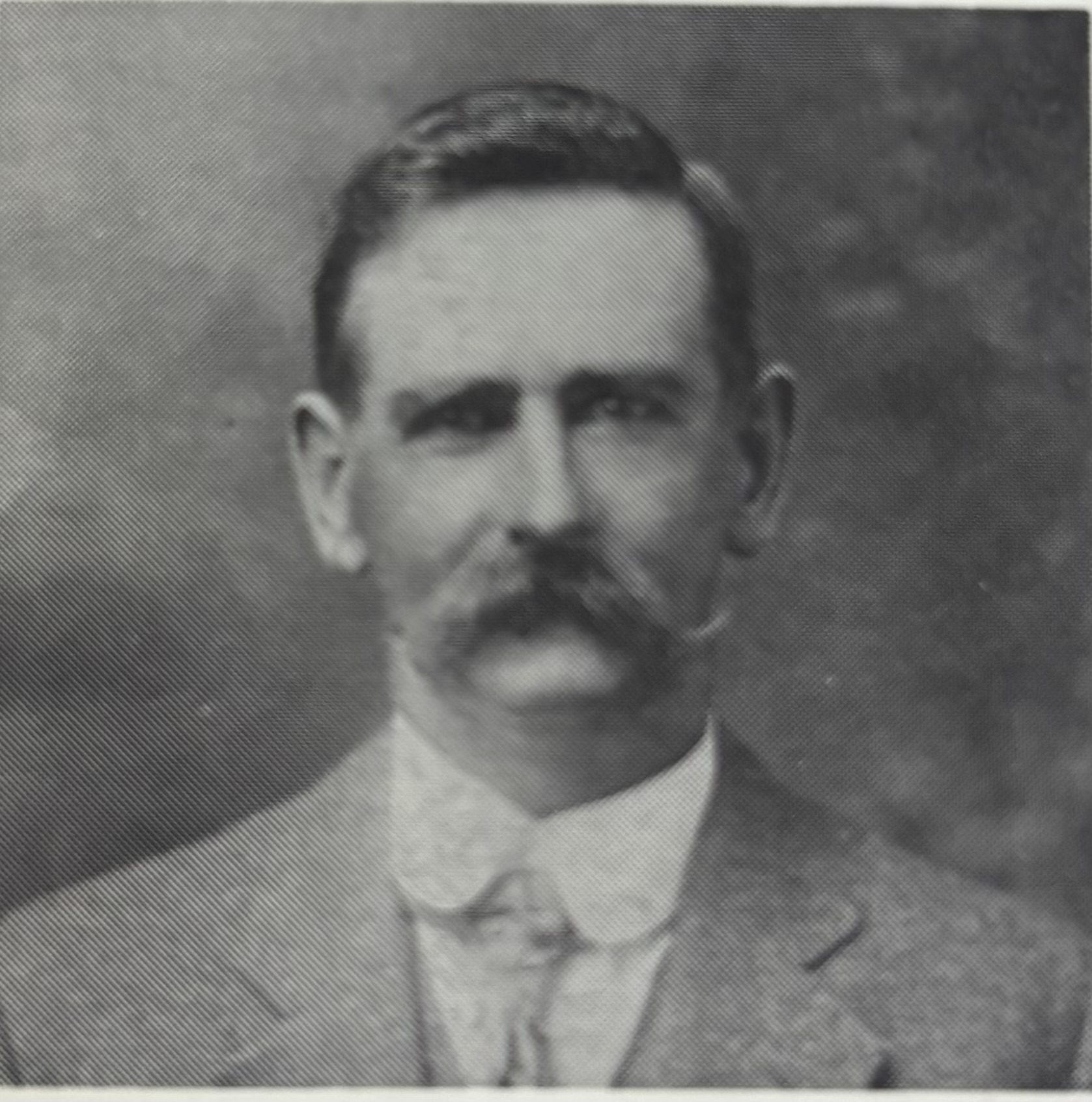
Henry William Holmes was born 13th April 1873 in Stableford, Wiltshire England. His father, a village blacksmith, died in an accident when William was nine. When eleven, his mother remarried. Henry went to live on a farm where his Holmes’ uncles were tenants, then worked on the railways for several years.
Desirous to see the world, at age 18, he applied for assisted passage to Australia, sailing on the "Geelunga" arriving at Bowen in May 1892 with only five shillings in his pocket. Luckily, new migrants were given rations by the government until they found work.
Will Holmes’ first job was at "Breadalbane" Station, owned by Messrs. Waite Bros. He was a boundary rider for 20 months and was paid 10/- per week plus his keep. Will moved to Mackay for a short time, working on a sugar plantation before returning to Proserpine. In January 1894, he selected two blocks of land at Cannon Valley under the government homestead system, paying 2/6 per acre, and 10/- per acre for improvements. The block, beside Brandy Creek, was 160 acres of virgin bush. He had to fence it, build a hut, live on it and develop it - and complete payment within five years. Will named the land “Windermere”.
To pay for the land, Harry (as he had become known in the district) accepted a position for four years managing a farm for Mr. R. Carson of Bowen. He paid someone to do his fencing, and so gained the freehold of his property. In 1902, he returned to Cannon Valley to grow sugar cane, cutting his first crop in 1905.
Harry was married three times; sadly, losing his first two wives early on in life. He had six children; two from his first marriage and four from his second.
In 1925, Will had a severe accident whilst loading cane. His injuries left him with a permanent limp, and he used a walking stick for the rest of his life. He never fully recovered, though he still did a lot of the easier work, retaining his involvement in the farm up until the death of his third wife, Matilda, in 1957.
His son, Albert, by his first marriage, had been working full time on the farm for some nine years by then, and John, a son from his second marriage, joined him in 1928. After the successful application for a larger cane assignment, the farm ownership was divided three ways, making Albert and John equal partners with their father.
William (Harry) was very active in community affairs. In 1922, he donated ten acres for a school at Windermere and was Chairman of the Cannon Valley Hall committee. He was on the original hospital committee and the ambulance committee. In 1931, he served on the Canegrowers’ Executive and was on the local Cane Prices Board for ten years. He was a Shire Councillor for thirty years and a representative on the Bowen Harbour Board. He also became Grand Master of the Masonic Lodge.
A keen cricketer, he never missed a match on the Cannon Valley pitch next to his farm, sometimes umpiring. As he grew older, he indulged his love of reading and cultivated a good vegetable garden. He died in August 1963, aged 90 years, having gone to hospital only the previous day. A few years later, Holmes Street in Proserpine was named in his memory.
Postscript: The farm at Brandy Creek is still owned by the Holmes family. Henry William Holmes’ great grandson, Andrew Holmes, now works the land having taken over from his father, Keith, who was Albert’s son.
Story and photo courtesy Proserpine Historical Museum and “Memories” written by Madge Holmes.
Henry William Holmes. Photo supplied.

The stage is set for a night of stories, song, and celebration when the Love Letter to Queensland event takes place tonight at the Whitsunday Sailing Club.
The special evening, part of the 2025 Whitsundays Writers Festival, will open at 6pm with an official welcome from Mayor Ry Collins. Guests will enjoy drinks and canapés before settling in for an inspiring program of speakers, performers and award presentations.
Headlining the event is internationally published, award-winning author Dr Anita Heiss, who will deliver the From the Heart keynote address. She will be joined by an impressive line-up including Gold Walkley Award-winning journalist Hedley Thomas, Queensland Literary Award winner Steve MinOn, prize-winning novelist and journalist Matthew Condon OAM, and Member for Whitsunday Amanda Camm MP.
Adding a musical touch, Karen Jacobsen, will perform her original Love Song to Queensland, written especially for the occasion.
Mayor Collins will also announce the winners of the Love Letter to Queensland community writing competition across three age categories. The Adult division winner will receive a Daydream Island gift voucher valued at $1000, the Under 18 category will take home a $550 Tropix Photography voucher, and the Under 12 division will be awarded a Street Library Australia prize pack valued at $250, donated with books from Kitten Vintage Mackay. Highly Commended certificates will also be presented.
In addition, the evening will see the announcement of the Whitsundays Literary Heart Awards, supported by the Roderick Centre with cash prizes for winners.
With storytelling, song, and a celebration of creativity at its core, the Love Letter to Queensland event promises to be a highlight of the festival calendar.

Ruia, a striking two to three-year-old Bull Arab cross, is looking for a second chance at life and a family to call her own. With her gentle nature and happy personality, this young dog has quickly won the hearts of everyone who meets her.
Believed to have a touch of Boxer in her mix, Ruia is described as affectionate, easy-going, and great with other dogs. She loves nothing more than spending time with people, sharing tummy rubs, and soaking up attention. Despite a difficult start, her loving spirit remains strong, and she’s ready to blossom in a safe and caring home.
Ruia’s Best Qualities:
• Friendly & affectionate
• Loves tummy rubs and human company
• Good with other dogs
• Happy, easy-going personality
• Will blossom with love and security
Ruia’s adoption package includes desexing, microchipping, vaccinations, and full flea, tick, and worm treatments. Her adoption fee is $650.
Message Bowen Collinsville Pet Rescue on Facebook with your name and contact number to learn more or arrange a meet-and-greet.
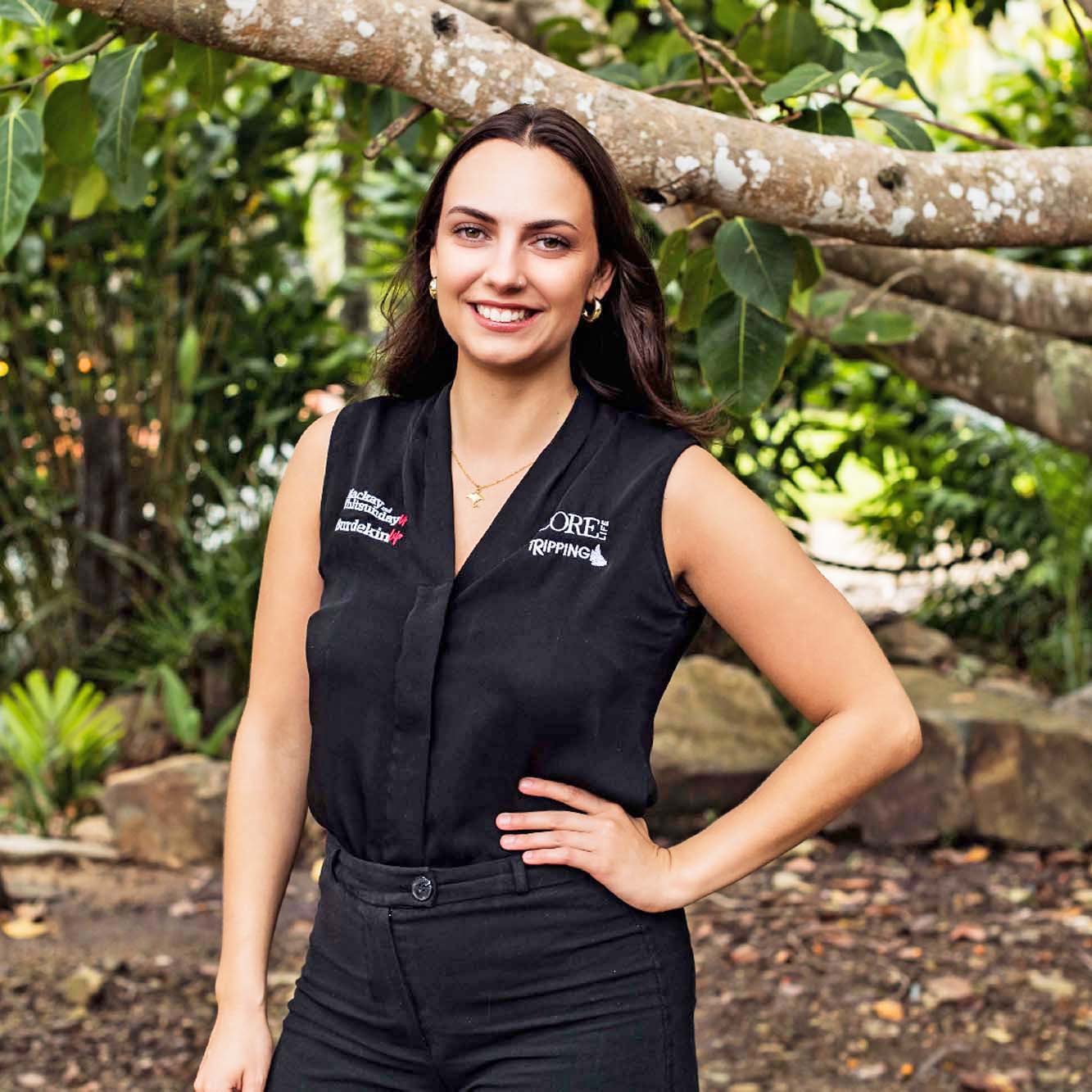
Hi Everyone,
It’s been a busy week back in the office, and I’m really enjoying being here! Since returning, I’ve also resumed my role at Eco Barge as a turtle carer. I absolutely love spending time with these incredible, peaceful animals.
Eco Barge is always looking for new volunteers, so if you have a few spare hours each week, consider lending a hand for this truly worthwhile cause!
This week, we have plenty for you to explore: stories on the Great Barrier Reef, sustainable sculpture awards, and much more—including a fun puzzle.
Happy reading!
Ruth
Did you know?
Moon jellyfish are 95% water and have no brain, heart, or blood—but they do have a nervous system that can sense light, balance, and touch.
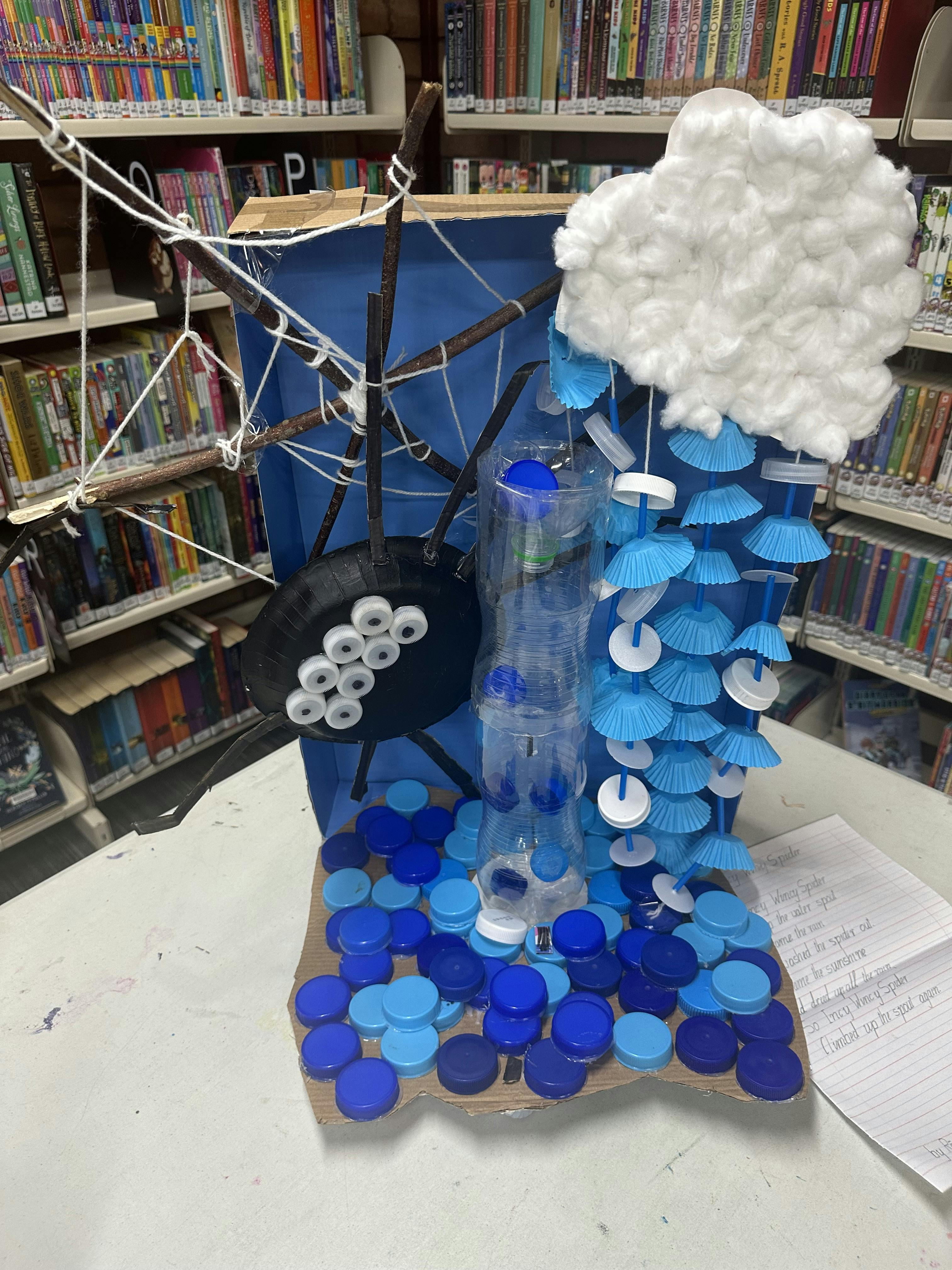
Day care centres, kindergartens and primary schools across the Whitsundays are being encouraged to get creative and eco-friendly in the 2025 Sustainable Sculpture Competition. Following the resounding success of last year’s event, organisers are excited to see what this year’s budding artists will produce.
The competition challenges children to transform recyclable and repurposed materials into sculptures, offering a hands-on way to learn about sustainability. From plastic bottles to newspapers and cardboard, students are encouraged to see waste in a new light — turning it into imaginative artworks that teach the importance of reducing, reusing, and recycling. By repurposing everyday materials, participants help keep items out of landfill and reduce greenhouse gas emissions — all while flexing their creative muscles.
This Year’s Theme
The 2025 theme invites participants to draw inspiration from either a favourite nursery rhyme or a local Whitsunday landmark. It’s a chance for children to combine creativity with environmental awareness, producing artworks that are both fun and meaningful.
Age Categories
The competition is open to three groups:
Early Years (0–5)
Prep – Year 2
Years 3–6
Each class or centre can submit one sculpture only, ensuring that every entry reflects a collective effort.
Judging and Prizes
All entries must be dropped off at local libraries between 27 October and 7 November. Residents can vote for their favourite sculptures in the People’s Choice Award, either online via the Your Say Whitsundays portal or in person at the library.
The three People’s Choice winners will then be blind-judged by Mayor Ry Collins. The winning class will receive a Proserpine Entertainment Centre gift voucher for each student (up to 30 vouchers), celebrating both their artistic talent and commitment to sustainability.
How to Enter
Register interest by 27 October
Deliver sculptures to your local library between 27 October and 7 November
People’s Choice voting runs 27 October – 7 November
Schools and centres can register via the online Expression of Interest form or email a completed entry form with category and contact details to yoursay@whitsundayrc.qld.gov.au
.
With last year’s entries setting a high bar, organisers can’t wait to see this year’s imaginative creations. It’s time for Whitsunday students to get crafty, green, and inspired — and turn trash into treasure!
A lovely sculpture previously made. Photo sourced.
.jpg)
When most of us think about the Reef, we typically visualise diverse corals, a magnitude of fish species and other marine life. But the Reef is much more. We should think of the Reef as a system that starts at the high tide mark along the coast and continues out to outer edge of the continental shelf, in some areas, this may be up to 250 km off the coast.
This system is all connected by what is often referred to as the Blue Highway. The overall health of the Reef is entirely dependent on the health and connectivity of the system.
A good place to start exploring the system is the intertidal area of our coastline where we find the Mangrove forests. Mangroves play a vital role in the Reef system; protecting coastlines, filtering nutrients and trapping phytoplankton. They supply food, provide shelter and act as nurseries and breeding grounds for many fish and crustacean species. For example, baby snapper like the Mangrove Jack grows up in the tropical rivers and mangrove estuaries and then migrate 10’s of kilometres offshore to the coral reefs to spend their adult years.
Mangroves are an important ally in the fight against climate change as they absorb up to five times more carbon from the atmosphere than other trees.
Moving just offshore from the Mangroves, we find the all-important seagrass meadows. Seagrasses are underwater flowering plants that grow in the shallow intertidal area, and similarly to mangroves, they stabilise the seafloor preventing erosion. Seagrasses are also great sequesters of carbon. Seagrass beds are nursery grounds for juvenile fish and prawns, some of which play a vital role in our commercial fishing industries.
Highly productive seagrass beds also provide food for sea turtles and dugongs. The dugong is the world's only completely herbivorous marine mammal and are almost entirely dependent on seagrass. No seagrass, no dugong.
As we move away from the intertidal and out towards the coral reefs, we would encounter a seafloor that was once thought to be barren but is now seen as an important connection between inshore habitat and offshore habitat. The seafloor is covered with small coral outcrops known as isolates and inter-reef gardens of soft corals. These act as roadhouses for the many fish that move between the coral reefs and the intertidal.
Continuing seaward, we finally reach the great coral reef formations that give the Great Barrier Reef its name. Coral reefs are some of the most diverse habitats on the planet.
But now we understand that the connections to surrounding habitats, from the mangrove forests to the seagrass meadows to the isolates and inter-reef gardens has created and supports one of the richest and most complex natural ecosystems on earth, the Great Barrier Reef.
Contributed with thanks to Whitsunday Conservation Council.
The Great Barrier Reef from Space. Photo supplied.

For generations, sugarcane has been a core aspect of the Proserpine region’s identity. From the vast green paddocks to the hum of harvest machinery, cane farming has shaped the landscape, economy, and community life of the district. Families who work this land carry with them not only the knowledge of farming, but also a deep connection to the creeks, wetlands, and reef systems that make the Proserpine catchment so unique.
Now, a new initiative is giving growers the opportunity to build on that legacy by improving chemical management on-farm. Reef Catchments, in partnership with Farmacist , is delivering the Supporting Practice Change to Reduce Water Quality Risk, a two-year project working closely with sugarcane farmers in the Proserpine catchment.
Reef Catchments Sustainable Agriculture manager, Todd McNeill, explains, "Sugarcane farming has long been an important part of the Proserpine region and continues to play a key role in the local community. This project supports growers in adopting practical changes that improve water quality while maintaining productivity.”
At its core, the project is grower-focused, designed to support farmers with practical tools and guidance. Farmers will work with agronomy experts on tailored chemical management plans, spray rig audits, and on-farm visits. Small financial incentives can help upgrade spray nozzles, making everyday work more efficient. Two hands-on workshops bring participants together to learn about weed identification, chemical handling, and spray rig calibration - providing a chance to share knowledge, ask questions, and learn the latest in innovative farming methods.
For growers, the benefits are both immediate and long-term. Better chemical use means reduced costs, improved efficiency, and smoother day-to-day farm management. As Senior Project Officer Kevin Moore explains, "Taking part in this project will give growers the know-how, tools, and a clear plan to use pesticides more efficiently. This means saving money, saving time, and making day-to-day farm work easier."
The project is part of the broader Proserpine Integrated Project (PIP), which is bringing together seven innovative initiatives to improve water quality across the catchment. From AI-driven technologies to circular economy solutions, PIP is designed to support growers and communities while reducing pollutants flowing to the Great Barrier Reef lagoon.
Todd explains, “Under PIP, growers are not working in isolation but as part of a wider coordinated approach across the catchment. By taking part, growers are exploring new tools and practices that support farm productivity while improving water quality across the catchment.”
If you’d like to improve chemical management on your farm, strengthen productivity, and be part of a project making a real difference for our community and environment, contact kevin.moore@reefcatchments.com
The Supporting Practice Change to Reduce Water Quality Risk is funded through the Queensland Government’s Queensland Reef Water Quality Program and delivered by Farmacist in partnership with Reef Catchments under the Proserpine Integrated Project.

By Amanda Wright
The room was white with flecks of teal — elegant dresses, crisp shirts, and lapel pins that together formed a sea of quiet defiance. For one night, the colour became more than a dress code. It became a symbol of love, of loss, and of life-saving determination.
The Trudy Crowley Foundation’s Touch of Teal Soirée was not just another gala. It was a gathering of stories that laid bare the reality of cancer — its cruelty, its indiscrimination, and its impact on families and futures. There was laughter, there were tears, and there was a shared promise that the legacy of one woman, Trudy Crowley, continues to ripple through every conversation, every auction paddle raised, and every lifesaving message carried home.
From the first moving words of Founding Director Jacquie Camilleri, to the powerful testimonies of patients and families, the evening reminded everyone in attendance of one undeniable truth: cancer changes lives in an instant — but together, we can change outcomes.
The evening was filled with powerful moments of reflection, resilience and raw honesty, with every speaker reminding the room why the Trudy Crowley Foundation’s work is so vital.
Jacquie Camilleri, Founding Director of the Foundation, opened the night with the story of how it all began. As a Mater Hospital volunteer, she wanted to brighten the days of oncology and palliative care patients with small treats. That’s when she first met Trudy, who wrote her a thank-you card that would change everything.
“I went in for chemo but I got a high tea,” Trudy wrote. The two women formed an instant bond, and when Trudy was later told she had only a short time left, Jacquie felt what she described as “a fireball from within — you’ll have to step up.” Together with her husband Charles, Jacquie established the Foundation to continue Trudy’s fierce advocacy. Before she had to step back, Trudy herself had spoken in Parliament, as fantastic and fearless an advocate as she was a friend.
From there, the stage became a place of confronting truth. Trudy’s daughter-in-law, Kaylissa Crowley, sat alongside her husband Levi and spoke of her best friend Mel Daniells, who died of bowel cancer at just 30. With no obvious symptoms — aside from back pain, dramatic weight loss and later, pain after eating — Mel’s diagnosis came at stage 4. Within four months she was gone, leaving behind her husband Blake and their young son, Jaxson. Blake himself had lost his father to cancer only six months earlier.
Naming rights sponsor Daly Bay’s Sharon Johnston then shared her own family’s brush with ovarian cancer — her sister had ovary cists removed that had precancerous cells, found only because of markers picked up in a blood test.
Foundation Co-Patron and journalist Amanda Wright shared her journey with stage 3B bowel cancer, diagnosed only after it had spread to her bowel wall, lymph nodes and liver. Within weeks she had surgery, and weeks later began chemotherapy. She spoke of the hidden toll on women: “Our medical concerns are brushed aside while we balance careers and caregiving. Until suddenly, we’re forced to stop everything because our lives are on the line.”
Amanda described the isolation of not being able to hug her one-year-old son after chemotherapy or kiss her husband for months. But she also credited the Foundation for lifting her up: “Over a simple cup of tea, the Trudy Crowley Foundation gave me what I hadn’t been able to give myself — permission to fall apart.
“It reminded me that even in the darkest moments, connection, care, and community can be the lifeline that keeps you fighting.”
She finished with a plea to the audience: “Don’t wait. Don’t dismiss. Don’t die wondering. In the words of the late Bridgeen Doherty — know your body, know your normal.”
Other testimonials came from two women, Donna Tee and Fern Emily, who shared their breast cancer journeys. Donna spoke of losing her sister without dignity to the disease, and of her passion to see a palliative care sanctuary created so no one else endures that experience. Fern spoke of the silent battles after treatment — scars, disfigurement, mental health struggles, and the loss of support once the hospital visits end. The two found friendship through Foundation sessions in Airlie Beach, led by Jacquie and supported by nurses Chris and Rosie, and now describe themselves as sisters of survival.
The night was hosted by Triple M’s Jay and Dave, alongside Foundation Ambassador Earl Neilsen, who guided conversations with the insight of a stage 3 bowel cancer survivor himself. Together, the trio brought warmth and authenticity to the evening, ensuring every story was heard with compassion.
A particularly moving moment came with the story of Tamara, a young Mackay woman whose final wish was to experience the Mackay Show one last time. Thanks to the combined efforts of Jay and Dave and the Trudy Crowley Foundation, that wish was brought to life, giving her and her family a joyful memory amid the challenges of her illness.
Auctioneer Peter Houghton, who recently joined the Trudy Crowley Foundation’s board, brought his signature energy to the evening with a spectacular bagpipe entrance that was unique to this year’s soiree. Peter and his wife Jo have long been dedicated volunteers at the Foundation’s Cancer Centre, supporting events, patients and initiatives from the start. As bidding began, Peter’s lively auctioneering kept the room buzzing with excitement, culminating in the Inspec Club House alone fetching an impressive $27,000.
Tables were dotted with QR codes linking to bulk-billed bowel screening, and lifesaver lollies served as sweet reminders to check your health. Conversations flowed about how cancer has touched so many families. The patients’ table, the nurses, the volunteers, the ambassadors — all united by shared memories of Trudy. The event was beautifully captured by Bek from the Wilde Collective, who gives her time each year in memory of her mother, whom she lost to ovarian cancer three years ago.
As Foundation Co-Patron Amanda Camm MP told the crowd via phone from Parliament, the Foundation’s impact goes far beyond Mackay. It is saving lives, one story, one screening, and one conversation at a time.
Guests and the Triple M team enjoyed an evening of stories, connection, and fundraising at the Trudy Crowley Foundation’s Touch of Teal Soirée. Photo credit: The Wilde Collective
A night to remember at the Trudy Crowley Foundation’s Touch of Teal Soirée, celebrating community, hope, and the tireless work of the Foundation to support those affected by cancer. Photo credit: The Wilde Collective
Find the social pics here: https://tinyurl.com/2aunc8dn

Residents of Gargett now have a new space to enjoy books, thanks to the local Men’s Shed, which has created a small, but mighty, community library for everyone to use.
“If you’re like me, I don’t like to throw my books away, so I got in touch with the Men’s Shed and they’ve made a fabulous library for us, as well as a good supply of books,” said a representative from Gargett store.
“It’s here for everyone to use, so please make use of it. Thank you, Mirani Men’s Shed.”
The initiative has been warmly welcomed by locals, offering a chance for residents of all ages to access reading materials without leaving the town. The handcrafted library features a variety of genres, including fiction, non-fiction, and children’s books, making it a resource for both entertainment and education.
The Men’s Shed, known for its hands-on community projects, took the time to design and build a welcoming space that reflects the needs of the Gargett community. Volunteers have stocked the library with donated books, ensuring that there’s something for everyone.
Community members are encouraged to visit, borrow a book, and take advantage of this new local resource. By fostering a love of reading and providing a place to connect, the library exemplifies the spirit of collaboration and care that the Men’s Shed brings to the area.
Gargett residents now have a new community library, created by the Mirani Men’s Shed, offering a welcoming space and a wide range of books for all ages to borrow and enjoy. Photo source: Gargett Store (Facebook)

The Trudy Crowley Foundation's Touch of Teal Soirée this year was nothing short of extraordinary. As a patron of the Foundation, alongside Member for Whitsunday Amanda Camm MP, I’ve seen firsthand how this incredible organisation changes lives — and standing in that marquee, surrounded by patients, families, nurses, volunteers, supporters and ambassadors, the impact hit me anew.
Hearing Kaylissa Crowley share the story of her best friend Mel, taken far too young by bowel cancer, brought me to tears. It was a stark reminder of how insidious this disease is, how quickly it can strike, and how crucial early detection and awareness are. I was also profoundly moved by Fern and Donna, who joined me on stage to share their journeys with breast cancer. Their courage, honesty, and vulnerability reminded me that cancer touches absolutely everyone, in ways both visible and hidden, and that the journey doesn’t end with treatment — the scars, the disfigurement, the mental toll, all linger.
Moments like these are why the Foundation matters so deeply. Over a simple cup of tea, a safe space, a listening ear, and connection with others, people find strength, permission to fall apart, and a sense of purpose to keep going. These are the things that make a real difference — not just in survival, but in life after diagnosis.
For me personally, the evening reinforced the importance of speaking up about symptoms, attending regular screenings, and never dismissing what our bodies tell us. It’s my hope that my message, and the stories shared by so many incredible people that night, inspire others to act, to reach out, and to support this vital work.
The Touch of Teal Soirée isn’t just an event — it’s a movement of courage, community, and life-changing advocacy, and I feel incredibly proud to stand alongside this Foundation and the remarkable people who make it what it is.
Amanda

Queensland Premier David Crisafulli and Mackay MP Nigel Dalton have joined forces to confront "antisocial behaviour," particularly along Mackay’s Bluewater Quay. The Premier visited Mackay last Wednesday, outlining a dual approach of restoring community safety while supporting those struggling with addiction.
“Today we're dealing with antisocial behaviour," Mr Crisafulli said.
"And one of the things that Nigel has been pushing really hard has been that antisocial behaviour, particularly along the Bluewater Quay and what that means for the community.”
The Premier stressed that public pride and a sense of belonging were at stake.
“I want to address it head on because it's important to not just people's way of life but their sense of pride and how they feel. We want the people to feel like they can own the waterfronts and the community parks and that they can go there and feel safe.”
Mr Crisafulli said the government’s approach combined law enforcement with social services.
“For one, it's about empowering the law enforcement to do their job. The second is around social services to help people be able to turn around their addictions and the challenges in their life, and we're doing both of those… both of those things are equally important.”
Mr Dalton echoed those concerns with a local lens.
“Our Bluewater Quay is a mess... and we need to sort that out,” he said.
The Mackay MP also drew on recent community feedback.
“I've done a survey within Mackay, and 17 people responded to that survey. Three quarters of them said antisocial behaviour should be a crime, so that's what we want to move forward with.”
Both leaders emphasised that while accountability is vital, compassion must also play a role.
Mr Dalton said, “We want to make sure we can help them remove themselves from those positions where they look untidy. We just don't want them to be in the places where we want to take our families, where we want to have a carry out meal and sit down and have fish and chips by the river.
“There's some wonderful facilities along the Bluewater Quay, but we're not able to use them because they're being inhabited by people who make us feel uncomfortable.”
He welcomed the Premier’s presence, describing the workshop as a practical step forward.
“This workshop is all about learning what we can do, how and who can do what to help these people. And it's really wonderful that the premier has come here to be able to talk about that openly to these agencies and make sure that we get these laws rectified so that we can actually enforce things and then also help these people along the way.”
Both the Premier and Mr Dalton framed the initiative as part of a broader mission to reclaim Mackay’s public spaces, by restoring safety, and building a community where families can feel proud and safe while ensuring those in need are not left behind.

Residents and visitors will be given free access to the Memorial Pool while maintenance works are finalised at the Bluewater Lagoon.
The annual winter maintenance included important upgrades to the plant room, including pump and instrument upgrades.
Mayor Greg Williamson said there had been delays with the delivery of key components having to be sourced from outside of Australia.
“That meant other vital work and commissioning has been pushed back past our expected re-opening date of mid-September,” Mayor Williamson said.
“Council understands how much the community and visitors look forward to enjoying water play during the school holidays, so we have taken steps to ensure they can still do that,” he said.
As part of an agreement with DMR Leisure, there will be free access to the Memorial Pool from September 19 to 22.
Mayor Williamson said the Bluewater Lagoon will only re-open once water quality standards are confirmed.
"It's imperative that the water quality is within a safe range from a public health perspective, particularly as we prepare for an influx of patrons as the weather warms up.”
As part of the arrangements at the Memorial Pool several entry conditions will be in place:
All children 12 years and under must be supervised by a person 18 years or older
Identification may be required to verify age
A supervision ratio of one adult to four children for those 12 and under, particularly for birthday parties
All birthday parties and group bookings must be pre-booked through DMR Leisure. This must be accompanied by an agreement form for insurance purposes.
It is expected that the Bluewater Lagoon will re-open on September 23, pending water quality results. Any changes will be communicated to the community.

Forte Biosciences’ clinical trial for a potential Coeliac disease treatment is now recruiting participants in Mackay through the Coral Sea Clinical Research Institute (CSCRI).
The clinical trial follows results from Forte Biosciences’ FB102 Phase 1B study, which showed encouraging outcomes for Coeliac disease patients and highlighted the potential for new therapies.
Dr James Daveson Founder and Director of CSCRI, Gastroenterologist and Founder of endosQ, and Primary Investigator for a range of clinical trials at CSCRI, is leading efforts to evaluate novel treatments that moderate the immune response to gluten for people living with Coeliac disease.
“We recently held an information evening, in conjunction with Dr Paul Wagner, CEO and Founder of Forte Biosciences, to empower those living with Coeliac disease by offering a deeper understanding of their condition and the promising advancements in treatment currently underway,” Dr Daveson said.
Coeliac disease is a chronic autoimmune disorder affecting about 1.3% of the global population, more than 315,000 Australians, including around 80,000 people in regional Queensland.
With a career dedicated to improving health outcomes in Queensland, Dr Daveson has contributed to the discovery of new diagnostics and advanced research into Coeliac disease and advocating for improved rates of diagnosis. His work also addresses health equity challenges in regional Australia.
Register to participate in the upcoming clinical trial at https://coralseaclinical.com/current-studies/coeliac-disease-forte-bio/ or contact CSCRI on 1800 69 27 27.
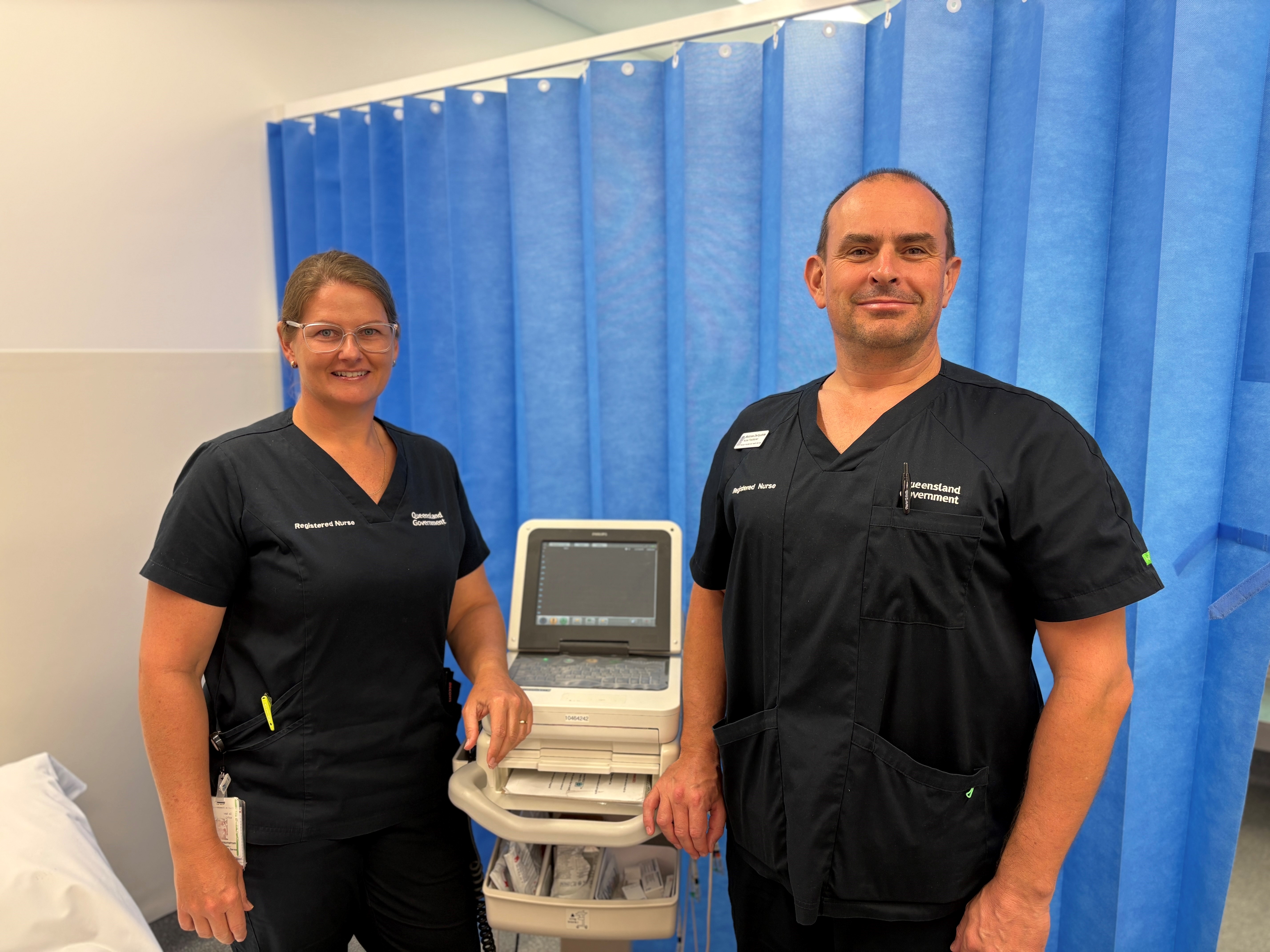
A new post-discharge cardiology service at Mackay Base Hospital is helping patients with non-urgent heart conditions bypass the Emergency Department and get advice or treatment when they need it most.
The Cardiology Rapid Access Service provides timely and appropriate care for patients with cardiac conditions who require follow up care or have queries after discharge from hospital, but who do not need immediate emergency intervention.
The nurse-led service has cared for more than 310 patients with non-urgent issues, including chest pain, palpitations, hypertension, arrhythmias and cardiac device checks since it commenced on May 12.
Mackay Hospital and Health Service (HHS) Executive Director Operations Mackay Jennifer Farley said the Rapid Access Service provided prompt specialist assessment and management for patients with known cardiac conditions.
“This post-discharge service is alleviating pressure on the Emergency Department by providing an alternative care pathway for cardiac patients,” she said.
“It’s also reducing length of hospital stays and the prompt treatment times prevent further health decline which means improved outcomes for patients.”
This also improved patient experience and provided continuity of care, she said.
Patients had reported very positive experiences with 100 per cent of those surveyed saying their issues were resolved in a timely manner by the service.
On average six patients a day were contacting the service with queries related to chest pain, palpitations, heart failure, cardiac procedure wound reviews, minor bleeding post procedure, understanding pre-post-operative instructions, follow-up appointments, pain management and cardiac device checks, Ms Farley said.
The service is self-referral with patients having previously been treated by the Emergency Department (ED), Cardiac Care Unit (CCU), Cardiac Cath Lab (CCL) and Heart Health team.
Cardiac patients are informed about the Rapid Access Service when visited by the nursing team prior to their discharge from hospital.
Mackay HHS Chief Executive Susan Gannon said the service was improving patient care and outcomes and was a reliable and trusted resource for cardiac patients returning home to rural communities.
“The Cardiology Rapid Access Service at Mackay Base Hospital is proving a great success and is providing fast and efficient treatment options for patients post-discharge from hospital.”
The Cardiology Rapid Access Service operates Monday to Friday between 8am and 3.30pm and calls are answered by a highly experienced clinical nurse consultant or nurse practitioner who can help resolves issues or advise patients when to come to the clinic or seek further help.
For life-threatening or severe problems, patients are urged to call 000 immediately or attend the local emergency department.
The Cardiology Rapid Access Service can be contacted on 0428 927 713.
Mackay Base Hospital’s Rapid Access Service gives non-urgent cardiac patients fast post-discharge care, easing pressure on the Emergency Department. Photo supplied

Former Isaac Mayor Anne Baker is set to become a new member of Mackay Regional Council, likely to be sworn in on Thursday, 11 September — between the time this edition goes to press and its release to readers.
At the close of vote counting on Wednesday, 10 September, Baker held a commanding lead with 28.93 per cent of the primary vote. Her nearest rivals were Andrew Deguara on 14.40 per cent and Melissa Milton on 14.36 per cent. With more than 72 per cent of votes counted, the result all but secures her place on council, pending the official declaration.
When voting closed, Baker expressed her gratitude to the community for their support throughout the campaign.
“Voting has closed and I want to take a moment to thank everyone who has supported me throughout this journey.
"Your encouragement, conversations and kindness have meant so much. I’d also like to wish all of the candidates the very best. Putting your hand up to serve the community is never easy...I’m proud to have been part of this process and grateful to our community.”
Fellow candidate Dion Loader reflected on the challenges of campaigning while juggling family and work. He was unwell in the final weeks of the campaign but said his priorities had to remain with his health, his business, and his children’s sporting and volunteer commitments. Despite that, Loader left a strong impression in the community with his Tidy Towns Mackay initiative, which saw him and his children regularly cleaning rubbish from parts of the city and encouraging volunteers to get involved each week. He thanked locals for the support shown to him throughout the race and said he would continue to contribute to the community through his grassroots efforts.
Candidate Melanie Lass also described the campaign as a learning experience. She said it had been about connection, listening, and leadership, and thanked the many people who shared their stories, comments, and encouragement with her along the way.
With Baker’s win set to be formalised, comments from the new councillor will be shared in next week’s edition.
Vote percentages for Mackay Regional Council by-election candidates after the close of counting on Wednesday, 10 September. Source: ECQ website
Anne Baker (left) at the JCU Alumni and Community Event. Baker ran a strong campaign, gaining community support across the region through event attendance and extensive letterbox dropping. Photo source: Anne Baker (Facebook)
Publishers Indemnity. Any individual or entity that places advertising, supplies copy material, or submits editorial content to Core Life Publishing agrees and undertakes to ensure that all such material:- Does not infringe upon any copyright, trademark, or other intellectual property rights;- Is free from any content that could be considered defamatory, libelous, or slanderous;- Does not infringe upon any rights related to privacy or breach of confidence;- Contains no obscene, indecent, or otherwise unlawful material;- Complies fully with the Trade Practices Act and all other applicable laws, regulations, or statutes.Furthermore, by submitting or placing such material, these individuals or entities agree to indemnify and hold harmless the publisher, Core Publishing and Events Pty Ltd, and/or its agents from and against any and all investigations, claims, demands, liabilities, damages, costs, or judgments arising out of or in connection with the material provided. All material is believed to be accurate at the time of printing and remains the copyright of Core Publishing and Events Pty Ltd.
© 2026 Mackay and Whitsunday Life Pty Ltd.
