
Independently Owned, Locally Grown, Community Loved

OPINION PIECE from the office of Federal Member for Dawson Andrew Willcox There is no question that immigration into Australia is out of control. The government’s numbers are too high, and standards are too low. A sustainable migration program must consider our capacity to provide housing, healthcare, infrastructure and the essential services everyone relies on, and Australians must come first. But Labor’s decision to target Working Holiday Makers Visa holders is not the answer. These people filling vital gaps in our workforce are not the cause of Australia’s housing crisis. In many cases, they are living in accommodation provided by the very businesses that employ them. The National Farmers’ Federation has made the point that Working Holiday Makers generally stay in hostels, caravan parks or purpose-built on-farm accommodation. Resorts usually have on-site staff quarters. They are not the source of Australia’s housing shortage. So why is Labor making it harder for them to come here, when these workers fill genuine jobs that regional Australia holds? Working Holiday Makers fill approximately one in seven farm jobs nationally and are particularly important during peak agricultural periods, which for Dawson, it is right now! Farmers rely on these workers to plant, pick, pack and harvest the produce that ends up on Australian supermarket shelves. Having run one of Australia’s largest tomato farms, at times Working Holiday Makers made up more than 50 per cent of my workforce. Without them, much of our crop simply would not have been picked in time and rotted in the paddock. Some may say, why not employ the Australians who don’t have a job and are on “the dole”? Can I say, this does not work. Most farmers will employ Aussies over travelling backpackers, but many either don’t want to do the work or don’t turn up after the first day. Who picks the fruit or veggies then? Farmers are already warning that visa delays are leaving them without workers. The NFF says approvals that once took days are now facing processing times of up to three months, and this time frame can be the difference between harvesting a crop or losing it. That should concern every Australian already feeling the pressure at the supermarket checkout. The same problem is playing out in tourism. Across Dawson, Working Holiday Makers are an important part of the workforce supporting tourism and hospitality, particularly in the Whitsundays. They help fill shifts, work in hotels and restaurants, support tour operators and keep businesses running through their busiest periods. They also contribute to the local economy. They spend money on food, fuel, attractions and tours, supporting the small businesses that depend on a strong visitor economy. That is why tourism and business leaders across North Queensland are raising the alarm. They understand what happens when a regional business cannot get enough staff: opening hours are reduced, and services are cut, creating a downward spiral. We do need to reduce migration to sustainable levels. We need stronger integrity measures, and we need to crack down on rorts. But responsible migration policy means understanding which parts of the system are creating pressure and which parts are helping Australia function. Working Holiday Makers are not the problem. They are part of the workforce solution for regional. Australia. People have had a gutful of watching their standard of living go backwards. Groceries, fuel, housing and everyday expenses are already putting enormous pressure on families. The last thing Australians need is another reckless policy that makes it harder to produce food, harder to run regional businesses and harder for tourism operators to find the workers they need.
Read the full storySomeone sold a house in Sydney last week for $9 million less than they bought it for four or five years ago. The sellers had bought the property in Sydney’s eastern suburbs for $29 million and sold it for $20 million in a sale forced by their bank. I imagine the sellers are a little disappointed by the government’s decisions on negative gearing and capital gains tax and feeling pretty hurt by the increased interest rates. Australia’s interest rates are on the rise and are now sitting at levels not seen since 2011. Increased cost of living is hurting people around the country and interest rates are playing into that. But the impact of interest rates is not felt evenly around the country. The far-higher property prices mean people in the major cities suffer much more than regional areas with the rates increase. That is certainly not to say people in Mackay are unaffected by the cost of living; it’s just that the impact of interest rates increase on a $400,000 mortgage is much less than the impact on a $1m mortgage. There are other Mackay-specific factors that are in play when discussing the current housing market. The big factor is the role of coal in our economy. Most of the coal extracted and exported from our region is coking coal, which is used to make steel. The price of coking coal is around $280 a tonne, which is about 50 per cent up. Good activity in the coal market translates to good news for the Mackay economy, as it is an economic engine that other cities and regions just don’t have. Good activity in Bowen Basin flows throughout the Mackay economy; Paget workshops, transport, suppliers and related businesses all benefit. But so do other, non-mining-related businesses as they benefit from the general confidence and spending that goes on. The strong mining activity also means mines need to keep their staff levels up and that means more people moving to Mackay. Of course, Mackay is much more than a coal mining town but if the coal sector is going well those other areas definitely benefit. It is a confidence boost for Mackay people looking to get into the housing market and those wanting to upgrade or downsize. It also means continuing strong demand from people wanting to rent a property and it will be interesting to see what sort of activity that creates from investors. Investors have walked away from the big-city markets because they can no longer use negative gearing on established properties that do not have a sufficient yield to be positively geared. Negative gearing has never been a big thing in Mackay because our prices are lower and rental returns continue to be strong so many investors have a positively geared property. Around the country everyone is nervous about the state of play and the probability of more interest rate rises. But strong coal prices and an economy that is performing well mean Mackay might just be presenting an opportunity for buyers and sellers that doesn’t exist in other parts. I remember when national confidence was flying high and Mackay prices were going up significantly that many buyers were saying “I wish we had bought a while ago when the market wasn’t so hot”. I’m not armed with a crystal ball so I’m not here to tell you what is going to happen but I suspect there is a very good buying window right now for those looking for an opportunity.
Read the full story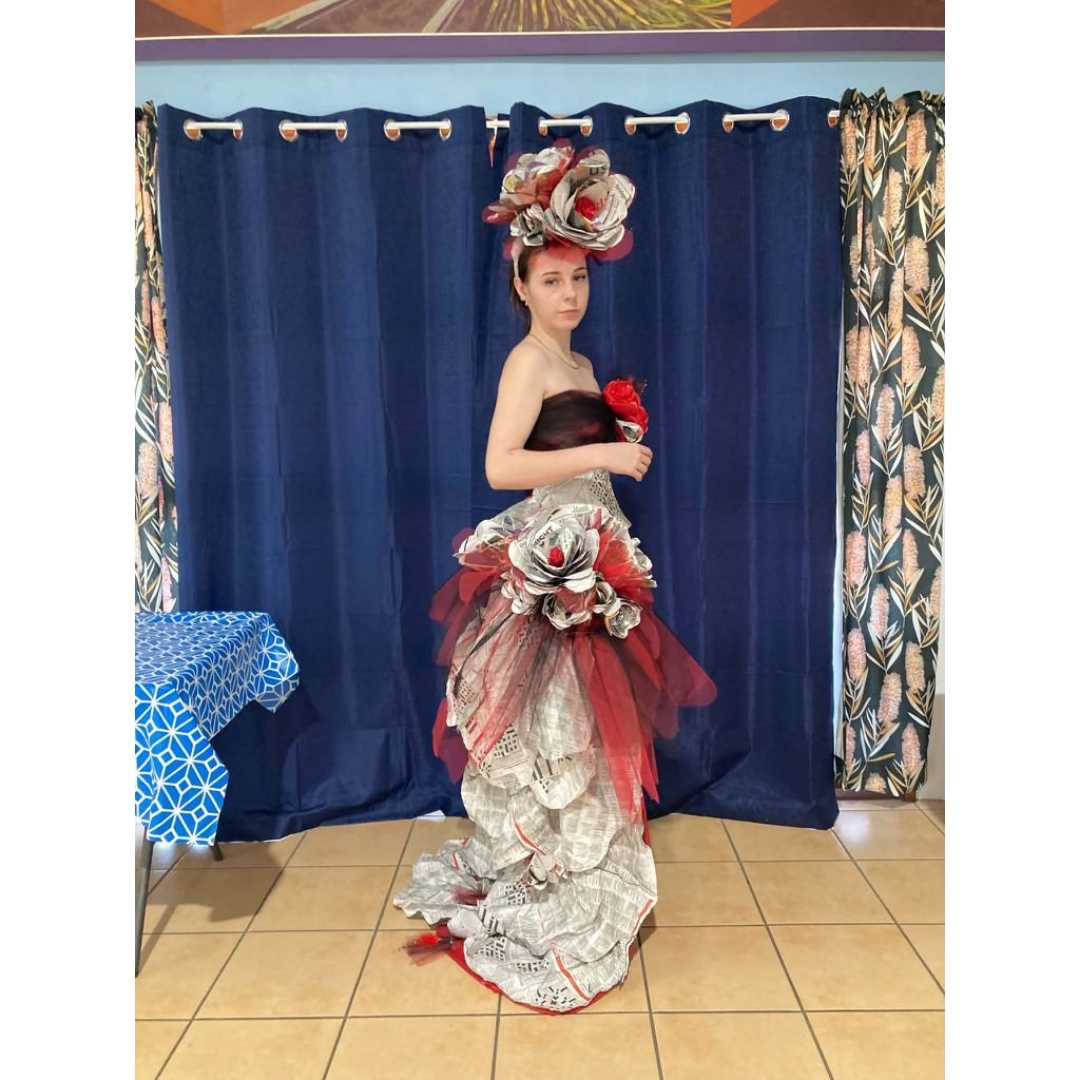
A local Mackay and Sarina based model has created a dress out of newspapers, including Mackay Life, for her upcoming pageant, representing her region and hometown on the runway as she vies for Miss Diamond International in Brisbane. Zoe Place will be competing this weekend in the three-day event, beginning this Friday 2nd October and ending on Sunday 4th October. The young model spent around a month creating her eco-fashion outfit, using old newspapers as the main material and transforming them into a bodice, skirt and flowers. Red elements were also incorporated into the design to give the dress a bold and glamorous pageant feel. Zoe said, “The entire concept was really about taking something that would normally be thrown away and turning it into something beautiful and meaningful.” Her eco-fashion creation will form part of a busy weekend in Brisbane, with the Miss Diamond International event including photo shoots, interviews, an eco-fashion show and the final pageant. Zoe has been preparing for the event by practising her strut and walking, preparing for interviews and getting comfortable in the different outfits she will wear throughout the weekend. Alongside her love of modelling, pageantry has also provided Zoe with a platform to raise awareness about causes close to her heart, including mental health, while fundraising for Beyond Blue. “Pageantry has given me more of a platform to combine my love for modelling with something that is really important to me.” “When I first started, I was more nervous about putting myself out there and worried about what others would think about me – but I’ve changed a lot through my journey in pageantry.” “Pageantry has also taught me that it’s not about how you look on stage. It’s about the person you are when you step off it.” “Every woman has their own unique journey and that journey is something we should all be really proud of.” “To me, it represents confidence, empowerment, kindness, and using your voice to make a difference.” Zoe said she was looking forward to meeting the other contestants, making new connections and creating memories. “I’m definitely looking forward to meeting all the new contestants and making new connections and creating memories that I will carry with me for a lifetime.” While Zoe hopes to eventually move to the city, her sights are set even further afield, with a dream of one day walking in New York Fashion Week. Mackay and Sarina local Zoe Place has created an eco-fashion dress from recycled newspapers, including Mackay Life, ahead of her Miss Diamond International pageant in Brisbane. Photos supplied
Read the full story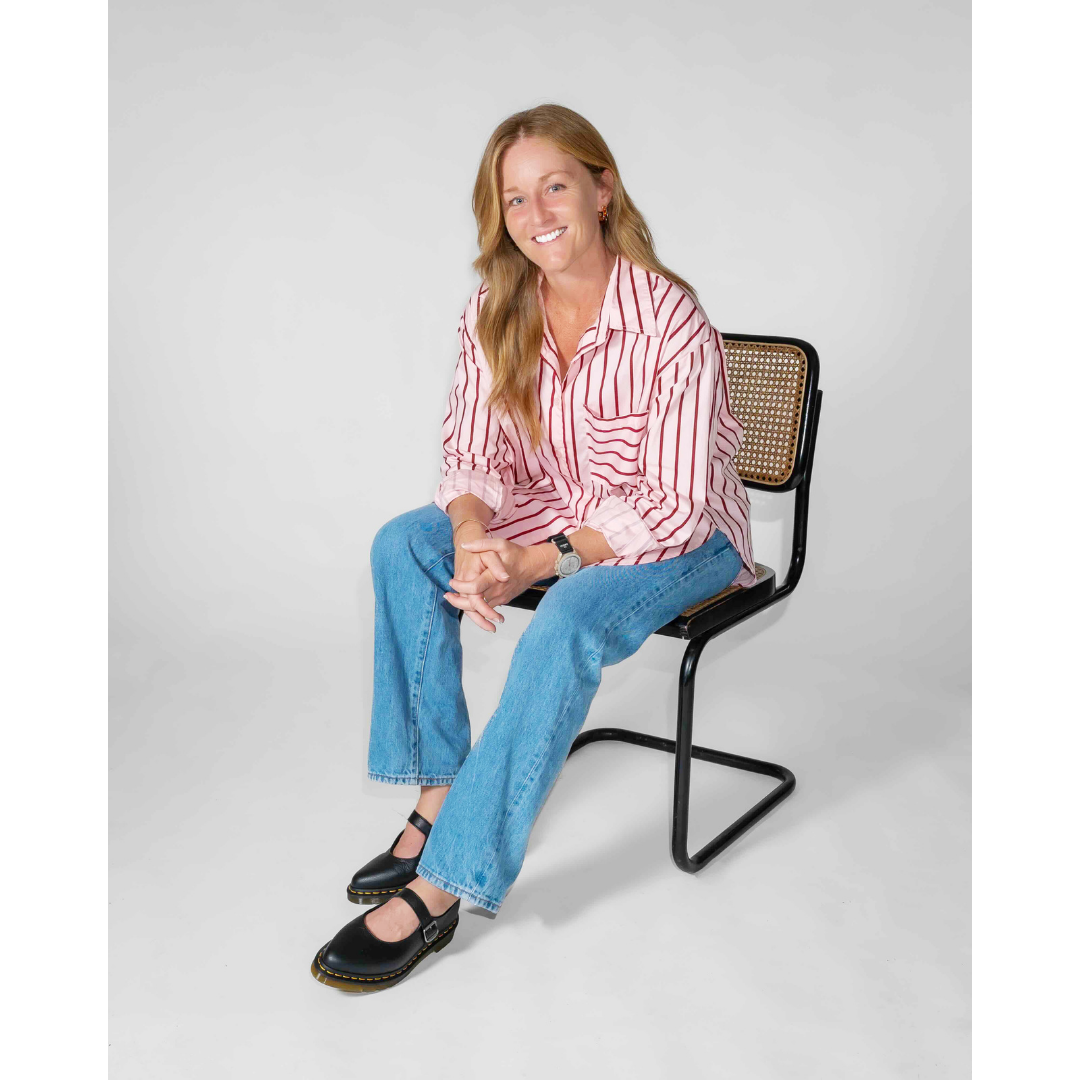
Trends, reels and the endless cycle of always wanting more has quietly bombarded the minds of countless social media users of all ages, but one former Mackay local has made it her mission to help others understand the effects of social media and find practical ways to break free from online addiction. Alexis Zahner is in Mackay over the next week to teach upcoming generations about social media and the effects it can have on the mind, particularly on identity, self-discovery, as well as the marketing strategies that get viewers hooked and influence their decisions. It is something Alexis knows first-hand can be a useful tool, but also a great disruption to authenticity and the world as we see and experience it. Alexis will hold a free meet and greet and book launch today, Friday 2nd October, at 5.30pm at the Mackay Surf Lifesaving Club, where she will give a talk and answer questions relating to her debut book, Real: Reconnecting to Yourself in a World of Likes and Lies. A former Mackay girl, Alexis spent the past 15 years working across business psychology, marketing and media, with her interest in social media influence beginning during her university studies at James Cook University in Townsville. Her own experience as a social media user, travel blogger and influencer eventually led her to question how much of her identity, decisions and values were being shaped by what she saw online. “The tipping point came for me about 3 years ago when I had this feeling that I couldn't separate influence from my own personal decision making,” she said. “I couldn't separate my own likes, dislikes, values, relationships from what I was being exposed to and being influenced by online.” “I found that I needed to take some time away from social media to recalibrate what was important to me and sort of reconnect and come back to myself.” Alexis said she understood the feeling of questioning who you are outside of social media. “I know what it feels like to live a life under the influence of social media and have that existential crisis of thinking to yourself, who am I? What do I like? What's the kind of life I want to live? and struggling to separate myself from influence.” Alexis is particularly passionate about reaching teenagers, who she says are in an important stage of identity development, and will share this message with Mackay high school students during her upcoming school talks. “Teenagers are really easily influenced by social media. So it's a really important age where we start educating them – not just on the mental health repercussions of things like social media and how it shortens their attention span, but how it actually influences who they become.” “If you're asking yourself these questions, it's not your fault. Social media is actually geared to create this impact on you.” Alexis encourages people of all ages to “start expanding beyond what you see on the platform.” “Dare to indulge in the things that you've always been curious about or things you used to love,” she said. “Don't be afraid to put the phone down to let yourself be curious and have fun.” What: Alexis Zahner's 'Real' Book launch When: 5.30pm Friday 2nd October 2026 Where: Mackay Surf Lifesaving Club Former Mackay local and author Alexis Zahner is returning home to share her experiences with social media and her debut book, Real. Photo supplied
Read the full story
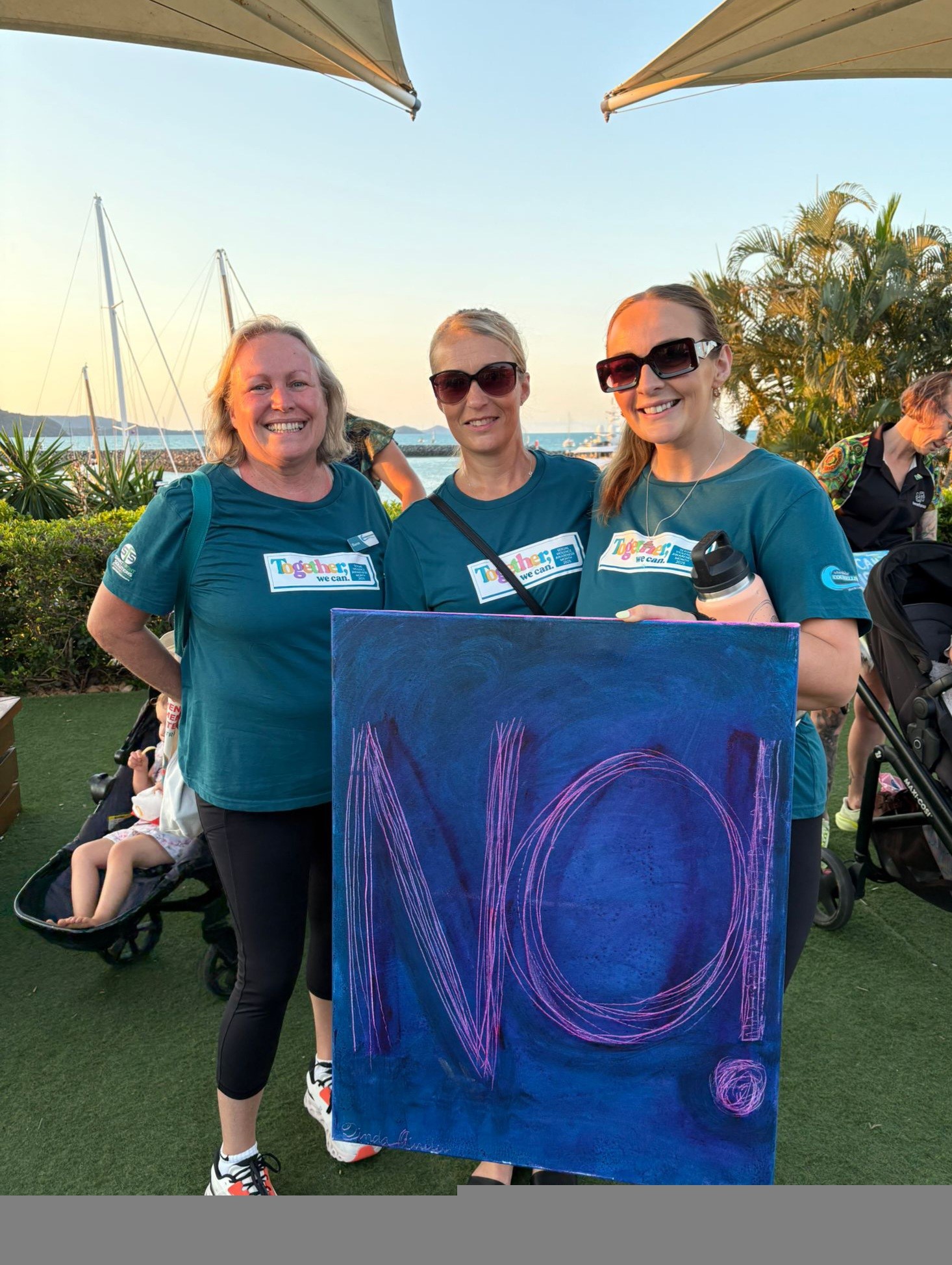
Around 50 people in the community took part in the global Reclaim the Night movement last Saturday.
Hosted by Whitsunday Counselling and Support this first-ever local march to raise awareness about sexual violence and the right for everyone to feel safe at night.
The walk began at Coral Sea Marina and ended at the Airlie Beach foreshore stage, where participants gathered to share food and conversation.
Manager of Whitsunday Counselling and Support Sharon Parker said the inaugural turnout of around 50 people was encouraging. “
It went really well, and we’re hoping to grow it each year,” she said.
The event was held as part of Sexual Violence Awareness Month and received strong community support. Local police joined the walk, along with representatives from Zonta and staff from MP Amanda Camm’s office.
Reclaim the Night is an international campaign that began in the UK during the 1970s as a protest against violence towards women and restrictions placed on their freedom of movement after dark. The movement challenges the notion that women should modify their behaviour to stay safe, instead calling for accountability from perpetrators and a cultural shift towards shared community responsibility.
Sharon said she hopes the Reclaim the Night walk will become an annual event in the Whitsundays. “It’s a message that deserves to keep growing,” she said.
Members of Whitsunday Counselling and Support at the start of the march
Whitsunday Police Station attended the march
Photos supplied

Airlie Beach’s first-ever Big Freeze proved a huge success, raising around $13,000 for FightMND over the weekend.
Event organiser and local FightMND representative Katrina Duggan said the day exceeded expectations, drawing strong community support and plenty of fun.
“It was an absolutely fantastic day, and we’ve had such great feedback,” she said.
About $13,000 was raised on the day through merchandise sales, raffle tickets, donations, and a sausage sizzle, with local businesses donating 42 raffle prizes to help boost the total.
The event was part of the national FightMND campaign, which raises awareness and funds for research into Motor Neurone Disease.
“It was incredible to see how many people and businesses got behind it,” Katrina said.
“We’re going to be back bigger and better next year."
Next year’s Big Freeze Airlie is set for October 24, 2026, with organisers hoping for an even larger turnout.
Full catalogue of event photos are available on the Club Whitsunday Facebook page.
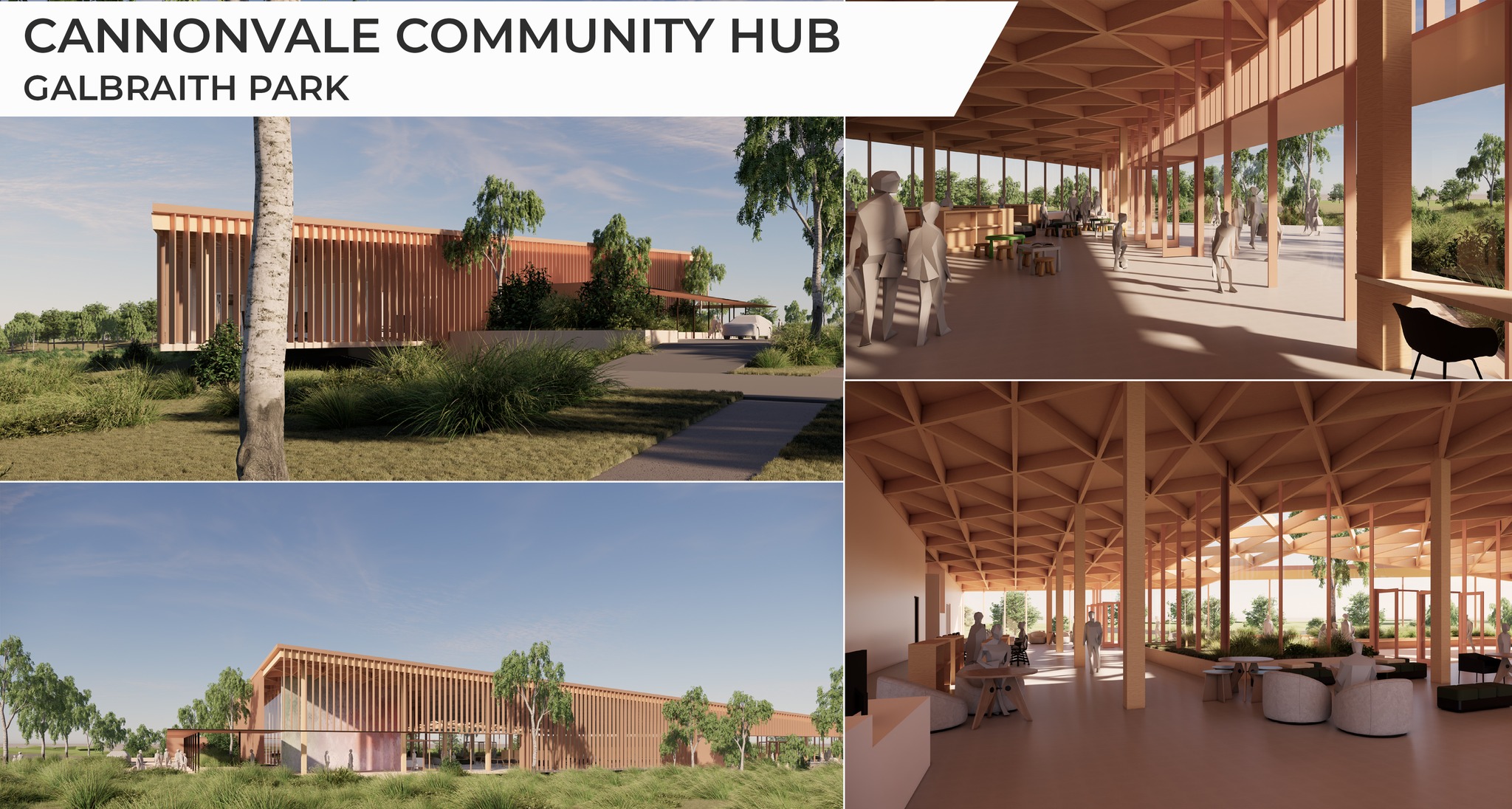
Cannonvale is one step closer to gaining a new community heart, with plans now lodged for the highly anticipated Cannonvale Community Hub, a $29.8 million project supported by the Australian Government’s Growing Regions Program.
The major development will deliver a modern library, customer service centre and a range of flexible community meeting spaces, all set within landscaped parkland. Together, these facilities will anchor Galbraith Park as the social and civic green heart of Cannonvale.
A Whitsunday Regional Council spokesperson says the project forms a key part of its long-term planning for the region’s growth, providing a central civic space that supports Cannonvale’s expanding coastal population. Over the past decade, strong population growth across Cannonvale and Cannon Valley has driven demand for community facilities in a central, mixed-use environment combining business, recreation and civic life.
The Hub will be located on the southern boundary of Galbraith Park. The site was chosen to avoid impacts on revegetation areas and flood zones while acting as the central civic anchor for Cannonvale’s evolving CBD and future town centre.
Once open, the Hub will replace Council’s existing Library and Customer Service Centre in Whitsunday Plaza, offering a larger, purpose-built facility with enhanced technology and programming.
It’s designed to complement not duplicate services already provided by other organisations such as the Whitsunday Neighbourhood Centre, ensuring a balanced offering across the region’s community network.
Construction timing is being finalised through the design and tender process. Based on the current delivery schedule, Council expects to advertise tenders in early 2026, with clearer timeframes to be shared once a contractor is appointed.
Council is also developing a Galbraith Park Masterplan to ensure the new facilities integrate seamlessly into their surroundings and support long-term growth. Public consultation will open soon, with residents able to have their say through the Your Say Whitsunday online engagement portal, community information stalls, and at customer service centres.
Further details on how to get involved will be announced in the coming weeks.

Big news for the Whitsundays, Mayor Ry Collins has been appointed to the Host Mayors Advisory Group for the Brisbane 2032 Olympic and Paralympic Games.
The advisory group plays a key role in shaping how the Games will benefit communities across Queensland, ensuring regional areas have a voice in planning and legacy outcomes. With the Whitsundays proudly set to host the Olympic sailing events, Mayor Collins’ appointment ensures the region is well represented as preparations for the world’s biggest sporting event continue to build momentum.
Mayor Collins said he was honoured to take on the role and to work alongside other Queensland mayors to help deliver meaningful, long-term benefits for communities outside the southeast corner.
“It was a great week of collaboration, innovation and inspiration, from shaping Olympic opportunities for the Whitsundays to championing local government issues that matter most to our communities,” Mayor Collins said.
Mayor Collins’ appointment was announced while he was on the Gold Coast attending the Annual Local Government Association of Queensland (LGAQ) State Conference, alongside CEO Warren Bunker and Councillors Jan Clifford, Clay Bauman and John Finlay.
The conference provided an opportunity for councils across Queensland to debate key issues, share ideas, and strengthen local government collaboration across the state.
Mayor Collins said the event reinforced the importance of teamwork and innovation as councils prepare for the opportunities the Brisbane 2032 Games will bring to regions like the Whitsundays.

With storm season now upon us (November to April), residents are urged to stay alert and prepare for cyclones and severe storms, which can bring destructive winds over 200km/h, heavy rain, flooding, lightning, hail, and storm surges.
Preparation is key. Secure outdoor furniture, wheelie bins, and loose items that could become dangerous in high winds. If you have a pool, submerge plastic furniture to prevent it flying around. Park vehicles under shelter, unplug electrical appliances, and ensure your emergency kit includes a battery-powered radio, clean water, and essential supplies.
If a cyclone warning is issued, stay tuned to local updates, contact family and neighbours, and follow all instructions from authorities. Those living in storm tide evacuation zones should plan to stay with friends or family on higher ground. Cyclone shelters are available only as a last resort, with your local council announcing openings via ABC Radio and other media.
If you remain at home during a storm, shelter well clear of windows and doors, and if the structure begins to give way, take cover in the strongest part of your house, such as a hallway or internal room.
After the storm passes, remain cautious—fallen trees, powerlines, and floodwaters pose serious risks. Boil water until declared safe, and avoid sightseeing or driving through affected areas.
For more information on emergency kits, evacuation plans, and weather warnings, visit your local council’s website, www.getready.qld.gov.au/getting-ready/protect-your-home or www.qld.gov.au/emergency/dealing-disasters/disaster-types/cyclone-severe-storm.
January's rainfall saw floodwaters cut across the highway near Proserpine (Photo Credit: Mayor Ry Collins)

Last Thursday evening Bowen State High School celebrated their 65th Academic Awards Ceremony.
Held at McKenna Hall infront of a full audience students from the school were congratualted for thier remarkable achievements.
On the night Principal Rob Harris said although a select group of students were recognised for their outstanding achievements, it is imporatnt to also acknowledge the collective contributions of the entire school community.
"Each student and staff member has played a vital role in our success, growing, and learning together throughout the year," Principal Harris said.
"Our awards evening was not just a celebration of educational achievements; but it was an opportunity to acknowledge the hard work, determination, and sacrifices made throughout the year by students and staff."
Princiapl Rob Harris noted that Bowen State High School recorded a strong year of improvement, focusing on strengthening academic support, behaviour expectations, and social-emotional learning to boost student outcomes.
In 2025, overall attendance remained above the regional benchmark of 85%, with First Nations students exceeding state targets. Academic performance across the junior years was also above expectations, with more than half of students in Years 7 to 9 earning A or B grades in English and Mathematics. Over 90% of junior students achieved a C or higher in Mathematics, and 87% did so in English.
Senior students are continuing that success, with more than 85% achieving a C or higher in core subjects—again outperforming state averages. Among Year 12s, over 98% are on track to receive a Queensland Certificate of Education (QCE), Queensland Certificate of Individual Achievement (QCIA), or vocational qualification.

Whitsunday Coast Airport (WCA) continues to soar as Australia’s fastest-growing regional airport, with Jetstar introducing its new Airbus A321 aircraft on selected routes.
The upgraded aircraft started last Sunday and offers 230 seats, up from 186, and, combined with ten additional weekly services, will deliver a 30 per cent boost in total capacity for the Whitsundays. It creates an extra 117,000 seats annually, creating more opportunities for visitors to experience the region and supporting the growth of one of Australia’s fastest-growing tourism destinations.
Mayor Ry Collins said the investment reflects Jetstar’s strong confidence in the Whitsundays as a leading tourism and lifestyle destination.
“This is a fantastic vote of confidence in our region and a clear sign that demand for Whitsunday travel continues to grow,” Mayor Collins said.
“More seats mean more visitors, more opportunities for local businesses, and more reasons for Australians to choose the Whitsundays as their next getaway.”
Council’s Director of Commercial Businesses, Craig Turner, said the upgrade highlights both the strength of WCA’s core markets and the airport’s strategic focus on sustainable expansion.
“Jetstar’s decision to deploy the A321s to the Whitsundays demonstrates their long-term commitment to our destination,” he said.
“While the Whitsundays–Adelaide service will wind down early next year as part of Jetstar’s wider network optimisation, this capacity boost across Brisbane, Sydney and Melbourne more than offsets that change.”
Mr Turner added that discussions are already underway with airlines for potential new domestic routes, with announcements expected in 2026.
With passenger numbers continuing to climb, the WCA now offers over half a million low-fare seats annually and is cementing its reputation as Australia’s fastest-growing regional airport by capacity.
Jetstar's new Airbus A321 aircraft started operations at the Whitsunday Coast Airport last Sunday. Stock image

The Proserpine PCYC was buzzing with activity over the weekend as more than 600 people turned out for this year’s Haunted House event.
Crowds lined up from start to finish to experience the spooky attraction, which featured a redesigned layout allowing visitors to queue in air-conditioned comfort.
Sergeant Billy Li from PCYC Whitsunday emphasized how great the event went, and can't wait for next year.
Alongside the Haunted House, an escape room run by St Catherine’s Catholic College students proved equally popular, with every session booked out. The students took part through the Duke of Edinburgh program, raising funds for their upcoming Adventurous Journey, while the event also supported PCYC programs including gymnastics.
PCYC’s gymnastics program continues to grow, running five days a week and catering to everyone from toddlers in Kindy Gym through to teenagers.
The Haunted House provided a fun and safe Halloween activity for local families, while also helping to raise funds for youth programs across the community.
.jpg)
In 2024, Beachfront Collaborative officially launched as the Whitsundays’ answer to flexible, high-quality workspaces. The idea was sparked by the team at PD Law, who often use the space themselves. Today, it offers a calm, professional environment designed for the wider community.
The coworking hub offers everything from hot desks and a WiFi lounge to a soundproof pod for private calls and a sophisticated boardroom perfect for training or presentations – all available to book by the hour, seven days a week.
The motivation was clear: locals, business travellers, and corporates needed an alternative to cafés, hotel lobbies, or makeshift home offices. Beachfront Collaborative is that solution, bringing professionalism and productivity together in a relaxed, lifestyle-driven setting.
Remote work culture, the rise of digital nomads, and the growing demand for flexible ‘on-the-go’ professional spaces are shaping the way we work — and industry trends are firmly on their side. To meet these needs, Beachfront Collaborative offers a seamless online booking system, open 6am–9pm daily, with no membership required, a rare innovation in regional Queensland.
Introducing coworking to the Whitsundays came with its own challenges. Often seen as something tied to big-city start-up hubs, the team shaped it to reflect calm Whitsunday vibes — professional yet relaxed. Clear signage, a two-minute booking process, and partnerships with local favourites like Fat Frog Café have made it simple and inviting for the community.
Their advice for other business owners?
Meet your clients where they are: Understand what they’re really struggling with, and design solutions that make life easier, not harder.
Keep it simple: From pricing to booking, make every touchpoint seamless. People appreciate clarity and ease.
Build local connections: Strong partnerships with local cafés, accommodation providers, and tourism organisations have been instrumental to our success.
For Beachfront Collaborative, Chamber membership has amplified opportunities, providing valuable connections, collaborations, and a platform to showcase how regional business can be both innovative and lifestyle-aligned. Now, they’re inviting locals and visitors alike to experience it first-hand. With hot desks starting from just $11 an hour, it’s the perfect way to discover a focused, calm workspace that blends productivity with Whitsunday lifestyle.
Learn more about Beachfront Collaborative: https://beachfrontcollaborative.com.au/
Contributed with thanks to Whitsunday Chamber of Commerce and Industry
%20(1).JPG)
It has been an exciting few weeks for our region, and I am honoured to represent the Whitsundays on the Host Mayors Advisory Group for the Brisbane 2032 Olympic and Paralympic Games.
With the Whitsundays confirmed as the host for Olympic sailing, this appointment gives our community a seat at the table as Queensland prepares to welcome the world. It means we can help shape the planning and delivery of an event that will bring long-term benefits for regional Queensland, not just for the southeast corner.
The Advisory Group is chaired by Brisbane Lord Mayor Adrian Schrinner and includes Mayors from across the state who will work together to make sure the Games deliver real value for our communities. It is about more than sport. It is about building stronger regional connections, creating economic opportunities, and leaving a legacy that will inspire future generations.
For the Whitsundays, the 2032 Games are a once-in-a-lifetime chance to showcase our region on the global stage. We will see investment in transport, tourism and community infrastructure, but just as importantly, it will highlight our incredible natural setting and the spirit of the people who live here.
Last week I also joined Councillors Jan Clifford, Clay Bauman and John Finlay, along with our CEO Warren Bunker, at the annual Local Government Association of Queensland Conference on the Gold Coast. It is always a valuable opportunity for councils to come together, share ideas and tackle the issues that affect us all.
We took part in discussions on service delivery, housing, technology, and the challenges of cost shifting from other levels of government. Councils also debated and voted on more than one hundred motions aimed at improving how we serve our communities.
Events like this remind me how much energy and innovation exists within local government. It is often said we are the level of government closest to the community, and that is true. Every decision we make has a direct impact on the people who live, work and raise families in our Whitsundays.
I left the conference confident that, together, we are helping to shape a bright future for the Whitsundays and for regional Queensland.

The Aged Care Reform Info Hub is now open at Proserpine Library! As part of the hub, we’re hosting a special one-hour information session at 10am on Thursday 6 November at the library.
The session will feature guest speakers from the Department of Health, Disability and Ageing, along with Aged Care Specialist Officers from Services Australia.
This is an excellent opportunity to learn about the latest aged care reforms, receive guidance on the My Aged Care platform and access expert advice and resources to support yourself or your loved ones.
For more information, contact Proserpine Library on 4945 0275.

Fifty years ago, on Monday, November 3 1975, just after 3 pm, word raced through the town that the ninety foot, 3000 ton sugar bin at the Proserpine Sugar Mill (PSM) had collapsed. This shocking news was followed quickly by a wave of relief when residents learned that no one was injured in this disaster. By nightfall, thousands of sightseers, most armed with cameras, had inspected the damage. The disaster attracted media attention nationwide.
The sugar bin was the largest sugar storage container in the Australian industry apart from bulk terminals and represented an important step forward for the mill which was the most isolated of all mills in terms of proximity to bulk terminals. Designed and constructed by NQEA, it was commissioned for use at the start of the 1975 crushing, but until that fateful day had not been filled to anywhere near its capacity.
To make up for previous lost crushing time, the mill had continued through the weekend and by Monday morning the bin was nearing capacity for the first time. After lunch, Queensland Government Railway (QGR) sugar wagons were shunted into the rail sidings under the bin. Loading had just commenced when some startling noises were heard from the structure. Workmen loading sugar from the huge hopper received a warning when bolts began to fly apart like pistol shots. They immediately fled from the site and the area was evacuated as the gigantic bin began to buckle and crumple downwards. It was estimated that from the first snapping of the bolts and buckling, ten minutes elapsed before the collapse was complete. Fortunately, the bin fell towards the river otherwise it would have been extremely difficult to construct the temporary facilities which allowed crushing to recommence the very next day.
What followed was a marathon effort by all. Within an hour, salvage work had commenced. Mill employees worked throughout the night construct facilities to load sugar to rail - some being on duty for more than 24 hours. The tramway department laid rails around the collapse to rejoin the existing siding. Fitters, boilermakers, electricians, and trades assistants built a ramp and small hopper to load the rail wagons and diverted and constructed belt conveyors and bunkers within the mill. The two mobile cranes were unable to keep pace with requirements and as a result, a lot of the material had to be moved by hand – even large heavy steel girders some fifteen metres long were man handled from the backyard into the mill. These were placed on their side and supported to allow end loaders carrying sugar from a bunker inside the mill to be driven up to a small loading hopper erected over the boxes on QGR sugar wagons.
Plant operators from the mill and the Proserpine Shire Council performed this non-stop and extremely arduous task for several weeks until a vessel intended to be the new mud and fly ash bin was erected with its own conveyor system. Thanks to the steady and capable action of mill officials and workers, almost all of the sugar from the collapsed bin was reclaimed. Thankfully, too, the weather remained fine. The spilt sugar was open to the elements and rain would have been a calamity.
A new bin was commissioned and built. None of the steel work from the original structure could be used in this new bin as every component was distorted. The new bin was put into service twelve months later in November 1976 and is still in use today.
Story and photo courtesy Proserpine Historical Museum. Information also sourced from Frank Doolan (PSM Engineer 1978 - 1990) and “Proserpine Guardian”.
A collapsed sugar bin engulfed two rakes of rail wagons. Photo supplied.
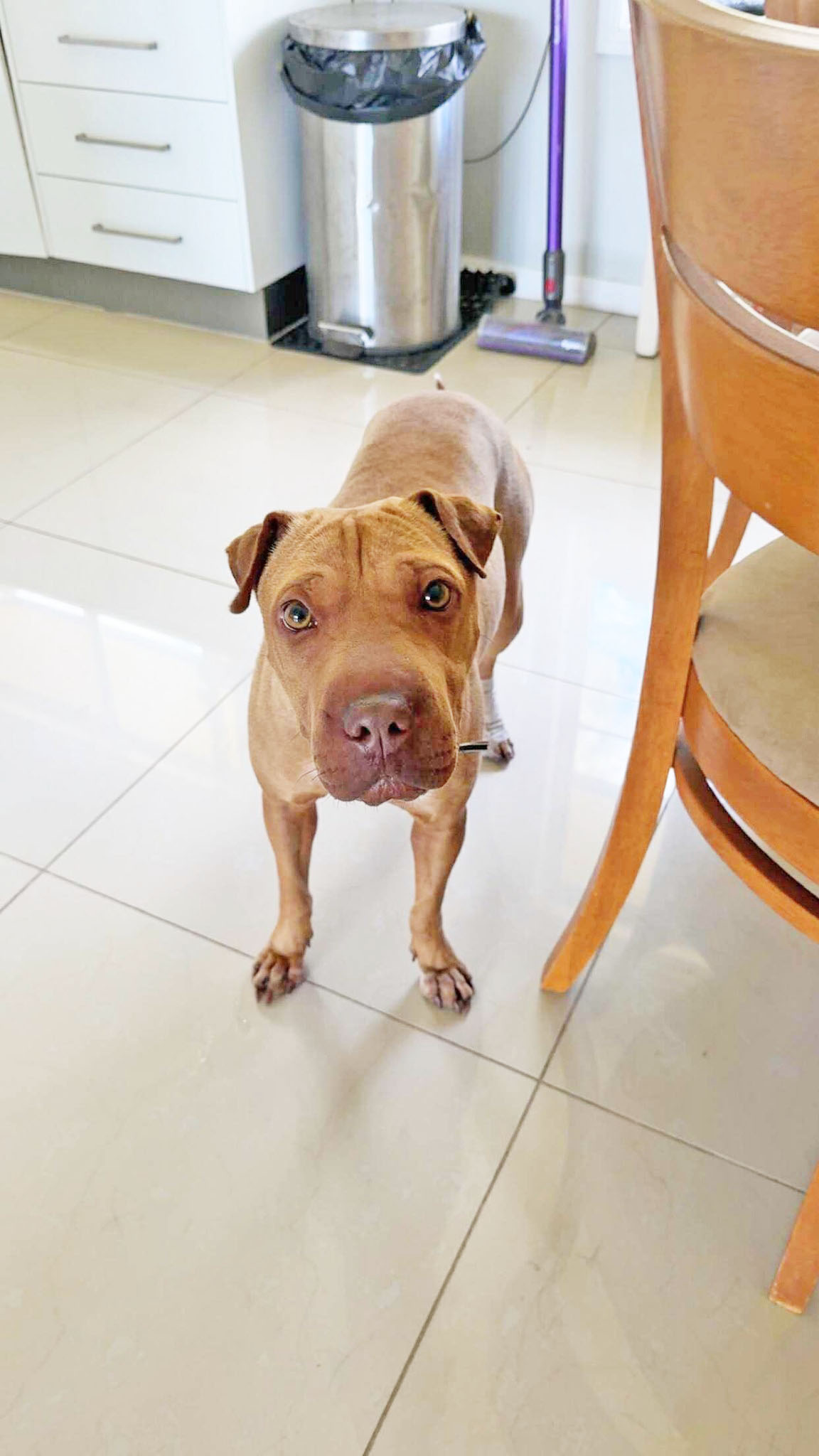
If you’re searching for a gentle, affectionate and loyal companion, look no further, Narlyn is your girl!
This beautiful rescue sweetheart was saved and is now thriving in foster care, where she’s learning just how wonderful life can be. Narlyn is soft-natured, loving, and ready to find her forever family who’ll show her the same kindness she gives in return.
She enjoys the simple things, a comfy spot by your side, a gentle walk, and the company of other dogs. With her sweet temperament and friendly nature, Narlyn would make a perfect addition to a loving home ready to offer her patience, cuddles and care.
About Narlyn
• Sweet-natured and friendly with people
• Dog-friendly and enjoys the company of other pups
• Medium energy – loves her walks and playtime
• Affectionate and adores being close to her humans
Health
• Vaccinated
• Desexed
• Microchipped
• Flea, tick and worm treated
Narlyn has come such a long way in foster care, showing just how resilient and loving she truly is. She’s ready to bring joy, comfort and unconditional love to her forever home.
If you’d like to meet Narlyn and see if she’s the perfect fit for your family, email Bowen Collinsville Pet Rescue at bcpri.adoptions@gmail.com today!
Hi Everyone,
It's definitely heating up at the moment, and that means one thing... stingers are back!
Fun fact about stingers, or more formally known as 'Irukanji's,' is that they have lots of eyes, with some having up to 24! Some are just sensitive to light and others help form actual images, although not to the level of detail our human eyes can.
In this weeks Ruth2Reef, we cover what to do if you come into contact with a stinger as well as information on sharks and their six senses.
Additionally, there has been some exciting news in the turtle world, as experts have announced that the Green Sea Turtle is no longer classified as endangered thanks to decades of conservation.
What a win for nature!
Happy reading,
Ruth

By Ruth Puddefoot
What is a stinger or Irukanji? Irukanji refers to tiny, highly venomous box jellyfish found in northern Australia. The Irukanji gives a nasty sting which can cause the severe medical condition, Irukanji Syndrome. The Irukanji was named after the Yirrganydji Aboriginal people who are native to the coastal region near Cairns.
Irukandji Syndrome often causes mild symptoms, but in very rare cases, it can be life-threatening.
While stinger season is a regular occurance here in the Whitsundays, here is some things you can do to prevent getting a nasty surprise if you choose to swim in the turquoise waters of queensland.
1. Wear Protective Clothing
Many boat operators in the Whitsundays will provide you with a 'stinger suit,' this can come in the form of a full body lycra or neoprene suit, and they do this for good reason. This is the number one way of preventing stings, as suits protect up to 75% of the body and cover areas where stings more commonly occur.
While not all suits offer equal protection - lycra or neoprene offer the greatest protection.
Its important to note that you should also wear protective clothing when wading, there were several reports last year of stings from wading alone.
2. Swim in stinger nets or between Life guard flags at beaches
Ensure if you are going for a swim you opt for a dip in the stinger nets or swim between the flags and follow Life Saver’s advice if swimming at patrolled beaches.
Stinger nets are effective at keeping out dangerous Box Jellyfish, and stings have significantly decreased since their introduction. However, they cannot block the much smaller Irukandji, as smaller mesh would clog too quickly. For your safety, exercise caution when swimming in stinger enclosures and avoid interfering with the net or pontoon.
3. Be aware of weather conditions
There are several high-risk conditions that indicate Irukandji such as sustained NE winds, flat or calm weather, sea lice felt in the water and/or salps/plankton present, make sure you check the conditions before entering the water.
4. Vinegar
Make sure to always carry vinegar when going boating or undertaking other marine activities. Vinegar inactivates the stinging cells, so is a great preventative method to stop them injecting more venom.
Irukanji Jellyfish. Photo sourced.
Publishers Indemnity. Any individual or entity that places advertising, supplies copy material, or submits editorial content to Core Life Publishing agrees and undertakes to ensure that all such material:- Does not infringe upon any copyright, trademark, or other intellectual property rights;- Is free from any content that could be considered defamatory, libelous, or slanderous;- Does not infringe upon any rights related to privacy or breach of confidence;- Contains no obscene, indecent, or otherwise unlawful material;- Complies fully with the Trade Practices Act and all other applicable laws, regulations, or statutes.Furthermore, by submitting or placing such material, these individuals or entities agree to indemnify and hold harmless the publisher, Core Publishing and Events Pty Ltd, and/or its agents from and against any and all investigations, claims, demands, liabilities, damages, costs, or judgments arising out of or in connection with the material provided. All material is believed to be accurate at the time of printing and remains the copyright of Core Publishing and Events Pty Ltd.
© 2026 Mackay and Whitsunday Life Pty Ltd.
