
Independently Owned, Locally Grown, Community Loved

Rarely do you turn your nose up at a cheap deal, an opportunity to save some money. Life is too expensive, kids cost too much … even when they grow up and go to uni. But this was the discount I never wanted, the bargain I never sought. I was about to have lunch with a bunch of colleagues and friends at a local pub one Friday recently but couldn’t find anything on the menu that appealed to me that day. I wanted something light, or a smaller dish that wasn’t going to weigh me down for the rest of the day. I was ordering at the bar and the barmaid, trying to assist in my search for a lighter or smaller meal, came up with the words I didn’t want to hear. Her voice was loud and clear, easily picked up by my friends: “Why don’t you get one of the seniors’ meals?” There was a split second of silence when I took in and tried to comprehend the strange words I had never heard directed at me, then another split second of panic as I realised the friendly barmaid had a voice like a megaphone and my friends were well and truly within earshot at a nearby table. Then came the laughter from my friends who for some reason thought this was the funniest thing they had heard that day. “A seniors’ meal! Yeah, mate get yourself a seniors’ meal!” Apparently, it was hilarious. Now, I don’t know the exact age one becomes eligible for a seniors’ meal, or any seniors’ discounts for that matter. I have to keep working hard and staying fit and feeling young and in the prime of life so that I can continue to pour funds into the funnel that provides food and accommodation and uni life for kids and family. I have deliberately avoided thoughts of being a “senior” and, therefore, taking advantage of the discounts and special deals that no doubt are on offer. I googled the qualifying age the other day and it said traditionally Queensland set the age at 65. Which means I’m not qualified for seniors’ stuff yet. I suspect there are opportunities for “younger seniors” but I don’t need to go there. There is, of course, nothing wrong with seniors’ deals and one day I am sure I will take full advantage of them. But it is more of a mindset for me, living life, selling houses and working in a way that deems age irrelevant because there is too much to do. I might not look young but I need to feel young so I can keep going … so no thoughts of seniors’ anything. In the spirit of fighting against the tide of time, I stepped up my exercise routine recently and joined one of the flash new gyms in town. The space, lighting, music, and “feel” of the place create an “energy” that helps inspire you to work hard and get results. When it comes to real estate, I am a buyer who thinks more about location than how modern and terrific the house is, which is why I live in West Mackay. But a venue like that gym reminds me that the right house, with the right features and feel, creates an inspiration that elevates the experience of life. It’s not just about the location, it’s how you feel when you are there, what your life feels like and looks like. Location is important but sometimes the most convenient location can’t provide the elevated experience that a particular house can offer. It can change the way you feel and interact, how you entertain and enjoy yourself. The right environment can bring out the best in you and inspire you to greater heights. Even if you’re a senior.
Read the full story
1986 – M&P Auto's Established, Archibald Street [860m2] 1987 – Moved to Satellite Crescent [3539m2] 1990 – M&P Transport Division 1994 – Shipping Containers 1997 – Max Lamb Jnr Joins M&P As Director 2002 – Moved to Spiller Avenue [16,000m2] 2004 – Authorised Duckbill Agent 2005 – First Transportable Building Designed & Built, Terry Seay joins M&P as a Director, Incorporated Company 2006 – First Mobile Crib 2008 – Opening of Rockhampton Depot (3998m2) 2009 – Combo Toilets 2010 – Authorised Teco Agent 2011 – Mobile Crib Rooms to PNG 2013 – Moved to Diesel Drive 2014 – Added Heavy Haulage To Transport Fleet 2016 – First Charity Golf Day, Authorised Tennant Agent 2017 – Authorised Earth Track Agent 2019 – Undercover Shed Extension 2021 – Wheeled Products division expanded, First Solar toilet trailers produced 2022 – Mobile Crib Rooms Added to Standard Hire Fleet 2023 – Largest Supply contract entered into at $4.9m 2024 – Cyclone Block & Log Tiedown System added to Manufacturing, Sales & Hire 2025 – 10th Annual Charity Day Raises 75k in one day, Manufacturing Excellence Award 2026 – 40th Year Milestone Achieved
Read the full story
Every rescue kitten carries a story. Some begin in uncertainty, some in hardship, but all share the same quiet hope… to one day belong. Then there is Jinx. Sleek, black, and quietly enchanting, Jinx is the kind of kitten who stays with you. Like many rescue kittens, her early days were not easy, but with patience and care, she has discovered her confidence. Now, her playful spirit and affectionate nature are shining through more each day. Jinx is curious and clever, happiest when she is exploring her surroundings, watching the world from a sunny window, or settling in close after a burst of play. She is a reminder that sometimes the most overlooked animals—like black cats—have the most to give. Those who open their hearts to them are often rewarded with a loyalty that runs deep. Each of these kittens is on their own journey, but Jinx shares the same destination: a home filled with understanding, patience, and love. Because in the end, it’s not just about rescuing animals—it’s about giving them the chance to truly belong. Please contact foster carer Robin 0457 134 750. Contributed by Mackay Pet Rescue Inc.
Read the full story%5B36%5D.JPG.jpeg)
After nearly five decades of teaching, one of Mackay’s most passionate music educators is preparing for a bittersweet farewell as she leads her final ANZAC marching band trip. Kathryn George OAM has spent almost 49 years at North Mackay State High School, where she helped build the school’s renowned marching band program from the ground up. This year’s Brisbane ANZAC Day March will mark her final major appearance before handing the program to the next generation of staff. Mrs George formed the marching band in 1992 alongside fellow founding director David Bayliss. Since then, the program has grown into one of the largest single school marching bands in Australia. She said the program began as a way to extend talented instrumental music students beyond simply playing their instruments. “It’s a specialised skill and an extension to just playing an instrument, where you actually have to march and hold your position both vertically and horizontally while you’re playing,” she explained. Over the years the band has performed on some of the world’s biggest stages, representing Australia at the Sydney 2000 Olympic Games and the Beijing 2008 Olympic Games, performing at Disneyland and the Los Angeles Independence Day Parade, and even appearing at the Shanghai Tourism Festival. “It’s certainly one of the largest single school marching bands in Australia,” Mrs George said. “It’s so unusual – and rather wonderful – that it comes from a little town like Mackay rather than a big capital city.” This year the school band will again travel to Brisbane with around 90 students preparing for the parade, where they will appear as the first civilian band at the start of the procession before later marching alongside the army contingent marking its 175th anniversary. Among those helping carry the program forward are former students who have returned as staff members. “I know it’s in good hands,” she said. This year’s band will be led by Year 12 drum majors Chloe Waples and Alana Plunkett, who were selected after extensive auditions. Reflecting on her career, Mrs George said music has always been central to her life and she believes it plays a powerful role in education. “I’m really passionate about how important music is in learning for students and how it enhances the whole learning experience,” she said. “It teaches self-discipline and patience. With an instrument you have to work at it… it’s not a quick gratification, but it’s highly rewarding.” When she retires at the end of the year, she hopes to spend more time with family, including welcoming a fourth grandchild. And as she prepares the band for Brisbane one last time, she says the milestone fills her with immense pride. “I’m just so proud of my legacy and that the teachers continuing the tradition have come up through the band themselves.” “It’s going to be a very bittersweet moment, but it’s something I’ve been preparing for a while now.” After nearly 49 years at North Mackay State High School, Kathryn George OAM is preparing to lead her final ANZAC marching band. Photo supplied
Read the full story

This spectacular photograph of a Flatback Turtle was recently reported on the Eye on the Reef sightings network by a tour guide at Cape Tribulation, leading a push up and down the coast to share any wildlife sightings from the top to the bottom of the reef.
Since 1980, the Great Barrier Reef Marine Park Authority has been committed to conserving Flatback turtles through long-term monitoring of their critical nesting site. They only nest in Australian waters feeding on soft corals, sea pens and jellyfish often in the inter-reefal area (the waters between the Reef and the shore).
Who knows what wonders are waiting in our waters here in the Whitsundays?
Submitting valuable data about wildlife, reef health, and incidents out on the water can better help scientists protect our reef, so visitors and locals alike are encouraged to download the free Eye On The Reef app and share any wildlife you see.
1- A rare flatback turtle spotting drives a rally for more reporting on the reef. Photo: Facebook

New research from James Cook University (JCU) has found that winter conditions may play a significant role in determining how coral on the Great Barrier Reef responds to heat stress during the following summer.
The study, recently published in the journal Coral Reefs, suggests coral bleaching is influenced not only by extreme summer temperatures but also by ocean conditions months earlier during the cooler season.
JCU researcher Valerie Cornet, who led the study, said most forecasting tools currently focus on summer temperatures when predicting bleaching events.
“Most bleaching prediction tools focus on summer heat and assume that corals start each summer in the same condition,” Ms Cornet said.
“We wanted to see how cooler seasons, particularly winter, influence bleaching in the following summer.”
The research team analysed aerial and in-water bleaching observations along with sea surface temperature data across the central Great Barrier Reef between Townsville and Port Douglas, focusing on the 2016 and 2017 bleaching seasons.
Study supervisor Scott Heron said those years provided a unique opportunity to examine how coral responds to repeated heat stress.
“The scale and severity of these mass bleaching events were unprecedented, affecting vast areas of the reef,” Professor Heron said.
“This gave us a rare opportunity to study how repeated heat stress and recovery periods interacted, including effects before summer conditions set in.”
The research found that prolonged warmer winter temperatures can worsen bleaching in the following summer, while moderate winter warmth may actually help corals cope better with future heat.
“It’s a Goldilocks range –– it’s not too hot, not too cold, it’s just right,” Professor Heron said.
“We think that corals living in these conditions might be better prepared for a stressful summer because they are exposed to a little bit of prior heat.”
Researchers say incorporating winter conditions into reef monitoring systems could improve early warning systems and help guide future reef protection efforts.
Heart Reef View Great Barrier Reef Stock Photo 2512856481 | Shutterstock
CAPTION: 2016 and 2017 were the first consecutive years of severe bleaching on the GBR. Photo credit: Mikael Djavadi

The Great Barrier Reef is the largest coral reef system on Earth and one of Australia’s most iconic natural wonders. Stretching for more than 2,300 kilometres along the Queensland coast, it supports thousands of species of fish, corals, molluscs and other marine life. Yet alongside rising ocean temperatures, another invisible threat is increasingly affecting the Reef — ocean acidification.
Ocean acidification occurs when the ocean absorbs carbon dioxide (CO₂) from the atmosphere. The world’s oceans absorb roughly one-third of the CO₂ released by human activities such as burning fossil fuels and deforestation. When CO₂ dissolves in seawater it forms carbonic acid, which lowers the water’s pH and alters ocean chemistry. Since the beginning of the industrial revolution, the average acidity of surface ocean waters has roughly increased by 30%.
It is worth noting that even slight shifts in ocean chemistry can have major consequences for marine organisms.
Corals, the foundation of the Great Barrier Reef ecosystem, are particularly vulnerable. Reef-building corals construct their skeletons from calcium carbonate, a mineral formed using carbonate ions dissolved in seawater. As ocean acidity increases, the availability of these carbonate ions decreases. This makes it more difficult for corals to build and maintain their skeletons, slowing growth and weakening reef structures.
Scientists have already observed declining calcification rates in many reefs. Research suggests that coral calcification across the Great Barrier Reef may have dropped by roughly 15–20% since 1990. Slower growth means reefs recover more slowly from disturbances such as storms, bleaching events or outbreaks of coral-eating crown-of-thorns starfish.
Ocean acidification can also cause existing coral skeletons to dissolve more easily. In more acidic conditions, calcium carbonate becomes less stable, which can lead to erosion of reef structures over time. This weakens the physical framework that supports the entire ecosystem.
The impacts extend beyond corals themselves. Many other reef organisms — including shellfish, plankton and coralline algae — rely on calcium carbonate to form shells or skeletons. Increased acidity can reduce their growth, survival and reproductive success.
Despite these challenges, scientists emphasize that the future of the Great Barrier Reef is not yet sealed. Reducing carbon dioxide emissions remains the most important step in slowing ocean acidification. This means moving away from fossil fuels and transitioning to renewable energy as quickly as possible.
At the same time, local conservation efforts — such as improving water quality, managing fisheries, and protecting vulnerable reef areas — can help strengthen the Reef’s resilience.
The Great Barrier Reef has survived dramatic environmental changes over millions of years. However, the rapid pace of modern climate change and ocean acidification presents an unprecedented challenge. Protecting this remarkable ecosystem will require both global climate action and continued efforts to safeguard the reef locally, ensuring that future generations can continue to marvel at one of the world’s greatest natural treasures.
Contributed with thanks to Whitsunday Conservation Group.
Captions
Healthy reef
Photo supplied

This week’s newsletter ends on the Ides of March, and with no Julius Caesar in sight, it was all great news!
Starting with Tuesday the 10th, first place went to skipper John Brown, ably assisted by lead Ian Passfield, who is improving with every game, and second David Bradley, who also played well as part of a strong team effort. Second place went to the team led by skipper Tony Whitehorn with Sue Dakin, who, as a rookie, is practicing hard and developing into a classy player for our little club.
Wednesday afternoon’s Social Bowls was arranged by big John Askew after illness sidelined Mervyn Stewart. The biggest winning team of the day was led by Tony Whitehorn with lead Keith Bates and second Rene Thommen, another impressive new bowler who is improving at a rapid rate.
Wednesday night’s Business House Bowls, organised by Yvonne Spees with husband Bob Spees, saw Team Girl Power claim their sixth straight win, taking them to 18 points. Four teams remain on 14 points, with all games very close—often decided by just a single point. With all 12 teams still in contention, any team could take the title.
The Men’s and Ladies’ Singles competitions are progressing well, with results to be published next week.
No Scroungers were played this weekend due to 14 teams competing in the Mixed Pairs. By Sunday morning, four teams remained: Joan McGrath with Peter Barrett versus Margo Stanley and John Fielding; and Tony Whitehorn and Betty Whitehorn against Bobby Spees and Ladda Purdie.
Sunday afternoon’s final was contested between John Fielding and Margo Stanley and the pair of Bobby Spees and Ladda Purdie. To everyone’s surprise, it was Ladda—who had spent the past two years nursing her husband Bruce Purdie before he sadly succumbed to diabetes—and Bobby, who had been suffering from a severe bout of vertigo and was close to withdrawing, who triumphed. A wonderful win against all odds, and they are this week’s featured photo.
Sunday afternoon also saw 20 bowlers take part in social bowls. Bar manager Fiona Greener threw the dice, awarding five points for each winning team plus one point for every end won. The winning team, with 18 points, was led by skipper Dennis Donadelli, ably assisted by Lyn Graham.
Second place went to the capable team of Andy McDougall with lead Alan Pershouse on 17 points. Third place went to the team of Mark Mawson with second Gail Simms and lead Liz McManus on 15 points, rounding out a fantastic afternoon of action.
Captions
Bob Spees and Ladda Purdie after their win in the Mixed Pairs
Photo supplied

In the vibrant real estate landscape of the Whitsundays, Melinda Butcher has built a reputation as a trusted and energetic property specialist who combines professional expertise with genuine local insight.
Known for her down-to-earth nature and friendly approach, Melinda brings enthusiasm and determination to every property journey. As a devoted mother of two and long-time local, she understands the lifestyle that makes the Whitsundays such a special place to call home. Having experienced both coastal living and larger acreage properties herself, she offers clients a practical, firsthand perspective on the region’s diverse property opportunities.
Melinda’s career spans more than two decades in leadership and sales roles, where she developed a strong customer-focused philosophy that continues to shape her work in real estate today. Her approach centres on building lasting relationships, ensuring that every client feels supported, informed and confident throughout the process.
“Real estate is more than just a transaction,” Melinda says. “It’s a journey that can be emotional, personal and incredibly rewarding.”
With that philosophy at the heart of her work, Melinda strives to bring trust, transparency and professionalism to every step — whether she’s helping a family find their dream home, guiding a seller through the market, or welcoming newcomers to the Whitsundays community.
Her strong work ethic, local knowledge and commitment to achieving results have quickly made her a valued resource for buyers and sellers across the region.
For Melinda, real estate isn’t just about property — it’s about people, community and helping others find their place in one of Queensland’s most beautiful coastal regions.

World Storytelling Day, observed on 20 March, celebrates the threads that hold families together: our stories. Stories of what people valued, how they coped in hard times, what made them laugh, who they loved, why they made certain decisions, and the lessons life taught them.
This day is also a reminder to act while we still can.
Dementia is one of the most significant health challenges facing Australia. According to Dementia Australia, around 446,500 Australians are currently living with dementia, and the number is expected to rise. For many families, dementia brings an extra layer of grief because it can take away a person’s ability to recall and share their own life story.
I understand this personally. My dad lives with dementia, and there is a particular kind of sadness that comes with it. It is the feeling of, “We missed it.” We missed the opportunity to sit down, ask the right questions, and capture his life story while his memory was still there.
Memory loss is often gradual. Over time, whole chapters can become difficult to access, and families are left with unanswered questions.
Many people plan to write things down “one day”. The problem is that “one day” might be too late.
Writing a life story is one of the most practical ways to preserve what matters. It captures the voice and personality of the person, their version of events, and the context that brings family photos to life. For children and grandchildren, it can become a source of comfort and connection for decades.
Writing your life story can begin with a few simple conversations and a handful of questions: Where did you grow up? What was school like? What work did you do? Who were your closest people? What tested you? What are you proud of? What do you hope your family understands about your life?
One memory often leads to another. As people talk, stories return. Details emerge and the shape of a life becomes clear.
World Storytelling Day is a reminder, and it is also an invitation. If there is someone in your life whose story you value, begin now.
Contributed with thanks to Natalie Stockdale – Airlie Beach Author

This weeks poem was submitted by Amelia Rutley. If you’re interested submit your poem to sebastian@lifepublishinggroup.com
She surrendered
To the slowness, to the simple
To the shuffling of priorities and the shifting of goalposts
To being at the bottom of the list with her partner.
And maybe the dog.
To scooters ridden down hallways
To catch ups at playgrounds and fragments of conversations
To sticky banana good morning kisses and soggy breadcrumbs underfoot
To crayon boxes beside dinner plates
To Disney soundtracks on repeat
To late nights, early mornings and 2am stumbles down hallways.
She surrendered.
Because to fight it would mean to be drowned by it.
And so she was swept up in the tides of change, of mess, of chaos, of love and of life.
And the sands shifted below her and the waves ebbed and flowed and crashed and calmed
around her.
Until one day she found she could stand again
In waters that felt new, but familiar at the same time.
She breathed in her surroundings - soaking in the sunlight, drinking in the details, stretching
into her space
And she lived.

Bowen musician Natalie June has released her new single ‘Ticket to Paradise’, now available on streaming services such as Spotify and Apple Music.
Natalie got her start performing shows in and around town.
“I didn’t have a lot of confidence to pursue music at first. It was just something I did quietly at home,” she said.
“Then, in the last couple of years, I started going to open mics at the Yacht Club and got more comfortable performing in front of people.”
Since then, Natalie has had opportunities to support local and touring festivals.
“Those opportunities were what really inspired me to start recording music.”
Natalie recorded all the instruments herself, using a laptop and interface. With the new release – inspired by the likes of Lana Del Ray and Nora Jones – a music video was filmed in Greys Bay with some of it also captured at Rose Bay, showing off the natural beauty of the region.
The song focuses on inner happiness and belonging. Head to YouTube to see the ‘Ticket to Paradise’ video and get a glimpse of Bowen’s great foreshores.
Captions
Photo source: Facebook
Welcome back to the creative corner. I just want to start by saying how much I appreciate the poetry submissions. In the first few weeks it seemed like it wasn’t going to work but now my inbox is flooded and I couldn’t be more excited to share people’s poetry across the region. Keep sending it in!!
I’ve decided recently that I want to read more Australian books and watch more Australian cinema. As a country that imports a lot of media and culture from overseas (mainly the US and UK), we risk losing our own sense of self by refusing to engage with our own stories. Consuming Australian-made media, and promoting its creation, allows us to better understand Australian identity and politics. It can open discussions and help people reflect on what it means to live in this country.
I recently watched ‘The Adventures of Priscilla, Queen of the Desert’ (1994), an absolute classic. Some of my favourite Australian films would have to be ‘Wake in Fright’ (1971), ‘Picnic at Hanging Rock’ (1975) and ‘Muriel’s Wedding’ (1994).
I’m currently reading ‘Cloudstreet’ by Tim Winton which I borrowed from the library and it’s absolutely incredible. His work easily rivals that of the greats on an international stage. More Australian authors I’d like to check out are Patrick White, Christos Tsolkias, Helen Garner, Richard Flanagan and Peter Carey.
Consider what your favourite piece of Australian media is.
%20Dam%20site%20pre%20construction.jpeg)
Thirty-five years ago, on March 19, 1991, the Proserpine Dam was opened by Premier Wayne Goss. Three months later, the public was treated to a gala day to celebrate its completion. For years, the district had endured severe flooding and this dam promised and delivered relief from these regular and often devastating occurrences.
Debate over the importance of a dam on the Proserpine River had a long history dating back to 1939 when the Chamber of Commerce first approached council to gain urgent consideration to provide a town water supply. Cost estimates proved too big a project for Council. It wasn’t until October 1946 that approval was given for a loan to allow the long-awaited water supply to become a reality. In 1947, damage from heavy rains which caused infrastructure and food shortages, was further proof of the need for a dam on the river.
But progress was slow. Despite numerous floods that underscored the community's vulnerability, the decision to construct the dam remained contentious. Decades of advocacy for town water supply continued, even after a fire in 1949 destroyed Main Street. It took another thirty-four years before the Shire Council was able to draw the government’s attention to the urgency of this matter. The pivotal moment came in 1983 when National Party member Mr. Geoff Muntz championed the cause and successfully initiated the dam's construction, marking a decisive step toward securing the region's future water supply and flood protection.
Approval for the dam was received in January 1985 followed by establishment of the dam village in 1986. Thiess Contractors Pty Ltd led the main embankment, spillway, and tower bridge construction, with local businesses handling walkways, shelter sheds, and barbecues. Additional project contributors included Kalanda Constructions, Transfield Corporation (Qld) Pty Ltd, VSL Prestressing (Aust) Pty Ltd, and the Water Resources Board.
The dam's construction was not without challenges. On December 13, 1988, floods destroyed infrastructure and trapped three Queensland Water Resources workers. On December 24, 1989, John Coutts was fatally struck by a reversing front-end loader. He was wearing ear plugs and apparently did not hear the huge machine approaching.
Almost five years after construction began, the $50 million dam was completed by Christmas 1990. It was expected to take several years to fill but Cyclone Joy moved in on Christmas Eve and three months later Lake Proserpine was 98% full, providing a magnificent site. It had already proved its value by saving Proserpine from potentially disastrous flooding during the wet season of 1990 – 1991 when the area received two years of annual rainfall in two months.
It would be another twenty years before the first overflow which occurred in late December 2010; a source of great relief after it had fallen to its lowest level of 10.7% in 2007. There were further overflows in March 2012 and then March 2013 and now, in March 2026, water is once again spilling over the dam wall.
The Peter Faust Dam was so named in recognition of Mr Peter Faust who, as Chairman of the Shire for over fifteen years, was instrumental in securing government support for its construction. Furthermore, about 15000 acres of land had been resumed from the Faust family’s Proserpine Station for the lake which would be formed by the dam.
Today, residents and visitors enjoy the many benefits of this dam which provides mitigation from flooding; an invaluable irrigation source for farmers; a reliable water supply for residents from Midge Point to Bowen and out to the islands; and a popular recreational facility.
Peter Faust Dam continues to be “a dam good story” …
Story and photo courtesy of Proserpine Historical Society. Information sourced from the PHMS publication, “A Dam Good Story”
Captions
%20the%20dam%20today.jpg)
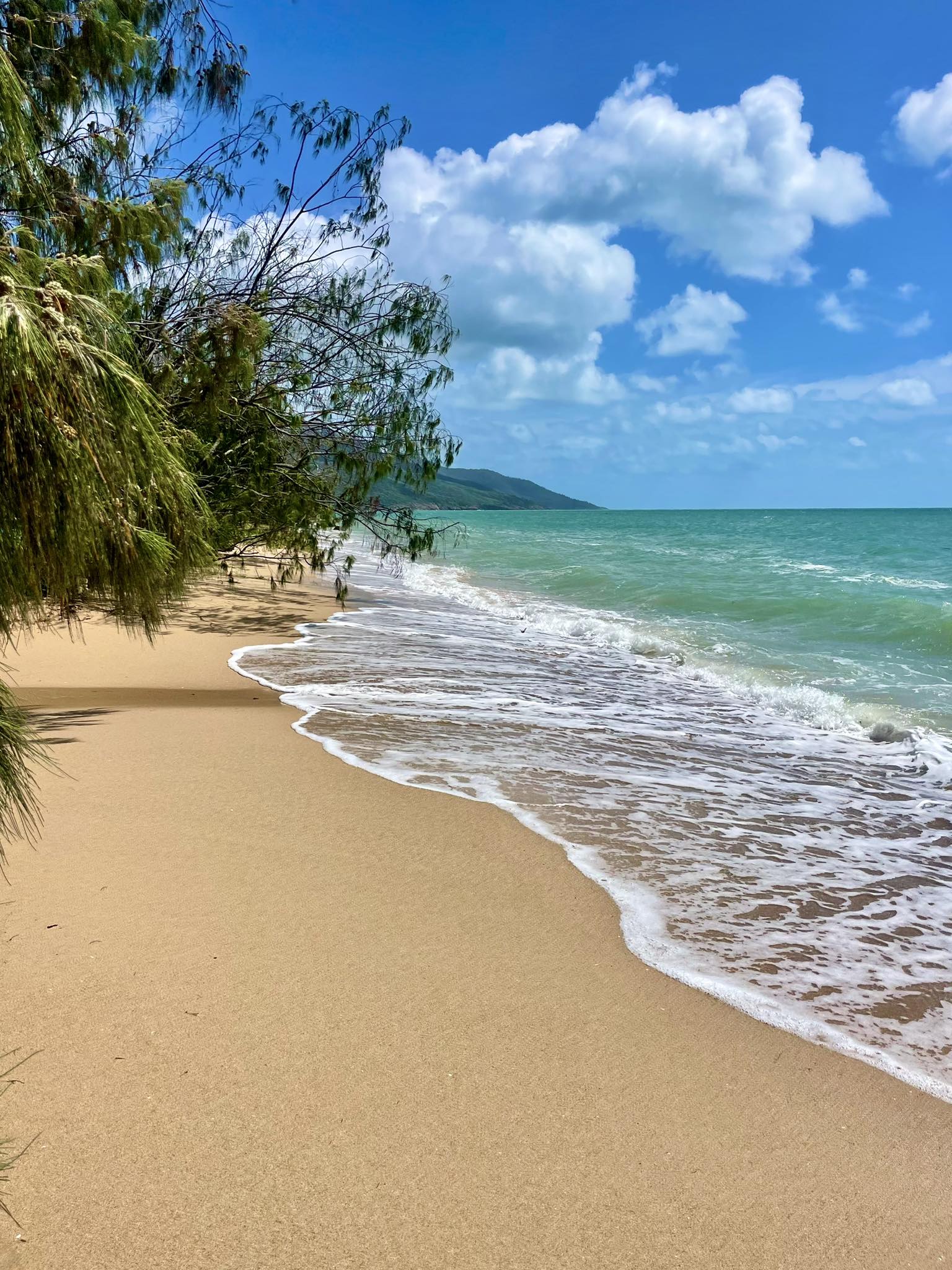
This week’s theme was In My Town, and the winner is Alissa Tomlinson with this gorgeous photo taken at serene Hydeaway Bay.
This week is free choice, with members invited to submit on any topic that inspires them.
Photos supplied by Whitsunday Amateur Photography group on Facebook.
%20YOY.jpg)
On Sunday 15th March, the Whitsunday Lions Club hosted the Youth of the Year Zone Final at Whitsunday Sailing Club. It was tough competition between Isaih Howell (Bowen State High School), Kodie Mackie (Collinsville State High School), Sophie Morgan (St Catherine’s Catholic College) and Tiarne Watson (Proserpine State High School). Despite great performance on everyone’s part, Kodie Mackie took away the public speaking prize and Tiarne Watson won overall. Congratulations to all who participated and everyone who helped organised. The next round will be the District Final which will be hosted by Townsville Mt Stuart Lions Club on Saturday 28th March.
Captions
Photo credit: Sebastian Conidi
%20YOY.jpg)
%20YOY.jpg)
%20YOY.jpg)
%20YOY.jpg)
%20YOY.jpg)
%20YOY.jpg)
%20YOY.jpg)

Queenie is a small Kelpie cross with a gentle nature who is searching for a calm home where she can continue learning that the world is a safe place.
At around two years old, Queenie has already shown how resilient she can be. While she is still nervous, she is steadily improving in foster care and beginning to trust the people around her. With time and patience, she forms a loyal bond with those who care for her.
Rescuers describe Queenie as sensitive and gentle, with a medium energy level. Because she can be shy, she would suit a quiet household where owners are willing to give her the time and stability she needs to adjust. Secure fencing is required. She is reported to be suitable with children, while her compatibility with cats is currently unknown.
Her veterinary care is fully up to date. Queenie has been vaccinated, desexed and has completed her council transfer.
The rescue operates as a foster-based organisation rather than a traditional shelter, meaning animals are cared for in private homes until they are adopted. This allows dogs like Queenie to begin building confidence in a home environment while they wait for their permanent family.
Queenie’s adoption fee is $400. Interested? Send a message with your name and phone number to Bowen-Collinsville Pet Rescue Inc.
Photo source: Facebook

For nearly two decades, the Geed Up Band has been proving that entertainment doesn’t always have to be polished, predictable, or even remotely sensible to be unforgettable. In fact, their latest production proudly embraces the opposite philosophy. Returning this March with two free performances, the group promises audiences a show that is louder, sillier, and - by their own admission - even worse than the last one.
And that’s exactly why people love it.
The self-proclaimed ‘worst show ever’ will take the stage at 2pm on Saturday, March 28 and again on Sunday, March 29, offering audiences two completely free performances packed with music, comedy, dance, and plenty of unexpected chaos. But beneath the tongue-in-cheek title lies a show that has become a beloved community tradition.
The Geed Up Band first came together on the Gold Coast nearly 20 years ago. What started as a group of performers with big personalities and even bigger voices quickly evolved into a highly sought-after entertainment act. Over the years, the group has built a reputation for delivering a unique mix of sultry vocals, three-part harmonies, high-energy dance routines, and comedic humour that keeps audiences of all ages thoroughly entertained.
This year’s production promises to raise the bar — or perhaps lower it, depending on how you look at it. The show features new singers, fresh dancers, and a range of surprises that even long-time fans won’t see coming.
But while the show itself might lean into chaos and comedy, the cause behind it is deeply meaningful. Through their performances and community support, the Geed Up Band has proudly raised $20,000 for mental health services, demonstrating that entertainment can also make a real difference.
The combination of humour, music, dance, and community spirit is what makes the Geed Up Band so special.
Get on down to the Airlie Beach Hotel for a show somehow worse than the last one.
WHAT: Geed Up’s Worst Show Ever, 2 FREE SHOWS
WHEN: 2pm Saturday 28th March and Sunday 29th March
WHERE: Airlie Beach Hotel
1 – Geed Up gear up for shows at Airlie Beach Hotel. Photo supplied

The community’s planned celebration of International Women's Day, originally scheduled for 7 March, was postponed due to severe weather conditions. The event has now been rescheduled and will take place on Friday, 28 March, from 1pm to 5pm at the Proserpine RSL.
The afternoon will recognise and celebrate the contributions of women within the local community. Organisers are encouraging residents to attend and support the event following its earlier cancellation.
In addition, volunteers are being sought for a commemorative activity ahead of ANZAC Day. On 18 April at 9am, community members will gather at the Proserpine Cemetery to place approximately 400 Australian flags beside the graves of service personnel.
This year, organisers are introducing a new feature to assist volunteers and visitors. A QR code system will be available for both local cemeteries, providing access to information about the service personnel buried there, including their names, photographs and personal stories.
Community members interested in assisting with the flag placement are encouraged to volunteer and help honour the region’s servicemen and women ahead of the ANZAC commemorations.
Publishers Indemnity. Any individual or entity that places advertising, supplies copy material, or submits editorial content to Core Life Publishing agrees and undertakes to ensure that all such material:- Does not infringe upon any copyright, trademark, or other intellectual property rights;- Is free from any content that could be considered defamatory, libelous, or slanderous;- Does not infringe upon any rights related to privacy or breach of confidence;- Contains no obscene, indecent, or otherwise unlawful material;- Complies fully with the Trade Practices Act and all other applicable laws, regulations, or statutes.Furthermore, by submitting or placing such material, these individuals or entities agree to indemnify and hold harmless the publisher, Core Publishing and Events Pty Ltd, and/or its agents from and against any and all investigations, claims, demands, liabilities, damages, costs, or judgments arising out of or in connection with the material provided. All material is believed to be accurate at the time of printing and remains the copyright of Core Publishing and Events Pty Ltd.
© 2026 Mackay and Whitsunday Life Pty Ltd.
