
Independently Owned, Locally Grown, Community Loved

There are new things to consider when buying real estate in Australia. Up until last month, people buying real estate in Sydney really only considered the capital growth they were expecting to create within just a few years of making their purchase. Paying $1.2 million for an inner-city two-bedroom apartment didn’t matter so much if it was going to be worth $1.5 million two years later. It didn’t really matter that the crap rental returns you got for that price didn’t go anywhere near covering the mortgage because the old negative gearing benefit meant you could claim the losses on your tax. Things have changed. Negative gearing has gone and prices are dropping in Sydney … so that $1.2 million apartment doesn’t look so enticing any more, even though it’s now $1.1 million. Other cities have also been hit hard. Melbourne is now one of the cheapest cities in Australia to buy real estate. Although there are special Victorian reasons that come into play in that state. Victorians were bullied during COVID in a way that impacted small businesses in a disastrous way. The state’s debt is exorbitant, and no one seems to know how it gets paid back. Tobacco shops keep getting blown up by some underworld gang thing that the Government can’t control. They have metal boxes where people can hand in their machetes and that doesn’t appear to instil peace of mind in anyone. Terrible Governments end up having an impact and it definitely has had one on property prices in Victoria. A quick scan of on-line property sites shows you that you can pick up a decent two-bedroom unit in an inner-city suburbs like St Kilda and Collingwood in the $400,000s. I saw a three-bedder in St Kilda advertised in the $500,000s. While those prices might seem like great value, there are reasons the market is so low. People don’t trust the state Government and its management of the economy and the obvious concern would be that even though the prices might be low, there is no guarantee of capital growth. Capital growth has offered a warm embrace for investors in Australian real estate over many years. There has been an expectation that prices will go up. Obviously they will go up again but the questions is: Where will they go up, when and by how much? Unfortunately I don’t have the answer to that but I do find that when things get a bit blurry and uncertain, it’s good to stick to what you know … which, for me, is Mackay. We have several advantages over many other markets. Our median price for houses, in the $600,000s, is a lot lower than bigger cities so more affordable for local people who, by the way, still need somewhere to live. And, with the end of negative gearing and the banning of borrowing for property out of self-managed super funds, lower prices and strong rental returns should become a key factor in real estate investment. Yes, investors want capital growth but I feel the focus will probably shift more to rental yield and the monthly return on investment. Mackay’s rental returns are good and the purchase prices relatively low compared to other markets so there seems to me a good chance that our market will continue to be buoyed by those wanting to take advantage of that. Meanwhile the Mackay economy seems to be going well, driven by that crucial resource that is dug out of the ground and exported to countries that make steel. I got strong offers on three properties this week so there is a feeling that while there has certainly been a change driven by national political factors, our market is moving through it, adjusting to the new information and still bubbling along. The only thing I would say is that if any of you bump into David Crisafulli tell him to dump those high-level coal royalties.
Read the full story
Queensland’s top real estate professionals and agencies are being called to step into the spotlight, with nominations now open for the Real Estate Institute of Queensland’s (REIQ) 2026 Awards for Excellence. REIQ CEO Antonia Mercorella said the awards remained the state’s highest professional recognition in real estate and continued to adapt alongside the profession itself. “The REIQ Awards for Excellence are the pinnacle of professional recognition in Queensland real estate, and each year we ensure the program remains contemporary, inclusive and reflective of the full scope of our profession,” Ms Mercorella said. “This year, we’re delighted to add a new Multi-Office Network of the Year category, recognising real estate agencies that operate as a unified multi-office network. “It’s a category our members asked for, and it’s a great example of how the awards continue to evolve alongside the structure and sophistication of Queensland real estate businesses.” Ms Mercorella said there was even more incentive for members to nominate this year, with a pathway from the outset to national recognition in eligible categories through the Real Estate Institute of Australia’s (REIA) National Awards for Excellence (NAFE). The REIQ Awards for Excellence span individual and agency categories, with some split into regional and SEQ areas, across residential and commercial sales, property management, buyer’s agency, auctioneering, business broking, multimedia, innovation and community contribution. Ms Mercorella said real estate professionals throughout Queensland could now start preparing and polishing their award nominations with the clock now ticking down. It’s time to shine! Nominations close on Sunday 12th July 2026, with the winners announced at a spectacular awards gala on Saturday 31st October 2026 at The Star Brisbane. Nominate now via awards.reiq.com
Read the full story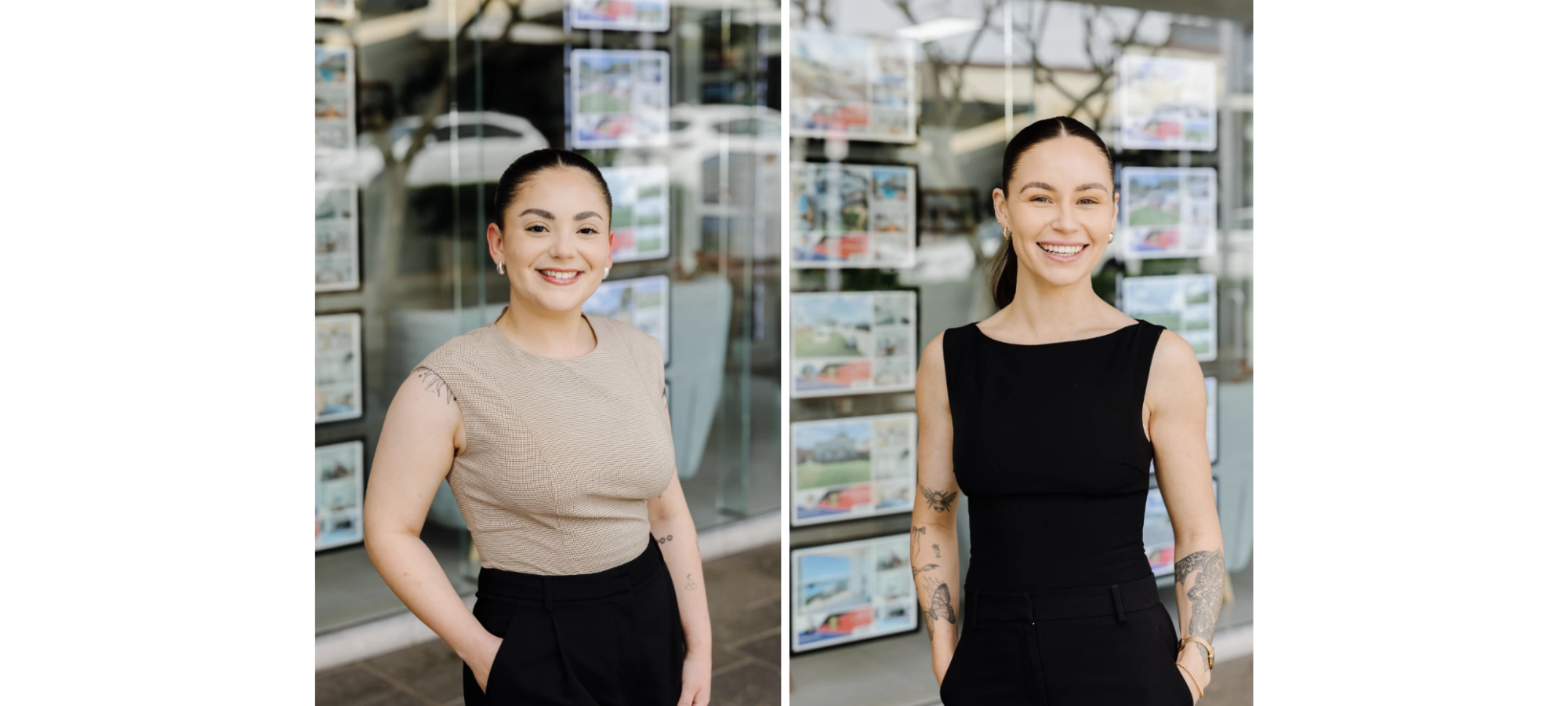
Makayla Groves and Bianca O'Brien are part of the commercial property team at Blacks Real Estate, supporting landlords, tenants and business owners across the Mackay region. Working as Commercial Property Managers, Makayla and Bianca assist with the day-to-day management of commercial properties, helping clients navigate leasing and property management requirements across retail, office and industrial spaces. Based at the agency’s Wood Street office, the pair work closely with business clients throughout the region as part of Blacks Real Estate’s commercial division. Makayla Groves can be contacted on 07 4963 2522, while Bianca O’Brien can be contacted on 07 4963 2525. CAPTION: Bianca O'Brien works with Blacks Real Estate as a Commercial Property Manager. Photo supplied Makayla Groves works as a Commercial Property Manager with Blacks Real Estate. Photo supplied
Read the full story
The Coalition has pledged to make the Northern Australia Infrastructure Facility (NAIF) a permanent institution, arguing the move would provide long-term certainty for regional investment, infrastructure and jobs across Northern Australia, including Mackay. The announcement follows the Federal Government's decision to extend the NAIF for a further 10 years, rather than permanently removing its sunset clause. Leader of The Nationals Matt Canavan said while the Coalition would support Labor's legislation, it believed the independent review's recommendation to make the facility permanent should be adopted. “The Developing Northern Australia is a proud LNP achievement,” Senator Canavan said. “Despite naysayers at the time, Northern Australia has remained on the agenda ever since. I am personally proud to have introduced the original Northern Australia legislation in 2016, with the policy built on the work that was done by LNP Members of Parliaments such as former Senator Ian Macdonald and former MP Warren Entsch. “Unfortunately, Labor is now kicking the can down the road. Northern Australia shouldn’t have to fight every decade to prove it is worthy of investment. “The independent review recommended making the NAIF permanent because it works. The Coalition established the NAIF in 2016, and we will make it permanent because Northern Australia should have long-term certainty for investment, jobs and economic growth.” Since its creation, the NAIF has supported 33 projects with $4.3 billion in finance commitments, helping deliver more than 18,000 jobs and an estimated $33 billion in public benefit across Northern Australia. Those investments include upgrades to airports in Darwin, Alice Springs, Townsville, Cairns and Mackay, along with projects supporting agriculture, mining and manufacturing. Shadow Minister for Northern Australia Senator Susan McDonald said permanent funding would continue to drive regional development. “Labor talks about Northern Australia, but the Coalition backs it with lasting investment,” Senator McDonald said. “The NAIF has transformed communities, unlocked private investment and created jobs across the North. Making it permanent sends a clear message that the Coalition believes in Northern Australia’s future and won’t treat its development as a temporary priority.” “Governments come and go, but Northern Australia’s importance will never diminish,” she said.
Read the full story

This year, the Mayor's Charity Ball introduces a brand-new ticket option: the After Dark Experience! For just $150, you can join the celebration from 8pm, enjoying a sparkling drink on arrival, gourmet canapés, an open bar, live music, and even a surprise performance. With free transport and a fireworks finale, it’s the perfect way to experience all the excitement without the formal dinner. This year's event supports RACQ CQ Rescue and the Whitsunday Suicide Prevention Network. To join the fun, head to https://bit.ly/MayorsCharityBall for more info or to purchase tickets!
%20(1).JPG)
Council regularly receives requests for improved lighting throughout the region and Council is always keen to improve public safety where possible.
Obviously, we cover a massive area, so it is up to Council and Councillors to identify areas with the most urgent need and prioritise these locations.
This year Council has been trialling the installation of 30 temporary solar-powered lights in Hansen, Lions, Case, and Barker Parks in Bowen to improve lighting in the busy Grays Bay area.
The benefits of this lighting project include increased visibility along pathways, making it safer for pedestrians to navigate these areas, especially during early mornings and at night.
The improved lighting also makes these parks more suitable for hosting community events in the evenings, encouraging more frequent use of these public spaces by residents and visitors.
Community Consultation was open to residents and visitors via an online survey on our Your Say community engagement platform for six weeks, as we sought feedback from the community about the temporary lights, their placement and if they have improved use and safety for park users.
We recognise the importance of engaging with our community in a meaningful and genuine way about decisions which affect you.
The survey had great feedback with 87 submissions received. The majority were in favour of the improved lighting, so Council has now engaged a lighting consultant to incorporate feedback, including refining the placements of lighting to minimise nuisance, ensure solar access and meet needs of users.
I thank the community for having their say during the trial as their feedback has assisted Council to determine the most suitable and cost-effective options for a permanent light design and placement.
The good news is that $900,000 has been identified in our three-year capital budget for delivery of the Grays Bay lighting project once the design phase has been completed. The use of solar power aligns with sustainable energy practices, reducing the carbon footprint associated with lighting the parks.
This initiative demonstrates a commitment by Council to not only improve public safety, but also embrace sustainable energy practices, reducing the carbon footprint associated with lighting the parks.
.png)
Tourism Whitsundays and Cruise Whitsundays are heading to Brisbane in early September to meet with 49 buyers from India and South East Asia at Experience Queensland - India and South East Asia. This event, run by Tourism and Events Queensland, is focusing on this emerging market and building relationships with travel buyers and wholesalers from these locations.
"Going back to pre-Covid times, India was quickly gaining momentum as a source market for The Whitsundays and this business-to-business networking and meeting day is a step to restarting that market," said Cait.
The international travellers have been slower to return than expected and there's an element of retraining involved in terms of how to get to The Whitsundays from the other side of the world, however we're seeing our international visitor numbers grow each and every quarter which is fantastic,
Earlier this month, we attended Queensland is Calling - North America where Ben Summers met with travel agents across America to educate them on The Whitsundays.
These trade shows, whether they are in America, UK, China or Australia all focus on the same key points:
1. Where The Whitsundays are
2. How do travel agents get their clients here
3. Why The Whitsundays is different to other reef or beach destinations
Contributed by Cait Fleming, Industry Development & Trade Manager, Tourism Whitsundays
Tourism Whitsunday’s at Down Under Summit

The team at Tourism Whitsundays bid their valued Brand Executive, Alyssa, a fond farewell as she ended her time with Tourism Whitsundays.
They celebrated her significant contributions and future endeavours with an unforgettable sunset tour aboard Lady Enid Sailing.
The evening sky painted a stunning array of colours, creating the perfect backdrop for relaxation and indulgence. Lady Enid, a well-maintained vessel, provided comfort and style with top-notch service from the crew.
The tour's highlight was the front-row seat to the wonders of our incredible Whitsunday nature, including whale sightings and unmatched views. Witnessing these spectacular creatures breaching and playing in the distance inspired everyone. As the sun descended, the scenery became even more magical, with hues of orange and pink reflecting off the tranquil waters, creating a breathtaking view that will stay with the Tourism Whitsunday team forever.
Sipping on refreshing Aperol spritzes while enjoying a selection of delicious light snacks complemented the relaxed vibe on board—the combination of great company, fantastic service, and the enchanting Whitsunday waters made for a remarkable evening.
Contributed by Jade Yvonne, Business Development Executive, Tourism Whitsundays
Lady Enid vessel on the Whitsunday waters
Rosanagh Gallivan, Laura Knipe, Jade Yvonne, Alyssa Turner and Jess McDiarmid
Photos supplied

The Whitsundays Chamber of Commerce and Industry is excited to unveil a bold new vision for the Whitsundays, developed with input from over 130 members of the local business community. This visionary project outlines an economic blueprint set to guide the region’s growth over the next two to three decades.
According to Chamber President Allan Milostic, “Our region is on the verge of significant change. With a united vision crafted by and for the business community, we can effectively advocate, shape policy, and drive meaningful progress.”
The research, completed late last year, offers a glimpse into the Whitsundays' future. Bowen is set to lead in agriculture, aquaculture, and heavy marine industries, while Collinsville will advance in mining technology and heritage tourism. Proserpine will become a vibrant hub, seamlessly connecting with Cannonvale and Airlie Beach, while Cannonvale will evolve into a well-planned residential area. Airlie Beach is expected to emerge as a premier Southern Hemisphere tourist destination with expanded attractions, including a convention centre and a vibrant arts precinct.
Research uncovered diverse perspectives and challenges within the business community.
Each district within the Whitsundays has unique needs and visions, making it challenging to forge a unified future. Chamber has identified four immediate priorities for success: enhanced political leadership, strategic economic development, infrastructure investment, and education and workforce evolution.
Milostic emphasized that this journey is just beginning, with regular updates and insights to be released as the vision unfolds. The Vision for the Whitsundays remains an independent, apolitical initiative aimed at fostering growth and innovation in the region.
Contributed with thanks to Julia Evans Chamber Liaison of Whitsundays Chamber of Commerce & Industry.

One of the most common financial steps people go through involves buying a new family home which is of a better standard than their last one. This is a natural progression as people settle into careers, have more disposable income and build families.
Often people decide to keep the previous property as an investment and use the rental income to assist with repaying the larger debt and building wealth. There is a trap with this scenario that can lead to a poor taxation outcome, and effectively make repaying the debt take significantly longer due to the limited assistance from the tax man.
The issue is whether the interest on a loan is tax deductible or not. If you are earning between $45,000 and $135,000 and are paying 32% as your marginal tax rate, roughly a third of your interest is covered by the tax man if your debt is tax deductible. If you are borrowing at, say 6% for both your non-tax-deductible home loan and your tax-deductible rental property loan, you are effectively only paying 4% on the rental property loan after tax. The more of your debt that is allowed to be claimed as tax deductible the better. In this scenario it’s important you separate the debts so you can easily identify the interest and what you are paying off each debt. Ideally you want to pay off the non-tax-deductible debt first before moving on to the tax-deductible debt.
Contrary to what many people think, the key to whether a loan’s interest is tax deductible or not is not which property is used to secure the loan. The key is what the money was used to purchase when the loan was drawn down and not which property the bank takes a mortgage over. Generally, the family home doesn’t produce income and therefore loans used to purchase Principal Places of Residence are not tax deductible even if you used equity in the old home to borrow. Loans for rental properties or shares generally are tax deductible and therefore minimising the loan required to buy the new family home and consequently increasing the investment loan makes sense. Often selling the old home, maximising the cash deposit on the new home and using the equity to borrow to buy a new investment makes more sense. As always the devil is in the detail and it needs careful analysis of sale and purchase costs and each person’s tax situation to make the right decision.
There are several strategies that can be used to decrease non-deductible debt and replace it with deductible debt and investments, and a range of flexible lending products to assist. As always seeking the advice of a knowledgeable Financial Adviser, Accountant and Mortgage Broker is advisable.
For a free consultation with local people who understand the complexities of these or any other financial matter, contact Eclipse Financial Planning at Cannonvale on 49467359 today or visit www.eclipsefp.com.au

This month’s Ask An Expert with the Whitsundays Chamber of Commerce and Industry asks:
How do I manage staff that bring their personal issues to work?
Chamber member, Judy Porter from Shiift, responded.
We are kidding ourselves if we still believe people “park their emotions at the door”. Post Covid sees a very different workforce which requires flexibility, compassion, and ‘humancy’ more than ever.
Every team-member in the workplace is affected daily by external and internal variables. Good leaders who know their team-members well enough will know which variable may be negatively impacting them.
Having strong workplace relationships means you can step into this space respectfully and start the conversation that is needed. Take your team-member aside to a confidential space so they can safely share current challenges. Stay curious, non-judgemental and listen respectfully.
Supporting your team-members through daily challenges builds trust and respect and creates a very strong, committed, happy and productive workplace culture. Having difficult discussions is of great benefit to all – leaders can strengthen workplace relationships, and team-member feel valued.
Beware of compassion fatigue which is the result of sitting in someone else’s problems with empathy and being overwhelmed because you cannot fix the problem for them. We need to engage empathic concern – the capacity to understand someone’s situation and step into an action-oriented outcome for them.
However, we all have our strengths and weaknesses when it comes to communication. If you don’t feel confident having these conversations the minimal duty of care is to point your team-member in the right direction of support by providing contact numbers for Lifeline, Beyond Blue or your Employee Assistance Program (EAP) if you have one.
.jpg)
The Whitsundays are about to be the centre of Australia’s foodservice industry as suppliers from across the country descend upon our stunning region for the Whitsunday Foodservice Trade Show.
This year’s event is set to be bigger and better than ever, with over 75 suppliers and more than 150 industry professionals showcasing an impressive array of products tailored for Whitsunday Foodservice’s diverse customer base. Whether you’re running a pub, café, restaurant, or even a food van, this is your chance to explore the latest and greatest in foodservice offerings.
Patrick Morrissey, General Manager of Whitsunday Foodservice, is excited about the opportunities this Trade Show brings. “This is a fantastic platform for suppliers to introduce both new and beloved products to our customers. It’s not just about selling—it's about sparking conversations, inspiring ideas, and helping our customers find exactly what they need to elevate their businesses,” he said.
The Trade Show promises something for everyone, with suppliers catering to a wide range of sectors including hospitality, healthcare, education, and more.
“Our customers come from all walks of life—pubs, takeaways, schools, aged care facilities, and beyond. We’re proud to be a one-stop shop, and this event highlights the incredible variety we offer,” Patrick added.
Beyond the business of foodservice, the event is poised to make a significant economic impact on the local community. With an expected influx of over $500,000, the Trade Show is set to benefit the Whitsundays in more ways than one.
“We’ve got 150 suppliers staying in town for the week, engaging with our local businesses and teams. It’s a much-needed boost outside the typical tourist season, and we’re proud to play a role in supporting the local economy,” Patrick emphasised.
While the event is business-focused, it’s also going to be a day of fun and excitement. Attendees can look forward to cash giveaways, amazing prizes, and a major prize draw at 12:30pm. To win, make sure to register via the Whitsunday Foodservice website and be present at the event.
The prizes this year are nothing short of spectacular. Imagine a luxurious reef sleep for two with Cruise Whitsundays, a lavish two-night stay on Hayman Island, or the grand prize—a trip for two to the prestigious Tuttofood International Food Exhibition in Milan, Italy!
“This Trade Show is a rare gem in North Queensland and especially in the Whitsundays. It’s a unique opportunity for our customers to engage with top suppliers and experience the best our industry has to offer. It’s going to be a fantastic day filled with great food, valuable connections, and happy customers,” said Patrick.
Don’t miss out on North Queensland’s biggest foodservice event!
• WHAT: Whitsunday Foodservice 2nd Trade Show
• WHERE: Whitsunday Foodservice - 25 Galbraith Park Drive, Cannonvale
• WHEN: Saturday 24th August, 9am-1:30pm
• OPEN TO: Registered account customers and prospective customers via www.whitsundayfoodservice.com.au
Whitsunday Foodservice last Trade Show, Photo supplied

One of the Festival’s marquee events is the Big Book Club High Tea, featuring acclaimed authors Sally Hepworth and Kirsty Manning, and hosted by Karina Kilmore.
SALLY HEPWORTH, a New York Times bestselling author with nine novels and over a million copies sold worldwide, is beloved by readers everywhere.
KIRSTY MANNING, known for her internationally acclaimed historical novels, has captivated audiences across continents, with her works translated into multiple languages and adapted for various media.
Journalist and author, KARINA KILMORE will be hosting the event. She is the Chair of the Australian Crime Writers Association who have recently shortlisted Sally’s Darling Girls for the 2024 Best Crime Fiction.
Festival President Karen Jacobsen expressed her excitement “We are thrilled to welcome Sally and Kirsty to our Festival’s Big Book Club High Tea. They are two talented authors, and their infectious camaraderie promises an afternoon filled with laughter and insight into their journey to literary success.”
For the event, Sally and Kirsty have selected the books they will discuss, sharing their inspiration, writing journey, and key themes explored in The Soulmate and Darling Girls by Sally Hepworth, and The Paris Mystery and The Hidden Book by Kirsty Manning.
WHAT: Big Book Club High Tea
WHEN: 3:15pm-4:45pm Saturday 7 September
WHERE: My Rainbow Bakery, Shingley Beach
REGISTRATION: Standard $109 and Concession $89 includes My Rainbow Bakery’s famous High Tea of house-made savoury treats, sweets, and scones with English Breakfast Tea. Select coffee, soft drinks, and alcoholic beverages available for purchase. Tickets available from www.whitsundayswriters.com
.png)
Living in North Queensland before the internet and after the internet are two vastly different experiences; not dissimilarly to before and after a pandemic. In fact, many of the committee members who have worked to create the 2024 Whitsundays Writers Festival are new residents, passionate about creating a greater arts presence.
To our delight, there is a palpable excitement in the community for the arrival of our award-winning authors, and the opportunity to highlight and feature what we have discovered is a significant number of local authors living in the Whitsundays. We are fortunate to be able to build on previous festivals, and thank the committees and volunteers of those events from seven years ago.
The written word has the potential to transform lives. Reading can entertain us, educate us, give us an alternate point of view to consider, and it can deeply connect us with each other. This is my wish for our lovingly and consciously designed event; that we might as a community have our minds opened and share three memorable days of thoughtful experiences that enrich our lives.
Whether you are a reader, writer, audio book listener or someone who wishes you made more time to pick up the books on your shelf, we welcome you to join us for the 2024 Whitsundays Writers Festival. We know we live in the most beautiful location in the world, and presenting a three-day cultural event of this kind is a perfect match. On behalf of the 2024 committee, thank you.
Contributed with thanks to Karen Jacobsen
Karen Jacobsen, President of the Whitsundays Writers Festival

The Love Letter to Queensland event – 6:30pm-9pm Thursday 5 September, Coral Sea Resort, Airlie Beach – will feature a stimulating lineup of notable speakers, each presenting their own love letters to Queensland, offering a diverse array of perspectives and experiences.
Guest speakers include:
• MARCO RENAI awarded 2024 Queenslander of the Year for his impactful work with at-risk young men.
• ELIZABETH HACKETT known for her significant contributions to the tourism industry and the Whitsunday Skyway project.
• DR CHRIS SARRA CEO of the Office of First Nations Engagement and Innovation, leading initiatives for youth engagement within Queensland.
• DR MELISSA ASHLEY celebrated academic and award-winning author of historical fiction novels.
• ANDREW WILLCOX MP Federal Member for Dawson will announce and read the winning Love Letter to Queensland community writing competition entries who will receive shopping vouchers for Adult and Under 12 Divisions.
• KAREN JACOBSEN Whitsunday Writers Festival President, international speaker, concert artist and songwriter, author, and the voice behind over a billion GPS and smartphone devices.
The Love Letter to Queensland event and writing competition is being coordinated by the Whitsundays Writers Festival and proudly supported by James Cook University’s Roderick Centre for Australian Literature and Creative Writing and the Whitsunday Regional Council through their Community Assistance Grant program.
WHAT: Love Letter to Queensland event
WHEN: 6:30pm-9:00pm Thursday 6 September 2024
WHERE: Coral Sea Resort ballroom, Airlie Beach
REGISTRATION: Standard $49 and Concession $39 including light supper and two drink vouchers followed by a cash bar from www.whitsundayswriters.com

The Festival is deeply grateful for the following for their support:
Major Festival Partners – Beach Book Boutique, Whitsunday Sailing Club, Blue Peace Enterprises, Roderick Centre for Australian Literature and Creative Writing, Proserpine Wind Farm, and KB Design.
Friends of the Festival – Airlie Beach Music Centre, Amanda Camm MP, Coastal Food Design, Cruise Whitsundays, Just Tuk’n Around, Kapow Interactive, McDonald’s Restaurants, Melinda Louise Media, Plants Whitsundays, Queensland Writers Centre, Ray White Whitsunday, Tassal, The Prickly Pineapple, TP Styling and Events, and Wilmar Sugar & Renewables.
Accommodation Partners – Airlie Apartments, BIG4 Adventure Whitsunday Resort, Heart Hotel and Gallery, Mantra Club Croc, Pinnacles Airlie Beach, Shingley Beach Resort, Toscana Village Resort, and The Boathouse Apartments.
Tickets are available online from www.whitsundayswriters.com or hello@whitsundayswriters.com

FRIDAY 6 SEPTEMBER
Venue: Whitsunday Sailing Club
9:00am Festival opening
9:20am-10:30am The Art and Joy of Storytelling with Chris Sarra, Joy Damousi, Garry Disher, and Graeme Simsion.
11:00am-12:00pm Cops and Robbers: Writing and reading crime fiction and thrillers with Anne Buist, Garry Disher, Karina Kilmore, Jack Roney, Lindsay Simpson and facilitator Harry Colfer.
12:23pm-1:15pm Meet our Featured Local Authors at Beach Book Boutique
1:30pm-2:30pm Responsible writing? Stories about people, relationships, the world and possible ramifications with Anne Buist, Sally Hepworth, Christos Tsiolkas, and facilitator Karina Kilmore.
2:35pm-3:30pm Spotlight On: Writing craft, from first draft to final manuscript, facilitated by Monique van Tulder.
4:00pm-5:00pm From Quills to Code: Is artificial intelligence revolutionising or ruining the future of creative writing? with Melissa Ashley, Joy Damousi, Graeme Simsion, and facilitator Lindsay Simpson.
5:00pm-6:30pm Poetry Karaoke, step up the mic and share your verses.
SATURDAY 7 SEPTEMBER
Venue: Whitsunday Sailing Club
9am Welcome
9:10am-9:40am From the Heart: The inaugural Annual Festival Address by Shankari Chandran.
9:40am-10:00am Whitsundays Literary Heart Awards Announcements and readings with Festival President, Karen Jacobsen.
10:30am-11:30am Adaptation: From page to stage to screen with Nick Earls, Sally Hepworth, Graeme Simsion, Christos Tsiolkas, and facilitator Lindsay Simpson.
11:30am-12:30pm Spotlight On: Research and Bringing Authenticity to Fiction with Melissa Ashley, Nick Earls, Kristy Manning, and facilitator Jack Roney.
1:30pm-2:30pm Hour of Power, Meet and greet book signing session with program speakers and Featured Local Authors
Venue: My Rainbow Bakery
3:15pm-4:45pm Big Book Club High Tea featuring Sally Hepworth and Kirsty Manning, hosted by Karina Kilmore.
Venue: Whispers Bar at Mirage Whitsunday
5:00pm-6:30pm Saturday Sundowner event.
SUNDAY 8 SEPTEMBER
Venue: Whitsunday Sailing Club
9:00am-10:00am Concurrent sessions:
• Ask Me About: Having the courage to share your story, with Festival Vice President Melinda Louise Hutchings and Rachael Smith.
• Ask Me About: Writing for personal and professional development, with Festival President Karen Jacobsen and Monique van Tulder.
• Memoir workshop with Lindsay Simpson.
10:30am-11:30am Concurrent sessions:
• New Release Showcase, hosted by Richard Evans with our Featured Local Authors and guests.
• Ask Me About: Traditional, hybrid, and self-publishing with Jack Roney and Julia Evans.
• Memoir workshop (continued) with Lindsay Simpson.
Venue: Whitsunday Marine Club
12:30pm-2:30pm Local Author Long Lunch showcasing the writing journey of some of our Featured Local Authors.

The Whitsundays Writers Festival provided several opportunities for young writers to nurture their creative writing talents and present their works in competition.
The Love Letter to Queensland community writing competition sought 300-word entries in Adult, Under 18 and Under 12 divisions with winners taking home shopping vouchers for $500, $250 and $200 across the respective categories. Winners and high commended entries will be announced by Andrew Willcox MP, at the Love Letter to Queensland special event on Thursday 5 September.
One of the categories of the Festival’s Whitsundays Literary Heart Awards is the Best Short Story for Under 18 division celebrating original short stories of creative fiction.
Four young Whitsunday writers have been shortlisted for the award and are in the running to win $1000 for first prize and $500 for the runner up.
In his submission, Riley Cousen from Mackay State High School said that he likes writing about crime and has been writing for a little while now. The synopsis for his story, The Dirty Dealer is I climbed to the top of the building... I steadied my gun... I fired...
Framed, by Proserpine State High School student Myka Kelly, is a story about a secret agent for a dangerous company who is sent on a mission to watch a teenager. Along the way she is confronted by her past. Myka has been writing for as long as she can remember, and she really loves writing narratives about crime.
My Mother’s Betrayal, by Mila Kronk, is a story about when a girl, bored of her reality, unknowingly is shown a snippet of the future, she tries to ignore the strange occurrences she notices afterwards. In her submission, Mila shared that she wanted to challenge herself and try to create her own plot. She found it was difficult – Mila didn't know how it was going to end, and because of this she rewrote the same story so many times, each time getting closer to the result.
Alessa Penglase-Fortunato, for ever since she can remember, has loved the thrill of picking up a pen and paper and being able to transport herself and others into an entirely different world. At the early age of seven, Alessa published her first ever short story in an anthology after participating in a workshop. From then on, she has shown a deep passion about writing and hopes to inspire others through storytelling and art and continue my journey in writing. Her submission, Unspoken Words, where grieving the loss of her sister, Avery finds comfort and forgiveness in her sister's ghost.
The awards sought submissions from around Australia of up to 3,000 words of unpublished creative fiction stories. The winner will be announced Saturday 7 September.

This year, Festival launched the Whitsundays Literary Heart Awards, offering $10,000 in cash prizes to recognise and honour outstanding contributions to the literary and design landscape.
The Heart Awards’ mission is to spotlight the diverse talents within the Australian creative community while also paying homage to the Whitsunday’s Heart Reef.
Festival President Karen Jacobsen expressed enthusiasm for the awards program, “We believe in celebrating the richness of Australian creativity in all its forms. The Whitsundays Literary Heart Awards are a testament to our commitment to nurturing creativity.”
The Heart Awards comprise four distinct categories:
• The Gloria Burley Award for Best Unpublished Manuscript,
• The Published Book Cover Design Award
• Best Short Story Award (adult and under 18 years old divisions)
• Poetry Prize.
Gloria Burley was the driving force in the establishment of the Whitsunday Writers Festival, which ran 2010-17. She penned two books titled A Rolling Stone Gathers No Husbands, chronicled many of her travels, and Blood & Guts that sums up her exploits as a nurse in regional Australia. Gloria passed away from cancer in 2018.
“What better way to recognise the Gloria’s legacy than initiate a creative writing award named in her honour,” said Karen.
Both long and shortlists of finalists have been announced ahead of the festival. Winners will be announced 9am-10am Saturday 7 September at the Whitsunday Sailing Club.
WHAT: Whitsundays Literary Heart Awards announcement
WHERE: Whitsunday Sailing Club, Airlie Beach
REGISTRATION: Session only tickets start from $21 from www.whitsundayswriters.com
Publishers Indemnity. Any individual or entity that places advertising, supplies copy material, or submits editorial content to Core Life Publishing agrees and undertakes to ensure that all such material:- Does not infringe upon any copyright, trademark, or other intellectual property rights;- Is free from any content that could be considered defamatory, libelous, or slanderous;- Does not infringe upon any rights related to privacy or breach of confidence;- Contains no obscene, indecent, or otherwise unlawful material;- Complies fully with the Trade Practices Act and all other applicable laws, regulations, or statutes.Furthermore, by submitting or placing such material, these individuals or entities agree to indemnify and hold harmless the publisher, Core Publishing and Events Pty Ltd, and/or its agents from and against any and all investigations, claims, demands, liabilities, damages, costs, or judgments arising out of or in connection with the material provided. All material is believed to be accurate at the time of printing and remains the copyright of Core Publishing and Events Pty Ltd.
© 2026 Mackay and Whitsunday Life Pty Ltd.
