
Independently Owned, Locally Grown, Community Loved
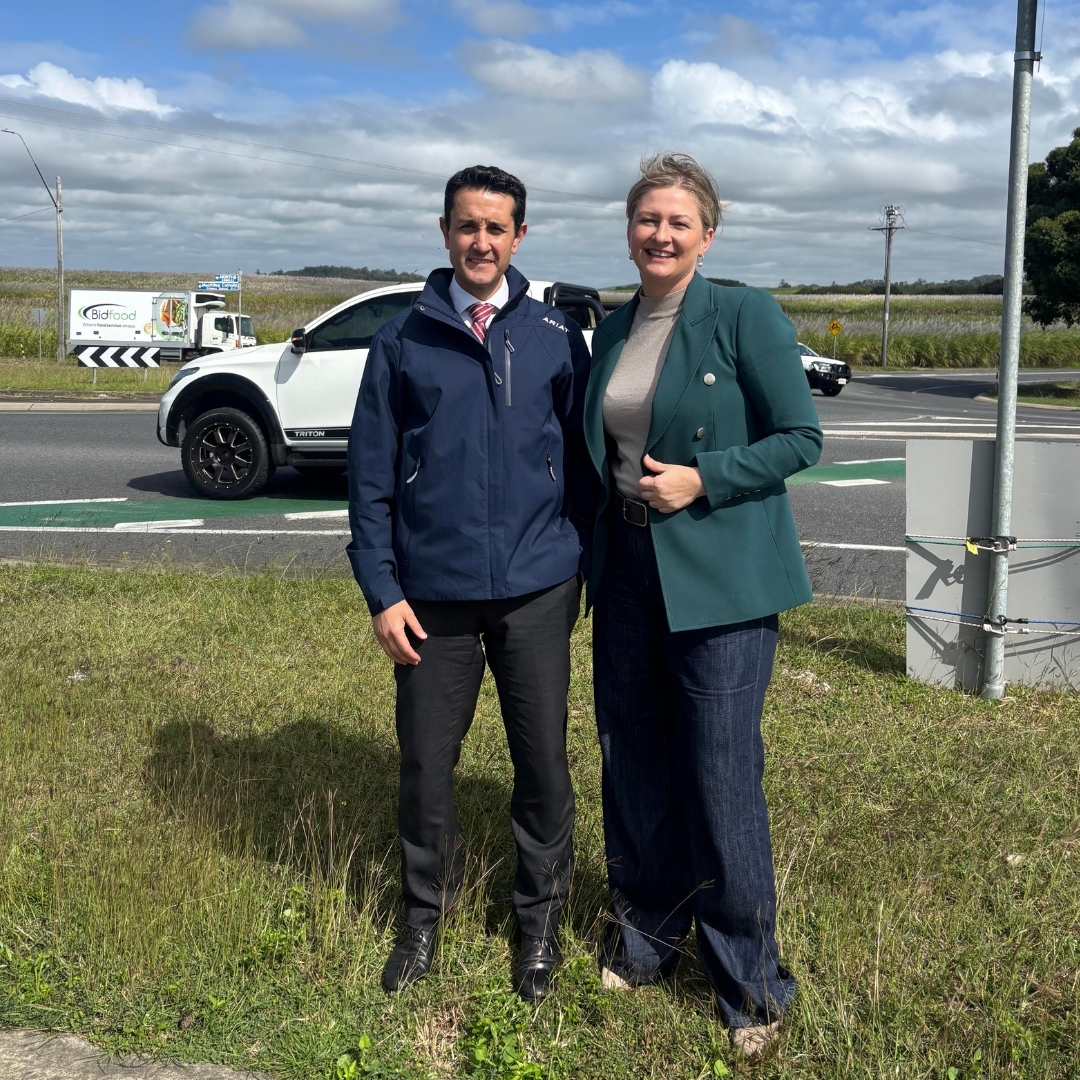
Premier David Crisafulli visited Mackay's Northern Beaches this week, confirming the long-awaited Mackay-Bucasia Road and Golf Links Road intersection upgrade had progressed to detailed design. “We said we'd do it, and we are,” Mr Crisafulli said. The highly anticipated announcement comes as sweet relief for a lot of motorists, with this intersection seeing up to 30,000 vehicles pass every day, making it one of the most bottle-necked in the state. “We can get anywhere in half an hour in Mackay, but then when you put in 24,000 to 30,000 vehicles passing one spot on a roundabout which is not working well, we need to change that,” said state member for Mackay, Nigel Dalton MP. The $20M upgrade will transform the busy roundabout with traffic signals on all four approaches, supported by CCTV and queue-detection technology designed to improve traffic flow during peak periods. Additional turning lanes are also planned on Mackay-Habana Road, Mackay-Bucasia Road and Golf Links Road, with construction expected to begin early next year. “People will see shovels in the ground early next year after the wet season,” Mr Cristafulli said. “We want to deliver a project that a growing community needs, that it deserves, that's been crying out for the better part of a decade.” Member for Whitsunday, Amanda Camm has been a long-time advocate for upgrading the intersection, first calling for funding while in opposition before including the project as part of the State Government's election commitment. Throughout the planning process, Ms Camm also undertook community consultation, receiving more than 600 responses from Northern Beaches residents. Feedback from those surveys, alongside community meetings, helped push the project to the stage it’s at today. “I want to say thank you to the community and those particularly who are represented here today by Antoinette du Toit, a local resident,” Ms. Camm said. “It’s through her advocacy, through our community's joint advocacy, that we are here today delivering upon our $20 million government election commitment to upgrade.” For Northern Beaches residents like Antoinette, navigating the area's growing traffic has become an everyday frustration. “I think one of the biggest concerns for people is if there's an accident here, we can't get in or out,” Antoinette said. “They're [the State Government] listening to us, they see what we need and are actually progressing on it.” The project comes amid growing concern over the condition and capacity of regional Queensland roads, particularly the Bruce Highway. “It has been a national disgrace,” Mr Crisafulli said. “If you have a look at the infrastructure spend, then you realise how fair dinkum we are about it. “We are unashamedly passionate about making sure that rural and regional Queenslanders get their fair share of what they haven’t for many years, that we're not backing away from doing projects right across the board.”
Read the full story
Photo source: Whitsunday Anglican School (Facebook) Whitsunday Anglican School’s Kindy to Year 2 students enjoyed a fun-filled Athletics Carnival, with young athletes taking part in running, jumping and throwing events while showing plenty of enthusiasm, determination and House spirit. Supported by Senior School volunteers, the day celebrated participation, encouragement and the strong sense of community across the school. See more photos here: www.mackayandwhitsundaylife.com/social-pics/little-legs-big-spirit-at-whitsunday-anglican-schools-kindy-carnival
Read the full story
Leading Mackay real estate business REMAX Select has announced the appointment of highly respected business professional Samantha Self as General Manager. The appointment is set to further strengthen the agency's high-performing team across the Mackay region, with Principal Nikita Kinnane describing Ms Self's arrival as an exciting step forward for the business. “We are heading in a really exciting direction with our business, and I cannot be more excited to have Samantha join our leadership team to build on that momentum,” Ms Kinnane said. Ms Kinnane said the recruitment process was focused on finding a leader whose values aligned with those of the business, it was Ms Self's shared commitment to those values and vision that made her the ideal candidate. "Samantha will play an important role in shaping the future REMAX Select, bringing exceptional experience in property, management and leadership to help drive growth and innovation, and this will flow into enhancing every aspect of our business. "Importantly, Samantha shares our core values and commitment to putting Mackay first, and we share the same drive to really make impactful change, bring big city ideas and execute them in our own country girl way.” It was the core values of respect, integrity, collaboration, excellence and trust that Ms Self aligned with, sharing her goal to continue to build on the trust and integrity the agency has established in Mackay, while supporting the continued growth and development of both the team and business. “I’m excited to take on the role of general manager and work alongside Nikita and the entire team at REMAX Select,” Ms Self said. “REMAX Select has a strong team with exceptional talent which is highly respected throughout the community and I’m excited to be part of its continued success.” Ms Self steps into the role after eight years as retail manager of the largest shopping centre in northern Australia. During that time, she was the key driver of building positive, collaborative relationships with retailers, creating an environment where retailers were genuine partners in success. Having led sales performance analysis and market insight initiatives, Ms Self said she looks forward to applying her knowledge and experience to support the continued success of the REMAX Select team. “I am dedicated to empowering our team members through training and development opportunities, ensuring they have the tools they need to succeed,” she said. “My goal is to continue to foster the team’s culture of professionalism, responsiveness and customer-first approach and I look forward to collaborating with our talented agents and staff to create a dynamic and successful environment here at REMAX Select.” REMAX Select is an award-winning real estate business, recently recognised as the 2025 REIQ Medium Agency of the Year and finalist at the 2026 REIA National Awards for Excellence. The office consistently ranks in the National Top 10 Offices in the REMAX Australia network, recognised as the #3 individual office for commissions and transactions at the REMAX Australia Annual Awards 2025 earlier this year, where they were also named a finalist for the network’s community service award and special achievement in marketing for an office award. REMAX Select is located at 133B Victoria Street, Mackay. Contact (07)4829 4612 or visit remax.com.au/select/ for an award winning real estate experience. Newly appointed General Manager, Samantha Self (Left) with REMAX Select Principal Nikita Kinnane (Right).
Read the full story.png)
In 2000, Peter and Denise Phillips laid the foundation for what would become one of Mackay’s most recognisable holistic, all in one property, insurance and financial services ecosystem. Starting as a Mortgage Choice franchise, Gardian was built on a commitment to helping people make confident financial decisions with local people in the know! Over the decades, that foundation has steadily evolved. Today, Gardian encompasses a wide range of services, including all manner of finance, general and business insurance, financial planning, real estate sales, property management, and commercial sales, management and leasing. What began as a single offering has grown into an integrated business model serving individuals, families, businesses, and community across the region. Now, the organisation enters its next chapter. After many years at the helm with her late husband Peter, Denise Phillips will step down from her role as Managing Director. Her leadership has been central to Gardian’s growth — not just in size, but in culture, reputation, and its connection to the local community. Taking over the role is Ben Phillips, Owner/Director and Head of Gardian Finance. Having been closely involved in all aspects of the business and its clients, he brings both continuity and a forward-looking perspective to the position. Leadership transitions often mark defining moments for organisations. In this case, the change represents both the continuation of a strong legacy and the opportunity to build on it. The evolution of Gardian — from a small franchise to a diversified advisory group — reflects the importance of adaptability, strategic growth, and staying aligned to core values to the community. For the Mackay business community, this transition highlights the strength of long-term vision and succession planning, particularly within locally grown enterprises. It also reinforces the impact that leadership grounded in community and relationships can have over time. As Gardian moves forward under new leadership, it does so with deep roots, a clear purpose, and a platform built for continued growth.
Read the full story
Hey Mackay!
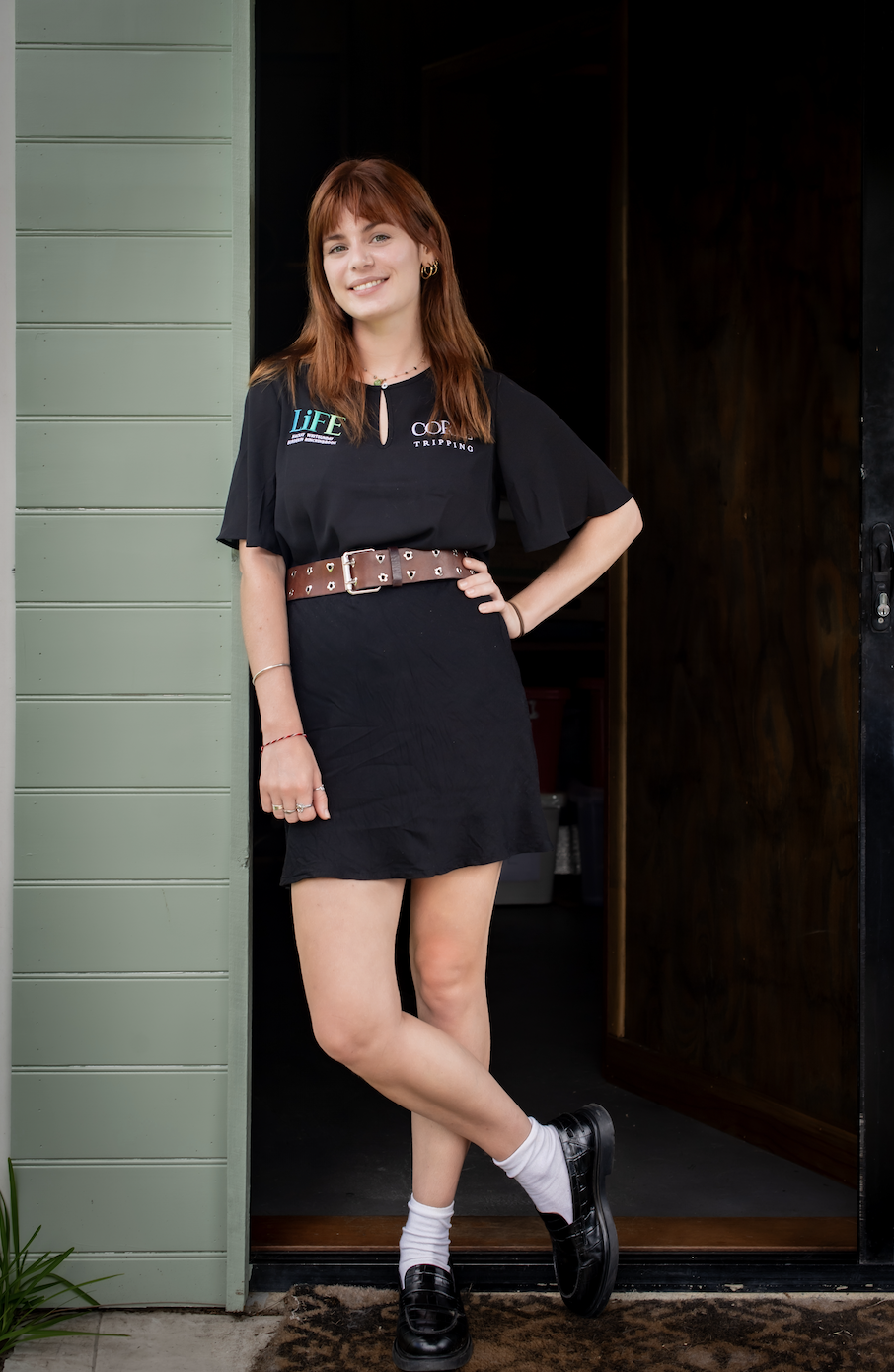
I’m Suzanna, a new journalist with the Life Publishing team.
Having arrived here just six weeks ago from England, settling in has been a whirlwind but the welcome could not have been warmer. I am blown away by not just the beauty of the region but the sense of community here, and the richness of the stories that have been so readily shared with me.
A local boatie I interviewed on one of my first days told me that the Australian spirit was about ‘showing up, and helping a mate,’ and I see this is alive and well around Mackay.
It was so special for me to attend the launch of the Mayor’s Ball at the Neighbourhood Hub last week and meet such engaged, optimistic members of the community rallying to support the vulnerable; through the ball but also countless other initiatives including Dancing with Heart, which takes place this weekend.
The Mayor’s Ball launch event was inspiring and I was especially moved by Mayor Williamson’s speech. His voice was full of emotion when talking about the work of the ball’s newest fundraising recipient, The Neighbourhood Hub, whose team members go above and beyond in their role, feeding the hungry, providing spaces and support for children and families, and serving the community with a smile.
Life Publishing are thrilled to be the Mayor’s Ball media partner this year. We will be counting down the days to the event, and encouraging everyone we meet to grab a ticket and get glammed up.
It is an honour to be trusted with the story, as it is with every story we have the privilege of sharing.
Thanks for the warm welcome, Mackay!

Residents in the McKinlay Shire Council area impacted by recent flooding can now access financial support after the activation of Personal Hardship Assistance by the Australian Government and the Queensland Government.
The assistance, delivered through the Disaster Recovery Funding Arrangements (DRFA), provides immediate financial relief for people affected by flooding, helping cover emergency essentials and early recovery costs.
Eligible residents can access emergency hardship payments of $180 for individuals and up to $900 for families of five or more to help pay for necessities such as food, clothing and medicine.
Additional grants may also be available for some residents, particularly those who are uninsured or on lower incomes. These include assistance to reconnect essential services, replace flood-damaged whitegoods and undertake urgent repairs needed to make homes safe and habitable.
The support has also been activated for other affected regions across Queensland, including Bundaberg, Carpentaria, Doomadgee, Douglas and Western Downs, as flood impacts continue to be assessed.
Federal Minister for Emergency Management Kristy McBain said the government was working closely with the state to provide assistance to impacted communities.
“As the floodwaters recede and we learn more about the impacts, we’ll continue activating the support measures Queensland needs,” Minister McBain said.
“The financial assistance we’re announcing today will give people a start on their recovery journey and hopefully raise their spirits in the face of this adversity.
“This has been a tough start to the year for so many communities in Queensland and I want them to know that the Albanese Government has their back.”
Queensland Minister for Disaster Recovery Ann Leahy said expanding support for affected residents remained a priority.
“This disaster season has been tough for our state, but by swiftly activating support will ensure the recovery process can be smoother for those affected,” Minister Leahy said.
Residents can check eligibility or apply for assistance online at disaster.qld.gov.au or by calling the Queensland Community Recovery Hotline on 1800 173 349.
CAPTION: Several roads were cut by flood waters across the region, isolating residents in communities like those in McKinlay. Photo source: Facebook

This spectacular photograph of a Flatback Turtle was recently reported on the Eye on the Reef sightings network by a tour guide at Cape Tribulation, leading a push up and down the coast to share any wildlife sightings from the top to the bottom of the reef.
Since 1980, the Great Barrier Reef Marine Park Authority has been committed to conserving Flatback turtles through long-term monitoring of their critical nesting site. They only nest in Australian waters feeding on soft corals, sea pens and jellyfish often in the inter-reefal area (the waters between the Reef and the shore).
Who knows what wonders are waiting in our waters here in the Whitsundays?
Submitting valuable data about wildlife, reef health, and incidents out on the water can better help scientists protect our reef, so visitors and locals alike are encouraged to download the free Eye On The Reef app and share any wildlife you see.
1- A rare flatback turtle spotting drives a rally for more reporting on the reef. Photo: Facebook

New research from James Cook University (JCU) has found that winter conditions may play a significant role in determining how coral on the Great Barrier Reef responds to heat stress during the following summer.
The study, recently published in the journal Coral Reefs, suggests coral bleaching is influenced not only by extreme summer temperatures but also by ocean conditions months earlier during the cooler season.
JCU researcher Valerie Cornet, who led the study, said most forecasting tools currently focus on summer temperatures when predicting bleaching events.
“Most bleaching prediction tools focus on summer heat and assume that corals start each summer in the same condition,” Ms Cornet said.
“We wanted to see how cooler seasons, particularly winter, influence bleaching in the following summer.”
The research team analysed aerial and in-water bleaching observations along with sea surface temperature data across the central Great Barrier Reef between Townsville and Port Douglas, focusing on the 2016 and 2017 bleaching seasons.
Study supervisor Scott Heron said those years provided a unique opportunity to examine how coral responds to repeated heat stress.
“The scale and severity of these mass bleaching events were unprecedented, affecting vast areas of the reef,” Professor Heron said.
“This gave us a rare opportunity to study how repeated heat stress and recovery periods interacted, including effects before summer conditions set in.”
The research found that prolonged warmer winter temperatures can worsen bleaching in the following summer, while moderate winter warmth may actually help corals cope better with future heat.
“It’s a Goldilocks range –– it’s not too hot, not too cold, it’s just right,” Professor Heron said.
“We think that corals living in these conditions might be better prepared for a stressful summer because they are exposed to a little bit of prior heat.”
Researchers say incorporating winter conditions into reef monitoring systems could improve early warning systems and help guide future reef protection efforts.
Heart Reef View Great Barrier Reef Stock Photo 2512856481 | Shutterstock
CAPTION: 2016 and 2017 were the first consecutive years of severe bleaching on the GBR. Photo credit: Mikael Djavadi

The Great Barrier Reef is the largest coral reef system on Earth and one of Australia’s most iconic natural wonders. Stretching for more than 2,300 kilometres along the Queensland coast, it supports thousands of species of fish, corals, molluscs and other marine life. Yet alongside rising ocean temperatures, another invisible threat is increasingly affecting the Reef — ocean acidification.
Ocean acidification occurs when the ocean absorbs carbon dioxide (CO₂) from the atmosphere. The world’s oceans absorb roughly one-third of the CO₂ released by human activities such as burning fossil fuels and deforestation. When CO₂ dissolves in seawater it forms carbonic acid, which lowers the water’s pH and alters ocean chemistry. Since the beginning of the industrial revolution, the average acidity of surface ocean waters has roughly increased by 30%.
It is worth noting that even slight shifts in ocean chemistry can have major consequences for marine organisms.
Corals, the foundation of the Great Barrier Reef ecosystem, are particularly vulnerable. Reef-building corals construct their skeletons from calcium carbonate, a mineral formed using carbonate ions dissolved in seawater. As ocean acidity increases, the availability of these carbonate ions decreases. This makes it more difficult for corals to build and maintain their skeletons, slowing growth and weakening reef structures.
Scientists have already observed declining calcification rates in many reefs. Research suggests that coral calcification across the Great Barrier Reef may have dropped by roughly 15–20% since 1990. Slower growth means reefs recover more slowly from disturbances such as storms, bleaching events or outbreaks of coral-eating crown-of-thorns starfish.
Ocean acidification can also cause existing coral skeletons to dissolve more easily. In more acidic conditions, calcium carbonate becomes less stable, which can lead to erosion of reef structures over time. This weakens the physical framework that supports the entire ecosystem.
The impacts extend beyond corals themselves. Many other reef organisms — including shellfish, plankton and coralline algae — rely on calcium carbonate to form shells or skeletons. Increased acidity can reduce their growth, survival and reproductive success.
Despite these challenges, scientists emphasize that the future of the Great Barrier Reef is not yet sealed. Reducing carbon dioxide emissions remains the most important step in slowing ocean acidification. This means moving away from fossil fuels and transitioning to renewable energy as quickly as possible.
At the same time, local conservation efforts — such as improving water quality, managing fisheries, and protecting vulnerable reef areas — can help strengthen the Reef’s resilience.
The Great Barrier Reef has survived dramatic environmental changes over millions of years. However, the rapid pace of modern climate change and ocean acidification presents an unprecedented challenge. Protecting this remarkable ecosystem will require both global climate action and continued efforts to safeguard the reef locally, ensuring that future generations can continue to marvel at one of the world’s greatest natural treasures.
Contributed with thanks to Whitsunday Conservation Group.
Captions
Healthy reef
Photo supplied
This week’s newsletter ends on the Ides of March, and with no Julius Caesar in sight, it was all great news!
Starting with Tuesday the 10th, first place went to skipper John Brown, ably assisted by lead Ian Passfield, who is improving with every game, and second David Bradley, who also played well as part of a strong team effort. Second place went to the team led by skipper Tony Whitehorn with Sue Dakin, who, as a rookie, is practicing hard and developing into a classy player for our little club.
Wednesday afternoon’s Social Bowls was arranged by big John Askew after illness sidelined Mervyn Stewart. The biggest winning team of the day was led by Tony Whitehorn with lead Keith Bates and second Rene Thommen, another impressive new bowler who is improving at a rapid rate.
Wednesday night’s Business House Bowls, organised by Yvonne Spees with husband Bob Spees, saw Team Girl Power claim their sixth straight win, taking them to 18 points. Four teams remain on 14 points, with all games very close—often decided by just a single point. With all 12 teams still in contention, any team could take the title.
The Men’s and Ladies’ Singles competitions are progressing well, with results to be published next week.
No Scroungers were played this weekend due to 14 teams competing in the Mixed Pairs. By Sunday morning, four teams remained: Joan McGrath with Peter Barrett versus Margo Stanley and John Fielding; and Tony Whitehorn and Betty Whitehorn against Bobby Spees and Ladda Purdie.
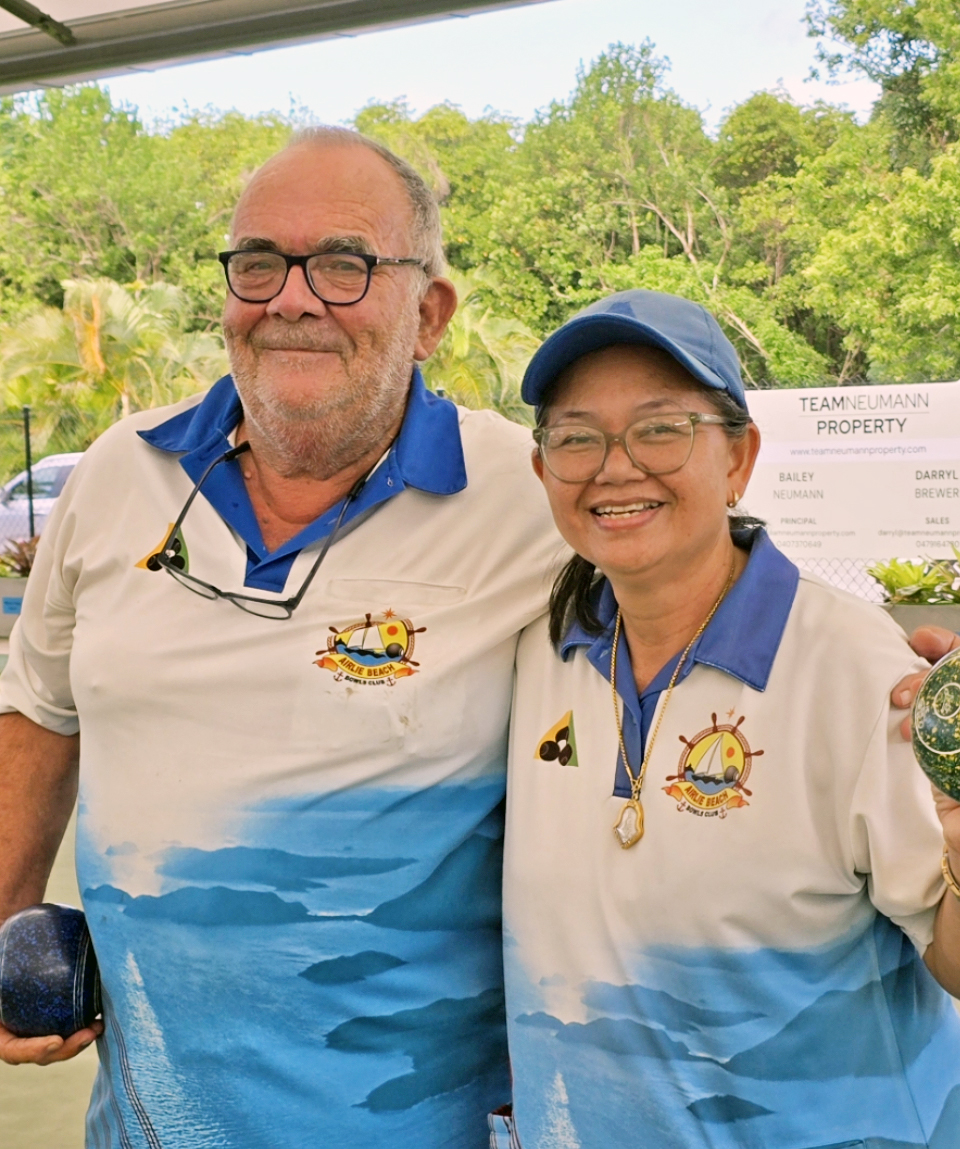
Sunday afternoon’s final was contested between John Fielding and Margo Stanley and the pair of Bobby Spees and Ladda Purdie. To everyone’s surprise, it was Ladda—who had spent the past two years nursing her husband Bruce Purdie before he sadly succumbed to diabetes—and Bobby, who had been suffering from a severe bout of vertigo and was close to withdrawing, who triumphed. A wonderful win against all odds, and they are this week’s featured photo.
Sunday afternoon also saw 20 bowlers take part in social bowls. Bar manager Fiona Greener threw the dice, awarding five points for each winning team plus one point for every end won. The winning team, with 18 points, was led by skipper Dennis Donadelli, ably assisted by Lyn Graham.
Second place went to the capable team of Andy McDougall with lead Alan Pershouse on 17 points. Third place went to the team of Mark Mawson with second Gail Simms and lead Liz McManus on 15 points, rounding out a fantastic afternoon of action.
Captions
Bob Spees and Ladda Purdie after their win in the Mixed Pairs
Photo supplied

In the vibrant real estate landscape of the Whitsundays, Melinda Butcher has built a reputation as a trusted and energetic property specialist who combines professional expertise with genuine local insight.
Known for her down-to-earth nature and friendly approach, Melinda brings enthusiasm and determination to every property journey. As a devoted mother of two and long-time local, she understands the lifestyle that makes the Whitsundays such a special place to call home. Having experienced both coastal living and larger acreage properties herself, she offers clients a practical, firsthand perspective on the region’s diverse property opportunities.
Melinda’s career spans more than two decades in leadership and sales roles, where she developed a strong customer-focused philosophy that continues to shape her work in real estate today. Her approach centres on building lasting relationships, ensuring that every client feels supported, informed and confident throughout the process.
“Real estate is more than just a transaction,” Melinda says. “It’s a journey that can be emotional, personal and incredibly rewarding.”
With that philosophy at the heart of her work, Melinda strives to bring trust, transparency and professionalism to every step — whether she’s helping a family find their dream home, guiding a seller through the market, or welcoming newcomers to the Whitsundays community.
Her strong work ethic, local knowledge and commitment to achieving results have quickly made her a valued resource for buyers and sellers across the region.
For Melinda, real estate isn’t just about property — it’s about people, community and helping others find their place in one of Queensland’s most beautiful coastal regions.

World Storytelling Day, observed on 20 March, celebrates the threads that hold families together: our stories. Stories of what people valued, how they coped in hard times, what made them laugh, who they loved, why they made certain decisions, and the lessons life taught them.
This day is also a reminder to act while we still can.
Dementia is one of the most significant health challenges facing Australia. According to Dementia Australia, around 446,500 Australians are currently living with dementia, and the number is expected to rise. For many families, dementia brings an extra layer of grief because it can take away a person’s ability to recall and share their own life story.
I understand this personally. My dad lives with dementia, and there is a particular kind of sadness that comes with it. It is the feeling of, “We missed it.” We missed the opportunity to sit down, ask the right questions, and capture his life story while his memory was still there.
Memory loss is often gradual. Over time, whole chapters can become difficult to access, and families are left with unanswered questions.
Many people plan to write things down “one day”. The problem is that “one day” might be too late.
Writing a life story is one of the most practical ways to preserve what matters. It captures the voice and personality of the person, their version of events, and the context that brings family photos to life. For children and grandchildren, it can become a source of comfort and connection for decades.
Writing your life story can begin with a few simple conversations and a handful of questions: Where did you grow up? What was school like? What work did you do? Who were your closest people? What tested you? What are you proud of? What do you hope your family understands about your life?
One memory often leads to another. As people talk, stories return. Details emerge and the shape of a life becomes clear.
World Storytelling Day is a reminder, and it is also an invitation. If there is someone in your life whose story you value, begin now.
Contributed with thanks to Natalie Stockdale – Airlie Beach Author

This weeks poem was submitted by Amelia Rutley. If you’re interested submit your poem to sebastian@lifepublishinggroup.com
She surrendered
To the slowness, to the simple
To the shuffling of priorities and the shifting of goalposts
To being at the bottom of the list with her partner.
And maybe the dog.
To scooters ridden down hallways
To catch ups at playgrounds and fragments of conversations
To sticky banana good morning kisses and soggy breadcrumbs underfoot
To crayon boxes beside dinner plates
To Disney soundtracks on repeat
To late nights, early mornings and 2am stumbles down hallways.
She surrendered.
Because to fight it would mean to be drowned by it.
And so she was swept up in the tides of change, of mess, of chaos, of love and of life.
And the sands shifted below her and the waves ebbed and flowed and crashed and calmed
around her.
Until one day she found she could stand again
In waters that felt new, but familiar at the same time.
She breathed in her surroundings - soaking in the sunlight, drinking in the details, stretching
into her space
And she lived.
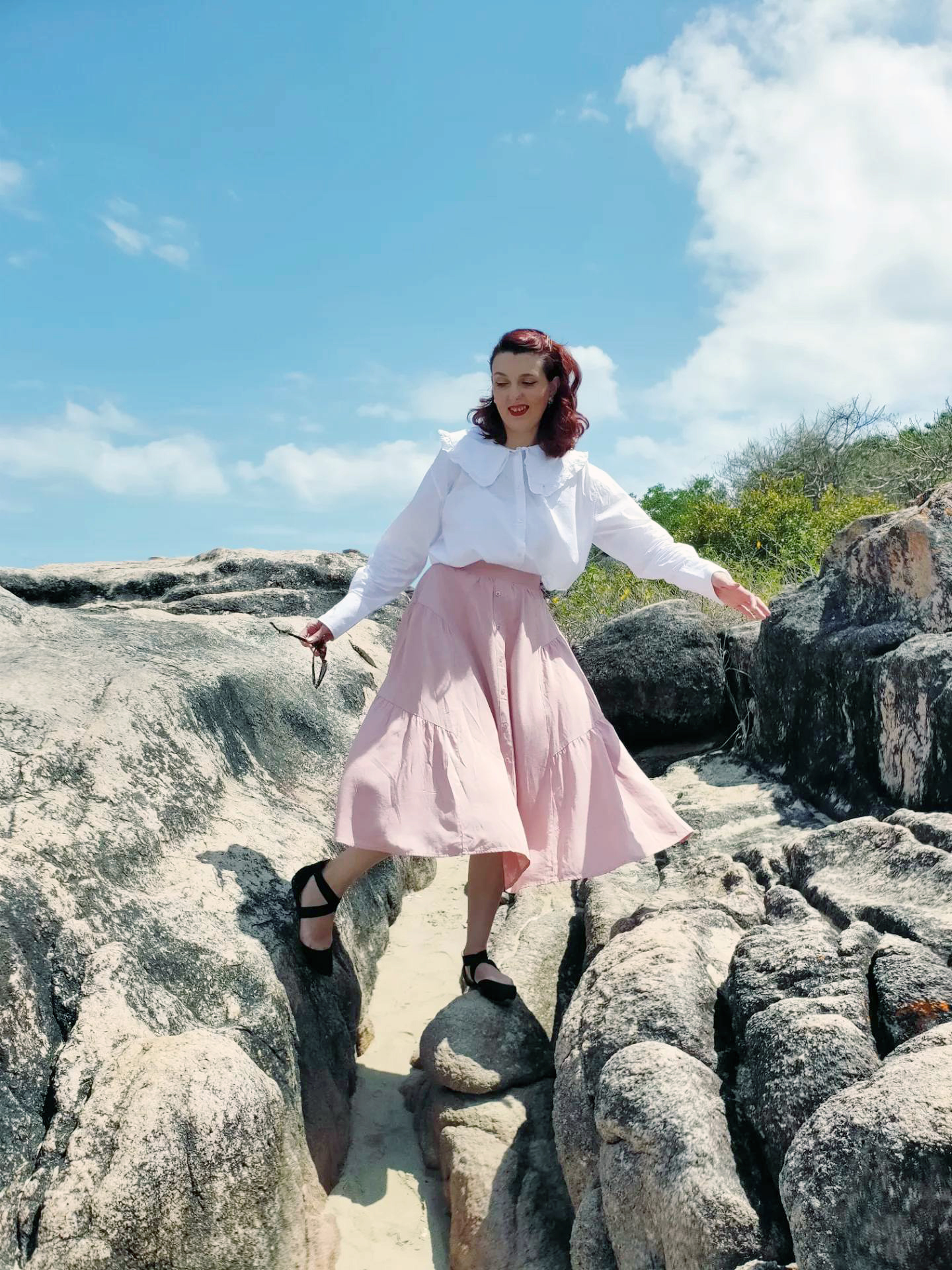
Bowen musician Natalie June has released her new single ‘Ticket to Paradise’, now available on streaming services such as Spotify and Apple Music.
Natalie got her start performing shows in and around town.
“I didn’t have a lot of confidence to pursue music at first. It was just something I did quietly at home,” she said.
“Then, in the last couple of years, I started going to open mics at the Yacht Club and got more comfortable performing in front of people.”
Since then, Natalie has had opportunities to support local and touring festivals.
“Those opportunities were what really inspired me to start recording music.”
Natalie recorded all the instruments herself, using a laptop and interface. With the new release – inspired by the likes of Lana Del Ray and Nora Jones – a music video was filmed in Greys Bay with some of it also captured at Rose Bay, showing off the natural beauty of the region.
The song focuses on inner happiness and belonging. Head to YouTube to see the ‘Ticket to Paradise’ video and get a glimpse of Bowen’s great foreshores.
Captions
Photo source: Facebook
Welcome back to the creative corner. I just want to start by saying how much I appreciate the poetry submissions. In the first few weeks it seemed like it wasn’t going to work but now my inbox is flooded and I couldn’t be more excited to share people’s poetry across the region. Keep sending it in!!
I’ve decided recently that I want to read more Australian books and watch more Australian cinema. As a country that imports a lot of media and culture from overseas (mainly the US and UK), we risk losing our own sense of self by refusing to engage with our own stories. Consuming Australian-made media, and promoting its creation, allows us to better understand Australian identity and politics. It can open discussions and help people reflect on what it means to live in this country.
I recently watched ‘The Adventures of Priscilla, Queen of the Desert’ (1994), an absolute classic. Some of my favourite Australian films would have to be ‘Wake in Fright’ (1971), ‘Picnic at Hanging Rock’ (1975) and ‘Muriel’s Wedding’ (1994).
I’m currently reading ‘Cloudstreet’ by Tim Winton which I borrowed from the library and it’s absolutely incredible. His work easily rivals that of the greats on an international stage. More Australian authors I’d like to check out are Patrick White, Christos Tsolkias, Helen Garner, Richard Flanagan and Peter Carey.
Consider what your favourite piece of Australian media is.
%20Dam%20site%20pre%20construction.jpeg)
Thirty-five years ago, on March 19, 1991, the Proserpine Dam was opened by Premier Wayne Goss. Three months later, the public was treated to a gala day to celebrate its completion. For years, the district had endured severe flooding and this dam promised and delivered relief from these regular and often devastating occurrences.
Debate over the importance of a dam on the Proserpine River had a long history dating back to 1939 when the Chamber of Commerce first approached council to gain urgent consideration to provide a town water supply. Cost estimates proved too big a project for Council. It wasn’t until October 1946 that approval was given for a loan to allow the long-awaited water supply to become a reality. In 1947, damage from heavy rains which caused infrastructure and food shortages, was further proof of the need for a dam on the river.
But progress was slow. Despite numerous floods that underscored the community's vulnerability, the decision to construct the dam remained contentious. Decades of advocacy for town water supply continued, even after a fire in 1949 destroyed Main Street. It took another thirty-four years before the Shire Council was able to draw the government’s attention to the urgency of this matter. The pivotal moment came in 1983 when National Party member Mr. Geoff Muntz championed the cause and successfully initiated the dam's construction, marking a decisive step toward securing the region's future water supply and flood protection.
Approval for the dam was received in January 1985 followed by establishment of the dam village in 1986. Thiess Contractors Pty Ltd led the main embankment, spillway, and tower bridge construction, with local businesses handling walkways, shelter sheds, and barbecues. Additional project contributors included Kalanda Constructions, Transfield Corporation (Qld) Pty Ltd, VSL Prestressing (Aust) Pty Ltd, and the Water Resources Board.
The dam's construction was not without challenges. On December 13, 1988, floods destroyed infrastructure and trapped three Queensland Water Resources workers. On December 24, 1989, John Coutts was fatally struck by a reversing front-end loader. He was wearing ear plugs and apparently did not hear the huge machine approaching.
Almost five years after construction began, the $50 million dam was completed by Christmas 1990. It was expected to take several years to fill but Cyclone Joy moved in on Christmas Eve and three months later Lake Proserpine was 98% full, providing a magnificent site. It had already proved its value by saving Proserpine from potentially disastrous flooding during the wet season of 1990 – 1991 when the area received two years of annual rainfall in two months.
It would be another twenty years before the first overflow which occurred in late December 2010; a source of great relief after it had fallen to its lowest level of 10.7% in 2007. There were further overflows in March 2012 and then March 2013 and now, in March 2026, water is once again spilling over the dam wall.
The Peter Faust Dam was so named in recognition of Mr Peter Faust who, as Chairman of the Shire for over fifteen years, was instrumental in securing government support for its construction. Furthermore, about 15000 acres of land had been resumed from the Faust family’s Proserpine Station for the lake which would be formed by the dam.
Today, residents and visitors enjoy the many benefits of this dam which provides mitigation from flooding; an invaluable irrigation source for farmers; a reliable water supply for residents from Midge Point to Bowen and out to the islands; and a popular recreational facility.
Peter Faust Dam continues to be “a dam good story” …
Story and photo courtesy of Proserpine Historical Society. Information sourced from the PHMS publication, “A Dam Good Story”
Captions
%20the%20dam%20today.jpg)
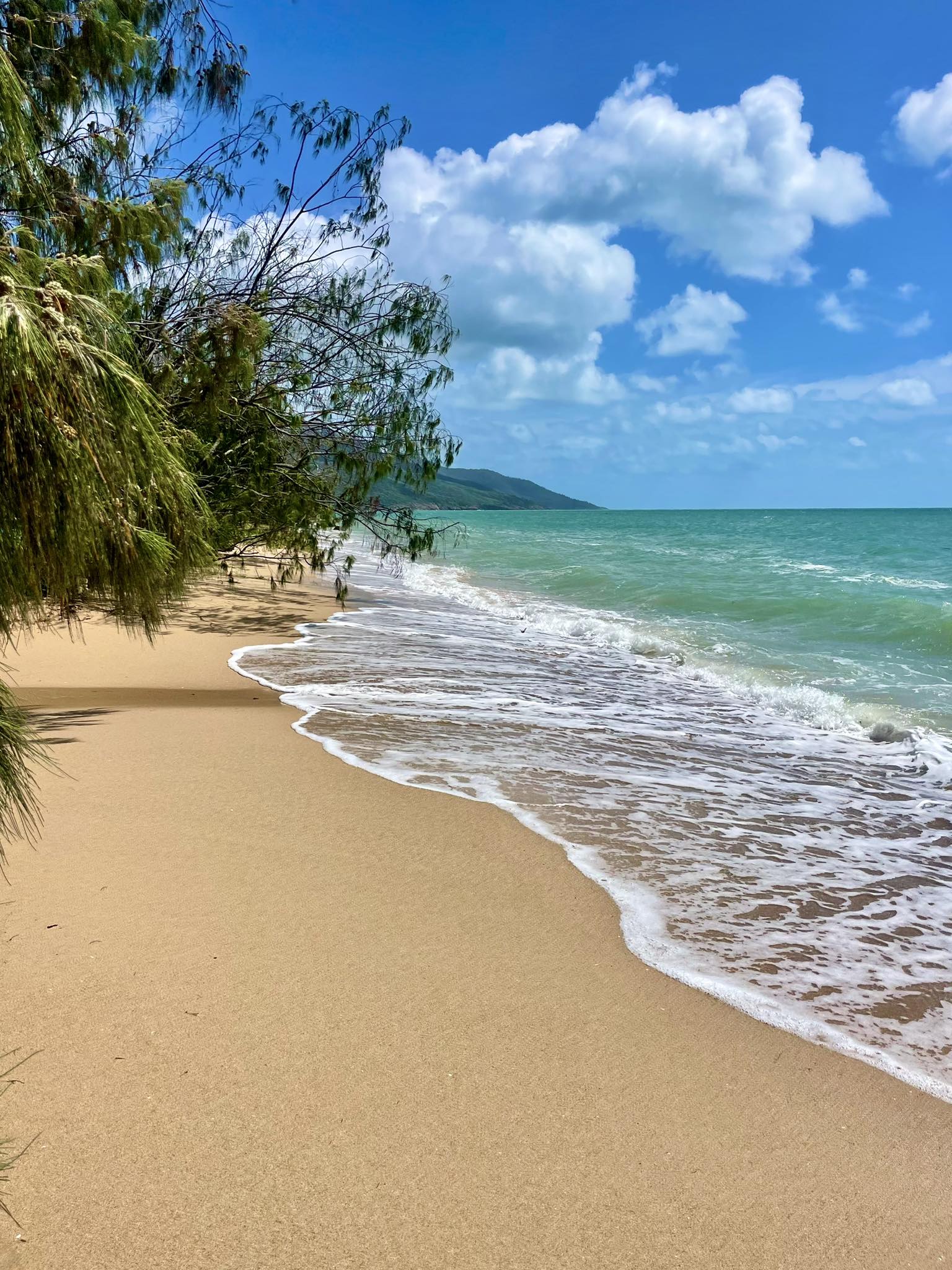
This week’s theme was In My Town, and the winner is Alissa Tomlinson with this gorgeous photo taken at serene Hydeaway Bay.
This week is free choice, with members invited to submit on any topic that inspires them.
Photos supplied by Whitsunday Amateur Photography group on Facebook.
%20YOY.jpg)
On Sunday 15th March, the Whitsunday Lions Club hosted the Youth of the Year Zone Final at Whitsunday Sailing Club. It was tough competition between Isaih Howell (Bowen State High School), Kodie Mackie (Collinsville State High School), Sophie Morgan (St Catherine’s Catholic College) and Tiarne Watson (Proserpine State High School). Despite great performance on everyone’s part, Kodie Mackie took away the public speaking prize and Tiarne Watson won overall. Congratulations to all who participated and everyone who helped organised. The next round will be the District Final which will be hosted by Townsville Mt Stuart Lions Club on Saturday 28th March.
Captions
Photo credit: Sebastian Conidi
%20YOY.jpg)
%20YOY.jpg)
%20YOY.jpg)
%20YOY.jpg)
%20YOY.jpg)
%20YOY.jpg)
%20YOY.jpg)

Queenie is a small Kelpie cross with a gentle nature who is searching for a calm home where she can continue learning that the world is a safe place.
At around two years old, Queenie has already shown how resilient she can be. While she is still nervous, she is steadily improving in foster care and beginning to trust the people around her. With time and patience, she forms a loyal bond with those who care for her.
Rescuers describe Queenie as sensitive and gentle, with a medium energy level. Because she can be shy, she would suit a quiet household where owners are willing to give her the time and stability she needs to adjust. Secure fencing is required. She is reported to be suitable with children, while her compatibility with cats is currently unknown.
Her veterinary care is fully up to date. Queenie has been vaccinated, desexed and has completed her council transfer.
The rescue operates as a foster-based organisation rather than a traditional shelter, meaning animals are cared for in private homes until they are adopted. This allows dogs like Queenie to begin building confidence in a home environment while they wait for their permanent family.
Queenie’s adoption fee is $400. Interested? Send a message with your name and phone number to Bowen-Collinsville Pet Rescue Inc.
Photo source: Facebook
Publishers Indemnity. Any individual or entity that places advertising, supplies copy material, or submits editorial content to Core Life Publishing agrees and undertakes to ensure that all such material:- Does not infringe upon any copyright, trademark, or other intellectual property rights;- Is free from any content that could be considered defamatory, libelous, or slanderous;- Does not infringe upon any rights related to privacy or breach of confidence;- Contains no obscene, indecent, or otherwise unlawful material;- Complies fully with the Trade Practices Act and all other applicable laws, regulations, or statutes.Furthermore, by submitting or placing such material, these individuals or entities agree to indemnify and hold harmless the publisher, Core Publishing and Events Pty Ltd, and/or its agents from and against any and all investigations, claims, demands, liabilities, damages, costs, or judgments arising out of or in connection with the material provided. All material is believed to be accurate at the time of printing and remains the copyright of Core Publishing and Events Pty Ltd.
© 2026 Mackay and Whitsunday Life Pty Ltd.
