
Independently Owned, Locally Grown, Community Loved

There are new things to consider when buying real estate in Australia. Up until last month, people buying real estate in Sydney really only considered the capital growth they were expecting to create within just a few years of making their purchase. Paying $1.2 million for an inner-city two-bedroom apartment didn’t matter so much if it was going to be worth $1.5 million two years later. It didn’t really matter that the crap rental returns you got for that price didn’t go anywhere near covering the mortgage because the old negative gearing benefit meant you could claim the losses on your tax. Things have changed. Negative gearing has gone and prices are dropping in Sydney … so that $1.2 million apartment doesn’t look so enticing any more, even though it’s now $1.1 million. Other cities have also been hit hard. Melbourne is now one of the cheapest cities in Australia to buy real estate. Although there are special Victorian reasons that come into play in that state. Victorians were bullied during COVID in a way that impacted small businesses in a disastrous way. The state’s debt is exorbitant, and no one seems to know how it gets paid back. Tobacco shops keep getting blown up by some underworld gang thing that the Government can’t control. They have metal boxes where people can hand in their machetes and that doesn’t appear to instil peace of mind in anyone. Terrible Governments end up having an impact and it definitely has had one on property prices in Victoria. A quick scan of on-line property sites shows you that you can pick up a decent two-bedroom unit in an inner-city suburbs like St Kilda and Collingwood in the $400,000s. I saw a three-bedder in St Kilda advertised in the $500,000s. While those prices might seem like great value, there are reasons the market is so low. People don’t trust the state Government and its management of the economy and the obvious concern would be that even though the prices might be low, there is no guarantee of capital growth. Capital growth has offered a warm embrace for investors in Australian real estate over many years. There has been an expectation that prices will go up. Obviously they will go up again but the questions is: Where will they go up, when and by how much? Unfortunately I don’t have the answer to that but I do find that when things get a bit blurry and uncertain, it’s good to stick to what you know … which, for me, is Mackay. We have several advantages over many other markets. Our median price for houses, in the $600,000s, is a lot lower than bigger cities so more affordable for local people who, by the way, still need somewhere to live. And, with the end of negative gearing and the banning of borrowing for property out of self-managed super funds, lower prices and strong rental returns should become a key factor in real estate investment. Yes, investors want capital growth but I feel the focus will probably shift more to rental yield and the monthly return on investment. Mackay’s rental returns are good and the purchase prices relatively low compared to other markets so there seems to me a good chance that our market will continue to be buoyed by those wanting to take advantage of that. Meanwhile the Mackay economy seems to be going well, driven by that crucial resource that is dug out of the ground and exported to countries that make steel. I got strong offers on three properties this week so there is a feeling that while there has certainly been a change driven by national political factors, our market is moving through it, adjusting to the new information and still bubbling along. The only thing I would say is that if any of you bump into David Crisafulli tell him to dump those high-level coal royalties.
Read the full story
Queensland’s top real estate professionals and agencies are being called to step into the spotlight, with nominations now open for the Real Estate Institute of Queensland’s (REIQ) 2026 Awards for Excellence. REIQ CEO Antonia Mercorella said the awards remained the state’s highest professional recognition in real estate and continued to adapt alongside the profession itself. “The REIQ Awards for Excellence are the pinnacle of professional recognition in Queensland real estate, and each year we ensure the program remains contemporary, inclusive and reflective of the full scope of our profession,” Ms Mercorella said. “This year, we’re delighted to add a new Multi-Office Network of the Year category, recognising real estate agencies that operate as a unified multi-office network. “It’s a category our members asked for, and it’s a great example of how the awards continue to evolve alongside the structure and sophistication of Queensland real estate businesses.” Ms Mercorella said there was even more incentive for members to nominate this year, with a pathway from the outset to national recognition in eligible categories through the Real Estate Institute of Australia’s (REIA) National Awards for Excellence (NAFE). The REIQ Awards for Excellence span individual and agency categories, with some split into regional and SEQ areas, across residential and commercial sales, property management, buyer’s agency, auctioneering, business broking, multimedia, innovation and community contribution. Ms Mercorella said real estate professionals throughout Queensland could now start preparing and polishing their award nominations with the clock now ticking down. It’s time to shine! Nominations close on Sunday 12th July 2026, with the winners announced at a spectacular awards gala on Saturday 31st October 2026 at The Star Brisbane. Nominate now via awards.reiq.com
Read the full story
Makayla Groves and Bianca O'Brien are part of the commercial property team at Blacks Real Estate, supporting landlords, tenants and business owners across the Mackay region. Working as Commercial Property Managers, Makayla and Bianca assist with the day-to-day management of commercial properties, helping clients navigate leasing and property management requirements across retail, office and industrial spaces. Based at the agency’s Wood Street office, the pair work closely with business clients throughout the region as part of Blacks Real Estate’s commercial division. Makayla Groves can be contacted on 07 4963 2522, while Bianca O’Brien can be contacted on 07 4963 2525. CAPTION: Bianca O'Brien works with Blacks Real Estate as a Commercial Property Manager. Photo supplied Makayla Groves works as a Commercial Property Manager with Blacks Real Estate. Photo supplied
Read the full story
The Coalition has pledged to make the Northern Australia Infrastructure Facility (NAIF) a permanent institution, arguing the move would provide long-term certainty for regional investment, infrastructure and jobs across Northern Australia, including Mackay. The announcement follows the Federal Government's decision to extend the NAIF for a further 10 years, rather than permanently removing its sunset clause. Leader of The Nationals Matt Canavan said while the Coalition would support Labor's legislation, it believed the independent review's recommendation to make the facility permanent should be adopted. “The Developing Northern Australia is a proud LNP achievement,” Senator Canavan said. “Despite naysayers at the time, Northern Australia has remained on the agenda ever since. I am personally proud to have introduced the original Northern Australia legislation in 2016, with the policy built on the work that was done by LNP Members of Parliaments such as former Senator Ian Macdonald and former MP Warren Entsch. “Unfortunately, Labor is now kicking the can down the road. Northern Australia shouldn’t have to fight every decade to prove it is worthy of investment. “The independent review recommended making the NAIF permanent because it works. The Coalition established the NAIF in 2016, and we will make it permanent because Northern Australia should have long-term certainty for investment, jobs and economic growth.” Since its creation, the NAIF has supported 33 projects with $4.3 billion in finance commitments, helping deliver more than 18,000 jobs and an estimated $33 billion in public benefit across Northern Australia. Those investments include upgrades to airports in Darwin, Alice Springs, Townsville, Cairns and Mackay, along with projects supporting agriculture, mining and manufacturing. Shadow Minister for Northern Australia Senator Susan McDonald said permanent funding would continue to drive regional development. “Labor talks about Northern Australia, but the Coalition backs it with lasting investment,” Senator McDonald said. “The NAIF has transformed communities, unlocked private investment and created jobs across the North. Making it permanent sends a clear message that the Coalition believes in Northern Australia’s future and won’t treat its development as a temporary priority.” “Governments come and go, but Northern Australia’s importance will never diminish,” she said.
Read the full story

Sea level rises are not new. Following the last Ice age, as the world began to warm causing the massive polar ice caps to melt, sea levels all around the world began to rise. Over a period of 12,000 years (between 18,000 and 6000 years ago) the sea levels rose more than 120 metres.
Although this happened erratically, with some very rapid rises and some halts, this does average out at a rise of 1 centimetre a year - or half a metre in the lifetime of someone who lived to the age of 50 - and must have come as a shock to the people who experienced them. Although there have been many fluctuations, it had been over 100,000 years since sea levels were high enough to flood the Torres Strait and Bass Strait. Before then, continental shelves all around the world had long been dry land.
About one-seventh of the land mass which was the Australian continent at the end of the Ice age - two and a half million square kilometres - became submerged. This is equal to the present state of Western Australia. When rising quickly, the sea is likely to have drowned gently sloping plains in Northern Australia at the rate of 5 kilometres a year, inundating strips of land over 100 kilometres wide within a generation. Where the continental shelf sloped more steeply the rise would have been less dramatic but would have impinged on the people's lives nonetheless - and they would have had no way of knowing that the sea would ever stop rising.
Memories of this sea level rise is preserved in mythology. All around the world there were tales of floods. Aboriginal and Torres Strait Islander stories are particularly rich in references to inundation. Damarri, a Dreamtime figure of the Gungandji Aboriginal people, from the Cairns area was caught out as the sea levels rose but managed to stop the flood by heating stones in a fire and throwing them into the sea. The rocks can still be seen, off the coast at Yarrabah.
Land which was inundated was not 'lost' to the people who traditionally include it in their tribal territories. For many indigenous people's both land and sea, and the creatures which lived there, have a spiritual significance which is intimately linked to their particular creation beliefs and that sense of attachment was not destroyed simply because some of the land was covered with sea. New creation stories explain the origins of Islands and reefs and the inundated territory became 'sea country'.
See the Reef, Love the Reef, Protect the Reef.
Contributed by Master Reef Guide Brent Chatterton.
Aboriginal stories spoke of inundated territory that became ‘sea country’

With storm season in full swing, we are all reminded not to get complacent, but to keep vigilant and prepared in case a severe weather event comes our way.
On average, 11 cyclones hit Australia each year and four of them are likely to cross land.
While this may not seem like a lot, it only takes one to cause extensive damage.
In March 2017, Cyclone Debbie hit the Whitsundays and large areas were without water for over a week and had no electricity for two weeks.
During this time, residents needed to be self-sufficient and resilient.
Will you be prepared if this happens again this year?
Here’s what you need to do:
• General maintenance: check the condition of your roof tiles, clean out gutters, trim trees and secure lose items
• Home preparation: Make sure you have an emergency pack, a torch and batteries, wide masking tape for windows, containers for water, spare fuel, portable gas stove top or BBQ and hessian bags
• During a severe weather warning: Close windows or shutters, fill buckets and bath with clean water, park vehicles under cover, move all family members to the strongest room of the house
• Keep connected: Listen to the radio and head to the Whitsunday Regional Council Disaster Dashboard where you will be able to keep up with real time information about the weather event
Cyclone season takes place from November to April each year and the Bureau of Meteorology (BOM) will issue warnings when a severe weather event is expected to hit within 24 hours.
During this small window the shops may be full, and supplies can run out so it is best to ensure you are prepared ahead of time.
Cyclone Debbie hit in 2017, causing residents to be without power for weeks. Photo contributed
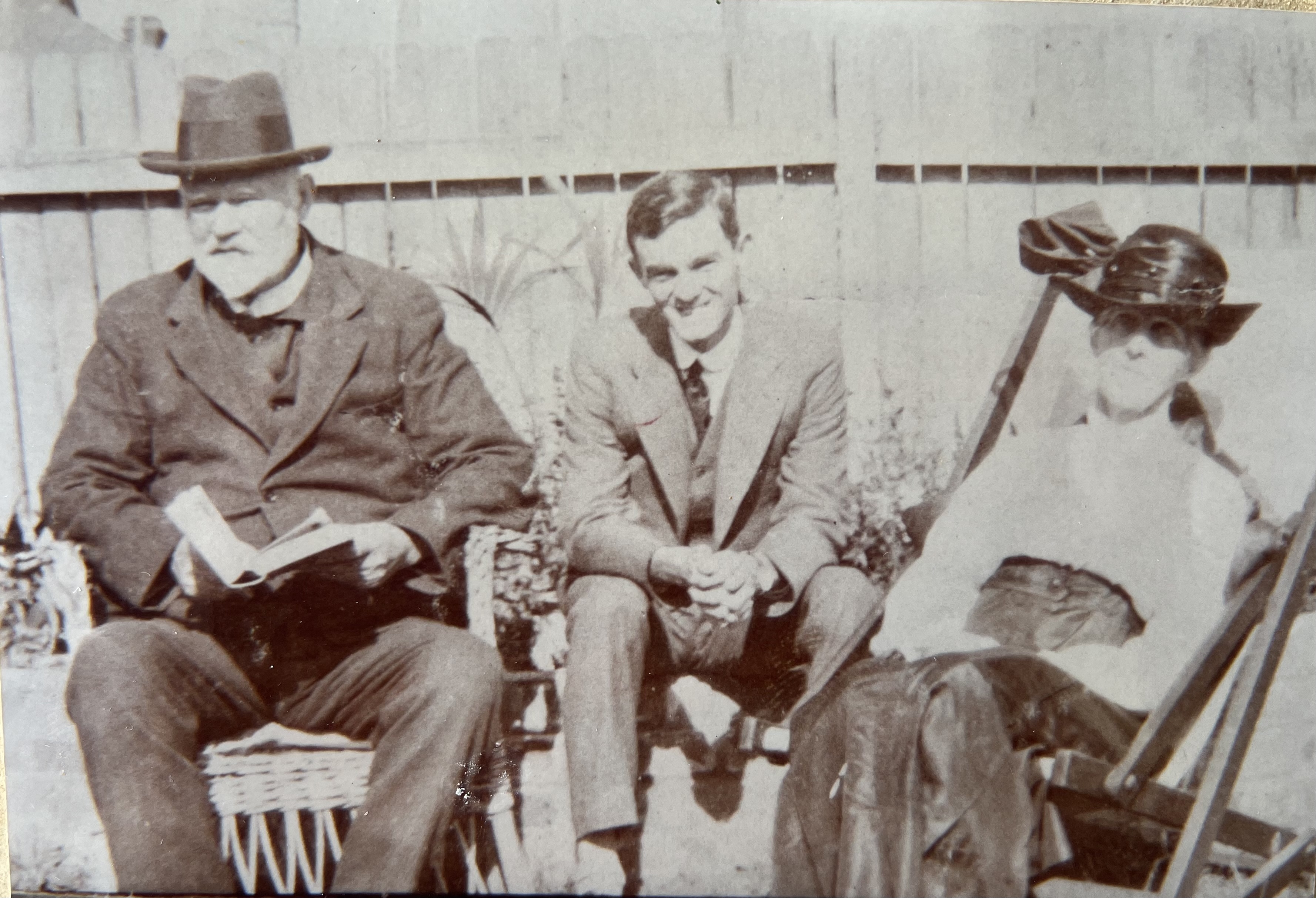
Despite its geographical proximity to Bowen and Mackay in today’s travelling time, Proserpine was still a remote town at the turn of the 20th century with no railway connections and very rough roads. There was no resident doctor and no pharmacy. For most ailments, people relied on traditional remedies such as castor oil and senna pods. Messrs Gus Waite and Jim Webb, both with rudimentary medical training, gave relief to people suffering from toothache and may have rendered first aid in accidents. Childbirth was in the hands of midwives, mostly untrained but well experienced. Dr Traill, from Bowen, occasionally braved the road to provide a minimal service.
Although it is uncertain as to exactly when Dr Anderson came to Proserpine, there are references to his presence in this district in the “Port Denison Times” in the 1903/04 era. Henry Anderson was an undergraduate at the Royal University of Ireland and graduated as Bachelor and subsequently Master of Arts. He turned his attention to medicine and in 1884 obtained the Degree of Doctor of Medicine, taking up practice in Manchester, England. He came to Queensland in 1899 and began to practice in Thargomindah. Country life always appealed to him, and he practiced in turn in Springsure, Proserpine, Harrisville, St. George and Maleny.
By 1910, Dr Anderson was firmly established in Proserpine. He bought two acres of land in what is now Faust Street where the water tower stands today. There he built “Parkfields”, a beautiful home which included a surgery and private hospital and “The Grange”, next door, for his widowed father. This home was bought by the Faust family in 1915.
Dr Anderson played an active role in the rapidly developing town. He supported the establishment of an Ambulance Brigade, offering to give a course on first aid, and later served on the committee.
Early editions of the “Proserpine Guardian” attest to an amazing variety of medical and surgical emergencies, epidemics and accidents with which Dr Anderson had to cope – with rudimentary equipment and only very basic drugs and with little help from outside sources. There were no pathology services, X-rays or antibiotics and he even had to dispense his own drugs. There was little chance of consultations with other doctors and, until the hospital opened, few trained nurses. Yet he provided a general medical coverage of the entire town and shire and obtained remarkable cures, gaining the respect of most of the community.
In 1911, when a public hospital was built after much community pressure, Dr Anderson was appointed Medical Officer and empowered to purchase the necessary instruments and drugs. Over the years, he served the hospital in many ways - as administrator, surgeon, physician, obstetrician, psychiatrist - and came up against many problems. He was constantly recommending measures that would improve the efficiency of the hospital.
Despite being a respected doctor, he never seemed to have a comfortable relationship with the Management Committee. He felt that they were all business men who did not appreciate the right and responsibility of the Medical Superintendent to make all decisions concerning the care and treatment of patients. This conflict came to a head on numerous occasions.
Dr Anderson continued as doctor in charge and in private practice until he resigned in 1918. This was deeply regretted by many and affirmed by the large farewell given by the local community. He continued to practice in various small towns in Queensland until he retired to Sydney in 1921 and died there in 1924.
Story courtesy Proserpine Historical Museum; photo source from Mrs Zena Price
Dr and Mrs Anderson with their son, later Dr Hugh Anderson

When Melinda Hutchings survived anorexia in her teenage years, she knew there would come a day when she would be able to share her story and help others through their own journeys.
It took her a decade to reach a place where she felt ready, but once she arrived at that moment, she was able to write her first novel in just six months and describes it as a complete outpouring of her heart and a “cathartic” experience.
“Anorexia is an insidious disorder and once it takes hold it’s very difficult to understand, and even more difficult to recover from. It is also hard for the people around you. It can be very difficult for loved ones to understand what I was going through,” said Melinda.
“Creating my first book was a very emotional experience and I would feel all those emotions again when I was writing it, so it was very hard. But then writing was another sense of letting go.”
Her novel Fighting for Life: Anorexia The Road to Recovery which came out in 2000, is a fictional story that details Melinda’s journey but is written in the third person so that it is more relatable.
“I had a desire to change my negative experience into something positive and write my story as a work of fiction so that other people can read it and something in the journey of the main character may speak to them,” Melinda explains.
“I thought it would have more power and help more people if it was written that way.”
The book details the full journey of how the eating disorder took hold, the depths of the pain and then gives tools and advice for recovery and finding a way out.
Since its release, the book has inspired thousands of people and helped countless families understand what their loved ones are going through.
For Melinda, that is the most important part, and she recounts with tears in her eyes how she received one email that said: “I am well on the way to recovery and one of the reasons is you”.
After the success of her first book, Melinda released her second which was a compilation of stories from people who had lived through eating disorders.
Shortly afterwards, Melinda joined the authors circuit and spoke to large audiences, helping people understand more about the disease.
During this time, she made media appearances and became an inspiration to many.
In 2009 Melinda published Why I Can’t Look The Way I Want through Allen & Unwin which further cemented her career as a successful author.
Taking a break from the spotlight, she has focused on other projects for some time and recently moved from Sydney to the Whitsundays with her partner.
Melinda is now working on her next non-fiction book which is an inspirational story to help people embrace change and overcome adversity.
She is also ghost writing and editing a non-fiction book that has the potential to become an international best seller.
“For the person that is suffering right now, it is really important that they feel supported and loved and especially heard,” said Melinda.
“It can be very challenging for the people around you, but it is important that they just keep being supportive because that person needs you so much – it’s a difficult journey to understand and everyone’s journey is different - as hard as it is, just keep being there.”
Author Melinda Hutchings shares her story of surviving anorexia

As the holidays draw to a close many families have a mixture of feelings. While it is sad to see the excitement and fun of summer days and free time disappear, many parents may secretly be looking forward to the return of the school routine and less time juggling playdates between work commitments.
Whatever the new school year means to you and your family, it is undoubtedly important to start getting prepared in the final few weeks of the holidays. Build an air of excitement around the new year, get engaged with your children’s learning and set goals for your family.
Here are a few ideas that could help you along the way:
Encourage
Similar to adults, children will feel motivated by setting achievable goals that are presented in a fun and engaging way.
In fact, research shows that kids who participate in setting learning goals are consistently more motivated and take learning more seriously.
Ask your children what they want to aim for this year, what they would like to improve or challenge themselves with.
Engage
It is important that you engage with your child’s curriculum so you can understand areas they may need to improve and also be there to assist with any stress triggers as they arise.
Most kids deal with some level of stress or anxiety about school. One survey found that 53 per cent of parents cite homework and schoolwork as the greatest driver of stress in their kids.
You do not need to know the answers to their homework, you simply need to know what they are being asked to complete.
Prepare
On the week before school starts it could be a good idea to begin a new routine which is conducive to longer days of study, giving them energy to last all day.
A big part of this is ensuring children have enough sleep and, during school holidays, bedtimes often get thrown out of whack.
Try instilling a rule of no technology an hour before bed and gradually bringing their bedtime back to school suitable hours, that way the transition is not so much of a shock.
Get Excited!
Granted, holidays are fun and free whilst school terms can be more about structure and schedules, but that doesn’t mean you can’t add a little excitement to the start of a new school year.
Going shopping for school supplies together and letting kids pick out their own pens, notebooks and other school supplies can help them get excited about going back to school, even if it means the shopping trip might take a bit longer.
Also keep in mind that kids are often quick to pick up on our attitudes towards things, so try to speak positively about school and emphasise the positive aspects of it, such as their friends and teachers or the cool things they’ll have a chance to learn.
Information in the article sourced from Marianne Stenger from Open Colleges Australia.

Here in the Whitsundays, we are lucky to have beautiful and accessible nature at our doorstep and, in the cool of the morning or late afternoon, our parks and green areas are full with the sound of children’s laughter.
When the new school term starts, however, it is very easy to slip into a routine where outdoor play is replaced by technology, tired eyes are easily occupied by a screen.
With recent studies showing that the average American child spends just four to seven minutes a day playing outside and a whopping seven hours a day in front of a screen, it is now more important than ever to get our children outside.
Kids who play outside are known to be happier, better at paying attention and less anxious than kids who spend more time indoors.
Here are some other advantages:
It builds confidence - Letting your child choose how they treat nature means they have the power to control their own actions.
It provides different stimulation – while technology can appear stimulating, it can actually be numbing. Outside activates more senses where you can see, hear, smell, and touch outdoor environments.
It gets them moving - Not only is exercise good for kids’ bodies, but it seems to make them more focused, which is especially beneficial for kids with ADHD.
It makes them think - Nature creates a unique sense of wonder for kids that no other environment can provide. This encourages kids to ask questions about the earth and the life that it supports.
It reduces stress and fatigue - urban environments require directed attention, which forces us to ignore distractions and exhausts our brains. In natural environments, we practice an effortless type of attention known as soft fascination that creates feelings of pleasure, not fatigue.
Information sourced from Danielle Cohen from the Child Mind Institute.
DID YOU KNOW?
• Children can laugh up to 300 times a day, the average adult only laughs about 20 times
• Babies under the age of one do not understand the difference between right and wrong
• A four-year-old will ask on average 437 questions a day
Fantastic Facts For Kids
• Caterpillars have 12 eyes
• Horses and cows sleep standing up
• Wombats do square poos
• A hippo can run faster than a man
• Kangaroos can't walk backwards
• A shark is the only fish that can blink with both eyes
• A group of frogs is called an army
• Octopuses have blue blood and nine brains
• Gorillas burp when they are happy
• Emperor penguins can last 27 minutes underwater
• Slugs have four noses!

Deciding on the right pair of shoes for your child is an important part of the back-to-school process – of all the ‘tick list’ items you need to get your children prepared for the start of a brand-new year, giving them the solid foundations of quality and supportive footwear is paramount.
At Shoe Biz, the Whitsunday’s premier footwear supplier, the passionate team will welcome you into their store and treat each foot individually, just like they treat each person.
The family run business has been operating for over 30 and has two stores, one in Airlie Beach town centre and a second on Proserpine Main Street.
General Manager Andrew Allison says that, after all this time, it is the people they serve that matter most.
“It’s the generations and generations we get to serve,” he said.
“Most people know me, we’ve seen families come through, kids, parents, grandparents – those kids are now having their own kids – it’s like one big family!”
Andrew’s parents, Richard and Pamela bought the business in the early 1990’s because they wanted to create a place where all their family could work.
Both their children and grandchildren have grown up and worked in the stores over the years and, with Richard recently retiring, Andrew oversees operations while Pamela looks after the administration side of the business.
Andrew has been working in the business since the family purchased it, and he says that fitting shoes properly is a skilled part of the job that he has perfected over the years.
“We fit them, and we fit them properly to make sure they are comfortable,” he said.
“We are experienced and over the years customer feedback has meant that we only stock the best brands at a range of price levels to suit any budget.”
From Assics and Sketchers through to the more affordable Sfida, Shoe Biz only supply brands that they vouch for themselves.
Every customer is offered a personal fitting service as part of the price, as well as the “good old fashioned service” which is always included.
You will always see Andrew or Pamela there to greet you at the Airlie store while Liz DeMartini will welcome you at the Proserpine location.
Shoe Biz General Manager Andrew Allison with mum Pamela in the background

Image: Photo credit: Sam Gillespie
It’s become a Christmas tradition that the Walkerston community looks forward to every year.
On Saturday, Santa and his merry crew at Walkerston Fire Station criss-crossed the streets of Walkerston in their tinsel-covered fire trucks, lights and sirens alight, handing out lollies to eagerly awaiting families lining the streets. Lollies were donated to Walkerston Fire Station by the community and returned to the community in an annual display of community Christmas spirit.

Image: Jye Howes donated his day off to cut the hair of Westminster Lode residents earlier this week
Following recent revelations of alleged neglect at Westminster Lodge Retirement Village, a local barber donated his skills and his day off to visit the village and cut some of the residents’ hair.
“The story behind this place was something that really touched my heart,” said barber Jye Howes.
Mr Howes visited the village with his equipment, making his way to some of the units in the village to cut the hair of the residents.
“I will continue to visit this place and donate my time to the residents every fortnight to keep them looking fresh,” said Mr Howes,
“It's not much, I know, but a little can go a long way and I wanted to spread some Christmas cheer.”
The service is one of many gestures and donations being made by the Mackay community, with many local individuals, families and businesses donating money, services, food and Christmas presents.
“It’s actually amazing, especially just over a week until Christmas, everyone has pulled together as a community,” said one volunteer, Jessica Taylor.
“The whole community has done an amazing job.”
“It’s crazy to see what the community is capable of, there’s great people out there,” added fellow volunteer Travis Miller.
“I take my hat off to the Mackay community for everything they are doing for these people and the change we are making,” said Mr Howes.
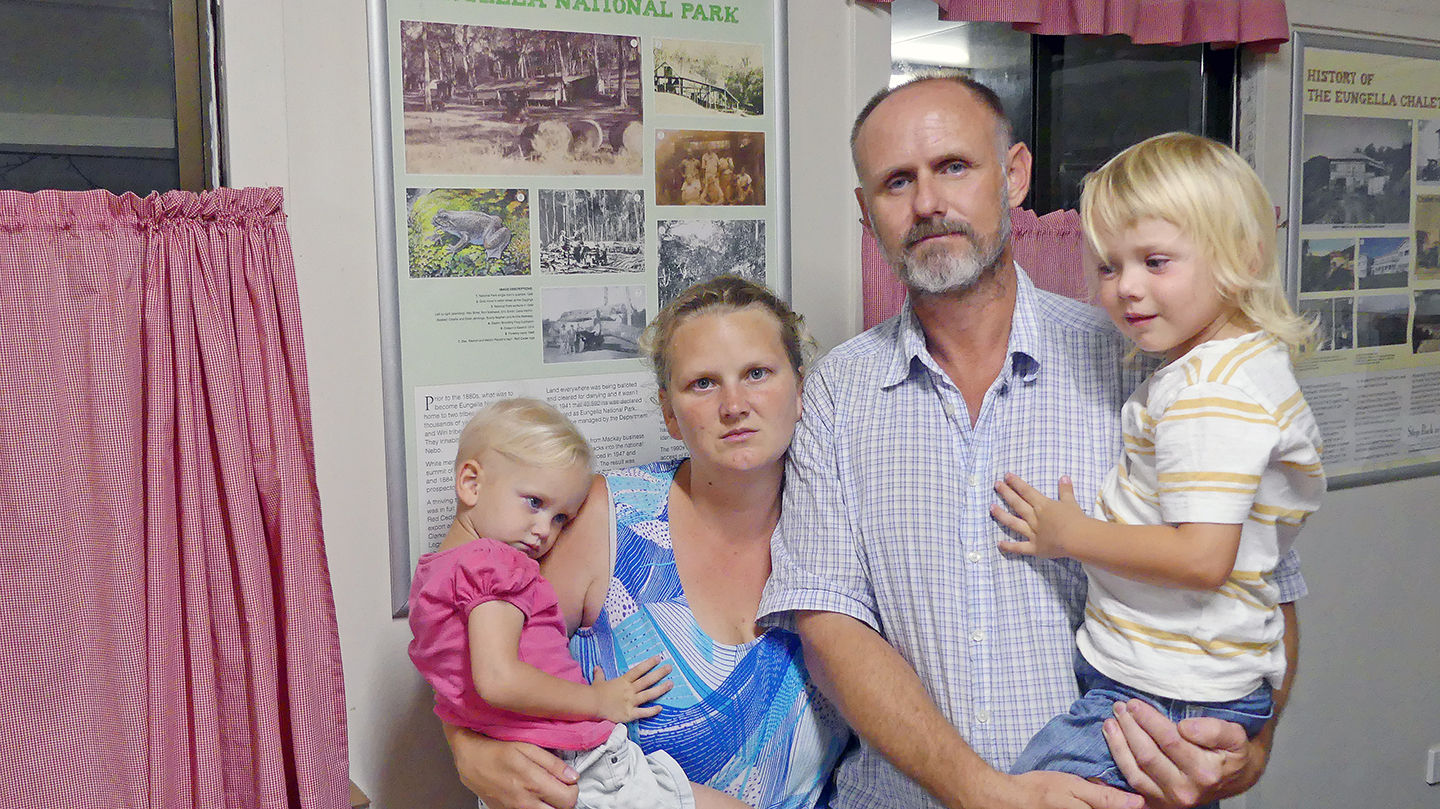
Image 1: Charlotte Aish, Chad Delforce and their children live on a property 12km outside Eungella. Photo credit: Sam Gillespie
Negotiations have begun between the Queensland Government and affected landholders following the Government’s announcement of the Pioneer-Burdekin Pumped Hydro Scheme in September.
The project is estimated to affect over 54 houses across 79 properties throughout Netherdale, Eungella and Mount Dalrymple with Government officials and contractors approaching residents to discuss terms of property access to conduct studies as well as initiating negotiations for property resumption and compulsory acquisition.
An information session was held in Eungella last Monday, December 12 to provide residents with landholder law information while making these negotiations.
“I know how precious land is and what it means to families,” said Shine Lawyers Practice Leader for Landholder Law Diane Skene.
“We’re not saying that it is (proceeding), but it’s definitely a bit scary.”
Charlotte Aish and Chad Delforce own a property 12km outside Eungella where they have raised their two young children for the last six years.
“Out of all the properties that we’d seen, there was just something about it and we just knew that was the one that we wanted to set up a life on,” said Ms Aish.
The family found out their property is proposed to be inundated by the project’s upper reservoir B and have received a letter to request access.
“We had no consultation on any of the contents of the proposal,” said Mr Delforce.
“Part of it was 48 hours’ notice to access and we informed them that that was completely unrealistic, so we’ve asked for changes to be made to that if we were going to look at agreeing to it which we’re not sure on at the moment.
“To think that we’re going to be in this situation for another two, three, four, five years, it’s going to have a really big impact.
“It’s still early days and we haven’t really obtained formal legal advice which is part of the reason we’ve attended tonight.”
Shine Lawyers have received enquiries from a number of residents in the area, prompting members of their Landholder Law team to travel to Eungella from Brisbane, Toowoomba and Dalby to facilitate the session.
“It was enough to bring us all up here, landholder to support landholder,” said Ms Skene.
“I think that having us on the ground up here, it won’t be our last trip up, it just depends on how fast the project moves and whether the community needs support in any objections, so I think we probably need to keep our fingers on the pulse just to make sure we’re there to help.”
● Seek legal advice for property access agreements and negotiations
● Inform Queensland Hydro officials of unique flora, fauna and other aspects of your property
● Keep a diary of interactions with government officials
● Talk to your accountant about tax implications
● Band together as a community

Twas two nights before Christmas and at the Mackay Life house,
Computers were switched off, including the mouse.
The newspapers were delivered that morning with great care,
In the hopes our readers were informed for the New Year.
As you nestle between the sheets all snug in your bed,
Dreams of a Christmas weekend dance in your head.
Those who featured in our good deed surely made the list of nice,
We know Santa reads our newspaper and has been checking it twice.
As Christmas Day approaches, St Nick readies his sleigh,
With reindeer fed and watered, it’s almost time for up-up-and-away.
"Now, DASHER! now, DANCER! now, PRANCER and VIXEN!
On, COMET! on CUPID! on, DONNER and BLITZEN!”
Keep an ear out for the jingle of bells on the roof,
As well as the prancing and pawing of each little hoof.
Santa doesn’t glide down chimney’s here in Mackay,
He manages to slide through the door with cunning and sly.
Our team wishes you and your family a Christmas filled with glee,
We hope you find something special to cherish under your tree.
Thanks for reading and for sharing your stories,
The pages would be empty if it weren’t for your glory.
As 2022 comes to a close and a new chapter starts,
We hope you have a wonderful New Year with joy in your hearts.
From Amanda and the team at Mackay Life xo

The Mackay Hospital and Health Service (HHS) is currently seeking expressions of interest from people who would like to join its Maternity Community Reference Group.
The group, which was established in 2020, enables consumers and community representatives to contribute towards enhancing maternity care for those in the Mackay, Whitsunday and Isaac regions.
Mackay HHS Interim Chief Executive Paula Foley said listening to the voices of mothers, fathers and support people helps shape the care being provided at our facilities.
“We welcome participation from people across all sectors of our community as we work on shaping the future of maternity care,” Ms Foley said.
“Having mothers, fathers and support people contributing their knowledge and experience Is essential to planning services that are safe for the women in our care.
“We particularly want to hear from consumers living in our catchment area who have accessed any of our services in the past three years, whether it’s though our hospitals in Mackay and Proserpine, our rural maternity care services, the Birth Centre or Kem Kem Yanga services.”
The Maternity Community Reference Group will have the opportunity to partner with us on a range of projects including the Mackay Base Hospital expansion, and service improvement activities.
The Maternity Community Reference Group meets regularly with MHHS leadership and maternity representatives, and appointment is for a two-year term.
To find out more please complete the expression of interest form on our website https://www.mackay.health.qld.gov.au/join-our-maternity-community-reference-group/
Applicants can also email mhhsengagement@health.qld.gov.au or phone 4885 6801.
Applications close on Wednesday, January 11, 2023.

Image: Federal Member for Dawson Andrew Willcox
As energy continues to be a geopolitical battleground, an intervention on the energy industry passed through the House last week, with the Greens supporting a Federal Labor government’s decision to cap the price of coal and gas.
The temporary caps on the wholesale price of gas and coal of $12 per gigajoule and $125 per tonne respectively are meant to combat the skyrocketing cost of electricity, however Federal Member for Dawson Andrew Willcox warned of the detrimental effects of price caps in an address to the Parliament stating that they would drive business offshore and add pressure to the supply shortage.
Mr Willcox said Labor’s ineffective set of measures will only hurt Australians’ hip pocket.
“Price caps are receiving their rightful outcry across the community, from industry groups, to economists, to businesses and people trying to pay their bills,” Mr Willcox said.
“Some have labelled Labor’s response as a declaration of war on the gas and coal industry. They are more interested in demonising these groups who do so much to produce wealth for our nation. The caps do a lot to please activists, however they do not provide security to our energy supply.
“The root cause of the issue we face is supply. If there is an oversupply, the price goes down. If there is an undersupply, the price goes up. We have an undersupply, so bring on more coal and gas.
“We don’t want to end up in a situation where we are gas rationing because of the shortages that will occur when there is not enough gas being produced.”
Mr Willcox added that in our market-based economy, these price controls will drive away investment, reduce supply and send business overseas.
“That means our national profits will reduce dramatically, and the cost of living will increase for Australian households and businesses.
“Labor is about to get a major lesson in how markets work and unfortunately Australians will be collateral damage, paying the price for their ignorance.”

Image: Travis Miller and Jessica Taylor have rallied behind Westminster Lodge, a retirement village experiencing numerous instances of neglect. Photo credit: Sam Gillespie
A Facebook post requesting the loan of a barbecue for Christmas has uncovered a distressing case of alleged neglect in a Mackay aged care rental village.
Elvira Bates posted in Facebook group Mackay Noticeboard requesting the use of a barbecue for Christmas, saying “as our kitchen/dining room has been closed for months now, residents that have no family or are unable to travel Christmas day, will not have a Christmas meal.”
The post garnered hundreds of comments of shock and support and drove many locals to assist including Travis Miller and Jessica Taylor.
“We are just complete strangers, came here concerned about the barbecue, but coming here, it was just crazy, what they’re actually going through,” said Mr Miller.
“We saw it was a bigger picture than it actually was,” added Ms Taylor.
Westminster Lodge is an aged care rental village home to 37 residents aged between their mid-60s and mid-90s.
A meal service was provided as part of the residents’ rent, with three meals being served a day in a communal kitchen, dining and recreation space.
This meal service ceased in September and residents were given 24 hours’ notice that they would be left to fend for themselves.
Each room is equipped with a kitchenette that includes a microwave, mini fridge, toaster and kettle, which the Westminster Lodge Manager said is enough for residents to be self-sufficient.
“It’s an independent living village,” she said.
“They have one dining room, one lounge, a little kitchenette, a bar fridge, microwave – it’s a village, not a nursing home.”
Management of the village changed hands in April 2022 and the manager said at the time, all residents would eat the provided meals.
The number of residents eating the provided meals had dropped to around 20, which she said is why she ceased the service.
“As a business, if we don’t have enough people, we can’t run it, unless people want to pay more money,” she said.
“I want to look after them, but the payment would have to go up for the food.”
The manager went on to say the microwave meals some residents have been forced to eat since the kitchen closure would be “much better” than what was being served.
“Our food, it’s the same every week, repeat and repeat, it’s a bore,” she said.
“That’s why I say, okay, we’ll close and find a solution.
“It’s a business; I’m just a manager.
“The cooking is my commercial activity, not a charity.”
The management of Westminster Lodge has since been listed for sale on Gumtree, the manager saying she’s “sick of it”.
“Maybe someone who buys can do it, let them do it,” she said.
“I don’t want to stop it, it’s my income.”
Since the meal service stopped, the residents’ rent has been adjusted, but many issues remain.
Residents are not permitted to use the common kitchen, and, despite the manager’s claims, Ms Taylor said their rooms are insufficiently equipped.
“The rooms are not catered for cooking at all,” said Ms Taylor.
“When they shut it down, they were left to fend for themselves.”
Last week, volunteers saw to the repair and restoration of the “run down” facilities including fridge and freezer seals, air conditioning, gas supply, fire extinguishers and smoke alarms, security cameras and hot water.
There are two emergency phones on the premises, both of which have reportedly been disconnected.
Faulty chairlifts and poor lighting make it difficult for residents, visitors and emergency services to access the village.
Maintenance of the village and the apartments has largely been left the responsibility of residents and, more recently, volunteers with a reported lack of communication between the manager and body corporate.
Additionally, without their daily meals in the common room, residents lost their routine interactions with other residents with many opting to stay in their rooms.
“They don’t utilise this area anymore,” said Mr Miller.
“No one’s bonding … they’re not mingling, there’s no dinner here so there’s none of that time to come in, have a feed and mingle with other residents.”
To address this, Ms Taylor and Mr Miller hosted a dinner in the common room for the residents, a gesture that was met with tears of appreciation from some residents.
“That dining room was full,” said Ms Taylor.
“There was laughter … and it was nice, it was happy.”
The dinner was cut short, however, as Ms Liu reportedly “stormed into the dining room” and “ordered everyone out of the kitchen.”
“As soon as (the manager) turned up and walked in, 90% of (residents) got up and walked out, they were just too frightened,” said Ms Taylor.
The village’s locks have since been changed to prohibit residents and volunteers access to the common area.
The son of a Westminster Lodge resident, Mark Alterator, and his wife Suzie Penny were made aware of the issues at Westminster Lodge prior to the ceasing of the food service.
“Everyone keeps going on about the kitchen and the food, that’s only a very small part of what’s going on here,” said Ms Penny.
Mr Alterator and Ms Penny contacted Member for Mirani Stephen Andrew who spoke to the Lodge’s body corporate, managed by body corporate management company Whittles Group, who plan on taking legal action against the manager.
“Even though it’s out of my patch, the welfare of the people of Queensland is still my remit,” said Mr Andrews.
“These people need to have a manager that has actually got to stand by the contract that she actually signed, they need to go back to a normal subsistence of life so they can interact with each other, they can have their daily meals, three meals a day.
“They’re issuing a notice of breach.”

Image 1: Caneland Central has been purchased for $280 million
Image 2: Sentinel CEO Warren Ebert said Caneland completely dominates its market
Caneland Central has been acquired by Sentinel Property Group after almost a year on the market.
The shopping centre had been owned and managed by Lendlease’s APPF Retail fund since 2001, with Sentinel bolstering its $1 billion plus commercial real estate portfolio in Northern Australia with the $280 million purchase.
Sentinel CEO Warren Ebert said Caneland Central is the premier shopping and lifestyle destination in the Mackay region.
“Caneland Central completely dominates its market,” he said.
“Every man, woman and child in Mackay comes to Caneland four times a month.
“You could never duplicate this centre and you also cannot find another 14ha site like this in the city, let alone even close to the city.”
With 202 tenants and a gross floor area of 65,964 sqm, Caneland Central is the largest of its type in the region, servicing a catchment of more than 175,000 people.
The retail hub first opened in 1979 and has since undergone significant redevelopments including a $230 million expansion in 2011 which introduced a new food court and dining precinct, as well as the Myer department store.
Sentinel plans to carry out immediate improvements to the centre including a renewable energy upgrade through the installation of a roof mounted solar system, which the Group has also provided at its DFO retail complex in Cairns.
A new moving walkway is also being installed in the centre.
Mr Ebert said major national and international tenants had already inquired about leasing space at Caneland Central.
“Caneland Central dominates the Mackay CBD and is the central focal point for retail spending and leisure for the wider region which spans 386 km north to Townsville and 336 km south to Rockhampton,” Mr Ebert said.
“The trade area population of the centre is around 154,110 persons which is projected to grow to around 183,410 persons by 2036.
“Bernard Salt, one of Australia's leading social commentators, recently forecast Mackay to be in the Top 20 sized cities in Australia by 2054.”
APPF Retail Fund Manager Anne MacSporran said “The centre has been a strong performer for APPF Retail due to its mix of retail, lifestyle and dining and core position at the heart of Mackay’s local community.
“Despite recent market volatility, the outlook for Australian retail remains positive, with sales remaining robust post the pandemic.”
The purchase of Caneland Central isn’t Sentinel’s first foray into the Mackay Market, with the Property Group’s portfolio also including Northpoint Homemaker Centre, Kings 4WD Supa Centre and Birch Carroll & Coyle cinema complex.
Publishers Indemnity. Any individual or entity that places advertising, supplies copy material, or submits editorial content to Core Life Publishing agrees and undertakes to ensure that all such material:- Does not infringe upon any copyright, trademark, or other intellectual property rights;- Is free from any content that could be considered defamatory, libelous, or slanderous;- Does not infringe upon any rights related to privacy or breach of confidence;- Contains no obscene, indecent, or otherwise unlawful material;- Complies fully with the Trade Practices Act and all other applicable laws, regulations, or statutes.Furthermore, by submitting or placing such material, these individuals or entities agree to indemnify and hold harmless the publisher, Core Publishing and Events Pty Ltd, and/or its agents from and against any and all investigations, claims, demands, liabilities, damages, costs, or judgments arising out of or in connection with the material provided. All material is believed to be accurate at the time of printing and remains the copyright of Core Publishing and Events Pty Ltd.
© 2026 Mackay and Whitsunday Life Pty Ltd.
