
Independently Owned, Locally Grown, Community Loved

There are new things to consider when buying real estate in Australia. Up until last month, people buying real estate in Sydney really only considered the capital growth they were expecting to create within just a few years of making their purchase. Paying $1.2 million for an inner-city two-bedroom apartment didn’t matter so much if it was going to be worth $1.5 million two years later. It didn’t really matter that the crap rental returns you got for that price didn’t go anywhere near covering the mortgage because the old negative gearing benefit meant you could claim the losses on your tax. Things have changed. Negative gearing has gone and prices are dropping in Sydney … so that $1.2 million apartment doesn’t look so enticing any more, even though it’s now $1.1 million. Other cities have also been hit hard. Melbourne is now one of the cheapest cities in Australia to buy real estate. Although there are special Victorian reasons that come into play in that state. Victorians were bullied during COVID in a way that impacted small businesses in a disastrous way. The state’s debt is exorbitant, and no one seems to know how it gets paid back. Tobacco shops keep getting blown up by some underworld gang thing that the Government can’t control. They have metal boxes where people can hand in their machetes and that doesn’t appear to instil peace of mind in anyone. Terrible Governments end up having an impact and it definitely has had one on property prices in Victoria. A quick scan of on-line property sites shows you that you can pick up a decent two-bedroom unit in an inner-city suburbs like St Kilda and Collingwood in the $400,000s. I saw a three-bedder in St Kilda advertised in the $500,000s. While those prices might seem like great value, there are reasons the market is so low. People don’t trust the state Government and its management of the economy and the obvious concern would be that even though the prices might be low, there is no guarantee of capital growth. Capital growth has offered a warm embrace for investors in Australian real estate over many years. There has been an expectation that prices will go up. Obviously they will go up again but the questions is: Where will they go up, when and by how much? Unfortunately I don’t have the answer to that but I do find that when things get a bit blurry and uncertain, it’s good to stick to what you know … which, for me, is Mackay. We have several advantages over many other markets. Our median price for houses, in the $600,000s, is a lot lower than bigger cities so more affordable for local people who, by the way, still need somewhere to live. And, with the end of negative gearing and the banning of borrowing for property out of self-managed super funds, lower prices and strong rental returns should become a key factor in real estate investment. Yes, investors want capital growth but I feel the focus will probably shift more to rental yield and the monthly return on investment. Mackay’s rental returns are good and the purchase prices relatively low compared to other markets so there seems to me a good chance that our market will continue to be buoyed by those wanting to take advantage of that. Meanwhile the Mackay economy seems to be going well, driven by that crucial resource that is dug out of the ground and exported to countries that make steel. I got strong offers on three properties this week so there is a feeling that while there has certainly been a change driven by national political factors, our market is moving through it, adjusting to the new information and still bubbling along. The only thing I would say is that if any of you bump into David Crisafulli tell him to dump those high-level coal royalties.
Read the full story
Queensland’s top real estate professionals and agencies are being called to step into the spotlight, with nominations now open for the Real Estate Institute of Queensland’s (REIQ) 2026 Awards for Excellence. REIQ CEO Antonia Mercorella said the awards remained the state’s highest professional recognition in real estate and continued to adapt alongside the profession itself. “The REIQ Awards for Excellence are the pinnacle of professional recognition in Queensland real estate, and each year we ensure the program remains contemporary, inclusive and reflective of the full scope of our profession,” Ms Mercorella said. “This year, we’re delighted to add a new Multi-Office Network of the Year category, recognising real estate agencies that operate as a unified multi-office network. “It’s a category our members asked for, and it’s a great example of how the awards continue to evolve alongside the structure and sophistication of Queensland real estate businesses.” Ms Mercorella said there was even more incentive for members to nominate this year, with a pathway from the outset to national recognition in eligible categories through the Real Estate Institute of Australia’s (REIA) National Awards for Excellence (NAFE). The REIQ Awards for Excellence span individual and agency categories, with some split into regional and SEQ areas, across residential and commercial sales, property management, buyer’s agency, auctioneering, business broking, multimedia, innovation and community contribution. Ms Mercorella said real estate professionals throughout Queensland could now start preparing and polishing their award nominations with the clock now ticking down. It’s time to shine! Nominations close on Sunday 12th July 2026, with the winners announced at a spectacular awards gala on Saturday 31st October 2026 at The Star Brisbane. Nominate now via awards.reiq.com
Read the full story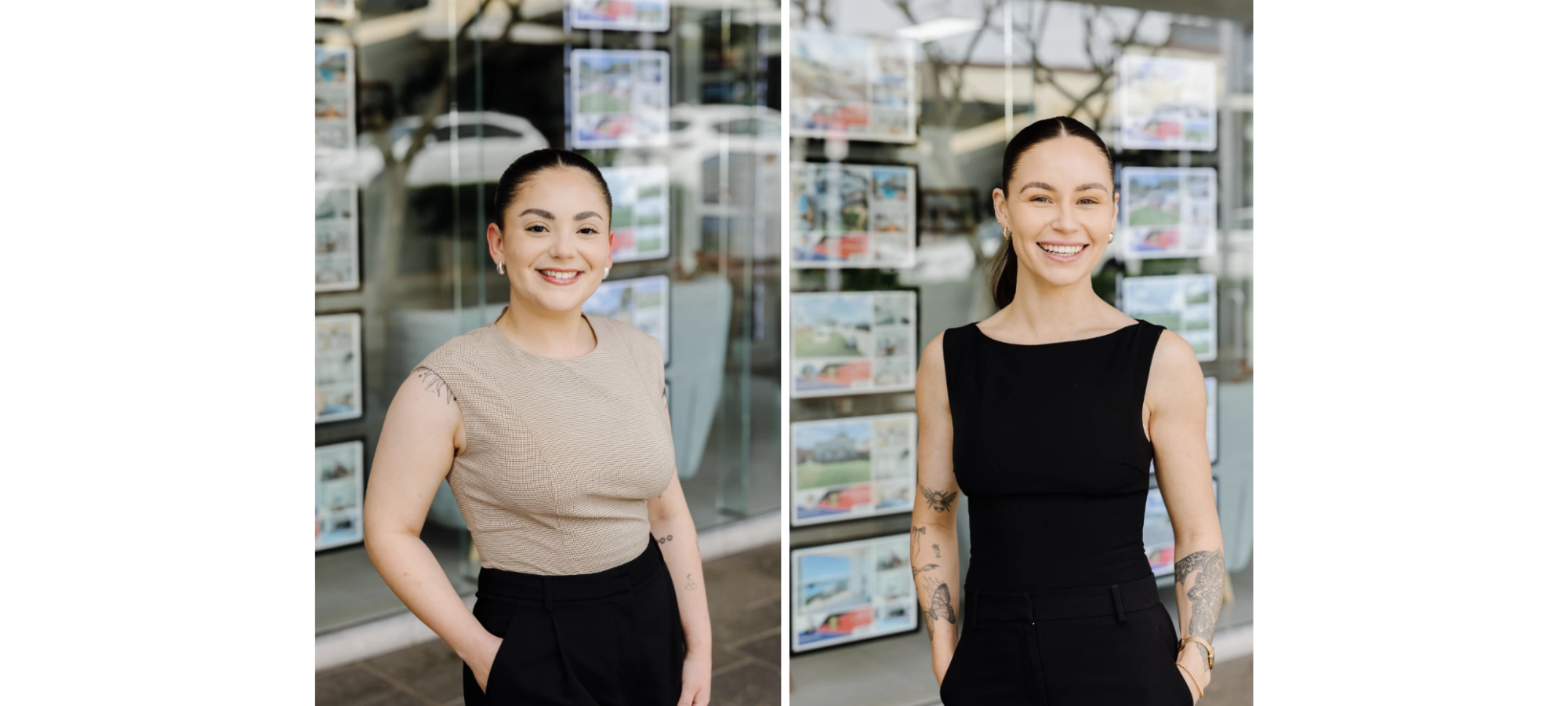
Makayla Groves and Bianca O'Brien are part of the commercial property team at Blacks Real Estate, supporting landlords, tenants and business owners across the Mackay region. Working as Commercial Property Managers, Makayla and Bianca assist with the day-to-day management of commercial properties, helping clients navigate leasing and property management requirements across retail, office and industrial spaces. Based at the agency’s Wood Street office, the pair work closely with business clients throughout the region as part of Blacks Real Estate’s commercial division. Makayla Groves can be contacted on 07 4963 2522, while Bianca O’Brien can be contacted on 07 4963 2525. CAPTION: Bianca O'Brien works with Blacks Real Estate as a Commercial Property Manager. Photo supplied Makayla Groves works as a Commercial Property Manager with Blacks Real Estate. Photo supplied
Read the full story
The Coalition has pledged to make the Northern Australia Infrastructure Facility (NAIF) a permanent institution, arguing the move would provide long-term certainty for regional investment, infrastructure and jobs across Northern Australia, including Mackay. The announcement follows the Federal Government's decision to extend the NAIF for a further 10 years, rather than permanently removing its sunset clause. Leader of The Nationals Matt Canavan said while the Coalition would support Labor's legislation, it believed the independent review's recommendation to make the facility permanent should be adopted. “The Developing Northern Australia is a proud LNP achievement,” Senator Canavan said. “Despite naysayers at the time, Northern Australia has remained on the agenda ever since. I am personally proud to have introduced the original Northern Australia legislation in 2016, with the policy built on the work that was done by LNP Members of Parliaments such as former Senator Ian Macdonald and former MP Warren Entsch. “Unfortunately, Labor is now kicking the can down the road. Northern Australia shouldn’t have to fight every decade to prove it is worthy of investment. “The independent review recommended making the NAIF permanent because it works. The Coalition established the NAIF in 2016, and we will make it permanent because Northern Australia should have long-term certainty for investment, jobs and economic growth.” Since its creation, the NAIF has supported 33 projects with $4.3 billion in finance commitments, helping deliver more than 18,000 jobs and an estimated $33 billion in public benefit across Northern Australia. Those investments include upgrades to airports in Darwin, Alice Springs, Townsville, Cairns and Mackay, along with projects supporting agriculture, mining and manufacturing. Shadow Minister for Northern Australia Senator Susan McDonald said permanent funding would continue to drive regional development. “Labor talks about Northern Australia, but the Coalition backs it with lasting investment,” Senator McDonald said. “The NAIF has transformed communities, unlocked private investment and created jobs across the North. Making it permanent sends a clear message that the Coalition believes in Northern Australia’s future and won’t treat its development as a temporary priority.” “Governments come and go, but Northern Australia’s importance will never diminish,” she said.
Read the full story

A brand-new childcare service in Mandalay is getting ready for its grand opening in July, having welcomed parents this week for a look through its unique location.
Tucked into the rainforest of Mandalay and bordering a wallaby sanctuary, the Jungle Zoo Early Learning Centre already stuns with its location but adding its theme on top, the tropical forest truly comes alive.
Mother-daughter pair Michelle and Amy Collins have cultivated a “Whitsundays theme” at the new educational facility.
“It all began with these wonderful fibreglass animals that we found down in Brisbane – elephants, monkeys, zebras – and we took the theme and brought it here,” Michelle said.
“It just fit in this environment; it welcomes the kids on an adventure whilst giving parents the knowledge they’re leaving their kids in magical, nurturing playground.”
The theme of adventure and creativity is epitomised in its four individually designed rooms: Jungleland, Woodland, Farmland and Dreamland. As well as its courtyard of activities, including a water park.
Each room caters for a different age group, with the long day-care, kindergarten and after school care centre taking children from 8 weeks up to 12 years with its capacity of 109 children at any one time.
Amy and Michelle have a combined 30 years of experience in the childcare industry, starting when Michelle and her husband and Amy’s father, Terry, began their own centres down in New South Wales.
“When Amy was growing up, we were looking around and realised that we could be offering something better,” Michelle said.
“Having that fun environment, but also making sure that children – especially those from eight weeks – are actually learning and going into school with confidence.”
Moving up to Airlie Beach 17 years ago, Amy started her own family and realised she could – with the help of both her parents – bring the highest standard of childcare to the Whitsundays.
“It felt like there was a missing link in the school readiness as well, and additional services for our community like speech pathology and so we wanted to bring those sorts of things to our home,” Amy said.
“Additional services and incorporating support for families in an ongoing learning space – that’s our vision.”
Jungle Zoo Early Learning Centre will host an open week from May 30 to June 4 and is now taking enrolments.
Michelle and Amy Collins have created an incredible Early Learning Centre in Mandalay

It’s been almost six years since Angie and Aaron Barton took an ailing caravan park in Flametree and transformed it into a modern, eco friendly holiday paradise which has carved a reputation for being at the heart and soul of many family memories.
When they first arrived, the couple had never worked in tourism before and it was just the two of them operating the entire park for many months, dedicating seven days a week to improving the facilities.
Now they employ almost 20 local staff and have reinvigorated the resort, working on every aspect from beautifying the lush garden setting to adding a children’s playground, a ninja course, a little on-site café and the addition of 10 new eco lodges.
The transformation is almost unrecognisable, and they are incredibly proud of how far they’ve come.
“We had this vision to create a unique and memorable eco experience – and we’ve done that,” said Angie.
“When we first got here we nicknamed ourselves ‘The Last Resort’, but now we have become people’s first choice - and that was in our vision – we’ve done that and got there.”
With dreams of getting bigger and even better, Angie and Aaron purchased adjacent land last year so that they would have a total of three blocks, increasing the site from seven to 19 acres.
This would enable them to expand further to Stage 2 which includes eight two-storey treehouses, a waterpark, a three-bed disabled villa and two 40-bed dormitories.
Unfortunately, the new vision has become too big for the couple to manage alone, and hidden costs made it unfeasible for them.
This is why, with heavy hearts, they have made the “bitter-sweet” decision to sell the park to a worthy owner who has the capital and support of a national-brand that will allow their vision to come to reality.
“This company can come in and they can take our vision and dream and make it happen,” said Angie.
“I can’t wait to come back and see that what I’ve drawn on this piece of paper has come to reality.”
After working seven days a week for the last seven years, Angie and Aaron are moving down to the Gold Coast where they will take much needed time off to “live” and then decide their next step forward.
“We would like to say a huge thank you to all the staff, everyone in the community and all our guests for making our time here so magical,” said Angie.

Daisy Hinschen (née Andersen) was born on October 8, 1900. At age 21, she married Richard John (“Whitty”) Hinschen, a member of a local family. After a short time up north, the Hinschens settled on their cane farm at Hamilton Plains just over the present site of Shepherd’s Bridge.
Daisy and Whitty had no children but took a very active part in many different community organisations. They were known for their consideration towards young people and it was not unusual to see Whitty drive his car to transport the bride and groom to church while Daisy capably handled the wedding catering. As the years passed, Daisy’s renown for her catering and organising ability ensured that hardly a function was held in Proserpine without her being at the hub of things. Practically every wedding was an “Aunty Daisy” wedding and as such was sure to be trouble-free.
When guests arrived for the reception - usually at the Diggers Hall or the Showgrounds Pavilion - the meal of cold meat and salad would already be laid out on the tables. Ever popular wine trifle of home-made cake and custard with fruit salad were standard desserts - the fruit salad freshly cut that morning and mixed in a baby bath!
Families and friends were always on hand to help set up tables and chairs for the reception and would arrive with a beautiful array of cakes and sweet tarts for after-dinner coffee. At a time when toasts and reply speeches were the ‘norm’, Aunty Daisy was often asked to respond on behalf of ‘the ladies’ and this she would capably do before briskly returning to her domain - the kitchen. Daisy’s night’s work was not complete until everything was back ‘ship-shape’.
When her husband, Whitty, died on 3rd May 1953, Daisy threw herself further into community work. For over forty years, Daisy’s voluntary work was spread over the Ambulance Committee for thirty-two years (in 1959, she received a Meritorious Award for her ambulance work); the Hospital Auxiliary; the Queensland Country Women’s Association and the North Queensland Society for Crippled Children of which she was the local secretary. She was an active member of the local branch of the RSL Auxiliary and in 1968, the RSL awarded her a Gold Badge and Life Membership. And yet, in the midst of all this, she still found time to enjoy a relaxing game of bowls.
The Proserpine Shire had been the exclusive domain of men for nearly seventy years when Daisy became the first woman candidate to contest the elections in the shire’s history held on April 29, 1961. She was one of three candidates for the town division and was beaten into third place by just a handful of votes, Messrs FW (Dick) Dray and BJ Lewis being elected. It would be another eighteen years before the first woman, Eileen Watson, was elected to council.
Aunty Daisy retained her interest in social and community work throughout her life so it did not come as a surprise that, in June 1969, the Governor, Sir Alan Mansfield presented her with an MBE for her many years of community service.
Daisy died on 21st January 1975 and is buried in Proserpine Cemetery.
With so many organisations now calling for an ever-decreasing number of volunteers, our town could well do with more of the likes of “Aunty Daisy”.
Story and photo courtesy Proserpine Historical Museum and “A Slice of History” by Delys Jeppeson.
Aunty Daisy Hinschen
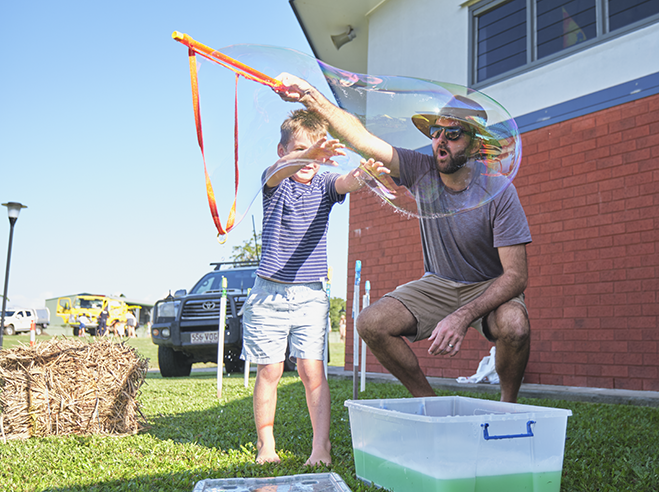
St Catherine’s Catholic College kicked off the annual Under Eight’s Week celebrations on Tuesday as the first to host their day in the region.
Schools across the Whitsundays will follow suit in the coming weeks, hosting their own iterations of the under eight party.
St Cath’s community celebration was no-holds-barred with its arts and crafts, outdoor hands-on play, community group stalls and more in their Mercy Playground on the school’s Primary Campus.
Open to the community, the event was a success for the local school, hosting massive crowds of kids from day care, school, and playgroups – as well as parents.
The schoolyard was brimming with marquees and kids, each hosting activities to enjoy like face painting and play.
There were toy instruments, arts, and crafts, and all backed by SES Whitsundays and Proserpine emergency services.
Those local services, like the fire department, Proserpine Police, and Aviation Fire Rescue, each brought emergency vehicles for the kids to sit behind the wheels.
For parents and kids there was the opportunity to enjoy a free sausage sizzle, as well as some delicious fruit from Woolworths.
School Communication and Publications officer Aimee Mitchell said the day had been amazing.
“To see all of our community have an amazing time at our Under Eight’s is always the best part of the day,” Ms Mitchell said.
Under eight’s celebrated being under eight on Tuesday at Proserpine’s St Cath’s Catholic College
Plenty of wacky outfits and kids were treated to a silly morning
Catch!
The petting zoo was a massive success
A little Michelangelo at St Cath’s Under Eight Day
Photographs: Declan Durrant

A New Coastal Connection
A brand-new walking track is on the way to the region and set to link two towns in Cape Gloucester pending approvals from Queensland Government.
Whitsunday Regional Council have commenced the process with the State Government to construct a walking track between the coastal towns of Dingo beach and Hydeaway Bay.
Initially to be constructed as an earth walking track, there is the possibility of converting the new route to a sealed path which could be used as a cycleway.
The alignment of the walkway has already been flagged and Council are now awaiting approval from the Queensland Government.
Whitsunday Regional Council Acting Mayor Mike Brunker said the walking track would be a great addition to the Cape Gloucester area.
“This track will provide a welcome connection between these two beautiful towns and add an extra activity for visitors in the area,” the Acting Mayor said.
“The walkway will offer breathtaking views of the azure bays and offer magnificent vistas over Gloucester and Saddleback Island.
“This is just another way we can discover the hidden gems in our backyard.”
Acting Mayor Brunker said that state approval can take some time; however, the council are confident that approval can be achieved this year.
Council will apply for a grant to construct the track once the required approval has been granted.
The scenic beauty of Hydeaway Bay

This week Whitsunday Regional Council completed a decade of its feral pig culling program in the region.
The council’s Whitsunday Aerial Feral Animal Control Program has been successfully running for ten years to quell the major impacts of feral pig populations on environmental and agricultural systems.
Feral pigs are estimated to cause $12.6 million dollars’ worth of damage each year in the Whitsunday region alone.
Conducting over 130 flights, the program has seen the removal of almost 12,300 feral pigs, with council conducting 20 to 35 flights per year.
The local council’s efforts have seen them earn national plaudits, with the program selected as a case study for the National Feral Pig Action Plan.
The local scale program has an operating budget of up to $170,000 per year and has been active across five local government areas.
Whitsunday Regional Council Manager of Natural Resource Management Scott Hardy said the program has worked alongside 80 land managers and up to 19 organisations.
“We’ve worked with Mackay, Isaac, Charters Towers and the Burdekin with great results in removing the pigs in neighbouring shires as well as our own,” Mr Hardy said.
“I have to commend council worker Bren Fuller on his work in this as our staff member up in the helicopter doing the hard work.”
Although it may seem unsavoury to some, the program has a state government backing, enforced as part of the Queensland Biosecurity Act 2014 in which local governments have a role in coordinating the control and reduction of restricted and prohibited pest animals.
“There may be a small number of people who may dislike the euthanising of animals,” Mr Hardy said.
“[But] relatively small council contributions towards the Program are yielding measurable benefits to the agricultural sector and the Whitsunday environment.”
Studies state that, environmentally, feral pigs damage waterways, soil, and ground cover, as well as impacting native species through predation and the carrying of diseases.
Feral pigs are a Queensland bane, but Whitsunday Regional Council have made inroads in their ten-year culling program
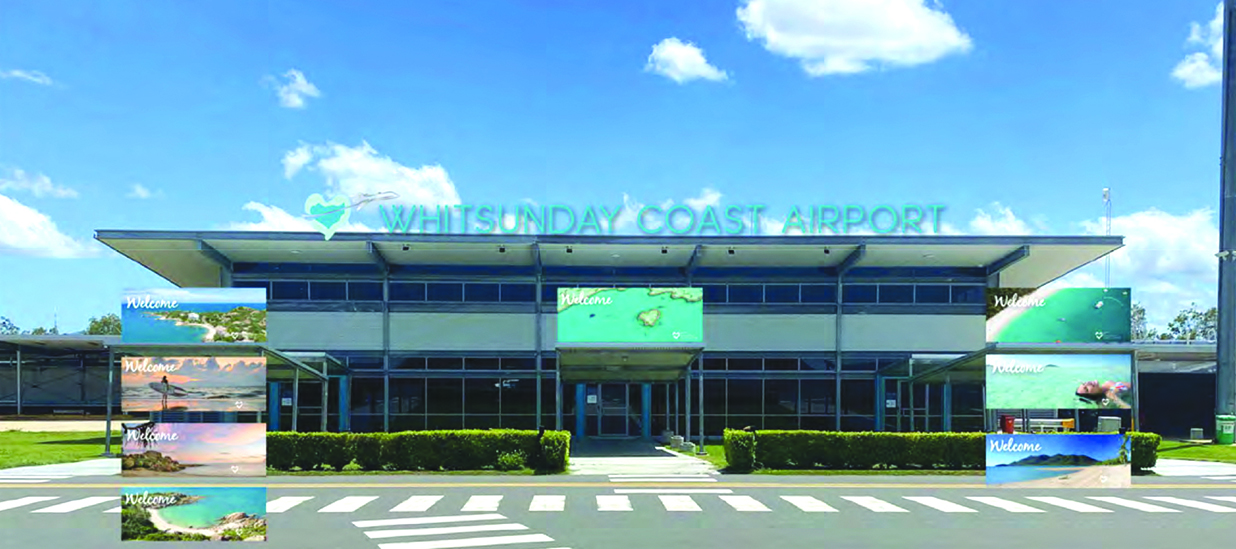
The pre-existing signage was removed and damaged during the airport expansion in 2019 and due to Covid budget restrictions, was not replaced until now.
“We haven’t had an arrival sign for quite some time and that was due to Covid and costs around operations,” said Chief operating Officer Aviation and Tourism Craig Turner.
“So now that we are back on track, we’ve taken it to Council and got a great sign which shows the new branding and also has three images which reflect the destination – and we will have those as part of the arrival experience.”
The new signage comes following negative community feedback on the matter and Council now view signage as a critical part in presenting the Whitsundays to arriving passengers.
An artist’s impression of the new airside signage

Election Breakdown and Meeting wrap
This weekend, Australia goes to the polls after a bitterly fought campaign on both sides that dipped into the farcical more than once. Neither leader looks good.
And although the transgender debate grabbed a lot of headlines, the real issues concerning the Dawson electorate have been identified in a recent survey. The survey highlights the vast dichotomies in a region that relies so heavily on mining, agriculture and tourism. Often the attitudes of residents in different regions will be at odds to each other.
Interestingly, for an electorate that tends to lean strongly towards the LNP, Scomo barely edges out Albo as preferred Prime Minister. The accelerating rise in cost of living is the major concern, China is being perceived as a growing problem and trust in politics is at an absolute zero.
Attitude to climate change was a surprise with twice as many voting to abandon Net Zero by 2050 compared to committing to it. On the security and trade front – China in the South Pacific is the biggest concern although expanding international trade is also a key issue. When it comes to COVID, 80 per cent felt that maintaining health protections and economic recovery from COVID was more important than removing mandates.
On the social front, healthcare is the biggest concern, whilst the biggest issues in the cost of living rise was petrol and groceries. Affordable housing was predictably a strong concern.
When it comes to Economic Policy, the preference was to expand manufacturing supported by regional investment in infrastructure. The skills shortage is a huge barrier to growth.
Focussing on the future, the Chamber event on Thursday, May 12, hosted Rob Cocco from Regional Development Australia (MIW) and WRC Economic Development Manager, Gary Warrener. Rob detailed the economic road map developed for greater Whitsundays which was developed in consultation with local stakeholders. Number one enabler for growth in the region was the need to improve transport infrastructure.
Garry Warrener explained his role within council and discussed several diverse projects and investment opportunities WRC is trying to attract to the region. A genuinely proactive approach to underpinning the economic success of the Whitsundays.
Contributed with thanks to Whitsunday Coast Chamber President Allan Milostic.
General Manager Bowen Gumlu Growers Association Ry Collins, Megan Taylor from Kapow Interactive, Rob Cocco from Regional Development Australia (MIW) and Councillor Jan Clifford
Whitsunday Coast Chamber President Allan Milostic and WRC Economic Development Manager, Gary Warrener
The Chamber of Commerce meeting last week

Cheryl Speirs
Cannonvale
My concern, being the owner of a fairly large cleaning company, are the amount of displaced people that I’ve seen in the last two years, but especially the last six to eight months. There’s a real crisis for housing for people on low income. The cost of everything else has gone up, and it’s gone up exponentially.
I’ve heard of people living in cars. The government needs to do either or: address affordable housing, rentals especially, or the price of living in this country. They need to address the homelessness situation because it’s out of control.
John Cunningham
Cannonvale
What the government can do is increase the minimum wage. Pensioners I know are travelling alright, but we’re still paying high rents and we need a bit more. They need to help the homeless, too. Once upon a time it was preferable to buy than rent and now people can’t afford to buy, let alone to rent.
Give people a subsidy of some sort – a genuine one for people who really need it, or places that can be turned into emergency housing. You can’t blame the landlords, they’re in it for the money too and following the markets.
Mark Rose
Cannonvale
Everything is going up. Do we really need to pay a thousand dollars on a car registration, that much money in rates? You just about need to have a high-income job to continue to exist. Those big bills that people don’t want and are not looking forward to each year.
I’m paying $1,600 dollars each year in rates; where’s that money go? Why am I paying that much money? Everything is a thousand dollars: rego on a six-cylinder car. It won’t be long that, if you don’t have a high-end job, you won’t be able to afford a motor car. Surely, they can do something to change it.
Kirsten Robson and Zoe Bowley
Cannonvale
Zoe: More support in terms of buying your first home. Helping people get into the housing market. They need more support. Property prices are so ridiculous that its scary to think: what’s the next generation going to experience if we’re struggling?
Kirsten: If we struggled so hard to get in, how are they ever going to do it? We’ve managed to buy our first homes, but it wasn’t easy. It’s been a big issue for everyone, I think. Some people aren’t even able to afford rent, so how can they think about starting their lives?
Heather Brown
Collinsville
Living in a rural mining town doesn’t mean we are all rich coal miners. Something needs to be done about the constant rises in fuel, groceries and rent. The increase in community members seeking emergency food relief and food vouchers has hit an all-time high. Our community hub is struggling to keep up with the demand. There needs to be rent and mortgage rate caps for owner occupiers. Every goods and service that we need to survive and thrive should be taken out of the control of people who only see a means to augment their own wealth.
Leanne Abernethy
Bowen
As the tourism industry in Bowen relies so heavily on the drive market, the price of petrol is certainly a major issue. The fuel excise was reduced by the Federal Government at the end of March but only for six months. The rate was reduced to 22.1 cents per litre but motorists are still paying more than 40 cents per litre for fuel than they were this time last year. I believe a continued reduction in fuel excise would be welcomed by tourists and locals.
Sydney Moxham
Proserpine
Cost of living; that’s a big one. A good question – it’s hard and the position [the government are] in, what the hell can they really do about it? It’s worldwide, that’s the problem. Federal Government can’t really do anything about some of the things that would affect it. The state government is the bigger problem than federal with their charges like rates and registration. We should have one government, that’s it, we have too many!
There are a few things they control but not the things that count. It’s been too late for too long. We’re in big trouble.
Daniel Lever
Proserpine
I actually don’t have an answer; it’s a great question. If you push the minimum wage up it may get worse – people will charge more for other things. It’s a tough position because what do you do? House prices, rent, groceries are going up, but why are they going up? Is it because of the whole Covid situation and extra money in circulation pushing the prices of everything up? How do you fix something that’s already been done? Raise interest rates and make money harder to get? That may just make it worse too. It all may just be something that we can’t undo.
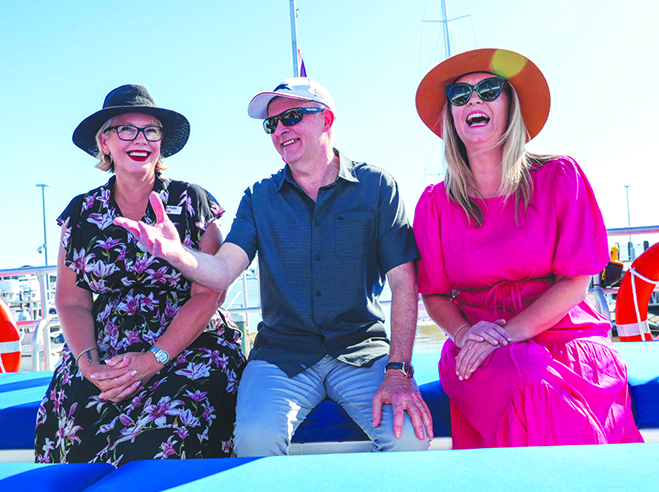
Labor leader Anthony Albanese ventured to the Great Barrier Reef on the election trail last week to pledge a further $194.5 million in funds for the natural wonder.
Mr Albanese’s prospective government had already committed $163 million to restoration and protection of the reef in November last year at Coral Sea Marina and announced on Friday last week an additional $194.5 million on a visit to Cairns.
The announcement arrived at a salient time for the reef as it suffered its sixth mass bleaching event (read our coverage on page 14).
The additional funds are promised to be used in programs including working with farmers on land management practices, $85 million for reef restoration projects, ad research into thermal-tolerant corals in partnership with the Australian Institute of Marine Science.
“Seeing the wonder of the Great Barrier Reef is a highlight for so many Australians,” Albanese said.
“But parents and grandparents are worried their children will not be able to see this incredible natural wonder for themselves.
“That’s why it’s so important we act on climate change and species protection – to protect the reef and the tens of thousands of jobs that rely on it.”
For the Whitsundays, Mr Albanese has promised expansion of the Crown of Thorns culling programs to protect tourism sites.
The program reduces crown-of-thorns starfish numbers down to threshold levels that promote coral growth and recovery.
Labor have promised an investment of almost $1.2 billion in reef preservation and restoration by 2030.
Queensland Premier Annastacia Palaszczuk welcomed the announcement from her party-mate.
“It’s clear Anthony Albanese will work in real partnership with our government, landholders, experts, industry, traditional owners and reef communities,” she said.
Scientist reports have identified that the reef would need almost $1 billion annually in support to recover.
In May, Liberal MP and Federal Environment Minister Sussan Ley defended the Coalition’s management of the reef, calling it “gold standard”.
Ms Ley said the reef was the best managed in the world.
Labor Candidate for Leichhardt Elida Faith, Anthony Albanese and Labor Senator for the ACT Katy Gallagher who all travelled out to the reef with on Friday

Last week the Supreme Court heard how Gavin Parnell had known Jay Brogden for approximately 12 months when he was forced to murder his friend on a fishing boat by a drug dealer they had both been working for.
It has been almost 15 years since Mr Brogden’s disappearance and his body has never been found, nor has anyone been convicted.
But that all changed when revelatory details were exposed last week detailing how Mr Parnell, who has long been suspected of the 21-year-old’s murder and was arrested in September 2019, stood in front of the supreme court and admitted he fired the shot that killed his friend.
Mr Parnell told the jury that the deadly encounter began when he ‘vouched’ for his mate during a conflict with an Airlie Beach ‘drug kingpin’ who had accused Mr Brogden of stealing a large amount of methamphetamine.
The pair were then invited out on a fishing trip with the kingpin, in what Mr Parnell believed was an innocent trip out to sea.
This soon turned violent, however, when the drug boss started yelling at Jay, accusing him once again of stealing the drugs.
At this point, Mr Parnell allegedly felt a gun push into his back and a sawn-off shotgun, which was held together with duct tape, thrust into his hand.
He was then told to shoot Mr Brogden.
In court, Mr Parnell described the scene – a petrified Mr Brogden breaking down in tears and Mr Parnell shaking with fear and urinating himself.
Amidst the yelling, the shotgun fired, hitting Mr Brogden in the back right side of his head.
Mr Parnell broke down in court when he told the jury how he was forced to push Mr Brogden’s body off the boat and then vomited in the courtroom when he described cleaning up the blood.
After this, court was briefly adjourned, returning sometime later for the cross examination.
At this point, crown prosecutor Nathan Crane asserted that Mr Parnell had known the true purpose of the boat trip was to discuss the missing drugs and that he had been told they needed to take Mr Brogden somewhere quiet.
During the proceedings the court heard from 30 witnesses, including Mr Brogden’s family.
After all evidence was heard the jury, which consisted of eight women and four men, began deliberating into the evening.
It took them six hours to conclude that Mr Parnell was guilty, and he was given a life sentence, less the 960 days he had already served since his arrest.
Mr Brogden’s family were present at the time and were relieved to finally receive some closure as the week-long court proceedings marked the end of a 15 year wait to see a murderer brought to justice.
21-year-old Jay Brogden disappeared from Airlie Beach in 2007
Gavin Parnell was convicted of murdering Jay Brogden
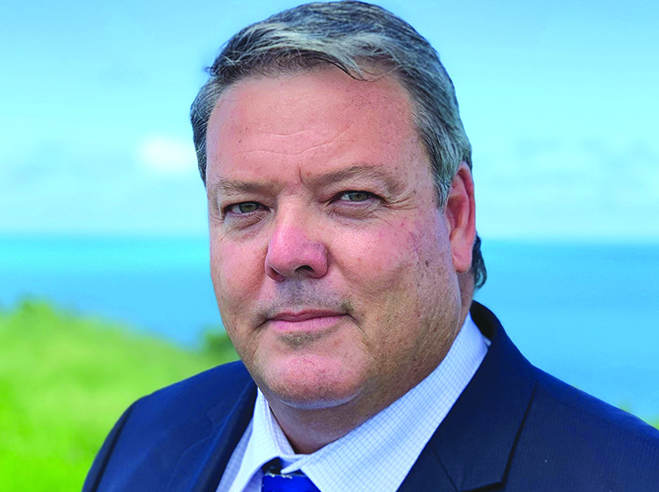
Local school children and visitors to the Proserpine Dam are expected to benefit from additional facilities thanks to a two-part promise from LNP Candidate for Dawson Andrew Willcox, who announced targeted funding for two key community projects last week.
Proserpine State School will receive $50,000 to contribute towards an additional playground for year three to six students who share one facility. Currently, some grades only receive access to the playground for an hour a week.
“The kids at Proserpine State School have had to be on a roster for outdoor play because there simply isn’t enough play space and equipment to cater for them,” said Mr Willcox.
“The P&C have worked hard to raise the funds they need so their kids get to play outside every day, not just a couple of times a week.
“They have done a terrific job and put together about $45,000. Their aim is to buy and install new playground equipment with a soft-fall surface and ultimately also put up a shade sail.
“This funding will help them do just that.”
In addition, Mr Willcox has pledged $1 million for stage 2 of the Lake Proserpine Recreation Facility, a project he was passionate about when he was Whitsunday Regional Council Mayor.
“One of the commitments I made to the Proserpine community before becoming mayor was to activate Lake Proserpine, to better utilise this great natural asset in the region,” Mr Willcox said.
Stage One of activating the campground saw the addition of new public toilets and showers, bush camping sites, fire pits, updated picnic facilities and fishing pontoons.
“This $1 million commitment will fund Stage Two of the Lake Proserpine Recreation Facility – Camping Area Expansion, which will see the establishment of 10 cabins, powered caravan sites and a camp kitchen in the southern area camping ground,” he said.
“This will provide more accommodation capacity right at Lake Proserpine to make it easier for people to stay in the area and try their hand at catching that barra.”
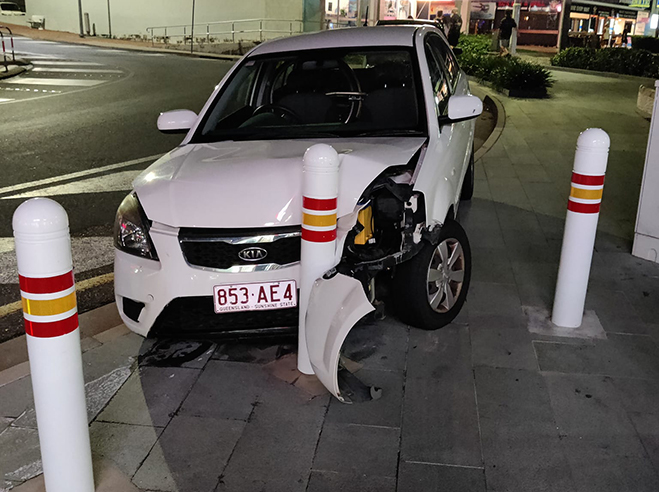
Drink Driver Smashes Into Bollards
A 24-year-old Jubilee Pocket woman has had her licence suspended following an incident where the vehicle she was driving crashed head-on into the protective bollards outside Night Owl convenience store in Airlie Beach at 1.45am last Sunday.
Police laid charges immediately and the woman will face Proserpine Magistrates Court on May 23.
The woman was breathalysed at the scene and returned a breath test reading 0.237 per cent BAC, four times above the legal limit.
She has now been charged with high range drink driving offences.
Sergeant Jessica Leech said that drink driving has direct consequences on you and those around you.
“Please arrange alternative plans for transportation if you are planning to drink and make sure you and other road users get home safely,” she said.
The car ploughed into bollards near Night Owl
Stolen Motorcycle Strathdickie
A Honda CRF250 motorcycle was stolen from a Gregory Cannonvale Road, Strathdickie address on Sunday last week and Police are urgently seeking information.
It is understood the vehicle was stolen between 8pm on Sunday, May 8 and 5.30am Monday, May 9.
The motorcycle has a Queensland registration 072TJ.
If you have any information in relation to the location of the vehicles or the offence itself, please contact Policelink.
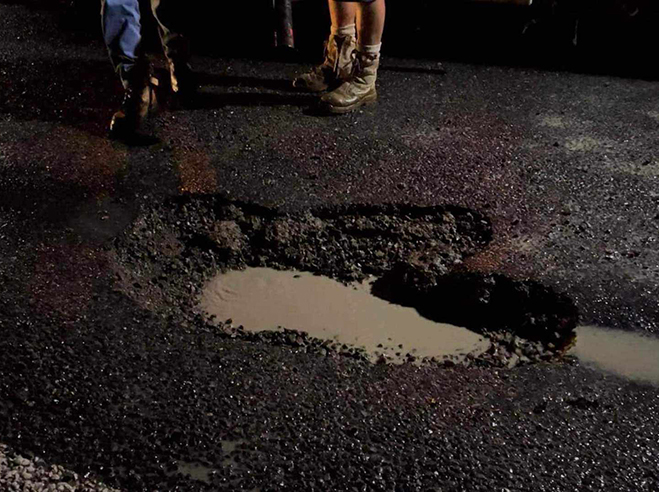
Whitsunday motorists were battling heavy rain and potholes last week during the unseasonal deluge which saw 47.2 millimetres fall in Proserpine in a 24 hour period.
As usual, Hamilton Plains was a source of frustration with un-seen potholes causing flat tyres in multiple vehicles, resulting in a hazardous situation when they pulled over to conduct repairs.
One local resident, Rachel Bott, said that she was driving home in the dark when a pothole appeared from nowhere.
“It was very dark, and I didn’t see it,” she said.
“I wasn’t going fast; I literally didn't see it until I fell in it - there were at least four of us who had wrecked tyres at the same time.”
Some emergency vehicles pulled over to check on everyone’s welfare and when a paramedic came by she informed Ms Bott that she had passed the sight four times that day and the pothole had been there each time.
This created some frustration for Ms Bott who believes that Council should have sent someone out to fix the potholes earlier, before it got dark.
“The paramedic already knew it was there, so she was able to avoid it in the dark – the rest of us had no idea it was there,” said Ms Bott.
“It was a very dangerous situation, and I didn’t want to even attempt to change my tyre without someone watching out for me – I could have got run over!
“I will be contacting TMR, Hamilton Plains is such a disgrace.”
A Whitsunday Regional Council spokesperson said that while TMR are ultimately responsible for most local roads, including Hamilton Plains, it is Council that repair the potholes after a heavy rain event.
“Council roads crews from our depots at Proserpine, Bowen and Collinsville were working in the rain to repair multiple potholes across over 1200 kilometres of roads including Proserpine, Airlie Beach, Bowen, Collinsville, Mt Julian, Lethebrook and Dingo Beach,” said the spokesperson.
“Council crews are out and about during the rainfall event to undertake urgent repairs, but it is TMR is responsible for the standard of Hamilton Plains road.”
Caption:
Council road workers fixing the potholes
The pothole that gave Ms Bott a flat tyre
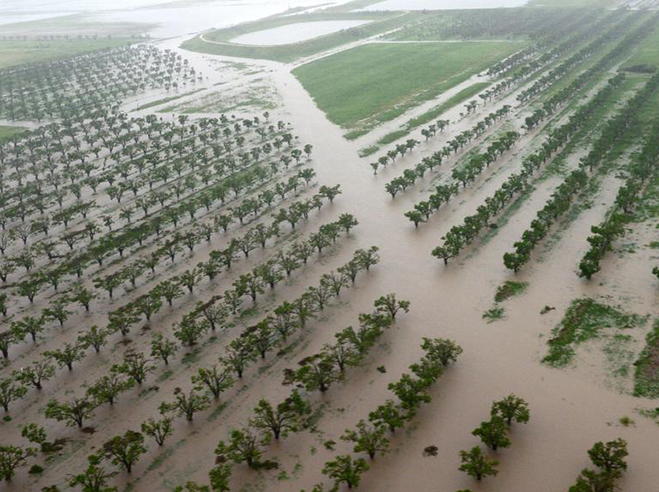
The region’s farmers have suffered after unseasonably heavy rainfall last week destroyed some 30 per cent of their yields, potentially costing the local industry $50 million dollars.
The growing belt that runs from Bowen up through the Burdekin saw varying degrees of more than 200 millimetres of rainfall.
President of Bowen Gumlu Growers Association, Ry Collins said that amount of rain has two major repercussions:
“We’ve had little rivers open in farms; a lot of the topsoil has eroded away. Those little rivers and crevices, they’ll have to be releveled and do civil works to those properties,” Mr Collins said.
“More importantly, the crop not far off being harvested doesn’t take that much water well.”
With typical production season beginning planting in February, March, and April, the bulk of crop in Bowen was to start harvesting this week.
Of that crop, tomatoes, melons, and corn are the likeliest to have been affected by the downpour.
“It’s too early to say how much will be lost. They’re only getting out assessing it today. But I would say on average 30 per cent of their crop will be no good,” Mr Collins said.
The Whitsunday region annually produces around $450 million dollars in agricultural revenue.
Mr Collins said the region wasn’t alone in suffering: Queensland wide the unseasonable weather brought 200 millimetres to places like Bundaberg, which is a key fruit and vegetable region.
“Coming into this season with the floods, we knew there’d be a shortage of fruit and veg, meaning the prices will be higher. This only adds to that,” he said.
“Less product on the market means higher prices.”
Bowen Gumlu Growers Association have reached out to Agriculture Queensland to articulate the impacts.
A Department of Agriculture and Fisheries survey has been sent to local growers to build the picture for state government on what’s happened and what potential support can flow through.
Mr Collin’s said there’s little to be done other than to “get the shovel and tractor and get going.”
“At the end of the day, it is weather, and there’s not much we can do about it. The time of year it’s come, we don’t normally get that at our busy period,” Mr Collins said.
“There’s some financial pain attached to that, but the growers will get going again
Fields flooded heavily during this week’s downpour, which President Bowen Gumlu Growers Association Ry Collins said may be the worst since Cyclone Debbie (Pictured here)
Publishers Indemnity. Any individual or entity that places advertising, supplies copy material, or submits editorial content to Core Life Publishing agrees and undertakes to ensure that all such material:- Does not infringe upon any copyright, trademark, or other intellectual property rights;- Is free from any content that could be considered defamatory, libelous, or slanderous;- Does not infringe upon any rights related to privacy or breach of confidence;- Contains no obscene, indecent, or otherwise unlawful material;- Complies fully with the Trade Practices Act and all other applicable laws, regulations, or statutes.Furthermore, by submitting or placing such material, these individuals or entities agree to indemnify and hold harmless the publisher, Core Publishing and Events Pty Ltd, and/or its agents from and against any and all investigations, claims, demands, liabilities, damages, costs, or judgments arising out of or in connection with the material provided. All material is believed to be accurate at the time of printing and remains the copyright of Core Publishing and Events Pty Ltd.
© 2026 Mackay and Whitsunday Life Pty Ltd.
