Independently Owned, Locally Grown, Community Loved

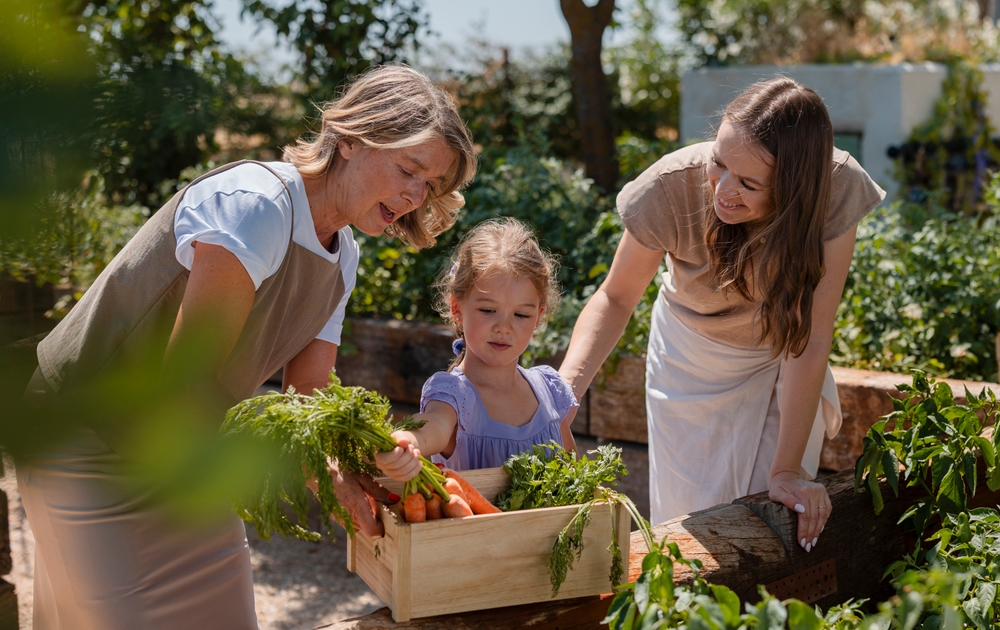
Gardening isn’t just about growing flowers or vegetables, it’s increasingly recognised as a powerful tool for wellbeing, benefiting both adults and children alike.
Studies show that spending time outdoors with plants and soil can improve mental, emotional, and physical health.
For adults, gardening provides gentle exercise that enhances strength, flexibility, and cardiovascular health. Tasks such as digging, planting, and watering engage multiple muscle groups, helping maintain mobility and fitness in a low-impact way.
Gardening also has clear mental health benefits. Spending time outdoors reduces stress, lowers blood pressure, and can help alleviate symptoms of anxiety or mild depression. Structured activities such as planting or pruning give the mind a focused task, which can be calming and satisfying.
Children benefit in unique ways. Gardening teaches responsibility, patience, and the rewards of nurturing something over time. Handling soil, seeds, and plants stimulates the senses—touch, smell, sight, and even taste when harvesting edible crops. These experiences support cognitive development, fine motor skills, and problem-solving. Outdoor activity also promotes physical health and vitamin D exposure, while working with family or peers encourages teamwork and social skills.
Therapeutic gardening can be adapted for all ages, abilities, and spaces, from small balcony herb gardens to community allotments. Even short, regular sessions offer measurable benefits, making it an accessible wellness activity for everyone.
Whether it’s a child planting their first sunflower, or an adult tending a vegetable patch, gardening nurtures more than plants, it strengthens wellbeing, encourages skill development, and provides healthy, hands-on activity for the whole family.

Publishers Indemnity. Any individual or entity that places advertising, supplies copy material, or submits editorial content to Core Life Publishing agrees and undertakes to ensure that all such material:- Does not infringe upon any copyright, trademark, or other intellectual property rights;- Is free from any content that could be considered defamatory, libelous, or slanderous;- Does not infringe upon any rights related to privacy or breach of confidence;- Contains no obscene, indecent, or otherwise unlawful material;- Complies fully with the Trade Practices Act and all other applicable laws, regulations, or statutes.Furthermore, by submitting or placing such material, these individuals or entities agree to indemnify and hold harmless the publisher, Core Publishing and Events Pty Ltd, and/or its agents from and against any and all investigations, claims, demands, liabilities, damages, costs, or judgments arising out of or in connection with the material provided. All material is believed to be accurate at the time of printing and remains the copyright of Core Publishing and Events Pty Ltd.
© 2026 Mackay and Whitsunday Life Pty Ltd.