Independently Owned, Locally Grown, Community Loved


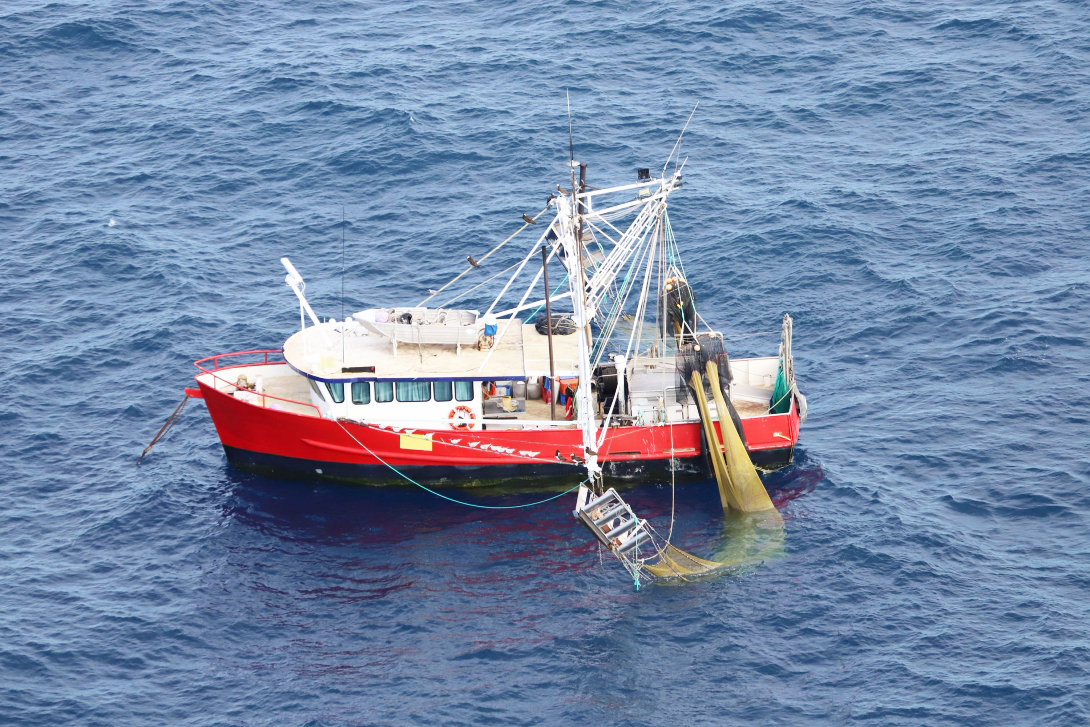
The waters of the Great Barrier Reef are among the most carefully managed marine environments on Earth. Yet even here, the challenge of balancing commercial fishing with conservation remains complex. In recent years, a new tool has emerged to help bridge that divide: onboard camera monitoring of trawling vessels.
Trawling — particularly prawn trawling — is one of Queensland’s most valuable wild-catch fisheries. But the method, which involves dragging large nets across the seabed, can unintentionally capture non-target species, known as bycatch. These may include sea turtles, sawfish, rays and sea snakes — animals already under environmental pressure. Ensuring accurate reporting of these interactions has long been a concern for regulators and conservation groups.
Enter electronic monitoring, or “e-monitoring” — a system combining high-definition cameras, sensors and satellite tracking to independently record fishing activity at sea. These systems are typically mounted above decks and near net drums, activating automatically when gear is deployed or retrieved. Footage is stored for later analysis and cross-checked against fishers’ logbooks, providing a far clearer picture of what is actually being caught.
On the Reef, camera use is rapidly expanding. A major government initiative announced in 2026 will see cameras installed on about 90 per cent of Queensland trawl vessels — more than 160 boats — operating along the east coast. The rollout, funded jointly by state and federal governments, aims to strengthen sustainability credentials and secure ongoing access for trawlers to operate within the Marine Park.
The technology builds on existing monitoring tools. Many vessels already carry satellite tracking devices and bycatch-reduction equipment such as turtle-exclusion devices. Cameras add an independent verification layer, improving confidence in reporting and helping Australia meet international export and environmental standards.
Beyond compliance, the footage is proving scientifically valuable. Analysts can review interactions with threatened species, refine bycatch estimates and guide improvements in fishing gear or handling practices. Trials of onboard camera systems in trawl fisheries have specifically focused on detecting encounters with threatened, endangered and protected animals — known as TEP species — to better inform management responses.
The sheer volume of video collected, however, presents its own challenge. Reviewing thousands of fishing hours manually is costly and time-consuming. To address this, researchers are increasingly turning to artificial intelligence. Machine-learning systems can be trained to recognise species, count catch and flag high-risk events automatically, dramatically reducing analysis time while expanding monitoring coverage.
Supporters argue that cameras represent a win-win: protecting marine wildlife while safeguarding the future of the fishing industry. Verified data helps demonstrate that fisheries are operating sustainably — an increasingly important factor for eco-certification and consumer trust.
Not everyone is convinced. Some operators have raised concerns about privacy, costs and how footage may be used. Conservation organisations, meanwhile, argue that implementation has been too slow and should extend to all vessels operating in sensitive Reef waters.
Despite debate, momentum is clearly building. As technology advances and monitoring becomes more sophisticated, the once-hidden world of commercial trawling is coming into sharper focus.
In a region as globally significant as the Great Barrier Reef, that transparency may prove vital — ensuring that one of the world’s natural wonders remains protected while sustainable fishing continues alongside it.
Contributed with thanks to Tony Fontes
Captions
Trawler
Photo supplied
Publishers Indemnity. Any individual or entity that places advertising, supplies copy material, or submits editorial content to Core Life Publishing agrees and undertakes to ensure that all such material:- Does not infringe upon any copyright, trademark, or other intellectual property rights;- Is free from any content that could be considered defamatory, libelous, or slanderous;- Does not infringe upon any rights related to privacy or breach of confidence;- Contains no obscene, indecent, or otherwise unlawful material;- Complies fully with the Trade Practices Act and all other applicable laws, regulations, or statutes.Furthermore, by submitting or placing such material, these individuals or entities agree to indemnify and hold harmless the publisher, Core Publishing and Events Pty Ltd, and/or its agents from and against any and all investigations, claims, demands, liabilities, damages, costs, or judgments arising out of or in connection with the material provided. All material is believed to be accurate at the time of printing and remains the copyright of Core Publishing and Events Pty Ltd.
© 2026 Mackay and Whitsunday Life Pty Ltd.