Independently Owned, Locally Grown, Community Loved

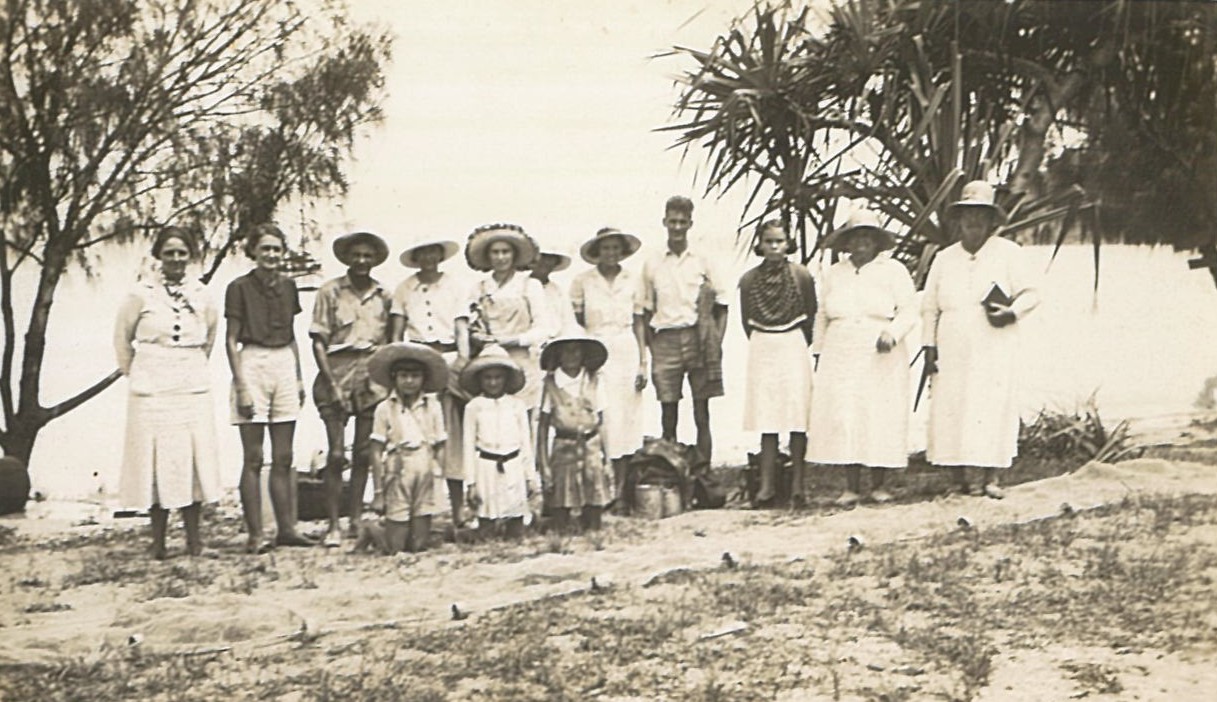
Immediately prior to 1930, Long Island was held by Mrs Frances Altmann under a special lease but following her death in 1930, the island was subdivided into three sections and offered for sale. The central section (240 acres) was bought by William Lewis Grant who eventually sold it in 1935 to Mr Timothy Croft.
The following is an extract from “The Queensland Annual” (November 6 1934)
On the western boundary of glorious Whitsunday Passage is a dot on the map which close at hand becomes an island five miles long running almost due north and south, separated from the coast by a stretch of water about a mile wide for the most part and as calm as broad river – Long Island and its Sound. Early in October 1931, a steamer called at the island, and from it disembarked W.L. Grant and the folk he had chosen to help him. A motor launch, a flattie, building materials, tools and provisions were unloaded also, and the steamer went on her way.
Grant often smiles now when he looks back on the seriousness with which he tackled the problems of those few first weeks. He had got himself a long lease of a rich scrub area on Clear View Bay, and now faced the job of building an island home. In those first few months, he lived some of the chapters of the Swiss Family Robinson. They chopped a clearing in the scrub; built a temporary shack; planted paw paws, tomatoes and vegetables and they started to grow prolifically. Grant decided that was one department that would run itself.
But he was no vegetarian, and days of more hand blistering and muscle wearying toil followed in the scrub, as young saplings were cut and hauled to the beach. They were to be part of the fish-trap and had to be sturdy to carry the heavy gauge wire netting. “It’s a lot of work and expense,” Mr. Grant says, “but a trap is a good investment, for we have had plenty of fish of great variety, and we always keep a stack of smoked fish which is our standby when spring tides prevent our getting fish.”
Days slid into weeks, weeks into months. Each day had its problems, each its discoveries, each its triumphs. The man whose life had been lived at the grueling pace set by modern business slowed his gait.
The pocket handkerchief of a clearing expanded to a green tablecloth upon which stood all manner of trees and scrubs and vines – bananas, custard apples, figs, mulberries, jackfruit, pomegranates, avocados, Queensland nuts, lychee nuts and citrus; sweet and English potatoes and a dozen other vegetables, maize and kaffir corn. Another clearing was made, and netted, a thatched shelter was built, and one day from opened crates two score Leghorns and Orrington emerged.
In the beginning, all effort had to be concentrated on food and shelter, but once assured, attention was turned to flowers. The story of the orchard was repeated and Clear View Bay became Clear View Gardens. Roses, hardy annuals, ferns, coleus, hibiscus, frangipani, aralia, asparagus, poincianas, crotons, regia, bougainvillea and scores of others flourished side by side.
In time, the island home began to pay its way as cultivated acres yielded ever increasing surpluses which the coast would buy. The idealist in W.L. Grant was strong enough to sever the bonds of humdrum life – the businessman in him organised his own romance. Some of that camping party on Nor-West Island had shaken their heads in doubt, but Grant knew that it could be done – and he did it!
Story sourced from “The Queensland Annual” (November 6 1934) and photo courtesy Proserpine Historical Museum Society.
Captions

Publishers Indemnity. Any individual or entity that places advertising, supplies copy material, or submits editorial content to Core Life Publishing agrees and undertakes to ensure that all such material:- Does not infringe upon any copyright, trademark, or other intellectual property rights;- Is free from any content that could be considered defamatory, libelous, or slanderous;- Does not infringe upon any rights related to privacy or breach of confidence;- Contains no obscene, indecent, or otherwise unlawful material;- Complies fully with the Trade Practices Act and all other applicable laws, regulations, or statutes.Furthermore, by submitting or placing such material, these individuals or entities agree to indemnify and hold harmless the publisher, Core Publishing and Events Pty Ltd, and/or its agents from and against any and all investigations, claims, demands, liabilities, damages, costs, or judgments arising out of or in connection with the material provided. All material is believed to be accurate at the time of printing and remains the copyright of Core Publishing and Events Pty Ltd.
© 2026 Mackay and Whitsunday Life Pty Ltd.