Independently Owned, Locally Grown, Community Loved

By Ruth Puddefoot
Airlie Beach in 1979 was a raw, developing town, with unpaved roads and a social life centred on the Airlie Beach Hotel. Arriving in the area with a backpack strapped to his back, PADI Dive Instructor Tony Fontes, like many others, was looking forward to experiencing the Great Barrier Reef for the first time. Little did he know that first dive would change his life forever and lead to 40 years exploring the 2300km of reef available to him.
Over those 40 years, Tony has seen the impacts of environmental change on the reef, and he says that while a lot has changed over the decades, it has not always been for the better. “The health of the Reef has declined, primarily due to poor water quality, coastal development, poor and illegal fishing practices, and climate change. In the Whitsundays, this can be seen in reduced coral cover, increased algae, and poor visibility,” Tony reflected.
Sadly, according to Tony, the Great Barrier Reef has been no stranger to mass coral bleaching events caused by underwater heatwaves and has sadly suffered 6 mass bleaching events in the last nine years. “The immediate loss is healthy coral cover. But over time, there is a reduction in the overall biodiversity on the Reef. It can take years for a reef to recover from a serious bleaching event.”
“Unfortunately, as our oceans heat up, we can only expect more frequent bleaching events,” Tony added.
Despite this, Tony states that the Whitsundays itself has not suffered through a major bleaching event. While the reef in 2017 did suffer a very serious mass bleaching event that should have hit the Whitsundays, instead it received Cyclone Debbie, “which provided enough cloud cover and rain to reduce the water temperature and prevent serious bleaching.”
The local weather and changing conditions, which have led to, as Tony explains, “more intense rainfall and cyclones”, have meant that the infamous Cyclone Debbie, unfortunately, did have a detrimental impact on the reef’s health. While the Great Barrier Reef still hosts a vibrant underwater city for tourists to enjoy, sadly, some of the best dive and snorkel sites are “yet to fully recover,” Tony admits.
Part of being a diver is having a special responsibility to protect the marine world and the reef. For Tony, it’s about wanting to give back to the place that has been his home for the past four decades. Therefore, he has “built a reef protection module into all [of his] courses, particularly at the instructor level.”
“The modules are designed to increase one’s awareness as to the fragility of the Reef and how we can better protect it,” Tony emphasised.
Since the headlines have hit about mass bleaching and Cyclone Debbie, the tourism industry has still managed to thrive, with snorkelling to see some of what the Whitsundays have to offer being plentiful.
After years of exploring this submerged continent of biodiversity, Tony is now the President of the Whitsunday Conservation Council, where he continues to work hard to protect this underwater haven as the Reef Campaigner, focusing on fostering community awareness and education programs. This includes regular public presentations (Green Drinks), reef walking tours for kids and adults, and support for hard-working conservation groups like Eco Barge and Whitsunday Seagrass, alongside the occasional film night.
“We also advocate for better Reef protection, working with the council, state and federal governments. I have recently returned from a week in Canberra knocking on the doors of our Federal politicians to improve our current Nature Laws (which just passed),” Tony enthused.
So, do we still have time to save the reef? Tony's answer in short is “yes.”
“The future of the Reef is unknown, but it is also unwritten.” [CREATE JUMP OUT QUOTE]
“There is certainly an urgency but there is still time.”
“Climate change is the greatest threat facing the Reef. To rein in climate change will require a global response to reduce carbon emissions and move to renewable energy sources. Australia must lead the way.”
“But climate change is not the only threat. Poor water quality, coastal development and poor/illegal fishing practices are homegrown threats that reduce the resilience of the Reef. But boosting the Reef’s resilience, we can buy the time we need to stop the onslaught of climate change.”
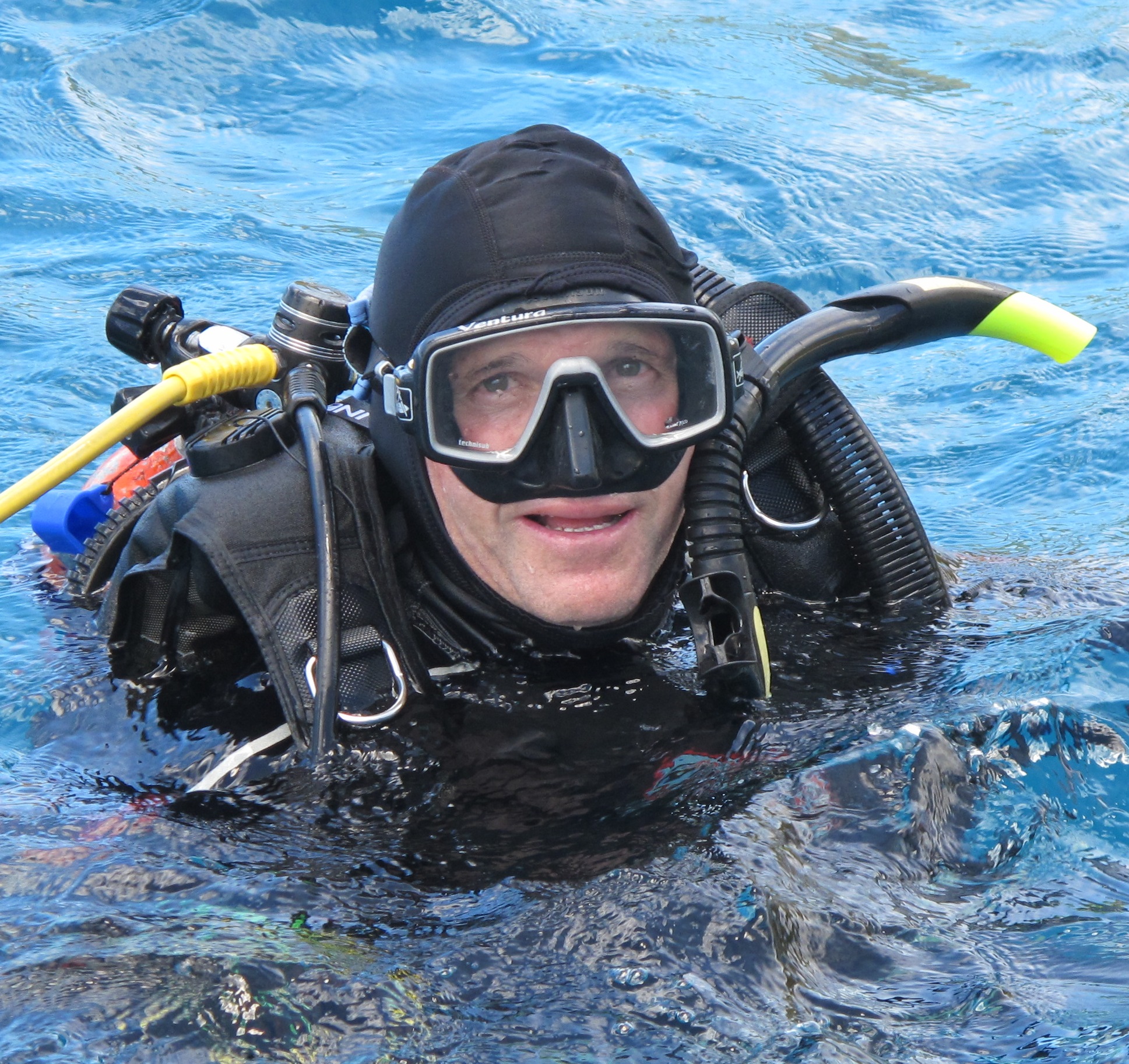
Tony Fontes has been diving the Great Barrier Reef for 40 years. Photo supplied.
Publishers Indemnity. Any individual or entity that places advertising, supplies copy material, or submits editorial content to Core Life Publishing agrees and undertakes to ensure that all such material:- Does not infringe upon any copyright, trademark, or other intellectual property rights;- Is free from any content that could be considered defamatory, libelous, or slanderous;- Does not infringe upon any rights related to privacy or breach of confidence;- Contains no obscene, indecent, or otherwise unlawful material;- Complies fully with the Trade Practices Act and all other applicable laws, regulations, or statutes.Furthermore, by submitting or placing such material, these individuals or entities agree to indemnify and hold harmless the publisher, Core Publishing and Events Pty Ltd, and/or its agents from and against any and all investigations, claims, demands, liabilities, damages, costs, or judgments arising out of or in connection with the material provided. All material is believed to be accurate at the time of printing and remains the copyright of Core Publishing and Events Pty Ltd.
© 2026 Mackay and Whitsunday Life Pty Ltd.