Independently Owned, Locally Grown, Community Loved


%20Main%20Street%20Fire%20Brigade.jpg)
Main Street Fire Brigade Photos supplied
Today, we benefit from first-class emergency services such as fire and rescue - services that are easy to take for granted. Earlier last century, however, Proserpine residents had much less protection. That began to change seventy-five years ago with the arrival of the town’s first Chief Fire Officer.
In the first half of the twentieth century, there were two major fires in Proserpine’s Main Street. The first occurred in February 1928 in Mrs Deicke’s shops with almost all buildings being gutted. A bucket brigade with water from tanks from adjoining businesses, and hoses from the Palace Hotel and Proserpine Butchery Co prevented further damage.
In the 1940s, Proserpine still depended on rainwater tanks and wells. Pleas to remove grass and domestic rubbish were ignored. Another disaster was waiting to happen. Prompted by memories of the devastating 1928 fire, a public meeting was called for the purpose of taking steps to prevent and control fires in the town. However, it was reported that when the formation of a fire brigade was introduced, “nil expressed their willingness to join the voluntary fire brigade.”
Eight months later, on July 13, 1946, the Proserpine Fire Brigade held its inaugural meeting with eight community members charged with lobbying government and organising the formation of an official fire brigade. Due to water shortages, their plans to buy a tank and trailer were delayed. The committee recessed and fire prevention rules were introduced. But these were not sufficient to avert another devastating fire.
At 1am on October 19, 1949 a second disaster occurred. With no official brigade or reticulated water, about 100 people, some in pyjamas, battled the blaze for two hours using buckets, boilers, basins and tubs. They smashed open rainwater tanks and coupled hoses to windmill tanks before finally bringing the fire under control at 3 am.
Almost twelve months after this second calamity, in September 1950, common sense finally prevailed. Council advertised for a part time fire chief and land for a fire station and residence was purchased in Main Street. There was still no reticulated water so an 800-gallon tank mounted on a truck was purchased and supplemented by tanks belonging to local businesses and the Sugar Mill. An alarm siren was to be installed on a 30-foot pole at the CFO’s house.
%20New%20fire%20and%20rescue%20centre%20.png)
On 1 June 1951, Mr Chris Thieme, Proserpine’s first Chief Fire Officer arrived from Tully. In a short time, seven local auxiliary fire fighters signed up. Uniforms were to be supplied, and firefighters paid for attending fires. That year, the brigade bought its first fire truck, now on display at the Proserpine Historical Museum.
A temporary building was erected then three years later, in 1953, approval was granted for a permanent one-storey station in Main Street which was completed in 1954. Proserpine did not gain reticulated water until 1957 when the water tower was finished.
The Proserpine Fire Brigade acquired a second truck in 1975 and still operates two vehicles today. The unit is staffed by twenty auxiliary firefighters, with the last permanent firefighter transferring to the Airlie centre in 2004/05.
The Proserpine Fire Brigade Board controlled the fire service until June 30, 1990, when the state government took over the running of all fire brigades. With the opening of a station in Airlie Beach in 1986, the board changed its name to the Whitsunday Fire Brigade Board.
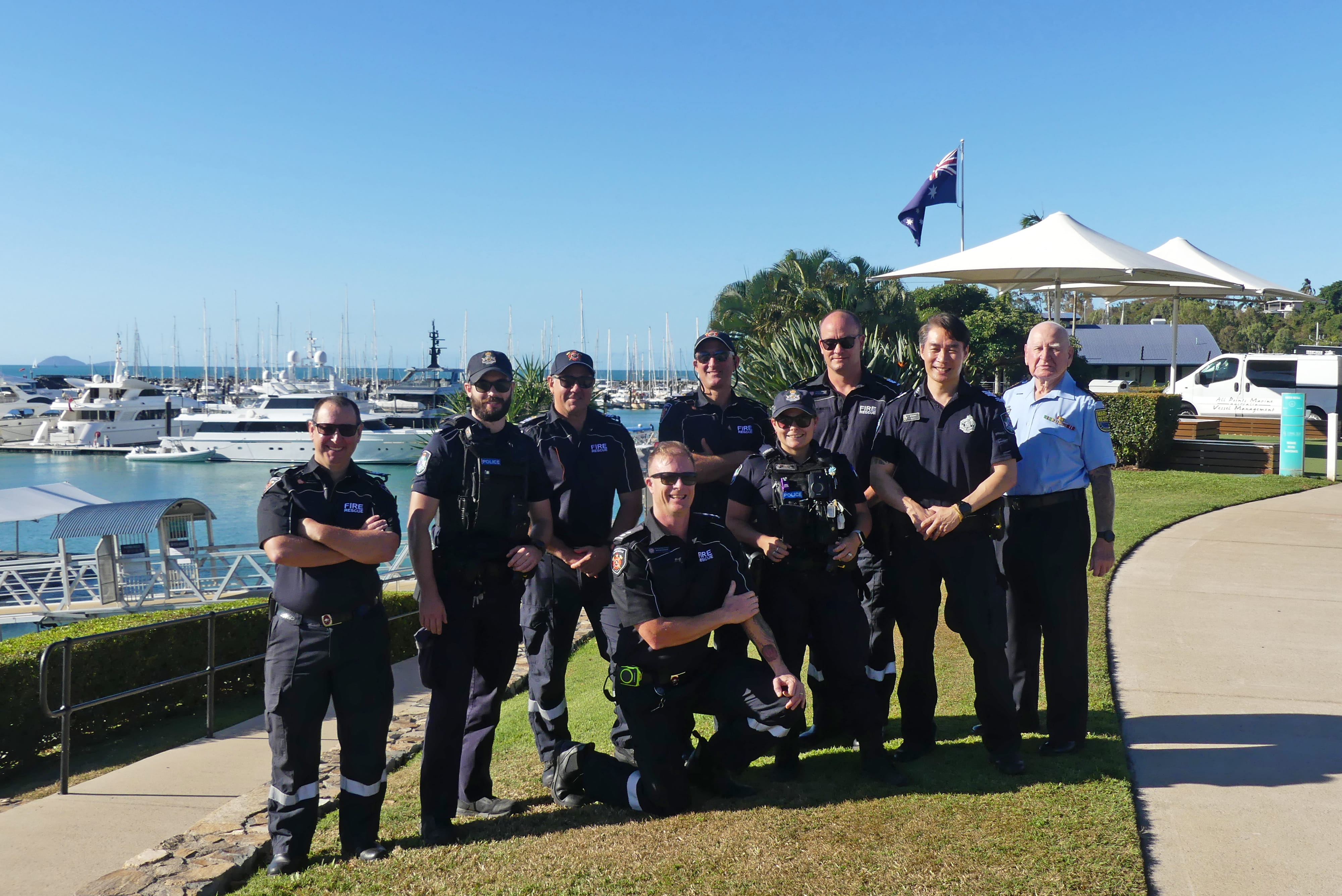
The Main Street fire station served the district for more than six decades before closing in 2018 when the new Disaster and Emergency Centre opened in Hinschen Street.
Story and photo courtesy of Proserpine Historical Museum.
Publishers Indemnity. Any individual or entity that places advertising, supplies copy material, or submits editorial content to Core Life Publishing agrees and undertakes to ensure that all such material:- Does not infringe upon any copyright, trademark, or other intellectual property rights;- Is free from any content that could be considered defamatory, libelous, or slanderous;- Does not infringe upon any rights related to privacy or breach of confidence;- Contains no obscene, indecent, or otherwise unlawful material;- Complies fully with the Trade Practices Act and all other applicable laws, regulations, or statutes.Furthermore, by submitting or placing such material, these individuals or entities agree to indemnify and hold harmless the publisher, Core Publishing and Events Pty Ltd, and/or its agents from and against any and all investigations, claims, demands, liabilities, damages, costs, or judgments arising out of or in connection with the material provided. All material is believed to be accurate at the time of printing and remains the copyright of Core Publishing and Events Pty Ltd.
© 2026 Mackay and Whitsunday Life Pty Ltd.