Independently Owned, Locally Grown, Community Loved



By Joseph Borg, Chairman, CANEGROWERS Mackay
The Mackay region, the heart of Australia's sugar cane industry, is bracing for a challenging season as soaring fuel and fertiliser costs threaten to squeeze already narrow profit margins. While the region's cane fields stretch from the Pioneer Valley to the coast, their future prosperity depends on more than just rain and sunshine – it now hinges on global input commodity prices far beyond local control.
Fuel and fertiliser are essential ingredients and form the backbone of sugar production. Tractors and harvesters run from dawn to dusk, and nutrients are critical for a healthy crop. Both of these inputs have seen sharp price rises over the past month, driven by international supply chain disruptions and geopolitical tensions directly attributed to the Middle East conflict. As a result, Mackay's cane growers are facing operating costs that some say are the highest in living memory.
The link between fuel and fertiliser prices and farm profitability is direct. Increased input costs mean growers have less cash to invest in maintaining and upgrading equipment, applying irrigation, or hiring workers. Many are now considering how they can cut back on inputs, which could impact yields and, ultimately, the amount of sugar produced in the region. This creates a cascading effect, threatening jobs not only on farms but also in the mills, transport, and supporting industries.
Going forward, another challenge is the stubbornly low price of sugar on the global market. While the cost of getting the crop out of the ground is rising, what growers are paid for their product hasn’t kept pace. This imbalance is unsustainable for many family-run farms that are already operating on tight margins.
It must be remembered that sugar is one of Mackay’s lifeblood; when farmers struggle, it ripples through the entire community – from the local service station and the chemist to schools and small businesses. We need to be mindful of how quickly things can deteriorate if the current cost pressures aren’t addressed.
Some relief may come from advocacy for government action. CANEGROWERS and other industry groups have been calling for longer-term strategies to insulate the industry from global input price shocks. However, these measures take time, and many growers are looking for more immediate solutions.
This is where local councils have a role to play. As councils across the Mackay region prepare for their annual budgets, there’s growing concern among cane farmers about the prospect of land rate rises. Local councils have their own financial pressures, but it must be seriously considered that a rate rise could be the straw that breaks the camel's back. If there’s ever been a year to put rate rises on hold for growers, it is this year.
It’s a sentiment echoed by many in the industry. A pause on land rate increases, even temporarily, would provide a measure of relief and signal solidarity with the region's growers during a period of genuine hardship. After all, the survival of Mackay's sugar industry is not just a matter for cane farmers – it’s a community issue that affects everyone who calls the region home.
As the 2026 crush approaches, the challenges facing Mackay's sugar industry are real and immediate. The combined impact of rising fuel and fertiliser prices and low sugar prices means every dollar counts. Local councils, as they finalise their budgets, are being urged to seriously consider holding off on any land rate rises. It could make all the difference for one of Australia's most important agricultural industries.
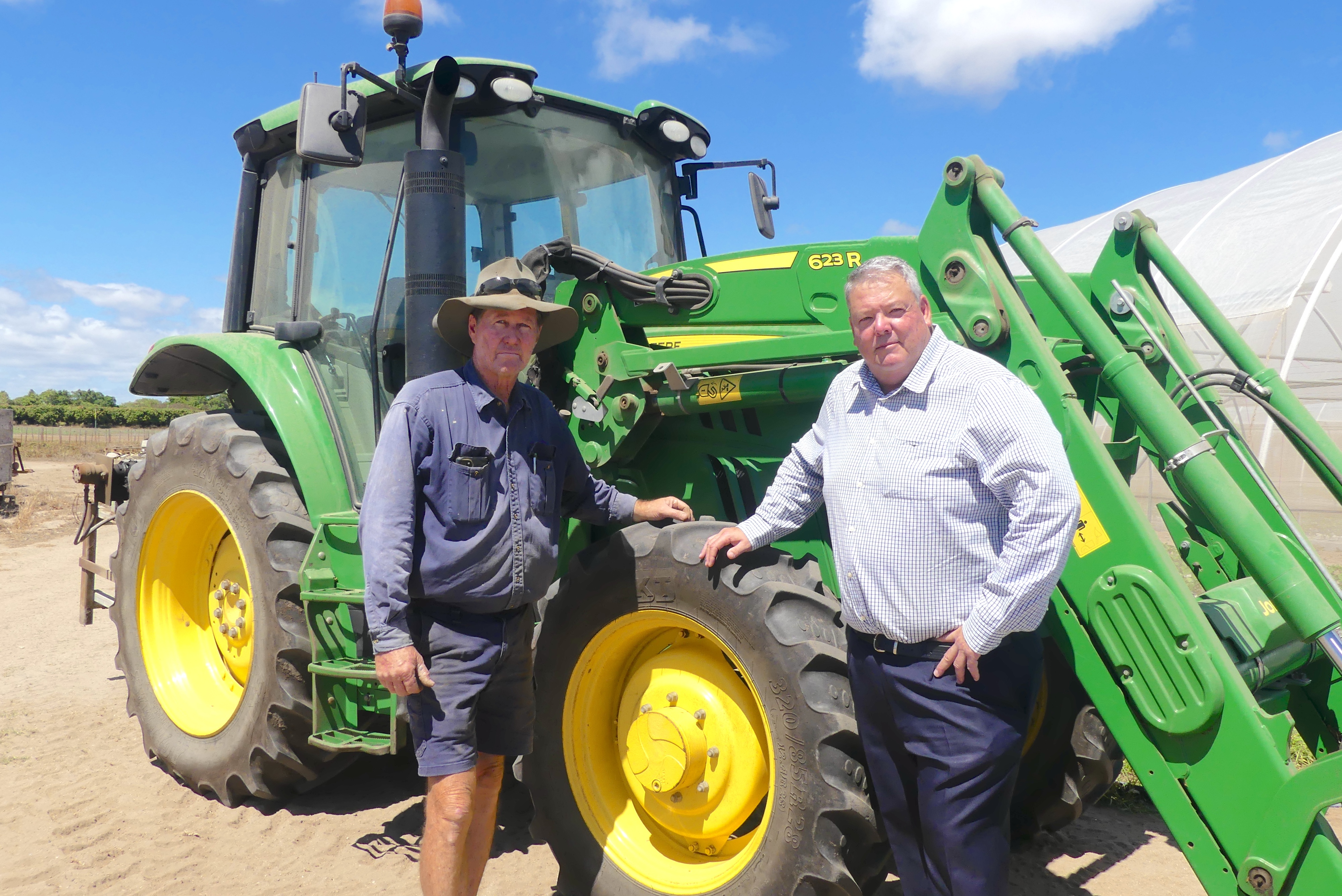
Harvester and haulout tractor. Photo credit: Kirili Lamb
Publishers Indemnity. Any individual or entity that places advertising, supplies copy material, or submits editorial content to Core Life Publishing agrees and undertakes to ensure that all such material:- Does not infringe upon any copyright, trademark, or other intellectual property rights;- Is free from any content that could be considered defamatory, libelous, or slanderous;- Does not infringe upon any rights related to privacy or breach of confidence;- Contains no obscene, indecent, or otherwise unlawful material;- Complies fully with the Trade Practices Act and all other applicable laws, regulations, or statutes.Furthermore, by submitting or placing such material, these individuals or entities agree to indemnify and hold harmless the publisher, Core Publishing and Events Pty Ltd, and/or its agents from and against any and all investigations, claims, demands, liabilities, damages, costs, or judgments arising out of or in connection with the material provided. All material is believed to be accurate at the time of printing and remains the copyright of Core Publishing and Events Pty Ltd.
© 2026 Mackay and Whitsunday Life Pty Ltd.