Independently Owned, Locally Grown, Community Loved


In a twist that might surprise any traditional Queensland home builder, new research suggests some of the region’s smallest residents prefer concrete apartments to timber dwellings.
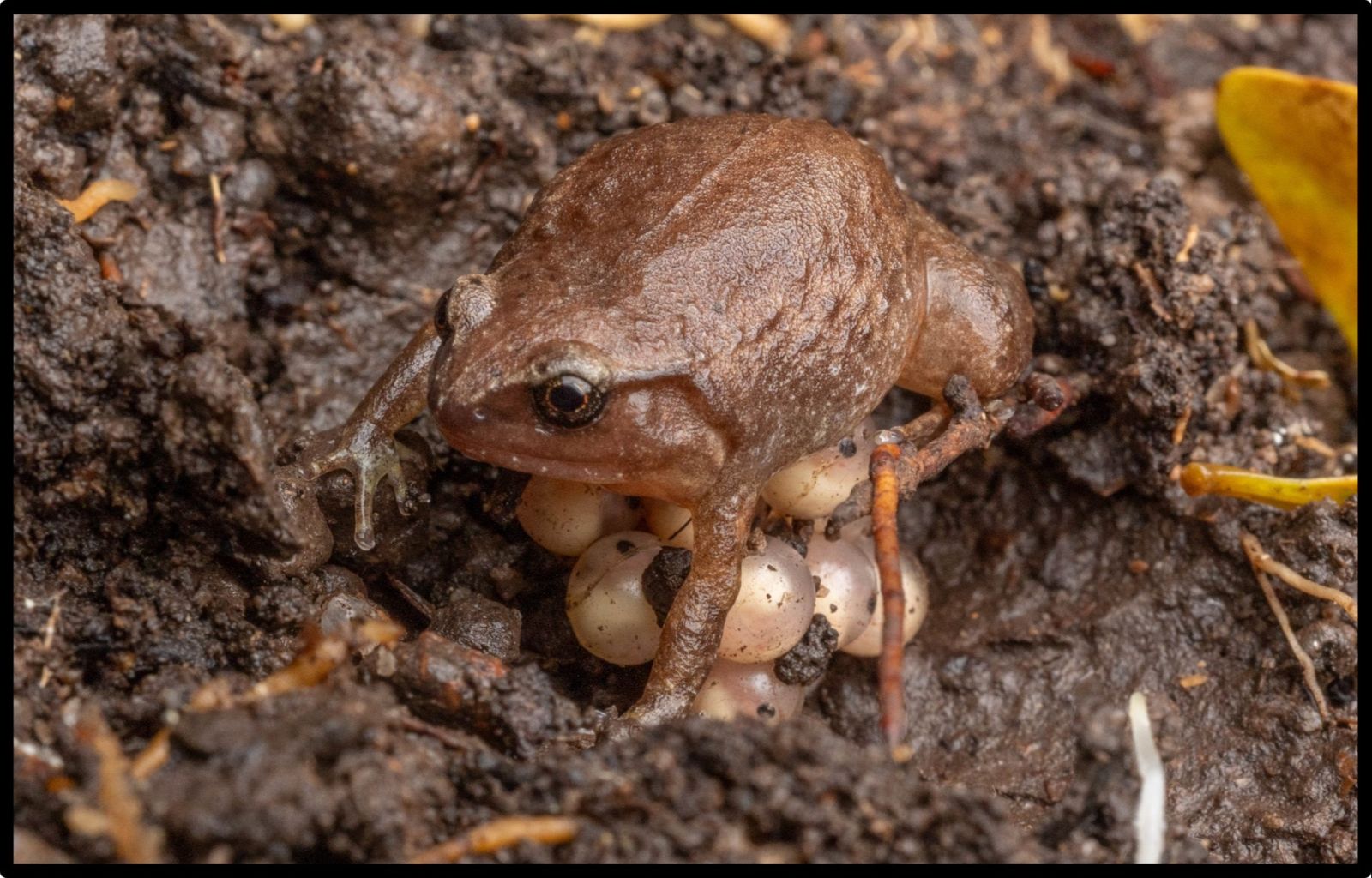
Scientists studying the tiny Robust Whistling Frog (Austrochaperina robusta) have discovered the elusive ground-dwelling amphibians are happily moving into specially designed artificial shelters, and even raising their families there.
The findings, published in Ecology and Evolution, reveal that hundreds of the frogs used the structures throughout their entire life cycle, from egg to adulthood.
Lead author and James Cook University PhD candidate Jordy Groffen said the shelters were created to mimic the frogs’ natural hiding spots beneath rocks and fallen logs.
“We knew they normally live under rocks and logs … so we found fallen trees on-site and chopped them into the right size,” he said.
While some shelters were made from timber, others were crafted from concrete.
“The concrete ones were made here at the University. They’re boulder-sized and have six chambers with multiple passages … like six-pack apartments. Some of them had beautiful moss growing over them.
“The frogs liked the shelters more than we expected. It’s a new non-invasive way to monitor and help frog populations”.
Over the course of the study, researchers recorded more than 800 frog observations, with one survey turning up an impressive 45 residents.
“Although they used them straight away, it still took two years before they bred in them … they had to settle in a bit. But when they did breed in them, they loved it,” Mr Groffen said.
“We found both males and females and we also found eggs in them. We had one male with three nests in a single season. That was great because we know very little about their egg stage.”
Traditionally, frog monitoring relies on listening for mating calls – a method that only detects adult males.
“Normally you only find eggs by flipping things over, which can damage the micro habitat. There’s a chance you might hurt the frogs or their eggs,” Mr Groffen said.
“These frogs are only two centimetres long and brown, living in the leaf litter. We thought that if we make something they actually enjoy, they might come to us instead.”
Tiny temperature loggers placed in the shelters also revealed why the frogs might favour their concrete digs.
“In the winter or dry season in Paluma it can still get below 10 degrees. The concrete shelters warm up bit more and stay warmer for longer, a bit like passive housing,” he said.
“Previously we didn't even know where they were in the dry season. Now we know there are more frogs under the concrete shelters in the dry season than in the hotter wet season.”
While the Robust Whistling Frog is not currently threatened, the research may offer valuable tools for protecting other vulnerable ground-dwelling species.
A Robust whistling frog tending to its eggs. Photo source: JCU / Credit J.Groffen

Publishers Indemnity. Any individual or entity that places advertising, supplies copy material, or submits editorial content to Core Life Publishing agrees and undertakes to ensure that all such material:- Does not infringe upon any copyright, trademark, or other intellectual property rights;- Is free from any content that could be considered defamatory, libelous, or slanderous;- Does not infringe upon any rights related to privacy or breach of confidence;- Contains no obscene, indecent, or otherwise unlawful material;- Complies fully with the Trade Practices Act and all other applicable laws, regulations, or statutes.Furthermore, by submitting or placing such material, these individuals or entities agree to indemnify and hold harmless the publisher, Core Publishing and Events Pty Ltd, and/or its agents from and against any and all investigations, claims, demands, liabilities, damages, costs, or judgments arising out of or in connection with the material provided. All material is believed to be accurate at the time of printing and remains the copyright of Core Publishing and Events Pty Ltd.
© 2026 Mackay and Whitsunday Life Pty Ltd.


.jpg)