
Independently Owned, Locally Grown, Community Loved
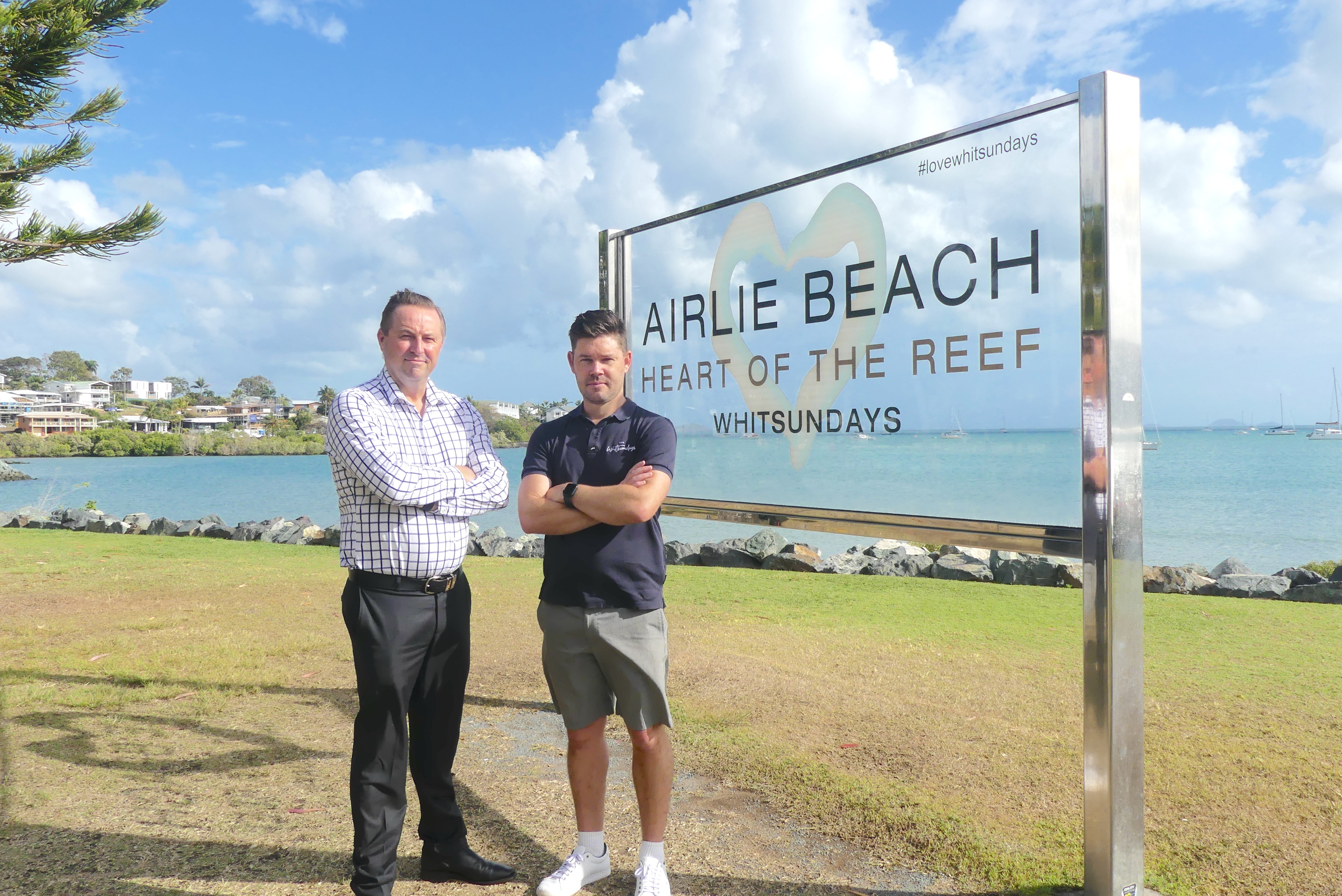
Local tourism operators are expressing concern toward troubling times ahead, with the federal government’s new visa restrictions set to shrink the backpacker workforce that drives seasonal operations. The Federal Government’s proposed cuts to Working Holiday Visas have raised concerns across two of the Whitsundays’ biggest industries. Bowen farmers warned that fewer backpackers could leave crops unpicked, and now tourism leaders in Airlie Beach have added that the same cuts could leave local businesses scrambling to find workers that aren’t there. At Airlie Beach’s Heart of the Great Barrier Reef sign, Tourism Whitsundays CEO Tim Booth and Whitsunday Mayor Ry Collins spoke about what the proposed changes could mean for a region that relies heavily on tourism. “We can't have Airlie Beach named Australia's top tourism town in the small category and then have the knees cut out from us by federal policy,” Tim said. The proposed changes form part of the Federal Government’s effort to reduce migration, a topic that has been of hot debate by all three parties that Mayor Ry Collins believes the working holiday visas should be separated from. “Obviously the federal government is really coming in with broad brushstrokes to try and address the publicly perceived issue around net overseas migration (NOM),” said Mayor Collins. “Some of the dialogue I heard last week in Canberra was actually taking that working holiday maker class completely out of the NOM calculation. “I think that's a fair and reasonable way that they can make the numbers look as good as they want but it won't affect the actual number of workers that are here to support our industries.” The new restrictions look to cut the second-year extension on Working Holiday Visas from 57,000 to 45,000 slots, and 3rd year extension from 31,000 to just 5,000. According to Tourism Whitsundays, the Whitsundays hosts about 3,500 backpacker workers at any given time of the year. “I think for regions like the Whitsunday’s unemployment rate is lower than the national average by 0.9%, so at a 3.5% unemployment rate, we just don't have the workforce there that can pick up these roles that the working holidaymaker delivers for our communities,” Tim said. According to figures released by Tourism Whitsundays, in the year ending March 2026, domestic visitors spent $959.1 million in the region and international visitors spent a further $271.8 million. This spending was made possible by the abundance of workers delivering those experiences. “[Working holidaymakers] do a terrific job already in delivering world-class experiences, particularly here in the Whitsundays,” said Mayor Collins. “We do see working holidaymakers really take up that mantle, particularly in areas like customer service roles, hospitality roles, housekeeping roles... “What we're asking for is that we can stay strong as an entire tourism industry.” Having just returned from Canberra, the pair said raising regional and statewide voices is crucial to persuading the Federal Government to reconsider how the proposed restrictions would apply. “And then at a federal level, obviously through our federal member Andrew Wilcox, but we've also engaged with the members of the Labor Party around that as well. “But unfortunately it's starting to feel like a number of issues that we're campaigning on…along with things like disaster recovery funding arrangements which was one we linked into last week.” Photo caption: Whitsunday Mayor Ry Collins and CEO of Tourism Whitsundays, Tim Booth. Photo credit: Zach Houtenville
Read the full story
In this world of AI and other technological advancements, you don’t want to be the person who wanders around the office like a big old clumsy Tyrannosaurus Rex bumping into all the youngsters and stepping on their laptops and other devices. It’s one of the challenges of our times; getting the balance right in business in a world that is increasingly controlled by AI, robotics and a rapidly changing IT environment. I remember, some years ago now, when older family members had refused to embrace computer technology and mobile phones etc. They were really left behind and felt excluded in a world that had moved ahead without them. I’ve got a 19-year-old son who doesn’t have to think about it. Current and evolving technology is part of his life and, like others in his age group, he is completely at ease with something that is just part of his make-up and comprehension of the world around him. The trap you can fall into is letting the kids do all the IT stuff for you. My son set up our old TV with all the streaming services etc, which was the easy option for me, but I find it’s important to get involved and do it yourself otherwise everything will move ahead and you won’t be able to do things for yourself. But I am still stuck in some of the old ways. If I am ordering a takeaway meal I still ring the restaurant and go and pick it up. The old T-Rex wanders into the Thai or Indian joint and picks up his plastic bag of goodies, pays, and drives home. There aren’t many of us left. Uber Eats baby. Everyone has embraced it. My wife and daughter were having dinner together in Brisbane recently and my daughter noticed that her stockings or tights had “run” or a ladder in them. My wife suggested she jump in the car and drive to a nearby supermarket and get another pair. But my daughter ordered a new pair to be delivered to the restaurant by Uber. They were there in a jiffy and the night continued without the pesky interruption of having to leave the restaurant to buy them. It’s a great example of the modern world making things easier and how many of us need to ensure we are adjusting and understanding how things can now be done. There is another side to the coin, however. People have told me that I should get AI to write my columns. They say I could give it some examples of columns I have written and give it an idea for a new column and tell it to knock out 600 words on my chosen topic in my style of writing. It’s something I would never do. Apart from the fact that it would somehow seem like I was cheating, it would also not be authentic. I feel that however boring or pedestrian my stories and comments are, at least they are mine. They have come from my noggin, my experiences. It is my take on the world, not something that has been cobbled together by artificial intelligence. It’s similar in the world of real estate and, I’m sure, business generally. You need to embrace the technology, use it when it creates a better service, a superior experience for buyers and a better result for sellers. But there is still a place for picking up the phone and calling buyers, following up from open homes, doing the hard work that needs to be done as an agent. In a world of AI, robotics and Uber Everything the human element, the person-to-person connection still needs to happen to deliver good service and create the best result for clients.
Read the full story
Maisy is a beautiful little soul who seems to understand that the very best place in the world is right beside someone she loves. She is affectionate, gentle, social and wonderfully trusting. She loves curling up on a welcoming lap, snuggling into your arms and settling close enough to make you feel as though you have always belonged together. Maisy is generous with her purrs, her cuddles and her sweet little air biscuits. She even places her paw in your hand as if to say, “I choose you.” But this gorgeous girl is not only a champion snuggler. Maisy is playful, curious and full of kitten joy. She loves exploring her toys, chasing anything that moves and turning ordinary moments into entertainment. She will happily amuse herself, but everything is even more fun when her favourite person joins in. She has that perfect combination of affection and personality, soft and loving when it is time to cuddle, and playful and bright when it is time for fun. Maisy will bring warmth to your home, companionship to your days and a little paw to hold whenever you need it. If you are looking for a kitten who will play with you, curl up with you and love being part of your life, Maisy may be the girl you have been waiting for. Maisy has been desexed, microchipped, received her first vaccination, been wormed and is litter trained. She is ready to begin her beautiful new life as a much-loved indoor companion. To arrange a meet and greet with Maisy, please call Ros on 0403 814 318.
Read the full story
Tarren McAuley, Web Director and Co-Owner I remember when those AI posters started popping up – the first one looked kinda different. By the end of the week, when I’d seen 30 of them, I was much less enamoured + actively scrolled past anything that had that telltale paint smear style font. It’s not that the quality had gotten any worse between me seeing that first one + when I was sick of them by the 30th. But it was no longer novel or original. I think AI is especially susceptible to this because as soon as someone discovers a winning formula, everyone else jumps on the bandwagon, but because everyone is getting similar outputs, it gets old – quick. I think brands can fall into a similar trap. Humans are always looking for inspiration + when seeking it out, where better to look than the other players in your field. If you’re a tech company, you’re going to look at Samsung, Apple + the like. But when that happens too much, you get a feedback loop of samey-ness. For me, this is best exemplified by airline logos. Look at Qantas + Virgin, probably the two biggest brands in Australia. Both use a red plane-like icon, w/ their logo in big letters next to it. Bit cherry picked but even the other big players’ logos are similar - Emirates uses mainly red + shakes it up by having a slightly more exotic font. Jetstar ditches the red for orange + has their icon at the end but it has similar visual markers. This isn’t unique to logos, like w/ the poster example earlier – it could be your social tiles, your website or even your company email sig. Whatever it is, if you wake up one day + notice that the other businesses around you are looking a bit too similar, that should be your sign to start looking at a rebrand to shake off the rust + re-establish your unique identity. You know, until the cycle repeats again!
Read the full story
When people talk about the Australian property market it often seems as though they are talking about one market, something that contains uniform traits and a consistency throughout the country.
The single-market phenomenon probably applies to other areas; the corn market is probably pretty uniform in the corn-growing areas of the country and I would expect wheat and wool and other markets to have very little variation.
Of course, the wool market is one of the many things I know nothing about, although I do hear good things about the merino breed of sheep and its soft, fine wool.
I’m slightly better informed about the property market and one thing that is very clear is that there is not one market.
Demand and supply play out in different ways in different cities. Business activity varies, population movements change, demographics have an impact and none of this is the same from one city or region to the next.
There are also the different types of property markets. The so-called “prestige market” is different to the suburban mum and dad market because different factors apply.
It is true that a federal budget that removes negative gearing on established dwellings and increases capital gains tax does have an impact in all markets but the extent varies.
And when tax changes combine with other economic factors such as an increase in the cost of living for things such as fuel and electricity, the results can be seen in various markets.
There has, without a doubt, been changes to property markets around the country over the past few months and none of them, in my opinion, appear to be going up at the moment.
But the impacts have been felt far more seriously in bigger cities than in other locations.
The prestige and higher-end markets in Sydney and Melbourne have been smashed. Many of those properties increased dramatically in recent years. A property in Sydney that increased from $4m to $5m over a short period will probably find that price winding back now.
The Herron Todd White property clock, a monthly assessment of property markets around the country by the valuation company, described Sydney and Melbourne as markets in decline in July.
There is no doubt that the removal of negative gearing will be having a huge impact on properties at the higher end as investors shy away from the negative yield those properties would provide.
It was interesting to note which cities the HTW housing property clock described as “approaching the peak” of the market.
Gladstone, the Sunshine Coast and Townsville were all described as approaching the peak.
Not so Mackay, which is still described as a “rising market”, along with Rockhampton, Cairns and Emerald. Brisbane is described as being at the peak of the market.
Melbourne is a good example of how markets around the country differ. Someone last month bought a two-bedroom unit in an inner-city suburb for $610,000. The same unit last sold in 2018 for $635,000. A loss after eight years is a very differentexperience to the Mackay situation where the prices have more than doubled in that period.
As always, economic factors in individual regions have an impact and Mackay’s economy is going well, with full employment and plenty of activity. Markets plunge when economic factors force people to sell. That is not the case in Mackay and it’s generally not the case in other parts of the country.
Meanwhile I had an average of eight people turn up to my four open homes last weekend and we ended up with strong offers on all four of them.
Buyers are more cautious than they were but people still need somewhere to live so well-priced properties that are marketed properly are attracting good attention from buyers.
It’s certainly not the case that there is one property market in Australia and that what is happening in Sydney is replicated throughout the country.
The Greater Whitsunday region is positioning itself to become a key player in Australia's growing critical minerals industry, with a new roadmap outlining how local businesses can capitalise on emerging opportunities across mining, manufacturing and advanced technology.
The Mackay and Greater Whitsunday Critical Minerals Roadmap will be launched at the Resource Industry Network Industry Briefing on Friday. Developed by the Greater Whitsunday Alliance (GW3) with support from North Queensland Bulk Ports and BHP Mitsubishi Alliance, the roadmap identifies opportunities in exploration, mineral processing, logistics, manufacturing, research and innovation, while helping local businesses diversify into new markets.
GW3 Diversification Project Lead Jodie Thompson said the region was well positioned to support Queensland's critical minerals future.
"The Greater Whitsunday region is primed to service and lead a critical minerals future for Queensland," Ms Thompson said.
"This Roadmap is about understanding where our region can add the greatest value, helping our businesses diversify and ensuring we are ready to capture new investment and economic opportunities.
"It is not about replacing the industries that have driven our region's success, it is about building on those strengths, creating additional opportunities and ensuring our economy remains resilient and competitive as global markets evolve."
Resources Centre of Excellence Chief Executive Officer Steven Boxall said the region was already investing in the infrastructure and innovation needed to support future resources industries.
"Critical minerals development will require new approaches to extraction, processing, automation and resource recovery," Mr Boxall said.
"Our region has an important opportunity to develop, test and commercialise those solutions locally."
The roadmap was developed through consultation with industry stakeholders and regional partners and forms part of GW3's broader strategy to attract investment, diversify the economy and strengthen the Greater Whitsunday region's role in future critical minerals supply chains.

Star Sign: Aries
Favourite Movie: Pacific Rim
Favourite Colour: Red
Favourite Holiday Destination: Fiji
Favourite Music: Rock
Favourite Quote: “Ask not what your country can do for you, but what you can do for your country.” – John F. Kennedy
Something most people don't know about you: I enjoy hands on activities like painting miniature figurines and target shooting.
Mackay-born dentist Kaveet Raniga is swapping miniature figurines and long-distance target shooting for a new chapter at Hanly Dental Studio, bringing more than five years of hands-on experience and a friendly, people-focused approach to his role as Associate Dentist, with bookings opening from September.
Kaveet has always enjoyed working with his hands, but when he first started treating patients in his third year of University everything just clicked.
“When I started treating patients that’s when I really found a passion for it.”
More than five years later, it’s the variety of dentistry, and the people behind each appointment, that continue to make the profession rewarding for Kaveet.
While no two days are the same, his role often sees him involved in ceramic work and rehabilitation, alongside check-ups, fillings, cleans, whitening and oral surgery – but whether a patient needs a small procedure or more complex treatment, Kaveet’s focus remains firmly on helping people feel comfortable, cared for and confident in their treatment.
For Kaveet, some of the most rewarding moments are often the smallest. Whether it’s seeing a patient’s genuine reaction when they look in the mirror after treatment, or giving a young patient a high-five after a check-up, he values the opportunity to make someone’s experience a positive one.
“It's just small wholesome moments like that that really mean a lot to me.”
That people-first approach is particularly important when treating patients who may feel nervous or apprehensive about visiting the dentist.
Kaveet believes building trust can take time and is more than happy to work at a patient’s pace, whether they are coming in for a routine check-up or something more elaborate.
Outside the clinic, Kaveet is a self-confessed dog lover, with plans to welcome a Kelpie once he has settled into his new role.
After growing up in Mackay, apart from moving to Cairns for university, Kaveet is looking forward to continuing his career close to home and joining a team he already feels comfortable with.
Bringing his experience, curiosity and distinctly “jokey, friendly and professional” personality to Hanly Dental Studio, Kaveet is ready to help Mackay locals feel a little more at ease in the dental chair.
Contact the friendly team at Hanly Dental Studio for more details!
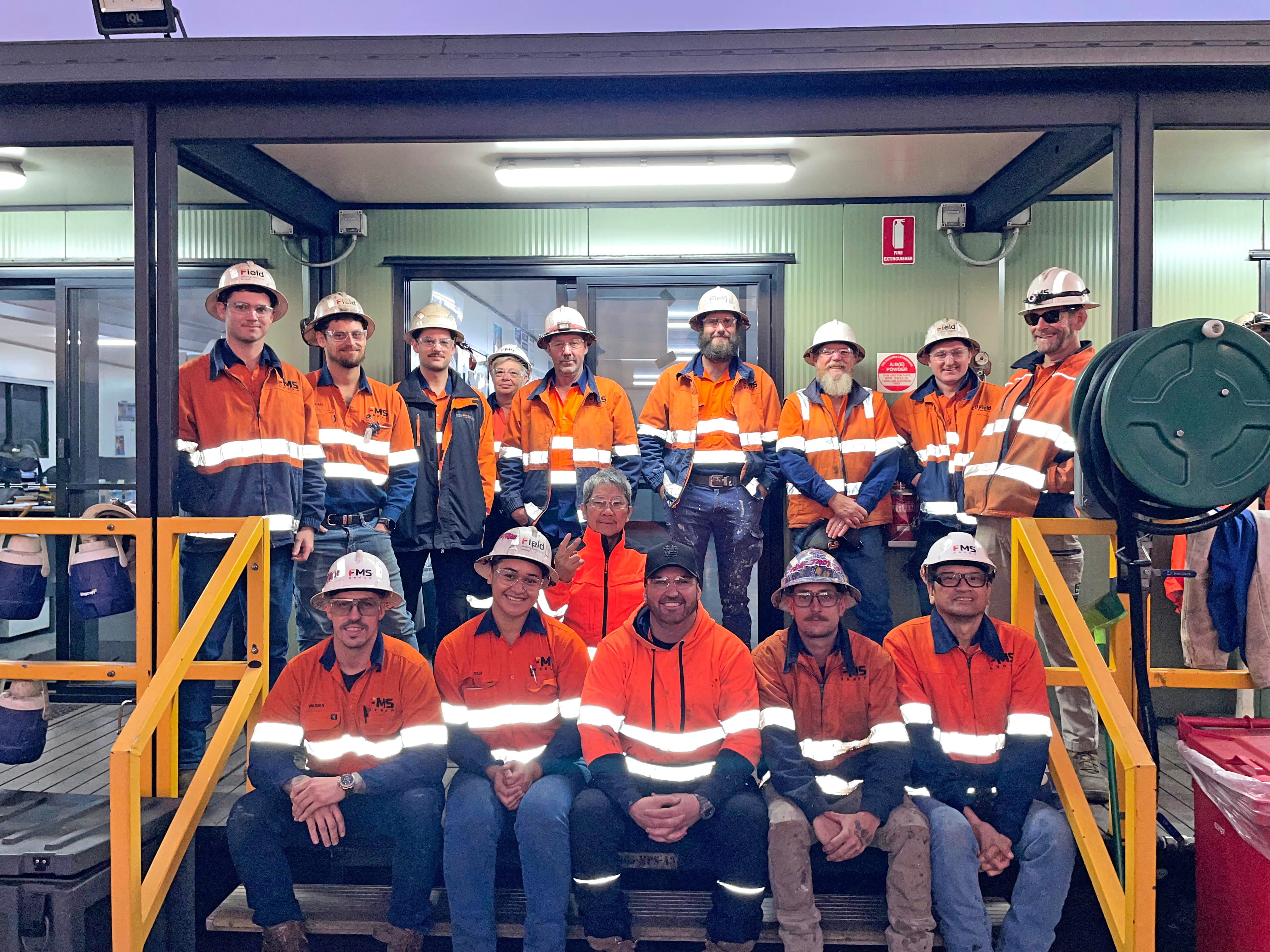
For FMS Group, some of the best innovations begin with a simple question: why has it always been done this way?
That mindset has driven a 20-year commitment to finding safer and more efficient ways to tackle complex mining maintenance and shutdown work, and has now earned FMS Group the Austmine Innovation (METS) Award at the recent 2026 Queensland Mining Awards.
The impressive accolade recognises FMS Group’s Dipper Skid and Hoist Rope Install Jig, an innovation developed by its frontline teams to address a high-risk task on electric shovels.
Until recently, changing a hoist rope required a live shovel and a crane working alongside the equipment. FMS Group developed a pneumatic jig, dipper counterweight and skid mechanism that allows hoist ropes to be replaced without using a crane or powering up the equipment.
Following trials across six shutdowns, the method reduced downtime by two to three days while eliminating the hazard associated with the previous process.
It is a practical example of how FMS Group approaches continuous improvement: operational teams identify challenges through their experience in the field, while engineering and technical teams develop the methodology, testing and design required to make the solution safe and workable.
But much of that work happens long before a shutdown begins.
FMS Group’s projects can involve crews of 18 to 80 employees, large cranes, specialised jacking equipment, line boring and machining gear, and purpose-built jigs and tooling. Detailed planning, project methodologies, equipment mobilisationand careful scheduling are essential when multiple work fronts are operating simultaneously.
Safety sits at the centre of that process. FMS Group’s supervisors and leadership teams manage execution risk, coordinate work fronts and maintain close communication with clients. The company has also invested in supervisor development, recognising that strong leadership is fundamental to building a strong safety culture.

The award-winning innovation follows this same philosophy. Importantly, it was not developed in response to an injury, but to address a task with the potential for a catastrophic incident.
Other FMS engineering developments have similarly focused on reducing crane interactions and improving control of high-risk tasks, while also targeting shutdown efficiencies. In some applications, these improvements can save 24 to 48 hours at the end of a shutdown while electrical and systems commissioning is completed.
For FMS Group, the Austmine recognition is a significant milestone, and one the team says it is still taking in.
Ultimately, the award reinforces what has driven the company for two decades: combining frontline experience, engineering capability and client collaboration to challenge established methods and find safer ways forward.
FMS Group remains committed to improving, questioning established methods and, above all, ensuring everyone gets home safely.
fms-group.com.au
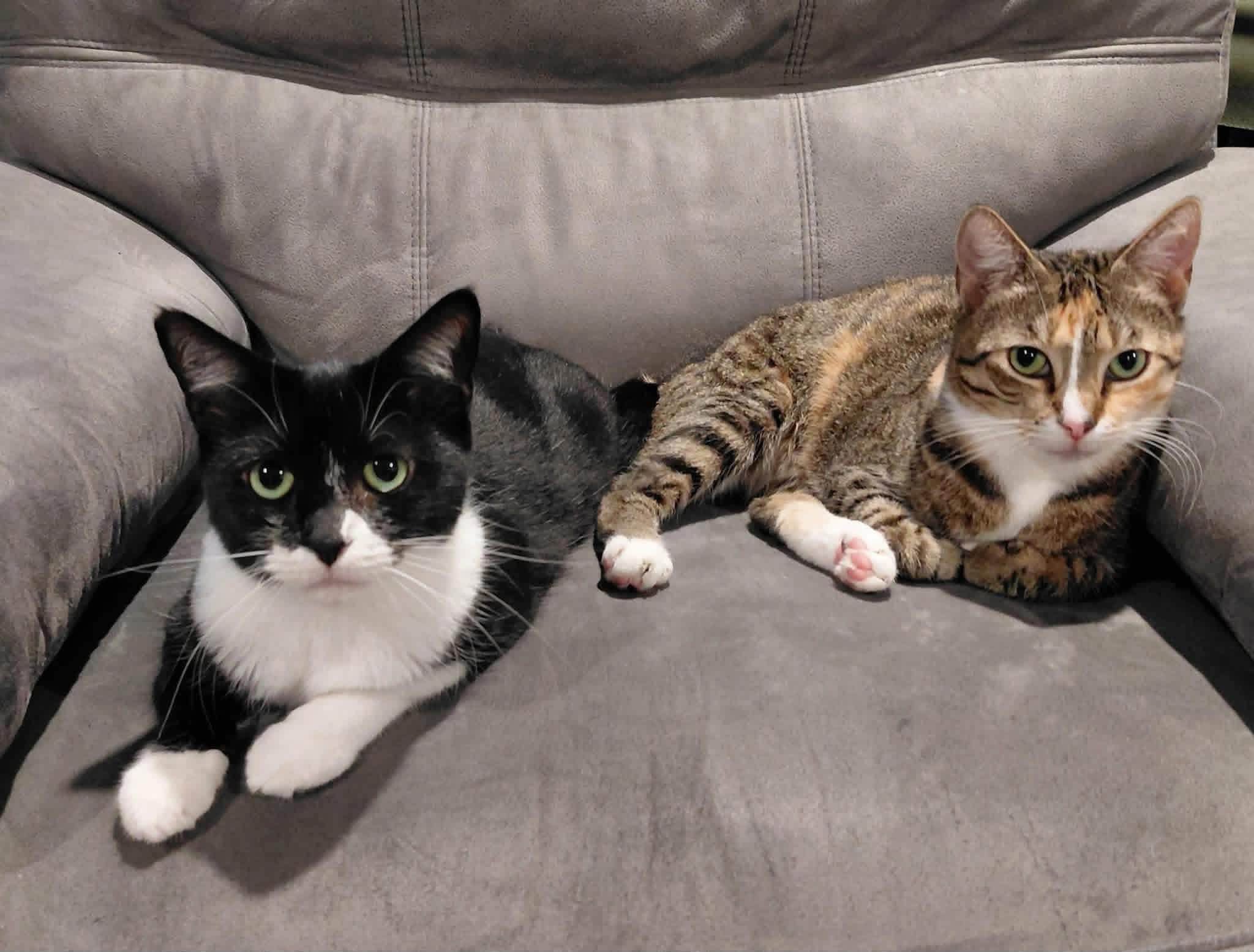
Kittens may steal the spotlight, but adult cats like Violet and Aggie have plenty of love to give and are waiting for a second chance through Mackay Pet Rescue.
Many adult cats enter care through no fault of their own after losing their homes. Foster carers provide a safe, loving environment while getting to know each cat’s personality, quirks and needs.
With patience and stability, even frightened cats can learn to trust and feel safe.
Adult cats can make wonderful companions, often offering calmer personalities and plenty of affection.
If you can provide Violet, Aggie or another adult cat with a loving forever home, contact Mackay Pet Rescue Inc to arrange a meet and greet.
Women’s Health Week is coming to Mackay — and everyone is invited.
Women are very good at looking after others. We support our families, manage work and home, and keep everything moving. But when it comes to our own health, it is easy to say, “I’ll get to that later.”
Women’s Health Week gives us a reason to change that.
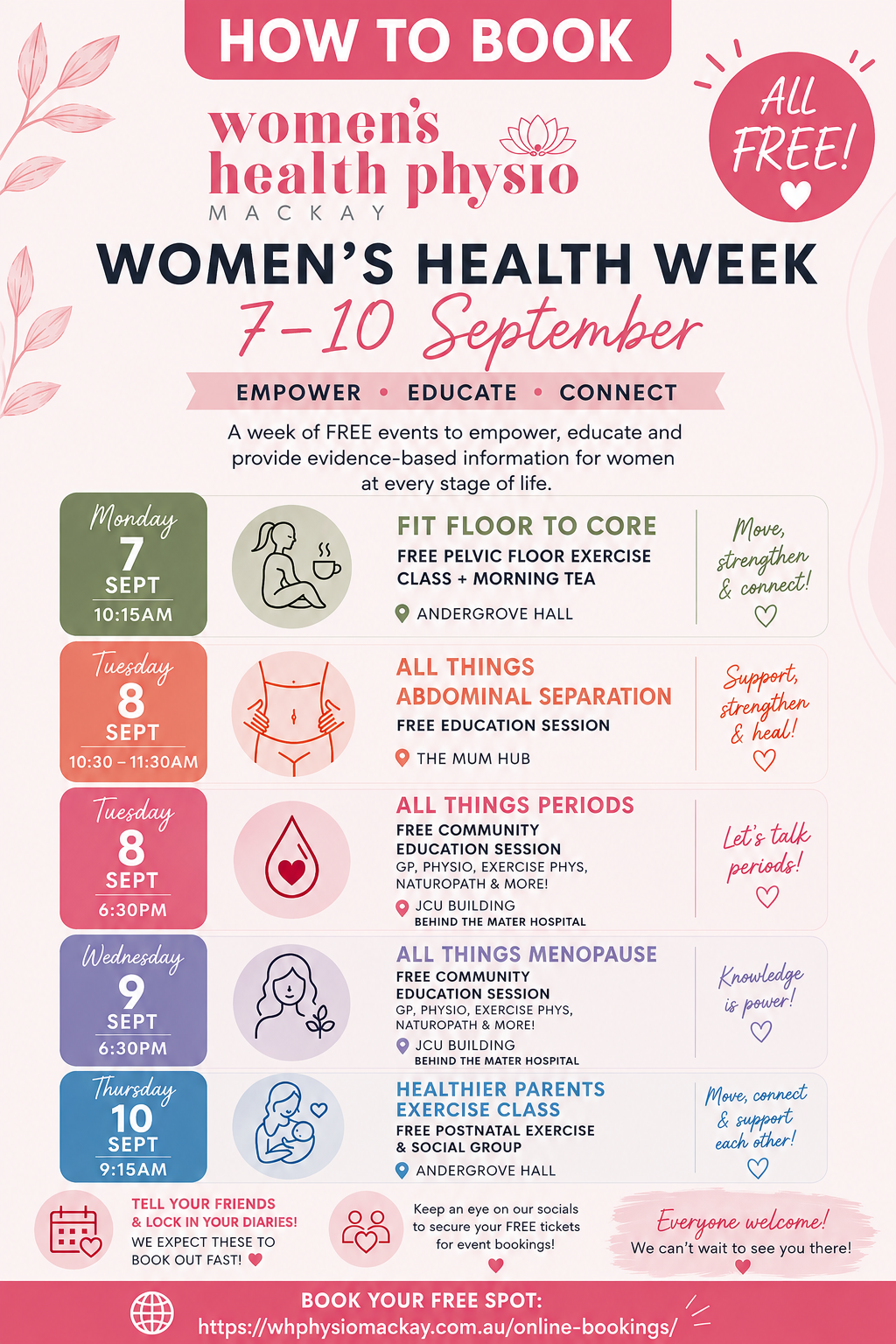
Running from 7–11 September, Jean Hailes Women’s Health Week is Australia’s largest event dedicated to women’s health and wellbeing. This year’s theme, “Do it anyway,” encourages women to take small, realistic steps towards better health.
Looking after yourself does not have to mean overhauling your life. Sometimes it starts with moving your body, asking an awkward question, learning what is normal, or understanding changes through different stages of life.
That is exactly what we hope to create here in Mackay.
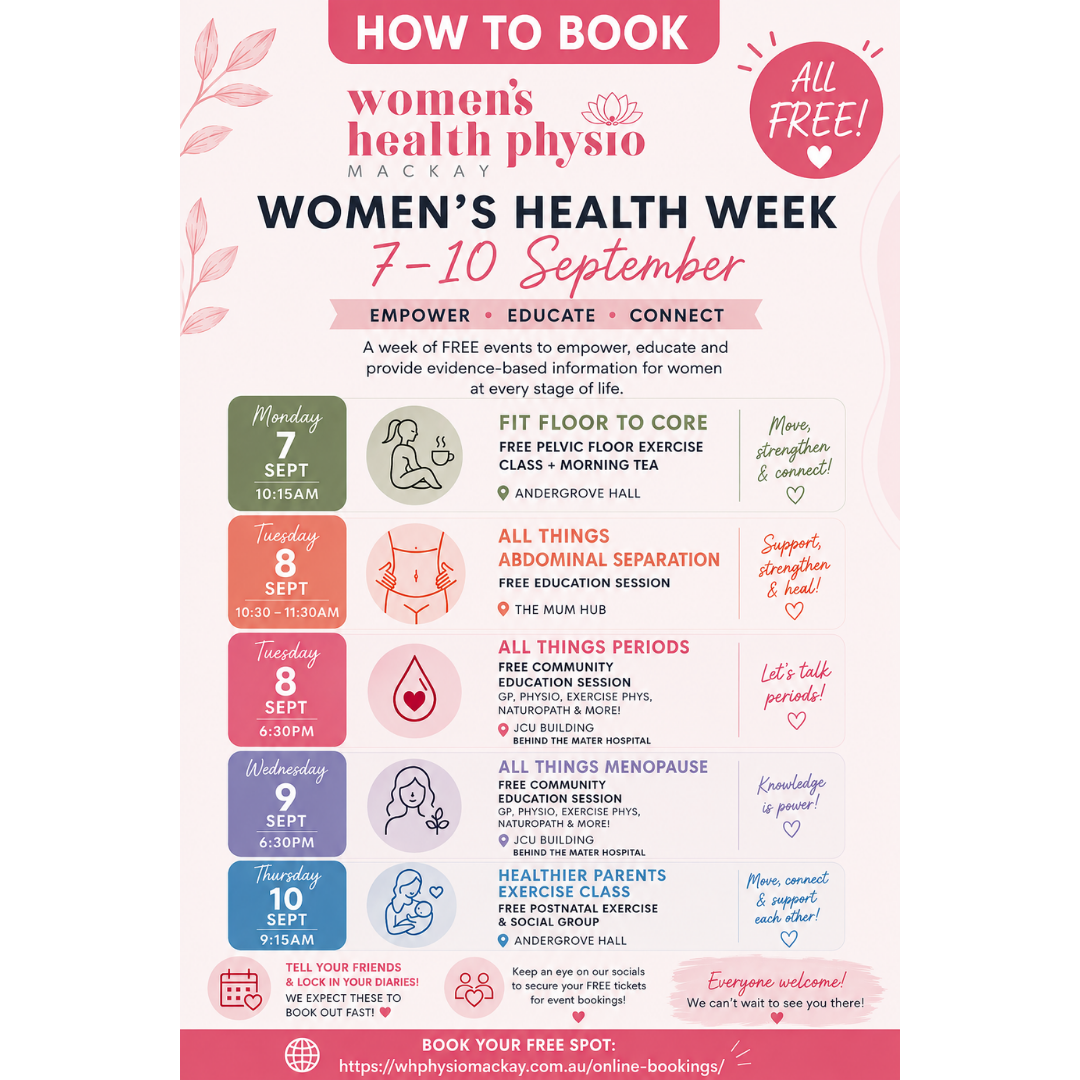
For Women’s Health Week, Women’s Health Physio Mackay is running a week of FREE community events, designed to empower, educate and connect.
Monday begins with our Free Fit Floor to Core pelvic floor exercise class and morning tea, celebrating two years of bringing these free classes to our community.
Tuesday morning, I’ll be at The Mum Hub for All Things Abdominal Separation, offering tummy checks, education and a relaxed chat about abdominal recovery.
Tuesday evening is All Things Periods, followed by All Things Menopause on Wednesday evening. Dr Nicole Higgins from Health on Central, Women’s Health & Pelvic Floor physiotherapist Lauren Neill, naturopath Jody Walker, Life in Motion exercise physiologists and women’s health massage therapist Sari will share their knowledge and answer questions women often do not get the opportunity to ask.
We finish Thursday with Healthier Parents exercise class, combining movement, connection and socialising for postnatal mums.
Why does this matter? Because good health information matters. Women’s Health Week creates conversations, helps reduce stigma and encourages women to take action for their health. Just as importantly, health education should be accessible, trustworthy and evidence-based.
Something powerful happens when we bring health education out of consulting rooms and into our community. Questions become easier to ask, women connect, and knowledge gives us confidence to advocate for our health.
So this Women’s Health Week, put yourself on the list. Bring your mum, sister or a friend. Come for a class, conversation or to learn something new.
Every event is FREE, but bookings are essential. Visit our Book Now page, pop into the clinic or call us to secure your free spot.
Your health is worth making time for.

One of the greatest challenges business owners face isn't a lack of passion, expertise or commitment, it's perspective.
When you've built a business from the ground up, it's easy to assume your customers see it the same way you do. You know your history, your values, your products and the countless hours you've invested to get where you are today. But your customers don't have that context. They make decisions based on what they see, hear and experience in a matter of moments.
That's where many businesses unknowingly lose opportunities.
Over time, marketing can become reactive. Websites are updated, social media is posted, brochures are redesigned, and campaigns are launched, but often without stepping back to ask a simple question: Is this really communicating what makes us different?
The reality is that the most valuable insights often come from someone looking at your business from the outside.
An experienced marketing strategist doesn't simply review your logo or critique your advertising. They challenge assumptions, uncover blind spots and ask the questions that business owners are often too immersed in the day-to-day to consider. They view your business through the eyes of your customers, identify what's working, what's missing and, more importantly, what opportunities exist to strengthen your market position.
That's the thinking behind Squeeze, redhotblue's premium one-on-one marketing workshop.
Over three focused hours, Founding Director Jody Euler and Creative Director Scott Turner work directly with business owners and leadership teams to untangle the complexities of their marketing. Drawing on decades of strategic and creative experience, they explore how your business is perceived in the marketplace, define clear marketing objectives, identify what motivates your ideal audience and develop practical recommendations that strengthen your competitive advantage.
It's three hours away from the distractions of running your business, giving you the time and space to think differently. Together we'll explore your brand, challenge ideas, identify opportunities and leave you with practical direction you can confidently put into action.
Whether you're preparing for a rebrand, entering a new market, planning a major campaign or simply wanting to ensure your marketing is working as hard as you are, Squeeze provides something that's difficult to achieve from within your own business, a fresh perspective.
Because sometimes the biggest opportunity for growth isn't changing your business.
It's changing the way the world sees it and more importantly your potential customers.
Jody Euler and Scott Turner
redhotblue
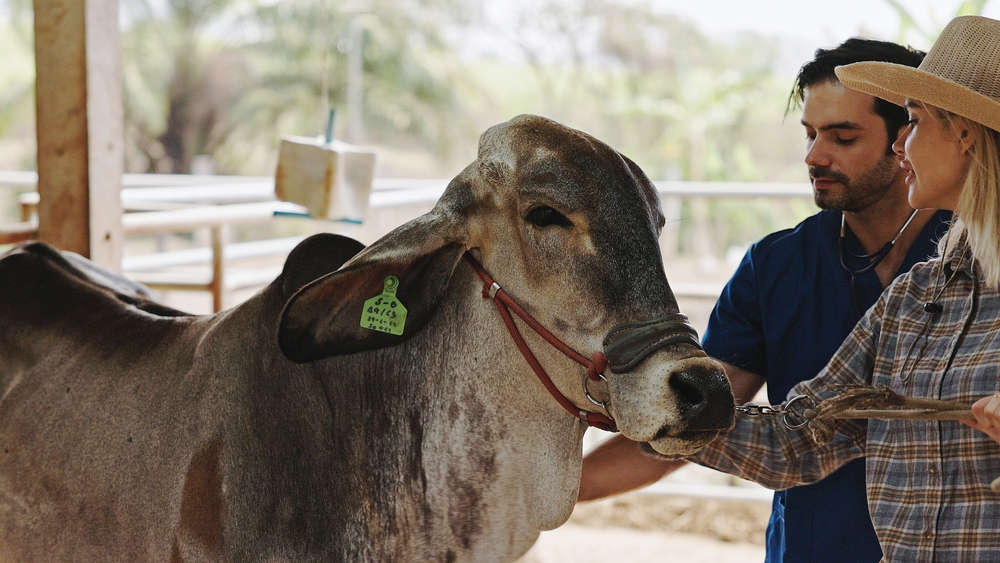
Image for illustrative purposes only. Photo Source: Shutterstock
Graziers across the Mirani electorate now have access to an expanded free cattle dip testing service aimed at helping producers manage chemical resistance in cattle ticks and protect the health of their herds.
Under the initiative, producers can collect free dip test kits from Department of Primary Industries (DPI) offices in Mackay and Rockhampton or through participating local chemical suppliers. Samples can then be returned to DPI offices during business hours for testing.
The testing program forms part of a broader range of cattle tick management measures being delivered by the Queensland Government, including work undertaken at the DPI's Queensland Tick Fever Centre, which produces and supplies the only vaccine available in Australia to protect cattle against tick fever.
The State government has also announced plans to increase the number of biosecurity officers across the state. According to the government, 40 officers have already been appointed as part of a commitment to recruit 100 officers during the current term.
Member for Mirani Glen Kelly said cattle producers are being assisted to meet their general biosecurity obligations, ensure their treatment is best practice and strengthen protections for graziers across the whole state.
“This free service offered by the local DPI team will make it easier for Mirani graziers to ensure their chemical levels are within the recommended ranges while also providing quick and reliable results.
“By maintaining correct chemical levels in their dips, producers give themselves the most cost-effective method for controlling cattle ticks and, importantly, they also reduce their risk of creating chemical resistance in cattle ticks on their properties.”
For more information about the new counter service or to learn how to prepare or submit a sample, contact the DPI on 13 25 23 or visit the DPI website.
What Does Reef Side Buyers Agent Do?
Reef Side Buyers Agent works exclusively for the buyer — not the seller.
We help people buying homes, investment properties and holiday homes across the Whitsundays, Mackay and surrounding North Queensland areas.
From search to settlement, we help our clients find the right property, assess it properly, understand what it is worth, avoid potential issues and negotiate with confidence.
For buyers who don't live locally, we can also be their eyes and ears on the ground — helping them understand the property and the local market before making a major decision.
Our job is simple: represent the buyer and protect their interests throughout the purchase.
Who Are We?
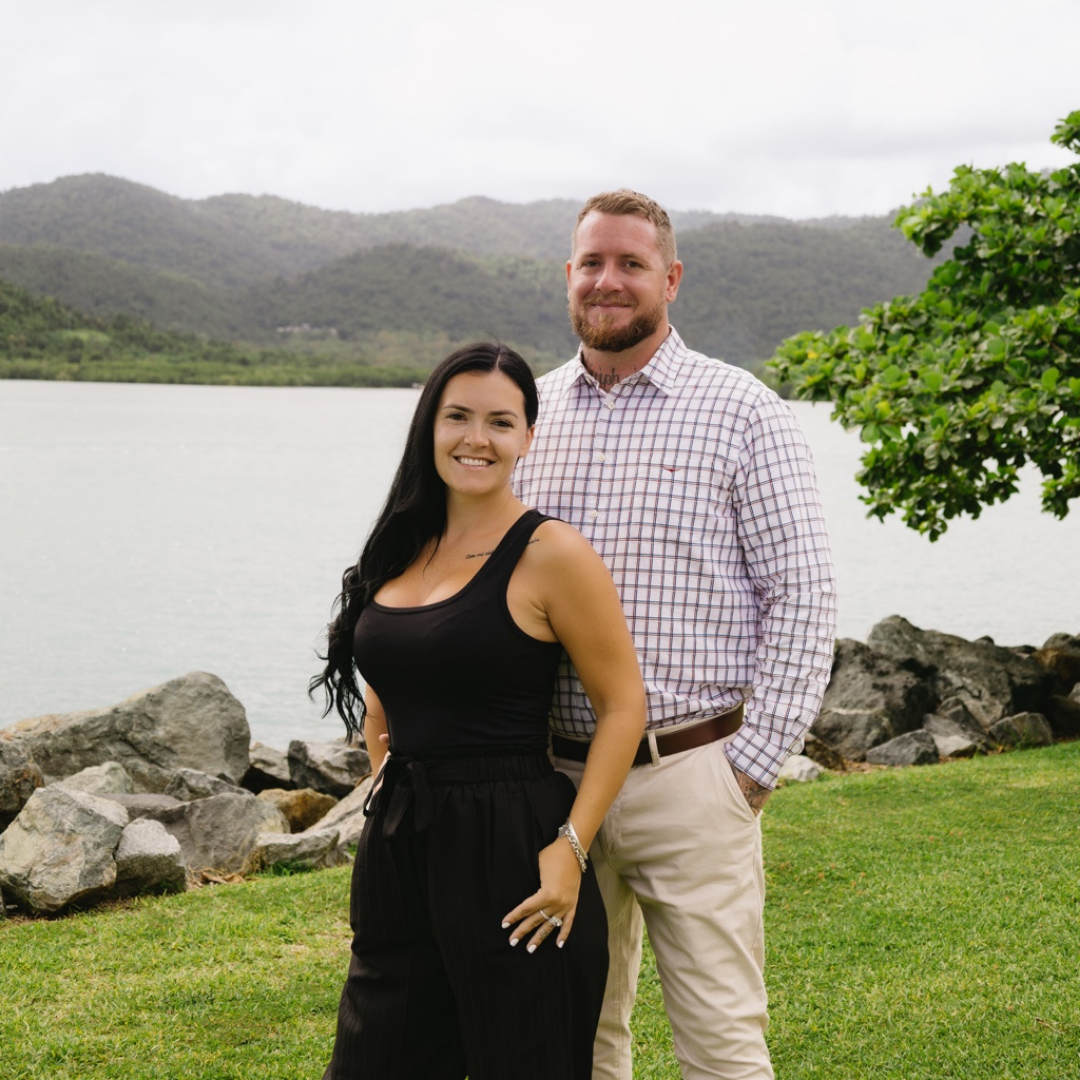
We are Tyson and Rachael Griffiths, the people behind Reef Side Buyers Agent.
We're a local family raising our young family here in North Queensland, with more than 20 years of experience across building, housing, property and business.
That background gives us a practical approach to buying property. We don't just look at the listing — we look at the property, the numbers, the location and whether it actually suits what the buyer is trying to achieve.
We work with local buyers, investors, families relocating to the region and interstate buyers who want someone local representing them.
Buying in the Whitsundays or Mackay? Have someone on your side.
Reef Side Buyers Agent
0403 353 944
info@reefsidebuyersagent.com.au
reefsidebuyersagent.com.au
Two people have been identified as suspected of illegal building activity by the Queensland Building and Construction Commission (QBCC) following a three-day compliance operation across Mackay construction sites.
QBCC officers carried out 117 licence checks at 45 active sites as part of the campaign, which was aimed at checking licensing requirements and compliance within the local building industry.
The regulator said investigations were continuing into two cases. One person was alleged to have carried out building work without the required licence, while another was potentially engaging an unlicensed contractor.
A site was also found to have signage that did not meet requirements. The licensee received a warning and further information about their legislative responsibilities.
QBCC CEO and Commissioner Angelo Lambrinos said the regulator sought to educate licensees while taking action where necessary.
“Queensland’s building and construction industry is built on trust, professionalism and accountability,” Mr Lambrinos said.
He said most licensees were meeting their obligations, with compliance audits of active sites during 2025-26 recording unlicensed offending at just over one per cent.
“By conducting these audits, our officers play a critical role in identifying and addressing noncompliance, ensuring building works are being delivered to standards so that Queenslanders can feel confident about the people they hire.”
Mr Lambrinos said the QBCC would continue to focus on education and early intervention, while responding firmly to serious or repeated breaches.
“We prioritise early engagement and education, but we also take firm action on repeat or serious non-compliance.”
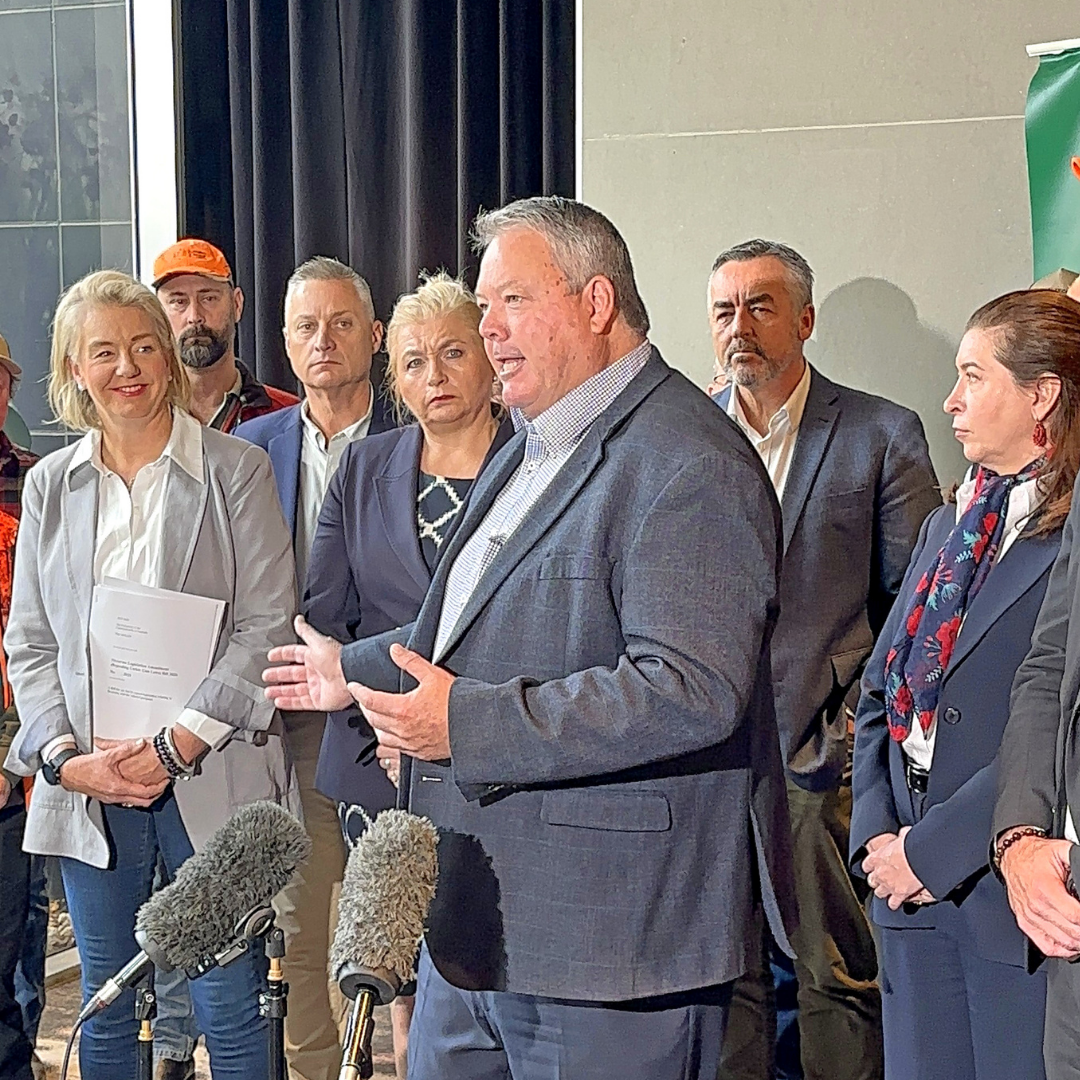
The Nationals are seeking to repeal recently introduced federal firearms laws and the proposed National Gun Buyback Scheme, with Dawson MP Andrew Willcox supporting the Bill in Parliament. Photo supplied
The Nationals are seeking changes to recently introduced federal firearms legislation, with a Bill to repeal the laws and abolish the Federal Government’s proposed National Gun Buyback Scheme being introduced in Parliament this week.
Nationals MP and Member for Maranoa David Littleproud is introducing the Firearms Legislation Amendment (Repealing Unfair Gun Laws) Bill 2026, which is being seconded by Federal Member for Dawson MP Andrew Willcox.
The proposed legislation would seek to reverse federal firearms and importation laws passed by Parliament earlier this year and end the proposed buyback scheme.
Mr Willcox said the legislation unfairly affected licensed firearms owners and questioned whether the proposed buyback would address illegal firearms.
“The people who will comply with this buyback are the same people who already follow the law, licensed firearm owners with registered firearms.”
“Does the Prime Minister seriously believe criminals are going to line up and hand their weapons in?”
Mr Willcox also raised concerns about the potential cost to taxpayers and the impact on regional communities, particularly farmers who use firearms for property management and feral pest control.
“This isn't just an issue for firearm owners. Every Australian taxpayer is being asked to foot the bill for a scheme that is unlikely to get illegal firearms out of the hands of criminals.”
He said the Nationals would continue to advocate for responsible, law-abiding firearms owners and welcomed Queensland’s decision not to participate in the proposed Federal scheme.
“It is great to see the Queensland Government standing strong and refusing to join Labor’s scheme.”
The Nationals’ Bill is backed by a petition with more than 71,000 signatures calling for the firearms laws to be repealed.
The proposed national buyback has not been adopted by all states and territories. Queensland, South Australia, Victoria and the Northern Territory have not signed on to the national scheme, while New South Wales and the ACT have committed to it. Tasmania and Western Australia have pursued separate state-based arrangements.
The Bill is expected to be considered by the House of Representatives this week.
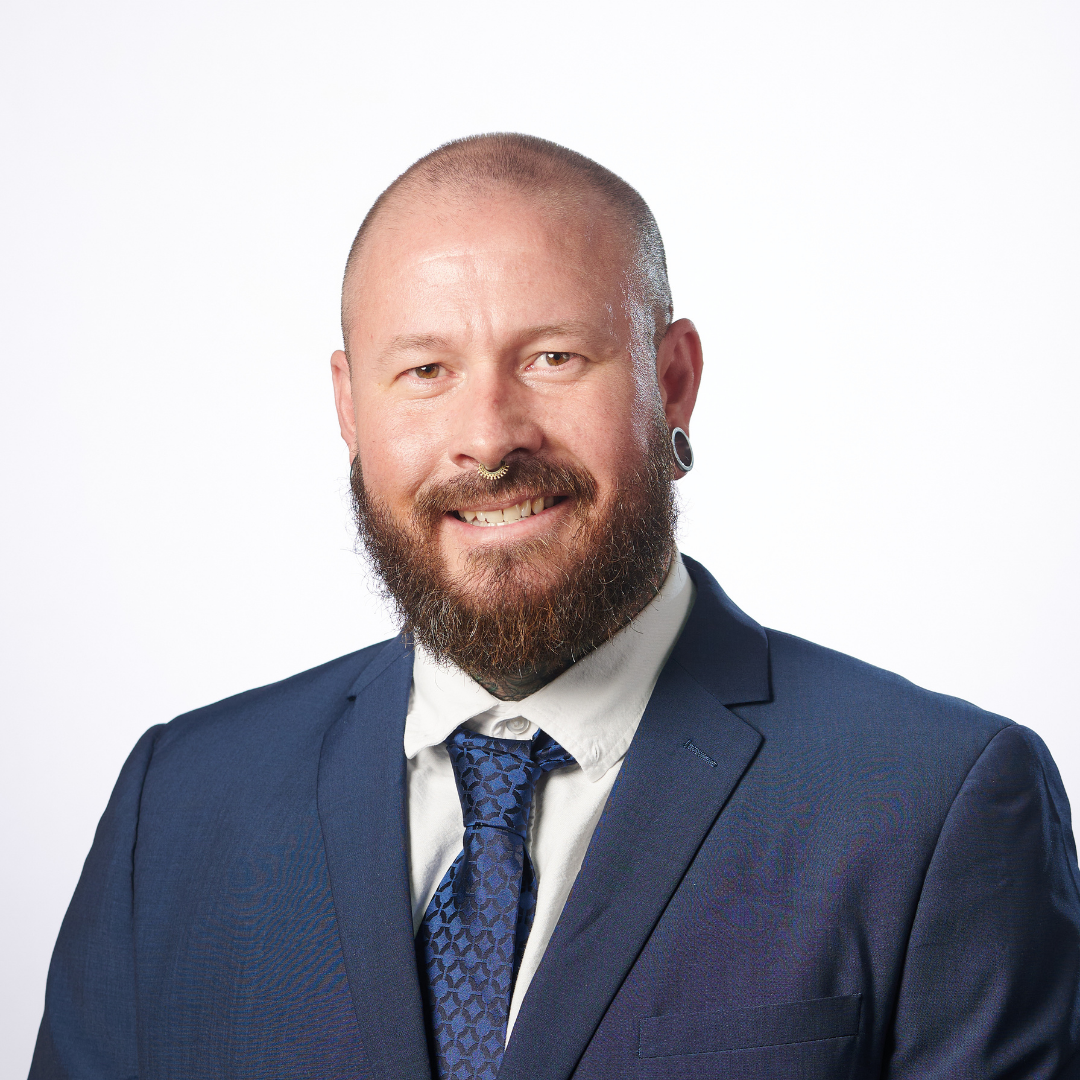
By Cr Heath Paton
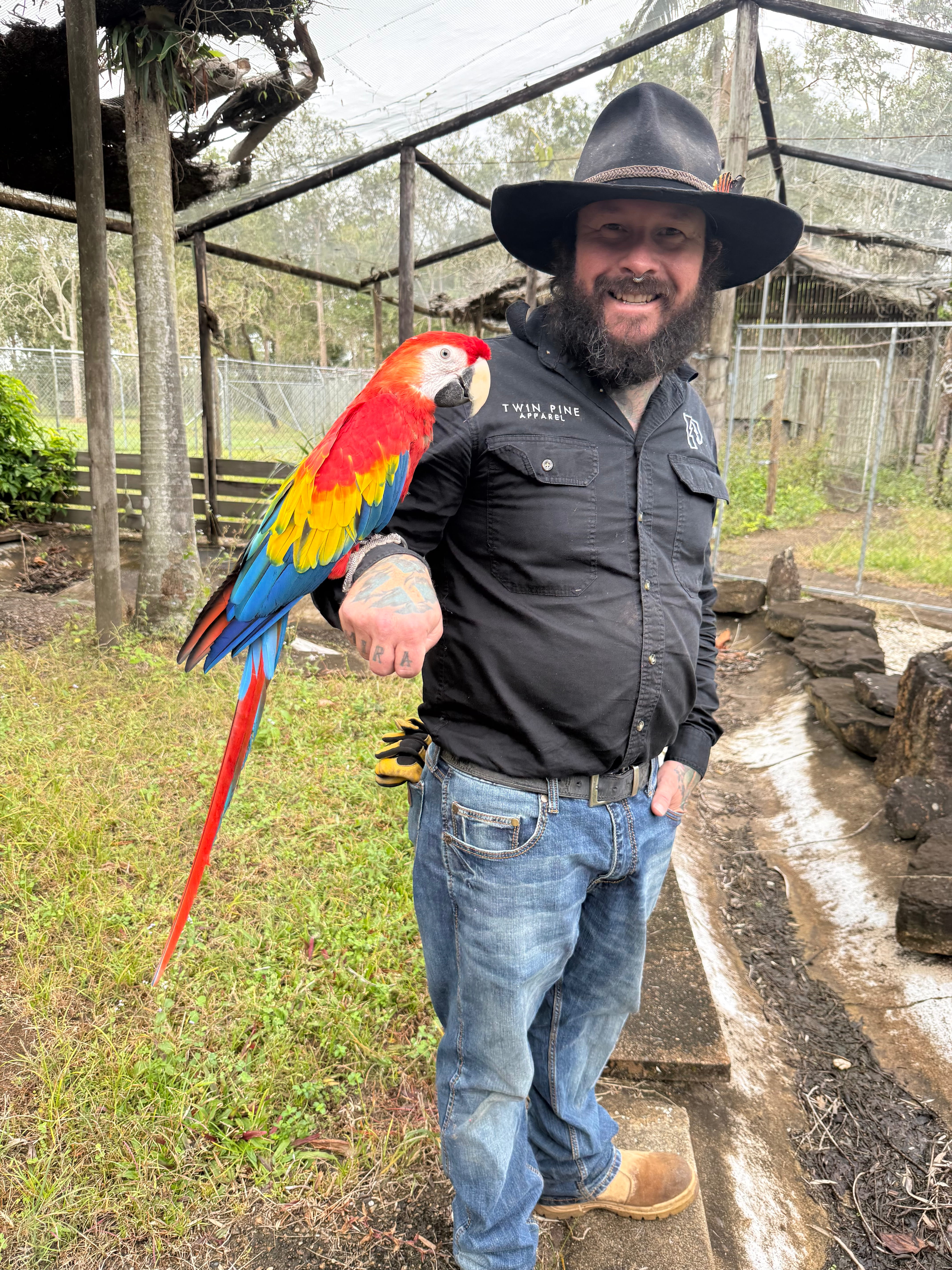
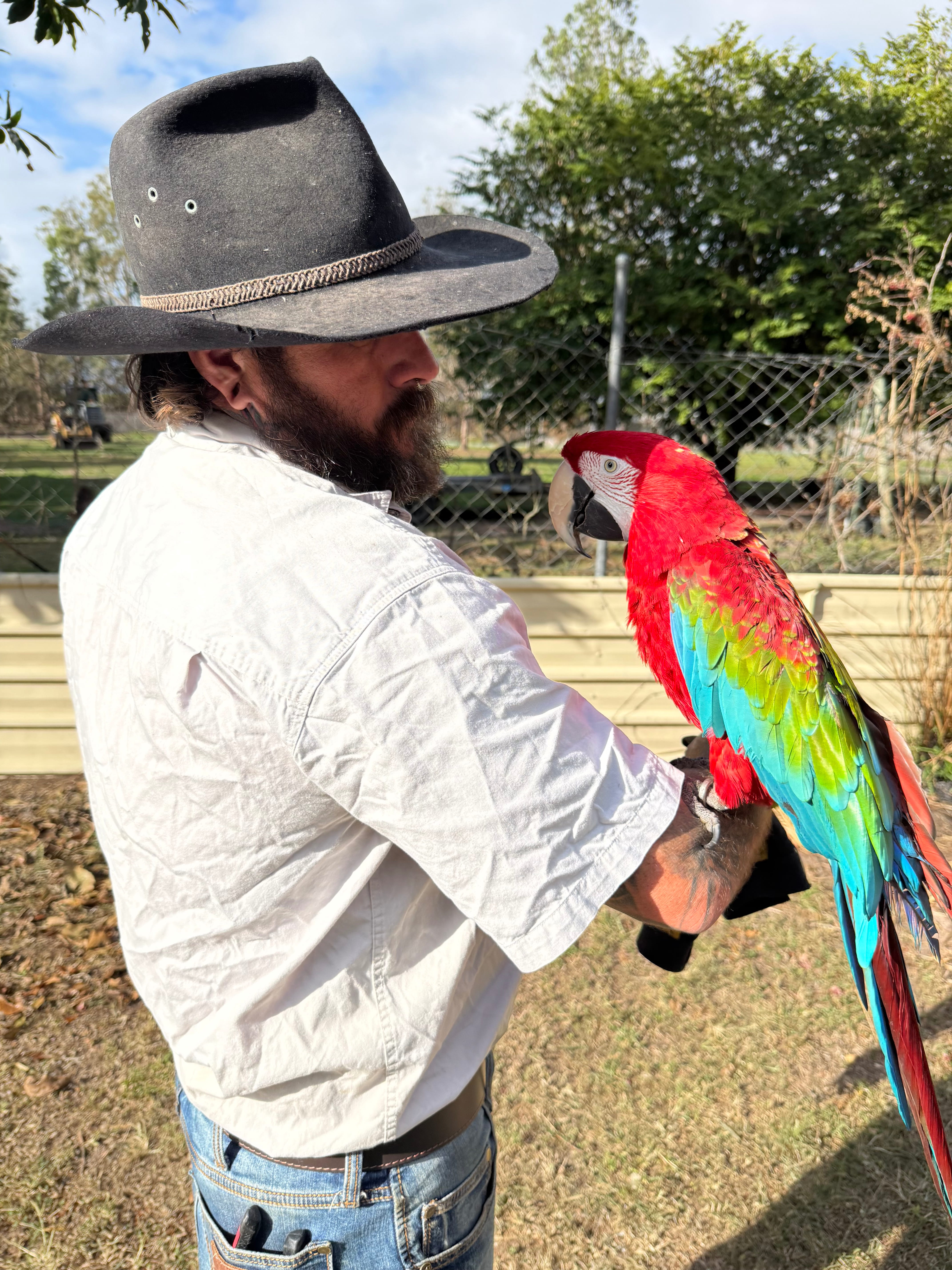
As someone who lives on acreage and keeps both parrots and poultry, the growing spread of H5 avian influenza across Australia is more than just another headline. Like many bird owners, I watch reports of the virus with a mix of concern and hope, knowing how much we value the health and wellbeing of our animals. While Australia's poultry industry remains free of the disease, the increasing number of detections in wild birds serves as a timely reminder that vigilance is essential.
Australian authorities are continuing to monitor the spread of H5 avian influenza, commonly known as bird flu, after 231 detections were confirmed in wild birds across the country (at the time of writing this).
The majority of cases have been recorded in South Australia, where 163 detections have been reported. Victoria has recorded 53 cases, followed by Western Australia with 10, New South Wales with four and Queensland with one. Importantly, there have been no detections of the virus in poultry or Australia's agricultural production systems.
Experts have confirmed evidence of local transmission among wild bird populations in South Australia and Victoria. A significant mass mortality event involving wild birds has also been reported in South Australia, reflecting patterns seen internationally as the H5 strain becomes established in wild bird populations.
Authorities say that while the virus is spreading among wildlife, Australia's poultry industry remains free from infection and strong biosecurity measures continue to protect commercial and backyard flocks.
As the disease becomes more widespread, national surveillance and reporting methods are changing. Rather than focusing on individual bird detections, reporting will increasingly concentrate on investigations, significant mortality events, affected species and disease trends over time. Officials say this approach will provide a more accurate picture of how the virus is spreading and evolving.
Members of the public are still being urged to report unusual wildlife illness or deaths. Reports are assessed according to risk and may trigger investigations and testing where necessary.
Health authorities have reassured Australians that the current risk to people remains low. Human infections with this strain of H5 bird flu are rare, no cases have been recorded in Australia and there is currently no evidence of human-to-human transmission.
Community members who encounter sick or dead birds are advised not to touch them. Instead, they should record details such as the location and species involved, if known, and report multiple sick or dead birds or other wildlife to the Emergency Animal Disease Hotline on 1800 675 888.
Further updates, fact sheets and biosecurity information are available through the national bird flu information website, birdflu.gov.au.
For bird owners, farmers and wildlife lovers alike, the spread of H5 bird flu is a reminder of the importance of biosecurity, early reporting and protecting the animals that play such an important role in our lives and communities.
.jpg)
Glenella Care residents have grown a thriving community garden with help from staff and a generous donation from Bunnings North Mackay. Photos supplied
A community garden at Respect’s Glenella Care Banksia Wing has gone from a simple pergola area to a thriving patch of greenery, thanks to the efforts of residents, staff and a generous donation from Bunnings North Mackay.
Over the past nine months, residents have worked to establish the garden after the pergola was completed late last year.
Residents put together a wish list of what they wanted to grow, with the team at Bunnings North Mackay responding by donating planter boxes, soil, tools, gloves, hats and a range of plants.
The donation included citrus trees, a passionfruit vine, gerberas, lavender, as well as fruit and vegetable seedlings including tomatoes, corn, peas and strawberries.
The project was led by the social care team, who worked alongside residents and Bunnings to bring the garden to life. During the planting day, residents got their hands in the soil, potting up plants and cuttings.
.jpg)
Resident Paul said the results were already making an impression.
“It’s bloody good, all the veggies and strawberries are fantastic. I hope they grow well.”
Joy said she was looking forward to seeing the garden continue to develop.
“I can’t wait to see how it grows, we have our first flowers on the lemon tree and they smell great.”
For Rose, the garden has added another special touch to her favourite outdoor space.
“it’s a great addition to our outdoor pergola area. I love it and can’t wait to see everything grow.”
The garden will also benefit the wider Glenella Care community, with produce grown on site to be sold to staff and families during regular market days and in the home.
All proceeds will go back into the garden fund to support future planting.
.jpg)
Glenella Care General Manager Debbie Vukasinovic said the contribution from Bunnings North Mackay had made a noticeable difference to the outdoor area.
“Bunnings North Mackay have really brought life to the outdoor area. A big thank you to the team for their contribution, our residents are very happy.
“We also look forward to the workshops that Bunnings plan to run with our residents over the coming months as part of our social care activity calendar.
“This type of collaboration is what makes aged care communities as special as they are.”
The project is another example of the community connections that can help bring local initiatives to life, with Bunnings North Mackay’s contribution giving residents the resources to create something they can continue to enjoy and care for together.
.jpg)
Postie Bike Safari riders hit the road from Mackay on Saturday 15th August, embarking on a 2000-kilometre journey through outback Queensland while raising funds for Childhood Cancer Support. Photo source: Postie Bike Safari
A group of 56 riders hit the road from Mackay last Saturday, kicking off a week-long journey through outback Queensland, with the annual Postie Bike Safari set to surpass $1 million in total funds raised for charity.
Now in its 14th year, the Postie Bike Safari will see riders travel more than 2000 kilometres on postie bikes, supported by 12 vehicles, while raising funds for Queensland charity Childhood Cancer Support.
The event began in 2013 when organiser Greg Becke and his workmates brought together friends for their first charity ride.
“What started with 13 bikes and a simple idea has since grown into a passionate annual ride involving dozens of riders and raising over $1,000,000 for charity,” Greg said.
“In the past five years alone, the Safari has raised $620,000 for Childhood Cancer Support.”
The riders departed from Consolidated Plastics in Paget on Saturday 15th August, before travelling through small towns and rural communities across outback North Queensland.

For 50 years, Childhood Cancer Support has provided free accommodation, transport and support services to regional families travelling for childhood cancer treatment.
Mr Becke said meeting families supported by the charity had strengthened the riders’ commitment to their annual journey.
“I’m so proud of what a small group of passionate bike riders has managed to accomplish over the past 14 years,” said Greg.
“We pay for our own fuel, food and accommodation, and give up a week of work, but the generosity we receive along the way makes it all worthwhile. In the past few years, we have seen so many brave children, spoken to their mums and dads, and learned the hardship they face so far from home.
“We do it all for these families and when we see the smiles on the kids’ faces and talk to the mums and dads, it makes all the dusty bumpy roads and breakdowns worth it.”
The Safari will conclude in Mackay on Saturday 22nd August, with riders, families and supporters gathering at the Farview Tavern in Farleigh for an auction and celebration dinner.
The event has become a major annual fundraiser, with riders covering their own costs so that funds raised can go directly towards supporting families affected by childhood cancer.
With the cumulative fundraising total expected to pass the $1 million milestone this year, Mr Becke said the achievement reflected the generosity of communities along the route and the commitment of everyone involved.
To learn more about the initiative or donate to support the cause, visit fundraise.ccs.org.au/event/postie-bike-safari.
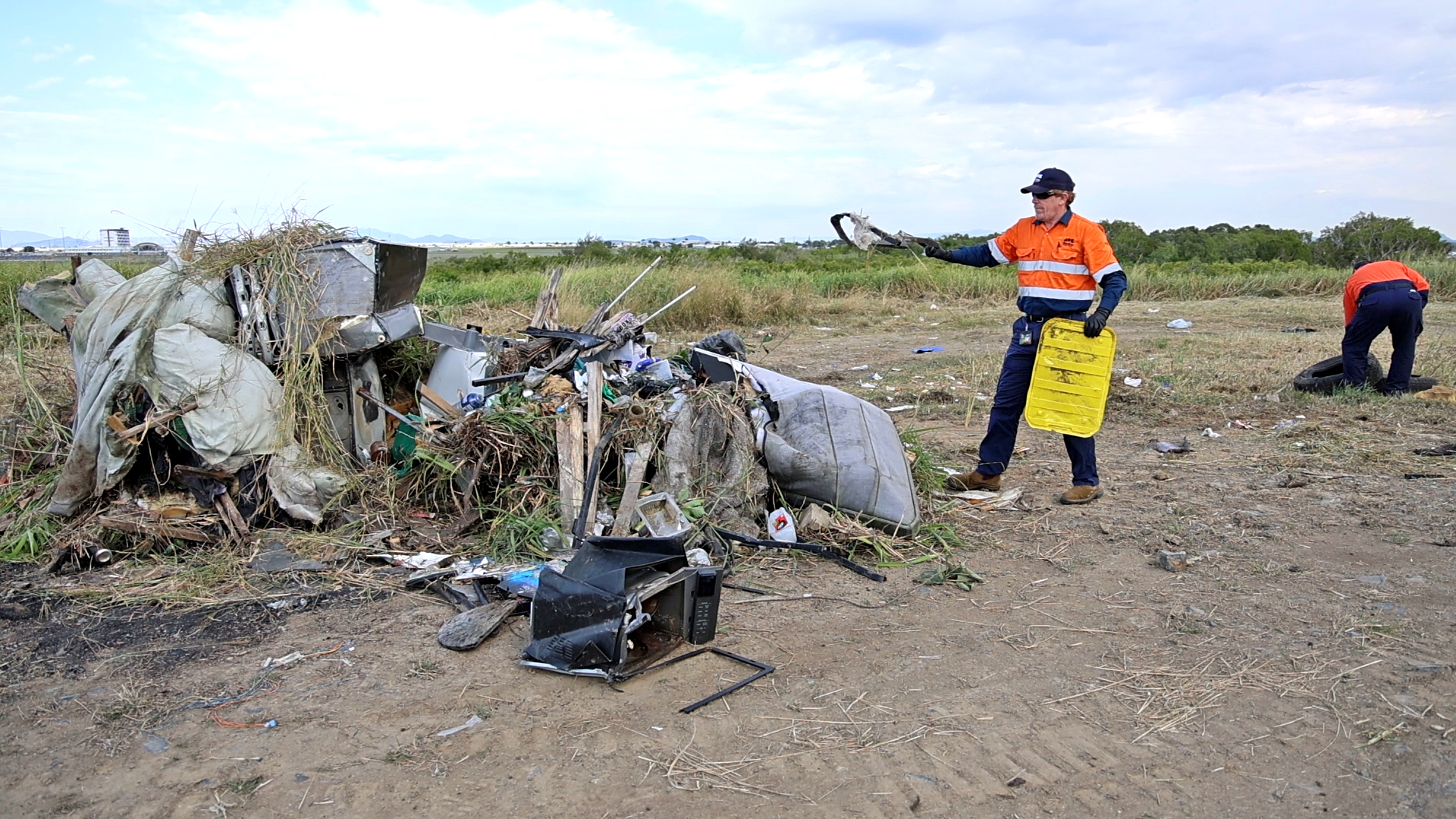
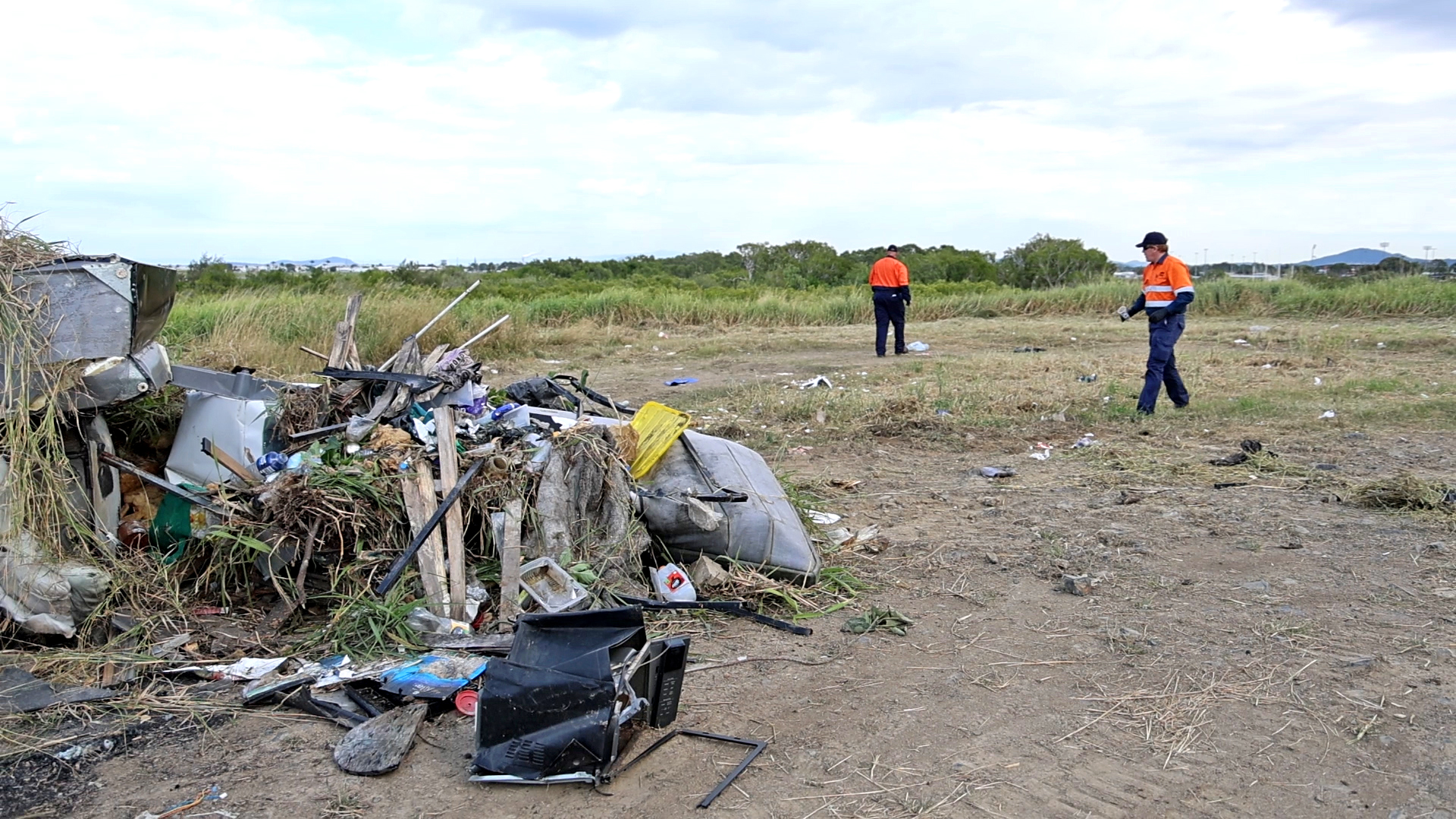
Mackay Regional Council will undertake a major clean-up and install surveillance equipment at Illawong Drive as part of a crackdown on illegal dumping across the region. Photo supplied
Mackay Regional Council is stepping up its fight against illegal dumping following a concerning increase in reports of waste being abandoned across the region.
A major clean-up and surveillance operation will be carried out at Illawong Drive in the coming weeks, with heavy machinery to be used to remove large volumes of illegally dumped waste.
The operation comes after Council responded to more than 560 reports of illegal dumping over the past 12 months, resulting in more than 545 kilolitres of waste being removed from the natural environment.
Mackay Mayor Williamson said the amount of waste being dumped across the region was alarming.
"To put that figure into perspective, 545 kilolitres is the equivalent of about 2270 household wheelie bins worth of waste being dumped across our region," Mayor Williamson said.
"Illegal dumping damages our environment, impacts the amenity of our communities and places an unnecessary financial burden on ratepayers.”
Individuals caught illegally dumping waste can face on-the-spot fines of up to $3454, while corporations can be fined up to $12,952.
Council will also install a range of surveillance measures at Illawong Drive and other known dumping hotspots, including night vision cameras, in an effort to identify and deter offenders.
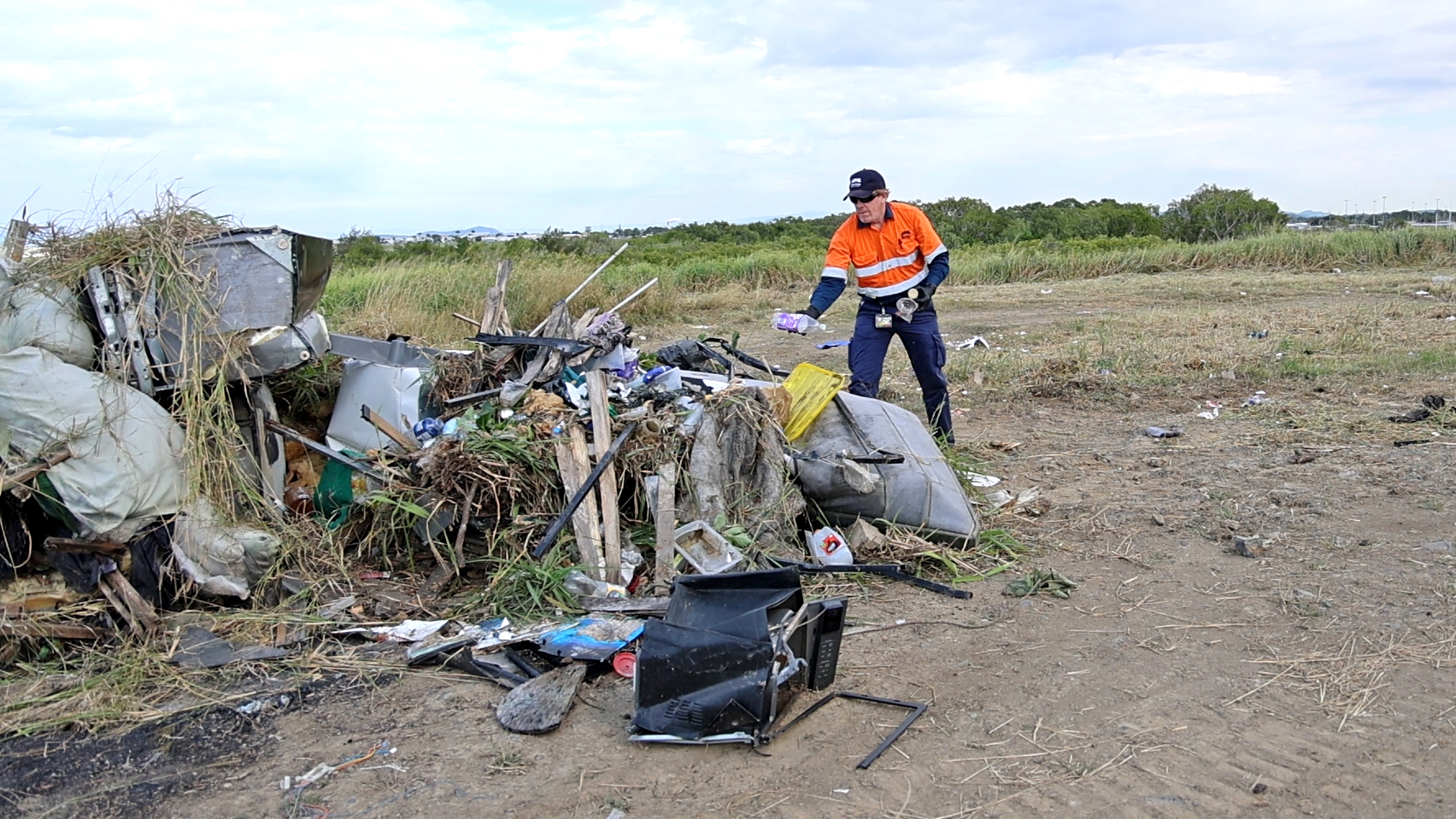
"If people think they can dump rubbish under the cover of darkness and get away with it, they should think again," Mayor Williamson said.
"We will be installing surveillance equipment, including night vision cameras, and we will continue working with authorities to identify and prosecute offenders wherever possible."
Residents are also being reminded that Council provides alternatives for those needing to dispose of eligible waste, including waste vouchers which allow households to dispose of certain waste free of charge at Council waste facilities.
Council allocates approximately $750,000 each year towards providing the vouchers.
Mayor Williamson said residents had no excuse to dump waste illegally.
"Council provides a range of legal disposal options, including waste vouchers, to help residents dispose of waste responsibly," he said.
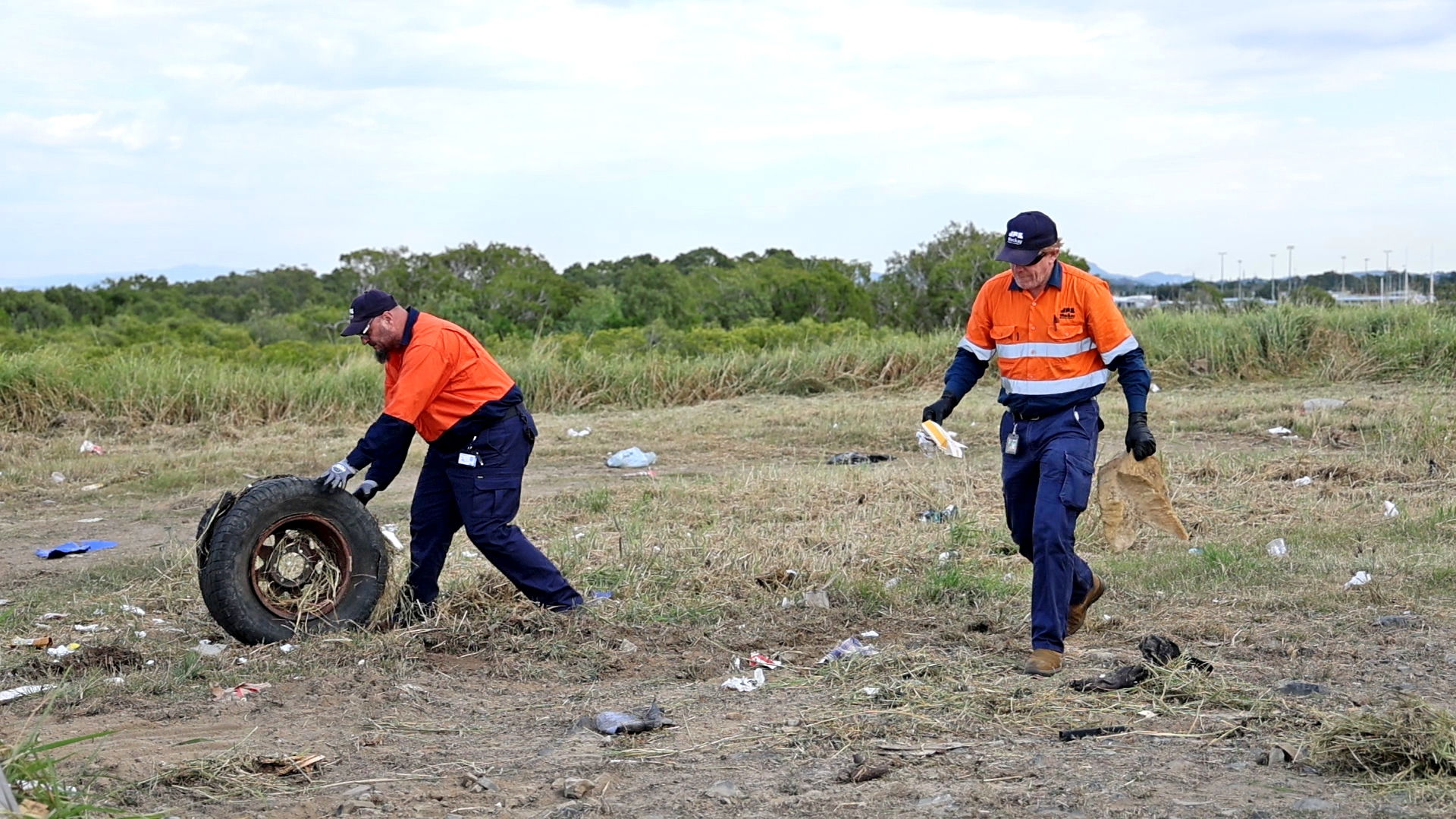
"Those who choose to illegally dump rubbish are not only harming the environment, they're shifting the cost of clean-up onto the broader community.
"Every item that is dumped illegally has to be investigated, collected and disposed of, and the cost of that work is ultimately borne by taxpayers and ratepayers rather than the people responsible."
Residents are encouraged to report suspected illegal dumping or abandoned waste to help Council identify problem areas and pursue offenders.
"Council is committed to investigating illegal dumping, but we need the community's assistance," he said.
"If you witness illegal dumping or come across dumped waste, please report it through Snap Send Solve or contact council on 1300 MACKAY."
Publishers Indemnity. Any individual or entity that places advertising, supplies copy material, or submits editorial content to Core Life Publishing agrees and undertakes to ensure that all such material:- Does not infringe upon any copyright, trademark, or other intellectual property rights;- Is free from any content that could be considered defamatory, libelous, or slanderous;- Does not infringe upon any rights related to privacy or breach of confidence;- Contains no obscene, indecent, or otherwise unlawful material;- Complies fully with the Trade Practices Act and all other applicable laws, regulations, or statutes.Furthermore, by submitting or placing such material, these individuals or entities agree to indemnify and hold harmless the publisher, Core Publishing and Events Pty Ltd, and/or its agents from and against any and all investigations, claims, demands, liabilities, damages, costs, or judgments arising out of or in connection with the material provided. All material is believed to be accurate at the time of printing and remains the copyright of Core Publishing and Events Pty Ltd.
© 2026 Mackay and Whitsunday Life Pty Ltd.
