
Independently Owned, Locally Grown, Community Loved

OPINION PIECE from the office of Federal Member for Dawson Andrew Willcox There is no question that immigration into Australia is out of control. The government’s numbers are too high, and standards are too low. A sustainable migration program must consider our capacity to provide housing, healthcare, infrastructure and the essential services everyone relies on, and Australians must come first. But Labor’s decision to target Working Holiday Makers Visa holders is not the answer. These people filling vital gaps in our workforce are not the cause of Australia’s housing crisis. In many cases, they are living in accommodation provided by the very businesses that employ them. The National Farmers’ Federation has made the point that Working Holiday Makers generally stay in hostels, caravan parks or purpose-built on-farm accommodation. Resorts usually have on-site staff quarters. They are not the source of Australia’s housing shortage. So why is Labor making it harder for them to come here, when these workers fill genuine jobs that regional Australia holds? Working Holiday Makers fill approximately one in seven farm jobs nationally and are particularly important during peak agricultural periods, which for Dawson, it is right now! Farmers rely on these workers to plant, pick, pack and harvest the produce that ends up on Australian supermarket shelves. Having run one of Australia’s largest tomato farms, at times Working Holiday Makers made up more than 50 per cent of my workforce. Without them, much of our crop simply would not have been picked in time and rotted in the paddock. Some may say, why not employ the Australians who don’t have a job and are on “the dole”? Can I say, this does not work. Most farmers will employ Aussies over travelling backpackers, but many either don’t want to do the work or don’t turn up after the first day. Who picks the fruit or veggies then? Farmers are already warning that visa delays are leaving them without workers. The NFF says approvals that once took days are now facing processing times of up to three months, and this time frame can be the difference between harvesting a crop or losing it. That should concern every Australian already feeling the pressure at the supermarket checkout. The same problem is playing out in tourism. Across Dawson, Working Holiday Makers are an important part of the workforce supporting tourism and hospitality, particularly in the Whitsundays. They help fill shifts, work in hotels and restaurants, support tour operators and keep businesses running through their busiest periods. They also contribute to the local economy. They spend money on food, fuel, attractions and tours, supporting the small businesses that depend on a strong visitor economy. That is why tourism and business leaders across North Queensland are raising the alarm. They understand what happens when a regional business cannot get enough staff: opening hours are reduced, and services are cut, creating a downward spiral. We do need to reduce migration to sustainable levels. We need stronger integrity measures, and we need to crack down on rorts. But responsible migration policy means understanding which parts of the system are creating pressure and which parts are helping Australia function. Working Holiday Makers are not the problem. They are part of the workforce solution for regional. Australia. People have had a gutful of watching their standard of living go backwards. Groceries, fuel, housing and everyday expenses are already putting enormous pressure on families. The last thing Australians need is another reckless policy that makes it harder to produce food, harder to run regional businesses and harder for tourism operators to find the workers they need.
Read the full storySomeone sold a house in Sydney last week for $9 million less than they bought it for four or five years ago. The sellers had bought the property in Sydney’s eastern suburbs for $29 million and sold it for $20 million in a sale forced by their bank. I imagine the sellers are a little disappointed by the government’s decisions on negative gearing and capital gains tax and feeling pretty hurt by the increased interest rates. Australia’s interest rates are on the rise and are now sitting at levels not seen since 2011. Increased cost of living is hurting people around the country and interest rates are playing into that. But the impact of interest rates is not felt evenly around the country. The far-higher property prices mean people in the major cities suffer much more than regional areas with the rates increase. That is certainly not to say people in Mackay are unaffected by the cost of living; it’s just that the impact of interest rates increase on a $400,000 mortgage is much less than the impact on a $1m mortgage. There are other Mackay-specific factors that are in play when discussing the current housing market. The big factor is the role of coal in our economy. Most of the coal extracted and exported from our region is coking coal, which is used to make steel. The price of coking coal is around $280 a tonne, which is about 50 per cent up. Good activity in the coal market translates to good news for the Mackay economy, as it is an economic engine that other cities and regions just don’t have. Good activity in Bowen Basin flows throughout the Mackay economy; Paget workshops, transport, suppliers and related businesses all benefit. But so do other, non-mining-related businesses as they benefit from the general confidence and spending that goes on. The strong mining activity also means mines need to keep their staff levels up and that means more people moving to Mackay. Of course, Mackay is much more than a coal mining town but if the coal sector is going well those other areas definitely benefit. It is a confidence boost for Mackay people looking to get into the housing market and those wanting to upgrade or downsize. It also means continuing strong demand from people wanting to rent a property and it will be interesting to see what sort of activity that creates from investors. Investors have walked away from the big-city markets because they can no longer use negative gearing on established properties that do not have a sufficient yield to be positively geared. Negative gearing has never been a big thing in Mackay because our prices are lower and rental returns continue to be strong so many investors have a positively geared property. Around the country everyone is nervous about the state of play and the probability of more interest rate rises. But strong coal prices and an economy that is performing well mean Mackay might just be presenting an opportunity for buyers and sellers that doesn’t exist in other parts. I remember when national confidence was flying high and Mackay prices were going up significantly that many buyers were saying “I wish we had bought a while ago when the market wasn’t so hot”. I’m not armed with a crystal ball so I’m not here to tell you what is going to happen but I suspect there is a very good buying window right now for those looking for an opportunity.
Read the full story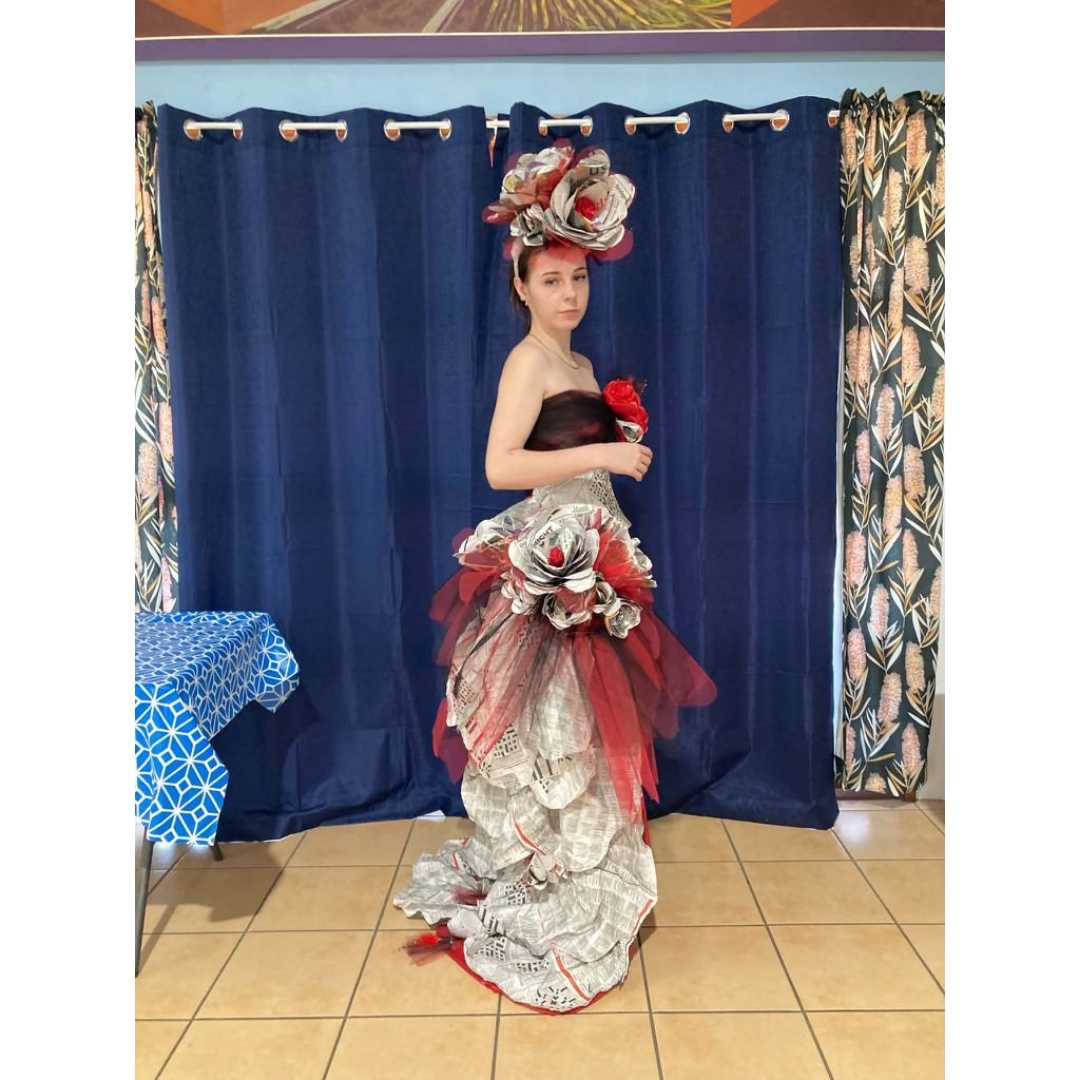
A local Mackay and Sarina based model has created a dress out of newspapers, including Mackay Life, for her upcoming pageant, representing her region and hometown on the runway as she vies for Miss Diamond International in Brisbane. Zoe Place will be competing this weekend in the three-day event, beginning this Friday 2nd October and ending on Sunday 4th October. The young model spent around a month creating her eco-fashion outfit, using old newspapers as the main material and transforming them into a bodice, skirt and flowers. Red elements were also incorporated into the design to give the dress a bold and glamorous pageant feel. Zoe said, “The entire concept was really about taking something that would normally be thrown away and turning it into something beautiful and meaningful.” Her eco-fashion creation will form part of a busy weekend in Brisbane, with the Miss Diamond International event including photo shoots, interviews, an eco-fashion show and the final pageant. Zoe has been preparing for the event by practising her strut and walking, preparing for interviews and getting comfortable in the different outfits she will wear throughout the weekend. Alongside her love of modelling, pageantry has also provided Zoe with a platform to raise awareness about causes close to her heart, including mental health, while fundraising for Beyond Blue. “Pageantry has given me more of a platform to combine my love for modelling with something that is really important to me.” “When I first started, I was more nervous about putting myself out there and worried about what others would think about me – but I’ve changed a lot through my journey in pageantry.” “Pageantry has also taught me that it’s not about how you look on stage. It’s about the person you are when you step off it.” “Every woman has their own unique journey and that journey is something we should all be really proud of.” “To me, it represents confidence, empowerment, kindness, and using your voice to make a difference.” Zoe said she was looking forward to meeting the other contestants, making new connections and creating memories. “I’m definitely looking forward to meeting all the new contestants and making new connections and creating memories that I will carry with me for a lifetime.” While Zoe hopes to eventually move to the city, her sights are set even further afield, with a dream of one day walking in New York Fashion Week. Mackay and Sarina local Zoe Place has created an eco-fashion dress from recycled newspapers, including Mackay Life, ahead of her Miss Diamond International pageant in Brisbane. Photos supplied
Read the full story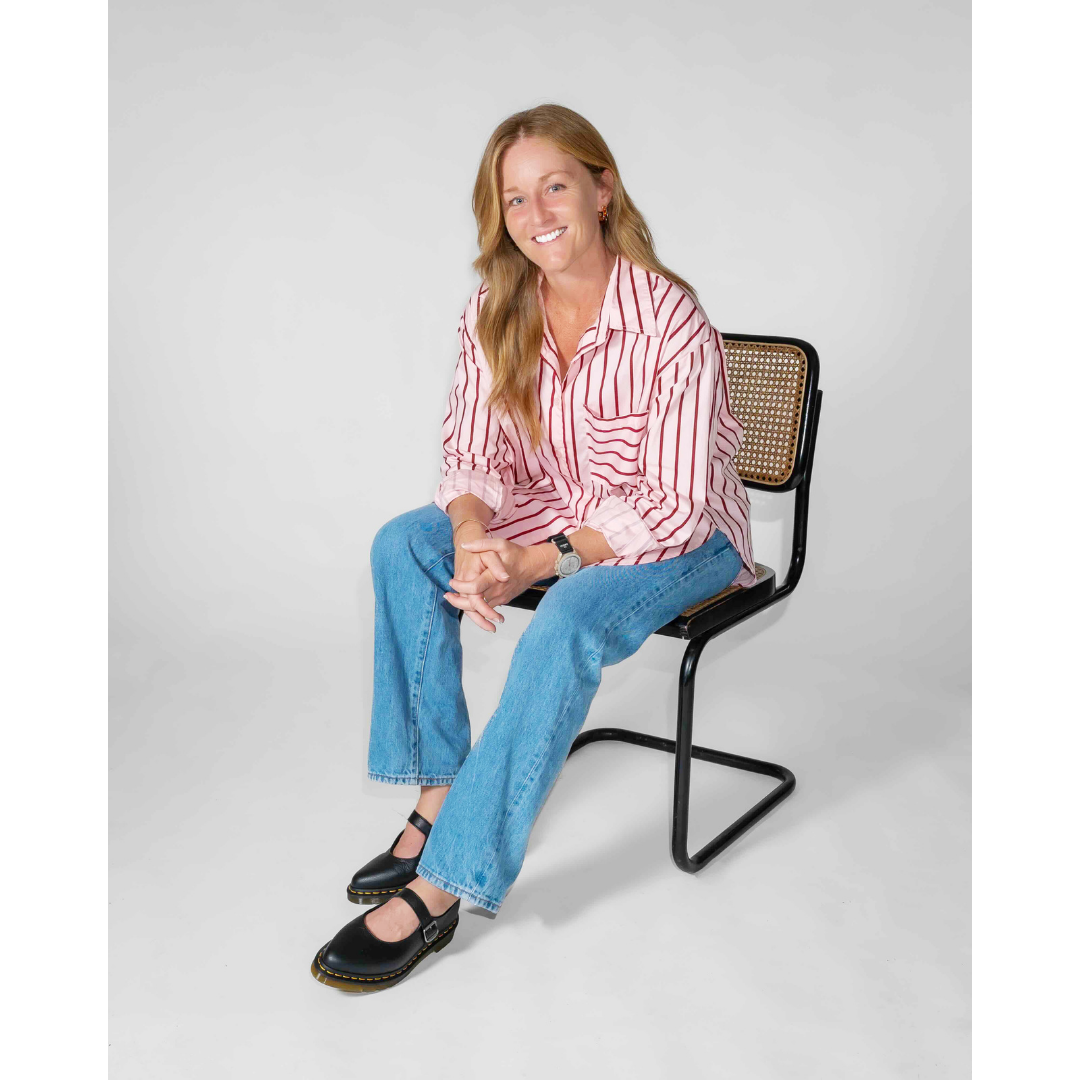
Trends, reels and the endless cycle of always wanting more has quietly bombarded the minds of countless social media users of all ages, but one former Mackay local has made it her mission to help others understand the effects of social media and find practical ways to break free from online addiction. Alexis Zahner is in Mackay over the next week to teach upcoming generations about social media and the effects it can have on the mind, particularly on identity, self-discovery, as well as the marketing strategies that get viewers hooked and influence their decisions. It is something Alexis knows first-hand can be a useful tool, but also a great disruption to authenticity and the world as we see and experience it. Alexis will hold a free meet and greet and book launch today, Friday 2nd October, at 5.30pm at the Mackay Surf Lifesaving Club, where she will give a talk and answer questions relating to her debut book, Real: Reconnecting to Yourself in a World of Likes and Lies. A former Mackay girl, Alexis spent the past 15 years working across business psychology, marketing and media, with her interest in social media influence beginning during her university studies at James Cook University in Townsville. Her own experience as a social media user, travel blogger and influencer eventually led her to question how much of her identity, decisions and values were being shaped by what she saw online. “The tipping point came for me about 3 years ago when I had this feeling that I couldn't separate influence from my own personal decision making,” she said. “I couldn't separate my own likes, dislikes, values, relationships from what I was being exposed to and being influenced by online.” “I found that I needed to take some time away from social media to recalibrate what was important to me and sort of reconnect and come back to myself.” Alexis said she understood the feeling of questioning who you are outside of social media. “I know what it feels like to live a life under the influence of social media and have that existential crisis of thinking to yourself, who am I? What do I like? What's the kind of life I want to live? and struggling to separate myself from influence.” Alexis is particularly passionate about reaching teenagers, who she says are in an important stage of identity development, and will share this message with Mackay high school students during her upcoming school talks. “Teenagers are really easily influenced by social media. So it's a really important age where we start educating them – not just on the mental health repercussions of things like social media and how it shortens their attention span, but how it actually influences who they become.” “If you're asking yourself these questions, it's not your fault. Social media is actually geared to create this impact on you.” Alexis encourages people of all ages to “start expanding beyond what you see on the platform.” “Dare to indulge in the things that you've always been curious about or things you used to love,” she said. “Don't be afraid to put the phone down to let yourself be curious and have fun.” What: Alexis Zahner's 'Real' Book launch When: 5.30pm Friday 2nd October 2026 Where: Mackay Surf Lifesaving Club Former Mackay local and author Alexis Zahner is returning home to share her experiences with social media and her debut book, Real. Photo supplied
Read the full story

It could be said that Leen and Bill Wallace from Coral Art on Dent Island fitted easily into the category of alternate life-stylers; individuals who had chosen a lifestyle that was perceived to be alternative and/or individuals who had chosen to drop out of society and live on islands or the coastal fringes of Queensland.
From 1955 – 1961, they were caretakers of the lease owned by Jack O’Hara who, after his death, left it to his family. The house in which Jack and his wife, Margaret, had lived on the island after their retirement from their mainland farm was built in 1939 from timber from the first Hewitt Building in Proserpine’s Main Street. (Mrs O’Hara then rebuilt a new single storey building on that spot. This is where Home Brewitt is now located). Sons, Roy and Ray, took over the house on Dent after their parents died. Over the years, this house was used by various caretakers.
In the early 1950s, Ray O’Hara and his young wife, Margaret, befriended Leen and Bill Wallace who, at the time, were living at Hayman Island and making coral gardens to sell around the islands. Bill, an ex-US Navy flight engineer, was the collector and the coral, shells and other natural products that he brought back from his diving were decorated by the artistic Leen, a former Sydney showgirl. They had met when Leen was visiting her sister in the Whitsundays and Bill skippered their boat.
After their marriage in Cairns in 1950, they were attracted to the area by its sheltered, white beaches surrounded by crystal clear waters stocked with fish and corals. Ray offered them the use of the house on Dent with the agreement that they would maintain its order. The Wallaces gladly accepted and shortly after, Ray took up a job in Papua New Guinea.
In 1961, the Wallaces applied for and obtained a lease of 1.01 hectares over the area around the house and fronting onto the beach. They purchased the house from the O’Haras and began setting up their Coral Art establishment carving out a niche market for themselves selling painted coral arrangements. Leen and Bill shipped their painted coral around the world and this enterprise was used to promote the Great Barrier Reef through the Queensland Tourist Bureau. Eventually, they opened up their own Polynesian-style art studio.
Leen and Bill were the makers of the Coral Crown that was presented each year to the Coral Queen from the Great Barrier Reef Coral Festival which was first held in 1958. Today, this crown is on display at the Proserpine Historical Museum after having been donated by Thora Nicolson, formerly of Lindeman Island, one of the Coral Queens.
As the area opened up to cruising yachtsman in the 1960s, passing sailors, such as John Gunn, documented them in his 1966 book “Barrier Reef by Trimaran”.
“A married couple live in an idyllic setting on a cleared area of land behind the beach on this northern tip. With tremendous enterprise they have pioneered a business for themselves. The husband dives for coral pieces, and the wife applies delicate shades of colour to them, to make them look like the living corals … One may not be enthralled by this kind of tourist art, but it is popular. And the life that the two have carved out for themselves on their own island is one that many of us would love to have …”
Leen Wallace passed away at her tropical paradise home on Dent Island October 20 1988 after living a life which she referred to as a lifelong honeymoon.
Story courtesy Proserpine Historical Museum and information also sourced from “Island Artists” by Ewen McPhee (“Qld Museum and Community Collections” newsletter May 13 2020) and Ray Blackwood’s “The Whitsundays: An Historical History”. Photos sourced from National Archives.
POSTSCRIPT: If any of our readers have any knowledge of what happened to Bill after Leen’s death, the PHMS would be grateful to receive this information.
Hi Everyone,
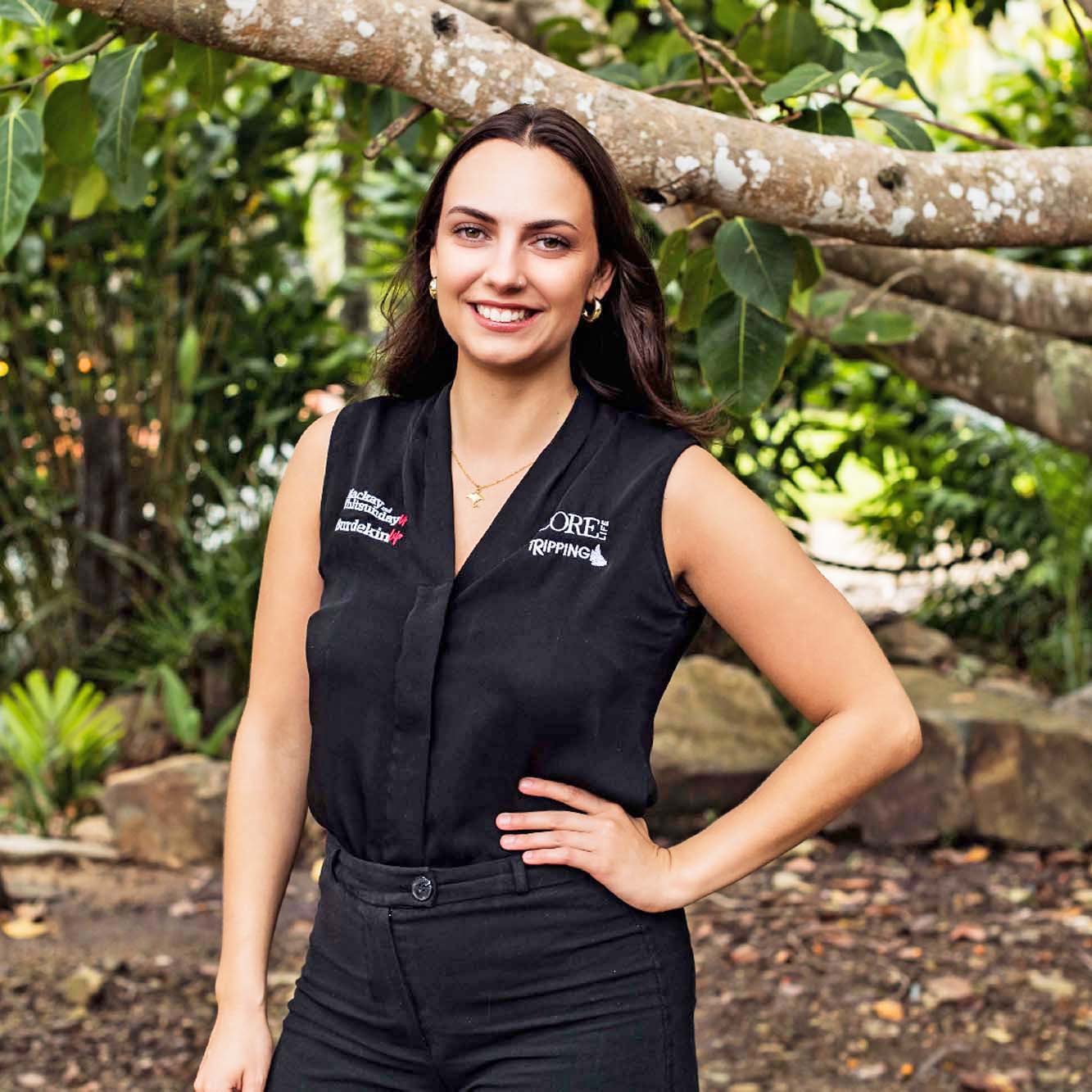
I had a fantastic weekend diving, which sparked my curiosity about fish identification, so I started looking for resources to learn more!
I also thought this would also be a great opportunity to share with readers, so you can better recognise the incredible fish species right here in our backyard. Start by exploring the Whitsunday Conservation Council’s excellent guide on the Great Barrier Reef’s protected species, then read on for tips on how you can begin identifying them yourself.
Happy reading!
Ruth

The Great Barrier Reef is home to a stunning array of animals, from microscopic plankton to whales weighing more than 100 tonnes. If you are counting, you will find 1625 species of fish, more than a thousand species of hard and soft corals, 3000 plus species of molluscs (shells) and a mere 630 species of echinoderm (starfish, sea urchins). And the list goes on.
These are well known facts. But what you may not know is that the Reef is home to a very large number of Protected Species. These species are of "conservation concern" due to threats such as climate change impacts, overharvesting and fishing, pollution, and habitat loss. The Great Barrier Reef Marine Park Authority has designated these species as "no-take" species, meaning they cannot be taken from the waters.
For a protected species, the Reef is not only their home, it is their refuge.
Now, you must be wondering, what animals are listed as Protected Species? Here is the surprisingly, long list.
Corals: all corals are protected (some permitted exceptions)
Molluscs (Shells): helmet shells, triton shells, giant clam
Fish: Seahorses, pipefish, sea dragons, potato cod, Queensland grouper, cods and groupers (Epinephelus) >100cm, barramundi cod, Māori wrasse, freshwater sawfish, whale shark, grey nurse shark, great white shark, manta ray
Reptiles: sea snakes, crocodiles, flatback turtle, green turtle, hawksbill turtle, leatherback turtle, loggerhead turtle, olive ridley turtle
Birds: all birds are protected species
Seals: Southern fur seal
Dugong: the one and only
Cetaceans: whales and dolphins
We all have a responsibility to ensure the well-being of the Protected Species, particularly when visiting the Reef. The simple and most effective rule is to “take only pictures and leave only bubbles”.

The Great Barrier Reef is home to more than 1,500 species of fish, making it one of the most diverse marine ecosystems on the planet. While it may seem overwhelming, there are a few simple ways to start identifying the fish you spot while snorkelling or diving.
Look at size and shape. Small, slender fish darting in and out of corals are often damselfish or gobies, while larger, bulky species like groupers and cod move more slowly and are easier to approach. Long, beak-like mouths suggest species such as butterflyfish, while the parrotfish’s strong, beak-shaped jaw is used to crunch coral.
Notice colour and patterns. Bright stripes and spots often belong to angelfish, butterflyfish or wrasse. The famous clownfish (or “Nemo”) is instantly recognisable with its orange body and white stripes, usually found among the waving tentacles of an anemone. Blue tang surgeonfish, made famous as “Dory,” are another colourful favourite.
Observe behaviour and habitat. Some species have distinctive habits that make them easy to identify. Damselfish often hover near coral heads, while schools of surgeonfish graze in open areas. Wrasse are known for their thick lips and can often be seen following divers curiously.
For many visitors, spotting members of the reef’s “Great Eight," clownfish, turtles, manta rays, Maori wrasse, sharks, giant clams, potato cod and whales – is the ultimate goal. With a little practice, you’ll soon learn to recognise the reef’s most fascinating fish and their unique characteristics.
You can also head to the queensland goverment website for a full list of fish species: www.qld.gov.au/recreation/activities/boating-fishing/rec-fishing/fish-species-guide/fish-species-id

Creative Connections Whitsundays is proud to celebrate member Brigitte Peel, whose artwork Unity Comes from the Moon & the Sea captivated audiences at the recent Great Barrier Reef Festival Art Exhibition. The piece won both the Bendigo Community Bank People’s Choice Award and the Reef Theme Award, recognition Brigitte says is deeply meaningful.
"I felt privileged that the community voted for my artwork," Brigitte shared. "It was an honour that the judge also awarded it the theme award. Being acknowledged and recognised for the work you’ve produced really helps to build confidence and create momentum as an artist."
The awards have already sparked new opportunities, including more interest in her classes, commissions and collaborations.
A lifelong creative, Brigitte studied art at school and honed her eye for composition through underwater photography with Cruise Whitsundays. After years of balancing family life with collaborative workshops and commissions, she launched Sunbird Studios & Co in 2023. She now runs regular creative sessions for adults and children, working across mediums from charcoal and pastel to acrylic and watercolour.
Beyond painting, Brigitte has contributed to the Great Barrier Reef Festival’s Immerse installation, worked in stop-motion animation and screen printing, and created live event paintings and portraits. She is currently illustrating children’s books and has designed oracle tea cards.
Despite the challenges of single motherhood and running a studio, Brigitte continues to achieve success, including as a finalist in the Whitsunday Arts Festival and Doyles Art Award. Her recent recognition reflects her passion, perseverance and contribution to the Whitsundays’ creative community.
Brigitte Peel accepting peoples choice award. Photo supplied.
Brigitte Peel and Margie Murphy opening night. Photo supplied.

Daisy is an 18-month-old Kelpie-cross with a gentle soul and a heart full of hope. Life hasn’t been easy for her, and she can be shy when meeting new people, but with patience and kindness, Daisy blossoms into a loving and loyal companion.
She is already desexed and vaccinated, and at a medium size, she’s a great fit for most homes—playful enough for outdoor adventures but easy to manage day to day. Daisy is particularly sensitive to loud noises and busy environments, so she’s looking for a calm, quiet home where she can feel safe and supported.
Despite her timid nature, Daisy is affectionate and eager to bond once she feels secure. She would thrive in a peaceful, loving household with owners who can give her the time and space to come out of her shell and build confidence.
Daisy is currently in care and ready to find her forever home. If you think you can offer her the safety and love she deserves, please get in touch.
Every dog deserves a second chance. Help us give Daisy hers—please share her story and help her find the family she’s been waiting for.
Message Bowen Collinsville Pet Rescue on Facebook with your name and contact number to learn more or arrange a meet-and-greet.

R U OK? Day was marked across the Whitsundays on Thursday with two community events encouraging meaningful conversations and mental health awareness.
In Cannonvale, the Whitsunday Neighbourhood Centre and Whitsunday Suicide Prevention Network (WSPN) hosted a morning tea at 9am at Cannonvale Beach, followed by a community walk to Shingley Beach — creating space for connection between friends, families and even strangers.
Meanwhile, the Bowen Community Centre brought locals together with its own R U OK? Day event, offering support, connection and a strong sense of community.
R U OK? Day is a day dedicated to asking your close friends, family, and even strangers “Are you okay?”, but it’s a conversation that should be asked more regularly.
Whitsunday Suicide Prevention Network (WSPN) President Matt Stokes said he loves the R U OK? Campaign and it’s a reminder that everybody can help when it comes to mental health.
“t's a reminder that checking on everyone is everyone's job," he expressed.
“It's not just for a mental health capacity. It's a friend to friend, family to family, and just those around you. Look for little, subtle changes in their behaviours and check, are you okay?
“Ask the question and then listen and if they need help, get them some help. There's plenty of it out there. It's just connecting the dots.”
Member for Whitsunday Amanda Camm MP said the simple words can make a huge difference in someone’s life.
“It is the most simplest of interventions that can change the course of someone's life for the better,” she said.
“I think at the heart of it, everyone wants to know that there is someone that cares, and R U OK? is an opportunity for us all to express care.
“Whether it's a stranger, a friend, one of our own children, checking in is so important and it's great we highlight this on one particular day, but we should be doing it every day wherever we can.”
Have you asked R U OK? today? Member for Whitsunday Amanda Camm is joined by members of Whitsunday Suicide Prevention Network and Whitsunday Neighbourhood Centre. Photo credit: Daniel Heggie

Hi Everyone,
Mental health is something that’s always been close to my heart, ever since I watched my best mate from school go through depression after a traumatic divorce.
I remember being on the phone with him, trying so hard to help. I was throwing out suggestions — fresh air, long walks, joining a club, thinking positive. I thought depression needed action. Solutions. A mindset shift.
And while those things can help, I was totally thrown when he got short with me. Frustrated. Distant.
That night, he sent me an article that changed everything.
It explained that even though I meant well, I was coming at it the wrong way. Depression isn’t a problem you can fix. It’s not something someone can just shake off or “snap out of.” Often, it sits over someone like a thick fog — heavy and unmoving, no matter how badly they want it gone.
And sometimes, that fog just has to run its course.
That’s exactly what happened with my friend. After eleven long months, it finally began to lift. Later, he told me he was glad it didn’t go on any longer — because he’d made the quiet decision to end his life if it had. He’d reached that point. And no one knew.
Thankfully, the fog shifted — and he came through the other side.
As we mark R U OK? Day this week, I just wanted to share this reminder: sometimes it’s not about the advice or the “fix.” What helped my friend most, he said, was knowing someone was there. That someone cared enough to check in. Even when I didn’t have the right words.
Rach
Did You Know?
When people who’ve attempted suicide are asked 24 hours later if they really wanted to die, they almost always say no. They just wanted the pain to stop. Sometimes just being there is all it takes to make the difference.
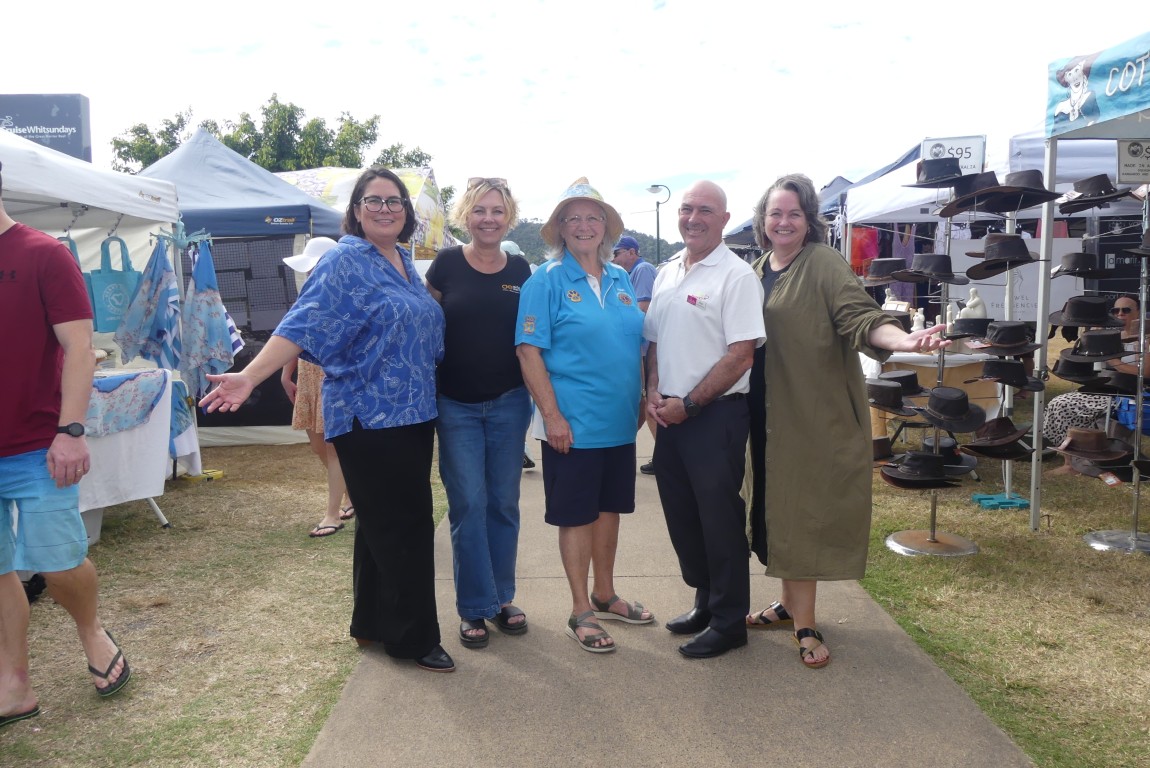
The Whitsundays Chamber of Commerce and Industry is stepping into a new role as manager of the Airlie Beach Cruise Ship Markets, ensuring this much-loved event continues to thrive for stallholders, local businesses, community groups, and visiting passengers.
Commencing this month, the Chamber will oversee market operations with a clear commitment: to continue delivering a market that feels welcoming to cruise ship guests while being supportive of local stallholders.
Chamber President Allan Milostic said the markets are a vital opportunity to showcase the Whitsundays.
“Cruise ship visitors are often getting their very first taste of Airlie Beach and our region through these markets,” Allan said.
“We see enormous potential to strengthen that experience while supporting micro and small businesses and community groups.”
After 22 years of dedicated service, the Whitsunday Lions Club handed the reins of the Cruise Ship Markets to the Chamber. Their efforts have made the markets a much-loved attraction for both visitors and locals.
“Operating a market is a challenging job. Whitsunday Lions are confident that the new operators will meet those challenges and continue the success of this famous market,” said Lions Club representative Helen Toy.
“Our Lions Club will now be concentrating our efforts on the Lions Community Market held every Saturday on the foreshore.”
The Chamber acknowledges and thanks the Lions Club for their stewardship and contribution over more than two decades, which has built a strong foundation for the future.
In this next chapter, the Chamber is focused on working closely with current stallholders to provide additional services and support to help boost their businesses. At the same time, plans are underway to broaden the market’s appeal by introducing new elements in 2026.
To guide this evolution, the Chamber will soon survey stallholders to gather their feedback and ideas. Their insights will be central in shaping what comes next.
“Stallholders are the heart of these markets, and we want to make sure their voices guide how we evolve,” Allan said.
“Our goal is to keep what works well, while exploring new opportunities that will strengthen the experience for visitors and locals alike.”
The Chamber is also pleased to welcome Margie Murphy of Airlie Events and the Great Barrier Reef Festival to manage the markets on the ground over the coming months. Her experience and local knowledge will help ensure a smooth transition.
Chamber say that a key element of this new era will be reinvesting market revenue back into the Whitsundays community.
From 2026, eligible not-for-profits and community events will be able to apply for sponsorship funds generated by the market.
This approach will ensure the markets not only benefit stallholders and visitors, but also support local clubs, charities, and festivals that contribute to the social and cultural fabric of the Whitsundays.
To maintain transparency, the Chamber will publish annual reports outlining how funds are distributed.
“Our approach is about sustainability, accountability, and ensuring the markets remain a valued asset for the whole community,” Allan said.
The Chamber looks forward to working with Whitsunday Regional Council, stallholders, and community organisations to ensure the Cruise Ship Markets continue to grow as a vibrant, welcoming, and beneficial experience for all.
Stallholder enquiries can be made to: markets@whitsundaycoastchamber.com.au
Cait Fleming, Margie Murphy, Helen Toy, Allan Milostic, and Julia Evans at the Cruise Ship Markets. Photo credit: Daniel Heggie
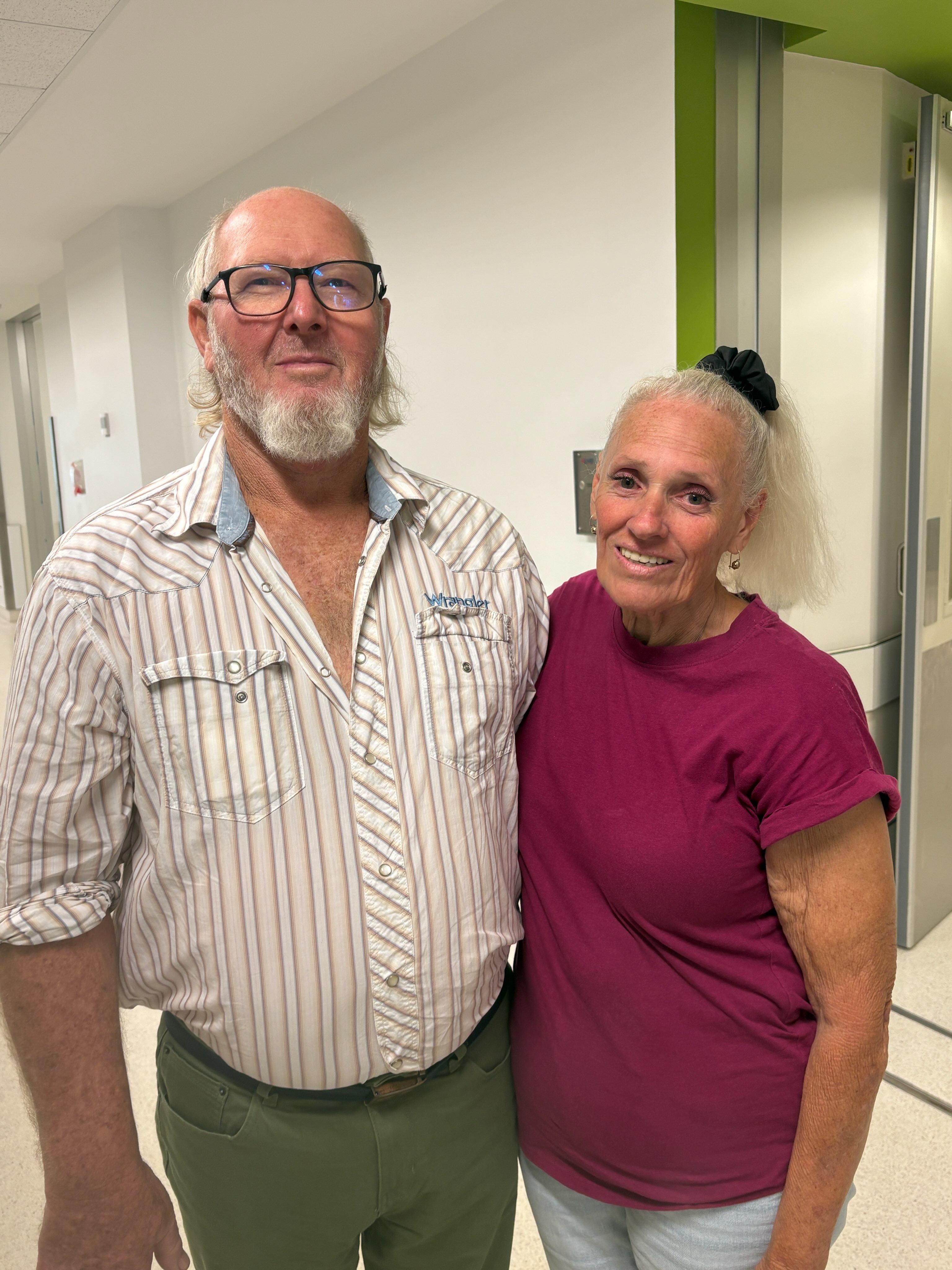
Justin Stokes believes rough weather may have saved his life on August 3. The 70-year-old Bowen retiree was about 50km offshore in a 26-foot boat with his son and a mate when he began feeling light-headed and unwell.
“We were already headed back to shore because of the weather and I wasn’t feeling great when the boat began taking on water; the bilge pump couldn’t keep up as the waves were coming over the front,” Justin said.
“My son and his mate had to start bailing. It was all a bit stressful.”
The trio urgently radioed Volunteer Marine Rescue (VMR), advising them of Justin’s history of heart problems. He had undergone a stent procedure in 2023 and still had two blockages. Feeling worse, he was transferred to the rescue vessel and taken back to shore.
Justin declined ambulance transport and was met at the boat ramp by his wife Pamela, who drove him straight to Bowen Hospital.
“I didn’t feel well, but I didn’t think it was going to be a bad problem or issue,” Justin said.
“At the hospital I told them I was starting to get worse chest pain so I was taken in to ED and had just sat on the bed - that’s the last thing I remember before I passed out.”
An after hours admin officer and graduate nurse triaged Justin quickly and moved him to the resuscitation bay. Shortly after, he collapsed.
Bowen clinical nurse educator Tracey Petersen said the ED team acted immediately.
“Within a minute, Justin’s airway was secured, we had commenced CPR and the senior medical officer was preparing to deliver a shock,” she said.
“Within one minute of that first shock, he was back and talking to staff.”
An ECG confirmed Justin had suffered a major heart attack. He was flown to Mackay Base Hospital and spent four days in the Cardiac Care Unit.
“I couldn’t wish for better treatment – they did a fantastic job to bring me back because for a few minutes there I wasn’t of this world,” Justin said.
His wife Pamela added “They really deserve every praise – Justin’s heart is only beating today because of them.”
Tracey said the team’s swift response was the difference between life and death.
Justin and Pamela Stokes. Photo supplied
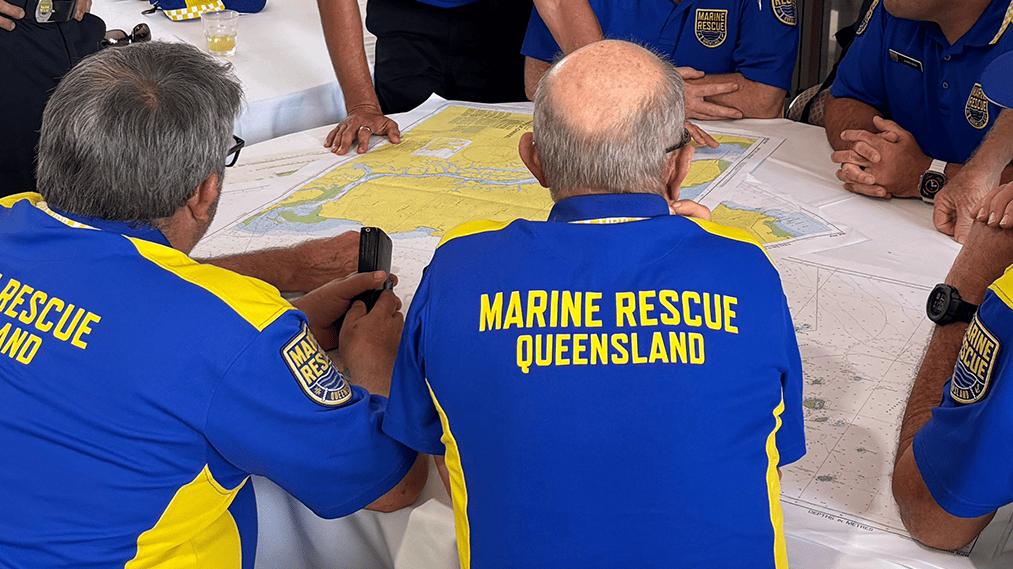
Whether they’re avoiding a pod of whales, traversing a shallow reef, or giving a racing yacht wide berth, the crew of VMR Whitsunday are well practiced at changing course to ensure they reach their destination swiftly and safely. Today, the experienced volunteer crew set a new course, joining Marine Rescue Queensland as the service’s eighteenth unit.
MRQ Whitsunday Unit Commander Shane Newell said that the unit had taken their transition very much in their stride and were looking forward to a new chapter in their rich history as part of MRQ.
“From our humble beginnings in the early 1960s with just six locals who were concerned for the safety of boaties on the water, we’ve grown into a highly experienced unit who manage hundreds of activations in all weathers every year,” Mr Newell said.
“Our crew work hard to coordinate activities and support one another to ensure jobs run smoothly and we’re proud to be continuing that service under the banner of MRQ.”
The unit provides a vital service in the Whitsundays, a mecca for boating enthusiasts wanting to enjoy sailing and water sports in the clear waters around the region’s 74 islands.
“Our territory covers 13,000 square kilometres within the Great Barrier Reef Marine Park and in busy periods there can be three to four thousand boaties on the water at any one time. From medivacs, to towing broken down vessels and search and rescue activities, we’re always ready to answer a call for assistance. But we’re also lucky to be providing our services in one of the best boating areas in Australia and we’re often rewarded with spectacular sunrises and sunsets, or a show from a passing pod of whales,” he said.
MRQ Chief Officer Tony Wulff welcomed MRQ Whitsunday into the service and called on local residents to consider volunteering their time to help the unit deliver their vital service.
“As a sailor myself, I know the attraction of boating in the Whitsundays region. But no matter how experienced you are, it’s good to know that there will be someone there to take the call if you run into trouble. The crew at MRQ Whitsundays are a committed and experienced team and we’d love to see their numbers grow. Volunteering is a great way to develop your marine skills and learn from seasoned professionals. MRQ provides all the uniform, kit and training you need to be able to make a difference and support your local on-water community. If you’d like to hear some firsthand accounts of day-to-day rescue work, visit the MRQ Whitsunday Facebook page to read about their activations – the crew are natural storytellers and paint a great picture of life as a volunteer.”
Interested volunteers can lodge their interest via the MRQ website or email contactus@mrq.qld.gov.au
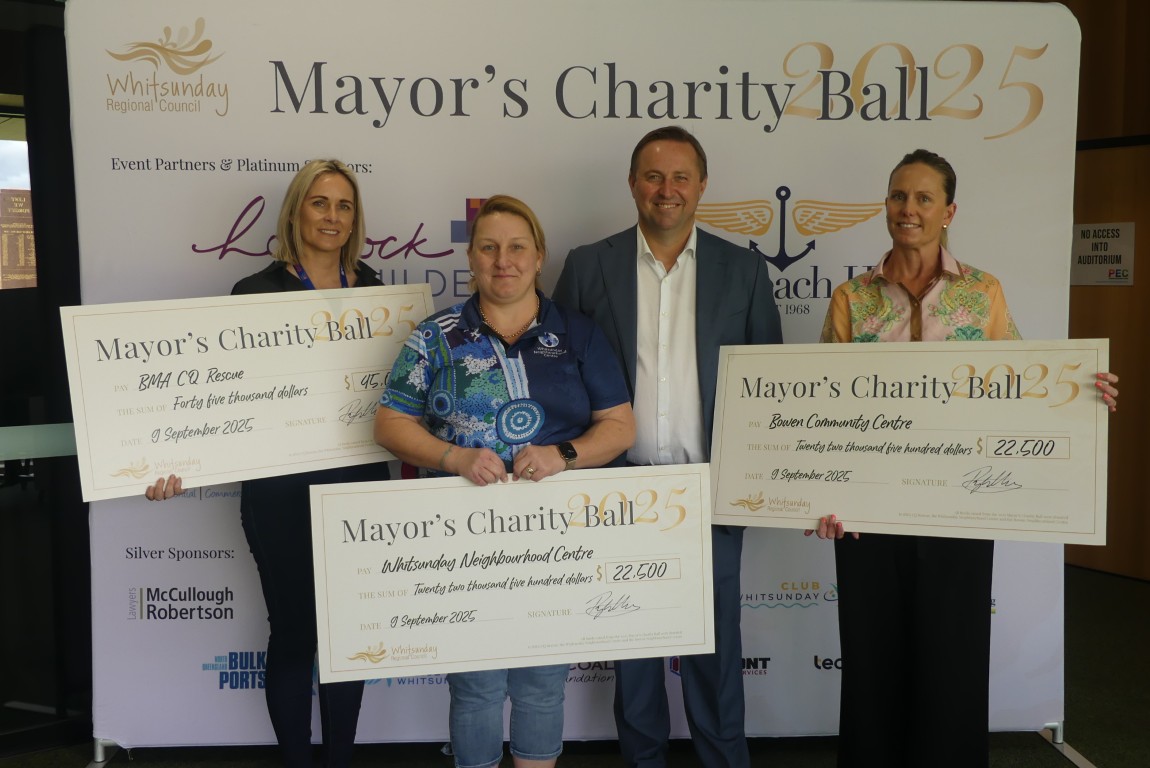
The Whitsunday community has once again shown its generosity, with this year’s Mayor’s Charity Ball raising an impressive $90,000 for local organisations.
At a cheque handover ceremony, Whitsunday Regional Council Mayor Ry Collins thanked sponsors, supporters, and attendees for helping make the annual event such a success.
Funds from the evening went to BMA CQ Rescue, the Whitsunday Neighbourhood Centre, and the Bowen Community Centre, three organisations that play vital roles in providing emergency services, support, and connection across the region.
Mayor Ry Collins expressed gratitude to all sponsors, highlighting Platinum sponsors Lowcock Builders and Airlie Beach Hotel, along with a strong list of Gold and Silver sponsors.
“Without their support, we wouldn't have been able to make this event possible,” said Mayor Collins.
“Thank you sincerely for your generous support to some fantastic causes.
“Your generosity in our community is making a real impact, and these funds are supporting critical emergency services and centering on the vital role in our community by strengthening, offering connection, support and hope to those that need it most.”
Guests on the night were treated to entertainment from Seagrass Theatre, whose performance drew high praise. “Many would agree with me, were fantastic on the night of the Mayors Ball” said Mayor Collins.
“It’s great to have you all here, and thank you so much for your support for this year's event. We couldn't have done it without you.”
The Mayor also confirmed that planning is already underway for the next Mayor’s Charity Ball, with the date locked in for Saturday 25 July 2026, at the Proserpine Entertainment Centre.
Tegan Philpott from BMA CQ Rescue, Executive Officer of Whitsunday Neighbourhood Centre Rebecca Woods, Whitsunday Regional Council Mayor Ry Collins, and Councillor Michelle Wright
Jen and Jack from Platinum Sponsor Lowcock Builders
Photo credit: Daniel Heggie

Recently we have seen a small amount of attempted stealing offences where people have walked into people’s property, tried car doors, doors on houses and walked through veranda areas. No significant property has been stolen but it raises an important topic. Today, more than ever, the importance of knowing your neighbours often gets overlooked. However, creating strong connections with those who live around us fosters a sense of belonging, strengthens community ties, and crucially, helps keep everyone safe.
A connected community is an engaged community—a place where people look out for one another, notice when something feels different and offer support when it’s needed most. Whether it’s sharing a morning wave across the fence, making fun of the footy team they support, having a friendly conversation in the street, or exchanging contact details for emergencies, the smallest actions can make the biggest difference.
When we know our neighbours well, we can recognise changes that may indicate someone needs help. For example, has a usually active neighbour suddenly disappeared from view? Is there unfamiliar activity at a home where things are normally quiet? You might see lights around the yard at night. These small observations can help prevent more serious incidents or provide assistance to someone in urgent need or stop an opportunistic crime.
Beyond safety, fostering neighbourly relationships improves the well-being of everyone in the area. Studies show that connected communities are happier and healthier. Knowing our neighbours lessens loneliness, reduces stress, and increases confidence to reach out in times of need.
It isn’t just about adults either; connected communities are a safer environment for children to play and grow. Streets become friendlier, and a network of tens or hundreds of watchful eyes provides an added layer of care.
So how do we nurture this culture of connection? Start with simple gestures—a smile, a hello, or even organising a casual BBQ or street party to get everyone talking. Its as simple of a g’day across a fence.
Contributed with thanks to Senior Sergeant Officer in Charge of Whitsunday Police Station Anthony Moynihan
%20(1).JPG)
From my very first day as Mayor, my approach has been that regional Councils are strongest when we work together across all levels of government, alongside industry, and most importantly, with our community. Last week in Canberra, that spirit of partnership was on full display.
Over three days, the Greater Whitsunday Council of Mayors, Mackay Mayor Greg Williamson, Isaac Mayor Kelly Vea Vea and I, joined with our economic and industry partners to speak with a united voice for our region.
Together, we made sure the Whitsundays was front and centre on the national agenda. In 17 meetings with Ministers, Senators, MPs, advisors and the Speaker of the House, we shared the priorities that matter most to our communities.
We spoke about the need for better roads, reliable water and energy, stronger digital connectivity, and more affordable housing. We raised the issue of insurance costs, which continue to hurt families and businesses. And we pushed for more opportunities in skills and education to support our young people into local jobs.
We didn’t just talk about today’s challenges but also highlighted the opportunities of tomorrow. Industries like bio-manufacturing in agriculture, aviation connectivity, and aerospace will help diversify our economy and create the jobs of the future. And of course, we continue to fight for funding for the Bruce Highway, which is vital to the safety and prosperity of our whole region.
What makes this so important is that it shows the power of collaboration. When we speak together, with one voice, we are harder to ignore. That’s how we get results for our community.
And make no mistake, the future of the Whitsundays is shining bright. Being named the home of Olympic sailing in 2032 gives us a global stage and a once in a generation chance to leave a legacy.
With transformational projects like the Whitsunday Skyway now under way, we are seeing the kind of investment that will reshape our region for decades to come. These are not just projects and plans. They are the building blocks of a stronger and more confident Whitsundays.
They will shape the lives of our children and grandchildren, and showcase to the world the place we are so lucky to call home. From the waterfront at Airlie Beach to the heart of Proserpine, from the proud community of Bowen to the resilience of Collinsville, every town has a role to play in this story.
By working together, we can make sure the Whitsundays does not just grow, it flourishes. The best chapters of our story are still to come, and we will write them side by side as a community.

Whitsunday residents and visitors are being urged to check their Saturday Gold Lotto tickets, with a mystery player yet to claim a $2.5 million prize from the weekend’s draw.
The unregistered ticket was purchased at Hickmott’s Supa News in Bowen for Saturday Gold Lotto draw 4605 on 6 September 2025. The winning entry was one of eight division one winners nationally, each scoring $2.5 million.
So far this year, the Mackay and Whitsundays region has celebrated six major lottery wins, worth more than $19 million in total.
Hickmott’s Supa News manager Angela Stevens said the team was thrilled to have sold another winning ticket.
“It’s been a few years since our last big win – we’re so excited! With the Don River Dash and Father’s Day visitors in town, it could be anyone,” she said.
“Our most recent major wins were a $740,000 Saturday Lotto ticket in 2020 and a $2 million win in 2019.
“On behalf of the entire team here at Hickmott’s Supa News, we wish our mystery winner all the very best and can’t wait for you to check your ticket and claim the prize!”
Anyone who purchased a ticket from Hickmott’s Supa News is urged to check it and contact The Lott on 131 868 to claim their prize.
Publishers Indemnity. Any individual or entity that places advertising, supplies copy material, or submits editorial content to Core Life Publishing agrees and undertakes to ensure that all such material:- Does not infringe upon any copyright, trademark, or other intellectual property rights;- Is free from any content that could be considered defamatory, libelous, or slanderous;- Does not infringe upon any rights related to privacy or breach of confidence;- Contains no obscene, indecent, or otherwise unlawful material;- Complies fully with the Trade Practices Act and all other applicable laws, regulations, or statutes.Furthermore, by submitting or placing such material, these individuals or entities agree to indemnify and hold harmless the publisher, Core Publishing and Events Pty Ltd, and/or its agents from and against any and all investigations, claims, demands, liabilities, damages, costs, or judgments arising out of or in connection with the material provided. All material is believed to be accurate at the time of printing and remains the copyright of Core Publishing and Events Pty Ltd.
© 2026 Mackay and Whitsunday Life Pty Ltd.
