
Independently Owned, Locally Grown, Community Loved

Three artificial intelligence (AI) initiatives are part of council's new budget to be adopted next week. These initiatives are the latest proactive steps from council to help mitigate significant financial pressures while continuing to deliver reliable, high-quality services to the community. Mayor Greg Williamson said the 2026/27 Budget reflected both the challenges facing local government and council’s commitment to modern, efficient service delivery. “Like many councils across the country, we are facing rising costs and reduced external funding,” he said. “Our focus is on finding smarter, more sustainable ways to deliver services without compromising quality for our community.” Council has seen a startling increase in a costs over recent years, including: An additional $665,000 increase in waste service costs due to reduced Queensland Government Waste Levy Subsidy and higher levy fees. A $1.1 million increase in waste expenses in the previous budget. A $5.92 million rise in depreciation costs this year alone. A $6 million shortfall from decreased Federal Assistance Grants in this budget contributing to a total reduction of more than $27 million in Financial Assistance Grants funding since 2016. An estimated $3 million annual increase in fuel costs. These pressures highlight the ongoing challenge of balancing affordability for residents with the real cost of delivering essential services. To help offset these impacts, council is investing in practical, targeted AI solutions that improve efficiency and reduce operating costs. A key initiative is the introduction of a new after-hours digital assistant, LUNA, which will operate from 4.30pm to 8.30am daily and all weekend from July 1. Replacing a previous afterhours model which used an outsourced, third-party call centre, LUNA will provide consistent, auditable responses using council-approved information. It will improve how afterhours calls are triaged, especially urgent and emergency enquiries, and will allow routine requests to be handled without delays or manual intervention. The transition follows changes in the external provider market and is expected to deliver about $80,000 in annual savings, while maintaining service quality and improving response consistency. Mayor Williamson said this initiative demonstrated council’s commitment to innovation while managing costs. “We’re using proven technology to deliver services more efficiently while maintaining the high standard our community expects,” Mayor Williamson said. Council is also expanding AI use in key service areas to address increasing demand and resource constraints. In Development Planning, automation of high-volume, low-complexity administrative tasks will reduce processing backlogs and allow skilled staff to focus on more complex work. A similar outcome will be achieved by using Agentic AI to enhance internal corporate services, allowing council’s staff to tackle more complex issues. This will help council maintain service levels despite workforce and cost pressures. Mayor Williamson said council was adopting a scalable approach to AI, building on existing systems to deliver improvements across multiple service areas rather than one-off solutions. “This approach ensures responsible and sustainable adoption of new technologies,” he said. “By reducing repetitive manual work and improving consistency, we can better manage costs while maintaining strong governance and oversight.” While efficiencies from these initiatives will be realised progressively, council’s immediate focus is on improving reliability, reducing inefficiencies and supporting a sustainable workforce model. These actions form part of council’s broader commitment to ensuring services remain efficient, accountable and future-ready, even as financial pressures continue to grow. Mayor Williamson said innovation would be key to navigating future challenges. “Innovation is essential to navigating the challenges ahead. By investing in smarter ways of working now, we are helping protect the services our community relies on into the future while putting downward pressure on rate rises.” Photo source: Mackay Regional Council
Read the full story
Set on the elevated hillside of this 21-acre property, the beautifully crafted, fully airconditioned residence enjoys a breathtaking north-facing 27m x 4.2m covered deck, offering ample room for entertaining or peaceful contemplation while taking in the stunning ever-changing vista. A large covered tiled patio adjoins the deck and living area, creating additional outdoor space overlooking the firepit and orchard. The Property At A Glance Spacious open plan living, dining and kitchen area with central fireplace, opening onto two stunning outdoor spaces Modern galley-style kitchen with stone benchtops, induction cooktop, rangehood, pyrolytic self-cleaning oven and dishwasher Media room with projector, with potential to serve as a fourth bedroom Three generous airconditioned bedrooms, including the master suite with walk-in robe and ensuite Modern family bathroom with shower over bath and separate toilet Laundry with excellent storage and external access Airconditioning and ceiling fans throughout North-facing covered hardwood deck, measuring 27m x 4.2m, with stunning views West-facing 9.5m x 6.5m tiled patio overlooking the firepit and plentiful orchard The home is set within a fully fenced house yard, complete with a secure electric front gate at the road. There is an abundance of water across the property, including four dams, a bore with solar-operated submersible pump (not currently connected), three rainwater tanks with a combined capacity of 62,000L, and town water to the residence. Water is also plumbed to the orchard, stables and other areas throughout the property. Additional features include fully covered walkways connecting the carport to the home, wireless NBN and full mobile signal coverage. Infrastructure And Improvements 7m x 7m carport with electric roller door at the home 14m x 7m high-clearance shed with four roller doors and service trench Adjoining 12m x 6m tool shed Stables and pig pens A lush and abundant orchard with avocados, citrus and tropical fruits, along with a well-established beehive Optional machinery includes a Fiat 750 tractor with slasher and rotary hoe, 2000 SE5 backhoe, Hustler 54" zero turn ride-on mower, assorted tools and other plant and equipment. This stunning property is a true gem in the heart of the beautiful Pioneer Valley, offering the opportunity to settle in, relax and enjoy, or get creative and explore the endless possibilities on offer. Gargett is located in the Pioneer Valley, just 15 minutes from the Finch Hatton Mountain Bike Trail and the beautiful Finch Hatton Gorge. The local Gargett Store is only a short drive away, while the nearest shopping centre is 20 minutes to Marian and 50 minutes to Mackay. It is also an easy drive to the Bowen Coal Basin, Airlie Beach and The Whitsundays, with ample opportunities nearby for fishing, crabbing, prawning and boating. Rates: Approx. $1660 per half year Zoning: Rural Price: $1.6M Block Size: 8.88 hectares (21.75 acres) Builder: Brad Kirkpatrick, 2015
Read the full story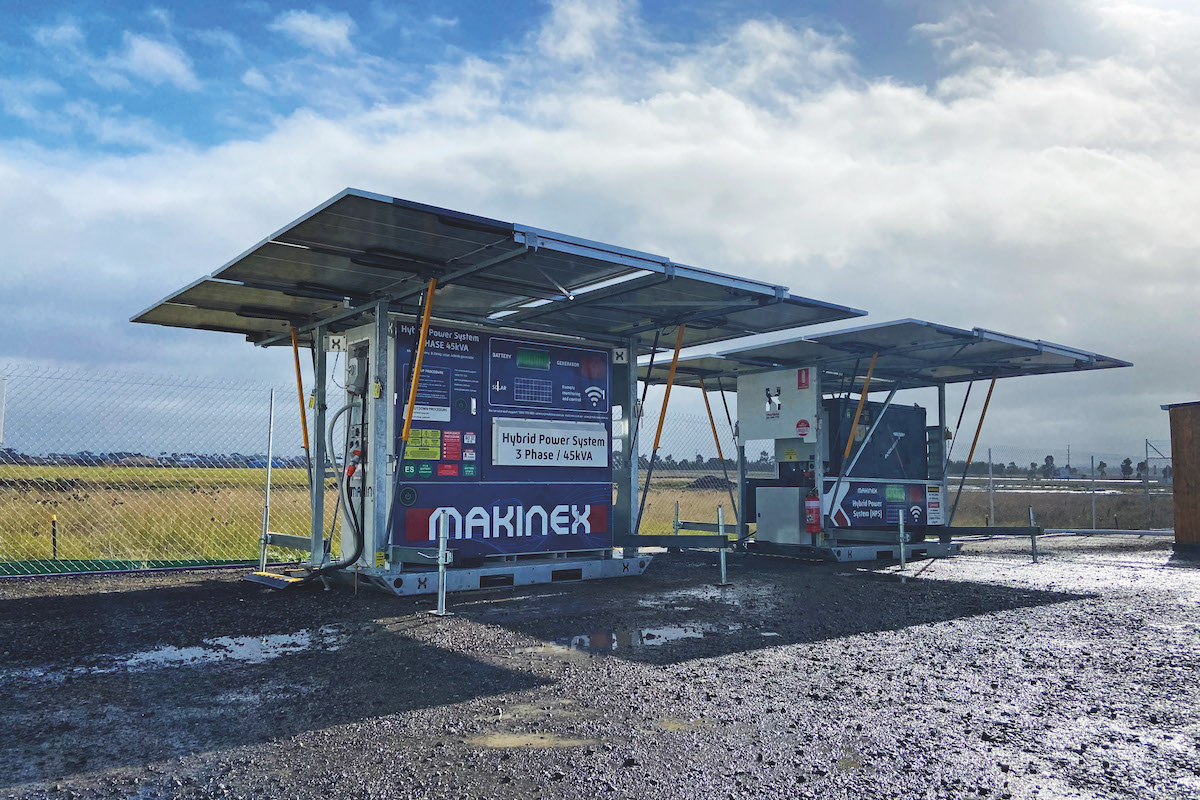
Makinex Renewables is setting an ambitious target, saving 100 million litres of diesel in five years. In an industry long reliant on traditional diesel generators, the Australian-made and owned company is helping reshape how remote and off-grid operations power their sites. Focused on Hybrid Power Systems, Battery Energy Storage Systems and deployable solar arrays, Makinex Renewables is working with customers to lower fuel costs, reduce emissions and improve operational efficiency, while maintaining the dependable power their operations require. “The 100 million litre target gives us a clear and measurable objective to work towards while highlighting the impact renewable energy solutions can have across industries that traditionally rely on diesel power,” the company said. “It’s a goal that keeps us focused on developing practical solutions that deliver real-world results for our customers.” Designed for businesses operating in remote environments, Makinex Renewables’ modular systems can be deployed as standalone units, integrated together, or incorporated into existing site power setups. The company’s solutions are already delivering measurable results in mining. Following a trial installation, a mine site adopted Makinex Renewables’ Hybrid Power System and additional solar arrays, reducing generator runtime from 24 hours a day to approximately six to seven hours. Since the HPS45 was deployed in February, the site has cut generator fuel use by 125 litres a day, delivering annual diesel savings of around $91,000 and projected savings of $640,000 over the site’s seven-year life. Brad Cliff, Director of Generator Services Australia, said the project highlighted the benefits of continuing to challenge traditional ways of thinking and finding better solutions to longstanding industry challenges. To learn more about Makinex Renewables’ solutions, visit the team at the Queensland Mining and Engineering Exhibition in July.
Read the full story
Most Reverend Daniel Meagher, the 11th Bishop of the Roman Catholic Diocese of Rockhampton, made his first visit to St Patrick's College on Wednesday, beginning the day alongside students and staff at the College's Brekky Van outreach service. The visit provided an opportunity for Bishop Daniel to experience the College's commitment to living its Catholic values through service to the wider community before officiating the blessing and official opening of newly completed building and refurbishment works. During the ceremony, Bishop Daniel addressed those in attendance. “We really are here to pray and bless the students and teachers who will use the buildings,” he said. The redevelopment has delivered contemporary learning spaces designed to support learning, wellbeing and faith formation while reflecting the College's commitment to providing high-quality educational opportunities. Assistant Principal: Mission, Mrs Andrea Crocker, said the occasion was a proud moment for the College community. “We’re finally getting to showcase our wonderful new facilities and the way the hard work of so many different people has come to fruition,” she said. The blessing and opening marked the culmination of years of planning and investment, with the new facilities set to benefit Mercy Campus students for years to come. Photo supplied
Read the full story

There’s a reason Sarina Sugar Shed continues to steal both hearts and headlines. This small-but-mighty attraction is the region’s crown jewel, distilling the essence of Mackay’s sugar industry into an unforgettable visitor experience.
With a trophy cabinet brimming with accolades – including Best of Queensland 2025, TripAdvisor Travellers’ Choice Awards, and a sweep of honours at the Mackay Isaac Tourism Awards for Best of Queensland Tour or Attraction, Excellence in Food Tourism, and Best of Queensland Food & Dining – the Sugar Shed is a proven crowd favourite.
A recent Tourism & Events Queensland report reveals the Sugar Shed’s review scores sit well above both state and regional averages, confirming what thousands of guests already know: this is no ordinary tour. It’s a lively fusion of history, hospitality, and hands-on fun – further sweetened by national recognition, including Silver and Bronze medals at the Australian Rum Awards and a Bronze at the Royal Queensland Distilled Spirit Awards.
Whether it’s sampling award-winning rum or diving into rich house-made jams and sauces, every moment is crafted with care by a passionate all-female team. Real mill machinery, a working miniature sugar factory, and a café serving local delights round out this sensory experience.
As it nears its 20th anniversary, Sarina Sugar Shed continues to shine as a symbol of food tourism, heritage, and regional pride.
Book your taste of sweetness at www.sarinasugarshed.com.au.

As the crushing season begins, this year will be “back to the future” in one important aspect. And I feel it is it is important to inform the sugar city and surrounding areas about what that might mean.
There will be greatly increased frequency of cane fires seen around the district this crush season. For those of you who have been around long enough, you will remember that, late most afternoons in the crush season: the smell of a cane fire, the crackling tones and the black soot floating through the sky as well as the night-time glows throughout the district.
Over the past 30 years or so, the implementation of green cane harvesting and trash blanket management techniques have resulted in these historic fires becoming significantly less common in the Mackay district.
However, this year we see significant areas across the district of two-year-old cane known as standover.
Standover presents its own challenges: it is in general difficult to harvest and then also for the sugar mills to process. It’s typically a bit more fibrous, has more dead material, and not the familiar straight stalks of a good standing one year crop.
The simplest way to improve this process is to first burn the paddocks prior to harvest, helping reduce the amount of extraneous matter in the crop, therefore making it easier both to harvest and process.
So: once again the sugar city will have the night skies lit up by these spectacular events. However, it must be remembered that whilst they are visually stunning, there are always dangers involved and farms are a workplace, so if you wish to view these fires, please be safe and keep a substantial distance away and ensure not to interrupt or hinder the farmers while they are working through this process. They are experienced in managing cane burning and are working within a regulated permit system.
Whilst talking about farm safety, I would like to emphasis again that farms and cane rail lines are workplaces with significant dangers ranging from harvesting and farm machinery to the giant cane trains which transport our crop from our points of delivery (sidings) to the mills for processing. Please remind family and friends that these farms and cane railway lines are private property and not public motor bike or scrub-bashing tracks. For example, if I were to take my motorbike or ute into a shed in Paget or shopping centre and hoon in for a burnout, I am pretty sure I would be in a lot of trouble. So why are farms and cane rail lines any different?
Finally, in closing, by the time this column goes to print and all going well, the harvesters should be in the paddock beginning the harvest in the region’s south. Sarina’s Plane Creek is the first to kick off (planned for June 3), and Mackay Racecourse and Farleigh mills will be starting over the coming week, and Marian soon after on the 17th.
I wish a safe and successful harvest to all parties involved in this year’s crush season and also to the wider community. If the sugar city community and surrounding areas all work together and have respect for each other, we can hopefully make this crush season a positive one for everyone.

Tech from the big trucks and diggers at Bravus Mining and Resources Carmichael mine near Clermont in central Queensland has been upcycled to help regional Queensland families doing it tough.
Bravus Mining and Resources Head of Production and Site Senior Executive Glen Corfield said more than fifty state-of-the-art tablets no longer needed for mining operations had been upcycled to support the work of Ronald McDonald House Charities North Australia and the Salvation Army.
Mr Corfield said the initiative was a collaboration between Bravus Mining and Resources and mining technology and change management business Haultrax, which took the tablets away, reconditioned them, and preloaded everything from Minecraft to Messenger in readiness for their beneficial reuse.
"We’re proud to operate in regional Queensland and are passionate about backing the organisations and causes that are important to the 1,200 workers at our Carmichael mine,” he said.
“Ronald McDonald House and the Salvos are two great examples.
“Both organisations provide services you hope your friends, family, or workmates never have to call on, but there’s a sense of comfort in knowing they’re there in a time of need.
“That’s why we’re so happy to have been able to work with Haultrax and divert these tablets from life in a box at the mine to a life helping deliver that vital work across regional Queensland.”
Haultrax Operational Specialist Steven Doyle said upcycling the tablets demonstrated the company’s belief that technology can make a real difference in both the mining industry and in people’s lives.
"Partnering with Bravus Mining and Resources on this initiative was an easy decision and we hope these tablets bring a little joy and ease to the children and families who need it most,” Mr Doyle said.
Ronald McDonald House Charities North Australia CEO Tamara South said the tablets would help seriously ill children and their siblings access educational activities and resources as well as provide a welcome distraction during tough times.
“We’re incredibly grateful to Bravus Mining and Resources and Haultrax for their support because we can’t do it alone. It’s the support of community partners that truly makes our work possible,” Ms South said.
Salvation Army Townsville Corps Officer Team Leader Major Peter Sutcliffe said the tablets would be put to immediate use at next month’s Red Shield Appeal launch before they were distributed to Community Connect sites to help locals access essential resources.
Bravus Mining and Resources Head of Production and Site Senior Executive Glen Corfield (R), joined by Haultrax Operational Specialist Steve Doyle presenting the upcycled tablets to Ronald McDonald House Charities CEO Tamara South and Salvation Army Townsville Corps Officer Team Leader Major Peter Sutcliffe (L-R). Photos supplied
Children from the Ronald McDonald House were all smiles as they enjoyed the new tablets donated by Bravus Mining and Resources and Haultrax.

The Bowen Basin Women in Leadership Program hosted by Regional Development Australia Greater Whitsundays (RDA GW) and supported by Local Buying Foundation (LBF) assisted in bridging the cross-industry skills gap, by empowering local women.
During this initiative, participants learned how to reposition their workplace skillset, understand their value, increase confidence, become more self-aware and reduce feelings of ‘Imposter Syndrome’.
Program participant Manager of People and Capability Isaac Regional Council (IRC) Trudi Liekefett said she gained “tremendous value” from the initiative – thanks to the encouragement of Kielly Glanville.
“I felt continuously supported throughout the workshops and skill development sessions, alongside my mentor who guided me through the program,” Ms Liekefett said.
“I’ve established strong, supportive connections with other women during this program – relationships I’m confident will continue to provide mutual support well into the future.
“The content is truly life changing – the skills you develop can be applied across multiple industries.”
RDA GW CEO Robert Cocco said they were “pleased to be able to support these women in building confidence with skillsets they already have”.
“From RDA’s perspective, a heartfelt thank you to the women who participated in the Bowen Basin Women in Leadership program - we look forward to seeing what the future holds,” Mr Cocco said.
To stay up to date with RDA GW’s initiatives – including future Women in Leadership programs, visit www.rdagw.org.au.
Graduation ceremony for the Bowen Basin Women in Leadership Program – supported by Regional Development Australia Greater Whitsundays (RDA GW) and Local Buying Foundation (LBF). Photo supplied

Discover how you can make a difference in your community at the 2025 Mackay Volunteer Expo.
From emergency service personnel to comedic performers, street chaplains to crime stoppers, wildlife carers to choir singers and everything in between – more than 40 groups will have hundreds of roles on offer.
The expo will be held this Sunday, June 8, from 9am to noon, in the Big Shed at the Mackay Showgrounds.
Mayor Greg Williamson said the National Volunteer Week theme of “Connecting Communities” was perfectly aligned with the goals of the Mackay Volunteer Expo.
“We love that this expo showcases that no matter what you’re interested in, what your skill levels are or what your level of ability is, there is a volunteer role to suit you,” Mayor Williamson said.
“Volunteering helps people to build lasting relationships that enrich their lives and strengthen our communities,” he said.
“If you have a sense of adventure and love the great outdoors, then there are groups like the Scouts, Surf Lifesaving, SES and even Pioneer Catchment and Landcare.
“If you are an animal lover, then there are groups like Australian Wildlife Rescue, Mackay and District Turtle Watch, Mackay Animal Rescue Society and RSPCA Mackay.
“Or, if you have more specific interests, there are tremendous opportunities with Mackay Musical Comedy Players, With One Voice Community Choir, Pine Islet Lighthouse Preservation Society or the Mackay and District Orchid Society.
“A volunteer role is an amazing way to learn new skills, build a resume, make friends, feel good and stay active.”
Entry to the Mackay Volunteer Expo is free.
For more information, follow Mackay Volunteers Expo on Facebook.
About volunteering in Australia
More than six million people in Australia volunteer through organisations across the nation. Millions more volunteer informally in their local communities, helping neighbours and strangers, especially in times of crisis and adversity.
Volunteers are an essential workforce, spanning major sectors, including aged care and disability care; community welfare; sports and the arts; crisis preparedness, response, and recovery; and environmental sustainability and protection.
Volunteering is vital to the nation’s wellbeing but faces ongoing challenges. Australia’s communities and lifestyle are underpinned by the contributions of volunteers.**
WHAT: 2025 Mackay Volunteer Expo
WHEN: Sunday, June 8, 2025, from 9am to 12 noon
WHERE: The Big Shed, Mackay Showgrounds
TICKETS: Free entry
Mackay and District Turtle Watch will be at the 2025 Mackay Volunteer Expo hoping to recruit more members to assist them to monitor beaches for nesting turtles and hatchlings. Photo supplied

By Amanda Wright
After nearly two decades in public office, George Christensen has resigned from Mackay Regional Council, effective last Friday, citing urgent family responsibilities and voicing serious concerns about the culture within council chambers.
The former federal MP, who returned to local government in 2024 after serving four terms in Canberra as the Member for Dawson, announced his resignation during last week’s ordinary council meeting. While his departure marks the end of an extensive 19-year career representing the Mackay region, Mr Christensen made it clear his decision was not driven by political pressure or media scrutiny, but by a personal matter requiring him to become a full-time carer for his daughter.
“This has not been an easy decision,” Mr Christensen said in a statement.
“But sometimes, there are responsibilities that rise above politics, above titles, and even above public service. And for me, that responsibility is family.”
While Mr Christensen’s resignation was framed with dignity and discretion, he also delivered a pointed parting message: the bullying culture in Mackay Regional Council is real—and unacceptable.
In remarks that will likely prompt further scrutiny, Mr Christensen alleged that one councillor regularly intimidates others in the chamber, particularly targeting female colleagues. He described an environment where yelling and belittlement have replaced respectful debate, and where legitimate questions are met with hostility rather than discussion.
“One councillor said they’d never seen such behaviour in any professional setting,” he said.
“Another told me they were snapped at simply for saying ‘hello’.”
These are not isolated complaints, Mr Christensen suggested. Residents—particularly women—have allegedly experienced similar behaviour in community settings, raising serious questions about the conduct and accountability of elected representatives.
Complaints have reportedly been lodged with the Office of the Independent Assessor (OIA), though Christensen expressed little faith in the body’s capacity to address councillor misconduct, accusing it of acting as a shield for bureaucracy rather than as an agent of oversight.
This isn’t the first time Mackay Regional Council has come under fire for internal dysfunction, but Mr Christensen’s allegations strike a new chord, particularly given the high proportion of female councillors currently serving. If substantiated, the claims point to a culture of intimidation at odds with both democratic values and modern workplace standards.
The situation demands clear and immediate answers, not only for the councillors directly affected, but for the broader community that expects transparency and professionalism from its local government.
In the wake of his departure, Christensen leaves behind a legacy shaped by staunch local advocacy, from sugarcane protection to infrastructure upgrades and constituent support. Whether one agreed with his political style or not, few could doubt his long-standing commitment to representing the Mackay community, first as a councillor in 2004, and then as a federal MP from 2010 to 2022.
Now, with a daughter who needs him more than ever, Christensen is stepping away from politics for the right reasons. But his final act—shining a light on a toxic culture within the chamber, demands more than reflection.
It requires action.
Cr George Christensen during his final ordinary meeting at Mackay Regional Council, standing alongside fellow councillors Alison Jones, Belinda Hassan, Heath Paton, Nathenea MacRae, Ash-Lee Johnson and Namarca Corowa. Photo supplied

Mackay turned up the sunshine and community spirit for the region’s very first U-BEACH Community Beach Day, making waves for inclusion, connection, and coastal fun at the Harbour Beach last Friday, 30 May.
With more than 100 attendees embracing the laid-back atmosphere, the day was a joyful celebration of diversity and accessibility. The shoreline came alive with a vibrant mix of activities, from swimming and walking to kite-flying, beach cricket, sand games, and spirited sandcastle building.
Event organiser and CQUniversity physiotherapy researcher Sasha Job said it was incredible to see so many people of all ages and abilities enjoying the beach together.
“This event is all about creating a welcoming and inclusive space where everyone can participate, connect and have fun,” she said.
“Our hope is that events like this spark ongoing change – not just for one day, but for how we think about accessibility every day. The beach should be a place of freedom, not frustration, for people with mobility challenges.”
The accessible event helped to facilitate access to the beach for people of all abilities through the use of specialist resources and equipment including beach mats and wheelchairs. CQU physiotherapy students provided physical assistance for beach transfers and activities on the sand.
She acknowledged the support from local volunteers, students and organisations in making the day a success.
“The community spirit is what makes this so special. It shows what can be achieved when we all work together to remove barriers,” Ms Job said.
“Our goal is to make inclusive beach days like this the norm, not the exception. We hope today’s event inspires more local councils and communities to invest in accessible infrastructure.”
This year’s U-BEACH Mackay Community Beach Day also benefited from the addition of Mackay Surf Life Saving Club’s new all-abilities beach access mat at Harbour Beach, made possible through a $17,327 Queensland Country Bank Good for Good Community Grant.
Queensland Country Bank Mackay Area Manager Bill Paton said the matting will enable more members of the community to safely enjoy one of Mackay’s most popular beaches, and he was delighted to see it being used at the Community Beach Day.
“We’re proud to support the Mackay Surf Life Saving Club in making our coastline more inclusive,” Mr Paton said.
“Access to the beach should be something everyone can enjoy, and this matting means people using wheelchairs, walkers, or prams now have a safe, stable path to the water’s edge.
“As a member-owned bank, giving back to the communities we’re part of is what drives us, and we’re delighted that the beach access mat will continue to benefit the community for many years to come.”
The Queensland Country Bank Good for Good Grants Program is held annually, with the next round opening for applications from 1 July 2025.
Mackay’s first-ever U-BEACH Community Beach Day made a splash at Harbour Beach, uniting over 100 people in a joyful, all-abilities celebration of inclusion, accessibility, and coastal fun. Photos supplied

Mackay’s cane farmers may not have faced severe weather last year, but a new change to disaster funding eligibility has strengthened the region’s preparedness for future cyclones and floods. With updated support measures now recognising the realities of modern farming, local producers will be better placed to recover when the next natural disaster hits.
More Queensland primary producers will now be eligible for vital support under the joint Commonwealth–State Disaster Recovery Funding Arrangements (DRFA), following a significant change to how farming income is defined.
Under the amended guidelines, income from agricultural support services such as cane harvesting, contract mustering, artificial insemination, cattle droving and other similar services will now be considered part of a farming operation. This means many producers previously excluded from assistance—because they relied on a mix of on-farm and off-farm ag-related work—can now access grants, concessional loans, and freight subsidies after natural disasters.
Queensland Minister for Primary Industries Tony Perrett said the changes would benefit local producers across the state every year, especially following a devastating 2024–25 disaster season.
“Agriculture is vital to every Australian, and when our producers suffer, we all do,” Minister Perrett said.
“These are men and women putting food on our tables, and in times of disaster, it’s vital all support avenues are available to them.”
Federal Minister for Emergency Management Kristy McBain said the Australian Government had worked closely with Queensland to ensure the DRFA reflects how modern farming operates.
“These agricultural support services are essential for sustaining small-scale operations. This change will give more farmers confidence that help will be there when they need it most,” Minister McBain said.
Federal Assistant Minister for Agriculture, Anthony Chisholm, said the reforms would make a real difference in remote regions hit hard by summer storms and flooding.
“Queensland farmers are resilient, but they deserve meaningful support when disaster strikes. This is a commonsense reform to ensure no producer is left behind,” he said.
Importantly, the new eligibility rules apply retrospectively to disasters in early 2025. Any primary producer who was previously deemed ineligible is encouraged to contact QRIDA on 1800 623 946 to find out what the changes mean for them.
The move follows strong advocacy from industry bodies including CANEGROWERS and the Queensland Farmers’ Federation, who had been calling for a more inclusive approach to disaster support.
CANEGROWERS CEO Dan Galligan welcomed the announcement at the 2025 FNQ Field Days in Mareeba, describing it as “a smart, sensible fix that brings disaster recovery support into line with how modern farms actually operate.”
“This is about making sure no grower falls through the cracks,” Mr Galligan said.
“Many farming families rely on both growing and contracting income to stay viable—it’s never made sense to exclude them.”
The reform builds on several recent wins for the sugarcane industry. Earlier this year, CANEGROWERS secured the inclusion of replanting costs in disaster grants, helped deliver extended application deadlines following Cyclone Jasper, and successfully advocated for increased funding caps of up to $75,000 for growers worst affected by summer floods.
“These are tangible outcomes that make a real difference on the ground,” Mr Galligan said.
“We’ll keep working to ensure disaster support keeps pace with the realities of farming in Queensland.”
NFF CEO Troy Williams, Minister for Primary Industries Tony Perrett, NFF Chair David Jochinke, CANEGROWERS CEO Dan Galligan and Membership Engagement and Innovation Manager Matt Kealley. Photo supplied: CANEGROWERS

The role of a councillor today is vastly different from the past. It carries significant responsibility and is increasingly shaped by regulatory constraints. When issues arise, new measures are put in place to prevent recurrence – but these changes affect everyone.
This brings us to the distinction between strategic and operational responsibilities.
In the past, a councillor could call a staff member working on a road project and request that excess soil be placed on a nearby block rather than disposed of, allowing a ratepayer to benefit. Those days are gone. Under current legislation, a councillor issuing such a directive would be in breach of the Queensland Councillors’ Code of Conduct and face serious consequences.
So how does a councillor, elected to represent the community, focus less on operational tasks and more on strategic leadership? The key is approaching governance like a board of directors – shaping policy and direction rather than managing day-to-day operations.
Councillors must be available for briefings and meetings beyond just Wednesdays. The role requires extensive reading, reviewing presentations, studying reports and preparing for significant decisions. Ordinary meetings often involve reviewing agendas ranging from 200 to 1000 pages, sometimes containing highly technical information.
Strategic leadership is set through the corporate plan and approved strategies, forming the foundation of governance. Seeking community feedback is essential to ensure these strategies reflect public needs.
While residents can reach out to councillors for a range of concerns, operational matters – such as potholes, grass cutting and barking dogs – are best addressed through a formal customer request by calling 1300 MACKAY or using Snap Send Solve on a mobile device.
Cr Alison Jones
While residents can reach out to councillors for a range of concerns, operational matters – such as grass cutting – are best addressed through a formal customer request to council

Mackay Marches To Shatter The Silence On Domestic Violence
By Hannah McNamara
A wave of purple swept through Mackay’s city centre last Friday, as more than 1000 people rallied together in a powerful show of unity to march against domestic and family violence.
From the early morning hours, the streets filled with the steady rhythm of footsteps and the echo of a collective chant:
“What do we want? RESPECT!”
“When do we want it? NOW!”
Led by the Rotary Club of Mackay and Resource Industry Network, the Respect in Every Step: March to End Domestic Violence united 12 schools, numerous local organisations, and everyday citizens in a vibrant, purposeful procession. Participants walked shoulder to shoulder from the CBD to Bluewater Quay, determined to make a stand – and make it matter.
More than a march, it was a statement. A declaration that silence is no longer an option, and complacency is no longer acceptable.
Enough is enough.
Among those walking was Queensland Premier David Crisafulli, who praised Mackay’s stand for justice and compassion.
“Mackay locals marched to say no to domestic and family violence in Queensland,” Mr Crisafulli said.
“For too long domestic and family violence has been a scourge in the shadows, and raising awareness in numbers like this makes a difference.”
The focus of the march extended beyond protest – it looked to prevention, to education, and to shaping a safer future by equipping the next generation with knowledge and respect.
That purpose was embraced wholeheartedly by Mackay Northern Beaches State High School, whose students walked with pride and conviction.
“We are proud to have had a group of Year 11 and 12 students participate in the Respect in Every Step: March to End Domestic Violence,” a school representative said.
“Our students joined other schools and groups from Mackay, along with Queensland Premier David Crisafulli MP, on the march through Mackay CBD.”
Following this, they heard presentations from Mackay Mayor Greg Williamson, Nigel Dalton MP and Superintendent of Police Dean Cavanagh.
“Big thanks to The Rotary Clubs of Mackay for their organisation of this event and for continuing to raise awareness,” the school added.
The streets fell silent as speakers delivered heartfelt speeches at Bluewater Quay, each voice reinforcing the need for bold community action and systemic change.
Mackay Police also joined the movement, reaffirming their commitment to supporting victims and ending the cycle of violence.
“Mackay Police were joined by the community for the Domestic and Family Violence (DFV) Awareness March, taking a stand, and raising awareness,” police said.
“Superintendent Dean Cavanagh delivered a speech following the march, recognising victims of DFV and remembering those who have lost their lives to DFV.
“With DFV Prevention Month (May) coming to an end, it’s a timely reminder that we all have a role to play in creating a safer Queensland.
“Let’s keep taking action to end DFV.”
Councillors, too, lent their voices and footsteps to the cause, including Cr Nathenea MacRae, who expressed her pride in the turnout.
“Proud to be involved in today's march with Councillor Ash-Lee Johnson to bring awareness to Domestic Violence. Great to see our schools support, with their students’ participation.”
While the march may have ended at Bluewater Quay, its message marches on, in hearts, conversations, and the unshakable belief that respect should be a non-negotiable, and that no one deserves to feel unsafe in their own home.
More than 1000 people - including Queensland Premier David Crisafulli - marched through Mackay last Friday in a powerful, united stand against domestic and family violence, calling for respect, prevention, and lasting change. Photo source: David Crisafulli MP
Photo source: Mackay Northern Beaches State High School
Photo source: Queensland Police Service
Photo source: Mackay Regional Council
-1748921123.jpg)
By Amanda Wright
Andrew Willcox, the Federal Member for Dawson, has been appointed Shadow Assistant Minister for Manufacturing and Sovereign Capabilities—an elevation that signals not only a deepening of his political responsibilities but a wider national recognition of regional Australia's role in securing the country’s future.
While the announcement from Nationals leader David Littleproud has been met with warm congratulations, Mr Willcox himself has approached the role with measured enthusiasm and a clear plan to ground national vision in local insight.
“I’m truly honoured to take on this role and welcome the faith placed in me,” Mr Willcox said.
“Manufacturing is a large contributing factor in our Australian economy—starting right here in Dawson, from Paget in Mackay through to Wulguru in the north.”
The new shadow portfolio carries significant weight. It touches on national security, economic resilience, regional employment, and long-term industrial policy. At its heart is the notion of self-reliance—Australia’s ability to design, produce, and sustain essential goods and infrastructure without undue dependence on foreign suppliers.
“There’s never been a more critical time to focus on our sovereign capabilities,” Mr Willcox said.
“From defence to food production, advanced manufacturing to aerospace—we must prioritise Australian-made at every level.”
His appointment coincides with a moment of symbolic national progress. The Dawson electorate will soon host the launch of Australia’s first fully homegrown rocket, produced by Gilmore Space Technologies in Bowen. For Mr Willcox, it’s more than a regional milestone—it’s emblematic of a new frontier.
“This rocket launch is a powerful symbol of what we can achieve when we invest in sovereign capabilities,” he said.
“We already build satellites in Australia. If we can launch them here too, we control the whole process—from the ground to low Earth orbit.”
Mr Willcox’s emphasis on sovereign control is no idle rhetoric. He frames it within broader geopolitical realities: the growing unease around dependence on potentially adversarial nations for critical technologies, including those with embedded cybersecurity risks.
“If we’re relying on overseas rockets to launch our satellites, we’re exposing ourselves to risks—economic and strategic. We need to be able to stand on our own two feet.”
But he's is not leaping straight into a national tour. Instead, he plans to begin his new portfolio where he knows best: On home soil.
“My first priority is to spend time in my own electorate,” he said.
“I want to talk directly to the manufacturers across Dawson, understand what’s holding them back and what policy levers we can pull to help their businesses thrive.”
From the underground mining lighting systems produced in Paget and exported globally, to the concrete-printed housing structures that could help solve the housing crisis, Mr Willcox sees manufacturing not just as a sector, but as a solution. He’s particularly interested in modular construction and offsite fabrication techniques that could fast-track new housing and infrastructure.
“I want to explore all the modern methods, whether that’s printing homes in a warehouse and assembling them like Meccano, or repurposing existing materials to meet the shortage.
"There’s a real opportunity to align manufacturing with social outcomes like housing.”
The breadth of the Dawson electorate provides a microcosm of the national manufacturing landscape. In Bowen, Willcox highlights the intersection of horticulture and industry, while in the Burdekin, a new industrial estate is opening up to support agricultural supply chains and mining equipment fabrication. Townsville is entering the frame with proposals for flatbed train carriage manufacturing and components for sustainable aviation fuel, a sector Mr Willcox says is ripe for expansion.
But it’s the coupling of local know-how and national policy that excites him most.
“I didn’t want to be pigeonholed as the ag guy,” Mr Willcox said.
“I’m proud of my background in farming, and I’ll always advocate for rural Australia, but this role allows me to contribute to something broader. It’s a stepping stone into deeper national service.”
For Mr Willcox, the goal is clear: Boost innovation, create long-term employment, and restore confidence in Australia’s industrial capabilities. That means listening to manufacturers, engaging with emerging sectors, and crafting policy that supports future-facing industries—from defence and agriculture to space and housing.
"If the pandemic taught us anything, it was the critical importance of self-sufficiency—our ability as a nation to produce what we need, when we need it, without relying on fragile global supply chains.
“A nation that can make things for itself is a nation that can grow and shape its own future,” he said.
“And that future starts here.”
Also this week, the Australian Electoral Commission made it official — Andrew Willcox was formally declared re-elected as the Federal Member for Dawson.
During the ceremony, the Divisional Returning Officer delivered a brief speech outlining the vote count and confirming the result. Mr Willcox was then invited to speak, followed by the unsuccessful candidates in order of their standing.
Federal Member for Dawson Andrew Willcox, Andrew's wife Raylene, and AEC Divisional Returning Officer Sandra Sparti join AEC staff and volunteers to celebrate the official declaration of the Dawson result, with two volunteers proudly holding an "Awesome Dawson" sign crafted from the thimbles used to count ballots on election day. Photo credit: Amanda Wright

The Mackay and District BMX Club is beaming with pride after two of its rising stars, Ruby and Lilly, delivered standout performances at Rounds 3 and 4 of the National Series in Lake Macquarie late last month.
Ruby took on a new challenge, double-classing for the first time at a national level – racing in both the 20-inch and Cruiser bike categories. Her debut was nothing short of impressive.
In Round 3, Ruby powered her way into the finals in both classes, finishing 7th in the 20” category and landing a podium finish with 3rd place in the Cruiser. Round 4 brought more drama and determination. After taking a fall in the 20” motos, Ruby showed true resilience by dusting herself off and finishing the day. Her grit was rewarded in the Cruiser class, where she once again took 3rd place on the podium – proving consistency and courage go hand in hand.
Lilly also made her mark, proudly representing not just Mackay, but Australia, as part of the prestigious Mighty 11s Trans-Tasman Challenge – a highly competitive event that pits the best young riders from Australia against their New Zealand counterparts. Racing with passion and pride, Lilly helped lead the Australian team to victory, with both the girls’ and boys’ squads taking out the top spots.
It was a weekend full of adrenaline, heart, and hard-earned success – and Mackay's BMX girls left nothing on the track. Congratulations to Ruby and Lilly on an inspiring weekend of racing and representing their club and region with pride.
Mackay BMX talents Ruby and Lilly shone at the National Series in Lake Macquarie, with Ruby landing double podiums and Lilly helping Australia win the Mighty 11s Trans-Tasman Challenge. Photo source: Mackay and District BMX Club Inc (Facebook)

It has been 65 years since the Fokker Friendship “Abel Tasman” crashed off the coast of Mackay, claiming the lives of all 29 passengers.
This tragic event still touches many lives in our region and beyond.
Of the lives lost, four were crew members and nine of the 25 passengers were young boarders from the Rockhampton Grammar School returning home to Mackay for the Queen’s birthday weekend.
The youngest was just nine years old.
Mayor Greg Williamson said what was meant to be a joyful homecoming turned into unimaginable heartbreak for families, friends and the wider community.
“To this day, this crash remains as one of Australia’s worst civil aviation disasters,” Mayor Williamson said.
To mark the 65th anniversary of the tragedy, a commemorative ceremony will be held at the Fokker Friendship Memorial at Illawong Beach on Tuesday, June 10 at 11am.
Mayor Greg Williamson said the remembrance is a deeply important occasion for the community.
“It is important that we come together to remember the lives lost, to support those who still grieve and to ensure that future generations understand the significance of this event in our region’s history,” he said.
“Guests from across the state are attending, including family members and friends of the crew and passengers lost and those who were later involved in the crash.
“A representative from the Rockhampton Grammar Boarding School, where many of the children had been studying, will also attend.”
While the cause of the crash was never definitively determined, the investigation led to a significant advancement in aviation safety.
In the wake of the disaster, Australia became the first country to mandate flight recorders, or "black boxes," on all commercial aircraft—a legacy of safety born from the tragedy.
Long-time Mackay resident and local historian, Col Benson from Mackay RSL Sub Branch, reflected on the outpouring of grief at the time and the broader impact of the tragedy.
“The community needed a place to come together and grieve,” Mr Benson said.
“The bronze Roll of Honour on the memorial stone at Illawong Beach was built by locals at Walkers Foundry on Harbour Road in their lunch breaks,” he said.
“It was completed and the memorial unveiled in just 16 days on June 26, 1960.
“To this day, it remains a place of reflection and remembrance.
“It affected everyone—from the air traffic controller on duty that night, to the search and rescue crews and even the reporters who covered the crash then and in the years that followed.”
Community members are welcome to attend the commemorative service. Further details are available on the Mackay Regional Council Facebook event page.
The TAA Fokker F-27 Friendship “Abel Tasman” that crashed off the coast of Mackay on June 10, 1960 in Australia’s worst civil aviation disaster. Image supplied

It was smiles for miles at BB Print Stadium as 3,500 locals turned out for the Mackay Hospital Foundation’s Family Fun Day, up 500 from last year and bursting with enough joy to power the spinning tea cups.
With four hours of non-stop rides, live music, fairy floss and a star-studded cast of Bluey, Bingo and the Paw Patrol gang, the event had kids bouncing higher than in the jumping castle. Gardian Real Estate staff were the real MVPs—spending the whole day wrangling rides with cheer and energy that defied both gravity and the Queensland sun.
Behind all the thrills was a serious cause: raising money for the Mackay Hospital Foundation, which fills critical funding gaps to support better care for local patients.
From heart-racing rides to heartfelt generosity, it was a day where community spirit took centre stage, and not even the dancing Bluey could outshine it.

Council is encouraging residents to take advantage of the discount period by registering their pets before June 30.
Registration renewal letters have been issued and should be in the mail for residents who have not opted to receive them electronically by email through eNotices.
Mayor Greg Williamson said this month was the perfect opportunity for residents to get in early and ensure their pet’s registration was up to date.
“A reduction in fees as much as 30 to 50 per cent can be claimed by residents who register their cats and dogs during the discount period,” Mayor Williamson said.
“Registering your pet ensures that if your pet goes missing, we have your most up-to-date contact details so we can return your pet to you as soon as possible,” he said.
“Pet registration fees are also put towards the costs of running council’s Animal Management Centre, which provides care for lost pets until they can be reunited with their owners or adopted.”
To support the discount period and pet registration, council is again running the popular photo competition for residents with registered animals.
“We are encouraging pet owners to share photos of themselves and their pets practising responsible pet ownership,” Mayor Williamson said.
“This could be anything from taking your dog for a walk on a leash, playing in an off-leash dog park or a photo of your pet sporting a collar with a council pet registration tag.
“We will choose one winner each week and they will take home a $100 voucher from a local pet store.”
Photos of you and your pet practising responsible pet ownership can be shared at mackay.qld.gov.au/pet.
If there has been a change to your address or your pet’s status in the last year, update your details with council online at www.mackay.qld.gov.au/onlineserivces, calling 1300 MACKAY (622 529) or by emailing council@mackay.qld.gov.au.
For details on how to register a new pet, visit www.mackay.qld.gov.au/registrationinfo.
To receive future renewal notices by email, sign up for eNotices at mackay.enotices.com.au.
Publishers Indemnity. Any individual or entity that places advertising, supplies copy material, or submits editorial content to Core Life Publishing agrees and undertakes to ensure that all such material:- Does not infringe upon any copyright, trademark, or other intellectual property rights;- Is free from any content that could be considered defamatory, libelous, or slanderous;- Does not infringe upon any rights related to privacy or breach of confidence;- Contains no obscene, indecent, or otherwise unlawful material;- Complies fully with the Trade Practices Act and all other applicable laws, regulations, or statutes.Furthermore, by submitting or placing such material, these individuals or entities agree to indemnify and hold harmless the publisher, Core Publishing and Events Pty Ltd, and/or its agents from and against any and all investigations, claims, demands, liabilities, damages, costs, or judgments arising out of or in connection with the material provided. All material is believed to be accurate at the time of printing and remains the copyright of Core Publishing and Events Pty Ltd.
© 2026 Mackay and Whitsunday Life Pty Ltd.
