
Independently Owned, Locally Grown, Community Loved

OPINION PIECE from the office of Federal Member for Dawson Andrew Willcox There is no question that immigration into Australia is out of control. The government’s numbers are too high, and standards are too low. A sustainable migration program must consider our capacity to provide housing, healthcare, infrastructure and the essential services everyone relies on, and Australians must come first. But Labor’s decision to target Working Holiday Makers Visa holders is not the answer. These people filling vital gaps in our workforce are not the cause of Australia’s housing crisis. In many cases, they are living in accommodation provided by the very businesses that employ them. The National Farmers’ Federation has made the point that Working Holiday Makers generally stay in hostels, caravan parks or purpose-built on-farm accommodation. Resorts usually have on-site staff quarters. They are not the source of Australia’s housing shortage. So why is Labor making it harder for them to come here, when these workers fill genuine jobs that regional Australia holds? Working Holiday Makers fill approximately one in seven farm jobs nationally and are particularly important during peak agricultural periods, which for Dawson, it is right now! Farmers rely on these workers to plant, pick, pack and harvest the produce that ends up on Australian supermarket shelves. Having run one of Australia’s largest tomato farms, at times Working Holiday Makers made up more than 50 per cent of my workforce. Without them, much of our crop simply would not have been picked in time and rotted in the paddock. Some may say, why not employ the Australians who don’t have a job and are on “the dole”? Can I say, this does not work. Most farmers will employ Aussies over travelling backpackers, but many either don’t want to do the work or don’t turn up after the first day. Who picks the fruit or veggies then? Farmers are already warning that visa delays are leaving them without workers. The NFF says approvals that once took days are now facing processing times of up to three months, and this time frame can be the difference between harvesting a crop or losing it. That should concern every Australian already feeling the pressure at the supermarket checkout. The same problem is playing out in tourism. Across Dawson, Working Holiday Makers are an important part of the workforce supporting tourism and hospitality, particularly in the Whitsundays. They help fill shifts, work in hotels and restaurants, support tour operators and keep businesses running through their busiest periods. They also contribute to the local economy. They spend money on food, fuel, attractions and tours, supporting the small businesses that depend on a strong visitor economy. That is why tourism and business leaders across North Queensland are raising the alarm. They understand what happens when a regional business cannot get enough staff: opening hours are reduced, and services are cut, creating a downward spiral. We do need to reduce migration to sustainable levels. We need stronger integrity measures, and we need to crack down on rorts. But responsible migration policy means understanding which parts of the system are creating pressure and which parts are helping Australia function. Working Holiday Makers are not the problem. They are part of the workforce solution for regional. Australia. People have had a gutful of watching their standard of living go backwards. Groceries, fuel, housing and everyday expenses are already putting enormous pressure on families. The last thing Australians need is another reckless policy that makes it harder to produce food, harder to run regional businesses and harder for tourism operators to find the workers they need.
Read the full storySomeone sold a house in Sydney last week for $9 million less than they bought it for four or five years ago. The sellers had bought the property in Sydney’s eastern suburbs for $29 million and sold it for $20 million in a sale forced by their bank. I imagine the sellers are a little disappointed by the government’s decisions on negative gearing and capital gains tax and feeling pretty hurt by the increased interest rates. Australia’s interest rates are on the rise and are now sitting at levels not seen since 2011. Increased cost of living is hurting people around the country and interest rates are playing into that. But the impact of interest rates is not felt evenly around the country. The far-higher property prices mean people in the major cities suffer much more than regional areas with the rates increase. That is certainly not to say people in Mackay are unaffected by the cost of living; it’s just that the impact of interest rates increase on a $400,000 mortgage is much less than the impact on a $1m mortgage. There are other Mackay-specific factors that are in play when discussing the current housing market. The big factor is the role of coal in our economy. Most of the coal extracted and exported from our region is coking coal, which is used to make steel. The price of coking coal is around $280 a tonne, which is about 50 per cent up. Good activity in the coal market translates to good news for the Mackay economy, as it is an economic engine that other cities and regions just don’t have. Good activity in Bowen Basin flows throughout the Mackay economy; Paget workshops, transport, suppliers and related businesses all benefit. But so do other, non-mining-related businesses as they benefit from the general confidence and spending that goes on. The strong mining activity also means mines need to keep their staff levels up and that means more people moving to Mackay. Of course, Mackay is much more than a coal mining town but if the coal sector is going well those other areas definitely benefit. It is a confidence boost for Mackay people looking to get into the housing market and those wanting to upgrade or downsize. It also means continuing strong demand from people wanting to rent a property and it will be interesting to see what sort of activity that creates from investors. Investors have walked away from the big-city markets because they can no longer use negative gearing on established properties that do not have a sufficient yield to be positively geared. Negative gearing has never been a big thing in Mackay because our prices are lower and rental returns continue to be strong so many investors have a positively geared property. Around the country everyone is nervous about the state of play and the probability of more interest rate rises. But strong coal prices and an economy that is performing well mean Mackay might just be presenting an opportunity for buyers and sellers that doesn’t exist in other parts. I remember when national confidence was flying high and Mackay prices were going up significantly that many buyers were saying “I wish we had bought a while ago when the market wasn’t so hot”. I’m not armed with a crystal ball so I’m not here to tell you what is going to happen but I suspect there is a very good buying window right now for those looking for an opportunity.
Read the full story
A local Mackay and Sarina based model has created a dress out of newspapers, including Mackay Life, for her upcoming pageant, representing her region and hometown on the runway as she vies for Miss Diamond International in Brisbane. Zoe Place will be competing this weekend in the three-day event, beginning this Friday 2nd October and ending on Sunday 4th October. The young model spent around a month creating her eco-fashion outfit, using old newspapers as the main material and transforming them into a bodice, skirt and flowers. Red elements were also incorporated into the design to give the dress a bold and glamorous pageant feel. Zoe said, “The entire concept was really about taking something that would normally be thrown away and turning it into something beautiful and meaningful.” Her eco-fashion creation will form part of a busy weekend in Brisbane, with the Miss Diamond International event including photo shoots, interviews, an eco-fashion show and the final pageant. Zoe has been preparing for the event by practising her strut and walking, preparing for interviews and getting comfortable in the different outfits she will wear throughout the weekend. Alongside her love of modelling, pageantry has also provided Zoe with a platform to raise awareness about causes close to her heart, including mental health, while fundraising for Beyond Blue. “Pageantry has given me more of a platform to combine my love for modelling with something that is really important to me.” “When I first started, I was more nervous about putting myself out there and worried about what others would think about me – but I’ve changed a lot through my journey in pageantry.” “Pageantry has also taught me that it’s not about how you look on stage. It’s about the person you are when you step off it.” “Every woman has their own unique journey and that journey is something we should all be really proud of.” “To me, it represents confidence, empowerment, kindness, and using your voice to make a difference.” Zoe said she was looking forward to meeting the other contestants, making new connections and creating memories. “I’m definitely looking forward to meeting all the new contestants and making new connections and creating memories that I will carry with me for a lifetime.” While Zoe hopes to eventually move to the city, her sights are set even further afield, with a dream of one day walking in New York Fashion Week. Mackay and Sarina local Zoe Place has created an eco-fashion dress from recycled newspapers, including Mackay Life, ahead of her Miss Diamond International pageant in Brisbane. Photos supplied
Read the full story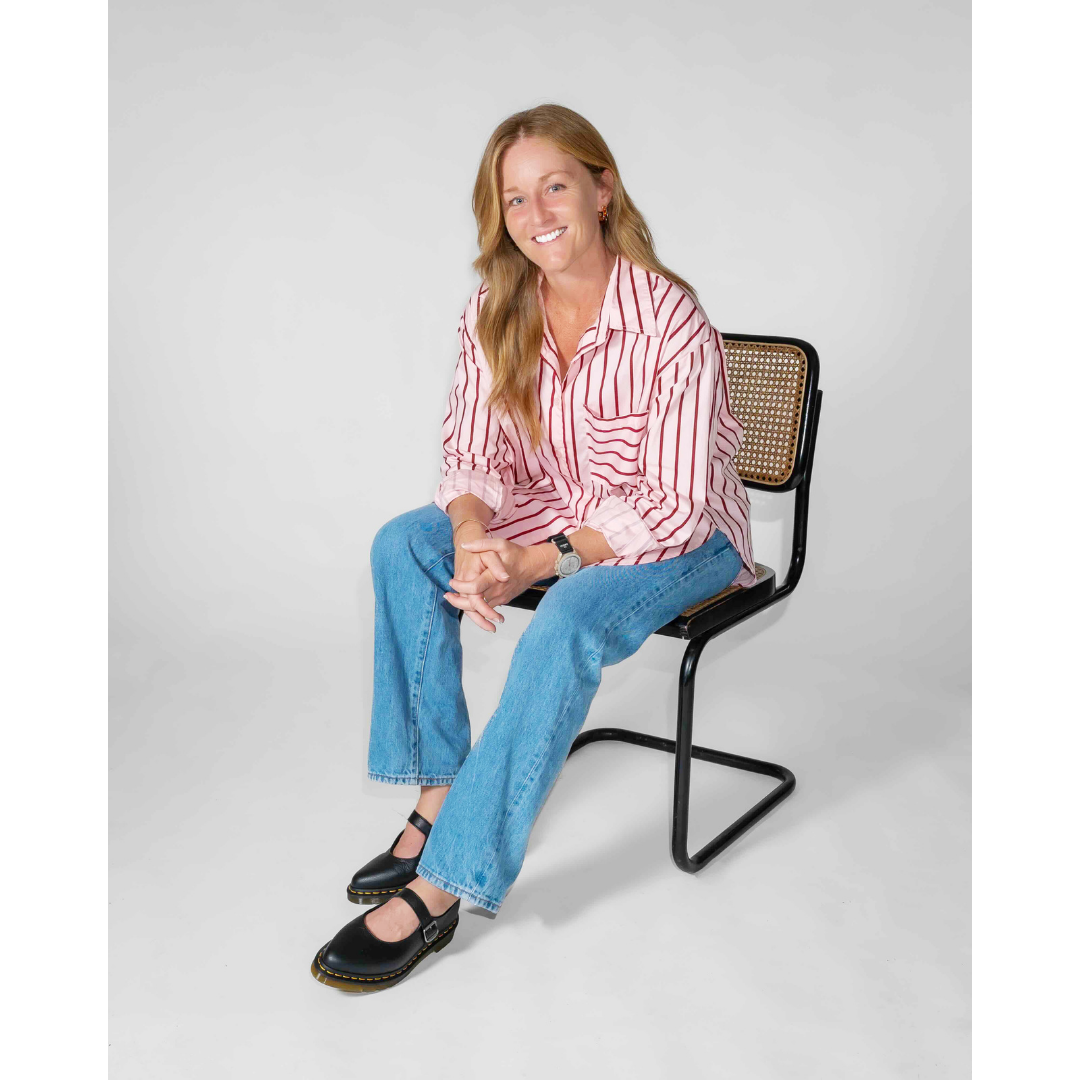
Trends, reels and the endless cycle of always wanting more has quietly bombarded the minds of countless social media users of all ages, but one former Mackay local has made it her mission to help others understand the effects of social media and find practical ways to break free from online addiction. Alexis Zahner is in Mackay over the next week to teach upcoming generations about social media and the effects it can have on the mind, particularly on identity, self-discovery, as well as the marketing strategies that get viewers hooked and influence their decisions. It is something Alexis knows first-hand can be a useful tool, but also a great disruption to authenticity and the world as we see and experience it. Alexis will hold a free meet and greet and book launch today, Friday 2nd October, at 5.30pm at the Mackay Surf Lifesaving Club, where she will give a talk and answer questions relating to her debut book, Real: Reconnecting to Yourself in a World of Likes and Lies. A former Mackay girl, Alexis spent the past 15 years working across business psychology, marketing and media, with her interest in social media influence beginning during her university studies at James Cook University in Townsville. Her own experience as a social media user, travel blogger and influencer eventually led her to question how much of her identity, decisions and values were being shaped by what she saw online. “The tipping point came for me about 3 years ago when I had this feeling that I couldn't separate influence from my own personal decision making,” she said. “I couldn't separate my own likes, dislikes, values, relationships from what I was being exposed to and being influenced by online.” “I found that I needed to take some time away from social media to recalibrate what was important to me and sort of reconnect and come back to myself.” Alexis said she understood the feeling of questioning who you are outside of social media. “I know what it feels like to live a life under the influence of social media and have that existential crisis of thinking to yourself, who am I? What do I like? What's the kind of life I want to live? and struggling to separate myself from influence.” Alexis is particularly passionate about reaching teenagers, who she says are in an important stage of identity development, and will share this message with Mackay high school students during her upcoming school talks. “Teenagers are really easily influenced by social media. So it's a really important age where we start educating them – not just on the mental health repercussions of things like social media and how it shortens their attention span, but how it actually influences who they become.” “If you're asking yourself these questions, it's not your fault. Social media is actually geared to create this impact on you.” Alexis encourages people of all ages to “start expanding beyond what you see on the platform.” “Dare to indulge in the things that you've always been curious about or things you used to love,” she said. “Don't be afraid to put the phone down to let yourself be curious and have fun.” What: Alexis Zahner's 'Real' Book launch When: 5.30pm Friday 2nd October 2026 Where: Mackay Surf Lifesaving Club Former Mackay local and author Alexis Zahner is returning home to share her experiences with social media and her debut book, Real. Photo supplied
Read the full story

The role of a councillor today is vastly different from the past. It carries significant responsibility and is increasingly shaped by regulatory constraints. When issues arise, new measures are put in place to prevent recurrence – but these changes affect everyone.
This brings us to the distinction between strategic and operational responsibilities.
In the past, a councillor could call a staff member working on a road project and request that excess soil be placed on a nearby block rather than disposed of, allowing a ratepayer to benefit. Those days are gone. Under current legislation, a councillor issuing such a directive would be in breach of the Queensland Councillors’ Code of Conduct and face serious consequences.
So how does a councillor, elected to represent the community, focus less on operational tasks and more on strategic leadership? The key is approaching governance like a board of directors – shaping policy and direction rather than managing day-to-day operations.
Councillors must be available for briefings and meetings beyond just Wednesdays. The role requires extensive reading, reviewing presentations, studying reports and preparing for significant decisions. Ordinary meetings often involve reviewing agendas ranging from 200 to 1000 pages, sometimes containing highly technical information.
Strategic leadership is set through the corporate plan and approved strategies, forming the foundation of governance. Seeking community feedback is essential to ensure these strategies reflect public needs.
While residents can reach out to councillors for a range of concerns, operational matters – such as potholes, grass cutting and barking dogs – are best addressed through a formal customer request by calling 1300 MACKAY or using Snap Send Solve on a mobile device.
Cr Alison Jones
While residents can reach out to councillors for a range of concerns, operational matters – such as grass cutting – are best addressed through a formal customer request to council

Mackay Marches To Shatter The Silence On Domestic Violence
By Hannah McNamara
A wave of purple swept through Mackay’s city centre last Friday, as more than 1000 people rallied together in a powerful show of unity to march against domestic and family violence.
From the early morning hours, the streets filled with the steady rhythm of footsteps and the echo of a collective chant:
“What do we want? RESPECT!”
“When do we want it? NOW!”
Led by the Rotary Club of Mackay and Resource Industry Network, the Respect in Every Step: March to End Domestic Violence united 12 schools, numerous local organisations, and everyday citizens in a vibrant, purposeful procession. Participants walked shoulder to shoulder from the CBD to Bluewater Quay, determined to make a stand – and make it matter.
More than a march, it was a statement. A declaration that silence is no longer an option, and complacency is no longer acceptable.
Enough is enough.
Among those walking was Queensland Premier David Crisafulli, who praised Mackay’s stand for justice and compassion.
“Mackay locals marched to say no to domestic and family violence in Queensland,” Mr Crisafulli said.
“For too long domestic and family violence has been a scourge in the shadows, and raising awareness in numbers like this makes a difference.”
The focus of the march extended beyond protest – it looked to prevention, to education, and to shaping a safer future by equipping the next generation with knowledge and respect.
That purpose was embraced wholeheartedly by Mackay Northern Beaches State High School, whose students walked with pride and conviction.
“We are proud to have had a group of Year 11 and 12 students participate in the Respect in Every Step: March to End Domestic Violence,” a school representative said.
“Our students joined other schools and groups from Mackay, along with Queensland Premier David Crisafulli MP, on the march through Mackay CBD.”
Following this, they heard presentations from Mackay Mayor Greg Williamson, Nigel Dalton MP and Superintendent of Police Dean Cavanagh.
“Big thanks to The Rotary Clubs of Mackay for their organisation of this event and for continuing to raise awareness,” the school added.
The streets fell silent as speakers delivered heartfelt speeches at Bluewater Quay, each voice reinforcing the need for bold community action and systemic change.
Mackay Police also joined the movement, reaffirming their commitment to supporting victims and ending the cycle of violence.
“Mackay Police were joined by the community for the Domestic and Family Violence (DFV) Awareness March, taking a stand, and raising awareness,” police said.
“Superintendent Dean Cavanagh delivered a speech following the march, recognising victims of DFV and remembering those who have lost their lives to DFV.
“With DFV Prevention Month (May) coming to an end, it’s a timely reminder that we all have a role to play in creating a safer Queensland.
“Let’s keep taking action to end DFV.”
Councillors, too, lent their voices and footsteps to the cause, including Cr Nathenea MacRae, who expressed her pride in the turnout.
“Proud to be involved in today's march with Councillor Ash-Lee Johnson to bring awareness to Domestic Violence. Great to see our schools support, with their students’ participation.”
While the march may have ended at Bluewater Quay, its message marches on, in hearts, conversations, and the unshakable belief that respect should be a non-negotiable, and that no one deserves to feel unsafe in their own home.
More than 1000 people - including Queensland Premier David Crisafulli - marched through Mackay last Friday in a powerful, united stand against domestic and family violence, calling for respect, prevention, and lasting change. Photo source: David Crisafulli MP
Photo source: Mackay Northern Beaches State High School
Photo source: Queensland Police Service
Photo source: Mackay Regional Council
-1748921123.jpg)
By Amanda Wright
Andrew Willcox, the Federal Member for Dawson, has been appointed Shadow Assistant Minister for Manufacturing and Sovereign Capabilities—an elevation that signals not only a deepening of his political responsibilities but a wider national recognition of regional Australia's role in securing the country’s future.
While the announcement from Nationals leader David Littleproud has been met with warm congratulations, Mr Willcox himself has approached the role with measured enthusiasm and a clear plan to ground national vision in local insight.
“I’m truly honoured to take on this role and welcome the faith placed in me,” Mr Willcox said.
“Manufacturing is a large contributing factor in our Australian economy—starting right here in Dawson, from Paget in Mackay through to Wulguru in the north.”
The new shadow portfolio carries significant weight. It touches on national security, economic resilience, regional employment, and long-term industrial policy. At its heart is the notion of self-reliance—Australia’s ability to design, produce, and sustain essential goods and infrastructure without undue dependence on foreign suppliers.
“There’s never been a more critical time to focus on our sovereign capabilities,” Mr Willcox said.
“From defence to food production, advanced manufacturing to aerospace—we must prioritise Australian-made at every level.”
His appointment coincides with a moment of symbolic national progress. The Dawson electorate will soon host the launch of Australia’s first fully homegrown rocket, produced by Gilmore Space Technologies in Bowen. For Mr Willcox, it’s more than a regional milestone—it’s emblematic of a new frontier.
“This rocket launch is a powerful symbol of what we can achieve when we invest in sovereign capabilities,” he said.
“We already build satellites in Australia. If we can launch them here too, we control the whole process—from the ground to low Earth orbit.”
Mr Willcox’s emphasis on sovereign control is no idle rhetoric. He frames it within broader geopolitical realities: the growing unease around dependence on potentially adversarial nations for critical technologies, including those with embedded cybersecurity risks.
“If we’re relying on overseas rockets to launch our satellites, we’re exposing ourselves to risks—economic and strategic. We need to be able to stand on our own two feet.”
But he's is not leaping straight into a national tour. Instead, he plans to begin his new portfolio where he knows best: On home soil.
“My first priority is to spend time in my own electorate,” he said.
“I want to talk directly to the manufacturers across Dawson, understand what’s holding them back and what policy levers we can pull to help their businesses thrive.”
From the underground mining lighting systems produced in Paget and exported globally, to the concrete-printed housing structures that could help solve the housing crisis, Mr Willcox sees manufacturing not just as a sector, but as a solution. He’s particularly interested in modular construction and offsite fabrication techniques that could fast-track new housing and infrastructure.
“I want to explore all the modern methods, whether that’s printing homes in a warehouse and assembling them like Meccano, or repurposing existing materials to meet the shortage.
"There’s a real opportunity to align manufacturing with social outcomes like housing.”
The breadth of the Dawson electorate provides a microcosm of the national manufacturing landscape. In Bowen, Willcox highlights the intersection of horticulture and industry, while in the Burdekin, a new industrial estate is opening up to support agricultural supply chains and mining equipment fabrication. Townsville is entering the frame with proposals for flatbed train carriage manufacturing and components for sustainable aviation fuel, a sector Mr Willcox says is ripe for expansion.
But it’s the coupling of local know-how and national policy that excites him most.
“I didn’t want to be pigeonholed as the ag guy,” Mr Willcox said.
“I’m proud of my background in farming, and I’ll always advocate for rural Australia, but this role allows me to contribute to something broader. It’s a stepping stone into deeper national service.”
For Mr Willcox, the goal is clear: Boost innovation, create long-term employment, and restore confidence in Australia’s industrial capabilities. That means listening to manufacturers, engaging with emerging sectors, and crafting policy that supports future-facing industries—from defence and agriculture to space and housing.
"If the pandemic taught us anything, it was the critical importance of self-sufficiency—our ability as a nation to produce what we need, when we need it, without relying on fragile global supply chains.
“A nation that can make things for itself is a nation that can grow and shape its own future,” he said.
“And that future starts here.”
Also this week, the Australian Electoral Commission made it official — Andrew Willcox was formally declared re-elected as the Federal Member for Dawson.
During the ceremony, the Divisional Returning Officer delivered a brief speech outlining the vote count and confirming the result. Mr Willcox was then invited to speak, followed by the unsuccessful candidates in order of their standing.
Federal Member for Dawson Andrew Willcox, Andrew's wife Raylene, and AEC Divisional Returning Officer Sandra Sparti join AEC staff and volunteers to celebrate the official declaration of the Dawson result, with two volunteers proudly holding an "Awesome Dawson" sign crafted from the thimbles used to count ballots on election day. Photo credit: Amanda Wright

The Mackay and District BMX Club is beaming with pride after two of its rising stars, Ruby and Lilly, delivered standout performances at Rounds 3 and 4 of the National Series in Lake Macquarie late last month.
Ruby took on a new challenge, double-classing for the first time at a national level – racing in both the 20-inch and Cruiser bike categories. Her debut was nothing short of impressive.
In Round 3, Ruby powered her way into the finals in both classes, finishing 7th in the 20” category and landing a podium finish with 3rd place in the Cruiser. Round 4 brought more drama and determination. After taking a fall in the 20” motos, Ruby showed true resilience by dusting herself off and finishing the day. Her grit was rewarded in the Cruiser class, where she once again took 3rd place on the podium – proving consistency and courage go hand in hand.
Lilly also made her mark, proudly representing not just Mackay, but Australia, as part of the prestigious Mighty 11s Trans-Tasman Challenge – a highly competitive event that pits the best young riders from Australia against their New Zealand counterparts. Racing with passion and pride, Lilly helped lead the Australian team to victory, with both the girls’ and boys’ squads taking out the top spots.
It was a weekend full of adrenaline, heart, and hard-earned success – and Mackay's BMX girls left nothing on the track. Congratulations to Ruby and Lilly on an inspiring weekend of racing and representing their club and region with pride.
Mackay BMX talents Ruby and Lilly shone at the National Series in Lake Macquarie, with Ruby landing double podiums and Lilly helping Australia win the Mighty 11s Trans-Tasman Challenge. Photo source: Mackay and District BMX Club Inc (Facebook)

It has been 65 years since the Fokker Friendship “Abel Tasman” crashed off the coast of Mackay, claiming the lives of all 29 passengers.
This tragic event still touches many lives in our region and beyond.
Of the lives lost, four were crew members and nine of the 25 passengers were young boarders from the Rockhampton Grammar School returning home to Mackay for the Queen’s birthday weekend.
The youngest was just nine years old.
Mayor Greg Williamson said what was meant to be a joyful homecoming turned into unimaginable heartbreak for families, friends and the wider community.
“To this day, this crash remains as one of Australia’s worst civil aviation disasters,” Mayor Williamson said.
To mark the 65th anniversary of the tragedy, a commemorative ceremony will be held at the Fokker Friendship Memorial at Illawong Beach on Tuesday, June 10 at 11am.
Mayor Greg Williamson said the remembrance is a deeply important occasion for the community.
“It is important that we come together to remember the lives lost, to support those who still grieve and to ensure that future generations understand the significance of this event in our region’s history,” he said.
“Guests from across the state are attending, including family members and friends of the crew and passengers lost and those who were later involved in the crash.
“A representative from the Rockhampton Grammar Boarding School, where many of the children had been studying, will also attend.”
While the cause of the crash was never definitively determined, the investigation led to a significant advancement in aviation safety.
In the wake of the disaster, Australia became the first country to mandate flight recorders, or "black boxes," on all commercial aircraft—a legacy of safety born from the tragedy.
Long-time Mackay resident and local historian, Col Benson from Mackay RSL Sub Branch, reflected on the outpouring of grief at the time and the broader impact of the tragedy.
“The community needed a place to come together and grieve,” Mr Benson said.
“The bronze Roll of Honour on the memorial stone at Illawong Beach was built by locals at Walkers Foundry on Harbour Road in their lunch breaks,” he said.
“It was completed and the memorial unveiled in just 16 days on June 26, 1960.
“To this day, it remains a place of reflection and remembrance.
“It affected everyone—from the air traffic controller on duty that night, to the search and rescue crews and even the reporters who covered the crash then and in the years that followed.”
Community members are welcome to attend the commemorative service. Further details are available on the Mackay Regional Council Facebook event page.
The TAA Fokker F-27 Friendship “Abel Tasman” that crashed off the coast of Mackay on June 10, 1960 in Australia’s worst civil aviation disaster. Image supplied

It was smiles for miles at BB Print Stadium as 3,500 locals turned out for the Mackay Hospital Foundation’s Family Fun Day, up 500 from last year and bursting with enough joy to power the spinning tea cups.
With four hours of non-stop rides, live music, fairy floss and a star-studded cast of Bluey, Bingo and the Paw Patrol gang, the event had kids bouncing higher than in the jumping castle. Gardian Real Estate staff were the real MVPs—spending the whole day wrangling rides with cheer and energy that defied both gravity and the Queensland sun.
Behind all the thrills was a serious cause: raising money for the Mackay Hospital Foundation, which fills critical funding gaps to support better care for local patients.
From heart-racing rides to heartfelt generosity, it was a day where community spirit took centre stage, and not even the dancing Bluey could outshine it.

Council is encouraging residents to take advantage of the discount period by registering their pets before June 30.
Registration renewal letters have been issued and should be in the mail for residents who have not opted to receive them electronically by email through eNotices.
Mayor Greg Williamson said this month was the perfect opportunity for residents to get in early and ensure their pet’s registration was up to date.
“A reduction in fees as much as 30 to 50 per cent can be claimed by residents who register their cats and dogs during the discount period,” Mayor Williamson said.
“Registering your pet ensures that if your pet goes missing, we have your most up-to-date contact details so we can return your pet to you as soon as possible,” he said.
“Pet registration fees are also put towards the costs of running council’s Animal Management Centre, which provides care for lost pets until they can be reunited with their owners or adopted.”
To support the discount period and pet registration, council is again running the popular photo competition for residents with registered animals.
“We are encouraging pet owners to share photos of themselves and their pets practising responsible pet ownership,” Mayor Williamson said.
“This could be anything from taking your dog for a walk on a leash, playing in an off-leash dog park or a photo of your pet sporting a collar with a council pet registration tag.
“We will choose one winner each week and they will take home a $100 voucher from a local pet store.”
Photos of you and your pet practising responsible pet ownership can be shared at mackay.qld.gov.au/pet.
If there has been a change to your address or your pet’s status in the last year, update your details with council online at www.mackay.qld.gov.au/onlineserivces, calling 1300 MACKAY (622 529) or by emailing council@mackay.qld.gov.au.
For details on how to register a new pet, visit www.mackay.qld.gov.au/registrationinfo.
To receive future renewal notices by email, sign up for eNotices at mackay.enotices.com.au.

Safety leadership was brought into focus at the annual Resource Industry Network’s 2025 Safety Conference held on the 23rd of May at the MECC. Around 200 of the region’s safety leaders came together to hear from world class speakers and to unpack the latest techniques and strategies to help to continue the high standard of safety within their business.
We received fantastic feedback from attendees which showed that the speakers had motivated them to return to their business and lead from the front when it comes to safety.
Internationally renowned speaker Dr David Proven opened the conference by translating the five core High Reliability Organisation (HRO) principles - preoccupation with failure, reluctance to simplify, sensitivity to operations, commitment to resilience, and deference to expertise - into tangible strategies for leaders, safety professionals, and frontline teams. Attendees gained insights into developing the processes, capabilities, and cultural conditions needed to embed these principles in day-to-day operations, with real-world examples from mining organisations working to operationalise high reliability.
David also spoke of the importance of hearing all voices involved in the process and that decisions should not be just made by the ‘HIPPO’ (highest paid person in the organisation). It was a wonderful way to start the conference and the follow up keynote speakers were just as impressive. Each keynote speaker navigated the attendees through the very topical subjects of physiological safety and psychosocial safety and how addressing these in your workplace are critical to ensuring a safe environment.
The afternoon schedule offered a diverse range of topics in smaller breakout seasons. These informative and interactive sessions reinforced the messages of the plenary sessions, and set about breaking the topics down further to give attendees practical tools to take back to their workplaces to improve safety performance.
The practical tips that conference delegates learned to be able to implement into their businesses will create a safer and improved working environment for their staff. In addition, the connections made during networking opportunities throughout the day will allow for collaboration and information sharing which will ultimately lead to a safer region overall.
A huge thanks goes to the RIN staff for organising the event, our sponsors, the speakers and the attendees for making this year’s Safety Conference such a fantastic event. Now it’s onto Resource Industry Networking’s gala event for the year – the 2025 RIN awards which will be held on Friday 22nd August at the MECC.
Big conversations, bold ideas and a whole lot of heart — the 2025 RIN Safety Conference brought together industry leaders and changemakers for a powerful day of learning, connection and real-world solutions. Here's a glimpse at the people and moments driving safer, stronger workplaces across our region. Photos supplied

As the crisp air of winter descends upon Mackay and June 30 looms large, a familiar rhythm stirs for financially savvy households and enterprises alike. This isn’t just a date. It marks the finale of a fiscal year — a time to reflect, recalibrate, and position ourselves for the financial year ahead. The Australian Taxation Office (ATO) is ready. The question is, are you?
For Our Local Businesses
For the enterprising minds of Mackay, sharpening the books now can reap generous rewards. Chief among them is the enduring appeal of the Instant Asset Write-Off. Eligible small businesses — those with a turnover of less than $10 million — can instantly deduct the cost of assets under $20,000 per asset, provided they are in use by 30 June 2025. It is a timely nudge to upgrade, innovate and reduce taxable income in one go.
It is also essential to ensure that all superannuation guarantee contributions reach employees’ funds before the end of the financial year, not only to stay compliant but also to secure deductions. Prepaying allowable expenses, such as subscriptions or insurance premiums covering less than 12 months, can tip the tax scales in your favour. For those dealing with discretionary trusts, resolving income distributions before 30 June helps avoid the ATO’s less forgiving default tax treatment.
For Our Residents
For individuals, the new financial year brings something refreshingly rare, tax cuts. From 1 July 2024, the 19 per cent bracket shrinks to 16 per cent, while the 32.5 per cent bracket becomes a clean 30 per cent. Expanded thresholds also mean more of your income stays where it belongs: in your pocket.
Beyond these structural wins, personal deductions deserve attention. Working from home may allow you to claim 70 cents per hour under the fixed rate method, or you can itemise actual costs for greater accuracy. Vehicle use, professional development and even uniform laundry costs may be legitimate deductions. And for those thinking long term, contributing to superannuation up to the concessional cap of $30,000 for 2024–25 can be a powerful tax-deductible strategy, provided you lodge a valid notice of intent with your fund.
If COVID taught us anything, it is the value of national self-sufficiency, and that includes financial literacy. Whether you are running a business or managing a household budget, now is the time to gather your records, review your strategies and consult a trusted tax adviser.
Because in the world of tax, timing is not just everything. It is the deductible difference between “good enough” and “well played.”

When running a business, it’s easy to do all the right things like delivering a great service, managing your team, and keeping operations running smoothly, while still feeling like your brand is invisible. You’re showing up, but the spotlight lands on your competitors instead. Or worse, your ideal audience notices you but then loses interest. It’s not that your business lacks value, it’s that your brand lacks impact.
We caught up with the director of redhotblue, Mackay’s longest-standing creative agency, who has spent decades helping businesses go from overlooked to unforgettable.
In the age of digital technology, business owners are leaning more and more on quick fixes. The problem: you look and sound like everyone else. Understanding your brand personality requires skill. Identifying your audience and what resonates with them takes time and experience, and there’s no elevator to success.
Relying solely on your ‘unique’ offering to attract the right audience is naive. Your intended audience needs to connect with your brand and understand why you’re their best choice. If people don’t know about your business, they’ll just choose another option.
There are a few reasons that people lose interest:
Firstly, if your messaging and brand voice are inconsistent across platforms. Often business owners rush to get a message into the marketplace and forget to ensure they’re representing their brand values.
Secondly, if a customer’s experience with your brand is disjointed it can feel overwhelming, untrustworthy, and too hard. Love them or hate them, McDonald’s does a great job of providing the same look, feel, and experience regardless of location.
Finally, assuming your audience knows what you’re doing. No one is going to understand your brand better than you, but in a sea of visual communication, it’s easy to get lost if you’re not communicating effectively.
To quote Simon Sinek, “People don’t buy what you do, they buy why you do it.” Your brand messaging should connect emotionally with your audience because the ‘Why Factor’ resonates with the limbic brain, the part of the brain responsible for emotions.
Essentially, people are more likely to connect with your values and mission than your product or service. That’s why it’s crucial to understand and clearly communicate your business’s purpose. Ask yourself, what story is my brand telling and is it memorable enough to stick with people?
It’s important to remember that standing out isn’t a starting point, it’s the result. We often see businesses creating bold visuals without purpose or connection to their brand. This hollow approach doesn’t provide any reason for a customer to remember you.
Instead, I suggest you involve your team and conduct a think tank. Ask yourself what your brand represents and remember that your brand is more than your logo - it’s about how customers perceive you, how they feel when they think of your brand, and what keeps them coming back for more. Focus on creating one clear message that describes the benefits of your business to your audience, and don’t talk about yourself.

CQUniversity and the QCCS Mackay Cutters have announced a new partnership focused on developing clear and structured pathways for both university students and emerging rugby league talent looking to build careers in elite sport.
This partnership is set to bolster the pathway from Hostplus Cup and BMD competitions to the NRL and NRLW, providing our region's budding talents with a clear pathway to the elite level.
The Mackay Cutters are a recognised feeder club to the North Queensland Cowboys, and through this partnership, CQUniversity students will gain unique access to a professional sporting environment aligned with NRL standards, providing a valuable stepping stone into high-performance roles.
As part of Queensland Rugby League’s broader development framework, the Cutters provide students with direct exposure to the talent, technologies and performance standards that exist at the top levels of the game.
Mackay Cutters CEO, Dave Roberts, said the partnership is about building sustainable career pathways in our region.
“This partnership aligns with our commitment to develop pathways in elite sport, not only for players, but for the next generation of professionals working behind the scenes.
"We’re proud to offer an environment where students can gain meaningful, real-world experience that could take them from Mackay to the NRL,” he said.
The partnership is already delivering results, with a CQUniversity student recently commencing an internship within the Club’s strength and conditioning department, working alongside the Head of Performance to support athlete monitoring, testing, and training delivery. The hands-on experience provides insights into the daily demands of professional rugby league and has been identified as a blueprint for future placements with the Club.
CQUniversity Director of Sport Strategy, Professor Fabio Serpiello, said the collaboration reflects the University’s commitment to providing industry-aligned learning experiences for students.
“Our students in courses such as Exercise and Sports Science, Allied Health, Physiotherapy and Psychology will relish the opportunity to work with the professional team at the Mackay Cutters, and players on pathways to the NRL and NRLW,” he said.
“From grassroots events to global champions, CQUniversity has a long history of nurturing regional sport, and this kind of partnership – based on our new SPORT Strategy to grow sport from participation to high performance – is the perfect way to share our expertise and world-class research facilities with regional Queenslanders.”
The partnership also supports players within the Cutters system, providing them with access to further education and professional development opportunities through CQUniversity. This dual focus ensures athletes are supported not only in their sporting goals but in preparing for life off-field beyond the game.
L-R: Mackay Cutters Head of Performance, Lee Paterson; CQUniversity Director of Sport Strategy, Professor Fabio Serpiello; CQUniversity Educational Team Lead – Fitness, Ashlee Battersby; Mackay Cutters Chairman of the Board, Steven Dowden. Photo supplied
.jpg)
Last week, our publishing team had the privilege of attending the 2025 Queensland Country Press Association (QCPA) Conference and Media Excellence Awards — an annual gathering that brings together the heart of regional journalism from across the state. Held in Brisbane, the event reminded us that while the digital age may be reshaping how news is consumed, the need for trusted, community-driven storytelling has never been greater.
That message rang loud and clear in the opening remarks from Queensland Minister for Primary Industries Tony Perrett, who made one of the most significant announcements of the day: 75 per cent of the State Government’s print media budget will now be allocated to regional newspapers. In doing so, he acknowledged what many of us have long known — that regional publications are “absolutely vital” and remain the lifeblood of their communities. He spoke of the resurgence of independent newspaper publishers in Queensland and the essential role they play in keeping local voices heard.
This announcement also aligns with key findings from a Deakin University report on media innovation, which found that “securing the future of quality and reliable news and information platforms in non-metropolitan areas is in the national interest.”
As a proud independent publishing group based right here in Mackay and the Whitsundays, we couldn’t agree more. Our newspapers, Mackay and Whitsunday Life, Burdekin Life and Hinchinbrook Life, along with our lifestyle magazines Core Life and Tripping, are built on the idea that strong regional journalism strengthens communities. For the third year running, Mackay Life brought home gold, a testament not just to consistency, but to the kind of storytelling that continues to resonate deeply with our readers and peers across the state. It was humbling to have that work recognised across three award categories: a gold for Marketing Campaign of the Year in Mackay Life, a silver for Best ROP Feature in Burdekin Life, and a bronze for Young Journalist of the Year, awarded to our own Victoria Velton, who began with us in the Whitsundays and is now based in the Hinchinbrook.
One of the standout moments of the conference came from Olympic gold medallist Steven Bradbury. Best known as the man who crossed the finish line after a dramatic pile-up in the 2002 Winter Olympics, Bradbury’s story is often summed up in one word: lucky. But as he candidly shared, that luck was hard-earned. He spoke of training five hours a day, six days a week for over a decade. Of recovering from a broken neck. Of losing four litres of blood after a racing accident. His message? “The harder you work, the luckier you get.” A motto we’re proud to echo.
We also enjoyed a dose of humour from the awards MC, the brilliant Des Dowling, a former journalist turned comedian who knew exactly how to balance wit with insight.
We might be a small team, but like all good Aussie success stories, we’re punching well above our weight, and we’re only just getting started.
Amanda
Trish Jandt, Crissy Bottrell, Hannah McNamara, Amanda Wright, award sponsor representative, Rachael Smith, Ruth Puddefoot and Daniel Heggie at the 2025 QCPA Media Excellence Awards in Brisbane. Photo credit: Samantha Wantling

Networking and learning were the themes of the morning at the fourth annual Manufacturers Breakfast held at the Resources Centre of Excellence (RCOE) at the start of June.
The event offered an opportunity for local manufacturers to come together in a relaxed environment to share ideas and network over breakfast.
Manager of the Queensland Manufacturing Hub in Mackay Deb Allan provided an overview of activities undertaken by Hub staff over the past 12 months and what local manufacturers can look forward to over the coming year.
Dean Kirkwood from the Resource Industry Network discussed the launch of the Manufacturers Workforce Attraction toolkit, Teagan Dowling from The BCW presented on the benefits of increased workforce diversity and Jarrah Steen, from GW3, talked through the opportunities presented through decarbonisation, and highlighted the 7 sectors identified in the METS Revenue Diversification Strategy for growth in the Greater Whitsunday region.
A strong turnout of local manufacturers and industry leaders gathered at the fourth annual Manufacturers Breakfast, held at the Resources Centre of Excellence. Photos supplied

The Mackay Regional Council has officially triggered the by-election process to fill the vacant councillor position left by the resignation of Cr George Christensen, following a special meeting held on Wednesday, June 4.
The meeting, convened at 8.30am in the Sir Albert Abbott Administration Building, was called specifically to address the vacancy, which came into effect at 5.00pm on Friday, May 30. Councillors gathered to determine how the position—now legally required to be filled within two months—will be managed in accordance with the Local Government Act 2009.
Mayor Greg Williamson confirmed that under the Act, a by-election must be held because the vacancy occurred during the mid-term period of Council’s electoral cycle. This window is defined as beginning on the first anniversary and ending the day before the third anniversary of the last quadrennial election.
Rather than opting for a traditional polling day, councillors voted in favour of recommending a postal ballot as the preferred method for the by-election. This recommendation will now be sent to the Minister for Local Government, who must approve the process and formally request the Electoral Commission Queensland (ECQ) to administer the election.
Mayor Williamson said a postal ballot presented the most practical and economical solution.
“It’s the cheapest way for Mackay Regional Council to hold a by-election, particularly after recent state and federal elections, which have likely caused a bit of voter fatigue,” he said.
Council highlighted three key advantages of using a postal ballot: reduced costs, increased accessibility for voters, and the convenience of participating without attending polling booths in person. The ECQ has previously advised that postal ballots offer savings when compared to full in-person voting infrastructure.
However, the mayor acknowledged that choosing this method may delay the completion of the process slightly beyond the standard two-month timeframe. Even so, Council was assured this would not invalidate the by-election, and it remained committed to ensuring a fair and timely process.
The cost of the by-election has been estimated at $700,000, with Council flagging the need for a budget amendment during the first quarterly review of the 2025/2026 financial year. The by-election costs were not included in the original draft budget, which is set to be adopted later this month.
Once the Minister receives the recommendation from Council, the ECQ will begin the process of scheduling the by-election. A confirmed date is expected to be announced within the next week, with the vote likely to take place in the coming months.
Council will continue to update the community as more information becomes available regarding nominations, voting procedures and timelines.
Cr George Christensen was sworn in to Mackay Regional Council in 2024—less than 18 months before his unexpected resignation in May 2025
Councillors gathered in the Mackay Chambers on June 4 for a special meeting to set the wheels in motion for a by-election following Cr Christensen’s resignation
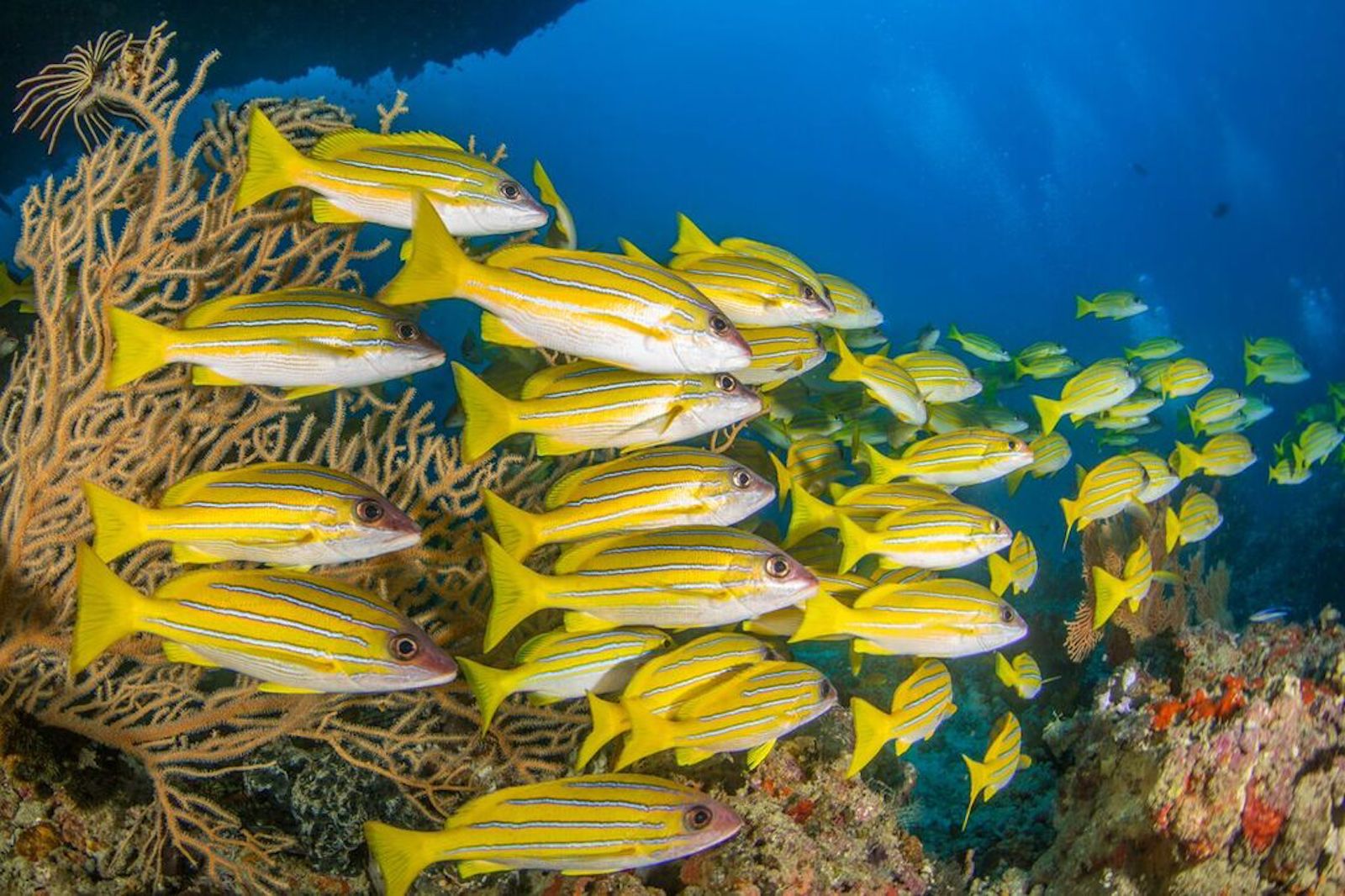
The highlight for most visitors to the Great Barrier Reef is their encounter with the myriads of coral reef fish…every size, shape, and colour. Very inquisitive and often right in your face.
Unfortunately, the opportunity for that experience is changing. A study has found concerning new evidence of long-term declines in coral reef fish around highly visited inshore islands of the Great Barrier Reef.
Scientists surveyed reefs at 100 sites around the Palm Islands, Magnetic Island, Whitsunday Islands, and Keppel Islands over a 14-year period, revealing fish communities are struggling to cope with increasingly frequent disturbances including coral bleaching, floods, and cyclones.
The study is part of a reef monitoring program now led by James Cook University around popular inshore islands, which are important for recreational fishing, tourism, and local communities.
“The fringing reefs around inshore islands suffer from intense human pressure due to their proximity to the coast,” explained Dr Daniela Ceccarelli, the lead author in the study.
“Reefs further from the coast have generally shown fish to be quite stable in the face of environmental disturbances, but it’s a different story for the inshore fish communities.”
“These inshore fish habitats have endured greater cumulative and intense local-scale pressures, with too little time to recover between stress events.”
The study found fish populations across these islands dropped by 33%-72%, and the numbers of fish species fell by 41%-75%, depending on the location.
These are substantial and concerning declines in fish abundance and diversity at the surveyed sites.
In the Whitsunday Islands, Cyclone Debbie in 2017 caused a steep drop in fish abundance.
“Cyclone Debbie’s intense impact on coral cover and physical damage to reef structures reduced available habitat, especially for coral-dependent species,” said Dr Maya Srinivasan, a coral reef ecologist at JCU and co-author of the study. ‘This loss has made it challenging for fish populations to maintain stability in these areas.”
“Marine Park zones where fishing is banned improved the picture to some degree, providing a buffer for the species that are usually targeted by fishers.”
“However, we found that No-Take Marine Reserves are unlikely to mitigate the impacts of an increasingly chaotic climate for all fish species in the long term,” she said.
Coral reefs have always been considered as the “canary in the coal mine”, an early indicator of climate change impacts. This latest research adds to the mounting evidence that without global action on reducing emissions, protected areas and fisheries management alone are not sufficient to safeguard coral reef fish.
Contributed with thanks to Whitsunday Conservation Council.
Publishers Indemnity. Any individual or entity that places advertising, supplies copy material, or submits editorial content to Core Life Publishing agrees and undertakes to ensure that all such material:- Does not infringe upon any copyright, trademark, or other intellectual property rights;- Is free from any content that could be considered defamatory, libelous, or slanderous;- Does not infringe upon any rights related to privacy or breach of confidence;- Contains no obscene, indecent, or otherwise unlawful material;- Complies fully with the Trade Practices Act and all other applicable laws, regulations, or statutes.Furthermore, by submitting or placing such material, these individuals or entities agree to indemnify and hold harmless the publisher, Core Publishing and Events Pty Ltd, and/or its agents from and against any and all investigations, claims, demands, liabilities, damages, costs, or judgments arising out of or in connection with the material provided. All material is believed to be accurate at the time of printing and remains the copyright of Core Publishing and Events Pty Ltd.
© 2026 Mackay and Whitsunday Life Pty Ltd.
