
Independently Owned, Locally Grown, Community Loved
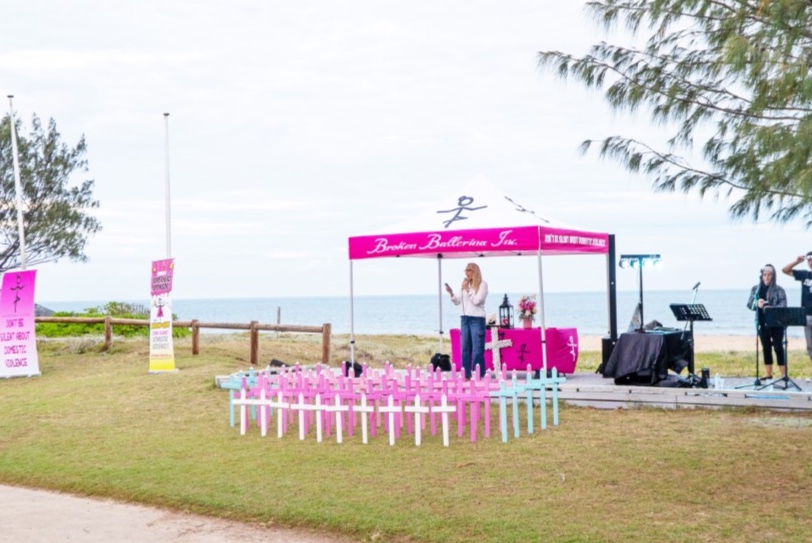
Last week the Whitsunday Counselling and Support organisation hosted their annual Candle Lighting Ceremony in Cannonvale to mark the beginning of Domestic and Family Violence Prevention month. Each May, the annual initiative aims to raise awareness of domestic and family violence and coercive control. The theme for 2026’s DFV month is: Together Queenslanders can prevent domestic and family violence. The event saw attendance from Mayor Ry Collins, Cr Jan Clifford and representatives from the Whitsunday Police Station and Whitsunday Counselling and Support. An acknowledgement of country was provided by Vicky Brimble (Koa Banburi) with music performed by Nicke Di Gregorio. Manager of Counselling Services at Whitsunday Counselling and Support Sharon Parker presented a powerful speech as she memorialised those lost, and put forward a call to action. “In our commemoration today, I would ask you to not just think about these deaths as statistics, but to reflect on the people behind the statistics,” Sharon said. “These were real people, with lives that mattered. They mattered.” Clothes were displayed to mark the individuals who tragically lost their lives to domestic violence. A list was provided of individuals across Australia who had lost their lives to domestic and family violence over the past two years, with many of the cases still ongoing. “This is not a comfortable thing to do,” Sharon said. “I know that whilst compiling this list I got emotional thinking about the victims. However, commemoration is important, as without discomfort, we are rarely moved enough emotionally to make change.” Sharon defined domestic and family violence, to improve awareness across the region. “Domestic and family violence is behaviour that occurs between people who are, or have been, in a domestic or family relationship. It is not just physical violence. It can include abuse that is emotional, financial or sexual. Tragically, it can have fatal consequences.” The speech touched on societal factors that contribute to domestic and family violence. “We did not arrive here suddenly. This harm has been shaped over time by gender inequality, rigid power structures and attitudes that have normalised control, silence and excuse making,” Sharon shared. “Misogynistic beliefs and patriarchal standards – when left unchallenged – can normalise control, silence and violence, particularly within homes and relationships. “Such attitudes can affect women’s safety both at home and in public. Many women live with the risk of domestic and family violence and often are making constant decisions with behaviour, routine or clothes – just to feel safe.” Sharon has also addressed the impacts of patriarchy and misogyny on men. “For men it is also harmful. It creates pressure to fit into narrow ideas of masculinity which may discourage men from expressing feelings, showing vulnerability or asking for help. These expectations can negatively affect men’s mental health, relationships and wellbeing. Patriarchy can also limit men’s freedom take on caring roles, seek support or live in ways that don’t fit traditional gender stereotypes.” Sharon then put forward a call to action, advising community members on how they could show their support. “Each of us has a role to play. Speaking up matters. We must all challenge sexist or violent language. Refusing to make excuses matters. Listening, believing and supporting survivors matters. Changes comes when individuals choose to reject attitudes that devalue, dismiss or endanger others. “So today, I challenge you with this call to action. I challenge you to reflect on how you view domestic and family. I challenge you to examine everyday behaviours, attitudes and conversations – and to choose to do better. Real change happens when individuals are willing to challenge what feels familiar and take responsibility for creating safer, more respectful relationships and communities.” Following on from the vigil on Thursday 14th, a roundtable was led by the DFV Prevention Council at Shute Harbour Marine Terminal. The stakeholder roundtable focused on domestic and family violence (DFV) primary prevention, with a strong emphasis on community-led approaches and collaboration across the region. The session brought together a range of local leaders and stakeholders, including representatives from council, police, community services and state agencies, to discuss opportunities for strengthening prevention efforts across communities including Airlie Beach/Cannonvale, Proserpine and Bowen. The focus was to identify local drivers of DFV, map community strengths and resources and explore practical, place-based solutions to help prevent violence before it starts. If you or someone you know is in a dangerous or life-threatening situation, call Triple Zero (000). If you don’t want to speak to the police you can also call DV Connect on 1800 811 811 or 1800 RESPECT on 1800 737 732 (24 hours, 7 days a week). You can also go to the Domestic and Family Violence Prevention Month website for more details and support. https://www.qld.gov.au/community/getting-support-health-social-issue/support-victims-abuse/need-to-know/i-want-to-help-someone/practical-steps-to-help-someone-experiencing-dfv/taking-community-action/domestic-and-family-violence-prevention-month#:~:text=Each%20May%2C%20Queensland%20marks%20Domestic,Violence%20(DFV)%20Prevention%20Month. – can designers make into QR Code please. Domestic and Family Violence is an ongoing issue across the country. Change is required at an individual level to make a difference on a national scale. The Whitsunday Counselling and Support team with Mayor Ry Collins and Councillor Jan Clifford. Constable Christina Smith speaking about domestic and family violence. Photos supplied
Read the full story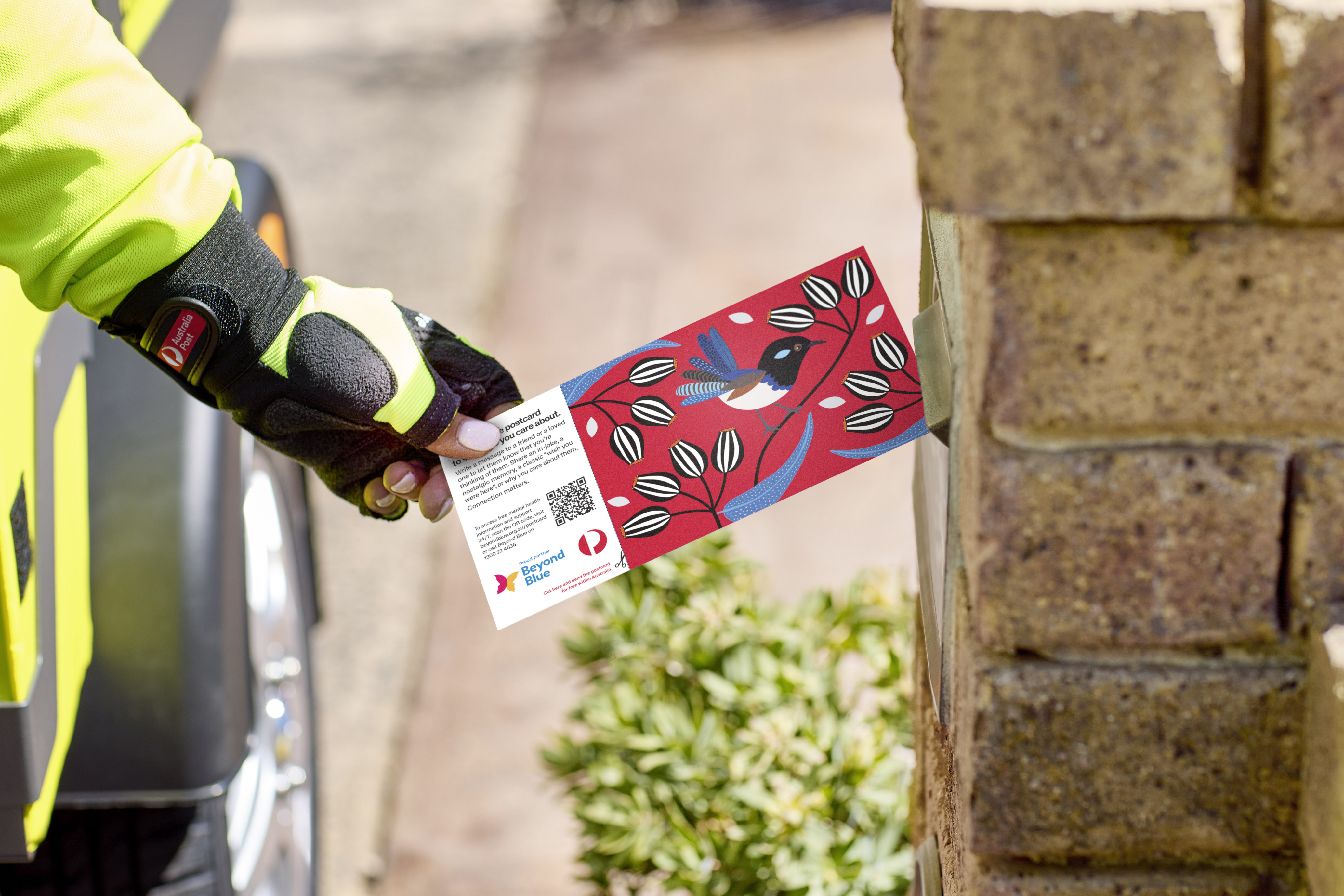
Millions of Australians, including households across the Mackay Shire, are being encouraged to reconnect with loved ones as Australia Post and Beyond Blue mark a major milestone in their national Connection Postcards campaign. This month, four million prepaid postcards are being delivered to letterboxes across the country, with Queensland receiving more than 824,000 cards as part of the initiative aimed at tackling loneliness and social isolation. The campaign also celebrates two significant milestones, the delivery of the 25 millionth Connection Postcard since the initiative began in 2021, and 25 years of Beyond Blue supporting Australians’ mental health. Australia Post General Manager Community and Stakeholder Engagement, Nicky Tracey, said the campaign comes at a time when many Australians are feeling increasingly disconnected from their communities. “More Australians are saying they’re feeling disconnected, and that sense of isolation can have a real impact on wellbeing,” Ms Tracey said. “This year is particularly exciting as we celebrate 25 years of Beyond Blue supporting Australians’ mental health and deliver the 25 millionth Connection Postcard since the campaign began. “Connection Postcards are a simple way to reach out, to let someone know you’re thinking of them, and to remind people they’re not alone.” Recent research from Beyond Blue found only one-third of Australians feel a sense of belonging within their local community, with loneliness and isolation particularly affecting regional and remote areas. The issue is especially significant for farming communities across regional Queensland, where financial pressures, cost-of-living challenges and extreme weather events continue to impact mental health and wellbeing. Beyond Blue CEO Georgie Harman AO said simple acts of connection can play a powerful role in supporting mental health. “Staying connected with others is so important for our mental health, but too many Australians, particularly those in regional and rural communities, are feeling lonely or disconnected,” Ms Harman said. “Simple, everyday interactions that foster connection, like writing a postcard or saying hello to people in our neighbourhood, are some of the most effective ways to support mental wellbeing and strengthen the relationships we rely on for our mental health.” Connection Postcards are available through participating Australia Post outlets and can also be ordered online through Beyond Blue’s Connection campaign page. The campaign encourages Australians to send a handwritten message to a friend, family member or neighbour as a reminder that support and connection matter. CAPTION: Australia Post and Beyond Blue are encouraging Mackay region residents to reconnect with loved ones through the nationwide Connection Postcards campaign, which this year celebrates the delivery of its 25 millionth postcard. Photo supplied
Read the full story
When it comes to CPAP therapy, there are plenty of myths that can stop people from getting the sleep they need. The reality is that modern CPAP technology is quieter, smaller and more comfortable than ever. Let’s separate fact from fiction. Myth 1: CPAP is for old, overweight men Fact: Obstructive Sleep Apnea (OSA), doesn’t discriminate based on age, gender or body type. While excess weight can often make symptoms worse, a 2025 meta-analysis suggests that roughly 60–70% of people with OSA are not obese at all. Meanwhile, Men are often diagnosed easier and earlier due to classic symptoms like loud snoring or choking during sleep. Women, also suffer from sleep apnea and tend to be overlooked or misdiagnosed as their symptoms differ. Women tend to present with more subtle signs such as insomnia, morning headaches or fatigue especially when approaching menopause. Myth 2: CPAP machines are loud and bulky Fact: Modern CPAP machines are quiet, compact and designed for convenience, with features like auto-adjusting pressure and ramp settings to improve comfort. There are even ultra-portable travel CPAP devices that are small enough to fit in your pocket! Myth 3: CPAP masks are uncomfortable to wear Fact: Whilst the mask is the most important part of your CPAP setup, technology has made them smaller, lighter and more minimalistic to maximise comfort. Some masks even use ultra-soft memory foam cushions that gently conform to your face. Most people adjust to modern CPAP masks within a few weeks of starting therapy. The bottom line? CPAP therapy is supper common and the upsides of a great night sleep make it worth a try. At CPAP Direct, we regularly help fit, active individuals, as well as women of all ages, who never expected sleep apnea to be the cause of their symptoms. Ready to start a trial? Visit www.cpap.com.au or call 1300 133 298 to chat with CPAP Direct’s crew.
Read the full story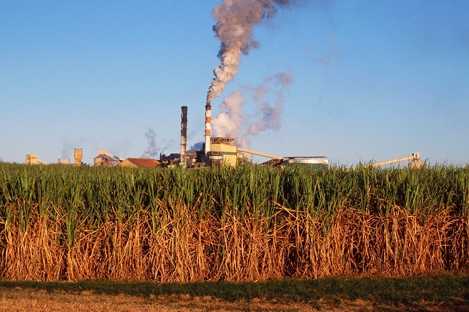
Biofuels Push Could Unlock New Future For Mackay Cane Industry Queensland’s push to kick-start a domestic biofuels industry could unlock significant new opportunities for Mackay’s sugarcane sector, according to CANEGROWERS CEO Dan Galligan. Mr Galligan welcomed the Crisafulli Government’s recent $25 million investment into biodiesel production at Ampol’s Lytton Refinery in Brisbane, describing it as an important first step towards building a stronger and more resilient economy while paving the way for future growth across regional industries. “While this project may not directly involve sugarcane, it’s an important step in establishing the kind of industry that, with the right investment and policy settings, can unlock significant opportunities for cane growers,” Mr Galligan said. Queensland’s sugar industry has long advocated for the expansion of a domestic biofuels sector, with the potential to significantly increase ethanol production, generate more green electricity through sugar mills and eventually produce advanced biofuels such as sustainable aviation fuel. With the Mackay Shire recognised as one of Australia’s largest sugar-producing regions, Mr Galligan said local growers could play a major role in helping power Queensland’s renewable fuel future. “This is about more than cleaner energy – it’s about building a stronger, more resilient economy, creating new markets for growers, adding value to every tonne of cane, and backing regional jobs and investment,” he said. “It’s also about fuel security. Recent global disruptions have shown how exposed Australia is to supply shocks, and building a domestic biofuels industry helps reduce that reliance.” Mr Galligan said ensuring sugarcane remained central to future biofuel production would be critical to delivering the industry at scale and strengthening long-term opportunities for regional Queensland communities. The announcement comes amid growing national discussions around fuel security, regional manufacturing and reducing Australia’s reliance on imported fuel supplies. In recent weeks, the Queensland Government announced plans to strengthen the State’s fuel security through expanded local drilling, refining and storage capacity, including unlocking additional infrastructure opportunities at ports across Queensland. Official expressions of interest have also opened under the new Accelerating Fuel Infrastructure Program, inviting industry proposals for fuel refining and storage projects on government-owned land and ports in Townsville, Mackay, Gladstone, Abbot Point, Bundaberg and Brisbane. Minister for Natural Resources and Mines and Minister for Manufacturing Dale Last said the focus was now on future-proofing the industry and creating long-term opportunities. "We know what the challenges are and I’m looking at the opportunities going forward, because that's where we can make the greatest change and get the most benefit," Mr Last said. Federal Member for Dawson Andrew Willcox said recent fuel shortages had exposed critical gaps in Australia’s fuel storage capacity, particularly for regional and agricultural communities. “This crisis has exposed Australia’s vulnerability to global supply shocks of critical liquid fuels, including in Dawson,” Mr Willcox said. “We must protect our economic foundations by scrapping the Safeguard Mechanism costs on refineries and lifting the minimum stockholding obligation. This is the only way to ensure that during global disruptions, our tractors keep moving and our supermarket shelves stay stocked.” CANEGROWERS said it would continue working with government and industry partners to ensure momentum in the biofuels sector translates into practical outcomes for growers and regional communities across Queensland. CAPTION: CANEGROWERS says Queensland’s growing biofuels industry could create major new opportunities for Mackay cane growers. Photo source: CANEGROWERS
Read the full story

The Collinsville Waterpark is once again closed and this time it is due to the recent break-in of the pump shed and theft of the pool acid therein. This is just the latest incident in what appears to be a series of targeted crimes directed at the Whitsunday Regional Council owned facility.
Previously, young vandals have damaged the park and forcing its closure by littering and throwing glass bottles into the tipping buckets, an act that could have caused significant injury had they not been discovered. Now, CCTV footage shows that the most recent incident, the acid theft, was committed by adults and the local police were notified.
To protect the community from further crime, the council is fast-tracking a temporary fence around the vandalised pump shed and the water park. With the temporary fencing erected, entry to the water park will be via the controlled public swimming pool kiosk entry and exit point.
This means the water park will have a more closely monitored entrance point and regulated opening hours, in the hopes to reduce crimes like this from reoccurring. The council is also putting in a dedicated footpath from the pool to the water park to encourage its use again once the fence surrounding it is in place and the water park is opened again.
“It’s gone from pure, regular vandalism to hardcore with the acid being stolen,” said Cr Wright.
“I've spoken to different members of the community who have asked me the same question, the length of the destruction there was quite severe. So, we're working as quickly as we can to get it put back together and operating.”
“I'd just like to thank the community at this time for their patience, and it's just it's really disappointing that this type of vandalism goes on in such, a wonderful community. It's just a shame that it really affects the families and the good people who constantly do the right thing.”
Once the fence and the footpath are in place the water park will be reopened. It will be opened in the morning and locked in the evenings according to the public pool's hours, and now with a designated entrance, the council hopes that these community assets that all the local families enjoy will stay protected and safe for everyone.
Collinsville water park when it was open. Photo Sourced: Whitsunday Council Facebook.

International Women’s Day, celebrated on March 8th, is a global occasion dedicated to honoring the social, economic, cultural, and political achievements of women. It also serves as a powerful call to action to accelerate progress toward gender equality.
This year, Zonta is once again hosting their highly anticipated International Women’s Day event, marking a special milestone of 25 years of this beloved celebration, which has become known as one of the standout events of the year.
Zonta Club of the Whitsundays invites the community to join in the festivities, encouraging attendees to dress to impress with sparkle and bling for what promises to be a spectacular occasion.
The event will feature an inspiring lineup of speakers, as well as exciting raffles and auctions. It’s an opportunity to celebrate women, support the cause, and enjoy an unforgettable day, whether you bring your friends and family or come solo.
Grab your tickets, and don’t miss out on this incredible celebration!
What: Zonta’s International Women’s Day
When: Sunday, 9 March at 11:30 am
Where: Coral Sea Resort
Tickets: tickets.whitsundaytickets.com.au

Hook Island, a stunning gem in the heart of the Whitsundays, is poised to become a world-class eco-lodge by 2027, setting a new standard for sustainable luxury in Australia. Acquired in 2022 by Glenn Piper, CEO of Epochal Hotels, and a group of investors, the island—once ravaged by cyclones—will undergo a remarkable revival across 9.3 hectares.
Previously home to the Hook Island Lodge, which shut its doors in 2013, the island has remained largely abandoned for nearly a decade.
The resort was severely damaged during Cyclone Debbie in 2017, and as part of a $25 million initiative under the Great Barrier Reef Island Resorts Rejuvenation Program, the former owners cleared the site.
This extensive process included demolishing 10 buildings and removing tons of asbestos, metal, concrete, and other debris, transforming the land into a blank canvas for the forthcoming eco-lodge development.
The eco-lodge is set to feature 39 biophilic cabins, two unique dining experiences, wellness spaces, forest eco pools, and adventure activities, all designed to harmonise with the island's stunning landscapes and waters.
Piper said: "Hook Island is a truly spectacular part of the world - its raw beauty deserves a sanctuary that both preserves and celebrates every facet of its charm.”
Piper, in collaboration with globally renowned design firm Luxury Frontiers, has designed the resort to embody “barefoot luxury”.
Six unique accommodation types will be spread across forest and beachfront locations, each with its own design.
Hook Island, spanning 58 square kilometers within the Great Barrier Reef, features lush forests, secluded beaches, and diverse ecosystems.
Phased construction will minimise the footprint, with eco-friendly practices such as water-efficient systems, recycled wastewater, and noise reduction measures.
Amanda Camm, Member for Whitsunday said she is thrilled to see the project commence.
“It’s an exciting project - our beautiful natural assets in the Whitsundays are under-utilised, and as the local member I look forward to working with the proponent to progress this innovative proposal.”
A first look at Hook Island, an eco-lodge which is set to feature 39 biophilic cabins

Cane toads can be found everywhere across Queensland and persistent action needs to be taken to remove them. The Watergum Cane Toad Challenge came back again this year for their annual Great Cane Toad Bust event. With over 50,000 toads removed last year, they hoped to match that number and surpass it this season with state-wide help.
Notoriously prolific breeders Cane toads produce up to 30,000 eggs at a time, and can live up to 10 years. They are toxic at all stages of their life cycle and when ingested, the toads’ skin and poison glands can kill many animals. They easily destroy ecosystems, devouring everything they can fit in their mouths as they are very resourceful omnivores.
The Great Toad Bust aims to put a stop to their spread, and one day remove them from Australia. Thousands of participants across Queensland registered their efforts over the week-long event showing just how many toads they could remove to protect their own communities from this invasion. Studies show control efforts like specialised traps, can remove up to 47% of cane toads from localised populations and the Watergum website has many helpful tips on how to trap and humanly euthanise the toads.
If you want to help your local wildlife thrive again or just keep your own farm’s dam clear from pests, then get toad hunting! Though the event may be over, there are still plenty of toads about. Congratulations to everyone who went busting and set the new record at over 115,000 cane toads removed from all stages of live. Check out the results and how you can help out at: watergum.org/greatcanetoadbust/
Happy busting!
Huge toad busted weighing at 420g. Photo Credit: Mt Barney Lodge Facebook

The Tiny Homes project has finally got the go-ahead after almost three years in development. The project aims to build housing for homeless and vulnerable women over 55 in the Whitsundays with community fundraising and support.
Led by a group of dedicated local volunteers, the Tiny Homes Project managed to secure a plot of land in Proserpine to begin construction of four homes. The Development Approval was granted in August 2024, and the land officially donated by the Whitsunday Regional Council meant that in January this year all the volunteers for the project could finally come together and begin making the project a reality.
The builders and volunteers like CEO Matt Brabeck from Housewerk along with Joanne Moynihan and Sandy Clark from The Whitsunday Housing Company met to plan the build. They all reflected on the frustrations and hold-ups, due to the site location being close to the Bruce Highway and the holiday periods when workforce availability was non-existent.
“It’s certainly taken a while to get to the build stage,” said Sandy Clark.
Joanne is currently working with Matt to finalise the designs and engineering for the project. Local suppliers have also volunteered their time and services to support this important community project. These include but aren't limited to: Abell Point Builders, Bunnings, Reece Plumbing Centre, Fennell’s Flooring, Dulux Paints, Hayman’s Electrical, Nauticool, Beaumont Tiles, Whitsunday Marble and Granite, Stratco Proserpine and Woodman Group of Companies.
Homelessness in the age group of women 55 over, is the highest statistic not only here in the Whitsundays but Australia wide. These women may be mothers, grandmothers, aunts, sisters or friends and often fly under the support radar, not receiving the help they need.
Now, they have some hope of stable, long-term accommodation and support to build their lives back up through the Tiny Homes project.
The current layout plan, shows four homes and a general gathering area fitting into the donated plot. Graphics and Illustration supplied by Hauswerk

It’s only February, and so much is already happening this year!
Congratulations to Club Whitsunday opening their doors. It promises to be a massive asset for both the sporting community and the region at large, Well done JB and team!
A big thank you to Whitsunday Regional Council for hosting a spectacular Australia Day Awards event! The Whitsunday Chamber of Commerce and Industry was proud to sponsor the Citizen of the Year Award, and we extend our heartfelt congratulations to Matt Stokes, our 2025 Citizen of the Year! Your dedication and contributions to our community are truly inspiring.
Major Federal Funding Secured for Our Region - In exciting news, Whitsunday Regional Council has been awarded $29.8 million under the Federal Government’s Growing Regions Program. Mayor Ry Collins announced that this funding will help deliver two transformative projects:
• $29.7 million Cannonvale Community Hub – A central space for community services and support.
• $30 million Whitsunday Regional Sports Precinct – Enhancing sporting facilities for our growing region.
These projects mark a significant investment in the future of the Whitsundays, strengthening our community and local economy.
Pop-Up Chamber: Possibilities for Proserpine
Proserpine businesses, this one’s for you! Join us for a Pop-Up Chamber event with Filby’s Motors to connect with fellow local businesses and discuss key opportunities for Proserpine.
The Chamber Board will be on hand to hear your ideas and concerns, and we’re keen to establish a Proserpine Sub-Committee to address local challenges and opportunities. This event will be a great chance to discuss the sub-committee’s purpose, scope, and structure, ensuring it reflects the needs of our Proserpine business community.
Come along, share your thoughts, and be part of shaping the future of business in Proserpine!
WHAT: Pop-Up Chamber Event
WHERE: Filby’s Motors, Proserpine
WHEN: Wednesday 12th February
TIME: 9am – 10am
Business Preparedness During Flooding
With recent heavy rainfall and flooding across parts of Queensland, businesses should remain vigilant.
Here are some key tips to help keep your operations safe and prepared:
• Review your emergency plan – Ensure your team knows the procedures in case of extreme weather.
• Check insurance coverage – Confirm policies cover flood-related disruptions and damages.
• Protect key assets – Safeguard important documents, inventory, and electrical equipment.
• Communicate with customers and staff – Keep everyone informed about potential delays or closures.
Most importantly, stay safe and look out for one another. If your business has been affected, support services are available.
As we continue into what promises to be an action-packed year, the Chamber remains committed to supporting our local businesses and advocating for the Whitsundays community.
Stay safe, stay engaged, and here’s to a strong start to 2025!
%20(1).JPG)
Recycling and reducing waste are critical steps we can take as a community to minimize the burden on our landfill sites in our Whitsunday region.
These actions not only help to protect our environment but also significantly reduce the costs associated with managing waste, which are ultimately borne by our ratepayers.
In line with these goals, Council’s construction of a new landfill cell at Kelsey Creek is nearing completion. This project, essential for servicing our region's future growth, will provide much-needed capacity for many years to come.
Despite facing challenges such as delays in procuring quality testing for the cell liner and severe weather events in late 2024 and the past two weeks, progress has continued, and the contractor recently rolled out the new cell liner.
Once this work is completed early next month, subject to weather, the cell will undergo an assessment by the Department of Environment, Tourism, Science and Innovation (DETSI). Pending approval, we anticipate the landfill cell will be operational by April 2025.
With the opening of this new cell, waste acceptance changes will come into effect. Commercial, industrial, and construction waste disposal will transition exclusively to the new cell. We thank the community for their patience and understanding during this construction phase.
However, building new landfill cells is a very costly exercise and not a sustainable solution for our ratepayers.
Council supports all initiatives that divert any waste stream from landfill with construction/demolition waste having a major impact on consumption of airspace at landfill. Further assessment of opportunities for diversion will arise from our Waste Strategy which is currently under review.
To extend the lifespan of our landfill, we encourage everyone to embrace better waste sorting and recycling practices. By reducing the amount of waste sent to landfill, we can lessen environmental impacts and keep costs down for our community.
Let’s work together to make recycling a priority and build a more sustainable future for all.

Are you a mum looking for a social group that supports and learns from one another? Are you and your bub keen to get your steps in and workout with like-minded mums? Or are you just looking for helpful and friendly advice to support your journey through motherhood?
If you said ‘yes’ to any of these questions, then the Bowen Community Centre has the program for you!
The Bowen Pram Pushers is a State Government and NQBP funded support group, launched to help new mums or mums new to town. It’s a social group aimed at facing relevant issues that are affecting members.
Every week Bowen Pram Pushers will be different, exploring Bowen and developing parental skills. There are opportunities to visit the library for their storytime sessions with your bub and the fire station to learn about home safety. Each Friday will begin with a 30-40 minute walk to promote healthy activity, then coffee and chats at a local cafe with guest speakers or tours after.
The group meets every Friday morning for its walking sessions at 9am, promoting that healthy and active maternal lifestyle. So, if this feels like the group for you feel free to get in contact with the Bowen Community Centre anytime through their website or Facebook page or call Sally the program manager on Mondays and Tuesdays at 07 4786 2111.
WHAT: Pram Pushers Mums Group
WHEN: Fridays at 9am
WHERE: Bowen Community Centre

1. Avoid single use plastics
A simple way to start living more sustainably is by cutting out single-use plastics. Each year in Australia, it is estimated that 3.5 million metric tons of plastic is produced, with half being used only once before ending up in landfills or the ocean, where it never decomposes. Swap single-use items for reusable alternatives, like water bottles, to make a difference.
2. Recycle
Recycle items like cans, paper, and plastics according to local guidelines. Upcycle items like plastic containers for new uses, buy secondhand, and donate unwanted items. Old T-shirts can be repurposed as dish cloths as an alternative to paper towels.
3. Do a cold-water wash when washing clothes
If your washing machine has an option to adjust based on load size, select a smaller setting. This uses less water while still getting your clothes clean. Washing with cold water can reduce the energy needed by up to 80%.
4. Replacing one incandescent lightbulb with a compact fluorescent light
Only 10% of the energy used by an incandescent bulb produces light; the rest is given off as heat. Compact fluorescent lightbulbs (CFLS) are up to four times as efficient as incandescent bulbs.
5. Reduce your air conditioning usage
In the Whitsundays, many individuals rely on air conditioning to stay cool during the summer. Air conditioners are the largest energy consumers in homes, using 10% of global electricity and releasing harmful gases. Turning them off when you leave and minimising usage helps reduce their environmental impact
.JPG)
Hi Everyone,
Welcome to Ruth 2 Reef!
As a passionate environmentalist and with a background in environmental journalism, I truly admire the efforts the local community makes to preserve the natural beauty of the Whitsundays.
From small local groups to large corporations, many people here go above and beyond to protect the environment.
With this in mind, I thought it would be a great opportunity to combine my love for protecting the environment with the fantastic stories from the Whitsundays and local people.
Throughout February, a special ‘Ruth 2 Reef’ feature will appear in each edition of the newspaper, showcasing the diverse environmental activities happening across the Whitsundays. Following February, this feature will continue to appear monthly.
If you have any interesting environmental stories that you would like to be seen featured in ‘Ruth 2 Reef’, please send an email to: ruth@lifepublishinggroup.com
I hope you enjoy!
Ruth
The only way forward, if we are going to improve the quality of the environment, is to get everybody involved – Richard Rogers.

By Ruth Puddefoot
Master Reef Guides aim to become the world’s top reef experts and interpreters, showcasing the marvels of the Great Barrier Reef World Heritage Area.
As ambassadors of the reef, they share the latest scientific knowledge and management practices while educating visitors on how they can help protect this incredible ecosystem.
Jessica Funnell is one of the 146 Master Reef Guides across the Great Barrier Reef Marine Park and she is based right here in the Whitsundays.
With 15 years of experience in the marine industry, including a decade at Sea World’s Research and Rescue Foundation and her current role with Ocean Rafting in the Whitsundays, Jess shared how becoming a Master Reef Guide was a natural next step in her career and a source of true inspiration.
To become a Master Reef Guide, participants from certified High Standard Tourism Operators must complete an intensive training program. Guided by experts including Reef Authority staff, Traditional Owners, and scientists Master Reef trainees explore the history, current state, and future of the Great Barrier Reef. This program equips them with up-to-date knowledge and interpretation skills to share the reef’s wonders with visitors.
Jess explained that when educating guests, you have to find the correct balance between educating visitors around the reef’s beauty but also educating them on the urgency of its conservation:
“You want people to fall in love with the reef, because they're going to protect it if they fall in love with it,” she explained.
“I will talk about the reef and how amazing it is and then slowly move to saying ‘look guys if we want to protect it, we need to start making some changes when it comes to climate change’, and just explain basic, little things on how to limit our footprint and what we can do in the future to help it.”
While there are many rewarding parts of being a Master Reef Guide, Jess states that the conservation side is what stands out for her.
“I feel like I am really making a difference,” Jess added.
“It isn’t a job where you just snorkel all day, its educating people and trying to make a difference.”
There’s a lot of misinformation surrounding the reef, with some people believing it's dead. Jess says she tries to correct people's perception of what the reef actually is and what they're looking at.
“Sometimes they'll see brown and green corals, and they're like, oh, is this dead? And you're like, no, no, this is alive and healthy.”
“So, I will also go and swim around, and I'll point out, a bit of rubble, and explain that it is cyclone damage, or what bleaching looks like.
“It is a delicate topic when it comes to the reef and its existence, because it's a living thing, and people have been told it's dead.”
Jess said the best advice for those wanting to help the reef, is by doing small things to limit their carbon footprint such as turning off the lights and air-conditioning or turning off the heat and wearing a jumper.
“One person can make a difference, even if it does seem small. But we just have to start. We've got to do something.”

Did you know seagrass has been around since the time of dinosaurs? Four groups of flowering plants (angiosperms) colonised the oceans, these became known as seagrass, and they are the only flowering plants that can live underwater.
Seagrass, found in near-shore waters globally, is vital to marine life. Known as the "lungs of the sea," it produces 10 litres of oxygen per square metre daily. It feeds dugongs and green turtles, provides habitat for fish and prawns, and helps keep water clean by absorbing nutrients and stabilising sediments.
The Whitsundays has a fantastic opportunity for individuals in the area to participate in a Citizen Science Project in order to conduct and learn about scientific monitoring of these fantastic flowering plants.
The program requires you to undertake three days of training and then allows you to participate in research in three locations around the Whitsundays twice a year.
The Seagrass-Watch program has a simple philosophy of involving those who are concerned, and involves collaboration/partnerships between scientists, community and the data users.
Participants will gain a comprehensive understanding of seagrass biology and taxonomy, delve into seagrass ecology, and become proficient in monitoring and mapping techniques. They will also receive hands-on training in Seagrass-Watch protocols, while developing practical skills for conducting field monitoring events and seagrass mapping exercises.
Do you have a passion for helping our oceans and marine life? Check out the Whitsunday Seagrass-Watch program: seagrasswatch.org/whitsunday_training_2025
What: Sea Grass Watch Program
When: Registration opens: 9am 13 February 2025 and Registration closes: 5pm 24 March 2025.
Training Sessions: 07- 09 April 2025.

By Ruth Puddefoot
Sharks are often unfairly cast as the villains of the sea, but their role in marine ecosystems is both complex and crucial. As apex predators, they play a vital role in maintaining the health and balance of our oceans.
Here are a few key facts about why sharks are considered “ecosystem engineers,” essential to the health of our reefs and climate, particularly in the Great Barrier Reef:
• Sharks regulate reef ecosystems by controlling predator and prey populations. Without them, biodiversity and food chains collapse. The Great Barrier Reef relies on species like white-tip and black-tip sharks to maintain this balance.
• Sharks control fish populations, promoting diversity and balancing the food web. Without them, overgrazing and over-predation would destabiliase reefs, encouraging algae and bacteria growth that corals can’t compete with.
Pretty jawesome huh?

The Great Barrier Reef spans over an area of 344,000 sq km and is comprised of over 3000 individual reefs. It can be seen from outer space. It is an Australian icon. It is a world icon.
The Reef supports a very productive tourism and fishing industry that keeps that keeps regions like the Whitsundays economy in the black.
Unfortunately, the reef faces a very uncertain future.
For those who live and work in the Whitsunday region, the Reef has always been there and will always be there. It is too big to fail.
But now, scientists are telling us a different story. The health of the Reef is declining. The Great Barrier Reef Marine Park Authority (GBRMPA) states that the greatest threat to the Reef is climate change. One of the most significant impacts of climate change is coral bleaching.
Warmer water temperatures can result in coral bleaching. When water is too warm, corals will expel the algae (zooxanthellae) living in their tissues causing the coral to turn completely white. In a prolonged bleaching event, the corals may die.
Large or mass coral bleaching events were virtually unheard of prior to 1998. But times have changed, and the Reef has now suffered through 7 mass bleaching events. The most recent and most destructive, occurred in 2024.
Recent surveys completed by the Australian Institute of Marine Science (AIMS) in the southern section of the Reef found the single largest annual decline in hard coral cover in that area since monitoring started in the mid-1980s, with coral cover dropping by 41% in 2024.
The future of the Reef is dependent on the world coming together to combat climate change. This will require a rapid transition away from fossil fuels like coal and gas and moving to renewables. Time is not on our side.
Contributed by Whitsunday Conservation Council.

The Whales of the Whitsundays (WoW) is a group of committed individuals who are concerned about the health and future of cetaceans in the region. The program started in 2023 following discussions at the Whitsunday Local Marine Advisory Committee about the simultaneous increase in whale and boat numbers and threats from climate change.
In 2024, The Whales of the Whitsundays achieved some remarkable milestones. While preparations are underway for their 2024 Annual Report, the organisation has shared some of their proudest moments from the year.
Highlights include the official recognition of the Whitsundays as a Whale Heritage Site, a whale information night featuring updates from GBRMPA on whale regulations, the Eye on the Reef program, and other key initiatives.
The organisation also hosted a cultural Welcome Whale event, virtual learning sessions, Hydrophone learning workshops, and an engaging stand at the Great Barrier Reef Festival, where over 300 kids had the chance to learn about whale sounds and the process of recording them.
Additionally, the Whales of the Whitsundays launched a brand-new website, designed to offer valuable resources about these incredible creatures and the ongoing work of the organisation.
Reflecting on an amazing year, the team shared their excitement for what’s to come:
“We’re so proud of what we’ve accomplished together and can’t wait to dive into 2025 with even more exciting plans!”
We look forward to hearing more exciting updates on these magnificent whales in the months ahead!
Humpback whales can live for 80 to 90 years.
Whitsundays Humpback Whale. Photo Credit: Lynne Boyce
Publishers Indemnity. Any individual or entity that places advertising, supplies copy material, or submits editorial content to Core Life Publishing agrees and undertakes to ensure that all such material:- Does not infringe upon any copyright, trademark, or other intellectual property rights;- Is free from any content that could be considered defamatory, libelous, or slanderous;- Does not infringe upon any rights related to privacy or breach of confidence;- Contains no obscene, indecent, or otherwise unlawful material;- Complies fully with the Trade Practices Act and all other applicable laws, regulations, or statutes.Furthermore, by submitting or placing such material, these individuals or entities agree to indemnify and hold harmless the publisher, Core Publishing and Events Pty Ltd, and/or its agents from and against any and all investigations, claims, demands, liabilities, damages, costs, or judgments arising out of or in connection with the material provided. All material is believed to be accurate at the time of printing and remains the copyright of Core Publishing and Events Pty Ltd.
© 2026 Mackay and Whitsunday Life Pty Ltd.
