
Independently Owned, Locally Grown, Community Loved

OPINION PIECE from the office of Federal Member for Dawson Andrew Willcox There is no question that immigration into Australia is out of control. The government’s numbers are too high, and standards are too low. A sustainable migration program must consider our capacity to provide housing, healthcare, infrastructure and the essential services everyone relies on, and Australians must come first. But Labor’s decision to target Working Holiday Makers Visa holders is not the answer. These people filling vital gaps in our workforce are not the cause of Australia’s housing crisis. In many cases, they are living in accommodation provided by the very businesses that employ them. The National Farmers’ Federation has made the point that Working Holiday Makers generally stay in hostels, caravan parks or purpose-built on-farm accommodation. Resorts usually have on-site staff quarters. They are not the source of Australia’s housing shortage. So why is Labor making it harder for them to come here, when these workers fill genuine jobs that regional Australia holds? Working Holiday Makers fill approximately one in seven farm jobs nationally and are particularly important during peak agricultural periods, which for Dawson, it is right now! Farmers rely on these workers to plant, pick, pack and harvest the produce that ends up on Australian supermarket shelves. Having run one of Australia’s largest tomato farms, at times Working Holiday Makers made up more than 50 per cent of my workforce. Without them, much of our crop simply would not have been picked in time and rotted in the paddock. Some may say, why not employ the Australians who don’t have a job and are on “the dole”? Can I say, this does not work. Most farmers will employ Aussies over travelling backpackers, but many either don’t want to do the work or don’t turn up after the first day. Who picks the fruit or veggies then? Farmers are already warning that visa delays are leaving them without workers. The NFF says approvals that once took days are now facing processing times of up to three months, and this time frame can be the difference between harvesting a crop or losing it. That should concern every Australian already feeling the pressure at the supermarket checkout. The same problem is playing out in tourism. Across Dawson, Working Holiday Makers are an important part of the workforce supporting tourism and hospitality, particularly in the Whitsundays. They help fill shifts, work in hotels and restaurants, support tour operators and keep businesses running through their busiest periods. They also contribute to the local economy. They spend money on food, fuel, attractions and tours, supporting the small businesses that depend on a strong visitor economy. That is why tourism and business leaders across North Queensland are raising the alarm. They understand what happens when a regional business cannot get enough staff: opening hours are reduced, and services are cut, creating a downward spiral. We do need to reduce migration to sustainable levels. We need stronger integrity measures, and we need to crack down on rorts. But responsible migration policy means understanding which parts of the system are creating pressure and which parts are helping Australia function. Working Holiday Makers are not the problem. They are part of the workforce solution for regional. Australia. People have had a gutful of watching their standard of living go backwards. Groceries, fuel, housing and everyday expenses are already putting enormous pressure on families. The last thing Australians need is another reckless policy that makes it harder to produce food, harder to run regional businesses and harder for tourism operators to find the workers they need.
Read the full storySomeone sold a house in Sydney last week for $9 million less than they bought it for four or five years ago. The sellers had bought the property in Sydney’s eastern suburbs for $29 million and sold it for $20 million in a sale forced by their bank. I imagine the sellers are a little disappointed by the government’s decisions on negative gearing and capital gains tax and feeling pretty hurt by the increased interest rates. Australia’s interest rates are on the rise and are now sitting at levels not seen since 2011. Increased cost of living is hurting people around the country and interest rates are playing into that. But the impact of interest rates is not felt evenly around the country. The far-higher property prices mean people in the major cities suffer much more than regional areas with the rates increase. That is certainly not to say people in Mackay are unaffected by the cost of living; it’s just that the impact of interest rates increase on a $400,000 mortgage is much less than the impact on a $1m mortgage. There are other Mackay-specific factors that are in play when discussing the current housing market. The big factor is the role of coal in our economy. Most of the coal extracted and exported from our region is coking coal, which is used to make steel. The price of coking coal is around $280 a tonne, which is about 50 per cent up. Good activity in the coal market translates to good news for the Mackay economy, as it is an economic engine that other cities and regions just don’t have. Good activity in Bowen Basin flows throughout the Mackay economy; Paget workshops, transport, suppliers and related businesses all benefit. But so do other, non-mining-related businesses as they benefit from the general confidence and spending that goes on. The strong mining activity also means mines need to keep their staff levels up and that means more people moving to Mackay. Of course, Mackay is much more than a coal mining town but if the coal sector is going well those other areas definitely benefit. It is a confidence boost for Mackay people looking to get into the housing market and those wanting to upgrade or downsize. It also means continuing strong demand from people wanting to rent a property and it will be interesting to see what sort of activity that creates from investors. Investors have walked away from the big-city markets because they can no longer use negative gearing on established properties that do not have a sufficient yield to be positively geared. Negative gearing has never been a big thing in Mackay because our prices are lower and rental returns continue to be strong so many investors have a positively geared property. Around the country everyone is nervous about the state of play and the probability of more interest rate rises. But strong coal prices and an economy that is performing well mean Mackay might just be presenting an opportunity for buyers and sellers that doesn’t exist in other parts. I remember when national confidence was flying high and Mackay prices were going up significantly that many buyers were saying “I wish we had bought a while ago when the market wasn’t so hot”. I’m not armed with a crystal ball so I’m not here to tell you what is going to happen but I suspect there is a very good buying window right now for those looking for an opportunity.
Read the full story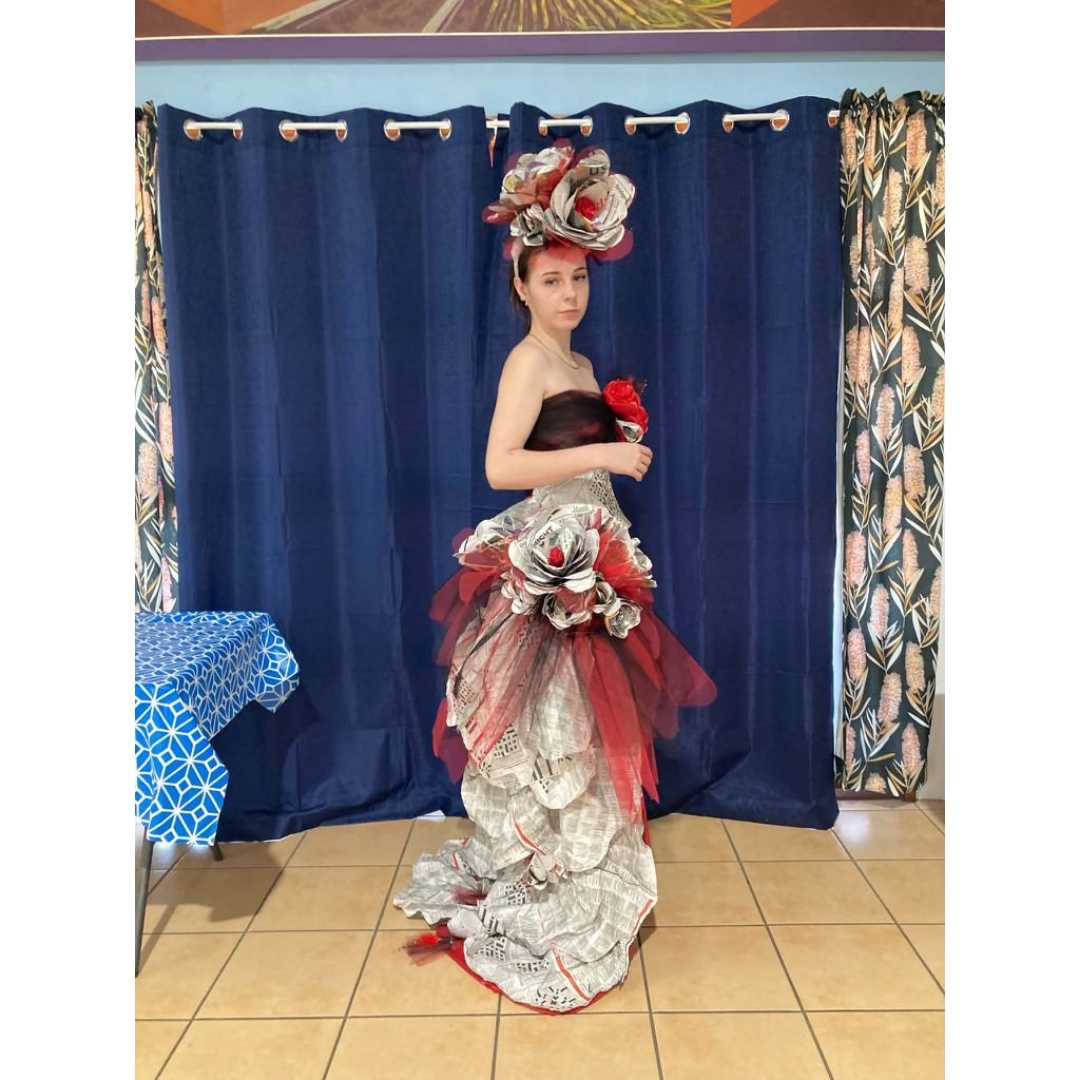
A local Mackay and Sarina based model has created a dress out of newspapers, including Mackay Life, for her upcoming pageant, representing her region and hometown on the runway as she vies for Miss Diamond International in Brisbane. Zoe Place will be competing this weekend in the three-day event, beginning this Friday 2nd October and ending on Sunday 4th October. The young model spent around a month creating her eco-fashion outfit, using old newspapers as the main material and transforming them into a bodice, skirt and flowers. Red elements were also incorporated into the design to give the dress a bold and glamorous pageant feel. Zoe said, “The entire concept was really about taking something that would normally be thrown away and turning it into something beautiful and meaningful.” Her eco-fashion creation will form part of a busy weekend in Brisbane, with the Miss Diamond International event including photo shoots, interviews, an eco-fashion show and the final pageant. Zoe has been preparing for the event by practising her strut and walking, preparing for interviews and getting comfortable in the different outfits she will wear throughout the weekend. Alongside her love of modelling, pageantry has also provided Zoe with a platform to raise awareness about causes close to her heart, including mental health, while fundraising for Beyond Blue. “Pageantry has given me more of a platform to combine my love for modelling with something that is really important to me.” “When I first started, I was more nervous about putting myself out there and worried about what others would think about me – but I’ve changed a lot through my journey in pageantry.” “Pageantry has also taught me that it’s not about how you look on stage. It’s about the person you are when you step off it.” “Every woman has their own unique journey and that journey is something we should all be really proud of.” “To me, it represents confidence, empowerment, kindness, and using your voice to make a difference.” Zoe said she was looking forward to meeting the other contestants, making new connections and creating memories. “I’m definitely looking forward to meeting all the new contestants and making new connections and creating memories that I will carry with me for a lifetime.” While Zoe hopes to eventually move to the city, her sights are set even further afield, with a dream of one day walking in New York Fashion Week. Mackay and Sarina local Zoe Place has created an eco-fashion dress from recycled newspapers, including Mackay Life, ahead of her Miss Diamond International pageant in Brisbane. Photos supplied
Read the full story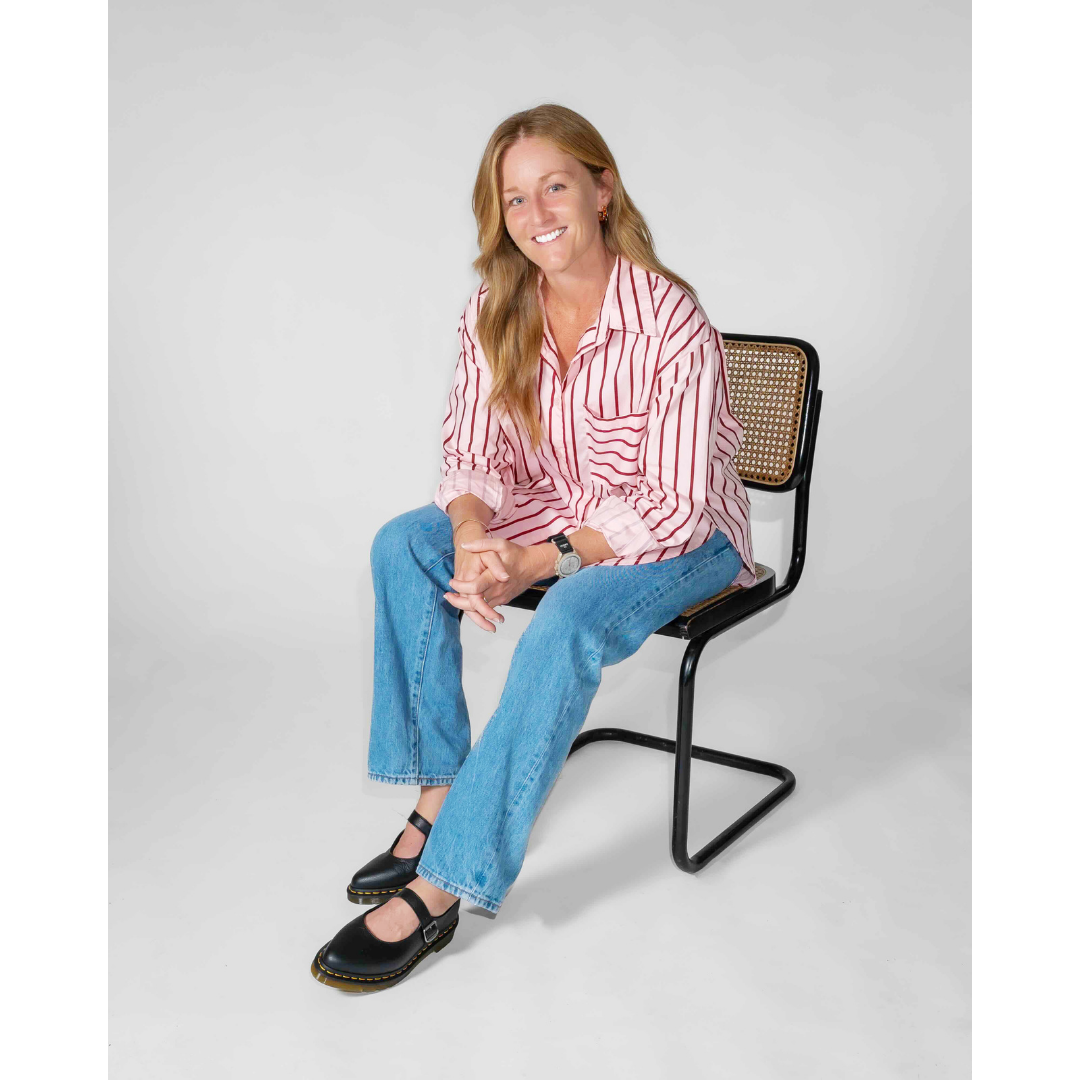
Trends, reels and the endless cycle of always wanting more has quietly bombarded the minds of countless social media users of all ages, but one former Mackay local has made it her mission to help others understand the effects of social media and find practical ways to break free from online addiction. Alexis Zahner is in Mackay over the next week to teach upcoming generations about social media and the effects it can have on the mind, particularly on identity, self-discovery, as well as the marketing strategies that get viewers hooked and influence their decisions. It is something Alexis knows first-hand can be a useful tool, but also a great disruption to authenticity and the world as we see and experience it. Alexis will hold a free meet and greet and book launch today, Friday 2nd October, at 5.30pm at the Mackay Surf Lifesaving Club, where she will give a talk and answer questions relating to her debut book, Real: Reconnecting to Yourself in a World of Likes and Lies. A former Mackay girl, Alexis spent the past 15 years working across business psychology, marketing and media, with her interest in social media influence beginning during her university studies at James Cook University in Townsville. Her own experience as a social media user, travel blogger and influencer eventually led her to question how much of her identity, decisions and values were being shaped by what she saw online. “The tipping point came for me about 3 years ago when I had this feeling that I couldn't separate influence from my own personal decision making,” she said. “I couldn't separate my own likes, dislikes, values, relationships from what I was being exposed to and being influenced by online.” “I found that I needed to take some time away from social media to recalibrate what was important to me and sort of reconnect and come back to myself.” Alexis said she understood the feeling of questioning who you are outside of social media. “I know what it feels like to live a life under the influence of social media and have that existential crisis of thinking to yourself, who am I? What do I like? What's the kind of life I want to live? and struggling to separate myself from influence.” Alexis is particularly passionate about reaching teenagers, who she says are in an important stage of identity development, and will share this message with Mackay high school students during her upcoming school talks. “Teenagers are really easily influenced by social media. So it's a really important age where we start educating them – not just on the mental health repercussions of things like social media and how it shortens their attention span, but how it actually influences who they become.” “If you're asking yourself these questions, it's not your fault. Social media is actually geared to create this impact on you.” Alexis encourages people of all ages to “start expanding beyond what you see on the platform.” “Dare to indulge in the things that you've always been curious about or things you used to love,” she said. “Don't be afraid to put the phone down to let yourself be curious and have fun.” What: Alexis Zahner's 'Real' Book launch When: 5.30pm Friday 2nd October 2026 Where: Mackay Surf Lifesaving Club Former Mackay local and author Alexis Zahner is returning home to share her experiences with social media and her debut book, Real. Photo supplied
Read the full story
If you're going to invest a day away from your business, it needs to be worth it.
That's exactly what the 2026 Whitsunday Business Conference has been designed to deliver.
No fluff. Just practical ideas, valuable connections, and fresh thinking to help you work smarter, grow stronger, and tackle the challenges facing business today.
Better still, it's a conference designed by Whitsunday business owners, for Whitsunday business owners.
7:30am | Coffee & Conversations
Arrive early to catch up over coffee and juice before the formal program begins. This is where the conversations start.
8:30am | Think Differently
Keynote speaker Ian Cohen will challenge the way you think about branding, communication, and reputation – sharing practical strategies that can create lasting commercial value for your business.
10:00am | Build Your Own Conference
No two businesses are the same, so your Conference experience shouldn't be either.
Choose the sessions most relevant to your business, covering topics such as:
You'll leave with ideas you can put into practice immediately—not six months from now.
12:50pm | Keep the Momentum Going
The learning doesn't stop when the presentations finish.
The Conference Long Lunch and Business Expo provide the opportunity to meet exhibitors, discover new products and services, explore procurement and funding opportunities, and continue conversations with fellow business owners.
Here's a more editorial version that highlights the value to delegates rather than reading like a list of exhibitors:
From finance and insurance to telecommunications, workforce development, education, media, procurement, and major project opportunities, you'll connect with organisations that can genuinely help move your business forward. Meet representatives from Bendigo Community Bank Cannonvale–Proserpine, Brisbane 2032, Club Whitsunday, James Cook University, nbn Co., Option Insurance Brokers, StarFM, TAFE Queensland, Whitsunday Life, and Whitsunday Regional Council's Corporate Services, Procurement and Investment Attraction teams – all in one place, all ready to connect with local business.
The best business opportunities often begin with a conversation.
The Whitsunday Business Conference creates dozens of them in just one day.
Bring your team. Bring your questions. Leave with ideas, contacts, and opportunities that could shape your business for years to come.
The Whitsunday Business Conference is more than a one-day event – it's a community effort, made possible by businesses and organisations that are committed to supporting a stronger, more connected Whitsundays.
The Whitsundays Chamber of Commerce and Industry sincerely thanks this year's Conference partners, exhibitors, and supporters for investing in an event that brings together local businesses to learn, connect, and grow.
This year's partners include Whitsunday Life, Bendigo Community Bank Cannonvale–Proserpine, Club Whitsunday, PCYC Whitsunday, AWB First Aid First, Brisbane 2032, James Cook University, Mrs Bean Coffee Van, nbn Co., Option Insurance Brokers, Rilo Real Fruit Ice Cream & Smoothies, Smooth Sailing Finance Consulting, StarFM, TAFE Queensland, and Whitsunday Regional Council.
Their support helps the Chamber deliver an affordable, high-quality Conference featuring inspiring speakers, practical learning sessions, valuable networking opportunities, and an interactive Business Expo showcasing organisations that support regional business success.
There are still a limited number of exhibitor opportunities available.
If your business wants to showcase its products or services, generate new leads, and connect with more than 100 business owners and decision-makers, now is the time to secure your place.
To enquire about exhibiting at the Conference Long Lunch and Business Expo, contact the Chamber team today on admin@whitsundaycoastchamber.com.au
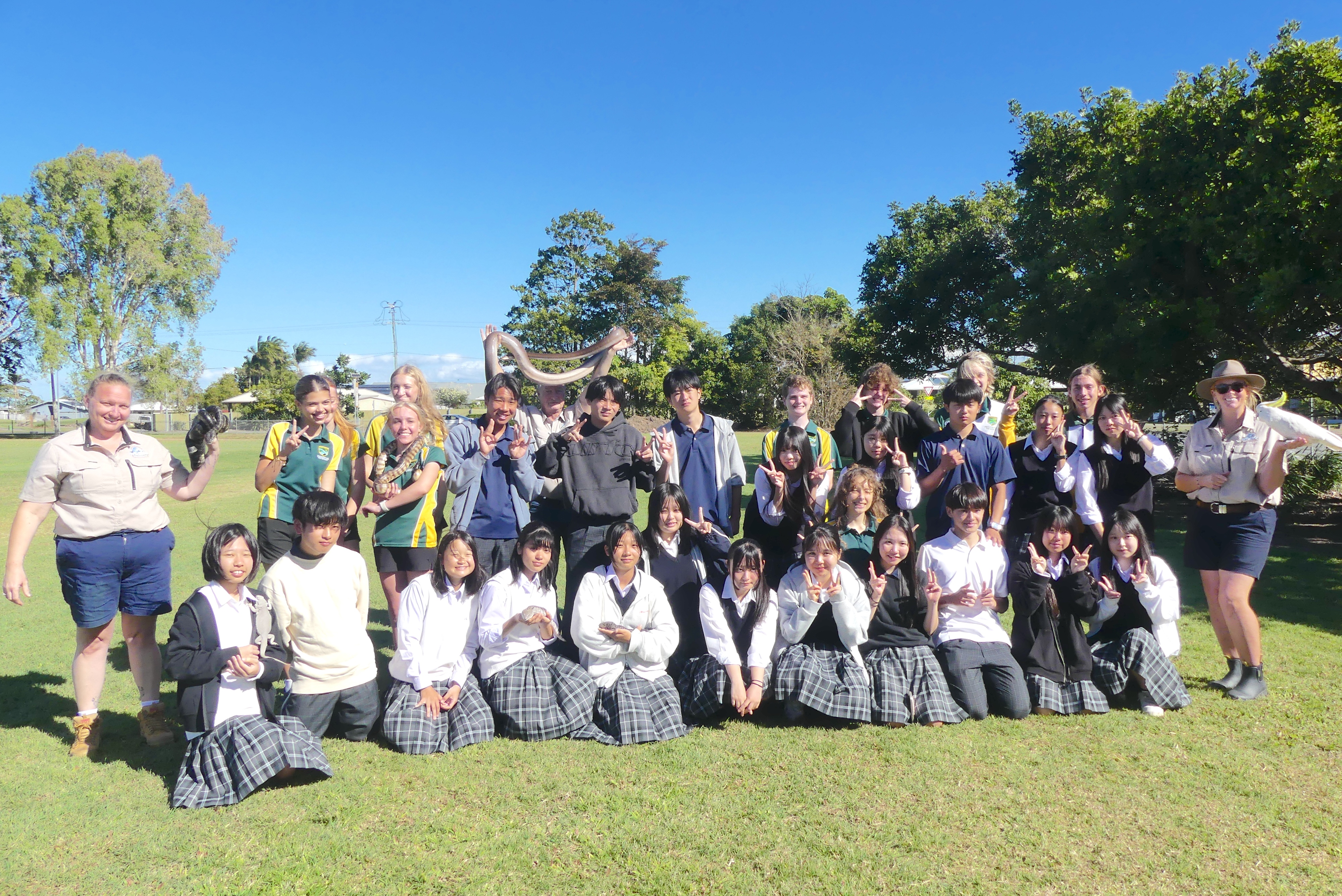
Students from Asaka Nishi High School in Japan spent 8 days in Proserpine with host families from Proserpine State High School. Photo credit: Whitsunday Life
Proserpine State High School recently welcomed students from Asaka Nishi High School in Japan for as part of a longstanding sister school program that has been in place since 1997.
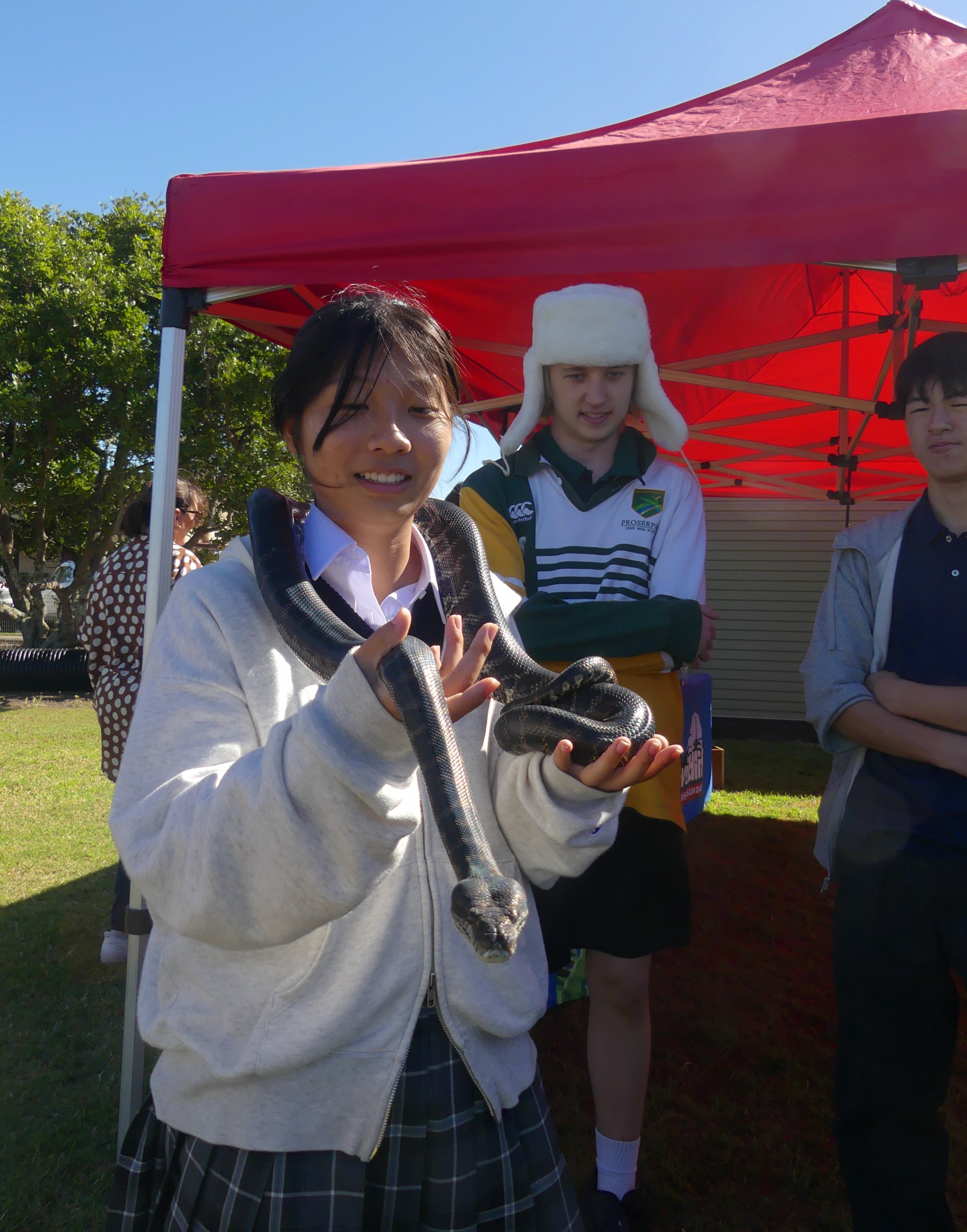
The Japanese students have been staying with Whitsunday host families, and getting a taste of Aussie weather and wildlife; experiencing the Great Barrier Reef Festival, taking an Ocean Rafting Trip, and getting up close with native animals through Wildlife Whitsunday.
Head of Department for English & Languages Corinne Raiteri said that the exchange is an opportunity to learn language skills and foster cross-culture connection, also built through virtual connection during the school year.
“We have Japanese here as a language, and one of the one of the things that we do is we get the kids on Teams so that they can talk to each other.” Corinne explained.
“If they know each other personally, it's even more effective in terms of learning. Having having that interplay between them is fantastic, and it just builds relationships further.”
“It’s been so awesome to give them new experiences,” said Proserpine State High student Myka Kelly.
“She’s been teaching me some Japanese… it’s been super fun!”
Pupils Ruby Lou and Nahla Bullen said they’ve made great friends and learnt ‘heaps’ of Japanese through the program, bonding with the Japanese students over their shared interests.
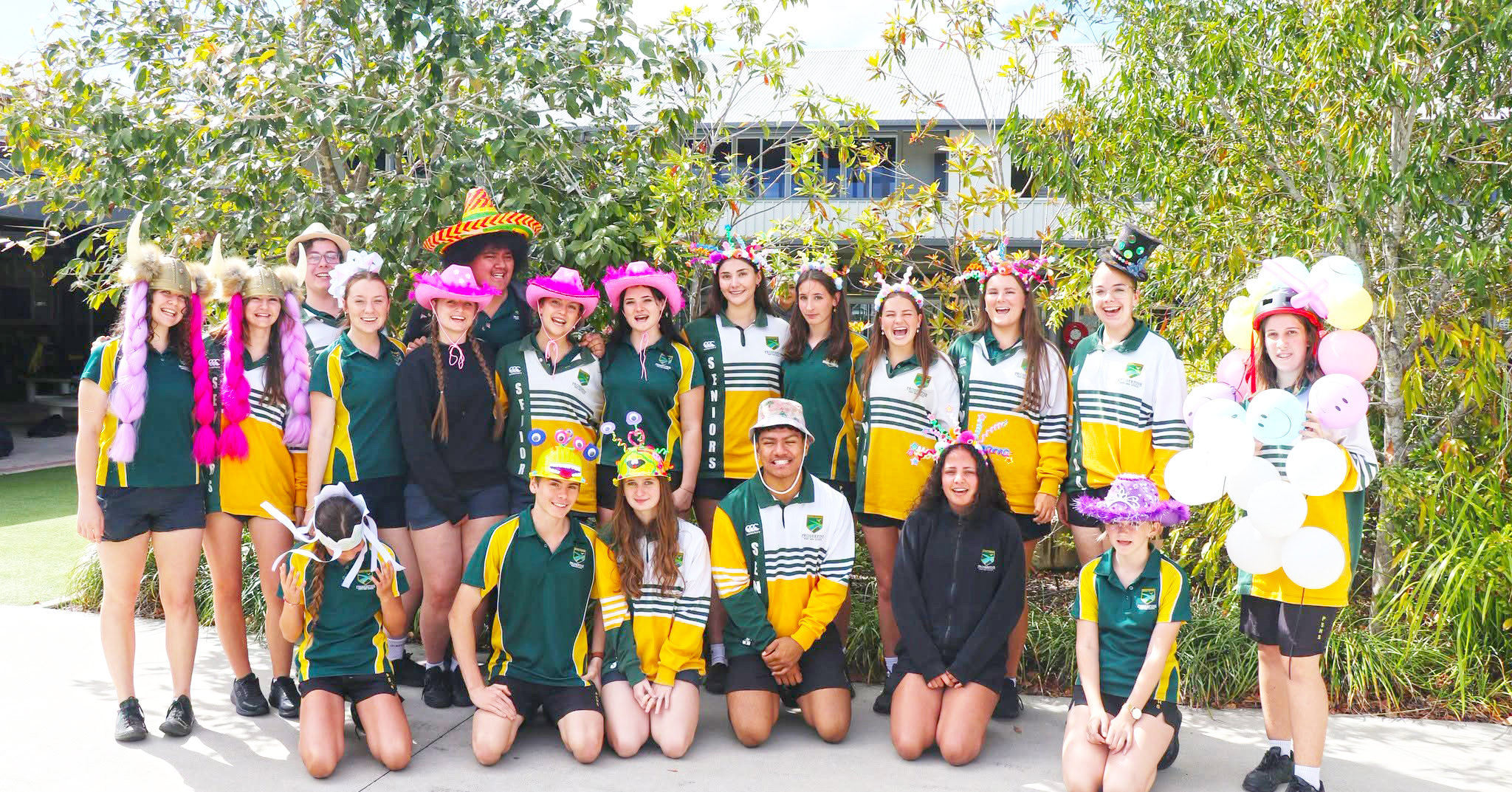
4th Annual Crazy Hat Day turnout.
From fedoras to sombreros, students donned their most colourful and creative headwear last Thursday for a cause that continues to hold a special place in the Proserpine State High School community.
Now in its fourth year, Crazy Hat Day was established in 2023 in memory of former Year 10 student Cody Gibbs, who passed away from brain cancer the year before.
Wanting to do something special in memory of their friend, a group of Cody’s classmates approached the Student Council with the idea of holding a fundraiser, with former student Olivia Murphy helping bring the first Crazy Hat Day to life.
The students chose to support Hummingbird House after hearing from Cody’s friends who had spent precious time with him there during his final days.
Four Crazy Hat Days later, students have now raised more than $10,000 for Hummingbird House, including around $3,000 from this year’s event.
“I think it’s one of the things I’m most proud of that I’ve seen in my time here,” Student Council coordinator Scott Casey said.
“It was genuinely student-driven.
“The kids have wanted to keep it.”
This year, that responsibility was taken on by Year 12 Student Council Executive members Wiremu and Sam, who helped organise the day and encouraged their fellow students to get involved.
Although the pupils are a few years younger than Cody and didn’t know him when he was still in school, the pair said they understood how much his story meant to the school and wider community.
“We didn't have to go to school with him to know that his journey, and the journey that he took with Hummingbird House, was special,” Wiremu said.
Donations remain open for those wishing to support Hummingbird House: https://fundraise.wmq.org.au/fundraisers/ProssieHigh/2026-crazy-hat-day-iv

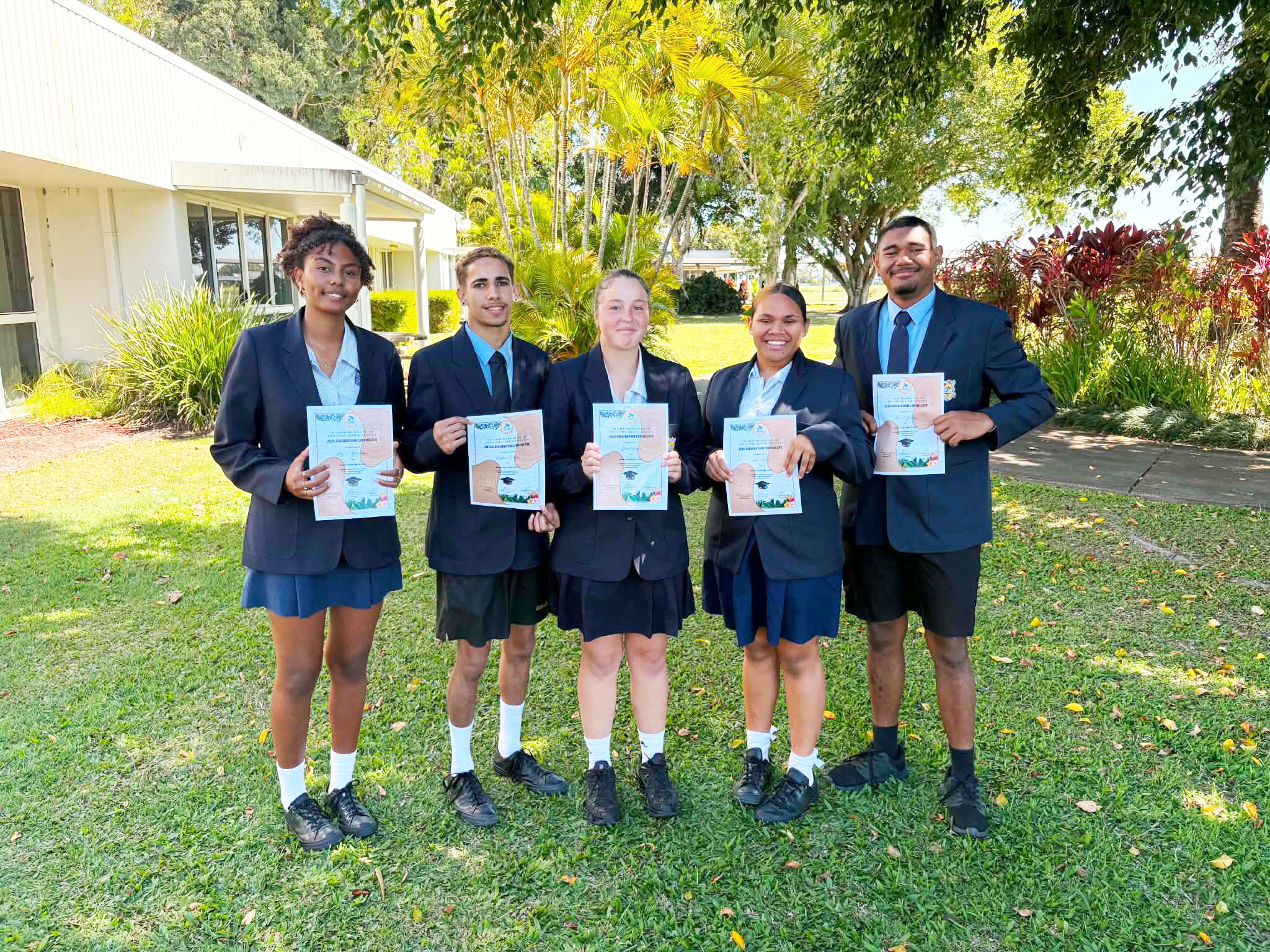
Pupils from schools across the Whitsundays recently travelled to CQUniversity Mackay for the Year 12 QATSIF (Queensland Aboriginal and Torres Strait Islander Foundation) Graduation on 11th August, celebrating the efforts, achievements and journeys of 2300 Year 12 QATSIF graduates.
It was a wonderful opportunity to come together and celebrate the incredible efforts, achievements and journeys of 2,300 deadly Year 12 QATSIF graduates from across Queensland, and to wish them all the very best as they embark on the next stage of their journeys.
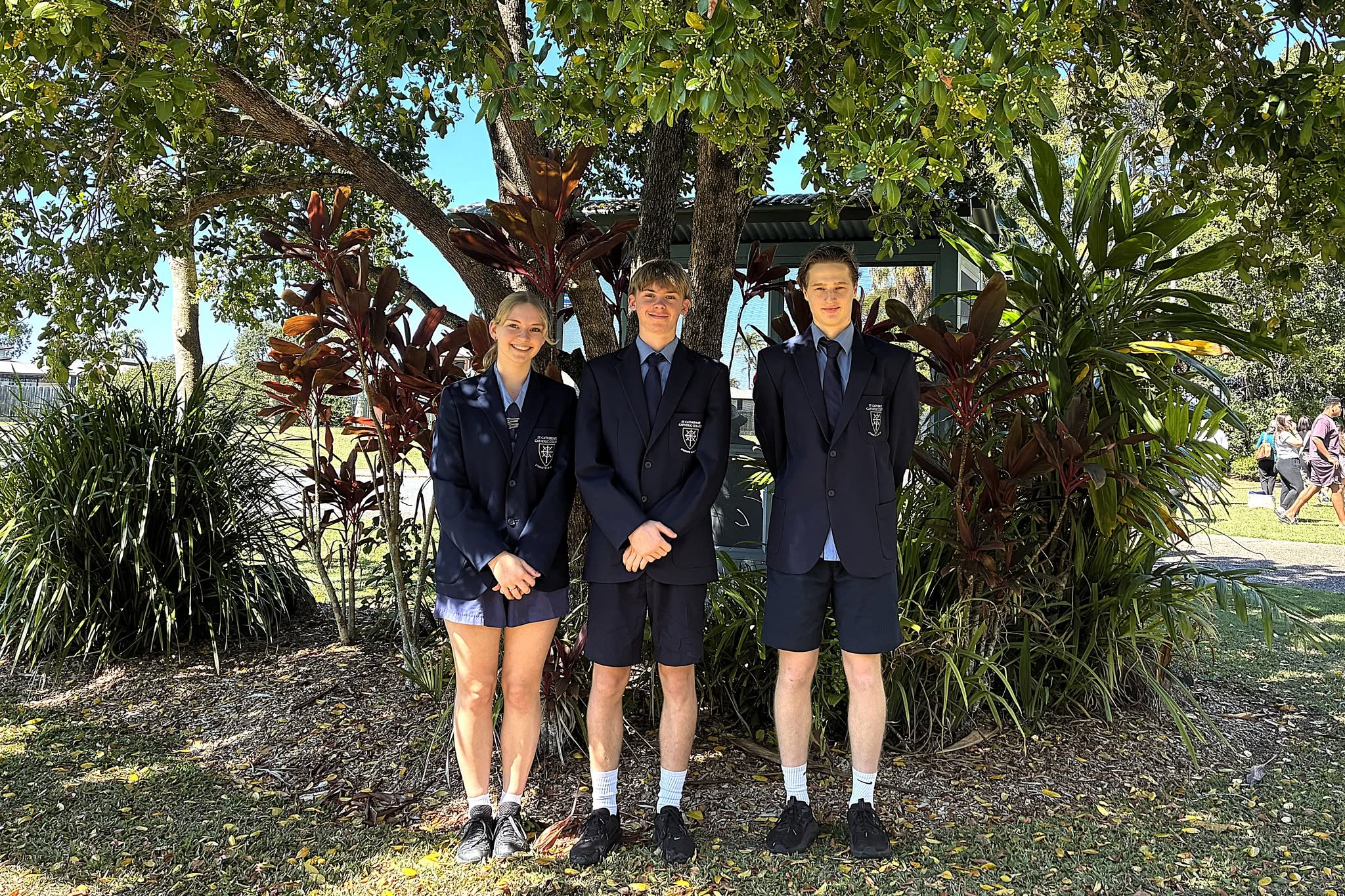
“We are incredibly proud of all three of our Emerging Leaders for representing our College at this special event,” said a representative from St Catherine’s Catholic College.
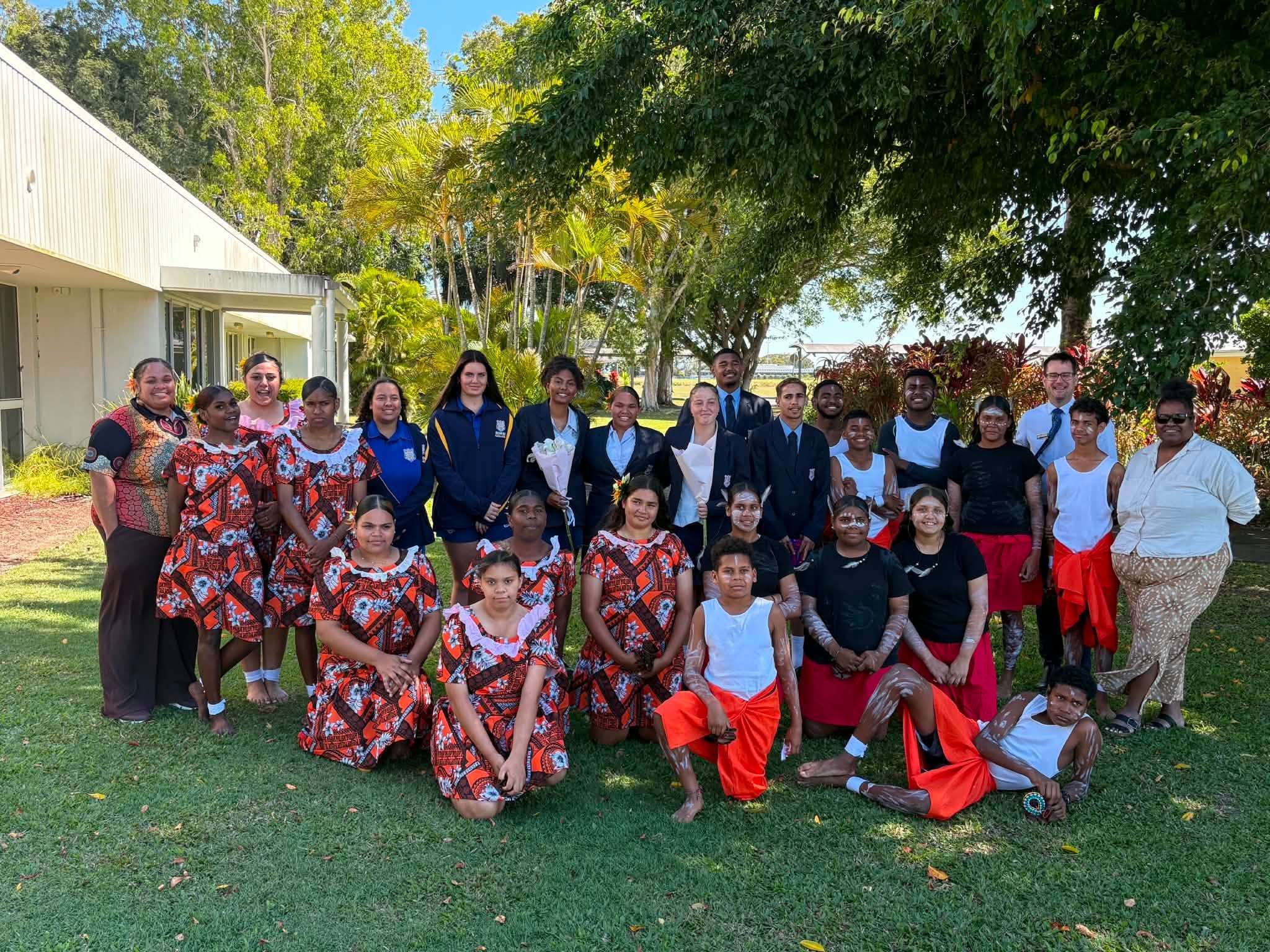
“Congratulations, Reef, Andrew and Brianna!
“We are particularly proud of Brianna, who was selected as co-MC for the event. Brianna did an incredible job helping to lead the celebrations and represent our college with confidence and pride.
“Wishing all of the 2026 QATSIF graduates every success, happiness and deadly opportunities for the future!”
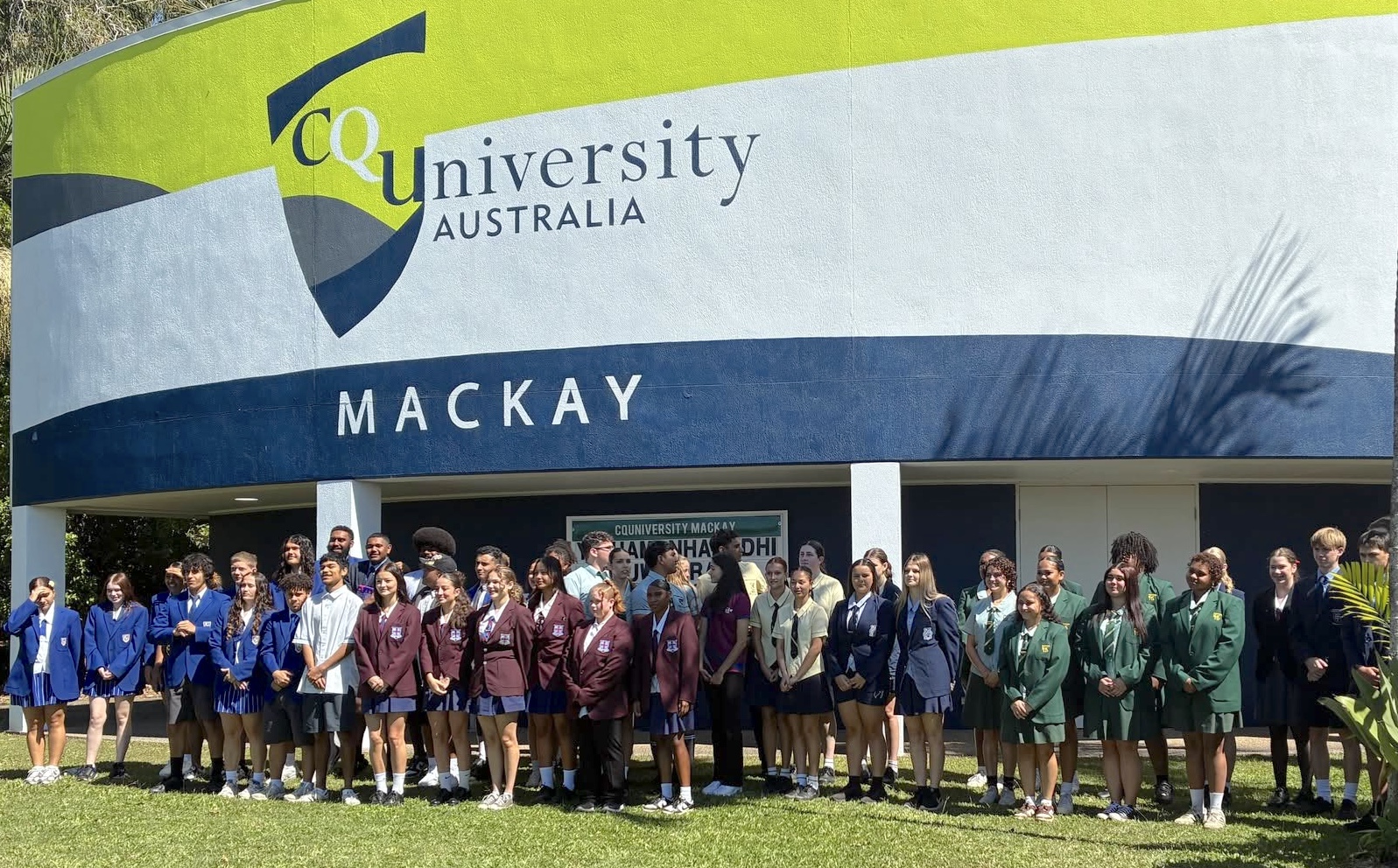
Bowen State High School also congratulated their QATSIF graduates, sharing:
“The ceremony was even more special as our Aboriginal and Torres Strait Islander students were invited to perform their contemporary dance from our NAIDOC Celebrations. They did an amazing job!
“Kala Auda also had the honour of lighting the Torres Strait Islander candle on behalf of the students.
“A special thank you to Michael and his QATSIF team for your amazing leadership and support for our students. Thank you to everyone that made the ceremony a great success.
A shout out to our deadly students for your dancing and support for your peers.”
Congratulations to all graduates that took part – we look forward to writing about the incredible things you do in your futures!

Every community has people who simply get things done.
They're the ones setting up before everyone else arrives and packing up after everyone has gone home. They're coaching kids after work, running sausage sizzles on weekends, checking in on neighbours, planting trees, raising money for good causes or serving on committees because they genuinely care about where they live.
Most never ask for recognition. In fact, they'd probably tell you they're just doing what anyone else would do.
But I don't think we should ever take those people for granted.
That's why nominations for the 2027 Whitsunday Australia Day Awards are so important.
These awards are about recognising the quiet achievers and local champions who help make our region a better place to live. They remind us that strong communities are built by people who are prepared to roll up their sleeves and lend a hand.
Every year I have the privilege of reading the nomination stories, and they never fail to inspire. Some nominees have dedicated decades to local sporting clubs, while others have made an incredible difference through volunteering, community service, environmental projects, the arts or simply being there whenever someone needs support.
We also have some amazing young people in our region who are already making a positive impact, and these awards are a great opportunity to acknowledge their efforts as well.
There are categories recognising achievements in sport, arts and culture, environmental stewardship, community service and volunteering, along with awards for outstanding community groups and the prestigious Citizen of the Year and Young Citizen of the Year.
If you've ever thought, "They deserve some recognition," now is the time to act.
A nomination doesn't have to be perfect. It simply needs to tell the story of why that person or group has made a difference and why they deserve to be celebrated.
I know there are countless unsung heroes right across the Whitsundays whose contributions often happen behind the scenes.
Let's make sure they receive the recognition they've earned.
Nominations close at 4pm on Wednesday, 30 September 2026. I encourage everyone to think about someone who's made a difference in your community and put their name forward. It could mean far more to them than you realise.
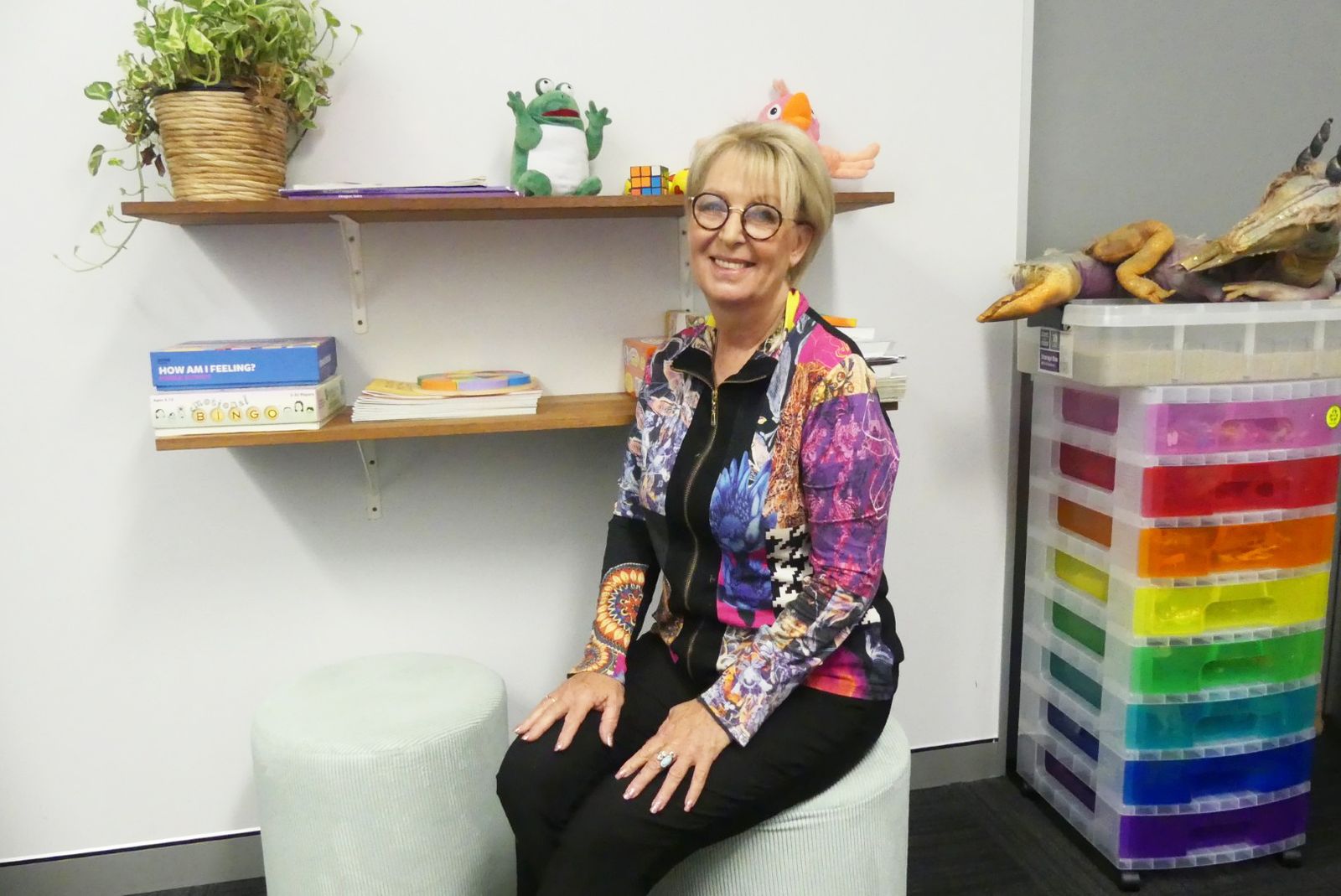
Sharon Ashman.
Anxiety can affect the way we think, feel, and respond to everyday experiences. It can create a cycle of worry, physical tension, avoidance, and reduced confidence.
While psychotherapy remains one of the most effective treatments for anxiety, research increasingly highlights the value of combining psychological strategies with regular exercise to support recovery and long-term wellbeing. Over the coming weeks we will explore why combination of psychotherapies and exercise gets the best results
Psychotherapy, such as Cognitive Behavioural Therapy (CBT), helps people understand the connection between thoughts, emotions, and behaviours. Through therapy, individuals learn to identify unhelpful thinking patterns, challenge anxious beliefs, develop coping strategies, and gradually face situations they may have been avoiding.
Exercise complements this process by supporting changes within the body and brain. Physical activity helps regulate stress hormones, improves mood-related chemicals such as serotonin and dopamine, and reduces physiological tension associated with anxiety.
Exercise can also help individuals become more comfortable with physical sensations linked to anxiety, such as an increased heart rate or faster breathing.
Together, psychotherapy and exercise create a powerful mind–body approach. Exercise does not need to involve intense workouts. Walking, swimming, yoga, gardening, cycling, or gentle strength training can all provide benefits. The goal is regular movement that feels achievable and sustainable.
For many people, recovery from anxiety is not about eliminating all anxious feelings, but learning that anxiety can be managed. Psychotherapy provides the tools, while exercise helps reinforce confidence, reduce stress, and reconnect people with their bodies.
“If you’d like more support in managing ADHD for yourself or your family, visit my website https://www.personaltransitions.com.au/ or give Cristie 0488667264 or me 0418708214.”
Queenslanders waiting for elective surgery are set to receive treatment sooner, with the State Government expanding its Surgery Connect program to help reduce wait times and restore people's mobility, independence and quality of life.
Backed by a $247 million investment in the 2026–27 State Budget, the program has already delivered more than 35,000 additional procedures across the state. The latest funding will also bring 11 new service providers on board, including in Mackay and Townsville, improving access to surgery for regional Queenslanders.
Member for Burdekin Dale Last said the addition of new service providers and bolstered funding was good news for anyone waiting on life changing surgery with thousands of additional procedures supported by the program.
“Procedures like cataract surgery, joint replacements and ear nose and throat surgeries significantly improve a patient’s quality of life,” Mr Last said.
“Research has proven that long delays waiting for these procedures means symptoms worsen, pain increases and there is an impact on the patient’s mental health.”
“This is why we are partnering with providers to ensure these patients can access these surgeries sooner.”
Mr Last said the Crisafulli Government's $1.8 billion investment in elective surgery was already delivering results, with the statewide elective surgery waiting list falling to 58,496 patients. He said the reduction followed years of rising demand, with the list reaching a high of 66,632 after increasing year on year over the previous decade.
“Since February 2025 more than 35,000 procedures have been delivered and in turn helped stabilise the Queensland elective surgery waitlist.”
“Besides the obvious benefits for patients, Surgery Connect reduces the pressure on our health staff who, through no fault of their own, have been forced to delay surgeries.”

The Whitsunday community continues to show its willingness to rally behind those in need, with the Whitsunday Escape raffle raising an incredible $45,600 to support Lucy Scarrott in her fight against cancer.
The Charter for a Cause raffle kicked off nearly two months ago, offering locals the chance to give back to four-year-old Lucy after she was diagnosed with medulloblastoma, an aggressive form of brain cancer that has required her family to relocate to Brisbane while she undergoes treatment.
Determined to lend a hand, Whitsunday Escape launched the fundraiser with the help of Geoff St Clair and Kim Mitchell, who generously donated a five-night charter aboard their brand-new Seawind 1370, Sidetracked.
The holiday, valued at around $11,000, was offered as the major prize, with 1,000 raffle tickets made available at $50 each and proceeds going towards Lucy and her family.
By the time the raffle closed on the 31st July, 912 tickets had been sold, bringing the final amount raised to $45,600.
“We were blown away by the community response, both locally and from the Whitsunday Escape Community,” said Jaclyn Watson, general manager of Whitsundays Escape.
“We are so grateful to the owner for donating the charter on his brand-new boat, and to the Proserpine Lions Club for supporting us to run this raffle and collect the money, as well as distribute it to the family.”
“It really has been a community effort and we are so humbled to be part of it.”
For Lucy and her family, that funding comes at a vital time. Lucy just finished 30 complete rounds of radiation therapy and is nearing the end of her first seven cycles of chemotherapy.
The family says she’s dealt with the treatment better than expected, though it has begun to start taking its toll.
Depending on where she is in each treatment cycle, her blood counts and whether she is battling any viruses or infections, Lucy has been swapping in and out of patient care at the Queensland Children’s Hospital.
For the family, the generosity from back home has allowed them to stay together, giving them the chance to devote their time to being by Lucy’s side.
“It means we can spend this time together as a family and focus on giving Lucy the support she needs,” the family said.
“It is a long hard road for Lucy, so being able to surround her with family every step of the way truly means the world.”
While the raffle has now wrapped up, those still wishing to donating to Lucy and her family can do so through their GoFundMe page:


Proserpine Mill processed close to 82,300 tonnes of cane for the week, which is the highest weekly throughput for the season to date. The season total is now just over 572,000 tonnes.
Average weekly CCS came in above budget, at 14.22 units. The highest weekly CCS sample for the week was 17.00 units, from a rake of KQ228 plant cane in the Kelsey Creek District.
Harvesting operators are again reminded to follow siding procedures when delivering or collecting bins.
These procedures are designed to safeguard the safety of all users and maintain the efficient operation of our sidings. Please check that all your operators have completed the mandatory siding induction.
Our cane trains work around the clock, seven days a week, so please continue to use your train brain and always take care around the cane rail network.

Seven people are facing 24 charges after police targeted a string of alleged break-ins, thefts and other offences across Bowen.
Bowen Criminal Investigation Branch Detectives, assisted by Whitsunday Tactical Crime Squad Officers, executed several search warrants as part of Operation Mackay Essence in late July.
Officers also conducted 43 street checks and 383 roadside breath and drug tests as part of the crackdown.
One of those arrested was a 22-year-old Bowen man accused of committing several offences across the area between 16th - 22nd July.
Police allege the man entered a Champion Street facility on 17th July and stole a vehicle, before attempting to enter a Don Street business the following day. On 21st July, he is suspected of entering a Linley Street hotel and stole tools, a firearm and ammunition, before a further alleged break-in at a Peter Delemothe Road business on 22nd July.
The 22-year-old faces multiple charges, including entering premises, willful damage, unlawful use of a motor vehicle and stealing a firearm or ammunition. He remains in custody and is due before Bowen Magistrates Court on 1st September.
A separate investigation saw a 20-year-old Bowen man charged over several alleged incidents between 16th and 21st June involving stolen fuel, a trailer and other property, as well as the alleged unlawful entry of a Linley Street premises.
He faces two counts of stealing, along with one count each of stealing a vehicle and entering a dwelling with intent and is due before Bowen Magistrates Court on 18th August.

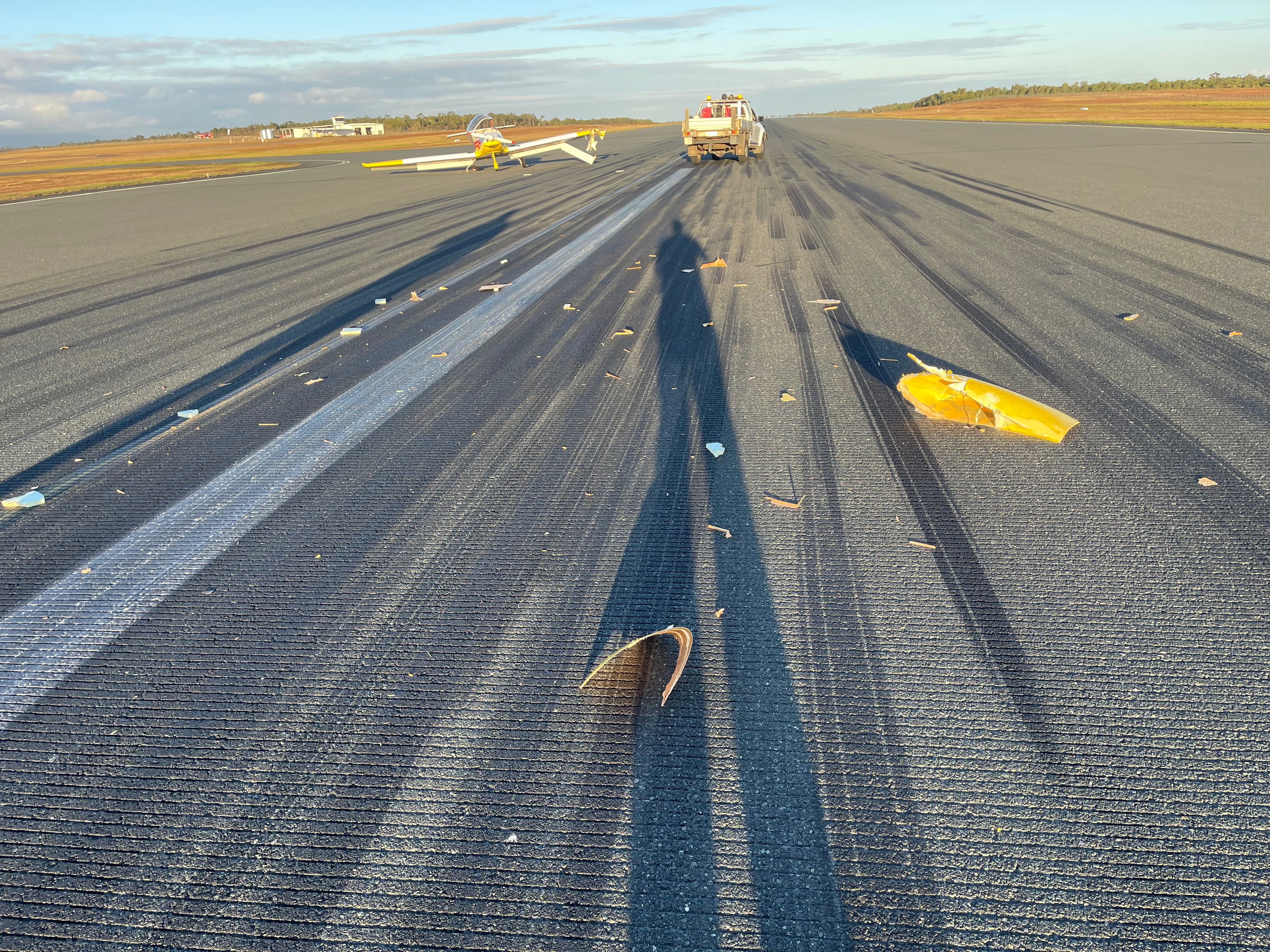
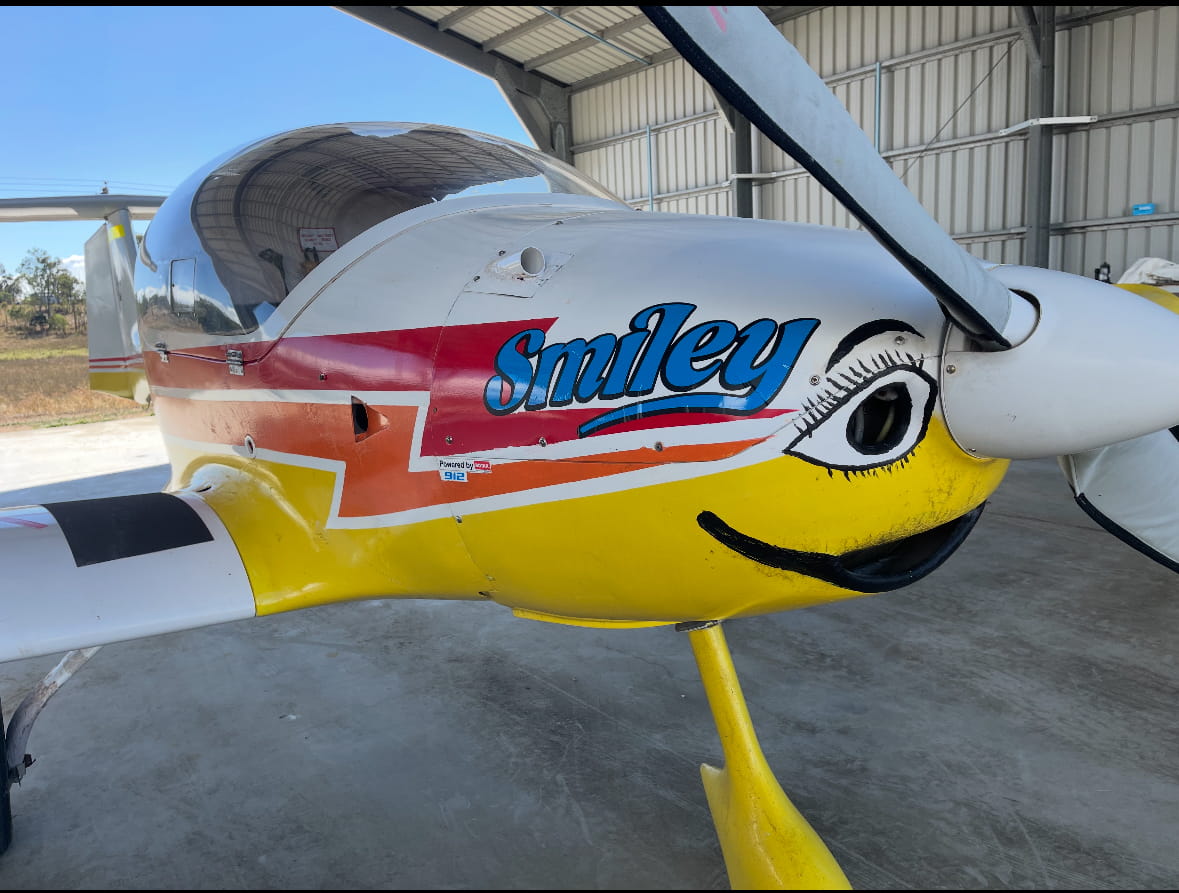
After the crash. Photos supplied by Rogin Taylor
After 61 years in the cockpit, experienced Whitsunday pilot Rogin Taylor has walked away uninjured from another frightening incident after his aircraft collided with an airport utility vehicle on the runway at Whitsunday Coast Airport.
At 5pm on Saturday 8th August, Whitsunday Sports Aviators Club president and Proserpine Aero Club vice-president Rogin Taylor was bringing his Atec Zephyr into Whitsunday Coast Airport, where he planned to leave the aircraft ahead of a four-day flying safari around North Queensland with four mates.
After touching down on Runway 11, Rogin said he spotted an airport utility vehicle stationary about 100 metres ahead.
With the aircraft already committed to the landing, he veered right in an attempt to avoid a head-on collision, but the left wing struck the vehicle, snapping off and spinning the plane around completely.
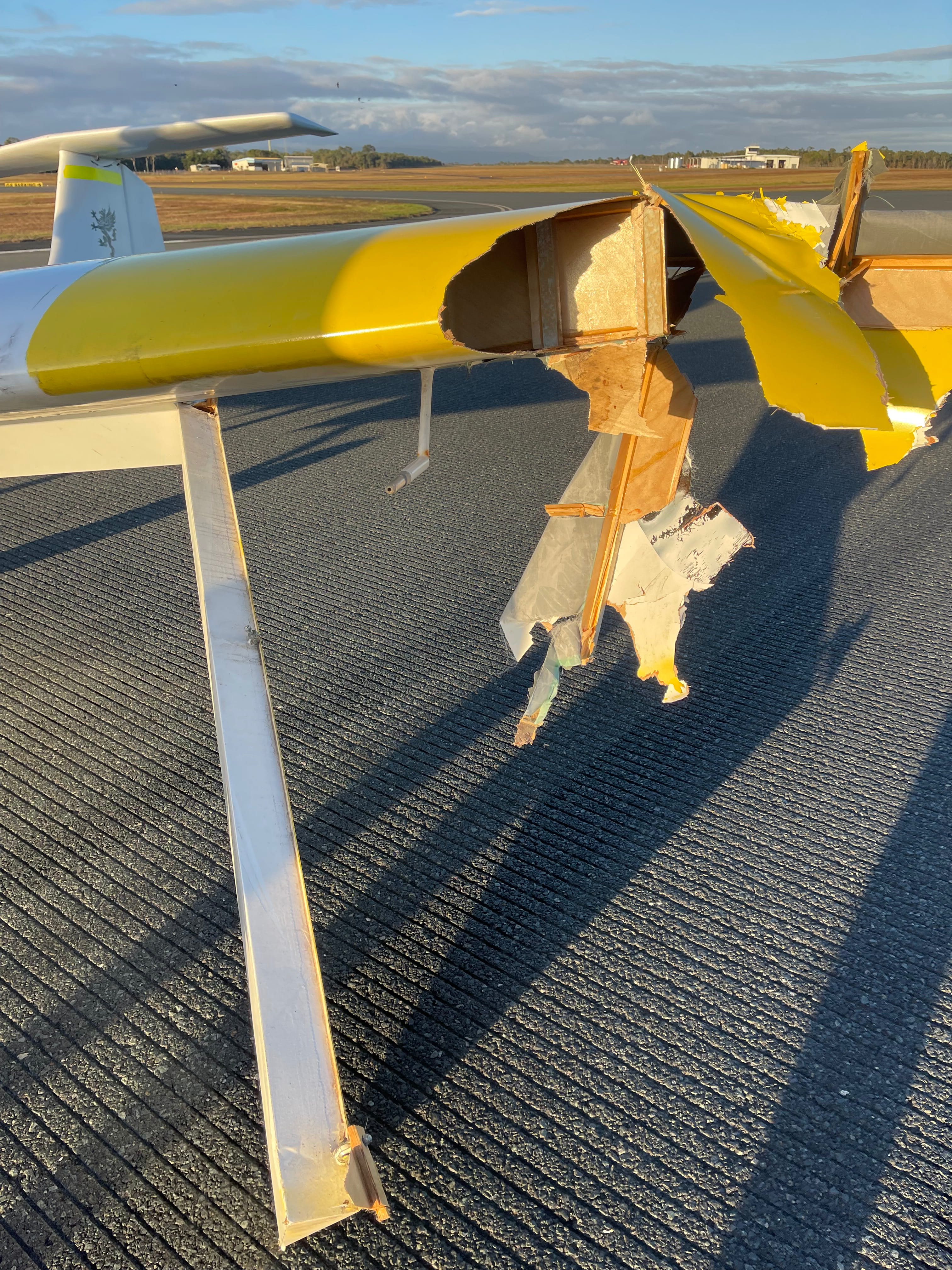
“It was distressing, actually a little bit frightening,” said Rogin.
Despite the impact and damage to the aircraft, Rogin escaped the collision without injury, although he said damage to the cockpit controls made it difficult to climb out.
Rogin said he expected the vehicle to move clear of the runway before his aircraft reached it, believing the driver had seen him in time. He claimed the driver later told him he had been unable to see the approaching plane due to the setting sun.
The incident also disrupted operations at Whitsunday Coast Airport, with a departing Jetstar service delayed while the aircraft’s debris remained on the runway.

Whitsunday Regional Council acknowledged the incident in a statement following the collision.
“The safety of passengers, airport personnel and all airport users remains Council’s highest priority,” Council said.
“The incident has been reported to the relevant aviation authorities and is currently under investigation.”
“As the matter is under investigation, Council will not comment further on the circumstances of the incident at this time.”
This isn’t the first time the seasoned pilot has survived a frightening incident, having previously watched one of his aircraft burst into flames and, in 2022, survived a crash into the Proserpine River.
That crash left his aircraft completely submerged, with the pressure luckily freeing both Rogin and his passenger from the plane before they spent around 40 minutes swimming to shore through the most densely crocodile-populated river in Queensland.
Despite all this, Rogin is unwavering in his love for flying, and even has plans of getting back in the plane sooner than you’d believe.
“I just put it all behind me,” Rogin said.
“I also have another airplane which I'll probably fly later this week.”
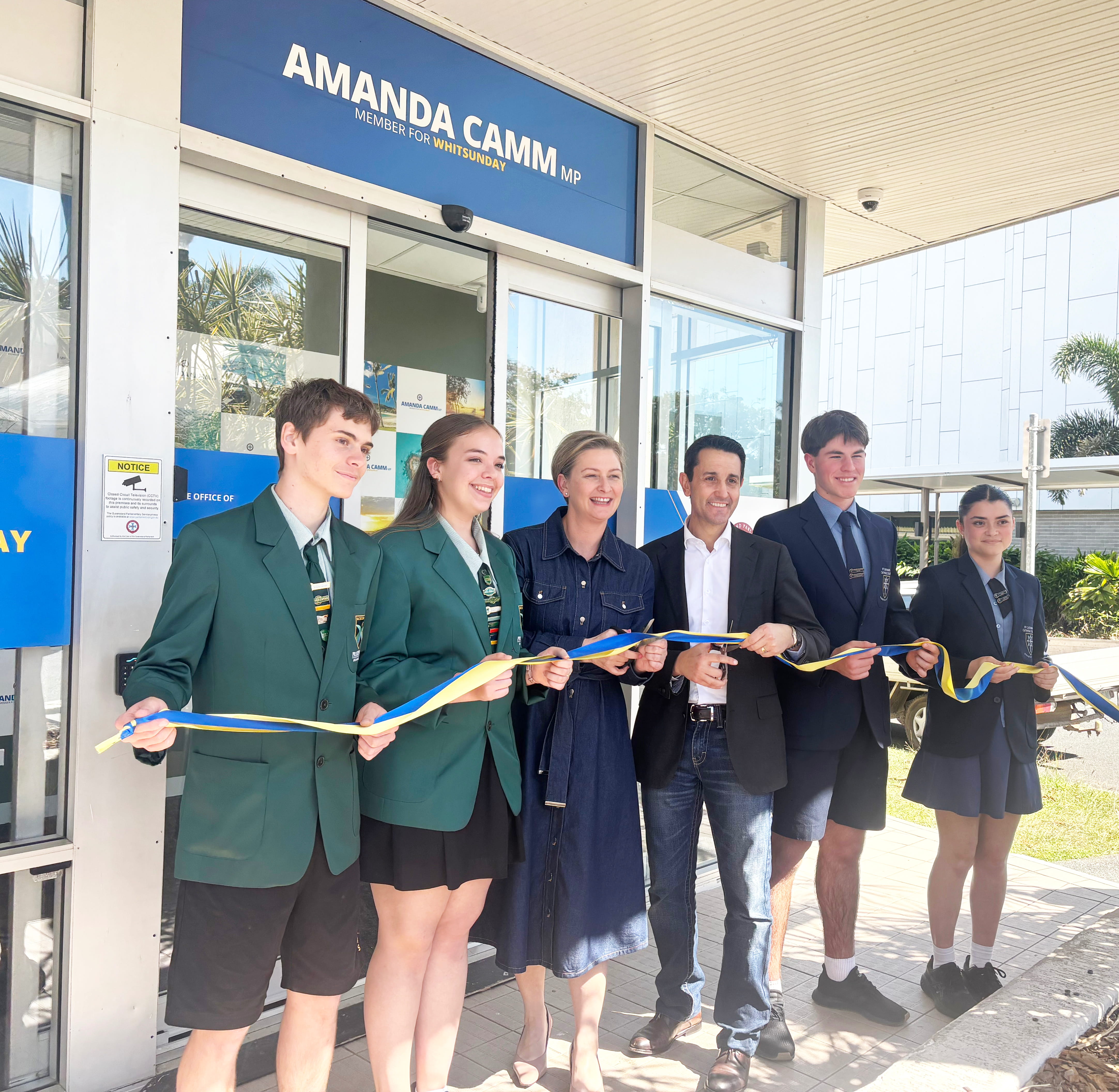
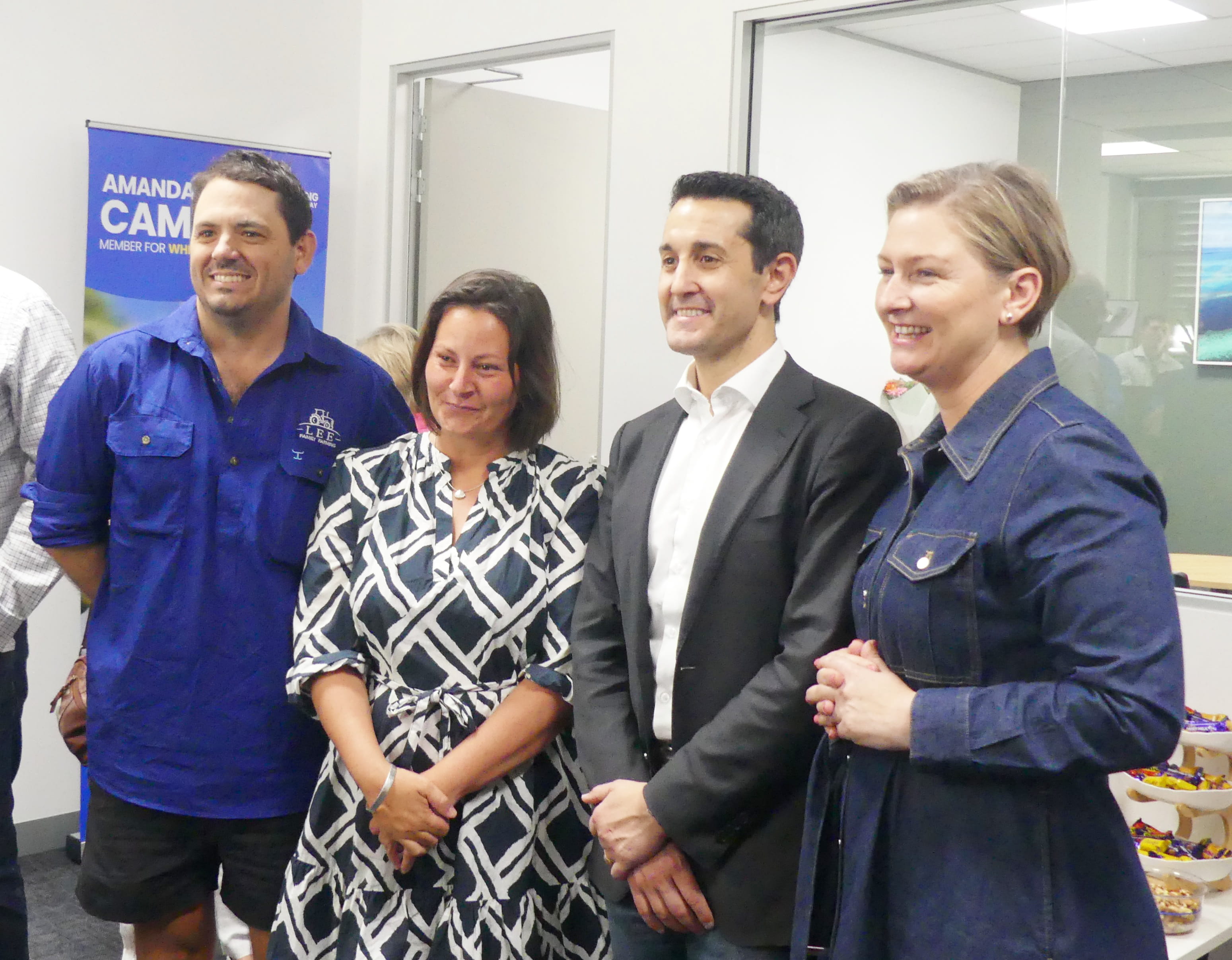
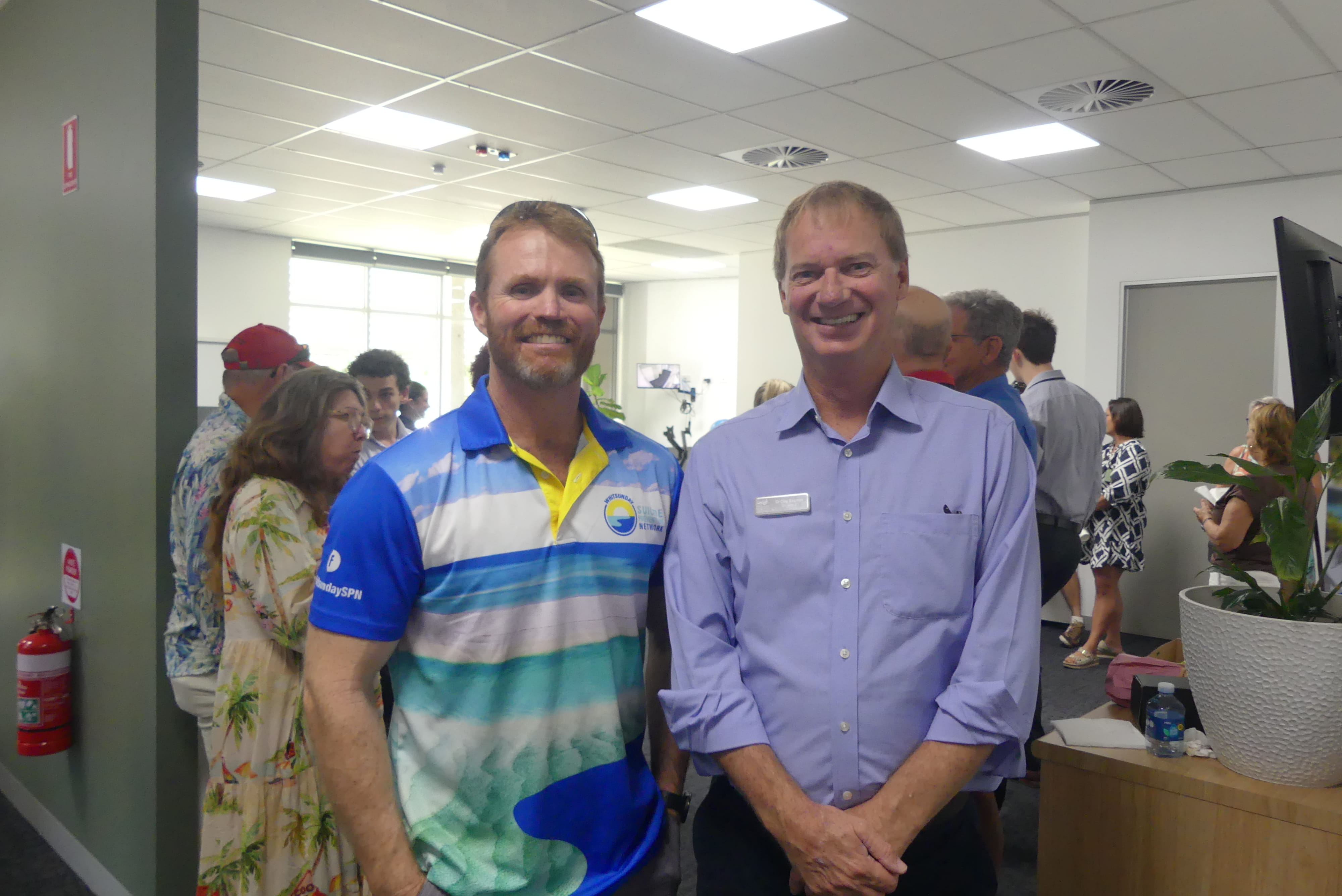
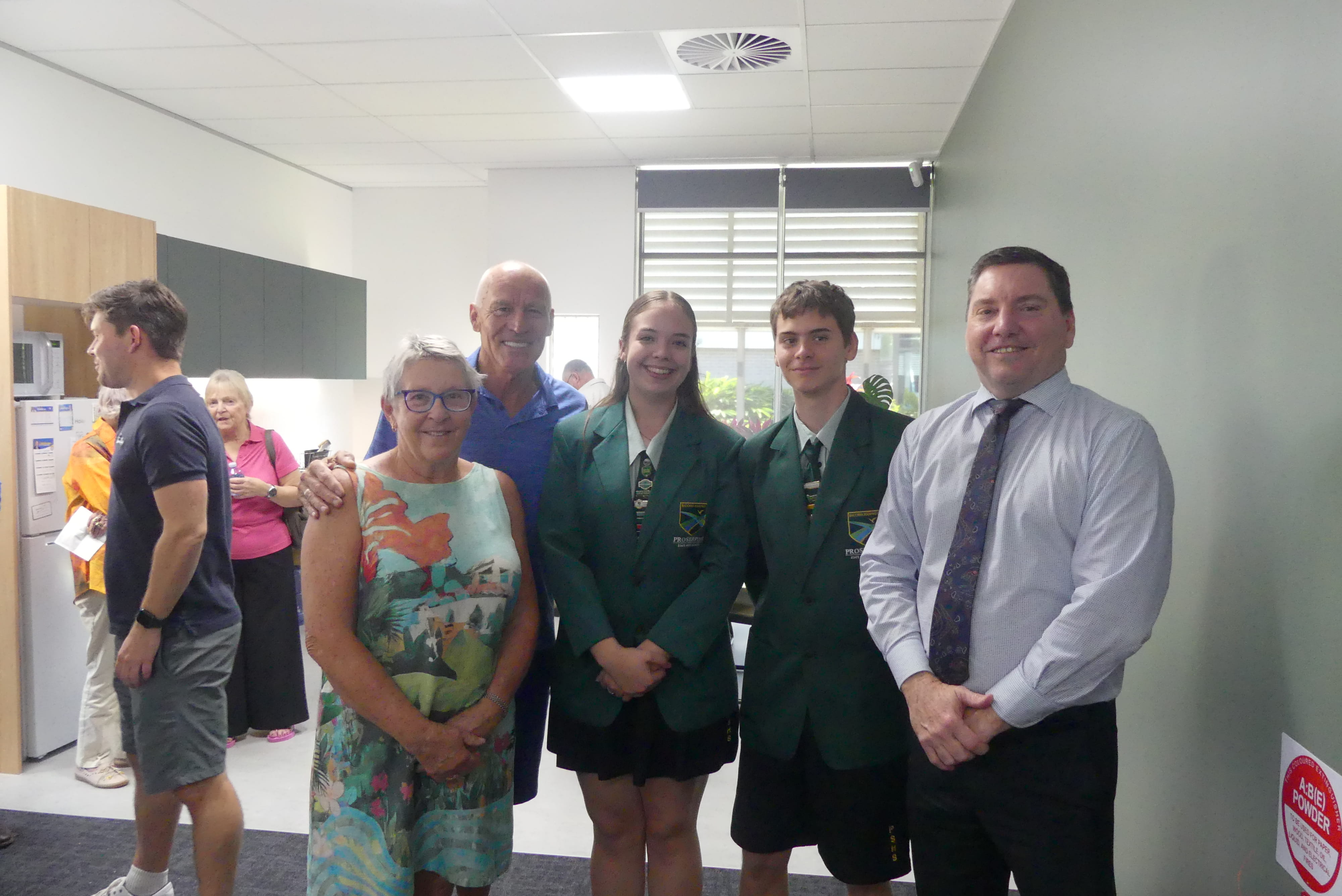
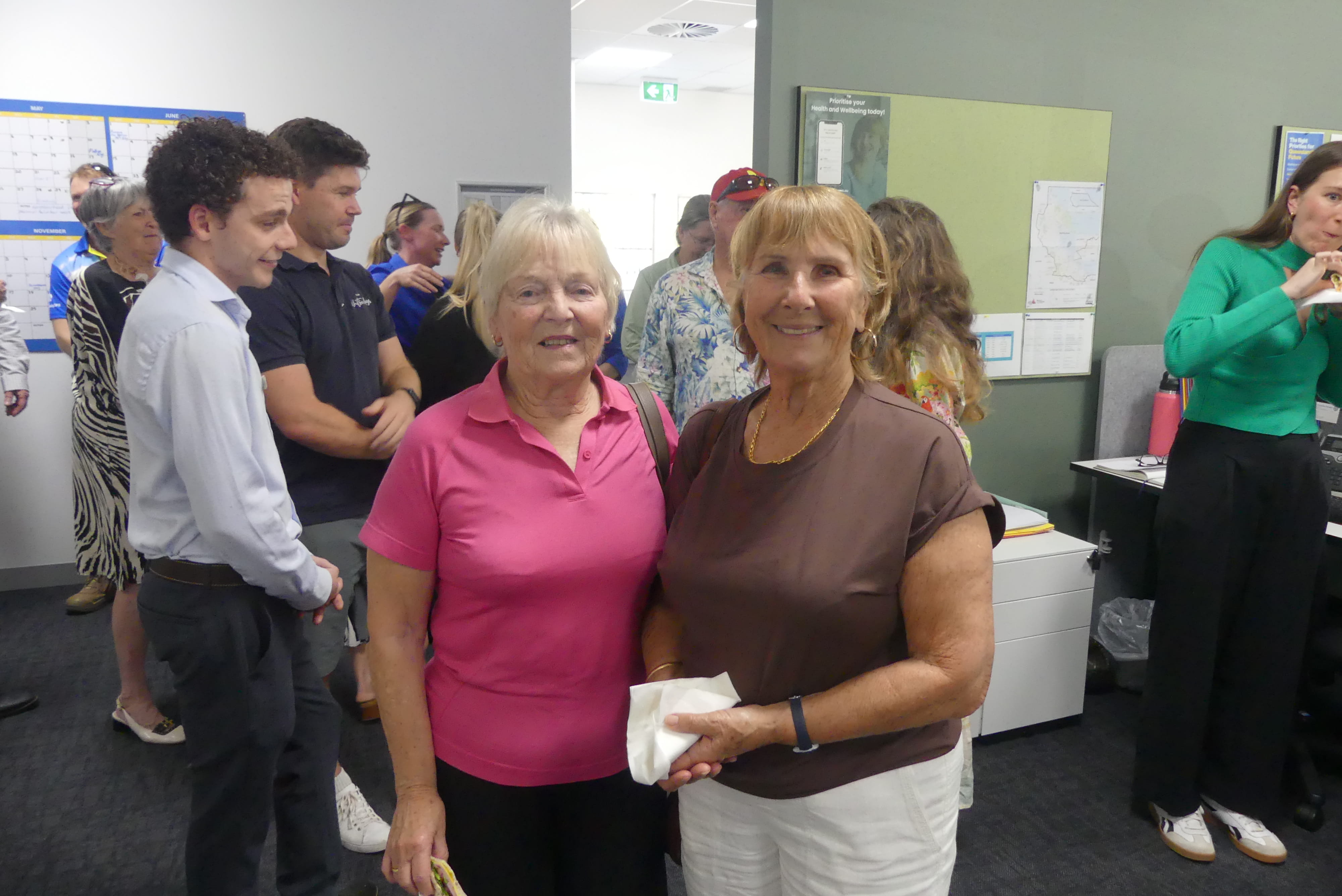
Amanda Camm MP, Premier David Crisafulli, students from Proserpine state high school and St Catherines Catholic College cutting the ribbon and officially opening the new office. All photo credit: Zach Houtenville.
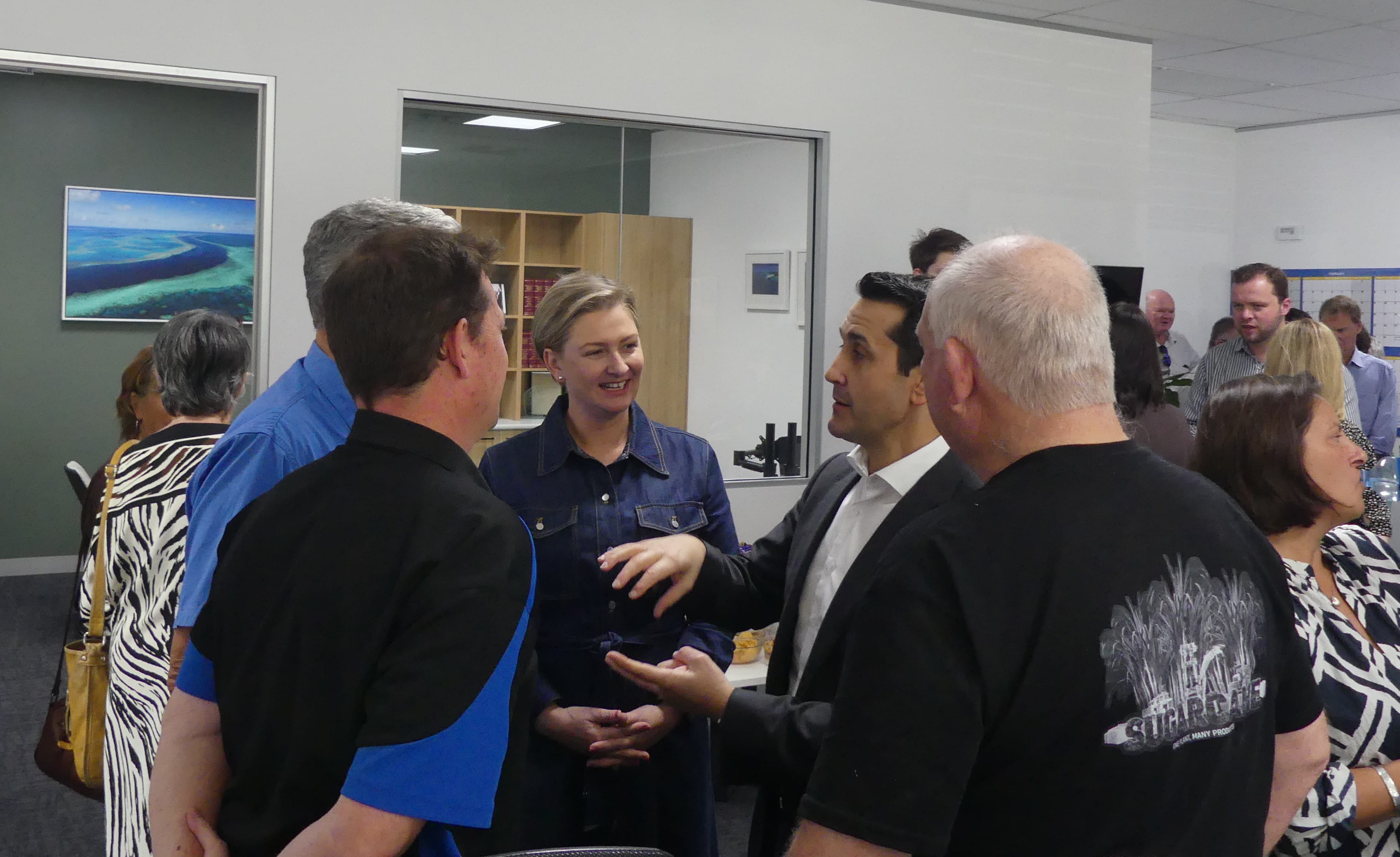
Amanda Camm MP has officially cut the ribbon unveiling the new Whitsunday Electorate office in Proserpine, drawing in all types of community members, alongside a surprise appearance from Premier David Crisafulli.
The new office marks a fresh chapter for the Whitsunday electorate, with Ms Camm welcoming and thanking guests through the doors to celebrate the opening alongside her staff, community representatives, students and volunteers.
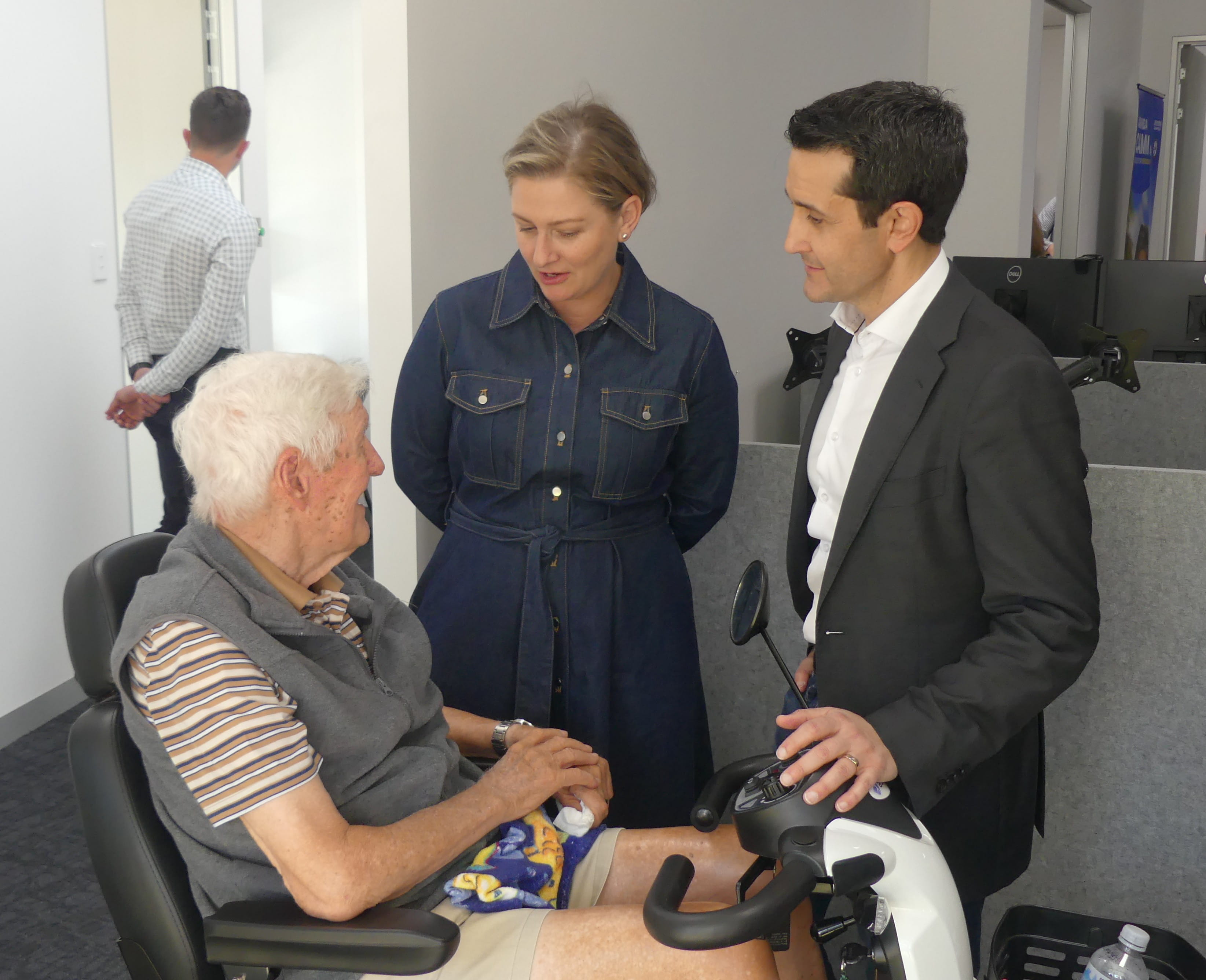
The Premier was among those in attendance, making a surprise trip to Proserpine to help officially open the office, cut the ceremonial ribbon and chat with attendees, while sharing his optimism for the future of the community.
“There is a future, let me tell you there is a future, and you're living it and you're feeling it at the moment,” Mr Crisafulli said in a speech at the opening.
“[Amanda Camm] loves the community, she’s served it across two levels of government, she believes in you and she fights hard for you.”
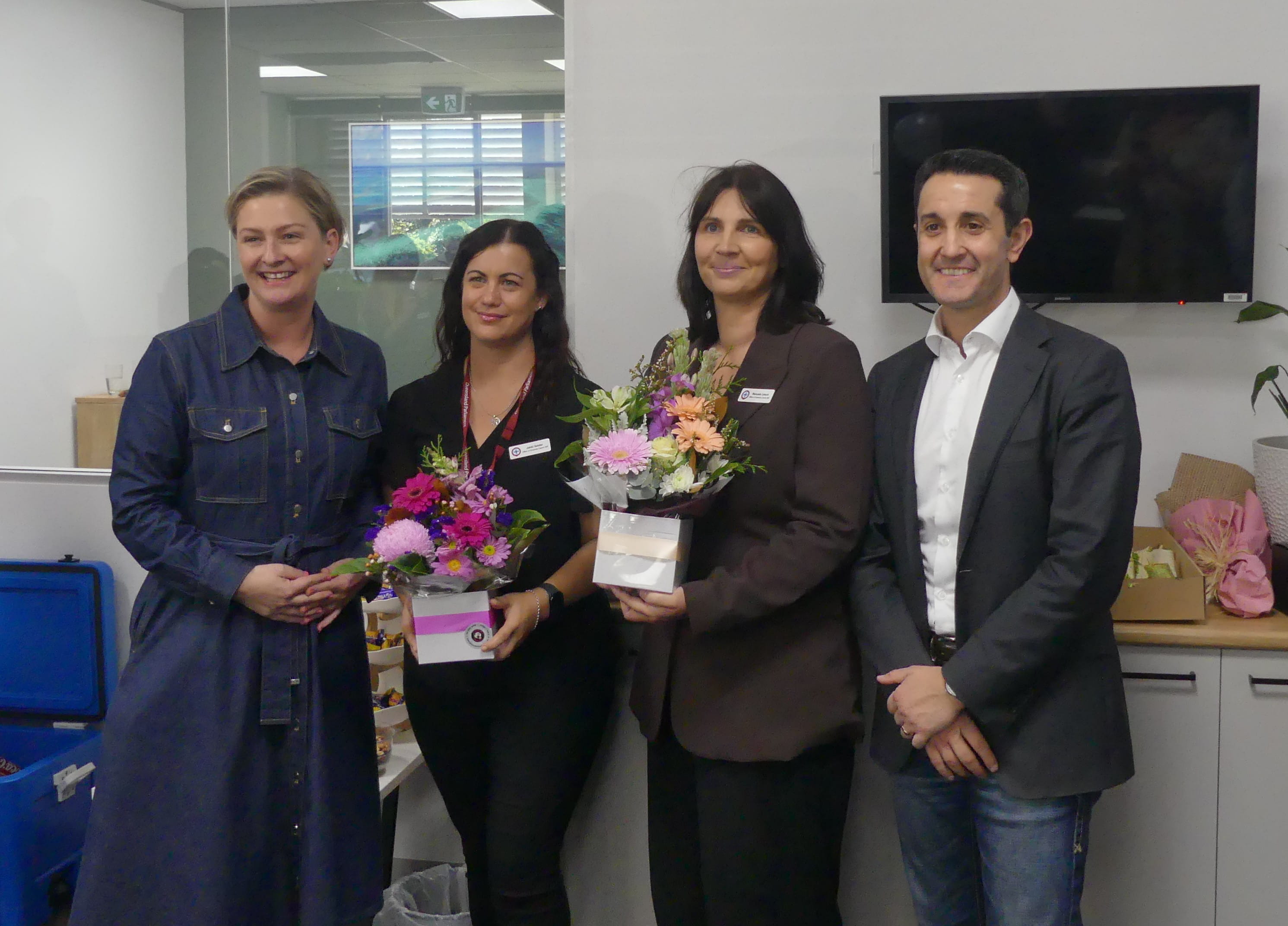
Ms Camm used the gathering as an opportunity to recognise several standouts within the community who have gone above and beyond through their time and commitment.
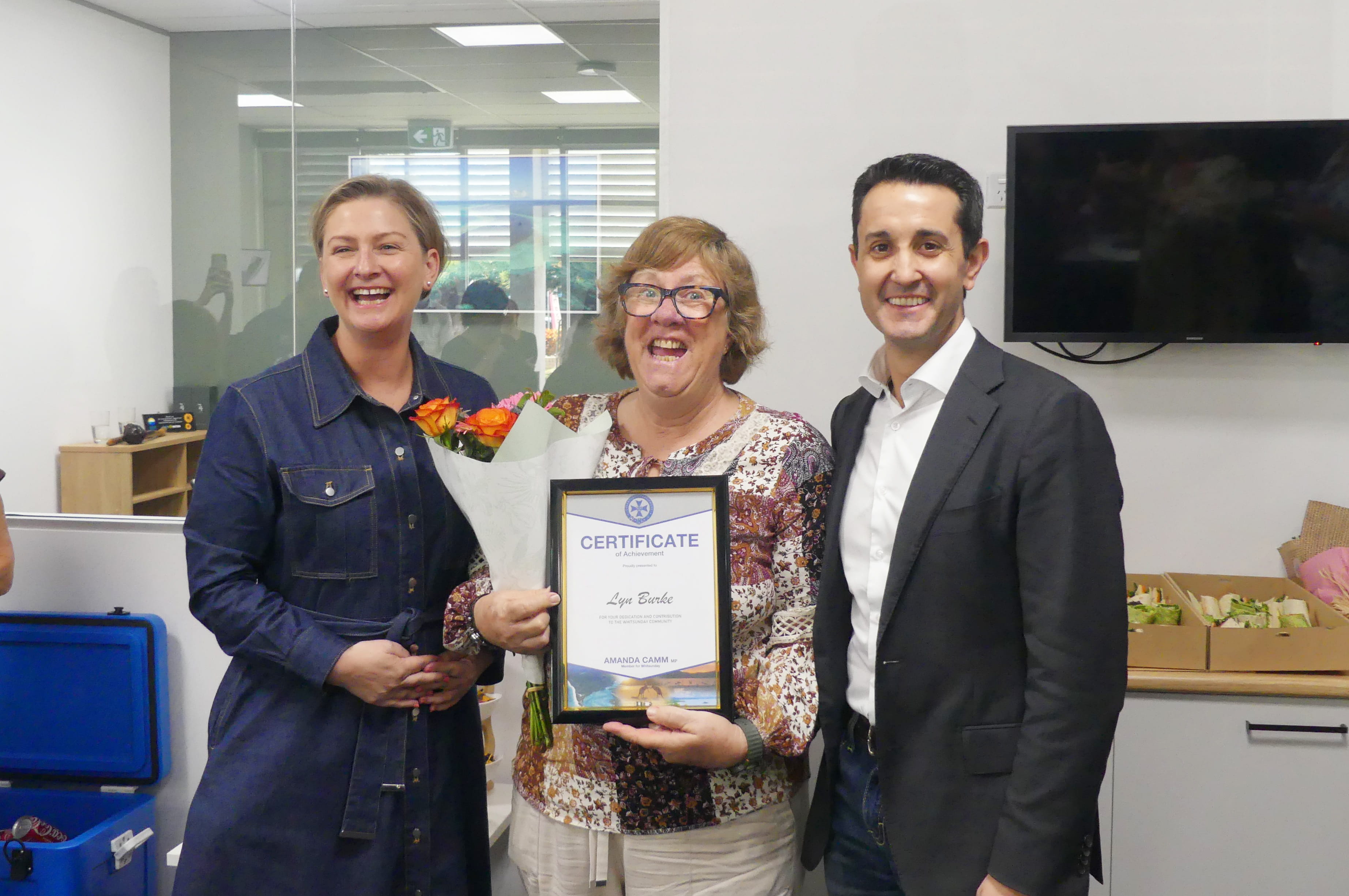
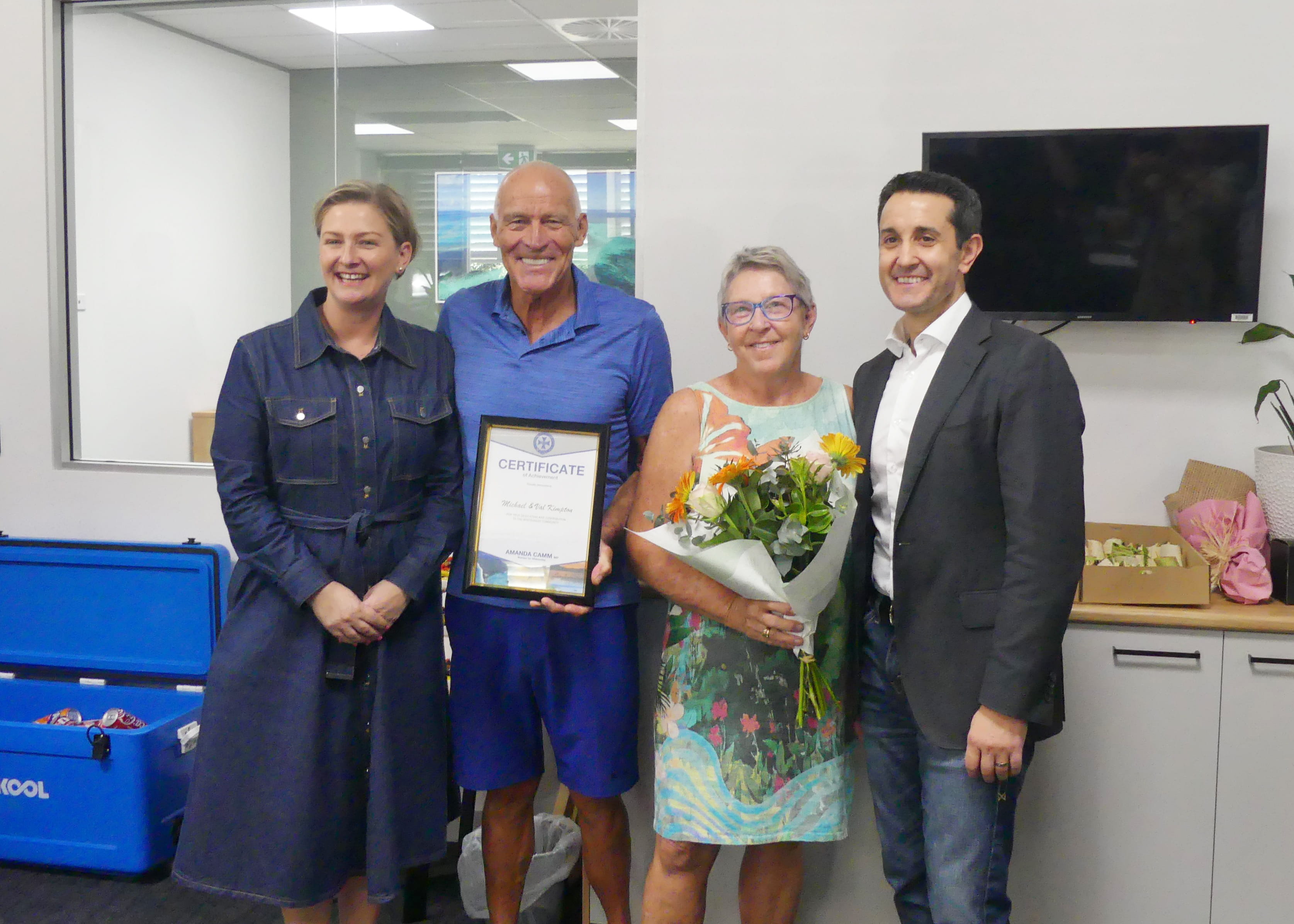
Among those recognised was Lyn Burke, who received a special acknowledgement for her contribution to the community, alongside Val and Michael Kimpton for their efforts in delivering the recent Airlie Beach Triathlon Festival, and Shane from Fierce Signage in Mackay for his quick work installing the new signage in time for the grand opening.
She also recognised members of her electorate team, thanking them for the work they do behind the scenes to support her and the wider Whitsunday community.
“There are so many people here who contribute so much, but really go above and beyond with their time and their commitment,” Ms Camm said.
“In doing so, it really showcases our community as well.”
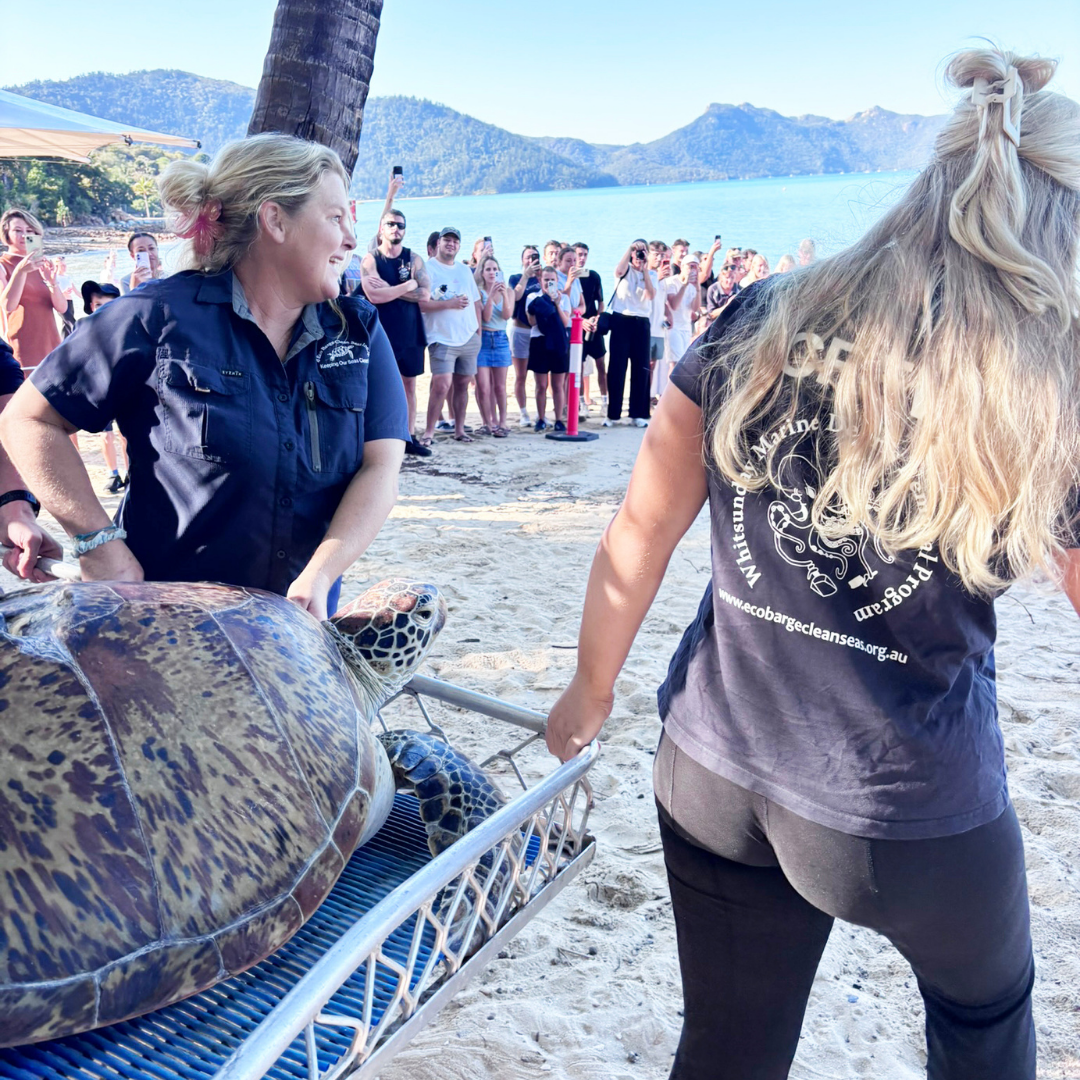
A 60 year old sea turtle has been returned home after rehabilitation. Photo source: Eco Barge Clean Seas
A mature green sea turtle believed to be approximately 60 years old has returned to the sea after months of rehabilitation at the Whitsunday Turtle Rescue Centre, operated by Eco Barge Clean Seas.
Regina has been released back into Whitsunday waters at Hayman Island following her recovery from a serious boat-strike injury and buoyancy syndrome, near the area she was discovered.
Resort staff had been closely monitoring her condition over several months when it became clear that intervention was needed.
The Centre’s dedicated volunteer turtle carers provided daily treatment, monitoring and nutritional support. Her wound gradually healed, her buoyancy improved and she regained the strength needed to return to the wild.
“Regina’s recovery is a wonderful example of what can be achieved when the community comes together to protect our marine wildlife,” said Libby Edge, Founder and CEO of Eco Barge Clean Seas.
“To see her regain her strength and return to the wild is incredibly rewarding for everyone involved in her rescue and rehabilitation.”
The rescue has reminded local boaties to slow down in areas where turtles are known to occur and maintain a careful lookout for marine wildlife, and sparked deep gratitude for the hardworking volunteers dedicating their time to looking after our beautiful reef.

Whether you're arriving for a tropical holiday, heading out to explore the islands or travelling to and from the region, Whitsunday Transit is helping locals and visitors stay connected every step of the way.
As the Whitsundays' leading transport provider, Whitsunday Transit operates a fleet of modern, air-conditioned buses and coaches, meeting all incoming and departing flights at Whitsunday Coast Airport in Proserpine. Guests are then transported to a variety of destinations and accommodation providers throughout Airlie Beach and the surrounding area.
The service also caters to passengers travelling by rail, with vehicles meeting all arriving and departing Queensland Rail services at Proserpine.
For those eager to experience some of the region's most iconic attractions, Whitsunday Transit provides convenient connections to the Whitsunday Islands, the Great Barrier Reef and the world-famous Whitehaven Beach, with regular services stopping at the Cruise Whitsundays Maritime Terminal at the Port of Airlie.
In addition to tourism services, the company offers school transfers and charter services, with a range of vehicles available to accommodate groups of all sizes.
Recognised as a Queensland Good to Go business, Whitsunday Transit continues to play an important role in helping people discover everything the region has to offer.
From the moment visitors arrive to the time they head home, the team is ready to welcome passengers aboard and connect them with the beauty of the Whitsundays.
For more information, visit whitsundaytransit.com.au
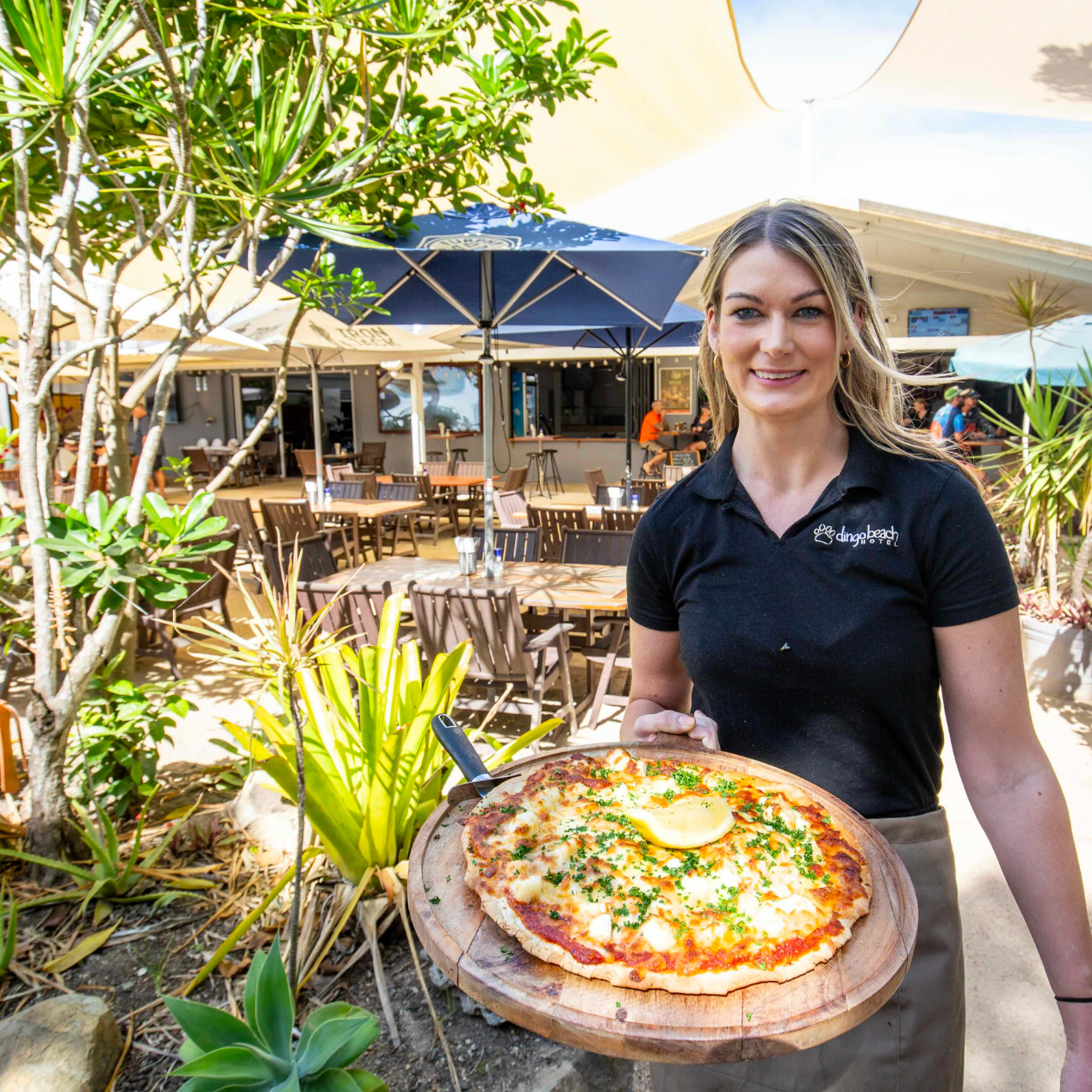
Some places are too good to stay secret, even if the locals wish they could.
Just 45 minutes north of Airlie Beach, at the end of one of the Whitsundays' most scenic coastal drives, sits Dingo Beach Hotel – the kind of old-school Queensland pub that reminds you why the best discoveries are often found off the beaten track.
With absolute beachfront views, an easy-going atmosphere and genuine North Queensland hospitality, it's the sort of place where lunch has a habit of turning into an afternoon, and an afternoon can easily become a weekend away.
Since new owners took the reins in March 2025, the much-loved local icon has undergone a thoughtful refresh, with improvements designed to make the venue even more comfortable and welcoming while preserving everything that makes it special. It's still the relaxed coastal pub locals love – just better than ever.
Whether you're chasing a hearty pub meal, a cold beer overlooking the Coral Sea or simply somewhere to slow down for a while, Dingo Beach Hotel delivers the kind of authentic Queensland experience that'sbecoming harder to find. It's pet-friendly, offers comfortable motel-style accommodation if you decide to stay the night, and even has a Thirsty Camel bottle shop on site, making it a handy stop for travellers and boaties stocking up for their next adventure.
If you're visiting the Whitsundays and want to experience more than the usual tourist trail, this hidden gem is well worth the detour. Enjoy live music every Saturday and Sunday, and keep an eye on the Dingo Beach Hotel Facebook page for upcoming gigs, events and what's happening next.
To plan your visit, head to dingobeachhotel.com.au
Publishers Indemnity. Any individual or entity that places advertising, supplies copy material, or submits editorial content to Core Life Publishing agrees and undertakes to ensure that all such material:- Does not infringe upon any copyright, trademark, or other intellectual property rights;- Is free from any content that could be considered defamatory, libelous, or slanderous;- Does not infringe upon any rights related to privacy or breach of confidence;- Contains no obscene, indecent, or otherwise unlawful material;- Complies fully with the Trade Practices Act and all other applicable laws, regulations, or statutes.Furthermore, by submitting or placing such material, these individuals or entities agree to indemnify and hold harmless the publisher, Core Publishing and Events Pty Ltd, and/or its agents from and against any and all investigations, claims, demands, liabilities, damages, costs, or judgments arising out of or in connection with the material provided. All material is believed to be accurate at the time of printing and remains the copyright of Core Publishing and Events Pty Ltd.
© 2026 Mackay and Whitsunday Life Pty Ltd.
