
Independently Owned, Locally Grown, Community Loved
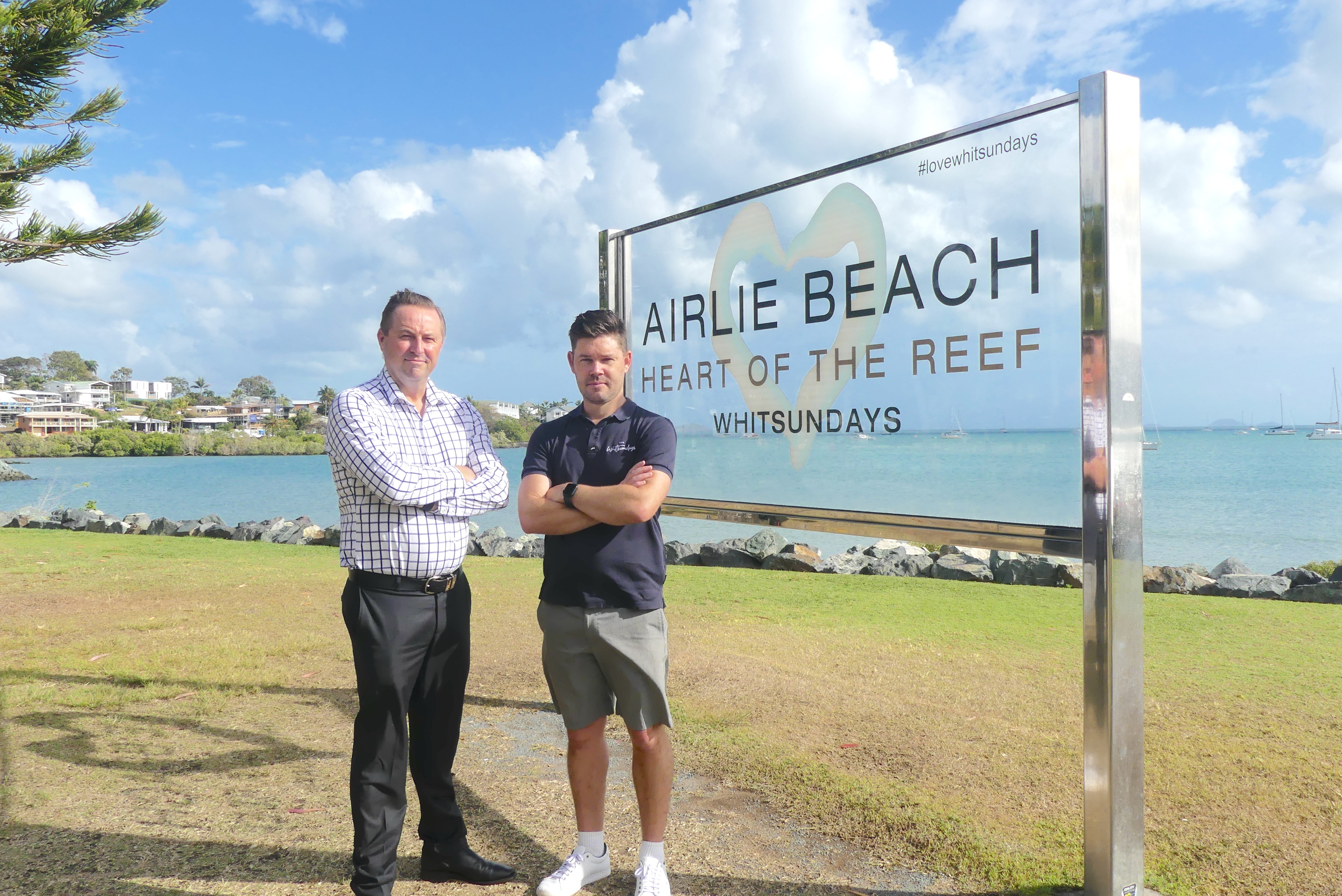
Local tourism operators are expressing concern toward troubling times ahead, with the federal government’s new visa restrictions set to shrink the backpacker workforce that drives seasonal operations. The Federal Government’s proposed cuts to Working Holiday Visas have raised concerns across two of the Whitsundays’ biggest industries. Bowen farmers warned that fewer backpackers could leave crops unpicked, and now tourism leaders in Airlie Beach have added that the same cuts could leave local businesses scrambling to find workers that aren’t there. At Airlie Beach’s Heart of the Great Barrier Reef sign, Tourism Whitsundays CEO Tim Booth and Whitsunday Mayor Ry Collins spoke about what the proposed changes could mean for a region that relies heavily on tourism. “We can't have Airlie Beach named Australia's top tourism town in the small category and then have the knees cut out from us by federal policy,” Tim said. The proposed changes form part of the Federal Government’s effort to reduce migration, a topic that has been of hot debate by all three parties that Mayor Ry Collins believes the working holiday visas should be separated from. “Obviously the federal government is really coming in with broad brushstrokes to try and address the publicly perceived issue around net overseas migration (NOM),” said Mayor Collins. “Some of the dialogue I heard last week in Canberra was actually taking that working holiday maker class completely out of the NOM calculation. “I think that's a fair and reasonable way that they can make the numbers look as good as they want but it won't affect the actual number of workers that are here to support our industries.” The new restrictions look to cut the second-year extension on Working Holiday Visas from 57,000 to 45,000 slots, and 3rd year extension from 31,000 to just 5,000. According to Tourism Whitsundays, the Whitsundays hosts about 3,500 backpacker workers at any given time of the year. “I think for regions like the Whitsunday’s unemployment rate is lower than the national average by 0.9%, so at a 3.5% unemployment rate, we just don't have the workforce there that can pick up these roles that the working holidaymaker delivers for our communities,” Tim said. According to figures released by Tourism Whitsundays, in the year ending March 2026, domestic visitors spent $959.1 million in the region and international visitors spent a further $271.8 million. This spending was made possible by the abundance of workers delivering those experiences. “[Working holidaymakers] do a terrific job already in delivering world-class experiences, particularly here in the Whitsundays,” said Mayor Collins. “We do see working holidaymakers really take up that mantle, particularly in areas like customer service roles, hospitality roles, housekeeping roles... “What we're asking for is that we can stay strong as an entire tourism industry.” Having just returned from Canberra, the pair said raising regional and statewide voices is crucial to persuading the Federal Government to reconsider how the proposed restrictions would apply. “And then at a federal level, obviously through our federal member Andrew Wilcox, but we've also engaged with the members of the Labor Party around that as well. “But unfortunately it's starting to feel like a number of issues that we're campaigning on…along with things like disaster recovery funding arrangements which was one we linked into last week.” Photo caption: Whitsunday Mayor Ry Collins and CEO of Tourism Whitsundays, Tim Booth. Photo credit: Zach Houtenville
Read the full story
In this world of AI and other technological advancements, you don’t want to be the person who wanders around the office like a big old clumsy Tyrannosaurus Rex bumping into all the youngsters and stepping on their laptops and other devices. It’s one of the challenges of our times; getting the balance right in business in a world that is increasingly controlled by AI, robotics and a rapidly changing IT environment. I remember, some years ago now, when older family members had refused to embrace computer technology and mobile phones etc. They were really left behind and felt excluded in a world that had moved ahead without them. I’ve got a 19-year-old son who doesn’t have to think about it. Current and evolving technology is part of his life and, like others in his age group, he is completely at ease with something that is just part of his make-up and comprehension of the world around him. The trap you can fall into is letting the kids do all the IT stuff for you. My son set up our old TV with all the streaming services etc, which was the easy option for me, but I find it’s important to get involved and do it yourself otherwise everything will move ahead and you won’t be able to do things for yourself. But I am still stuck in some of the old ways. If I am ordering a takeaway meal I still ring the restaurant and go and pick it up. The old T-Rex wanders into the Thai or Indian joint and picks up his plastic bag of goodies, pays, and drives home. There aren’t many of us left. Uber Eats baby. Everyone has embraced it. My wife and daughter were having dinner together in Brisbane recently and my daughter noticed that her stockings or tights had “run” or a ladder in them. My wife suggested she jump in the car and drive to a nearby supermarket and get another pair. But my daughter ordered a new pair to be delivered to the restaurant by Uber. They were there in a jiffy and the night continued without the pesky interruption of having to leave the restaurant to buy them. It’s a great example of the modern world making things easier and how many of us need to ensure we are adjusting and understanding how things can now be done. There is another side to the coin, however. People have told me that I should get AI to write my columns. They say I could give it some examples of columns I have written and give it an idea for a new column and tell it to knock out 600 words on my chosen topic in my style of writing. It’s something I would never do. Apart from the fact that it would somehow seem like I was cheating, it would also not be authentic. I feel that however boring or pedestrian my stories and comments are, at least they are mine. They have come from my noggin, my experiences. It is my take on the world, not something that has been cobbled together by artificial intelligence. It’s similar in the world of real estate and, I’m sure, business generally. You need to embrace the technology, use it when it creates a better service, a superior experience for buyers and a better result for sellers. But there is still a place for picking up the phone and calling buyers, following up from open homes, doing the hard work that needs to be done as an agent. In a world of AI, robotics and Uber Everything the human element, the person-to-person connection still needs to happen to deliver good service and create the best result for clients.
Read the full story
Maisy is a beautiful little soul who seems to understand that the very best place in the world is right beside someone she loves. She is affectionate, gentle, social and wonderfully trusting. She loves curling up on a welcoming lap, snuggling into your arms and settling close enough to make you feel as though you have always belonged together. Maisy is generous with her purrs, her cuddles and her sweet little air biscuits. She even places her paw in your hand as if to say, “I choose you.” But this gorgeous girl is not only a champion snuggler. Maisy is playful, curious and full of kitten joy. She loves exploring her toys, chasing anything that moves and turning ordinary moments into entertainment. She will happily amuse herself, but everything is even more fun when her favourite person joins in. She has that perfect combination of affection and personality, soft and loving when it is time to cuddle, and playful and bright when it is time for fun. Maisy will bring warmth to your home, companionship to your days and a little paw to hold whenever you need it. If you are looking for a kitten who will play with you, curl up with you and love being part of your life, Maisy may be the girl you have been waiting for. Maisy has been desexed, microchipped, received her first vaccination, been wormed and is litter trained. She is ready to begin her beautiful new life as a much-loved indoor companion. To arrange a meet and greet with Maisy, please call Ros on 0403 814 318.
Read the full story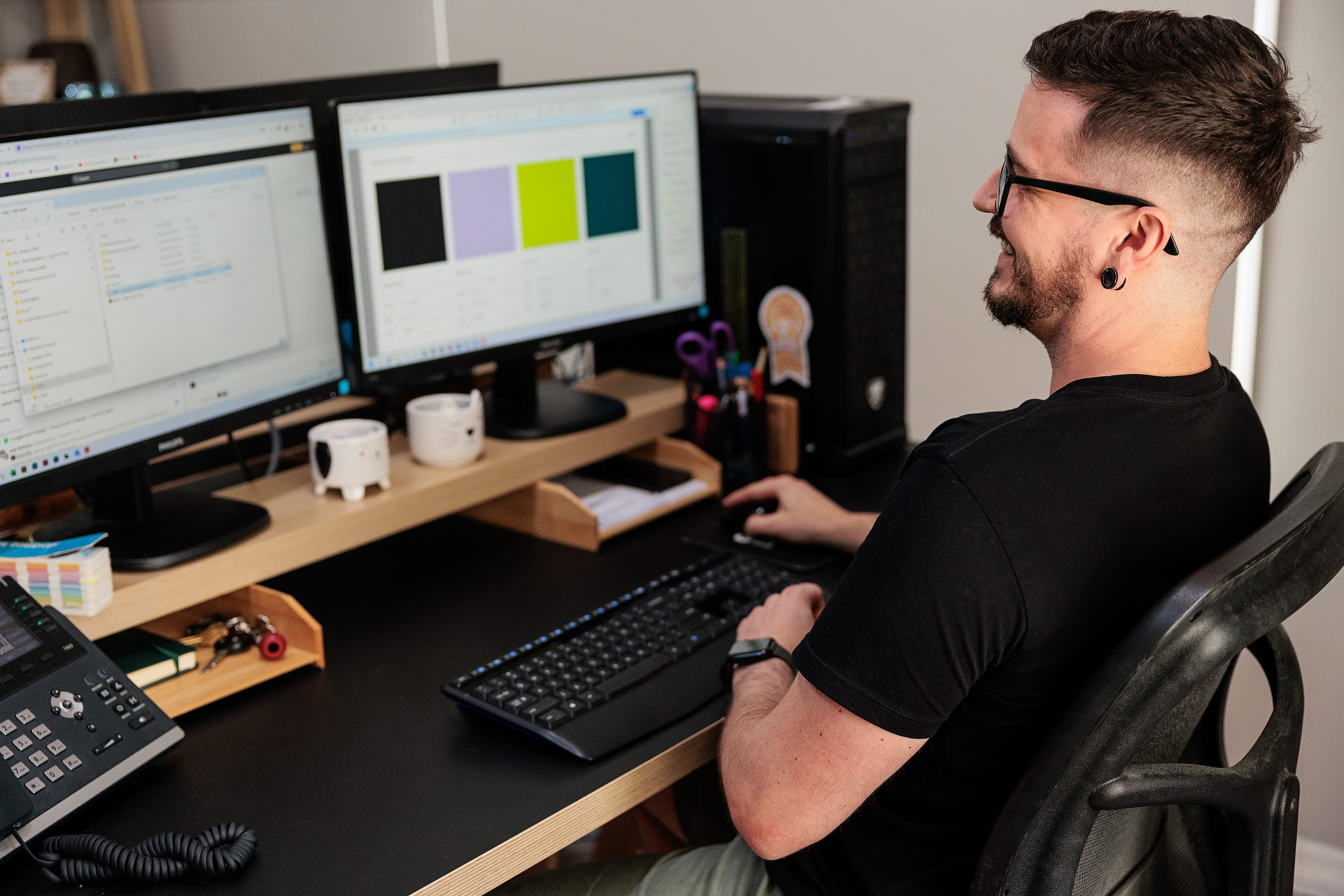
Tarren McAuley, Web Director and Co-Owner I remember when those AI posters started popping up – the first one looked kinda different. By the end of the week, when I’d seen 30 of them, I was much less enamoured + actively scrolled past anything that had that telltale paint smear style font. It’s not that the quality had gotten any worse between me seeing that first one + when I was sick of them by the 30th. But it was no longer novel or original. I think AI is especially susceptible to this because as soon as someone discovers a winning formula, everyone else jumps on the bandwagon, but because everyone is getting similar outputs, it gets old – quick. I think brands can fall into a similar trap. Humans are always looking for inspiration + when seeking it out, where better to look than the other players in your field. If you’re a tech company, you’re going to look at Samsung, Apple + the like. But when that happens too much, you get a feedback loop of samey-ness. For me, this is best exemplified by airline logos. Look at Qantas + Virgin, probably the two biggest brands in Australia. Both use a red plane-like icon, w/ their logo in big letters next to it. Bit cherry picked but even the other big players’ logos are similar - Emirates uses mainly red + shakes it up by having a slightly more exotic font. Jetstar ditches the red for orange + has their icon at the end but it has similar visual markers. This isn’t unique to logos, like w/ the poster example earlier – it could be your social tiles, your website or even your company email sig. Whatever it is, if you wake up one day + notice that the other businesses around you are looking a bit too similar, that should be your sign to start looking at a rebrand to shake off the rust + re-establish your unique identity. You know, until the cycle repeats again!
Read the full story
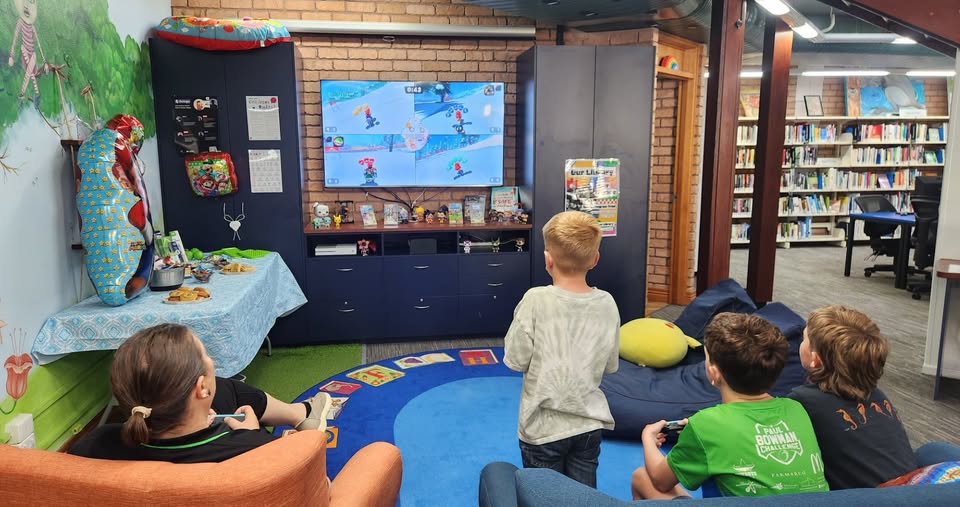
Kids enjoying the library with their school holidays. Photo supplied: Whitsunday Regional Council
After months of listening to young people across the Whitsundays, Council has transformed its libraries with upgraded technology, flexible furniture and new activities aimed at bringing more young people through the doors.
The Your Say initiative was a youth engagement project that ran between January and June, asking young people whether the library was somewhere they wanted to spend time, what programs and technology interested them, and what they felt was missing.
Now, that time and feedback is being seen on full display, with libraries in Proserpine, Cannonvale, Bowen and Collinsville all receiving a refresh.
“We were able to purchase adaptable furniture, upgraded technology, like a switch and VR technology,” said Alicia Mulcahy, team leader at the Proserpine library.
“They certainly wanted technology, which we expected, but the main thing they were after was just a space where they could feel comfortable, relax and be themselves.”
The upgrades have also led to new programs, including a permanent Dungeons and Dragons group at Bowen Library, while Proserpine and Cannonvale are looking to follow suit if local Dungeon Masters can be found.
The consultation with young people will continue even now that the upgrades are in place, with a permanent program held at Proserpine Library every Tuesday giving participants a chance to socialise and shape future activities.
“They actually tell us what they want to do going forward,” she said.
“The young people are also putting their little shine on it as well, it’s their space.”
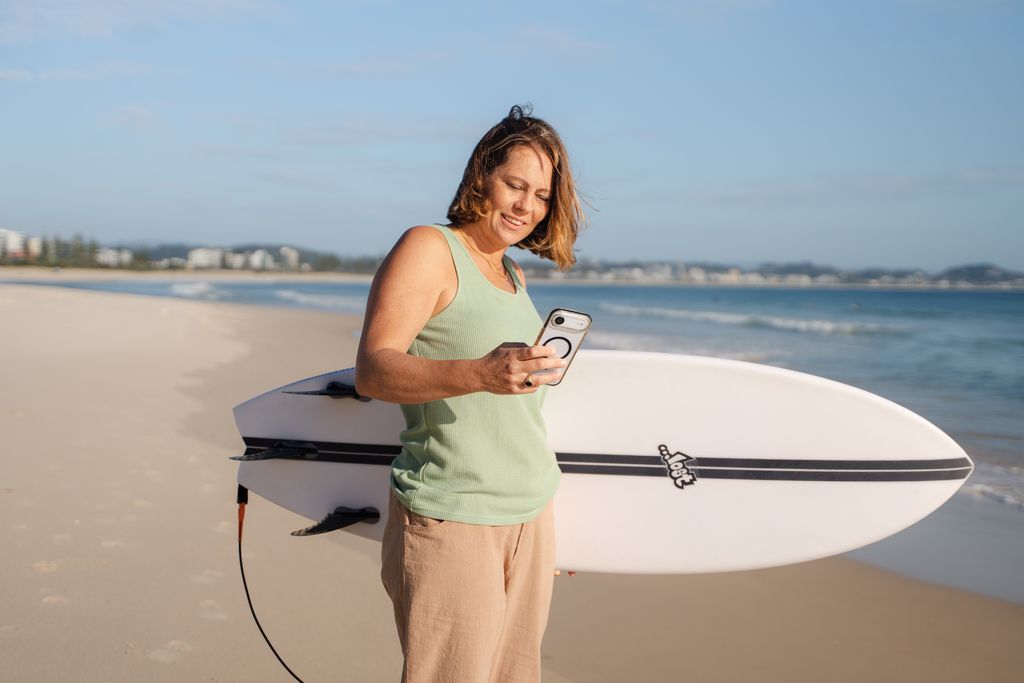
Sarah Beardmore. Photo supplied
With no shark nets, drumlines or government-run sighting platform across the Whitsundays, a free community-powered app is helping ocean dwellers find out what may be moving beneath the water before diving in.
Created by former professional surfer Sarah Beardmore, Dorsal allows beachgoers to view and report shark sightings in real time, with new smartwatch alerts and public drone-reporting technology set to strengthen its reach ahead of summer.
“It’s not to scare people but It’s just an additional tool, like putting on sunscreen or checking the forecast,” she said.
“In Queensland, our reports are 100 per cent community-generated, compared to New South Wales, where they already have drone programs and other programs in place that push those reports out to the public.
“So in Queensland, we’re relying completely on people going to the beach, going fishing and heading out on boats.”

Sarah spent around 12 years competing as a professional surfer, travelling the world before eventually settling in Byron Bay.
After spending much of her life in and around the ocean, Sarah understood how quickly conditions could change. When a series of shark attacks struck northern New South Wales in 2015 and 2016, she saw a clear gap in the way vital sighting information was being shared, inspiring her to create Dorsal.
“In some of these events, sharks had been seen in the area the day before and on the day of the attack, but there was no real way for people to share that information,” Sarah said.
Shark safety has returned to the national spotlight following a series of incidents across Australia, including a fatal attack at Sorrento Beach near Perth.
Sixty-three-year-old swimmer Greg O’Neill was reportedly attacked by a great white shark close to shore, with the tragedy unfolding in the clear view of onlookers.
The incident marked Western Australia’s third fatal shark attack of 2026 and followed several shark encounters around Sydney earlier in the year, as well as one fatal attack in Far North Queensland back in May.
Against that backdrop, Sarah believes fast and reliable sighting information can help people make better-informed decisions before entering the water and hopefully mitigate these incidents.
Dorsal works through a network of everyday of up to 750,000 users, allowing people to check recent shark activity before heading to the beach or submit their own sighting.
Reports from trusted and verified contributors can appear immediately, while new submissions are checked using details such as GPS location, time stamps and image-recognition technology. Users can attach a photograph or video where possible, although Sarah understands that sightings often happen too quickly to capture on camera.
Any report flagged by the system is reviewed by Sarah or another member of the team, who may contact the person who submitted it before making the information public.
Once verified, the sighting is shared through the app, helping warn swimmers, surfers, fishers and boaties within minutes.
“We try to get shark sightings and information to as many people as possible, as quickly as possible,” Sarah said.

Photo source: Shutterstock
Fresh warnings have been raised about drink spiking in Airlie Beach after a Sunshine Coast visitor was rushed to hospital with a dangerously low heart rate.
Sam Hensen and his friend Erik had flown to Townsville to pick up a newly purchased LandCruiser and on their way home, stopped into town for a bit of fun.
About 30 minutes into the night, Erik began feeling unwell and returned to their accommodation, where his condition rapidly deteriorated.
“I came back to him about an hour later, in absolute agony,” Sam said in a Tik Tok video.
“He was completely out of it and seeing the severity of the situation, I decided to call an ambulance.
Erik was assessed by paramedics, who recorded his heart rate at just 37 beats per minute.
Erik remained in hospital overnight before flying home to the Sunshine Coast, bringing the trip to an abrupt end, with Sam mentioning the effects lingered for several days with Erik still feeling mentally unsettled after returning home.
Sam later shared the experience on social media to warn others about how quickly drink spiking can take hold. The video attracted more than 250,000 reactions, with many viewers sharing similar experiences of their own.
“We don’t know when, where or who did it,” Sam said in the video.
“These horrible people don’t just spike you to commit sexual assault, they also spike you to rob you on your way home.
“A lot of blokes have the same mindset as me, and they need to know this can happen at anytime at any place to anyone.”
Erik’s ordeal echoes an account previously shared with this newspaper by an Airlie Beach resident, who believes her drink was tampered with while she was out with a group of friends.
The young woman, who chose not to be identified, remembered little between drinking at the venue and finding herself isolated in a bathroom, where her body would no longer respond as she tried to call for help.
“It wasn’t like being drunk,” she said at the time.
“My mind was present, but I couldn’t control my body.”
“I wanted to pick up my phone to call a friend, but it was like I couldn’t control my body.”
After repeatedly trying to get herself off the floor, the woman was left bruised and sore before being taken home safely by a friend.
During a later hospital visit, she described what had happened to a doctor, who told her the symptoms indicated her drink had likely been spiked.
Together, the two accounts show how suddenly suspected drink spiking can take effect and why an unexpected reaction after only a small amount of alcohol should never be dismissed.
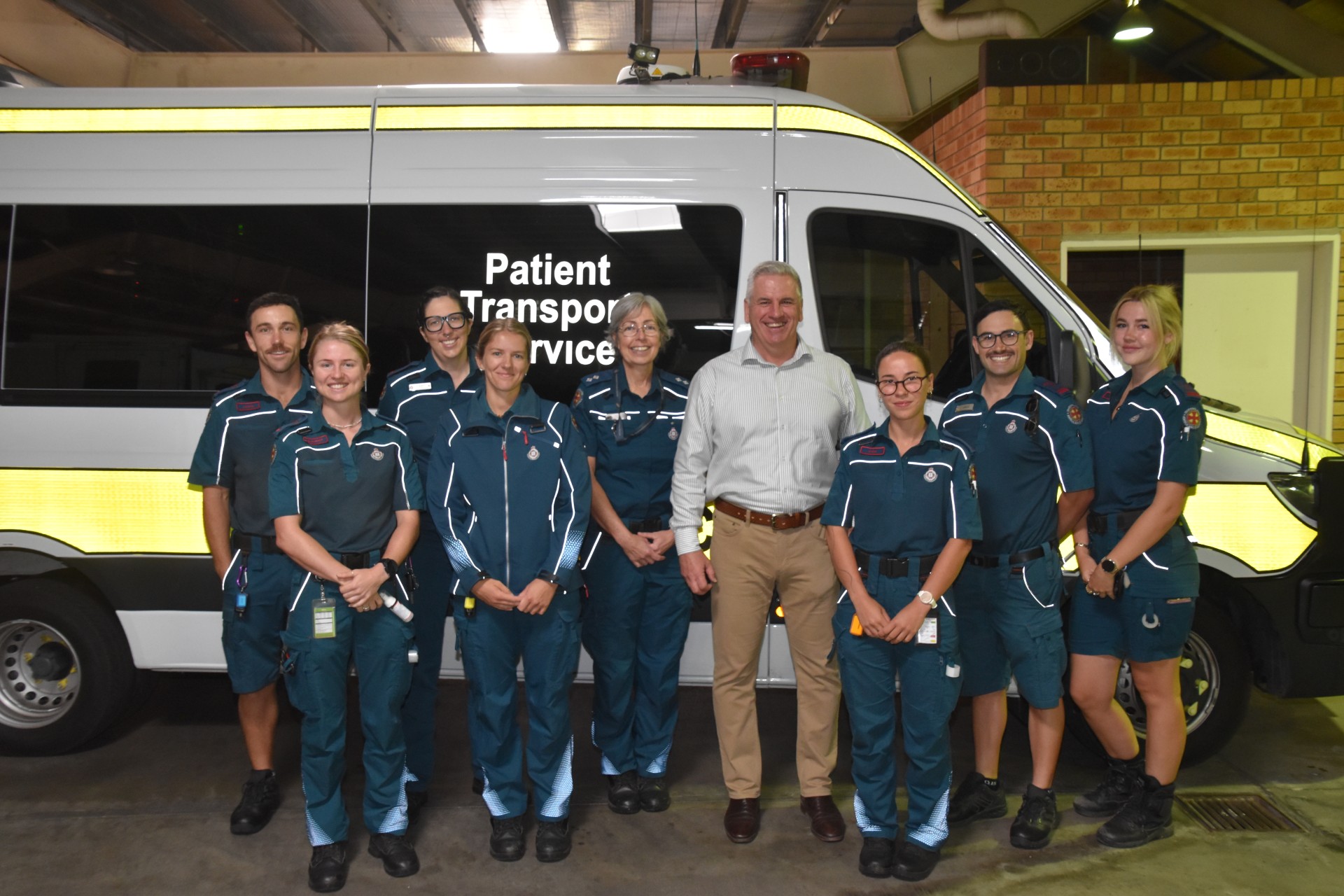
Dale Last presenting the Bowen QAS with the newest addition to their fleet. Photo supplied
Bowen paramedics have welcomed a new $282,000 patient transport ambulance, providing a more comfortable and practical way to move patients throughout the region.
Member for Burdekin Dale Last said this addition was vital to maintaining a strong, well-functioning health system in Bowen.
“The Crisafulli Government is committed to delivering a world-class health system for all Queenslanders, no matter where they live. Part of that commitment is giving our ambulance officers the resources they need to do their jobs safely,” Mr Last said.
“In Bowen our QAS plays a vital role in transporting more acute patients to larger, referring hospitals, which is why we have ensured they have a state-of-the-art vehicle to meet the needs of our officers and patients.”
The new vehicle can carry two patients on powered stretchers, with room for up to four additional patients who can walk aboard.
It also has a refrigerated compartment to keep medication at the correct temperature, while a video display allows the driver to keep a closer eye on the patient area throughout the journey.
Bowen ambulance crews spend much of their time transporting patients beyond the town to other parts of the region, making the new vehicle a timely and welcome addition.
“It’s fantastic, as it’s replacing an older vehicle, so it's a lot smoother and more comfortable for patients,” said Heather Shields, officer in charge at the Bowen Ambulance Station.
“We do transfers from Bowen Hospital to Mackay, or Bowen to Townsville University Hospital and we quite often transfer patients to and from Collinsville to Bowen Hospital as well, from Bowen to Collinsville Hospital.
“But due to the number of kilometers that we do each year in that vehicle, it was getting dated.”
Besides giving patients a smoother trip the vehicle will make everyday transfers easier and safer for Bowen’s ambulance officers, with its powered loading systems reduce the physical strain involved in moving patients, particularly during the station’s frequent long-distance trips.
“There’s no lifting required with the stretchers to get them in and out of the vehicle when they’ve got patients on them,” Heather said.
“It’s a great addition to our fleet at Bowen Station and for the community.”
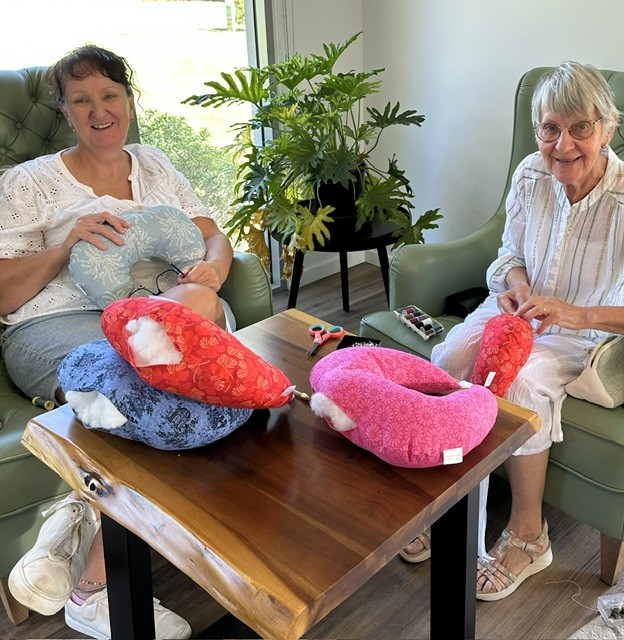
The ladies putting their sewing skills to work for women recovering from breast cancer surgery. Photo supplied: Marlene Reiffel
The sewing team at the Zonta Club of the Whitsundays has put its needles to work, creating specially shaped breast cancer cushions for women recovering from mastectomy surgery.
Made during a recent club working bee, the cushions are designed to provide comfort and support during recovery, helping to ease pressure around the chest and underarm following surgery.
Ahead of Breast Cancer Awareness Month, the finished cushions will be distributed through Proserpine and Mackay hospitals to women who may need them.
“It’s one of the quieter things we do as a club, but also one of the most meaningful,” said club president, Marlene Reiffel.
“Our working bees give us the chance to come together, enjoy each other’s company and create something practical that can make a difficult time just a little more comfortable for someone in our community.”
For more than 100 years, Zonta International has worked to support women and girls, with the Whitsundays club continuing that legacy locally with initiatives such as this one.
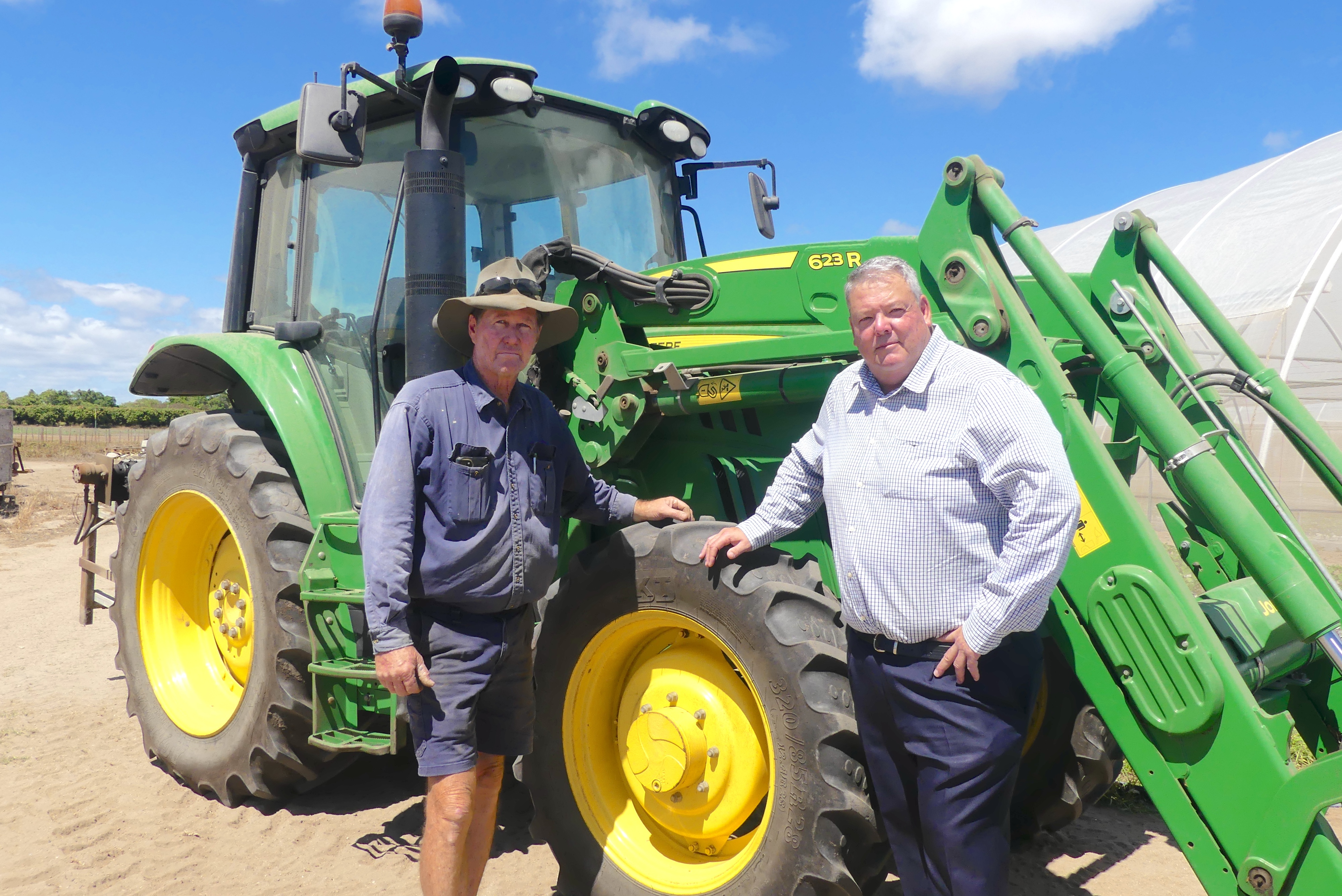
Bowen Growers Speak Out Against New Backpacker Visa Restrictions
In Bowen, a good harvest depends on having hands at the ready when the crops are ripe.
Backpackers have long provided that workforce, moving with the seasons and helping growers bring capsicums, mangoes, tomatoes and other produce from the paddock to Australian tables.
But under the Federal Government’s proposed changes, second-year working holiday visas would be capped at 45,000 and third-year visas at 5,000, with places decided by ballot.
Local farmers fear that uncertainty could leave regional communities without the seasonal workforce they have come to rely on.
Farmers in Bowen and across Australia fear they could be left without the seasonal workers needed to harvest their crops following the Federal Government’s crackdown on backpacker and student visas.
Under the proposed changes, backpackers seeking to stay beyond their first year would enter a ballot for limited places, with Second-year visas capped at 45,000, down from about 57,000 last year, while third-year places would fall from approximately 31,000 to 5,000.
Applicants must still complete 88 days of regional work for the second-year ballot and six months for the third. The Federal Government says the restrictions will provide greater control over migration, but growers warn they could discourage backpackers and further shrink the seasonal workforce.
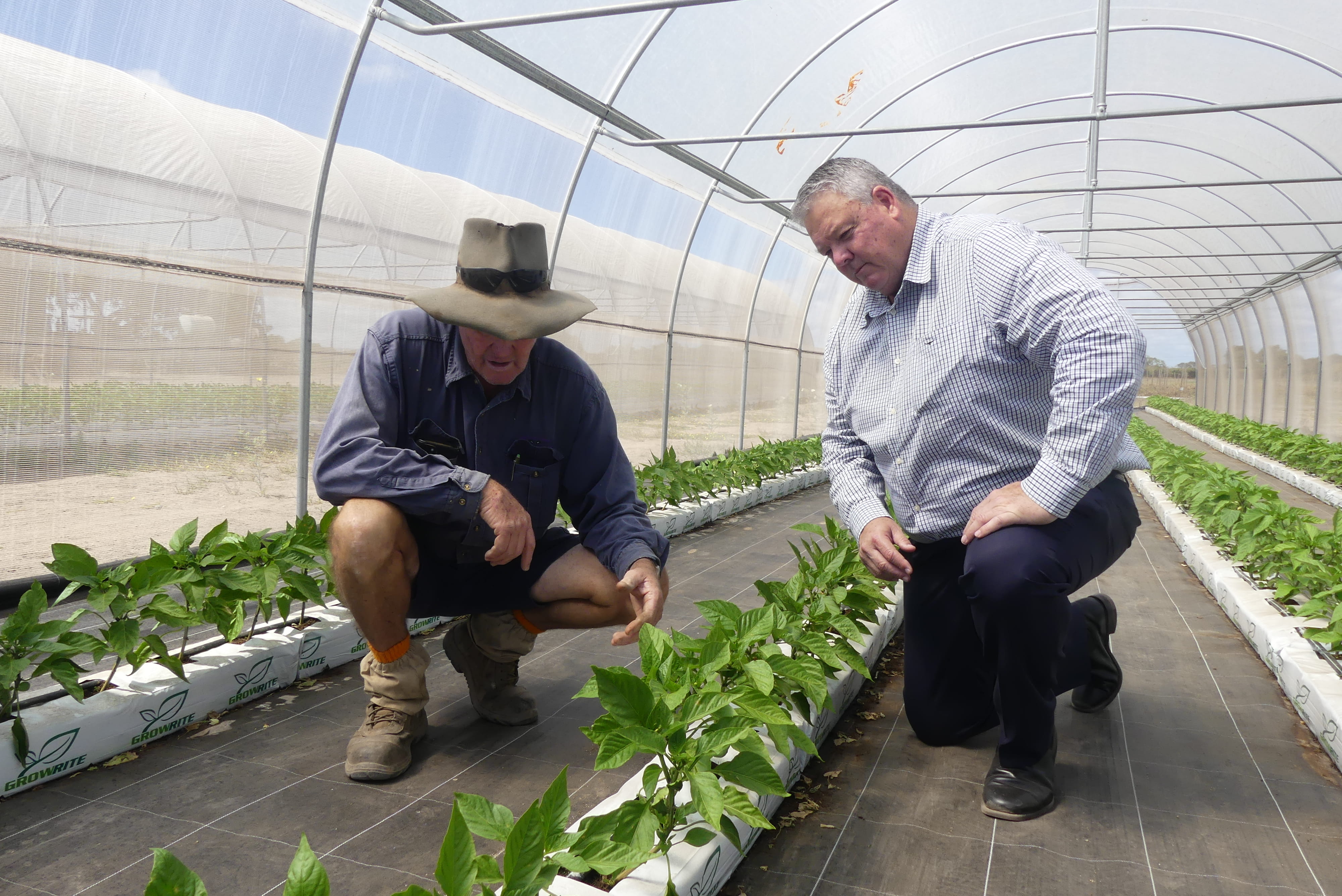
“You’ve got backpackers now thinking, ‘Do I apply for a second visa? Do I even bother coming to Australia? We’ll go to Canada or New Zealand, somewhere they actually want us,’” said Chair of the North Queensland Farmer Carl Walker.
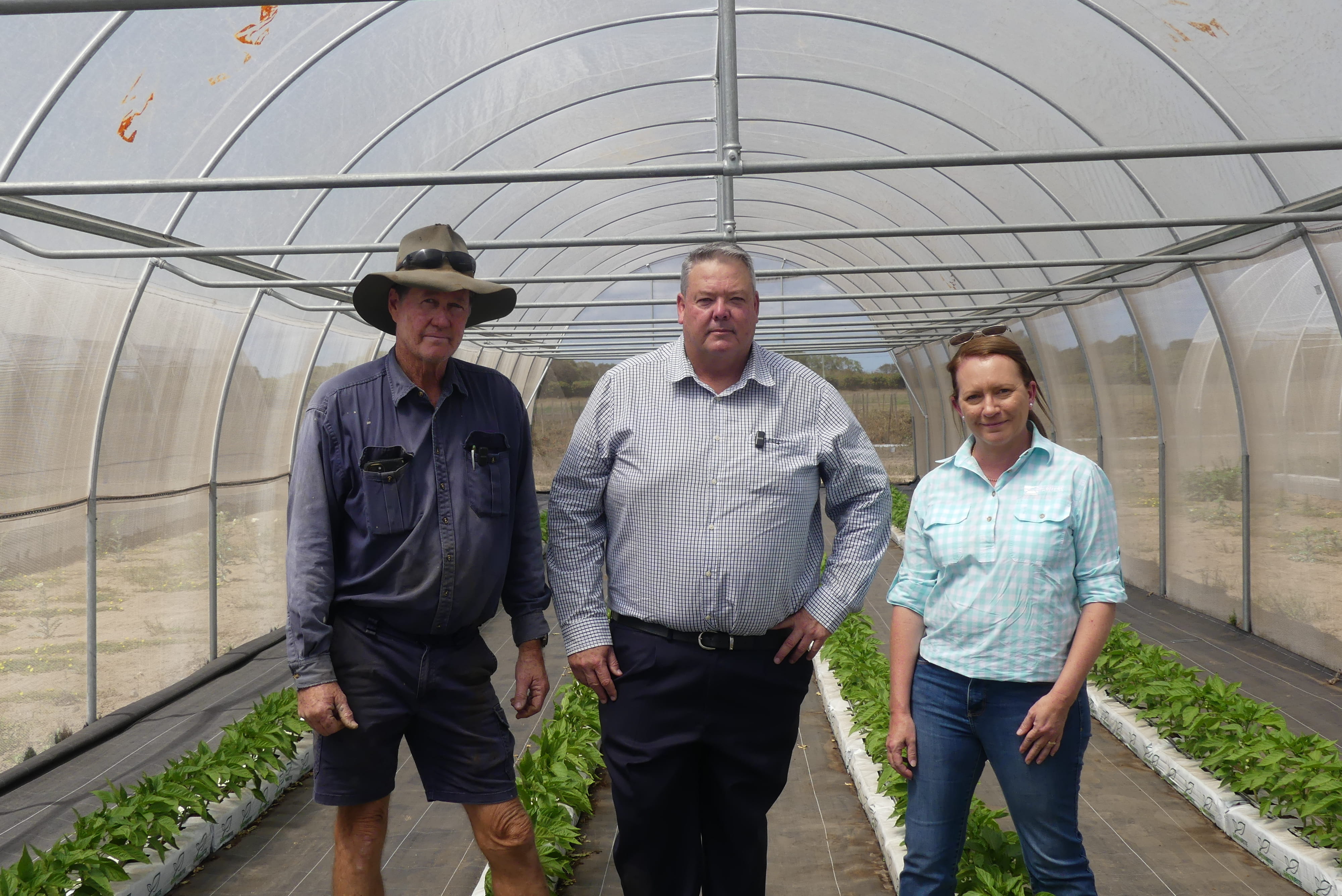
Carl Walker has grown capsicums in Bowen for 30 years and understands how quickly labour demands can change during harvest. Unlike permanent employees and workers employed through the Pacific Australia Labour Mobility (PALM) scheme, backpackers provide farms with a flexible workforce that can rapidly expand when warm weather causes crops to ripen at once.
“If the weather changes and everything comes on at once, you might need another 50 or 100 people,” Carl said.
“You can’t just find another 50 locals or PALM workers, but with backpackers, you can bring them in when you need them.
“We could lose up to 30 per cent of our product with no return.”
That pressure is not confined to Carl’s capsicum crop, with NQ Farmers CEO and former mango grower Jenn Honnery warning the changes could also threaten one of Bowen’s best-known delicacies.
“Mangoes are a Christmas fruit, and we want Australians to have them on their Christmas lunch tables,” Jenn said.
“With this reduction, the Bowen Special could be at risk.”
The impacts of a labour shortage during harvest season would extend beyond the farm gate, with Federal Member of Dawson and former Tomato Farmer Andrew Willcox MP warning that unpicked crops would reduce supply and push prices higher for families at the checkout line.
“If that fruit falls to the ground, it won’t make it to market,” Mr Willcox said.
“Under the simple laws of supply and demand, prices will rise and every Australian will pay more for fresh fruit and vegetables, while the farmer also misses out.”
On top of the trickle-down effect on local business and tourism, Mr Willcox criticised the Federal Government for introducing the changes without properly consulting the regional industries that rely on backpacker labour.
“This was handled really badly,” Mr Willcox said.
“It was announced at the National Press Club and didn’t come through Parliament, despite being a major impost on growers and the hospitality industry.
“They’re incredibly important, and for the government not to understand the seasonality of this region is a major problem.”
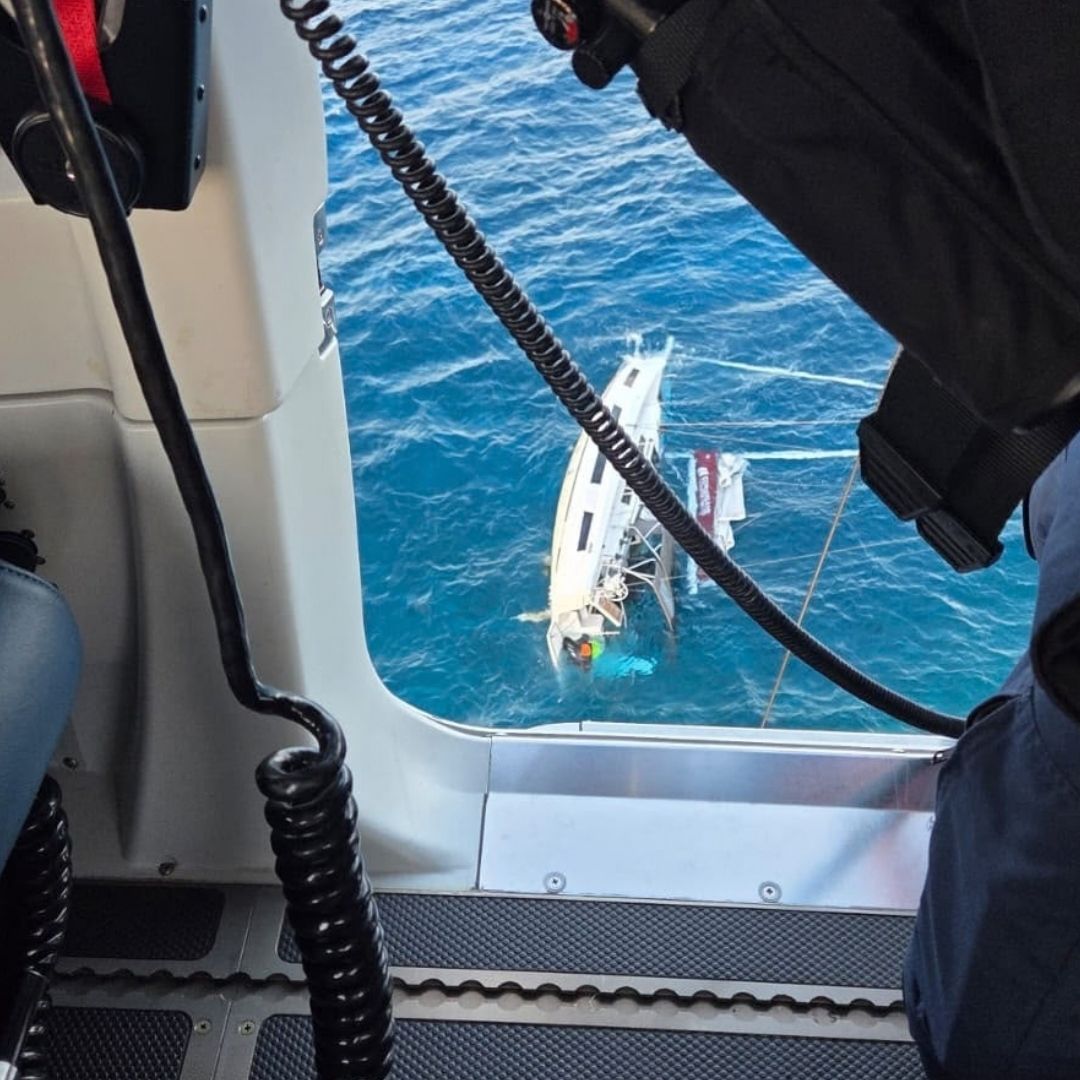
Marooned boat north of Elizabeth Reef. Photo supplied: BMA CQ Rescue
By Zach Houtenville
A family of four was winched to safety in an early morning helicopter rescue last weekend after their vessel ran aground on a Reef about 120 kilometres offshore.
On the afternoon of 18th September, Gary Dorman and his family departed the Whitsundays aboard their yacht, setting off for a 30-to-36-hour passage to Herald Cays, about 180 nautical miles north, where they planned to anchor and explore the remote islands and reefs.
But at around 1am, while Gary kept watch, the voyage took a terrifying turn.
Despite the family’s electronic charts showing they were travelling through deep water, the yacht suddenly struck a reef north of Elizabeth Reef, coming to an abrupt stop before listing about 60 degrees onto its side.
“The first thing I noticed was that the dinghy had started to surf on white water, like a small wave, and then we came to a stop,” Gary said.
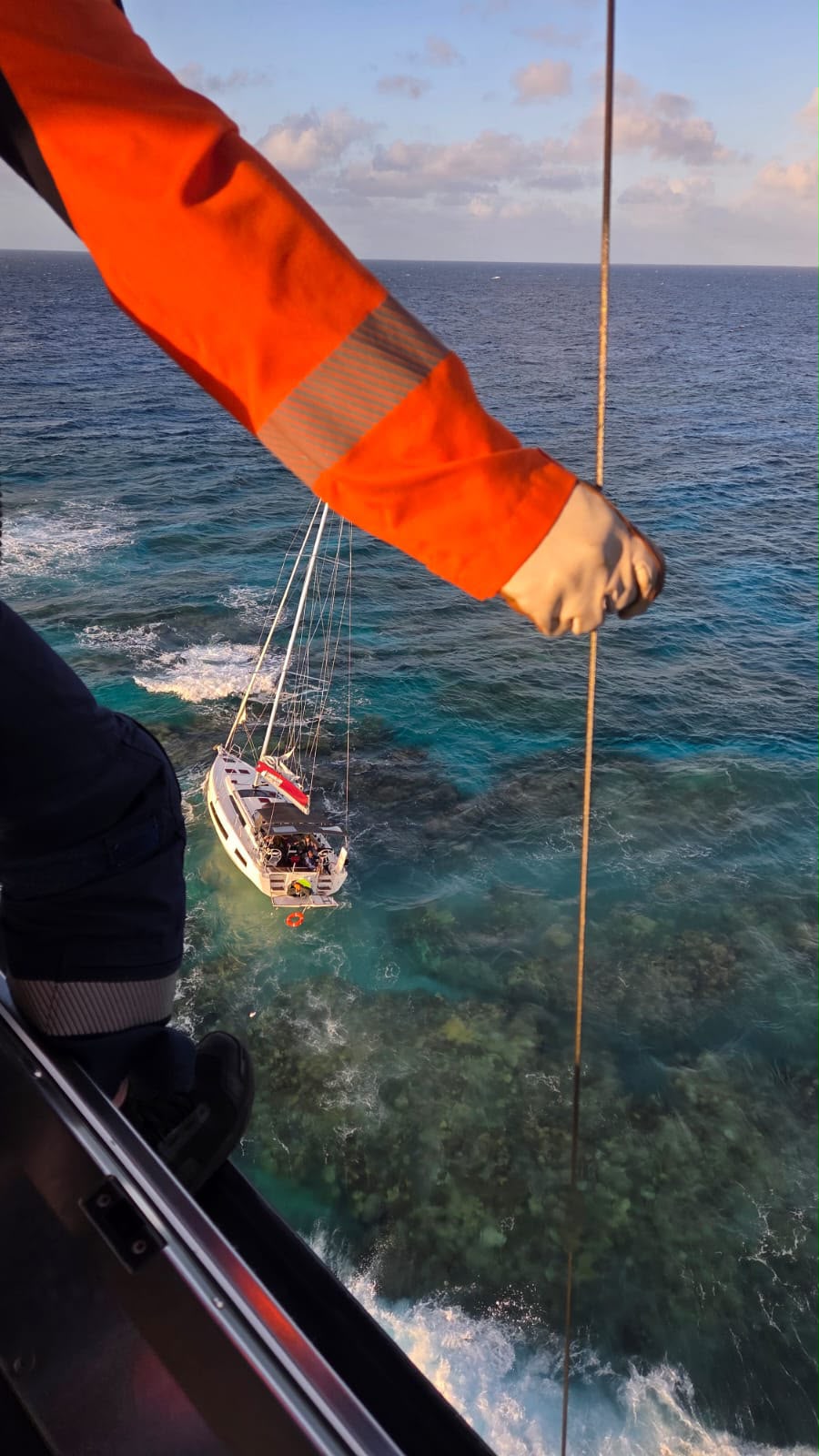
“The boat listed to about 60 degrees because the keel was sitting on the reef, leaving it supported by the keel and the side of the hull.”
The family placed a Mayday call via satellite phone and activated their emergency beacon, but what followed was six harrowing hours as waves repeatedly lifted the yacht and slammed it back onto the reef.
“It’s a horrific sound, having the keel scrape along the rocky bottom of the ocean while the boat groans as it tries to stay together,” Gary said.
“For six hours, we were being thrown around by waves, as the boat would lift slightly as each wave hit, then fall onto its side again and be dragged along the bottom.”
Gary praised the way his family remained calm during the ordeal, working together as a team to manage the situation until help arrived.
“All three of them handled it remarkably,” Gary said.
“They understood the gravity of the situation and knew we had to keep it together, work as a team and get each other through it.”
Within an hour of the distress call, a rescue vessel was launched from Airlie Beach, while an AMSA Challenger jet arrived soon after to monitor the stranded family from above.
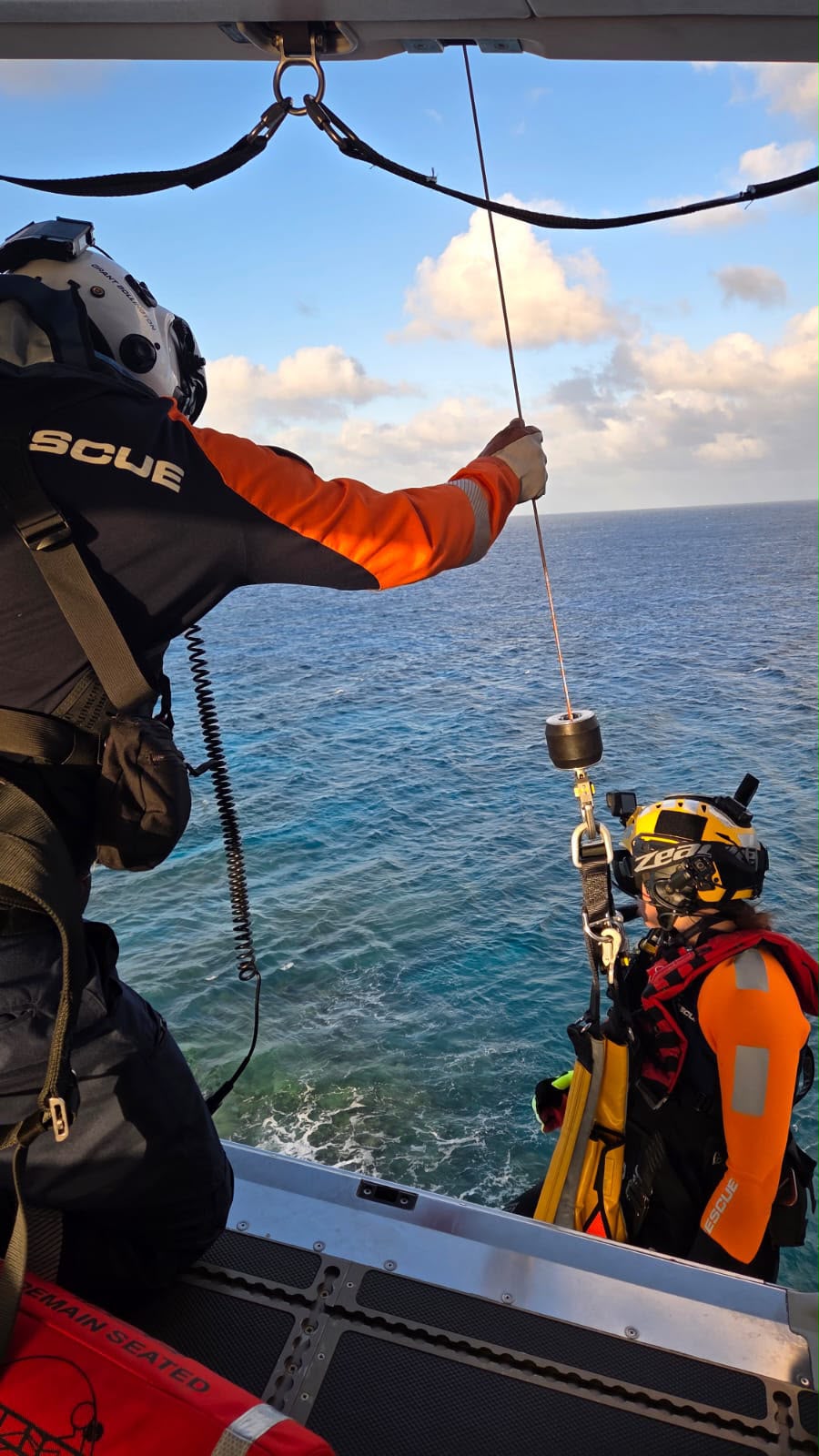
As daylight approached, the BMA CQ Rescue helicopter was dispatched from Mackay, reaching the yacht around sunrise as its condition continued to deteriorate.
With the mast and violent movement of the vessel making it too dangerous to approach directly, a rescue swimmer was lowered into the water before helping each family member reach the winch cable.
“The rescue crew were absolutely fantastic, from the pilot and paramedic through to the rescue swimmer,” Gary said.
“One by one, she took my family from the boat. It would have been a lot more difficult if we had needed to be rescued from that reef by another vessel.”
The family was winched to safety and, despite the ordeal, escaped relatively unscathed, other than Gary sustaining a minor head injury.
While grateful his family survived, Gary said the incident had raised serious concerns about the reliability of electronic navigational charts.
He said the reef was missing from the electronic charts used aboard the yacht, which showed the family travelling through deep water when the vessel ran aground, and one he claims was visible on paper maps.
“This was a known reef because it’s on the paper charts, but it’s not on the electronic charts,” Gary said.
“It’s unacceptable that, this close to mainland Australia, we have charts that are not showing hazardous terrain.”
For Gary, ensuring those hazards are accurately mapped could prevent another family from enduring the same ordeal.
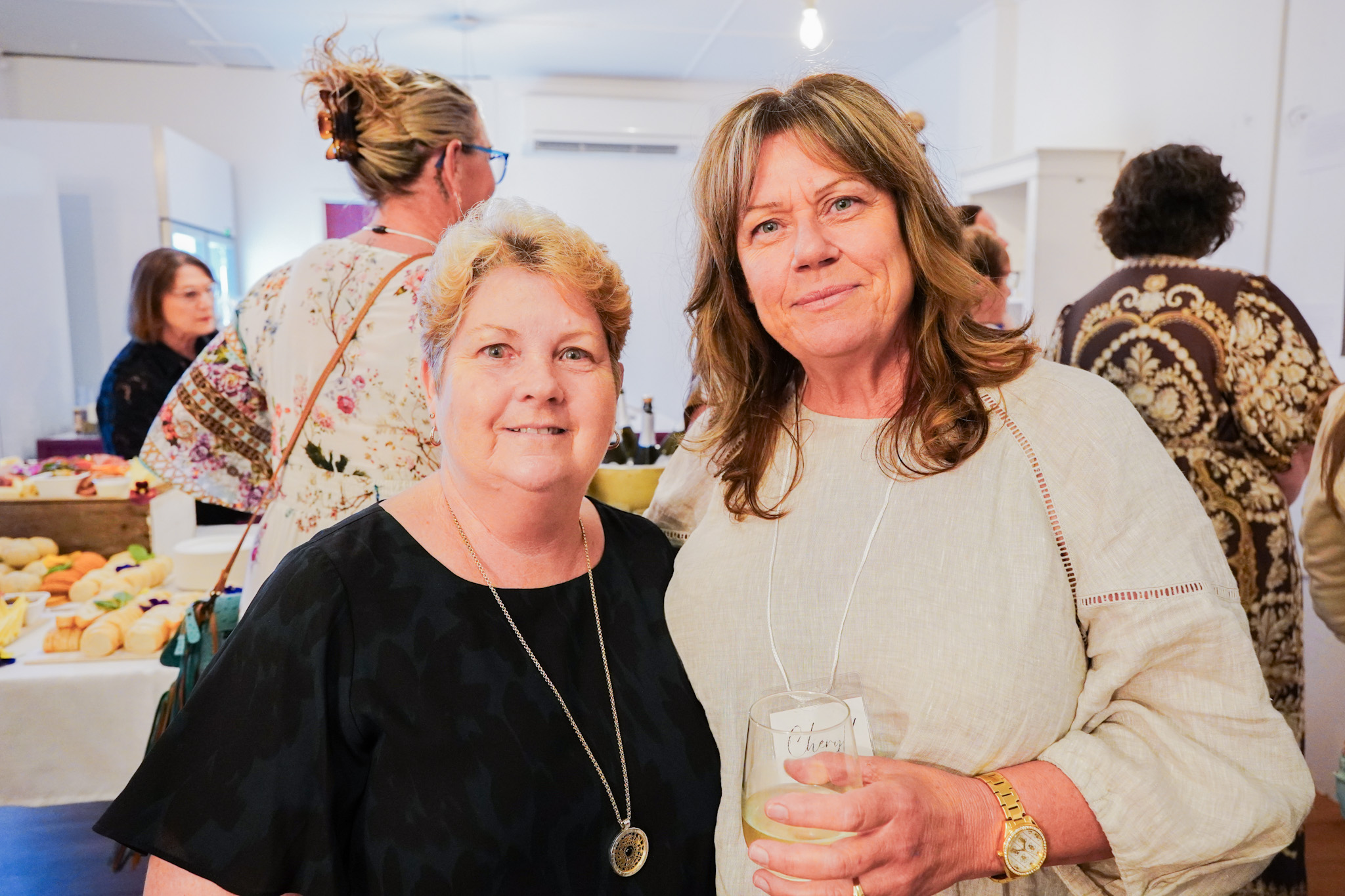
Local women gathered at Barrel Room Deli Nook to celebrate 16 women and their stories through Alyce Holzy’s ‘Women Over 40’ Portrait Project Exhibition. Photo credit: Hannah McNamara
By Hannah McNamara
On Friday 11th September, women from all walks of life gathered at the Barrel Room Deli Nook to take part in the ‘Women Over 40’ Portrait Project Exhibition, where stories and smile lines were captured and framed in celebration of the lives and stories of 16 women over 40.
Behind the art was Alyce Holzy, owner of Holzy Photography and Boudoir By Alyce.
The idea stemmed from Alyce’s passion for portraits which she says was inspired by the photographs on the walls of her Nan’s house, as well as the recent milestone of turning 40 herself.
On the night of the event, Alyce stood by the entryway admiring all the women she had photographed, now gathered together in one space and staring at their pictures framed on the wall.
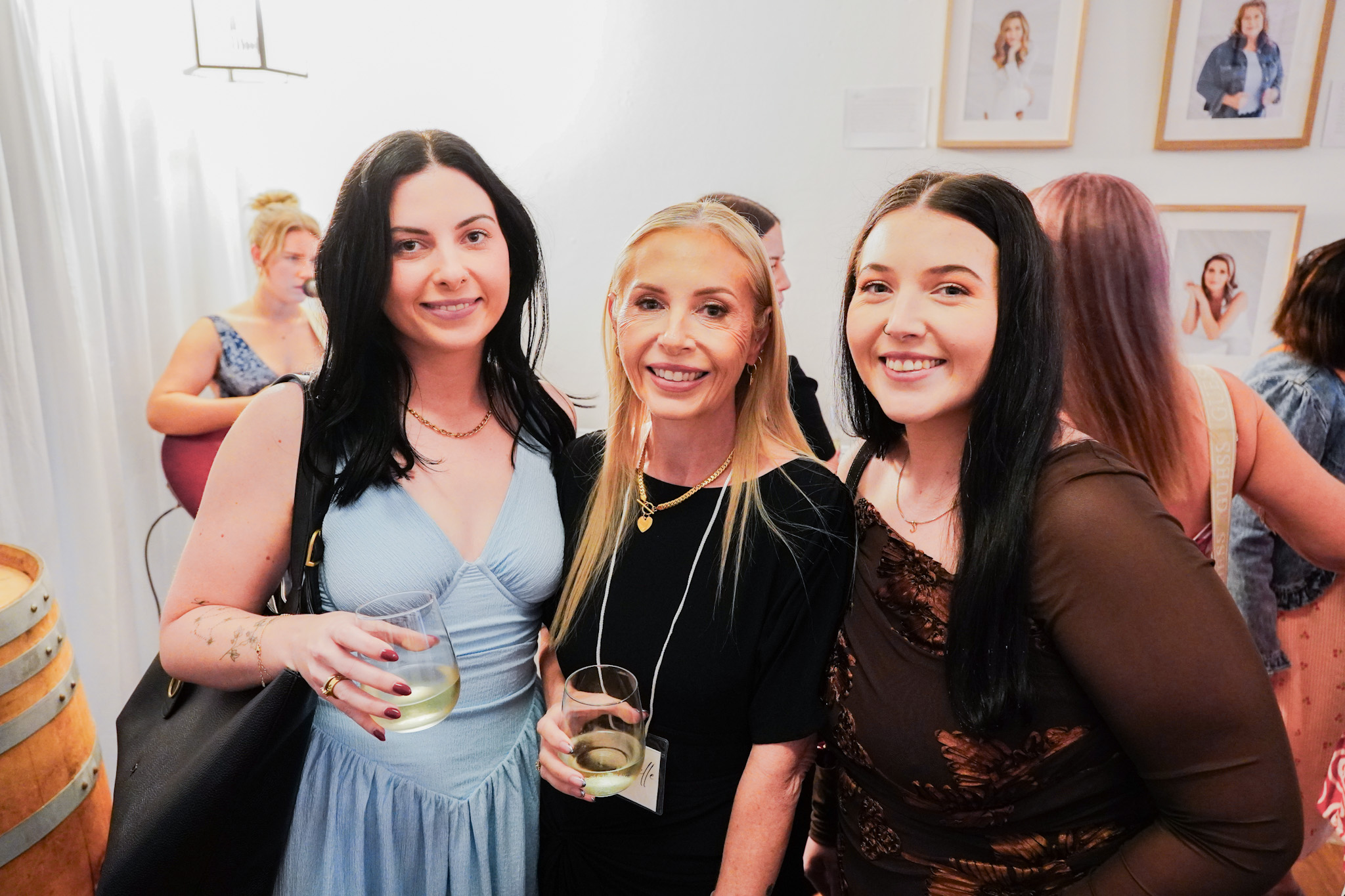
With tears in her eyes, she expressed her immense gratitude and honour for the women who had been part of her special project.
“Now that it’s all here, I’m pretty emotional watching everyone’s reactions.”
“It’s just lovely to see everyone supporting one another.”
“There’s laughter, there’s joy, and I can see there’s some realisation of the amount of work that’s gone into this project … I’m still pinching myself that all of this has come together, and here we are celebrating these incredible women and the stories they bring with them.”

“I’m really proud of this project, and I couldn’t be happier with how it’s turned out.”
Throughout the project, women were pampered, photographed and professionally framed, with each participant also given the opportunity to share her story.
A coffee-table-style book was created featuring the women and their stories, with each participant gifted a copy at the special exhibition and gala.
Alyce said the project has become close to her heart, filled with moments of connection, laughter and emotion.
“I’ve had laughs with some of the women, even belly laughs!”

“I’ve also shed tears with some of the women – it’s truly been a touching experience.”
The project also proudly supported The Neighbourhood Hub Mackay, with the 40 Over 40 Portrait Project donating $1,600 to the organisation.
Alyce also acknowledged the local businesses, organisations and community members who helped bring the project to life, thanking Funk It Up Mackay, Atkins Lab, Barrel Room by Plattered Up/The Deli Nook, Soleil Coastal, Nancy’s Gym, Ella Bache Mackay, Laffos, Hotel Mackay, Laffos Cookies, The Avenue, Hairway Mackay and Dalrymple Bay Coal Terminal, as well as the many unsung heroes who advocated for the 40 Over 40 Project.
I reckon there are several things that give a true indication of an underlying confidence in a city’s economy and its future.
There might be many others that I am far too unsophisticated to have noted but the ones I am referring to are: new childcare centres, new aged care facilities and pub renovations.
When companies invest money in the construction and infrastructure required for these businesses they have had to do their research.
The cost of building and fitting out a childcare centre is huge and there are new ones dotted around Mackay.
You don’t invest the sort of money that is required for that unless you are very, very confident that there is going to be a strong and prolonged demand for the services of the childcare centre.
Now this is one of the many areas in which I have no expertise whatsoever, however I find myself thinking about these things and I imagine there are a few key things that an investor in child care centres takes into account before deciding to spend millions of dollars building a new facility.
One reasonably obvious question they would ask themselves is: are there going to be enough kids in this town to create the demand we need to justify the investment we are making? There might be lots of kids now but will there be plenty in 10 years’ time?
I imagine that if the answer to those questions is “no”, the childcare operators would walk away before spending the money.
But there has been a proliferation of childcare centres. Now these kids are not hanging around Mackay by themselves; they are part of families and have parents who are living and working in Mackay. The childcare operator obviously feel that these families are putting down roots in Mackay. They’re not fly-by-nighters, they are here for the long-term, working, buying a property, raising kids.
It’s similar with aged care facilities and retirement homes. You don’t invest the enormous amount of money required to set them up unless you expect long-term strong demand for the services of the facility.
These facilities are for people who have spent significant portions of their lives in Mackay. Many of them will have families, adult children and grandkids who are still in the region and nearby.
Just like the decision to build childcare centres, you only invest in them if you have done your research and strongly believe that there is going to be continuing population growth that will sustain your investment for many years to come. You don’tinvest if you think the city is heading for a decline in activity and population.
It’s a great vote of confidence in Mackay. The city has a strong, more diverse economy and offers employment and lifestyle opportunities that attract people from all over the country.
Coal is still a driver of our economy but most of what we dig up and export is coking coal, which is used to make steel. Iron ore and coking coal creates steel and we have the best coal in the world. We do have a more diverse economy these days, which adds to the confidence.
As for pubs, several have been extensively renovated and brought to life in the past couple of years. The thing about pubs is that they rely on customers having discretionary income … spare cash that they can spend at the bistro with the family, having a few beers with mates on a Friday night.
Again, that is a vote of confidence in Mackay’s economy and its future. The evidence is telling the pub investors that Mackay is a vibrant, busy city with a good economy where people make enough money to enjoy the social side of life. Otherwiseyou wouldn’t invest the millions in renovating pubs and bringing them back to life.
At a time of national concern about the Australian property market, all this bodes well for the Mackay property sector.
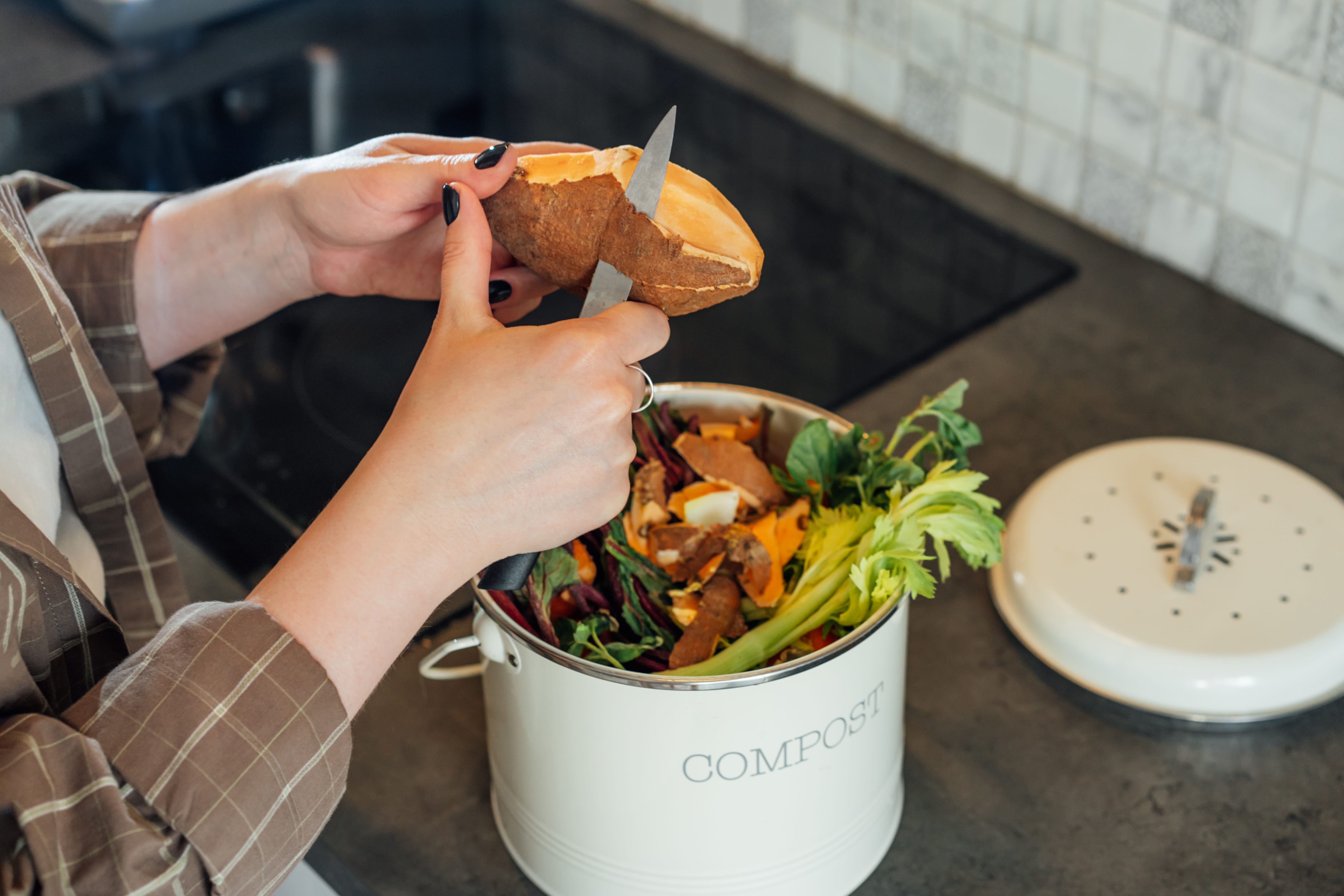
Photo source: Shutterstock
What if some of the waste going into your kitchen bin each week could instead help feed your garden?
Starting a compost cycle at home does not have to be complicated, and even a small backyard can have a simple system that turns everyday food scraps and garden waste into useful compost.
At its most basic, composting is about combining different types of organic material and allowing them to break down naturally.
There are plenty of everyday items that can become part of the compost pile, including:
A good place to start is with a compost bin, tumbler or designated area of the garden. It should have some airflow and ideally be positioned somewhere convenient, rather than hidden away where it will be forgotten.
The trick is finding a balance between ‘green’ and ‘brown’ materials.
Green materials are generally wetter and richer in nitrogen, such as fruit and vegetable scraps, fresh grass clippings and coffee grounds. Brown materials provide carbon and include dry leaves, cardboard, paper and other dry garden material.
Rather than filling the compost with one type of material, try to mix the two. If the pile becomes very wet or starts to smell, it may need more dry material and airflow. If it is very dry and nothing seems to be breaking down, adding some moisture can help.
Food scraps can be added gradually. Chopping larger pieces into smaller pieces can also help them break down faster.
There are some things best left out of a basic backyard compost system. Meat, bones, dairy products, oils and greasy foods can attract unwanted pests and create problems. Avoid adding pet waste, diseased plants and materials that may contain chemicals or contaminants.
A healthy compost pile should smell earthy rather than rotten. Turning or mixing it occasionally helps introduce oxygen and distributes moisture and materials throughout the pile.
Eventually, the scraps and garden waste you started with will become a dark, crumbly material that can be added to garden beds or mixed into soil.

Last week we celebrated Women’s Health Week, an opportunity to put women’s physical and mental health back on the priority list.
The 2026 theme was “Do It Anyway” — recognising that small, achievable choices made each day can have a positive impact on our health and longevity.
It’s never been harder to feel like we have it all “together” — meals, exercise, sleep, work, family, social calendars and wellbeing. Instead of aiming for perfection, Women’s Health Week encouraged us to focus on five areas where small shifts can make a lasting difference.
FUEL
Women’s nutritional needs change over their lifetime, from adolescence into midlife and menopause. So how can we be consistent? Make it simple and sustainable. Need to drink more water? Start with an extra glass a day. Need more fruits and vegetables? Start with adding a piece of fruit with breakfast, or 1-2 extra colours to your dinner. Choose foods you enjoy the most! And don’t shy away from the frozen section – same nutritional value, more convenient!
MOVE
Being time-poor is a common barrier to regular exercise and research shows women are less active than men. How you once stayed active may have changed with pregnancy, or now isn’t suitable to your body or lifestyle in later years. All women need to exercise for strength (muscles and bones), fitness (heart health) and pelvic floor function. Start by building these into your everyday life. Park further away, walk with a friend before coffee, do calf raises while brushing your teeth or squats while waiting for the microwave. Every workout starts with one movement.
REST
Sleep supports energy, brain function, mood and hormonal regulation. It’s not only about how long you sleep — quality, consistency and timing matter too. Try reducing caffeine or alcohol, dimming the lights and putting screens away before bed. Moving your body and eating well during the day can also support a better night’s rest.
BREATHE
Stress, work, caring responsibilities and hormonal changes can all contribute to feelings of overwhelm. Find moments of enjoyment in everyday life — walk the dog, call a friend, book the holiday or simply sit down and enjoy a cuppa. Ask yourself: what do I love that I haven’t done in a while?
CONNECT
Every woman needs a community that supports her through life’s changing seasons – whether it’s motherhood, retirement, disability or diagnosis. Connection might mean helping a friend, joining a group, checking in with someone you love — or being brave enough to ask for help yourself.
Women’s Health Week may be over for another year, but its message doesn’t need to end there. Let go of the pressure to do everything perfectly and choose just one small thing you can do for your health today. Book the appointment you’ve been putting off, take the walk, call the friend, prioritise some rest or ask for support.
Whatever it is, you don’t have to do it all. Just do one thing — and do it anyway.
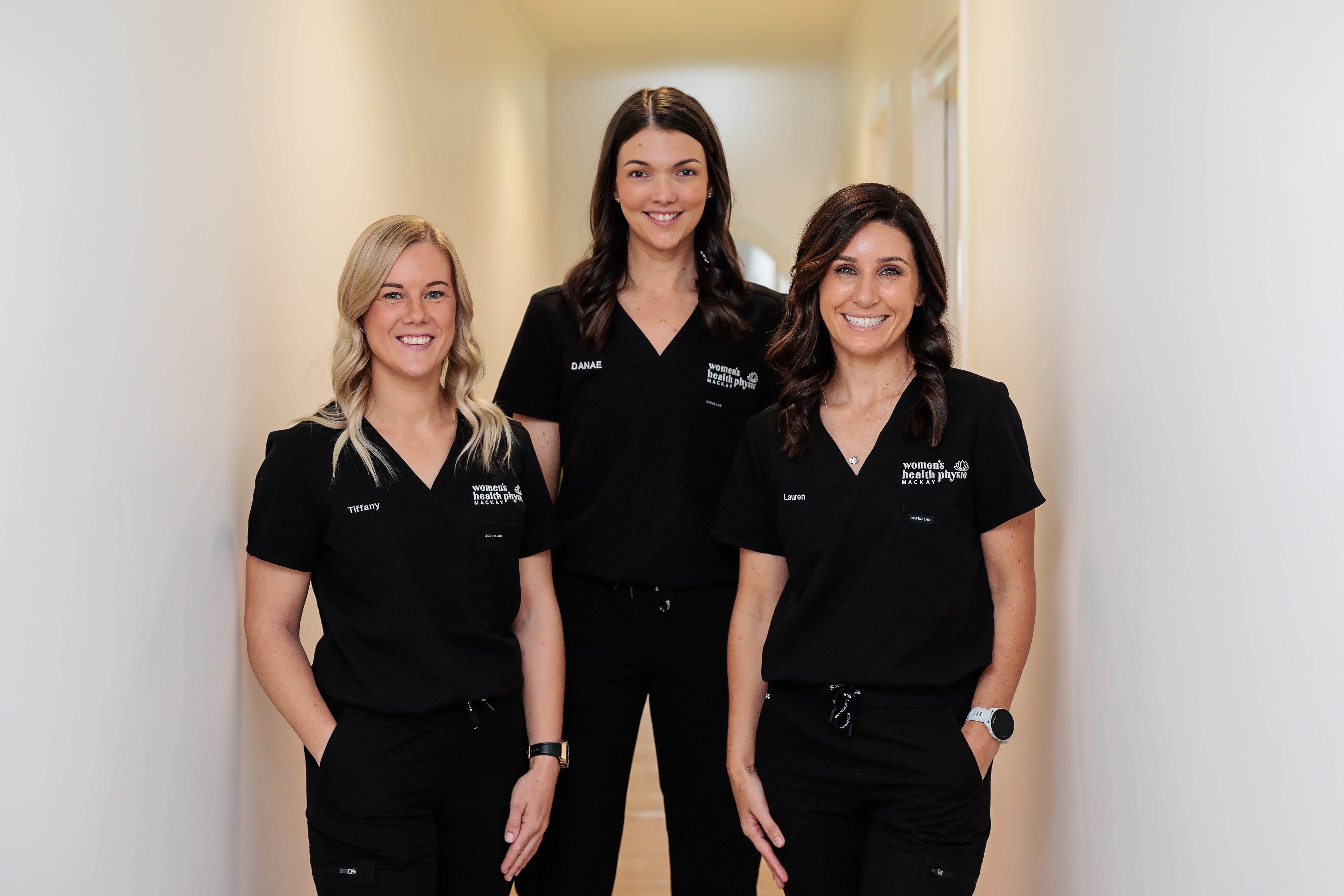
- Danae Gardner, from Women’s Health Physio Mackay

Everything about four-year-old Blossom is big. She has a big, strong body, a big personality and an even bigger heart.
Blossom was found wandering the streets and, sadly, when she was returned to her owner, they did not want her back. She came into care with a suspected broken hip, swollen joints, multiple ear infections, an eye infection, hot spots, a skin rash and heartworm.
Thankfully, X-rays showed her hip was okay, and with veterinary treatment, care and plenty of TLC, Blossom has overcome her health issues, including heartworm.
Now, she is full of energy and quite literally jumping out of her skin!
Built like a Mack Truck but with a soft, loving and cheeky side, there was perhaps no better name for this big beautiful girl than Blossom.
She is now looking for a special person or family who understands and loves big, strong gals and can give her the happy home she deserves.
To meet Blossom, contact her carer on 0402 920 511 or email LLTAGSandDogRescue@gmail.com.
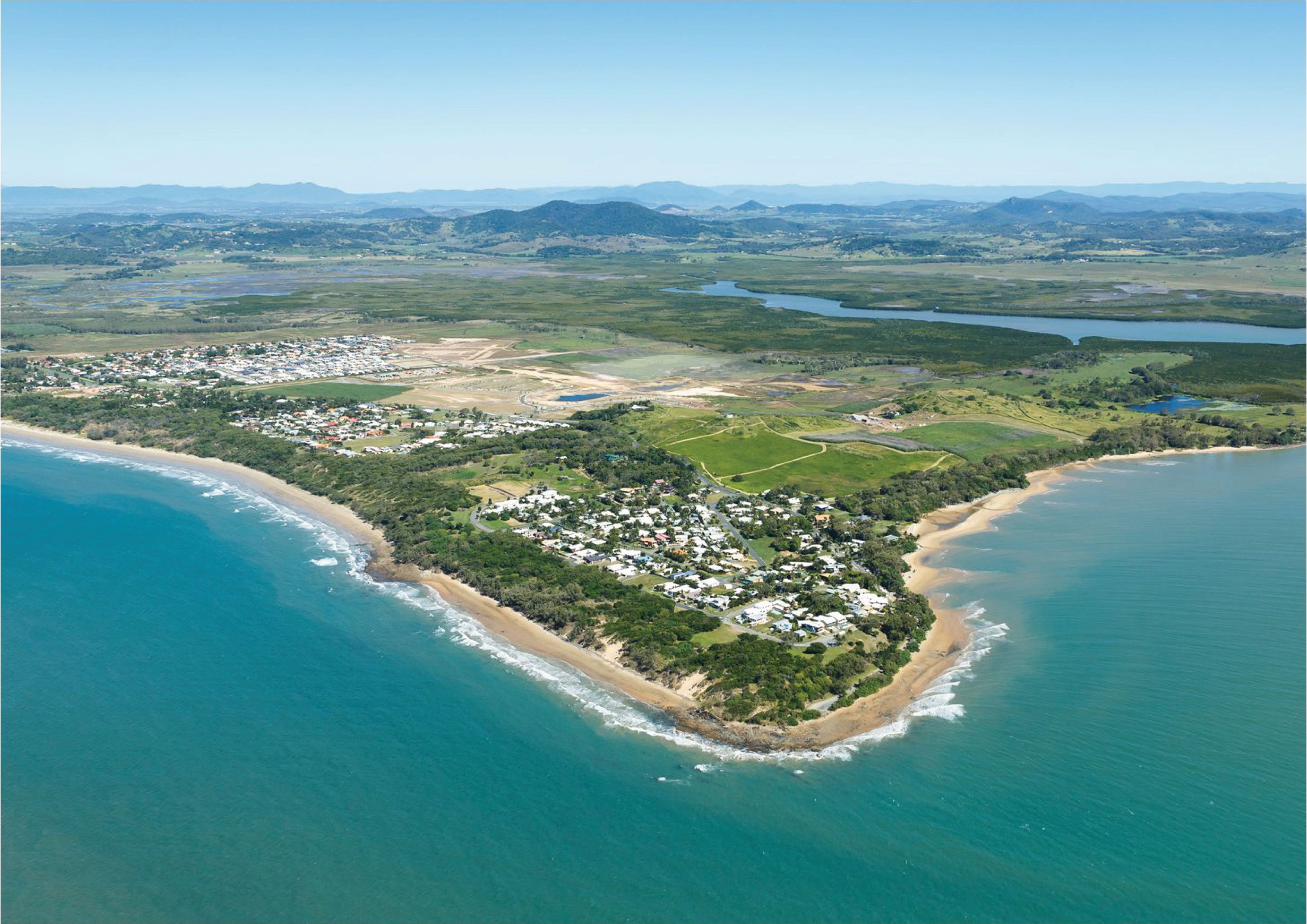
GemLife is set to deliver Mackay’s first coastal land lease development, after receiving approval for a 232-home over-50s community in Shoal Point.
The project, which has an expected gross realisation value of $203 million, was given the green light by Mackay Regional Council this week (Tuesday, 8 September).
It will be built on a 10-hectare site, which forms part of Pointglen Development’s Shoal Point Waters masterplanned community and fronts the proposed 80.35-hectare Shoal Point Waters Park, about one kilometre from Bucasia Beach and two kilometres from Shoal Point lookout.
A start date for construction is yet to be determined.
GemLife Shoal Point will feature a range of resort-style amenities, including a Country Club with two pools, a gymnasium, cinema, salon, ten-pin bowling, and golf simulator, plus a sports hub boasting a tennis court, pickleball court, and lawn bowls.
The community is GemLife’s first in the Mackay region, where 35.9 per cent of the population is aged 50-plus, according to Australian Bureau of Statistics (ABS) data. The latest Census data found the 60 to 64 years cohort experienced the largest change over five years, with 18.3 per cent growth from 2016 to 2021.

GemLife Managing Director and Group CEO Adrian Puljich said Mackay had strong underlying demand for over-50s housing, with the Northern Beaches positioned as prime real estate for those seeking a seachange.
“When we looked at the existing land lease and retirement living market around Mackay, the majority of development is in town or inland, with no current opportunity for those who want to live close to the ocean,” he said.
“The Northern Beaches is a lifestyle destination, and we’re expecting strong interest from buyers in Mackay and surrounding rural and semi-rural areas who are looking for a beachside location within easy reach of urban conveniences.”
Mr Puljich said GemLife Shoal Point was designed to capture the essence of laid-back coastal living.
“The look and feel of the community will reflect its beautiful location, with contemporary coastal-inspired architecture and lush landscaping providing a visual connection to surrounding parklands and open green space,” he said.
“All homes will feature a garden courtyard, two bedrooms plus multi-purpose room and double garage, offering residents privacy, space and flexible living options to make downsizing from a family home or larger property a seamless experience.
“There will also be a central Country Club and sporting amenities for residents to socialise and keep active, as part of our commitment to creating communities designed to support healthy ageing.”
GemLife recently committed $6 million to a suite of new holistic wellness initiatives across its communities, including a partnership with Amplar Health to deliver 12 weeks of personalised health coaching to new residents.

What does Sigora actually do?
Sigora helps businesses prevent avoidable employee turnover by helping managers recognise and respond to problems earlier. Most organisations have processes once problems become obvious. The gap I’m interested in is before that point, when something has changed, but it isn’t yet a clear performance problem. That’s when managers have the most options.
What do you mean by ‘earlier’?
Businesses know lagging indicators: absenteeism, underperformance or turnover. Sigora focuses upstream. There can be changes in an employee’s questions, confidence, communication or progress. These signals don’t prove something is wrong, but a change from someone’s normal pattern gives a manager a reason to get curious.
What should a manager do when they notice a change?
The first thing is not to diagnose the employee. Managers don’t need to know why something has changed to respond responsibly. They can explore what’s happening, test their explanation with the employee and consider what’s within their control. Greater clarity? Different support? More challenge? A workload adjustment? Then they reassess. It’s about calibrating the working environment rather than trying to ‘fix’ the person.
Isn’t this just good management?
In many ways, yes. Experienced managers notice changes and make adjustments intuitively. But we rely on them developing that judgement through experience, and it isn’t always consistent. Sigora gives it structure: recognising a change, exploring what might be happening, making a proportionate adjustment and reassessing. The aim is to make good judgement more deliberate and teachable.
Is this another form of performance management?
No. It sits before it. Formal performance management becomes relevant once a problem is established. Sigora works where something has changed, but the manager has incomplete information. It doesn’t replace HR or formal processes. If an issue moves outside the manager’s scope, it moves outside the framework.
What does working with Sigora look like?
The main offering is a half-day workshop for managers and supervisors. It teaches them to recognise changes, separate observation from assumption, explore through a safe conversation, choose a proportionate response and reassess. Managers leave with practical tools, for example, prompts for an early conversation. The goal is to notice a shift on a Tuesday morning and have a way of deciding, ‘What do I do next?’
Where does employee turnover fit in?
Turnover is a lagging indicator. By the time someone leaves, the opportunity to retain them has passed. Sometimes the story starts earlier: an employee begins struggling or disengaging, the change isn’t recognised, and eventually there’s a larger problem. Replacing people costs more than recruitment: lost productivity, training time and pressure on the team. Earlier intervention gives managers more options.
What should local businesses take away?
Probably one idea: managers don’t need certainty to respond responsibly. If something changes, don’t immediately decide what’s wrong with the employee, but don’t ignore it either. Notice it. Get curious. Make a proportionate response. Then see what happens. Sigora helps managers make that judgement better, earlier.
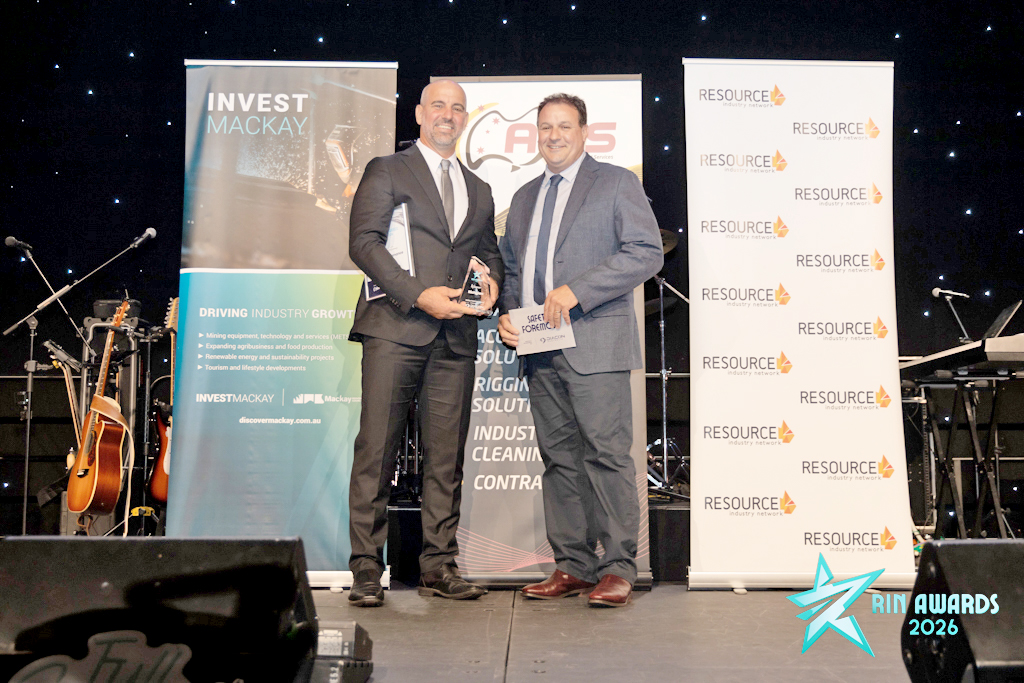
Richglen has marked more than 300,000 Recordable Injury Free Hours across its operations, a milestone the company says reflects the strong safety culture behind its recent industry recognition.
The Mackay-based business was named the Safety Foremost Award winner at the 2026 Resource Industry Network Awards, following its Champion Culture Award win in 2025.
Richglen Managing Director and Founder Matt Borg said the consecutive awards demonstrated the close relationship between workplace culture and safety.
“This award belongs to our people,” Mr Borg said.
“It reflects the care they show for one another and the decisions they make every day to keep themselves and their teammates safe.
“To be recognised for our culture in 2025 and safety in 2026 means a lot because, for us, the two go hand in hand.”
Founded in 2014 with one person and a ute, Richglen has since grown to a team of approximately 240 people, providing mechanical, electrical and industrial services across Queensland’s mining, milling and port sectors.
Its work includes dragline, shovel and CHPP shutdowns and maintenance, capital projects, high-voltage and electrical works, specialised planning, project management and industrial cleaning solutions, supporting clients throughout the Bowen Basin and Central Queensland.
Richglen also recorded more than 900 consecutive Lost Time Injury Free days in 2026, along with 66,700 Recordable Injury Free work hours across two major dragline shutdowns at Callide and Rolleston.
For Richglen, the milestone provides a tangible measure of a culture focused on people, accountability and making safe decisions at every stage of the job.
www.richglen.com.au
Publishers Indemnity. Any individual or entity that places advertising, supplies copy material, or submits editorial content to Core Life Publishing agrees and undertakes to ensure that all such material:- Does not infringe upon any copyright, trademark, or other intellectual property rights;- Is free from any content that could be considered defamatory, libelous, or slanderous;- Does not infringe upon any rights related to privacy or breach of confidence;- Contains no obscene, indecent, or otherwise unlawful material;- Complies fully with the Trade Practices Act and all other applicable laws, regulations, or statutes.Furthermore, by submitting or placing such material, these individuals or entities agree to indemnify and hold harmless the publisher, Core Publishing and Events Pty Ltd, and/or its agents from and against any and all investigations, claims, demands, liabilities, damages, costs, or judgments arising out of or in connection with the material provided. All material is believed to be accurate at the time of printing and remains the copyright of Core Publishing and Events Pty Ltd.
© 2026 Mackay and Whitsunday Life Pty Ltd.
