
Independently Owned, Locally Grown, Community Loved

OPINION PIECE from the office of Federal Member for Dawson Andrew Willcox There is no question that immigration into Australia is out of control. The government’s numbers are too high, and standards are too low. A sustainable migration program must consider our capacity to provide housing, healthcare, infrastructure and the essential services everyone relies on, and Australians must come first. But Labor’s decision to target Working Holiday Makers Visa holders is not the answer. These people filling vital gaps in our workforce are not the cause of Australia’s housing crisis. In many cases, they are living in accommodation provided by the very businesses that employ them. The National Farmers’ Federation has made the point that Working Holiday Makers generally stay in hostels, caravan parks or purpose-built on-farm accommodation. Resorts usually have on-site staff quarters. They are not the source of Australia’s housing shortage. So why is Labor making it harder for them to come here, when these workers fill genuine jobs that regional Australia holds? Working Holiday Makers fill approximately one in seven farm jobs nationally and are particularly important during peak agricultural periods, which for Dawson, it is right now! Farmers rely on these workers to plant, pick, pack and harvest the produce that ends up on Australian supermarket shelves. Having run one of Australia’s largest tomato farms, at times Working Holiday Makers made up more than 50 per cent of my workforce. Without them, much of our crop simply would not have been picked in time and rotted in the paddock. Some may say, why not employ the Australians who don’t have a job and are on “the dole”? Can I say, this does not work. Most farmers will employ Aussies over travelling backpackers, but many either don’t want to do the work or don’t turn up after the first day. Who picks the fruit or veggies then? Farmers are already warning that visa delays are leaving them without workers. The NFF says approvals that once took days are now facing processing times of up to three months, and this time frame can be the difference between harvesting a crop or losing it. That should concern every Australian already feeling the pressure at the supermarket checkout. The same problem is playing out in tourism. Across Dawson, Working Holiday Makers are an important part of the workforce supporting tourism and hospitality, particularly in the Whitsundays. They help fill shifts, work in hotels and restaurants, support tour operators and keep businesses running through their busiest periods. They also contribute to the local economy. They spend money on food, fuel, attractions and tours, supporting the small businesses that depend on a strong visitor economy. That is why tourism and business leaders across North Queensland are raising the alarm. They understand what happens when a regional business cannot get enough staff: opening hours are reduced, and services are cut, creating a downward spiral. We do need to reduce migration to sustainable levels. We need stronger integrity measures, and we need to crack down on rorts. But responsible migration policy means understanding which parts of the system are creating pressure and which parts are helping Australia function. Working Holiday Makers are not the problem. They are part of the workforce solution for regional. Australia. People have had a gutful of watching their standard of living go backwards. Groceries, fuel, housing and everyday expenses are already putting enormous pressure on families. The last thing Australians need is another reckless policy that makes it harder to produce food, harder to run regional businesses and harder for tourism operators to find the workers they need.
Read the full storySomeone sold a house in Sydney last week for $9 million less than they bought it for four or five years ago. The sellers had bought the property in Sydney’s eastern suburbs for $29 million and sold it for $20 million in a sale forced by their bank. I imagine the sellers are a little disappointed by the government’s decisions on negative gearing and capital gains tax and feeling pretty hurt by the increased interest rates. Australia’s interest rates are on the rise and are now sitting at levels not seen since 2011. Increased cost of living is hurting people around the country and interest rates are playing into that. But the impact of interest rates is not felt evenly around the country. The far-higher property prices mean people in the major cities suffer much more than regional areas with the rates increase. That is certainly not to say people in Mackay are unaffected by the cost of living; it’s just that the impact of interest rates increase on a $400,000 mortgage is much less than the impact on a $1m mortgage. There are other Mackay-specific factors that are in play when discussing the current housing market. The big factor is the role of coal in our economy. Most of the coal extracted and exported from our region is coking coal, which is used to make steel. The price of coking coal is around $280 a tonne, which is about 50 per cent up. Good activity in the coal market translates to good news for the Mackay economy, as it is an economic engine that other cities and regions just don’t have. Good activity in Bowen Basin flows throughout the Mackay economy; Paget workshops, transport, suppliers and related businesses all benefit. But so do other, non-mining-related businesses as they benefit from the general confidence and spending that goes on. The strong mining activity also means mines need to keep their staff levels up and that means more people moving to Mackay. Of course, Mackay is much more than a coal mining town but if the coal sector is going well those other areas definitely benefit. It is a confidence boost for Mackay people looking to get into the housing market and those wanting to upgrade or downsize. It also means continuing strong demand from people wanting to rent a property and it will be interesting to see what sort of activity that creates from investors. Investors have walked away from the big-city markets because they can no longer use negative gearing on established properties that do not have a sufficient yield to be positively geared. Negative gearing has never been a big thing in Mackay because our prices are lower and rental returns continue to be strong so many investors have a positively geared property. Around the country everyone is nervous about the state of play and the probability of more interest rate rises. But strong coal prices and an economy that is performing well mean Mackay might just be presenting an opportunity for buyers and sellers that doesn’t exist in other parts. I remember when national confidence was flying high and Mackay prices were going up significantly that many buyers were saying “I wish we had bought a while ago when the market wasn’t so hot”. I’m not armed with a crystal ball so I’m not here to tell you what is going to happen but I suspect there is a very good buying window right now for those looking for an opportunity.
Read the full story
A local Mackay and Sarina based model has created a dress out of newspapers, including Mackay Life, for her upcoming pageant, representing her region and hometown on the runway as she vies for Miss Diamond International in Brisbane. Zoe Place will be competing this weekend in the three-day event, beginning this Friday 2nd October and ending on Sunday 4th October. The young model spent around a month creating her eco-fashion outfit, using old newspapers as the main material and transforming them into a bodice, skirt and flowers. Red elements were also incorporated into the design to give the dress a bold and glamorous pageant feel. Zoe said, “The entire concept was really about taking something that would normally be thrown away and turning it into something beautiful and meaningful.” Her eco-fashion creation will form part of a busy weekend in Brisbane, with the Miss Diamond International event including photo shoots, interviews, an eco-fashion show and the final pageant. Zoe has been preparing for the event by practising her strut and walking, preparing for interviews and getting comfortable in the different outfits she will wear throughout the weekend. Alongside her love of modelling, pageantry has also provided Zoe with a platform to raise awareness about causes close to her heart, including mental health, while fundraising for Beyond Blue. “Pageantry has given me more of a platform to combine my love for modelling with something that is really important to me.” “When I first started, I was more nervous about putting myself out there and worried about what others would think about me – but I’ve changed a lot through my journey in pageantry.” “Pageantry has also taught me that it’s not about how you look on stage. It’s about the person you are when you step off it.” “Every woman has their own unique journey and that journey is something we should all be really proud of.” “To me, it represents confidence, empowerment, kindness, and using your voice to make a difference.” Zoe said she was looking forward to meeting the other contestants, making new connections and creating memories. “I’m definitely looking forward to meeting all the new contestants and making new connections and creating memories that I will carry with me for a lifetime.” While Zoe hopes to eventually move to the city, her sights are set even further afield, with a dream of one day walking in New York Fashion Week. Mackay and Sarina local Zoe Place has created an eco-fashion dress from recycled newspapers, including Mackay Life, ahead of her Miss Diamond International pageant in Brisbane. Photos supplied
Read the full story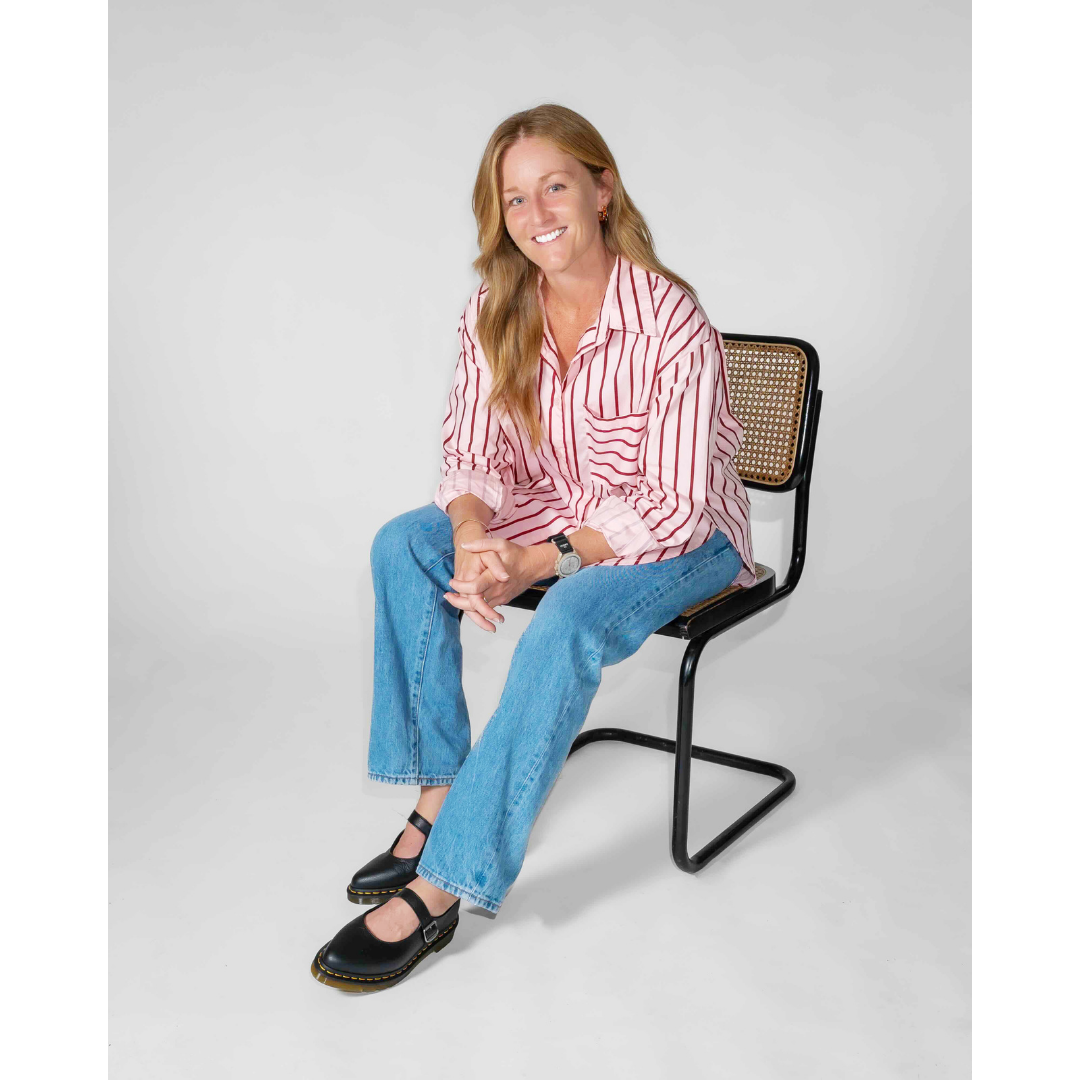
Trends, reels and the endless cycle of always wanting more has quietly bombarded the minds of countless social media users of all ages, but one former Mackay local has made it her mission to help others understand the effects of social media and find practical ways to break free from online addiction. Alexis Zahner is in Mackay over the next week to teach upcoming generations about social media and the effects it can have on the mind, particularly on identity, self-discovery, as well as the marketing strategies that get viewers hooked and influence their decisions. It is something Alexis knows first-hand can be a useful tool, but also a great disruption to authenticity and the world as we see and experience it. Alexis will hold a free meet and greet and book launch today, Friday 2nd October, at 5.30pm at the Mackay Surf Lifesaving Club, where she will give a talk and answer questions relating to her debut book, Real: Reconnecting to Yourself in a World of Likes and Lies. A former Mackay girl, Alexis spent the past 15 years working across business psychology, marketing and media, with her interest in social media influence beginning during her university studies at James Cook University in Townsville. Her own experience as a social media user, travel blogger and influencer eventually led her to question how much of her identity, decisions and values were being shaped by what she saw online. “The tipping point came for me about 3 years ago when I had this feeling that I couldn't separate influence from my own personal decision making,” she said. “I couldn't separate my own likes, dislikes, values, relationships from what I was being exposed to and being influenced by online.” “I found that I needed to take some time away from social media to recalibrate what was important to me and sort of reconnect and come back to myself.” Alexis said she understood the feeling of questioning who you are outside of social media. “I know what it feels like to live a life under the influence of social media and have that existential crisis of thinking to yourself, who am I? What do I like? What's the kind of life I want to live? and struggling to separate myself from influence.” Alexis is particularly passionate about reaching teenagers, who she says are in an important stage of identity development, and will share this message with Mackay high school students during her upcoming school talks. “Teenagers are really easily influenced by social media. So it's a really important age where we start educating them – not just on the mental health repercussions of things like social media and how it shortens their attention span, but how it actually influences who they become.” “If you're asking yourself these questions, it's not your fault. Social media is actually geared to create this impact on you.” Alexis encourages people of all ages to “start expanding beyond what you see on the platform.” “Dare to indulge in the things that you've always been curious about or things you used to love,” she said. “Don't be afraid to put the phone down to let yourself be curious and have fun.” What: Alexis Zahner's 'Real' Book launch When: 5.30pm Friday 2nd October 2026 Where: Mackay Surf Lifesaving Club Former Mackay local and author Alexis Zahner is returning home to share her experiences with social media and her debut book, Real. Photo supplied
Read the full story

There are new things to consider when buying real estate in Australia.
Up until last month, people buying real estate in Sydney really only considered the capital growth they were expecting to create within just a few years of making their purchase.
Paying $1.2 million for an inner-city two-bedroom apartment didn’t matter so much if it was going to be worth $1.5 million two years later.
It didn’t really matter that the crap rental returns you got for that price didn’t go anywhere near covering the mortgage because the old negative gearing benefit meant you could claim the losses on your tax.
Things have changed. Negative gearing has gone and prices are dropping in Sydney … so that $1.2 million apartment doesn’t look so enticing any more, even though it’s now $1.1 million.
Other cities have also been hit hard. Melbourne is now one of the cheapest cities in Australia to buy real estate. Although there are special Victorian reasons that come into play in that state.
Victorians were bullied during COVID in a way that impacted small businesses in a disastrous way. The state’s debt is exorbitant, and no one seems to know how it gets paid back. Tobacco shops keep getting blown up by some underworld gang thing that the Government can’t control. They have metal boxes where people can hand in their machetes and that doesn’t appear to instil peace of mind in anyone.
Terrible Governments end up having an impact and it definitely has had one on property prices in Victoria.
A quick scan of on-line property sites shows you that you can pick up a decent two-bedroom unit in an inner-city suburbs like St Kilda and Collingwood in the $400,000s. I saw a three-bedder in St Kilda advertised in the $500,000s.
While those prices might seem like great value, there are reasons the market is so low. People don’t trust the state Government and its management of the economy and the obvious concern would be that even though the prices might be low, there is no guarantee of capital growth.
Capital growth has offered a warm embrace for investors in Australian real estate over many years. There has been an expectation that prices will go up. Obviously they will go up again but the questions is: Where will they go up, when and by how much?
Unfortunately I don’t have the answer to that but I do find that when things get a bit blurry and uncertain, it’s good to stick to what you know … which, for me, is Mackay.
We have several advantages over many other markets. Our median price for houses, in the $600,000s, is a lot lower than bigger cities so more affordable for local people who, by the way, still need somewhere to live.
And, with the end of negative gearing and the banning of borrowing for property out of self-managed super funds, lower prices and strong rental returns should become a key factor in real estate investment.
Yes, investors want capital growth but I feel the focus will probably shift more to rental yield and the monthly return on investment.
Mackay’s rental returns are good and the purchase prices relatively low compared to other markets so there seems to me a good chance that our market will continue to be buoyed by those wanting to take advantage of that.
Meanwhile the Mackay economy seems to be going well, driven by that crucial resource that is dug out of the ground and exported to countries that make steel.
I got strong offers on three properties this week so there is a feeling that while there has certainly been a change driven by national political factors, our market is moving through it, adjusting to the new information and still bubbling along.
The only thing I would say is that if any of you bump into David Crisafulli tell him to dump those high-level coal royalties.

Queensland’s top real estate professionals and agencies are being called to step into the spotlight, with nominations now open for the Real Estate Institute of Queensland’s (REIQ) 2026 Awards for Excellence.
REIQ CEO Antonia Mercorella said the awards remained the state’s highest professional recognition in real estate and continued to adapt alongside the profession itself.
“The REIQ Awards for Excellence are the pinnacle of professional recognition in Queensland real estate, and each year we ensure the program remains contemporary, inclusive and reflective of the full scope of our profession,” Ms Mercorella said.
“This year, we’re delighted to add a new Multi-Office Network of the Year category, recognising real estate agencies that operate as a unified multi-office network.
“It’s a category our members asked for, and it’s a great example of how the awards continue to evolve alongside the structure and sophistication of Queensland real estate businesses.”
Ms Mercorella said there was even more incentive for members to nominate this year, with a pathway from the outset to national recognition in eligible categories through the Real Estate Institute of Australia’s (REIA) National Awards for Excellence (NAFE).
The REIQ Awards for Excellence span individual and agency categories, with some split into regional and SEQ areas, across residential and commercial sales, property management, buyer’s agency, auctioneering, business broking, multimedia, innovation and community contribution.
Ms Mercorella said real estate professionals throughout Queensland could now start preparing and polishing their award nominations with the clock now ticking down.
It’s time to shine! Nominations close on Sunday 12th July 2026, with the winners announced at a spectacular awards gala on Saturday 31st October 2026 at The Star Brisbane.
Nominate now via awards.reiq.com

Bianca O'Brien works with Blacks Real Estate as a Commercial Property Manager. Makayla Groves works as a Commercial Property Manager with Blacks Real Estate. Photo supplied
Makayla Groves and Bianca O'Brien are part of the commercial property team at Blacks Real Estate, supporting landlords, tenants and business owners across the Mackay region.
Working as Commercial Property Managers, Makayla and Bianca assist with the day-to-day management of commercial properties, helping clients navigate leasing and property management requirements across retail, office and industrial spaces.
Based at the agency’s Wood Street office, the pair work closely with business clients throughout the region as part of Blacks Real Estate’s commercial division.
Makayla Groves can be contacted on 07 4963 2522, while Bianca O’Brien can be contacted on 07 4963 2525.
The Coalition has pledged to make the Northern Australia Infrastructure Facility (NAIF) a permanent institution, arguing the move would provide long-term certainty for regional investment, infrastructure and jobs across Northern Australia, including Mackay.
The announcement follows the Federal Government's decision to extend the NAIF for a further 10 years, rather than permanently removing its sunset clause.
Leader of The Nationals Matt Canavan said while the Coalition would support Labor's legislation, it believed the independent review's recommendation to make the facility permanent should be adopted.
“The Developing Northern Australia is a proud LNP achievement,” Senator Canavan said.
“Despite naysayers at the time, Northern Australia has remained on the agenda ever since. I am personally proud to have introduced the original Northern Australia legislation in 2016, with the policy built on the work that was done by LNP Members of Parliaments such as former Senator Ian Macdonald and former MP Warren Entsch.
“Unfortunately, Labor is now kicking the can down the road. Northern Australia shouldn’t have to fight every decade to prove it is worthy of investment.
“The independent review recommended making the NAIF permanent because it works. The Coalition established the NAIF in 2016, and we will make it permanent because Northern Australia should have long-term certainty for investment, jobs and economic growth.”
Since its creation, the NAIF has supported 33 projects with $4.3 billion in finance commitments, helping deliver more than 18,000 jobs and an estimated $33 billion in public benefit across Northern Australia. Those investments include upgrades to airports in Darwin, Alice Springs, Townsville, Cairns and Mackay, along with projects supporting agriculture, mining and manufacturing.
Shadow Minister for Northern Australia Senator Susan McDonald said permanent funding would continue to drive regional development.
“Labor talks about Northern Australia, but the Coalition backs it with lasting investment,” Senator McDonald said.
“The NAIF has transformed communities, unlocked private investment and created jobs across the North. Making it permanent sends a clear message that the Coalition believes in Northern Australia’s future and won’t treat its development as a temporary priority.”
“Governments come and go, but Northern Australia’s importance will never diminish,” she said.

An army of dedicated wildlife carers is quietly working behind the scenes across Mackay, Sarina and the Isaac Region, rescuing, raising and rehabilitating injured and orphaned native animals, and now they are calling on the community for help.
Bush Babies Wildlife Care, a volunteer-run organisation, provides around-the-clock care for some of the region’s most vulnerable wildlife, including baby kangaroos, possums, koalas and other native animals.
The work is extensive, with every animal requiring specialised feeding, veterinary treatment, housing, transport and constant attention. As an unpaid volunteer group, Bush Babies relies heavily on the generosity of the community to continue its work.

The organisation is currently seeking donations of practical items to support the animals in care, including baby wraps and blankets, towels, sheets, doona covers, pillowcases, good-sized cages, porta cots, tissues, disinfectants and cleaning supplies.
There is also an urgent need for Wombaroo milk formula, along with Divetelact milk formula and other useful animal care supplies.
Donations can be dropped directly to Bush Babies Wildlife Care at 9 Parker Street, South Mackay.
Alternatively, donations can be placed in any Mackay Pet Rescue Inc donation bin, with the rescue group helping ensure items are delivered to Bush Babies.

Mackay Pet Rescue Inc said it was proud to support Bush Babies Wildlife Care and encouraged the wider community to get behind the organisation’s efforts.
Every towel, blanket, tin of formula and donation can make a real difference to an orphaned native animal in need, helping give local wildlife a second chance.
Bush Babies Wildlife Care is seeking donations to help care for orphaned and injured native wildlife across the Mackay region. Photo source: Mackay Pet Rescue Incorporated

Sugarcane growing and milling remains a critical part of the community and regional economy. Photo credit: George Chambers.
By Joseph Borg, Chairman, CANEGROWERS Mackay
The recent cyber-attack on Mackay Sugar was a serious and unexpected disruption to one of our region’s most important industries. For over two weeks, the incident affected milling operations, cane supply and payment systems, and the normal rhythm of the crushing season.
The wider community should understand both the seriousness of what occurred and the strength of the response. This was not simply a computer problem. Modern sugar milling depends on coordinated systems linking harvesting, cane transport, rail movements, factory operations, grower records and workplace safety. When those systems are interrupted, the impact is felt quickly across the whole supply chain.
Mackay Sugar acted responsibly by stopping operations where necessary, engaging specialist cyber security experts and working with authorities to restore systems safely. That decision was frustrating for everyone, but safety and system integrity had to come first. Cane that is cut must be crushed quickly to preserve sugar content, so growers were rightly concerned about delays. At the same time, it would have been worse to rush back before the mills and logistics systems were ready.
There has been understandable pressure on families and businesses. Cane farming is seasonal, weather-dependent and capital-intensive. Growers invest all year to produce a crop, and the crushing season is when that work must be converted into income. Harvesting groups, contractors, machinery operators and mill employees were also affected. In a district like Mackay, when sugar slows down, the whole community feels it.
It is important to put this event in perspective. The Mackay sugar industry has faced floods, droughts, cyclones, low prices, labour shortages and mechanical breakdowns over many generations. Each time, growers, mill workers and the broader community have found a way forward. This incident has been different in nature, but the same qualities are required: patience, clear communication, cooperation and determination.
Throughout the disruption, CANEGROWERS Mackay has worked to keep members informed, raised grower concerns and maintained a constructive relationship with Mackay Sugar. Our priority has been to ensure that growers receive timely information, that decisions are practical on farm, and that the restart of crushing is managed in a way that protects both the crop and the long-term interests of the industry.
The positive message for the public is that the industry has not stood still. Manual processes were used where appropriate, recovery work continued around the clock, and a staged return to operations has been pursued carefully. Farmers are practical people. They understand that problems happen, but they also expect solutions. The focus now is on getting cane moving again, crushing safely and making the best of the season ahead.
This incident reminds us that agriculture is now part of Australia’s critical digital infrastructure. Food and fibre production relies on technology just as much as banking, health, transport and energy. Protecting those systems requires investment, planning, testing and strong partnerships between industry, government and cyber security specialists.
Mackay has an opportunity to learn from this event and become stronger because of it.
It is important to acknowledge the patience of growers and the efforts of mill staff, harvesting crews, contractors and local businesses who have had to adapt quickly. No one welcomes a disruption like this, but the response has shown the value of a connected regional community that asksquestions, shares information, helps neighbours and remains focused on recovery.
Mackay’s cane farmers are resilient, but resilience should not be mistaken for complacency. We will continue to advocate for better preparedness, clearer communication and stronger protections for the systems that support our industry. Sugar remains a cornerstone of the Mackay economy, and its future is worth defending.
The past three weeks have been difficult, but it has also shown what this district does best. We face problems directly, we work together, and we keep moving forward. With continued cooperation between growers, Mackay Sugar and the wider community, the industry can recover from this disruption and continue to deliver for our region.
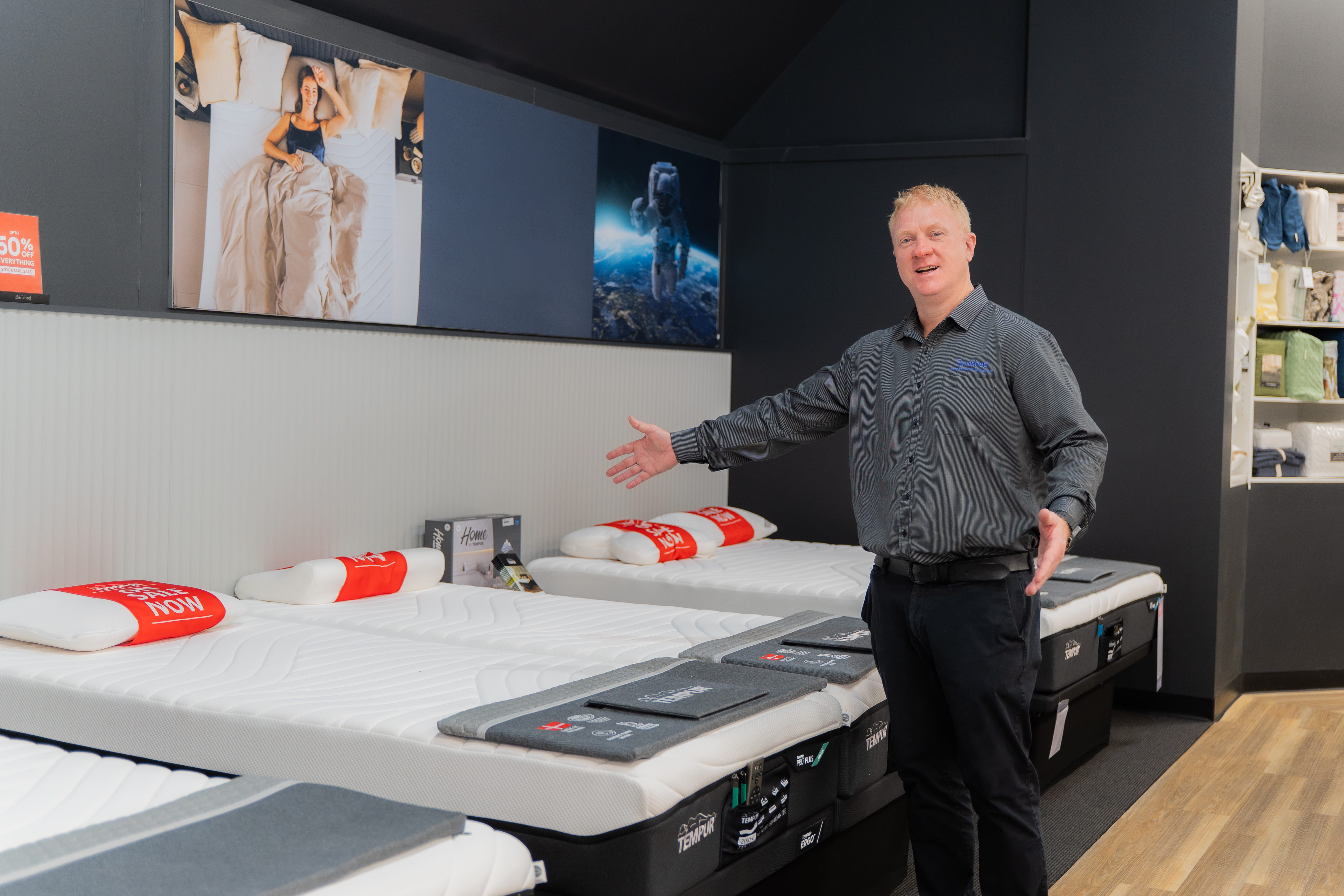
In 2004, after leaving the Navy, Tony Larsen travelled to London for what was intended to be a two-year working holiday that turned into seven years after meeting his wife.
In 2011, he and his wife moved to Mackay from London – this time, with a family in tow, and a plan to stay for good.
In December 2025, Tony took ownership of Bedshed Mackay, where he turned his focus to building a business where exceptional service is just as important as the products on the showroom floor.
“We take pride in our amazing staff’s ability to connect with customers and provide great service from purchase to delivery," Tony said.
Having worked in the store before gaining experience in other sales roles and the mining industry, Tony believed he could bring something different to the Mackay market.

Bedshed Mackay caters to customers across all budgets, with the team focused on helping every customer find the right sleep solution.
“Most of us spend more time in our bed then we do in our cars, so investing in a quality sleep system is an investment in better physical and mental wellbeing."
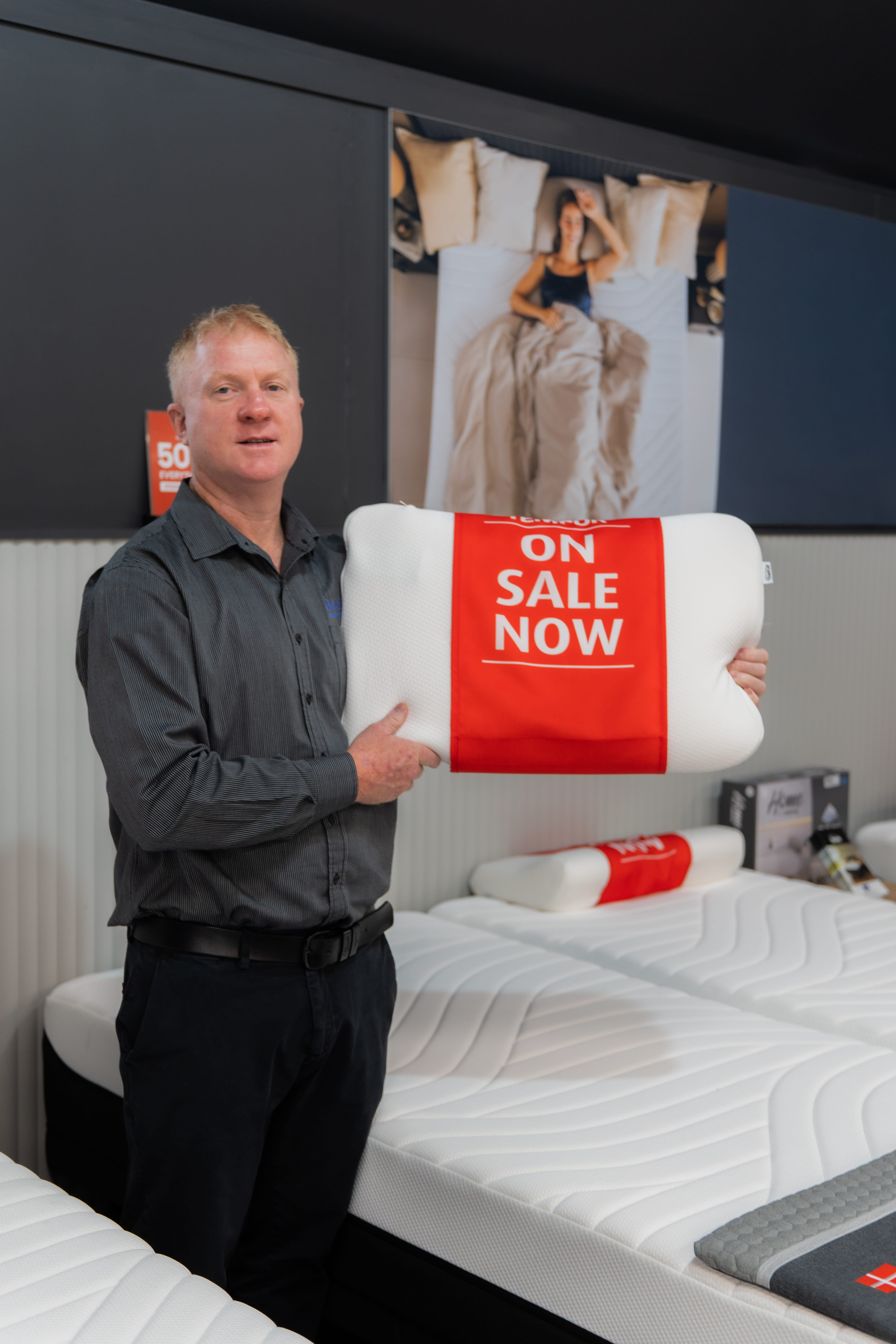
As a local veteran-owned business, giving back to the community is a core value, with Tony also passionate about supporting fellow veterans and investing in the region he’s made his home.
Stay tuned for upcoming sales, particularly on adjustable bases and mattresses designed to enhance both comfort and sleep quality at Bedshed Mackay.

The City of Mackay granted Freedom of Entry to No.105 Squadron, Australian Air Force Cadets, in a ceremonial parade marking the unit’s 75th anniversary. Photo supplied
A milestone in the history of No.105 (City of Mackay) Squadron, Australian Air Force Cadets, was marked on Saturday 20th June with the granting of Freedom of Entry to the City of Mackay.
The occasion also launched a program of events recognising the Squadron’s 75th anniversary. Originally formed as No.5 Flight North Queensland Squadron, Air Training Corps, the unit was officially stood up on 1st August 1951.
The ceremony commenced at 9.00am with a wreath laid at the Cenotaph in Jubilee Park in memory of deceased staff and cadets.
The unit then marched north along Wellington Street, where it was halted by an officer of the Queensland Police Service. A formal challenge was issued, asking by whose authority the cadets were marching through the city. A document from Mackay Regional Council was presented, granting permission for the unit to march on ceremonial occasions in full panoply, with “swords drawn, drums beating, bands playing and colours flying”.
The Freedom of Entry proclamation was accepted, and the column proceeded to the lawn area in front of the Council Administration Building, where the Squadron formed up in parade order for inspection.
Host Officer Wing Commander (AAFC) Ken Whelan, Officer Commanding No.1 (City of Townsville) Wing, Australian Air Force Cadets, arrived by WWII Jeep and met the Reviewing Officer, Mackay Regional Council Mayor Greg Williamson, who also arrived by Jeep. The Host Officer then escorted the Mayor to the dais.
The parade was inspected by the Mayor, followed by formal addresses. The Squadron then advanced in review order, before completing a march past and marching off to conclude proceedings.
Music for the parade was provided by members of the Mackay and District Pipe Band.
The Freedom of Entry was originally granted on 11th August 2001, coinciding with the Squadron’s 50th anniversary, by then Mackay City Council Mayor Julie Boyd, who was also an official guest at Saturday’s ceremony.
Contributed by Geoff Strange
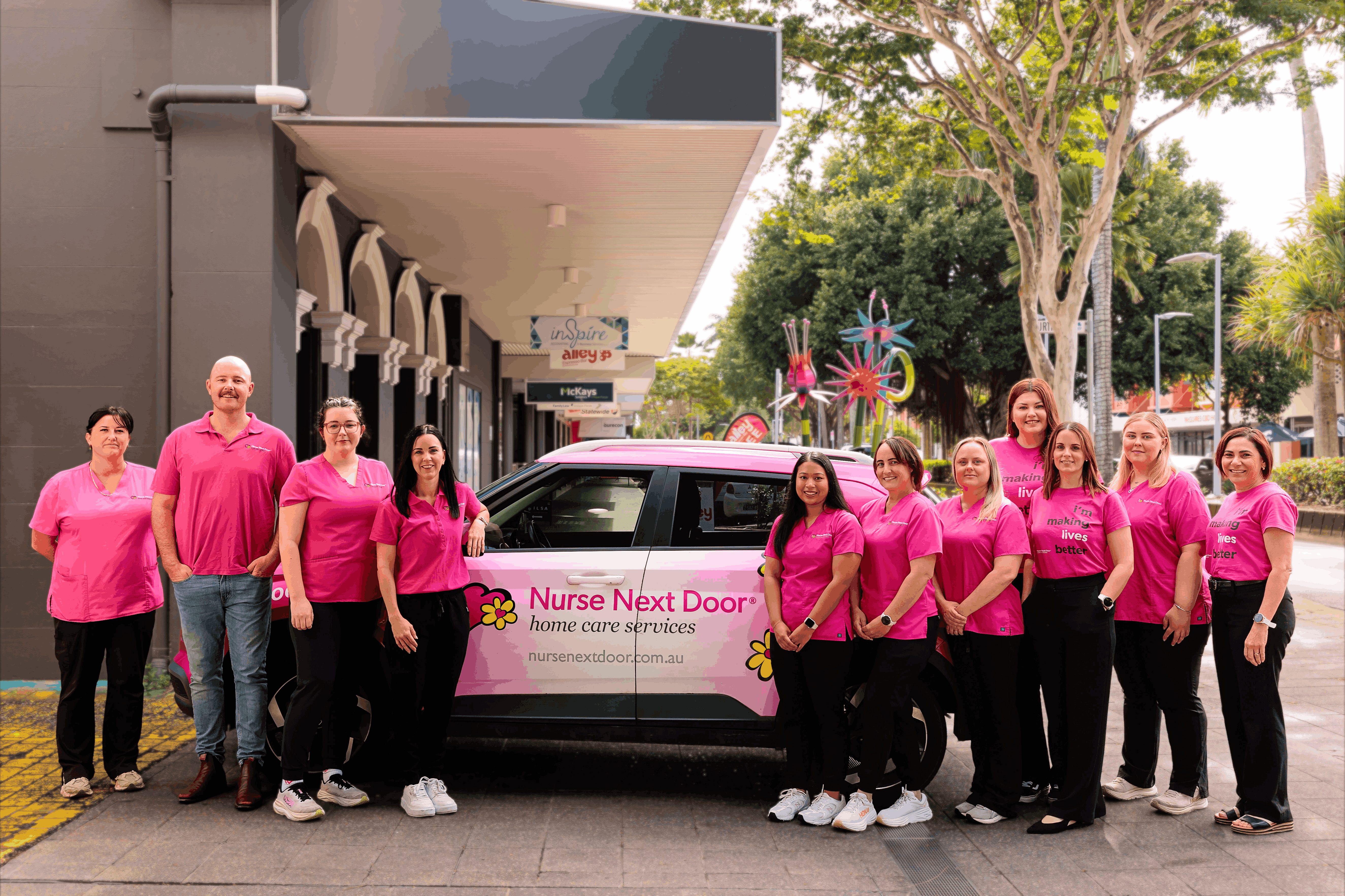
Nurse Next Door Mackay is led by Mackay locals Sarah Ryan and George Blackie, supported by a dedicated team of Nurses and Caregivers. As a locally owned and locally operated business, their work is built around one core purpose, Making Lives Better, helping people across the region stay living safely and happily in their own homes. What began as two locals wanting better for their community has grown into one of the most respected care providers in Mackay and the Whitsundays.
Before launching Nurse Next Door three years ago, Sarah spent years working locally as an NDIS Support Coordinator, giving her a deep understanding of just how much genuinely person-centred care matters to the people who rely on it. George brought years of experience leading large teams in demanding FIFO mining environments, where reliability was never optional. Together they saw an opportunity to bring something special to the region, and set out to do exactly that, determined to deliver care the way it should be done.
Sarah and George understand the trust it takes to welcome someone into your home, and they carry that responsibility personally. Every Caregiver is thoughtfully matched to the person they support, an approach known as the Perfect Match, so care feels consistent, familiar and genuinely human. They embrace even the most complex, high-needs care with confidence, and through patience and real connection, build trusting relationships that restore a genuine sense of belonging.
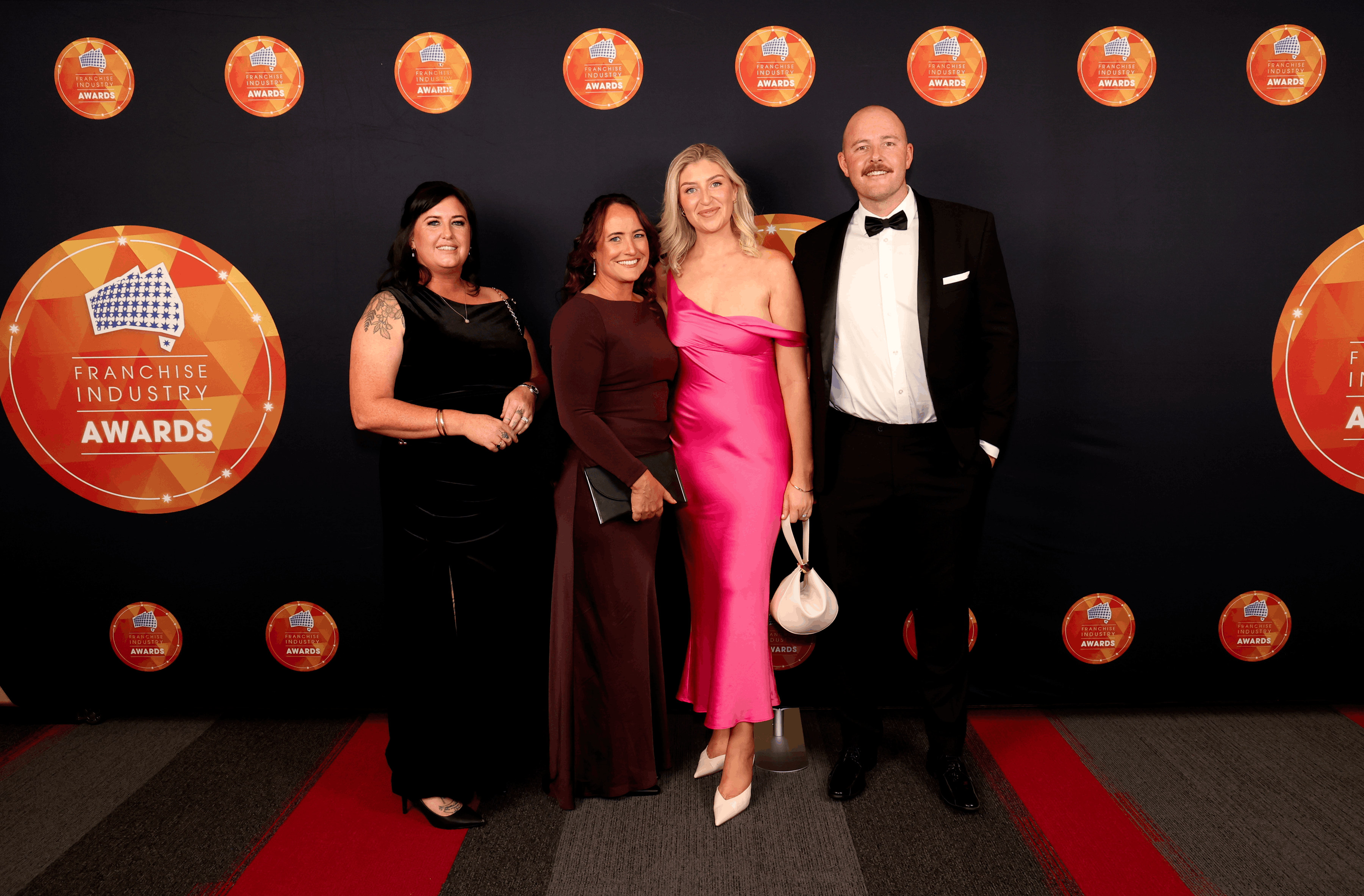
That dedication has built something special. In just over three years, Sarah and George have grown their team to 147 local people, including 22 Registered Nurses, and delivered more than 209,000 hours of care across the region. Their support reaches well beyond the home, too, sponsoring SNAGS, a local group running inclusive social events for people living with disability, and turning out for the Mackay Marina Run and the Pink Out for Cancer golf day in Moranbah.
It is care that has not gone unnoticed. After being named Rookie of the Year within the national Nurse Next Door network in 2024, Sarah and George were named Australian Single Unit Franchisee of the Year 2026 at the National Franchise Industry Awards in Brisbane, recognised as the best in the country from a field of 240 entries across 113 brands. For two locals who simply were passionate about making a difference in their local community, it is a remarkable result.
From a little help around the house through to skilled nursing and complex care, Sarah, George and their team are there so locals can keep doing the things they love, in the place they feel most comfortable. In Mackay, that is what Making Lives Better looks like, and it is why they remain Passionate About Making a Difference.
To learn more or book a free Caring Consult, contact the Care Services team 24/7 on 1300 100 247 or visit nursenextdoor.com.au
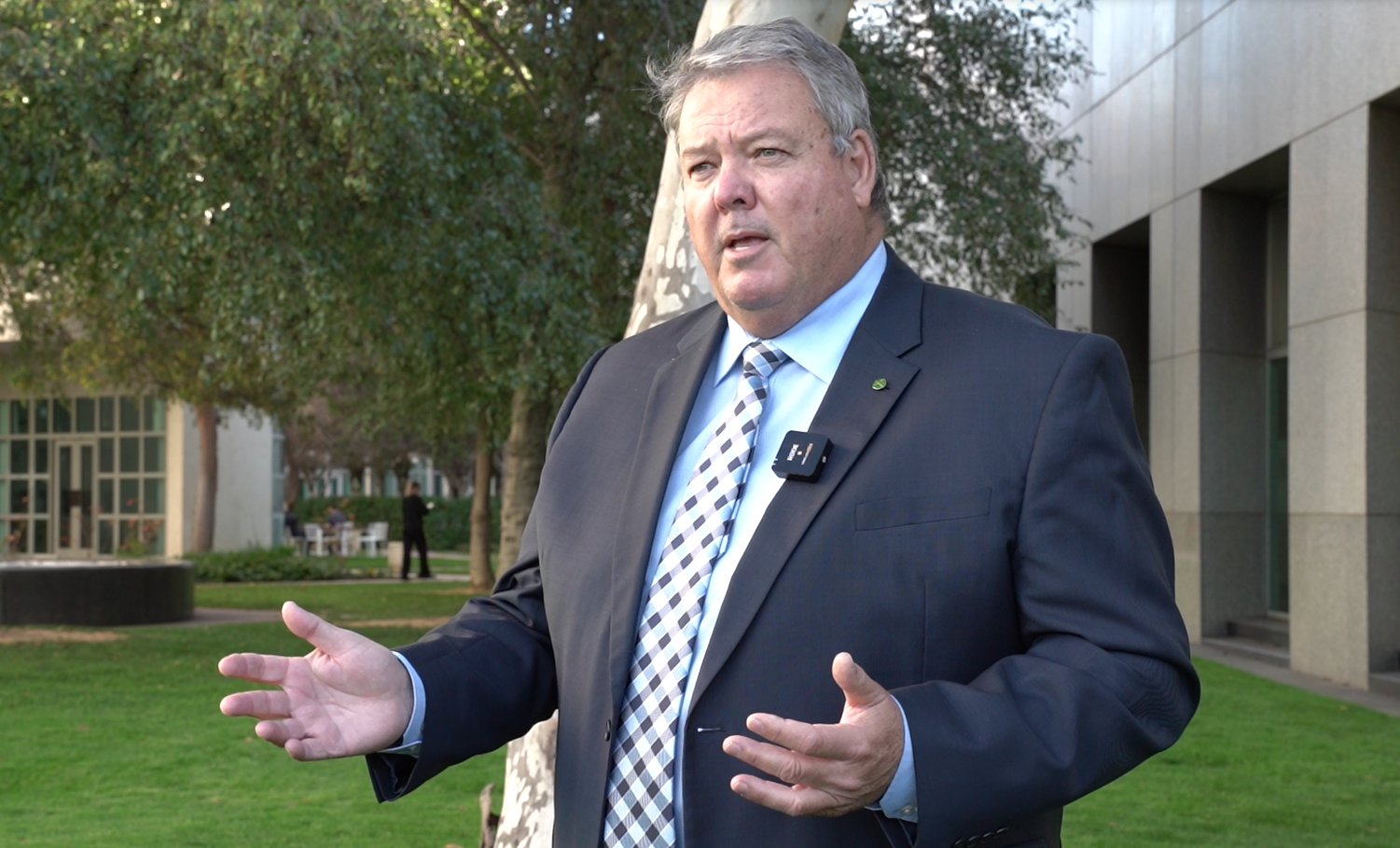
Opinion Piece From the office of Federal Member for Dawson, Andrew Willcox
On July 1st, the Federal Government’s newly established National Environmental Protection Agency (NEPA) officially began operations. Armed with expanded auditing powers and the ability to issue immediate 14-day "stop work" orders, this new federal body has the ability to enforce massive new financial penalties under a radically altered Environment Protection and Biodiversity Conservation (EPBC) Act, with corporate fines skyrocketing up to $16.5 million.
"Our local cane farmers are being forced into a bureaucratic nightmare by a government completely detached from the realities of food production," Mr Willcox said.
"I have local landowners coming into my office who are trying to manage and expand their crops on Category X land. They have done the right thing, yet they are being bullied by federal department officials who tell them their land is 'under investigation' without providing a single solid reason why. It is an absolute joke.
"Labor has rushed these laws through to secure a political win with the Greens, completely altering the 'continuous use' exemption. Now, if a farmer has regrowth older than 15 years, or if they are within 50 metres of a watercourse in the Great Barrier Reef catchment, routine activities like clearing scrub, or building firebreaks are suddenly treated like a potential federal offense."
To combat this broader federal assault on regional productivity, the Coalition has announced it will lodge a coordinated Notice of Motion to disallow the Carbon Credits Methodology Determination 2026.
Mr Willcox warned that this strategy of locking up agricultural land for carbon offsetting represents a dangerous precedent, running alongside Labor's broader plan to lock up an additional 39 million hectares of land, nearly twice the size of Victoria, to meet its 2030 targets.
"Locking up this land completely destroys its productivity, abandoning active land management and turning prime agricultural acreage into a weed-ridden haven for feral pests, like wild pigs, to breed," Mr Willcox said.
"Our local sugar mills are already locked in a severe battle against block encroachment, which is steadily reducing the total hectares of cane being grown in our region.
"A sugar mill requires a strict, massive volume of cane to remain operationally and financially viable. If our farmers are stopped from clearing their Category X land to open up new cane blocks, the total tonnage will drop below that critical threshold, and the mills will simply close.
"The profit margins for our cane farmers are incredibly slim. If a local mill shuts down, it becomes entirely cost-prohibitive to transport harvested cane to a mill further away. The transport costs alone will wipe out any return, meaning all the surrounding sugar cane farms will have to stop farming completely.
"Hundreds of landowners across this country are facing this exact same bureaucratic freeze, and it is stifling production, damaging local economies, and threatening national food security.
“Our farmers need practical support and regulatory certainty, not a centralised, Canberra-based environmental police force strangling their productivity."
Contributed by G. Jones
“The 2026-27 Queensland Budget highlights a significant disparity between Mackay and other major regional centres.
While Mackay–Isaac–Whitsunday receives approximately $742 million in capital investment, this is substantially lower than Townsville ($1.4 billion), Cairns ($1.1 billion) and Central Queensland ($2.3 billion).
The budget contains strong investment in roads, health and community infrastructure across Mackay; however, unlike competing regional centres, Mackay has not secured a major transformational project capable of driving long-term economic growth and regional competitiveness.
Given Mackay's contribution to Queensland's economy through resources, agriculture, tourism and exports, there is a compelling case for future State and Federal investment in catalytic projects to ensure Mackay receives its fair share of Queensland's infrastructure investment.
The budget demonstrates a clear hierarchy of regional investment:
While Mackay receives ongoing investment, it does not currently have a single transformational project equivalent to:
• CopperString in Townsville
• Rockhampton Ring Road
• Cairns Marine Precinct
• Gladstone energy infrastructure
As a result, Mackay's total allocation is:
• approximately 47% lower than Townsville
• approximately 34% lower than Cairns
• approximately 68% lower than Central Queensland
Based on the regional capital allocation table in the 2026-27 Queensland Budget, the four major northern and central regional centres compare as follows:
Region – 2026-27 Capital Investment
2025/2026 was just as bad
Region – 2025–26 Capital Investment
Central Queensland receives 3.7 times the Mackay allocation.
• Townsville receives 2.5 times the Mackay allocation.
• Cairns receives 2.1 times the Mackay allocation.
• Mackay is the lowest funded of the four major regional centres despite being one of Queensland's strongest economic contributors.
In simple terms, for every $1 invested in Mackay, the Budget allocates approximately:
• $3.66 to Central Queensland
• $2.53 to Townsville
• $2.13 to Cairns”
Quite a lot, actually.
People spend months naming their children and agonise over what to call a new puppy, yet when it comes to naming a business, a decision that could shape its success for years, it often becomes an afterthought or three part series description.
A business name is far more than a label. It's your first impression, your identity and often the reason people remember you or don't. The most memorable brands are usually the simplest: Apple, Google, Nike and Lego. They're distinctive, easy to recall and instantly recognisable.
In today's world, where we're bombarded with advertising and endless content, attention spans are short. If people can't remember your name after one interaction, chances are they won't remember it later.
Then there are acronyms.
We've worked with countless start-ups that carefully choose a business name, only to immediately shorten it into an acronym that means absolutely nothing to their audience. For nearly 30 years, redhotblue has never been referred to as RHB. Why? Because R.H.B. could stand for almost anything.
Of course, Australians love shortening names. If your business name is too long, chances are your customers will create a nickname for it anyway. But if some people know you by your full name, others by an abbreviation and others by an acronym, you risk creating confusion and diluting your brand.
There are exceptions. Kentucky Fried Chicken successfully became KFC as part of a deliberate rebrand to modernise the business and broaden its appeal while minimising the focus on “fried” food. The key was commitment. They didn't switch between the two names they fully embraced the change.
And then there are names that should never leave the brainstorming session.
One client proposed the name Australian Risk Strategy Engineers.
Sounds professional enough… until you abbreviate it.
A.R.S.E.
Memorable? Absolutely. Ideal for a business? Probably not.
If you're starting a business, try this simple test: tell ten people your proposed name and ask them to repeat it the next day. If they can't remember it, or they all remember it differently, then it’s time to think again.
If you're considering a rebrand, pay attention to how your customers already refer to your business. Their habits can tell you a lot about what is, and isn't, working.
At the end of the day, your business name is one of your most valuable marketing assets. It's the word people search for, recommend and remember.
So don't rush it.
Give it the same consideration you'd give naming your child.
Or at the very least… your dog.

By Cr Peter Sheedy
Whilst I at times have mixed feelings about aspects of the Mackay Regional Council Budget, there are a number of clear positives for our region through the initiatives being delivered.
Importantly, this is a “back-to-basics” budget that maintains core service levels across council, with no reductions to the essential services our community relies on every day. In the current economic climate, this is a significant outcome, with the budget carefully balancing cost pressures while ensuring reliability in areas such as roads, parks, water, waste and local facilities.
Libraries have been under the spotlight in recent times; however, I am pleased to see that this year’s budget retains full library services. Council has committed nearly $1 million to support services across the network, including the continued operation of the Gordon White Library, while also progressing the new Northern Beaches Community Hub. This reflects strong community feedback and ensures residents continue to access valued services as planning progresses towards the opening of the new facility.
Looking ahead, a key focus for council will be improving the utilisation of buildings and facilities as part of a broader efficiency drive. This includes reviewing how existing assets are used to help manage increasing operational costs and deliver better value for ratepayers.
Our Parks and Gardens and mowing services have performed strongly over the past year, with continued investment supporting improved outcomes across the region. More broadly, the capital program reinforces this commitment, with over $127 million directed towards renewing and upgrading essential infrastructure, including parks, roads, drainage and community facilities.
Overall, while there are areas that will continue to require careful consideration, this budget demonstrates a clear focus on maintaining services, investing in essential infrastructure and delivering value for our community.

Police are reminding Mackay motorists that road safety is an everyday responsibility after more than 160 traffic offences were recorded during the first weekend of the winter road safety campaign. Photo source: Queensland Police Service
Queensland Police are reminding Mackay motorists that safe driving shouldn't begin and end with the school holidays, after a concerning number of traffic offences were detected across the Mackay Whitsunday district during the opening weekend of the state's winter road safety operation.
The Queensland Police Service (QPS) launched Operation Yankee Cold Snap, its annual winter school holiday road policing operation, on Friday 26th June. Running until 17th July, the operation aims to reduce road trauma during one of the busiest travel periods of the year.
With more Queenslanders and visitors expected to be on the roads over the school holidays, police are urging drivers to remember that every decision made behind the wheel has the potential to save, or cost, lives.
The opening weekend of the operation highlighted the importance of that message locally.
Across the Mackay Whitsunday district, officers conducted 1,324 random breath tests, with 10 drivers returning positive drink-driving results. Police also carried out 26 roadside drug tests, with five drivers returning positive results for drug driving.
In total, 163 traffic infringement notices were issued across the district, including 98 for speeding offences.
Mackay Whitsunday District Highway Patrol Officer in Charge Senior Sergeant Shane Edwards said every motorist has a responsibility to help make the region's roads safer.
“Our officers will be actively patrolling, intercepting and enforcing road rules, and curbing dangerous and reckless behaviours - not just through our busy school holiday periods, but year-round,” said Senior Sergeant Edwards.
As winter conditions create additional hazards on Queensland roads, police are also reminding motorists to adapt their driving to changing conditions.
“Winter brings about a unique set of hazards, including reduced daylight hours and fog, so we urge everyone to exercise patience and drive to conditions.”
Statewide, Operation Yankee Cold Snap is placing a strong focus on speeding and impaired driving, two of the leading contributors to lives lost on Queensland roads.
Queensland Police said cooler weather can also increase the risk of reduced visibility and wildlife collisions, making driving conditions more unpredictable, particularly for motorists travelling on regional roads.
The operation follows the results of Operation Interpose, during which police conducted more than 364,000 roadside breath tests across Queensland, with about 2,500 people returning positive results. More than 43,000 traffic infringement notices were also issued for dangerous driving behaviours statewide.
While police will maintain a strong and highly visible presence throughout the school holidays, they hope the message extends well beyond the three-week operation.
“We want everyone to make it to their next destination safely, and by slowing down, driving sober, wearing a seatbelt, and staying alert, it can make all the difference for you, your passengers, and other road users,” Senior Sergeant Edwards said.
.jpg)
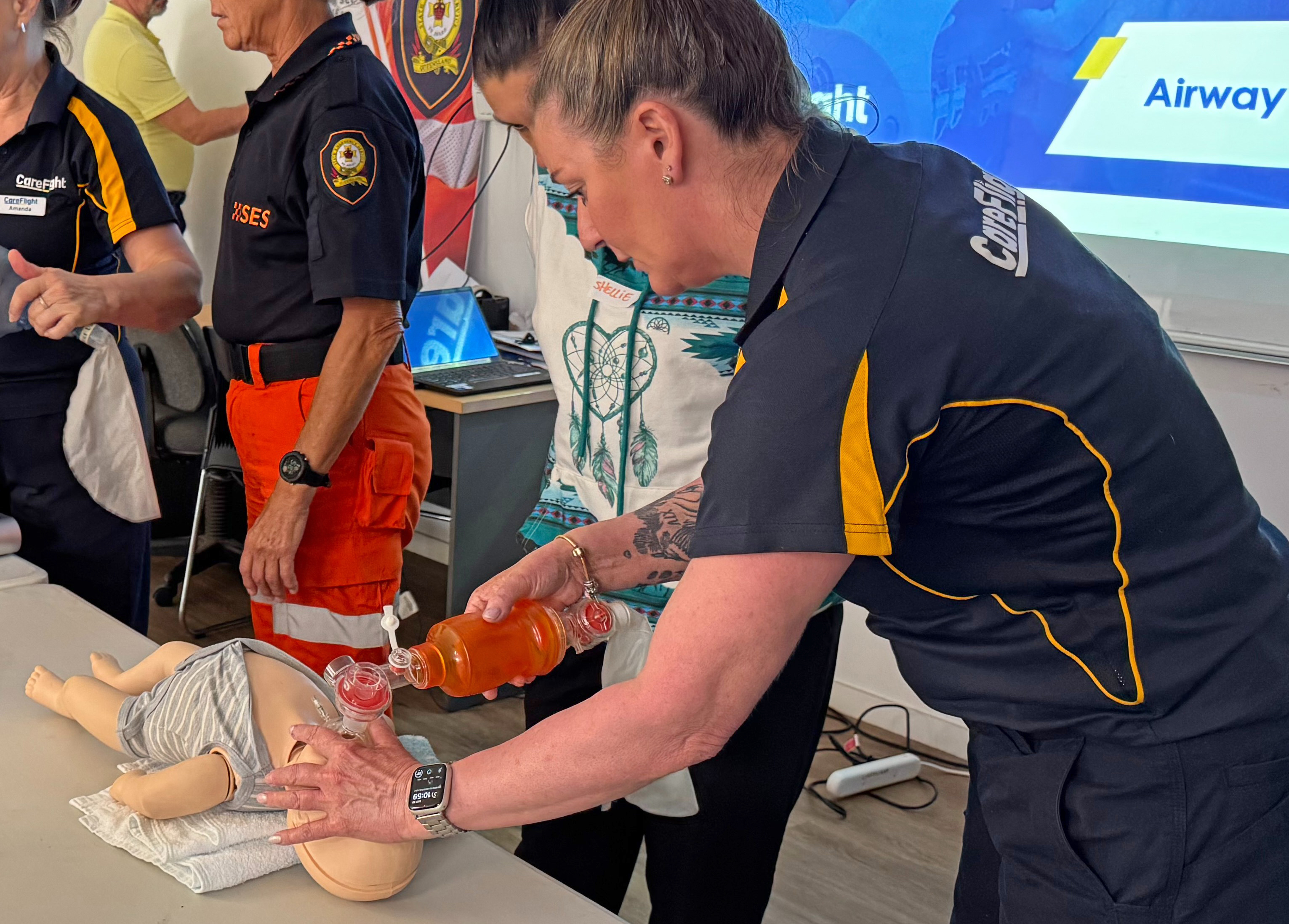
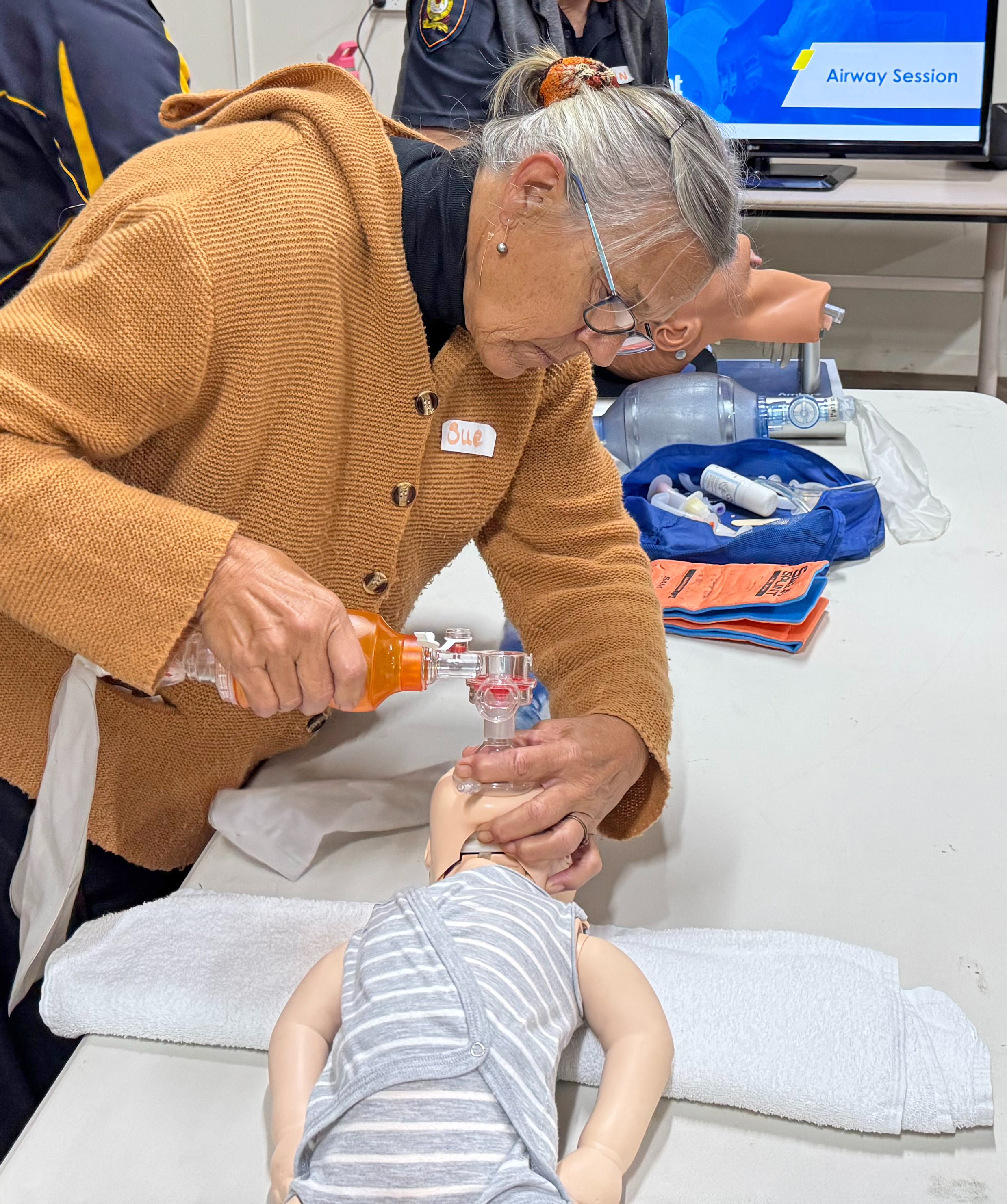
CareFlight delivered a free Trauma Care Workshop in Eungella on 21 June, providing community members and first responders with practical, potentially lifesaving training in pre-hospital emergency care. Photos supplied
Community members and first responders were given the opportunity to gain practical, potentially lifesaving skills at a free Trauma Care Workshop delivered by CareFlight on Sunday, 21 June in Eungella.
The initiative provided pre-hospital trauma care training designed for everyday Australians, with no prior experience or qualifications required to participate.
The workshop formed part of CareFlight’s ongoing commitment to strengthening community capacity in responding to medical emergencies, particularly in the critical minutes before paramedics arrive.
Participants were guided through practical and theory-based learning aimed at building confidence and capability in trauma situations, with a focus on improving patient outcomes in emergency scenarios where immediate action can make a significant difference.
CareFlight’s Trauma Care Workshops are delivered by experienced doctors, paramedics and nurses, combining simulation-based training with essential clinical knowledge. The program is designed to be accessible to a wide range of participants, including volunteer first responders and members of the public seeking to better prepare for emergencies.
Head of Education and Training, Margarita Obeid, touched on the importance of accessible emergency training for regional areas.
“When a medical emergency happens, help can sometimes be hours away especially in rural and remote communities.
“Often the first people to arrive at the scene will be the local teacher, farmer, mechanic or another community member who is part of a volunteer emergency response team. It is in these situations that the first responders need to know how to sustain a life.
“The action taken in the first few minutes can mean the difference between life and death with appropriate treatment during this time significantly improving the final outcome of the patient.”
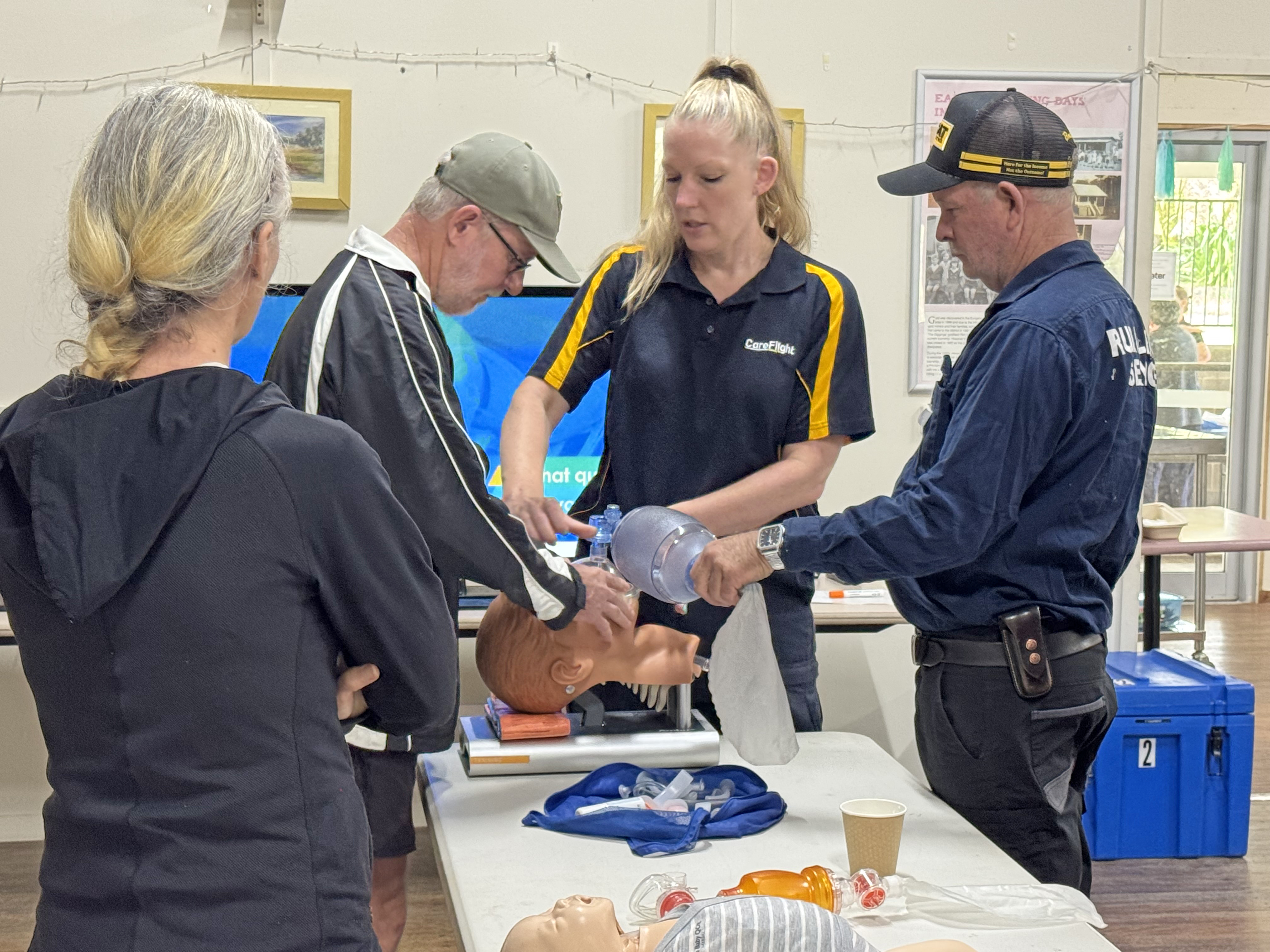
The training was offered at no cost, supported through donations from individuals and businesses, and reflects CareFlight’s broader mission to increase access to lifesaving education across Australia.
By building skills within local communities, the program aims to strengthen the chain of survival, particularly in regional and remote areas where emergency response times can be longer and bystanders are often first on scene.
The workshop provided participants with a rare opportunity to gain hands-on experience in trauma care within a structured and supportive learning environment.
Publishers Indemnity. Any individual or entity that places advertising, supplies copy material, or submits editorial content to Core Life Publishing agrees and undertakes to ensure that all such material:- Does not infringe upon any copyright, trademark, or other intellectual property rights;- Is free from any content that could be considered defamatory, libelous, or slanderous;- Does not infringe upon any rights related to privacy or breach of confidence;- Contains no obscene, indecent, or otherwise unlawful material;- Complies fully with the Trade Practices Act and all other applicable laws, regulations, or statutes.Furthermore, by submitting or placing such material, these individuals or entities agree to indemnify and hold harmless the publisher, Core Publishing and Events Pty Ltd, and/or its agents from and against any and all investigations, claims, demands, liabilities, damages, costs, or judgments arising out of or in connection with the material provided. All material is believed to be accurate at the time of printing and remains the copyright of Core Publishing and Events Pty Ltd.
© 2026 Mackay and Whitsunday Life Pty Ltd.
