
Independently Owned, Locally Grown, Community Loved

OPINION PIECE from the office of Federal Member for Dawson Andrew Willcox There is no question that immigration into Australia is out of control. The government’s numbers are too high, and standards are too low. A sustainable migration program must consider our capacity to provide housing, healthcare, infrastructure and the essential services everyone relies on, and Australians must come first. But Labor’s decision to target Working Holiday Makers Visa holders is not the answer. These people filling vital gaps in our workforce are not the cause of Australia’s housing crisis. In many cases, they are living in accommodation provided by the very businesses that employ them. The National Farmers’ Federation has made the point that Working Holiday Makers generally stay in hostels, caravan parks or purpose-built on-farm accommodation. Resorts usually have on-site staff quarters. They are not the source of Australia’s housing shortage. So why is Labor making it harder for them to come here, when these workers fill genuine jobs that regional Australia holds? Working Holiday Makers fill approximately one in seven farm jobs nationally and are particularly important during peak agricultural periods, which for Dawson, it is right now! Farmers rely on these workers to plant, pick, pack and harvest the produce that ends up on Australian supermarket shelves. Having run one of Australia’s largest tomato farms, at times Working Holiday Makers made up more than 50 per cent of my workforce. Without them, much of our crop simply would not have been picked in time and rotted in the paddock. Some may say, why not employ the Australians who don’t have a job and are on “the dole”? Can I say, this does not work. Most farmers will employ Aussies over travelling backpackers, but many either don’t want to do the work or don’t turn up after the first day. Who picks the fruit or veggies then? Farmers are already warning that visa delays are leaving them without workers. The NFF says approvals that once took days are now facing processing times of up to three months, and this time frame can be the difference between harvesting a crop or losing it. That should concern every Australian already feeling the pressure at the supermarket checkout. The same problem is playing out in tourism. Across Dawson, Working Holiday Makers are an important part of the workforce supporting tourism and hospitality, particularly in the Whitsundays. They help fill shifts, work in hotels and restaurants, support tour operators and keep businesses running through their busiest periods. They also contribute to the local economy. They spend money on food, fuel, attractions and tours, supporting the small businesses that depend on a strong visitor economy. That is why tourism and business leaders across North Queensland are raising the alarm. They understand what happens when a regional business cannot get enough staff: opening hours are reduced, and services are cut, creating a downward spiral. We do need to reduce migration to sustainable levels. We need stronger integrity measures, and we need to crack down on rorts. But responsible migration policy means understanding which parts of the system are creating pressure and which parts are helping Australia function. Working Holiday Makers are not the problem. They are part of the workforce solution for regional. Australia. People have had a gutful of watching their standard of living go backwards. Groceries, fuel, housing and everyday expenses are already putting enormous pressure on families. The last thing Australians need is another reckless policy that makes it harder to produce food, harder to run regional businesses and harder for tourism operators to find the workers they need.
Read the full storySomeone sold a house in Sydney last week for $9 million less than they bought it for four or five years ago. The sellers had bought the property in Sydney’s eastern suburbs for $29 million and sold it for $20 million in a sale forced by their bank. I imagine the sellers are a little disappointed by the government’s decisions on negative gearing and capital gains tax and feeling pretty hurt by the increased interest rates. Australia’s interest rates are on the rise and are now sitting at levels not seen since 2011. Increased cost of living is hurting people around the country and interest rates are playing into that. But the impact of interest rates is not felt evenly around the country. The far-higher property prices mean people in the major cities suffer much more than regional areas with the rates increase. That is certainly not to say people in Mackay are unaffected by the cost of living; it’s just that the impact of interest rates increase on a $400,000 mortgage is much less than the impact on a $1m mortgage. There are other Mackay-specific factors that are in play when discussing the current housing market. The big factor is the role of coal in our economy. Most of the coal extracted and exported from our region is coking coal, which is used to make steel. The price of coking coal is around $280 a tonne, which is about 50 per cent up. Good activity in the coal market translates to good news for the Mackay economy, as it is an economic engine that other cities and regions just don’t have. Good activity in Bowen Basin flows throughout the Mackay economy; Paget workshops, transport, suppliers and related businesses all benefit. But so do other, non-mining-related businesses as they benefit from the general confidence and spending that goes on. The strong mining activity also means mines need to keep their staff levels up and that means more people moving to Mackay. Of course, Mackay is much more than a coal mining town but if the coal sector is going well those other areas definitely benefit. It is a confidence boost for Mackay people looking to get into the housing market and those wanting to upgrade or downsize. It also means continuing strong demand from people wanting to rent a property and it will be interesting to see what sort of activity that creates from investors. Investors have walked away from the big-city markets because they can no longer use negative gearing on established properties that do not have a sufficient yield to be positively geared. Negative gearing has never been a big thing in Mackay because our prices are lower and rental returns continue to be strong so many investors have a positively geared property. Around the country everyone is nervous about the state of play and the probability of more interest rate rises. But strong coal prices and an economy that is performing well mean Mackay might just be presenting an opportunity for buyers and sellers that doesn’t exist in other parts. I remember when national confidence was flying high and Mackay prices were going up significantly that many buyers were saying “I wish we had bought a while ago when the market wasn’t so hot”. I’m not armed with a crystal ball so I’m not here to tell you what is going to happen but I suspect there is a very good buying window right now for those looking for an opportunity.
Read the full story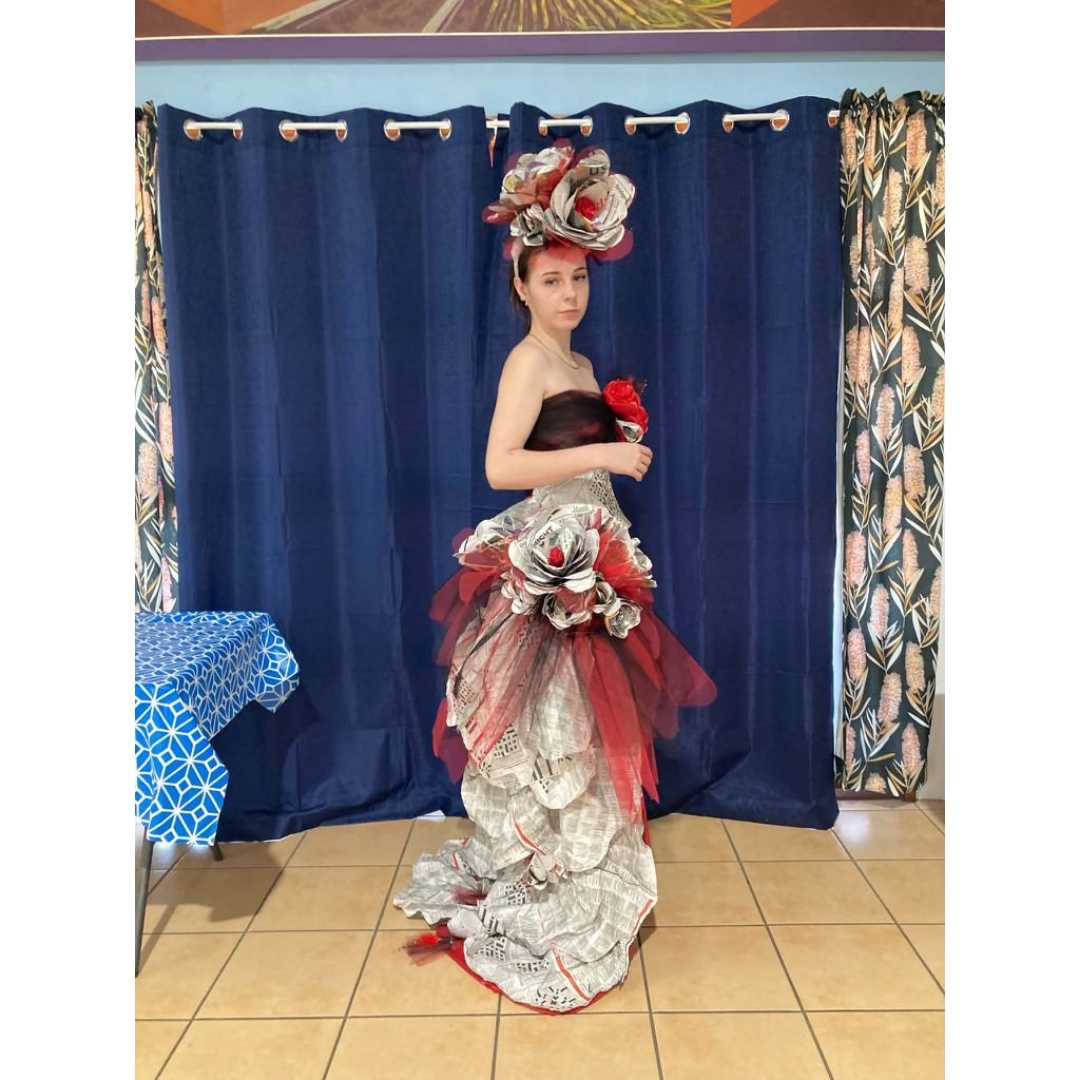
A local Mackay and Sarina based model has created a dress out of newspapers, including Mackay Life, for her upcoming pageant, representing her region and hometown on the runway as she vies for Miss Diamond International in Brisbane. Zoe Place will be competing this weekend in the three-day event, beginning this Friday 2nd October and ending on Sunday 4th October. The young model spent around a month creating her eco-fashion outfit, using old newspapers as the main material and transforming them into a bodice, skirt and flowers. Red elements were also incorporated into the design to give the dress a bold and glamorous pageant feel. Zoe said, “The entire concept was really about taking something that would normally be thrown away and turning it into something beautiful and meaningful.” Her eco-fashion creation will form part of a busy weekend in Brisbane, with the Miss Diamond International event including photo shoots, interviews, an eco-fashion show and the final pageant. Zoe has been preparing for the event by practising her strut and walking, preparing for interviews and getting comfortable in the different outfits she will wear throughout the weekend. Alongside her love of modelling, pageantry has also provided Zoe with a platform to raise awareness about causes close to her heart, including mental health, while fundraising for Beyond Blue. “Pageantry has given me more of a platform to combine my love for modelling with something that is really important to me.” “When I first started, I was more nervous about putting myself out there and worried about what others would think about me – but I’ve changed a lot through my journey in pageantry.” “Pageantry has also taught me that it’s not about how you look on stage. It’s about the person you are when you step off it.” “Every woman has their own unique journey and that journey is something we should all be really proud of.” “To me, it represents confidence, empowerment, kindness, and using your voice to make a difference.” Zoe said she was looking forward to meeting the other contestants, making new connections and creating memories. “I’m definitely looking forward to meeting all the new contestants and making new connections and creating memories that I will carry with me for a lifetime.” While Zoe hopes to eventually move to the city, her sights are set even further afield, with a dream of one day walking in New York Fashion Week. Mackay and Sarina local Zoe Place has created an eco-fashion dress from recycled newspapers, including Mackay Life, ahead of her Miss Diamond International pageant in Brisbane. Photos supplied
Read the full story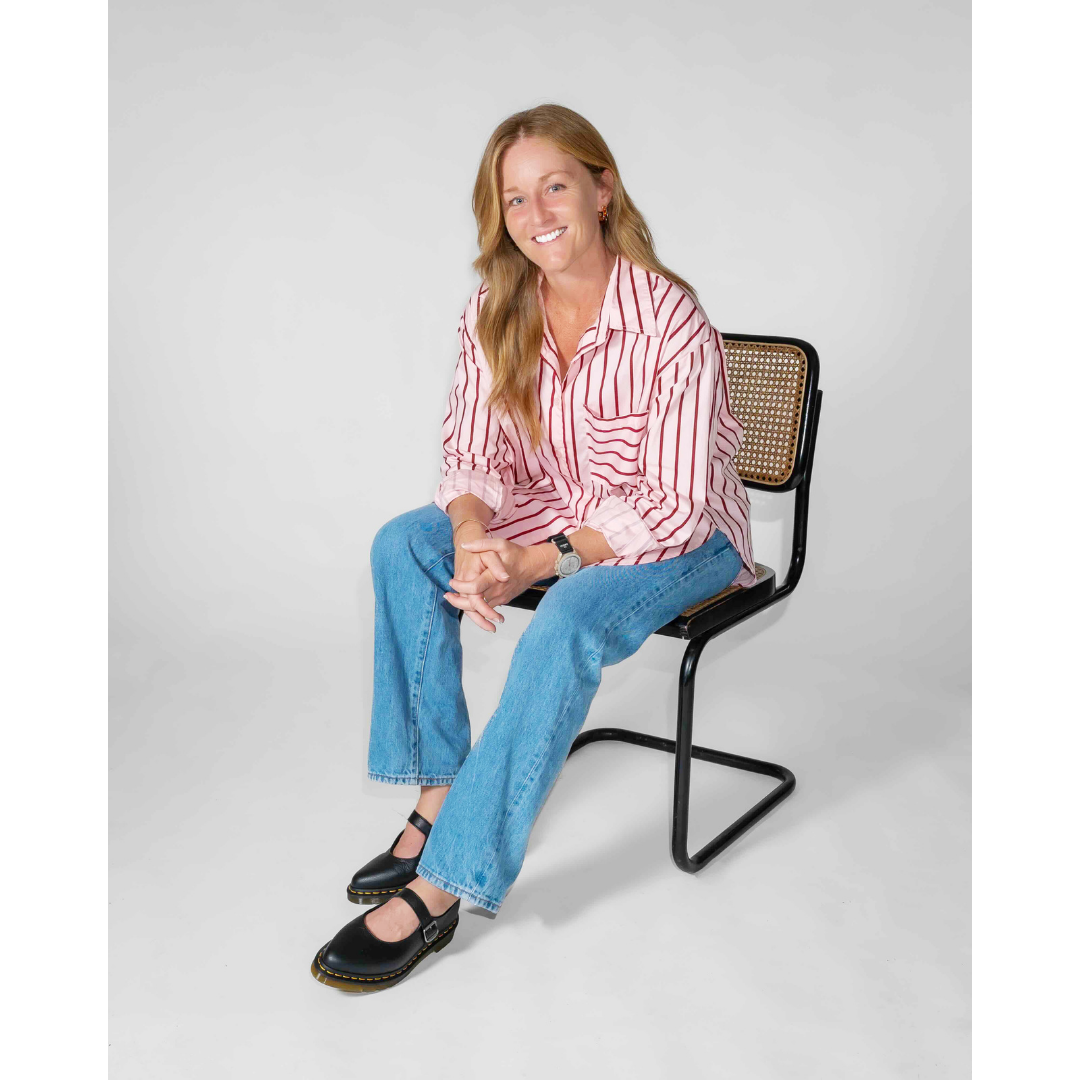
Trends, reels and the endless cycle of always wanting more has quietly bombarded the minds of countless social media users of all ages, but one former Mackay local has made it her mission to help others understand the effects of social media and find practical ways to break free from online addiction. Alexis Zahner is in Mackay over the next week to teach upcoming generations about social media and the effects it can have on the mind, particularly on identity, self-discovery, as well as the marketing strategies that get viewers hooked and influence their decisions. It is something Alexis knows first-hand can be a useful tool, but also a great disruption to authenticity and the world as we see and experience it. Alexis will hold a free meet and greet and book launch today, Friday 2nd October, at 5.30pm at the Mackay Surf Lifesaving Club, where she will give a talk and answer questions relating to her debut book, Real: Reconnecting to Yourself in a World of Likes and Lies. A former Mackay girl, Alexis spent the past 15 years working across business psychology, marketing and media, with her interest in social media influence beginning during her university studies at James Cook University in Townsville. Her own experience as a social media user, travel blogger and influencer eventually led her to question how much of her identity, decisions and values were being shaped by what she saw online. “The tipping point came for me about 3 years ago when I had this feeling that I couldn't separate influence from my own personal decision making,” she said. “I couldn't separate my own likes, dislikes, values, relationships from what I was being exposed to and being influenced by online.” “I found that I needed to take some time away from social media to recalibrate what was important to me and sort of reconnect and come back to myself.” Alexis said she understood the feeling of questioning who you are outside of social media. “I know what it feels like to live a life under the influence of social media and have that existential crisis of thinking to yourself, who am I? What do I like? What's the kind of life I want to live? and struggling to separate myself from influence.” Alexis is particularly passionate about reaching teenagers, who she says are in an important stage of identity development, and will share this message with Mackay high school students during her upcoming school talks. “Teenagers are really easily influenced by social media. So it's a really important age where we start educating them – not just on the mental health repercussions of things like social media and how it shortens their attention span, but how it actually influences who they become.” “If you're asking yourself these questions, it's not your fault. Social media is actually geared to create this impact on you.” Alexis encourages people of all ages to “start expanding beyond what you see on the platform.” “Dare to indulge in the things that you've always been curious about or things you used to love,” she said. “Don't be afraid to put the phone down to let yourself be curious and have fun.” What: Alexis Zahner's 'Real' Book launch When: 5.30pm Friday 2nd October 2026 Where: Mackay Surf Lifesaving Club Former Mackay local and author Alexis Zahner is returning home to share her experiences with social media and her debut book, Real. Photo supplied
Read the full story
%20copy-2.jpg)
Kirsty will take part in ‘the big shave’ next Saturday 27th June 2026, with her luscious locks to be transformed into wigs and donated to multiple children who have experienced hair loss. Photos supplied
Next Saturday, Mackay woman Kirsty Miron will say goodbye to 95 centimetres of hair, but what she is giving is far greater than her luscious Rapunzel locks.
In a moving tribute to her late neighbour and friend, Bridgeen Doherty, Kirsty will take part in the Big Shave, transforming years of growth into hope for children experiencing hair loss while raising vital funds for families affected by cancer through the Trudy Crowley Foundation.
Their friendship began as neighbours and grew through cups of tea, shared stories and caring for Bridgeen’s beloved cat, Maeve, during her battle with ovarian cancer.
Even after Bridgeen’s passing in February 2025, her strength, humour and advocacy for women’s health continue to inspire those who knew her.
Soon, one woman’s hair will become confidence for a child, while a community’s generosity has the power to change lives. With a fundraising goal of $10,000, donations remain open until the Big Shave next Saturday June 27th.
A Mackay woman with real life Rapunzel hair has selflessly decided to take on 'the big shave' next Saturday, June 27th, volunteering to cut off her 95cm long locks in honour of her late neighbour, Bridgeen Doherty.
Kirsty Miron lived next door to Bridgeen and would often care for her beloved cat, Maeve, while Bridgeen was in hospital during her relentless battle with ovarian cancer.
Many locals remember Bridgeen for her tireless advocacy and resilient spirit, encouraging women to ‘KNOW YOUR BODY, KNOW YOUR NORMAL,’ a message that continues to echo throughout the community and has helped save lives through its urgency and awareness.
Bridgeen sadly lost her battle with ovarian cancer on February 20th 2025.
Kirsty said donating her hair was one way she could give back after being so deeply impacted by her neighbour's friendship and strength.
“A couple of years ago I decided I'd like to do something with my hair. I didn't know what that thing was going to be.
“Then we moved here [to Mackay], Bridgeen was our neighbour, and we got really close with her, and she asked if we would be interested in taking her cat Maeve once she passed.”
Kirsty's strawberry blonde locks will be donated to children, with the remarkable length of her hair expected to help create multiple wigs.
“It brings me joy that this hair is going to bring someone else joy.”
Kirsty fondly remembers Bridgeen for her adventurous stories, humour and kind heart.
“We would have tea together and she would tell us about the crazy stuff she used to get up to as a young person in Ireland, and how she came to Australia.
“And through those stories, we realised, ‘this lady has had such a big, fantastic life’.”
“Yes, we were seeing her towards the end of her life, but it was such a privilege to know her at that time too.”
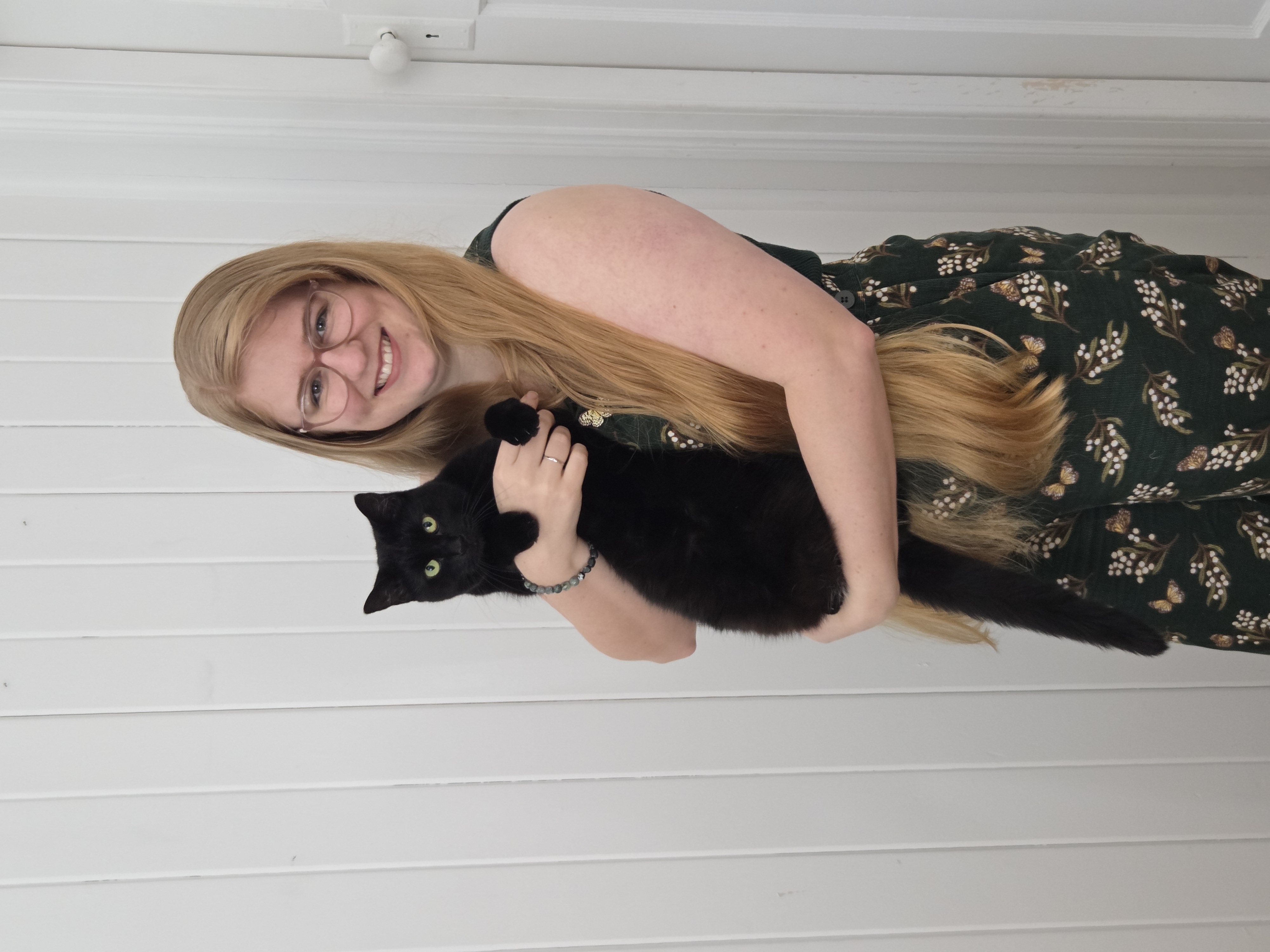
While shaving her head will be a major change, Kirsty said she has been preparing for the moment for years and is proud to support others who have experienced hair loss. Her husband will also shave his head in solidarity.
"Shaving one's head as a woman is a big thing,” Kirsty said.
“I've had time to prepare myself… and I've been ready for this change for such a long time.”
And as for Maeve, she has become a cherished member of the family.
“Maeve is now one of our children. She's a very good cat and gets along great with our other pets.”
The fundraiser currently has a goal of $10,000, with donations open until Saturday 27th June. Every donation will help support local people and families impacted by cancer through the Trudy Crowley Foundation, with all donations over $2 tax deductible.
Locals and businesses wishing to support the cause can donate through the Trudy Crowley Foundation fundraiser, titled Kirsty Miron's Big Shave for Ovarian Cancer: In Honour of Bridgeen.
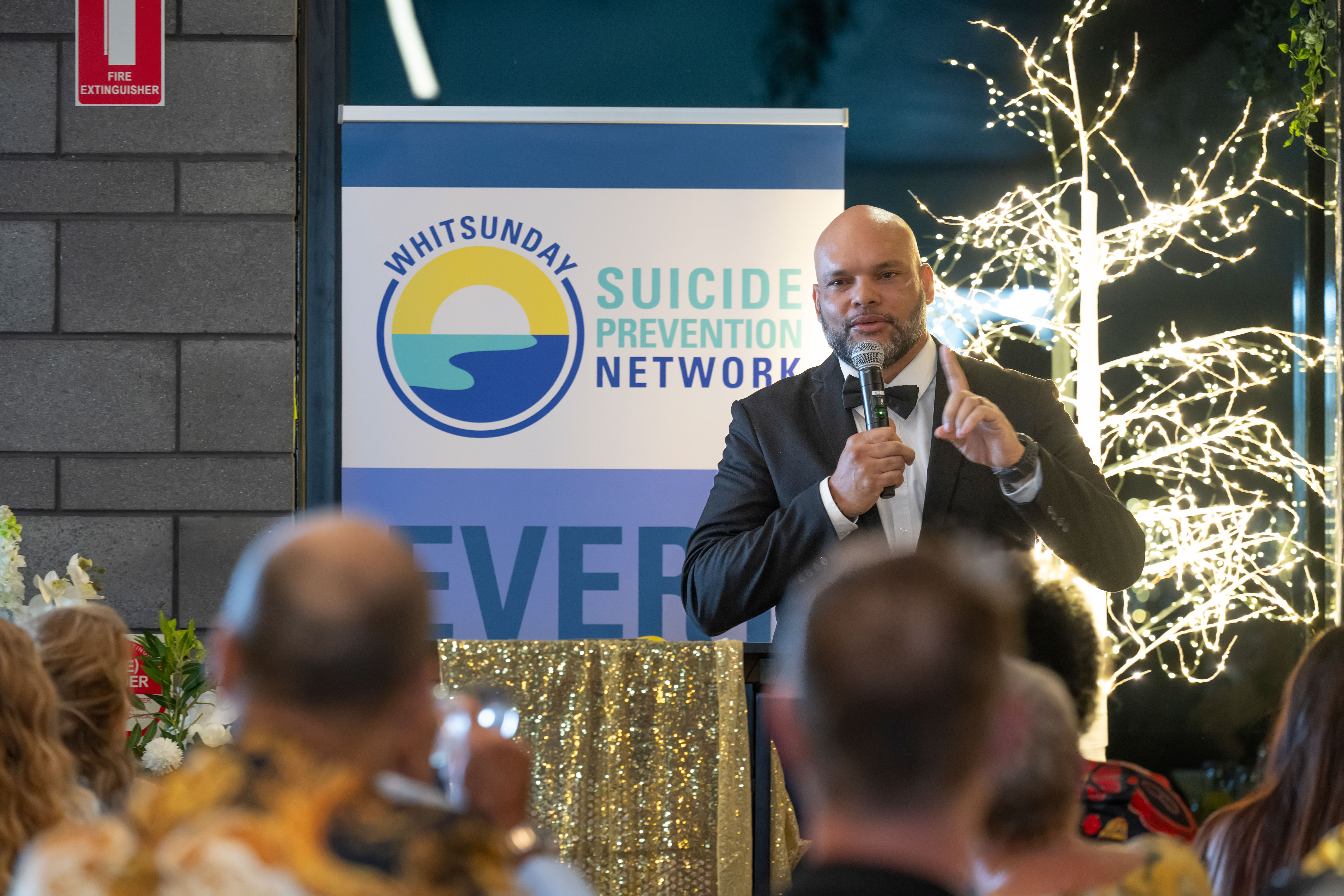
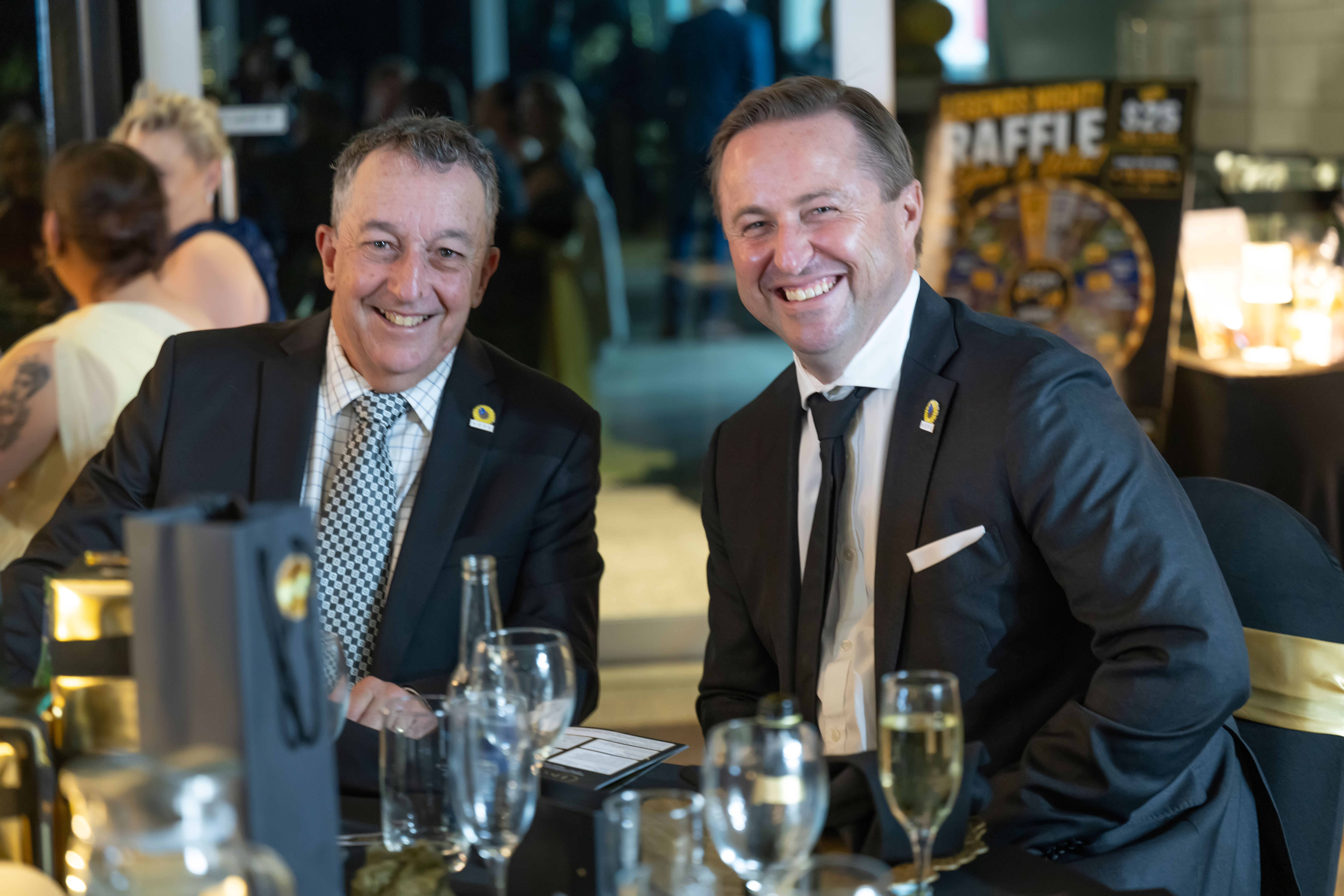
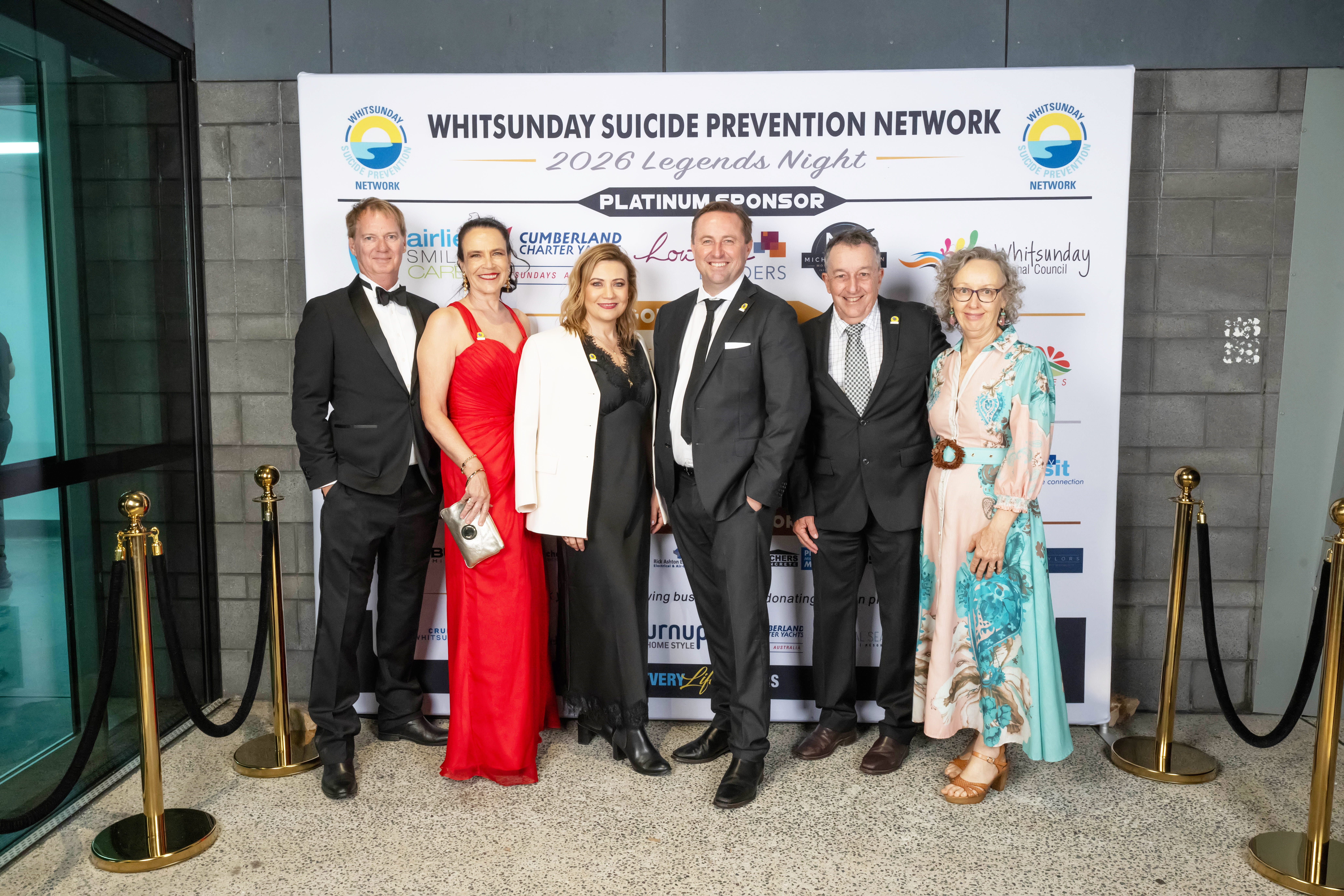
The third annual Whitsunday Suicide Prevention Network (WSPN) Legends’ Night proved to be another spectacular success over the weekend, raising an impressive $55K for this worthwhile local charity.
Held at 360 On The Hill, Flag Staff Hill event space in Bowen, a total of 130 guests attended this sold-out event.
Designed to be more than just a fundraiser, the event saw local ‘home grown heroes’ take to the stage to share their story.
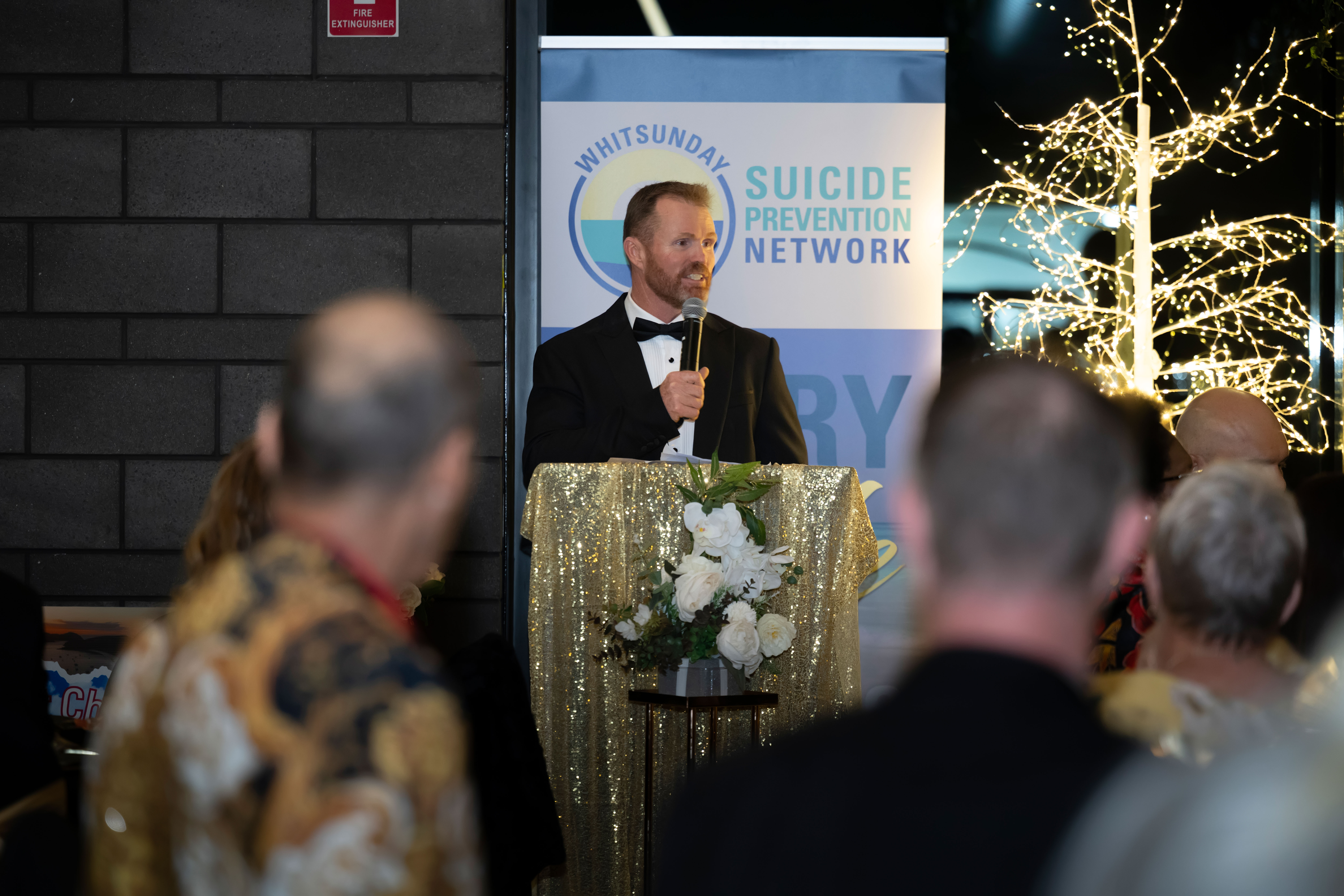
First, local Iron Man and motivational speaker Michael Kimpton inspired the crowd with his story of how a motorbike accident changed his life and led him on a different path, one where he discovered a new version of himself.
“We can recover physically but we also need to cope with our mental resilience to ensure our wellbeing,” he shared.
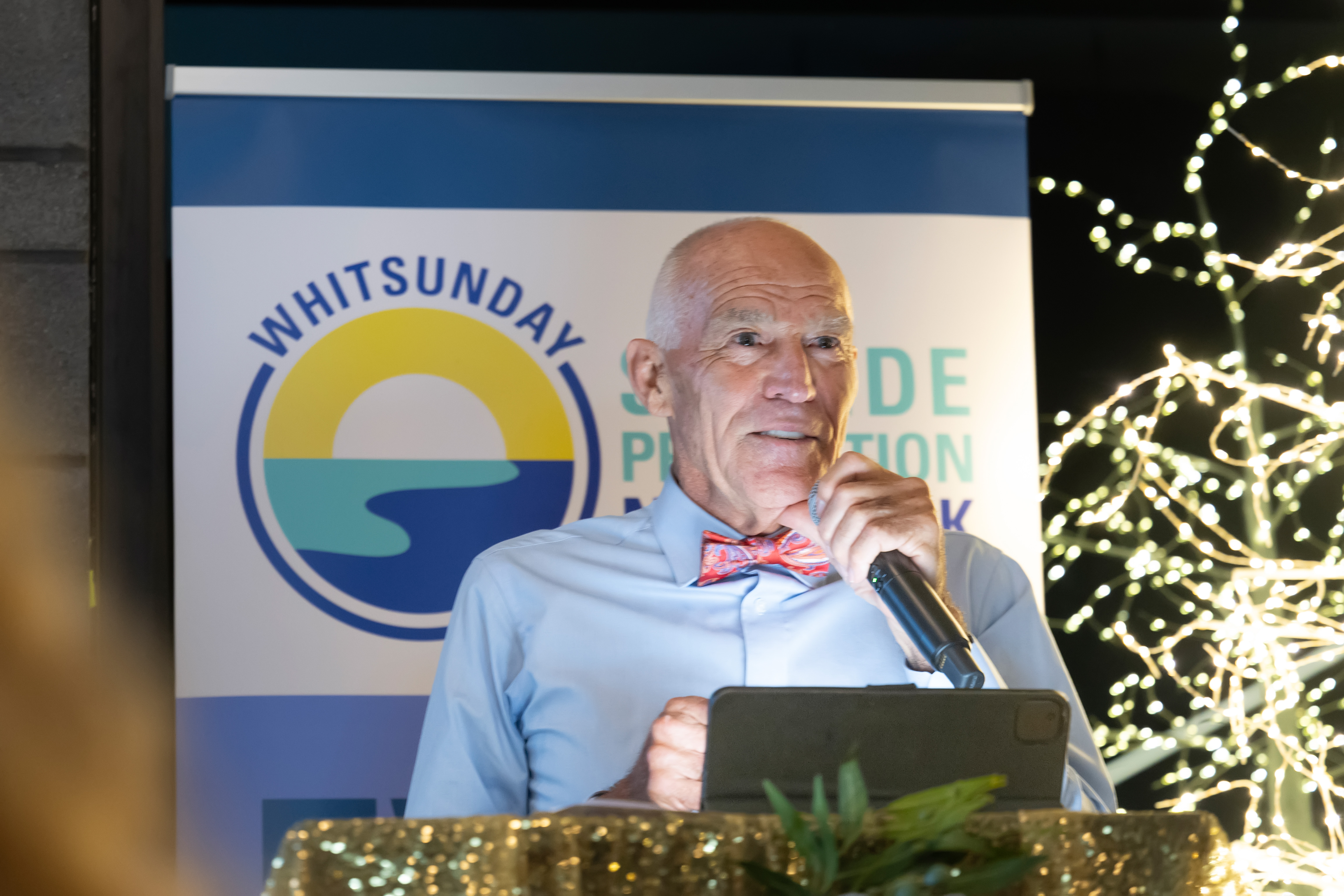
Former army medic, McQuility ‘Coco’ Qurikewith also took to the stage sharing his story of how 16 out of 18 in his platoon were tragically killed in an explosion.
He nearly died three times in the days afterwards and is still getting operations 13 years later to deal with the physical side effects.
He told the story of how he disappeared into a dark place mentally following the incident, but managed to overcome and now uses his story to help others.
President of WSPN Matt Stokes said he was both moved and humbled by the evening which was full of emotion and meaning, but also a lot of fun.
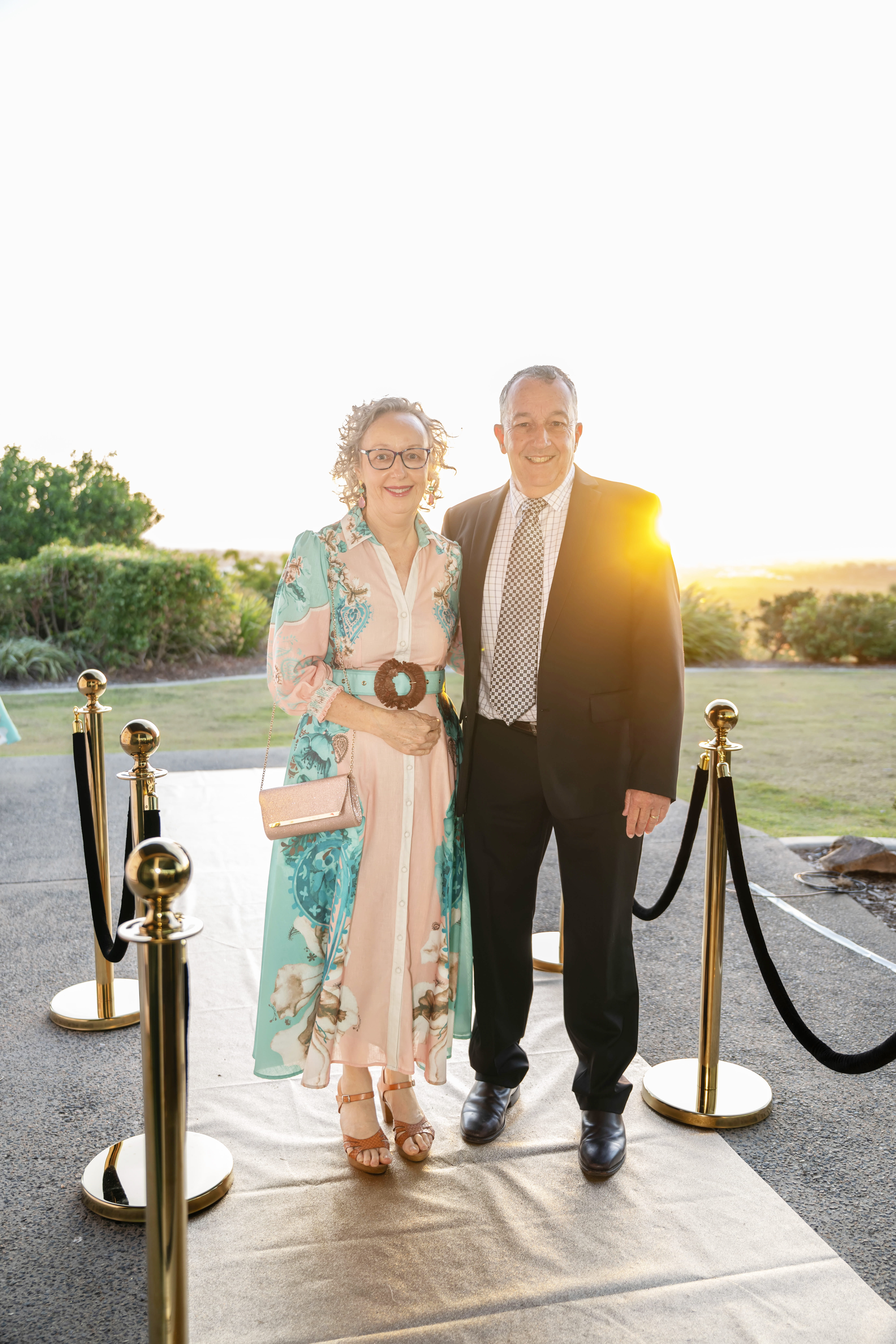
“It was amazing, we couldn’t have asked for it to have gone any better,” he said.
“Every little detail was faultless and a big thank you to Jen Lowcock for everything she did to make the night so perfect.
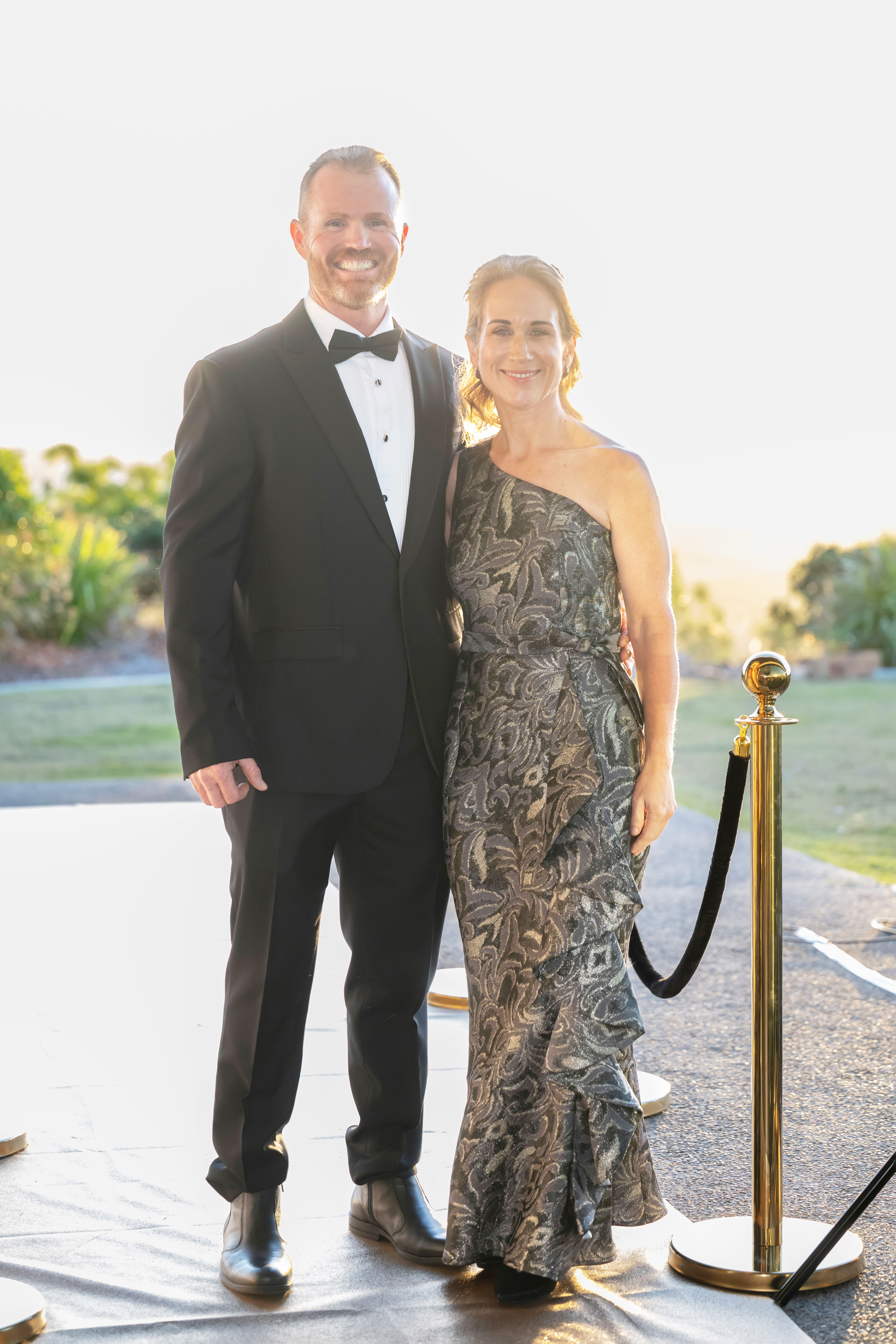
“We have a super generous community with a lot of people donating their services, from the buses to the décor – we would like to say a big thank you to all our sponsors.”
“The stories of our home-grown legends who spoke on the night really touched the crowd, everyone could relate to it, it was so powerful!”
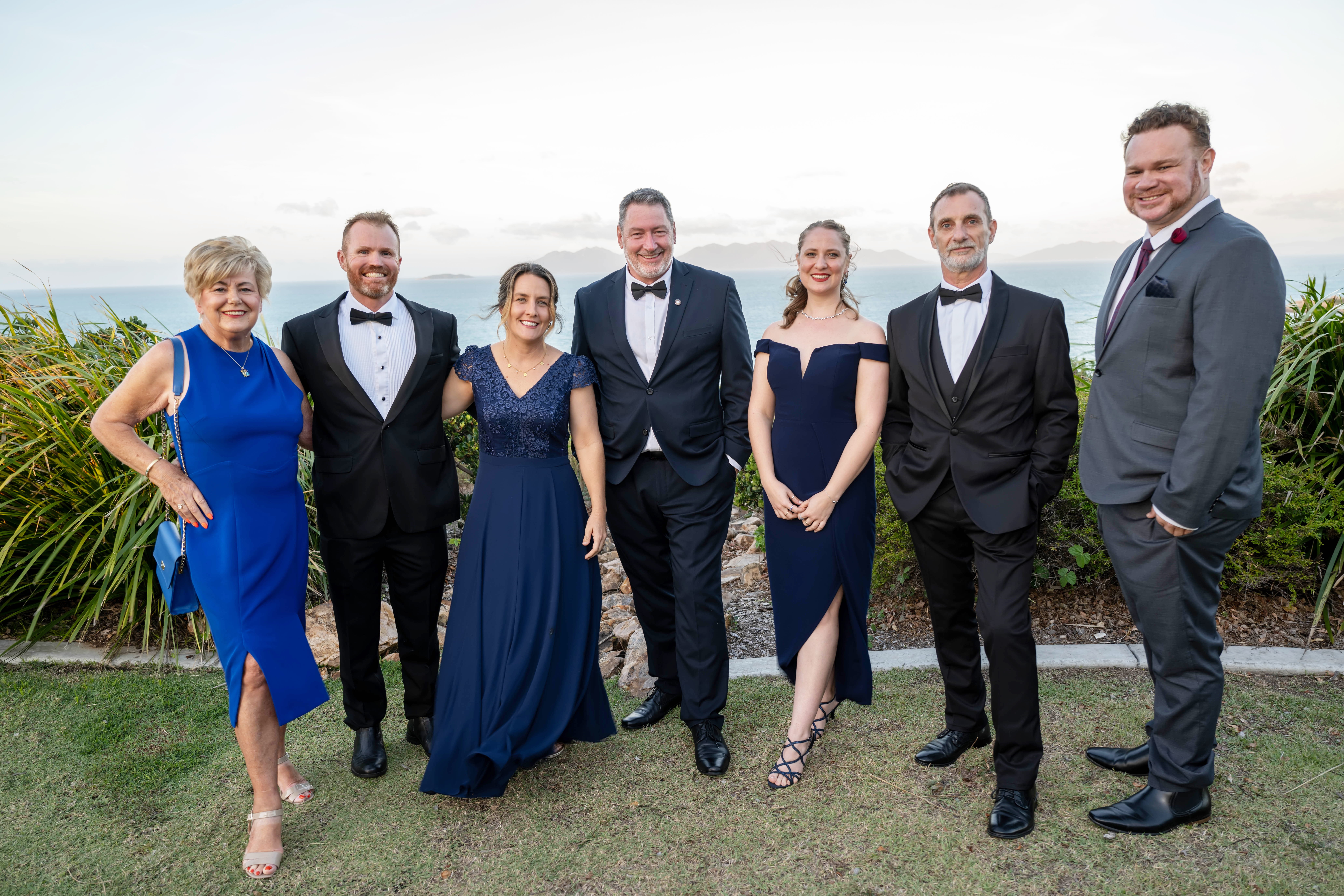
Event Coordinator Jen Lowcock said she was thrilled with how the evening unfolded and acknowledged 360 On The Hill for orchestrating such a fine evening.
“It’s such a beautiful location and the service was impeccable, the food was amazing and everything ran on-time and smoothly,” she shared.
“We couldn’t have asked for it to be any better!”
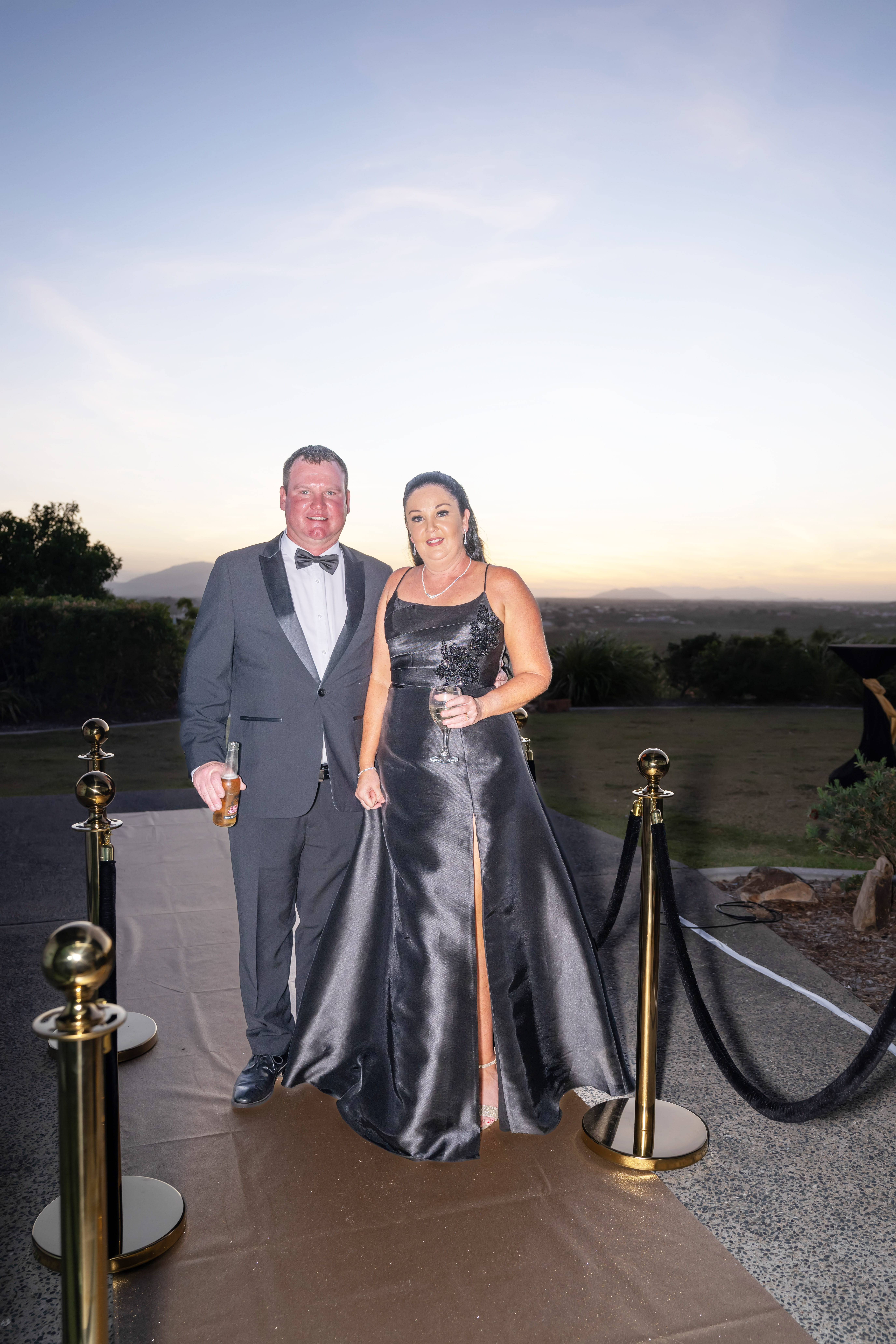
The evening was highlighted with the bluesy tones of live music act Zed Charles who had the crowd dancing until midnight.
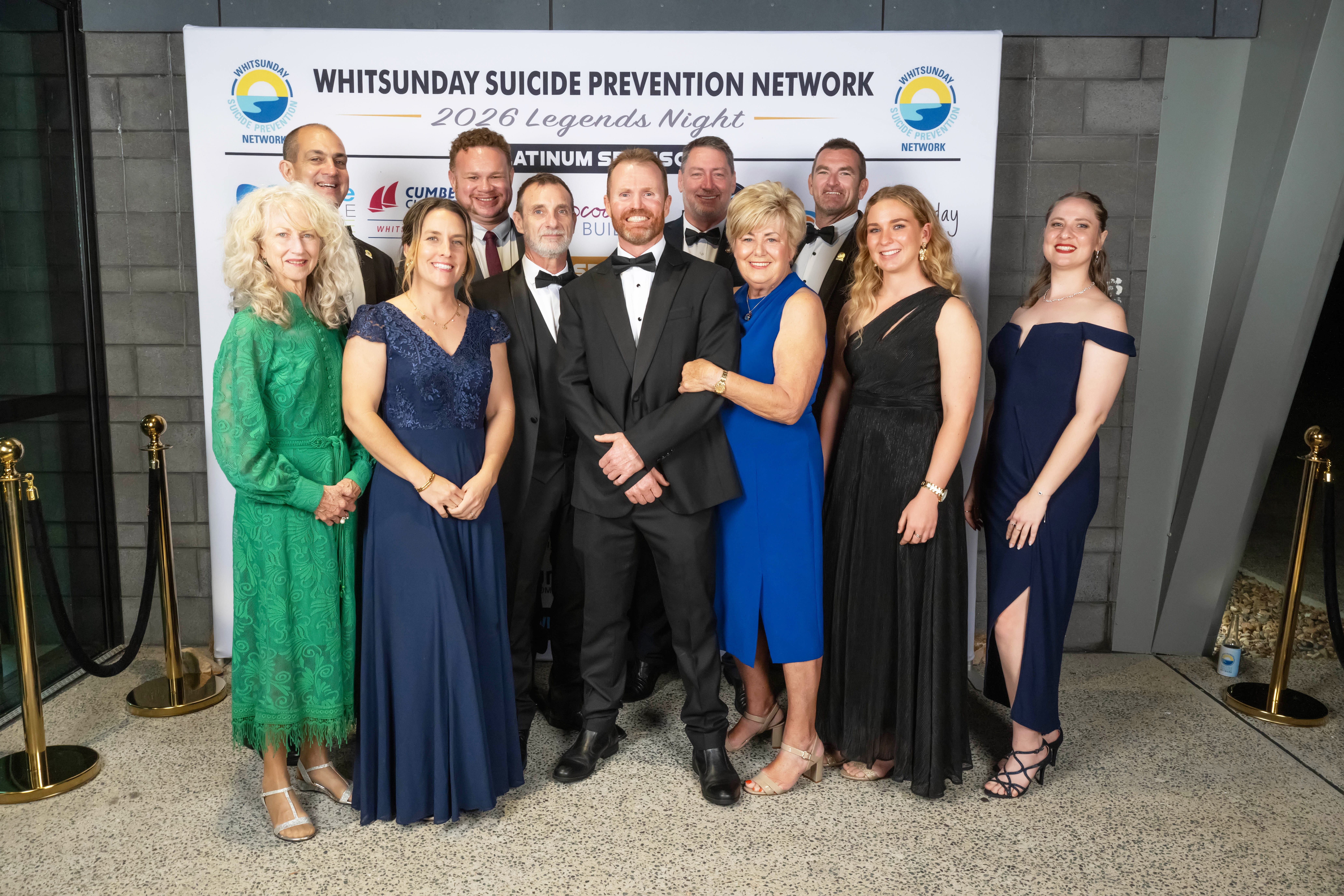
All proceeds of the evening are ploughed straight back into WSPN initiatives which include free counselling services for families affected by suicide, free breathing classes and many other services across the community.

A young traveller helped a woman experiencing a medical episode at a local shopping centre. Stock image, illustration only
A simple act of kindness at Whitsunday Plaza has touched the hearts of hundreds of locals, showing that compassion can make all the difference.
After experiencing a medical episode while shopping, a local woman found herself in need of immediate assistance. Fortunately, help was close at hand, in the form of a kind traveller who jumped to her aid.
After the incident, the lady took to social media, thanking the young man and describing him as a “good soul” for the care and concern he showed during a difficult moment.
According to the woman, the stranger quickly found her a chair to sit on and purchased a drink for her while she waited for assistance from staff at LiveLife Pharmacy.
She also expressed her gratitude to pharmacy team members Jenna, Kim and Mel for the support and care they provided.
The post struck a chord with the community, attracting almost 200 likes, praising the young man’s actions and celebrating the kindness shown by both him and the pharmacy staff.
The woman said she hopes the young man, believed to be from either the United States or Canada, sees her message and understands just how much his help meant.
In a world often dominated by negative headlines, the story is a reminder that small acts of kindness from strangers can leave a lasting impact.

A cheeky young pup with a big heart is looking for a family to call his own after a rough start to life.
Five-month-old Staffy cross Robb was found wandering the streets of Home Hill and, despite efforts to locate his owners, was never claimed. Thankfully, he was taken in by Bowen Collinsville Pet Rescue, which has been caring for him while he recovers and waits for his forever home.
Described as sweet, playful and full of personality, Robb has already overcome more than most puppies his age. Recently, he underwent surgery to repair a herniated belly button as well as operations on both ears after suffering from haematomas.
Now fully on the road to recovery, Robb is ready to leave shelter life behind and begin the next chapter with a loving family.
The young pup's carers say he has plenty of affection to give and would thrive in a home where he can continue to grow, play and enjoy the care every dog deserves.
Robb's adoption fee is $400, and anyone interested in giving him a forever home is encouraged to contact BCPRI on Facebook.
After everything he has been through, Robb is hoping his perfect match is just around the corner.

Opinion Piece By Richard Evans, President Whitsundays Writers Festival
We have no shortage of brilliant creative people in the Whitsundays. What we’re short on is the framework to support them.
Writing groups meet in spare rooms. Festival groups fundraise year-to-year with no certainty there’ll be a next year. These aren’t fringe concerns – they’re the heartbeat of a social community worth living in.
It’s time to modernise. Time to take our creative life seriously, for the benefit of everyone.
What we're asking for isn't complicated.
We need a clear, accessible arts and culture policy that recognises the full creative ecosystem - from writing, visual arts, filmmaking and performance, to heritage, festivals, museums, libraries, and community arts.
Yes, funding matters. But so does affordable spaces to create and perform, support for local organisations and their fantastic volunteers, opportunities for artists to develop their craft, pathways for young people, cultural tourism initiatives, public art, and the preservation of our region's stories and heritage.
Most importantly, we need a shared vision that brings these elements together under a single, fair, and transparent framework. Not patchwork grants. Not one-off decisions. Not the luck of the draw. A genuine commitment to arts and culture that is written down, applied consistently, measured against clear outcomes, and reviewed openly with the community it serves.
Other regional councils have done it and reaped the benefits of what follows. Artists stay, tourists come, and the stories of a place get told properly, not left to fade.
Here in the Whitsundays, we have extraordinary natural raw material. Writers who capture this landscape like no-one else. Performers who fill every seat they’re given. Visual artists whose work deserves a proper platform — just as the new Community Gallery in Proserpine is beginning to show us what’s possible.
Our cultural community deserve better than crossed fingers and collection tins.
An accessible arts policy means a first-time author gets the same fair shot as an established local group. A teenager wanting to learn film editing has somewhere to go. The door is open, not just ajar.
The economic case is real. Local creative precincts and activities lift a community and cultural tourism draw visitors in ways that are hard to put in a spreadsheet, but very easy to feel when they’re gone.
But the deeper case is simpler. A community that creates together knows itself. It has memory, identity, and the confidence to imagine its own future. Culture provides a social asset for all of us.
That’s worth a policy. That’s worth a seat at the table.
The creative community is ready for the conversation. We invite community leaders, businesses, philanthropists, stakeholders and government to help shape a shared vision for arts and culture in the Whitsundays.
Richard can be contacted via hello@whitsundayswriters.com
Welcome to Create. Connect. Whitsundays., the weekly feature now proudly presented through a collaboration between the Whitsundays Writers Festival and Creative Connections Whitsunday.
This feature continues the wonderful work established by former journalist Seb, whose commitment to highlighting local creativity helped shine a spotlight on the people, stories and organisations that enrich the cultural life of our region. We are delighted to continue that legacy and provide a dedicated space for creativity in the pages of our local newspaper.
Each week, Create. Connect. Whitsundays will feature thought-provoking articles, local creative profiles, poetry, writing opportunities, and information about exhibitions, galleries, markets, and cultural events happening across the Whitsundays.
The Whitsundays is home to an extraordinary community of writers, artists, musicians, makers, performers, volunteers, and creative thinkers, all contributing to the unique character of our region.
Whitsundays Writers Festival President Richard Evans said creativity plays an important role in building community connections.
"Stories help us understand who we are and where we belong. Through this feature, we hope to showcase the remarkable creative talent that exists across our region and encourage more people to engage with the arts, whether as creators, participants or audiences."
Creative Connections Whitsunday President Glenda Brown said the partnership reflects a shared commitment to supporting a thriving creative community.
"Arts and culture are woven into everyday life. Creativity brings people together, supports wellbeing, sparks new ideas, and helps build stronger, more connected communities. Creative Corner will celebrate the people who make the Whitsundays such a vibrant place to live."
Whether you're a creator, a supporter, or simply curious, we invite you to join us each week as we celebrate the creative spirit of the Whitsundays.
We also welcome contributions from across the community. If you would like to submit a poem, creative writing piece, profile suggestion, event information, or share your creative story, please contact hello@whitsundayswriters.com

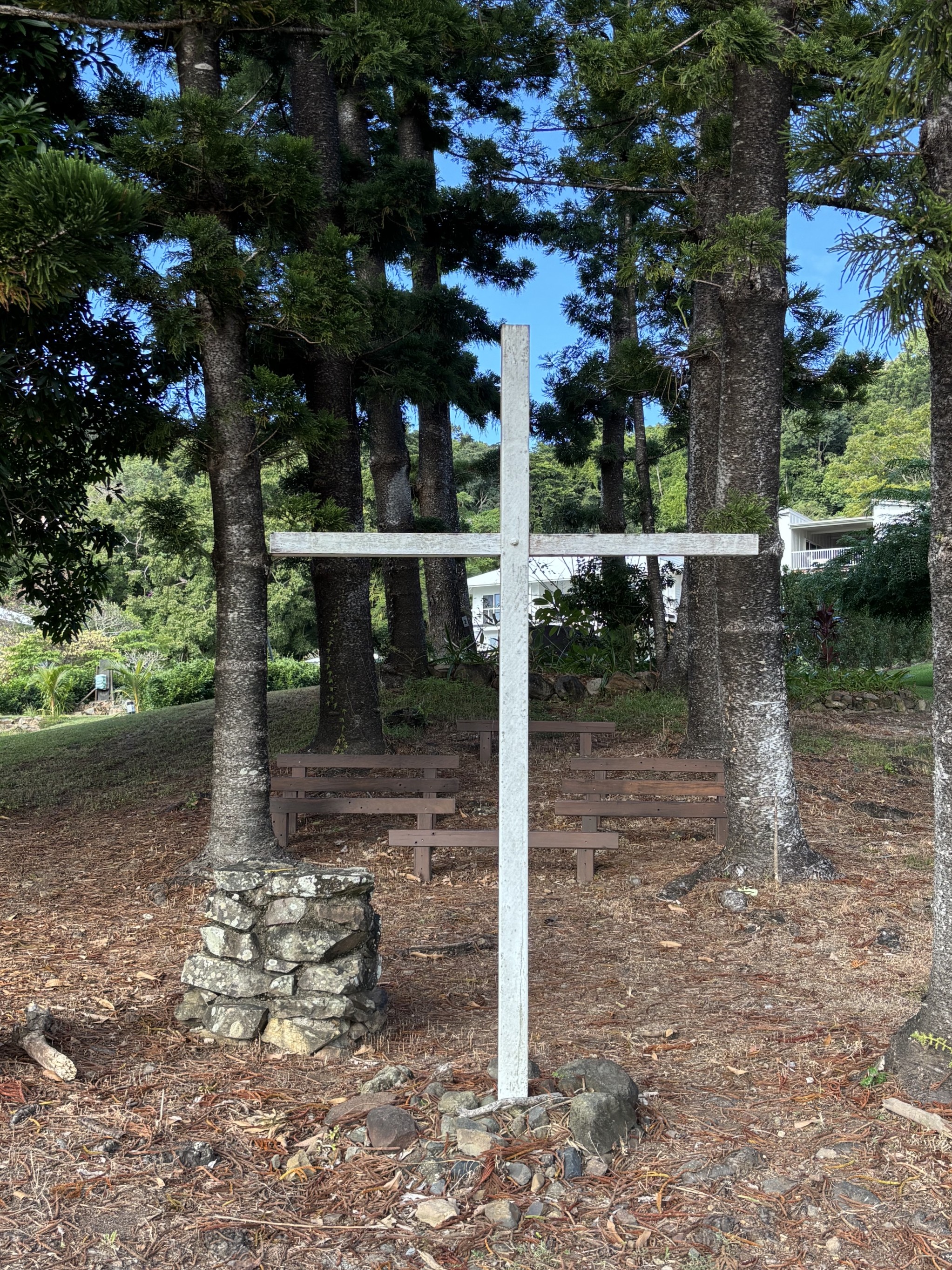
The White Cross
The success of the Cool Waters Methodist Youth Camp at Emu Park led to plans for another camp further north. Noel McClintock, who ran a watch and jewellery shop in Proserpine, learned of a large block of land at Mandalay with no road access. He contacted Rev Ivan Alcorn, head of the Methodist Youth Department, and arranged its purchase from Mr Janson of Airlie Beach.
The site was originally a very small coconut plantation that had been established by the Waterson family. The only access to Mandalay in those days was by sea and a trip was organised by the local Methodists. With the help of Rev Ivan Alcorn from Brisbane, they inspected the site of what was to become the new Methodist Youth Camp.
The site’s tropical jungle, palm-lined beach and small shack among the trees above the avenue of hoop pines were strikingly beautiful. The first caretaker, Bessie Stowe, lived there and rowed across to Airlie Beach before the road was built.
Much work was needed to establish the camp. Ro Jackson used a two-cylinder John Deere crawler to cut a road into the block, and Robbie Vonhoff graded it. The track was cleared through jungle, swamp, hills, springs, rocks and boulders from what later became Shute Harbour Road, at that time ending at Jubilee Pocket.
The outdoor chapel and cross were built within the avenue of hoop pines looking across the bay to Airlie Beach. Sleeper logs were set up and angled to the centre aisle and a pulpit was constructed out of stones from the original jetty on the foreshore.
Keith Heaton and another teacher took a year off from teaching and built the first dormitories and facilities. The minister of the time, Barry Dangerfield, negotiated a good price for some bricks from Pindi Pindi, mainly reject clay bricks with very minor imperfections. However, Rev. Alcorn was told they could have as many bricks as could be shifted in a fortnight, free of charge. And so, the Jacksons closed their sawmill for the two weeks to undertake the task. Spearheaded by Mick Grevell, John Jepsen, Watt Jackson and Allen Cumming, the job was completed with the help of church volunteers.
Cool Palms Methodist Camp opened on November 1, 1969, with Howard and Daisy Walsh as the first caretakers of the camp. Bruce Muller recalls that they slept on camp stretchers in army tents at the first camp that he attended and that it was a great adventure.
Other churches used the camp and its facilities. In the late 1960s, the Adventist Church held meetings there and used the dormitories for campouts. Occasionally, a funeral service was conducted there.
As was the case with many enterprises of the day, the facility was always short of money. There was much fund-raising by the local Methodist congregation and so many people who gave so much of their time to make this dream become a reality. Sadly, it was eventually sold off, and the dedication, hard work and self- sacrifice of so many locals was cast aside to history. Some of the money was spent on a small number of blocks at Cannon Valley which included a parsonage, and the rest went to Brisbane.
It is uncertain when the Cool Palms Methodist building was pulled down. Sadly, all that remains today of this popular camp is the big white cross and a few of the pews situated amidst big shade trees and facing out over the water.
Story and photo sourced from Bruce Rath Muller’s recollections (PHMS Magazine December 2020) and PHMS archives.

Look for an active teat like this to identify whether any joeys survive the deceased macropod.
Fauna Rescue is reminding locals to check the pouch anytime a macropod (a kangaroo or a wallaby) is found deceased.
The risk of hitting wildlife is a sad reality of driving across the region, so should residents find themselves in the situation, they’re encouraged to, if safe to do so, perform a pouch check - and potentially save a life.
When checking a pouch, gently open and inspect the area. Look for a joey – even a tiny, furless one. Feel for movement or warmth. And finally, importantly: check for an active teat.
An active teat is when the mother’s teat is elongated so it can be attached inside the joey’s mouth. In young joeys, the teat actually swells to anchor them in place while they feed.
“If you see an active teat but no joey, it’s very likely the joey is big enough to come out of pouch and has retreated from their injured/deceased mum.” Fauna Rescue explained.
“Usually they hide in nearby grass or bushes, but don't typically go too far.”
In this situation, the organisation advise to call a wildlife rescuer immediately and leave the deceased mum where she is in case the joey returns to her smell.
If you're able to do so, take a clear photo of the teat to send to the Fauna Rescue group on Facebook. This helps rescuers assess the situation quickly and give the best advice.
“Call a wildlife rescue immediately if you find a deceased macropod,” Fauna Rescue said — even if you’re unsure.
Save the Fauna Rescue hotline number in your phone: 4947 3389

Kala Auda has been praised for her exceptional care and maturity as she undertakes her Certificate III in Health Services at Bowen Hospital.
Bowen State High School are celebrating First Nations student Kala Auda, a Queensland Aboriginal and Torres Strait Islander Foundation (QATSIF) scholarship holder and Rugby 7s player excelling in her healthcare journey.
Currently completing her Certificate III in Health Services through a school-based traineeship at the Bowen Hospital, Kala finishing Grade 12 and already shining.
The school nurse Caz Cole has reported to be absolutely thrilled with the outstanding progress she is making, and a community member has even reached out to praise Kala’s work.
“My father was in care for about ten days and [Kala] was an amazing support to him, I was surprised to find out she was on placement through school.” Christine Chambers shared.
“She showed such maturity and grace sitting with and caring for an old man who was extremely scared and lost. So a big thank you from my whole family and I wish you well in all your future endeavours.”
For Kala, the experience has been rewarding and is leading her toward for a bright future.
“The Certificate III in nursing has encouraged me to do something out of my comfort zone and I have learnt a lot. The people I have met during this certificate has been great and they made me realise I must cherish the life and appreciate everything I have,” she said.
Bowen State Principal Mr Harris added:
“Kala’s is one example of how many students at Bowen State High School have focused on their career aspirations and worked hard to make it happen.
“Kala’s achievements have not been without challenges, and I am proud of her courage and persistence to work through those challenges to be where she is today. She is a wonderful role model for other First Nations students.”
School fetes, chocolate drives and raffle books are the typical norm when it comes to fundraising, but Collinsville State High School has been doing things a little differently for more than a decade.
When the school’s Parents and Citizens Association floated the idea of a Collinsville Bacon Busters fundraiser, it's fair to say it was met with a fair degree of scepticism. And yet, twelve years later the event has become one of the region's most anticipated events, drawing visitors from far and wide and raising thousands of dollars for the school and local causes along the way.
On Saturday 22 August, Collinsville will celebrate not one milestone, but two. The Collinsville State High School P&C Association will host the 11th Collinsville Bacon Busters, while Collinsville State High School celebrates 40 years of secondary education at its Walker Street address.
Chances are, if you've lived in Collinsville over the past forty years, Collinsville State High School has been part of your story in some way. Whether you attended the school yourself, had children or grandchildren graduate, worked there or supported it from the sidelines, the school has helped shape generations of Collinsville families. For former students, Bacon Busters weekend offers the perfect reason to come home.
Collinsville is one of those towns that never really leaves you. No matter where life takes you, there is always a connection that draws people back — family, friendships, memories and a strong sense of belonging.
This August, former students, staff and families are invited to return and celebrate 40 years of Collinsville State High School. Reconnect with old classmates, share stories from your school days and see how the school continues to provide opportunities for the next generation of Collinsville students.
Throughout the day, Collinsville State High School will host school tours and historical displays featuring photographs, newsletters, uniforms, trophies and memorabilia from across the past forty years. Whether you're searching for a familiar face in an old photograph, reliving sporting triumphs or simply reflecting on how much has changed, there will be plenty of opportunities to celebrate the school's rich history.
While the school celebrates its past, Bacon Busters will provide plenty of reasons to celebrate the present.
Visitors can enjoy dog events, the Ironman competition, bikekhana, touch football, carnival rides, market stalls, food vendors, camping facilities and a licensed bar. Crowd favourites including the Mullet Competition and Best Piggin' Rig Competition will also return.
As the sun goes down, the celebrations will continue with live music until midnight. Ron and Deb from Mackay, together with local favourites Luella and Shayne, will provide the soundtrack to a fantastic day of community celebration.
At their heart, both Collinsville Bacon Busters and Collinsville State High School's 40th anniversary are about people. They are about the students, staff, parents, volunteers, sponsors and community members who have helped shape our school and our town over the past four decades.
So if Collinsville has ever been part of your story, make plans to return on Saturday 22nd August.
Come back to catch up with old friends. Come back to celebrate 40 years of Collinsville State High School. Come back to see how the school and community continue to thrive.
Then join us for the Boars, Bands and Bikes, live music until midnight and a community celebration that has become one of the highlights of the year.
Because if there's one thing most people know about Collinsville, it's that no matter where life takes you, it's a town you always return to.

Today’s Future Voices column is sharing a perceptive, thoughtful piece penned at St. Catherine’s by Year 12 student Finlay Farrell. The essay, written for Lions’ Youth of the Year Competition, explores Finlay’s family’s connection to tourism, community and conservation in Fiji.
Imagine yourself lying in a hammock on an Island in Fiji. Soft breeze brushing against your face, the hope and excitement to get in the endless ocean growing fonder as you see fish darting across the shallows. Hear the Fijians singing “Bula Malaya”, a traditional welcoming song to the guests lucky enough to join you on this remote haven.
This is not just an image of paradise. It’s the heart of a story. A story that today, I have the privilege of sharing with you.
This story is a trifecta of three aspects: business, community, and conservation. Like the reef itself, where every creature has its role to play, this is a mutualistic relationship that defines not only survival, but a potential for a thriving future for all.
This story isn’t just about a business or a place. It's a story about what's possible when people, purpose, and planet come together.
Fijians fish for two reasons. The first is for food to feed their families. It's a crucial source of protein. This fishing is sustainable. The second is to sell the fish. Fijians,
like us, need money to pay for the necessities of life, such as school books, toothpaste, or phone credit. This fishing has no limit and is not sustainable. When no
limit or protection is set on the amount of fishing, immense damage is inevitable.
Many Fijians may be unaware of the damage this can cause, meaning they will continue to do so without second thought. Part of solving this issue is done through education, which the business supports. An alternate revenue source must also be created. This is where tourism can be the answer.
The Barefoot Collection business operates on land owned by the community. It offers an alternative source of revenue for the community as part of anagreement for lending the land. The business has committed to hiring as many people from the community to give them individual income. This allows Fijian’s to work closer to their village, meaning spending more time at home with family, rather than having to travel to a distant mainland. A percentage of the income that the business creates is shared with the community. Now that multiple members of society have income sources, it takes immediate pressure off the reef.
A thriving ecosystem benefits both business and the community. Potential guests are more likely to visit an Island with a healthy reef. Their stay is enhanced by discovering and learning about the beautiful ecosystem beneath the surface, increasing the chance of a return visit or a recommendation. Guests are also more likely to spend their hard-earned money on an experience with a unique and jaw-dropping reef. This then creates more income for both the resort and the community. In the agreement with the community, a marine protected area, or in the Fijian language, a Tabu area, has been created. This is crucial for healthy reefs. It creates the opportunity for fish to grow and make babies that will grow up on other reefs, where some can be harvested. We know that having some protected areas will boost fishing in other areas. Tabu areas have long-term benefits for the reef, but they can also create immediate economic benefits for the community. Long-term benefits have no use to a parent needing to feed their child tomorrow.
The community learning more about the benefits of correctly managing resources and the business learning how to manage the income appropriately, both are crucial to the trifecta's success. Building trust takes time. The business and community have both individual wants and common needs. Having trust in the other and an open relationship, as well as understanding that neither partner will get everything right, is difficult but crucial in this relationship.
The environment is the only leg on this tripod that has no say and is dependent on the collaboration of the others. For now, it is thriving. Do you want to help? Whilst lying on a hammock? preferably cocktail in hand? I strongly recommend you seek out holiday destinations where tours and resort operators conduct their business in an environmentally and community-friendly, sustainable manner.
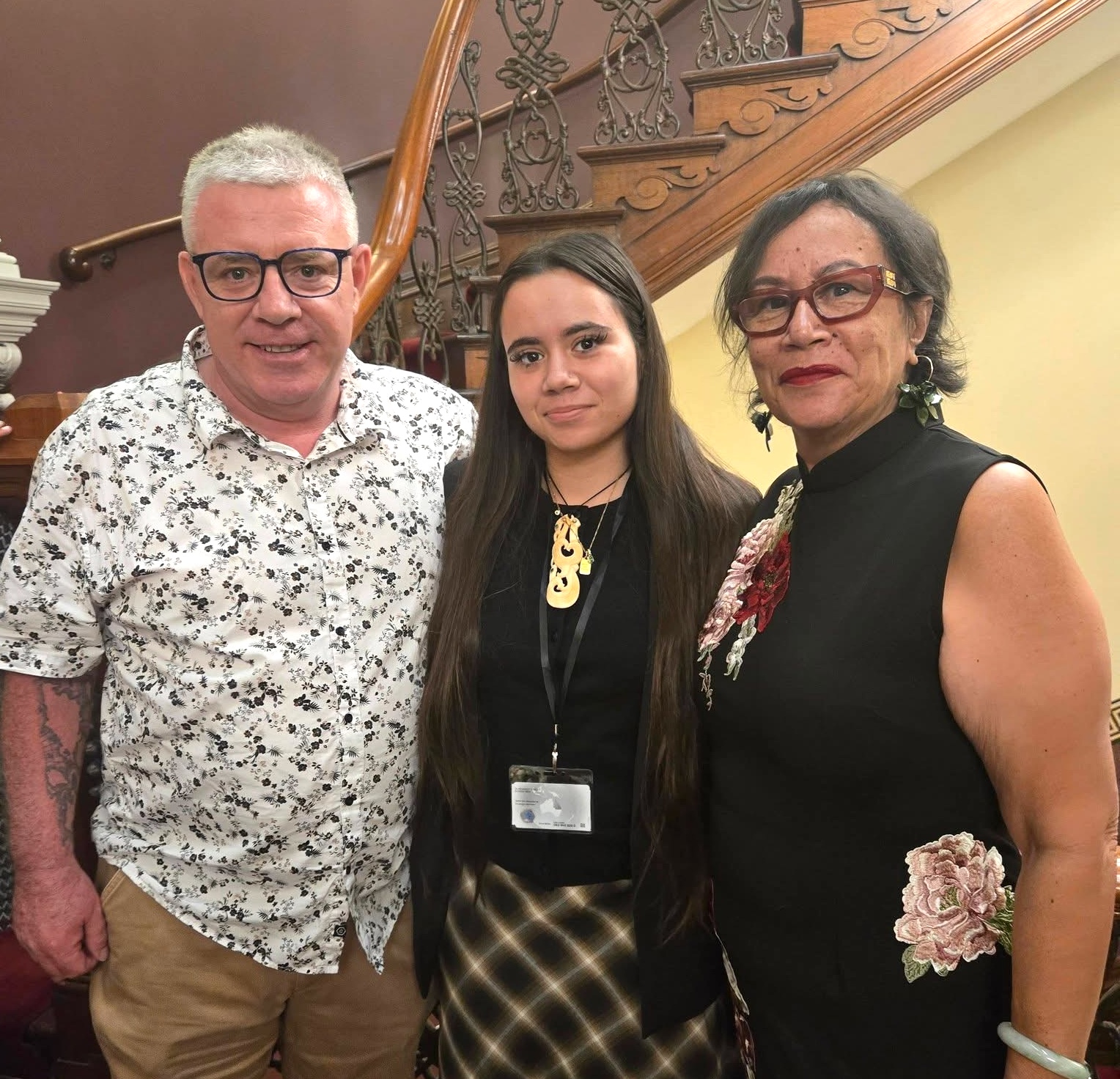
Ashlin with her parents, Stephen and Angela Styles. Photo supplied
By Chelsea Ravizza
When Ashlin Styles was named the 2026 Youth Member for Whitsundays, she saw the appointment as more than a personal achievement – it was a reminder that young people from regional communities can make a meaningful difference, regardless of their background or circumstances.
“Being named the 2026 Youth Member for Whitsundays is a significant milestone for me as this role represents far more than an individual achievement; it reflects the opportunities that are possible for young people from all backgrounds,” Ashlin said.
“As a young female of Māori descent from a regional community, this position shows me that background, identity and personal challenges do not limit what someone can achieve. I hope my appointment encourages other young people to believe in their potential, take on opportunities and recognise that their voice and experiences matter.”
Raised in the Whitsundays, Ashlin has always been encouraged to contribute to her community, and she credits much of her drive and determination to her father, who immigrated from Ireland to build a new life in Australia for his family.
“My inspiration for youth leadership comes largely from my father,” she recalled.
“His resilience, leadership and dedication to supporting our family continue to inspire me to become a leader within my own community. Alongside this, my family's unwavering support has always encouraged me to give back, take on opportunities and work towards a positive impact.”
Ashlin’s sense of identity has also been shaped by her involvement with the Kotahitanga Kapa Haka Whitsundays group, which helped her strengthen her connection to her Māori heritage.
“Being part of a community built on family, culture and connection has taught me to truly embrace and appreciate my culture,” she said.
“At times, living outside of New Zealand has left me feeling disconnected from parts of my identity. However, this group has shown me that culture is not defined by location; it lives within people, traditions and community.”
Throughout the experience, Ashlin believes she has been able to develop a stronger understanding of her own identity, and now she hopes to use her role as Youth Member to advocate for greater opportunities and support for young people living in regional areas.
“Regional communities will always face unique challenges, but they also hold strong opportunities for growth and connection,” she said.
“One issue I feel particularly passionate about is improving access to resources and opportunities for young people living in smaller communities.”
Having travelled long distances for school and seen peers miss out on sporting and extracurricular opportunities due to transport, funding and support barriers, Ashlin understands the challenges many regional families face.
“As Youth Member for the Whitsundays, I hope to advocate for greater accessibility, stronger community support and more opportunities that allow young people in regional areas to thrive and feel connected within their communities,” she said.
Beyond advocating for regional youth, Ashlin has already been working alongside other young leaders through the Justice, Police and Corrective Services, Child Safety and Prevention of Domestic and Family Violence Committee. Together, they have developed a Youth Bill aimed at improving support and reintegration pathways for people leaving custody.
“The goal of this initiative is to reduce reoffending by improving access to pre-release planning, post-release support and accountability measures that help individuals successfully reintegrate into the community,” she explained.
As she begins her term as Youth Member for Whitsundays, Ashlin hopes to be both a strong advocate and a positive role model, encouraging others to step forward, embrace opportunities and recognise the value of their own voices.
This week, Council launched the first video in our new Home Grown: Future Olympians campaign, and I couldn't be prouder of the story we're telling.
This campaign is part of our ongoing advocacy to secure Olympic and Paralympic sailing for the Whitsundays in 2032.
We know our region has the natural assets. We know we have world-class sailing conditions. We know we have a proven track record of hosting major events.
But this campaign is about showing something just as important – our people.
Over the coming months, you'll meet four young athletes from across the Whitsundays who are chasing big dreams in sailing, swimming, soccer, netball and equestrian sport. You'll hear about the early mornings, the long drives, the training sessions, the sacrifices and the determination it takes to pursue excellence while growing up in a regional community.
Our first athletes, Reid and Rory Martin, are a perfect example.
Like so many families across our region, they spend countless hours travelling, training and competing in pursuit of their goals. Their story is inspiring, but it is also familiar. Across the Whitsundays there are young people putting in the hard work every day with the support of parents, coaches, volunteers and local clubs who believe in them.
That's why this campaign matters.
When governments are considering where to invest and where to leave a lasting Olympic and Paralympic legacy, we want them to see the Whitsundays for what it really is – a region already producing talented young athletes and a community ready to embrace the opportunities that come with hosting Olympic and Paralympic sailing.
This isn't just about a few weeks of competition in 2032.
It's about the legacy that follows.
It's about projects like the Whitsunday Regional Sports Precinct, community hubs, active recreation facilities and sporting infrastructure that create opportunities for future generations. It's about giving local kids more opportunities closer to home and reducing the need for families to travel thousands of kilometres to access pathways and facilities.
The campaign will conclude with one of our region's greatest sporting success stories, David Nicholas OAM – a three-time Paralympian and Paralympic gold medallist who proves that dreams born in the Whitsundays can reach the world stage.
Council is also excited to have the support of Whitsunday Life as a campaign partner. Through a series of athlete features and print coverage, they will help us share these stories with the wider community and build momentum behind our vision for the future of the Whitsundays.
Because great athletes don't simply appear.
They are supported by families.
They are backed by communities.
And here in the Whitsundays, they are grown right here.
As we approach the end of the financial year, it’s clear that 2026 is shaping up to be another busy and productive year for the Whitsundays business community.
The Chamber has maintained strong momentum across advocacy, events, partnerships, and member engagement, with a packed calendar continuing through the second half of the year.
Recent weeks have seen strong participation in our Business Breakfast Briefings and Speed Networking events across both Cannonvale and Bowen, while the Whitsundays Wedding Trail once again showcased the incredible talent and professionalism within our local wedding industry.
Looking ahead, preparations are well underway for the Whitsunday Business Conference in August, and applications are now open for the 2026 Whitsunday Business Awards. These initiatives provide valuable opportunities for businesses to connect, learn, celebrate success, and strengthen our regional economy.
Alongside these opportunities, businesses are also preparing for several significant regulatory changes.
The Fair Work Commission’s 4.75 per cent increase to modern award minimum wages, effective from 1 July, will impact many businesses across hospitality, retail, tourism and care sectors. Many employers are already reviewing payroll structures, budgets and workforce planning to ensure compliance and manage increasing operating costs.
Businesses are also preparing for the introduction of payday super from 1 July next year, which will require superannuation to be paid at the same time as wages rather than quarterly. This change will require businesses to review payroll systems, cash flow processes and internal procedures well ahead of implementation.
Workforce attraction and retention remain key priorities for our region. The Chamber is currently contributing to Migration Queensland’s consultation on a potential Queensland Designated Area Migration Agreement (DAMA), ensuring regional workforce challenges and opportunities are represented in future policy discussions.
As always, the Chamber remains committed to advocating for local business, fostering connections, and helping members navigate change with confidence.
Thank you to our members, partners and business community for your ongoing support and engagement.

A local woman shared her experience to warn others to be aware of the risks of drink spiking.
A resident is warning visitors to bars and nightclubs to beware the dangers of drink spiking following a recent experience on a night out in Airlie Beach.
The young woman, who wishes to remain anonymous, was drinking rounds with friends, and friends-of-friends at a popular Airlie venue, when her memory went blank.
Next thing she remembers, she was on the floor, on her own, in the bathroom, unable to control her limbs.
“It wasn’t like being drunk,” she said.
“My mind was present and I was telling my body to move but I couldn’t lift my arms.
“I wanted to pick up my phone to call a friend but it was like I couldn’t control my body.”
The woman was bruised and sore from her attempts to get up and out of the cubicle, but thankfully was otherwise unharmed.
A friend located her, and took her home to safety.
At a later unrelated hospital visit, the young woman explained her experience to a doctor, who said her symptoms and story signalled her drink had been spiked.
“He said he sees it a lot here in Airlie,” she said.
According to statistics from the University of Newcastle, around half of drink spiking victims in Australia are aged under 24, and about one third of drink spiking incidents are associated with a sexual assault.
The Alcohol and Drug Foundation (ADF) shared that “drugs that may be used in drink spiking include depressants, such as GHB and Rohypnol. These drugs can change a person’s behaviour, causing anything from a loss of inhibition to a loss of consciousness. Drinks are spiked for a number of reasons, such as amusement, or to facilitate sexual assault or theft.”
Queensland Police Service outlined the common signs of a spiking as the following:
They recommend the following “simple, proactive steps” that can be taken to help keep yourself and your friends safe.
The ADF recommend trusting your gut if you feel you may have been spiked, and if you feel unwell, seeking medical attention immediately.
“You know your body better than anyone. Trust your instincts,” they shared.
“Early reporting can make a difference in preventing further offences and ensuring your safety,”
Certain drugs can only be detected up to 24 hours after the event- so getting tested quickly, and reporting the incident to the police can help them track down the perpetrators, prevent further offences and make our community safer.
Publishers Indemnity. Any individual or entity that places advertising, supplies copy material, or submits editorial content to Core Life Publishing agrees and undertakes to ensure that all such material:- Does not infringe upon any copyright, trademark, or other intellectual property rights;- Is free from any content that could be considered defamatory, libelous, or slanderous;- Does not infringe upon any rights related to privacy or breach of confidence;- Contains no obscene, indecent, or otherwise unlawful material;- Complies fully with the Trade Practices Act and all other applicable laws, regulations, or statutes.Furthermore, by submitting or placing such material, these individuals or entities agree to indemnify and hold harmless the publisher, Core Publishing and Events Pty Ltd, and/or its agents from and against any and all investigations, claims, demands, liabilities, damages, costs, or judgments arising out of or in connection with the material provided. All material is believed to be accurate at the time of printing and remains the copyright of Core Publishing and Events Pty Ltd.
© 2026 Mackay and Whitsunday Life Pty Ltd.
