
Independently Owned, Locally Grown, Community Loved

There are new things to consider when buying real estate in Australia. Up until last month, people buying real estate in Sydney really only considered the capital growth they were expecting to create within just a few years of making their purchase. Paying $1.2 million for an inner-city two-bedroom apartment didn’t matter so much if it was going to be worth $1.5 million two years later. It didn’t really matter that the crap rental returns you got for that price didn’t go anywhere near covering the mortgage because the old negative gearing benefit meant you could claim the losses on your tax. Things have changed. Negative gearing has gone and prices are dropping in Sydney … so that $1.2 million apartment doesn’t look so enticing any more, even though it’s now $1.1 million. Other cities have also been hit hard. Melbourne is now one of the cheapest cities in Australia to buy real estate. Although there are special Victorian reasons that come into play in that state. Victorians were bullied during COVID in a way that impacted small businesses in a disastrous way. The state’s debt is exorbitant, and no one seems to know how it gets paid back. Tobacco shops keep getting blown up by some underworld gang thing that the Government can’t control. They have metal boxes where people can hand in their machetes and that doesn’t appear to instil peace of mind in anyone. Terrible Governments end up having an impact and it definitely has had one on property prices in Victoria. A quick scan of on-line property sites shows you that you can pick up a decent two-bedroom unit in an inner-city suburbs like St Kilda and Collingwood in the $400,000s. I saw a three-bedder in St Kilda advertised in the $500,000s. While those prices might seem like great value, there are reasons the market is so low. People don’t trust the state Government and its management of the economy and the obvious concern would be that even though the prices might be low, there is no guarantee of capital growth. Capital growth has offered a warm embrace for investors in Australian real estate over many years. There has been an expectation that prices will go up. Obviously they will go up again but the questions is: Where will they go up, when and by how much? Unfortunately I don’t have the answer to that but I do find that when things get a bit blurry and uncertain, it’s good to stick to what you know … which, for me, is Mackay. We have several advantages over many other markets. Our median price for houses, in the $600,000s, is a lot lower than bigger cities so more affordable for local people who, by the way, still need somewhere to live. And, with the end of negative gearing and the banning of borrowing for property out of self-managed super funds, lower prices and strong rental returns should become a key factor in real estate investment. Yes, investors want capital growth but I feel the focus will probably shift more to rental yield and the monthly return on investment. Mackay’s rental returns are good and the purchase prices relatively low compared to other markets so there seems to me a good chance that our market will continue to be buoyed by those wanting to take advantage of that. Meanwhile the Mackay economy seems to be going well, driven by that crucial resource that is dug out of the ground and exported to countries that make steel. I got strong offers on three properties this week so there is a feeling that while there has certainly been a change driven by national political factors, our market is moving through it, adjusting to the new information and still bubbling along. The only thing I would say is that if any of you bump into David Crisafulli tell him to dump those high-level coal royalties.
Read the full story
Queensland’s top real estate professionals and agencies are being called to step into the spotlight, with nominations now open for the Real Estate Institute of Queensland’s (REIQ) 2026 Awards for Excellence. REIQ CEO Antonia Mercorella said the awards remained the state’s highest professional recognition in real estate and continued to adapt alongside the profession itself. “The REIQ Awards for Excellence are the pinnacle of professional recognition in Queensland real estate, and each year we ensure the program remains contemporary, inclusive and reflective of the full scope of our profession,” Ms Mercorella said. “This year, we’re delighted to add a new Multi-Office Network of the Year category, recognising real estate agencies that operate as a unified multi-office network. “It’s a category our members asked for, and it’s a great example of how the awards continue to evolve alongside the structure and sophistication of Queensland real estate businesses.” Ms Mercorella said there was even more incentive for members to nominate this year, with a pathway from the outset to national recognition in eligible categories through the Real Estate Institute of Australia’s (REIA) National Awards for Excellence (NAFE). The REIQ Awards for Excellence span individual and agency categories, with some split into regional and SEQ areas, across residential and commercial sales, property management, buyer’s agency, auctioneering, business broking, multimedia, innovation and community contribution. Ms Mercorella said real estate professionals throughout Queensland could now start preparing and polishing their award nominations with the clock now ticking down. It’s time to shine! Nominations close on Sunday 12th July 2026, with the winners announced at a spectacular awards gala on Saturday 31st October 2026 at The Star Brisbane. Nominate now via awards.reiq.com
Read the full story
Makayla Groves and Bianca O'Brien are part of the commercial property team at Blacks Real Estate, supporting landlords, tenants and business owners across the Mackay region. Working as Commercial Property Managers, Makayla and Bianca assist with the day-to-day management of commercial properties, helping clients navigate leasing and property management requirements across retail, office and industrial spaces. Based at the agency’s Wood Street office, the pair work closely with business clients throughout the region as part of Blacks Real Estate’s commercial division. Makayla Groves can be contacted on 07 4963 2522, while Bianca O’Brien can be contacted on 07 4963 2525. CAPTION: Bianca O'Brien works with Blacks Real Estate as a Commercial Property Manager. Photo supplied Makayla Groves works as a Commercial Property Manager with Blacks Real Estate. Photo supplied
Read the full story
The Coalition has pledged to make the Northern Australia Infrastructure Facility (NAIF) a permanent institution, arguing the move would provide long-term certainty for regional investment, infrastructure and jobs across Northern Australia, including Mackay. The announcement follows the Federal Government's decision to extend the NAIF for a further 10 years, rather than permanently removing its sunset clause. Leader of The Nationals Matt Canavan said while the Coalition would support Labor's legislation, it believed the independent review's recommendation to make the facility permanent should be adopted. “The Developing Northern Australia is a proud LNP achievement,” Senator Canavan said. “Despite naysayers at the time, Northern Australia has remained on the agenda ever since. I am personally proud to have introduced the original Northern Australia legislation in 2016, with the policy built on the work that was done by LNP Members of Parliaments such as former Senator Ian Macdonald and former MP Warren Entsch. “Unfortunately, Labor is now kicking the can down the road. Northern Australia shouldn’t have to fight every decade to prove it is worthy of investment. “The independent review recommended making the NAIF permanent because it works. The Coalition established the NAIF in 2016, and we will make it permanent because Northern Australia should have long-term certainty for investment, jobs and economic growth.” Since its creation, the NAIF has supported 33 projects with $4.3 billion in finance commitments, helping deliver more than 18,000 jobs and an estimated $33 billion in public benefit across Northern Australia. Those investments include upgrades to airports in Darwin, Alice Springs, Townsville, Cairns and Mackay, along with projects supporting agriculture, mining and manufacturing. Shadow Minister for Northern Australia Senator Susan McDonald said permanent funding would continue to drive regional development. “Labor talks about Northern Australia, but the Coalition backs it with lasting investment,” Senator McDonald said. “The NAIF has transformed communities, unlocked private investment and created jobs across the North. Making it permanent sends a clear message that the Coalition believes in Northern Australia’s future and won’t treat its development as a temporary priority.” “Governments come and go, but Northern Australia’s importance will never diminish,” she said.
Read the full story
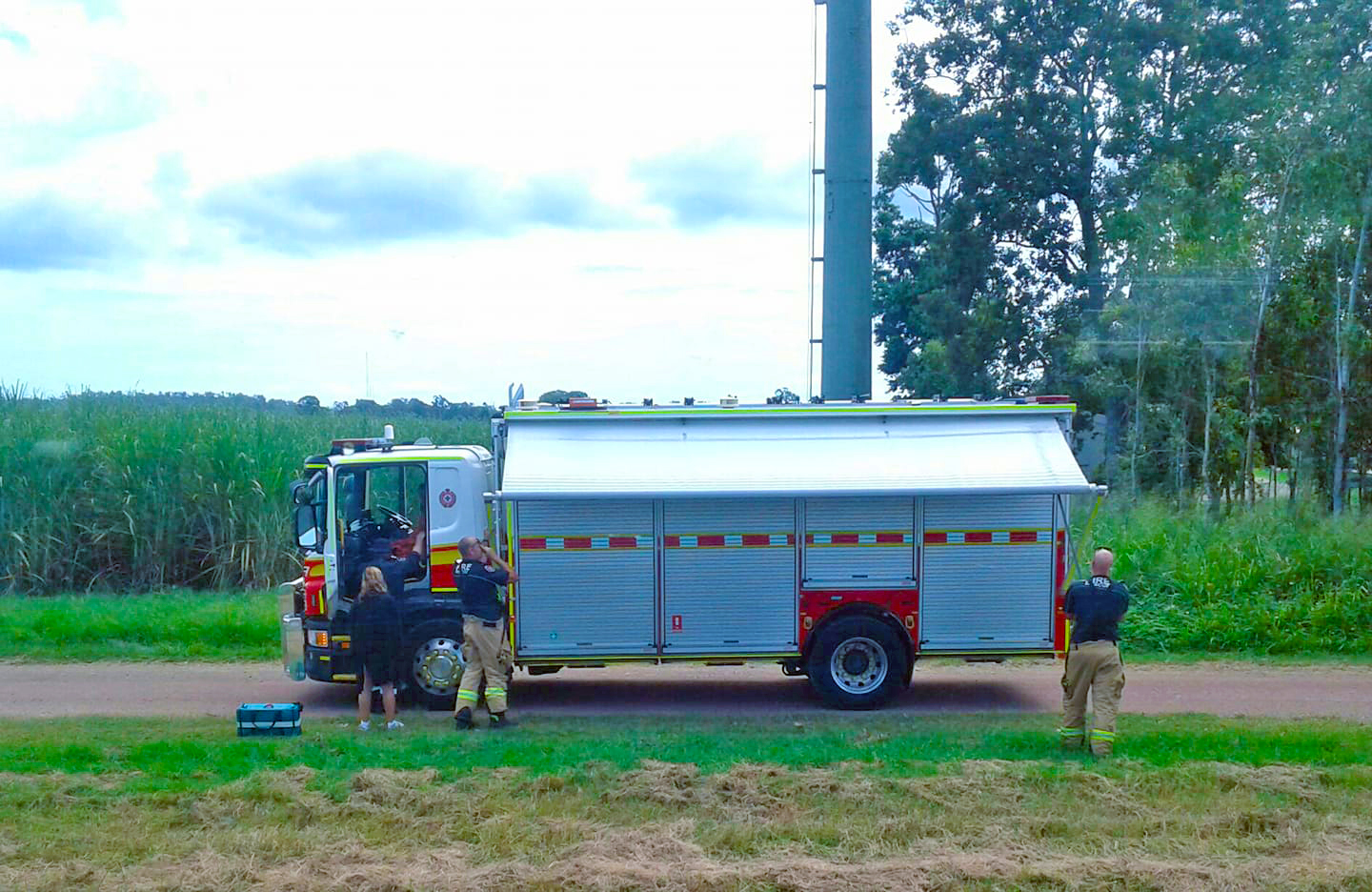
Passengers were left in shock after the Spirit of Queensland train, travelling from Brisbane to Cairns, was involved in a collision with a road vehicle north of Mackay earlier this week.
The incident occurred at 8:40am on the morning of Tuesday, February 14 at the Pratts Road level crossing at Calen, just off the Bruce Highway.
Emergency services arrived on site shortly after as did Queensland Rail’s emergency response teams, maintenance and electrical staff.
The driver and sole occupant of the vehicle suffered head injuries and was taken to Mackay Base Hospital in a stable condition while 161 passengers were aboard the train, with some being treated for shock and minor cuts from broken glass.
One passenger reported that 18 windows were smashed across most carriages of the train.
“The impact sounded like (a) gun shot,” said the passenger.
The service was consequently cancelled and customers were transferred to their destination by bus.
Queensland Rail Acting Head of Regional Scott Cornish said Queensland Rail is committed to ensuring safety at railway crossings.
“The Pratts Road level crossing is fitted with active protection in the form of flashing lights, which were working at the time of the incident,” he said.
“The crossing also has warning signs on all approaches.
“This is an important reminder for road users to pay attention to the signs and signals in place for everyone's safety.”
Repairs to the level crossing were completed Tuesday afternoon and the line has reopened.

A local volunteer has recently been recognised at the state level for his commitment to the PCYC Braking the Cycle (BTC) program as the program celebrated its 10th anniversary last year.
Alan Williamson was flown to Brisbane last December and recognised for eight years of service to the program at a presentation at Parliament House.
“Alan is our longest running mentor in Mackay,” said BTC Program Coordinator Tanya Brown.
“He has done it since the program started in Mackay, so eight years, he’s been doing it weekly for eight years now.”
BTC is a volunteer driver mentor program supporting learner drivers without access to a supervisor or registered vehicle to complete their logbook hours by pairing them with a volunteer driving mentor.
Alan got involved after a long career of driving buses, trucks and taxis in New Zealand and Australia, hearing a radio ad that seemed perfectly timed.
“I was doing runs around Nebo area and listening to the ABC every morning,” he said.
“When my wife was alive, she encouraged me to try to teach kids how to drive, even adults how to drive, and this came up.
“It was exactly what I wanted to do.
“Over the years, since I started driving buses, I’ve had a lot of people, and I mean heaps of people, compliment me on my driving skills.
“Those are the skills I’ve got, and I’d like to pass them on,”
Alan thanks a defensive driving course for his driving skills – something he says all young drivers should have access to.
“Defensive driving in New Zealand is totally different to what it is here,” he said.
“It helps younger people, it doesn’t cost you anything, volunteers teach you and I think it should be something we really need to look at.”
With 25-30 participants active in the program at one time and plenty more on the waitlist, Ms Brown said there’s high demand for volunteers.
“You need to have a really patient demeanour,” she said.
“They end up being that listening ear for the kids.
“The kids do tend to trust and unload.”
Vehicles are provided by PCYC for sessions, as is insurance, and volunteers need to have held an open driver’s license for 12 months and hold a blue card or be willing to obtain.
For more information, contact Tanya Brown on 0437 597 736 or email tanya.brown@pcyc.org.au.
Braking the Cycle Volunteer Alan Williamson and Program Coordinator Tanya Brown
Mr Williamson (far right) was recognised for eight years of service at BTC’s 10-year anniversary celebrations in Brisbane

Kim Baker has donated 33 human beings’ worth of blood in the past three decades across three states -- accounting for roughly a person worth a year.
The Mackay registered nurse completed her 300th donation in mid-January at the Mackay Donor Centre after 30 years of what she said had developed into something of a lifesaving “habit”.
“It started with wanting to help the community; it was something which seemed like the right idea at 18 years old,” Kim said.
“It became a routine, something I would do every fortnight, and next thing you know it’s been 30 years and you’ve donated 300 times – it’s really that simple.”
On the day of her 300th donation, Kim was surprised by her husband, Andrew, and the staff at the centre, who presented her with a few gifts: pink, blood-drop-shaped macaroons, a cake, and a 44-gallon drum her husband had painted in secret which represented the roughly 166 litres of blood Kim had thus far donated.
Starting in Perth in 1992, Kim began donating blood in its whole form before moving on to plasma - the liquid in which blood cells float - which allowed her to donate on a fortnightly basis and rack up such a volume.
Kim said that helping someone in need was all the reward anyone could ever ask for when donating blood, something she had seen firsthand as both a nurse and in May when she lost her son under tragic circumstances.
“When we went to see him in the hospital [before he passed], he had a lot of health products, and so I know that giving blood and plasma gives someone a second chance,” Kim said.
“It lets them have a life, allows them to function normally, have a family, or come home to a family each night.”
Kim said giving blood was one of the best decisions of her life and she wouldn’t be stopping anytime soon.
“I think everyone should give blood if they can,” she said.
“It’s just the right thing to do.”
Kim Baker with Mackay Donor Centre staff on the day of her 300th blood donation

After previously living in a three-bedroom house, Mackay social housing tenant Stephen recently had to move to a two-bedroom unit after coming out of hospital.
“I couldn’t get up the stairs at my house so the occupational therapist with Mackay Housing Service Centre found me a ground floor unit in a newly-built complex,” he said.
At first, Stephen was unsure of the move.
“When the move was suggested, I thought that I didn’t want to do it but sometimes you just have to,” he said.
“I’m really happy with the place because it’s so spacious.
“They’re nice units and things are so much easier now because I can do things like washing.
“In my old place it was too hard because of the stairs.
“It’s been a great move and I have no regrets.”
Moving to the unit complex provided a surprising benefit for Stephen.
“My cousin lives in the same unit complex,” he said.
“I didn’t know until we both moved in so that was another positive about the move.”
Having good neighbours is important for Stephen.
“When we moved into the complex, a lady who lives down the road came to see us all and brought us a caramel tart to welcome us to the neighbourhood,” he said.
“She said she had watched the complex being built and wanted to come and welcome us.
“I thought that was very nice.”
With neighbours new and old, Stephen’s maintained solid connections to the people around him.
“I only moved down the street, so I keep in touch with my old neighbours,” he said.
“I still ring them up or I hop on my mobility scooter and visit them for a cup of tea.”
If you need housing help, call 13 QGOV (13 74 68), visit your nearest Housing Service Centre or go to www.qld.gov.au/housing to find out about available products, services and supports.
If you are experiencing, or at risk of homelessness, contact the Homeless Hotline for free on 1800 474 753 (24/7).
Stephen recently moved apartments after coming out of hospital. Photo supplied

Mackay Hospital and Health Service (HHS) welcomed a strong intake of graduate nurses, as 84 newly qualified nurses have been recruited to the 2023 Mackay HHS Nursing and Midwifery Graduate Program.
Executive Director Nursing and Midwifery Karen Wade said, “We are delighted to welcome our largest annual cohort of graduate nurses to the health service where they will consolidate and further develop the clinical skills they learned at university.”
Nurse educator Julie Phillipson said it was a busy but exciting time of the year.
“It’s always exciting to see students grow and develop from undergraduate to graduate nurses,” Ms Phillipson said.
“You get a lot of satisfaction seeing them succeed and go on to deliver a service to the community.”
The Mackay HHS Nursing and Midwifery Graduate Program is twelve months in duration consisting of either two 6-month clinical rotations or one 12-month rotation across Mackay Base Hospital and rural hospitals.
“Graduate nurses undertake placements across any of the 25 clinical areas in the Base Hospital including mental health, emergency, renal, medical, cardiac, surgical, oncology and theatres, as well as across our rural facilities,” Ms Wade said.
66 nurse graduates will join the team at Mackay Base Hospital, five will be based in Proserpine, one at Sarina and 12 will undertake rural rotations.
“They will be supported with mentoring, theoretical and clinical guidance to ensure we build safe, confident and competent nurses,” Ms Wade said.
“Most graduates studied at CQUniversity and James Cook University and are from the Mackay region,” Ms Wade said.
“More and more of our new nurses are locals, so it is no surprise they want to develop their career close to home.”
This is certainly the case for grad nurses Chloe Langridge and Sara Herringe. Chloe, who is now working in the Intensive Care Unit at Mackay Base Hospital, is following in her father’s footsteps.
“My dad was a paramedic and a nurse, so I’ve grown up around emergency nursing.”
Sara decided she didn’t want a desk job.
“During my studies I went to Alpha for a placement and loved it,” she said.
“I am looking forward to doing a hinterland rotation across Moranbah, Dysart and Clermont.”
Matt Vella is another Mackay local.
“I have a very accident-prone family; we have a cattle property, so I spent quite a bit of time in the Emergency Department with family members with broken limbs,” Matt said.
“I also had a Nan who had a stroke and watching her being cared for also reinforced the idea that I wanted to do nursing.”
Matt spent time in the local Critical Care Unit as a student nurse and they’re thrilled to have him back as a graduate.
Some of the 84 graduate nurses who were welcomed to Mackay Hospital and Health Service last week
Nursing graduate Matt Vella
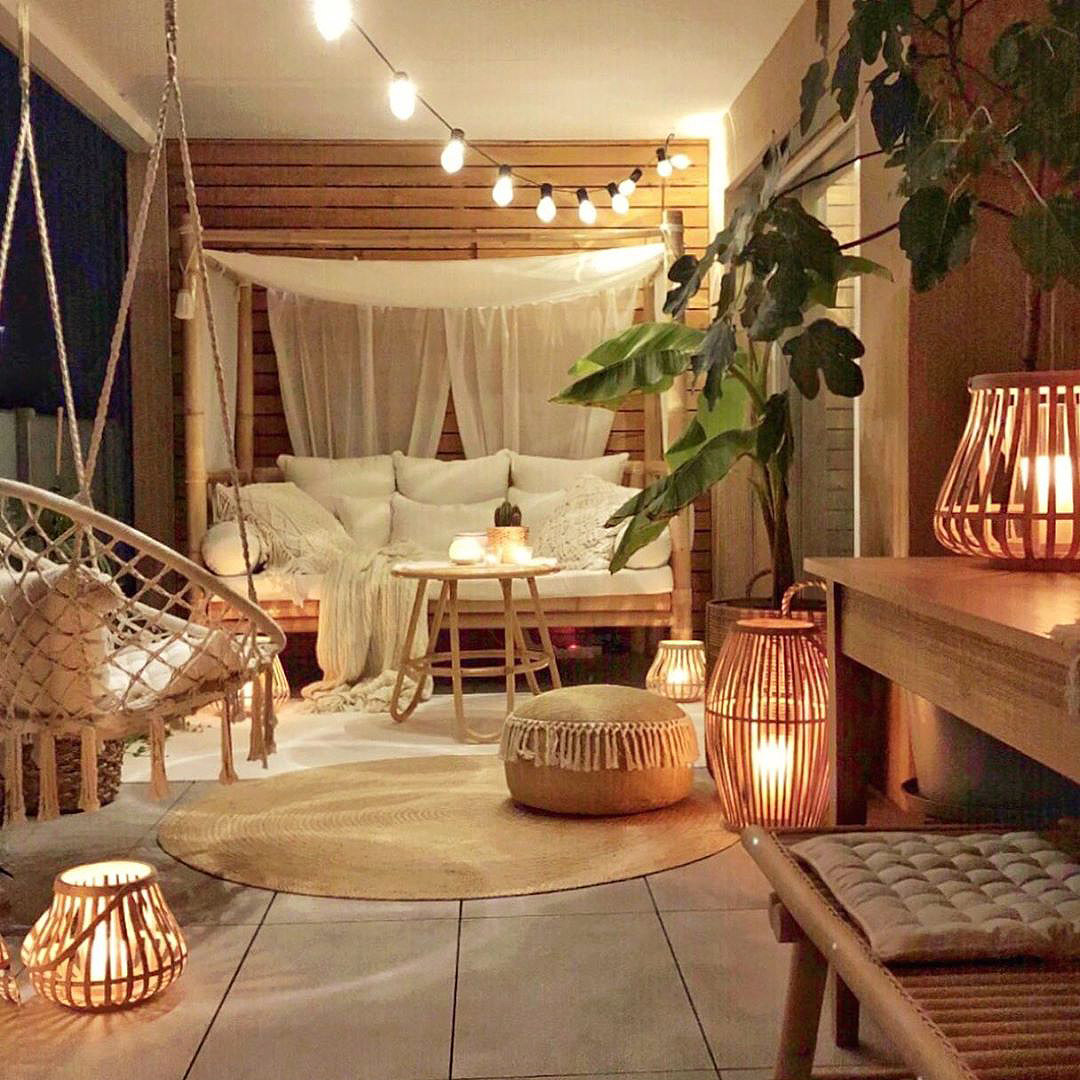
Reader Question
“I am moving into a rental property after moving out of my own home I owned due to a change of circumstances. I really want to make it feel like home but there are so many limitations as a tenant. Can you help me create my new happy place?”
Dear reader,
We understand that renting a home or unit can limit your ability to make changes that reflect your personal style and taste, but we would be delighted to assist you in creating a space that feels like home.
However, with the help of an interior designer, you can still achieve a stylish and functional space without breaking any leasing agreements.
Engaging with an interior designer can benefit you in many ways when it comes to making changes to your rental.
Firstly, we can help you create a space that meets your specific needs and preferences.
Working with you as a team to understand the look you are trying to achieve, and then offer ideas and solutions that are unique to your space.
This way, you can create a personalised space that feels like home even if you’re renting.
Secondly, an interior designer can help you maximise the functionality of your rental space.
A rental home or unit may have its limitations, such as a small kitchen, limited storage, a lack of natural light or could just look outdated. We can help you find creative ways to work within these limitations and create a space that is both functional and stylish.
Thirdly, we can help you stay within your budget.
Renting a home means you may not want to invest too much money into it, especially if you plan on moving out at the end of the lease. We can help you make the most of your budget by prioritising design elements that will have the most impact on your space. We will also be carefully choosing items together that you will absolutely love so you will want to take them with you and re-create the look again.
Finally, engaging with an interior designer can save time and stress.
Decorating and designing a space can be time consuming and overwhelming, especially if you’re not familiar with design principles.
During our consultation, we will start from the entry and work our way throughout the space, including outdoor areas. You will be inspired and educated on how to bring your ideas into reality so you can enjoy all the areas. We can assist in selecting furniture and accessories, and coordinating with contractors and suppliers on your behalf. This way you can truly enjoy the process and have peace of mind that everything will be in perfect scale and cohesive. The main goal is that when you come home you feel relaxed and happy to be there.
At Style Central Home it is all about YOU! Your lifestyle is taken into consideration and all the things that are important to you. We certainly want you to smile every time you walk in the door and knowing that you were a part of all the decision making as we work as a team.
If you would like assistance to style your rental home, reach out for a complimentary no obligation initial 20-minute phone consultation.

Edible flowers are not only beautiful but also delicious, adding a unique flavour to dishes and providing a colourful and ornamental touch to any garden. Growing edible flowers can be a rewarding and simple task, even for the novice gardener. Here are a few tips for growing your own edible flowers.
1. Choose the right location – Edible flowers grow best in well-drained soil with good sunlight exposure. Choose a spot in your garden that receives at least six hours of direct sunlight per day.
2. Choose the right plants – Some popular edible flowers that are easy to grow in Australia include nasturtiums, calendula, borage, lavender and violets. Make sure to select non-toxic varieties that are safe to eat.
3. Planting – Sow seeds directly into the soil or start seedlings in pots. Follow the instructions on the seed packet and keep the soil moist.
4. Watering – Edible flowers require regular watering to thrive. Water your plants in the morning or evening to avoid evaporation and to allow the water to penetrate deep into the soil.
5. Fertilizing – Use a balanced fertilizer every two to three weeks to promote healthy growth and good yields.
6. Harvesting – Edible flowers can be harvested for use in cooking or for decoration when they reach their peak of bloom. Harvest them in the morning when the flowers are at their most fragrant and flavourful.
In addition to being delicious, edible flowers also provide many health benefits. For example, violets are high in vitamins A and C, while calendulas contain anti-inflammatory properties. Roses are also a good source of antioxidants, which can help protect against damage from free radicals. So, if you're looking for a fun and rewarding gardening project, consider growing edible flowers. Not only will you enjoy the beauty and flavour of these delicious flowers, but you'll also reap the many health benefits that they have to offer.

Knowing the right tool for the right job is a skill that all tradies learn early in their careers. Knowing the difference between each tools important features and functions will make a major difference in your productivity and completing a project on time.
Whether you’re an electrician, carpenter or a plumber - power tools are your best friend when it comes to getting the job done. With tool bags and boxes filled with drills and drivers, power saws, sanders, grinders and spare batteries, it can become overwhelming for a first-year apprentice to know where to start.
Completing a job safely takes top priority on the work site. Using tools incorrectly, tools that are not fit for purpose or not suited to the user, can lead to injuries. It’s important to select the tools that are designed for a specific task, and are comfortable to hold, to reduce strain on joints and muscles.
Shop where the tradies shop and visit Porters Mitre 10 Tool City at Mackay and Whitsunday to gear up this year. Stocking, Milwaukee, Makita, Dewalt, Stanley, and Hikoki, there is a brand suitable for anyone on any budget. The knowledgeable team will guide you through which power tools are suitable to your trade, using their extensive years of experience.
Porters Mitre 10 is offering apprentices a chance to win a $750 gift card!
Apprentices that spend $100 on power tools between Friday 3rd and Sunday 26th February 2023 at participating stores will receive an entry to win.
Porters Mackay
Carlyle Street, Mackay
Porters Whitsunday
Corner Paluma Road & Carlo Drive, Cannonvale

An Ipswich-based historian is searching for any information, photos, letters, cards or memorabilia relating to his great grandparents.
Terence King reached out to Mackay Life in his journey to research Jens Lauritzen and Anna Cathrine Meng who migrated to Australia from Prussia in 1882.
“I’ve been working on it for a few years, so I’ve been able to gather quite a lot of information about them so far, tracing their life from when they were born in Denmark and their journey out here to Australia and their life out here,” Mr King said.
“I’ve got a fair bit of information, but I thought before I finish, I’d better try and flush out anybody in that Mackay area that might be harbouring some wealth of information tucked away in that proverbial shoe box.”
Mr King has researched and written multiple books on different sides of his family history, self-publishing them to immortalise the stories for generations to come.
“It’s just fascinating to discover, not just the bare bones of their life, when they were born, what they did, but to try and look at the context in which they lived and what was going on at that time in history,” he said.
Jens Lauritzen and Anna Cathrine Meng settled in Walkerston after emigrating from Prussia, originally Denmark.
Mr King hopes to make contact with any descendants of them or their following children: Hans Christian (Christie) Meng, Anne Catherine Roots, Martha Maria Letchford, Jens Peter (Hen) Meng, Frank Andreas (Bam) Meng, Christina Cecilia (Trinna) Stoneham, Hans Peter (Peter) Meng and William Jensen (Billy) Meng.
“I’ve been able to trace from when they were born in Denmark, and I’ve traced some of their lives up to the point of 1864 when there was a big war with Prussia,” he said.
“Where they lived was taken over by the Prussians and they came out here as Prussian citizens as opposed to being Danish citizens.
“They always dismissed any suggestion that they were German, particularly in the first world war, they were always adamant that they were Danish.”
Anyone with information or artefacts is asked to contact Mr King on 07 3282 3087 or email terenceking@bigpond.com.
Anna Kathrine Meng and Jens Lauritzen with their son Lauritzen Jensen Meng, Terence’s grandfather

Walkerston’s next generation of leaders were recognised on Monday, February 6 as Walkerston State School held its Student Leaders Induction Ceremony.
The ceremony celebrated and acknowledged the school’s 2023 student leadership group, with student leaders pledging their commitment to their roles and presented with their badges.
The 2023 student leaders look forward to continuing to be positive role models and working with their peers and staff.
Congratulations to the following students:
School Captains: Anna and Eli
Vice Captains: Frankie and Noah
Cultural Captains: Mya and Tamyka
Fadden House Captains: Lelay and Nevaeh
Ross House Captains: Ruby and Oscar
Treacy House Captains: Madison and Heath
Walkerston State School inducted their 2023 student leaders last week. Photo supplied: Walkerston State School

Gold nanorod probes combined with an optical microscope can now be used to detect signs of a highly contagious and lethal virus that poses a major threat to the swine industry worldwide.
The state-of-the-art technology has been developed by Chinese and Australian biomedical scientists to diagnose porcine epidemic diarrhoea virus (PEDV), a disease that has wreaked economic havoc on piggeries in recent years.
Researchers from Yangzhou University and the University of South Australia say the gold nanoparticle probe, designed for use on site, could replace existing PEDV detection techniques that are costly, time consuming and undertaken in laboratories.
PEDV is a devastating disease, causing severe diarrhoea and/or vomiting, dehydration, and high death rates among suckling piglets. Outbreaks in the US in 2014 and in China in 2016-2017 cost local producers millions of dollars, exacerbated by the lack of an effective vaccine and slow diagnosis.
UniSA bioengineer Dr Chih-Tsung Yang, senior author of a recent paper describing the technology, says early diagnosis is critical to preventing future PEDV outbreaks.
“The current gold standard diagnostic test involves extracting samples from pigs and taking them to a lab, which is expensive and tedious, albeit accurate,” Dr Yang says.
“Our method uses a biofunctionalised chip and gold nanorod probe to capture and label PEDV pathogens. Under a dark field microscope, PEDV can be identified by counting software. It can be undertaken on site in rural areas at minimal cost, making it accessible, highly sensitive, and giving results within the hour.
“We envisage this technology will be invaluable for biosecurity systems, helping to limit the spread of the virus in Australia and other countries, ensuring the health of pigs and protecting the industry from economic losses. There are no effective vaccines for PEDV so early diagnosis is crucial.”

The Queensland sugar industry has been rocked by what can only be described as a bold and arrogant move by Sugar Terminals Limited (STL) to announce that it would terminate its Operator Agreement with Queensland Sugar Limited (QSL).
The move was made without consultation with sugar industry organisations, or with the 4,900+ growers and millers who are its shareholders. STL claims the move has been “in order to reduce costs, drive greater efficiencies and to remove a clear conflict of interest which will better position STL to serve the industry into the future”.
It is felt by STL that the 2017 industry shift to multiple sugar marketers using bulk sugar terminals - which led to a new business model drawing distinctions between QSL as a sugar marketer and QSL as terminal operator – has changed the environment. STL claims it requires greater transparency.
The announcement itself has lacked transparency, taking all industry players outside the STL boardroom by complete surprise. There is a feeling in the grower sector that in fact removing a successful third-party management/operations structure will diminish transparency.
This move seems a leap, given that as recently as October STL Chairman Mark Gray said in his address to the STL Annual General Meeting, “Setting aside depreciation and insurance, where all industries have been subject to significant increases in premiums, STL’s controllable operating costs were lower in FY22 than in FY18, the first year of our new business model. After allowing for inflation, this is a significant decline in costs in real terms.” Given that success, growers applaud the present structure for returning those outstanding achievements. We trust it will continue to drive efficiencies and are concerned change would put future success in jeopardy.
Along Queensland’s seaboard, six bulk sugar terminals stand in testimony to what can be achieved when industry works cooperatively. Historically, they are the product of that spirit: for example- Central Region (ie: Mackay) terminal expansions in the 1980s were built using “Number 2”, or risk pool sugar returns. Growers took a reduced payment for their Number 2 Pool Sugar for several years to see a fourth sugar shed built at Mackay Harbour, dramatically increasing terminal capacity and efficiency.
These are sugar industry assets, and moreover, they are “choke point” assets. That means the Bulk Sugar Terminals overseen by STL are the sugar industry’s only gateway to lucrative export markets. Growers would be irate if these assets were misused to prioritise returns to shareholders. Bulk terminals were never built with the intention of creating a cash-cow for shareholders, but for mutual benefit across the industry. The sugar industry needs a very clear explanation as to how taking a not-for-profit operator out of the equation will lead to improved cost-efficiency.
And what happens if STL is unable to improve cost-efficiency? Would it then shift back to outsourcing, potentially to a foreign-owned corporation? This would be unacceptable, and a sovereign risk to a significant agricultural export sector that returns some $2.5 billion to the Australian economy.
Originally built by industry and government, since the year 2000 Queensland’s sugar terminals have been overseen by STL, granted in a peppercorn sale from government, but operated and managed by QSL’s operations arm. QSL is a not-for-profit organisation that has quite distinct and corporately separated sections for sugar marketing and for terminal operations. Terminal operations – including storage, shipping and logistics- are executed by QSL on a cost-recovery basis only as a service to the industry.
Under the terms of the existing Operating Agreement, QSL remains the operator of the state’s bulk sugar terminals (BSTs) until 30 June 2026.
It is also worth noting that STL has taken steps to diversify its commodity base, with the Bundaberg Common User Infrastructure Project. In locations like the Southern Region (which includes Bundaberg, Childers and Maryborough), where the sugar industry has reduced output there is a logic to making better use of un-used bulk storage area. However, this is not something that we necessarily would like to see in regions of increasing output, such as Mackay. As an industry asset, it would be unacceptable to see these changes come at the expense of the sugar industry that has worked so hard to create terminal facilities that are a tribute to our strong industry’s efforts, toil and the foresight of our predecessors.
Mackay Bulk Sugar terminal has a long and rich history as an asset built and maintained by the Queensland sugar industry- from paddock to port. Pictures: Contributed

Mackay Isaac Tourism (MIT) has launched a new destination events marketing campaign to align with the region’s exciting and diverse events calendar.
‘MAKE IT Mackay Isaac’, which will run from February 8 to July 31, 2023, is designed to entice the youth market, families, couples and empty nesters to visit our backyard, enjoy our events and stay a little longer to explore the region's natural wonders.
Mackay Isaac Tourism Chief Executive Officer Al Grundy said that with the amazing array of events on offer, now is the time to put a Mackay Isaac event in the calendar.
“With MAKE IT Mackay Isaac campaign launch and terrific travel deals, you can forget the southern winter and hustle of the city and MAKE IT a holiday in the Mackay Isaac Region,” he said.
“From coral reef adventures of the Great Barrier Reef to scenic flight experiences admiring the majestic landscapes of the Peak Range National Park.
“What we’re looking forward to is welcoming people from all over Australia to come for our events calendar and what we’re trying to do is say, ‘While you’re here, there’s lots to look at so stay a little longer.’”
The campaign will run across YouTube, catch up TV, social media, radio and television and is estimated to have a total combined social impression of over 9 million.
This year, Mackay Isaac Tourism partnered with Tourism & Events Queensland, Harrup Park & Great Barrier Reef Arena, Mackay Airport, Bonza, Virgin Australia, Queensland Rail, Mackay Regional Council (MRC), Isaac Regional Council (IRC), and Southern Cross Austereo to deliver a campaign which will allow travellers the ability to dream, plan and book their holiday.
Mackay Airport Head of Operations Adrian Miles said Mackay Airport was thrilled to support the campaign.
“This campaign comes at an ideal time, as the commencement of Bonza’s new direct services means we have never been better connected to other regional and metropolitan hubs,” he said.
“Our passenger numbers through the terminal are very exciting, and when the airport’s going well, you know the region’s going well.
“These campaigns by Mackay Isaac Tourism are critical for our local operators and everybody will benefit from it in the entire region.”
The Mackay Isaac region has evolved as a sought-after tourism destination, recently ranking eighth for growth in the top destinations in Australia over the last 3 years.
Great Barrier Reef Arena General Manager Adrian Young said the venue is excited to play a part in the Mackay Isaac region becoming one of the best event destinations in Australia.
“The way (the campaign’s) been put together by Al and his team to bring everyone together to create a bigger campaign to be able to promote the region has been exceptional,” he said.
“Like this campaign, the arena’s only occurred and only got to where it is because of the community engagement, everybody getting together and understanding what the opportunity is.”
Mr Young promises a stacked calendar of events at the Arena, with the official launch to be held in May at Legends on the Lawn.
“We’ve got some big events with Legends on the Lawn being the opening event and we’ve got cricket and AFL and some other events later in the year.
“We’re hoping to open the arena with a bang.”
Great Barrier Reef Arena General Manager Adrian Young and Mackay Isaac Tourism Chief Executive Officer Al Grundy

If you believe the narrative of the climate change lobby, we are all doomed unless massive changes are made to how we live, work and operate our economy.
There’s a list of things we have to eradicate, most of them enjoyable and central to how our economy operates, if we are to survive.
Rib fillets are bad, vegan patties are good. Coal-fired power stations are evil, wind farms are angelic. The traditional motor car is Satan’s steed, an electric vehicle is heaven on wheels.
The imminent demise of the fuel-powered motor vehicle means it is only logical to think of petrol stations as the blacksmith shops of the early last century.
The writing was on the wall for blacksmiths when Henry Ford started rolling his cars off the production line over 100 years ago.
It was the same for video stores about 15 years ago. In the blink of an eye they went from being on every street corner to extinction.
Are petrol stations the video shops of our time? Apparently not, judging by the number of new ones dotting the Mackay landscape.
New petrol stations are popping up everywhere and, while it clearly means that the investors believe your SUV is going to be around for a while, it is also a significant vote of confidence in Mackay’s economy and that of regional Queensland.
I imagine setting up the infrastructure for a service station is a little on the costly side and you wouldn’t do it unless you felt your product had a future and that the economy in that particular area was going to be strong enough to support your business.
It’s just another sign that the Mackay region is doing well and that our economy is powering along.
ANZ senior economist Catherine Birch recently spoke at a Resource Industry Network event and spoke at length about the positivity in our region.
She had good things to say about the resources sector and the strength of our economy generally.
One of the things she pointed out is that job vacancies in central Queensland are double the pre-pandemic level. So rather than having the challenge of unemployment, we have the challenge of finding people to do the work that local businesses need done.
And there is plenty of work to be done. She noted that our resources sector had diversified when we needed to find alternative markets when China put a ban on our coal. But Ms Birch also made the point that China is lifting those bans and we should be full steam ahead with exports to that country.
She didn’t say anything about all our new petrol stations but I’m sure she’d think the growth in that area is another vote of confidence for our region. That’s good for business and good for real estate.
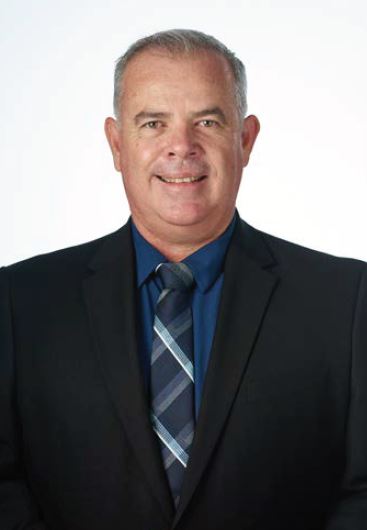
20 years ago, I had a job (a good job), but I pretty much did the same stuff every day. I joined the State Emergency Service (SES) because I wanted something more, to be part of “something that did something” different. I had no idea at the time that the SES would become such a profound part of my life. This week I clocked up 20 years of volunteering in the SES, it sounds like a long time, but it doesn’t feel like it. I work with two volunteers in the Unit that have volunteered for more than 40 years each. When I think of all the things we've done with the other volunteers over the years, I wish I had joined way earlier.
The SES empowers people to help themselves and others in their community during times of emergency and disaster and has been defending our communities since the 70s. It’s grown into a unique emergency response organisation that’s the largest of its type in the world. It’s also the largest provider of road crash rescue in Australia and it’s the only emergency response agency volunteer or otherwise that is trained, equipped, and organised to do land, air, water, and forensic search.
Volunteers can train in vertical rescue, flood boat rescue, search and rescue, agency support, storm response, incident management, emergency traffic management, community education, and fundraising. These functions provide opportunities for almost anyone in our communities to volunteer. If you want, you can deploy all over Australia or just respond to your local community when needed. Over the years, your local SES unit has searched for dozens of missing people, rescued and evacuated hundreds from flooding, protected thousands of homes and held whole rivers at bay with sandbags.
Mackay Regional Council was one of the first in Queensland to have a dedicated SES Levy to look after the vehicles and buildings of our local unit. Mackay Regional Council is also the only council in Queensland to have a Strategic Directions group to ensure the local SES has what it needs in groups, functions, training and funding so our Local Unit is well supported.
The SES has been one of the most significant aspects of my life. I completely recommend it to anyone, it will change your life for the better, as it has for mine. Just search “Join SES” on your preferred search engine, then do it.
Cr Justin Englert
Mackay Regional Council
Publishers Indemnity. Any individual or entity that places advertising, supplies copy material, or submits editorial content to Core Life Publishing agrees and undertakes to ensure that all such material:- Does not infringe upon any copyright, trademark, or other intellectual property rights;- Is free from any content that could be considered defamatory, libelous, or slanderous;- Does not infringe upon any rights related to privacy or breach of confidence;- Contains no obscene, indecent, or otherwise unlawful material;- Complies fully with the Trade Practices Act and all other applicable laws, regulations, or statutes.Furthermore, by submitting or placing such material, these individuals or entities agree to indemnify and hold harmless the publisher, Core Publishing and Events Pty Ltd, and/or its agents from and against any and all investigations, claims, demands, liabilities, damages, costs, or judgments arising out of or in connection with the material provided. All material is believed to be accurate at the time of printing and remains the copyright of Core Publishing and Events Pty Ltd.
© 2026 Mackay and Whitsunday Life Pty Ltd.
