
Independently Owned, Locally Grown, Community Loved

Member for Whitsunday Amanda Camm has stepped down from her role as Minister for Child Safety and the Prevention of Domestic and Family Violence, in an effort to prioritise her health and wellbeing. The announcement comes a fortnight after Ms Camm returned from six weeks of medical leave following major surgery, with the Whitsunday MP recognising she needed more time to recover. “This has been a considered and deeply personal decision,” Ms Camm said. “Having returned from six weeks of medical leave following major surgery I have come to recognise that my recovery still has some way to go and I need to prioritise my health and wellbeing.” “I sincerely thank the Premier for the opportunity to serve in his Government and for his support of my decision.” Ms Camm added in a presser outside of Parliament house in Brisbane, that the pressures of ministerial work had contributed to her decision to step down. This follows months of intense scrutiny over conditions for children in care and domestic violence prevention funding cuts had reinforced the importance of personal safety, especially in light of the recent attack on Victorian MP Helen Haines. “Public scrutiny and accountability are essential to democracy and to our institutions,” she said. “Harassment, threats, bullying and personal vilification are not and for the past year this has been my experience.” But during her time in the role, Ms Camm oversaw reforms to strengthen child protection, support foster and kinship carers and improve responses to domestic and family violence. Central to her child safety work was the Government’s response to the Child Safety Commission of Inquiry, which delivered 52 recommendations for improving the system. “The landmark Child Safety Commission of Inquiry was the turning point for the Child Safety system,” Ms Camm said. “There is much more work to be done, while early positive signs show we have stabilised numbers in the Residential Care system for the first time.” Her work in domestic and family violence included introducing laws for electronic monitoring of perpetrators to strengthen accountability, alongside her reporting a doubling of calls answered by DVConnect to help more people access support when they needed it. “After sitting with victims of domestic and family violence over many years through opposition and then in the ministry, I’m proud to have been part of delivering change that can help save lives,” Ms Camm said. In a statement following her decision, Premier David Crisafulli praised her work across both portfolios, describing the child safety inquiry’s reform roadmap as her greatest legacy and highlighting improved access to the domestic violence helpline. “I thank Amanda for her service to Queensland firstly as a Shadow Minister and then as a Minister,” Mr Crisafulli said. “Amanda took on an enormous task with a Child Safety system in crisis and a state in need of domestic violence reform. “With her dedication, passion and commitment, she has put Queensland on the road to repair both. “I speak on behalf of the Government, the LNP and all Queenslanders in wishing her the best in her recovery.” Ms Camm will continue serving as the Member for Whitsunday, reaffirming her commitment to the local community. “I remain committed to the people of Whitsunday as their Member of Parliament, and to supporting the Premier and the Government in delivering a fresh start for Queensland,” she said.
Read the full story

By Joseph Borg, Chairman, CANEGROWERS Mackay A firmly enforced bioethanol mandate, backed by increased local sugarcane production, is essential to strengthening Queensland’s industry resilience, regional jobs, and Australia’s long‑term fuel security. Our region holds enormous potential: not only for producing sugar, but for renewable fuel, energy diversification, and national economic security. Queensland’s sugarcane industry has always been a cornerstone of regional prosperity, but today it stands at a crossroads. Global markets are volatile and input costs are rising, and at the same time, Australia faces increasing pressure to reduce emissions, strengthen domestic fuel supplies, and build more resilient regional economies. A properly enforced bioethanol mandate is one of the most effective tools we have to meet these challenges head on. Queensland already has a mandate in place, but compliance remains inconsistent. When fuel retailers fail to meet their obligations, growers, mills, and regional communities lose out on opportunities that should rightfully be flowing into our local economy. Bioethanol is not a theoretical solution: it is a proven, practical, and immediate pathway to cleaner fuel and stronger regional industries and economies. Countries like Brazil and the United States have shown that bioethanol can reduce emissions, stabilise fuel markets, and create thousands of rural jobs. In these countries, and across the world, bioethanol forms a substantially higher portion of retail fuel sales than this country has embraced. Queensland has the same potential, but only if the mandate is taken seriously and enforced with the consistency it deserves. For Mackay, the benefits are clear. Our region is one of Australia’s most productive sugarcane hubs, with the land, infrastructure, climate, and expertise to support a thriving biofuels sector. Increased demand for bioethanol directly translates into increased demand for sugarcane. That means more cane in the ground, more certainty for growers, and more throughput for our mills, and we all know that milling is a volume game. This in turn supports jobs from the paddock to the processing line. But the opportunity extends far beyond economics. A stronger bioethanol industry enhances national fuel security, reducing Australia’s reliance on imported fuels. At a time when global supply chains are increasingly unstable, producing more of our own fuel is not just smart policy, it is essential. Every litre of bioethanol produced in Queensland is a litre of fuel Australia does not have to import. To seize this opportunity, we must also focus on increasing local sugarcane production. The industry cannot diversify, innovate, or expand into new markets without a reliable and growing supply of cane. More cane means more flexibility for mills, more investment in advanced manufacturing, and greater capacity to produce not only sugar and ethanol, but also bioplastics, green electricity, and other high value products. Growers are ready to meet this challenge. With the right policy settings from all levels of government, including a robust and enforced bioethanol mandate, we can plant more cane, improve productivity, and strengthen the long‑term viability of our region. But growers cannot do it alone. We need government to ensure the mandate is upheld, fuel retailers to meet their obligations, and industry partners to continue investing in innovation and infrastructure. Mackay has the land, the people, and the expertise to lead Queensland’s next era of renewable energy and agricultural diversification. What we need now is the policy certainty that comes from a mandate that is not only written into law but actively enforced. A stronger bioethanol mandate is not just good for growers it is good for Queensland, good for regional jobs, and good for Australia’s fuel future. The time to act is now. Bioethanol can use sugarcane by-products including molasses, bagasse, mill mud as well as plant material. Image: AdobeStock
Read the full story
Marketing strategy boils down to answering four questions: What does your business want? > The goal. Who can help you achieve your goal? > The audience. What do you need to tell your audience so that they can help you achieve your goal? > The message. Where do you need to put your message so that your audience sees it? > The delivery. But how do you actually go about answering those Q’s? Like anything, the broad strokes are more complicated in practice but it’s a good framework to come back to when you’re planning your next marketing activity. Start by drilling down + identifying a measurable goal that you can work towards. Vague + lofty goals are okay, but without a clear way to track your progress, achieving them will be pretty tough. For example, tracking how many enquiries you get + the quote conversion rate can be useful info to have as a baseline. That way, if you do a targeted campaign to attract more work, you can see if it meaningfully pushed the needle in the right direction! Next, really empathise with who can help you achieve those goals. Try to build up a target customer in your head. How old are they? What do they want from your business? What are they interested in? The more specific you are, the easier it’ll be to craft messaging that will actually appeal to that person. Once you’ve defined your goal + who can help you achieve it, you’ve got to tell them how to help you do it. Your messaging should be the key information that your audience needs to know about your business. This is where you focus on not only what your customers want to know about you, but how your business is different to all the others out there. Your messaging should change based on the people you’re targeting. Lastly, the delivery. Where does your target market frequent? Do they use socials? Are they constantly listening to the radio? Do they frequent the pub on a Friday arvo? Once you know where they go, you can start figuring out how to get your message there. While socials are a great option, they’re not the only one. Billboards, coasters, or a flyer that sits on a wall somewhere are all effective options. But if that all sounds like too much effort, you can always reach out + talk to us. We’ll help you figure it out 😉 Taren McAuley
Read the full story

Ocean Rafting has another trophy for their cabinet following last weekend’s Qantas Australian Tourism Awards, which saw them take out silver in the highly competitive Adventure Tourism Category.
With over 25 years in business, Ocean Rafting has been awarded multiple gold, silver and bronze accolades on a national level over the years, and owners Peter and Jan Claxton say that each award is a credit to consistently delivering a quality product.
“We really want to thank our incredibly dedicated and passionate staff, which includes a team of four recognised Master Reef Guides, who do an amazing job not only showcasing the wonders of the Whitsunday Islands and Great Barrier Reef, but in protecting these precious assets and educating our guests about what they can do to make a difference,” said Peter.
“After over 25 years of operations, we will never stop appreciating every single one of these awards.
“We also certainly couldn’t have done it without our guests, who we love to see on the ride of their life!”
Ocean Rafting has eight semi-rigid inflatable vessels and one 7-seater Australian-built Airvan which took to the skies almost a year ago.
This new dimension to the business means that, along with other partner aircraft, they can now offer the ultimate Whitsunday experiences from above, on and below the water.
A true multi-generational operation, Ocean Rafting has three generations of the family actively involved in daily operations, making it connected to its humble beginnings, while being famed for its innovative approach and for acting as a leader in Whitsunday marine tourism and aviation operations.
Offering two exciting day tour adventures, Ocean Rafting has special permits that enable it to showcase one of Australia's most iconic beaches, Whitehaven Beach and Hill Inlet, as well as flights over the world-renowned Heart Reef, on a daily basis.
Guests can choose from the Northern Exposure and Southern Lights, with an exhilarating ride to Whitehaven Beach, the ultimate access to Hill Inlet and special snorkelling sites, as well as the Fly and Raft package, 60-minute scenic flights, charter options and the Reef Seeker environmental educational program.
The fleet of eight semi-rigid inflatable vessels allows guests to experience an adrenalin-fuelled ride amongst the beauty of the Whitsundays, while a maximum of 32 passengers per vessel, allows for a personalised experience in the pleasure of a small group.
“We sincerely thank our many industry partners and tourism bodies, with whom we work, both within Australia and the world over,” said Peter.
“It’s a team effort and we have all worked cohesively to place the Whitsundays on the map as the ultimate Whitsunday holiday destination.”

It takes hard work! But it also takes innovation, which as you can imagine, is imperative when you have the length of operations we have, so we continually reinvest in the business and just don’t take our finger off the pulse. It also takes passion, but we love what we do, our family loves it and our team love it.
Our culture is aligned to strong values that are reflective of a family business committed to best practice standards. And very importantly, we always aim to provide the best possible experience we can for our guests, which is reflected in our number one position on TripAdvisor, while protecting our precious Great Barrier Reef Marine Park as proud reef ambassadors!
Ocean Rafting owners Jan and Peter Claxton at the national awards last Friday
It’s a team effort: Peter and Jan Claxton with team members Tiffany Brett and Nathan Fleming

Are you guilty of poking fun at soft-skills? For decades they’ve been harassed and bullied “who are you – you’re not as important as skills!”
They’ve been name called ‘warm and fuzzy’ and sent packing when it comes to recruitment selection and competencies and skillsets.
But at last, 2023 is their year and they’ve come roaring to the forefront wearing the superhero cape of ‘Power Skills’!
Why power skills? We can purchase and download systems, processes, structures and policies – we can also find an infinite amount of knowledge and wisdom at the ends of our fast-tapping fingertips - but we can’t download or purchase the emotional intelligence and people skills that creates a productive, motivated, engaged and happy work team.
Organisations – from family-owned small businesses to large companies – are embracing power skills and finally identifying, and investing in, the informal leaders in their workplace who people naturally look to and follow.
Here are our favourites power skills this month:
• Self-awareness - the ability to self-assess for growth
• Empathy – stepping into and supporting the challenges experienced in your team
• Vulnerability and courage – trust and be trusted
• Team-building – parking your ego and empowering your team to shine
• Communication – adapting to your audience to improve the clarity of your communication style
• Curiosity – the constant quest to learn more rather than form judgements
• Active listening – being willing to have your mind changed
• Growth mindset – adapting and building resilience
• Humility – identifying and parking our unconscious biases
• Observing what’s not being said – reading your audience, their body language, tone, mood
If this all sounds too much for those of you who lead with skillsets try a simple self-assessment Q&A when you drive home at the end of the day.
Ask yourself:
• What could I have done better today?
• What do my team-members need from me?
• What do I need to stop doing?
• What do I need to start doing?
Just the act of self-assessing will help you on the journey to developing your power skills. Enjoy the ride!
Contributed with thanks to Judy Porter from SHIIFT.

Liberty Rural Bowen employs both the best of modern and old-fashioned methods to serve its rural community – and they’ve been doing it for close to a decade in the Whitsundays.
With their new premises on Peter Delemonthe Road, the business is keeping alive the traditions of the long-gone milkman with their deep connection to the community and friendly-face style service, merging the past with the backing and technology of a present, modern major wholesaler.
Depot Area Manager Scott Prosser said the company - which services the region’s railway with bulk fuel, distributes oil to farms across a massive swath of land, and is a proud supplier of businesses across Bowen – has quickly become a pillar of the local community.
“Of our employees here, every one of them lives locally,” Mr Prosser said.
“For Liberty, it’s a case of supporting the town that is supporting us. Professionally, what we have to offer is that top level of service you can have from the biggest companies, but then we maintain the community-minded approach of a small business.
“I’ve lived here for 16 years, and as long as I've been with Liberty, we have made sure to give to Bowen with sports sponsorships and event sponsorships and more. For us, it's just common sense."
Driver Coordinator Ken Pankhurst said the outlet is the only oil stockist in Bowen, covering Ayr down to Proserpine, and is planning to expand from its already substantial 43 thousand litres of oil on hand to provide for its massive distribution radius.
“There’s not a lot of oil you need that we don’t have in stock,” Mr Pankhurst said.
“When we speak to farmers and they need something A.S.A.P, then we’re your guys. No one knows when they’ll blow a hydraulic line or something like that, and we can get it to you anytime with our 24-hour on-call service. “
Whether they be providing wholesale for retailers, or helping your average Joe, Liberty Rural Bowen act as the “old-school style distributor,” Mr Prosser said.
“The way I describe it is the style where you’re talking to someone on the phone from Liberty Rural Bowen, or popping in to see us, and you know it’s a person with knowledge of the local area,” Mr Prosser said.
“You know that they're the ones directing the trucks, making sure they get to where they're going. And it also extends to in-person; if you drop by to have a cuppa and a chinwag with us, that’s the traditional way we like to do business.
"Someone might ring and say: 'Bob needs a bit of oil,' and we know exactly who and where Bob is because we're as local as they come."
Liberty Rural Bowen Depot Area Manager Scott Prosser and Driver Coordinator Ken Pankhurst outside the Liberty Oil – Bowen depot

Investing in growth assets like shares and property is a long-term game. Growth assets always average out better then defensive assets like cash and fixed interest in the long run. The reason you need to look long term is that growth assets fall in value as well as rise, so you need to give them time to average out.
Investing in growth assets is like buying a farm. You know there’ll be years where you go backwards. The reason you buy the farm is that if you don’t panic, hold on and run your business well, in the long run the good years will more than compensate for the bad and you’ll come out with a good average.
The key here is trying to take the emotion out of it and think rationally. If you hold a quality asset of long-term value and suddenly it’s price drops, emotionally you want to sell. Logically, this is the worst time to sell. Ideally, you should try to buy more whilst the price is low.
To relate this to super, if you monitor your balance regularly you will have seen some significant falls since late 2021. If you’re still working and have five years or more to go until retirement it is nothing to worry about as you are a buyer of investments. Think about buying some more by making some extra contributions whilst the market is down. If you’re close to or in retirement, then you are a seller of investments as you regularly withdraw your pension. If you don’t have a protection strategy built into your super pension, you should talk to someone. With no strategy in place your options are to draw less pension to ensure your money lasts or accept that it will run out quicker if you keep drawing the same.
The key to retirement planning is having a plan. Talking to an expert means you’ll understand the big picture of how long your retirement pot will last and how much income you can draw. You’ll also know you’re maximising your Centrelink entitlements. Whilst protection strategies have a cost for retirees, every one of our retiree clients have one in place in their super pensions. They all decided that when the inevitable crash happens, they don’t want to be forced to draw less pension or worry their money will run out early. They want to protect the ability to draw a good income and enjoy those hard-earned retirement years no matter what the share market is doing.
If you’d like to find out more about protecting your hard-earned super nest egg, contact us for an obligation free discussion.

It is a different landscape in the Whitsundays than it was 100 years ago when the region’s oldest chapter of the Queensland Country Women’s Association (QCWA) began in Proserpine - and times are still changing.
Along with the new era, the local branch is changing, too, and has added what it calls “Social Cuppas” to its itinerary.
Hoping to bring families, friends, and community into its fold, the Proserpine QCWA held the first Cuppa of its kind on Tuesday, March 14.
Local ‘Country Women’ assembled at Village Café & Restaurant Airlie Beach to enjoy each other’s company, form connections, enlighten non-members about the QCWA, and discuss the branches’ upcoming 100th birthday.
“What we’re doing with these new social meetings opening our group up to the community,” QCWA Proserpine member Kerri Southee said.
“For all of us at this branch, QCWA has given us something special. The kind of people that I have met here, you would never expect. Intriguing people who are so kind and thoughtful and care about this community.
“We want others to have that opportunity to meet us and be part of something bigger than themselves."
The local branch plans to host Social Meetings on the second Tuesday of every month, and Ms Southee said non-members and their families were encouraged to attend.
“Bring your kids along – a lot of us here are already grandmas, so we’re used to it!” she laughed.
The next will be held at the Proserpine CWA Hall at 4 Faust Street, Proserpine.
The Proserpine QCWA is also in preparations for a high tea for its 100th birthday celebrations in July (with dates to be finalised soon).
The Proserpine Queensland Country Women’s Association had its first Social Meeting of the year at Village Café & Restaurant Airlie Beach

For the second time in recent months, a group of young aspiring musicians are coming to the stage and are set to perform at the Dingo Beach Hotel this Saturday.
An initiative of the not-for-profit group, Music Evolution Project, these events represent a platform for local performers to shine.
“We will have a couple of adults performing this time as well,” said organiser Lisa Stanley.
“This is a great platform for up-and-coming musicians and it is really important for the whole community to come and show their support.”
A cornerstone of the Music Evolution Project is the positive impact that playing music and performing has on your mental health.
“We provide a completely free program to the community and actively help people with their mental health,” explained Lisa.
“These performers are truly amazing, and this is a great opportunity for the community to follow them through the year, see how they improve and watch them as they become professional musicians.”
The Dingo Beach event will include a range of vocalists, pianists and of course bands.
Performers include vocalists Meg McKeon, Ella Kelly, Tanika Lulham, Destiny, Chloe Kaddatz, Amber Hinschen, Sue Nami and Dominik James.
During the evening, it’s time for the bands to shine – The Microns, Sparrow Sisters, Trouble Makers, Myenvy and Category 5 will all play.
WHAT: Young Whitsunday Musicians
WHEN: Saturday, March 25 from 12pm to 8pm
WHERE: Dingo Beach Hotel
TICKETS: Free
Young and aspiring musicians will be performing live this weekend. Photo supplied

The Airlie Beach Bicentennial Boardwalk has allowed walkers, joggers, bike riders, segways, tuk tuks, prams and Park Run devotees to wander on the water’s edge overlooking the Coral Sea since 1988.
The boardwalk was built as part of the Australian Bicentennial celebrations and initially it consisted of a simple walking track which connected Shingley Beach to Cannonvale.
Now, the boardwalk encompasses over 630 metres of timber structure and is a much-loved trail which allows residents and tourists to walk all the way from Airlie Beach to Cannonvale Beach.
Council will be undertaking an upgrade on the section of the boardwalk between Coral Sea Marina and Coral Sea Resort from April 24 – June 9 (weather dependent).
This closure will allow us to replace the current tired timber boards with a composite fibre material, and to widen the boardwalk by up to a metre.
These works will make the boardwalk more resilient to traffic, increase its longevity and significantly reduce annual maintenance costs.
The upgrade will ensure that residents and visitors to the amazing Whitsundays will continue to enjoy this wonderful asset for many years to come.

I’m very happy to say that other Councillors and Whitsunday Regional Council (WRC) staff have supported my idea for a Cannonvale Community catch up which will be held at the restaurant in TAFE Cannonvale (190 Shute Harbour Rd) on Wednesday, March 29 from 9am till 11 am.
If you can’t make it in person, you can ask a question now through the WRC Yoursay webpage. There is even a chance to win an Easter Hamper if you register or update your details on Yoursay this month. Visit yoursay.whitsundayrc.qld.gov.au for more information.
I fully support the Mayor’s initiative to connect directly with the community through these events as they move around the region and I look forward to talking with as many people as possible.
As part of Council’s current Community Engagement Strategy, we are investigating creating a network of ‘Community Champions’. These people would collaborate with Council early in project development and channel information back and forth between Council and their networks.
If you have the time and passion to participate in forums, workshops and other consultation activities relevant to your areas of interest, or if you have a strong connection to social networks that you represent or share information with, being a Community Champion might be a role for you. Head to Yoursay Whitsunday for more information.
For those that haven’t heard, Council has voted against the approval for a Transport Depot near the intersection of Rifle Range Road, Mt Marlow and against a proposal for commercial storage sheds next to Tropic Rd, Cannonvale. 58 submissions and a petition played a role in Council’s decisions and shows me how important having your say is.
Working towards planning that allows new residential, industrial and economic growth, while maintaining our liveability and amenity will always be very close to my heart. It is not just the current decisions that are important, but the long term forward thinking that sets us up for a successful and prosperous future which is a key aspect of our job.
Amongst lots of meetings and reading, I’ve been following up on people’s concerns and complaints and had the pleasure of visiting the Scouts, SES, PCYC Sports Expo, the AFL Preseason Carnival and even had the opportunity to crew in the lady skipper’s sailing race on International Women’s Day.
My role as your Councillor certainly is varied and I am trying my best for everyone who has put their trust in me.

With just two owners overseeing its entire 50-year history, Cannonvale Marine is celebrating not only an impressive personal milestone but also the outstanding achievement of being one of the most stable and longest-running businesses in the Whitsundays.
Established in 1973 by retired engineer Ron Dorman, Cannonvale Marine was the first stand-alone marine dealership in the region.
Ron’s two sons operated the business and after six years a young Darrell Hinschen started his marine engine apprenticeship with the team.
Darrell soon became an integral part of the business and, 14 years later, he was offered the opportunity to purchase Cannonvale Marine with his wife Leanne.
The couple partnered with another Cannonvale Marine apprentice, Matthew Telford, who was a partner in the business for 15 years.
Darrell and Leanne have now operated the business successfully for the last 30 years.
Both Whitsunday locals, Darrell and Leanne are originally from well-known cane-farming families.
“I grew up fishing because our farm was on the O’Connell River,” said Darrell.
“My oldest, happiest memories are fishing – going down the river with Dad – or we’d go to one of the creeks and fish, so it was only natural for me to get into this.”
Over the years Darrell and Leanne have witnessed many changes within the industry.
Technology has been one of the most significant - from the introduction of GPS and electric trolling motors to the reduction in the use of two-stroke motors which have now been replaced with modern, technically advanced, cleaner engines.
“Another big change is that up to 10-15 years ago we were selling boats, primarily for people to go fishing. We are now selling boats for people to go boating and enjoy the Whitsundays,” explains Darrell.
“We’ve still got those people that want to fish, but we’ve now also got others that probably wouldn’t even carry a rod on the boat! ”
The Whitsundays now has the highest number of boat registrations per capita in Australia – but while the nature and the scale of their boating business have definitely changed, it is the good old-fashioned service at Cannonvale Marine that has remained the same.
“Our focus has always been on doing the best job possible,” said Darrell.
“When we first started there wasn’t a big population so if you didn’t get repeat business you wouldn’t last – the fact that we’ve been here for 50 years means that we must be doing something right!”
1973
Cannonvale Marine was opened by Ron Dorman and his Sons
1979
Darrell Hinschen started his marine engine apprenticeship
1993
Darrell and Leanne Hinschen, Matthew Telford purchase Cannonvale Marine
1997
Cannonvale Marine becomes the exclusive Quintrex dealer
2008
The business diversifies to include Honda power equipment
2009
Darrell and Leanne become sole owners of Business
2023
Cannonvale Marine celebrate 50 years in business
Cannonvale Marine is just as busy servicing the needs of boaters as they are in selling its impressive range of Quintrex aluminium boats and trailers.
Whether you are bringing your boat in for its 12-monthly service or you need a troublesome engine fixed, their service team offer expert workmanship, and is both fast and efficient in getting your boat back on the water.
Their chandlery also offers a range of gadgets, spare parts and accessories.
For the last 15 years, Cannonvale Marine has also supplied power equipment to the community as a Honda supplier, offering everything from mowers and brush cutters to generators.
This side of the business operated quietly for a long time but it was when Tropical Cyclone Debbie hit the Whitsundays in 2017 that it became an essential part of the immediate recovery.
“During that time, we were open 12 hours a day just fixing generators and we didn’t charge anyone,” said Leanne.
“Everyone was in shock; everyone was just trying to cope – we rang our supplier and of course, every business has a credit limit – but they told us we could have whatever we wanted!
“I nearly cried! We were able to provide the community with the generators they needed.”
A 25 horsepower engine – was $785 – now $5,900
A 3.7 metre boat trailer - was $180 - now $2,300
A 115 horsepower outboard - was $2,055, now over $21,000
Owners of Cannonvale Marine, Leanne and Darrell Hinschen. Photo credit: Declan Durrant
A young Matt Telford and Darrel Hinschen in 1985. Photo supplied
25 years as a Johnson/OMC Dealer (1998). L-R: Leanne and Darrell Hinschen, Matt Telford and Paul Hamer (OMC Rep). Photo supplied
Darrel, Jack and Geoff Hinschen. Photo supplied
Airlie Beach Rotary Boat Show in 2010. Photo supplied

To mark their half-century of trading, Cannonvale Marine is inviting the community to a special evening of celebrations at their showroom at 14 McIntosh Drive on Saturday, April 1.
A night of light entertainment, food, drinks and great conversation, Darrell and Leanne are excited to welcome regular customers, friends and those in the community who would like to join in.
“After 30 years of ownership and 50 years of Cannonvale Marine in total, I think it’s something worthy of celebrating,” said Darrell.
“It’s a good catch-up with like-minded people, that’s what it’s about – we all have that one thing in common, boating and fishing, so there is always plenty to talk about.”
On the night local talented musician Jenny Borellini will be providing entertainment, a local food van will be cooking up delicious pizza for all to enjoy and the esky will be brimming with cold drinks to say cheers to 50 years!
During the evening guests are also welcome to browse the boats, trailers and other boating merchandise – with many special deals on the night, for your opportunity to snap up a bargain.
Anyone who spends over $50 will automatically enter into a draw to win a boat valued at $13,000.
“This night is our way of saying thank you to everyone who has helped over the years,” said Darrell.
“We hope you can make it!”
WHAT: Cannonvale Marine 50 Years celebration
WHERE: 14 McIntosh Drive, Cannonvale
WHEN: Saturday, April 1 from 5pm to 8pm
It was 26 years ago that Darrell and Leanne made one of their best business decisions by becoming the Whitsunday region’s dedicated Quintrex dealer.
An elite brand, the decision to sell Quintrex at Cannonvale Marine allowed them to provide the best products for the booming local boating community.
“Quintrex are the number one aluminium boat brand in Australia by a country mile,” said Darrell.
“I think their sales account for around 70 per cent of all boats sold in Australia – the 30 per cent is then everybody else so they are a massive company.”
For Darrell and Leanne, however, the size, quality and market share were just one part of the picture – they also value the way Quintrex listen to their dealers and are open to taking on suggestions.
“At our annual conferences they ask us for our opinion and customer feedback,” explains Darrell.
“And then within a very short space of time, Quintrex would be changing certain features to suit the current market.”
Darrell experienced this firsthand when he got together with a few other dealers and suggested that the Renegade’s unique concave hull shape, which had previously only been available with premium painted boats, be used on a more affordable model.
“They started making one with a straight-sided hull but with this unique concave shape underneath which brought the price down and they are now one of the most popular models!” he said.
Cannonvale Marine has been the Queensland Dealer of the Year twice for Quintrex – once in the 2005-06 financial year and then in 2012-13 - they are now hoping they can celebrate 50 years by winning the award for the third time.
“That would be magic!” said Leanne.
Cannonvale Marine is celebrating their 50 years in business by giving away a 370 Outback Explorer with a 20-horsepower Honda engine that is valued at around $13,000.
Customers simply need to spend $50 in-store to be entered into the draw.
“We have $50 gift cards, so if you don’t know what you want to buy at the moment you can always grab a gift card and then if you get a service later on in the year, we can take your $50 off that!”
Apprentice Jack Grigg, apprentice Lachlan Gray and service manager James McDonald. Photo credit: Declan Durrant
Owner Darrel Hinschen holding the 2012/13 Quintrex Dealer of the Year Award. Photo supplied

A local teenager has relearned to walk thanks to a local boxing gym after undergoing two reconstructive surgeries to manage a congenital disorder.
Bowen-born Hugh Hanneman’s cerebral palsy had pulled his left foot to an almost 90-degree angle to the ground before two ankle and foot reconstructions this year remedied the issue – and left him wheelchair-bound for four months.
Hugh’s mother, Sally Hanneman, said her son had to “virtually relearn to walk” after the successful surgery, which was when they turned to a local personal trainer, Wes Bau.
“Hugh has been seeing Wes for the past two years now,” Mrs. Hannaman said.
“In that time, physically, he has improved enormously, and not only that but he loves it – he’d come every day if he could. This surgery took Hugh back somewhat, but what Wes has done for him in helping him while he was in the wheelchair is astounding.”
Mr Bau, owner and trainer at Wes Bau Personal Training, said the overall journey in those two years is just as astounding as Hugh’s efforts in relearning to walk.
“Over time, with the help of the operations and what I could contribute, Hugh has gained strength in his legs,” Mr Bau said.
“That’s given him confidence; he beams in here now, he's full of humour when he walks in. It's a good feeling for me, to have helped any kid. We never had this when I was growing up here, in Bowen. There wasn't an opportunity for kids to find help through something like boxing.
“He’s never whinged, never gives in - he just gives me cheek.”
Hugh’s physical disability, cerebral palsy, pertains to movement, presenting in various symptoms, including exaggerated reflexes, floppy or rigid limbs and muscles, involuntary motions and poor coordination.
Each of these makes it difficult to pursue any kind of exercise – though not impossible. Mrs Hanneman said training with Mr Bau had been given the “green light” by doctors.
“They said to us, whatever he is doing, keep doing it,” she said.
“What he has been able to accomplish with this help is extraordinary, and what Wes helps him and other kids achieve is truly special.
"He should be an inspiration to other kids out there who haven't had to struggle as he has."
The most impressive progress Hugh has made is going from a two-kilogram dumbbell life to six – improving 300 per cent.
Hugh said, with how quickly he was advancing, he was closing in on being able to take Mr Bau on, toe-to-toe, in the ring.
“I tell him to put the gloves on every time we go in the ring,” Hugh said.
“I get him on the ropes already, so it’s not looking good for him.”
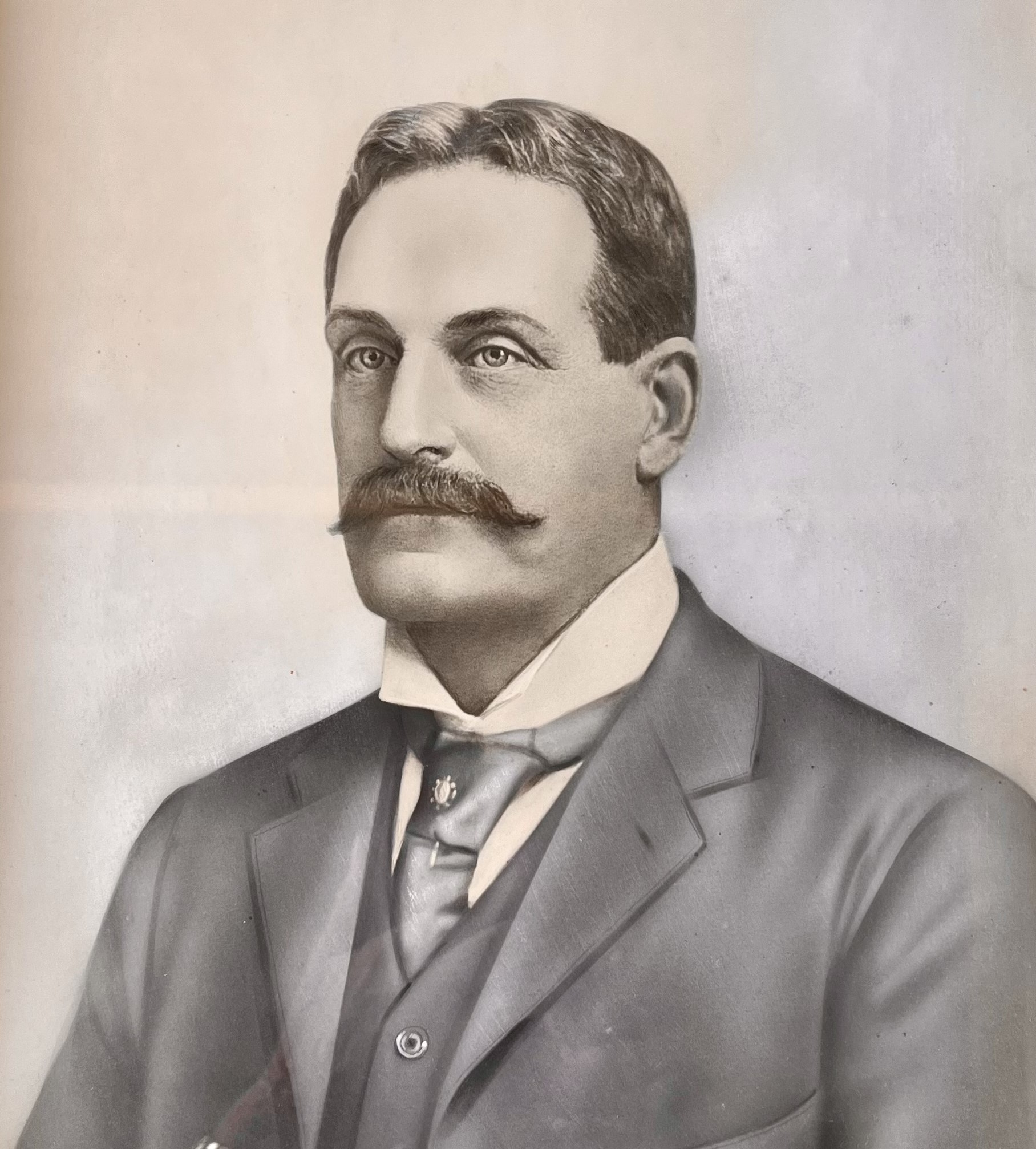
“Breadalbane”, “Cricklewood”, “Abydos”, and “Therallie” were the names of properties in Glen Isla owned by the district’s early settlers. The Waite brothers, George Augustus (Gus) and Charles Beveridge, owned Breadalbane, a name still in use today.
George and Charles were graziers who were amongst the first men to take up land in the area, their initial purchase being in 1873. The Waite brothers’ holding comprised all the land between the river and Main Street, back towards the show-grounds. It was densely covered in scrub and included the area where the water tower now stands. The Waites were big land holders, also taking up Crystalbrook and Cannon Valley runs.
The brothers played a pivotal role in establishing the sugar industry in Proserpine. When the Proserpine Central Sugar Mill finally got underway in 1897, after a decade of disappointment following the collapse of the Crystal Brook Sugar Company, the cost far exceeded the amount of security the farmers could provide. It was largely due to the generosity of Gus Waite that the problem was solved in an exceptional way. He made 3000 acres of his own estate available to be surveyed and sold for farm blocks thus securing sufficient debentures to meet the required government valuation and he chaired the meetings which requested government assistance. What an achievement on that memorable occasion on September 16, 1897 when Lena Waite, wife of G.A. Waite, cracked the proverbial bottle of champagne.
While both Gus and Charles Waite were civic minded, it was Gus who made the most notable contributions to the district. He took part in anything to improve the town. Before there was a hospital or a dentist, his services were often called upon, particularly to pull teeth, as he had had some medical and dental training in his youth. He was President of the Chamber of Commerce, a member of the Show Association, Hospital Board, Ambulance Committee and the Proserpine-Bowen Tramway Board.
Gus Waite was Chairman of the Wanagaratta Divisional Board 1888-1891; 1893-1894 and 1898-1899. In 1910, he was on the first Proserpine Shire Council when it separated from Bowen and from 1913-1914, he was Shire Chairman. During his first year, he informed councillors that many angry men had threatened his life if a road was not put through to the show-grounds. Councillors Waite and Biggs moved that a road be formed as speedily as possible and the motion was carried unanimously. In later years, this road was named Anzac Road in remembrance of our fallen soldiers from World War One. In early 1914, Gus Waite was again on the Council in Number 1 Division.
It was not only farmers who benefitted from Gus Waite’s magnanimous gestures. In 1912, the Show committee leased property owned by Gus – the value of the land was £140 with rates £4/1/8d yearly. Dr Anderson, our first resident doctor, bought land from him on which to build the homes, Parkfields and The Grange.
George Augustus Waite was a man among men. By the time of his passing on September 28, 1914, the town had a hospital, a good school and many businesses, in no small measure due to his efforts. It is fitting that his tombstone sits at the entrance to our cemetery and is inscribed with the words “The Father of Proserpine”.
The descendants of the two Waite brothers now live far away from Proserpine but we are reminded of their influence and contribution to the district by Waite Street which is named in their honour.
Story courtesy Proserpine Historical Museum and photo courtesy Whitsunday Regional Council.
George Waite

Bowen Community Council and Federal Member for Dawson Andrew Willcox planted the first of a garden’s worth of trees at Cooinda Family Centre last Thursday, March 16.
A small contingent of local families and dignitaries gathered for the tree planting ceremony which commemorated Her Majesty Queen Elizabeth the Second’s Platinum Jubilee and was funded through a Queensland State Government Program.
The single tree planting event took place at the Centre’s current home on Williams Street, Bowen, with subsequent trees from the project to be planted at the new Bowen Community Centre towards the end of this year.
Chair of Bowen Community Council Christine Coventry said that the day was dedicated to the Queen’s 70 years of service to The Commonwealth.
“This tree planting honours her legacy,” Ms Coventry said.
“We are extremely grateful to be recipients of this grant, which has spent $15.1 million across Australia in the planting of trees in Her Majesty’s honour.”
Ms Coventry said the garden of trees at the new Cooinda – to be located at the Bowen Community Centre, and which she has been assured by State Government will be completed by the end of this year – will be a spectacular garden for young families.
Federal Member for Dawson Andrew Willcox said he was extremely pleased to see another successful planting in memory of Her Majesty in Bowen and congratulated Bowen Community Council on being awarded the much-deserved $13,636 grant.
“This round of planting was extremely special and was a reminder to this community and its businesses of our amazing Queen Elizabeth the Second,” Mr Willcox said.
“Her Majesty was a tireless advocate for the regenerating through tree planting, and this new forest will be a reminder to Bowen of her spirit for years to come.”
Previous Queen’s Jubilee Tree Planting events in the Whitsundays have taken place at the Bowen Sporting Complex, where 160 Australian native trees are to be planted this year, and at Cannonvale State Primary School, naming their 27 trees the ‘Queen’s Jubilee Fruit Forest’.
Federal Member for Dawson Andrew Willcox helped to plant the first of many Queen’s Platinum Jubilee trees at Bowen’s Cooinda Family Centre last Thursday
The MP had a few helping hands to dig in the dirt and plant the new tree
Bowen Neighbourhood Centre, Community Council, and Cooinda Family Centre members gathered for the commemorative ceremony

Staff members from Bowen’s The Grand View Hotel shaved their noggins and chins last Sunday for the World’s Greatest Shave annual charity event which raises funds for Australian families currently facing blood cancer.
The ‘Shavees’ – Peter O’Toole, Brett Crich, Aaron “Pumba”, Andrew Jackson, Stephen Knight, and Stephen Sherriden – were joined by a few brave patrons who donned the cape and went under the blades, shaving their heads for the good cause and raising a $1077.
The pub’s general manager Brett Crich said he and his duty managers have always strived to fundraise for charities and this cause was no different.
“The staff here are really, really good with charity – they’re always eager to support a great cause,” Mr Crich said.
“Aside from the fundraising side, just shaving our heads and beards shows the support to those going through battles with cancer, which is just as important.”
Staff at the Grand View Hotel shaved their heads and bears last weekend for the World’s Greatest Shave, pictured here are hairdresser Tanielle Hunter, Grand View Hotel General Manager Brett Crich, and hairdresser Jayde Rogers pre-shave
.jpg)
Locals and visitors still have the chance to win $2100 worth of holiday vouchers.
The Visitor Information Centre passport competition being run by Tourism Whitsundays in conjunction with Bowen Tourism and Business and Mackay Isaac Tourism is coming to an end.
Locals and visitors have until the end of March to visit the information centres in Bowen, Proserpine and Sarina to have the chance to win.
You can collect the passports at any of the three centres and all you need to do is visit all three to have them stamped and go in the draw to win.
Manager of Bowen Tourism and Business, Leanne Abernethy said this was the second year that the competition had been run and it had proved popular again.
“The staff at the three information centres in the Whitsundays and Mackay regions have worked together to encourage more people to visit both regions,” she said.
“It provides an incentive for travellers to visit all three information centres and also encourages locals to check out their own backyard.”
Please note that the competition finishes at the end of March so get in quick for your chance to win!
Kerry Meier of Bowen Tourism and Business is encouraging everyone to visit the information centres in Bowen, Proserpine and Sarina before the end of March for the chance to win. Photo supplied
Publishers Indemnity. Any individual or entity that places advertising, supplies copy material, or submits editorial content to Core Life Publishing agrees and undertakes to ensure that all such material:- Does not infringe upon any copyright, trademark, or other intellectual property rights;- Is free from any content that could be considered defamatory, libelous, or slanderous;- Does not infringe upon any rights related to privacy or breach of confidence;- Contains no obscene, indecent, or otherwise unlawful material;- Complies fully with the Trade Practices Act and all other applicable laws, regulations, or statutes.Furthermore, by submitting or placing such material, these individuals or entities agree to indemnify and hold harmless the publisher, Core Publishing and Events Pty Ltd, and/or its agents from and against any and all investigations, claims, demands, liabilities, damages, costs, or judgments arising out of or in connection with the material provided. All material is believed to be accurate at the time of printing and remains the copyright of Core Publishing and Events Pty Ltd.
© 2026 Mackay and Whitsunday Life Pty Ltd.
