Independently Owned, Locally Grown, Community Loved


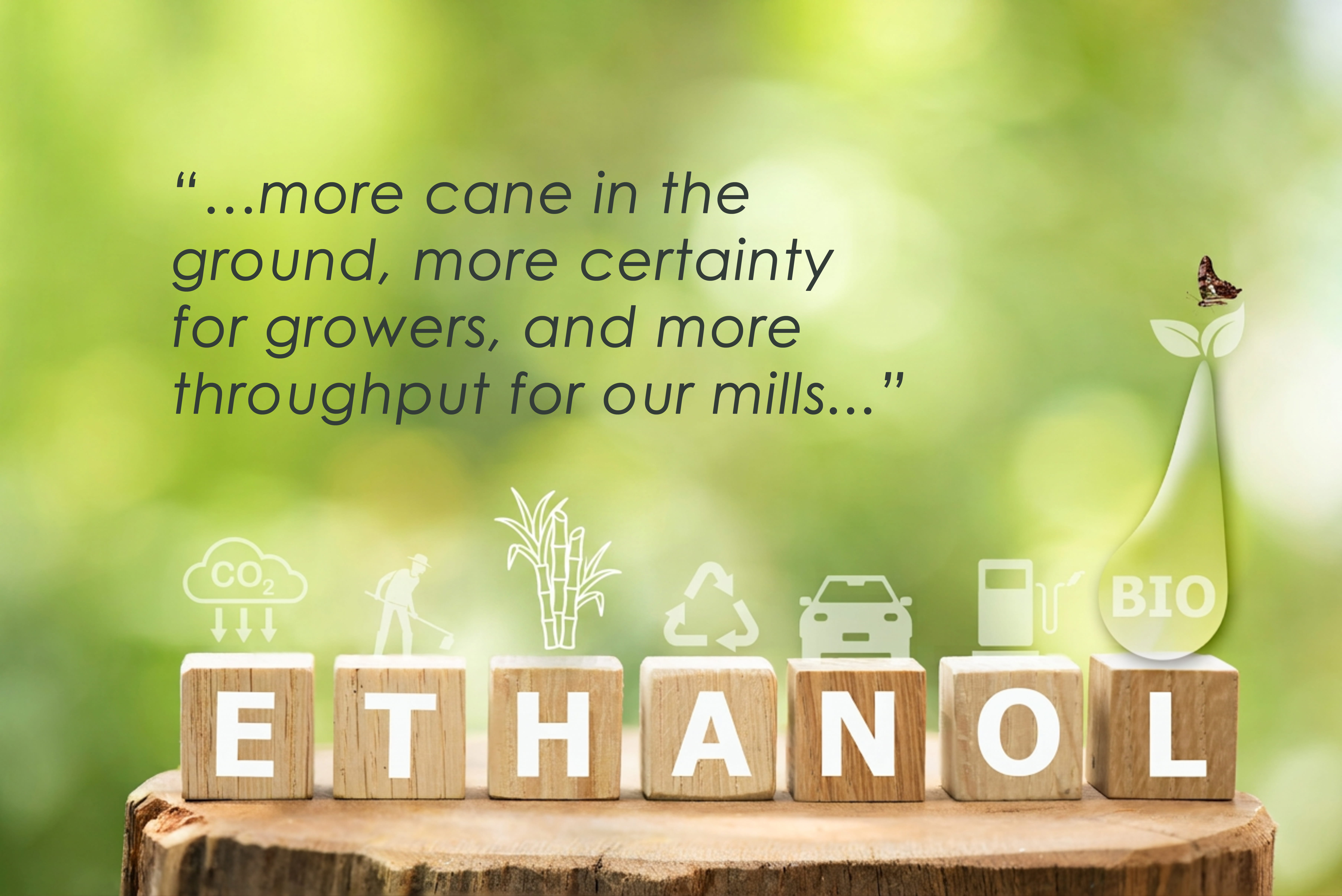
Bioethanol can use sugarcane by-products including molasses, bagasse, mill mud as well as plant material. Image: AdobeStock
By Joseph Borg, Chairman, CANEGROWERS Mackay
A firmly enforced bioethanol mandate, backed by increased local sugarcane production, is essential to strengthening Queensland’s industry resilience, regional jobs, and Australia’s long‑term fuel security.
Our region holds enormous potential: not only for producing sugar, but for renewable fuel, energy diversification, and national economic security.
Queensland’s sugarcane industry has always been a cornerstone of regional prosperity, but today it stands at a crossroads. Global markets are volatile and input costs are rising, and at the same time, Australia faces increasing pressure to reduce emissions, strengthen domestic fuel supplies, and build more resilient regional economies.
A properly enforced bioethanol mandate is one of the most effective tools we have to meet these challenges head on.
Queensland already has a mandate in place, but compliance remains inconsistent. When fuel retailers fail to meet their obligations, growers, mills, and regional communities lose out on opportunities that should rightfully be flowing into our local economy.
Bioethanol is not a theoretical solution: it is a proven, practical, and immediate pathway to cleaner fuel and stronger regional industries and economies. Countries like Brazil and the United States have shown that bioethanol can reduce emissions, stabilise fuel markets, and create thousands of rural jobs. In these countries, and across the world, bioethanol forms a substantially higher portion of retail fuel sales than this country has embraced. Queensland has the same potential, but only if the mandate is taken seriously and enforced with the consistency it deserves.
For Mackay, the benefits are clear. Our region is one of Australia’s most productive sugarcane hubs, with the land, infrastructure, climate, and expertise to support a thriving biofuels sector. Increased demand for bioethanol directly translates into increased demand for sugarcane. That means more cane in the ground, more certainty for growers, and more throughput for our mills, and we all know that milling is a volume game. This in turn supports jobs from the paddock to the processing line.
But the opportunity extends far beyond economics. A stronger bioethanol industry enhances national fuel security, reducing Australia’s reliance on imported fuels. At a time when global supply chains are increasingly unstable, producing more of our own fuel is not just smart policy, it is essential. Every litre of bioethanol produced in Queensland is a litre of fuel Australia does not have to import.
To seize this opportunity, we must also focus on increasing local sugarcane production. The industry cannot diversify, innovate, or expand into new markets without a reliable and growing supply of cane. More cane means more flexibility for mills, more investment in advanced manufacturing, and greater capacity to produce not only sugar and ethanol, but also bioplastics, green electricity, and other high value products.
Growers are ready to meet this challenge. With the right policy settings from all levels of government, including a robust and enforced bioethanol mandate, we can plant more cane, improve productivity, and strengthen the long‑termviability of our region. But growers cannot do it alone. We need government to ensure the mandate is upheld, fuel retailers to meet their obligations, and industry partners to continue investing in innovation and infrastructure.
Mackay has the land, the people, and the expertise to lead Queensland’s next era of renewable energy and agricultural diversification. What we need now is the policy certainty that comes from a mandate that is not only written into law but actively enforced.
A stronger bioethanol mandate is not just good for growers it is good for Queensland, good for regional jobs, and good for Australia’s fuel future. The time to act is now.
Publishers Indemnity. Any individual or entity that places advertising, supplies copy material, or submits editorial content to Core Life Publishing agrees and undertakes to ensure that all such material:- Does not infringe upon any copyright, trademark, or other intellectual property rights;- Is free from any content that could be considered defamatory, libelous, or slanderous;- Does not infringe upon any rights related to privacy or breach of confidence;- Contains no obscene, indecent, or otherwise unlawful material;- Complies fully with the Trade Practices Act and all other applicable laws, regulations, or statutes.Furthermore, by submitting or placing such material, these individuals or entities agree to indemnify and hold harmless the publisher, Core Publishing and Events Pty Ltd, and/or its agents from and against any and all investigations, claims, demands, liabilities, damages, costs, or judgments arising out of or in connection with the material provided. All material is believed to be accurate at the time of printing and remains the copyright of Core Publishing and Events Pty Ltd.
© 2026 Mackay and Whitsunday Life Pty Ltd.