
Independently Owned, Locally Grown, Community Loved
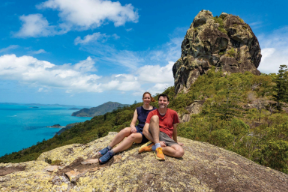
A new guide to walking the Whitsundays has been launched by the family behind the region's much-loved boating "Bible", following more than a decade of research, island adventures and one broken ankle. Published by Windward Publications, Walking The Whitsundays – A Guide to 45 Island and Mainland Walks is a 304-page guide covering 45 walks across the Whitsunday islands, Airlie Beach, Conway National Park and Bowen. Designed as the hiking companion to 100 Magic Miles, it features maps, photographs, elevation profiles and practical information, alongside insights into the region's history, wildlife, geology and culture. Tourism Whitsundays CEO Tim Booth said the book encourages visitors and locals to discover another side of the region. "Walking The Whitsundays encourages people to slow down, explore more deeply and experience a different side of the landscapes, stories and natural beauty that make this region so special," Mr Booth said. Anthony Colfelt said the book grew naturally from a lifetime of walking the Whitsundays with his family. "The walks have always been a big part of our sailing trips," he said. "We have long wanted to include more about them in 100 Magic Miles, but quickly realised they deserved a book in their own right because they are not just for boaties. These walks are for everybody." The guide includes national park island walks, resort island walks and selected mainland tracks around Airlie Beach, Conway National Park and Bowen, including the Whitsunday Ngaro Sea Trail and the new Ngaro Track on Whitsunday Island. The Colfelts began researching the project in 2011, exploring the islands by boat, camping and walking as many tracks as possible while continuing to update new editions of 100 Magic Miles. The project wasn't without setbacks. While photographing Coral Cove on Hamilton Island, Emma Colfelt slipped on a wet rock and broke her ankle, requiring surgery and a lengthy recovery. Much of the book's writing and historical research was completed from bed while she recovered. "Having the book to focus on helped me cope with the pain after surgery and the weeks stuck in bed," she said. Anthony Colfelt said the accident became part of the story behind the book. "It was a reminder that this book was a real family effort," he said. "Researched on foot, refined around the kitchen table and, at one point, written from a sick bed." The guide also explores the Whitsundays' rich history, from the enduring connection of the Ngaro, Gia and Juru people to Country through to early settlers and the pioneers of island tourism. Alongside local stories and wildlife observations, it features previously unpublished historical photographs and images by photojournalist Sharon Smallwood, capturing a side of the region many visitors never experience. Emma Colfelt said she hoped the guide would encourage more people to explore the Whitsundays on foot. "We hope the book inspires people to explore, helps them know what to expect, and enriches their experience of this special place," she said. Walking The Whitsundays – A Guide to 45 Island and Mainland Walks is available now for $49.95 from The Beach Book Boutique in Airlie Beach, News Whitsunday in Cannonvale, Trader Pete's on Hamilton Island, selected local outlets and online at 100magicmiles.com. Photo Captions: Left: Emma and Anthony Colfelt at Whitsunday Cairn, one of the walks featured in the Walking The Whitsundays book. Photograph credit: Felix Colfelt Right: Emma after breaking her ankle during research for the book. Photograph credit: Windward Publications
Read the full story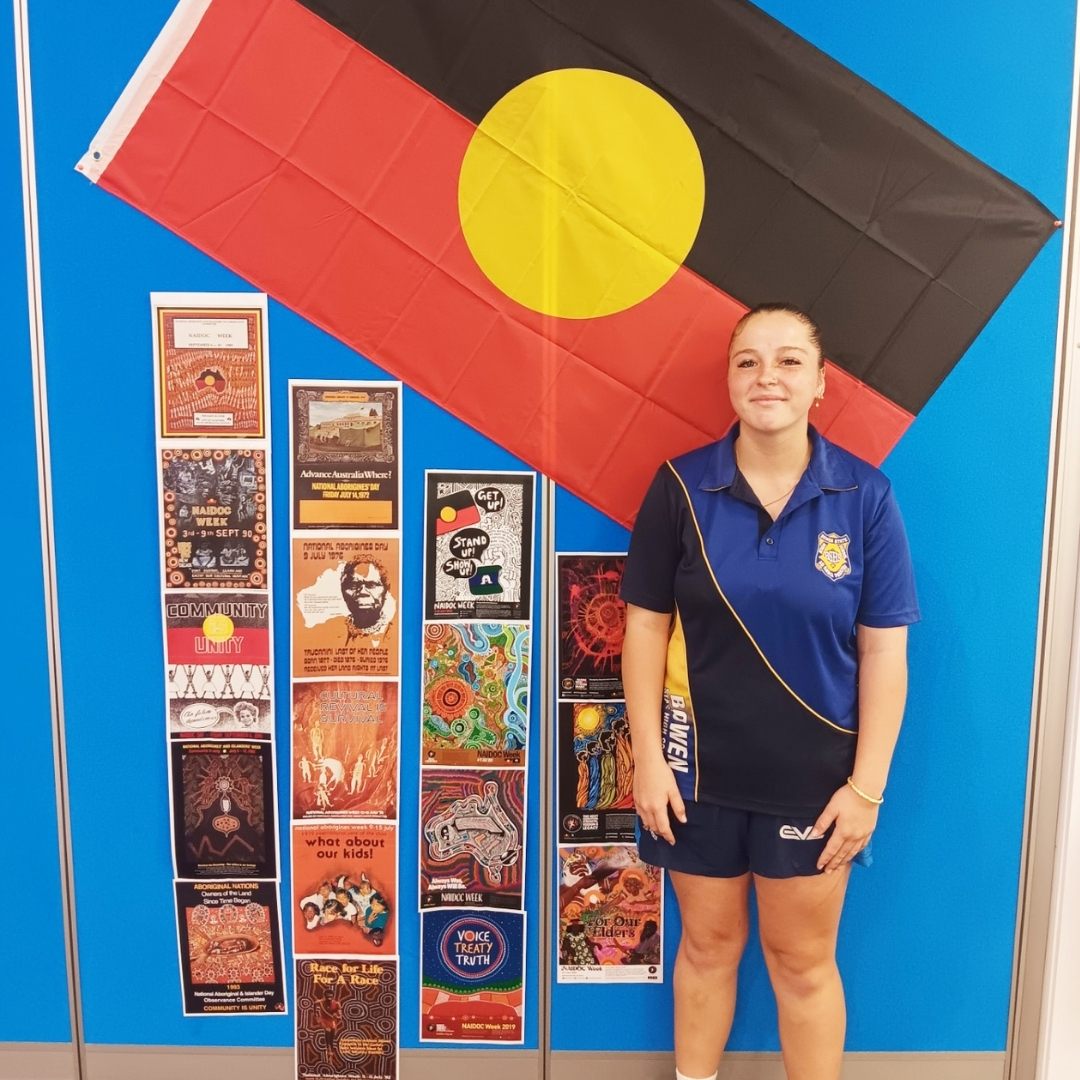
To celebrate NAIDOC Week 2026, a few Bowen State High School Students were asked the question: What does NAIDOC mean to you and why is it important to celebrate? Bowen State High School celebrates every year with a full day of activities, awards, and reflection. Bella Walters (Year 12 Student and 2026 NAIDOC Awardee) What I love most about NAIDOC is seeing everyone come together to celebrate and learn about Aboriginal and Torres Strait Islander cultures. It creates a sense of belonging, respect and pride while strengthening our school community. NAIDOC is important to me because it gives me the opportunity to celebrate my culture, honour the strength and resilience of my ancestors, and share the stories and traditions that have been passed down through generations. It reminds me of where I come from and inspires me to carry my culture forward with pride. I'm proud to represent my culture and show that our history, knowledge, and traditions that continue to thrive. Being able to share my culture with others and help build understanding makes me feel proud to be a First Nations student at Bowen State High School. I hope I lead by showing kindness, respect, and pride in who I am. I want other First Nations students to know they can embrace their culture and chase their goals while staying connected to their identity. Havana Power (Year 9 student and Queensland Aboriginal and Torres Strait Islander Foundation Finalist) To me NAIDOC is a time to celebrate and honour the cultures, histories, and achievements of Aboriginal and Torres Strait Islander peoples. It’s a reminder of the importance of listening and learning about cultures, languages, and stories for future generations. For me it’s an opportunity to learn and show respect to one of the world’s oldest continuing cultures. It’s a time to acknowledge the challenges they have faced and continue to overcome. NAIDOC celebrations at Bowen State High School is a fun, welcoming time when the whole school celebrates Aboriginal and Torres Strait Islander cultures. Some of my favourites include Cultural Ceremonies, Memorial Awards and Community Engagement. This honours and celebrates First Nations culture by bringing students, families, and local Traditional Owners together to promote reconciliation and educate the next generation. Photo captions: Photo 1- Bella Walters Photo 2- Havana Powers Photo Supplied: Robert Harris
Read the full story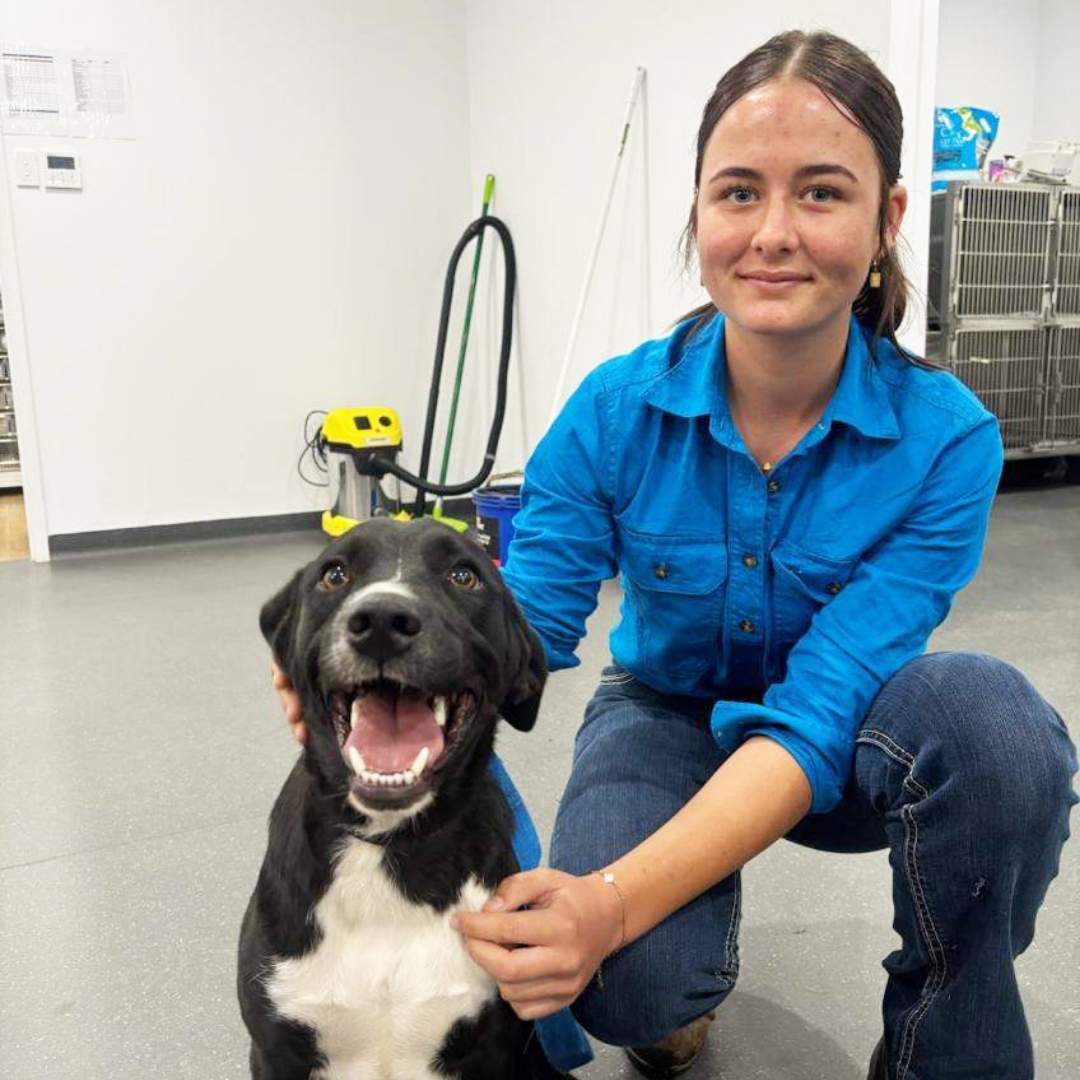
St Catherines Catholic College Year 10s return from school holidays to a week of work experience, set to gear the kids with practical skills and potential taste of the future. The week-long placements form part of the college's Year 10 careers education program, with students spending the year exploring future pathways before stepping into the workplace. This matches local businesses and students, giving them the chance to experience potential career paths before choosing their senior subjects and looking into future study options. “We find that it can lead to better decision-making in their pathway through year 11 and 12 and beyond,” said Tundi Gosselink, VET, Career and Pathways leader. Before students step into a workplace, they're encouraged to explore where their interests and strengths might best fit. Through careers classes, psychometric testing and interviews with people already working in different industries, students begin narrowing down potential career paths before selecting a placement. "It's a really difficult conversation to have, so in preparation they investigate different careers, their own interests and strengths, and how those match different professions,” Mr Gosselink said. The students can pick from the likes of tourism, to trades, admin, agriculture or in the case of Gabby Appleton, animal care. Gabby started her first day at Great Whitsundays Vet this week and can already see herself pursue it as a long-term career. “I think it's more valuable because you're actually doing the job,” Gabby said. “I'm planning on finishing grade 12, then hopefully going to uni and becoming a vet.” Photo caption: Gabby hanging out with her new Furry Friends at Great Whitsundays Vet. Photo Supplied: Gabby Appleton
Read the full story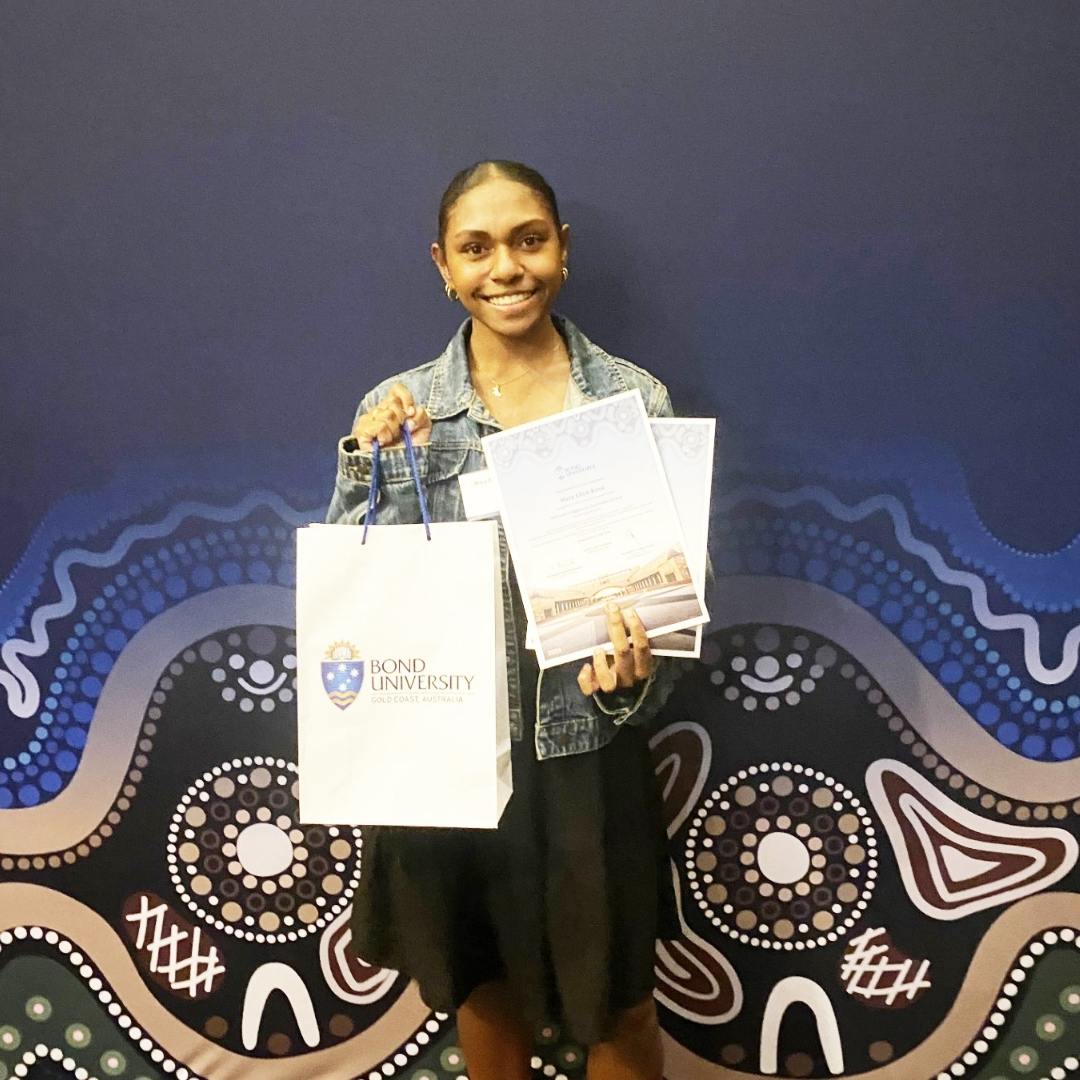
Two Bowen State High School students are being recognised during NAIDOC Week after earning places in Indigenous university programs, giving the next generation of First Nations students a glimpse of what university can offer. Queensland Aboriginal and Torres Strait Island Foundation (QATSIF) scholarship recipients Mary-Ellen Kusu and Kenzie Andersen were selected from a competitive field to attend winter schools at Bond University and James Cook University respectively. "The girls have embraced the opportunity to explore university life,” said Bowen State High School Principal Robert Harris. “Their willingness to leave home to attend these residential camps reflect their commitment to achieving their future goals.” Mary-Ellen attended the 2026 National Indigenous Business School at Bond University on the Gold Coast, enabling her ability to develop a career while strengthening her cultural identity. During this program, she took part in activity pitching ways to improve indigenous inclusion for the 2032 Olympic Games, where her team put together a winning performance. Kenzie attended the JCU Indigenous Winter Program, participating in lectures and practical health workshops, including CPR, first aid and midwifery simulations. She achieved a perfect score on a nursing assignment, confirming nursing is the career she wants to pursue. Photo captions: Photo 1- Mary-Ellen Kusu Photo 2- Kenzie Anderson Photo supplied: Robert Harris
Read the full story

It’s the time when we all get our records and receipts together for the annual trip to the accountant or the dreaded job of completing a tax return ourselves. If you’re doing your own, your MyGov online account now has a lot of information like Group Certificates and Interest pre-loaded.
When you’re completing this mundane task this year, spare some time to think about how you’d like your tax return to look next year. Tax returns look backwards at what the situation was for the last financial year whereas Financial Planners look forward at what we want to achieve in the current and future years.
This can involve things such as:
• Ensuring you have income protection in place which not only protects you and your family but is fully tax deductible.
• Ensuring you are utilising the generous tax rules on superannuation to your best advantage with strategies like Salary Sacrifice and pensions for those over 60, even if you’re still working.
• Ensuring that you’re making the most of any Salary Packaging opportunities your employer provides, especially if you’re employed in industries like hospitals or aged care facilities which attract significant salary packaging opportunities.
• If you have a home loan as well as an investment loan, ensuring you’re doing the right things to be able to claim more interest as a tax deduction and pay less interest on the home loan for the property you live in.
If you’d like an obligation free review of your situation, to discuss ways to put a smile on your face this time next year with a better tax return, call us for an appointment today.

Thirty years of island hopping around the Whitsundays - fishing, shelling and camping.
When George Sax came to Australia from Switzerland in 1914, as a classical violinist with a travelling orchestra, his first job was working in a market garden. After that, he cut cane by hand for fifteen years in north Queensland then worked on the railway as a ganger. In 1921, he came to Proserpine and bought a cane farm at Myrtle Creek.
As with many wanderers, George bought a fishing boat and fished all around the reef, making money by selling his catch and also taking out fishing parties. This gave him an intimate knowledge of the islands and he began to collect shells. As his passion for shells grew, he gave up his fishing and settled at Mandalay Point.
It was here that people were first able to view his shells. George travelled to out of the way places in search of unusual specimens. On some of his trips, he would live for weeks at a time on uninhabited islands, surviving some times without water. George never used a tent, but put the skills taught to him by local aborigines to good use to build a lean-to of sticks and palm leaves.
George was well known to mainland folk as an exceptionally talented musician. A dance was not a dance without George playing his violin. From time to time, he travelled over Queensland with an itinerant band of musicians.
Described by some as an anchorite, George Sax lived for many years at Mandalay. His domain, which was actually owned by the Crown, could be approached only by water. Despite his solitary existence, stories abound of his hospitality extended to callers to his home which was easily recognisable by the blaze of vermillion bougainvillea vine that he had planted beside his hut.
Upon arrival, George would be waiting on the shingle beach, attired in tattered shorts (most likely having been put on at the sign of visitors) ready greet his guests. The billy would be on the boil and they would be regaled with damper moistened with golden syrup. A veritable feast at Mandalay would follow with plates of battered fish, chunks of bush lemon and oyster patties – and on rare occasions a tune on his violin.
George’s diet consisted mainly of seafood, turkey and goats’ meat, so his eyes would light up if he spied a basket of homemade goodies.
Once his guests departed, George would wave politely, then disappear into the bush and no doubt step out of his shorts before he resumed pottering about, beautifying his domain with its shingle paths lined with stones and lumps of coral, and where coconuts, shrubs and plants abounded.
In 1955, George moved to South Molle Island taking his shell collection with him and setting it up in a building provided by Wally Bauer, the resort owner. At this point in time, it was comprised of 5000 different species and was one of the finest in Australia. Not only did George collect shells, he studied them and could speak authoritatively about them.
Shortly after Cyclone Ada (1970) destroyed South Molle and most of his shell collection, George went to live at Ken McPherson’s property at North Gregory. There he remained, living with no electricity and few creature comforts, until his death on August 15, 1986, aged 93.
Story and photo courtesy Proserpine Historical Museum
Image: George Sax

A young Whitsunday resident is inspiring other children by creating her own business at 11 years old, using her own pocket money for the start-up and learning how to sell her hand-made products online.
Trinity Murphy, who attends St Catherine’s Catholic College, has been pestering her mum to let her start her own business for years but until now she hasn’t been allowed.
From selling slime to finger knitting, Trinity has pitched many an idea, but it was her colourful loom bands that finally got the tick of approval with mum, Cynitta.
Thinking of the idea when she saw a friend sell loom bands to other friends on the bus, Trinity took the concept one step further by starting an official business called “Handmade by Trinny” and creating her own Etsy account.
Promoting her colourful wristbands through social media, Trinity was very excited when the first order came in just hours after she shared the link.
She has since made 11 sales in just one night.
“I like it, it’s fun to do!” she said.
“It’s very rewarding getting money for something you like doing.”
Using her own pocket money to buy the loom bands and purchase postage, Trinity now understands the entire retail process from start to finish.
“It’s really cute and I am super proud of her,” said mum Cynitta.
“She’s always trying to think of things to do and this is a great experience for her.”
Trinity is now saving up to buy something special and will also diversify her product range to include scrunchies, finger knitting and key chains soon.
Image:
1: Trinity posting her loom bands to customers
2: The colourful loom bands

An unprecedented number of flying foxes are currently roosting on trees in Collinsville and these noisy little critters are certainly causing a stir as they return to town after feeding on the melaleucas.
What’s been compared to a ‘big vortex’, the flying fox storm whooshes through the streets, in what sounds like rain coming, but instead the little terrors are defecating everywhere.
In March this year there were 1,500 flying foxes spread out over 10 trees and the Whitsunday Regional Council had been monitoring them, conducting a two-week noise deterrent campaign to discourage them.
This, however, was not meant to be, for the southern migration of the Little Red Flying Foxes saw numbers rise to 8000 in July.
By early September this number had grown significantly to 22,000 spread between 25-30 trees in Pelican Park.
Scott Hardy, Coordinator Natural Resource Management and Climate with the Whitsunday Regional Council, said that “this year was a massive increase and totally unexpected” but wants to assure the community that the situation is temporary.
“They will be gone in the next four weeks,” he said.
“Once they move on, numbers will drop to between 200 and 900.”
In the meantime, Council will continue with measures to minimise the problem.
“We can help with tree trimming and will be prioritising where bats are living on private land or having the most impact,” Scott explained.
Council are also introducing the temporary trial of a 6m tall ‘wavy man’ to try and mitigate impacts of the roost on surrounding residents.
Out of the 30 trees impacted, 19 reach into backyards with an estimated 6,500 bats directly effecting households.
Scott advised locals to continue hosing down any problem areas including sides of houses and children’s play sets.
He did stress that bats are not dangerous or harmful to humans.
“Bats are a bit like us, not every human has the flu, they could carry it but only a very small percentage will have a virus,” he said.
“The bacteria in bat poo is the same as it would be in cats, dogs and any other animals.”
For further information on the issue, government websites offer a wealth of knowledge.
Image: Over 22,000 Flying Foxes are currently roosting in Collinsville

The main street of Collinsville is set to receive a boost following the announcement at last week’s Council meeting that final plans for its beautification project have been approved and work will commence early next year.
The ‘Choose Collinsville Project’ follows a similar structure as the Bowen and Proserpine iterations which have been widely appreciated by the communities and known to enhance the liveability of the towns.
Collinsville main street will receive new pedestrian signage, street furniture, public bins, landscaping with irrigation, traffic islands and the entire street will be re-sealed.
Councillor Michelle Wright said that following community consultation it was decided to use an historic green colour theme to fit with the town’s pre-existing signage.
“Collinsville is an older town with history being an important part of the community, so this is the colour the people chose,” she said.
“This project will give local businesses a boost and inject a bit of pride in the community, as well as attracting new people to town.”
The entire project was brought about following two community consultations, where locals questioned the plans which stated eight carparking spaces would be lost due to the installation of scenic flower beds.
Councillor Wright decided to walk the streets and ask all the local businesses for their feedback.
Following this, it was decided to off-set the ones that were lost and reconfigure the preliminary design.
“We listened to the people and now we are meeting in the middle,” said Cr Wright.
“I believe this project will bring about the boost we are looking for.”
This project was financed by the Federal Government’s Building Better Regions Fund, who contributed $700,000, with a further $300,000 from Whitsunday Regional Council.
The beautifications are part of a series of initiatives which have recently improved the liveability of Collinsville – the waterpark was completed earlier this year and Cr Wright says that she hopes the Pump Track will be next on the list.
Image: Collinsville main street will receive a $1 million facelift

Our region is being viewed by millions of people all round the world thanks to Hollywood movie, Ticket to Paradise, which hit the cinema screens last week.
Filmed in three of the Whitsunday’s best locations, the movie professes to be based in Bali, but those familiar with our region will note the unmistakeable turquoise ocean and local resorts which have been dressed up to look like an Indonesian holiday destination.
Despite fooling audiences around the world about its location, the hype about the Whitsundays is sure to reach distant shores with promotional information noting it was filmed locally.
The movie follows the story of Academy Award winners George Clooney and Julia Roberts as they reunite on the big screen as exes who find themselves on a shared mission to stop their lovestruck daughter from making the same mistake they once made.
Travelling to Bali to ‘stop’ the wedding, a hilarious series of events takes place to the backdrop of a tropical island paradise and the sweet surprise of second chances.
Featuring several of Hamilton Island’s signature landmarks, the movie includes footage of qualia’s luxurious Beach House, the bar at the Long Pavilion and the stunning Spa qualia.
A pre-wedding party scene and an impromptu soccer match was also set at Hamilton Island’s Catseye Beach, while One Tree Hill formed the backdrop for unexpected romance.
The biggest set redesign, however, was Palm Bay Resort which transforms into a Balinese family compound complete with a floating seaweed farm.
The 23 beachfront villas and pinch-me perfect views over the Whitsunday Passage were a central part of the feature film.
Also making the list for low-key escapades closer to the mainland, is the little-known Haslewood Island opposite Whitehaven Beach and Chalkies Beach and Katie’s Cove.
This cove is the scene where the main characters reunite with their daughter, Lily, in Indonesia, and is the backdrop of a first aid scene after David’s (Clooney) encounter with an overly friendly marine creature.
This is not the first time a Hollywood movie has been filmed here in the Whitsundays – ‘Pirates of the Caribbean: Dead Men Tell No Tales’ and ‘Fools Gold’ were both shot in Whitsunday waters.
Image: Julia Roberts and George Clooney in Ticket to Paradise
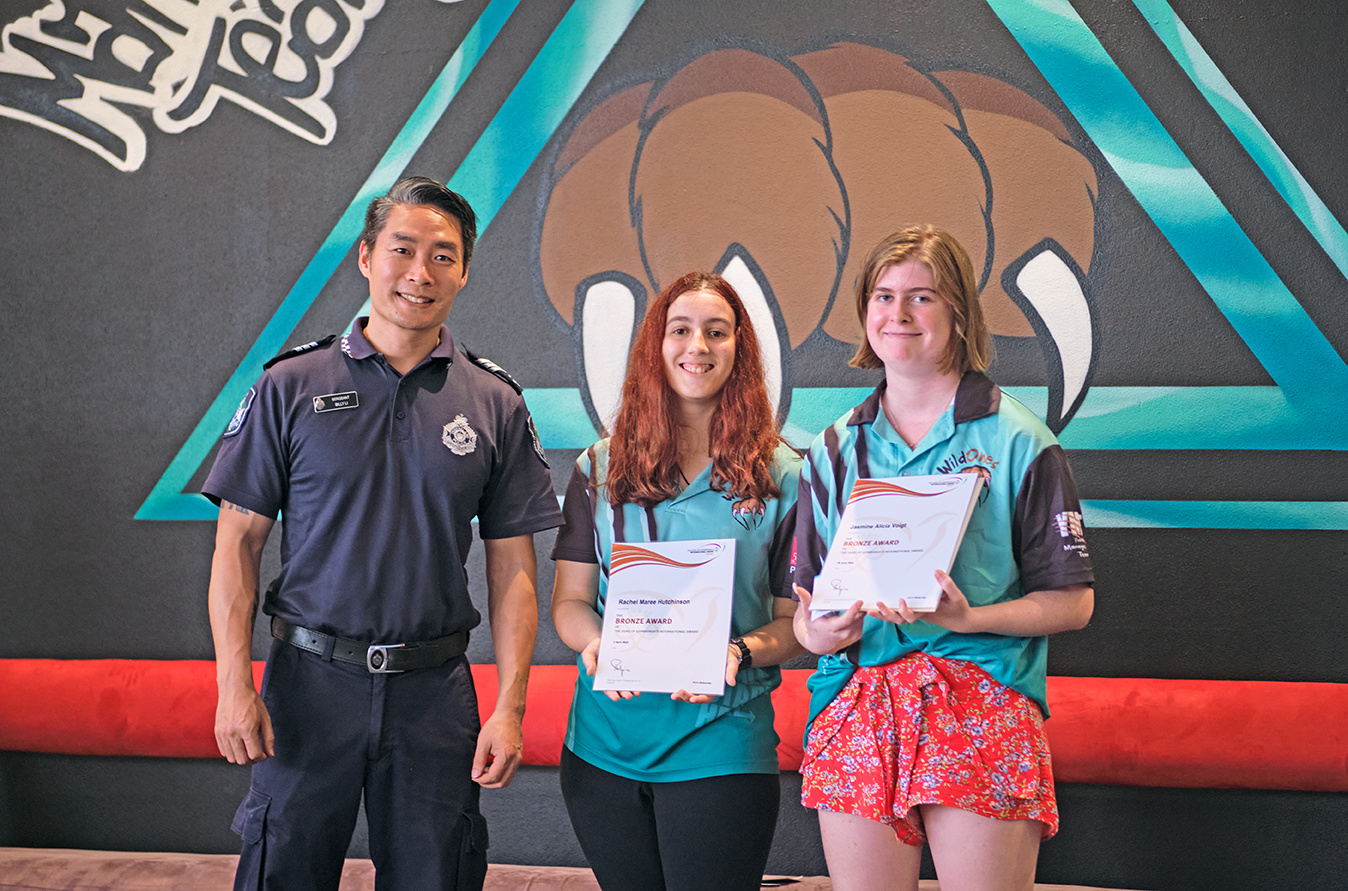
Two of the Whitsundays young leaders were rewarded with a prestigious youth award at the end of an almost two-year journey late last month.
Proserpine State High School students Rachel Hutchinson and Jasmine Voigt received their Duke Of Edinburgh Bronze Awards having completed the requirements of the international programme.
Police Sergeant Billy Li presented the students, who are also members of the Whitsunday PCYC’s Youth Group, Wild Ones, with their certificates.
The Award is a leading structured youth development program, empowering young Australians aged 14-24 to explore their full potential and find their purpose, passion and place in the world, regardless of their location or circumstance. The Award is a fully inclusive program and has no social, political, or religious affiliations.
To achieve an Award, each young person must learn a skill, improve their physical wellbeing, volunteer in their community and experience a team adventure in a new environment.
For Rachel and Jasmine’s adventurous journey, the students travelled to Charters Towers where they learned about the town’s history, while their community service was fulfilled through participation in charity events, sausage sizzles, and Clean Up Australia Day.
Both students had previously completed the Bridge Awards, and The Duke Of Edinburgh awards were the next step on their journey to attaining high-level youth awards.
“It’s such a great thing to have on your resume which is why I wanted to take part,” Rachel Hutchinson said.
“It feels great to be two years down the road now and to finally be receiving these certificates.”
There are three levels of the Duke Of Edinburgh Awards: Bronze, Silver, and Gold – each of which is progressively more challenging.
Rachel Hutchinson said she was eager to pursue her Silver level accreditation in the future.
Police Sergeant Li said he was delighted for his Youth Group members to have achieved this goal.
“They’ve grown up so much in that time, and it’s certainly not an easy thing to achieve. It requires commitment and persistence, which makes us very proud,” he said.

Our local ecosystems are feeling the love and the value of technological advancement thanks to a series of new programs monitoring the health of the Great Barrier Reef and its marine life.
Dolphins, fish, sea cucumbers, seabirds, corals, and even rats and ants are in the sights of a new wave of science projects funded by the partnership between the Australian Government’s Reef Trust and the Great Barrier Reef Foundation.
Great Barrier Reef Foundation Managing Director Anna Marsden said the Integrated Monitoring and Reporting Program is developing more and better ways to manage Reef health.
“Our Reef is the size of Japan, or Italy, or 70 million football fields, so the task of monitoring an ecosystem that size is enormous,” Ms Marsden said.
“Leveraging innovative technologies like underwater drones, artificial intelligence and environmental DNA techniques, these 11 new critical monitoring projects will help close some big knowledge gaps that currently exist on the Great Barrier Reef.”
This project will see the first of many studies take place.
Underwater drones and remote sensing will be used to learn more about the impacts of commercially fishing sea cucumbers, including protected and threatened species.
The three key species of inshore dolphins in the wild – Australian snubfin, Australian humpback and Indo-Pacific bottlenose dolphins – will also be monitored to assess potential threats.
Aerial drones and acoustic recording devices will collect information on significant seabirds including the little tern, bridle tern, crested tern and brown booby.
The program will also introduce the first ever Integrated Reef Fish Monitoring Program revealing important insights about different fish habitats, including fish nurseries for priority species such as coral trout, stripey snapper, damselfish, and butterflyfish.
DNA and artificial intelligence will be used to supercharge biosecurity surveillance to get the jump on high-risk ant and invasive rodent species such as yellow crazy ants, electric ants, tropical fire ants and red imported fire ants as well as black and brown rats.
These in initiatives will all help guide our local ecosystems towards the broader Reef 2050 Plan and will be aided by citizen scientists and traditional landowners as well as other reef research partners.
Images:
1: Underwater drones are used to monitor marine life
2: Aerial drones will look into seabird populations
3: Potential threats of inshore dolphins in the wild will be assessed

A total of 14 bubs are now driving around safely ensconced in a free car seat thanks to the kind donation of surplus stock from Whitsunday Neighbourhood Centre.
Chief Operating Officer Bec Woods said that since their Car Seat Fitting Program was unable to operate following a change in insurance regulations, she had been storing the left-over seats in one of the sheds.
Previously the Car Seat Fitting Program would ‘no questions asked’ donate a brand-new car seat when parents presented with an out of date, damaged or ‘not fit for purpose’ seat – exchanging it for a new government funded version.
Always savvy with applying for the right grants, Bec Woods secured the baby seats through funding from a Main Roads Transport Safety Grant.
On Tuesday evening she decided to post on social media, offering expectant Whitsunday mums the brand-new, still in the box, 0-8 years Infasecure Legacy Convertible Car Seats.
Within 16 hours all the seats were snapped up.
Five went to Whitsunday Counselling and Support, two went to disability support and the rest when to individual community members.
“We offered them out with no means testing,” said Bec.
“There was no criteria needed to get a seat because at the end of the day they are all going to safely transport children and that’s the priority.”
Whitsunday Neighbourhood Centre have a range of other community assistance initiatives which include the recently launched Community Food Drive.
They are also a referral service for many other organisations that can help with a variety of issues such as mental health and homelessness.
Image: Whitsunday Neighbourhood Centre gave away 14 car seats this week

It has been really exciting this week to watch two of my co-workers take off on a well-deserved holiday – Mackay Editor Amanda Wright has flown to Los Angeles and our beloved boss Bec Douthwaite headed off to Fiji.
Having just come back from my own lengthy vacay visiting family in the UK, it feels great to see them get their turn – I know first-hand how important it is to give yourself time to relax, take a step away from your ‘everyday’ and reconnect with the most important person in your life – yourself!
I hope many of you are enjoying time off with the family over the school holidays and those who are lucky enough to be able to travel at off-peak times, are planning their next getaway.
We can all get caught up in the vicious circle of ‘existing’ – waking up, going to work, cooking dinner, going to bed and repeating the same thing again tomorrow.
Life’s short and if we are lucky enough to get old, we won’t be looking back at how much we earned, how high-powered our job was or even the belongings we managed to accumulate over time – we will be looking back at the magical moments and the good times we created with family and friends.
I know I will!
This edition we celebrate a hugely successful 14th annual Paul Bowman Challenge, a Family Fun Day in Bowen, the Get Active Day in Airlie Beach and the Big Aussie BBQ at Coral Sea Marina – it has been great to see so many people show-up and support the events that are largely organised by volunteers and often raising money for local charities.
Congratulations to everyone involved.
Rach
Quote of the Week: “To live is the rarest thing in the world. Most people just exist.” (Oscar Wilde)

In a shock announcement, Councillor Al Grundy has resigned from his position with Whitsunday Regional Council and will be taking up the role of Chief Executive Officer for Mackay Isaac Tourism next month.
The news comes less than a month after his bid for Mayor was unsuccessful following a tight campaign race which saw Julie Hall named new Whitsundays Mayor.
There is much speculation about his decision to leave Council mid-term, having only served two and a half years of the current four-year term.
This will only be the second time in recent history that a Councillor has resigned before the end of the allocated term.
His decision means that the Whitsundays is once again plunged into election mode, the third time residents have gone to the polls this year.
It will also mean rate payers will foot the bill for another election, estimated to cost around $200,000.
Mayor Julie Hall said, on behalf of Council, that she thanks Cr Grundy for his time serving his division and for his contribution during his time as Councillor.
“Cr Grundy is a very active member in the community and has represented Council on a range of committees, with the environment, waste management and tourism at the centre of his approach,” she said.
“We wish him well for his future outside of Council.”
Chief Executive Officer Rod Ferguson said that Council will work closely with the Electoral Commission of Queensland to progress a by-election for Division 2 to fill the vacancy.
Cr Grundy’s last day will be on Friday, October 14 and he will commence his role at Mackay Isaac Tourism on Monday, October 17.
With more than 26 years of tourism experience as a tourism operator and owner, which includes being the Chair for Tourism Whitsundays, Cr Grundy brings a wealth of experience to his new position.
Mackay Isaac Tourism Chair Councillor Justin Englert said he is confident the new appointment will bring tremendous strengths to not only the organisation but also the region.
“With new ideas, a fresh approach and innovative concepts, backed by a strong tourism marketing and business background, the organisation is in good hands,” he said.
“The board of directors at Mackay Isaac Tourism is excited about this new appointment and with Al’s significant background in the tourism industry, I am sure his ability to identify new opportunities will drive growth for our Mackay Isaac Region.”
Having already been equipped with the right skillset and his strong passion for the tourism industry, Cr Grundy says he is raring to go and already has a clear direction on how he will steer the organisation and region to greater heights.
“I am excited to be given this responsibility of leading the region and the team at Mackay Isaac Tourism,” he said.
“I hope my years of experience will be an asset and I look forward to meeting the industry and working closely with them to shine a spotlight on the best of what the Mackay Isaac region has to offer to the world!”
Image: Al Grundy will become the CEO of Mackay Isaac Tourism

Rarely have we seen a growing season as good as over the past few months. In the sugar industry, crop tonnage is considerably higher than estimated. This greater than usual mass is not confined to crops. All vegetation is of far higher density than we are accustomed to.
This is where our problem lies. As cold weather has led to much of this vegetation dying off and the oncoming hotter conditions may be combined with drier conditions. We are left with a potential catastrophe with regard to fire.
With such a huge fuel load, an ill-judged spark can cause a conflagration of epic proportion. It was not so long ago that the “red steer” was running wild all across our region. This is a situation that I, for one, have no wish to face again.
So, what to do?
We should all try to reduce the amount of flammable material around us. Tall grass, weeds, undergrowth and leaf litter all need to go. Clear property boundaries and roof gutters. In rural areas, a water source and a means of pumping that does not require electricity is a very good idea. These are just some measures we should take – there are others – now is the time for thinking. When a fire starts, it’s action time and a plan is essential.
The best way of fighting fire is not to start it. Listen to warnings. A total fire ban is TOTAL.
Be wary of anything that can throw a spark, such as slashing and mowing. Think very carefully before undertaking anything that can. If things go awry, it can cost massively in property and, as bitter experience shows, lives.
If you do need to light a fire, protect yourself and others by obtaining a permit from your local fire warden.
Not that we burn cane before harvest much anyway around here, but it is a good idea to get that permit even for this.
Stay safe over the next few months.
Cr Martin Bella
Mackay Regional Council
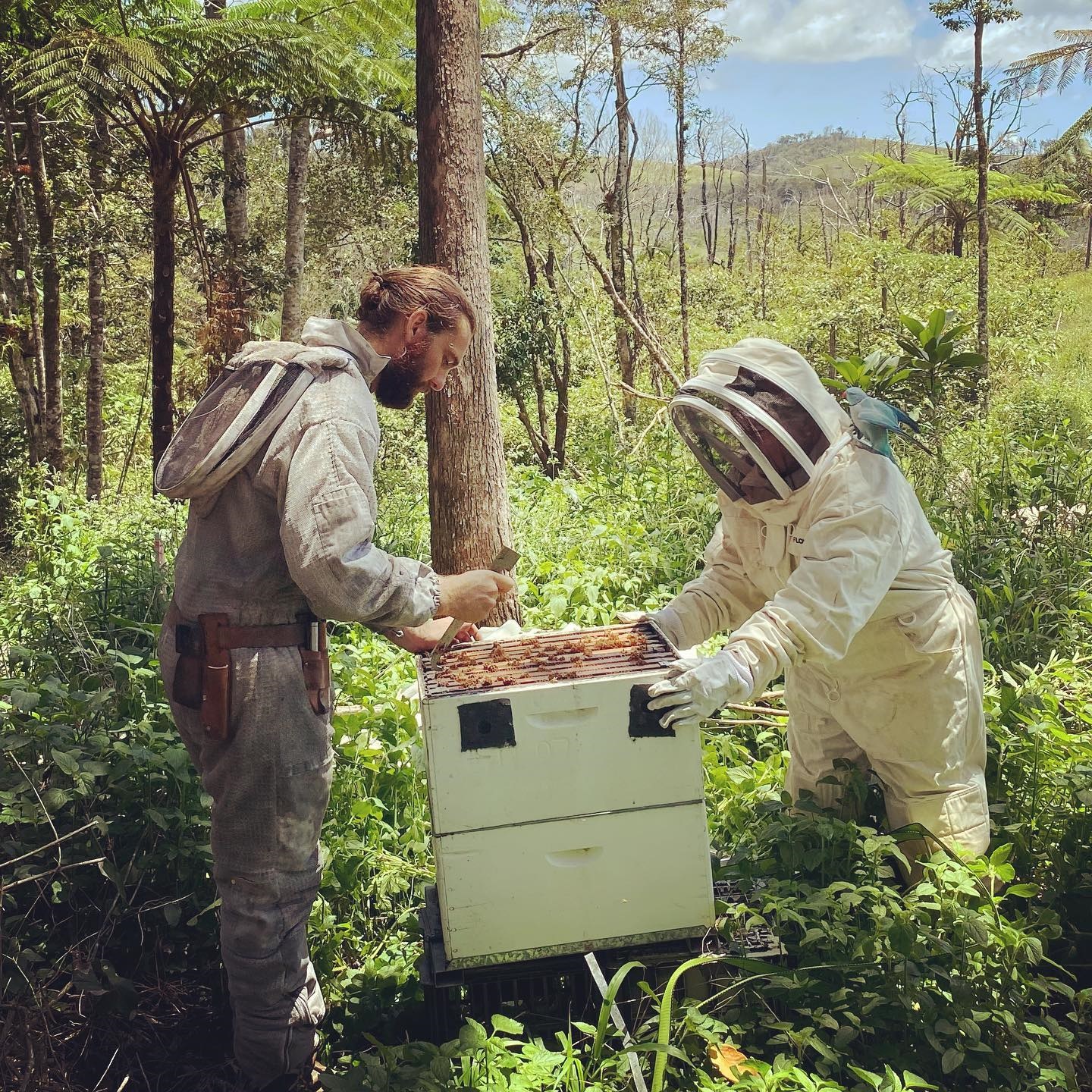
Image: Douglas Cannon, of CannonBee, provides a guided hive inspection with Michaela Pritchard. The inspection advises on natural beekeeping practices showing how to conduct a routine hive inspection, what to look for regarding hive health; any sign of pests or disease, analysing overall health and vigour of the bees
Things are buzzing in the Pioneer Valley, especially for local business CannonBee.
The family-owned and Eungella-based business uses natural beekeeping practises to produce raw honey and beeswax products, including Eungella Raw Rainforest Honey and Propolis and Raw Honey Face Polish.
Business owner Janine Cannon recently participated in the second round of council’s one-on-one tailored mentoring program for small business owners.
Mrs Cannon said the program offered a fantastic opportunity to learn how to leverage off the growing tourism market in the Pioneer Valley.
“We are mostly a product-based business, so it has been wonderful to get some expert advice on how we can move into more education focussed aspects such as hosting tours and workshops on beekeeping,” Mrs Cannon said.
“The flexibility of the program - to do it via Zoom - as well as its structured delivery, made it very worthwhile,” she said.
“My mentor was able to provide real-world information such as resources and tools for tourism businesses and databases we can access which will be directly applicable to expanding our business
“With this we will be able to take advantage of the increase in visitor numbers generated by the new Mountain Bike Trails.”
Mayor Greg Williamson said this current round of the program had been aimed at existing businesses, as well as start-ups with a business idea that supported the Pioneer Valley Mountain Bike Trails.
“Council is investing in the program as part of our ongoing commitment to growing the visitor economy and ensuring the Mackay region continues to grow as a highly-regarded leisure destination,” Mayor Williamson said.
“We want the Mackay region to be front of mind for travellers seeking nature experiences and we want to offer a high standard of experiences for them to enjoy while visiting,” he said.
Council offers a free five-part webinar series focussed on business development for businesses in the Pioneer Valley. They are available on the council’s website at https://bit.ly/3cyZM2k
The Small Business Mentoring Program is designed and facilitated by independent mentors, business and tourism experts, Sparrowly Group on behalf of Mackay Regional Council.
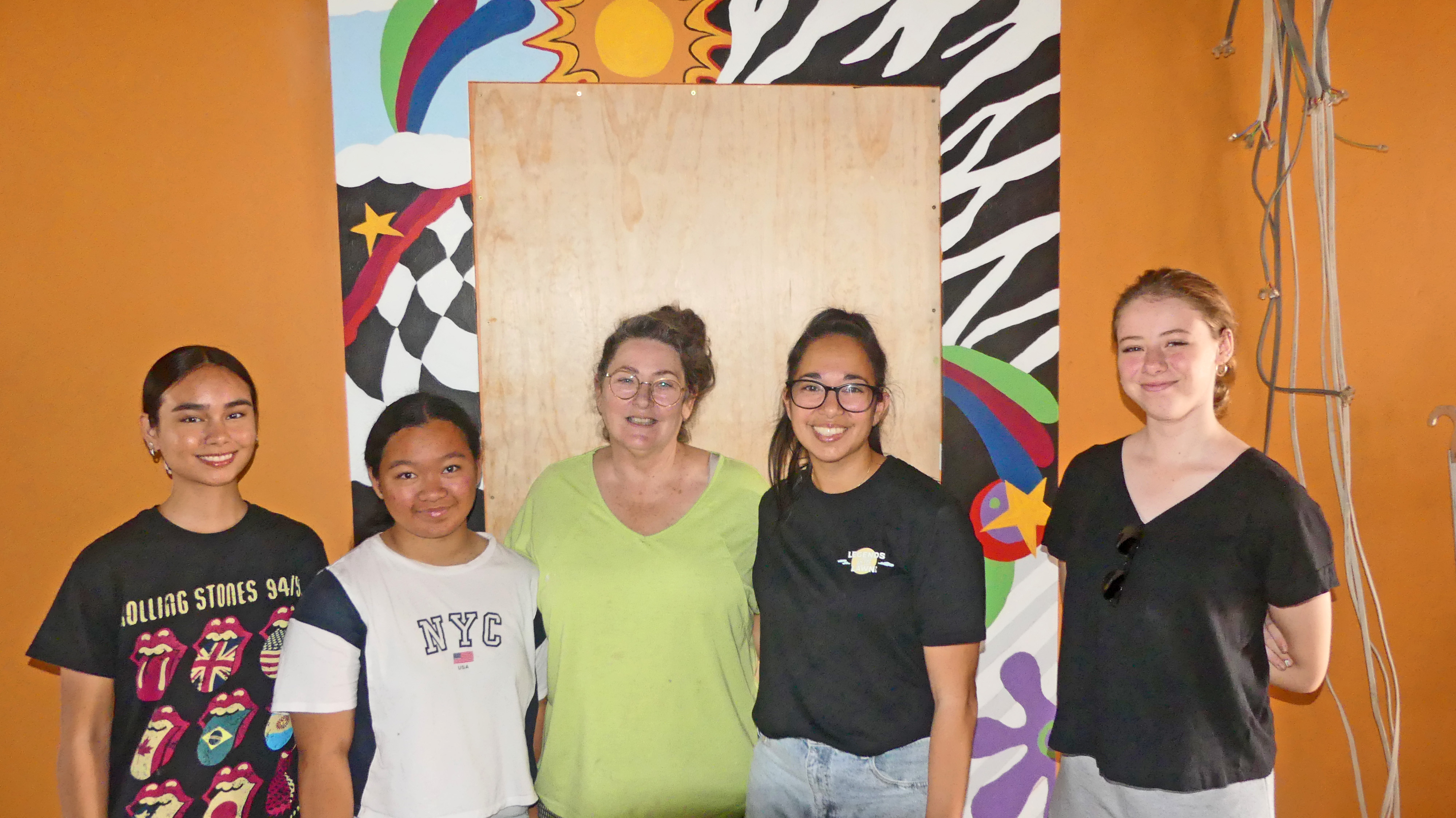
Students at Mackay State High School are leaving their legacy on a local art studio as part of their Creative Arts Academy.
Bottletops & Brushes has been operational in Victoria Street since January and, with unutilised space upstairs, co-founder Margaret-Mary Robinson reached out to schools to offer the space to the region’s youth.
“We noticed that young people don’t have very many places to go so we wanted to encourage young people to express themselves in art,” she said.
“We had Mackay State High School who have initiated an art initiative which is why we have three teams doing art on the walls expressing themselves with what they feel is important to them.
“We’re wanting young people to embrace art, to express themselves and have an opportunity to do something in the Mackay city heart, to take ownership of their place here.”
The school’s Creative Arts Academy is in its first year after the school’s principal recognised the creative talent and potential in the students.
“We’ve essentially been grabbing every arts opportunity by the horns and running with it,” said Mackay State High School Creative Arts Coordinator and Senior Visual Art Teacher Anita Pritchard.
“Earlier this year we had a group who actually participated in the Wonder Rooms project with Mackay Regional Council as part of the Festival of Arts.
“Being our pilot year, I’m really stoked with the opportunities we’ve had so far.”
The academy caters to instrumental students, drama, media and visual arts, with students participating in the mural competition all from the school’s extracurricular XL Art program.
“Our Creative Arts Academy is for students who want to extend themselves further and be able to work with likeminded students,” said Ms Pritchard.
“For XL Art, we have students from grade 7 all the way to year 12 … it becomes a bit of a peer mentorship.”
Five students across years 8, 9 and 11 began work on their murals at the start of the week including year 8 student Sophie Van Essen who says the school’s Creative Arts Academy has opened her up to opportunities she never thought possible.
“I’ve been really focussing on that art since about grade five and this year when the Creative Arts Academy opened up that was really the perfect gateway for me,” she said.
“It’s teaching me a lot about art and I’m learning a lot of things that I wouldn’t have learnt without it and I think that’s a really good opportunity to have.”
Sophie’s mural features a large golden heart and incorporates some of her own characters.
“The entire thing is supposed to represent that there can be innocence and good within a really bad place,” she said.
The murals are to remain in the upstairs studio permanently.

The toll that COVID-19 has taken on Australian women’s health and fitness is laid bare in the 2022 Jean Hailes National Women’s Health Survey, where nearly one in five women reported loss of fitness, weight gain, and muscle and joint pain.
The survey, which was conducted in March-May and attracted more than 14,000 respondents, revealed that 30 per cent of women said they were less fit, 28 per cent said they had gained weight, and 20 per cent said they had muscle and joint pain.
The findings are not surprising. Women assumed the greater shares of housework, childcare, home-learning, as well as managed their own work after the arrival of the pandemic. This burden of care in addition to the closures of facilities meant that many had to abandon their usual fitness regimes like working out in a gym, swimming, doing yoga or Pilates.
Those closures had significant effects on women’s health. Queenslander Penny Conlan says that doing aqua aerobics several times a week is integral to her level of mobility and keeping the pain of her osteoarthritis under control.
“The lockdown meant I had no access to the pool, and I had significantly more joint and muscle pain and was incredibly stiff,” she says.
Anita Hobson-Powell, CEO of Exercise and Sports Science Australia (ESSA), says women often struggle to put their own health first. The demands on their time during COVID-19 meant it was hard for them to fit movement into their daily lives.
“Regardless of their health status and stage of life, every woman can gain significant benefits from being active. My message to all Australian women is that to take care of others, you first need to care for yourself. It isn’t selfish to prioritise your health and take time to get the right advice when it comes to exercise.”
CEO of Jean Hailes for Women’s Health, Janet Michelmore AO, believes it’s important for women to acknowledge the challenges of the past two-and-a-bit years and to give themselves permission to look now to their own needs.
“We know that we as women are resilient and in the coming months, we will slowly but surely work our way back to better health and fitness,” she says.
“Like all journeys, this one will begin with a step.”
Jean Hailes for Women’s Health is a national not-for-profit organisation dedicated to improving the health and wellbeing of women across Australia.
Publishers Indemnity. Any individual or entity that places advertising, supplies copy material, or submits editorial content to Core Life Publishing agrees and undertakes to ensure that all such material:- Does not infringe upon any copyright, trademark, or other intellectual property rights;- Is free from any content that could be considered defamatory, libelous, or slanderous;- Does not infringe upon any rights related to privacy or breach of confidence;- Contains no obscene, indecent, or otherwise unlawful material;- Complies fully with the Trade Practices Act and all other applicable laws, regulations, or statutes.Furthermore, by submitting or placing such material, these individuals or entities agree to indemnify and hold harmless the publisher, Core Publishing and Events Pty Ltd, and/or its agents from and against any and all investigations, claims, demands, liabilities, damages, costs, or judgments arising out of or in connection with the material provided. All material is believed to be accurate at the time of printing and remains the copyright of Core Publishing and Events Pty Ltd.
© 2026 Mackay and Whitsunday Life Pty Ltd.
