
Independently Owned, Locally Grown, Community Loved

Member for Whitsunday Amanda Camm has stepped down from her role as Minister for Child Safety and the Prevention of Domestic and Family Violence, in an effort to prioritise her health and wellbeing. The announcement comes a fortnight after Ms Camm returned from six weeks of medical leave following major surgery, with the Whitsunday MP recognising she needed more time to recover. “This has been a considered and deeply personal decision,” Ms Camm said. “Having returned from six weeks of medical leave following major surgery I have come to recognise that my recovery still has some way to go and I need to prioritise my health and wellbeing.” “I sincerely thank the Premier for the opportunity to serve in his Government and for his support of my decision.” Ms Camm added in a presser outside of Parliament house in Brisbane, that the pressures of ministerial work had contributed to her decision to step down. This follows months of intense scrutiny over conditions for children in care and domestic violence prevention funding cuts had reinforced the importance of personal safety, especially in light of the recent attack on Victorian MP Helen Haines. “Public scrutiny and accountability are essential to democracy and to our institutions,” she said. “Harassment, threats, bullying and personal vilification are not and for the past year this has been my experience.” But during her time in the role, Ms Camm oversaw reforms to strengthen child protection, support foster and kinship carers and improve responses to domestic and family violence. Central to her child safety work was the Government’s response to the Child Safety Commission of Inquiry, which delivered 52 recommendations for improving the system. “The landmark Child Safety Commission of Inquiry was the turning point for the Child Safety system,” Ms Camm said. “There is much more work to be done, while early positive signs show we have stabilised numbers in the Residential Care system for the first time.” Her work in domestic and family violence included introducing laws for electronic monitoring of perpetrators to strengthen accountability, alongside her reporting a doubling of calls answered by DVConnect to help more people access support when they needed it. “After sitting with victims of domestic and family violence over many years through opposition and then in the ministry, I’m proud to have been part of delivering change that can help save lives,” Ms Camm said. In a statement following her decision, Premier David Crisafulli praised her work across both portfolios, describing the child safety inquiry’s reform roadmap as her greatest legacy and highlighting improved access to the domestic violence helpline. “I thank Amanda for her service to Queensland firstly as a Shadow Minister and then as a Minister,” Mr Crisafulli said. “Amanda took on an enormous task with a Child Safety system in crisis and a state in need of domestic violence reform. “With her dedication, passion and commitment, she has put Queensland on the road to repair both. “I speak on behalf of the Government, the LNP and all Queenslanders in wishing her the best in her recovery.” Ms Camm will continue serving as the Member for Whitsunday, reaffirming her commitment to the local community. “I remain committed to the people of Whitsunday as their Member of Parliament, and to supporting the Premier and the Government in delivering a fresh start for Queensland,” she said.
Read the full story
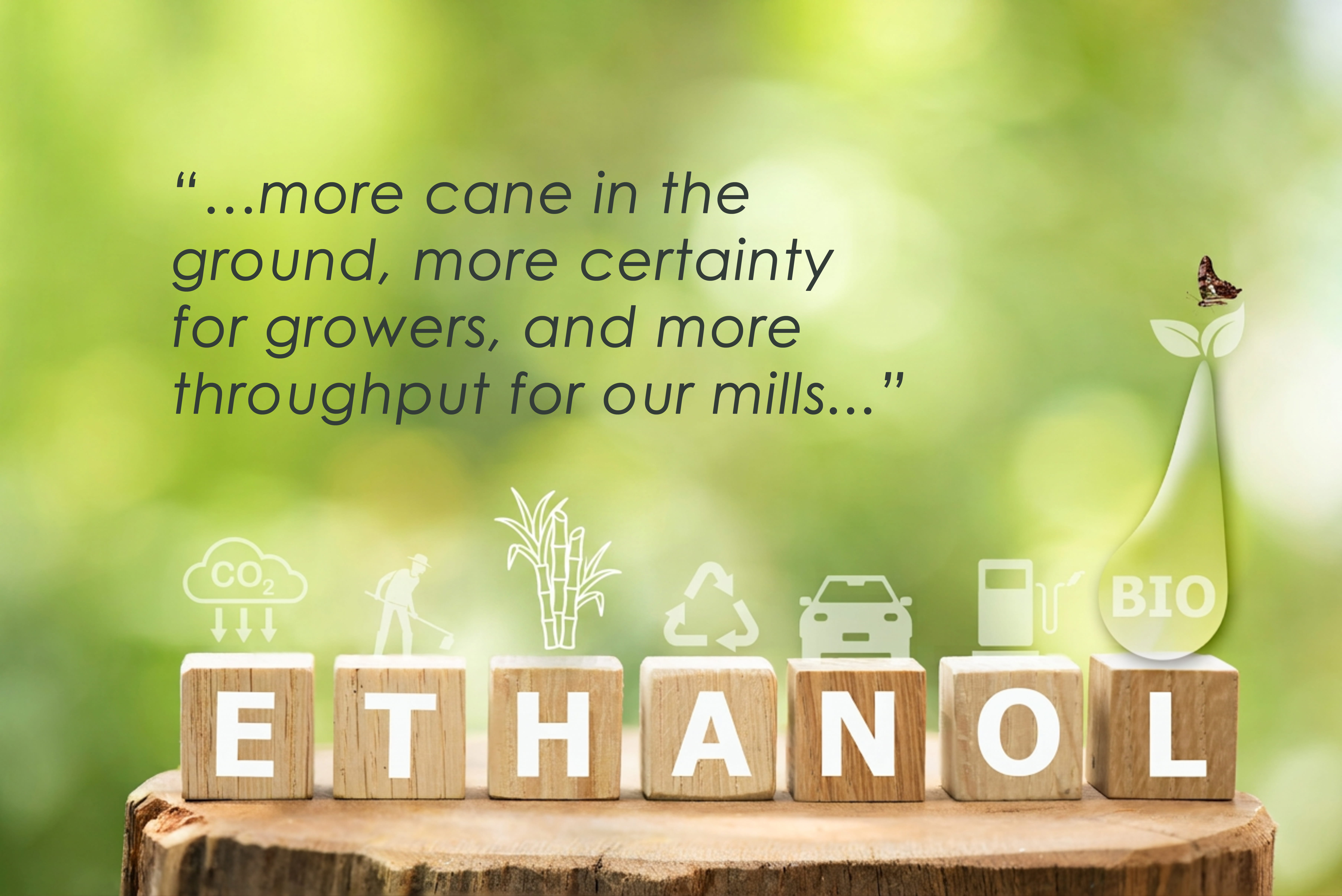
By Joseph Borg, Chairman, CANEGROWERS Mackay A firmly enforced bioethanol mandate, backed by increased local sugarcane production, is essential to strengthening Queensland’s industry resilience, regional jobs, and Australia’s long‑term fuel security. Our region holds enormous potential: not only for producing sugar, but for renewable fuel, energy diversification, and national economic security. Queensland’s sugarcane industry has always been a cornerstone of regional prosperity, but today it stands at a crossroads. Global markets are volatile and input costs are rising, and at the same time, Australia faces increasing pressure to reduce emissions, strengthen domestic fuel supplies, and build more resilient regional economies. A properly enforced bioethanol mandate is one of the most effective tools we have to meet these challenges head on. Queensland already has a mandate in place, but compliance remains inconsistent. When fuel retailers fail to meet their obligations, growers, mills, and regional communities lose out on opportunities that should rightfully be flowing into our local economy. Bioethanol is not a theoretical solution: it is a proven, practical, and immediate pathway to cleaner fuel and stronger regional industries and economies. Countries like Brazil and the United States have shown that bioethanol can reduce emissions, stabilise fuel markets, and create thousands of rural jobs. In these countries, and across the world, bioethanol forms a substantially higher portion of retail fuel sales than this country has embraced. Queensland has the same potential, but only if the mandate is taken seriously and enforced with the consistency it deserves. For Mackay, the benefits are clear. Our region is one of Australia’s most productive sugarcane hubs, with the land, infrastructure, climate, and expertise to support a thriving biofuels sector. Increased demand for bioethanol directly translates into increased demand for sugarcane. That means more cane in the ground, more certainty for growers, and more throughput for our mills, and we all know that milling is a volume game. This in turn supports jobs from the paddock to the processing line. But the opportunity extends far beyond economics. A stronger bioethanol industry enhances national fuel security, reducing Australia’s reliance on imported fuels. At a time when global supply chains are increasingly unstable, producing more of our own fuel is not just smart policy, it is essential. Every litre of bioethanol produced in Queensland is a litre of fuel Australia does not have to import. To seize this opportunity, we must also focus on increasing local sugarcane production. The industry cannot diversify, innovate, or expand into new markets without a reliable and growing supply of cane. More cane means more flexibility for mills, more investment in advanced manufacturing, and greater capacity to produce not only sugar and ethanol, but also bioplastics, green electricity, and other high value products. Growers are ready to meet this challenge. With the right policy settings from all levels of government, including a robust and enforced bioethanol mandate, we can plant more cane, improve productivity, and strengthen the long‑term viability of our region. But growers cannot do it alone. We need government to ensure the mandate is upheld, fuel retailers to meet their obligations, and industry partners to continue investing in innovation and infrastructure. Mackay has the land, the people, and the expertise to lead Queensland’s next era of renewable energy and agricultural diversification. What we need now is the policy certainty that comes from a mandate that is not only written into law but actively enforced. A stronger bioethanol mandate is not just good for growers it is good for Queensland, good for regional jobs, and good for Australia’s fuel future. The time to act is now. Bioethanol can use sugarcane by-products including molasses, bagasse, mill mud as well as plant material. Image: AdobeStock
Read the full story
Marketing strategy boils down to answering four questions: What does your business want? > The goal. Who can help you achieve your goal? > The audience. What do you need to tell your audience so that they can help you achieve your goal? > The message. Where do you need to put your message so that your audience sees it? > The delivery. But how do you actually go about answering those Q’s? Like anything, the broad strokes are more complicated in practice but it’s a good framework to come back to when you’re planning your next marketing activity. Start by drilling down + identifying a measurable goal that you can work towards. Vague + lofty goals are okay, but without a clear way to track your progress, achieving them will be pretty tough. For example, tracking how many enquiries you get + the quote conversion rate can be useful info to have as a baseline. That way, if you do a targeted campaign to attract more work, you can see if it meaningfully pushed the needle in the right direction! Next, really empathise with who can help you achieve those goals. Try to build up a target customer in your head. How old are they? What do they want from your business? What are they interested in? The more specific you are, the easier it’ll be to craft messaging that will actually appeal to that person. Once you’ve defined your goal + who can help you achieve it, you’ve got to tell them how to help you do it. Your messaging should be the key information that your audience needs to know about your business. This is where you focus on not only what your customers want to know about you, but how your business is different to all the others out there. Your messaging should change based on the people you’re targeting. Lastly, the delivery. Where does your target market frequent? Do they use socials? Are they constantly listening to the radio? Do they frequent the pub on a Friday arvo? Once you know where they go, you can start figuring out how to get your message there. While socials are a great option, they’re not the only one. Billboards, coasters, or a flyer that sits on a wall somewhere are all effective options. But if that all sounds like too much effort, you can always reach out + talk to us. We’ll help you figure it out 😉 Taren McAuley
Read the full story

An assessment piece from a local Bowen State High School student has highlighted the power of the written word, leading her school to open an LGBTIQA+ section of its library.
The local high school met “another milestone in its journey to inclusion” with the unveiling of the small section in its resource centre, which is dedicated to representation.
Teacher Stephen Murray, Head of the English Department at Bowen State High School, said the genesis of the idea didn’t come from faculty, but instead from an essay written by a well-read student.
“They stated in the text they’d created that they saw no representations of their identity in the books that they read, despite being a voracious reader of fiction,” Mr Murray said.
“They found no queer characters, no characters that were gender fluid and that struck a chord with me. I thought: Bowen State High School is on an inclusive journey; we want everyone to feel included.
“It struck me that it’s just not right.”
Mr Murray took the issue to his fellow staff members, and together they vetted and gathered a collection of appropriate, high-school level texts (including award-winning and excellently written novels) which promote inclusivity or tell stories centred around queer or gender fluid characters.
The eight books which form the basis of the section are now available to be signed out by students in an honour system where they may take the books home anonymously, without signing them out.
There were immediately five of the eight books borrowed in the first few days, coming back in drabs before being borrowed again in what the school said is an excellent success.
To officially unveil the section, a rainbow cake cutting was held in the resource centre, with leadership, teachers, and students enjoying the inclusive celebration.
“The student who wrote the essay which prompted this whole section is proud of what she wrote and the end result of what’s been accomplished,” Mr Murray said.
“We value every student, so it’s important for me as a teacher and for the team as a school to feel there’s a safe and supportive environment for them.”
The plan is to grow the section every year with student and staff recommendations taken into consideration.
Acting Principal of Bowen State High School, Steve Baskerville, said it was fantastic to see texts being a representation of the diversity of the students.
“That’s important for the students who identify in those diverse ways. But it’s also important for every other student as well as they make their way through the school and out into the world where they’ll engage with people from a range of different backgrounds,” he said.
Head of the English Department Stephen Murray and Acting Principal Steve Baskerville next to Bowen State High School’s new, and growing, LGBTIQA+ section of its library

A group of eight people from across the country set out earlier this month to paddle their way around the Whitsundays by kayak, raising over $25 thousand in much needed funds to protect and restore the Great Barrier Reef.
Coinciding with the Great Barrier Reef Festival, the inaugural Whitsundays Kayak Adventure for the Reef took off from Shute Harbour on August 4.
With a host of Queenslanders, New South Welshman and Victorians – as well as a few locals – the Great Barrier Reef Foundation organised trip saw its contingent “put their paddles where their passion is”.
The group – who each contributed to a $25 thousand fundraising campaign - included the likes of sisters celebrating a 40th birthday, a married couple from Sydney who’d taken stock of their lives and committed to giving back, and a UK expat living in Victoria whose visit was their first ever to the reef.
Bec Plant and her husband Edward Plant were two participants who took part in the five-day kayak adventure and had their own story which inspired their journey.
“October last year, my husband and I realised we were coming up on ten years married. It was a big occasion and we wanted to make it something special,” Mrs Plant said.
“What could we do instead that we could have as an adventure, but also tickled our philanthropic bone?
“We had an experience where we’d seen some of the bleaching [at the reef] in previous years, and my husband has a definite passion for the area, having grown up in Townsville.
“This opportunity for the kayak adventure came up, and with Great Barrier Reef Foundation helming it, that just ticked all the boxes.”
It certainly was an adventure, with the paddlers kayaking an average of 16km per day.
Great Barrier Reef Foundation rep and experienced kayaker Laura Dunstan led much of the Wednesday to Sunday trip, which wove a path from locations including Whitehaven Beach, around Hasselwood Island, past North Hook Island and back to Mt Jefferies.
“My role on the Whitsunday Kayak adventure was to be the representative; to pass on all of my knowledge and passion of the reef, reef creatures, and what threats there are to it,” Ms Dunstan said.
“As well, to show what the Great Barrier Reef Foundation and all its partners are doing to reduce those threats and build reef resilience.
“A big part of my role was to thank the participants for all of the funds they’ve raised and will continue to raise for the Foundation and our projects.”
Ms Dunstan, who has a background in Marine Biology, said it was an incredible experience being able to go back and “inspire people about the reef.”
The genesis of the kayak adventure began in the Great Barrier Reef Foundation’s fundraising team to get people involved on a monetary level and then on an experiential level.
“To physically go out, see the reef, have that connection to country and to the reef, to see where that money was going,” Ms Dunstan said.
“To go to a reef that had experienced major catastrophic events like Cyclone Debbie, to see all the baby coral that we and other organisations had planted and are spawning, it instils hope for the reef.”
Strong connection to country was an important cornerstone of the kayak adventure – which Ms Dunstan said will become a regular, annual event for the organisation.
A welcome to country was performed by Eric Lymburner, a Traditional Owner and proud Ngaro man – which Ms Plant said was an experience unlike any other.
“To have both Eric and Laura on the trip with us, both wellsprings of knowledge on everything, it was fantastic, and I can’t thank them enough,” she said.
On the final day of the trip, Ms Dunstan and Mrs Plant said the Reef put on a show for the impassioned fundraisers.
“A beautiful sunrise with the whales coming in and playing around the kayaks in the early morning. You can’t put a price on that,” Ms Plant said.
“We were paddling out in the dark, come around the corner from Maureen’s Cove – a completely coral beach with no sand – and the colour in the sky.
“Everything was quiet and still, there was no sound, and you hear the whales breathing – big plumes out of the water. It was the best day ever. Thinking about it now, it was that moment where you think: this is connection to country, land, and sea.
“That trip gave me hope for the reef and made us want to keep fighting to save it.”
The Great Barrier Reef Foundation hopes to run the trip and fundraising arm of the Whitsundays Kayak Adventure into the future and interested parties can reach out to them via their website.
The Great Barrier Reef Foundation hosted eight travellers from across Australia with the goal of raising funds to protect and restore the reef
The group enjoyed a spectacular showing from one of the World’s Natural Wonders, including picturesque sunsets and whale shows
The participants raised a total of $25 thousand for the Great Barrier Reef Foundation leading up to five-day kayak adventure

At 11am on August 18, the country marked Australia’s Vietnam Veterans Day with a minute’s silence.
Whitsunday RSLs commemorated the day - which coincides with the anniversary of the Battle of Long Tan, the single largest unit battle fought in the war by Australian soldiers - with their own ceremonies and wreath laying.
The Bowen RSL Sub-Branch was a packed house for its memorial, which included dignitaries like Member for Dawson Andrew Willcox, and Whitsunday Councillor Mike Brunker, with Member For Burdekin, Dale Last, an apology.
Sub-Branch President John Eyles officiated the Veteran’s event, welcoming war widows, families, currently serving defence personnel, and the veterans themselves.
Member For Dawson, Andrew Willcox said it was an honour to address the crowd at the Sub-Branch on such a solemn occasion.
“It is a day that is very, very important. The anniversary of the Battle of Long Tan in 1966 – a fierce battle which took place at a rubber plantation near Nui Dad in South Vietnam,” he said.
“Where a contingent of 100 Australian soldiers, outnumbered by at least 10 to one, managed to hold off the vastly superior Viet Cong attack. Suffering the heaviest Australian casualties in a single engagement in Vietnam.
“It is an incredible story of winning against the odds; a story that reflects the ANZAC spirit: courage, mateship, tenacity, and humour.”
Mr Willcox took the opportunity to not only honour the past, but to look towards the future – particularly in reference to the treatment of veterans.
“Veterans today are entitled to be treated with professionalism and respect. I hope the current Royal Commission into Defence and Veteran’s Suicide serves as a call to action,” The Member for Dawson said.
“We need urgent action to deal with the backlog of veteran claims and make it easier for veterans’ voices to be heard.
“To find that more current and former ADF Members have died by suicide than in combat in the Iraq and Afghanistan wars shows that the system is broken.
“As a nation, we need to do more for our veterans. We must do better.”
Mr Willcox thanked the veterans for their service: “Thank you for making Australia the best country to live in. If we are truly to honour the ANZAC spirit, we must live by it; as a nation, we must stand by our mates.”
Sub-Branch President John Eyles read the ode after a few wreaths were lain, most notably by ‘Rusty’ Vincent, who laid his wreath on behalf of the Vietnam veterans.
“Lest we forget,” Mr Eyles said.
Bowen RSL observed Vietnam’s Veterans Day “In Memory Of All Fallen Comrades”
Wreaths were lain during the ceremony, which coincides with the reunion of the battle of Long Tan in 1966.
Veteran Rusty Vincent laid a wreath on behalf of Vietnam Veterans on the day
Member for Dawson Andrew Willcox gave a poignant speech on bettering the treatment of veterans

Ben Franklin coined this timeless phrase in 1736 to remind the citizens of Philadelphia about fire prevention. As is true of many of his quotes and advancements, it still has great relevance today.
Like oral disease, fires can be prevented. Queenslanders are excellent at fire prevention, but are you getting the dental checks you deserve? Are your teeth going to last?
Airlie Smile Care (previously Noel Danton Dental) has prevention and excellent oral health at its heart.
Life is busy. Who has time to attend to dental appointments?
If it doesn’t hurt, then it is healthy right? Unfortunately, no. Just like feeling thirsty, feeling tooth pain is a bad way to judge your health. Pain often means bigger problems. It can mean that the fix needs to be much bigger than if issues had been caught earlier. A good healthcare professional will look for signs, not wait for symptoms.
At Airlie Smile Care we ensure that your dental exams are extremely thorough, and understandable. We take the care to listen to the history and current environment of your mouth and teeth. We utilise the most modern training and use technology to show and explain any issues that might be starting to arise in your mouth.
You will be checked for gum disease, tooth decay, tooth wear, muscle and jaw joint (TMJ) health and we check for oral cancer. We provide all treatments from extractions, white fillings and root canal treatments and also excel at replacing lost teeth with implants, straightening and whitening with fast orthodontic treatments, cosmetic veneers, “smile designs” same day crowns and whitening, and we do it all in a caring gentle manner. Painless and with a friendly smile from our caring team.
Dr Cormac Farrell and wife Carolyne are celebrating their 6th year owning Airlie Smile Care and providing hygiene and dental services to the area. Originally from England, they have completed their studies in diverse locations such as Edinburgh, Cardiff, Germany, USA, Bristol and Colombia.
10 years ago, they settled in Airlie Beach to start a family and when not at the clinic they can be found being buried in sand at the beach, dressed like Barbie or kicking footie with their three children Megan, Catherine and Bodhi.
They would love to see you at Airlie Smile Care.
Please call the clinic on 49467600 to book an appointment today.
Caption: Dr Cormac Farrell and his family

A big thankyou to our outgoing secretary Cait Fleming for her amazing contribution to the chamber over the past two years. We wish Cait all the best with her new endeavours.
The evening chamber event on 11 August at the VMR was a networking only event. It was fantastic to meet some new businesses and for all to make some new connections. Thank you to Gale at the VMR for another flawless hosting effort.
Our next networking event will be at the VMR, please follow us on social media or watch for emails for further details. For non-members wishing to attend please get in touch via social media or contact details on our website.
Airlie Beach Race Week, congratulations to all involved. It is a fantastic event for our region and a real winner for the small and medium business in our region. Good luck to those competing in Hamilton Island following this event.
We have an opening on our chamber committee, if you are passionate about small and medium business in the region, we would love to speak to those who wish to give a little back to our thriving region.
By Gus Walsgott from Whitsunday Coast Chamber of Commerce

What gives me anxiety in the garden? Moths!
There is nothing more frustrating than nurturing your tomato plants from seed, snow peas or cauliflowers (or any vegetable for that matter) for 60-100 days only to see numerous holes left by caterpillars in what was a week ago, a beautiful vegetable that you were excited to pick, eat, or share with friends and neighbours.
Well, that was before I installed my vegie nets. Now I watch them flutter over the nets, occasionally land on them and “fly away”. I can appreciate them now.
Many vegetable gardeners will be picking their tomatoes now or maybe preparing new tomato beds after other crops have recently finished producing.
So, what are common problems with tomato growing (other than caterpillars)?
If you are not getting many flowers (and therefore poor fruit set), there may be too much nitrogen in your soil. Over fertilising tomatoes will encourage leaf growth but at the cost of your fruit.
If you have lots of flowers but no fruit set, chances are your tomato plants are too close together. Tomatoes, like corn (as discussed last week) are self-pollinators. They rely on the wind to pollinate (as well as beneficial insects), so if your tomato plants are way too close together, you are stopping the wind from doing its job. Poor pollination can also mean undersized and/or tasteless tomatoes. So, thin out your tomato plants.
Other things to be aware of during pollination are temperature and water.
I know I am always going on about watering your vegetable patch every morning but you really do need to water your vegetable patch every morning!
A lack of water when your flowers are appearing will guarantee that they will fall off your beloved plant.
The one other thing worth mentioning at this time of year is that if the temperature at night drops below 12 degrees, chances are your tomato flowers may drop off. Another month and that should no longer be something you need to consider.
A sure sign that pollination was poor and that your soil lacked fertiliser, is when your tomatoes look great, but they are light in weight and when you cut them open, rather than being juicy and full, they have gaps/spaces with no content. Fertilise your tomatoes monthly with Seasol. Make sure you give them a great kick start when first planting with good soil. We have bagged soils specifically for tomatoes but you can certainly mix your home compost through the soil.
Later in the year, sunburn can be a problem for tomatoes (again vegetable nets are great, offering 20 per cent shade). Over pruning can expose tomatoes to the sun too, so you want to always leave shade leaves.
One last thing I have to mention, is cracked skin. This is caused by inconsistent watering. If you let the soil dry out for a day or three, then your tomato is going to be very thirsty! When water finally arrives, it is going to take in as much as it can (you try going two days without water and see what you do when given a litre) and your fruit will split.
Did you know: That if your milk is on the edge, you can dilute it and add that to your tomato plant’s soil?
Healthy tomato plants
Flowers for pollinating
Caterpillar damage
Inconsistent watering causes tomatoes to split

Personality is the characteristics and traits that define a person's thoughts, emotions, and behaviours.
Difficult workplace personalities negatively affect the well-being of team-members, the business, and its customers. Personality irritations result in lower productivity and increased absenteeism among other negative consequences. Examples include belittling comments, gossip, double standards, yelling at others, with-holding important information, and taking credit for other’s work
There are so many personalities in a workplace and managing them so they stay effective becomes the major focus for many in leadership roles. Today’s workspace requires adapting to those personalities you have in your team to enhance their work strengths in a way which suits the business and creates a sense of achievement for each individual. When this is achieved, the business and its people thrive.
Personality types can range from – dramatic, controlling, needy, bully, pessimist, gossip, passive-aggressive, narcissist.
Identifying the behaviours of those above helps us manage the behaviours in order to create positive outcomes. Each personality has some strength you may be able to leverage.
Consider, the pessimist can be a great asset in an auditing role, the needy loves to be micro-managed, the controlling can be a greater project manager, the gossip could make a fantastic social club coordinator. Potentially negative personalities exist in all workspaces but by harnessing the positive strengths of each you can turn a potentially harmful personality into a workplace asset.
But also ask yourself, could you be one of these personalities? Is being a difficult person who I am or what I sometimes do? And how could you manage your more negative behaviours to create a better workplace culture. Stop, think, and pause. Learn to respond rather than react. It’s worth the effort.
From Judy Porter at SHIIFT

After 48 locations, 56 shoot days, and the contribution of 350 “amazing local extras,” the STAN Original Series ‘Black Snow’ has completed its principal photography in Proserpine.
The small town was bustling with production crews and high-echelon Australian actors when the shoot began in mid-2022.
Locals were saddened to see the massive crew – primarily Goalpost Pictures employees, who are producing the series – leave the town on August 24.
Airlie Beach residents certainly will be saddened to see the show’s lead, Travis Fimmel of Vikings fame, depart – although they got their fair share of selfies alongside the actor.
For the duration of the shoot, Proserpine was transformed into the fictional town of Ashford for the six-part, one-hour mystery-drama series which promises a “coming-of-age drama with the mystery of a classic whodunnit.”
Set half in 1994 and half in 2019, it follows the story of the murdered seventeen-year-old Jasmine Baker. The crime, which shocked the small town of Ashford and devastated Jasmine’s Australian South Sea Islander community, was never solved, the killer never found.
But in 2019, the opening of a time capsule unearths a secret that puts cold-case Detective James Cormack (Travis Fimmel) on the trail of the killer.
With principal photography wrapped, work will now undoubtedly begin in the editing room.
Goalpost Pictures’ Tony Clarke thanked the community on behalf of his employers, the cast, crew and producers.
“We’d like to extend a sincere thank you to the wonderful residents and the business community in the region,” Mr Clarke said.
“We have loved filming here and the level of support we have received locally has been unprecedented.
“It’s been amazing to see the enthusiasm for our series from all the locals we have met, along with great help from the Whitsunday Regional Council.”
Mr Clarke said the “series is looking amazing.”
“The beautiful locations of the region are as much a star of the production as the cast,” he said.
Locals will be keeping an eye out for Black Snow when it comes to the streaming platform, STAN, in 2023.
Travis Fimmel and the production crew of Black Snow have departed Proserpine this week, having completed principal photography. Image: STAN

Proserpine Museum was saddened to hear of the recent passing of Colin Abell in Perth on August 3. Colin was the great grandson of pioneers, Richard (Dick) and Annie Abell, and is the author of “Three Abell Men” and its sequel “More Abell Men”; books which chronicle the part played by the Abell family in the settlement of Airlie Beach. Colin spent twenty years writing “Three Abell Men” - a compilation of the family's stories as Airlie's first settlers.
Colin’s grandfather told most of the stories, corroborated by Colin’s father, Edward, and his siblings. Edward Abell was the first white child born in upper Jubilee Pocket (now known as Airlie Beach). In his teen years, he had an aptitude for photography. He was one of few to have a camera in the early 1920s, a little box brownie, and he spent many months writing down the various stories and events eventually compiled in this book.
“Three Abell Men” is no dry and dusty history of the early days in the Whitsundays. This wonderful family history is full of adventure, laughter and mishaps. It is a story about three generations of adventurers.
As told by Edward Abell and compiled by Colin, “Three Abell Men” is the story of the Abell family who migrated from Herefordshire, England; firstly, to Boonah in southern Queensland before moving to Jubilee Pocket. In August 1904, Colin Abell's great grandparents stepped onto the Whitsunday coast with nine children and a babe-in-arms. To escape the southern drought, the family had travelled by train to Rockhampton and then a ship, the “Aramac”, took them to Bowen. From there they hired the sailing boat, “Nellie”, to make the journey to their selections in Jubilee Pocket. Colin’s grandfather, Arthur (Pa) Abell, was twenty at the time. The family stood on the beach, laden with luggage and tools and facing a new world.
When the Abells came to Airlie Beach, it was raw rainforest. Here, Colin’s great grandparents, Dick and Annie, selected and purchased the area now known as Airlie Beach for the princely sum of 2/6 (25c) per acre. Dick arrived with hardly a penny to his name yet he ended up owning the whole of what is now known as Airlie Beach.
Throughout Colin’s book, adversity and laughter intermingle. The Abell children were fortunate in the extreme to live in a para¬dise where hardships and hard work were tempered by daily adventure in the ever changing environment of the beautiful Whitsundays.
The name “Abell” is still well known in the district. Abell Point and Abell Road are reminders of the family’s significance in the area.
“Three Abell Men” is a great read and hard to put down as this fascinating family history unfolds through the pages. Illustrated with wonderful old black and white photos of their homes, boats and friends, this book will induce nostalgia in locals who can relate to the area and fascinate those who are more recent arrivals to the district.
Colin Abell was passionate about the value of recording the first history of mainland settlement in Airlie Beach, believing it was vital to preserve this information.
We are indebted to Colin for this important record of Airlie Beach in its early days.
Vale Colin Abell
Story courtesy Proserpine Historical Museum. Photo by Peter Carruthers, sourced from “Whitsunday Times” July 9 2017

An inspiring local is setting sights on raising both awareness and financial support for the mental health of our valued emergency services by participating in the Kokoda Trail in October alongside other personnel, side by side.
Ti Hokins has worked in the emergency services for many years, coordinating events for disaster management situations. Involved with memorial services for high profile murders, massacres and terrorist attacks, Ti was often the person who others looked to for support and strength.
“I was tasked with providing support for the community but in many ways was not allowed to feel it myself,” said Ti.
“Emergency Service Personnel are so resilient but these collective trauma events tear at the fabric of society and this eventually impacts on our personal wellbeing.”
In 2019, Ti began suffering from Post-Traumatic Stress Disorder (PTSD).
“It was the hardest thing I’ve ever had to go through,” they said.
Eventually with the support of a peer group within the Emergency Services Foundation and working closely with a GP, Occupational Therapist and Psychologist, Ti managed to find a way out.
“I thought, if I could get through that, then I could get through Kakoda!” they joked.
Leaving for Papua New Guinea in October, Ti will trek 96 kilometres in nine days and will be accompanied by 20 other emergency service personnel who all have a connection with, and are raising money for, mental health within the service.
Currently in training, Ti is going to the gym as regularly as possible and completed the 27-kilometre Honey Eater to Brandy Creek trail last weekend.
With two young children and a supportive wife, Ti has decided to embark on this ambitious adventure and is thrilled to see many locals rally around the cause.
From kind raffle prize donations to hosting events, there are many ways the community can support.
This Saturday Airlie Beach Bowls Club are hosting a barefoot bowls Kokoda Fundraising Event and next Saturday 3 Little Birds Espresso is hosting a Paint and sip for a Cause.
If this topic has brought up anything for you, reach out to your supports.
Lifeline 13 11 14 — 24 hours a day, 7 days a week.
WHAT: Barefoot Bowls Kokoda Fundraising Event
WHEN: Saturday, August 27 from 4pm-6pm
WHERE: Airlie Beach Bowl’s Club
WHAT: Paint and Sip For A Cause
WHEN: Saturday, September 3 from 2pm-4.30pm
WHERE: 3 Little Birds Espresso Bar
Incredible views from the top
Ti Hokins practices for Kokoda the Whitsunday Great Walk

The skills of a knowledgeable and dedicated local workforce has been attributed to the successful completion and quality workmanship behind Bowen Rail Company’s $62 million rail yard which employed a team of over 300 during its construction phase.
Nine hundred and fifty-seven drainage elements and 28 footy fields of earthworks later and Bowen business, Hillery Group, has put the finishing touches on the local rail provisioning yard.
Its Chief Executive Office, Luke Hillery, said that winning the $20 million contract as part of the overall project was enormous for his business and the community and the benefits would be felt long into the future.
“We see the value that Bowen Rail Company is bringing to the Bowen area on a daily basis,” he said.
“So to win a contract of this size and then deliver it using local people with local skills is something we’re really proud of.”
The project was undertaken as part of the construction of the Carmichael Rail Network under the banner of Bravus Mining and Resources’ Carmichael Project.
Bowen Rail General Manager Brendan Lane said the rail yard was a shining example of the capability of regional contractors and how BRC was delivering on its promises of jobs and contracts for locals.
“The provisioning yard is a critical piece of infrastructure for us,” Mr Lane said.
“This is where our maintenance crews are based and where our state-of-the-art locomotives take on fuel and the sand, oils, and lubricants that keep our trains operating safely.”
An aerial view of Bowen Rail Company’s provisioning yard

An inspiring local lady and much-loved family woman, Cathy Knezevic, passed away last week following a brave two-and-a-half-year battle with cancer.
Remembered by everyone who knew her as a kind-hearted, deeply caring person with a flamboyant and distinctive sense of style and passion for the arts, Cathy lit up any room she entered.
Hailing from Walkerston and then a cane farm on the Victoria Plains, Cathy married when she was young and had three children: Benjamin, Emma-Kate, and Adam.
Cathy worked for 20 years as a librarian at Mackay City Council, as well as managing the Council’s art collection. She was the Inaugural art curator of Mackay Artspace gallery and exhibitions, and Collections manager of Mackay Artspace’s nationally significant Artists Book collection.
She became the Director of Mackay’s Arthouse Gallery and Whitsunday Art Gallery, and was the Founding Director of the Whitsundays Art Festival, which is now in its third year.
In a loving relationship with Tom for 38 years, the couple were a formidable force as the multi-award-winning Mackay Queensland Homes building company where Cathy’s interior design skills were invaluable.
The people she met throughout her life and the positive and lasting relationships she created, however, were by far her biggest accomplishments alongside raising her children and becoming a grandmother.
“Cathy was a woman of beauty, flair, love, culture and all things absolutely fabulous,’ said her son, Adam.
“Although this is what she is most known for, mum was also humble, very shy and insecure at times - I think Mum's beloved Library friends summed it up best when they gave her the nickname 'the shy peacock'.”
Cathy loved a practical joke and, if she saw a family member’s car unattended, would often jump in and either drive off or hide and jump out on them.
She will also be remembered for her unique dress sense.
“Mum's look and image is iconic - she had some serious style!” said Adam.
“The big permed black hair, the nail polish, the lipstick, the bright clothes, the animal skin patterns and the pineapple hair!”
Cathy’s vibrant personality and positive presence touched everyone that knew her, and she will be deeply missed both in the Whitsundays where she lived and in Mackay where she grew-up and spent much of her life.
Cathy wearing her favourite dress

Airlie Beach is usually known as a picturesque holiday destination but in recent times dumped supermarket trolleys are causing our usually immaculate streetscapes, waterways and boardwalks to be littered with an unnecessary eyesore.
A local resident named Josh said that when he walked home one evening from the town centre to Port of Airlie, he came across 21 abandoned trolleys in a 600-metre walk.
“It’s a big problem in Airlie Beach right now and whenever you go out you see them everywhere,” he said.
“Of course, it starts with the people but it has been proved that people can’t be trusted so I believe it is up to Woolworths and Coles to take responsibility.”
It appears that many of the culprits are local yachties who take shopping trolleys down to their vessel then simply leave them in the bushes assuming the supermarket will eventually retrieve them.
In the meantime, they are left to become an eyesore.
A Woolworths spokesperson said that Trolleys are provided for the convenience of their customers and the vast majority do the right thing in returning them.
“We understand abandoned trolleys can be a nuisance and that's why we invest millions in collection services to help mitigate their impact in the community,” they said.
“We work closely with dedicated collection contractors who respond quickly to reports of abandoned trolleys to return them to our stores. They also conduct regular sweeps for abandoned trolleys in the streets surrounding our stores.”
Whitsunday Regional Council Director of Infrastructure Service Adam Hagy confirmed that shopping trolleys are owned by and are solely the responsibility of the respective supermarket chains and not the core business of Council’s Parks and Gardens teams.
“All bbq areas are also cleaned 5 days per week, park furniture maintained and litter picked up to ensure these areas are tidy,” Mr Hagy said.
“It would be unfair to burden the ratepayer with increased costs for employing extra staff to collect shopping trolleys for the supermarket chains.
If you see an abandoned trolley you can a free phone Trolley Tracker on 1800 641 497 or download the App “Report a Trolley” (RAT) to alert the supermarket chains to missing trolleys.
Caption:
An abandoned trolley in one of our local waterways
Josh once found 15 trolleys left at a taxi rank

Keeping our beautiful region clean and actively seeking ways to prevent litter entering our oceans is everyone’s responsibility, and for the next two months the Whitsunday Regional Council is taking the lead by encouraging us all to participate in the Great Northern Clean Up.
This annual project is part of the Clean Up Australia initiative which was started by avid sailor Ian Kiernan in 1990.
He is one ‘average Australian Bloke’ who started a movement which over 20 million Aussie’s have now participated in.
The Great Northern Clean Up is held at a specific time of year, between August and October, to encourage communities who live in the tropics to clean-up the land before the wet season arrives and washes all the litter into the ocean.
When we think of plastic pollution, we usually think of chip packets, drink bottles or straws, but cigarette butts are the most abundant plastic litter item in the world, with up to 8.9 billion butts dropped in Australia each year.
This little but large polluter was reported as being the most prevalent waste material locally by Eco Barge Clean Seas who orchestrated a clean-up earlier this year.
Locals are now encouraged to join the Great Northern Clean Up by making a pledge and posting it online with the hashtag StepUptoCleanUp.
Many Council staff including Acting Mayor John Collins, Councillors Michelle Wright, Gary Simpson, Mike Brunker, Al Grundy and Jan Clifford have made a pledge.
Pledges include teaching children about recycling, stop buying bottled water, carrying a reusable coffee cup and remembering shopping bags.
What’s your pledge going to be?
Whitsunday Regional Council staff pledge to protect the environment

Not all heroes wear capes. Saving a life can be as simple as paying attention while driving.
When we’re behind the wheel, we can easily forget that we’re in control of a machine which can easily kill.
This road safety week we’ve been reminded of the ‘fatal 5’.
SPEEDING
SEAT BELTS
DRINK / DRUG DRIVING
FATIGUE
DISTRACTION
While these are a given, there are other things we could be doing while driving to reduce the incidence of accidents and frustration caused to other motorists.
Learning how to properly indicate on a roundabout would be a good start. There’s an unbelievably high proportion of motorists who incorrectly indicate right when going straight ahead. Check the Queensland Government transport page which states you only need to indicate left when you’re about to exit a roundabout when driving straight ahead. Of course, even more frustrating are those who don’t bother to indicate at all when turning.
The other simple courtesy is to keep left unless overtaking. In Queensland, it’s only law if the speed limit is sign posted at 90km/hr or above, or if there is a ‘keep left unless overtaking’ sign. However, in many other countries like the UK, drivers will adhere to this rule in all speed zones. When cars are only using right lanes when they need to, to overtake, the traffic flows better. There aren’t those blockages caused by that one person who sits in the right lane shadowing the person in the left lane, seemingly oblivious to the large lines of traffic backing up behind them.
It's also better for emergency services because the right-hand lane is clearer more often.
Being aware of others and paying attention while driving can go a long way towards happier roads for everyone.
Amanda
Publishers Indemnity. Any individual or entity that places advertising, supplies copy material, or submits editorial content to Core Life Publishing agrees and undertakes to ensure that all such material:- Does not infringe upon any copyright, trademark, or other intellectual property rights;- Is free from any content that could be considered defamatory, libelous, or slanderous;- Does not infringe upon any rights related to privacy or breach of confidence;- Contains no obscene, indecent, or otherwise unlawful material;- Complies fully with the Trade Practices Act and all other applicable laws, regulations, or statutes.Furthermore, by submitting or placing such material, these individuals or entities agree to indemnify and hold harmless the publisher, Core Publishing and Events Pty Ltd, and/or its agents from and against any and all investigations, claims, demands, liabilities, damages, costs, or judgments arising out of or in connection with the material provided. All material is believed to be accurate at the time of printing and remains the copyright of Core Publishing and Events Pty Ltd.
© 2026 Mackay and Whitsunday Life Pty Ltd.
