Independently Owned, Locally Grown, Community Loved


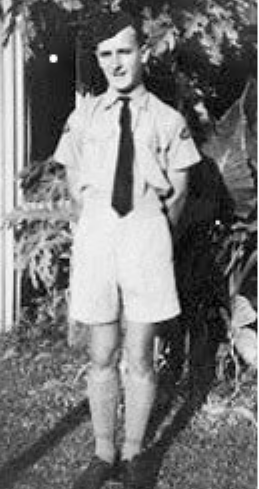
Jim Sheppard - Telegram Boy
Jim Sheppard started work in the Proserpine Post Office as a telegram boy in December 1941, coincidental with the time that the Japanese entered the war. In those days, although the major means of communication was mail through post offices and telephones, telegrams were an invaluable adjunct because they allowed for quick transmission of short messages over long distances.
Modern communication is remarkably advanced compared with an era when telegrams were a primary way to deliver both good and bad news. In 1945, telegrams peaked at 35 million in Australia. They were transmitted by means of electric signals through “landlines” i.e. telegraph wires between poles, using Morse Code; a unique system of sequenced dots and dashes. An American, Samuel Morse, invented this system and sent the first official telegram from Washington to Baltimore in May 1844 with the words, “What hath God wrought?”
Memories shared by Jim Sheppard …
How to send a telegram: The sender completed a form at the post office, listing the recipient’s name and address followed by the message. In 1941, the cost was one shilling for up to 16 words, later reduced to 14, with an additional two pence charged per extra word. Members of the Services paid half the standard cost. Messages could also be dictated to the post office by telephone.
An operator transmitted the message using a device known as a “key.” Incoming messages were received on a “sounder” which produced clicking sounds representing dots and dashes. These were interpreted and converted into words by the operator.
Competency in Morse Code was required for advancement to higher positions such as Postmaster. Operators needed to achieve a minimum speed of 25 words per minute in both sending and receiving, with little room for error. In practice, experienced operators often worked at around 30 words per minute. It was common to delay typing by a few words so that any corrections would not affect the appearance of the finished telegram.
Urgent telegrams, charged at double the normal rate, were given priority and printed on pinkish-red forms. Special decorative forms were also used for occasions such as weddings and congratulations.
During the years 1941 to 1943 when I was delivering telegrams in Proserpine, the war was raging in both Europe and the Pacific and telegrams were used extensively. Sometimes I was met with pleasure and excitement if the message was about a homecoming or the occasional marriage proposal but sometimes there were looks of dread: this could be bad news about a loved one on active service.
However, when there was news of someone “killed in action "or “missing presumed dead”, the Postmaster, Jim Hilton, had the good sense to enquire into the best way to deliver this message. He tried to arrange for a Priest/ Minister, a family member or a close friend to break the sad news.
There is some parallel between the old morse days and today’s texting in that when ‘talking’ to each other on line, telephonists would abbreviate words just as is done in texting. As a matter of fact, it was not uncommon for people with the expertise to do just that in busy times when sending actual telegrams. It was called 'cutting them up'. To say Merry Christmas and a Happy New Year, we would merely send MX (Xmas) HNY.
The last time I operated a morse key was in in 1957. I retired as a manager in Telecom (now Telstra) in 1986 after 45 years of service but, like riding a bicycle, I have never forgotten the Morse Code together with the nostalgic memories of times now long gone when I was a Telegram Boy in Proserpine.
Story and photo sourced from Proserpine Historical Museum archives and thanks to Jim Sheppard..

Publishers Indemnity. Any individual or entity that places advertising, supplies copy material, or submits editorial content to Core Life Publishing agrees and undertakes to ensure that all such material:- Does not infringe upon any copyright, trademark, or other intellectual property rights;- Is free from any content that could be considered defamatory, libelous, or slanderous;- Does not infringe upon any rights related to privacy or breach of confidence;- Contains no obscene, indecent, or otherwise unlawful material;- Complies fully with the Trade Practices Act and all other applicable laws, regulations, or statutes.Furthermore, by submitting or placing such material, these individuals or entities agree to indemnify and hold harmless the publisher, Core Publishing and Events Pty Ltd, and/or its agents from and against any and all investigations, claims, demands, liabilities, damages, costs, or judgments arising out of or in connection with the material provided. All material is believed to be accurate at the time of printing and remains the copyright of Core Publishing and Events Pty Ltd.
© 2026 Mackay and Whitsunday Life Pty Ltd.


.jpg)