Independently Owned, Locally Grown, Community Loved


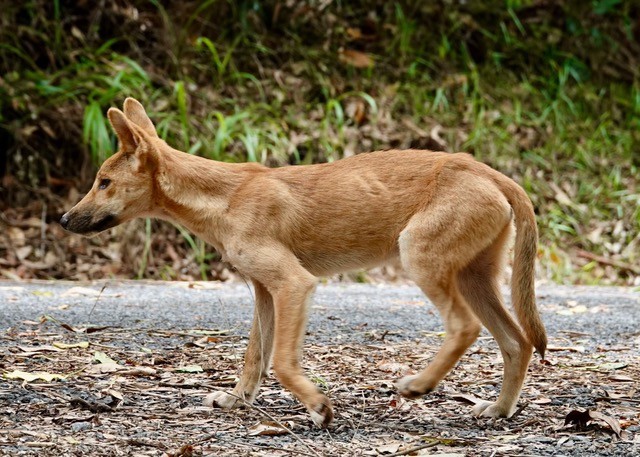
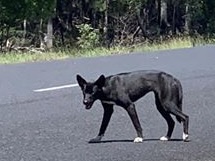
Local Whitsundays/East Coast Dingoes. Photos Supplied: Dingo Conservancy
Whitsunday Regional Council says no decision has been made to remove or destroy alleged dingoes frequenting the Cannonvale Transfer Station, following community concerns about the animals’ future.
The response follows an open letter from national group The Dingo Conservancy, which received a tip from the Whitsundays area alleging Council planned to euthanise the animals, which they categorised as “dingoes or wild dogs”.
The group questioned that description, arguing that the animals are dingoes whose ecological importance as native apex predators should not be overlooked, and calling for a non-lethal approach to managing the animals.
“Dingoes are our native apex predator, not an introduced pest species. Grouping them under the term ‘wild dogs’ erases their ecological importance and misleads the public,” said Secretary for the Dingo Conservancy Jo Samuel-King in a letter to Council.
“While protecting livestock and domestic pets on rural fringes is important, responsible land management should focus on non-lethal deterrence and co-existence rather than treating native dingoes as feral dogs or domestic strays.”
The Conservancy requests that Council releases available incident reports and risk assessments, consults relevant Traditional Owners and qualified dingo ecologists, and assesses each animal’s documented behaviour rather than its familiarity with people.
This recommended approach is supported by the Invasive Species Council’s July 2026 policy, which recognises dingoes’ ecological and cultural value and advocates for targeted management where harm occurs.
The group also calls for stronger education about the importance of never feeding dingoes, alongside carefully supervised humane deterrence, such as using loud noises, where experts consider it appropriate.
“Feeding and frequent and repeated close contact can encourage habituation and create safety concerns,” Jo stated in the letter.
“Familiarity should not, by itself, be treated as evidence of aggression.
“Each dingo should be judged on its actual behaviour.”
In its response, Council referred to the animals as “dingoes or wild dogs”, without confirming their identification. It said no decision had been made to remove or destroy them, and no public safety incidents had been reported to date.
“No immediate action is planned, and no decision has been made to remove or destroy the animals,” said Mayor of the Whitsundays Ry Collins.
“We acknowledge the community's concern for these animals, and the desire to see the situation managed responsibly and humanely.”
Council cited its obligations under Queensland’s Biosecurity Act 2014, which provides a framework to protect the state’s economy, environment and community from risks associated with pests, diseases and contaminants, when referring to wild dogs.
If the animals are recognised as dingoes, despite being native wildlife, dingoes outside national parks are classified as restricted invasive animals under the legislation. Queensland Government guidance requires reasonable and practical measures to minimise associated biosecurity risks.
“Council has obligations under Queensland's Biosecurity Act to manage potential risks and we will continue to assess the situation to consider the most appropriate way forward, balancing our responsibilities under the legislation with community safety,” said Mayor Ry Collins.
Council will keep monitoring their presence and the situation.
Publishers Indemnity. Any individual or entity that places advertising, supplies copy material, or submits editorial content to Core Life Publishing agrees and undertakes to ensure that all such material:- Does not infringe upon any copyright, trademark, or other intellectual property rights;- Is free from any content that could be considered defamatory, libelous, or slanderous;- Does not infringe upon any rights related to privacy or breach of confidence;- Contains no obscene, indecent, or otherwise unlawful material;- Complies fully with the Trade Practices Act and all other applicable laws, regulations, or statutes.Furthermore, by submitting or placing such material, these individuals or entities agree to indemnify and hold harmless the publisher, Core Publishing and Events Pty Ltd, and/or its agents from and against any and all investigations, claims, demands, liabilities, damages, costs, or judgments arising out of or in connection with the material provided. All material is believed to be accurate at the time of printing and remains the copyright of Core Publishing and Events Pty Ltd.
© 2026 Mackay and Whitsunday Life Pty Ltd.