Independently Owned, Locally Grown, Community Loved

Some places in life etch themselves into memory. The Whitsundays leaves an imprint that lasts a lifetime, and a considerable part of the reason is thanks to the diverse wildlife that inhabits out whitsunday islands.
On one of my strolls, I realised the true colourful chorus of birds we have. While we may be known for our cockatoos and kookaburras, there are so many weird and wonderful birds that inhabit the Whitsundays.
Birds You’ve Probably Seen, but Never Named
Some of my favourite birds to capture in the wild are small and often overlooked. Despite this, they are usually the most colourful and challenging to photograph due to their stealthiness and size, making it a treat when photographers finally get that picture.
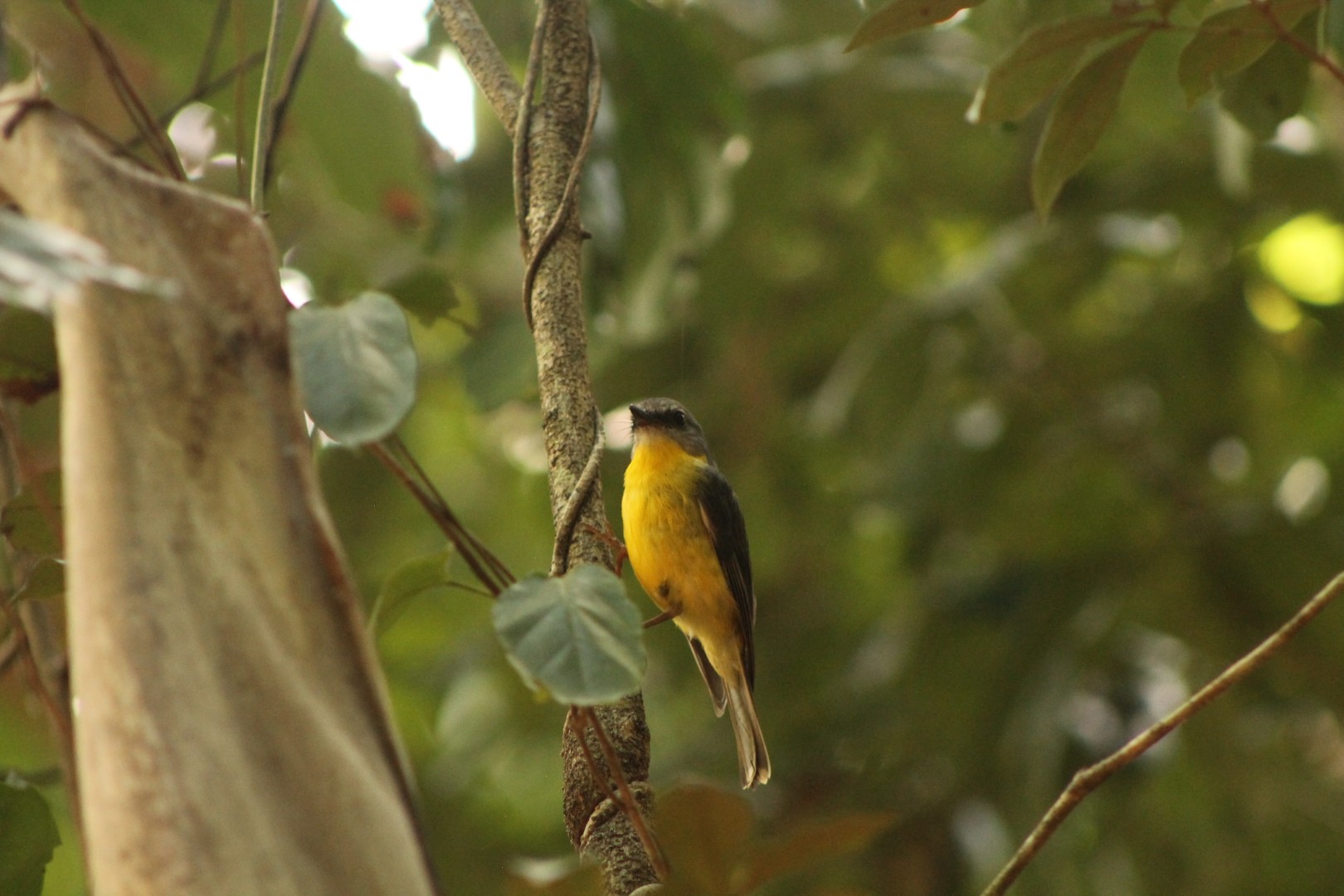
The Eastern Yellow Robin:
This bright ball of sunshine will be one of the first to wake you up, treating you to a variety of high, bell-like piping, repeated 'chop chop's or some scolding notes. Eastern Yellow Robins are curious little birds and are confident with humans, often sneakily taking handouts of food from picnickers. They are also very stealthy in their approach to food, using their famous pounce to grab insects on lower perches and building their nests with spider webs!
Brown Cuckoo-Dove
Brown Cuckoo Doves, while not typically uncommon, are actually relatively rare, as they are restricted to specific habitats, such as eastern Australian rainforests and wet sclerophyll forests, and are often heard rather than seen, with their distinct call that sometimes sounds like 'did you walk.'
Gull-Billed Terns
Gull-Billed Terns have a unique diet and hunting style, foraging in the air for insects, seizing crabs and lizards from the ground, plucking fish from the water surface (without diving), stealing food from other birds, and even preying on chicks of different species. Their heavy bill is key to their broad diet. Gull-billed Terns are graceful birds that swoop above salt marshes and beaches. A fun fact is that the oldest recorded Gull-billed Tern lived to be at least 20 years old and was found and banded in California. Their heads also turn black when they mate, making it look like they are wearing a black cap.
Next time you are out in the Whitsundays, look up, you may spot one of these native birds.
Eastern Yellow Robin. Photo credit: Ruth Puddefoot.
Brown Cuckoo Dove. Photo credit: Ruth Puddefoot.
Gull-Billed Tern. Photo credit: Ruth Puddefoot.
Publishers Indemnity. Any individual or entity that places advertising, supplies copy material, or submits editorial content to Core Life Publishing agrees and undertakes to ensure that all such material:- Does not infringe upon any copyright, trademark, or other intellectual property rights;- Is free from any content that could be considered defamatory, libelous, or slanderous;- Does not infringe upon any rights related to privacy or breach of confidence;- Contains no obscene, indecent, or otherwise unlawful material;- Complies fully with the Trade Practices Act and all other applicable laws, regulations, or statutes.Furthermore, by submitting or placing such material, these individuals or entities agree to indemnify and hold harmless the publisher, Core Publishing and Events Pty Ltd, and/or its agents from and against any and all investigations, claims, demands, liabilities, damages, costs, or judgments arising out of or in connection with the material provided. All material is believed to be accurate at the time of printing and remains the copyright of Core Publishing and Events Pty Ltd.
© 2026 Mackay and Whitsunday Life Pty Ltd.