Independently Owned, Locally Grown, Community Loved

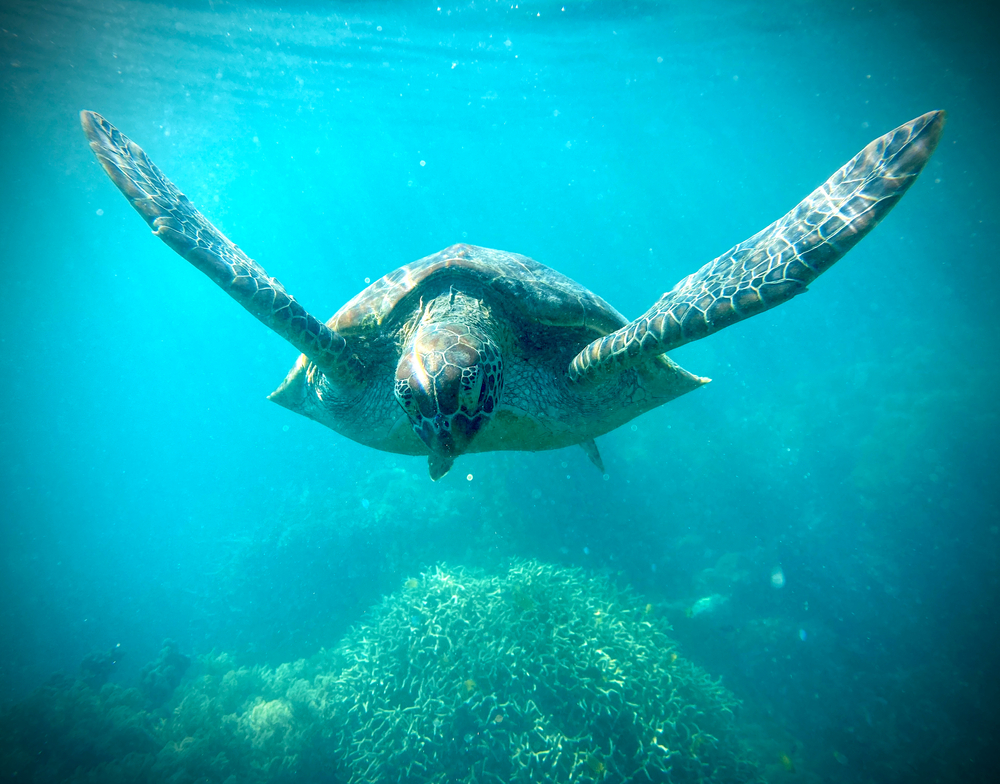
Visitors and locals in the Whitsundays are urged to stay alert when encountering marine turtles, and to know how to respond if a turtle appears sick, injured, or stranded. Acting quickly and correctly can make a life-or-death difference for these vulnerable animals.
If you come across a turtle in distress, call the Marine Animal Stranding Hotline on 1300 130 372. This line connects directly to wildlife authorities and the Whitsunday Turtle Rescue Centre, who can assess the situation and send help if needed. Immediate reporting is essential, even if injuries seem minor.
Follow the instructions given by rescue staff carefully. They may ask you to monitor the turtle from a safe distance, assist with basic first aid, or help stabilise it while waiting for trained rescuers. If instructed, you can:
It’s also important to know the difference between a turtle basking normally and one in distress. Basking turtles float calmly to rest, warm up, digest food, or absorb oxygen. Look for smooth, controlled breathing, even flotation, alert eyes, and calm behaviour.
Signs a turtle may need help include:
Even turtles with minor visible injuries may be suffering internal trauma, infections, or shock. Keep noise and disturbance low, secure pets and bystanders, and avoid feeding or handling the turtle unnecessarily.
If you’re unsure, always call 1300 130 372. Quiet observation, photos, or short videos noting breathing and movement can help rescuers assess the situation remotely.
By following these steps, Whitsundays residents and visitors can protect these iconic marine animals and help ensure their survival for generations to come.

Publishers Indemnity. Any individual or entity that places advertising, supplies copy material, or submits editorial content to Core Life Publishing agrees and undertakes to ensure that all such material:- Does not infringe upon any copyright, trademark, or other intellectual property rights;- Is free from any content that could be considered defamatory, libelous, or slanderous;- Does not infringe upon any rights related to privacy or breach of confidence;- Contains no obscene, indecent, or otherwise unlawful material;- Complies fully with the Trade Practices Act and all other applicable laws, regulations, or statutes.Furthermore, by submitting or placing such material, these individuals or entities agree to indemnify and hold harmless the publisher, Core Publishing and Events Pty Ltd, and/or its agents from and against any and all investigations, claims, demands, liabilities, damages, costs, or judgments arising out of or in connection with the material provided. All material is believed to be accurate at the time of printing and remains the copyright of Core Publishing and Events Pty Ltd.
© 2026 Mackay and Whitsunday Life Pty Ltd.