Independently Owned, Locally Grown, Community Loved


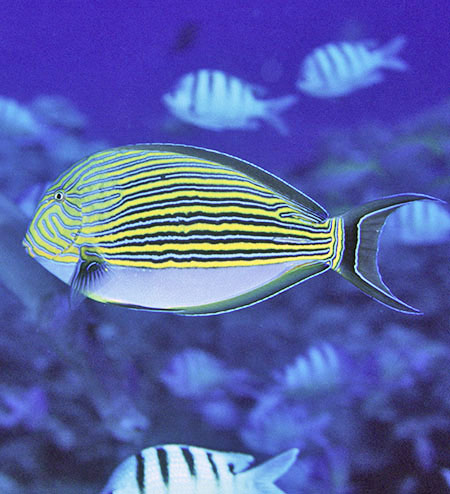
Surgeonfish Photo supplied
Everyone who has visited the Great Barrier Reef has a favourite fish. With more than 1,600 species weaving through its coral gardens, the Reef is a living kaleidoscope of colour and motion. But if the question shifts from “favourite” to “most important,” the answer becomes less about beauty and more about function.
So which fish matter most to the Reef’s long-term health?
While there is no single winner in such a complex ecosystem, one group stands out above the rest: herbivorous fish. These unassuming grazers are the quiet custodians of the Reef, performing a vital role that keeps coral ecosystems alive.
On the Great Barrier Reef, there is a constant battle for space. Fast-growing algae are always ready to overtake the slower-growing corals. Without intervention, algae can quickly smother coral, blocking sunlight and preventing new coral larvae from settling. This is where herbivorous fish step in. By feeding on algae, they maintain the delicate balance between coral-dominated and algae-dominated habitats.
Among the most important of these are parrotfish, surgeonfish and rabbitfish—species that act as the Reef’s lawnmowers.
Parrotfish are perhaps the most well-known. Often called “reef cleaners,” they spend up to 90 per cent of their day grazing on algae that coats coral surfaces. In doing so, they prevent algae from overwhelming living corals and help create space for new coral growth. Their feeding also has another remarkable benefit: sand production. Using their powerful, beak-like teeth, parrotfish scrape algae from coral and rock, ingesting bits of coral skeleton in the process. After digesting the organic material, they excrete the remaining calcium carbonate as fine sand. A single parrotfish can produce up to 90 kilograms of sand each year—quite literally helping to build tropical beaches.
Surgeonfish play an equally critical role. Acting as efficient grazers, they feed on turf algae and can make up a significant proportion of the Reef’s herbivore biomass. In some areas, they account for the majority of algae removal, helping prevent ecosystems from tipping into algal dominance.
Rabbitfish, though less conspicuous, are just as important. They complement the work of other herbivores by consuming different types of algae, adding resilience to the system. This diversity of feeding behaviours ensures that no single type of algae gains the upper hand.
Of course, the Great Barrier Reef is an intricate web of life, and no species exists in isolation. Every organism—from microscopic plankton to apex predators—plays a role in maintaining balance. But without herbivorous fish, that balance would quickly unravel.
In many ways, these fish are the unsung heroes of the Reef—quietly working each day to keep one of the world’s greatest natural wonders alive.
Contributed with thanks to Whitsunday Conservation Council
Publishers Indemnity. Any individual or entity that places advertising, supplies copy material, or submits editorial content to Core Life Publishing agrees and undertakes to ensure that all such material:- Does not infringe upon any copyright, trademark, or other intellectual property rights;- Is free from any content that could be considered defamatory, libelous, or slanderous;- Does not infringe upon any rights related to privacy or breach of confidence;- Contains no obscene, indecent, or otherwise unlawful material;- Complies fully with the Trade Practices Act and all other applicable laws, regulations, or statutes.Furthermore, by submitting or placing such material, these individuals or entities agree to indemnify and hold harmless the publisher, Core Publishing and Events Pty Ltd, and/or its agents from and against any and all investigations, claims, demands, liabilities, damages, costs, or judgments arising out of or in connection with the material provided. All material is believed to be accurate at the time of printing and remains the copyright of Core Publishing and Events Pty Ltd.
© 2026 Mackay and Whitsunday Life Pty Ltd.