
Independently Owned, Locally Grown, Community Loved


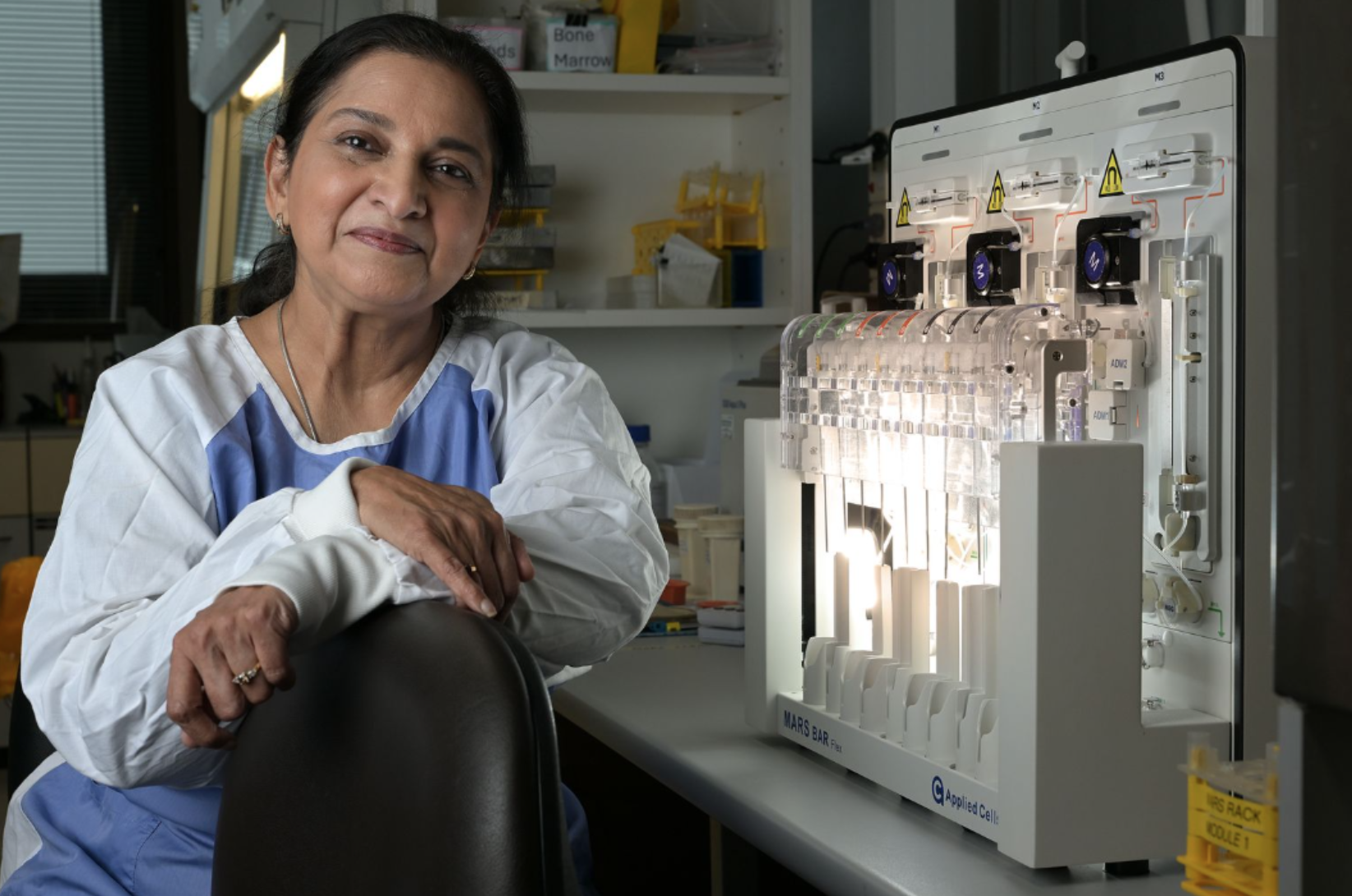
The new MARS system is a game-changer for multiple myeloma detection. Photo credit: Lyndon Mechielsen
A new technology being used by Queensland Health could help improve access to faster and more accurate cancer diagnosis for patients in Mackay and other regional communities.
The MARS system has already been used for more than 100 patients across Queensland to help identify multiple myeloma, a form of blood cancer affecting plasma cells in the bone marrow.
Queensland Health says the technology can more than triple the speed of diagnosis while allowing scientists to detect genetic abnormalities in much smaller amounts of cancerous cells.
For regional patients, one of the biggest potential benefits is the ability to test samples for longer after they have been collected.
Previously, samples containing plasma cells could become unusable if transport to a central laboratory took more than 24 hours. The new system allows samples to be enriched and accurately tested for up to five days after collection.
For Mackay patients, the development comes as the region continues to expand its local cancer and specialist healthcare capacity.
Mackay Base Hospital has a 24-hour Pathology Queensland laboratory, while its oncology service provides care for people across the Mackay, Isaac and Whitsunday region.
Queensland Health recorded 2,855 cases of multiple myeloma between 2019 and 2023, equivalent to about 570 cases a year.
The MARS system uses magnetic beads to identify and separate myeloma cells from a patient's sample, increasing the concentration of cancerous cells and making genetic abnormalities easier to detect.
Dr Wight said the ability to obtain reliable results earlier was particularly valuable for people outside major metropolitan centres.
“For example, I recently had a patient whose results came back within two weeks, revealing a high-risk chromosomal deletion we weren’t expecting. That single result completely changed the treatment plan and ensured he received the most effective care for his type of myeloma,” he said.
“Having this level of insight, and having it early, is invaluable for regional patients.”
The MARS technology was developed by US company Applied Cells and funded through a Queensland Health innovation program.

Publishers Indemnity. Any individual or entity that places advertising, supplies copy material, or submits editorial content to Core Life Publishing agrees and undertakes to ensure that all such material:- Does not infringe upon any copyright, trademark, or other intellectual property rights;- Is free from any content that could be considered defamatory, libelous, or slanderous;- Does not infringe upon any rights related to privacy or breach of confidence;- Contains no obscene, indecent, or otherwise unlawful material;- Complies fully with the Trade Practices Act and all other applicable laws, regulations, or statutes.Furthermore, by submitting or placing such material, these individuals or entities agree to indemnify and hold harmless the publisher, Core Publishing and Events Pty Ltd, and/or its agents from and against any and all investigations, claims, demands, liabilities, damages, costs, or judgments arising out of or in connection with the material provided. All material is believed to be accurate at the time of printing and remains the copyright of Core Publishing and Events Pty Ltd.
© 2026 Mackay and Whitsunday Life Pty Ltd.