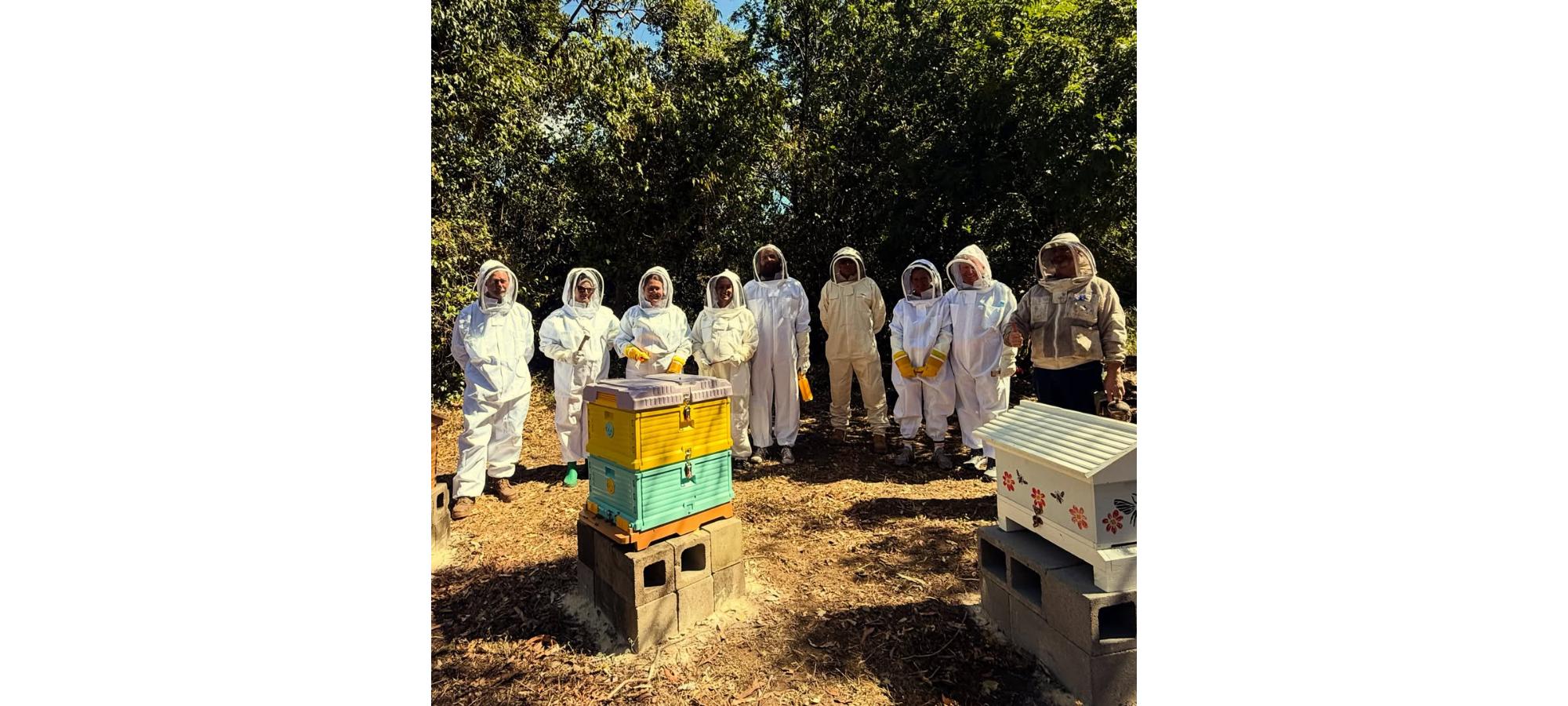
Independently Owned, Locally Grown, Community Loved
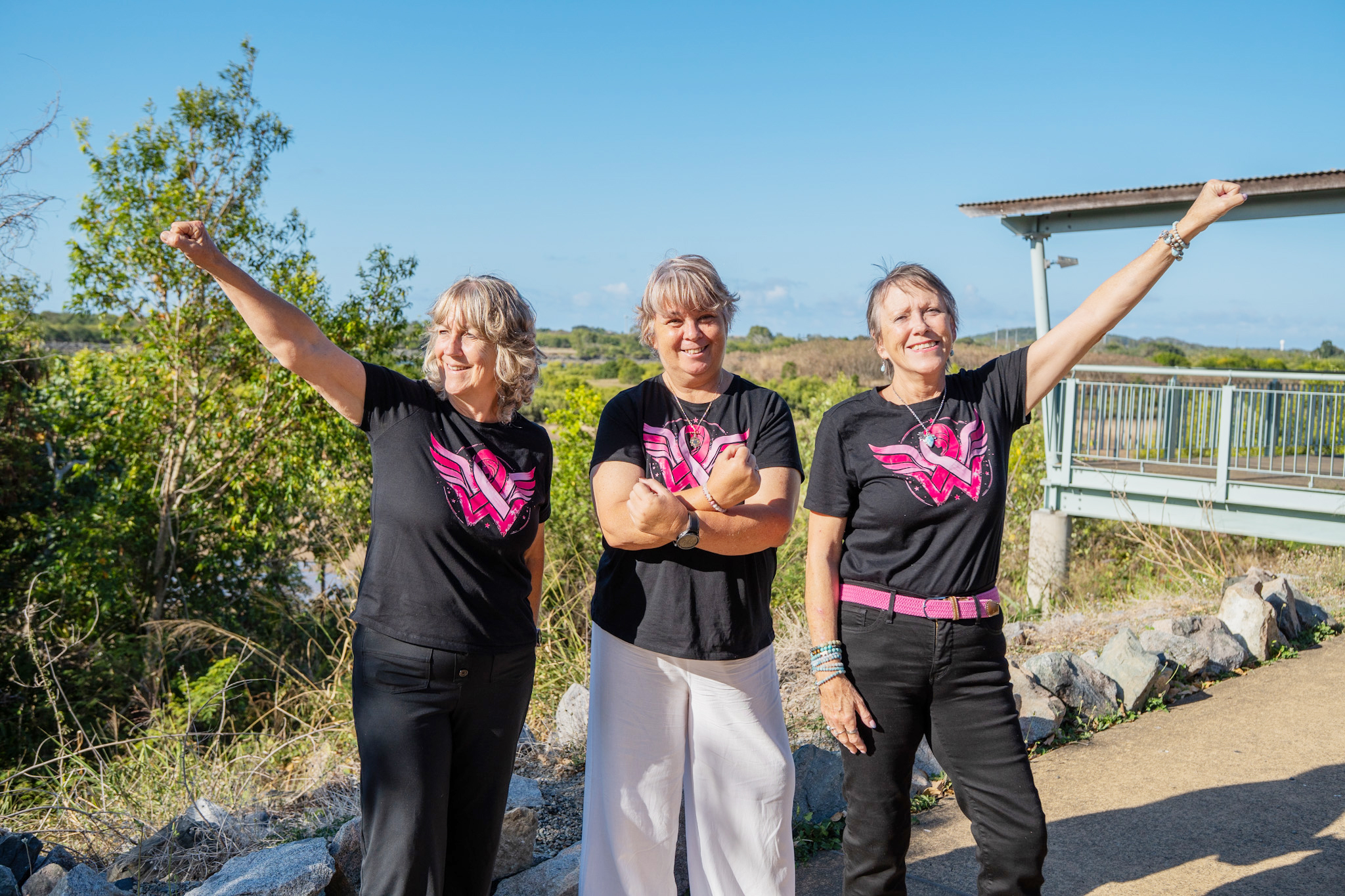


A caesarean birth can be planned, unexpected, calm, chaotic, welcomed, or deeply emotional. For many women, it is all of those things at once. Yet while there is often plenty of discussion about the birth itself, far less attention is given to what comes next… recovery.
April is C-Section Awareness Month, a timely reminder that caesarean birth is not the “easy option,” nor is recovery something women should simply be expected to push through in silence.
A caesarean is major abdominal surgery, performed at the same time a woman becomes a mother or welcomes another child into her family. In the days and weeks afterwards, women are often navigating pain, fatigue, sleep deprivation, feeding demands, changing hormones, and the enormous responsibility of caring for a newborn, all while healing from surgery.
Many mums are surprised by how vulnerable they feel. Tasks that once seemed simple, like getting out of bed, laughing, coughing, lifting the baby capsule, or walking through the supermarket, can suddenly feel challenging. Yet because caring for a baby doesn’t pause for recovery, many women push on long before their body feels ready.
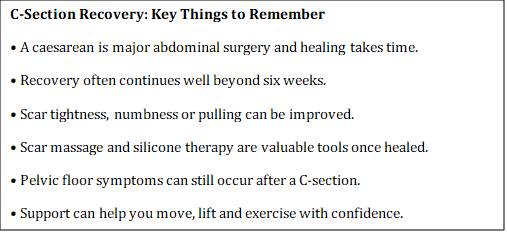
What often goes unspoken is that healing continues well beyond the first six weeks.
While the skin may appear healed relatively quickly, deeper layers of tissue continue to recover for months. The abdominal wall, scar tissue, core muscles, breathing patterns, posture, and pelvic floor can all be affected. Some women notice numbness around the scar, tightness, pulling sensations, back pain, weakness, bladder symptoms, or discomfort when returning to exercise. Others simply feel disconnected from their body, particularly their scar, and unsure where to begin.
Scar care is another area many women are never taught about. Once the wound is fully healed and your medical team has cleared you, gentle scar massage can help improve mobility, reduce sensitivity, soften tightness, and support comfort as the tissues recover. Silicone therapy is also widely regarded as a gold-standard treatment for scar management, helping optimise scar healing and appearance. Early guidance can make a significant difference, particularly if the scar feels raised, tethered, numb, sensitive, or uncomfortable.
These experiences are common, but they are not something women need to “just put up with.”
One of the biggest myths around caesarean recovery is that if the baby is healthy and the scar looks fine, everything must be okay. But recovery is about far more than appearance. It is about how a woman feels in her body, how she moves, how she functions, and how confidently she returns to daily life.
This is where support can make a meaningful difference.
Pelvic health physiotherapy can help women recover strength, confidence, and comfort after a caesarean birth. That may include gentle core rehabilitation, scar mobility work, breathing retraining, guidance for safe return to exercise, lifting strategies, and addressing pelvic floor symptoms such as leaking, heaviness, or pain.
Just as importantly, it can provide reassurance. Many women feel relief simply hearing that what they are experiencing is valid, understandable, and treatable.
As a women’s health physiotherapist, I often meet mothers months or even years after their caesarean who say, “I thought this was just how it would be now.” But it doesn’t have to be.
If you’ve had a caesarean birth, recently or years ago, and something still doesn’t feel quite right, a check-in with a qualified health professional can be a helpful next step. Your body has been through something significant, and it deserves care.
This C-Section Awareness Month, let’s broaden the conversation. A caesarean birth is still birth. Recovery still matters. And mothers deserve more than being told to bounce back.
Because healing well isn’t a luxury after birth — it should be the expectation.
Publishers Indemnity. Any individual or entity that places advertising, supplies copy material, or submits editorial content to Core Life Publishing agrees and undertakes to ensure that all such material:- Does not infringe upon any copyright, trademark, or other intellectual property rights;- Is free from any content that could be considered defamatory, libelous, or slanderous;- Does not infringe upon any rights related to privacy or breach of confidence;- Contains no obscene, indecent, or otherwise unlawful material;- Complies fully with the Trade Practices Act and all other applicable laws, regulations, or statutes.Furthermore, by submitting or placing such material, these individuals or entities agree to indemnify and hold harmless the publisher, Core Publishing and Events Pty Ltd, and/or its agents from and against any and all investigations, claims, demands, liabilities, damages, costs, or judgments arising out of or in connection with the material provided. All material is believed to be accurate at the time of printing and remains the copyright of Core Publishing and Events Pty Ltd.
© 2026 Mackay and Whitsunday Life Pty Ltd.