Independently Owned, Locally Grown, Community Loved

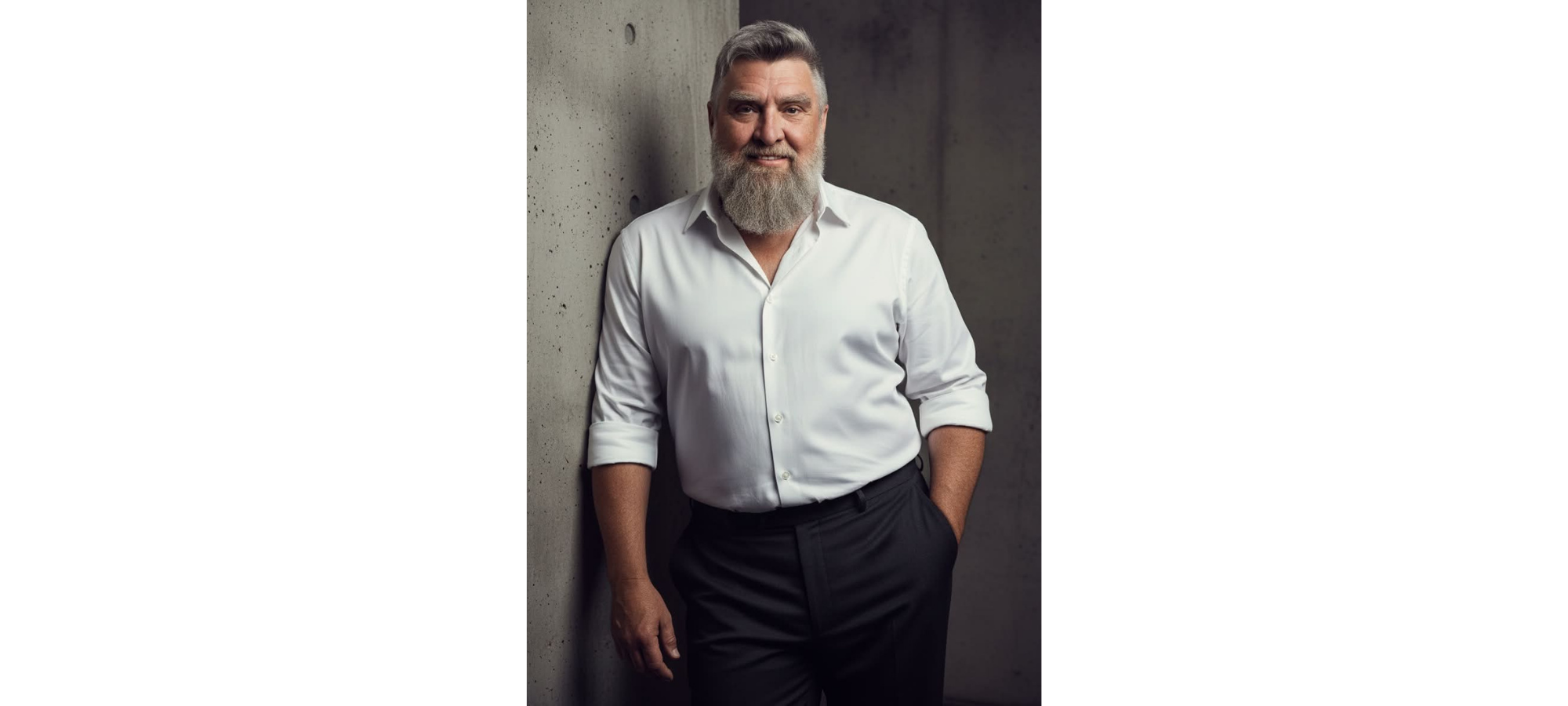
By Richard Evans, President, Whitsundays Writers Festival
Before most of us have finished breakfast, we have probably written something.
A shopping list. A text message. A reminder to buy milk. Perhaps a note that makes perfect sense at 7am and looks remarkably mysterious by lunchtime.
None of this feels particularly literary. Yet these small acts belong to the same human impulse that produces a poem, a diary or a novel.
We write to communicate, certainly. But we also write to think.
A thought that seemed perfectly clear in our head can become surprisingly slippery once we try to write it down. Suddenly we have to decide what we actually mean.
The novelist E.M. Forster put it neatly: “How can I tell what I think till I see what I say?”
Writing slows us down just enough to make us choose.
A vague feeling becomes a sentence. A complicated idea becomes something we can explain.
An argument that sounded convincing in our head can occasionally be exposed as complete nonsense.
Writing is one of the ways we work out what we have to say in the first place.
Nor does it need to be long. Consider the six-word story often credited to Ernest Hemingway: “For sale: baby shoes, never worn.”
Six words, and an entire story of hope and loss. There is no evidence Hemingway wrote it, but it shows what every writer learns: what we leave out can matter as much as what we put in.
Think about how many forms writing takes.
The email that prevents a misunderstanding. The handwritten note that says, “I was thinking of you.” The diary where private thoughts have somewhere to land. The story that allows us to briefly inhabit somebody else’s life.
The manuscript is a different beast. It requires persistence, patience and the willingness to discover that yesterday’s brilliant sentence may not be quite so brilliant today.
Writing is also exercise for the mind. It asks us to remember, concentrate, organise ideas, make choices and use our imagination.
The keyboard has made writing faster, but speed is not necessarily the same as depth. Writing by hand, with its deliberate pace, can give the mind more time to select, connect and remember.
Either way, the important thing is that we keep doing it.
At the Whitsundays Writers Festival, we see people with different ambitions. Some want to write a memoir or poetry. Some dream of a crime novel. Others simply want encouragement to put the first words on the page.
Writing is not reserved for the naturally gifted. It is a practice. And like most things we practise, we get better at it.
So here is my suggestion for today. Write something.
Not a novel. Not even a short story.
Describe the view from your window. Record something funny that happened this week. Try a six-word story. Write a letter to someone you care about, even if you never send it.
It doesn’t have to be good. It just has to be written.
Every time we put words on a page, we give our thoughts somewhere to live.
And sometimes, that is where the interesting things begin.
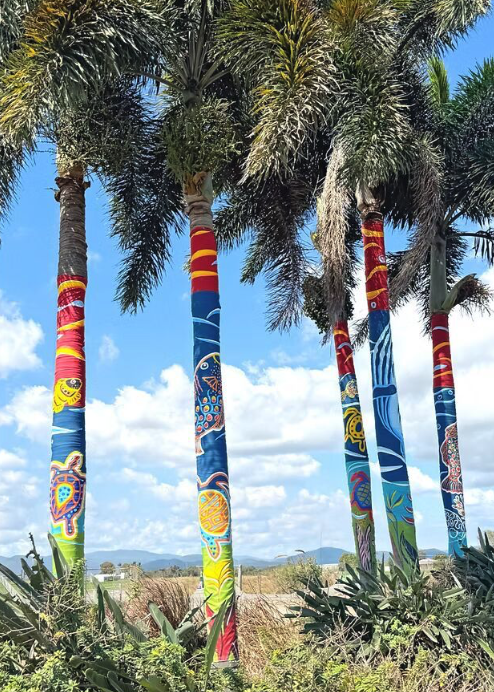
If you’ve driven along the Bruce Highway through Proserpine recently, you may have noticed something colourful across from the Community Gallery.
The palm trees have been transformed with bold artworks as part of Colour the Whitsundays, a public art project bringing creativity into everyday spaces and showcasing local talent to passing motorists.
The project began in January 2025, with six potential highway sites identified and two ultimately selected for installations.
The first, now outside the Community Gallery, was created by the Whitsunday Public Art Group working together on the installation. A second project by students from St Catherine’s Catholic College will soon add another splash of colour to the precinct.
The installation presented some practical challenges. While the original concept was to “fibre bomb” the palms, natural fibres were unlikely to withstand the Whitsundays’ harsh climate. Instead, the group developed a system using UV-resistant outdoor fabric, specialised fabric paint and UV-resistant thread, secured with shock cord without permanently attaching anything to the trees.
The design also needed to make an impact for motorists travelling past at around 60km/h.
Supported through the Regional Arts Development Fund (RADF), with assistance from Whitsunday Regional Council, Creative Connections Whitsunday and local creatives, the project brings art beyond the Gallery and into the community.
And this may only be the beginning. Who knows where Colour the Whitsundays might appear next?
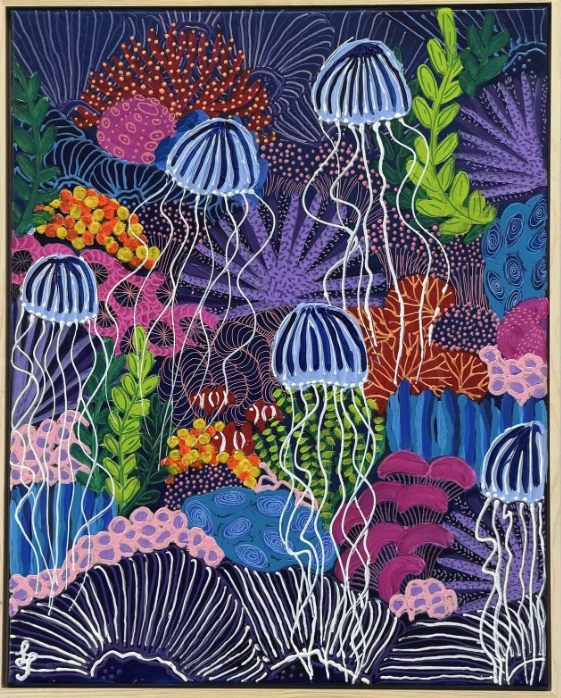
A new exhibition celebrating the landscapes and character of the Whitsundays is now on display at the Bendigo Community Bank Cannonvale–Proserpine Community Creative Space at Whitsunday Plaza.
From Cane Fields to Coral Reefs: The Whitsundays Through the Eyes of Local Artists brings together work by six local artists, each offering a different perspective on the region and the places that inspire them.
Lenny Pennell showcases her reef-inspired work, Whispers Beneath the Whitsundays, capturing the energy of the region's marine environment.
Linda Forrester is also featured with Border Island, a painting capturing the landscape and afternoon light of the Whitsundays.
The exhibition also includes work by Carol Shannon, Jacqui Henderson, Lucy Seddon Brown and Oliver Seddon Brown.
The Community Creative Space is part of an ongoing partnership between Creative Connections Whitsundays and Bendigo Community Bank, providing local artists with opportunities to exhibit in community spaces.
The exhibition is free to visit Monday to Friday, 9.30am–4pm, with a lunch closure from 1–2pm.
All artworks are available for purchase, supporting local artists.
Publishers Indemnity. Any individual or entity that places advertising, supplies copy material, or submits editorial content to Core Life Publishing agrees and undertakes to ensure that all such material:- Does not infringe upon any copyright, trademark, or other intellectual property rights;- Is free from any content that could be considered defamatory, libelous, or slanderous;- Does not infringe upon any rights related to privacy or breach of confidence;- Contains no obscene, indecent, or otherwise unlawful material;- Complies fully with the Trade Practices Act and all other applicable laws, regulations, or statutes.Furthermore, by submitting or placing such material, these individuals or entities agree to indemnify and hold harmless the publisher, Core Publishing and Events Pty Ltd, and/or its agents from and against any and all investigations, claims, demands, liabilities, damages, costs, or judgments arising out of or in connection with the material provided. All material is believed to be accurate at the time of printing and remains the copyright of Core Publishing and Events Pty Ltd.
© 2026 Mackay and Whitsunday Life Pty Ltd.

.jpg)