
Independently Owned, Locally Grown, Community Loved

“In summing up, it’s the constitution, it’s Mabo, it’s justice, it’s law, it’s the vibe. And, no, that’s it, it’s the vibe. I rest my case.” The quote is from the Australian film classic The Castle and is taken from the memorable courtroom scene. “It’s the vibe” is now a commonly quoted line and it could in many ways be used to describe the current behaviour of the Australian real estate market. In summing up, it’s inflation, it’s interest rates, it’s the Iran conflict, it’s the price of fuel, it’s cost of living, it’s the vibe. The vibe is spread and reinforced on the nightly news and there is no doubt it is having an impact. Herron Todd White property valuers recently released their October review and it gave a good snapshot of the state of play for the national property market. The review covered off on some of the big factors at play: “National dwelling values fell 3.7 per cent over the September quarter, sales volumes are more than 17 per cent below last year, and the median property now spends 47 days on the market, roughly double the time it took a year ago. Tellingly, fewer owners than usual are listing at what should be the year's busiest time. This isn't a market flooded by forced sellers. It's one where buyers have stepped back,” the report said. What is clear around the country, and in Mackay, is that there are great opportunities, particularly for first home buyers. The HTW report says: “Conditions remain favourable for first home buyers in several markets. As prices ease, entry points are becoming more accessible, and a pullback in investor activity is reducing competition at the lower end of the market, where first home buyers and investors typically compete most directly. “First home buyers need to carefully assess competing factors. A lower purchase price today may be attractive but is it an indicator of limited capital growth? Properties in fringe locations are more affordable, but are new owners of those properties facing significantly increased living costs as, say, fuel prices remain high?” Fringe locations are more of a consideration than they are in Mackay as we don’t have the travel distances that the larger cities have to manage. But it is clear that there are some fantastic opportunities on the table for buyers in Mackay. It is true that the investors who were driving the market over recent years have definitely pulled back, however we agents have started getting calls from buyers agents who have clients who see value in the Mackay market. The Mackay market is not suffering the same way as other southern markets and I only need to look at my open house numbers at the weekend to show there is still good buyer interest. Two of my open houses had seven groups at the open homes and one of those properties had another three private inspections in the following couple of days. Buyers are looking and engaged and many are ready to snap up an opportunity. It will be interesting to see if those investors do start coming back into the market. For them, it’s all about the rental yield. With prices down a bit the rental yield creates a very good return for investors. As agents it’s our job to get the best price for our clients, the sellers. However, we would all love that buyer to be a local rather than a southern investor. But “the vibe” is having an impact in Mackay as it is elsewhere and it could mean that some locals again miss out on the opportunities in the current market. Nothing to panic about but people who don’t act because of the vibe could end up regretting their delay. How many times did I hear over the past few years?: “We really should have bought a couple of years ago when the market wasn’t so hot.”
Read the full story
The power of a good hair day is not to be underestimated, and Botanical Hair Collective has made it their business to help people find that feeling, whether they need a big, bold change, a simple refresh or relaxing pamper. What sets Botanical Hair apart is their commitment to using only natural and organic products, which reduces the chemical stress on their clients' hair and bodies, ensuring the hair that walks out of the salon not only looks but feels healthy. Their colour range from Oway is organic and entirely plant-based; even the bleach is ammonia-free, with Kukui butter as its main ingredient. Botanical Hair is a two-woman show, run by Chloe, the owner and senior stylist, and her third-year apprentice, Bonny. Chloe looks after her own clients, as well as overseeing Bonny's training and taking care of the behind-the-scenes work. Passionate about blondes and colours, Chloe is chatty and bubbly, offering a killer cut and even better conversation on the side. Bonny loves all things styling and colour. She offers all services at an emerging stylist price and will be offering heavily discounted prices for her foiling training. Following in her boss's footsteps, she is welcoming, chatty and outgoing. Chloe's dream of building a hair business began when she was a kid, looking up to her hairstylist older sister. She started her apprenticeship in Airlie Beach with an amazing boss who worked with organic hair products, and realised that helping clients make healthy hair choices was a path she wanted to continue to pursue. Chloe moved from Airlie Beach to Mackay and expanded her skills by working in a range of salons using different tools. It was through these experiences that Chloe realised she was ready to have her own salon. Creating a space where clients felt appreciated and relaxed, alongside stylists who felt supported, was the goal Chloe set at start of her career. As the years have passed, the smiles, laughs and confidence are what Chloe enjoys the most, alongside creating iconic looks. “Seeing the brightness that comes from my clients when they get that look they’re after always makes my day, making it easier and easier every day to fall deeper in love with creating gorgeous hair,” Chloe said. “Another thing that is very special to me is watching Bonny grow and fall in love with hairdressing every day, like I did when I was an apprentice.” Chloe's salon sticks to an effective framework: organic, relaxing and grounded. From her products and styles to the way she makes her clients feel confident, her main priority is always the client in the chair. “We strongly believe in quality over quantity, and if they come to us, they won’t be just another number. We like to make connections with our clients.” P1. Botanica Hair Collective creates a welcoming space. Photo Supplied: Botanica hair.
Read the full storyBe honest. When was the last time you caught yourself humming in the kitchen for no reason, or smiled at a stranger without immediately wondering if you’d just done something weird? Happiness has a sneaky reputation as something that arrives once the to-do list is finished, the perfect relationship appears, or the digestive system finally behaves itself. Spoiler: it doesn’t work that way. Happiness is less of a destination and more of a daily practice that starts with whether your body feels safe enough to relax. Your gut, for example, has opinions. A calm, well-hydrated digestive system is far more likely to let you feel content than one that’s staging a protest after lunch. Movement helps too, nothing dramatic, just enough to remind your body it still lives in a body. Breathing deeply (the kind where your shoulders actually drop) signals safety. So does drinking water before you reach for a coffee. These aren’t glamorous, but they’re surprisingly effective at turning down the internal alarm system. Then there are the humans. Non-toxic relationships matter more than most people admit. The ones where you don’t have to perform, explain, or shrink. Add a sense of passion or mission. When you have something that makes you want to get out of bed excited for the day, your internal state improves. Regular breaks from the work and to-do list help as well. Having something to look forward to (a walk, a meal with a friend, even a ridiculous comedy show) gives the nervous system a reason to stay out of permanent emergency mode. Here’s the part most of us miss: we can react or we can respond. Reacting is the sharp, automatic version: tight chest, racing thoughts, the story that this moment is a catastrophe. Responding is calmer. It asks, “What meaning am I giving this?” The same delayed email can mean “they hate me” or “they’re busy.” One version keeps the body in stress. The other lets it calm. Over time, the meaning we assign becomes the internal environment we live in. The more happiness we can cultivate from the inside, the more healing and rejuvenation follows. Happiness really is the greatest virus ever! Contagious in the best way. In a public setting it spreads fast. People want a piece of it, and rightly so. Happiness has healing qualities that nothing else can replicate. The best part? It comes from inside each one of us. Not from perfect circumstances. It’s available to everyone. Like most people, my own health journey took me through some deeply uncomfortable moments. I never knew that upgrading my health would land me in places of genuine happiness, joy and gratitude. I had experienced these feelings in the past but never as intense and long lasting. That experience is what I wish for others: the internal joy that appears when the body finally has the conditions it needs to do its job. The path starts simply. By paying attention to what your particular body is asking for and honouring those requests. Digestive calm, movement, hydration, breath, loving connections, purpose, and regular relief from the grind. That’s where real happiness has room to grow. That’s also where we can help.
Read the full story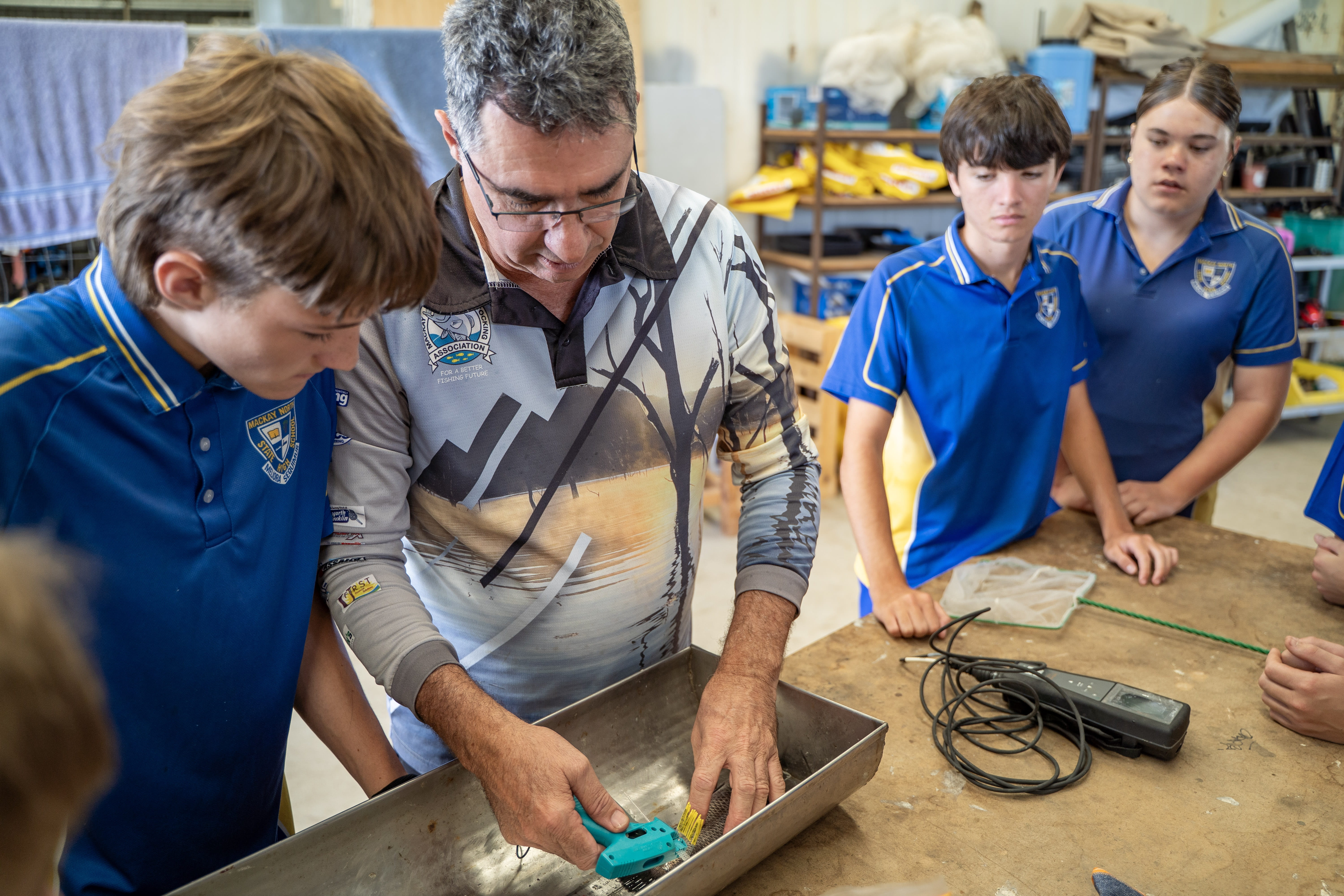
Year 10 Agricultural students from Mackay North State High School have raised and released 13 barramundis into the Goose ponds, making your next catch a possible close friend of a Mackay Student. Under the supervision of two classes and the help of Mackay Area Fish Stocking Association, the fish have tripled in length in six months, growing from about 100mm to 300mm. The barramundi growth was comparable to rates achieved on commercial fish farms, shared Mackay Area Fish Stocking Association hatchery coordinator Brandon Ford. “We’re releasing fish so these kids and their kids will have fish in the future to go fishing for,” Brandon said. North High and MAFSA’s partnership began when Aquatics, Science and Agriculture teacher Josh Grant reached out to the association about stocking the school’s recirculating aquaculture system. The association helped the school create perfect growing conditions, whilst Mr. Ford sourced fish from a local barra farm. Cleaning filters, checking pumps and monitoring water levels are all part of the students' regular work to keep the fish healthy, according to science teacher Kelly Dunne. “They are the first ones to notice if there is anything amiss,” she said. The students were fascinated by the Barramundi; observing them in class gave them new insights into the fish. For student Julian, feeding time revealed a measure of how much the fish had changed. “They’ve definitely gotten bigger and a lot feistier,” he said, adding that he had been fascinated to learn during the unit that barramundi could change their sex. “They actually don’t turn into a female until they hit a certain size or a certain age,” he said. The change generally happens when barramundi reaches about 85–100cm long. While they can live in freshwater, they need saltwater to breed. The students tagged their barra for release into the Mackay Goose ponds. With the help of Mr. Ford and his daughter Evelyn, they used drops of clove oil in a transfer tank to keep the fish calm. Suntag tags will help track their growth and movements, with Mr. Ford saying the barra could eventually reach saltwater through connected waterways, particularly during floods. MAFSA’s volunteers are supported by the school's efforts. MAFSA raises thousands of barramundis and sooty grunters for local waterways, including Kinchant, Teemburra and Eungella dams. MAFSA’s scheme has had great results, with one barramundi being released at Platypus Beach in Mirani and then being recorded in the Fitzroy River seven years later, by which time it had grown to about 1.2m. Anglers who report a tagged catch to Suntag can receive a certificate showing when and where the fish was tagged, how much it has grown and how far it has travelled. Mackay North State High School Year 10 Agriculture student with one of the 13 barramundis raised at school and released into the Goose ponds. Photo supplied: Mackay North State High School Mackay Area Fish Stocking Association hatchery coordinator Brandon Ford helps Mackay North State High School students prepare their barramundi for tagging and release into the Goose ponds. Photo Supplied: Mackay North State High School.
Read the full story

A wreck beneath the waters of Pioneer Bay is due to be removed by 20th November, after the submerged vessel was pointed out by the public back in July.
The ship, known as the “Muddy Bay Wreck”, lies near the Port of Airlie, with the ownership of the vessel still under investigation by Maritime Safety Queensland.
A yellow special mark buoy has been placed above the wreck, and the Regional Harbour Master has issued a notice warning boaties of its location while arrangements are made to bring it ashore.
Transport and Main Roads is seeking a contractor to recover, remove and dispose of the wreck through MSQ’s Keeping Our Waterways Safe program. The Queensland Government has committed $15 million over three years to the program, which began on 1st July 2025.
The program follows years of efforts to address problem vessels across Queensland. Between July 2018 and December 2025, MSQ and partner agencies removed 1,142 vessels, while another 782 cases were resolved through other measures. A further 660 vessels remain under active monitoring because they are already derelict or at risk of becoming so.
The successful contractor will need to explain how the wreck will be recovered and taken to a licensed waste facility for destruction and disposal. Recycling and resource recovery must form part of the work, along with measures to protect the surrounding environment.
Any areas disturbed during the operation must be restored to an acceptable condition. Once the job is finished, the yellow buoy will be returned to MSQ’s operations base in Airlie Beach.
For the locals who regularly head out from Airlie and visitors exploring the bay, the removal will clear a hazard from shared waters. Until then, the yellow buoy marks the spot to keep an eye out for.
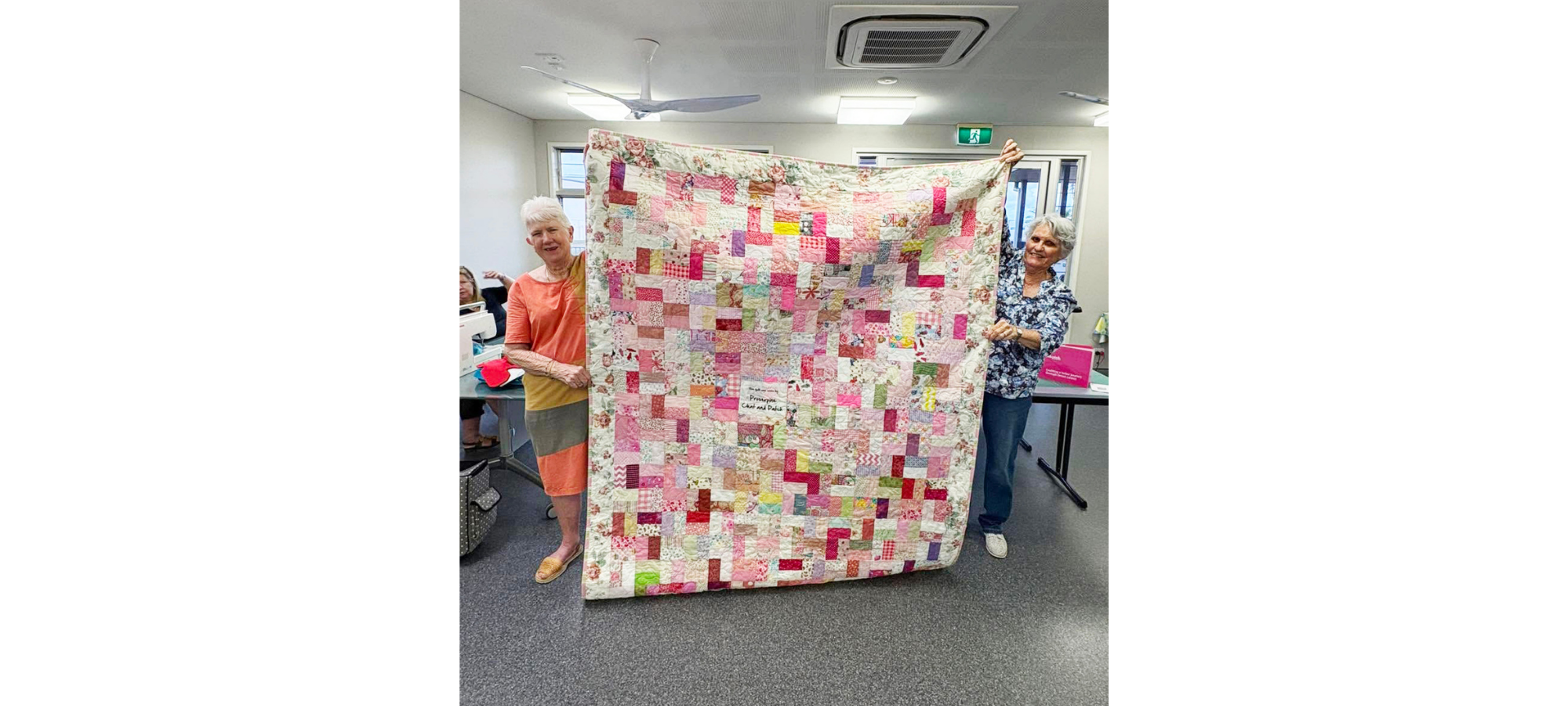
Ladies from Proserpine Community Chat & Patch Club with their quilt creation. Photo supplied
Turning creativity into a way of giving back takes talent and care, something the lovely ladies of Proserpine Community Chat & Patch Club know all about.
The group has lovingly hand-crafted and donated a stunning quilt to support a local breast cancer awareness event, demonstrating how their talents extend beyond the sewing room and into the wider community.
The beautiful quilt will be one of several raffle prizes at a yoga event hosted by a local Counselling and Wellness Practice this Sunday at Coral Sea Resort Jetty, raising awareness and much-needed funds for the Think Pink Foundation.
Raffle tickets will be available for $5 each or three for $10, with all proceeds going towards the foundation.
“Thank you very much, ladies, for supporting our event and The Think Pink Foundation,” said organiser Anna Mackenzie.
Community members are invited to join the morning of yoga and connection, with attendees encouraged to wear pink in support of breast cancer awareness.
The event begins with arrivals from 8am, followed by an 8.30am start and wrapping up at 9.30am with the raffle.
If quilting is more your style, Proserpine Community Chat & Patch Club meets every Tuesday at the Proserpine Community Centre, welcoming anyone keen to enjoy some creative time, learn new skills or simply connect with others.

Richard Evans
By Richard Evans, President, Whitsundays Writers Festival
Have you ever thought about writing down your life story, only to dismiss the idea because you’re not a writer?
Perhaps you left school early, struggled with English, or believe your life isn’t interesting enough to deserve a book.
Here’s the thing. You don’t need to be a writer to tell your story. You just need a life you’ve lived and a willingness to remember it honestly.
That’s what memoir is. It isn’t a history textbook, and you needn’t cover every year since birth. You might write about one important year, a relationship that changed you, a job that tested you, or the day you left home.
Your story doesn’t have to be extraordinary. Often the most powerful stories come from ordinary people explaining what everyday life was like in another time.
Think about the history held by people in our own region. The cane farms, fishing boats, mines and small businesses. The families who arrived from overseas, the hardships people endured and the communities they built. Official records tell us what happened. Personal memories tell us what it felt like to be there.
Your story is part of that history. And if you don’t record it, nobody will. One day your children, grandchildren or someone researching the region will be grateful you did.
Writing can also help you understand your own life. Looking back, you may discover that events you once took for granted shaped you more than you realised.
So, where do you begin?
Keep it simple. Write three sentences starting with “I remember…” Think about your childhood home, your first job or a day that changed your life. Use a photograph as a prompt. Set a timer for ten minutes and write without stopping to fix spelling or grammar.
If writing feels difficult, tell the story into your phone and ask someone to help turn the recording into words. Your local library or writing group can also help.
And forget the excuses. You don’t need perfect grammar. You can change names, keep your writing private or share only what feels comfortable. The first draft is allowed to be rough. Write badly first, fix it afterwards.
So this week, choose one memory and describe what you saw, heard and felt. Ten minutes is enough.
Your story is a gift to yourself, your family and your community. Nobody else can tell it quite the way you can. Start today.
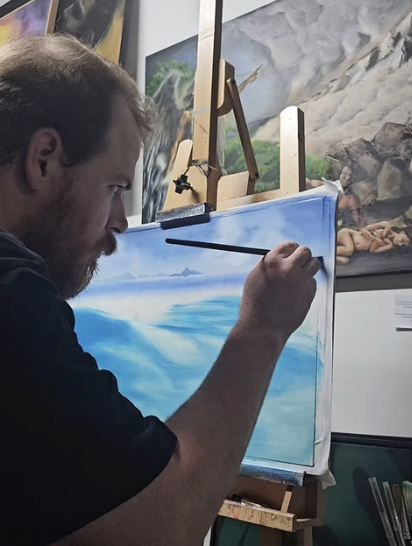
Creativity can offer a retreat from everyday pressures and a way to process difficult emotions.
Last week, for Queensland Mental Health Week, Creative Connections Whitsunday (CCW) explored creativity and wellbeing through local artists Michael van Blerk and Debbie Stephens.
For Michael, painting offers a different space from his demanding working life.
"My day job is demanding and, at times, confronting. It asks a lot of me emotionally, and for a long time I didn't have a good place to put that weight."
After stepping away from painting for around ten years, Michael picked up a brush again about eighteen months ago. Working predominantly in oils, he often completes a painting in one session, requiring his full concentration.
"I can't be replaying the day while I'm working out an edge or a wave breaking in the dark. For those few hours, my mind finally goes quiet."
"Painting has become a way of processing the heavier things I carry and turning them into something that holds hope."
His advice is simple: "Pick something up and make something. It doesn't need to be good. It just needs to be yours."
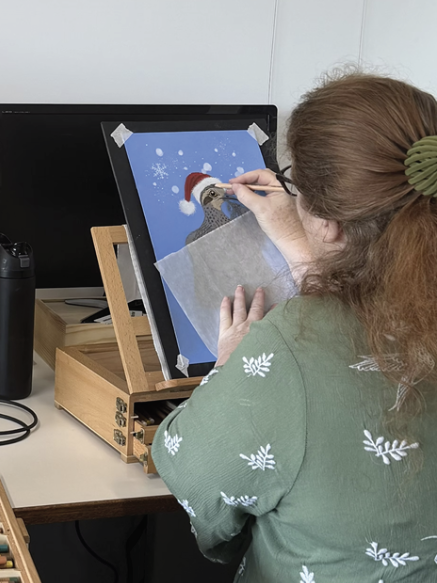
For fellow CCW artist Debbie Stephens, creativity has been profound.
"Art has quite literally been a lifeline for me."
During difficult periods, Debbie says creating gave her somewhere safe to place her thoughts and emotions. Working with pastels shifts her attention towards colour, light and making art.
"The noise around me becomes quieter. I can focus on colour, light and the small decisions in front of me, rather than being defined by what I have been through or what I cannot do."
"Something beautiful can still come from a difficult day."
Through art, Debbie has begun rebuilding confidence, connecting with others, rediscovering joy and finding renewed hope too.
"For me, art is much more than a hobby or a distraction. It is an essential part of caring for my mental health, and at times it has genuinely helped save my life."
Perhaps one of the most important things about creativity is that it doesn't require artistic skill.
Michael and Debbie's experiences are deeply personal, but there is a common thread running through both stories. Creativity gives them somewhere to place their attention, their emotions and their experiences. It creates purpose and connection, andprovides moments when everything else becomes a little quieter.
Celebrating local creativity, connection, and community
Whitsundays Writers Festival
Richard Evans
Festival Director and President
hello@whitsundayswriters.com
Save the date for the 2027 Whitsundays Writers Festival, 10-12 September.
Creative Connections Whitsunday
Glenda Brown
President
info@creativeconnectionwhitsunday.com
Creative Connections Whitsundays supports local artists by operating the Community Gallery and delivering regular creative days and exhibitions.
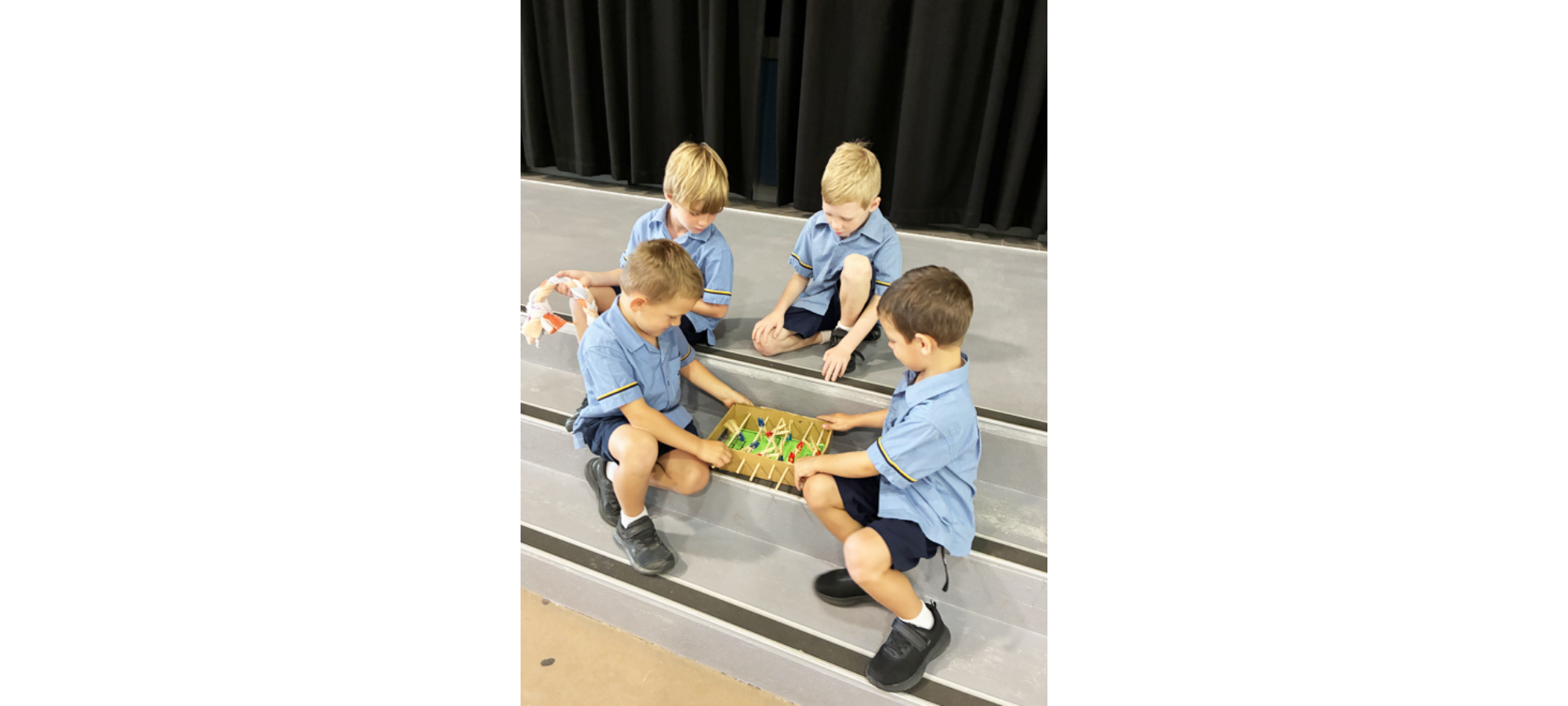
Kids playing with sustainably made foosball table. Photo supplied: St Catherines
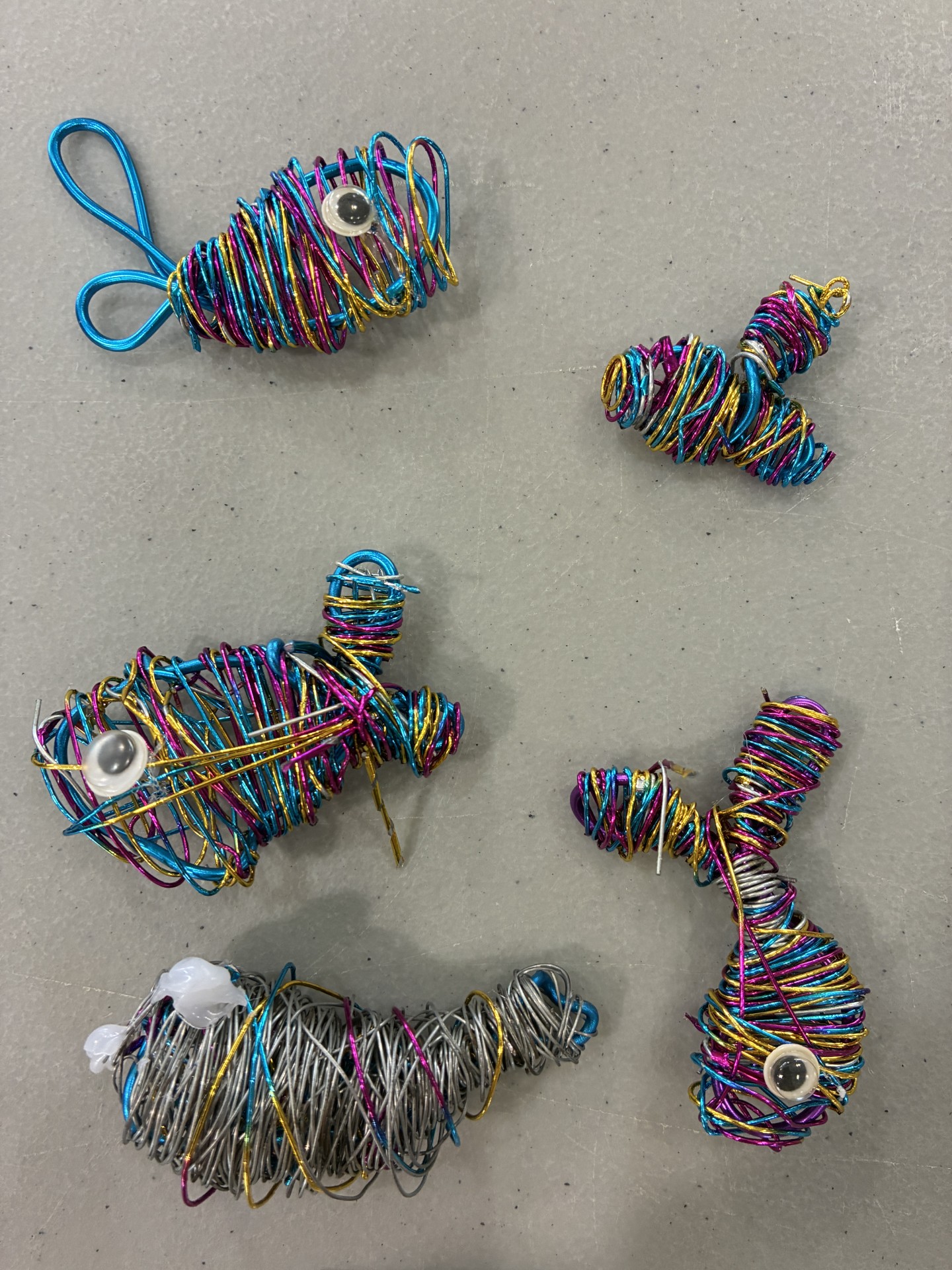
St Catherine’s Year 6 students got creative with scraps, turning discarded materials into products to sell at their school’s sustainable market stalls.
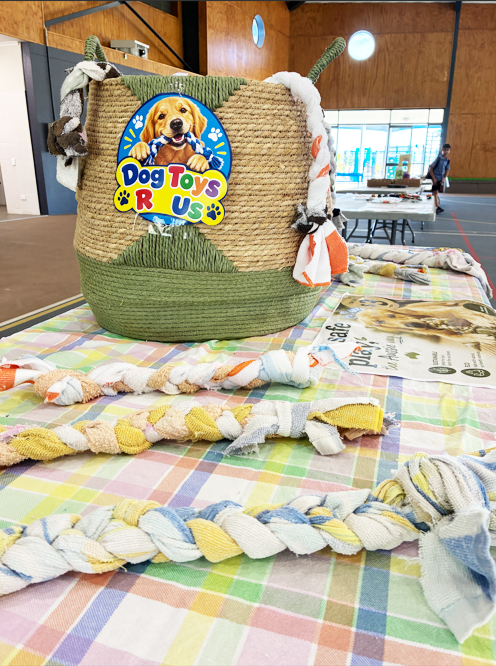
The term-long project gave students the chance to repurpose unused items from home, school or scraps found on the beach, creating everything from dog toys made with old towels to miniature foosball tables built from boxes and pegs.
The project also gave students hands-on experience in running a business, from developing and advertising their products to calculating costs, setting prices and forecasting profits.
“It wasn’t just buying something cheaply and selling it to make a profit, it was actually looking at sustainability,” said assistant principal of curriculum, Kelly Bennett.
With everything priced at $5 or less, the stalls proved popular among fellow students, with some selling out and taking further orders.
“They sold them to other students within the school and basically sold out, to the extent where some of the stalls even had to take further orders and make more of their product,” Ms Bennett said.
All proceeds from the project went towards the Year 6 graduation excursion, giving students an extra incentive to turn their creative ideas into successful products. Following its success, Ms Bennett anticipates the return of this next year.
“It was a huge success, and I think they’ll definitely want to run it again next year,” Ms Bennett said.
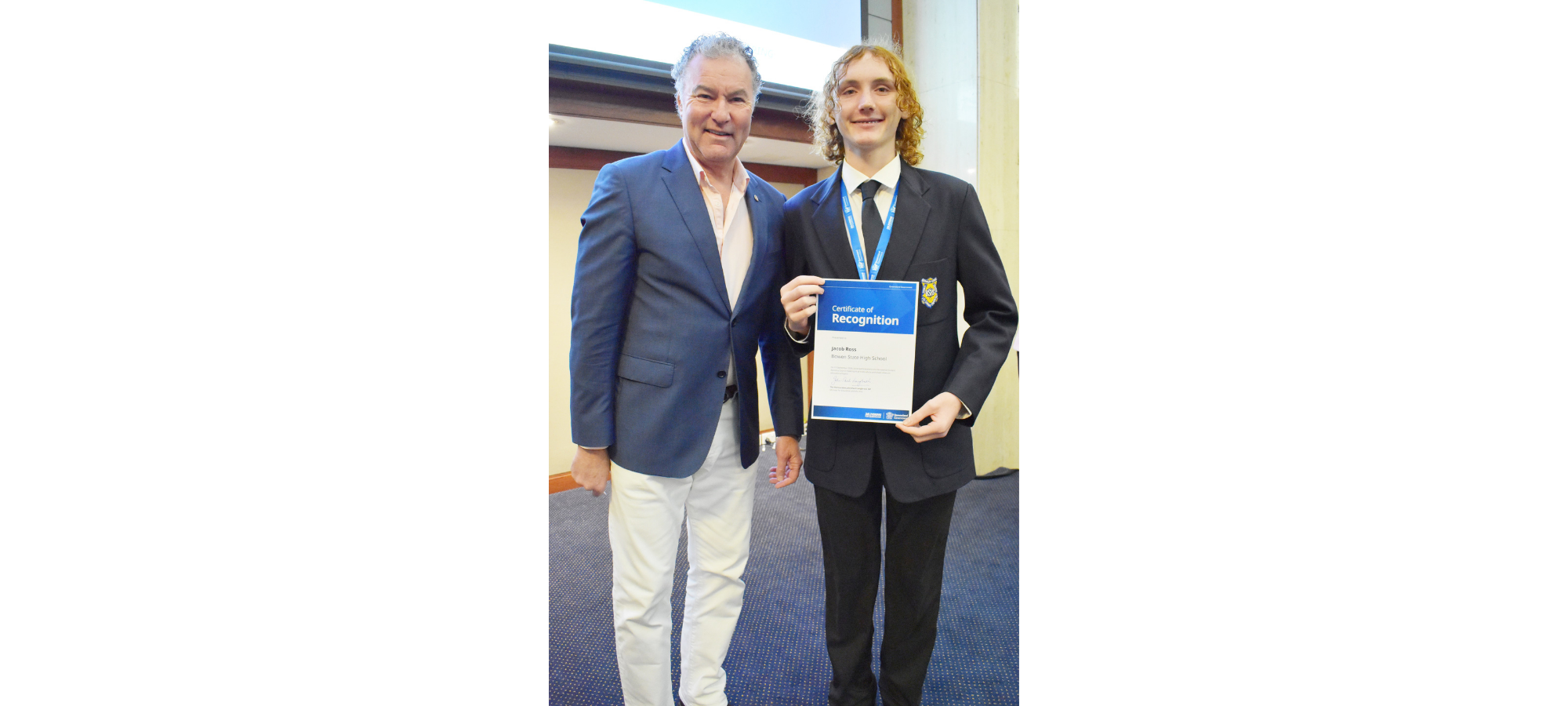
John-Paul Langbroek Jacob Ross. Photo Supplied: Robert Harris
From playing and umpiring hockey to performing in the school’s instrumental music program, Bowen State High School student Jacob Ross is used to getting involved. Now, he is having a say on issues affecting students across Queensland.
Jacob joined 19 other students on the Ministerial Student Advisory Council, discussing artificial intelligence in schoolwork, community involvement and what students want from their education.
Among the 20 students, Jacob was the only student representing the region stretching from Ingham to Proserpine and west to Mount Isa.
“I selected Jacob to represent Bowen SHS and our region due to his community service and outstanding leadership,” said Bowen State High School Principal, Robert Harris.
“Jacob is a positive role model for his peers and respected amongst his peers and teachers.”
At their most recent meeting in September, students considered where AI could help with learning and where it could get in the way, still aware of the need to think for themselves, check facts and develop their own ideas, rather than rely on answers generated by AI.
The group also called for clearer rules about using AI in assessment, including when it was acceptable and how students should acknowledge using it.
Learning how AI works, questioning its answers and being careful about sharing personal information were other points raised.
The conversation then turned to helping young people become more involved in their communities.
Students suggested schools could link lessons to issues beyond the classroom and help them find ways to contribute through their interests, hobbies and future careers.
They also wanted opportunities to discuss different views respectfully and learn about the wider world.
Mr Harris said Jacob’s involvement in school and community life made him well suited to these discussions.
“His active citizenship was perfect for him to be part of the council to provide his views on different issues that are impacting on education.”
Outgoing members spoke about taking ideas back to their schools and seeing earlier discussions lead to changes around bullying, vaping awareness and timetabling.
The Department of Education thanked students for their contributions, with the Education Minister praising their thoughtful discussion about AI and their experiences on the council.
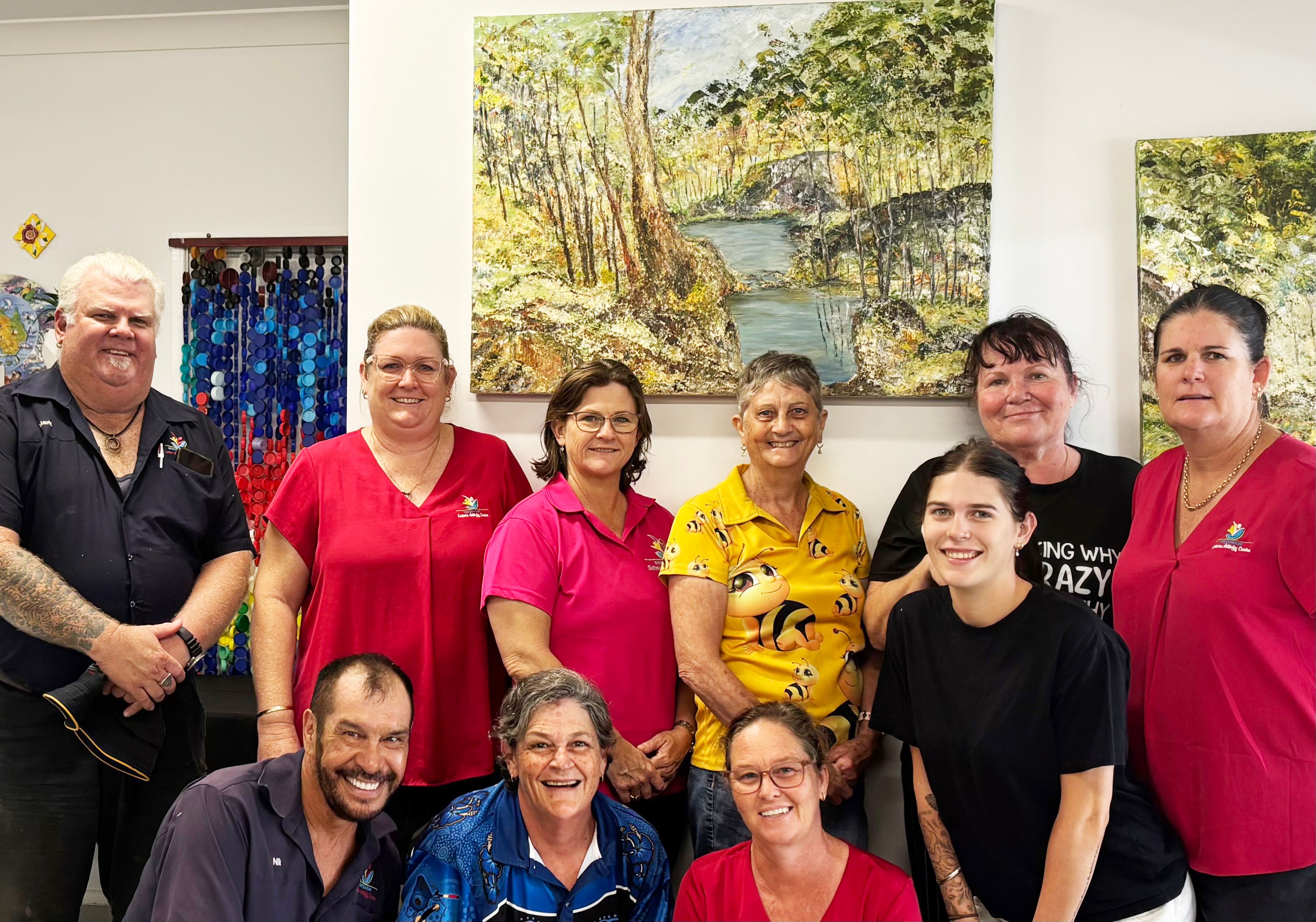
Part of the Whitsunday Leisure Activity Centre team. Photo supplied: WLAC
The Whitsunday Leisure Activity Centre will celebrate its 50th Anniversary grand opening with a morning tea on the 26th, beginning a week of events for the community.
Locals are invited to join the opening celebrations, share a morning tea and explore the Centre. If you miss the opening, there’s still plenty of time to pop in, with the doors open to visitors throughout the week.
Celebrations will finish on Friday the 30th with a twilight market, bringing stalls, food and family activities to the Centre from 5pm. Enjoying an evening out with the family.
These activities are a chance for the public to see what the Centre has to offer the community, come join in the celebrations. All welcome!!
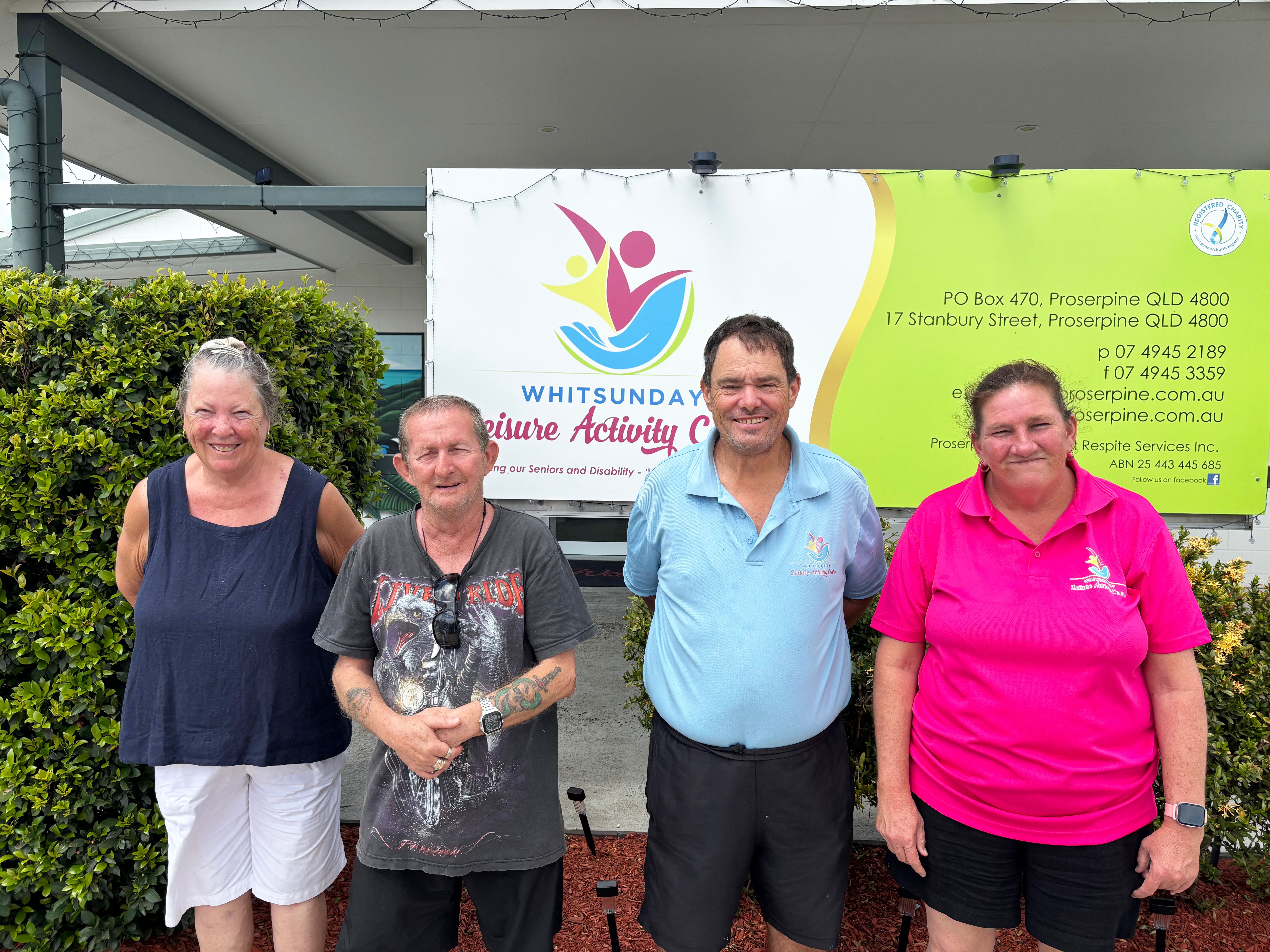
Melody Camm, Nigel Kellion, Alen Sanderson and Karen Conserdyne. All Photos supplied: Nikolai Romanov
Whitsunday Leisure Activity Centre is celebrating 50 years of helping community members find support, friendship and connection.
Supporting older residents and people with disability, the Centre reaches across the Whitsundays, from Dingo Beach to Midge Point, including Airlie Beach and Cannonvale.
Alongside special outings, such as a weekend getaway to Townsville, the Centre’s everyday services help people build confidence and independence. Whether through learning daily life skills, going out into the community or spending time with friends, the Centre creates a welcoming space where people feel comfortable, connected and supported.
“We help them with shopping, cleaning, like just and daily life skills,” said Office Coordinator, Kym Hiscox.
“[Townsville’s] just something different for them to go out of the area to also experience what’s out there.”
Days at the Centre are also something to look forward to, offering morning tea, a two-course lunch and afternoon tea, with transport available to help participants get there and home again.
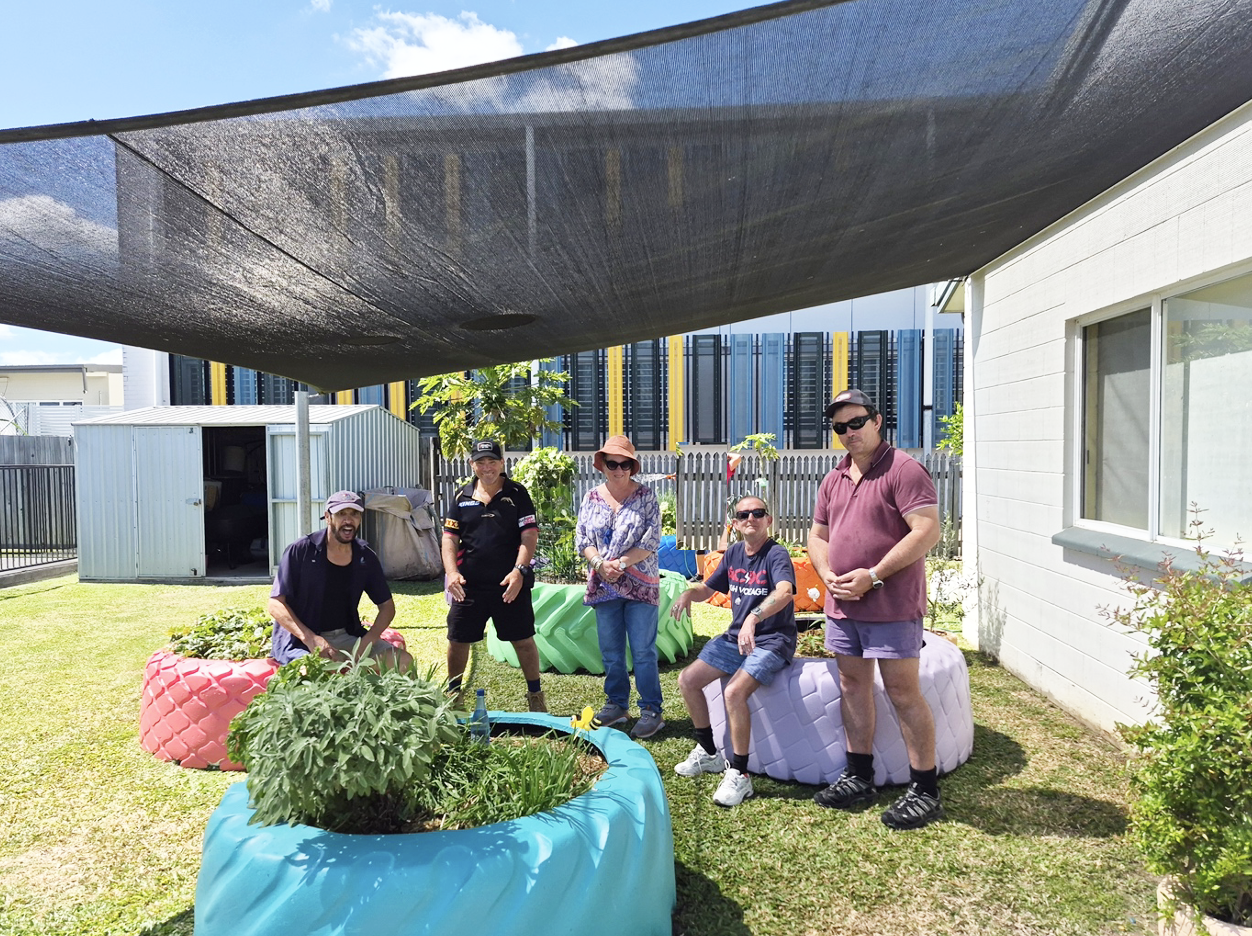
A monthly activity program offers plenty of ways to spend the day, from bingo, karaoke and card games to cooking, candle making, woodworking and gardening. Community lunches, picnic outings and visits to Morning Melodies at the Proserpine Entertainment Centre also keep people connected to life around the region.
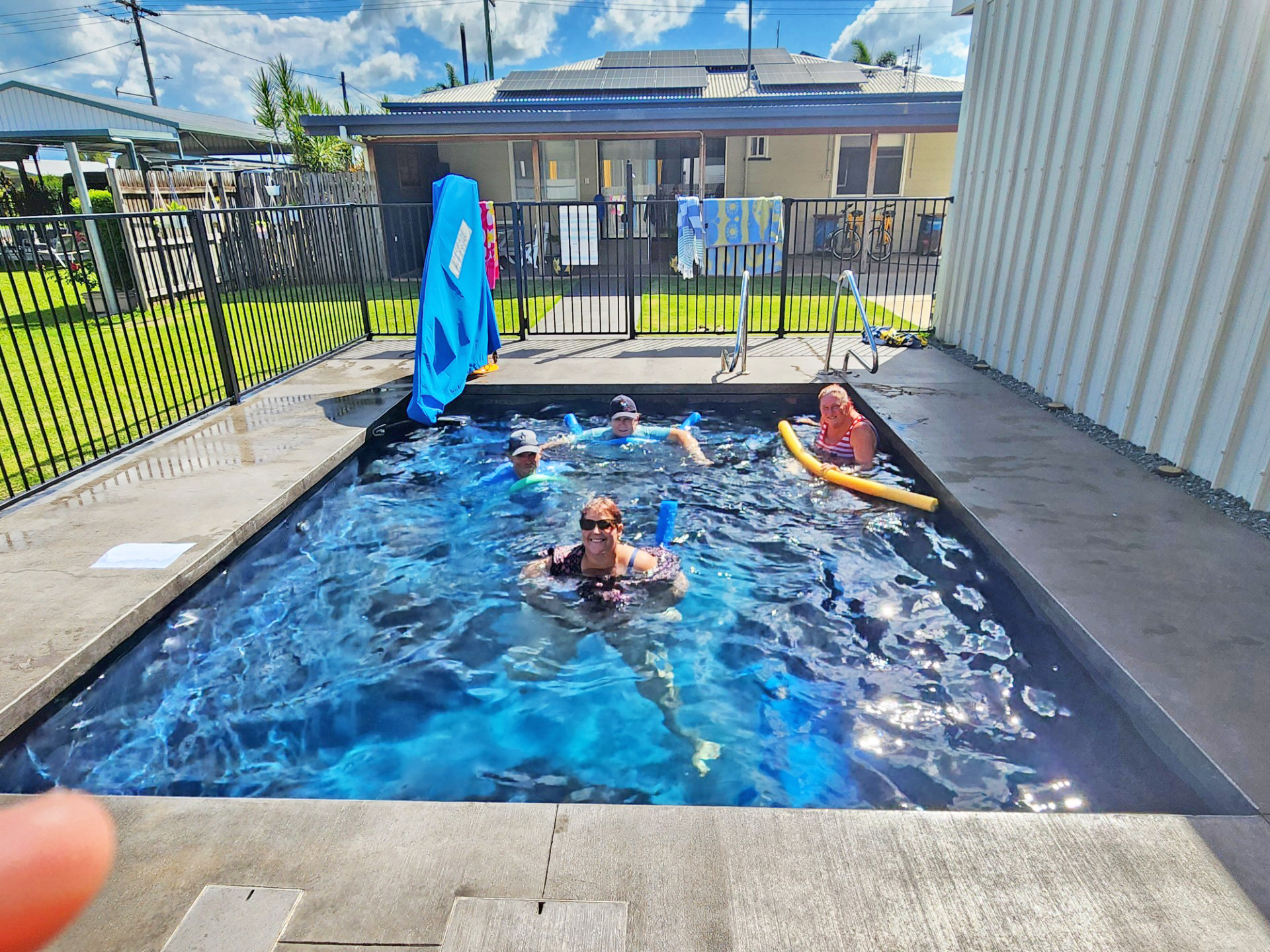
Those wanting to stay active can enjoy the therapy pool, armchair DrumFun and breathwork, while art and music activities offer time for creativity and self-expression.
That help extends beyond the Centre, too, whether someone needs a hand at home or company getting out and about.
“We try as much as we can to cater to what they require,” Kym said
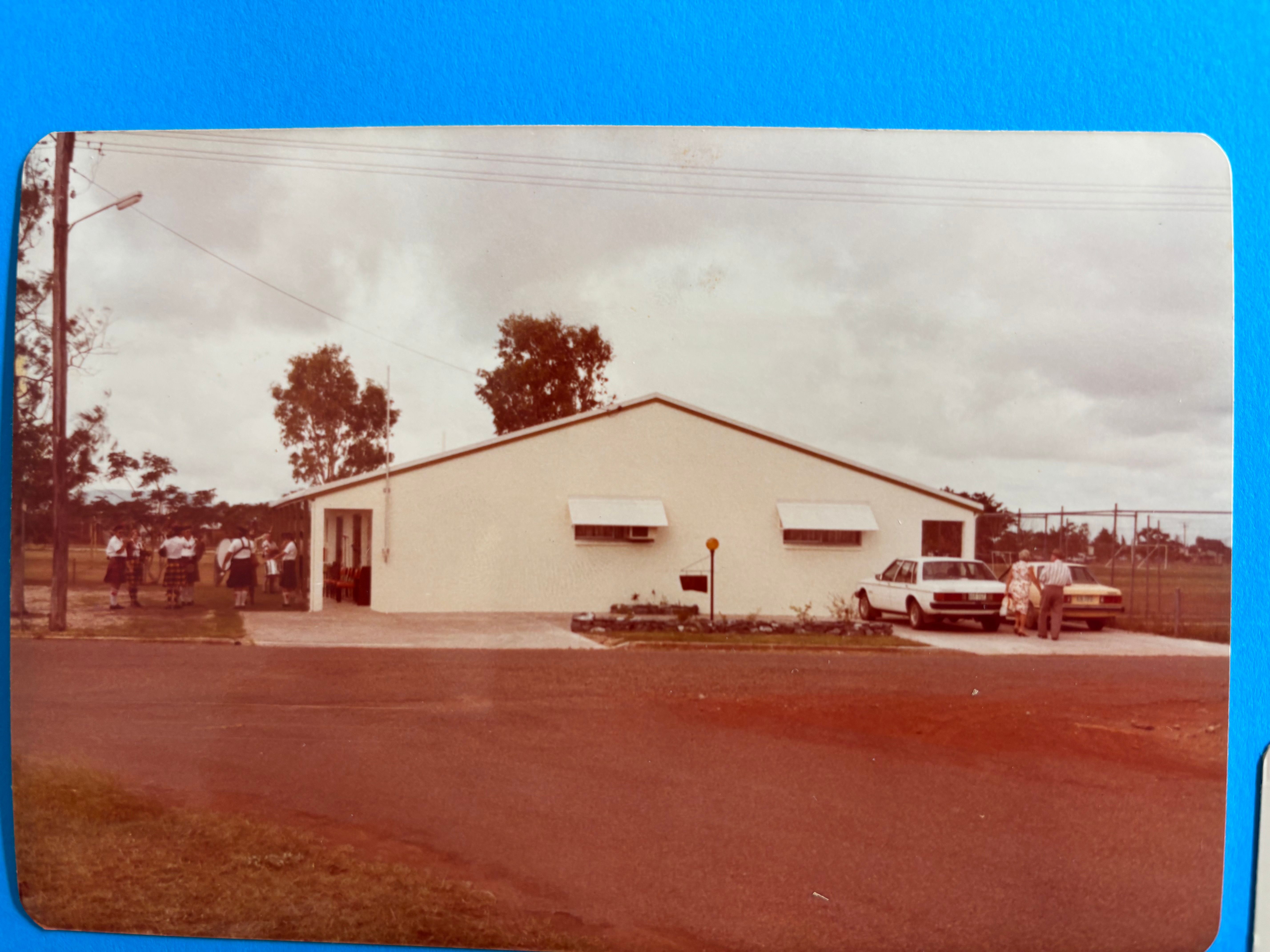
Established in 1976, the Centre began when a local parent sought somewhere for young people with disabilities to go after finishing school. With support from local service clubs a committee formed and began meeting at the Proserpine Showgrounds, offering activities and opportunities to learn everyday life skills.
The Centre found a home of its own on Stanbury Street in 1983, after the council granted a 99-year lease on parkland beside the high school. With no government funding in those early years, keeping the doors open depended entirely on community fundraising. Raffles, lucky number tickets sold at the local Show, bingo at the Proserpine Bowling Club and items made and sold in the centre’s workshop all helped pay the bills and keep people coming together.
From Monday 26th to Friday 30th October, the Centre will be celebrating 50 years of service at 17 Stanbury Street, Proserpine and will be open for the public to join in the celebration.
And on Friday afternoon, the weekly celebrations conclude with a special Gala Fair with market stalls, games, week-long cent sale, a light display, free BBQ and more.
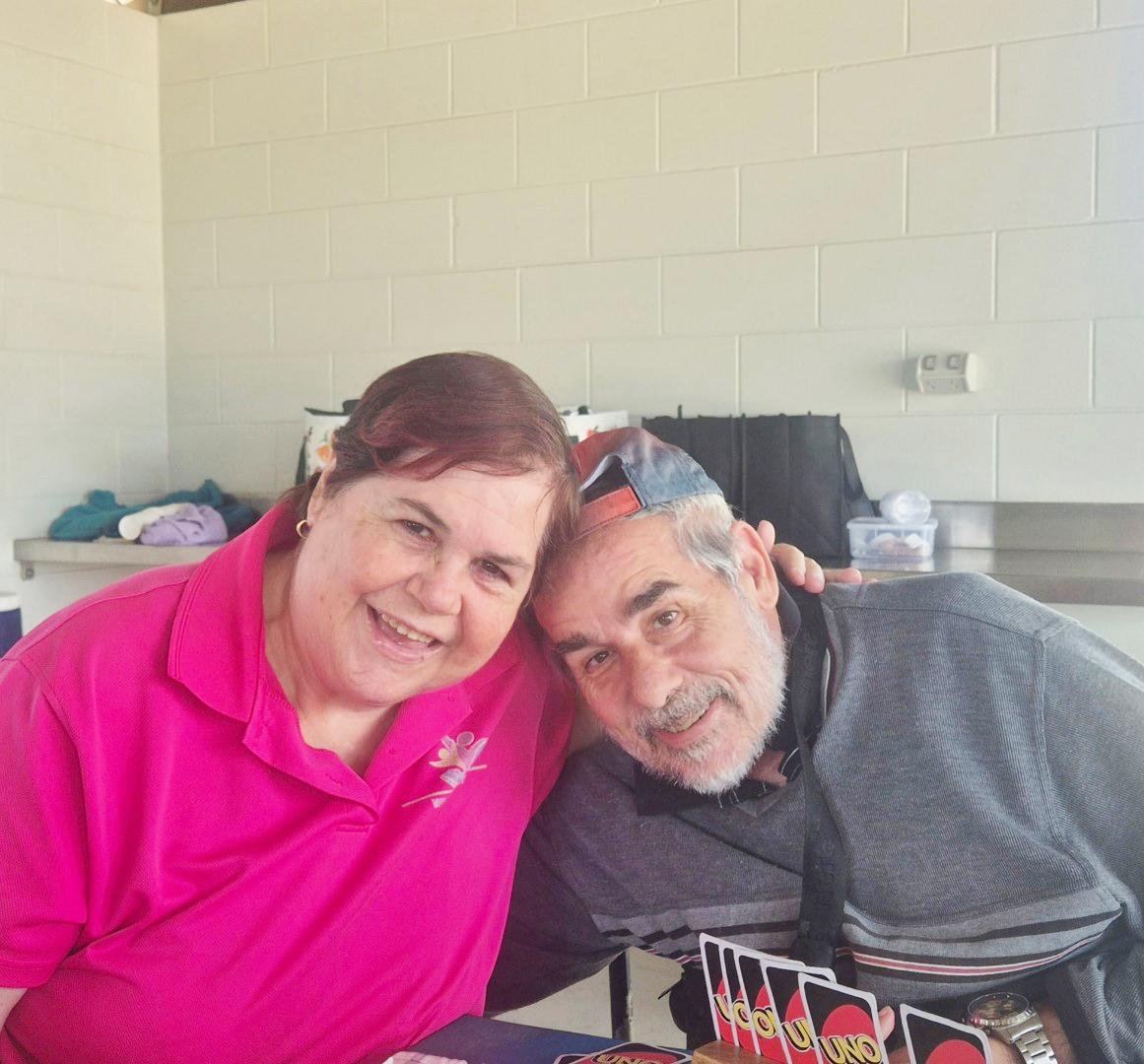
Helen Deighton has witnessed much of that history through her more than 30 years with the service, with some familiar faces still coming through the doors decades after it began.
“There's still participants coming here today that went 50 years ago to the showgrounds,” she said.
“But this is still like a home for them, where they’re comfortable.”
Volunteers played an important part in those early years, like the cook who prepared hot, two-course lunches in an ordinary household kitchen. Meals were kept affordable, with Meals on Wheels prices used as a guide.
The Centre later received government funding, but Helen said community fundraising remains essential to meeting the costs of running the service.
“To this day, we still have to do that because Government funding [Aged Care & NDIS] doesn’t fully cover everything,” she said.
Alongside its history of community care are the personal stories that make the Centre special. Participant Melody Camm’s father, Stanley Camm, helped establish the Centre 50 years ago so local people with disabilities could find connection and purpose after leaving school. Then, there’s the love story of Colin and Kaylene Giles, whose connection in the Centre blossomed into love, with the couple meeting through their association with the Centre, later marrying.
The Centre has grown over the years, opening extensions in 2000 and now employing more than 20 staff. Its next step is renovating the house purchased next door, with plans to offer supported independent living once repairs are complete.
“We’ve had to evolve to stay relevant,” Helen said.
“If you don’t change with the times, you get left behind.”
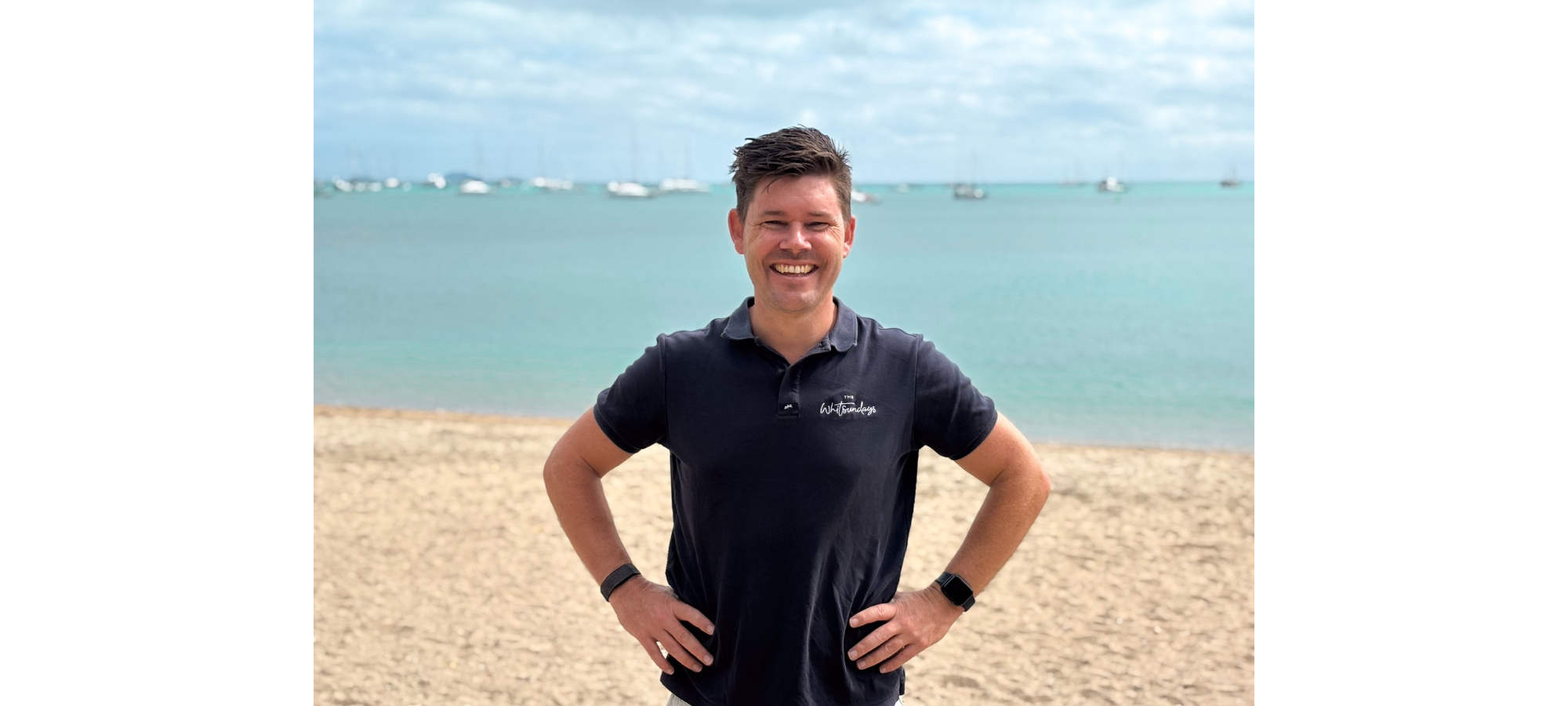
Tim Booth, CEO Tourism Whitsundays. Photo supplied
Contributed with thanks by Tourism Whitsundays
We are hosting our first ever Tourism Day, bringing together guest speakers from across the country to discuss key topics, tends and opportunities for the tourism industry.
Robbie Dalton from Localis will discuss the latest data and travel trends across the region, including the impact of events, emerging visitor demographics and where we are seeing growth. George Pappas from Gamm DX will discuss the changes to visitor search behaviour due to AI, including how these changes are impacting the tourism industry, and the opportunities available for businesses to maximise their digital presence.
Attendees will also hear from the CEO and Director of Events at Tourism and Events Queensland (TEQ), who will provide insights into the broader Queensland tourism landscape, and where we can maximise opportunities for The Whitsundays as we look towards 2032 and beyond to 2045. We will also welcome the TEQ Board to the region at the beginning of that week, providing an important opportunity for the industry to discuss critical issues facing the region, and the opportunities ahead for The Whitsundays in the coming years.
Tourism Day will be followed by our annual Tourism Awards, with over 80 local businesses up for an award this year. It’s a great opportunity to come together and celebrate all the achievements of our tourism industry over the past year.
In preparation for the upcoming Cruise Ship season, we are also holding a cruise ship workshop for members currently working with Shorex. More than 90 Cruise Ships are anticipated to visit the region over the next 12 months, with November marking the beginning of our busy season.
With our 2025/26 Annual Report now completed, I also want to congratulate the team on an incredible year of achievements. Most notably, in a year of significant changes across the digital landscape, we recorded a 71% increase in total web traffic, reaching 871k total visitors, resulting in a big increase in total leads directed to our members. Airlie Beach has also been awarded Australia’s Top Tourism Town – Small town category, recognising the strength of our destination and the outstanding experiences our region offers.
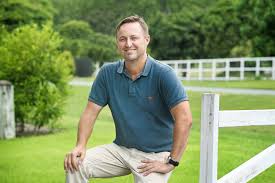
There's plenty of excitement building around the future of our Whitsunday Islands, and for good reason.
After years of seeing some of our best-known island resorts close or struggle, we're now seeing major investors putting serious money and confidence back into the Whitsundays.
From Hamilton Island's new ownership and the redevelopment of Lindeman Island to exciting plans for Hook Island and opportunities across South Molle, Long Island and Stone Island, there's a sense that a new chapter is beginning.
But here's what I think matters most.
How do we make sure this next wave of island investment delivers lasting benefits for the communities that call the Whitsundays home?
Because while the resorts might be on our islands, the economic benefits should flow right across our mainland communities.
More visitors and investment mean opportunities for local tradies, marine businesses, tourism operators, suppliers, hospitality workers and young people looking to build careers without leaving the region.
It also means thinking ahead.
Do we have the marina capacity, transport connections, marine servicing facilities, workforce and supporting infrastructure to make the most of what's coming?
And how do we ensure Bowen, Proserpine, Airlie Beach and our other communities share in that growth?
These are the conversations we need to be having now, not once the investment has already arrived.
With Olympic and Paralympic sailing coming to the Whitsundays in 2032, growing interest in superyachts and more than 100 cruise ship visits expected this year, we have an opportunity to position our region on the world stage.
But I don't believe success should simply be measured by how many new resorts open or how many visitors arrive.
It should also be measured by the jobs created, businesses supported and opportunities delivered for future generations, while protecting the natural environment that makes our islands so special.
I've spoken before about the Whitsundays potentially becoming the Riviera of the South Seas.
It's an ambitious vision, but why shouldn't we aim high?
The real prize isn't just bringing our islands back to life. It's making sure the whole Whitsunday region grows with them.
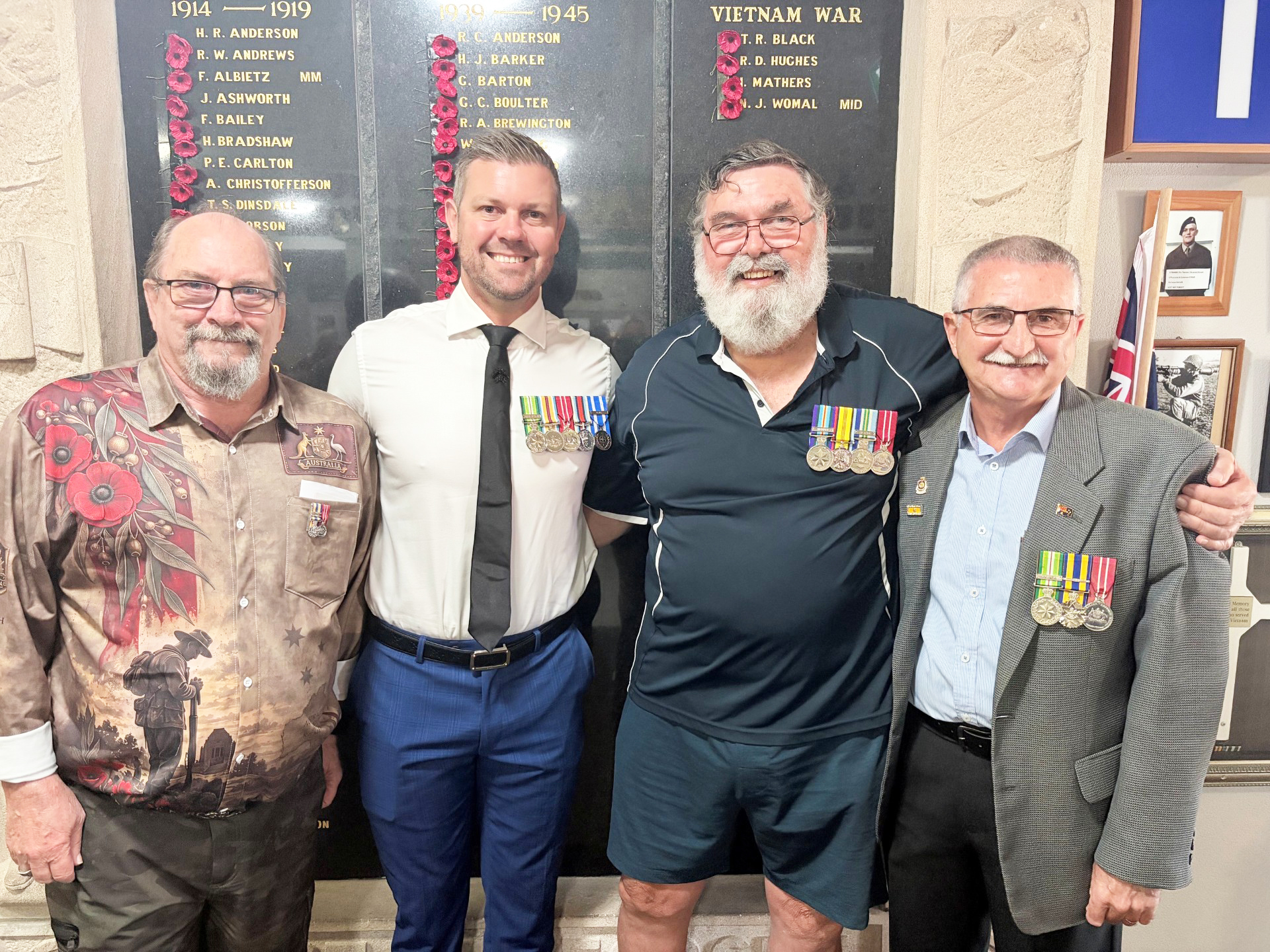
Bowen RSL President Roger Hine, Afghanistan Veteran Bradley May, Bowen RSL Vice President Dave Chambers, Speaker and Bowen RSL Secretary Marty Tanzer. Photo Supplied: Bowen RSL
Bowen RSL brought the community together on Friday for a service marking 25 years since Australian boots first touched the ground in Afghanistan, honoring the members who served whilst remembering those whose lives were lost.
Vice President Marty Tanzer delivered the opening address, reflecting on the anniversary as well as recognising and remembering Corporal Brendan Hannan, an Afghanistan veteran who was killed during a training exercise in the Northern Territory on the 5th October.
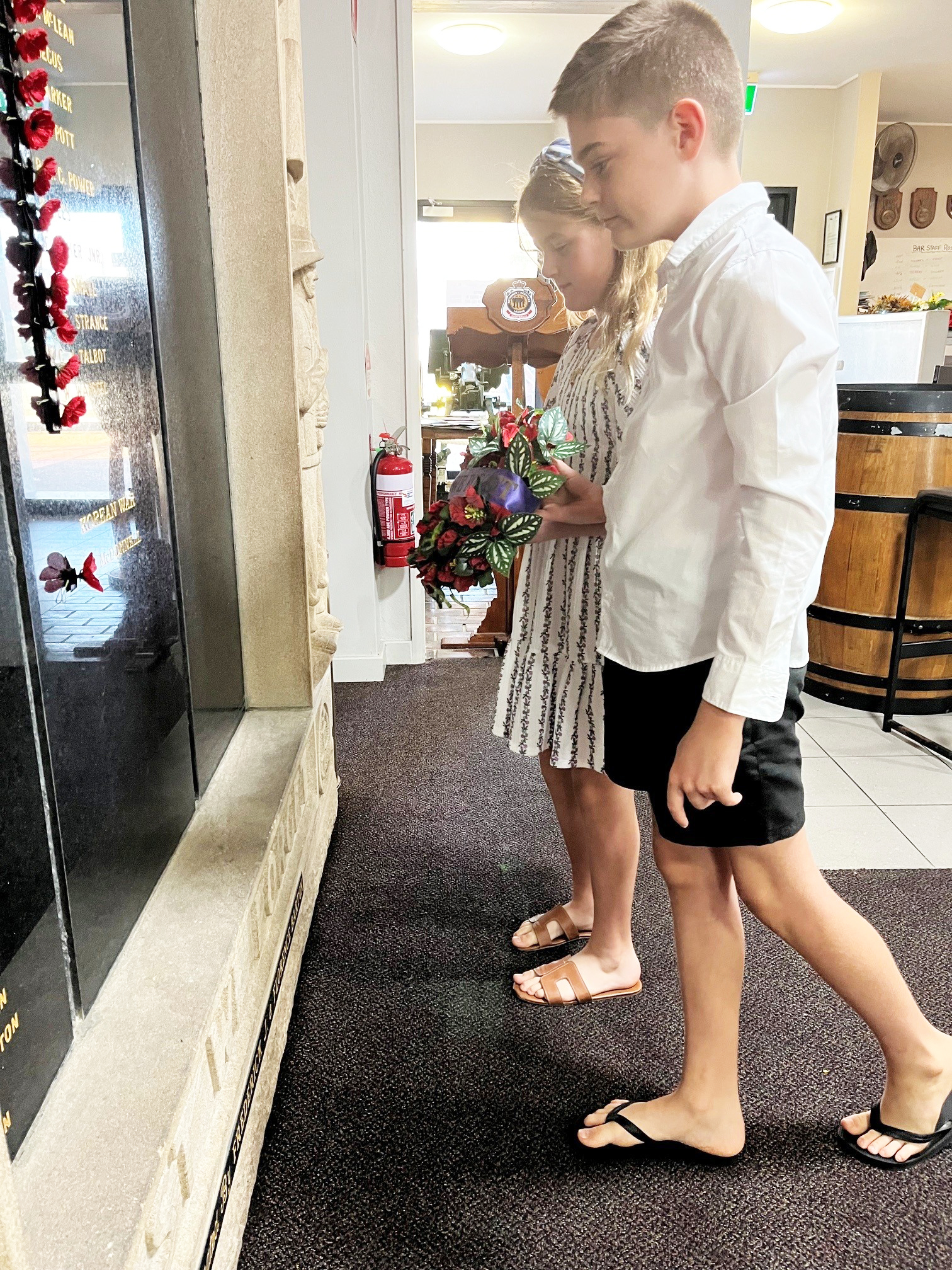
Among those in attendance was Bowen RSL member and veteran Bradley May, who served 7 years in the Australian army and was deployed Afghanistan multiple times as a gunner and a bombardier. His children were the ones who laid a wreath in remembrance of all Afghanistan veterans.
“It was really special seeing my children involved in the commemorative service, having an opportunity to lay the wreath,” Bradley said.
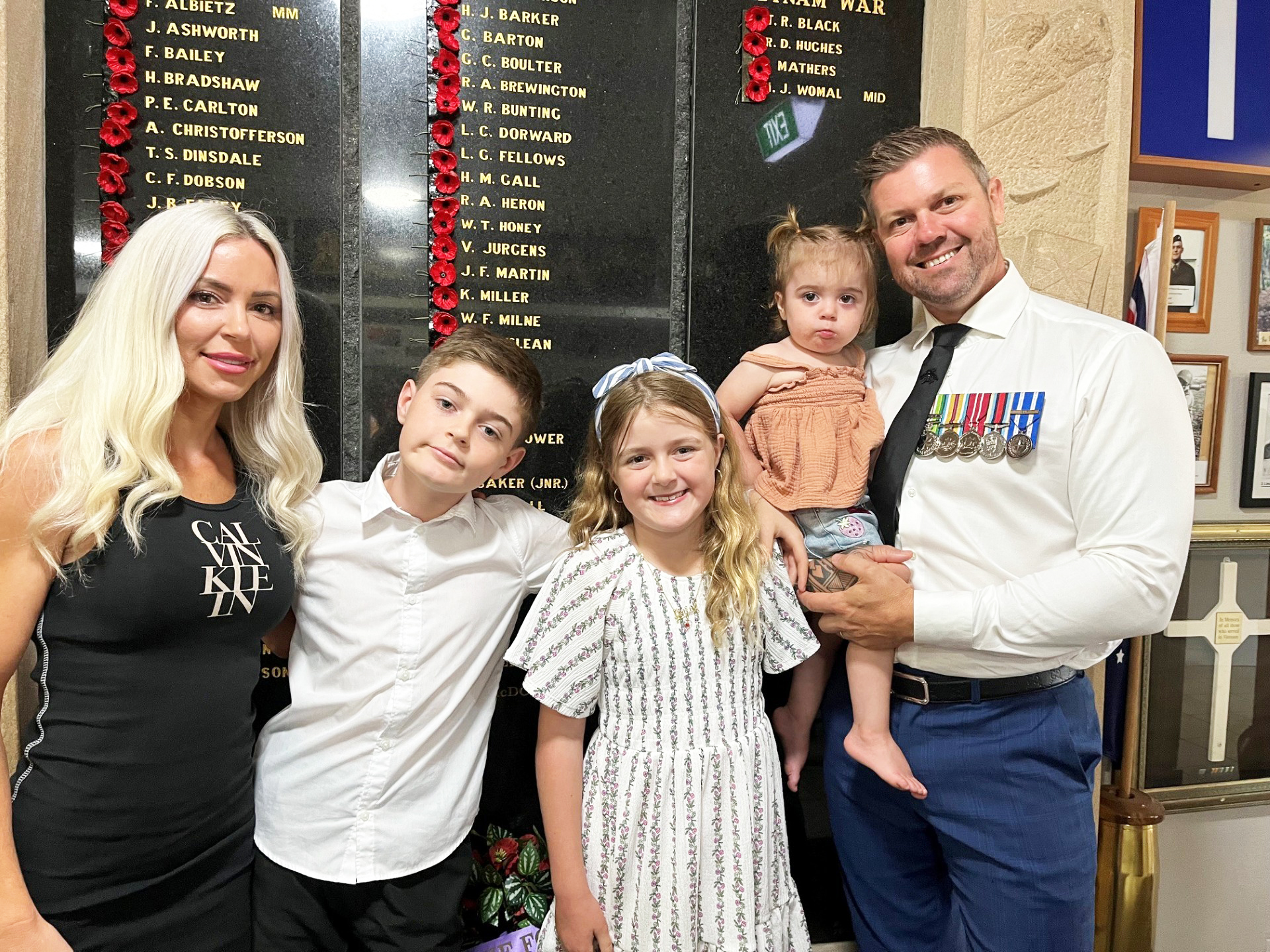
“As a veteran and a father, I think it’s important that the younger generation understands the sacrifices made by those who served, particularly in the more recent conflicts such as Afghanistan.”
The service gave local veterans and their families a chance to pause together, while acknowledging an anniversary with lasting personal significance.

On the 9th October two men in their 70s were left in life-threatening conditions after a Toyota four-wheel drive rolled onto its roof on a railway line at Foxdale in the Whitsundays.
Emergency crews were called to the single-vehicle crash on the Bruce Highway about 1.15pm, with both men trapped inside.
Firefighters used hydraulic cutting tools to free one man at 2.08pm and continued working to release the second.
A Queensland Ambulance Service spokeswoman said one man was taken by road to Proserpine Hospital ahead of a planned airlift, while the other was flown to Mackay Hospital. Two helicopters were called to the scene.
At time of print there has still been no update on the state of the two men.
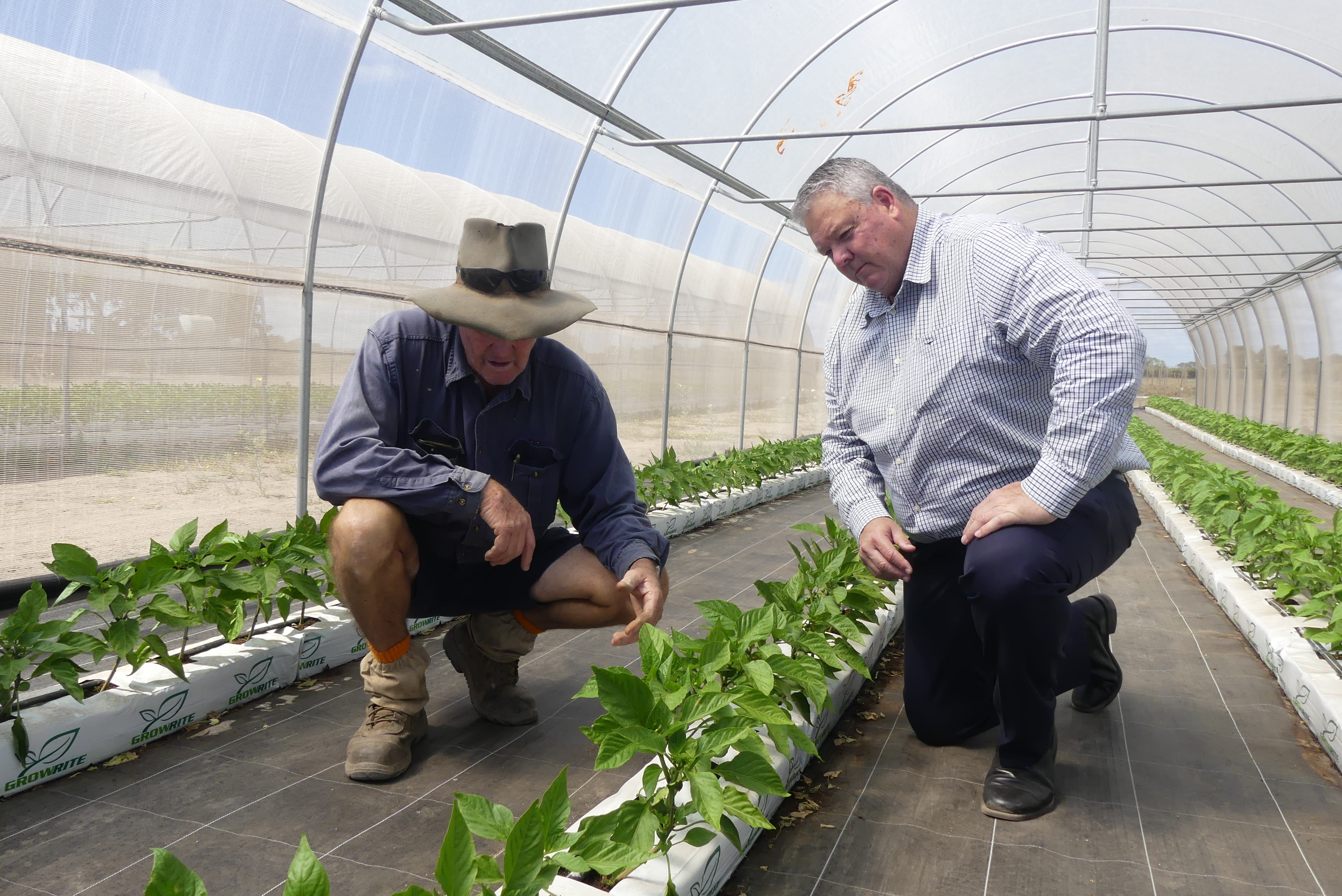
Andrew Willcox MP and Carl Walker, Bowen farmer
Pressure on housing and demand for seasonal workers are at the centre of the migration debate in Dawson, with the Coalition proposing to cut overall migration while protecting workforce programs supporting regional industries.
Released on the 6th October, the Coalition’s Australia-First Migration Plan proposes scrapping the backpacker ballot and caps on second- and third-year working holiday visas, reducing fees for regional workers and prioritising regional employment.
Federal Member for Dawson Andrew Willcox said the plan aimed to give housing and infrastructure time to catch up while maintaining access to workers needed by local businesses.
“You cannot run a tourism economy in Airlie Beach without workers, you cannot harvest a crop in Bowen without workers,” he said.
The plan forms part of a broader push to reduce migration and follows Labor’s proposed restrictions on working holiday visas, which have raised concerns among North Queensland farmers and tourism operators who rely on backpackers to fill seasonal jobs.
“We need those people to fill the gaps in the hospitality industry, you know, to be baristas, to work behind bars, particularly around school holidays and peak periods when we need extra staff,” Mr Willcox said.
“That’s where those working holiday maker visas really fill that gap.”
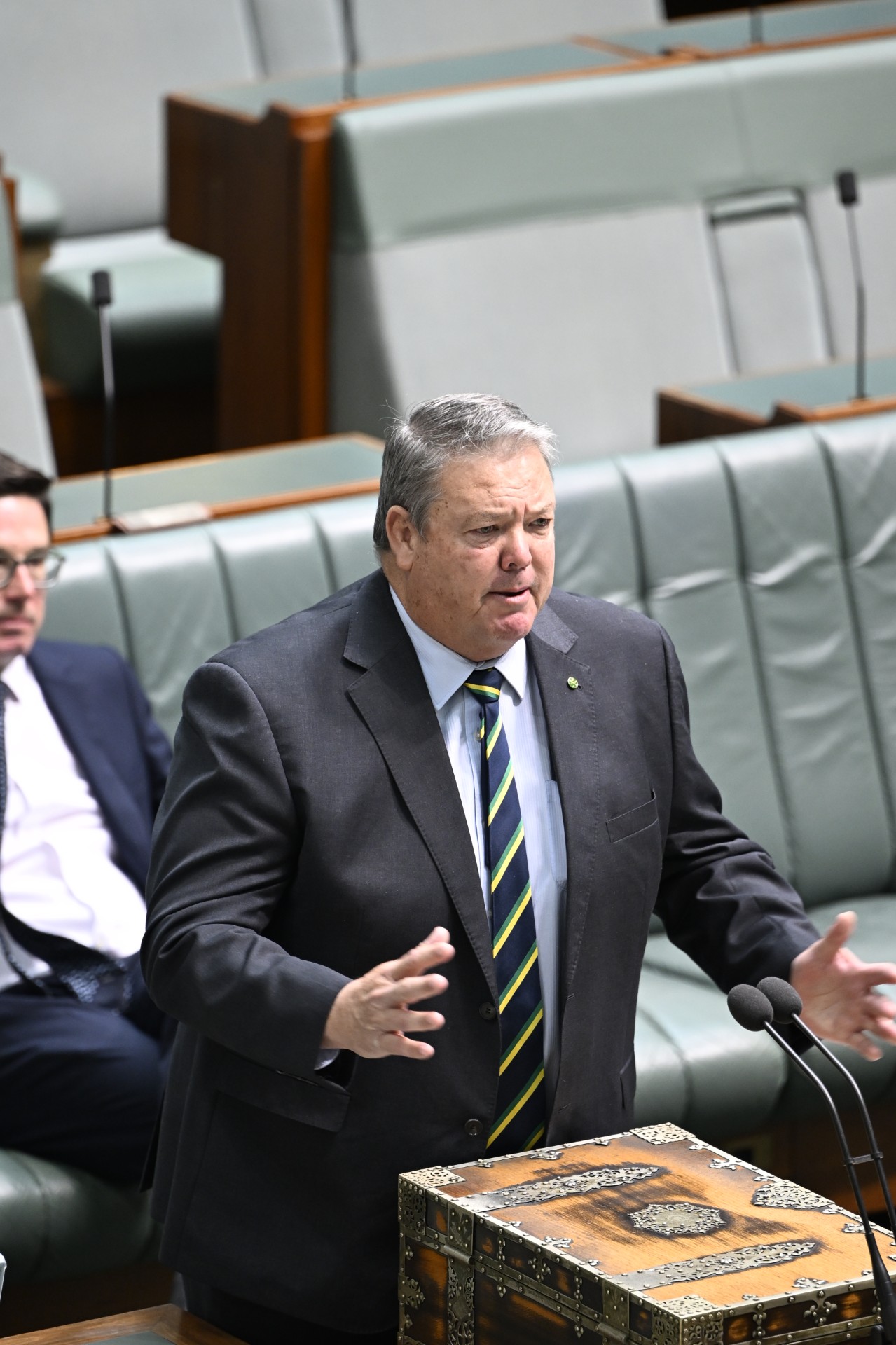
“Once they haven’t got the work, then they become the holiday maker themselves.”
Beyond working holiday visas, the plan would reduce net overseas migration to 100,000 a year for the first two years, rising to 130,000 in year three and 160,000 in year four. It also proposes reducing the number of temporary visa holders by around 650,000 over four years, while capping the permanent migration program at 185,000 places annually.
Higher-skilled migrants would receive priority, with stronger requirements around income, age, English proficiency and full-time employment. The Coalition also proposes introducing 15,000 Skilled Project Visas annually to address workforce shortages on major projects.
Other changes include abolishing Temporary Graduate Visas, reducing international student migration and tightening temporary visa rules, while protecting regional programs supporting agriculture, health, tourism and hospitality.
“We will protect the regional migration programs our farmers, tourism operators and communities rely on, while bringing overall migration back to sustainable levels.
For the Whitsundays, the proposal would retain access to seasonal workers in tourism and hospitality while prioritising skilled migrants to fill shortages in areas such as construction and health care.
“We need fewer people coming overall, but we also need to make sure the people we do bring in are going to the places where they are genuinely needed,” he said.
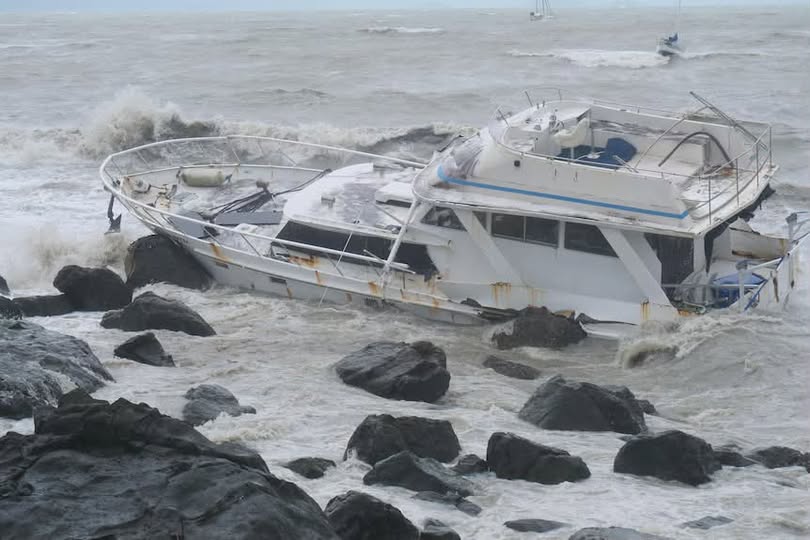
Photo supplied: Mayor Ry Collins
The Whitsundays can breathe a sigh of relief after the Federal Government dropped its proposed 50/50 disaster recovery funding model, following sustained advocacy from Queensland councils and regional leaders.
On Friday 9th October the Federal Government confirmed it would withdraw the 50/50 disaster recovery scheme, retaining the existing funding arrangements for communities recovering from natural disasters.
"This is a huge win for disaster-prone communities like Dawson, and I'm incredibly
proud to have fought alongside our regional mayors to get this result," said Federal Member for Dawson Andrew Willcox MP.
"From the moment Labor announced these cuts, I warned they would be devastating for regional councils and the ratepayers who would ultimately be left picking up the bill.
"Today, the Government has finally listened, and common sense has prevailed.”
Here in the Whitsundays, Council’s past recovery costs paint a clear picture of how much the proposed changes could have hurt the region.
“Our analysis showed the proposed 50/50 funding model could have left the Whitsundays facing an estimated $25 million funding gap if it had applied to disaster recovery works since 2018,” said Mayor Ry Collins.
“That is a massive impost for a regional council and would have meant some tough decisions around rebuilding damaged infrastructure, Council budgets and potentially additional costs for ratepayers.”
Since the proposal was announced on 5th June, regional leaders across North Queensland have pushed for the existing funding arrangements to remain, warning that the changes could place greater pressure on council budgets and ratepayers.
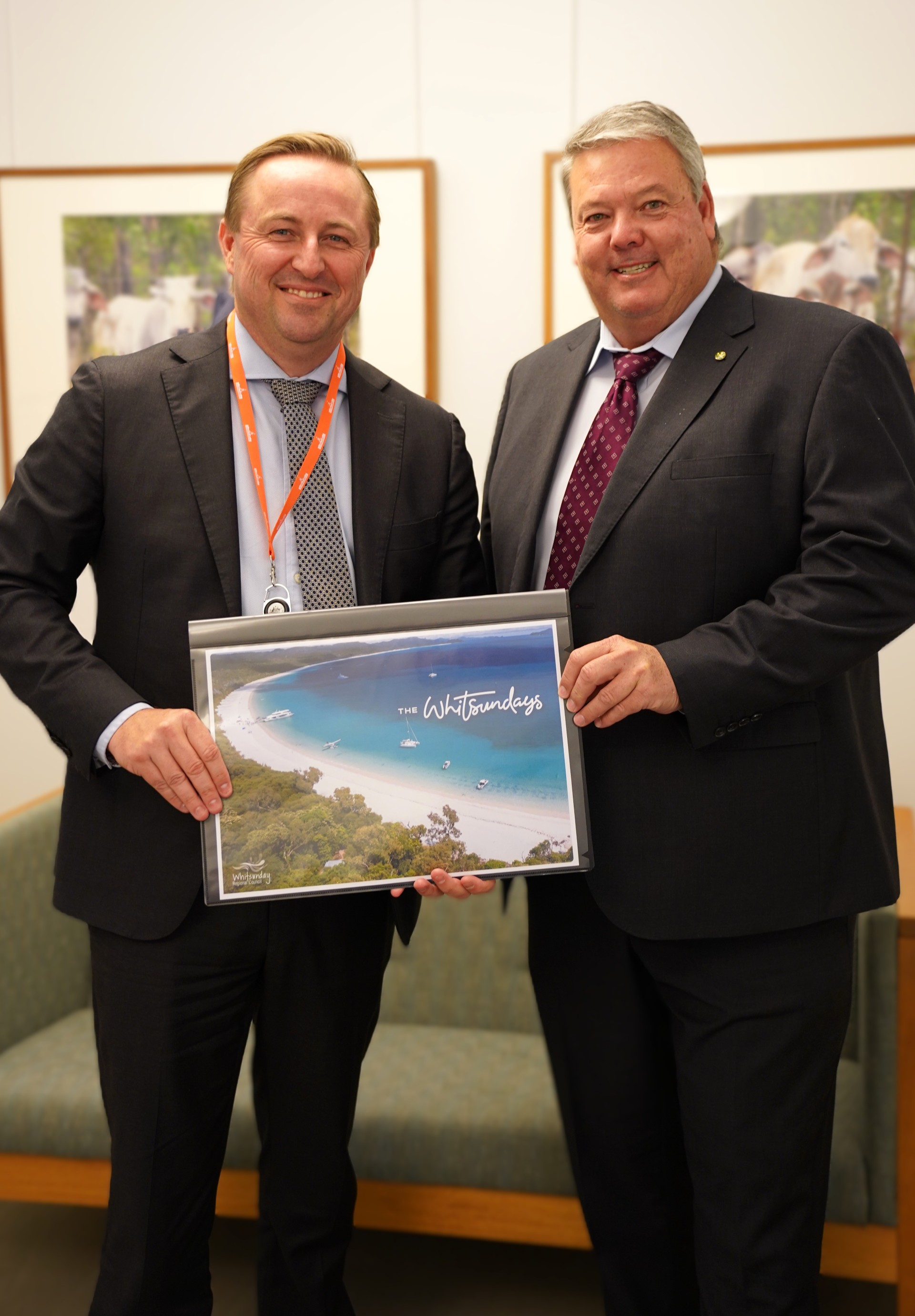
For Mayor Collins, this has included racing to regional meetings like the coastal leaders’ forum, joining the Local Group Association of Queensland (LGAQ) and flying down to Canberra with Andrew Willcox MP to voice regional concern.
“From regional and coastal leaders' forums to taking our case directly to Canberra, this has been a sustained and united advocacy effort,” he said.
With another disaster season approaching, the next priority points to strengthening our local infrastructure before cyclones and floods hit.
“But disaster funding isn't just about rebuilding after the event. We also need continued investment in making our roads, bridges, drainage networks and other essential infrastructure more resilient so they can better withstand future cyclones and flooding,” said Mayor Collins.
“Every dollar invested in disaster resilience now has the potential to save considerably more in recovery costs down the track.
“As we head into another disaster season, this decision provides important reassurance for our community that the funding partnership needed to help rebuild after a major disaster will remain in place.”
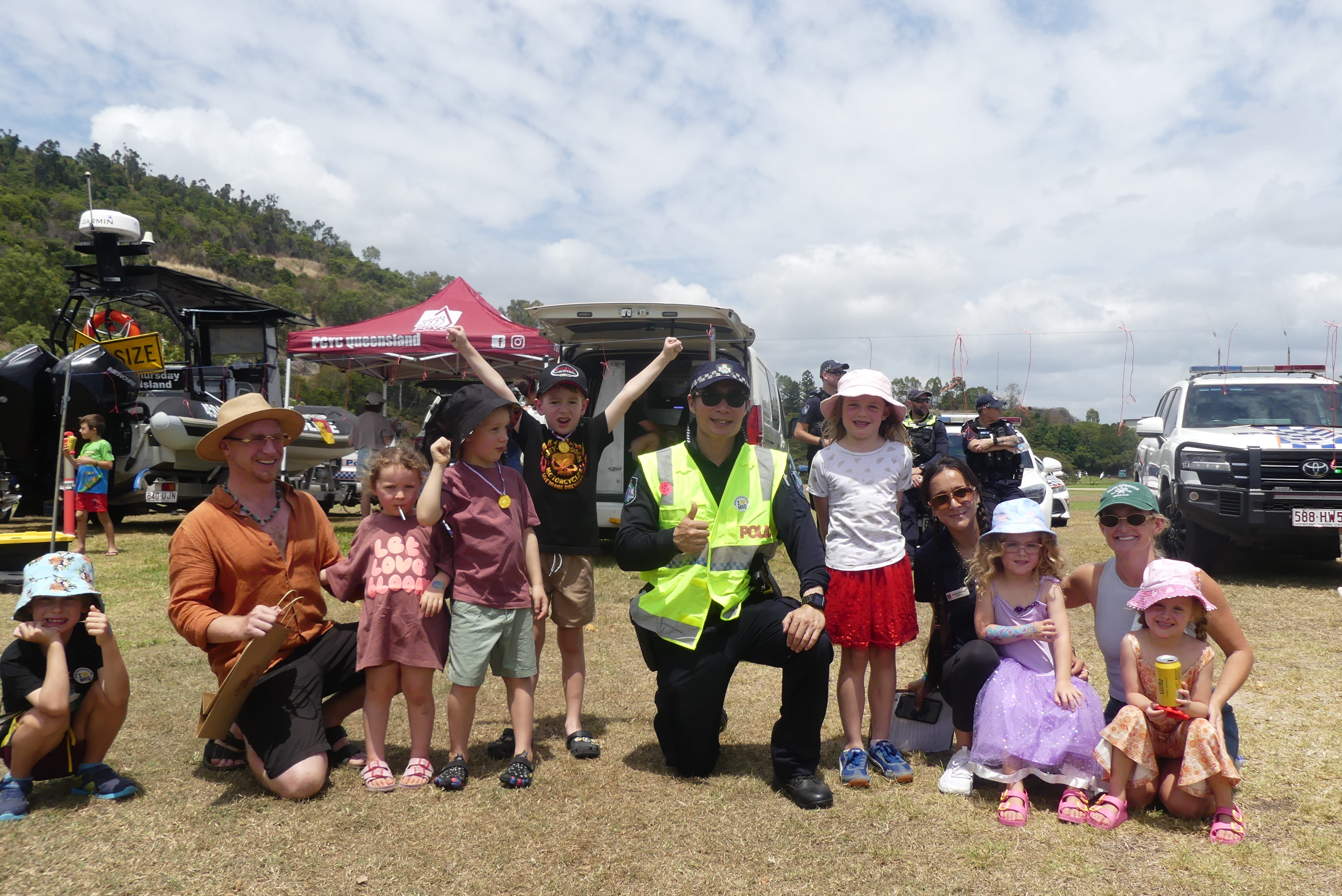
Sergeant Billy and Jess from the PCYC with kids. Photo credit: Zach Houtenville
The Emergency Services Field Day delivered a fun and informative Saturday morning on the Coral Sea Marina green, giving families from across the region a chance to meet the people who help keep their community safe.
Organised by Whitsunday Police Station, the event brought together police, ambulance and fire crews, Volunteer Marine Rescue, Whitsunday Water Police and Council’s disaster management team for a morning of demonstrations and activities.

The morning began with a warm welcome from Coral Sea Marina CEO Kate Preston and Councillor Jan Clifford OAM, before crews gave families a look at their skills in action.
Army cadets demonstrated a casualty evacuation, the SES showed how to sandbag a property, and firefighters demonstrated a kitchen fire trailer and the jaws of life, while Marine Rescue Queensland crews introduced visitors to a life raft.
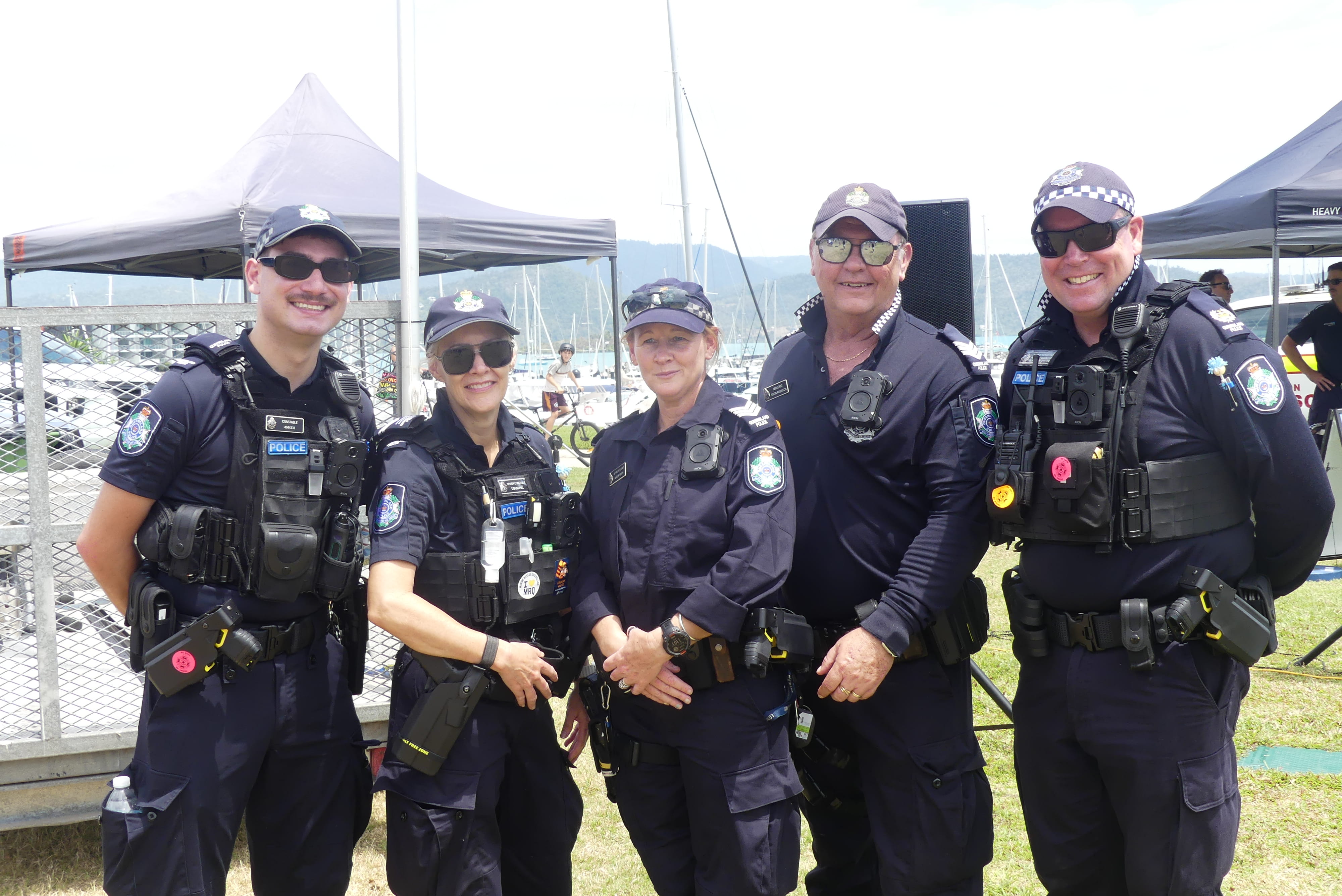
Sliced in between was some friendly service on service competition, such as Tug-O-War which saw the recruits bested by the firies, a donut eating competition dominated by the army cadets and a push-up challenge.
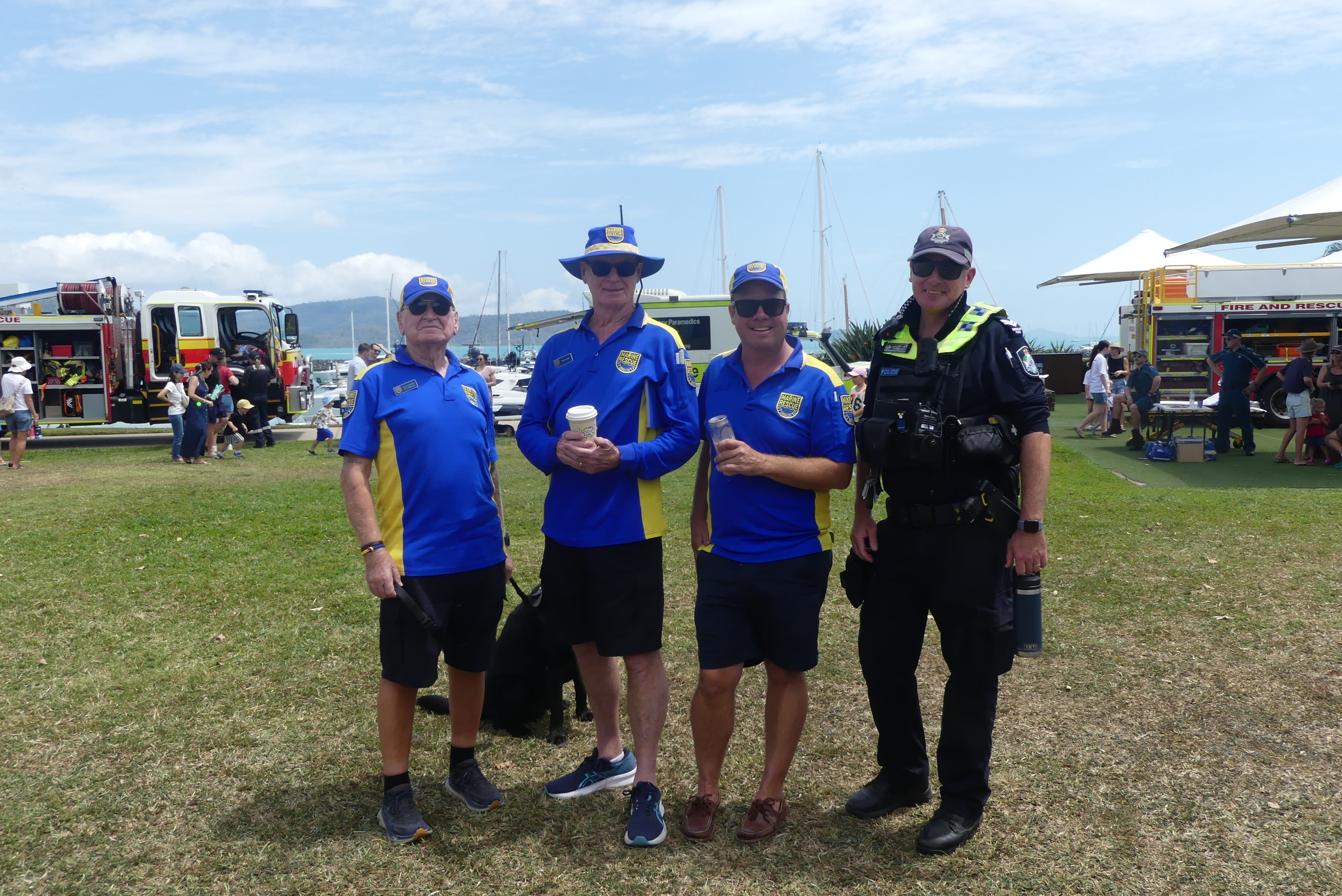
The Whitsunday Lions Club was also in attendance providing a suspenseful raffle to end the day, while the Whitsunday Suicide Prevention Network cooked up the sausages to keep the energy up all day.
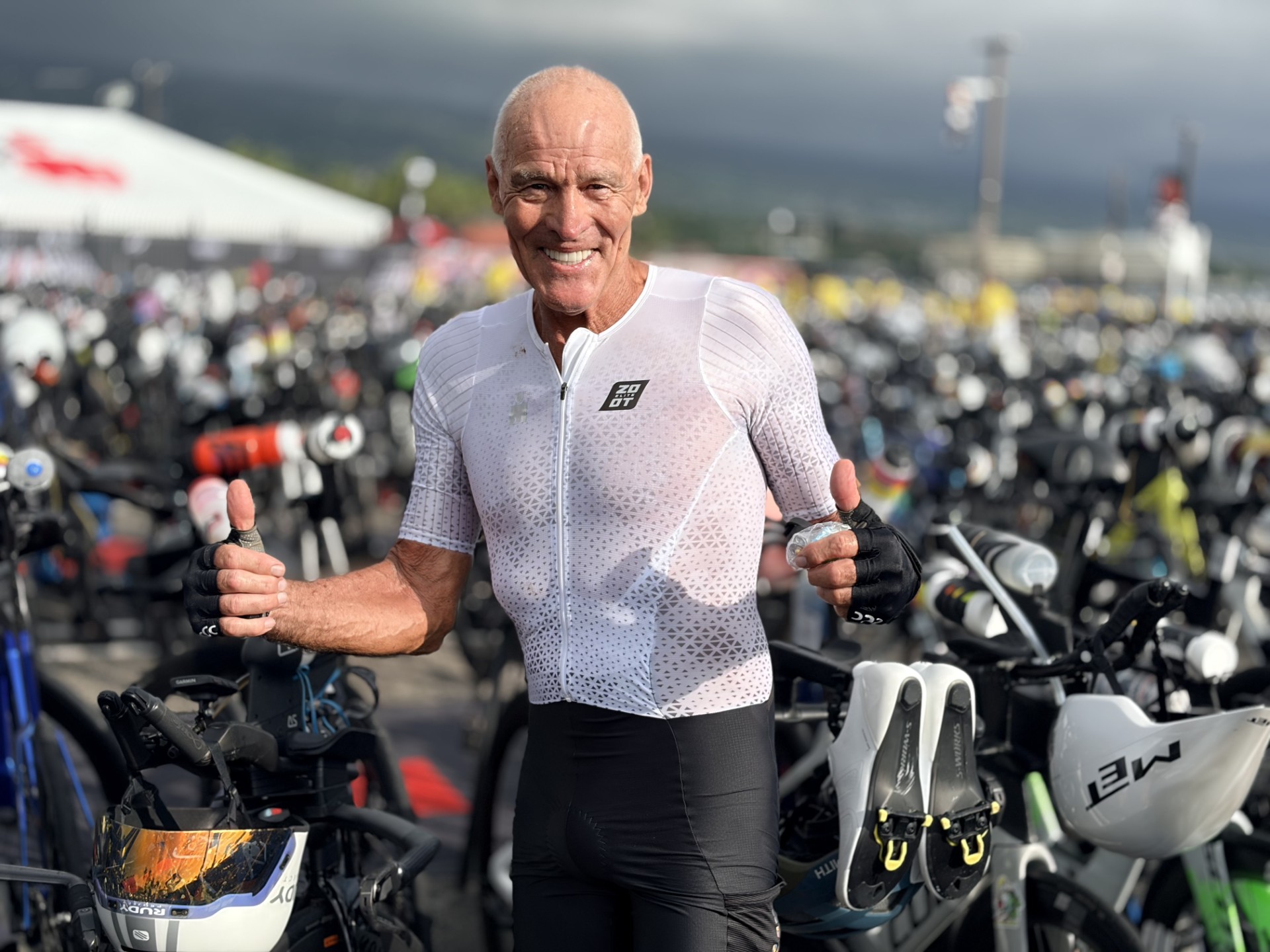
Photo supplied: Michael Kimpton
Local legend Michael Kimpton has taken his familiar smile to Hawaii, completing his third Ironman World Championship in Kona for his country and with dedication to the Whitsundays Suicide Prevention Network.
Following the Airlie Beach Triathlon Festival, Michael had just two months to focus fully on training for the challenge.
The 72-year-old Airlie Beach local qualified for the Men's 70–74 age category after taking a podium finish at IRONMAN Western Australia with a time of 13:42:16, joining more than 2,500 athletes from 87 countries for the most gruelling ironman in the world.
The course consists of a 3.8-kilometre ocean swim in Kailua Bay, followed by a 180-kilometre bike ride across Hawaii’s volcanic landscape and a marathon to finish.

High temperatures, intense humidity and strong coastal winds tested competitors throughout the day, with 2,261 making it across the finish line.
“It is the ultimate test in athlete willpower & endurance as they endeavour to conquer the challenging course,” said Michael.
With a standard Ironman cut-off of around 17 hours Michael’s finishing time of 14 hours, 48 minutes and 41 seconds, completed in front of his wife and daughter, was even more impressive.
“I am a very happy man to have completed this World Championship event in 2022, 2024 and 2026, it’s absolutely amazing,” Michael said.
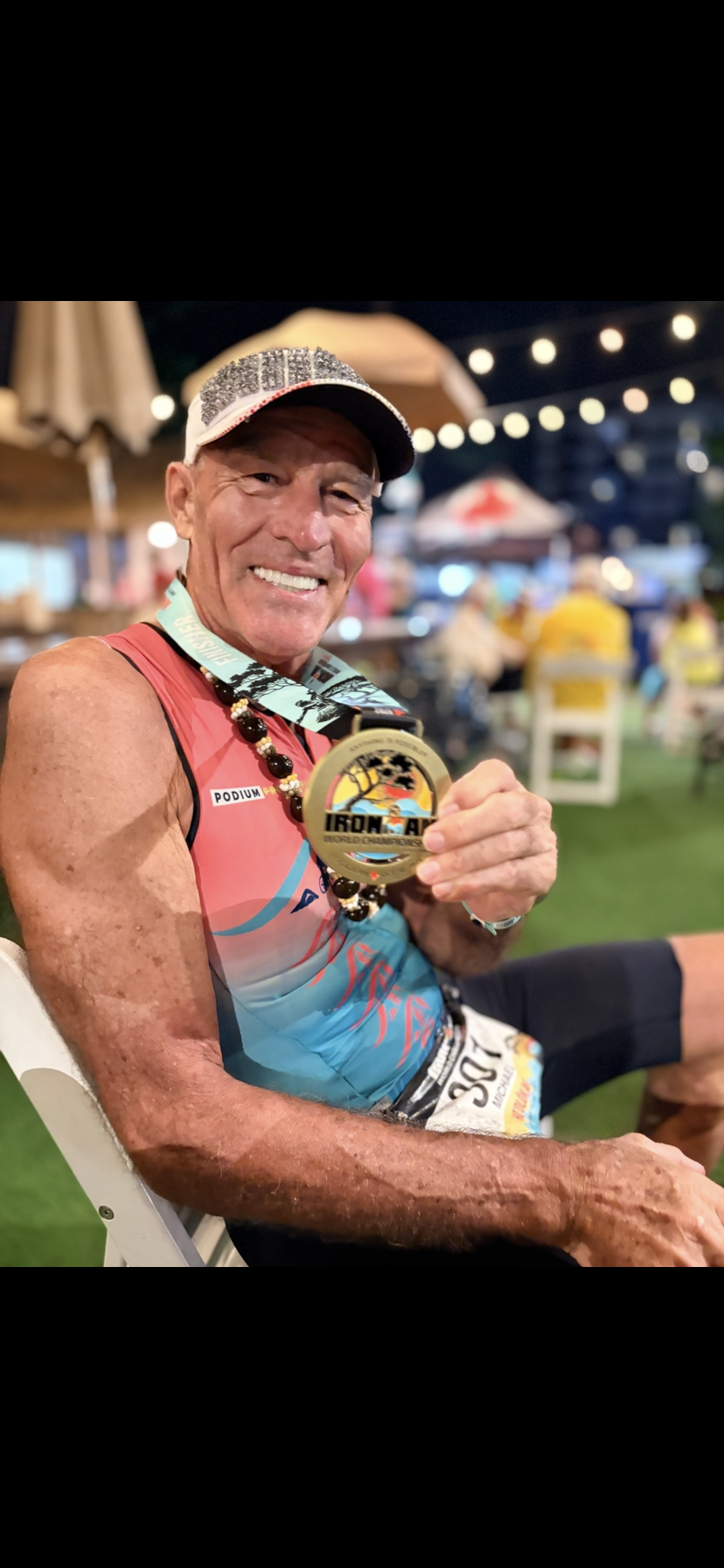
“An unforgettable journey in the heart of the triathlon birthplace!”
Michael’s latest finish reflected his consistency across three appearances at Kona, coming just 18 minutes behind his 2022 time and nine minutes behind his 2024 result.
“My dad is an actual superhero!” his daughter, Elle Bree, commented on Instagram.
Beyond his own sporting goals, Michael dedicated this year’s race to raising money and awareness for the Whitsunday Suicide Prevention Network.

“This year my Race was dedicated to Whitsunday Suicide Prevention Network, an inspiring cause and all funds go directly to them,” said Michael.
By the time he crossed the finish line, his efforts had helped raise $2,900 to support local suicide prevention initiatives, while encouraging people struggling with their mental health to reach out for help.
Publishers Indemnity. Any individual or entity that places advertising, supplies copy material, or submits editorial content to Core Life Publishing agrees and undertakes to ensure that all such material:- Does not infringe upon any copyright, trademark, or other intellectual property rights;- Is free from any content that could be considered defamatory, libelous, or slanderous;- Does not infringe upon any rights related to privacy or breach of confidence;- Contains no obscene, indecent, or otherwise unlawful material;- Complies fully with the Trade Practices Act and all other applicable laws, regulations, or statutes.Furthermore, by submitting or placing such material, these individuals or entities agree to indemnify and hold harmless the publisher, Core Publishing and Events Pty Ltd, and/or its agents from and against any and all investigations, claims, demands, liabilities, damages, costs, or judgments arising out of or in connection with the material provided. All material is believed to be accurate at the time of printing and remains the copyright of Core Publishing and Events Pty Ltd.
© 2026 Mackay and Whitsunday Life Pty Ltd.
