
Independently Owned, Locally Grown, Community Loved

We need to talk about something that happens far too often – black kittens are usually the last to be chosen. Yet they are often the very best companions. These kittens are not just “another kitten”. They are the ones who follow you from room to room like your shadow. Who climb into your lap and stay there. Who greet you at the door like a dog and want to be involved in everything you do. They don’t just live in your home – they become part of your everyday life. Our black kittens are incredibly affectionate – true lap cats who crave human connection. They are confident and curious, often the first to explore and investigate. Playful and cheeky, they are full of personality and mischief. They are also highly social. They will chat to you, respond to you and connect with you. Once they choose you, they are yours completely. And in real life, they are absolutely stunning – with glossy coats, striking eyes, and an elegant, sleek presence that photos simply don’t capture. If you have ever wanted a cat that truly bonds with you, that seeks you out and becomes your constant little companion, come and meet our black kittens. Because once you meet them, you will understand. To register your expression of interest, please contact foster carer Janet on 0423 768 805. Contributed by Mackay Pet Rescue Inc
Read the full story
There’s a type of exhaustion many women carry that doesn’t disappear with a good night’s sleep. It’s not just physical tiredness. It’s the constant mental juggling. Remembering school events, organising appointments, replying to messages, planning meals, checking homework, thinking ahead, caring for ageing parents, supporting friends, managing work deadlines, and somehow trying to look after yourself somewhere in between. Even during moments of “rest,” many women describe feeling like their brain never truly switches off. This invisible load is something women carry every day, and over time, the body often carries it too. As a women’s and pelvic health physiotherapist, I often see women who come in with symptoms like pelvic pain, bladder urgency, tension, leaking, headaches, jaw clenching, shallow breathing, or a feeling that their body is constantly tight or “on edge.” Many are surprised to learn that stress and nervous system overload can play a significant role in how the body feels and functions. When we’re stressed for long periods, the body naturally shifts into a protective state. Muscles tighten, breathing becomes shallow, sleep can be disrupted, and the nervous system stays on high alert. It’s a helpful response in short bursts, but when the body stays in that heightened state for weeks, months, or years, symptoms can begin to appear. And the pelvic floor is particularly influenced by this. Many people think the pelvic floor only matters during pregnancy or after birth, but these muscles respond closely to stress, posture, breathing, and tension patterns throughout the entire body. Some women unknowingly hold tension through their pelvic floor all day long, almost like clenching their jaw without realising. Over time, this can contribute to discomfort, urgency, constipation, pain, or difficulty fully relaxing the muscles. What’s important to understand is that this does not mean the body is “broken.” Often, it’s a body that has been coping, adapting, and carrying a great deal for a long time. And while exercise and movement are incredibly important, healing isn’t always about pushing harder. Sometimes it’s about creating moments where the body feels safe enough to soften and let go. That might look like slowing your breathing for a few minutes while sitting in the car before school pick-up. Going for a walk without turning it into another task to complete. Stretching before bed. Asking for help. Resting without guilt. Learning how to relax your pelvic floor, not just strengthen it. Small moments matter. Women are often exceptionally good at caring for everyone else while quietly ignoring their own symptoms. But tension, fatigue, and overwhelm are not simply things to “push through” forever. The body has a way of asking for attention eventually. If your body feels tight, tired, or not quite like itself, it may be worth listening with curiosity rather than criticism. Support can make a meaningful difference, whether that’s through movement, stress management, pelvic health physiotherapy, or simply giving yourself permission to slow down occasionally. Because women were never meant to carry everything alone, and the body shouldn’t have to either.
Read the full story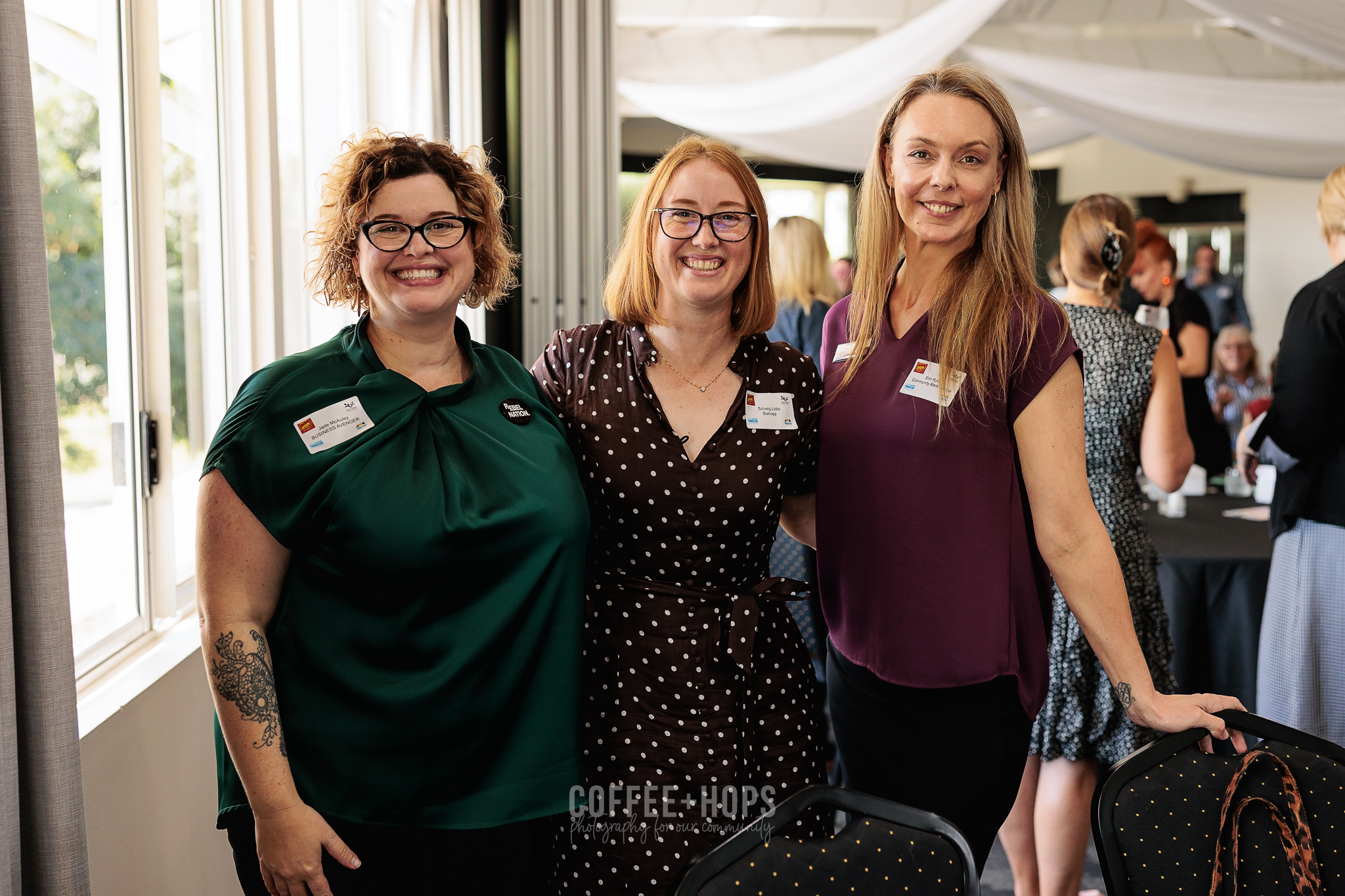
Word of mouth is some of the most powerful marketing your business can get. It’s trusted, it’s personal + in regional areas especially, it carries a LOT of weight. Most businesses will proudly say, “Most of our work comes from word of mouth”. Which is awesome – but then they treat it like something that just magically happens. The truth is – the businesses getting the most word of mouth are usually doing a few things really well. People need a reason to talk about your business in the first place. And no, “good service” on its own usually isn’t enough anymore – that’s the baseline expectation from people! The businesses people tend to recommend are the ones that are memorable in some way. Maybe they communicate really well, make life easier, solve a specific problem, have a strong personality, do something unexpectedly fast or simply make people feel looked after. Another big one? Visibility. People are far more likely to recommend businesses they remember (I know – what a shocker lol). If someone hasn’t seen or heard from you in two years, you’re probably not top of mind when a friend asks for a recommendation. This is where consistent marketing does a lot of heavy lifting. Social media, email marketing, networking, community involvement, even signage – all of it helps reinforce who you are, what you do + why someone should choose you. Clarity matters too. If people can’t easily explain what your business does, who you help or what makes you different, referrals get weaker. The easier you are to describe, the easier you are to recommend!! One of the simplest things businesses can do is also be more specific when talking about the work they want. Instead of “let us know if you hear of anyone”, try “we’re looking for more commercial fitout work” or “we’d love more bookkeeping clients in construction”. Specific prompts help people connect the dots faster. People can’t recommend a business they forgot existed. Word of mouth doesn’t just come from doing good work – it comes from being remembered when someone needs what you do. Photo credit: Coffee + Hops
Read the full story
Choosing the right shutters and blinds for your home or business can make all the difference between a space that simply serves a purpose and one that looks and feels polished. For many across the region, the search for the perfect fit begins with Deluxe Shutters & Blinds Mackay. Established in 2010, the locally owned and family-run business has spent more than a decade helping Mackay homeowners and businesses enhance their spaces with high-quality, custom-made window furnishings and outdoor shading solutions. Their product range includes internal and external plantation shutters, including aluminium, along with drapes, curtains, awnings and a wide selection of internal and external blinds. Every project begins with a free onsite measure and quote, allowing the team to tailor each installation to suit the individual space. A key point of difference is the company’s commitment to local manufacturing. Aluminium plantation shutters are produced in the business’s onsite Mackay workshop, which means they’re able to focus on strict quality control while supporting local industry. Customers can also visit the fully functional showroom at 111 Sydney Street, where a range of exclusive products are on display, offering the opportunity to explore colours, finishes and styles firsthand. QBCC licensed and proud members of Master Builders Queensland, the business is backed by a team of highly skilled tradesmen experienced across a wide range of installations. Visitors can also meet the team at the upcoming Mackay Outdoor Adventure plus Home and Lifestyle Expo at Site OS126, where plantation shutters, a purpose-built external blind display and a fully erected Shadecube structure will be available to view. deluxeblinds.com.au
Read the full story
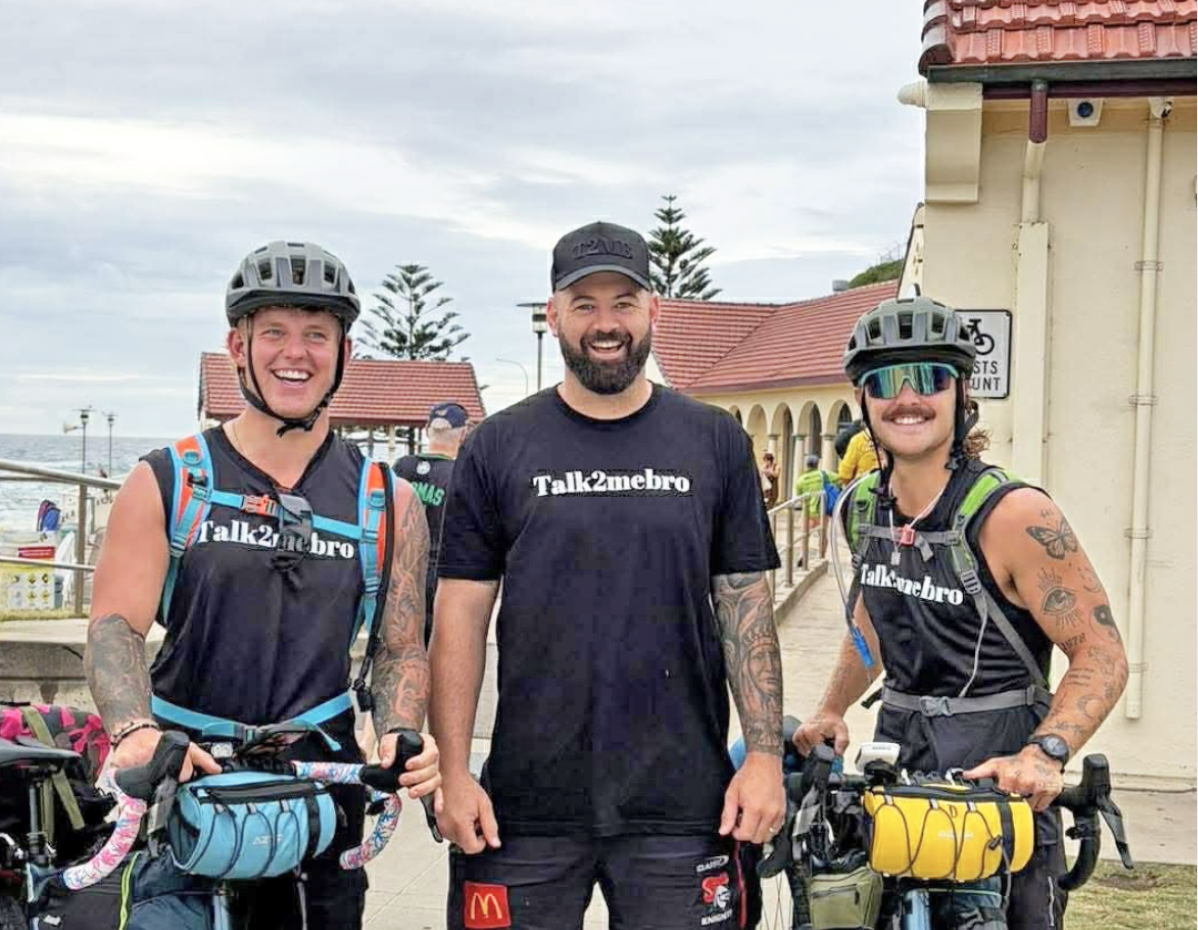
Last week, ‘Backpacking Poms’ Joe Taylor and Isaac Hirsch passed through Airlie Beach on their epic mission to raise funds for Talk2MeBro, a charity dedicated to improving men’s mental health through connection, conversation, and education.
The two young Brits started their journey in Newcastle and will be cycling 17,000km around the Australian Coastline, sharing their adventure online and raising awareness and money for their cause – one close to both of their hearts.
“We’ve seen how many men are taught to “tough it out,” to bottle things up, and to keep moving no matter how heavy life becomes,” the pair shared.
“We’ve seen friends, family members, and people we admire fight unseen battles — and tragically, some have been lost far too soon.”
“We don’t want men to feel like they have to fight alone anymore.
“This ride is our way of proving that vulnerability is strength, not weakness. That speaking up takes courage. That connection can save lives.”
Isaac said that the duo received outstanding support in our region.
“Our stop in the Whitsundays was incredible. We got a free day trip with Ocean Rafting - Nathan helped us out - and our captain Brent was amazing.” He said.
“A lovely lady named Clare let us stay at her place for a couple of days, we made some great friends, and the locals supplied us with food throughout our stay. The support and kindness made the Whitsundays an unforgettable part of our ride!”
Joe and Isaac are forthcoming about their own struggles with mental health, and how meaningful the challenge is to them.
“For most of our lives, neither of us have truly felt fulfilled,” they stated.
“Deep down, we’ve always known we were meant for something bigger than ourselves — a challenge that would push us physically, mentally, and emotionally to our absolute limits.
“That’s why we’ve decided to take on one of the toughest adventures we can imagine.”
Follow along and donate to the cause on the pair’s socials: @the.bikepackingpoms
1- Isaac Hirsch (left) and Joe Taylor (right) were seen off a Talk2MeBro representative in Newcastle on March 1st. Photo source: LinkedIn
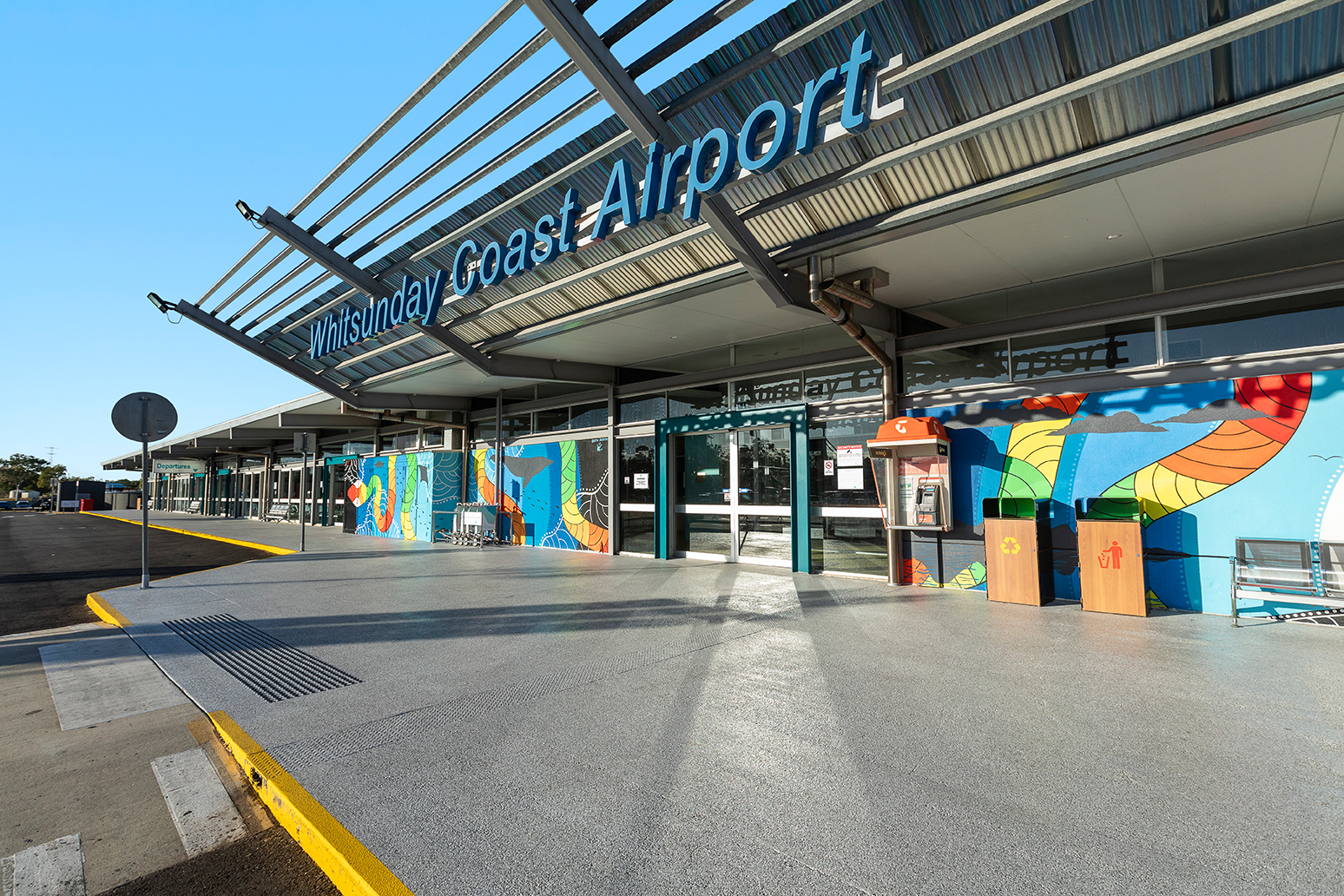
Over the last few weeks there have been national headlines reporting on mass cancellations of regional flights across Australia. Despite difficulties with the fuel crisis, Whitsunday Coast Airport is showing consistent and stable reports and there should be no cause for alarm at this current point in time.
Whitsunday Regional Council Director Commercial Businesses Craig Turner said while there has been some national reporting around fuel impacts and flight cancellations, the Whitsundays continues to perform strongly overall.
“Like many regional areas, we’ve seen some minor adjustments to flight schedules, however forward bookings remain very strong, and airlines continue to show confidence in the Whitsundays market”, said Mr Turner.
“In fact, Whitsunday Coast Airport is performing exceptionally well, with passenger growth of 6.2 per cent which is the strongest result among tourism-focused regional airports and well above the national average, reinforcing the Whitsundays’ position as one of Australia’s most in-demand destinations.”
“We’ve just come through a very strong Easter period, with high passenger numbers and solid demand, which highlights the ongoing strength of the Whitsundays as a tourism destination.”
“Overall, the region remains in a very positive position, with demand continuing to track strongly despite some of the broader national challenges.”

Hello everyone,
I am incredibly excited to be doing the editor’s note this week. I’ve now been in the Whitsundays for three months and I am so grateful to be part of such a welcoming community.
I was privileged to visit my home in Melbourne over the Easter weekend to see friends and family. It got me thinking about what home actually means to a person.
For a time, I had been listening to the song 500 Miles by Peter, Paul and Mary.
I’m actually a lot further than 500 miles. Moreso roughly 1478 miles. ‘Lord I’m 1, lord I’m 2, lord I’m 3, lord I’m 4, lord I’m 1478 miles from my home’ - doesn’t work as well lyrically, for obvious reasons.
I think home is more of a feeling than a place. It’s not merely a house or a room. We find home in many things – in the people we love and trust, in the sounds and noises that seem painfully familiar, in the views and sightings that become commonplace in our subconscious.
The place you grew up in is like a beautiful scar. No matter where you travel, who you meet or what new places you decide to call home – that place you are ultimately from always lingers. Even if that too changes, there is a feeling that always remains.
Having completed university in Melbourne, I spent my entire life there, up until now. This is my first time living out of home independently and it’s been a huge adjustment but I am pleased to being making that adjustment in a wonderful environment surrounded by amazing people.
So, what to you is home? Is it the Whitsundays? Is it your partner or your friend? Is it a song, or book or novel you love desperately? Home can manifest in a variety of ways.
In the words of one of my favourite writers James Baldwin: “Perhaps home is not a place but simply an irrevocable condition.”

Founded in January 2026, Whitsunday Migration Services provides professional, ethical, and personalised Australian immigration assistance for individuals and families navigating the migration process.
The business specialises in visa and citizenship advice, helping clients understand the pathways available and identify the options best suited to their circumstances. Services include full visa application preparation and lodgement, as well as managing communication with the Department of Home Affairs on behalf of clients. To protect sensitive personal information, the business also provides an ISO 27001-certified secure online client portal, allowing documents to be uploaded, messages exchanged, and case updates tracked in a safe and confidential environment.
The motivation behind the business is deeply personal. Having experienced the migration journey firsthand, the founder understands that migration is far more than paperwork. It is a major life decision often filled with emotional and practical challenges. Whitsunday Migration Services was created to ensure clients feel supported, informed, and confident throughout the process. Built on empathy, professionalism, and expertise, the service aims to guide people through Australia’s complex and constantly evolving migration laws with clarity and care.
The migration industry itself is also changing. Increasingly, people are turning to online tools and artificial intelligence for immigration information.
While these tools can provide general guidance, they cannot replace the expertise of a registered migration professional. Migration laws change frequently, and incorrect or outdated advice can lead to serious consequences, including visa refusals or legal complications. As a result, educating clients about the importance of trusted professional guidance is a key part of the business’s role.
Whitsunday Migration Services also offers multilingual support in English, Cantonese, and Mandarin, ensuring clear communication and a culturally inclusive experience for clients from diverse backgrounds.
As a member of the Chamber of Commerce, the business values connecting with other local organisations, supporting the regional business community, and contributing to a welcoming environment for people building new lives in the Whitsundays.
Learn more about Whitsunday Migration Services: https://whitsundaymigrationservices.com.au/
Contributed with thanks to the Whitsunday Chamber of Commerce and Industry

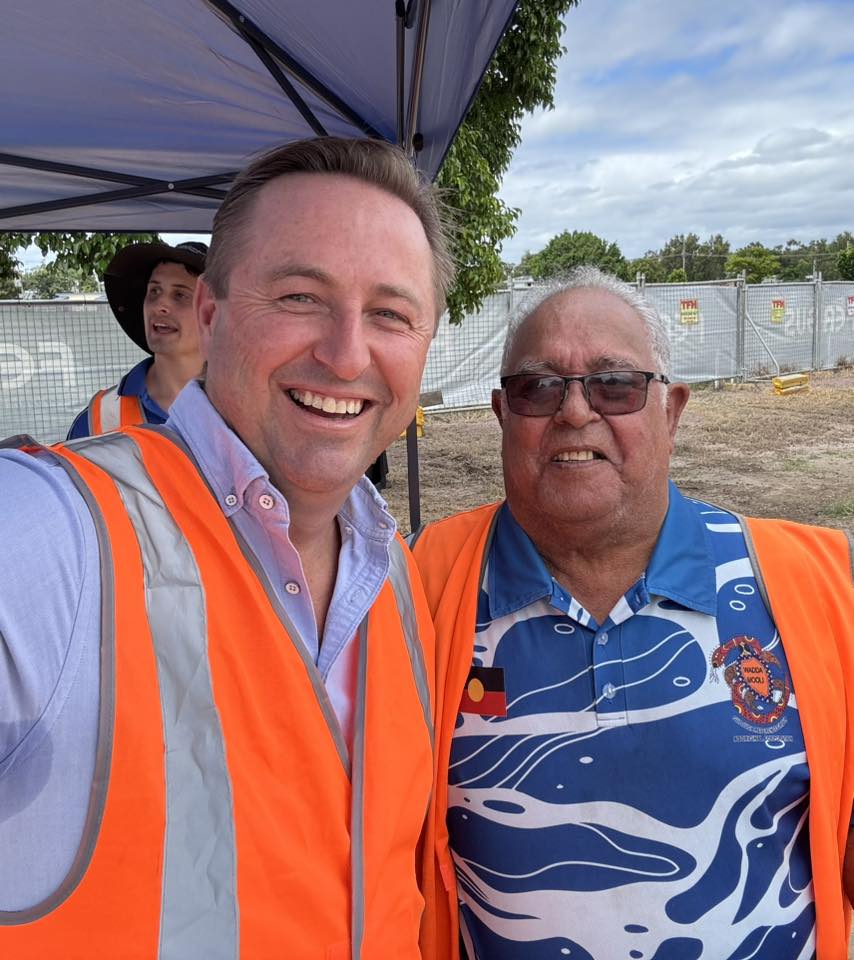
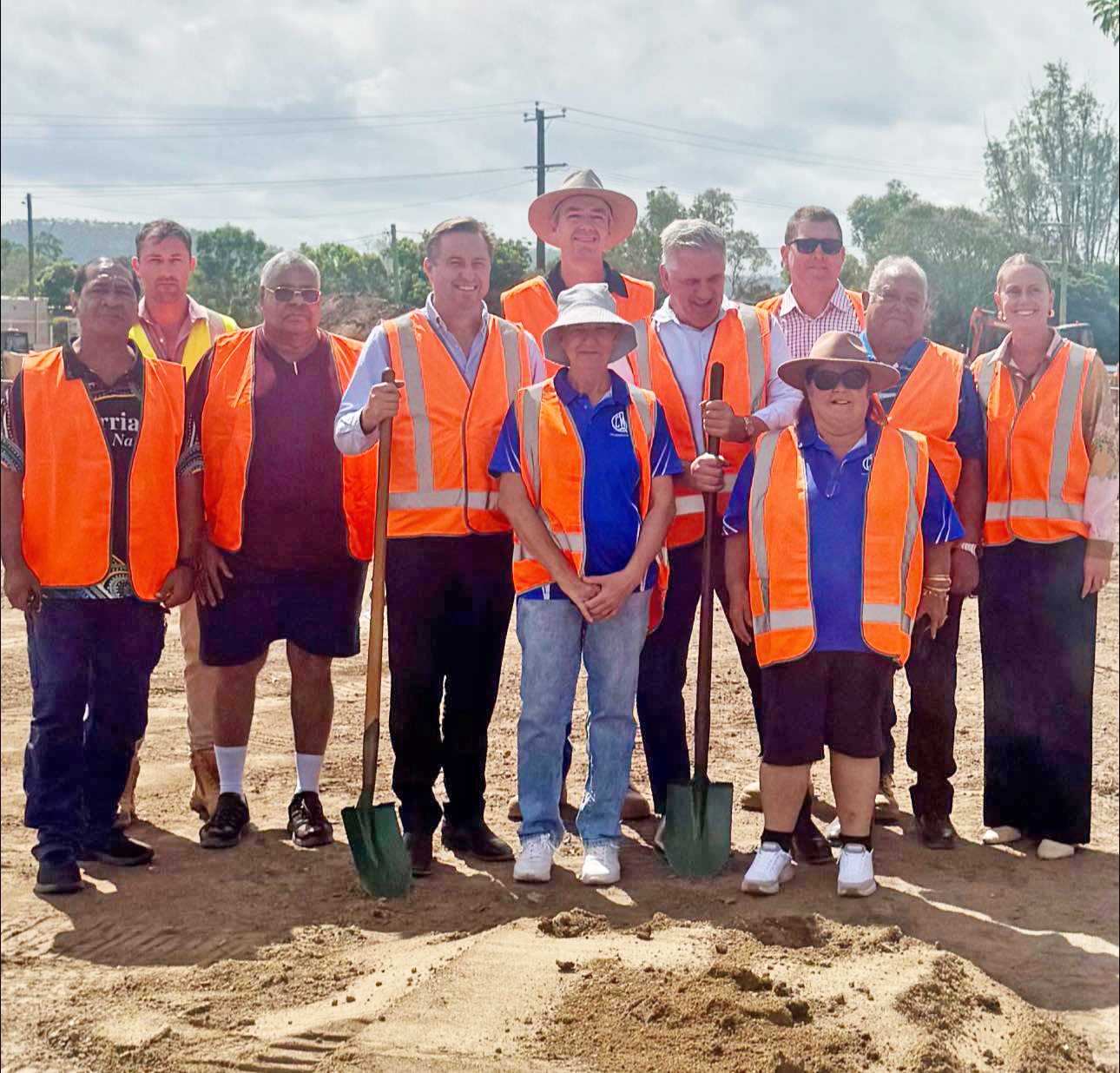
A milestone was marked in Collinsville on 2nd April, when Whitsunday Regional Council officials, Birriah Elders and community members met for a turning the sod ceremony for the new Collinsville Community Hub.
The event brought together Minister Dale Last - Member for Burdekin, Cr Michelle Wright - Division 4, Whitsunday Regional Council, Birriah Elders including Uncle Jim Gaston, and other interested locals.
A traditional smoking ceremony took place, in what Mayor Ry Collins called ‘a meaningful way to acknowledge the cultural significance of the site and mark this important step forward.’
“It’s fantastic to see construction already underway on this important Council project, which will revitalise a long-standing community space and deliver a modern hub for local groups, activities and connection,” Mayor Ry Collins shared.
“This project is about more than just a building — it’s about supporting the volunteers, organisations and community leaders who make Collinsville such a strong and resilient town.”
Once complete, the hub is intended to provide a welcoming home for the whole Collinsville community.
This project was supported through the Resources Community Infrastructure Fund.
“Our region has more than $20 billion worth of resources either mined or moving through our ports each year, and it’s important that we get our fair share and the royalties generated from this are invested back into our communities through projects like this,” Mayor Collins added.
“Looking forward to seeing this facility take shape over the coming months and the benefits it will bring for years to come.”
1- Mayor Ry Collins and MP Dale Last turn the sod.
2- The event brought together Whitsunday Regional Council with Birriah Elders and other interested locals.
3- The new hub is intended to provide a welcoming home for the whole Collinsville community. Photo source: Facebook

More Queenslanders are stepping onto the property ladder, with the State Government expanding its Boost to Buy scheme and opening a second round of applications.
The program, designed to support first home buyers, has already helped 150 Queenslanders secure their first home since its launch, with an additional 500 places now being made available.
Under the scheme, eligible buyers can access a government equity contribution of up to 30 per cent for new homes and 25 per cent for existing properties, helping bridge the gap for those struggling to save a deposit.
Treasurer and Minister for Home Ownership David Janetzki said the response to the initiative had been strong.
“We are delivering more Queenslanders a place to call home through Boost to Buy," Treasurer Janetzki said.
“We're delivering what we promised – the right plan to unlock homeownership opportunities across Queensland.”
Applicants are required to have a minimum two per cent deposit and meet income thresholds, with half of all places reserved for regional Queensland buyers.
First home buyers Mitchell and Samantha Stanger said the scheme had made a significant difference for their young family.
“Even though we were working hard and saving, the deposit gap kept owning a home out of reach,” Mr Stanger said.
“With the Government’s equity contribution, we were able to buy and have payments we can manage and ultimately have the security of knowing we have a place to call home.”
The scheme forms part of a broader package of housing measures, including the First Homeowner Grant and stamp duty concessions, aimed at improving access to home ownership across the state.
Real Estate Agent Hands Over House Stock Photo 2212647767 | Shutterstock
CAPTION: The Government is delivering a place to call home for more Queenslanders by adding an additional 500 placements into its nation-leading home-ownership scheme, Boost to Buy. Photo source: Shutterstock

More Queenslanders could soon find the door to home ownership opening a little wider, with the second round of the State Government’s Boost to Buy now open for applications.
The scheme, introduced by the Queensland Government, helps first home buyers enter the property market sooner by providing an equity contribution toward the purchase price of a home.
In the first three months since the program launched, 150 buyers have already secured their first homes. The government has now expanded the initiative with an additional 500 places available as part of the program’s broader commitment of $330 million to deliver up to 2,000 placements over three years.
Under the scheme, the government contributes up to 30 per cent of the purchase price for new homes and up to 25 per cent for existing homes. To be eligible, buyers must have saved at least a two per cent deposit and purchase a property valued at $1 million or less.
Half of all placements are reserved for buyers living in regional Queensland, ensuring communities outside the south-east corner also benefit from the initiative.
Applicants must also meet income thresholds of up to $150,000 annually for single purchasers or $225,000 for households with two adults or singles with dependants.
Treasurer and Minister for Home Ownership David Janetzki said the program was already delivering results for aspiring homeowners.
“We are delivering more Queenslanders a place to call home through Boost to Buy, after the former Labor Government shut the door on the dream of home ownership,” he said.
Aspiring homeowners Mitchell and Samantha Stanger said the program helped turn their plans into reality after years of saving while living with family.
“With the Government’s equity contribution, we were able to buy and have payments we can manage and ultimately have the security of knowing we have a place to call home,” Mr Stanger said.

April brings a welcome shift in pace. With school holidays, long weekends and cooler nights settling in across Australia, it is the perfect time to plan a getaway or reconnect with family and friends. Whether you are heading up the coast, flying interstate or escaping for a quiet weekend away, travel should leave you feeling refreshed, not run down. For those living with sleep apnea, that starts with staying consistent with your CPAP therapy.
It might feel easier to leave your CPAP at home, but even one night without therapy can lead to poor sleep, snoring, headaches and daytime fatigue. Bringing your device ensures you stay rested, energised and ready to enjoy your trip. The good news is that travelling with CPAP is easier than ever, and with a little preparation, it can fit seamlessly into your plans.
Many people choose to travel with their everyday device, while others opt for a smaller, more portable model that is easier to pack and carry. If you are flying, keep your CPAP in your carry on, as most airlines classify it as medical equipment. For road trips or camping, a reliable power source or compatible battery will help keep your therapy running smoothly.
At CPAP Direct, we believe your therapy should support your lifestyle, not limit it. To get travel ready, visit cpap.com.au or call 1300 133 298 and rest easy wherever your travels take you.
Contributed with thanks to CPAP Direct.
The Queensland Farmers’ Federation, our peak body members and corporate partners remain concerned by the on-farm impacts of global tensions in the Middle East.
The Federal Government recently committed to establishing a dedicated fertiliser taskforce and is exploring mechanisms to underwrite fertiliser shipments to stabilise supply chains. National Cabinet also agreed to the National Fuel Security Plan aimed at coordinating a consistent response across the Commonwealth, States and Territories. The Plan outlines indicative policy settings across four levels, outlining individual, Commonwealth and State and Territory actions, including the potential for fuel rationing at level four.
The Government has also halved the fuel excise, reducing the cost of petrol and diesel by 26.3 cents for three months, with the heavy road user charge also reduced to zero during the same period to relieve freight costs.
QFF CEO Jo Sheppard said that while the reduction in the fuel excise will do little to assist farmers, QFF supports the government’s clear message acknowledging the importance of diesel and fertiliser to the national economy, noting that planning ahead is essential if we are to be in a position to support Australians through the impact of the global energy shock.
“Australia is lucky enough to be home to some of the best energy resources in the world – gas, oil, coal, sun, wind and a significant bio-energy opportunity. A National Fuel Security Plan should not just be something we pull out during times of crisis but should be a long-term strategy with key implementable milestones so that we are continually building our sovereign energy capability,” Ms Sheppard said.
“As a nation we have been complacent. We can be complacent no more.”
CANEGROWERS Australia Chief Executive Dan Galligan said the situation highlights how exposed Australia remains to global fuel shocks.
“Australia imports the vast majority of the fuel we use, and much of it moves through some of the most volatile regions in the world,” Mr Galligan said. “Ethanol made from Australian crops like sugarcane can replace a portion of imported petrol and provide a reliable domestic supply. An enforced E10 mandate would mean around 10% of the fuel Australians use could be produced right here at home rather than shipped in from the other side of the world.”
Cotton Australia General Manager Michael Murray said while most cotton growers appear to be getting their required diesel eventually, the cost is putting huge pressure on financial sustainability.
“We should have learnt a lesson from COVID-19, and we really must learn it now, we must boost our sovereign capability to produce inputs that are vital for our economy,” Mr Murray said.
Queensland Fruit & Vegetable Growers (QFVG) CEO Scott Kompo-Harms GAICD said horticulture producers are already operating under sustained cost pressures, and the current global disruptions are pushing many businesses to breaking point.
“Queensland horticulture growers have been dealing with rising input costs for years, but surging fuel prices, transport levies, and emerging shortages of critical inputs such as plastics and fertilisers are now compounding those pressures in a way that is simply unsustainable,” Mr Kompo-Harms said.
QFF and our peak body members are continuing to seek real time feedback from farmers and communities and are working with industry and government to support practical responses as the situation evolves. Farmers are encouraged to report supply issues to their peak industry body.

In a twist that might surprise any traditional Queensland home builder, new research suggests some of the region’s smallest residents prefer concrete apartments to timber dwellings.
Scientists studying the tiny Robust Whistling Frog (Austrochaperina robusta) have discovered the elusive ground-dwelling amphibians are happily moving into specially designed artificial shelters, and even raising their families there.
The findings, published in Ecology and Evolution, reveal that hundreds of the frogs used the structures throughout their entire life cycle, from egg to adulthood.
Lead author and James Cook University PhD candidate Jordy Groffen said the shelters were created to mimic the frogs’ natural hiding spots beneath rocks and fallen logs.
“We knew they normally live under rocks and logs … so we found fallen trees on-site and chopped them into the right size,” he said.
While some shelters were made from timber, others were crafted from concrete.
“The concrete ones were made here at the University. They’re boulder-sized and have six chambers with multiple passages … like six-pack apartments. Some of them had beautiful moss growing over them.
“The frogs liked the shelters more than we expected. It’s a new non-invasive way to monitor and help frog populations”.
Over the course of the study, researchers recorded more than 800 frog observations, with one survey turning up an impressive 45 residents.
“Although they used them straight away, it still took two years before they bred in them … they had to settle in a bit. But when they did breed in them, they loved it,” Mr Groffen said.
“We found both males and females and we also found eggs in them. We had one male with three nests in a single season. That was great because we know very little about their egg stage.”
Traditionally, frog monitoring relies on listening for mating calls – a method that only detects adult males.
“Normally you only find eggs by flipping things over, which can damage the micro habitat. There’s a chance you might hurt the frogs or their eggs,” Mr Groffen said.
“These frogs are only two centimetres long and brown, living in the leaf litter. We thought that if we make something they actually enjoy, they might come to us instead.”
Tiny temperature loggers placed in the shelters also revealed why the frogs might favour their concrete digs.
“In the winter or dry season in Paluma it can still get below 10 degrees. The concrete shelters warm up bit more and stay warmer for longer, a bit like passive housing,” he said.
“Previously we didn't even know where they were in the dry season. Now we know there are more frogs under the concrete shelters in the dry season than in the hotter wet season.”
While the Robust Whistling Frog is not currently threatened, the research may offer valuable tools for protecting other vulnerable ground-dwelling species.
A Robust whistling frog tending to its eggs. Photo source: JCU / Credit J.Groffen

Australia’s sugarcane industry is facing mounting pressure just weeks out from harvest, with growers reporting they have access to only around five per cent of the fuel required to complete the crush.
At the same time, fertiliser supply is becoming increasingly uncertain, raising concerns not only about this year’s harvest, but the viability of next season’s crop.
A new supply chain impact report compiled by CANEGROWERS, with input from industry organisations and farmers across Queensland and New South Wales, paints a stark picture of the challenges facing the sector. The report reveals that uncertainty around fuel and fertiliser is already influencing on-farm decision-making, with growers reassessing plans in response to rising costs and limited availability.
CANEGROWERS surveyed growers across Queensland and worked alongside NSW Cane Growers and sugar manufacturers to develop a national overview. The findings show up to 98 per cent of growers are concerned about shortages and escalating prices, with the cost of key inputs now exceeding the global sugar price many producers are exposed to.
Fuel has emerged as the most immediate concern, with almost a quarter of growers unable to secure the volumes they require. Meanwhile, nearly 90 per cent say they are already altering or reconsidering farm operations due to ongoing uncertainty.
CANEGROWERS CEO Dan Galligan said the findings confirmed that global supply pressures are now being felt directly on Australian farms.
“This is not a theoretical risk – it is already changing how growers make decisions on farm,” Mr Galligan said.
"And that shows how astute their risk management practices are, and how fair ahead farmers need to plan. This is about income at risk this season and production at risk next season."
He warned the consequences would extend well beyond the farm gate.
“When production drops, the impact doesn’t stop at the farm gate – it flows through to harvesting contractors, transport operators, sugar manufacturers and local businesses right across regional Queensland and Northern NSW.
“At a broader level, reduced production means less export income and more pressure flowing through the economy at a time when Australia can least afford it.”
Mr Galligan said CANEGROWERS was working closely with government and industry to minimise disruption and ensure agriculture is prioritised in fuel supply decisions.
“Our job is to make sure growers are not left at the back of the queue when supply tightens,” he said.
“We’re working directly with State and Federal governments to ensure agriculture is prioritised in fuel supply decisions, provide real-time data on shortages, and coordinate an industry-wide response so there are no gaps in how the sector responds.”
Efforts are underway across multiple levels, including engagement with the Queensland Government’s Emergency Management Response Group, collaboration with the National Farmers’ Federation, and coordination with manufacturers, marketers and terminal operators across the sugar supply chain.
However, Mr Galligan said the situation had exposed deeper structural issues, prompting frustration among growers.
“Australia is not short of fuel options, but we are not using them effectively,” he said.
“We have domestic capacity – particularly in ethanol – sitting underutilised, and without clear policy settings that will not change.
“A properly enforced national E10 mandate would help drive investment, increase domestic production and reduce our reliance on imported fuel and a strategy driver for diversification into biodiesel and rebuilding domestic fertiliser production is clearly needed.”
He said without decisive action, similar challenges would continue to threaten the industry.
“If we want to avoid being in this position again, fuel and fertiliser security need to be treated as a national priority, not an afterthought, issues we have known but seen ignored for decades, now we are paying the price.”
CAPTION: Events in the Middle East might seem a long way from Queensland’s cane paddocks, but they are a timely reminder of how exposed Australia is when it comes to fuel. Photo source: CANEGROWERS

Fatal Crash Near Marian Claims 24-Year-Old Life
A 24-year-old Marian man has died and a 44-year-old Eton man remains in critical condition following a late-night crash in the Pioneer Valley. Police were called to Marian Eton Road around 11.30 pm on 1 April after a Toyota Landcruiser reportedly left the roadway, rolled, and struck a power pole. The driver suffered life-threatening injuries and was pronounced deceased at the scene. The passenger was rushed to hospital with serious injuries. Investigations by the Forensic Crash Unit are ongoing, and police are urging anyone with dashcam or CCTV footage relevant to the incident to come forward.
Serious E-Bike Crash Under Investigation In Andergrove
Police are investigating a serious single-vehicle crash that left an Andergrove man with life-threatening injuries earlier this week. Emergency services were called to Celeber Drive in Andergrove about 4.20pm on April 6 following reports a rider had fallen from an electric bike. Initial information indicates the 56-year-old Andergrove man was travelling south-west along Celeber Drive when he fell from the device. The rider sustained life-threatening injuries and was taken to Mackay Base Hospital in a critical condition. He was later airlifted to Townsville University Hospital for further treatment. Investigations are still ongoing. Anyone who witnessed the incident, or who may have relevant dashcam or CCTV footage, is urged to contact police.
Photo source: Queensland Police Service

A quiet little kitten with a curious gaze is hoping to find a loving home.
Ellie may be small, but she has a big personality quietly shining through. Often found perched in the perfect lookout spot, this fluffy youngster likes to take in the world around her, carefully observing every movement, toy and snack within sight.
While Ellie can be a little shy when meeting new people, those who spend time with her soon discover a sweet and affectionate kitten who enjoys being close to her humans once she feels safe and settled.
Rescue volunteers say Ellie would do best in a calm, caring home where she can relax, watch the world go by and enjoy plenty of gentle attention. A friendly feline companion could also suit her well.
With her soft, wonderfully fluffy coat and thoughtful nature, Ellie is a kitten who simply needs the right family to help her confidence grow.
Ellie is currently available for pre-adoption and is ready to begin her next chapter with a family of her own.
Anyone interested in giving Ellie a forever home is encouraged to contact Janet from Mackay Pet Rescue Incorporated on 0423 768 805 to express their interest.
Photo source: Mackay Pet Rescue Incorporated
Mackay residents are being encouraged to roll up their sleeves for their annual flu vaccination, with the Queensland Government again making the vaccine free this year.
Member for Mackay, Nigel Dalton said the message for the community is simple as winter approaches.
“The message is to get your flu jab ahead of winter,” he said.
“It’s a really difficult disease to get through, and when you’ve got elderly people in the community, you don’t want to pass it on to them.”
Mr Dalton said residents should speak with their GP to determine whether the vaccination is suitable.
“The idea is that you consult with your GP and, if it’s the right thing for you, come and get your free flu jab either at the pharmacy or at a doctor’s clinic,” he said.
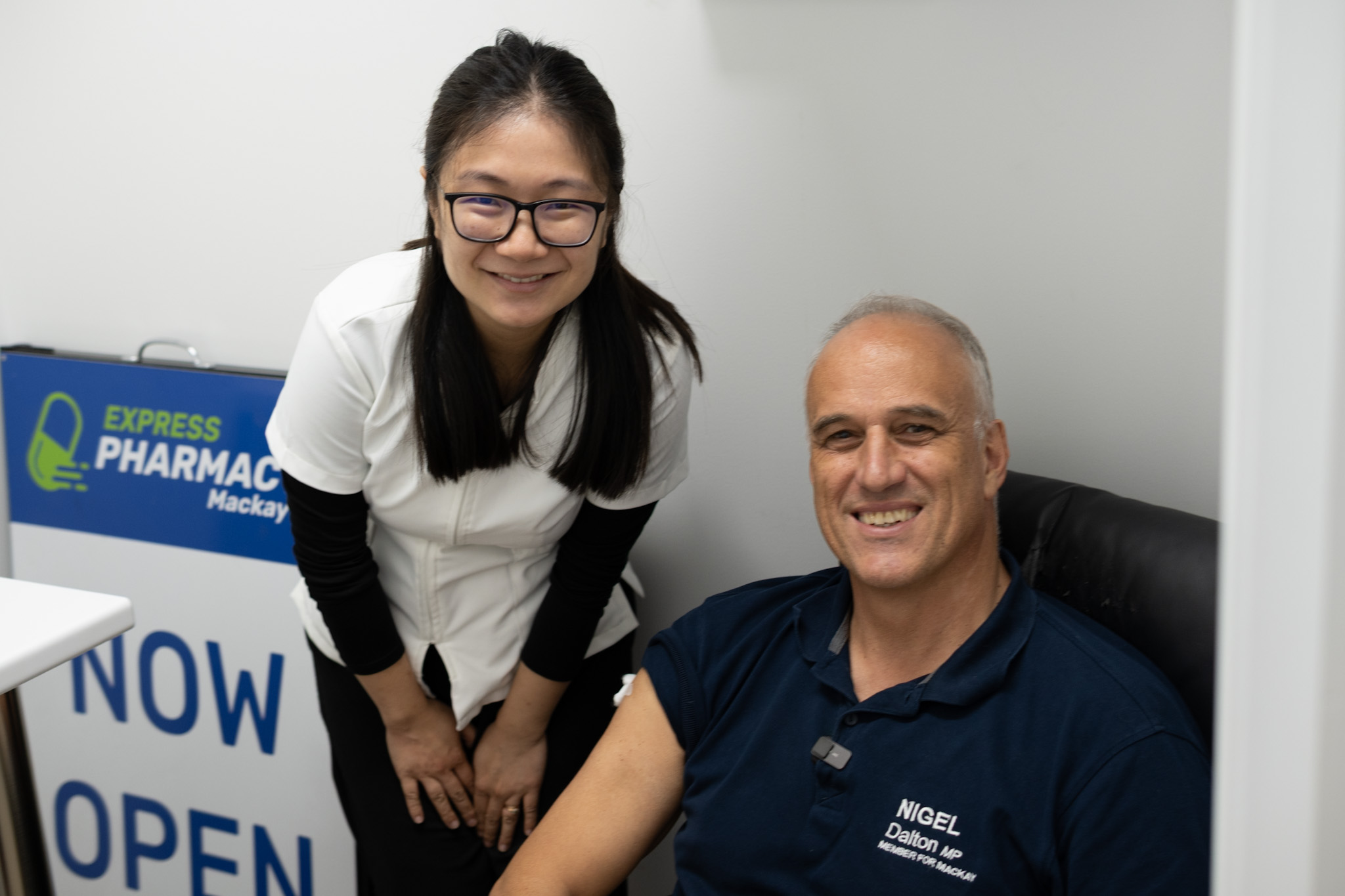
After receiving his own vaccination, Mr Dalton said the process was quick and easy.
“It was absolutely painless. It’s so easy and so quick. It just takes a couple of minutes out of your day and you know you’re protected for the coming winter.”
He also highlighted a needle free option available for young children.
“There’s a nasal spray now, and I believe it’s for under-fives which is a really good alternative.”
Owner and pharmacist Jie Lu van der Horst from Express Pharmacy Mackay said getting vaccinated each year helps protect both individuals and vulnerable members of the community.
“It’s really good to get the flu shot every year to protect yourself and also protect those who are vulnerable in the community,” she said.
“That includes the elderly, little children and anyone who is immunocompromised or chronically ill.”
She said the free program has made vaccination more accessible.
“As the owner of a local community pharmacy, I have to applaud the Queensland Government for making this program free for everyone this year so that it’s accessible to everyone.”
Ms van der Horst said the process is simple and convenient.
“It takes less than five minutes. You can come to your local community pharmacy or GP clinic, fill out an easy questionnaire and receive your flu shot.”
She added that the vaccine protects against influenza specifically, while COVID booster vaccinations are also available.
Nigel Dalton MP received his flu vaccination from pharmacist Jie Lu van der Horst and is encouraging the community to speak with their GP or local pharmacy about getting their free flu jab ahead of winter. Photo credit: Hannah McNamara

Mackay State High School sent a team of Year 12 students to camp on Konomie Island recently to collect data for their Biology assessment.
Students got to explore a number of different sites across the island, even donning snorkels to learn about the sea.
The trip was a chance to gather data about the natural environment, whilst gaining many valuable lifelong skills in the process.
The trip was a demonstration of how the rich landscape of the Mackay region can offer our young ones unique chances to interact with nature and engage with the natural world.
Photo source: Mackay SHS


Publishers Indemnity. Any individual or entity that places advertising, supplies copy material, or submits editorial content to Core Life Publishing agrees and undertakes to ensure that all such material:- Does not infringe upon any copyright, trademark, or other intellectual property rights;- Is free from any content that could be considered defamatory, libelous, or slanderous;- Does not infringe upon any rights related to privacy or breach of confidence;- Contains no obscene, indecent, or otherwise unlawful material;- Complies fully with the Trade Practices Act and all other applicable laws, regulations, or statutes.Furthermore, by submitting or placing such material, these individuals or entities agree to indemnify and hold harmless the publisher, Core Publishing and Events Pty Ltd, and/or its agents from and against any and all investigations, claims, demands, liabilities, damages, costs, or judgments arising out of or in connection with the material provided. All material is believed to be accurate at the time of printing and remains the copyright of Core Publishing and Events Pty Ltd.
© 2026 Mackay and Whitsunday Life Pty Ltd.
