
Independently Owned, Locally Grown, Community Loved

Three artificial intelligence (AI) initiatives are part of council's new budget to be adopted next week. These initiatives are the latest proactive steps from council to help mitigate significant financial pressures while continuing to deliver reliable, high-quality services to the community. Mayor Greg Williamson said the 2026/27 Budget reflected both the challenges facing local government and council’s commitment to modern, efficient service delivery. “Like many councils across the country, we are facing rising costs and reduced external funding,” he said. “Our focus is on finding smarter, more sustainable ways to deliver services without compromising quality for our community.” Council has seen a startling increase in a costs over recent years, including: An additional $665,000 increase in waste service costs due to reduced Queensland Government Waste Levy Subsidy and higher levy fees. A $1.1 million increase in waste expenses in the previous budget. A $5.92 million rise in depreciation costs this year alone. A $6 million shortfall from decreased Federal Assistance Grants in this budget contributing to a total reduction of more than $27 million in Financial Assistance Grants funding since 2016. An estimated $3 million annual increase in fuel costs. These pressures highlight the ongoing challenge of balancing affordability for residents with the real cost of delivering essential services. To help offset these impacts, council is investing in practical, targeted AI solutions that improve efficiency and reduce operating costs. A key initiative is the introduction of a new after-hours digital assistant, LUNA, which will operate from 4.30pm to 8.30am daily and all weekend from July 1. Replacing a previous afterhours model which used an outsourced, third-party call centre, LUNA will provide consistent, auditable responses using council-approved information. It will improve how afterhours calls are triaged, especially urgent and emergency enquiries, and will allow routine requests to be handled without delays or manual intervention. The transition follows changes in the external provider market and is expected to deliver about $80,000 in annual savings, while maintaining service quality and improving response consistency. Mayor Williamson said this initiative demonstrated council’s commitment to innovation while managing costs. “We’re using proven technology to deliver services more efficiently while maintaining the high standard our community expects,” Mayor Williamson said. Council is also expanding AI use in key service areas to address increasing demand and resource constraints. In Development Planning, automation of high-volume, low-complexity administrative tasks will reduce processing backlogs and allow skilled staff to focus on more complex work. A similar outcome will be achieved by using Agentic AI to enhance internal corporate services, allowing council’s staff to tackle more complex issues. This will help council maintain service levels despite workforce and cost pressures. Mayor Williamson said council was adopting a scalable approach to AI, building on existing systems to deliver improvements across multiple service areas rather than one-off solutions. “This approach ensures responsible and sustainable adoption of new technologies,” he said. “By reducing repetitive manual work and improving consistency, we can better manage costs while maintaining strong governance and oversight.” While efficiencies from these initiatives will be realised progressively, council’s immediate focus is on improving reliability, reducing inefficiencies and supporting a sustainable workforce model. These actions form part of council’s broader commitment to ensuring services remain efficient, accountable and future-ready, even as financial pressures continue to grow. Mayor Williamson said innovation would be key to navigating future challenges. “Innovation is essential to navigating the challenges ahead. By investing in smarter ways of working now, we are helping protect the services our community relies on into the future while putting downward pressure on rate rises.” Photo source: Mackay Regional Council
Read the full story
Set on the elevated hillside of this 21-acre property, the beautifully crafted, fully airconditioned residence enjoys a breathtaking north-facing 27m x 4.2m covered deck, offering ample room for entertaining or peaceful contemplation while taking in the stunning ever-changing vista. A large covered tiled patio adjoins the deck and living area, creating additional outdoor space overlooking the firepit and orchard. The Property At A Glance Spacious open plan living, dining and kitchen area with central fireplace, opening onto two stunning outdoor spaces Modern galley-style kitchen with stone benchtops, induction cooktop, rangehood, pyrolytic self-cleaning oven and dishwasher Media room with projector, with potential to serve as a fourth bedroom Three generous airconditioned bedrooms, including the master suite with walk-in robe and ensuite Modern family bathroom with shower over bath and separate toilet Laundry with excellent storage and external access Airconditioning and ceiling fans throughout North-facing covered hardwood deck, measuring 27m x 4.2m, with stunning views West-facing 9.5m x 6.5m tiled patio overlooking the firepit and plentiful orchard The home is set within a fully fenced house yard, complete with a secure electric front gate at the road. There is an abundance of water across the property, including four dams, a bore with solar-operated submersible pump (not currently connected), three rainwater tanks with a combined capacity of 62,000L, and town water to the residence. Water is also plumbed to the orchard, stables and other areas throughout the property. Additional features include fully covered walkways connecting the carport to the home, wireless NBN and full mobile signal coverage. Infrastructure And Improvements 7m x 7m carport with electric roller door at the home 14m x 7m high-clearance shed with four roller doors and service trench Adjoining 12m x 6m tool shed Stables and pig pens A lush and abundant orchard with avocados, citrus and tropical fruits, along with a well-established beehive Optional machinery includes a Fiat 750 tractor with slasher and rotary hoe, 2000 SE5 backhoe, Hustler 54" zero turn ride-on mower, assorted tools and other plant and equipment. This stunning property is a true gem in the heart of the beautiful Pioneer Valley, offering the opportunity to settle in, relax and enjoy, or get creative and explore the endless possibilities on offer. Gargett is located in the Pioneer Valley, just 15 minutes from the Finch Hatton Mountain Bike Trail and the beautiful Finch Hatton Gorge. The local Gargett Store is only a short drive away, while the nearest shopping centre is 20 minutes to Marian and 50 minutes to Mackay. It is also an easy drive to the Bowen Coal Basin, Airlie Beach and The Whitsundays, with ample opportunities nearby for fishing, crabbing, prawning and boating. Rates: Approx. $1660 per half year Zoning: Rural Price: $1.6M Block Size: 8.88 hectares (21.75 acres) Builder: Brad Kirkpatrick, 2015
Read the full story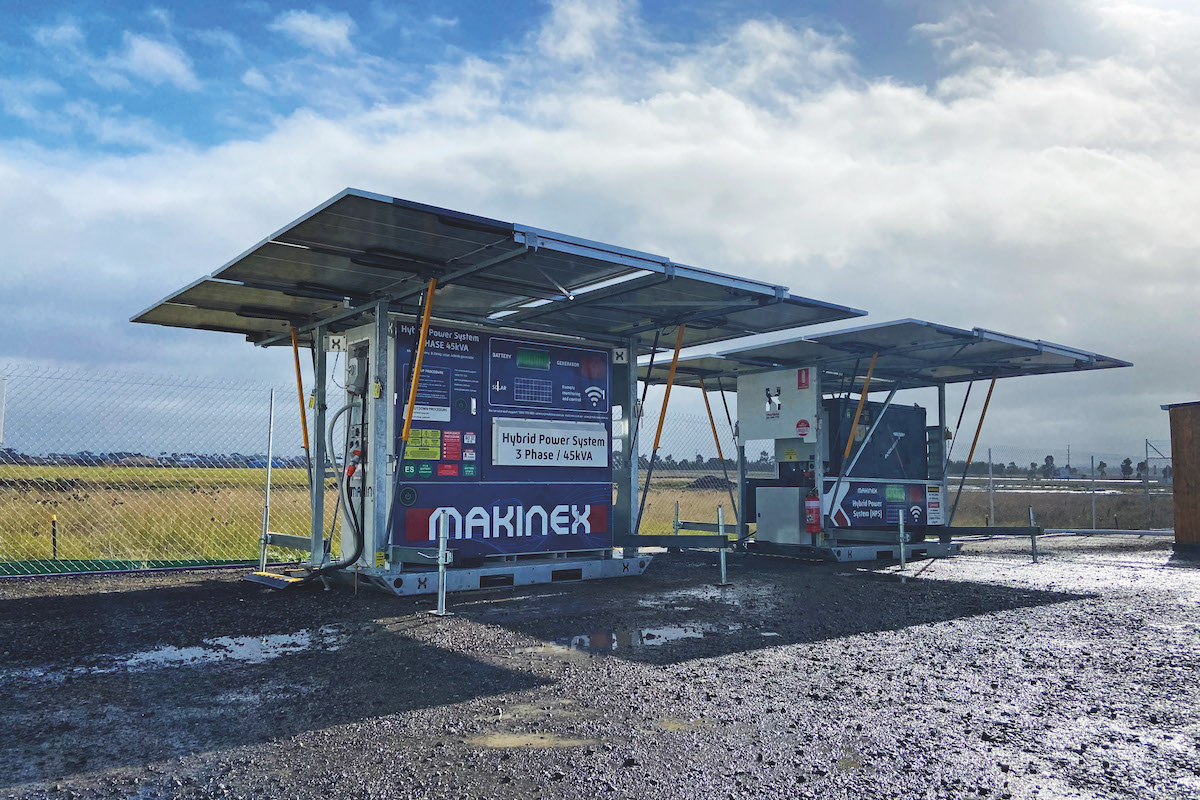
Makinex Renewables is setting an ambitious target, saving 100 million litres of diesel in five years. In an industry long reliant on traditional diesel generators, the Australian-made and owned company is helping reshape how remote and off-grid operations power their sites. Focused on Hybrid Power Systems, Battery Energy Storage Systems and deployable solar arrays, Makinex Renewables is working with customers to lower fuel costs, reduce emissions and improve operational efficiency, while maintaining the dependable power their operations require. “The 100 million litre target gives us a clear and measurable objective to work towards while highlighting the impact renewable energy solutions can have across industries that traditionally rely on diesel power,” the company said. “It’s a goal that keeps us focused on developing practical solutions that deliver real-world results for our customers.” Designed for businesses operating in remote environments, Makinex Renewables’ modular systems can be deployed as standalone units, integrated together, or incorporated into existing site power setups. The company’s solutions are already delivering measurable results in mining. Following a trial installation, a mine site adopted Makinex Renewables’ Hybrid Power System and additional solar arrays, reducing generator runtime from 24 hours a day to approximately six to seven hours. Since the HPS45 was deployed in February, the site has cut generator fuel use by 125 litres a day, delivering annual diesel savings of around $91,000 and projected savings of $640,000 over the site’s seven-year life. Brad Cliff, Director of Generator Services Australia, said the project highlighted the benefits of continuing to challenge traditional ways of thinking and finding better solutions to longstanding industry challenges. To learn more about Makinex Renewables’ solutions, visit the team at the Queensland Mining and Engineering Exhibition in July.
Read the full story
Most Reverend Daniel Meagher, the 11th Bishop of the Roman Catholic Diocese of Rockhampton, made his first visit to St Patrick's College on Wednesday, beginning the day alongside students and staff at the College's Brekky Van outreach service. The visit provided an opportunity for Bishop Daniel to experience the College's commitment to living its Catholic values through service to the wider community before officiating the blessing and official opening of newly completed building and refurbishment works. During the ceremony, Bishop Daniel addressed those in attendance. “We really are here to pray and bless the students and teachers who will use the buildings,” he said. The redevelopment has delivered contemporary learning spaces designed to support learning, wellbeing and faith formation while reflecting the College's commitment to providing high-quality educational opportunities. Assistant Principal: Mission, Mrs Andrea Crocker, said the occasion was a proud moment for the College community. “We’re finally getting to showcase our wonderful new facilities and the way the hard work of so many different people has come to fruition,” she said. The blessing and opening marked the culmination of years of planning and investment, with the new facilities set to benefit Mercy Campus students for years to come. Photo supplied
Read the full story

Safety leadership was brought into focus at the annual Resource Industry Network’s 2025 Safety Conference held on the 23rd of May at the MECC. Around 200 of the region’s safety leaders came together to hear from world class speakers and to unpack the latest techniques and strategies to help to continue the high standard of safety within their business.
We received fantastic feedback from attendees which showed that the speakers had motivated them to return to their business and lead from the front when it comes to safety.
Internationally renowned speaker Dr David Proven opened the conference by translating the five core High Reliability Organisation (HRO) principles - preoccupation with failure, reluctance to simplify, sensitivity to operations, commitment to resilience, and deference to expertise - into tangible strategies for leaders, safety professionals, and frontline teams. Attendees gained insights into developing the processes, capabilities, and cultural conditions needed to embed these principles in day-to-day operations, with real-world examples from mining organisations working to operationalise high reliability.
David also spoke of the importance of hearing all voices involved in the process and that decisions should not be just made by the ‘HIPPO’ (highest paid person in the organisation). It was a wonderful way to start the conference and the follow up keynote speakers were just as impressive. Each keynote speaker navigated the attendees through the very topical subjects of physiological safety and psychosocial safety and how addressing these in your workplace are critical to ensuring a safe environment.
The afternoon schedule offered a diverse range of topics in smaller breakout seasons. These informative and interactive sessions reinforced the messages of the plenary sessions, and set about breaking the topics down further to give attendees practical tools to take back to their workplaces to improve safety performance.
The practical tips that conference delegates learned to be able to implement into their businesses will create a safer and improved working environment for their staff. In addition, the connections made during networking opportunities throughout the day will allow for collaboration and information sharing which will ultimately lead to a safer region overall.
A huge thanks goes to the RIN staff for organising the event, our sponsors, the speakers and the attendees for making this year’s Safety Conference such a fantastic event. Now it’s onto Resource Industry Networking’s gala event for the year – the 2025 RIN awards which will be held on Friday 22nd August at the MECC.
Big conversations, bold ideas and a whole lot of heart — the 2025 RIN Safety Conference brought together industry leaders and changemakers for a powerful day of learning, connection and real-world solutions. Here's a glimpse at the people and moments driving safer, stronger workplaces across our region. Photos supplied

As the crisp air of winter descends upon Mackay and June 30 looms large, a familiar rhythm stirs for financially savvy households and enterprises alike. This isn’t just a date. It marks the finale of a fiscal year — a time to reflect, recalibrate, and position ourselves for the financial year ahead. The Australian Taxation Office (ATO) is ready. The question is, are you?
For Our Local Businesses
For the enterprising minds of Mackay, sharpening the books now can reap generous rewards. Chief among them is the enduring appeal of the Instant Asset Write-Off. Eligible small businesses — those with a turnover of less than $10 million — can instantly deduct the cost of assets under $20,000 per asset, provided they are in use by 30 June 2025. It is a timely nudge to upgrade, innovate and reduce taxable income in one go.
It is also essential to ensure that all superannuation guarantee contributions reach employees’ funds before the end of the financial year, not only to stay compliant but also to secure deductions. Prepaying allowable expenses, such as subscriptions or insurance premiums covering less than 12 months, can tip the tax scales in your favour. For those dealing with discretionary trusts, resolving income distributions before 30 June helps avoid the ATO’s less forgiving default tax treatment.
For Our Residents
For individuals, the new financial year brings something refreshingly rare, tax cuts. From 1 July 2024, the 19 per cent bracket shrinks to 16 per cent, while the 32.5 per cent bracket becomes a clean 30 per cent. Expanded thresholds also mean more of your income stays where it belongs: in your pocket.
Beyond these structural wins, personal deductions deserve attention. Working from home may allow you to claim 70 cents per hour under the fixed rate method, or you can itemise actual costs for greater accuracy. Vehicle use, professional development and even uniform laundry costs may be legitimate deductions. And for those thinking long term, contributing to superannuation up to the concessional cap of $30,000 for 2024–25 can be a powerful tax-deductible strategy, provided you lodge a valid notice of intent with your fund.
If COVID taught us anything, it is the value of national self-sufficiency, and that includes financial literacy. Whether you are running a business or managing a household budget, now is the time to gather your records, review your strategies and consult a trusted tax adviser.
Because in the world of tax, timing is not just everything. It is the deductible difference between “good enough” and “well played.”

When running a business, it’s easy to do all the right things like delivering a great service, managing your team, and keeping operations running smoothly, while still feeling like your brand is invisible. You’re showing up, but the spotlight lands on your competitors instead. Or worse, your ideal audience notices you but then loses interest. It’s not that your business lacks value, it’s that your brand lacks impact.
We caught up with the director of redhotblue, Mackay’s longest-standing creative agency, who has spent decades helping businesses go from overlooked to unforgettable.
In the age of digital technology, business owners are leaning more and more on quick fixes. The problem: you look and sound like everyone else. Understanding your brand personality requires skill. Identifying your audience and what resonates with them takes time and experience, and there’s no elevator to success.
Relying solely on your ‘unique’ offering to attract the right audience is naive. Your intended audience needs to connect with your brand and understand why you’re their best choice. If people don’t know about your business, they’ll just choose another option.
There are a few reasons that people lose interest:
Firstly, if your messaging and brand voice are inconsistent across platforms. Often business owners rush to get a message into the marketplace and forget to ensure they’re representing their brand values.
Secondly, if a customer’s experience with your brand is disjointed it can feel overwhelming, untrustworthy, and too hard. Love them or hate them, McDonald’s does a great job of providing the same look, feel, and experience regardless of location.
Finally, assuming your audience knows what you’re doing. No one is going to understand your brand better than you, but in a sea of visual communication, it’s easy to get lost if you’re not communicating effectively.
To quote Simon Sinek, “People don’t buy what you do, they buy why you do it.” Your brand messaging should connect emotionally with your audience because the ‘Why Factor’ resonates with the limbic brain, the part of the brain responsible for emotions.
Essentially, people are more likely to connect with your values and mission than your product or service. That’s why it’s crucial to understand and clearly communicate your business’s purpose. Ask yourself, what story is my brand telling and is it memorable enough to stick with people?
It’s important to remember that standing out isn’t a starting point, it’s the result. We often see businesses creating bold visuals without purpose or connection to their brand. This hollow approach doesn’t provide any reason for a customer to remember you.
Instead, I suggest you involve your team and conduct a think tank. Ask yourself what your brand represents and remember that your brand is more than your logo - it’s about how customers perceive you, how they feel when they think of your brand, and what keeps them coming back for more. Focus on creating one clear message that describes the benefits of your business to your audience, and don’t talk about yourself.

CQUniversity and the QCCS Mackay Cutters have announced a new partnership focused on developing clear and structured pathways for both university students and emerging rugby league talent looking to build careers in elite sport.
This partnership is set to bolster the pathway from Hostplus Cup and BMD competitions to the NRL and NRLW, providing our region's budding talents with a clear pathway to the elite level.
The Mackay Cutters are a recognised feeder club to the North Queensland Cowboys, and through this partnership, CQUniversity students will gain unique access to a professional sporting environment aligned with NRL standards, providing a valuable stepping stone into high-performance roles.
As part of Queensland Rugby League’s broader development framework, the Cutters provide students with direct exposure to the talent, technologies and performance standards that exist at the top levels of the game.
Mackay Cutters CEO, Dave Roberts, said the partnership is about building sustainable career pathways in our region.
“This partnership aligns with our commitment to develop pathways in elite sport, not only for players, but for the next generation of professionals working behind the scenes.
"We’re proud to offer an environment where students can gain meaningful, real-world experience that could take them from Mackay to the NRL,” he said.
The partnership is already delivering results, with a CQUniversity student recently commencing an internship within the Club’s strength and conditioning department, working alongside the Head of Performance to support athlete monitoring, testing, and training delivery. The hands-on experience provides insights into the daily demands of professional rugby league and has been identified as a blueprint for future placements with the Club.
CQUniversity Director of Sport Strategy, Professor Fabio Serpiello, said the collaboration reflects the University’s commitment to providing industry-aligned learning experiences for students.
“Our students in courses such as Exercise and Sports Science, Allied Health, Physiotherapy and Psychology will relish the opportunity to work with the professional team at the Mackay Cutters, and players on pathways to the NRL and NRLW,” he said.
“From grassroots events to global champions, CQUniversity has a long history of nurturing regional sport, and this kind of partnership – based on our new SPORT Strategy to grow sport from participation to high performance – is the perfect way to share our expertise and world-class research facilities with regional Queenslanders.”
The partnership also supports players within the Cutters system, providing them with access to further education and professional development opportunities through CQUniversity. This dual focus ensures athletes are supported not only in their sporting goals but in preparing for life off-field beyond the game.
L-R: Mackay Cutters Head of Performance, Lee Paterson; CQUniversity Director of Sport Strategy, Professor Fabio Serpiello; CQUniversity Educational Team Lead – Fitness, Ashlee Battersby; Mackay Cutters Chairman of the Board, Steven Dowden. Photo supplied
.jpg)
Last week, our publishing team had the privilege of attending the 2025 Queensland Country Press Association (QCPA) Conference and Media Excellence Awards — an annual gathering that brings together the heart of regional journalism from across the state. Held in Brisbane, the event reminded us that while the digital age may be reshaping how news is consumed, the need for trusted, community-driven storytelling has never been greater.
That message rang loud and clear in the opening remarks from Queensland Minister for Primary Industries Tony Perrett, who made one of the most significant announcements of the day: 75 per cent of the State Government’s print media budget will now be allocated to regional newspapers. In doing so, he acknowledged what many of us have long known — that regional publications are “absolutely vital” and remain the lifeblood of their communities. He spoke of the resurgence of independent newspaper publishers in Queensland and the essential role they play in keeping local voices heard.
This announcement also aligns with key findings from a Deakin University report on media innovation, which found that “securing the future of quality and reliable news and information platforms in non-metropolitan areas is in the national interest.”
As a proud independent publishing group based right here in Mackay and the Whitsundays, we couldn’t agree more. Our newspapers, Mackay and Whitsunday Life, Burdekin Life and Hinchinbrook Life, along with our lifestyle magazines Core Life and Tripping, are built on the idea that strong regional journalism strengthens communities. For the third year running, Mackay Life brought home gold, a testament not just to consistency, but to the kind of storytelling that continues to resonate deeply with our readers and peers across the state. It was humbling to have that work recognised across three award categories: a gold for Marketing Campaign of the Year in Mackay Life, a silver for Best ROP Feature in Burdekin Life, and a bronze for Young Journalist of the Year, awarded to our own Victoria Velton, who began with us in the Whitsundays and is now based in the Hinchinbrook.
One of the standout moments of the conference came from Olympic gold medallist Steven Bradbury. Best known as the man who crossed the finish line after a dramatic pile-up in the 2002 Winter Olympics, Bradbury’s story is often summed up in one word: lucky. But as he candidly shared, that luck was hard-earned. He spoke of training five hours a day, six days a week for over a decade. Of recovering from a broken neck. Of losing four litres of blood after a racing accident. His message? “The harder you work, the luckier you get.” A motto we’re proud to echo.
We also enjoyed a dose of humour from the awards MC, the brilliant Des Dowling, a former journalist turned comedian who knew exactly how to balance wit with insight.
We might be a small team, but like all good Aussie success stories, we’re punching well above our weight, and we’re only just getting started.
Amanda
Trish Jandt, Crissy Bottrell, Hannah McNamara, Amanda Wright, award sponsor representative, Rachael Smith, Ruth Puddefoot and Daniel Heggie at the 2025 QCPA Media Excellence Awards in Brisbane. Photo credit: Samantha Wantling

Networking and learning were the themes of the morning at the fourth annual Manufacturers Breakfast held at the Resources Centre of Excellence (RCOE) at the start of June.
The event offered an opportunity for local manufacturers to come together in a relaxed environment to share ideas and network over breakfast.
Manager of the Queensland Manufacturing Hub in Mackay Deb Allan provided an overview of activities undertaken by Hub staff over the past 12 months and what local manufacturers can look forward to over the coming year.
Dean Kirkwood from the Resource Industry Network discussed the launch of the Manufacturers Workforce Attraction toolkit, Teagan Dowling from The BCW presented on the benefits of increased workforce diversity and Jarrah Steen, from GW3, talked through the opportunities presented through decarbonisation, and highlighted the 7 sectors identified in the METS Revenue Diversification Strategy for growth in the Greater Whitsunday region.
A strong turnout of local manufacturers and industry leaders gathered at the fourth annual Manufacturers Breakfast, held at the Resources Centre of Excellence. Photos supplied

The Mackay Regional Council has officially triggered the by-election process to fill the vacant councillor position left by the resignation of Cr George Christensen, following a special meeting held on Wednesday, June 4.
The meeting, convened at 8.30am in the Sir Albert Abbott Administration Building, was called specifically to address the vacancy, which came into effect at 5.00pm on Friday, May 30. Councillors gathered to determine how the position—now legally required to be filled within two months—will be managed in accordance with the Local Government Act 2009.
Mayor Greg Williamson confirmed that under the Act, a by-election must be held because the vacancy occurred during the mid-term period of Council’s electoral cycle. This window is defined as beginning on the first anniversary and ending the day before the third anniversary of the last quadrennial election.
Rather than opting for a traditional polling day, councillors voted in favour of recommending a postal ballot as the preferred method for the by-election. This recommendation will now be sent to the Minister for Local Government, who must approve the process and formally request the Electoral Commission Queensland (ECQ) to administer the election.
Mayor Williamson said a postal ballot presented the most practical and economical solution.
“It’s the cheapest way for Mackay Regional Council to hold a by-election, particularly after recent state and federal elections, which have likely caused a bit of voter fatigue,” he said.
Council highlighted three key advantages of using a postal ballot: reduced costs, increased accessibility for voters, and the convenience of participating without attending polling booths in person. The ECQ has previously advised that postal ballots offer savings when compared to full in-person voting infrastructure.
However, the mayor acknowledged that choosing this method may delay the completion of the process slightly beyond the standard two-month timeframe. Even so, Council was assured this would not invalidate the by-election, and it remained committed to ensuring a fair and timely process.
The cost of the by-election has been estimated at $700,000, with Council flagging the need for a budget amendment during the first quarterly review of the 2025/2026 financial year. The by-election costs were not included in the original draft budget, which is set to be adopted later this month.
Once the Minister receives the recommendation from Council, the ECQ will begin the process of scheduling the by-election. A confirmed date is expected to be announced within the next week, with the vote likely to take place in the coming months.
Council will continue to update the community as more information becomes available regarding nominations, voting procedures and timelines.
Cr George Christensen was sworn in to Mackay Regional Council in 2024—less than 18 months before his unexpected resignation in May 2025
Councillors gathered in the Mackay Chambers on June 4 for a special meeting to set the wheels in motion for a by-election following Cr Christensen’s resignation
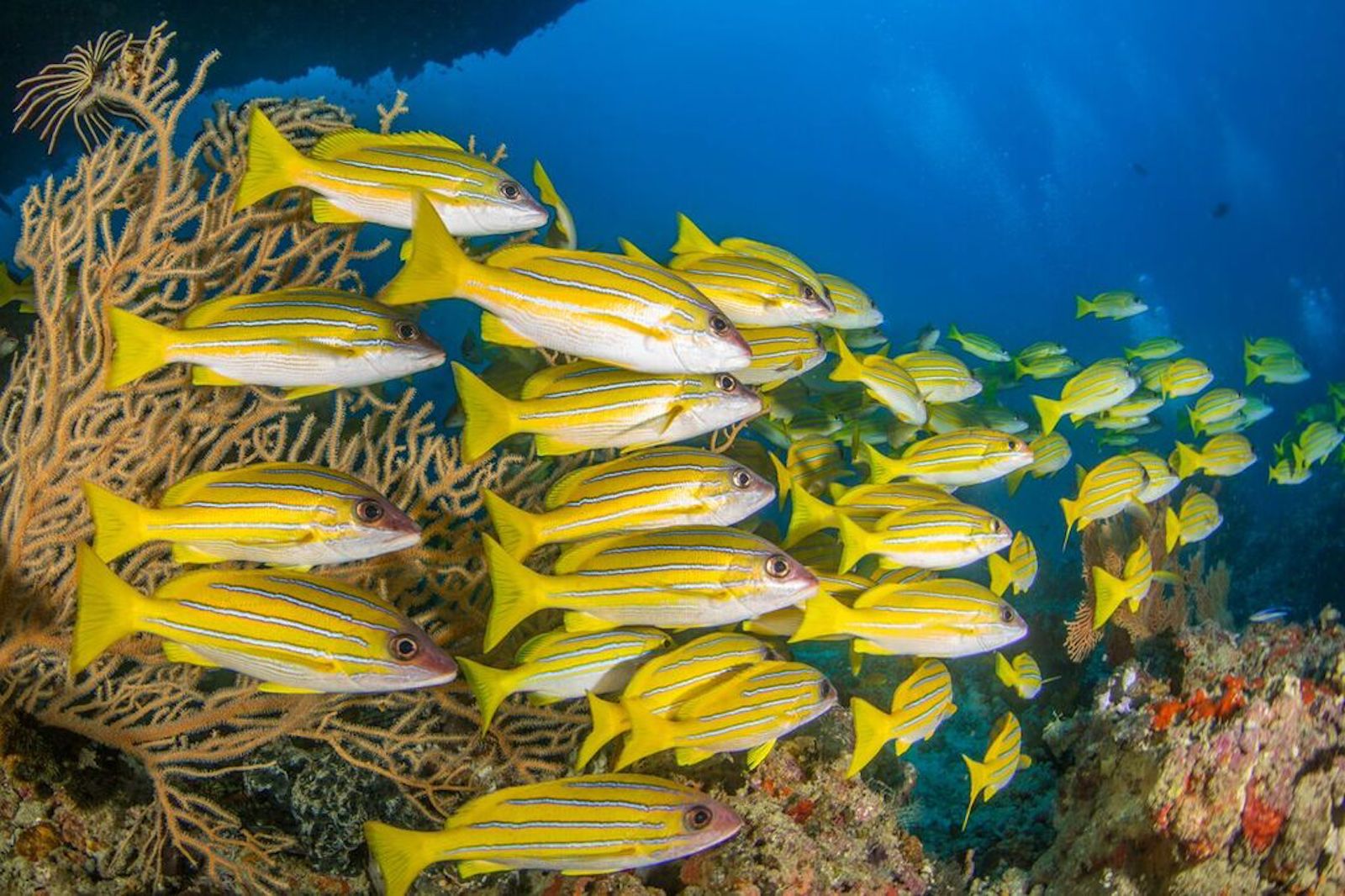
The highlight for most visitors to the Great Barrier Reef is their encounter with the myriads of coral reef fish…every size, shape, and colour. Very inquisitive and often right in your face.
Unfortunately, the opportunity for that experience is changing. A study has found concerning new evidence of long-term declines in coral reef fish around highly visited inshore islands of the Great Barrier Reef.
Scientists surveyed reefs at 100 sites around the Palm Islands, Magnetic Island, Whitsunday Islands, and Keppel Islands over a 14-year period, revealing fish communities are struggling to cope with increasingly frequent disturbances including coral bleaching, floods, and cyclones.
The study is part of a reef monitoring program now led by James Cook University around popular inshore islands, which are important for recreational fishing, tourism, and local communities.
“The fringing reefs around inshore islands suffer from intense human pressure due to their proximity to the coast,” explained Dr Daniela Ceccarelli, the lead author in the study.
“Reefs further from the coast have generally shown fish to be quite stable in the face of environmental disturbances, but it’s a different story for the inshore fish communities.”
“These inshore fish habitats have endured greater cumulative and intense local-scale pressures, with too little time to recover between stress events.”
The study found fish populations across these islands dropped by 33%-72%, and the numbers of fish species fell by 41%-75%, depending on the location.
These are substantial and concerning declines in fish abundance and diversity at the surveyed sites.
In the Whitsunday Islands, Cyclone Debbie in 2017 caused a steep drop in fish abundance.
“Cyclone Debbie’s intense impact on coral cover and physical damage to reef structures reduced available habitat, especially for coral-dependent species,” said Dr Maya Srinivasan, a coral reef ecologist at JCU and co-author of the study. ‘This loss has made it challenging for fish populations to maintain stability in these areas.”
“Marine Park zones where fishing is banned improved the picture to some degree, providing a buffer for the species that are usually targeted by fishers.”
“However, we found that No-Take Marine Reserves are unlikely to mitigate the impacts of an increasingly chaotic climate for all fish species in the long term,” she said.
Coral reefs have always been considered as the “canary in the coal mine”, an early indicator of climate change impacts. This latest research adds to the mounting evidence that without global action on reducing emissions, protected areas and fisheries management alone are not sufficient to safeguard coral reef fish.
Contributed with thanks to Whitsunday Conservation Council.

Memories of time spent on Dent Island as recorded by Reg Hatch in his book “Dent Island 1959” – an extract.
Reg was 20 years of age and a qualified painter when he left Brisbane in 1959 to “see what was over the hill.” On what was only his second plane trip, he arrived in Mackay and then, with two other passengers, flew to Lindeman Island on his first small-plane trip. After three weeks on Lindeman, Reg boarded the “Hossack H” bound for Dent Island.
On Dent Island, the lighthouse is now an automatically operated light but, in 1959, when Reg Hatch worked there, there were two lighthouse keepers and their families. Reg observed, “The lighthouse itself wasn’t very high. It was about 30 feet and painted white with a red top. Near the lighthouse was a new split level timber weatherboard house in which the head lighthouse keeper and his family lived.” On the same level to the north, a second new house was being constructed for the other keeper and his family and it was this house that Reg was there to paint.
Reg remarked, “The light keepers didn’t seem too be big on gardening. There wasn’t any soil, only rocks. The few trees on the island were stunted. Steps ran down from the lighthouse to the old houses. The only place where it was level was where the houses were perched and it seemed to me if you had one leg shorter than the other, you would be suited to the light keeper’s job.”
Reg also noted there were 200 steps from the lighthouse to the beach. Lloyd Williams was the head lighthouse keeper. His wife taught their youngest child on the island, whilst the older children attended boarding school. The second keeper, also Reg by name, was English. He explained to Reg Hatch the method of working the light “six hours on, six hours off, right through the night.”
The workers’ camp was three miles from the lighthouse as that was the only place where water was available.
Living quarters for the workers was a shed which had apparently been erected earlier on by the O’Hara family who had a cattle lease on Dent Island at that time.
Reg said that the primitive conditions the men worked under at Dent Island caused them contact the union organiser in Mackay, asking him to travel to the island to investigate the situation. But the two McDonald brothers (who owned the business engaged on the Dent Island project) had gotten wind of the visit and met the organiser incognito in Mackay and accompanied him on the journey to the island. They plied him with as much alcohol as he could drink so that upon arrival, he was totally incoherent and had to return to Mackay to recover. More men were then employed from Mackay to hurry the job along.
After completion of the work on Dent Island, Reg again worked for a short time on Lindeman Island before moving on. He concluded, “These are my memories of Dent Island as a young painter in 1959. Little did I realise then that I would later become a lighthouse keeper, serving at various stations along the Queensland coast - Sandy Cape on Fraser Island; then Cape Cleveland outside of Townsville; Booby Island and Goode Island in the Torres Strait and then in 1970, I was made Head Lighthouse Keeper at Cape Moreton. I took over from Lloyd Williams when he retired, eleven years after I had first met him on Dent Island in 1959.”
Postscript: The Dent Island Lighthouse, the first in the area, was erected in 1879. Automation was effected in 1983 and the lighthouse was demanned in 1987.
One of the graves in the accompanying photo is that of three-year-old Caroline Bliss, daughter of the then lighthouse keeper. She was buried on 3rd April 1885. The occupants of the other two graves are unknown.
Story courtesy Proserpine Historical Museum and Reg Hatch. Photo courtesy Proserpine Historical Museum.

In a powerful celebration of empathy, leadership, and community spirit, the B Kinder Foundation hosted its very first B Kinder High School Summit on 29 May 2025. Held at Proserpine State High School, the event brought together student leaders from Bowen State High School, Whitsunday Christian College, and St Catherine’s Catholic College.
Far from a typical school event, the summit was designed to inspire students to become agents of change within their schools and communities. Through a series of hands-on activities and guided reflections, students were asked a simple but profound question: “How can I make it better?” The answers that followed were thoughtful, courageous, and full of heart.
Facilitated by Jessi from Illuminate Education Australia, who flew in from Tasmania for the occasion, the summit marked a major milestone for the B Kinder foundation. Over the past seven years, this grassroots movement has evolved into a nationwide initiative, with its B Kinder school program now supporting student leaders across Australia. The program encourages students to roll out five kindness initiatives over the school year and participate in workshops and summits that promote compassionate leadership.
The following day, on 30 May, the Primary School Summit welcomed younger leaders from Whitsunday Christian College, Proserpine State School, and St Catherine’s Catholic College. Both events hosted around 80 students each.
These summits were more than just a day out and were a spark for lasting change. Students left energised, inspired, and ready to carry the message of kindness back into their schools and communities.
As the b kinder foundation continues to grow, events like these are embedding kindness into the heart of education.
Children at the primary summit on Friday
Children at the High School summit held on Thursday
b kinder foundation representative Mel Turner, Proserpine State High School Captains Callum Henry and Mia Vloedmans, Bowen State High School Captains An Nguyen and Brooke Jameson, Whitsunday Christian College School Captains Cody Love and Charlotte Adams, Director of Schools & Curriculum from illuminate Education Australia Jessi Mostogl.
Front: St Catherine's Catholic College students Isabella O'Sullivan and Domingo del Solar.
Frida the schools therapy dog helping out at the B Kinder event

Hi Everyone,
Whale season is here, and I’m eagerly awaiting the first sighting!
This is truly my favorite time of year, there’s nothing quite like watching them swim alongside their calves, and send plumes of spray into the sky.
To celebrate, I have had the idea to launch a fun new feature in Ruth2Reef called Whale Watch Weekly! If you capture a photo of one of these incredible whales, please send it to ruth@lifepublishinggroup.com. Your photo could be featured in an upcoming edition, with full credit to you, of course!
And if you come across any other inspiring or interesting environmental stories, I’d love to read those too, so please feel free to send them my way.
Happy whale watching,
Ruth
.png)
The first humpback whales we are likely to see close to the islands are pregnant females or females with newborns.
Humpback mothers with calves spend as much of their time logging as possible.
Logging is a form of rest where humpback whales float motionless near the water's surface, much like a log.
They remain near the surface with their blowholes exposed to the air, allowing them to breathe.
Whales must remain conscious while sleeping to breathe. During this resting state, humpback whales shut down only one hemisphere of their brain at a time while the other remains active.
Mothers also spend time logging to conserve energy, because they are relying on their fat reserves to produce 600 litres of milk per day for her calf; until she returns to her feeding grounds in the Antarctic.
It’s important to be on the lookout for whales during the next couple of months, because logging whales can be extremely hard to see.
Last season there was an injured whale reported off Hamilton Island’s Qualia Resort.
It was a good news story. After watching her behaviour for a period of time I was pleased to report she was logging with her calf near her nose.
The first photo is logging behaviour. In the second photo she was no longer logging and has more of a hump.
Please report sick, injured or dead marine life on 1300 130 372
To find out more about special whale events and information on whales in the Whitsundays, join the WHALES OF THE WHITSUNDAYS Facebook page; or go to https://www.whitsundaymarine.org/projects
Contributed by Kellie Leonard, Master Reef Guide/Whales of the Whitsundays

A once-abandoned gold mine near Proserpine is drawing renewed attention after modern testing revealed the presence of a large, mineralised system, with only a small area explored to date.
The historic Dittmer Mine, discovered in 1934 and closed in 1951 after producing more than 54,000 ounces of gold, is being revived by Ballymore Resources. The company rekindled interest in the site last year after mapping and sampling unearthed several high-grade gold zones. Underground explorations have since reopened, alongside the launch of a 3,000-metre diamond drilling program.
Spanning 513 square kilometres, the broader exploration project has also received a $300,000 grant from the Queensland Government to support an 8,051 line kilometre aerial survey. The area includes multiple historic gold and copper prospects.
If mining proceeds, potential extraction methods would include cyanide leaching and flotation, with metallurgical tests confirming the ore is suitable for such processing. However, the prospect of renewed mining has raised environmental concerns among some local residents, particularly around water quality, road access, and impacts on native wildlife.
To address these concerns, Whitsunday MP Amanda Camm visited the Dittmer community recently to engage with residents and provide updates on the project's status. Approximately 60 locals attended the meeting, where Ms Camm emphasised her commitment to transparent communication and due process.
“The current application for development is sitting with the land court to make an independent decision. The hearing was held on the 6th of May and the court has six months to make a decision.”
Ms Camm reassured residents that their concerns would remain central to any decisions moving forward.
“I am committed to representing the priorities and concerns of the Dittmer community, while ensuring any potential development adheres to strict regulation and controls,” she said.
Once a decision is handed down, Ms Camm said she would consult with the relevant Minister to determine the next steps for the project.
The visit provided a platform for open dialogue between community members and government, with residents raising a range of concerns from environmental protections to infrastructure and local wildlife preservation.
As the process unfolds, both residents and project stakeholders will be watching closely to see whether the Land Court’s decision will pave the way for Dittmer Mine’s next chapter or bring its revival to a halt.
Amanda Camm, speaks with Dittmer residents about the mine
Around 60 locals attended the meet

The Whitsundays will soon play host to one of Australia’s most respected economic voices.
David Robertson, Chief Economist at Bendigo Bank, is heading to Proserpine on Thursday, 10 July for a special community event – and everyone’s invited.
Known for his ability to make complex economic trends easy to understand, David’s engaging and down-to-earth style has earned him a strong following, including on his popular YouTube series.
With more than two decades at Bendigo and Adelaide Bank and a career spanning senior roles at major financial institutions, David brings a wealth of knowledge to the table. At this free event, he’ll break down what’s really happening in the economy—from interest rates and employment trends to property values and the Australian dollar.
Hosted by Community Bank Cannonvale–Proserpine, this is a rare opportunity to hear firsthand from a leading expert about the financial forces shaping our country—and what it could all mean for local families, businesses, and the Whitsundays region.
Don’t miss out! Whether you’re a business owner, first homebuyer, retiree, or just curious about what’s ahead for the economy, this event is designed for everyone.
**What: Bendigo Community Bank Cannonvale-Proserpine Chief Economist event
When: 7:30am–9am Friday, 11 July 2025
Where: Filby’s Motors, Proserpine
Registration: Free event, open to all. RSVP by Wednesday, 9 July via secretary@whitsundaycel.com.au
Can’t make it? David will be presenting at the Mackay Region Chamber of Commerce’s New Financial Year breakfast, 7:30am Tuesday, 8 July in Mackay. This special event is proudly sponsored by Community Bank Sarina, celebrating 20 years in the community this year.
**Over $211,500 Invested Back Into Our Region – and We're Just Getting Started!
For the past eight years, your locally owned Community Bank Cannonvale-Proserpine has proudly backed regional not-for-profits with more than $211,500 in support — and we’re not slowing down.
In 2025 alone, we’ve provided funding to local sporting clubs, community groups, and iconic regional events. You’ve probably seen our fully equipped BBQ Community Trailer firing up most weekends across the Whitsundays!
“Our profit-with-purpose model means the more our community banks with us, the more we can reinvest,” says Community Bank Cannonvale-Proserpine Chairman, Mark Henry. “It’s a cycle of support — when you back us, we back you.”
We’re proud to sponsor several exciting upcoming events — and we can’t wait to see you there!
Want Support for Your Next Event or Project? Apply Now!
Applications are now open for sponsorship funding and use of our popular Community BBQ Trailer. With limited funds available and high demand, it’s a competitive process — so make sure your application stands out!
To learn more and grab an application form, contact our Board Secretariat at secretary@whitsundaycel.com.au
%20(1).JPG)
On Thursday, I had the privilege of welcoming guests to our Shute Harbour Marine Terminal to mark World Environment Day—a powerful reminder of why we must protect what makes our region so special.
As the heart of the Great Barrier Reef, our Whitsundays is one of the most ecologically significant places in the world. From our reef to our rainforest, we’re not just caretakers of the environment—we’re leaders in sustainable tourism.
Thursday’s event brought together environmental leaders, tourism operators, and community changemakers to focus not just on ideas, but on action.
A highlight was celebrating the launch of Sustainable Aviation Fuel (SAF) at Whitsunday Coast Airport—a major milestone in our region’s sustainability journey.
We were honoured to have Fiona Walmsley, General Manager of Sustainability, in attendance from Virgin Australia, and she shared their commitment to greener skies.
The adoption of SAF aligns perfectly with our region’s legacy of biodiversity protection and low-impact tourism. But none of it would be possible without strong partnerships—between Council, industry, and the operators who understand that our economic and environmental futures are intertwined.
Whether it’s sustainable aviation, reef-safe tourism, or grassroots green initiatives, we are united by the belief that tourism can and must be a force for good.
Thanks to QTIC for choosing the Whitsundays to host the event, our industry partners for their continued leadership, and every single person who came to listen, to share, and to act.
Together, we are creating a more resilient, sustainable Whitsundays—because our environment deserves nothing less.
Publishers Indemnity. Any individual or entity that places advertising, supplies copy material, or submits editorial content to Core Life Publishing agrees and undertakes to ensure that all such material:- Does not infringe upon any copyright, trademark, or other intellectual property rights;- Is free from any content that could be considered defamatory, libelous, or slanderous;- Does not infringe upon any rights related to privacy or breach of confidence;- Contains no obscene, indecent, or otherwise unlawful material;- Complies fully with the Trade Practices Act and all other applicable laws, regulations, or statutes.Furthermore, by submitting or placing such material, these individuals or entities agree to indemnify and hold harmless the publisher, Core Publishing and Events Pty Ltd, and/or its agents from and against any and all investigations, claims, demands, liabilities, damages, costs, or judgments arising out of or in connection with the material provided. All material is believed to be accurate at the time of printing and remains the copyright of Core Publishing and Events Pty Ltd.
© 2026 Mackay and Whitsunday Life Pty Ltd.
