
Independently Owned, Locally Grown, Community Loved

OPINION PIECE from the office of Federal Member for Dawson Andrew Willcox There is no question that immigration into Australia is out of control. The government’s numbers are too high, and standards are too low. A sustainable migration program must consider our capacity to provide housing, healthcare, infrastructure and the essential services everyone relies on, and Australians must come first. But Labor’s decision to target Working Holiday Makers Visa holders is not the answer. These people filling vital gaps in our workforce are not the cause of Australia’s housing crisis. In many cases, they are living in accommodation provided by the very businesses that employ them. The National Farmers’ Federation has made the point that Working Holiday Makers generally stay in hostels, caravan parks or purpose-built on-farm accommodation. Resorts usually have on-site staff quarters. They are not the source of Australia’s housing shortage. So why is Labor making it harder for them to come here, when these workers fill genuine jobs that regional Australia holds? Working Holiday Makers fill approximately one in seven farm jobs nationally and are particularly important during peak agricultural periods, which for Dawson, it is right now! Farmers rely on these workers to plant, pick, pack and harvest the produce that ends up on Australian supermarket shelves. Having run one of Australia’s largest tomato farms, at times Working Holiday Makers made up more than 50 per cent of my workforce. Without them, much of our crop simply would not have been picked in time and rotted in the paddock. Some may say, why not employ the Australians who don’t have a job and are on “the dole”? Can I say, this does not work. Most farmers will employ Aussies over travelling backpackers, but many either don’t want to do the work or don’t turn up after the first day. Who picks the fruit or veggies then? Farmers are already warning that visa delays are leaving them without workers. The NFF says approvals that once took days are now facing processing times of up to three months, and this time frame can be the difference between harvesting a crop or losing it. That should concern every Australian already feeling the pressure at the supermarket checkout. The same problem is playing out in tourism. Across Dawson, Working Holiday Makers are an important part of the workforce supporting tourism and hospitality, particularly in the Whitsundays. They help fill shifts, work in hotels and restaurants, support tour operators and keep businesses running through their busiest periods. They also contribute to the local economy. They spend money on food, fuel, attractions and tours, supporting the small businesses that depend on a strong visitor economy. That is why tourism and business leaders across North Queensland are raising the alarm. They understand what happens when a regional business cannot get enough staff: opening hours are reduced, and services are cut, creating a downward spiral. We do need to reduce migration to sustainable levels. We need stronger integrity measures, and we need to crack down on rorts. But responsible migration policy means understanding which parts of the system are creating pressure and which parts are helping Australia function. Working Holiday Makers are not the problem. They are part of the workforce solution for regional. Australia. People have had a gutful of watching their standard of living go backwards. Groceries, fuel, housing and everyday expenses are already putting enormous pressure on families. The last thing Australians need is another reckless policy that makes it harder to produce food, harder to run regional businesses and harder for tourism operators to find the workers they need.
Read the full storySomeone sold a house in Sydney last week for $9 million less than they bought it for four or five years ago. The sellers had bought the property in Sydney’s eastern suburbs for $29 million and sold it for $20 million in a sale forced by their bank. I imagine the sellers are a little disappointed by the government’s decisions on negative gearing and capital gains tax and feeling pretty hurt by the increased interest rates. Australia’s interest rates are on the rise and are now sitting at levels not seen since 2011. Increased cost of living is hurting people around the country and interest rates are playing into that. But the impact of interest rates is not felt evenly around the country. The far-higher property prices mean people in the major cities suffer much more than regional areas with the rates increase. That is certainly not to say people in Mackay are unaffected by the cost of living; it’s just that the impact of interest rates increase on a $400,000 mortgage is much less than the impact on a $1m mortgage. There are other Mackay-specific factors that are in play when discussing the current housing market. The big factor is the role of coal in our economy. Most of the coal extracted and exported from our region is coking coal, which is used to make steel. The price of coking coal is around $280 a tonne, which is about 50 per cent up. Good activity in the coal market translates to good news for the Mackay economy, as it is an economic engine that other cities and regions just don’t have. Good activity in Bowen Basin flows throughout the Mackay economy; Paget workshops, transport, suppliers and related businesses all benefit. But so do other, non-mining-related businesses as they benefit from the general confidence and spending that goes on. The strong mining activity also means mines need to keep their staff levels up and that means more people moving to Mackay. Of course, Mackay is much more than a coal mining town but if the coal sector is going well those other areas definitely benefit. It is a confidence boost for Mackay people looking to get into the housing market and those wanting to upgrade or downsize. It also means continuing strong demand from people wanting to rent a property and it will be interesting to see what sort of activity that creates from investors. Investors have walked away from the big-city markets because they can no longer use negative gearing on established properties that do not have a sufficient yield to be positively geared. Negative gearing has never been a big thing in Mackay because our prices are lower and rental returns continue to be strong so many investors have a positively geared property. Around the country everyone is nervous about the state of play and the probability of more interest rate rises. But strong coal prices and an economy that is performing well mean Mackay might just be presenting an opportunity for buyers and sellers that doesn’t exist in other parts. I remember when national confidence was flying high and Mackay prices were going up significantly that many buyers were saying “I wish we had bought a while ago when the market wasn’t so hot”. I’m not armed with a crystal ball so I’m not here to tell you what is going to happen but I suspect there is a very good buying window right now for those looking for an opportunity.
Read the full story
A local Mackay and Sarina based model has created a dress out of newspapers, including Mackay Life, for her upcoming pageant, representing her region and hometown on the runway as she vies for Miss Diamond International in Brisbane. Zoe Place will be competing this weekend in the three-day event, beginning this Friday 2nd October and ending on Sunday 4th October. The young model spent around a month creating her eco-fashion outfit, using old newspapers as the main material and transforming them into a bodice, skirt and flowers. Red elements were also incorporated into the design to give the dress a bold and glamorous pageant feel. Zoe said, “The entire concept was really about taking something that would normally be thrown away and turning it into something beautiful and meaningful.” Her eco-fashion creation will form part of a busy weekend in Brisbane, with the Miss Diamond International event including photo shoots, interviews, an eco-fashion show and the final pageant. Zoe has been preparing for the event by practising her strut and walking, preparing for interviews and getting comfortable in the different outfits she will wear throughout the weekend. Alongside her love of modelling, pageantry has also provided Zoe with a platform to raise awareness about causes close to her heart, including mental health, while fundraising for Beyond Blue. “Pageantry has given me more of a platform to combine my love for modelling with something that is really important to me.” “When I first started, I was more nervous about putting myself out there and worried about what others would think about me – but I’ve changed a lot through my journey in pageantry.” “Pageantry has also taught me that it’s not about how you look on stage. It’s about the person you are when you step off it.” “Every woman has their own unique journey and that journey is something we should all be really proud of.” “To me, it represents confidence, empowerment, kindness, and using your voice to make a difference.” Zoe said she was looking forward to meeting the other contestants, making new connections and creating memories. “I’m definitely looking forward to meeting all the new contestants and making new connections and creating memories that I will carry with me for a lifetime.” While Zoe hopes to eventually move to the city, her sights are set even further afield, with a dream of one day walking in New York Fashion Week. Mackay and Sarina local Zoe Place has created an eco-fashion dress from recycled newspapers, including Mackay Life, ahead of her Miss Diamond International pageant in Brisbane. Photos supplied
Read the full story
Trends, reels and the endless cycle of always wanting more has quietly bombarded the minds of countless social media users of all ages, but one former Mackay local has made it her mission to help others understand the effects of social media and find practical ways to break free from online addiction. Alexis Zahner is in Mackay over the next week to teach upcoming generations about social media and the effects it can have on the mind, particularly on identity, self-discovery, as well as the marketing strategies that get viewers hooked and influence their decisions. It is something Alexis knows first-hand can be a useful tool, but also a great disruption to authenticity and the world as we see and experience it. Alexis will hold a free meet and greet and book launch today, Friday 2nd October, at 5.30pm at the Mackay Surf Lifesaving Club, where she will give a talk and answer questions relating to her debut book, Real: Reconnecting to Yourself in a World of Likes and Lies. A former Mackay girl, Alexis spent the past 15 years working across business psychology, marketing and media, with her interest in social media influence beginning during her university studies at James Cook University in Townsville. Her own experience as a social media user, travel blogger and influencer eventually led her to question how much of her identity, decisions and values were being shaped by what she saw online. “The tipping point came for me about 3 years ago when I had this feeling that I couldn't separate influence from my own personal decision making,” she said. “I couldn't separate my own likes, dislikes, values, relationships from what I was being exposed to and being influenced by online.” “I found that I needed to take some time away from social media to recalibrate what was important to me and sort of reconnect and come back to myself.” Alexis said she understood the feeling of questioning who you are outside of social media. “I know what it feels like to live a life under the influence of social media and have that existential crisis of thinking to yourself, who am I? What do I like? What's the kind of life I want to live? and struggling to separate myself from influence.” Alexis is particularly passionate about reaching teenagers, who she says are in an important stage of identity development, and will share this message with Mackay high school students during her upcoming school talks. “Teenagers are really easily influenced by social media. So it's a really important age where we start educating them – not just on the mental health repercussions of things like social media and how it shortens their attention span, but how it actually influences who they become.” “If you're asking yourself these questions, it's not your fault. Social media is actually geared to create this impact on you.” Alexis encourages people of all ages to “start expanding beyond what you see on the platform.” “Dare to indulge in the things that you've always been curious about or things you used to love,” she said. “Don't be afraid to put the phone down to let yourself be curious and have fun.” What: Alexis Zahner's 'Real' Book launch When: 5.30pm Friday 2nd October 2026 Where: Mackay Surf Lifesaving Club Former Mackay local and author Alexis Zahner is returning home to share her experiences with social media and her debut book, Real. Photo supplied
Read the full story
Makayla Groves and Bianca O'Brien are part of the commercial property team at Blacks Real Estate, supporting landlords, tenants and business owners across the Mackay region.
Working as Commercial Property Managers, Makayla and Bianca assist with the day-to-day management of commercial properties, helping clients navigate leasing and property management requirements across retail, office and industrial spaces.

Based at the agency’s Wood Street office, the pair work closely with business clients throughout the region as part of Blacks Real Estate’s commercial division.
Makayla Groves can be contacted on 07 4963 2522, while Bianca O’Brien can be contacted on 07 4963 2525.

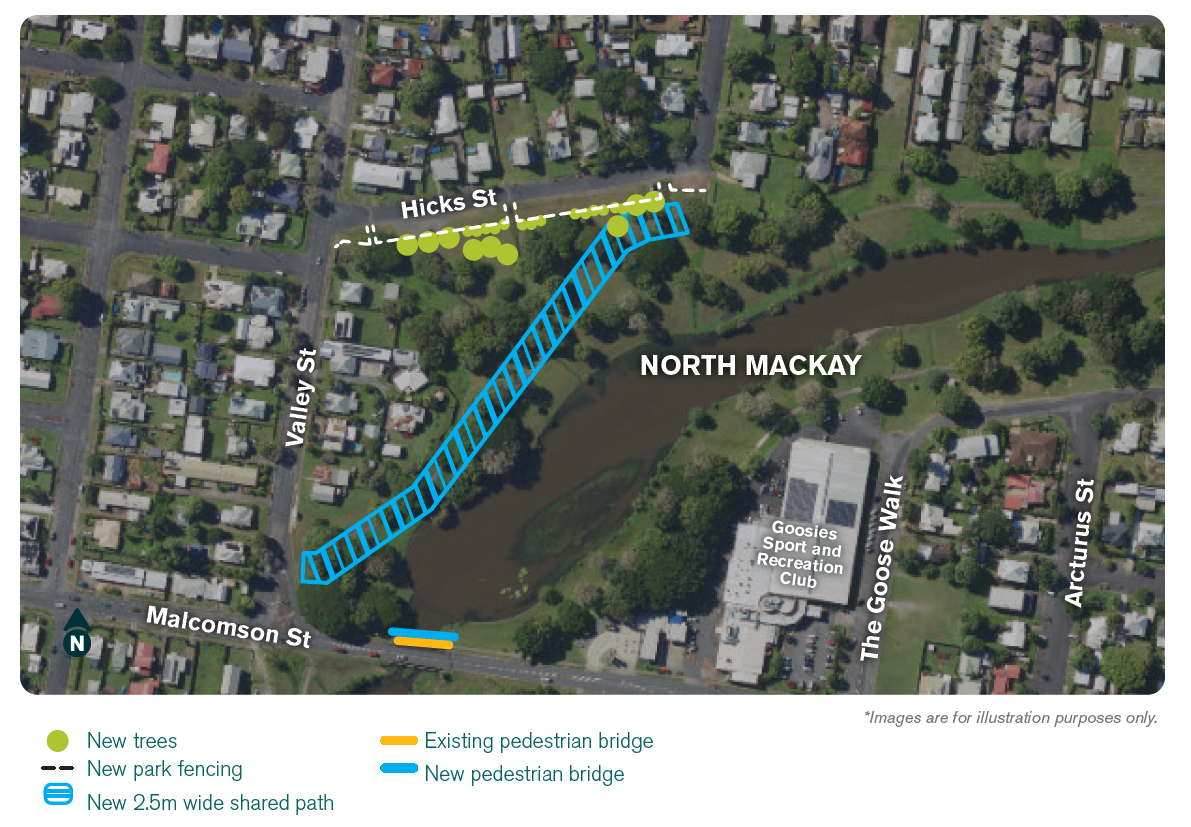
Major upgrades at Gooseponds Park, including a new pedestrian bridge, widened shared pathway, fencing and tree planting, are set to improve access and connectivity, with works expected to run from mid-June to late September. Illustrative image supplied.
Visitors to Gooseponds Park can expect improved access and connectivity, with major upgrade works set to begin on a replacement pedestrian bridge, new fencing and a renewed shared pathway.
The project, to be delivered by D&M Composites Pty Ltd, will include replacing the existing footpath between Valley and Hicks streets with a widened 2.5-metre shared pathway, enhancing links to the popular Gooseponds circuit.
Member for Mackay Nigel Dalton said the project is another example of the Queensland Government delivering for the state and supporting important upgrades for the community.
“That’s why we made Works for Queensland funding permanent, to back local councils with the funding they need to deliver vital projects like this for their communities.”
A new bridge, parallel to Malcomson Street, will be constructed one-metre higher than the existing bridge to provide increased flood immunity.
The existing bridge will remain in place while the new one is constructed directly behind it. Some short traffic delays are expected on Malcomson Street. Traffic control will be in place.
Pedestrians can detour via Glenpark and Meadow streets while the work is completed.
New fencing will be installed and 23 new trees will be planted along Hicks Street.
Work is due to take place between mid-June and late September, weather permitting.
Mackay Regional Council have said they apologise for any inconvenience caused by the works and appreciate the community’s patience and understanding.
Jointly funded by Mackay Regional Council and the Queensland Government. For more information visit www.connectingmackay.gooseponds-park-upgrades
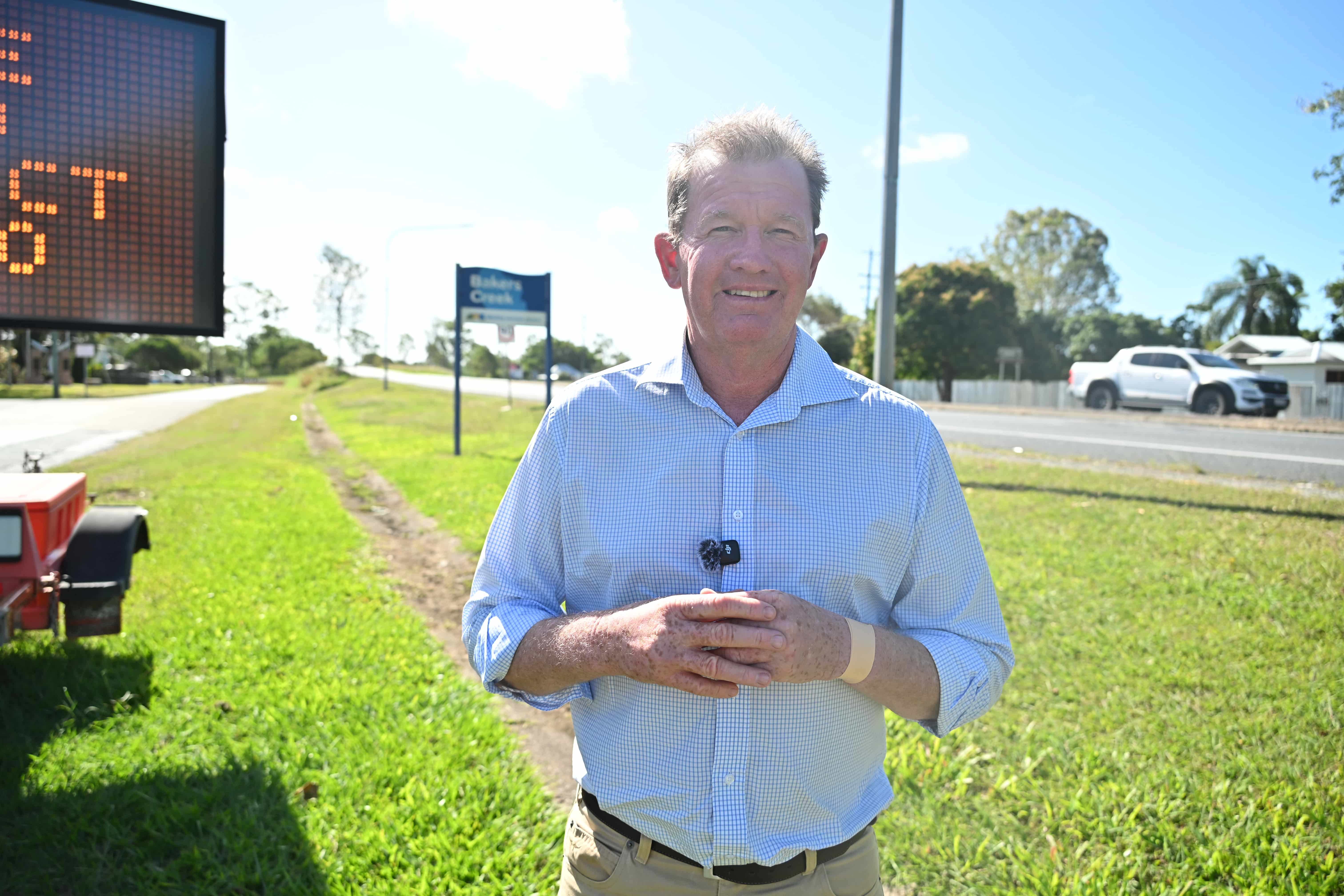
Bruce Highway upgrades at Bakers Creek and Sarina will boost safety and strengthen a key transport link for Central Queensland motorists. Photo supplied
Improved safety, stronger infrastructure and greater resilience are on the horizon for motorists travelling between Mackay and Sarina, with the latest round of Bruce Highway upgrades welcomed as a significant investment in the region's transport network.
Member for Mirani, Glen Kelly, said the upgrades form part of the historic $9 billion Bruce Highway funding agreement between the Queensland and Federal governments and will deliver lasting benefits for road users across Central Queensland.
Mr Kelly said the Bruce Highway remains one of the most vital transport routes within the Mirani electorate, supporting thousands of vehicle movements each day, including freight transport, daily commuters, tourists, school buses and emergency services.
“Roads are consistently the number one issue raised with me by local residents, and that's not surprising when the Mirani electorate contains over 400 kilometres of the Bruce Highway stretching from the Mackay city gates right through to Raglan Creek,” Mr Kellysaid.
“These upgrades are about improving safety, reducing road trauma and ensuring Queenslanders can get where they need to go safely and reliably.”
Mr Kelly highlighted the importance of the Mackay to Sarina section of the Bruce Highway, particularly its role in connecting local communities, industry and freight movements throughout the district.
“The Mackay to Sarina corridor is one of the busiest sections of highway in regional Queensland. It supports our agricultural sector, our mining industry via the Port of Hay Point, and the thousands of people who travel this route every week for work and familycommitments.”
“That's why it is fantastic to see significant investment being directed towards projects such as pavement strengthening at both the northern and southern entrances to Sarina, along with ongoing works at Bakers Creek.”
Works at Bakers Creek include bridge resurfacing and repairs to expansion joints, helping improve skid resistance and road performance during wet weather.
Mr Kelly said, “Many locals were concerned about the significant deformation that had developed in the road surface at Spider Creek.
“The upgrades delivered there, including road widening, wide centre-line treatments and audio tactile line marking, will provide a much safer journey for motorists.”
While the investment is a welcome boost for the region, Mr Kelly acknowledged that additional improvements are still required.
“For too long, Queenslanders have had to accepted that travelling on the Bruce Highway means dealing with potholes, narrow sections and safety concerns.”
“These upgrades are a major step forward, but nobody is pretending the job is finished.”
“We will continue advocating for further investment because regional Queensland deserves a Bruce Highway that is safe, resilient and fit for the growing freight and passenger task it carries every day.”
“Every upgrade matters. Whether it's a major highway project, a bridge repair or pavement strengthening, these investments help keep people safe and keep our regional economy moving.”
For more information on the Bruce Highway Targeted Safety Program and Bruce Highway Upgrade Program projects, visit www.yoursay-projects.tmr.qld.gov.au/bruce-highway-priority-projects
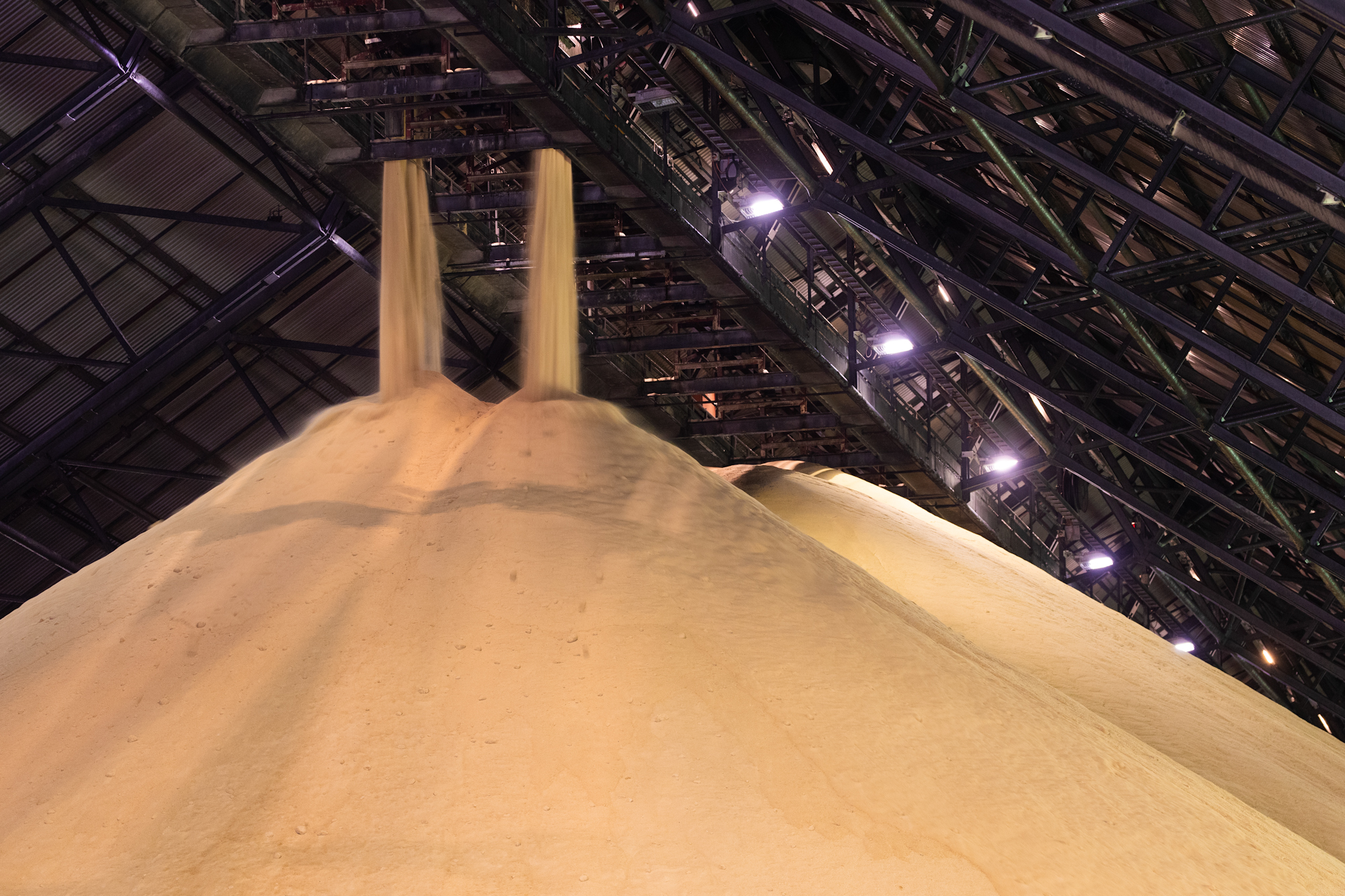
The Sugar Industry Code of Conduct protects growers’ ability to choose who markets their Grower Economic Interest sugar. Photo supplied
By Joseph Borg, Chairman, CANEGROWERS Mackay
A decade ago, Queensland Canegrowers was in the throes of a fierce defence of growers’ right to choice of sugar marketer. Now, the industry has been called to consider the future of the Code of Conduct that emerged from that industry debate.
Growers retain an interest in the sugar produced from their sugarcane, and in the 2010’s, the industry moved away from a single desk marketer model with new marketers emerging. Some industry players wanted growers to market only through their miller.
The situation was resolved through good support from some key politicians of the day – and particularly the then member for Dawson George Christensen – and through some strong and important industry tools including the 2015 “Real Marketing Choice” amendments to Queensland Sugar Industry Act, then at a Federal level in 2017 with the introduction of the Sugar Industry Code of Conduct.
The Code of Conduct requires parties to negotiate in good faith, and protects growers’ ability to choose who markets their Grower Economic Interest sugar, and provides access to pre-contract arbitration if negotiations break down.
This week, submissions closed in the review of the Code of Conduct, with the Australian Government to consider these and consider whether the Code be allowed to sunset as scheduled on 1 October 2027, or be retained as is, or with changes made.
CANEGROWERS is committed to the Code being retained in its current form.
In our view, the current Code continues to provide an essential and balanced framework that promotes fair dealing, transparency and workable commercial discipline across the sugar supply chain. The review is intended to examine whether the Code is meeting industry needs and objectives.
The Australian Government has described the Code as supporting fairness and transparency in commercial arrangements, and that objective remains as important today as when the Code was introduced in 2017.
The underlying market conditions that justified its introduction have not disappeared. In most cane-growing regions, growers cannot simply switch counterparties if negotiations fail. Cane is perishable, harvest windows are tight, and freight economics limit alternatives.
In that setting, the Code performs an important public policy function by establishing minimum rules of conduct and a framework for resolving bargaining impasses. Those protections are not redundant; they are fundamental to a fair negotiating environment.
Importantly, the current Code is not an excessive or unworkable intervention. It does not remove commercial risk, guarantee outcomes, or prevent parties from pursuing their legitimate commercial interests. Rather, it sets baseline expectations for conduct, transparency and process in circumstances where bargaining power is uneven. In our experience, that balance remains appropriate.
The Code provides a disciplined structure for negotiation while still allowing commercial parties to reach outcomes that reflect local conditions and business realities.
It is critical that the Federal Government upholds this important industry tool, allowing us to retain the Australian sugar industry’s good reputation as an equitable, stable player in global sugar trade.

What began with a simple community pantry and Friday morning pies outside the George Street Centre has grown into one of the Mackay region’s leading examples of sustainability in action. Recognised for turning surplus food into community support while keeping waste out of landfill, The Neighbourhood Hub recently received the Best in Business – It’s Not Easy Being Green award at the Mackay Region Chamber of Commerce Best in Business Awards on 29th May 2026.
The Neighbourhood Hub General Manager Nicolette Ffrost said the recognition carries great significance, particularly for the volunteers who have underpinned the program’s success.
“It means a great deal, because the work behind it is everyday work. Sorting, packing, collecting and carrying, week after week, almost entirely by our volunteers,” she said.
“This award belongs to them. The Program does not run without them, and seeing their work recognised at the Best in Business Awards was the best part of the night.”
At the centre of The Neighbourhood Hub’s environmental achievement is a streamlined and highly effective Food Diversion Program, delivered in partnership with SecondBite, local supermarkets, schools and producers. The initiative redirects surplus food that would otherwise go to waste, ensuring it reaches families and individuals in need across the Mackay region instead.
Since 2020, more than 150 tonnes of food have been diverted from landfill, which is equivalent to over 200,000 loaves of bread, or approximately 1.25 million bananas. Using Foodbank’s social return on investment methodology, the program has delivered more than $6 million in community value back into the region.
At The Neighbourhood Hub, environmental responsibility is not a standalone initiative, but an embedded part of daily operations.
“For us it is not a separate project, it is built into how we operate. Food rescue happens five days a week across our two centres, and we have an Environmental Ambassador at each centre,” she said.
“The two things go hand in hand naturally. Reducing waste and meeting community need turn out to be the same job.”
“The benefit runs both ways. Every tonne of food we divert stays out of landfill, and it also becomes a meal on a table for a family doing it tough,” Ms Ffrost said.
“Our Mid-Week Meal brings people together over food that would otherwise have been wasted, so the same program is cutting waste, easing pressure on household budgets, and connecting people to each other and to support at the same time.”
Looking ahead, The Neighbourhood Hub is focused on expanding the reach of its Food Diversion Program, strengthening partnerships and increasing the volume of food rescued across the region.
“We want to keep growing the Food Diversion Program: more partners, more food rescued, and more families reached,” Ms Ffrost said.
From those humble beginnings, The Neighbourhood Hub’s Food Diversion Program has grown into a far-reaching initiative now supporting a steadily increasing number of families across the region.
“The most rewarding part has been watching it come this far,” she said.
For more information, visit tnhub.org.au
For many families, the journey to senior schooling can feel overwhelming—but one upcoming event aims to make those important decisions clearer and more confident.
St Patrick's College is inviting Year 10 students and their families to attend its Subject Selection Evening on Tuesday, 23 June, at the Senior Campus Hall on River Street. The event marks the final step before students select their Year 11 subjects for 2027 and is designed to help families make informed decisions about future study and career pathways.
The interactive evening will provide students and parents with the opportunity to explore the College's wide range of senior subjects, speak directly with teaching staff and current students, and gain a deeper understanding of the opportunities available at the Senior Campus.
College staff will be available throughout the evening to answer questions, explain subject requirements and help families navigate the subject selection process.
The event follows the College's recent Senior Schooling Information Evening and builds on the message that there is no single pathway to success. Instead, students are encouraged to choose a program that aligns with their interests, strengths and aspirations.
Families whose children remain uncertain about their Year 11 subject choices are encouraged to seek additional support from the College. Personalised guidance is available through the Careers Counsellor to help students identify the pathway best suited to their goals.
Enrolments for 2027 Year 11 students at St Patrick’s College Senior Campus are now open.

Alice Evans has been appointed as MADEC’s new Chief Executive Officer, bringing more than 20 years of leadership experience to the role. Photo supplied
MADEC has announced the appointment of Alice Evans as its new Chief Executive Officer.
Ms Evans brings more than two decades of executive leadership experience across the disability, youth, community and health sectors. She has held CEO and senior executive positions within statewide and national organisations and is recognised for her commitment to person-centred, rights-based practice, strong safeguarding and quality systems, workforce capability, and sustainable organisational growth.
MADEC Chair, Patrick Wilsmore, said the Board was delighted to welcome Alice to the organisation.
“Alice brings deep sector experience, strong values alignment and a proven record of leading organisations through growth, reform and transformation. Her commitment to dignity, inclusion and community connection reflects MADEC’s purpose and the expectations of the communities we serve.”
Alice will work closely with outgoing CEO Jasmine Lowry and the Senior Leadership Team during her induction and was able to participate in MADEC’s recent strategic planning review.
Alice said she was honoured to join MADEC at such an important time.
“MADEC has a proud 50-year history in the Mackay and Whitsunday regions. I am looking forward to listening, learning and working alongside staff, clients, families and partners to build on this strong foundation and ensure MADEC continues to deliver safe, high-quality, person-centred services.”
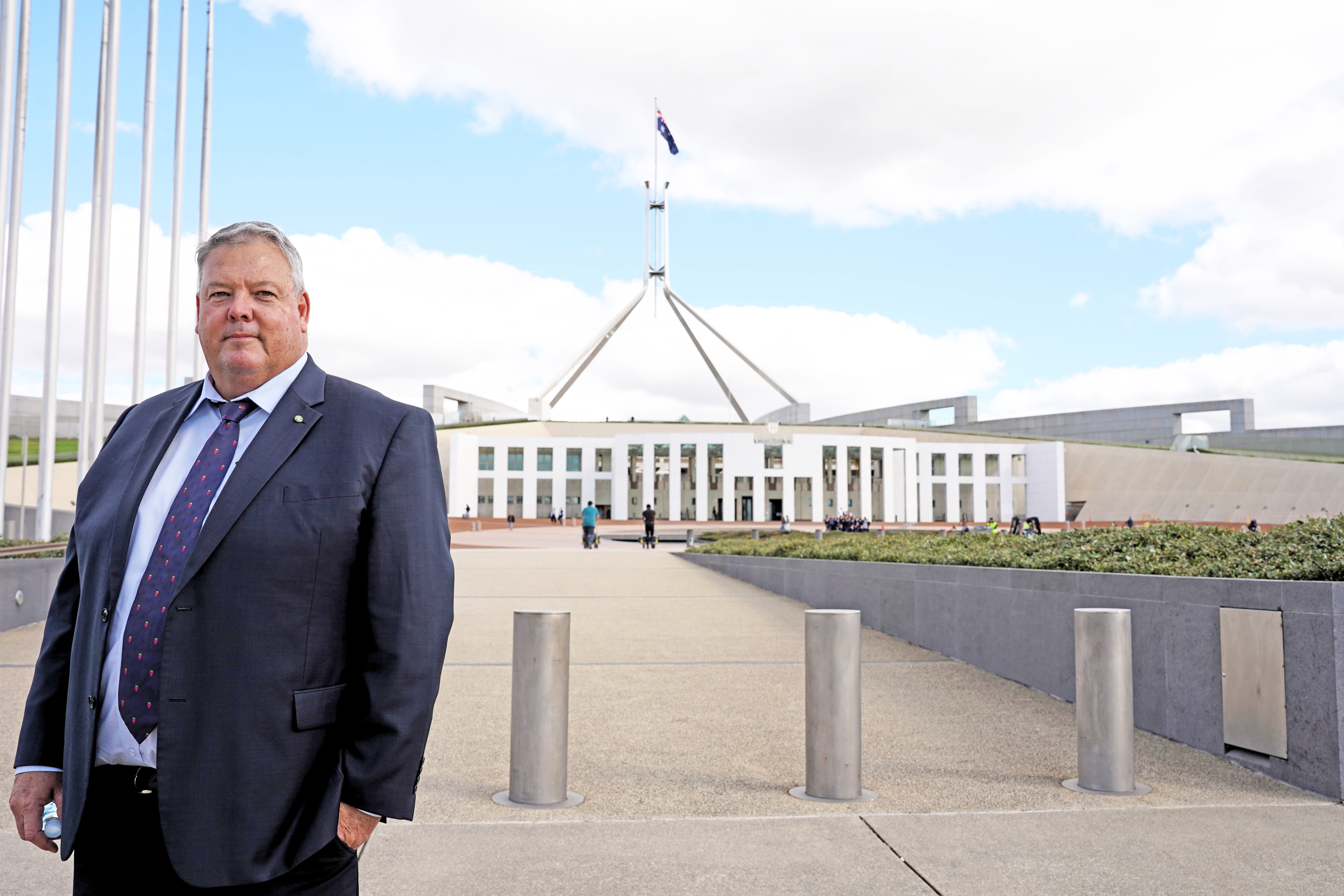
FIGHTING FOR THE NORTH: Federal Member for Dawson Andrew Willcox MP outside Parliament House in Canberra, condemning the Albanese Federal Government's plan to slash scalable disaster recovery funding for regional councils. Photo supplied
Opinion Piece from Federal Member for Dawson, Andrew Willcox
The Federal Member for Dawson, Andrew Willcox, has slammed the Albanese Government for an unacceptable ambush on regional communities, accusing the Commonwealth of abandoning disaster-prone areas to balance its own budget.
The Federal Minister for Emergency Management, Kristy McBain, used a late Friday afternoon media release to quietly flag sweeping alterations to the Disaster Recovery Funding Arrangements (DRFA).
The proposed changes dismantle the long-standing, scalable framework, which historically provided an average of 64 per cent federal coverage and capped support at 75 per cent for catastrophic events. In its place, Canberra intends to implement a rigid 50-50 funding model.
This policy shift arrives at the worst possible time for the state; it follows a volatile severe weather season that caused widespread damage across 71 of Queensland’s 77 local government areas.
Federal Member for Dawson, Andrew Willcox, is warning that the sudden funding shortfall threatens the future viability of essential infrastructure, local water treatment facilities, and emergency evacuation operations.
Mr Willcox, drawing on his extensive experience as the former Mayor of the Whitsunday Regional Council, stated that the Federal Government is completely detached from the realities of regional recovery.
"This decision is a direct hit to the heart of North Queensland," Mr Willcox said.
"Canberra is treating natural disasters like a corporate budgeting exercise; however, out here, it is a matter of community survival. To penalise the very regions that drive the nation’s agricultural wealth and mining export revenues is a profound betrayal.
"During my time steering the Whitsunday community through the wreckage of Severe Tropical Cyclone Debbie in 2017, I learned exactly what it takes to rebuild. We relied heavily on scalable federal assistance to restore our shattered rural road networks.
Under a flat 50-50 split, local councils across Dawson would be forced to find millions of dollars in matching revenue; that is a financial burden our regional ratepayer base simply cannot sustain."
Mr Willcox emphasised that major historical recovery operations would have been completely unviable under the newly proposed guidelines.
"The total reconstruction of the Shute Harbour marine terminal and the $5 million federal package required to replace the decimated Proserpine Entertainment Centre occurred because the previous framework allowed for exceptional circumstances," Mr Willcox said.
"Small regional councils do not possess the independent asset base to fund multi-million-dollar rebuilds alone. Furthermore, the historical system guaranteed that funding flowed directly into local economies, ensuring that regional earthmoving businesses and contractors were awarded the repair work.
By lowering the funding floor, the Commonwealth is forcing cash-strapped councils to delay vital resilience works; this leaves our communities dangerously exposed before successive wet seasons.
"It is a coward’s tactic for the Minister to leave this announcement until the day after the parliamentary sitting concluded, ensuring they avoided any real scrutiny or accountability in Question Time.
“This is yet another calculated deception from a government that knows exactly how damaging these cuts are; this is absolutely not what the Australian people voted for, and I truly hope this betrayal is remembered at the next election.
"This is yet another chapter in the ongoing federal neglect of regional Australia. The government is hiding behind the cover of an independent review to justify cutting essential frontline services. I call on the Emergency Management Minister to reverse this decision immediately; regional Queenslanders refuse to be treated as second-class citizens.”
Supplied by the office of Federal Member for Dawson, Andrew Willcox

When I first ran for Mackay Regional Council, one of the issues I heard most often from residents was rates.
People wanted to know how decisions were being made, whether council was operating efficiently and whether every opportunity was being taken to ensure value for money.
It was one of the reasons I put my hand up for council.
Over the past two years, I have spent a great deal of time learning about the budget process and asking questions about how council operates financially. What I have learned is that local government budgets are complex, involving hundreds of services, projects, assets and responsibilities that support our community every day.
I have also learned that good financial outcomes do not happen by accident. They come from examining the detail, challenging assumptions and continually looking for opportunities to do things better.
One of the concerns I regularly hear from residents is whether council is operating as efficiently as it can. These are valid questions, and they are questions councillors should continue asking.
While important work has been done to improve budget scrutiny and accountability, I believe there is always room for improvement. As technology evolves and new ways of delivering services emerge, council must continue looking for opportunities to improve efficiency, modernise processes and ensure we are achieving the best possible value for ratepayers.
The upcoming budget is one of the most important decisions councillors make each year. It is about balancing the services and infrastructure our community relies upon with the cost pressures being experienced by households, retirees, farmers and businesses across our region.
My commitment remains the same as it was when I first sought election: to ask questions, carefully consider the options before us and ensure the interests of Mackay ratepayers remain at the centre of every decision.
At the end of the day, every dollar matters.
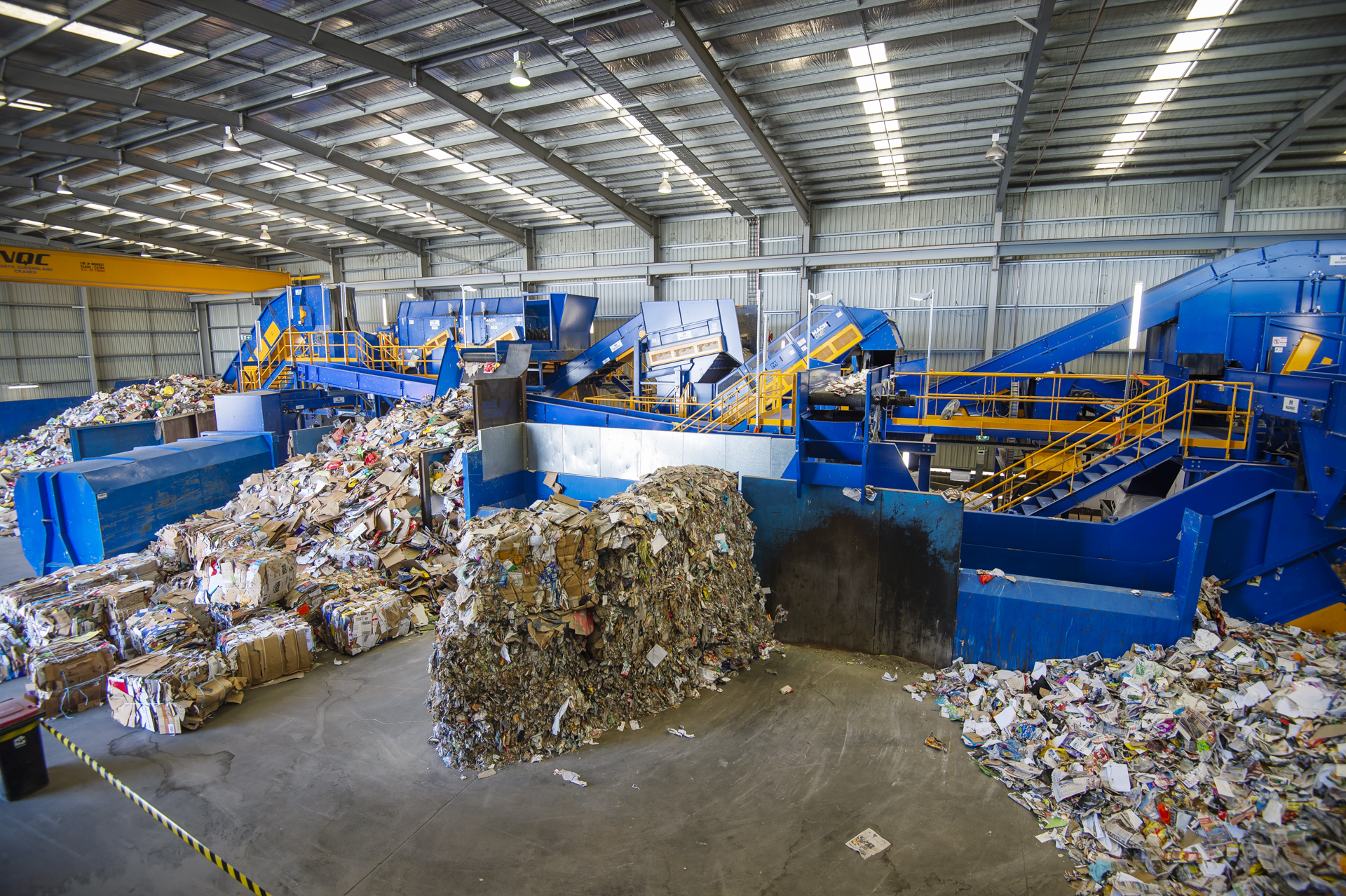
Recycling processing to move to Townsville’s newer facility. Photo supplied
Mackay Regional Council is investigating innovative and cost-effective ways to reduce waste and improve recycling outcomes as Australia works towards ambitious national waste reduction targets.
The nation has set a goal of diverting up to 90 per cent of waste from landfill by 2030; however, all states and territories are currently falling short of that target.
In response, Mackay Regional Council is exploring proactive measures aimed at reducing reliance on landfill, and looking to be a leader in this space.
Mayor Greg Williamson said council had been investigating pathways to improve waste management sustainability.
“Mackay, like all councils across Queensland, is facing rising waste volumes, increasing landfill costs and tighter environmental expectations. Being reliant on landfill is not sustainable in the medium to long term,” Mayor Williamson said.
“Council is enhancing its recycling capabilities by transitioning the ageing Paget Material Recovery Facility (MRF) into a bale and transfer station where recyclables will be lightly bundled and transferred to Townsville’s much newer MRF, operated by Re.Group,” he said.
“This will allow us to leverage advanced technology to maximise landfill diversion and support a growing resource recovery industry.”
Mayor Williamson said cost-effectiveness was also a driving factor.
“As the cost of everything increases, we need to adapt to ensure our money is going as far as possible,” Mayor Williamson said.
“This new approach will reduce costs by sharing the operational burden of a modern recycling facility across Mackay, Whitsunday and North Queensland regions,” he said.
“When we went out for tender in late 2025, Re.Group’s proposal to bundle recycling locally and transport it to Townsville for processing was by far the most cost-effective option.”
The partnership also provides access to advanced processing infrastructure and international recycling markets, ensuring materials are responsibly turned into new products.
Re.Group Managing Director David Singh said materials from Mackay would begin transferring to Townsville within the month.
“Consolidating recyclables at our Townsville facility achieves the scale that allows advanced equipment and technology to process recyclables into high-quality materials which can be reused in new products,” Mr Singh said.
“This facility has the capacity to process 30 thousand tonnes of recycling material and onsite we produce high quality paper and cardboard, ferrous metals and aluminium, glass sand and plastics,” he said.
“These products are then put to market to be remade into new products made from glass, paper cardboard and plastic.”

Tough new e mobility laws will take effect from July 1st as rising injury rates and community concerns prompt a crackdown on unsafe e-scooter and e-bike use across Mackay and Queensland. Photo credit: Hannah McNamara
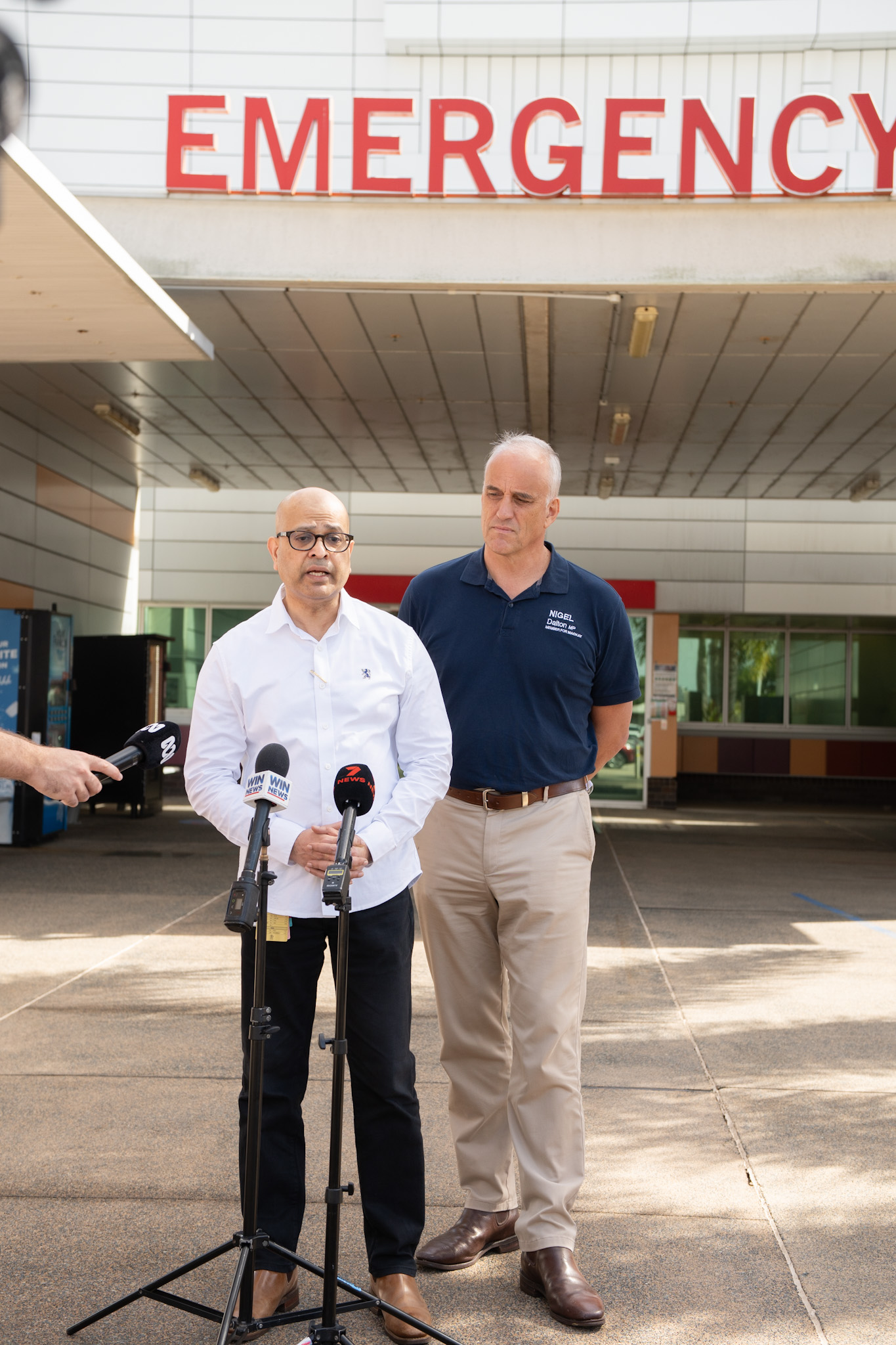
Member for Mackay Nigel Dalton has addressed the escalating number of e-scooter related injuries across the region, with 107 people presenting to Mackay emergency departments last year following incidents involving personal mobility devices.
The figures equate to more than two injuries every week locally and form part of a state-wide trend that saw more than 3,000 people treated in Queensland emergency departments.
In response, a suite of tougher laws will be introduced, aimed at improving safety and reducing the growing number of preventable injuries.
From July 1st police will have powers to seize and destroy illegal devices, conduct random breath tests on riders in public places, and enforce higher penalties for offences including speeding, failing to wear a helmet, careless riding, illegally carrying passengers and riding on prohibited roads.
New restrictions will also ban e-bikes and e-scooters capable of exceeding 25km/h unassisted, while a 12km/h speed limit will apply in areas shared with pedestrians.
Licensing requirements for riders will come into effect from August 31st, with exemptions available for people with medical conditions or disabilities. Riders aged 12 to 17 will be permitted to use e-mobility devices under parental supervision, while parents of children under 16 who are found riding illegally will be held accountable.
Riders found over the 0.05 blood alcohol limit could face fines exceeding $500, with maximum court penalties of up to $6,908.
Mr Dalton said the changes were necessary to address a growing safety concern.
"To see people coming in here with injuries which could easily be prevented is very sad."
"It means pressure on the hospital, pressure in workplaces when people return to work, and pressure on schools and families."
Mr Dalton said the impacts were particularly concerning when children were involved.
"I've recently been to a school in Mackay where two children have been injured this week and suffered broken bones."
"It's going to slow down their learning and put pressure on their family for transport."
He said community frustration around unsafe riding behaviour had also contributed to the push for reform.
"People in Mackay are fed up with footpaths being dominated by e-scooters and e-bikes."
"They're fed up with e-scooters and e-bikes travelling in places and directions that are not appropriate and are unsafe."
Dr Syed Khadri, Clinical Director of the Mackay Base Hospital Emergency Department, said injury presentations had risen sharply over recent years.
"In 2020 we had about five presentations to the Emergency Department. Last year we had close to 107, and the year before that we had about 40."
"The numbers are increasing quite rapidly."
The new laws are expected to take effect in stages from July 1st.
%5B60%5D.jpg.jpeg)
Sponsored
The recent cyber security incident affecting Mackay Sugar has highlighted the growing threat cyber criminals pose to businesses and critical infrastructure across regional Australia.
Mackay Sugar, Australia’s second largest sugar manufacturer with an annual turnover exceeding $600 million, operates the Farleigh, Marian, Racecourse and Pleystowe mills across the Mackay region.
The company first announced on June 10th that it was responding to a cyber security incident affecting some of its operations.
Since then, Mackay Sugar has issued several updates, with its latest statement on June 15th.
Part of the statement read, ‘Steam trials are now underway, and subject to final validation activities, some harvesting is expected to recommence this week in preparation for the staged restart of crushing operations later this week. We have taken the responsible course of action in advising growers and harvesters not to recommence harvesting until we advise them to do so.
‘Our ongoing priority remains the safety of our people and protecting operational systems. Specialist cyber security experts continue to work alongside our teams and relevant authorities to investigate the incident and restore systems safely.
‘We have also reported the incident to the appropriate authorities, and we will continue to adhere to our regulatory obligations.’
In an interview with Rob Kidd from ABC Tropical North, Jason King of Regional Queensland Investigations discussed how cyber attacks unfold and why regional businesses are increasingly being targeted.
Mr King, a former Australian Federal Police Agent who specialised in fraud and cyber-crime at their headquarters in Canberra, holds a Security Firm Licence (Class 1), a Bachelor of Computer Science, Master of Laws (LLM), a Bachelor of Laws (LLB) (Hons), said the nature of cyber-attacks can vary significantly.
He noted that cyber attacks do not always follow the same pattern and may begin with warning messages appearing on computer screens, or result in systems suddenly becoming inaccessible or completely inactive, depending on the nature of the attack.
Speaking during the interview with Rob Kidd, King said Mackay Sugar's extensive operations make it an attractive target for cyber criminals.
"They do everything at Mackay Sugar and Farleigh, and at Racecourse… and it goes off to market, you've got so many different players in it, you've got your workers here, you've got your sugar growers, you've got your cane trains, and you've got so many different elements to that operation.
“It can bring the industry to its knees."
Unfortunately for businesses, and even individuals, cyber attacks are increasingly on the rise.
"There's always been an increase. It's been like this for the last 10 years, but hackers get more intelligent. They understand how to get past certain firewalls, some security."
"Regional communities have experienced even more of an increase. They realise they can go outside the cities now because we've got big infrastructure here. We’ve got power stations. We've got the sugar industry."
Drawing on his extensive experience, Mr King said cyber security threats are constantly evolving. He explained that the motivations behind attacks can differ, ranging from operational disruption to the theft of valuable information.
Mr King also noted that cyber attacks can have different objectives, including operational disruption and data theft. Adding to this, he said that while the exact circumstances surrounding the Mackay Sugar incident remain unknown, organisations should avoid revealing details publicly while investigations are ongoing.
He also offered advice on how organisations should respond to ransomware attacks.
"My advice for Mackay Sugar is try and find out where that data breach came from. Roll it back, fix it. If they don't fix it, it'll happen again, and it'll happen even worse."
He went on to say that businesses of all sizes should treat cyber security as an essential investment rather than an afterthought.
"Make sure you've got a competent IT security [systems] for a start, and make sure everything is updated.”
"You've got to be proactive when it comes to cybersecurity, not reactive."
Overall, Mr King stressed that no organisation is too small to become a target.
"You might have a business of three people, but you're still prone to any cyber attack, just like Mackay Sugar, the Australian Government, Optus, whoever."
Mr King is now encouraging businesses and individuals alike to remain vigilant, noting that cyber security threats continue to impact organisations of all sizes across regional Australia.
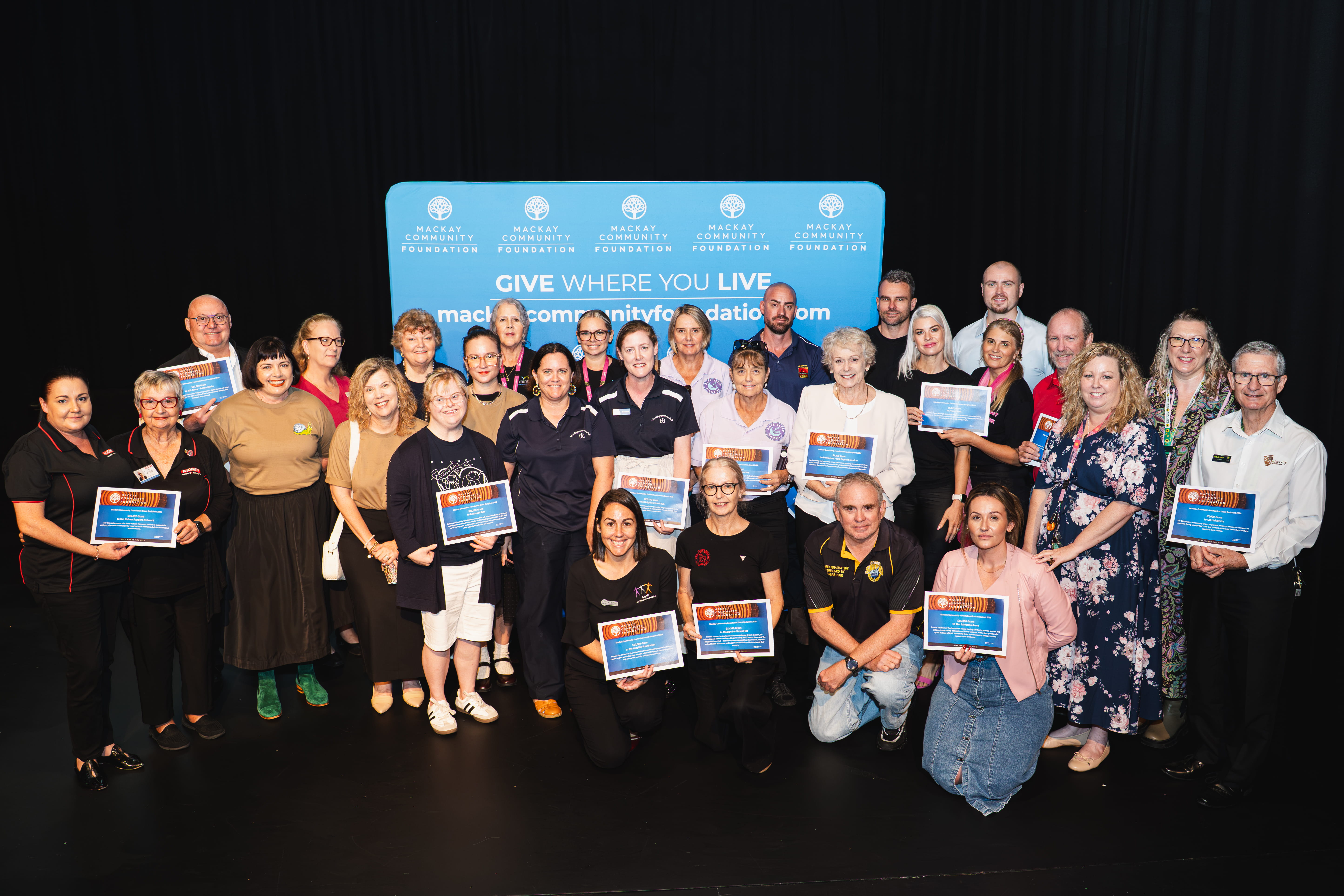
Community wellbeing, accessibility and cultural connection will be strengthened across the region through Mackay Community Foundation’s 2026 Grants Program, with more than $247,000 awarded to 16 local non-profit organisations.
Funded projects include community gardens, emergency relief initiatives, cultural spaces, youth programs and community infrastructure aimed at improving inclusion, accessibility and community participation.
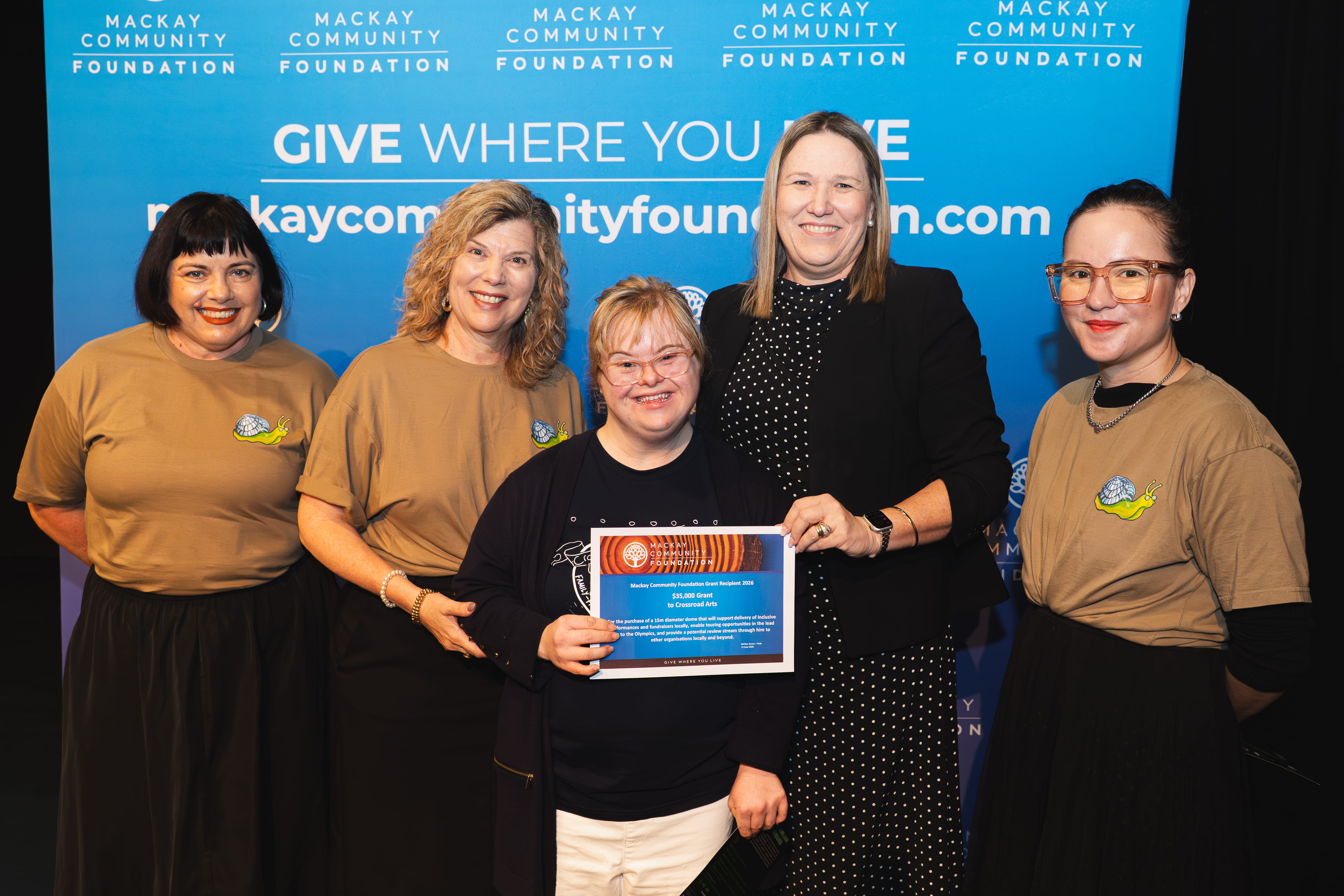
Mackay Community Foundation Chair Melissa Green announced that this year’s recipients reflected a growing focus on projects that create long-term value for the wider community.
“Many of these organisations are thinking beyond their immediate organisations and looking at how their projects can create broader opportunities for community use,” Ms Green said.
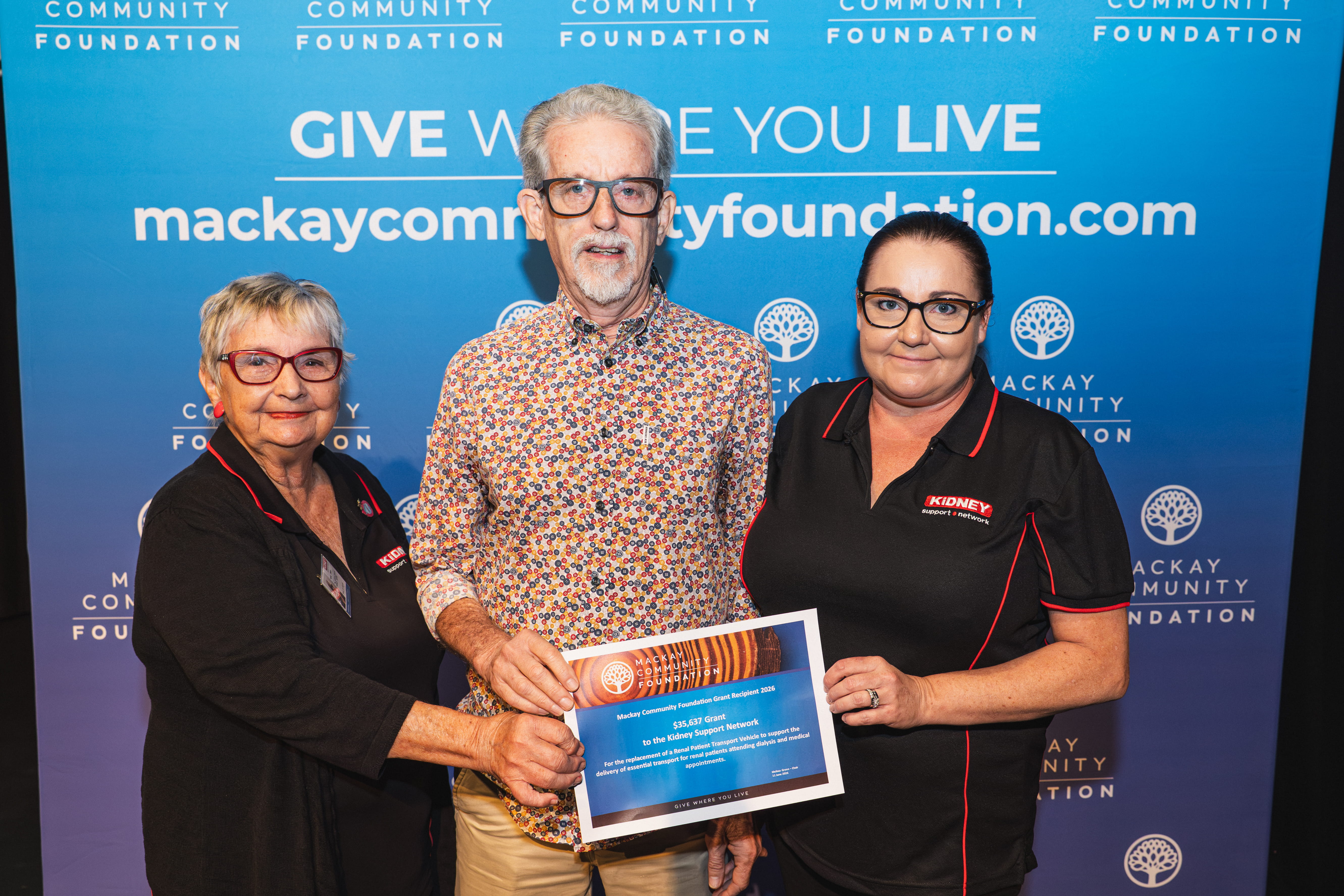
“Many of these grants' recipients are thinking beyond the needs of their immediate organisations and strategising how the benefits of their projects can extend beyond their own clients’ needs and into the broader community.”
Among the 2026 grant recipients is Crossroad Arts, with Mackay Community Foundation contributing $35,000 towards the delivery of a 15-metre diameter dome designed for local large productions and community events.
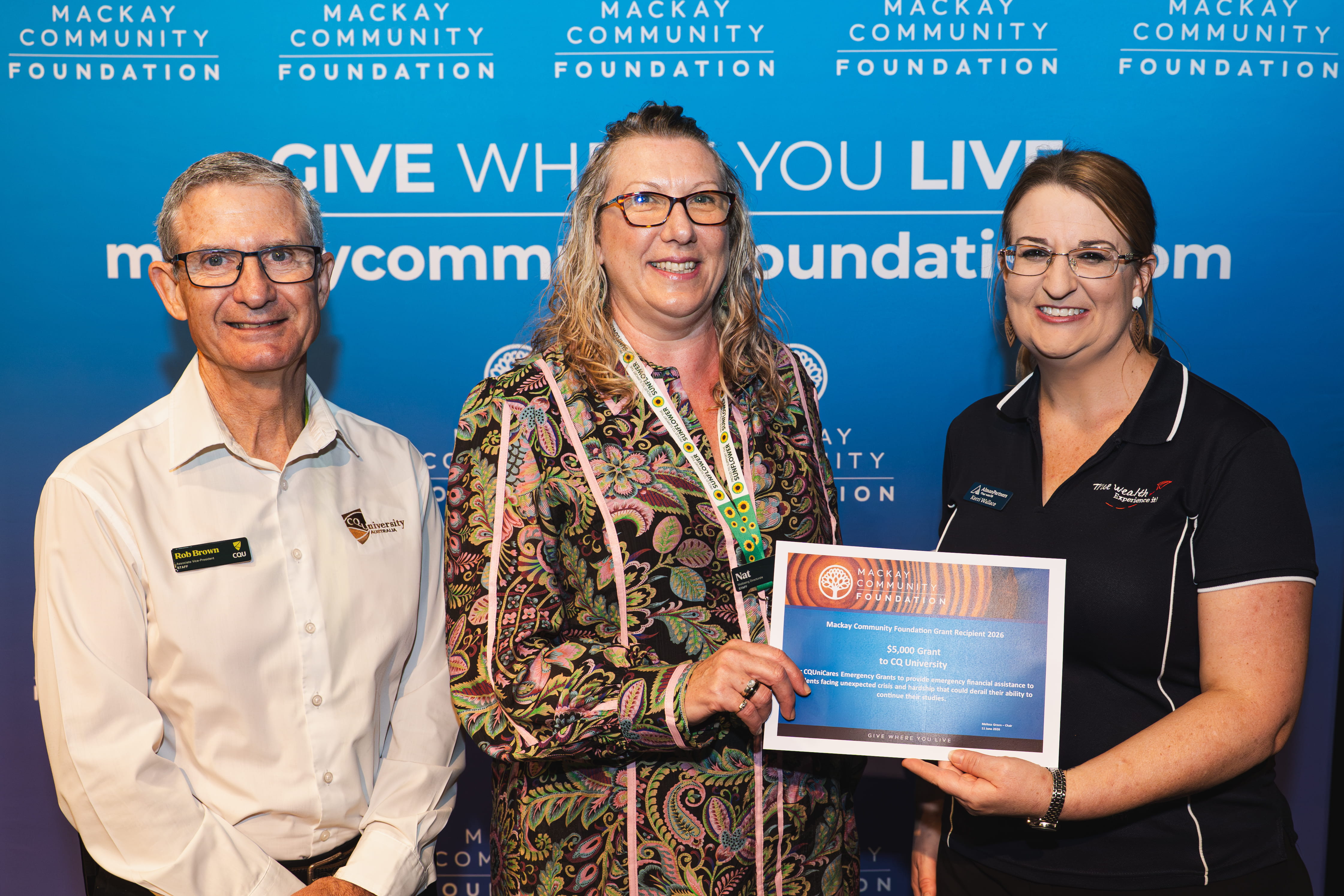
Crossroad Arts Artistic Director Autumn Skuthorpe said the vision behind the dome was “centred on creating more inclusive and accessible experiences for the community”.
“Through this project, we’re creating something that not only supports diverse artists and audiences, but something the wider community can experience,” Ms Skuthorpe said.
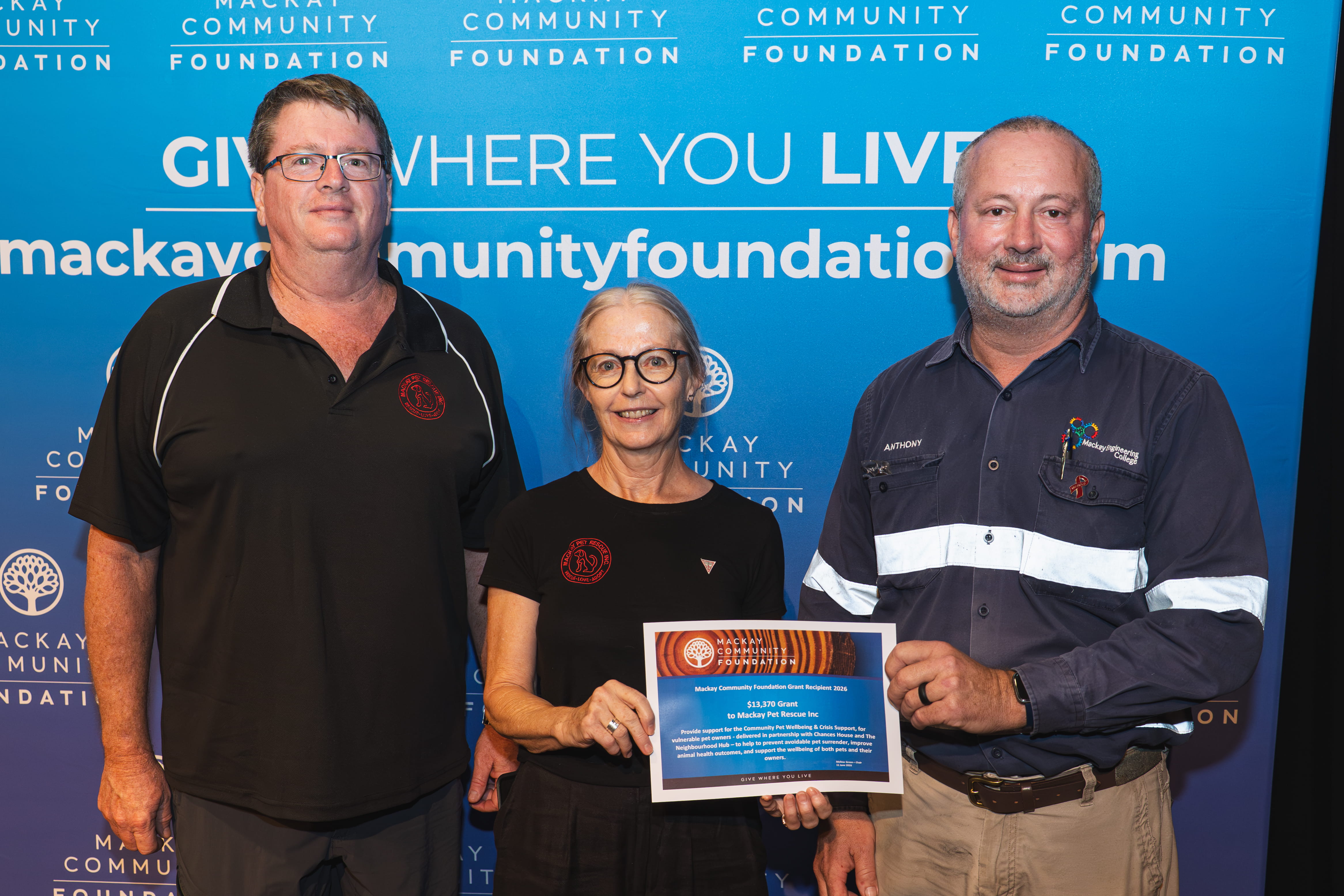
“Our long-term vision is to provide a versatile community asset that can support future touring opportunities across Central-North Queensland, and activate public spaces, which will contribute to Mackay’s growing art cultural identity.”
Community members interested in supporting future local initiatives can visit the foundation at www.mackaycommunityfoundation.com.
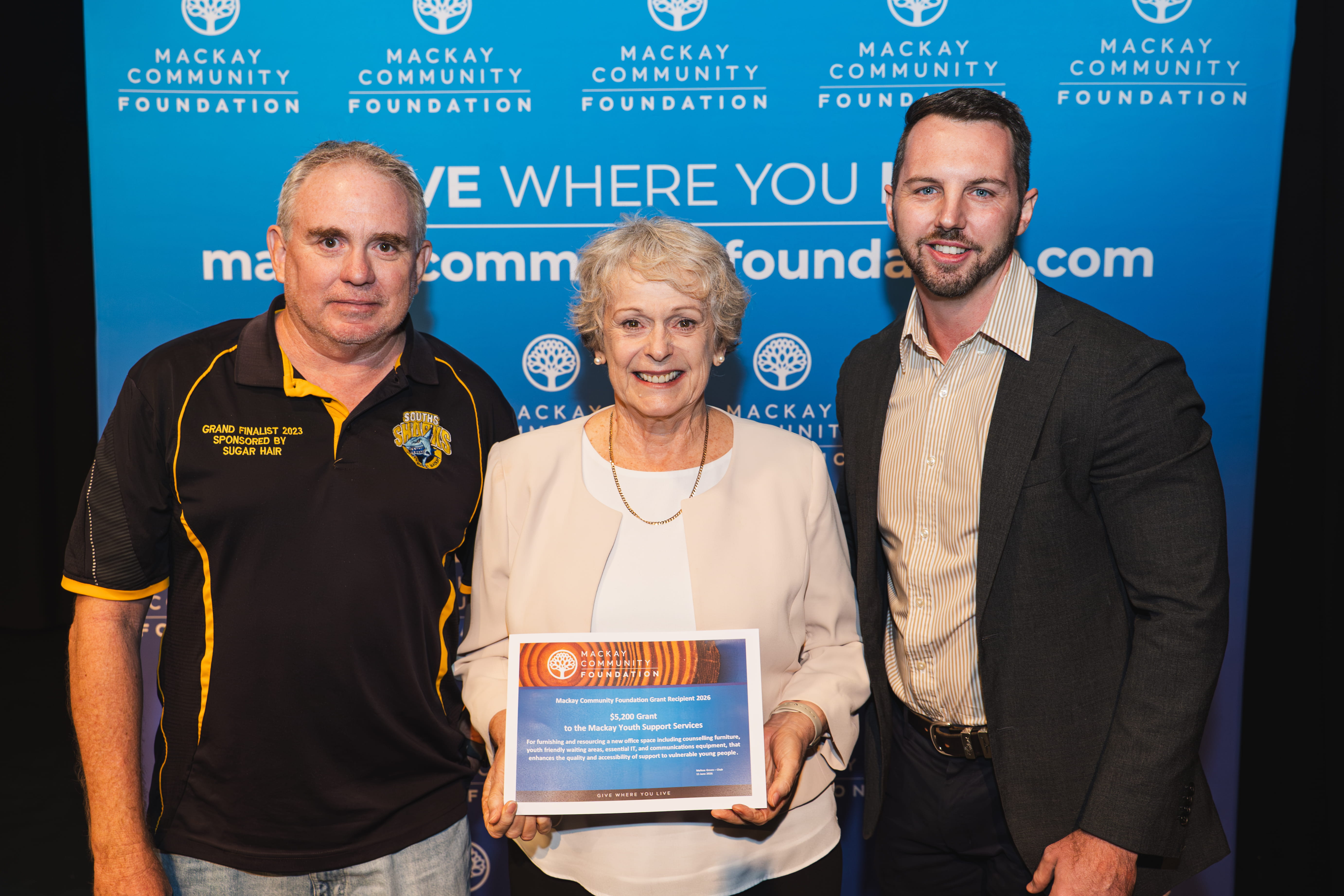
Businesses interested in learning more about the ‘Mackay, Give Where You Live’ employee giving program are encouraged to contact the Mackay Community Foundation at admin@mackayfoundation.com.au.
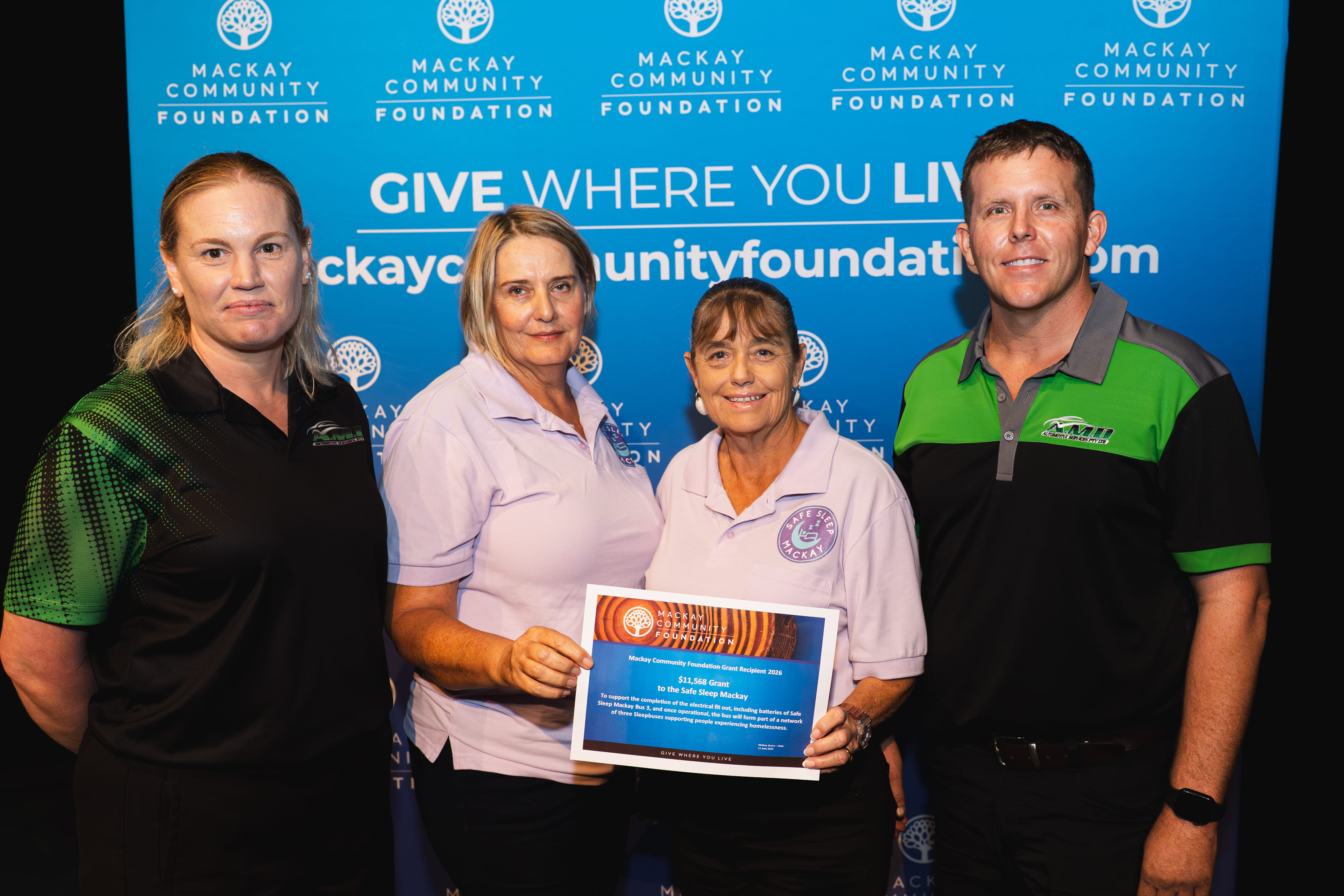
CASA Mackay — $21,818 — New mobile outreach vehicle to strengthen the ability to offer housing services.
Clontarf Foundation — $9,375 — Driver training opportunities for Aboriginal and Torres Strait Islander young men.
CQUniversity — $5,000 — Provide financial assistance to students experiencing unexpected hardship.
Crossroad Arts — $35,000 — 15M diameter dome for large-scale productions.
Kidney Support Network — $35,637 — Replacement vehicle for patient transport service.
Mackay Pet Rescue Inc — $13,370 — Assist in preventing avoidable pet surrenders.
Mackay Surf Life Saving Club — $15,000 — Replacement of the Surf Club’s roof.
Mackay Youth Service — $5,200 — Furnishing and resources of essential office IT and equipment.
Mind Australia Limited — $18,730 — Creation of the Yarning Circle and cultural garden.
My Hospital Foundation — $10,000 — Advanced imaging machine for breast cancer surgery.
Project Pink — $8,045 — Purchase essential training equipment for youth boxing program.
RSL Cares — $12,000 — Cyber safety program for seniors.
Safe Sleep Mackay — $11,568 — Support the completion of the battery fit-out of Sleepbus 3.
The Held Project — $9,773 — Wellbeing bags for mothers experiencing isolation.
The Neighbourhood Hub — $22,230 — Staff training for evidence based parenting programs.
The Salvation Army — $15,000 — Create a safe, welcoming healing garden for women and children.
More than $247,000 has been awarded to 16 local non-profit organisations through the Mackay Community Foundation’s 2026 Grants Program to support projects that strengthen wellbeing, accessibility, inclusion and community connection across the region. Photos supplied

A mum has shared gratitude for a local family who stepped up to support her son after a minor accident. Photo source: Shutterstock
A grateful local took to Facebook this week to thank kind strangers who stepped in to provide support to her son in a stressful situation.
The young man was parked up with his friend when another group of youths hit his car, and unfortunately drove away.
Exercising extraordinary grace, the mother expressed that she was not writing to shame the perpetrators, as fear may have been the reason for their quick escape.
Instead, she highlighted the kindness shown by a family who approached her son and his friends to check they were ok.
“You didn’t know them personally, yet you chose to stop, check on them, comfort them, and even take the licence plate details of what happened outside,” the mum shared.
“To the parents of that family — you raised beautiful souls. Your kindness reflects the values you taught at home, and it shows.
“Thank you for reminding us that there are still genuine people in this world who care for others without expecting anything in return.
“May life return your kindness tenfold. May you and your family always be surrounded with love, protection, and blessings. From one grateful parent to another, thank you immensely for being our son’s guardian angels that evening. Please stay safe always.”
The words remind us that when a young person is rattled by the realities of the world, we’re lucky to have parents and neighbours nearby that will step in and help – whether it’s their own kid, or a total stranger.
.jpg)
The Mackay community recently came together to draw attention to World Elder Abuse Awareness Day (WEAAD), a global event observed on 15th June.
Prior to the day itself, a Stir A Cuppa event was held at Harrup Park, encouraging open conversations about the safety, dignity and wellbeing of older Australians.
The event, supported and sponsored by Daly Bay via their Community Grants Program in partnership with Relationships Australia and Mackay Regional Council, provided a relaxed and welcoming setting where attendees shared a cup of tea or coffee while learning about the realities of elder abuse and how individuals and communities can play a role in preventing it.
.jpg)
Elder abuse can take many forms, including financial exploitation, emotional or psychological harm, physical abuse, neglect or social isolation.
Often underreported, elder abuse remains a significant issue affecting the health, independence and quality of life of older people across Australia.
Events like Stir A Cuppa are designed to break the silence and empower communities with the knowledge to recognise warning signs and take action.
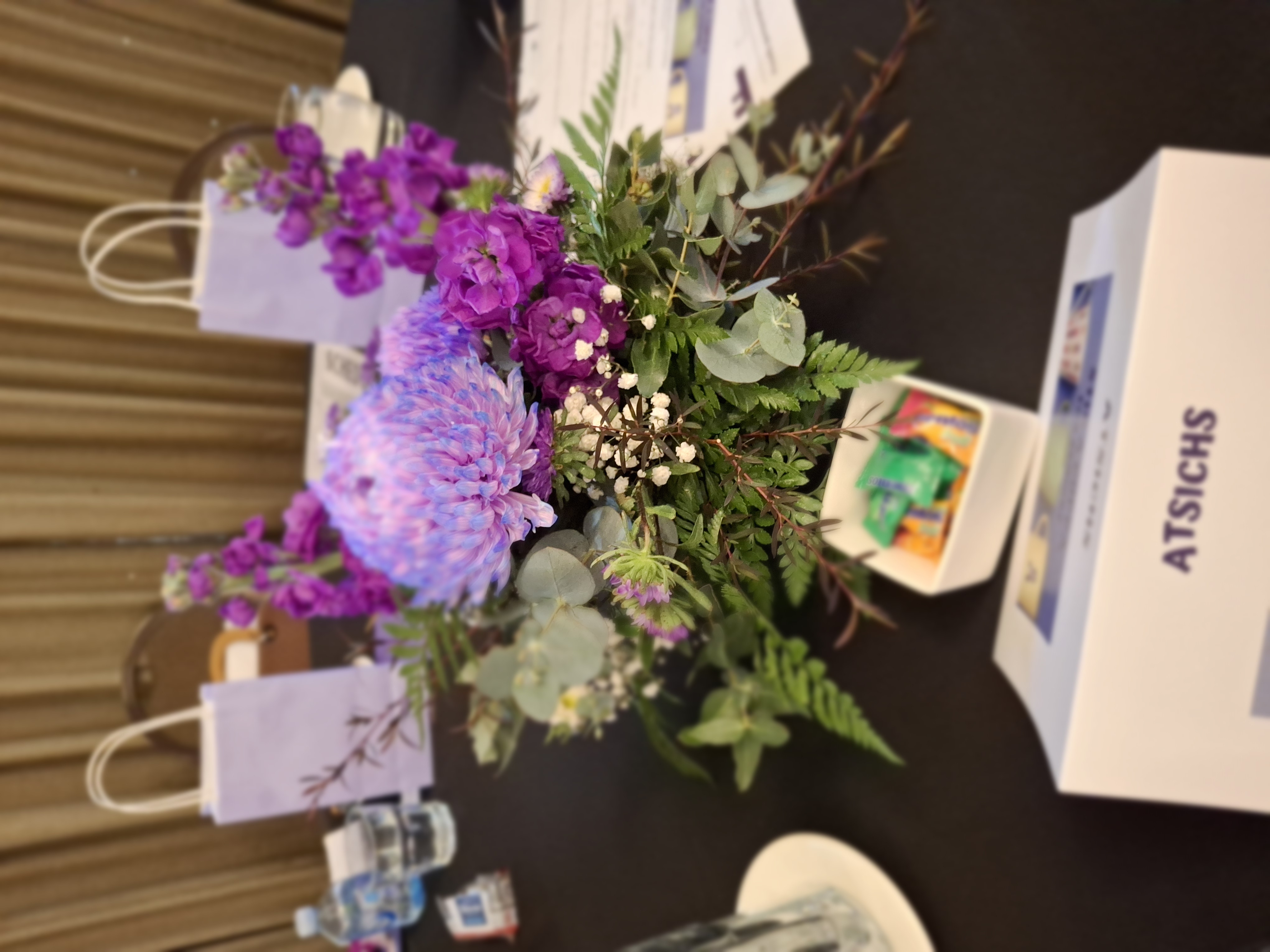
Together, these organisations are committed to supporting initiatives that promote the wellbeing and safety of older people in the Mackay region.
For more information on World Elder Abuse Awareness Day head to elderabuseawarenessday.org.au/
Publishers Indemnity. Any individual or entity that places advertising, supplies copy material, or submits editorial content to Core Life Publishing agrees and undertakes to ensure that all such material:- Does not infringe upon any copyright, trademark, or other intellectual property rights;- Is free from any content that could be considered defamatory, libelous, or slanderous;- Does not infringe upon any rights related to privacy or breach of confidence;- Contains no obscene, indecent, or otherwise unlawful material;- Complies fully with the Trade Practices Act and all other applicable laws, regulations, or statutes.Furthermore, by submitting or placing such material, these individuals or entities agree to indemnify and hold harmless the publisher, Core Publishing and Events Pty Ltd, and/or its agents from and against any and all investigations, claims, demands, liabilities, damages, costs, or judgments arising out of or in connection with the material provided. All material is believed to be accurate at the time of printing and remains the copyright of Core Publishing and Events Pty Ltd.
© 2026 Mackay and Whitsunday Life Pty Ltd.
