
Independently Owned, Locally Grown, Community Loved

OPINION PIECE from the office of Federal Member for Dawson Andrew Willcox There is no question that immigration into Australia is out of control. The government’s numbers are too high, and standards are too low. A sustainable migration program must consider our capacity to provide housing, healthcare, infrastructure and the essential services everyone relies on, and Australians must come first. But Labor’s decision to target Working Holiday Makers Visa holders is not the answer. These people filling vital gaps in our workforce are not the cause of Australia’s housing crisis. In many cases, they are living in accommodation provided by the very businesses that employ them. The National Farmers’ Federation has made the point that Working Holiday Makers generally stay in hostels, caravan parks or purpose-built on-farm accommodation. Resorts usually have on-site staff quarters. They are not the source of Australia’s housing shortage. So why is Labor making it harder for them to come here, when these workers fill genuine jobs that regional Australia holds? Working Holiday Makers fill approximately one in seven farm jobs nationally and are particularly important during peak agricultural periods, which for Dawson, it is right now! Farmers rely on these workers to plant, pick, pack and harvest the produce that ends up on Australian supermarket shelves. Having run one of Australia’s largest tomato farms, at times Working Holiday Makers made up more than 50 per cent of my workforce. Without them, much of our crop simply would not have been picked in time and rotted in the paddock. Some may say, why not employ the Australians who don’t have a job and are on “the dole”? Can I say, this does not work. Most farmers will employ Aussies over travelling backpackers, but many either don’t want to do the work or don’t turn up after the first day. Who picks the fruit or veggies then? Farmers are already warning that visa delays are leaving them without workers. The NFF says approvals that once took days are now facing processing times of up to three months, and this time frame can be the difference between harvesting a crop or losing it. That should concern every Australian already feeling the pressure at the supermarket checkout. The same problem is playing out in tourism. Across Dawson, Working Holiday Makers are an important part of the workforce supporting tourism and hospitality, particularly in the Whitsundays. They help fill shifts, work in hotels and restaurants, support tour operators and keep businesses running through their busiest periods. They also contribute to the local economy. They spend money on food, fuel, attractions and tours, supporting the small businesses that depend on a strong visitor economy. That is why tourism and business leaders across North Queensland are raising the alarm. They understand what happens when a regional business cannot get enough staff: opening hours are reduced, and services are cut, creating a downward spiral. We do need to reduce migration to sustainable levels. We need stronger integrity measures, and we need to crack down on rorts. But responsible migration policy means understanding which parts of the system are creating pressure and which parts are helping Australia function. Working Holiday Makers are not the problem. They are part of the workforce solution for regional. Australia. People have had a gutful of watching their standard of living go backwards. Groceries, fuel, housing and everyday expenses are already putting enormous pressure on families. The last thing Australians need is another reckless policy that makes it harder to produce food, harder to run regional businesses and harder for tourism operators to find the workers they need.
Read the full storySomeone sold a house in Sydney last week for $9 million less than they bought it for four or five years ago. The sellers had bought the property in Sydney’s eastern suburbs for $29 million and sold it for $20 million in a sale forced by their bank. I imagine the sellers are a little disappointed by the government’s decisions on negative gearing and capital gains tax and feeling pretty hurt by the increased interest rates. Australia’s interest rates are on the rise and are now sitting at levels not seen since 2011. Increased cost of living is hurting people around the country and interest rates are playing into that. But the impact of interest rates is not felt evenly around the country. The far-higher property prices mean people in the major cities suffer much more than regional areas with the rates increase. That is certainly not to say people in Mackay are unaffected by the cost of living; it’s just that the impact of interest rates increase on a $400,000 mortgage is much less than the impact on a $1m mortgage. There are other Mackay-specific factors that are in play when discussing the current housing market. The big factor is the role of coal in our economy. Most of the coal extracted and exported from our region is coking coal, which is used to make steel. The price of coking coal is around $280 a tonne, which is about 50 per cent up. Good activity in the coal market translates to good news for the Mackay economy, as it is an economic engine that other cities and regions just don’t have. Good activity in Bowen Basin flows throughout the Mackay economy; Paget workshops, transport, suppliers and related businesses all benefit. But so do other, non-mining-related businesses as they benefit from the general confidence and spending that goes on. The strong mining activity also means mines need to keep their staff levels up and that means more people moving to Mackay. Of course, Mackay is much more than a coal mining town but if the coal sector is going well those other areas definitely benefit. It is a confidence boost for Mackay people looking to get into the housing market and those wanting to upgrade or downsize. It also means continuing strong demand from people wanting to rent a property and it will be interesting to see what sort of activity that creates from investors. Investors have walked away from the big-city markets because they can no longer use negative gearing on established properties that do not have a sufficient yield to be positively geared. Negative gearing has never been a big thing in Mackay because our prices are lower and rental returns continue to be strong so many investors have a positively geared property. Around the country everyone is nervous about the state of play and the probability of more interest rate rises. But strong coal prices and an economy that is performing well mean Mackay might just be presenting an opportunity for buyers and sellers that doesn’t exist in other parts. I remember when national confidence was flying high and Mackay prices were going up significantly that many buyers were saying “I wish we had bought a while ago when the market wasn’t so hot”. I’m not armed with a crystal ball so I’m not here to tell you what is going to happen but I suspect there is a very good buying window right now for those looking for an opportunity.
Read the full story
A local Mackay and Sarina based model has created a dress out of newspapers, including Mackay Life, for her upcoming pageant, representing her region and hometown on the runway as she vies for Miss Diamond International in Brisbane. Zoe Place will be competing this weekend in the three-day event, beginning this Friday 2nd October and ending on Sunday 4th October. The young model spent around a month creating her eco-fashion outfit, using old newspapers as the main material and transforming them into a bodice, skirt and flowers. Red elements were also incorporated into the design to give the dress a bold and glamorous pageant feel. Zoe said, “The entire concept was really about taking something that would normally be thrown away and turning it into something beautiful and meaningful.” Her eco-fashion creation will form part of a busy weekend in Brisbane, with the Miss Diamond International event including photo shoots, interviews, an eco-fashion show and the final pageant. Zoe has been preparing for the event by practising her strut and walking, preparing for interviews and getting comfortable in the different outfits she will wear throughout the weekend. Alongside her love of modelling, pageantry has also provided Zoe with a platform to raise awareness about causes close to her heart, including mental health, while fundraising for Beyond Blue. “Pageantry has given me more of a platform to combine my love for modelling with something that is really important to me.” “When I first started, I was more nervous about putting myself out there and worried about what others would think about me – but I’ve changed a lot through my journey in pageantry.” “Pageantry has also taught me that it’s not about how you look on stage. It’s about the person you are when you step off it.” “Every woman has their own unique journey and that journey is something we should all be really proud of.” “To me, it represents confidence, empowerment, kindness, and using your voice to make a difference.” Zoe said she was looking forward to meeting the other contestants, making new connections and creating memories. “I’m definitely looking forward to meeting all the new contestants and making new connections and creating memories that I will carry with me for a lifetime.” While Zoe hopes to eventually move to the city, her sights are set even further afield, with a dream of one day walking in New York Fashion Week. Mackay and Sarina local Zoe Place has created an eco-fashion dress from recycled newspapers, including Mackay Life, ahead of her Miss Diamond International pageant in Brisbane. Photos supplied
Read the full story
Trends, reels and the endless cycle of always wanting more has quietly bombarded the minds of countless social media users of all ages, but one former Mackay local has made it her mission to help others understand the effects of social media and find practical ways to break free from online addiction. Alexis Zahner is in Mackay over the next week to teach upcoming generations about social media and the effects it can have on the mind, particularly on identity, self-discovery, as well as the marketing strategies that get viewers hooked and influence their decisions. It is something Alexis knows first-hand can be a useful tool, but also a great disruption to authenticity and the world as we see and experience it. Alexis will hold a free meet and greet and book launch today, Friday 2nd October, at 5.30pm at the Mackay Surf Lifesaving Club, where she will give a talk and answer questions relating to her debut book, Real: Reconnecting to Yourself in a World of Likes and Lies. A former Mackay girl, Alexis spent the past 15 years working across business psychology, marketing and media, with her interest in social media influence beginning during her university studies at James Cook University in Townsville. Her own experience as a social media user, travel blogger and influencer eventually led her to question how much of her identity, decisions and values were being shaped by what she saw online. “The tipping point came for me about 3 years ago when I had this feeling that I couldn't separate influence from my own personal decision making,” she said. “I couldn't separate my own likes, dislikes, values, relationships from what I was being exposed to and being influenced by online.” “I found that I needed to take some time away from social media to recalibrate what was important to me and sort of reconnect and come back to myself.” Alexis said she understood the feeling of questioning who you are outside of social media. “I know what it feels like to live a life under the influence of social media and have that existential crisis of thinking to yourself, who am I? What do I like? What's the kind of life I want to live? and struggling to separate myself from influence.” Alexis is particularly passionate about reaching teenagers, who she says are in an important stage of identity development, and will share this message with Mackay high school students during her upcoming school talks. “Teenagers are really easily influenced by social media. So it's a really important age where we start educating them – not just on the mental health repercussions of things like social media and how it shortens their attention span, but how it actually influences who they become.” “If you're asking yourself these questions, it's not your fault. Social media is actually geared to create this impact on you.” Alexis encourages people of all ages to “start expanding beyond what you see on the platform.” “Dare to indulge in the things that you've always been curious about or things you used to love,” she said. “Don't be afraid to put the phone down to let yourself be curious and have fun.” What: Alexis Zahner's 'Real' Book launch When: 5.30pm Friday 2nd October 2026 Where: Mackay Surf Lifesaving Club Former Mackay local and author Alexis Zahner is returning home to share her experiences with social media and her debut book, Real. Photo supplied
Read the full story
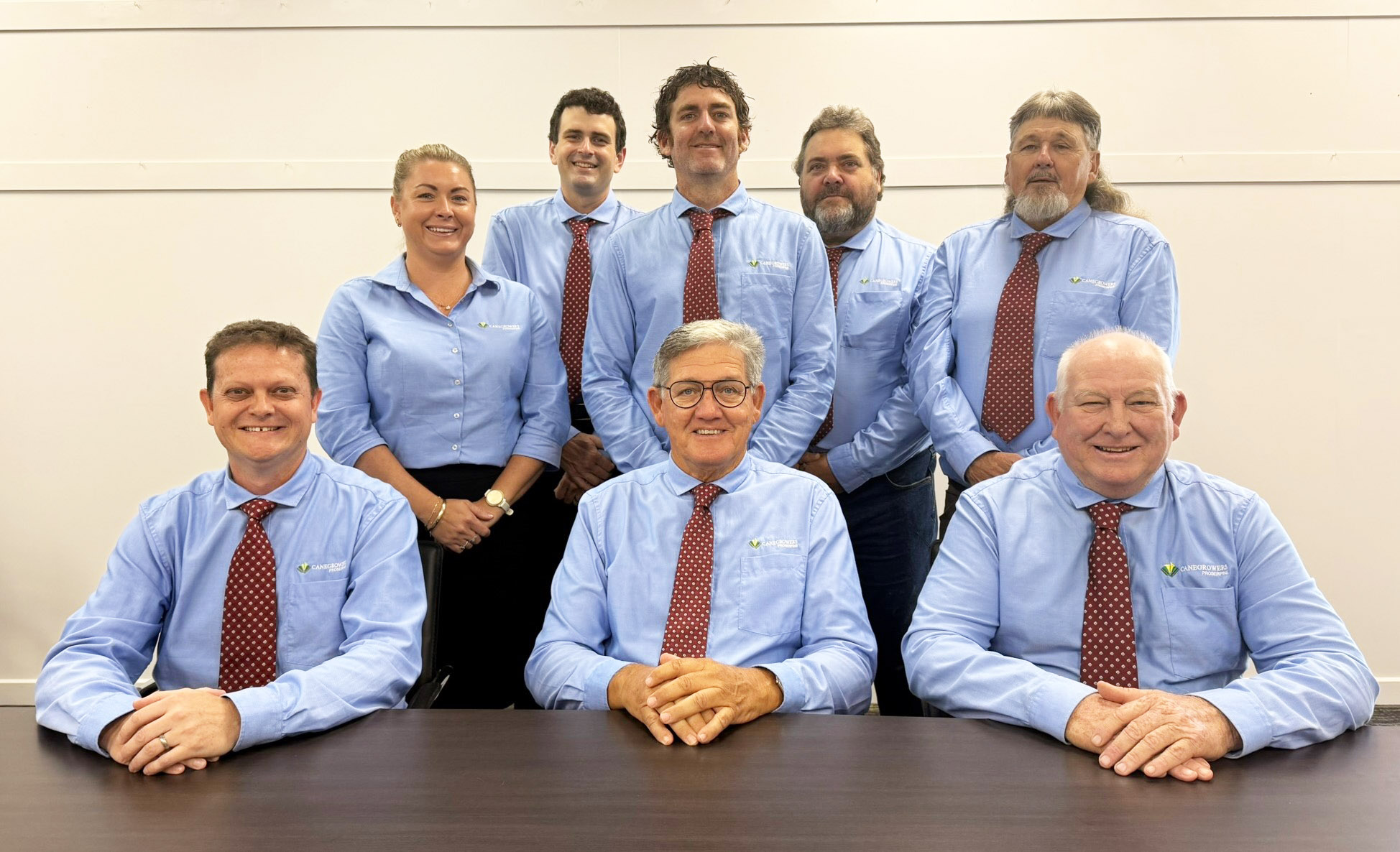
Front - Left to Right: Brendon Nothard (Manager), Glenn Clarke (Chairman), Tony Large. Back - Left to Right: Bessie Orr, Justin Blair, Luke Valmadre, William (Bill) Blair, Lindsay Altmann.
For 100 years, CANEGROWERS have provided a professional and cohesive voice to growers across Queensland’s sugarcane regions. The not-for-profit public company has dedicated a century to supporting the best possible outcomes for cane growing business and industry, providing advocacy and advice to individual growers, family businesses and corporate enterprise, whilst affecting larger policy change across the country.
Locally Proserpine CANEGROWERS Co-operative will be celebrating the special occasion, commemorating its own unique past as a major tropical agricultural player, where cane growing is woven into the fabric of history, culture and lifestyle.
State-wide, CANEGROWERS have presented commemorative initiatives to celebrate the wonderful work that has been done over the past century. Legends of Cane Country celebrates the contributions of farmers throughout CANEGROWER’s history, inviting community nominations to recognise individuals whose leadership and commitment have made a real difference in their district.
The organisation has also produced ‘Voices of Cane Country’, a series of filmed conversations with long serving growers, as each share what a life in cane has meant to them with the first videos already available online.
Proserpine’s own rich history of sugar farming dates back to 1897, when the Proserpine Mill was constructed. In 1926 Queensland CANEGROWERS Council formed, marking the beginning of the CANEGROWERS organisation.
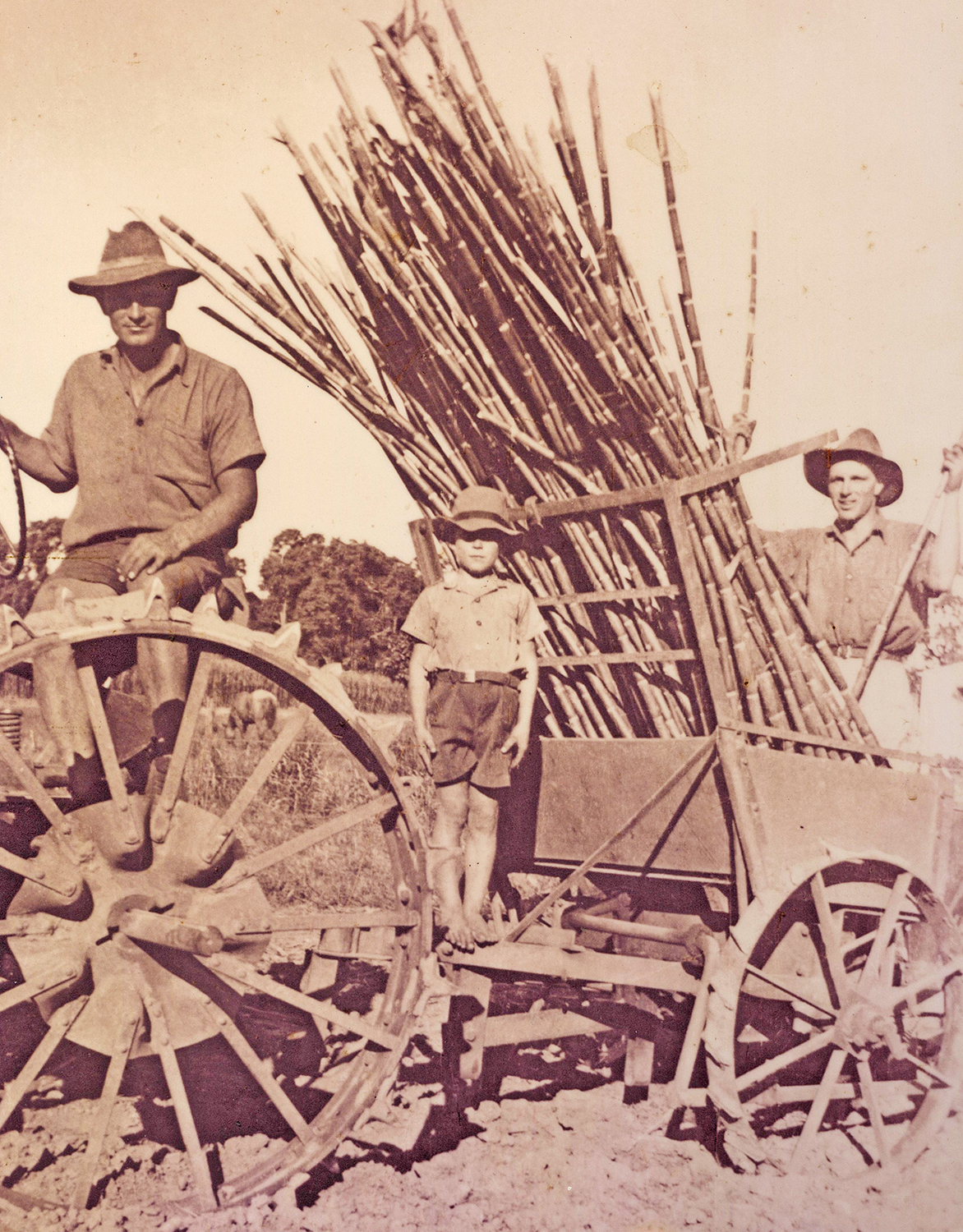
In 2004, Proserpine’s own independent CANEGROWERS Co-Operative formed. This move made all regional sugarcane farming offices independent, but every co-op will join together to celebrate the centennial, paying homage as a community to the incredible work that’s been done over the years by regional cane farmers.
As part of celebrations, Proserpine CANEGROWERS Co-Operative are putting on a special historical display at the 2026 Show Whitsunday. The display will feature an array of historical photos and machinery, demonstrating a timeline of evolving technology and dedicated hard work.
The celebrations will highlight the significance of local industry, and demonstrate that advancements made in Sugarcane farming here in Australia have always rippled outward, and had global influence.
“The big thing was harvesting,” explained Proserpine Manager Brendon Nothard.
“The Australian sugarcane industry was the world leader when it came to mechanisation of harvesting. They came up with the designs for the first sugarcane harvesters.”
Such advancements and adoption of technologies occurred in across Queensland, including Proserpine, where a fruitful sugarcane industry has endured despite challenging conditions.
“We have a highly variable weather system up here. This is one of the most variable climates in Australia and Australia is one of the most variable climates in the world.” Brendon shared, assuring that despite such challenges, Proserpine continues to work hard to produce sugarcane.
“We are a grower owned organisation. Run by growers and owned by growers. Everything we do here is informed by what growers need most.”
Looking forward, a big theme concerning sugarcane farming’s future is renewable energy.
“The industry is currently focusing on the use of both ethanol and sustainable aviation fuel.” Brendon explained
Ethanol is a renewable biofuel produced from biomass (corn, sugarcane, waste) which reduces greenhouse gas emissions by roughly 44-52% compared to gasoline.
Sustainable aviation fuel (SAF) is an alternative fuel made from non-petroleum feedstocks that reduces air pollution from air transportation. It can be blended with other fuels. These sustainable fuels present huge potential for the industry, decreasing the reliance on externally imported oil.
From the past, looking into the future, CANEGROWERS exists for one simple reason: to give Queensland sugarcane growers a strong, united voice.
canegrowers.com.au

Council is introducing changes to parking across some of our busiest areas including Airlie Beach, Cannonvale Foreshore, Shingley Beach and Shute Harbour, and I want to explain why these changes matter.
As our region continues to grow, we need to make sure parking in our busiest precincts works better for everyone — improving access, supporting local businesses and making it easier for residents and visitors to move around our town centres.
It’s about making parking fairer, easier and more practical for everyone who uses these areas. We want parking to work better for locals, visitors, workers and businesses as these areas continue to grow.
One of the biggest frustrations we hear is people driving around Airlie Beach or Cannonvale struggling to find a park while some vehicles sit in premium spots all day. That doesn’t help local businesses, it doesn’t help customers and it doesn’t help traffic flow.
The reality is our region is growing rapidly and parking demand is increasing. Council has a responsibility to manage that growth properly and make sure our busiest precincts continue to function well into the future.
The new strategy keeps free short-term parking in place while improving parking availability in high-demand areas so more people can access local businesses and services throughout the day.
There will also continue to be free long-term parking available at Waterson Way, only a short walk from Main Street, along with affordable permit options for workers and regular users.
Importantly, parking infringement costs are being reduced under the new approach, and during the transition period Council will issue warning notices first to help educate the community before full implementation begins.
We’re also improving parking technology through smarter monitoring and easier payment options like the EasyPark app, making the system simpler and more convenient for users.
At the end of the day, this is about improving access, supporting local business customer turnover and planning properly for the future growth of the Whitsundays.
Smarter Parking. Better Access.
Businesses across the Whitsundays are being encouraged to join the Whitsundays Chamber of Commerce and Industry as part of the launch of the Chamber’s new 2026–27 membership program.
New members who join by 30th June will automatically go into the draw to win a two-week advertising package on the Airlie Hill Billboard, providing valuable exposure for their business in one of the region’s busiest locations.
The Chamber’s updated membership structure has been designed to better support the diverse needs of the Whitsundays business community, with tailored membership options now available for businesses, associations, wedding industry operators, and market vendors.
Whitsundays Chamber of Commerce and Industry President Allan Milostic said the Chamber continued to strengthen its role as the leading voice and connector for local business.
“The Chamber exists to support local businesses through advocacy, networking, promotion, education, and collaboration,” Mr Milostic said.
“We want businesses of every size and stage to feel part of a strong and connected business community, whether they are a start-up, market vendor, tourism operator, professional service, or established employer.”
The 2026–27 membership program includes:
Business Advanced ($799)*
For businesses seeking greater visibility, stronger networks, and a more active role in Chamber initiatives, with priority access to services and opportunities.
Business Basics ($299)*
Ideal for businesses wanting to stay connected, access resources, and participate in Chamber programs.
Association Partner ($299)*
Designed for member-based organisations and industry bodies, offering benefits for executive teams and discounts for their own members.
Subscriber ($99)*
Suitable for individuals or businesses wanting to stay informed and occasionally attend events.
Tailored for businesses operating within the wedding sector, with enhanced promotional support to help reach domestic and international markets.
Essential Tier ($299)*
The foundation membership for Whitsunday wedding professionals.
Elevate Tier ($549)*
Designed for vendors looking to refine their brand and increase their market reach.
Market Vendor Chamber Subscription ($99)*
A new membership category designed to bridge the gap between casual stallholders and established local businesses, combining the credibility, connections, and advocacy of the Chamber with exclusive benefits linked to Chamber-managed Markets.
Mr Milostic said the introduction of the new Market Vendor membership category recognised the important role local markets play in supporting entrepreneurship, tourism, and small business growth across the region.
“Markets are often where great businesses begin, and we want those operators to feel connected, supported, and represented within the broader business community,” he said.
Businesses interested in joining the Chamber and entering the Airlie Hill Billboard giveaway are encouraged to sign up before 30th June.
For more information or to become a member, visit https://www.whitsundaycoastchamber.com.au/join/
Contributed with thanks to Whitsunday Chamber of Commerce & Industry.

Photo source: Facebook
A frightening moment on Shute Harbour Road has ended in relief and gratitude after a small dog narrowly avoided tragedy and was safely returned home thanks to the kindness of several local residents.
The dog, affectionately known as Waffles, was spotted darting dangerously near traffic close to the Pet Resort area, with motorists forced to brake suddenly to avoid hitting the adventurous pup.
Local resident Neri Tyson stopped to help after Waffles was found wandering near the busy roadway. Witnesses later described the terrifying moment the dog ran in front of traffic, with one motorist saying they believed the dog had gone underneath a coach travelling along the road.
Fortunately, the bus driver slowed to check on the animal, and in an incredible stroke of luck, Waffles emerged unharmed.
Following efforts by Ms Tyson, and concerned community members online, Waffles was soon reunited safely with his grateful family.
Many locals joked the tiny escape artist may have earned himself a new nickname — “Lucky” — after surviving such a close call.
The happy ending has once again highlighted that Whitsunday neighbours are always willing to step in and help when it matters most.
A Mackay business is among dozens across Queensland to receive State Government funding for security upgrades aimed at deterring crime and improving safety for staff and customers.
Beyond Psyence Pty Ltd has been awarded $19,807 through Round 2 of the Secure Communities Partnership Program, with the funding to be used for access control and entry management measures.
The business was one of 62 small and family businesses across the state to receive funding in the latest round of the program, which supports the installation of crime prevention infrastructure such as CCTV, secure fencing, bollards, alarm systems and lighting upgrades.
Minister for Small and Family Business Steve Minnikin said the funding would help businesses take practical steps to improve security.
“This program empowers local small businesses to take proactive steps to protect their livelihoods, employees, and customers, while contributing to safer communities across Queensland,” Mr Minnikin said.
“I’m proud that two-thirds of funding in this release has been awarded to small businesses based in regional Queensland, ensuring support reaches every corner of our state.”
The Secure Communities Partnership Program provides grants of between $5,000 and $20,000 to eligible small and family businesses that have been directly impacted by crime in the past five years, or operate in areas affected by crime.
Applicants are required to contribute at least 50 per cent of the total project cost and can use the funding for a range of security measures including surveillance systems, access control upgrades, perimeter security and alarm systems.
The latest funding round follows Round 1 of the program, which delivered $9.6 million for 42 projects in partnership with local councils.
Queensland businesses with fewer than 20 employees and an annual turnover of $10 million or less remain eligible to apply for funding, with applications open until the 30th of June or until available funding is exhausted.
Further information about the Secure Communities Partnership Program is available through www.business.qld.gov.au.
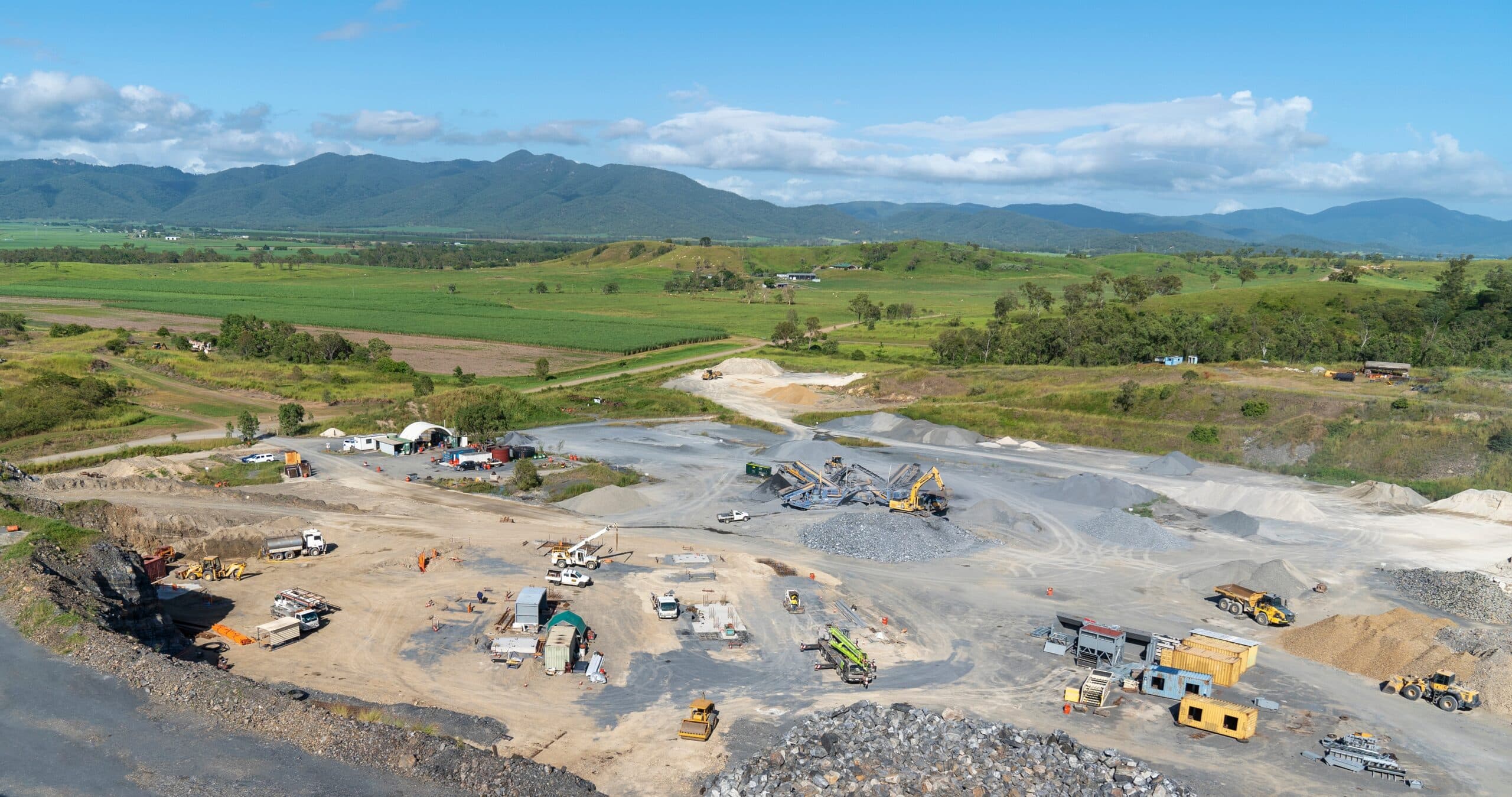
Isaac Regional Council is proposing a new Future Fund designed to help protect community services and financial sustainability for future generations as the region prepares for the long-term impacts of a changing mining industry. Photo supplied
Isaac Regional Council is proposing the creation of a long-term Future Fund designed to help safeguard essential services and financial stability for future generations as the region prepares for life beyond mining.
The proposed Isaac Future Fund would gradually build a financial reserve using a portion of the region's current mining-related prosperity, with the aim of offsetting future revenue losses when mining activity eventually declines.
Currently, almost 70 per cent of the council's rates income comes from the mining sector, creating what council describes as a significant future challenge when mines are decommissioned and mining leases are recategorised.
To establish the fund, council is proposing to reduce the early payment rates discount for mining leases, workforce accommodation and renewable energy projects from 10 per cent to five per cent this year, before removing the remaining five per cent next year. All other ratepayer categories would continue to receive the full 10 per cent early payment discount.
The change is expected to contribute approximately $3.2 million to the fund in its first year.
Isaac Regional Council Mayor Kelly Vea Vea said the initiative was focused on protecting future communities from substantial rate increases needed to maintain services once mining revenue begins to decline.
“The Future Fund is a long-term strategy intended to grow our own funds over the decades and used to replace mining sector income to maintain services to communities when mining eventually declines,” Mayor Vea Vea said.
“We cannot rely on future governments to subsidise services and infrastructure when funding to local councils has already been reducing over time. Our Council knows that we need to generate our own revenue source to protect future generations from the long-term financial impact that is inevitable when we are so financially reliant on mining.”
Council said the fund would not be financed by general ratepayers and would be protected from being spent for decades while it continues to grow.
Once the fund reaches approximately $50 million, and subject to the necessary approvals, council intends to invest the money through the Queensland Investment Corporation to generate additional returns, with earnings reinvested back into the fund.
The long-term target is to grow the Future Fund to around $500 million while preserving the principal for future generations.
Mayor Vea Vea said the proposal reflected responsible long-term planning for the region.
“Smart regions plan ahead and responsible leadership means thinking long term and beyond the next election or budget cycle. There are many hoops to jump through and a lot of work to do in order to get the Future Fund to where it needs to be. We have to start now.”
Council has spent the past 12 months developing the proposal in consultation with the Queensland Treasury Corporation and pointed to similar investment funds established by other regional councils, including Western Downs.
The Future Fund would remain subject to council governance, auditing and reporting requirements, with any future investment arrangements required to comply with Queensland local government legislation and council policies.

I always appreciate a robust discussion in our community, and I welcome the feedback regarding my recent opinion piece, ‘Why We Must Restore Biological Reality to Our Laws’. It is clear that the issues surrounding the Sex Discrimination Act are deeply emotive, and I respect the passion shown by your anonymous correspondent.
However, I feel it is necessary to clear up some significant misunderstandings. My original article was focused on a matter of legislative principle: the need for our laws to reflect biological reality to ensure certainty, safety, and privacy in spaces reserved for women and girls. My article did not mention transgender individuals, I believe it is unhelpful to misrepresent my position in such a way, the added inflammatory rhetoric attributed to me was not part of my statement.
I also want to address the concerns raised regarding domestic violence. We are in total agreement that domestic violence is an absolute scourge on our society, and it is a topic I have spoken about many times in my capacity as your federal representative. However, suggesting that my call for biological clarity in law somehow enables violence is a complete distortion of my intent and misses the mark entirely. We can be a community that is compassionate and supportive of everyone, while still maintainingthe clear, common-sense laws that protect the rights of women and girls, these two goals are not mutually exclusive. My goal is to return that clarity to our statute books so that the law serves everyone equitably.
Advocating for clear, sex-based protections is not an attack on the humanity or rights of others, it is a necessary step to ensure that the foundational legal boundaries, which many women rely on for their sense of security, are not quietly eroded. I welcome a robust debate, but I prefer it to be based on what I have actually said, rather than on motives or ideologies that have been attributed to me. I remain committed to finding common sense solutions that ensure fairness and safety for all in our community.

A practical community support initiative will take place in Mackay this month, with Mackay Pet Rescue Inc preparing to assist men experiencing hardship alongside their pets at the Neighbourhood Hub during Men’s Week.
The event will be held on June 10th from 9am to 12 noon and will provide essential supplies and services aimed at keeping men and their pets together during times of vulnerability.
For many attending, pets are not simply companions but a source of stability during difficult circumstances. The initiative is designed to reduce pressure on both individuals and rescue services by offering direct, immediate assistance.
The Men’s Week initiative will provide a range of support items including pet food, tents, sleeping bags, dog sleeping bags, hygiene packs and flea and worm treatments. A veterinarian will also be on site to provide additional medical care.
The program has been supported through a grant from the Mackay Community Foundation, enabling the rescue to expand its outreach during the colder months.

President of Mackay Pet Rescue Inc Janet Ambrose said the focus is on ensuring people are supported before situations reach crisis point.
“We’re making sure they don’t fall through the cracks, and they are seen, because they’re just as important, and we want to help their pets as much as we can.”
“If we can help someone that’s vulnerable, so that they don’t have to give up their pet, then that’s a win, not just for them, but for us as well.”
Ms Ambrose said the work carried out by the organisation is grounded in compassion and community responsibility.
“Many of the owners we assist are facing illness, ageing, are homeless or experience a sudden life change. Pets are extremely important to people, and often provide essential emotional support during uncertain times.”
“We’re here to help, because this is what humanity is all about.”
“A lot of people think we’re just helping animals, but we’re really helping their owners too.”
Between now and June 10th residents are encouraged to support the initiative by donating pet food through collection bins located across Mackay.
Donation points include Northern Beaches Vet Hospital, Petbarn Greenfields, Petstock Paget and Bucasia Road, Pets Domain Rural View, Woolworths stores at Mount Pleasant, Oak Street, Ooralea and Rural View, Coles at Parkside Plaza and Sarina, Sydney Street Markets, and Goodes Butchers Sarina.

When it comes to an assessment of Australia’s most annoying politician, it is an extensive field.
The politicians we hear from most-often are from the Federal Government so they are front of mind in the analysis but they certainly have some very strong competition.
There is insufficient space here to give a thorough run-down of all of them but we can mention a few of the most-annoying pollies.
The Prime Minister, Anthony Albanese, is very annoying. His job means that he is on TV all the time trying to convince us that he has our high cost of living, high interest rate, high immigration, low productivity, high power bills, non-manufacturing economy under control. His voice is annoying and it’s embarrassing to watch.
Unfortunately, the Opposition Leader Angus Taylor is also annoying. Apparently he is a Rhodes Scholar, which means he is educated and must be pretty bright, but he certainly gives a great impression of being a boof head. If the question is, how do we communicate a sophisticated, surgical take-down of the Government and its policies? … The answer is not big old Angus.
As for the Greens, there is line-up that’s hard to beat because they all want to destroy the economy at the altar of net zero in the name of their fanatical climate change cult. But Senator David Shoebridge is definitely stepping up as a consistently annoying talking head for that party.
As I said, we don’t have space to go through all the names here but the title for the most annoying politician in the country would have to go to climate change and energy Minister Chris Bowen, the man who tells us that every time you see your power bill you need to remember that renewables are the cheapest form of energy. The transition to renewables is, clearly, unbelievably expensive and Bowen is the annoying face of the Government’s absurd denial of the facts.
For some reason the person I used to find annoying, Pauline Hanson, doesn’t seem so annoying anymore. Recent polls suggest voters think she is listening to them. We’ll see how she goes over the next few years.
But what I’ve found most annoying in recent weeks is the way Government politicians have responded to the reaction over the recent budget, particularly in relation to the changes to capital gains tax and the removal of negative gearing for new investors.
On one hand they say that the changes were designed to make housing more accessible for young people. But property markets around the country are falling and ordinary people are starting to see the value of their homes fall.
When the pollies are asked if their policies are leading to a fall in the value of people’s homes, it suddenly has very little to do with them. “Yes, we are making housing more affordable for young people but don’t look at us if the value of your home is dropping,” seems to be the message.
And the truth is the big city markets around the country have fallen in the weeks since the Budget. Clearance rates at auctions have fallen and there are now fewer buyers for properties in cities like Sydney, where negative gearing was an essential part of the investment strategy … high costs and lower rents.
First home buyers who recently paid 5 percent deposit on $1m properties in Sydney and have a $950,000 mortgage are now said to have negative equity.
Agents in Mackay are still getting calls from buyers agents with clients down south wanting to tap into our positively geared opportunities, so there is a belief among many that Mackay will survive any carnage … and our prices are relatively low in a national sense.
The key in Mackay is always coal as it is the main driver of our economy. Demand for our coking coal seems strong and the price is up compared to last year. Hopefully the pollies don’t stuff that up.
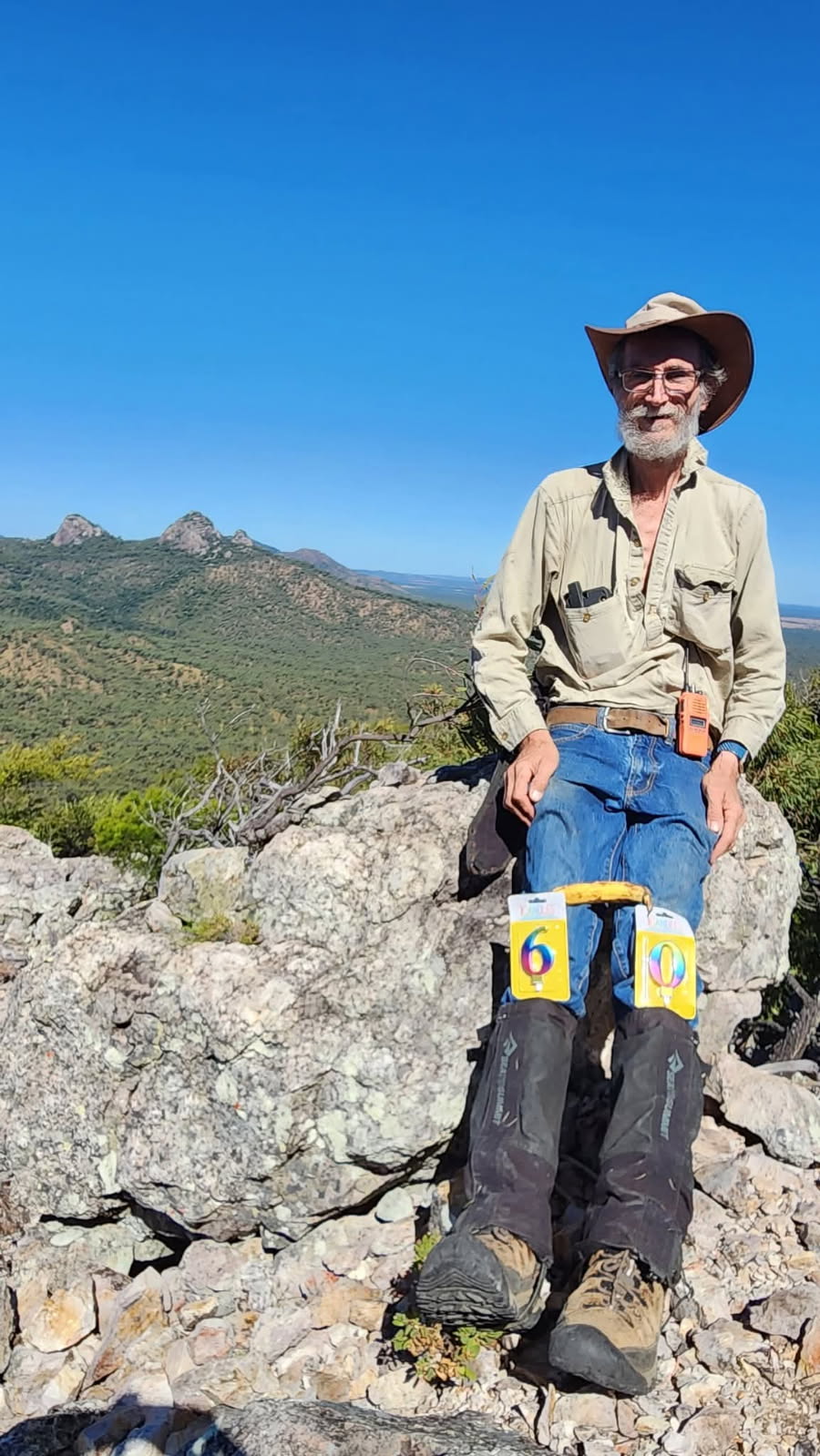
Ralph on top of the Bluff with the Marling Spikes in the background
Mackay Bushwalkers Club members recently chose the Homevale National Park for its weekend activities. There are several walks suited to cooler weather on offer in this area.
Ralph Morgan spent his 60th birthday leading a group up the Bluff. This prominent outcrop is in full view of the MT Britton Township and offers 360-degree views of the dramatic surrounding scenery.
Twelve members camped for the night at the historic township site. It was a wonderful outing with four more choosing to join Kevin Smith’s group on Sunday to explore “Podo” Pinnacles. All of the party managed to scale No 1 Pinnacle with some finding No 2 too exposed for comfort.
Everyone enjoyed a leisurely lunch on No 3. Kevin explained that he had first spotted the Pinnacles from the Bluff and a subsequent investigation revealed that they were easier to climb than he expected. He also shared that over 70 years ago it was nicknamed “Pod” due to its belly like a poddy calf and thus the naming of the pinnacles.
Future weekend activities include Hillsborough and Cathu area with a mid-week beach clean-up.
For more information go to https://mackaybwcq.org.au/
Contributed by Coral Morgan.

Image supplied
Pixie and Poppy are the last two sisters from their litter still searching for a forever home, and while the tiny black kittens may look alike, their personalities are wonderfully different.
Pixie is curious, playful and always the first to investigate anything new, bringing plenty of energy and mischief wherever she goes. Poppy, meanwhile, has a gentler nature and is happiest curled up beside her humans for a quiet cuddle after a long day.
Together, the pair bring a mix of chaos, comfort and laughter, with foster carers describing them as affectionate, resilient and full of personality.
Like many black kittens, Pixie and Poppy have often been overlooked despite their loving nature and strong bond.
Now ready for a family to call their own, the sisters are hoping to find a forever home where they can continue to grow together.
Anyone interested in meeting Pixie and Poppy can text foster carer Janet on 0423 768 805 for more information.
Coalition representatives are urging the Australian Government to strengthen protections for cane growers as the nation’s Sugar Code of Conduct undergoes a major review.
The review comes as the existing code, introduced by the former Coalition Government, approaches its 10-year sunset period and faces a decision on whether it will be renewed or remade.
Shadow Minister for Northern Australia Susan McDonald said the code had played a critical role in protecting growers during negotiations with large milling companies.
“The Sugar Code of Conduct was introduced for a reason, and it has proven effective,” she said.
“Cane growers often have limited leverage when negotiating with large mills, and the code provides important protections to ensure negotiations are fair and disputes can be resolved. We do not want to see growers lose the safeguards that have helped deliver certainty and stability across the industry.”
Senator McDonald said the review also presented an opportunity to consider how the code could apply to emerging sugar cane products including ethanol and biofuels.
“As the industry evolves into ethanol, biofuels and other value-added products, it makes sense to consult growers and industry about whether sensible adaptations are required,” she said.
“But any future changes must preserve the strong protections already provided under the code.”
Member for Dawson Andrew Willcox said the review needed to recognise the mounting pressures already facing cane farmers.
“This review must recognise that our cane farmers are the ones taking all the risk with mother nature, while dealing with massive global price fluctuations and rising input costs,” he said.
“This Code was designed to level the playing field and ensure that negotiations are handled in good faith. We have already seen Labor leave regional Australians out in the cold in this week’s Budget, and we cannot afford for them to do the same with the Sugar Code.”
Mr Willcox said growers needed to benefit from the industry’s transition into bio-manufacturing and renewable energy sectors.
“As our industry evolves into biofuels, ethanol, and other value-added products, the Code must evolve with it,” he said.
“We need to ensure that our cane farmers are rewarded for the innovation they bring to the sector, not just the raw product they deliver to the mill gate.”
Deputy Leader of the Nationals and Shadow Agriculture Minister Darren Chester said consultation with growers would be crucial throughout the process.
“The Coalition introduced the Sugar Code to give growers practical protections and a fairer playing field, and this review must strengthen those safeguards, not water them down,” he said.
Queensland Natural Resources and Mines Minister and Burdekin MP Dale Last said the Burdekin had previously experienced the uncertainty caused when negotiations between growers and mills stalled.
“A decade ago, the Burdekin witnessed first-hand what can happen when that safety net does not exist and those crucial negotiations are left at a stalemate,” Mr Last said.
Industry consultation and regional shed meetings are expected to form part of the review process in coming months, with growers and communities encouraged to provide feedback.

The Mackay Harvest is scheduled to begin on 4 June at Farleigh Mill. Photo credit: Kirili Lamb
Rollers moving for 2026 crush!
By Joseph Borg, Chairman, CANEGROWERS Mackay
As you read this, the first bins of cane for the 2026 crushing season in the Mackay-Isaac region should have been tipped at Plane Creek Mill on 2 June, marking the start of a season that the industry is approaching with determination and care.
Mackay Sugar is following, with scheduled starts for its three mills from 4 June, beginning with Farleigh, followed by Racecourse on 9 June and Marian on 15 June.
Mackay Sugar’s estimate sits at 5.1 million tonnes with a starting CCS of 13.2, while Plane Creek’s initial crop estimate is about 1.4 million tonnes with a starting CCS of 13.83.
Across both mill areas, pre-harvest meetings have set a constructive tone. Growers, millers and industry leaders are realistic about the challenges ahead, but there is also a strong willingness to work together and make the most of the opportunities this season presents. That spirit of cooperation is helping underpin a sense of cautious optimism across the region.

Queensland Cane Growers Organisation and the Australian Sugar Manufacturers have worked together ahead of the season to identify the industry’s fuel and fertiliser requirements as harvesting begins and planning continues for the 2027 crop. Economic analysis suggests the Australian sugar industry will require about 99 million litres of fuel this year to complete necessary operations. Those discussions have also involved government, and there are encouraging signs that, despite ongoing tensions around the Strait of Hormuz, suppliers are securing alternative supply lines. While the situation will continue to be monitored closely, this progress is giving the industry greater confidence that harvesting and planting plans can continue as needed.
Seasonal conditions have been mixed. Reduced sunlight and drier weather in some parts of the region during April and May have affected growing conditions, and expectations are for an average crop overall. Even so, cooler weather is helping sugar levels rise, which may ease some of the usual concerns about low CCS levels early in the crush. It is one of several signs that, while conditions are not ideal, the season may still offer solid opportunities if the industry can maintain momentum.
If you are interested in working as a haulout driver this crush, Mackay Canegrowers has a farm jobs noticeboard: head to www.mackaycanegrowers.com.au to find out more!
For Mackay Canegrowers, the priority remains a safe and successful season for everyone working across the industry and for the wider community.
Tramlines, rail crossings and sidings will soon become busier, and slow-moving agricultural vehicles will be more visible on local roads. As farms enter one of their busiest periods, the community is reminded that farms are workplaces and an important driver of the regional economy.
With good preparation aimed at a strong start, and cooperation across the sector remaining strong, the industry enters Harvest 2026 hopeful, prepared and ready to make the most of the season ahead.
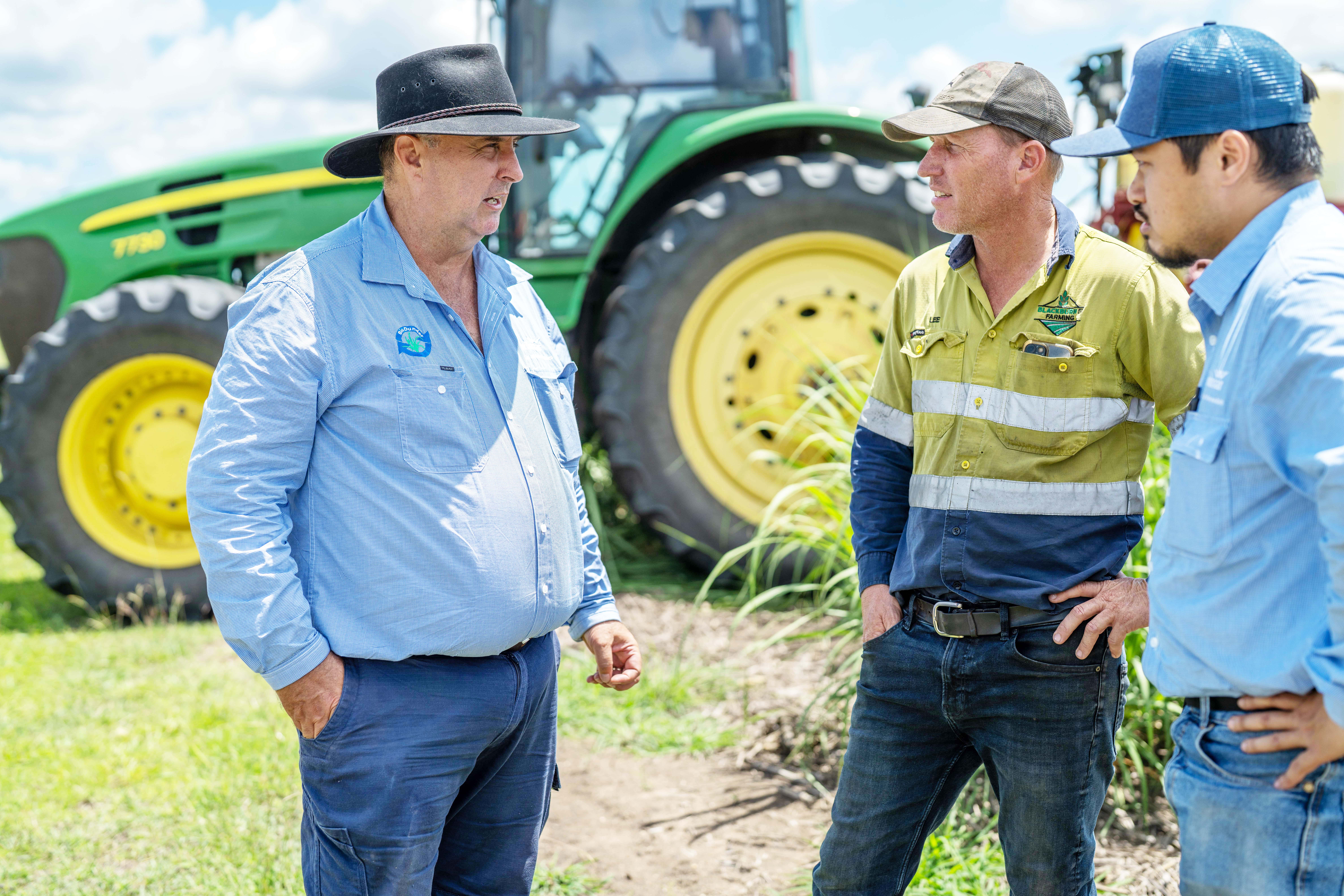
AgServices agronomists Drew McGilchrist (left) and Marc Tanizar (right) chat with Mackay grower Lee Blackburn about the positive outlook for Bio Dunder supplies. Photo supplied
From Jasmin Lewis
Customer Service & Logistics Supervisor, Wilmar AgServices
As the 2026 harvest begins, the Wilmar AgServices team has been working hard behind the scenes to ensure we are ready to support growers with their fertiliser needs throughout the season.
We recognise that global events have affected the supply of some raw material inputs, creating uncertainty across fertiliser markets and raising concerns about product availability.
We want to reassure growers that we are confident in our current supply position – both for our base Dunder stocks and key added inputs such as urea. Planning is also well advanced to ensure Bio Dunder liquid fertiliser applications can commence in line with harvesting operations.
While our supply outlook is positive, the current supply environment remains dynamic. We encourage growers to confirm their fertiliser requirements early to help secure supply and enable our experienced local contractors to schedule applications efficiently across farms.
Made in Sarina, Bio Dunder is an organic-based fertiliser trusted by generations of farmers. It delivers a comprehensive nutrient package of nitrogen, phosphorus, potassium and sulphur (NPKS), together with valuable organic carbon that supports long-term soil health.
Our agronomists and contractors consistently see the best yield responses when Bio Dunder is applied straight after harvesting. That’s why we encourage growers to ‘follow the harvester’ with their Bio Dunder application.
We know rising input costs are placing pressure on farming operations. Our sales agronomists continue to work closely with growers to optimise NPKS programs that help reduce fertiliser costs without compromising sugarcane yield potential. Our pricing remainscompetitive, particularly when considering the soil health benefits Bio Dunder provides.
Call us on 1800 881 957 to confirm pricing and supply for the season. Alternatively, email
AgServices@Wilmar.com.au
We’re ready and able to support your fertilising needs throughout the 2026 harvest.
Renewable energy companies operating across the Isaac region have announced a series of community-focused initiatives aimed at delivering long-term benefits for local residents, businesses and schools.
The package includes commitments to improve telecommunications, road safety, local employment pathways, education opportunities and regional resilience, following ongoing consultation with communities and collaboration with Isaac Regional Council.
Renewable energy companies Squadron Energy, CS Energy, Iberdrola Australia and Tilt Renewables have spent the past year working together through a regional collaboration group designed to better coordinate renewable energy projects and respond to priorities identified by the local community.
Among the headline initiatives is a joint $750,000 commitment from Squadron Energy, Iberdrola Australia and CS Energy to upgrade the existing Telstra telecommunications tower at Broadsound, improving internet and phone coverage for households, farms and businesses in the Clarke Creek area.
A contract with Telstra has now been signed, with works expected to begin shortly and be completed within the next 12 to 14 months.
Once complete, the upgrade is expected to improve emergency response capabilities, support safer travel and provide more reliable access to essential services across the region.
Squadron Energy Head of Community and Regional Development Jessica Kite said the collaboration aimed to ensure renewable energy developments created tangible local benefits.
“Working with Isaac Regional Council and Iberdrola is about making sure the clean energy future delivers real, lasting benefits for locals, from more local business opportunities through our local supplier forum to stronger pathways into education and work through scholarship programs,” she said.
“The Clarke Creek telecommunications tower upgrade is legacy infrastructure that matters, providing more reliable coverage that improves safety and access to services for households and businesses. We heard from farmers that feral pigs are a major issue, together with Council and Iberdrola we can deliver a coordinated control program that helps strengthen regional resilience.”
The collaboration group is also working with Isaac Regional Council to improve transparency and coordination around road infrastructure contributions linked to renewable energy developments.
Roadworks have already been completed along sections of Marlborough Sarina Road, while additional upgrades have recently been announced by the Queensland Government through the Department of Transport and Main Roads. Future priorities include speed management signage and further safety improvements around Clarke Creek.
Iberdrola Australia Chairman Ross Rolfe AO said the companies recognised the pressure major projects could place on regional infrastructure during construction phases.
“We know our projects have an impact on infrastructure and services, particularly during construction. Improving the connectivity of the Clarke Creek community is to support businesses and households is one important step.”
Tilt Renewables CEO Anthony Fowler said the transition to renewable energy needed to support regional communities as well as energy generation.
“The energy transition is more than just providing sovereign domestic energy to support our growing regions, it’s also about supporting the communities in those regions to thrive,” Mr Fowler said.
“Isaac Regional Council has provided invaluable feedback on how renewable projects can benefit regional communities and how we can maximise those benefits. This collaboration reflects what communities have been asking for - a more coordinated, collective approach. By working together, we can deliver outcomes that are more meaningful and enduring for regional communities.”
The group is also backing workforce and supply chain development initiatives following a Renewable Energy Supply Chain Forum in Moranbah earlier this year, which attracted around 90 industry, business and community representatives.
Renewable energy companies involved in the collaboration will also attend the Moranbah State High School Careers Expo on July 30 to promote future training and employment pathways in the region.
Additional projects under discussion include support for students through Country Universities Centre Isaac, a regional feral pig management program in partnership with the Invasive Species Council, coordinated community engagement efforts across projects, and potential future solar and battery solutions for Clarke Creek State School.
Isaac Regional Council Mayor Kelly Vea Vea said the collaboration demonstrated the importance of renewable energy companies working closely with local communities.
“Social licence is built through practical action and genuine engagement with communities, not just consultation,” Mayor Vea Vea said.
“Our communities want to see tangible benefits alongside development, whether that is safer roads, better telecommunications, local business opportunities, support for schools or programs that strengthen regional resilience.
“What is encouraging about this collaboration is that companies are working together with Council and local communities to focus on shared priorities and practical outcomes that will leave a lasting benefit for the Isaac region.”
The regional collaboration group said the initiatives represented a shared commitment to practical outcomes, stronger regional coordination and ongoing engagement with communities across the Isaac region.
Publishers Indemnity. Any individual or entity that places advertising, supplies copy material, or submits editorial content to Core Life Publishing agrees and undertakes to ensure that all such material:- Does not infringe upon any copyright, trademark, or other intellectual property rights;- Is free from any content that could be considered defamatory, libelous, or slanderous;- Does not infringe upon any rights related to privacy or breach of confidence;- Contains no obscene, indecent, or otherwise unlawful material;- Complies fully with the Trade Practices Act and all other applicable laws, regulations, or statutes.Furthermore, by submitting or placing such material, these individuals or entities agree to indemnify and hold harmless the publisher, Core Publishing and Events Pty Ltd, and/or its agents from and against any and all investigations, claims, demands, liabilities, damages, costs, or judgments arising out of or in connection with the material provided. All material is believed to be accurate at the time of printing and remains the copyright of Core Publishing and Events Pty Ltd.
© 2026 Mackay and Whitsunday Life Pty Ltd.
