
Independently Owned, Locally Grown, Community Loved

Makayla Groves and Bianca O'Brien are part of the commercial property team at Blacks Real Estate, supporting landlords, tenants and business owners across the Mackay region. Working as Commercial Property Managers, Makayla and Bianca assist with the day-to-day management of commercial properties, helping clients navigate leasing and property management requirements across retail, office and industrial spaces. Based at the agency’s Wood Street office, the pair work closely with business clients throughout the region as part of Blacks Real Estate’s commercial division. Makayla Groves can be contacted on 07 4963 2522, while Bianca O’Brien can be contacted on 07 4963 2525. CAPTION: Bianca O'Brien works with Blacks Real Estate as a Commercial Property Manager. Photo supplied Makayla Groves works as a Commercial Property Manager with Blacks Real Estate. Photo supplied
Read the full story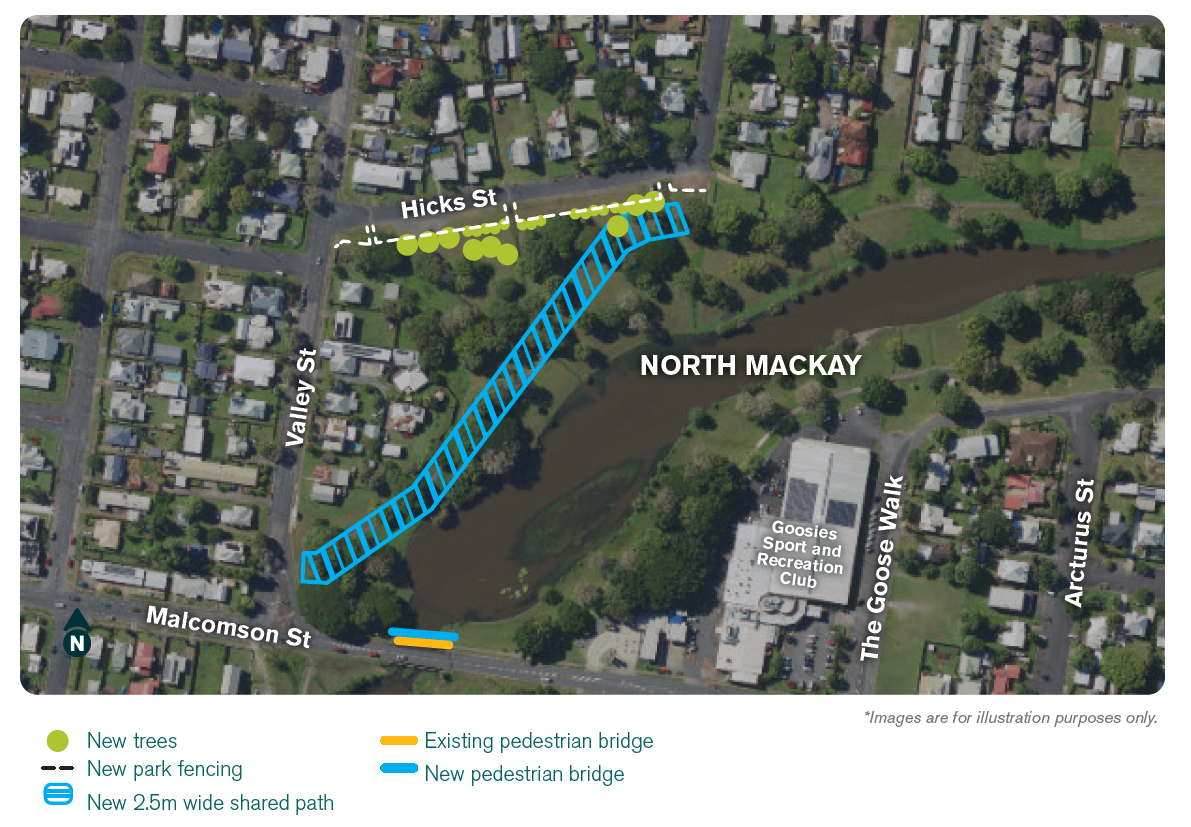
Visitors to Gooseponds Park can expect improved access and connectivity, with major upgrade works set to begin on a replacement pedestrian bridge, new fencing and a renewed shared pathway. The project, to be delivered by D&M Composites Pty Ltd, will include replacing the existing footpath between Valley and Hicks streets with a widened 2.5-metre shared pathway, enhancing links to the popular Gooseponds circuit. Member for Mackay Nigel Dalton said the project is another example of the Queensland Government delivering for the state and supporting important upgrades for the community. “That’s why we made Works for Queensland funding permanent, to back local councils with the funding they need to deliver vital projects like this for their communities.” A new bridge, parallel to Malcomson Street, will be constructed one-metre higher than the existing bridge to provide increased flood immunity. The existing bridge will remain in place while the new one is constructed directly behind it. Some short traffic delays are expected on Malcomson Street. Traffic control will be in place. Pedestrians can detour via Glenpark and Meadow streets while the work is completed. New fencing will be installed and 23 new trees will be planted along Hicks Street. Work is due to take place between mid-June and late September, weather permitting. Mackay Regional Council have said they apologise for any inconvenience caused by the works and appreciate the community’s patience and understanding. Jointly funded by Mackay Regional Council and the Queensland Government. For more information visit www.connectingmackay.gooseponds-park-upgrades Major upgrades at Gooseponds Park, including a new pedestrian bridge, widened shared pathway, fencing and tree planting, are set to improve access and connectivity, with works expected to run from mid-June to late September. Illustrative image supplied.
Read the full story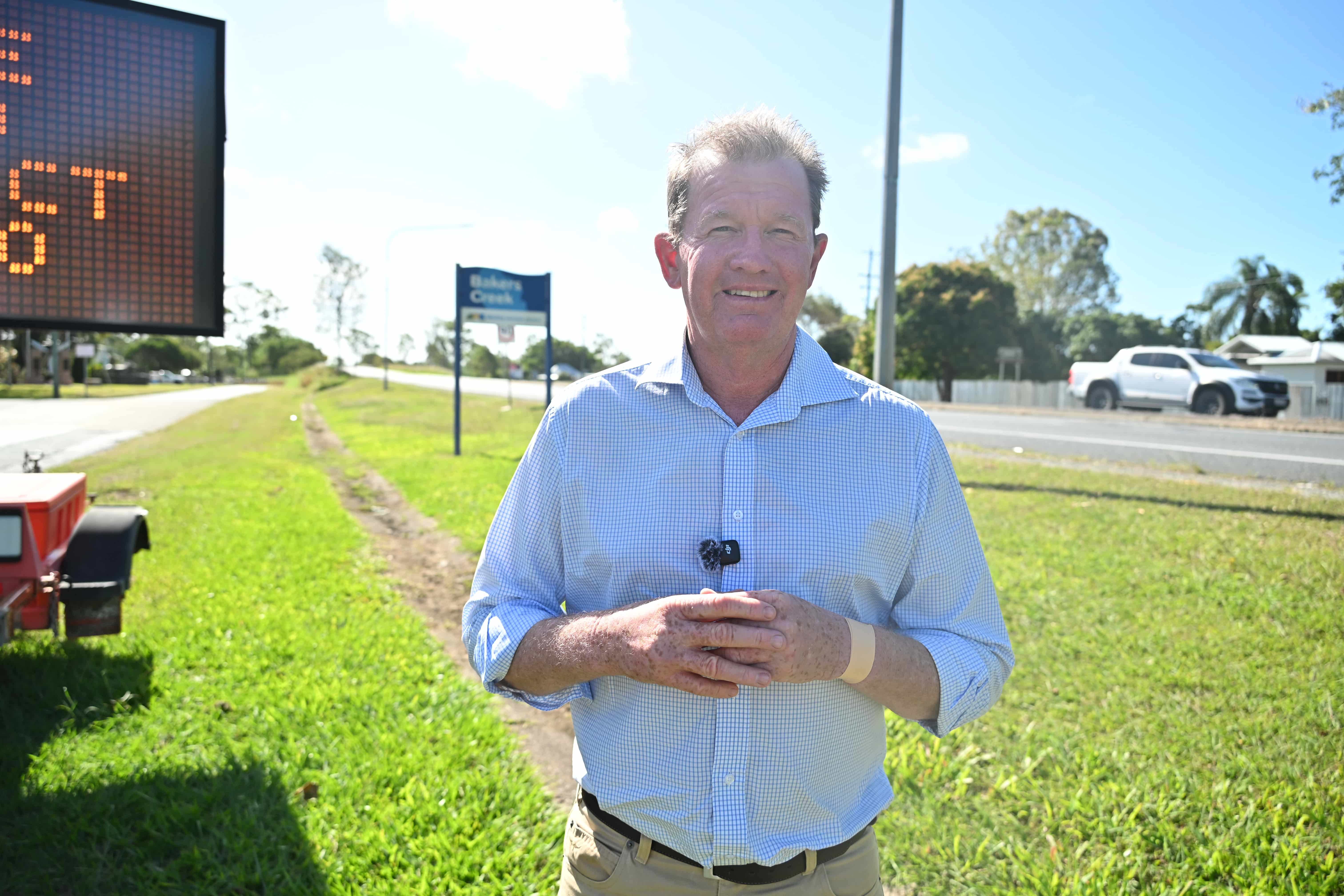
Improved safety, stronger infrastructure and greater resilience are on the horizon for motorists travelling between Mackay and Sarina, with the latest round of Bruce Highway upgrades welcomed as a significant investment in the region's transport network. Member for Mirani, Glen Kelly, said the upgrades form part of the historic $9 billion Bruce Highway funding agreement between the Queensland and Federal governments and will deliver lasting benefits for road users across Central Queensland. Mr Kelly said the Bruce Highway remains one of the most vital transport routes within the Mirani electorate, supporting thousands of vehicle movements each day, including freight transport, daily commuters, tourists, school buses and emergency services. “Roads are consistently the number one issue raised with me by local residents, and that's not surprising when the Mirani electorate contains over 400 kilometres of the Bruce Highway stretching from the Mackay city gates right through to Raglan Creek,” Mr Kelly said. “These upgrades are about improving safety, reducing road trauma and ensuring Queenslanders can get where they need to go safely and reliably.” Mr Kelly highlighted the importance of the Mackay to Sarina section of the Bruce Highway, particularly its role in connecting local communities, industry and freight movements throughout the district. “The Mackay to Sarina corridor is one of the busiest sections of highway in regional Queensland. It supports our agricultural sector, our mining industry via the Port of Hay Point, and the thousands of people who travel this route every week for work and family commitments.” “That's why it is fantastic to see significant investment being directed towards projects such as pavement strengthening at both the northern and southern entrances to Sarina, along with ongoing works at Bakers Creek.” Works at Bakers Creek include bridge resurfacing and repairs to expansion joints, helping improve skid resistance and road performance during wet weather. Mr Kelly said, “Many locals were concerned about the significant deformation that had developed in the road surface at Spider Creek. “The upgrades delivered there, including road widening, wide centre-line treatments and audio tactile line marking, will provide a much safer journey for motorists.” While the investment is a welcome boost for the region, Mr Kelly acknowledged that additional improvements are still required. “For too long, Queenslanders have had to accepted that travelling on the Bruce Highway means dealing with potholes, narrow sections and safety concerns.” “These upgrades are a major step forward, but nobody is pretending the job is finished.” “We will continue advocating for further investment because regional Queensland deserves a Bruce Highway that is safe, resilient and fit for the growing freight and passenger task it carries every day.” “Every upgrade matters. Whether it's a major highway project, a bridge repair or pavement strengthening, these investments help keep people safe and keep our regional economy moving.” For more information on the Bruce Highway Targeted Safety Program and Bruce Highway Upgrade Program projects, visit www.yoursay-projects.tmr.qld.gov.au/bruce-highway-priority-projects Bruce Highway upgrades at Bakers Creek and Sarina will boost safety and strengthen a key transport link for Central Queensland motorists. Photo supplied
Read the full story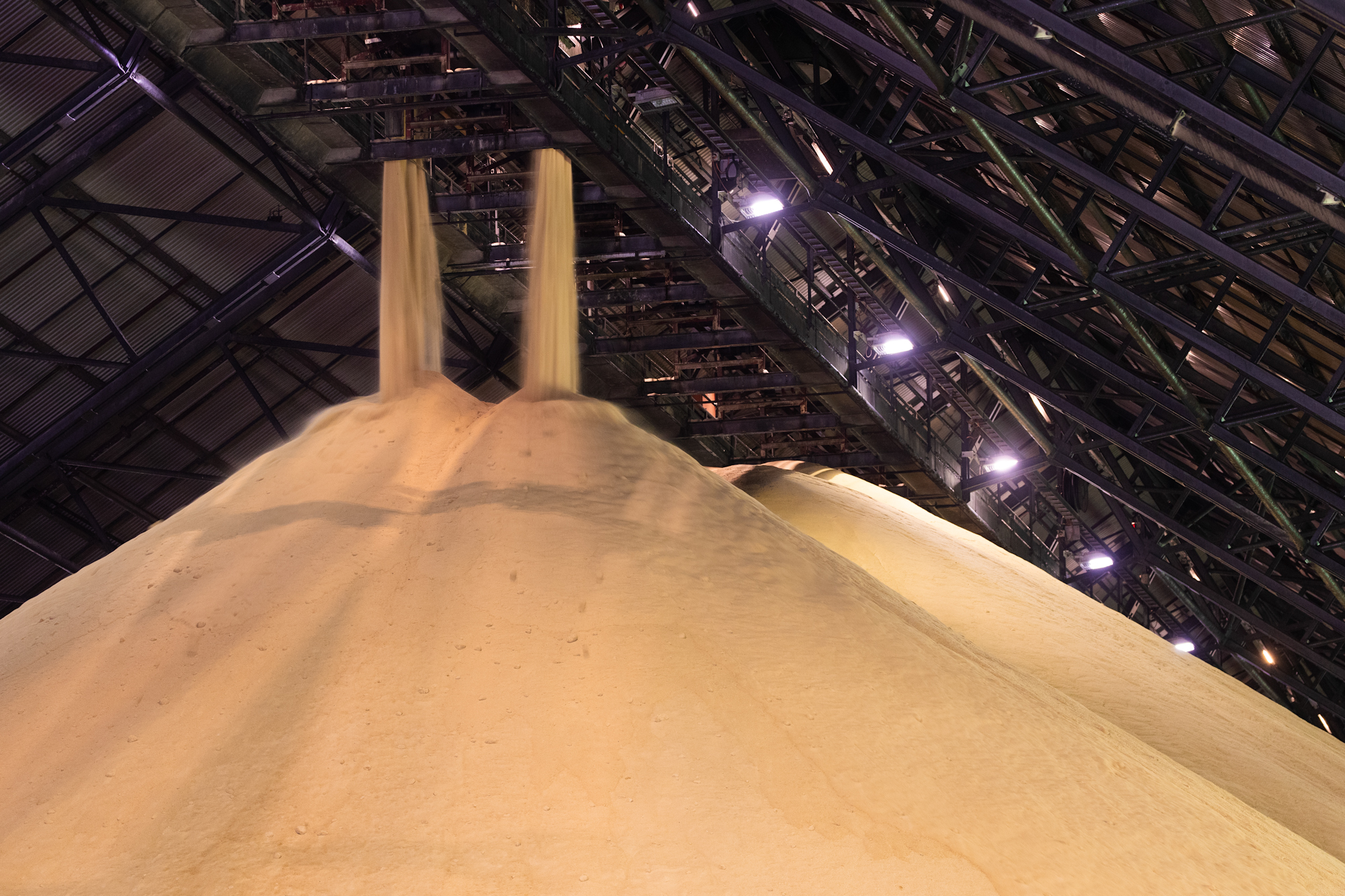
By Joseph Borg, Chairman, CANEGROWERS Mackay A decade ago, Queensland Canegrowers was in the throes of a fierce defence of growers’ right to choice of sugar marketer. Now, the industry has been called to consider the future of the Code of Conduct that emerged from that industry debate. Growers retain an interest in the sugar produced from their sugarcane, and in the 2010’s, the industry moved away from a single desk marketer model with new marketers emerging. Some industry players wanted growers to market only through their miller. The situation was resolved through good support from some key politicians of the day – and particularly the then member for Dawson George Christensen – and through some strong and important industry tools including the 2015 “Real Marketing Choice” amendments to Queensland Sugar Industry Act, then at a Federal level in 2017 with the introduction of the Sugar Industry Code of Conduct. The Code of Conduct requires parties to negotiate in good faith, and protects growers’ ability to choose who markets their Grower Economic Interest sugar, and provides access to pre-contract arbitration if negotiations break down. This week, submissions closed in the review of the Code of Conduct, with the Australian Government to consider these and consider whether the Code be allowed to sunset as scheduled on 1 October 2027, or be retained as is, or with changes made. CANEGROWERS is committed to the Code being retained in its current form. In our view, the current Code continues to provide an essential and balanced framework that promotes fair dealing, transparency and workable commercial discipline across the sugar supply chain. The review is intended to examine whether the Code is meeting industry needs and objectives. The Australian Government has described the Code as supporting fairness and transparency in commercial arrangements, and that objective remains as important today as when the Code was introduced in 2017. The underlying market conditions that justified its introduction have not disappeared. In most cane-growing regions, growers cannot simply switch counterparties if negotiations fail. Cane is perishable, harvest windows are tight, and freight economics limit alternatives. In that setting, the Code performs an important public policy function by establishing minimum rules of conduct and a framework for resolving bargaining impasses. Those protections are not redundant; they are fundamental to a fair negotiating environment. Importantly, the current Code is not an excessive or unworkable intervention. It does not remove commercial risk, guarantee outcomes, or prevent parties from pursuing their legitimate commercial interests. Rather, it sets baseline expectations for conduct, transparency and process in circumstances where bargaining power is uneven. In our experience, that balance remains appropriate. The Code provides a disciplined structure for negotiation while still allowing commercial parties to reach outcomes that reflect local conditions and business realities. It is critical that the Federal Government upholds this important industry tool, allowing us to retain the Australian sugar industry’s good reputation as an equitable, stable player in global sugar trade. The Sugar Industry Code of Conduct protects growers’ ability to choose who markets their Grower Economic Interest sugar. Photo supplied
Read the full story

Back pain can be experienced anywhere along the spine and can range in intensity from a dull, constant ache to a sudden, sharp or shooting pain.
It’s a relatively common ailment and can be managed effectively with the right treatment.
Dr Bob Wong of Art of Acupuncture said most of his back pain patients have had chronic pain for a very long time, and acupuncture can provide a unique treatment to ongoing problems.
“Many of our patients have tried the conventional approach, not had great success and are looking for an alternative approach to healing,” he said.
After an initial examination, Dr Wong will complete a patient’s health history and see if there is any structural damage before mapping out a treatment plan to get the patient out of pain and enjoying life again.
“Treatment may include acupuncture, cupping, or herbs to reduce pain and inflammation in the back and then retrain the brain and body to heal itself,” said Dr Wong.
Back pain can stem from a variety of sources but there are three common day-to-day factors.
Firstly, physical: pain from structural issues such as bulging discs, pinched nerves or trauma from a tear or sprain.
It can also be from postural issues from long hours at a desk or work-related injuries.
Being overweight can also cause pain due to the extra pressure it puts on the lower back.
Secondly, back pain can come from emotional stress which triggers an inflammatory response from the body.
Thirdly, diet and lifestyle, including inflammatory foods such as sugar, alcohol, and ultra processed foods, can cause back pain.
If you are experiencing pain for more than several weeks, Dr Wong recommends checking in with your local GP who may recommend physio exercises or rest and heat packs.
If there is still no progress, they may recommend a scan or some imaging to look for structural damage.
Dr Wong recommends gentle stretches and acupressure to treat back pain at home and has developed online resources to aid these exercises.
Visit www.tiktok.com/@art_of_acu_ or www.youtube.com/@art_of_acupuncture to find out more.

Cancer Council volunteers in Cairns were joined by Minister for Health, Mental Health, and Ambulance Services Shannon Fentiman last week to celebrate Daffodil Day, the organisation’s iconic fundraising initiative to support those affected by cancer.
It comes as data from the Queensland Cancer Register (QCR) has revealed a significant decline in cancer mortality rates among Queenslanders.
The state-wide decline over the last five years can be attributed to various factors, including significant progress in cancer treatments (specifically in immunotherapy), the efforts of committed healthcare providers, investments in prevention initiatives, and enhanced diagnostics using genomic sequencing.
“We know five-year cancer survivorship rates among Queenslanders have increased from just over 50% in the 1980s to over 70% within the last five years,” said Cancer Council Queensland’s Chief Operating Officer Balveen Ajimal.
“We also know one third of all cancers can be prevented simply by modifying lifestyle factors.
“Each year, more than 32,000 Queenslanders are diagnosed with cancer.
“We are using data from our award-winning Cancer Atlas to understand the needs of cancer patients across Australia and develop the right support services for all Queenslanders affected by cancer, regardless of where they live.”
The Cancer Alliance Queensland (CAQ), which manages the QCR, has developed an interactive dashboard to allow public access to key incidence, mortality, and survival data for Queensland.
The Cancer Data Explorer shows that from 1994 to 2020, there was a 27% decrease in the cancer death rate, resulting in nearly 37,000 fewer deaths than anticipated.
“A decline in cancer related deaths offers hope and optimism to the thousands of individuals and families affected by the disease here in Queensland,” said Health Minister Shannon Fentiman.
“This is a credit to the commitment of clinicians who treat cancer, our advancements in research and medical technology, as well as our investments in prevention programs.
“Despite this progress, we know that emerging activities like vaping and continued exposure to the sun pose a risk to increasing cancer rates.
“We will continue to support charities like Cancer Council Queensland to build awareness and provide support to those affected by cancer.
“We know that cancer diagnosed at an early stage is more likely to be treated successfully.
“Please seek support from a health care professional if you’re concerned.”
Queensland Cancer Control Safety and Quality Partnership Chair Euan Walpole said there have been significant advancements in cancer treatments in the past five years, particularly in the field of immunotherapy.
“Breast cancer continues to be the most commonly diagnosed cancer in women, but thanks to improved screening methods and treatment advances, mortality rates have decreased,” he said.
“In Queensland since 2013, mortality due to melanoma of the skin has decreased by 41% overall.
“These improvements are thanks to the introduction of immunotherapy trials.”
Visit www.daffodilday.com.au to learn more about Daffodil Day and to donate.
Photo supplied: Shannon Fentiman MP

Mackay Base Hospital is anticipating the return of obstetrics and gynaecology specialist trainees in 2024.
The Royal Australian and New Zealand College of Obstetricians and Gynaecologists (RANZCOG) has advised the health service that trainees in their third or fourth year of Basic training are now going to be able to rotate through Mackay Base Hospital.
Chief Medical Officer Dr Charles Pain said the health service was delighted to hear trainees would return.
Mackay Base Hospital has not had accredited trainees since June 2021 and was given a list of actions to improve staffing, support for trainees and workplace culture.
“The College provided 21 conditions to meet, and they are happy with our significant progress towards meeting these,” Dr Pain said.
“Most of their conditions have already been met with the remainder listed as To Be Confirmed once the trainees are in place,” he said.
Dr Pain said the College was also happy with progress made to recruit senior staff in Obstetrics and Gynaecology.
“We have submitted regular progress reports to the College advising of our implementation of their recommendations and they have commended us for the marked improvement they have seen.
“We will welcome two more staff specialists in August and December, giving us seven Senior Medical Officers in Obstetrics and Gynaecology,” he said.
Mackay has recently become part of a new regional training hub with Townsville and Cairns to support training O&G specialists.
Mackay will have two, third- or fourth-year trainees, with Townsville and Cairns providing training for all year levels.
“This is important from a recruitment and retention perspective – if doctors can complete all of their speciality training in north Queensland, we hope they will choose to continue working here and this will help contribute to the sustainability of services,” he said.
The College will visit Mackay in late 2024 for a Reaccreditation Review Visit.
“I would like to thank staff in Obstetrics and Gynaecology and the broader Women’s Health Unit for their hard work to achieve re-accreditation. It has not been an easy time, but I am confident that under the leadership of Acting Clinical Director, Dr Leigh Grant, we will continue to go from strength to strength.”
Mackay Hospital and Health Service

The good thing about Father’s Day weekend is that I (the father) get to decide what my son does with me for the whole weekend. So, last weekend James and I spent one morning supporting the Mackay Community Visitors Association (MCVA) in a fundraising opportunity.
The Mackay Golf Club holds a charity golf day every year and spreads the funds raised to 10 local charities and not-for-profits. The MCVA is a beneficiary this year and we needed to supply two volunteers to assist with registration and the selling of raffle tickets.
I volunteer my son for about three to four charity events each year. He used to protest, but he doesn’t anymore… well not as much. I think he has started to realise the personal benefits of volunteering.
Volunteering is on decline around the world for many reasons and many service organisations are now ceasing to exist. There are not many young people coming through to replace the older generations when they step down. This will leave our generation without the many services provided by volunteer organisations when it’s our turn to retire or when we can no longer support ourselves.
Healthdirect.gov.au says volunteering can give our kids a sense of achievement and purpose, help them feel better about themselves by improving self-esteem and confidence; help combat stress, loneliness, social isolation and depression. It can help them meet new people, which can help them feel more connected and valued.
We can expose our kids to service through volunteering in many ways and then it’s up to them how they live their lives. As a child, my parents put me in Cubs, Scouts, Nippers/Surf Life Savers, our footy club and Cadets and I’ve been volunteering with many organisations ever since.
Volunteering helped me understand my purpose. I’ve made lifelong friends and it even helped me get two paid jobs because employers seem to like giving jobs to people connected to their communities. I want all of that for my son as well. I want these things for all of our kids, so talk to them about volunteering – it may set them up for life.
Cr Justin Englert
Mackay Regional Council

Hundreds of excited students are busy practicing lines and rehearsing their moves ahead of this evening’s first performance of Matilda Jr the Musical at Cannonvale State School.
An adaption of the Roald Dahl book and multi-award-winning stage performance written by Dennis Kelly and Tim Minchin, the show will be full of music, dance, fun, laughter and of course many hilarious moments when Mrs Trunchbull’s antics cause chaos.
Saskia Hoey from Year 5 plays the scary principal, Mrs Trunchbull, and says she was thrilled to be given the part after participating in two previous school musicals.
“I am really looking forward to seeing everyone have a good time!” she said.
Willow Hammond, who plays Matilda, says she was surprised to be picked for the main role.
“I love singing and acting so I thought I’d go for one of the mains, but I was so surprised to get Matilda,” said Willow.
“I love being on stage, not just dancing, but acting too.”
The famous cake eating scene features Year 6 student, Cruze Nahas, who plays Bruce.
“It’s been great being part of the musical because I have really conquered my fears, I get really nervous, but I love singing!” he said.
Torben Bradley plays Eric and divulged that he decided to be part of the musical because his sister bet him $50 he wouldn’t get a part as a main.
Delighted to prove her wrong, Torben loves his role where he gets Mrs Trunchbull to drink a newt.
One of the most famous scenes is undoubtedly the moment that Amanda Thrip is swung around by her pigtails.
Mia Berry plays this character and said she loved the whole experience.
“I love the whole thing and practicing with everyone, and all the sets have been amazing,” she said.
“It’s my first time as a main and I love singing!”
Meanwhile, Brodie Lambie from Year 6 plays Nigel, the young boy who gets covered in a blanket of coats.
“I’ve always wanted to be a main and this is the year!” He said.
Willow Thompson is Hortensia and, having watched her three sisters perform in musicals over these years, is thrilled to have an exciting role.
“I love having a microphone and being on stage – it’s really cool!” she said.
Evie Berry from Year 5 plays Lavender and says she loved meeting all the mains.
Charlotte Behnck said her favourite part was spending time with friends and making new friends.
With Director Angel Kanniah at the helm and a sea of other teachers, parents, and volunteers all behind the scenes, the musical is bound to be a huge success.
Willow Hammond plays Matilda and Saskia Hoey plays Mrs Trunchbull in the incredible Matilda Jr the Musical which debuts this evening. Photo credit: Rachael Smith
Willow Hammond, who plays Matilda and Saskia Hoey who plays Mrs Trunchbull, lead the show at Matilda Jr the Musical. Photo credit: Rachael Smith
The main characters starring in the show
Cannonvale State School preps love performing in their first show as the ‘Miracles’ in Mummy Says I’m A Miracle

The man accused of killing three family members in Bogie, west of Bowen, last year has attempted to represent himself at court this week saying that he was unable to get legal aid because he was told he didn’t have enough paperwork.
On Tuesday Darryl Valroy Young appeared in Bowen Magistrates Court and his case was adjourned until next Tuesday.
It has been over a year since he allegedly murdered married couple, Mervyn and Maree Schwarz along with Maree’s son Graham Tighe.
Maree’s other son, Ross Tighe, was also shot but managed to escape, driving over 40 kilometres to raise the alarm.
Mr Young appeared by video link from Townsville Correctional Centre on Tuesday and an ABC News court report stated that he tried to represent himself because he was refused legal aid as he didn’t have enough paperwork.
The matter was adjourned once again, but Acting Magistrate Ron Muirhead told Mr Young he could not continue to delay.

Hi Everyone,
It is so wonderful to hear that the Proserpine Whitsunday Uniting Church has raised $250,000 in their Brick By Brick campaign to fund the rebuild of their church.
To think this massive sum of money was raised in just four weeks, however, is astounding!
From individuals purchasing one brick to larger entities buying 250, the whole community has come together, getting behind this important building that not only holds church services but also provides a local hub and meeting place for all to enjoy.
While less and less people identify as being religious these days, Christianity remains the biggest religion in Australia, at 43.9 per cent of the population according to the Bureau of Statistics 2021 survey.
I come from a mixed family, my dad a staunch atheist and my mum a practicing Christian.
When my mum and I are together, I attend church with her every week, but I have to confess, when she’s not here to keep me honest, my attendance slips.
Despite this, I love the inclusivity of the Christian Church and always try to live by its morals.
I think that’s what I love most about love the concept of the new building that will become Proserpine Whitsunday Uniting Church.
It is not just a space for practicing Christians, it will be open to all denominations, and it will become a central location where everyone in the community feels welcome.
And while it will of course always be a sacred space, it will also be a gathering place for merriment and celebration, a venue for everyone to get together.
This means that, while many of us do not attend church on a weekly basis, it will still play an important role in all our lives.
Rach
“My religion is very simple. My religion is kindness” (Dalai Lama)

When a honey-mooning couple embarked on an underwater adventure in the Whitsundays, they never dreamt that their day would become part of a lifelong memory, and not just for the incredible marine life they saw.
It was while snorkelling in Saba Bay, that the groom’s ring had somehow slipped off and disappeared into the water.
Distressed and disappointed, the couple’s only option was to return to the mainland, thinking the wedding ring had been lost forever.
“They were very casual but you could tell they were upset,” said Nicole Rosser from ZigZag Whitsundays.
“When items get lost under the water, they don’t often come back, but when our crew returned to the same spot the following day, they were determined to have a look.”
ZigZag regularly complete environmental surveys of the reef and so they used the opportunity to scour Saba Bay for their studies and also to try and find the ring.
Miraculously, the ring was found glittering on the seabed sometime later.
“The crew were absolutely astounded!” said Nicole.
“And when we told the couple they were happy, stunned and appreciative – fortunately, they were still in town and were able to meet the boat at the jetty, collecting the ring just 15 minutes before they had to leave for the airport!”
“Your special moments are our special moments too. We're more than just a tour—we're a community, and we take care of each other.”
Wedding ring retrieved from the ocean and returned to the happy honeymooning couple. Photo: Supplied

The annual Whitsundays Songwriter Festival and Residency has concluded, following a massive success with a sold-out performance event at Paradiso on Saturday evening.
With headliners Mark Sholtez, Toni Childs, and Vika and Linda joining as the professional mentors, 11 aspiring songwriters engaged in a week of dedicated support and encouragement, producing music with their idols.
The culmination of the event was the Concert and Conversation showcase, held at Paradiso Restaurant on Saturday evening, where each aspiring songwriter was given the stage to perform an original song they’d developed over the week to a live audience.
Karen Jacobsen, Co-Founder of Whitsunday Songwriter Festival and Residency said the week helped aspiring songwriters develop their original music alongside professionals that have been involved in the industry for years.
“The mission of the festival is to create and support a new generation of songwriters, and make opportunities for regional Australia, that big cities have,” she explained.
“We bring these industry connections to the regions and create a thriving hub of music and song writing here in the Whitsundays.”
On the final evening, all the songwriters performed two songs together and two songs developed during the residency.
“Brand new music is always exciting, and these songs were quite raw,” said Karen.
“One celebrated music and the art of songwriting, the other was about heartbreak, the age-old topic for all.
“It was a wonderful evening and the audience was moved to tears.”
Karen explained that each artist on the residency created new music, with even the mentors writing new songs we can expect to hear in upcoming albums.
Vika Bull, Toni Childs, Karen Jacobsen, Mark Sholtez, Francesca de Valence, and Linda Bull. Photo credit: Bronte Hodge

A 43-year-old Proserpine woman has been charged, following a fatal car accident which occurred when her ute crossed onto the wrong side of the road and collided with a station wagon, on Strathdickie Road, on the evening of August 20.
A 67-year-old Dingo Beach man was the driver and sole occupant of the station wagon and unfortunately died at the scene.
The Proserpine woman was taken to Townsville Hospital and was later charged with dangerous operation of a vehicle causing death while adversely affected by an intoxicating substance.
So far this year Mackay and Whitsunday Police have intercepted over 670 drink drivers across our region, which is a similar figure from this time last year.
“Traditionally we see an increase in the drink driving offences as we approach Summer and the Christmas holidays,” said Shane Edwards, Senior Sergeant of Highway Patrol Mackay.
“Drink Driving is a significant contributor to the fatalities on our roads in Queensland with over 30 per cent of drivers and riders involved in fatal traffic crashes being over the legal limit.
“Alcohol impairs a drivers/riders reaction time along with their ability to make smart decisions.
“We have had 13 deaths on our Districts roads in 2023 and drink driving is being investigated as a contributing factor in around 50 per cent of those incidents.”
Mr Edwards and the Mackay Whitsunday Police urge drivers to not drink and drive.
“Have a designated driver if you plan on going out with friends
“If you see that friends have been drinking don’t let them drive, you could be saving their lives as well as other members of public.”
.jpg)
Community spirit has far surpassed even the wildest of dreams of Proserpine Whitsunday Uniting Church whose Brick By Brick campaign has raised an astounding $250,000 in just four weeks.
This exceptional community effort means that the construction of the new church could begin early next year.
“We need the contract to be signed by mid-November and now that we have the funds in place we will be approaching architects and consultants in the next few weeks,” said Reverend Suzy Sutton.
“Builders can be looking out for tenders from October and contracts will be signed by the end of that month!”
Steeped in history, a church has been located at the corner of Main and Herbert Streets in Proserpine since 1899 when local families worked together to construct the building.
It is only fitting now that the community have pulled together once again to continue this legacy.
Irreparably damaged in the 2017 Cyclone Debbie, the Uniting Church was demolished in 2021.
Since then, the congregation has worshipped at a temporary location, a community hall at the end of the street.
Launching the Brick By Brick fundraiser on August 1, the community were encouraged to participate in the much-needed rebuild.
Individuals could become Community Champions and purchase a “$100 brick” and larger entities could scale right up to “Platinum”, purchasing 250 bricks for $25,000.
Rev Sutton said that she was thrilled to find out at least three platinum sponsors had come on board, but that all the individual sponsors were just as appreciated for their kind and supportive gestures.
“This amazing result means we can step forward confidently,” she said.
“We can’t believe it and all we can say is praise God!”
While Rev Sutton says she cannot wait to see the community enjoying the facility.
“The church will be multi-purpose and provide a space for many,” she said.
“It will be a hub for social life, dinners, meetings, families, markets and concerts.”
The old St James Church before it was demolished in 2021. Photo supplied

Endurance athletes from around the country are flocking into the region this week ahead of the Accom Whitsunday Trail Fest which is due to kick-off on Sunday morning.
With a variety of off-road racing events, the Trail Fest offers something for everyone, from beginners and children all the way through to experienced athletes looking to bring home a trophy.
Organised by the Whitsunday Running Club, the event is now in its 18th year and 2023 is expected to be another huge event with 120 participants registered.
Race Director Andrea Farley said she is thrilled to see competitors come from around the country and even some international guests attend this year.
“Trail Fest is a great way to explore our national parks and celebrate our region,” she said.
“It a community event, supported by local sponsors and run by volunteers from the Running Club.”
The most ambitious race on the event day calendar is the 58-kilometre Shokz Ultra which is now in its sixth year and has become a popular challenge for members of the Australian Trail Running Community.
A traditional favourite is the 28-kilometre Accom Whitsunday Trail which started back at Trail Fest’s inception in 2005.
The original and still most popular distance, this race is a point-to-point run from Brandy Creek to Airlie Beach.
Current records are held by women’s champ Montanna Mcavoy who completed the trail in 2.37.06 hours in 2022 and men’s reining champ Sam Stedman who completed the trail in 2.29.44 back in 2021.
This race maintains its position as the Whitsundays preeminent off-road race, attracting trail runners from Australia and overseas.
While many of the events are challenging for experienced runners, there is also something for beginners and children, with a range of other events perfect for those wanting to give trail running a go.
The Honeyeater Ray White Challenge 10.5-kilometre challenge is quickly becoming a popular favourite trail run for beginner runners and, while it is a challenging run, ascending into the clouds towards the lookout, the view atop is as rewarding as the race.
Children are invited to enjoy a fun and lively race at the Tarkine Kids Beach Bash which runs along the Airlie Beach Foreshore to the Dugong then back towards the start and then another lap along the beach.
At approximately 1400 meters, the race is challenging but also achievable for children from 4-12 years of age.
The day’s event concludes with the popular Survivors Beach Bash which is open for participants who ran the 28-kilometre, 58 kilometre, or volunteers.
This fun run is a great way to celebrate the event and the first male and female will win lucky dip prizes.
Winners of each category will receive a medal and there are cash prizes for anyone who beats an existing record.
The community are also invited to come down and watch or participate on the day.
RACE TIMES:
4:30am Competitors for 58 km meet.
5:00am START – 58 km race.
5:00am Competitors 28 km meet.
5:30am 28 km bus leaves from Race Precinct to Brandy Creek
6:30am START – 28 km from Brandy Creek
8:30am Race Briefing for Honeyeater Challenge
9:00am Honeyeater 10.5
10:30am Kids Beach Run
1:00pm Presentations
2:30pm Survivors Beach Bash
Trail Fest organisers, Andrea Farley, Chris Harvey, Robyn Corrigan, and Liv Compton, Photo credit: Bronte Hodge

Bowen was host to the latest Whitsunday Regional Council community catch-up last week, an initiative to allow the council to better connect with the community it services, build relationships and gain feedback on issues.
Meeting at the Bowen PCYC, Mayor Julie Hall welcomed 20 residents to discuss ongoing and upcoming Bowen projects.
Along with hearing from members of the community, discussion included bush fire preparedness, yellow crazy ants, the proposed closure for the Cape Edgecumbe Trails upgrade, the Muller Lagoon Park Masterplan results, and storm season readiness.
Mayor Hall and Councillors also fielded questions regarding the Whitsunday Airport Masterplan and amenities upgrades in the Bowen township.
The Community Catch-ups are an initiative of Mayor Hall and Councillors to open conversation in the community.
The next Community Catch-up is scheduled for Scottville on September 20.
Council encourages residents to visit the Your Say Whitsunday portal to propose ideas or suggestions for the next catch up.
Mayor Julie Hall at the Bowen Community Catch-Up last week. Photo supplied

Raising $10,000 from their annual Charity Golf Day, the Whitsunday Lions have distributed the monies to three local charities, The Whitsunday Suicide Prevention Network, Whitsunday Counselling and Support, and Proserpine Hospital Auxiliary, in a special ceremony held at Whitsunday Green Golf Club on Saturday.
“We’re amazed at the amount of support we get,” said Allan Gravelle, a representative from Whitsunday Lions.
“One of the really important aspects of fundraising is the number of local businesses that come and contribute, and the businesses here are very generous.”
On the Golf Day held earlier this year, Whitsunday Lions saw over 150 competitors take to Whitsunday Green Golf Course, many of which were business teams.
$4000 from the day was donated to Whitsunday Suicide Prevention Network, which will fund counselling services, including post-suicide resilience counselling.
“It is really difficult to talk about suicide,” explained Matt Stokes, Committee Member of Whitsunday Suicide Prevention Centre.
“We are very grateful for this donation to help fund our counselling services to families post suicide.”
Whitsunday Counselling and Support were the recipients of another $4000 sum.
“We would like to thank everyone for this very generous donation,” said Leanne Althaus, Administrative Services Manager.
“We are going to put this money towards establishing a teenager room, so that teenagers who are victims of domestic violence and abuse are able to engage in counselling to recover from their trauma.”
Proserpine Hospital Auxiliary received $2000, to go towards much-needed equipment for the hospital.
“Over half of the equipment at the Proserpine Hospital has been supplied by different community groups,” explained Lola Moody, a representative of the Proserpine Hospital Auxiliary.
“This donation gives us the power to buy things to make patients more comfortable and make the strain on our nurses easier, so thank you.”
Whitsundays Lions encourages any community organisations to reach out if they’re facing tough times, as they endeavour to help wherever they can.
Whitsunday Lions donated funds to Whitsunday Suicide Prevention Network, Whitsunday Counselling and Support and Proserpine Hospital Auxiliary. Photo credit: Bronte Hodge

Whitsunday Regional Council have opened a consultation period asking the community’s opinion on whether to trial seven pedestrian crossings on Airlie Beach Main Street.
This move goes in hand with a Main Street upgrade which will see the lagoon and foreshore receive new landscaping, line marking, repairs, improved lighting, and deep cleaning of pavements.
The decision to trial the seven zebra crossings came from feedback gathered from a consultation period in 2022, which reported a majority of participants were in favour of prioritising pedestrians on Airlie Beach Main Street.
“The move to a pedestrian priority is a follow-up from a consultation last year,” a Council spokesperson said.
“This consultation showed there was a lean towards improving pedestrian priority.”
The last major upgrade to Airlie Beach Main Street occurred over 10 years ago, costing about $25 million for the project.
The current pedestrian walkways have been in place since this previous upgrade, and have signage stating, ‘Pedestrians only cross when road is clear’, giving motorised vehicles right of way.
“This new consultation is to gauge the sentiment for the number zebra crossings,” the Council spokesperson said.
The consultation period will run all of September, and members of the community are able to suggest ideas or share feedback through the Your Say Whitsunday Portal, or to Council at their stall at the Airlie Beach Markets.
Seven new zebra crossings have been proposed, with the community encouraged to share their thoughts to Council. Photo supplied
Publishers Indemnity. Any individual or entity that places advertising, supplies copy material, or submits editorial content to Core Life Publishing agrees and undertakes to ensure that all such material:- Does not infringe upon any copyright, trademark, or other intellectual property rights;- Is free from any content that could be considered defamatory, libelous, or slanderous;- Does not infringe upon any rights related to privacy or breach of confidence;- Contains no obscene, indecent, or otherwise unlawful material;- Complies fully with the Trade Practices Act and all other applicable laws, regulations, or statutes.Furthermore, by submitting or placing such material, these individuals or entities agree to indemnify and hold harmless the publisher, Core Publishing and Events Pty Ltd, and/or its agents from and against any and all investigations, claims, demands, liabilities, damages, costs, or judgments arising out of or in connection with the material provided. All material is believed to be accurate at the time of printing and remains the copyright of Core Publishing and Events Pty Ltd.
© 2026 Mackay and Whitsunday Life Pty Ltd.
