
Independently Owned, Locally Grown, Community Loved

OPINION PIECE from the office of Federal Member for Dawson Andrew Willcox There is no question that immigration into Australia is out of control. The government’s numbers are too high, and standards are too low. A sustainable migration program must consider our capacity to provide housing, healthcare, infrastructure and the essential services everyone relies on, and Australians must come first. But Labor’s decision to target Working Holiday Makers Visa holders is not the answer. These people filling vital gaps in our workforce are not the cause of Australia’s housing crisis. In many cases, they are living in accommodation provided by the very businesses that employ them. The National Farmers’ Federation has made the point that Working Holiday Makers generally stay in hostels, caravan parks or purpose-built on-farm accommodation. Resorts usually have on-site staff quarters. They are not the source of Australia’s housing shortage. So why is Labor making it harder for them to come here, when these workers fill genuine jobs that regional Australia holds? Working Holiday Makers fill approximately one in seven farm jobs nationally and are particularly important during peak agricultural periods, which for Dawson, it is right now! Farmers rely on these workers to plant, pick, pack and harvest the produce that ends up on Australian supermarket shelves. Having run one of Australia’s largest tomato farms, at times Working Holiday Makers made up more than 50 per cent of my workforce. Without them, much of our crop simply would not have been picked in time and rotted in the paddock. Some may say, why not employ the Australians who don’t have a job and are on “the dole”? Can I say, this does not work. Most farmers will employ Aussies over travelling backpackers, but many either don’t want to do the work or don’t turn up after the first day. Who picks the fruit or veggies then? Farmers are already warning that visa delays are leaving them without workers. The NFF says approvals that once took days are now facing processing times of up to three months, and this time frame can be the difference between harvesting a crop or losing it. That should concern every Australian already feeling the pressure at the supermarket checkout. The same problem is playing out in tourism. Across Dawson, Working Holiday Makers are an important part of the workforce supporting tourism and hospitality, particularly in the Whitsundays. They help fill shifts, work in hotels and restaurants, support tour operators and keep businesses running through their busiest periods. They also contribute to the local economy. They spend money on food, fuel, attractions and tours, supporting the small businesses that depend on a strong visitor economy. That is why tourism and business leaders across North Queensland are raising the alarm. They understand what happens when a regional business cannot get enough staff: opening hours are reduced, and services are cut, creating a downward spiral. We do need to reduce migration to sustainable levels. We need stronger integrity measures, and we need to crack down on rorts. But responsible migration policy means understanding which parts of the system are creating pressure and which parts are helping Australia function. Working Holiday Makers are not the problem. They are part of the workforce solution for regional. Australia. People have had a gutful of watching their standard of living go backwards. Groceries, fuel, housing and everyday expenses are already putting enormous pressure on families. The last thing Australians need is another reckless policy that makes it harder to produce food, harder to run regional businesses and harder for tourism operators to find the workers they need.
Read the full storySomeone sold a house in Sydney last week for $9 million less than they bought it for four or five years ago. The sellers had bought the property in Sydney’s eastern suburbs for $29 million and sold it for $20 million in a sale forced by their bank. I imagine the sellers are a little disappointed by the government’s decisions on negative gearing and capital gains tax and feeling pretty hurt by the increased interest rates. Australia’s interest rates are on the rise and are now sitting at levels not seen since 2011. Increased cost of living is hurting people around the country and interest rates are playing into that. But the impact of interest rates is not felt evenly around the country. The far-higher property prices mean people in the major cities suffer much more than regional areas with the rates increase. That is certainly not to say people in Mackay are unaffected by the cost of living; it’s just that the impact of interest rates increase on a $400,000 mortgage is much less than the impact on a $1m mortgage. There are other Mackay-specific factors that are in play when discussing the current housing market. The big factor is the role of coal in our economy. Most of the coal extracted and exported from our region is coking coal, which is used to make steel. The price of coking coal is around $280 a tonne, which is about 50 per cent up. Good activity in the coal market translates to good news for the Mackay economy, as it is an economic engine that other cities and regions just don’t have. Good activity in Bowen Basin flows throughout the Mackay economy; Paget workshops, transport, suppliers and related businesses all benefit. But so do other, non-mining-related businesses as they benefit from the general confidence and spending that goes on. The strong mining activity also means mines need to keep their staff levels up and that means more people moving to Mackay. Of course, Mackay is much more than a coal mining town but if the coal sector is going well those other areas definitely benefit. It is a confidence boost for Mackay people looking to get into the housing market and those wanting to upgrade or downsize. It also means continuing strong demand from people wanting to rent a property and it will be interesting to see what sort of activity that creates from investors. Investors have walked away from the big-city markets because they can no longer use negative gearing on established properties that do not have a sufficient yield to be positively geared. Negative gearing has never been a big thing in Mackay because our prices are lower and rental returns continue to be strong so many investors have a positively geared property. Around the country everyone is nervous about the state of play and the probability of more interest rate rises. But strong coal prices and an economy that is performing well mean Mackay might just be presenting an opportunity for buyers and sellers that doesn’t exist in other parts. I remember when national confidence was flying high and Mackay prices were going up significantly that many buyers were saying “I wish we had bought a while ago when the market wasn’t so hot”. I’m not armed with a crystal ball so I’m not here to tell you what is going to happen but I suspect there is a very good buying window right now for those looking for an opportunity.
Read the full story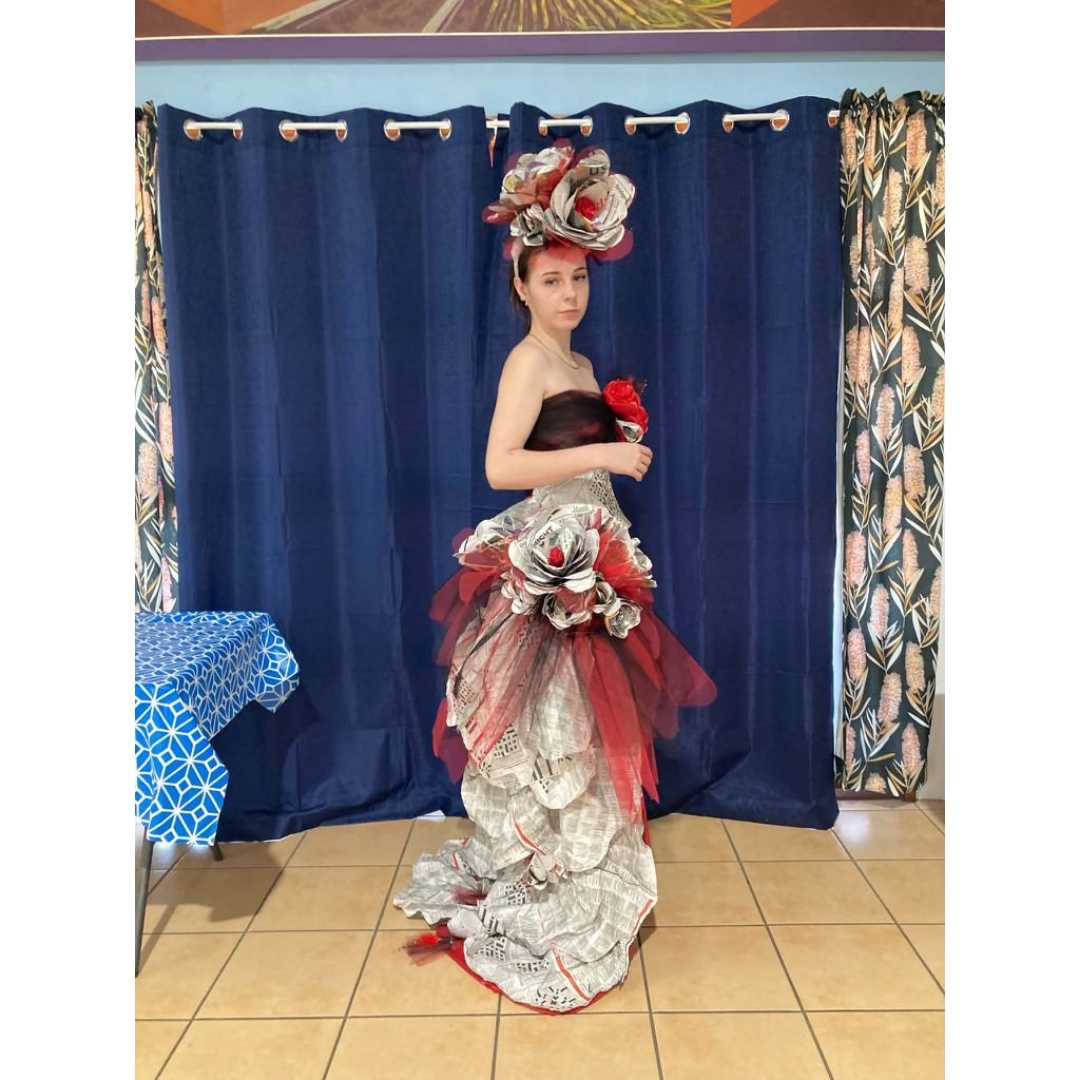
A local Mackay and Sarina based model has created a dress out of newspapers, including Mackay Life, for her upcoming pageant, representing her region and hometown on the runway as she vies for Miss Diamond International in Brisbane. Zoe Place will be competing this weekend in the three-day event, beginning this Friday 2nd October and ending on Sunday 4th October. The young model spent around a month creating her eco-fashion outfit, using old newspapers as the main material and transforming them into a bodice, skirt and flowers. Red elements were also incorporated into the design to give the dress a bold and glamorous pageant feel. Zoe said, “The entire concept was really about taking something that would normally be thrown away and turning it into something beautiful and meaningful.” Her eco-fashion creation will form part of a busy weekend in Brisbane, with the Miss Diamond International event including photo shoots, interviews, an eco-fashion show and the final pageant. Zoe has been preparing for the event by practising her strut and walking, preparing for interviews and getting comfortable in the different outfits she will wear throughout the weekend. Alongside her love of modelling, pageantry has also provided Zoe with a platform to raise awareness about causes close to her heart, including mental health, while fundraising for Beyond Blue. “Pageantry has given me more of a platform to combine my love for modelling with something that is really important to me.” “When I first started, I was more nervous about putting myself out there and worried about what others would think about me – but I’ve changed a lot through my journey in pageantry.” “Pageantry has also taught me that it’s not about how you look on stage. It’s about the person you are when you step off it.” “Every woman has their own unique journey and that journey is something we should all be really proud of.” “To me, it represents confidence, empowerment, kindness, and using your voice to make a difference.” Zoe said she was looking forward to meeting the other contestants, making new connections and creating memories. “I’m definitely looking forward to meeting all the new contestants and making new connections and creating memories that I will carry with me for a lifetime.” While Zoe hopes to eventually move to the city, her sights are set even further afield, with a dream of one day walking in New York Fashion Week. Mackay and Sarina local Zoe Place has created an eco-fashion dress from recycled newspapers, including Mackay Life, ahead of her Miss Diamond International pageant in Brisbane. Photos supplied
Read the full story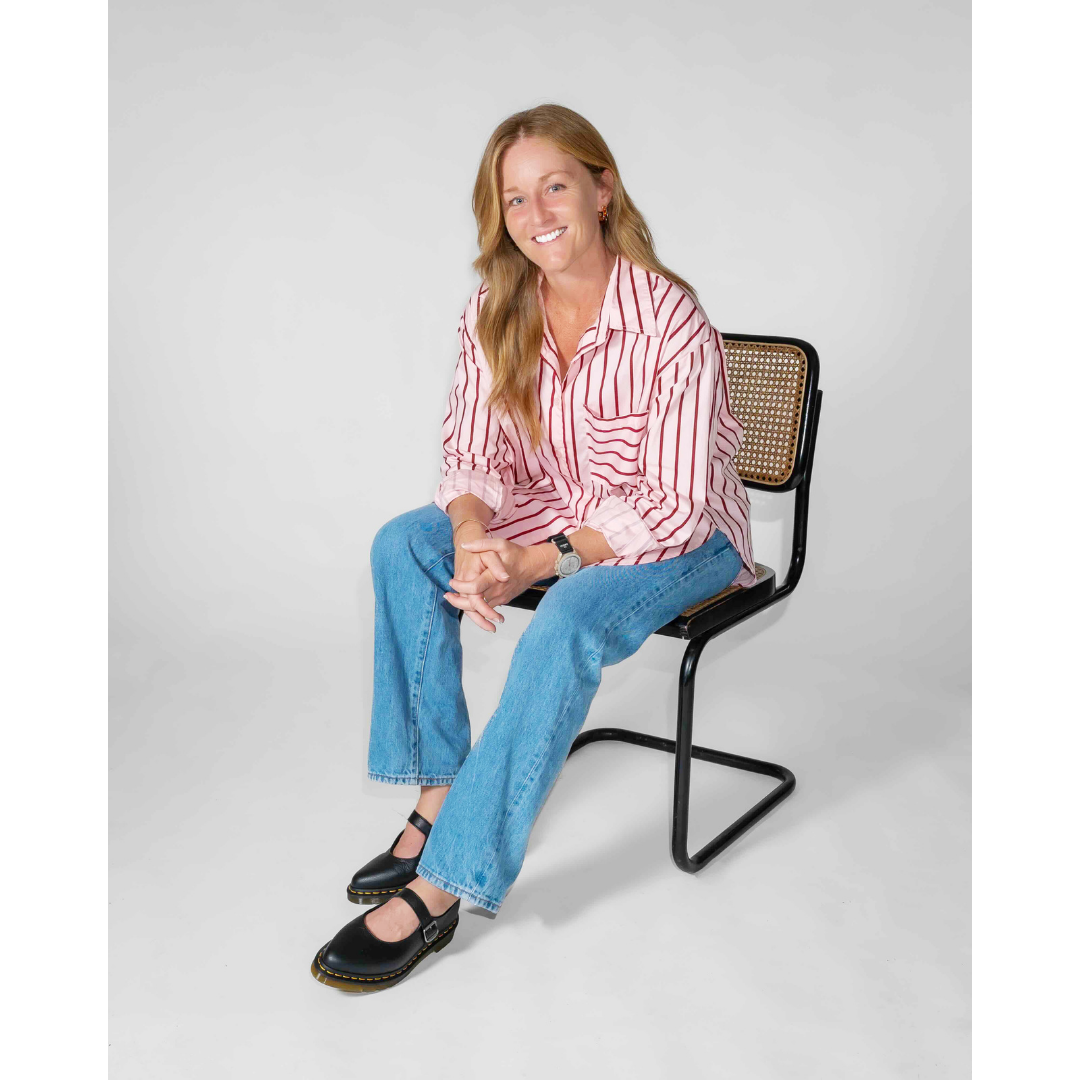
Trends, reels and the endless cycle of always wanting more has quietly bombarded the minds of countless social media users of all ages, but one former Mackay local has made it her mission to help others understand the effects of social media and find practical ways to break free from online addiction. Alexis Zahner is in Mackay over the next week to teach upcoming generations about social media and the effects it can have on the mind, particularly on identity, self-discovery, as well as the marketing strategies that get viewers hooked and influence their decisions. It is something Alexis knows first-hand can be a useful tool, but also a great disruption to authenticity and the world as we see and experience it. Alexis will hold a free meet and greet and book launch today, Friday 2nd October, at 5.30pm at the Mackay Surf Lifesaving Club, where she will give a talk and answer questions relating to her debut book, Real: Reconnecting to Yourself in a World of Likes and Lies. A former Mackay girl, Alexis spent the past 15 years working across business psychology, marketing and media, with her interest in social media influence beginning during her university studies at James Cook University in Townsville. Her own experience as a social media user, travel blogger and influencer eventually led her to question how much of her identity, decisions and values were being shaped by what she saw online. “The tipping point came for me about 3 years ago when I had this feeling that I couldn't separate influence from my own personal decision making,” she said. “I couldn't separate my own likes, dislikes, values, relationships from what I was being exposed to and being influenced by online.” “I found that I needed to take some time away from social media to recalibrate what was important to me and sort of reconnect and come back to myself.” Alexis said she understood the feeling of questioning who you are outside of social media. “I know what it feels like to live a life under the influence of social media and have that existential crisis of thinking to yourself, who am I? What do I like? What's the kind of life I want to live? and struggling to separate myself from influence.” Alexis is particularly passionate about reaching teenagers, who she says are in an important stage of identity development, and will share this message with Mackay high school students during her upcoming school talks. “Teenagers are really easily influenced by social media. So it's a really important age where we start educating them – not just on the mental health repercussions of things like social media and how it shortens their attention span, but how it actually influences who they become.” “If you're asking yourself these questions, it's not your fault. Social media is actually geared to create this impact on you.” Alexis encourages people of all ages to “start expanding beyond what you see on the platform.” “Dare to indulge in the things that you've always been curious about or things you used to love,” she said. “Don't be afraid to put the phone down to let yourself be curious and have fun.” What: Alexis Zahner's 'Real' Book launch When: 5.30pm Friday 2nd October 2026 Where: Mackay Surf Lifesaving Club Former Mackay local and author Alexis Zahner is returning home to share her experiences with social media and her debut book, Real. Photo supplied
Read the full story
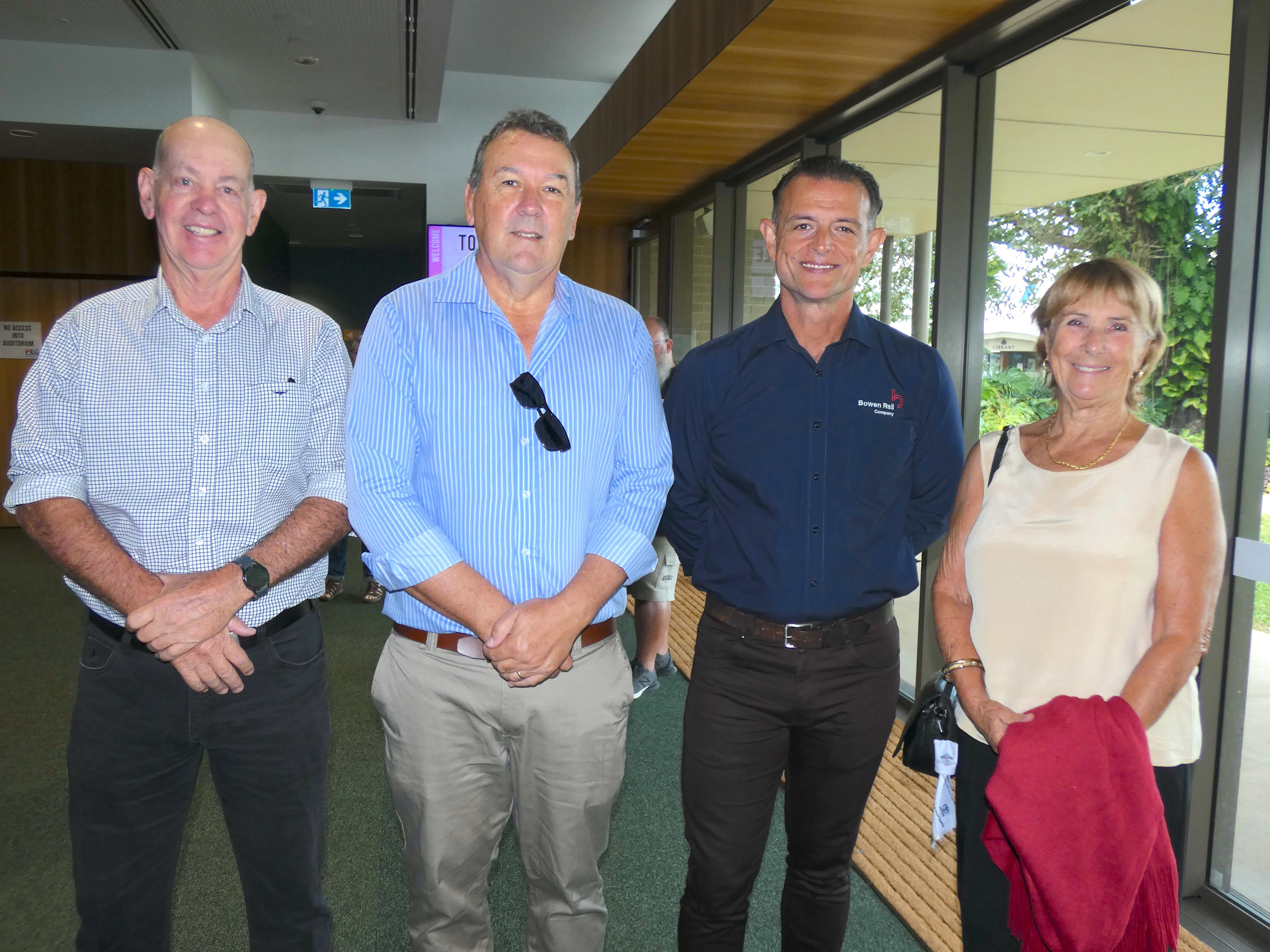
Paul McLaughlin/ Craig Barker / Mike Aviet / Marlene Reiffel
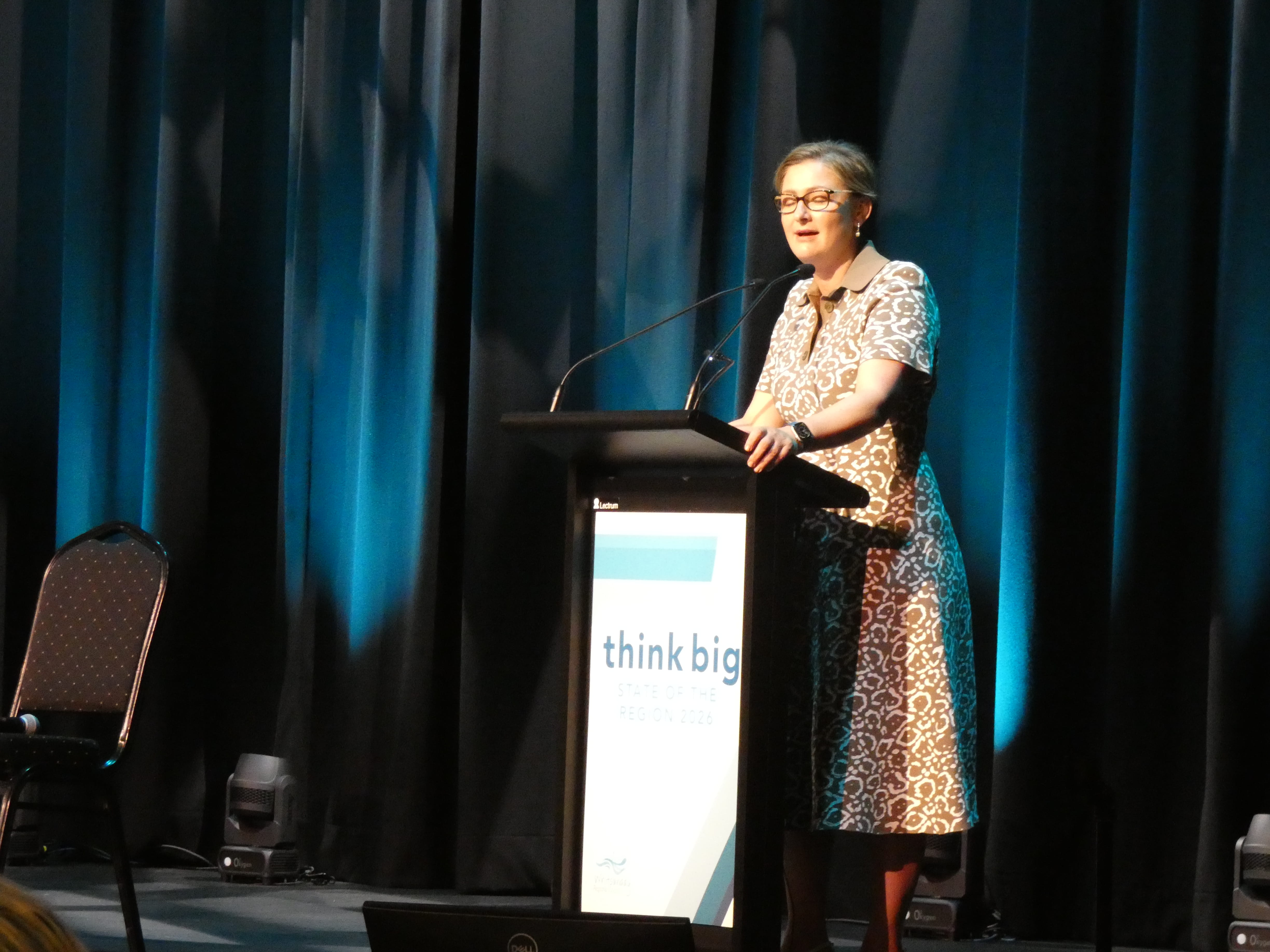
The Think Big State of the Region seminar brought together representatives from across the region to share ideas, build connections and show their support for future growth.
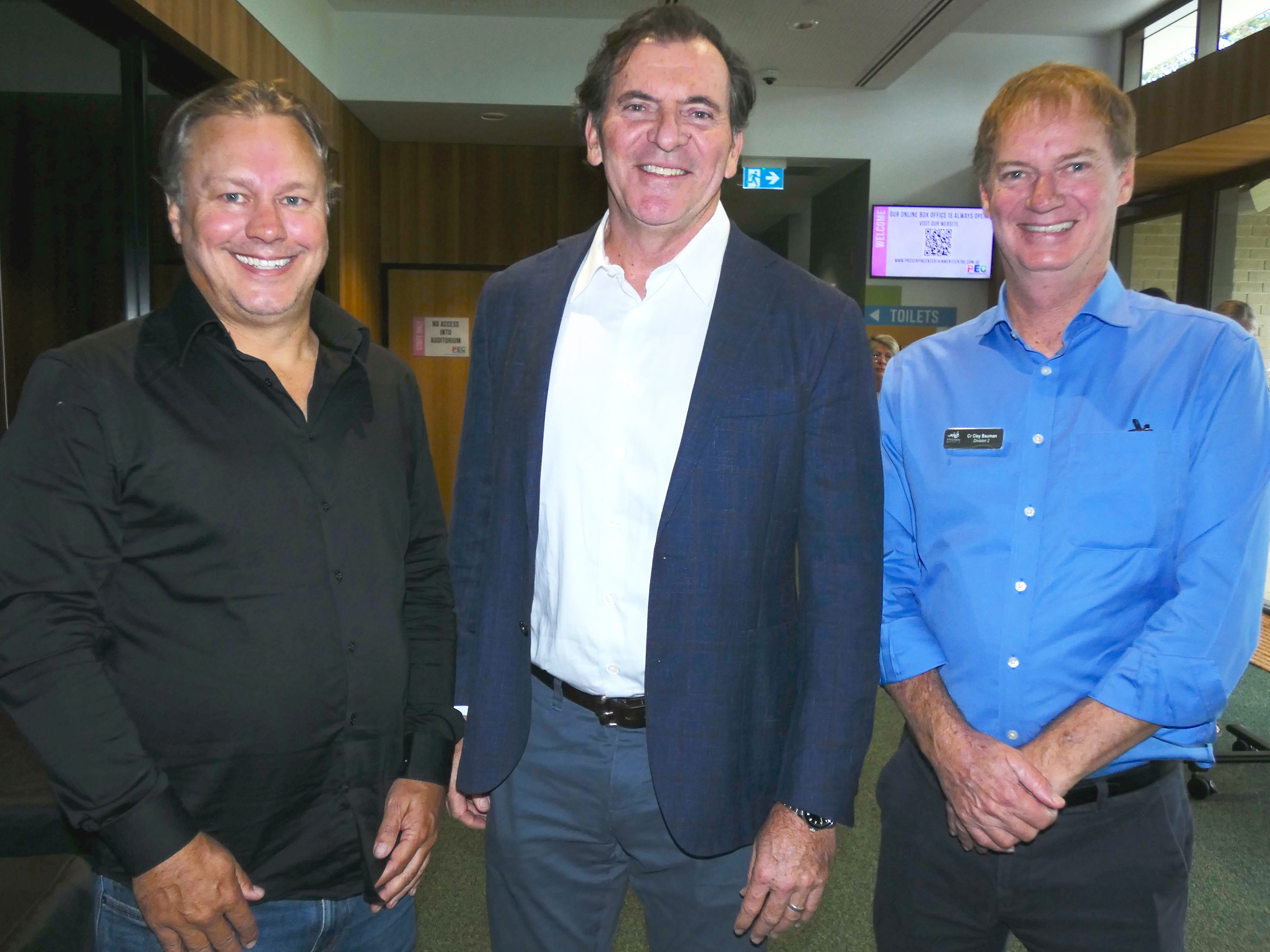
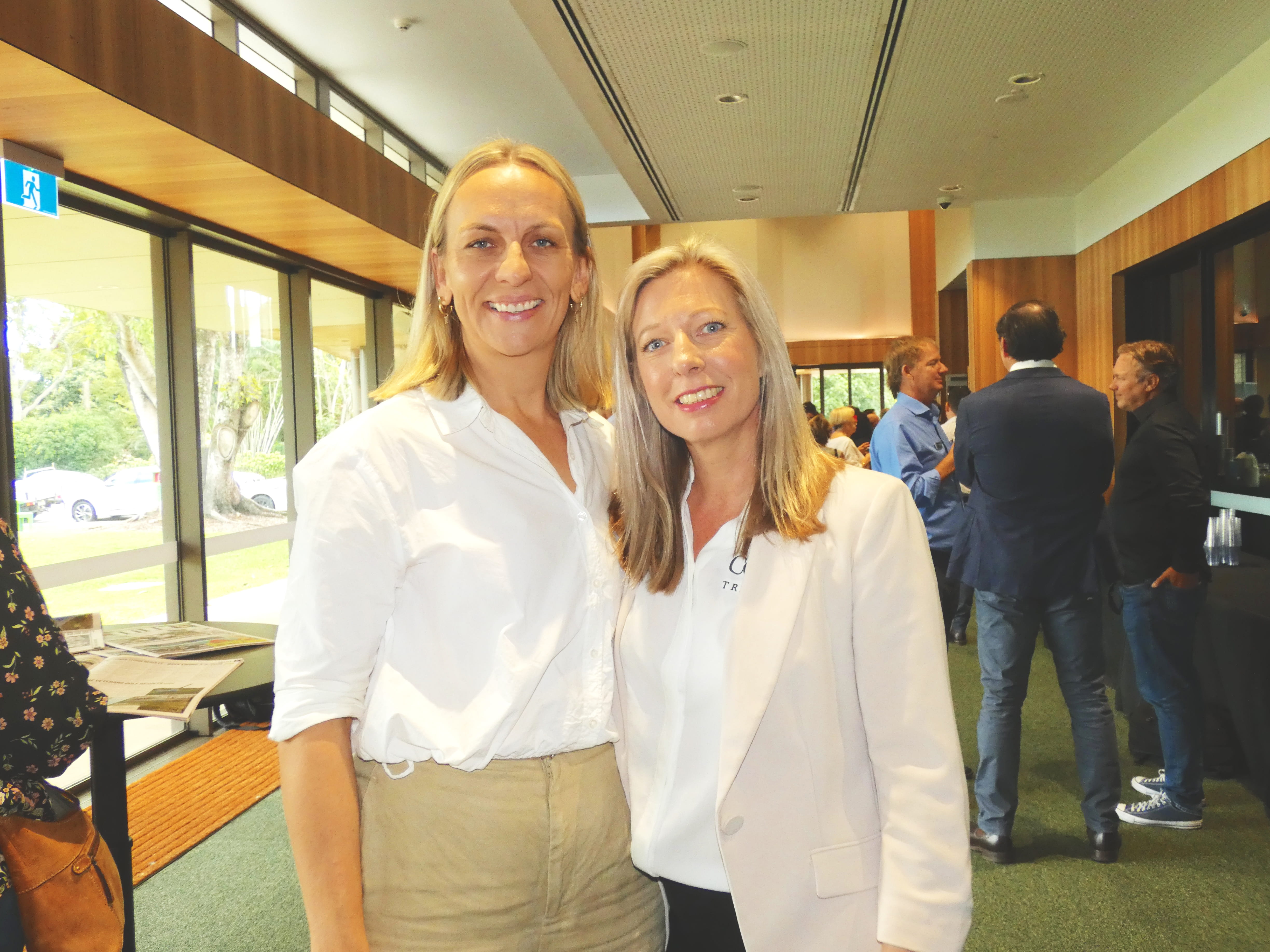
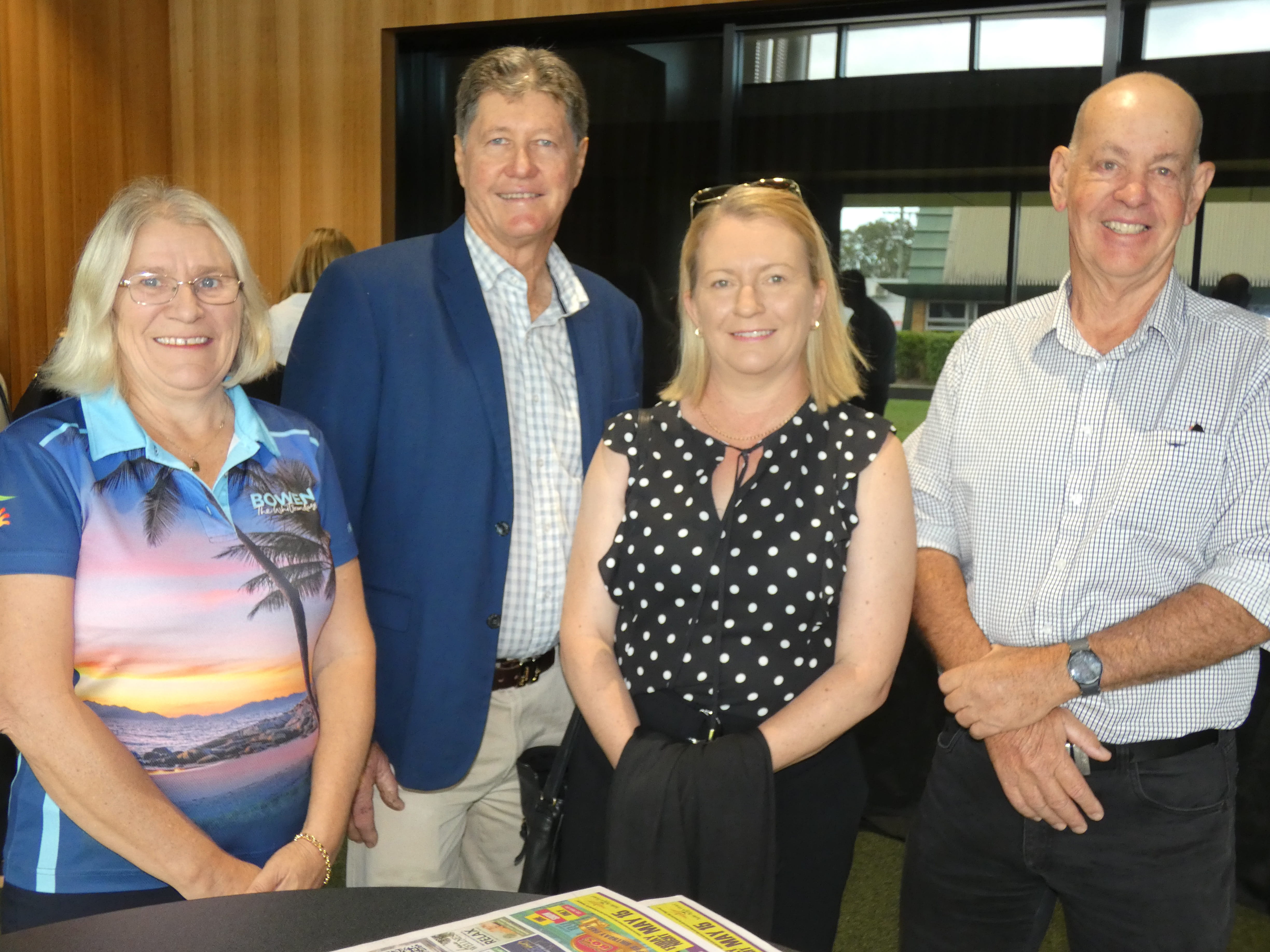
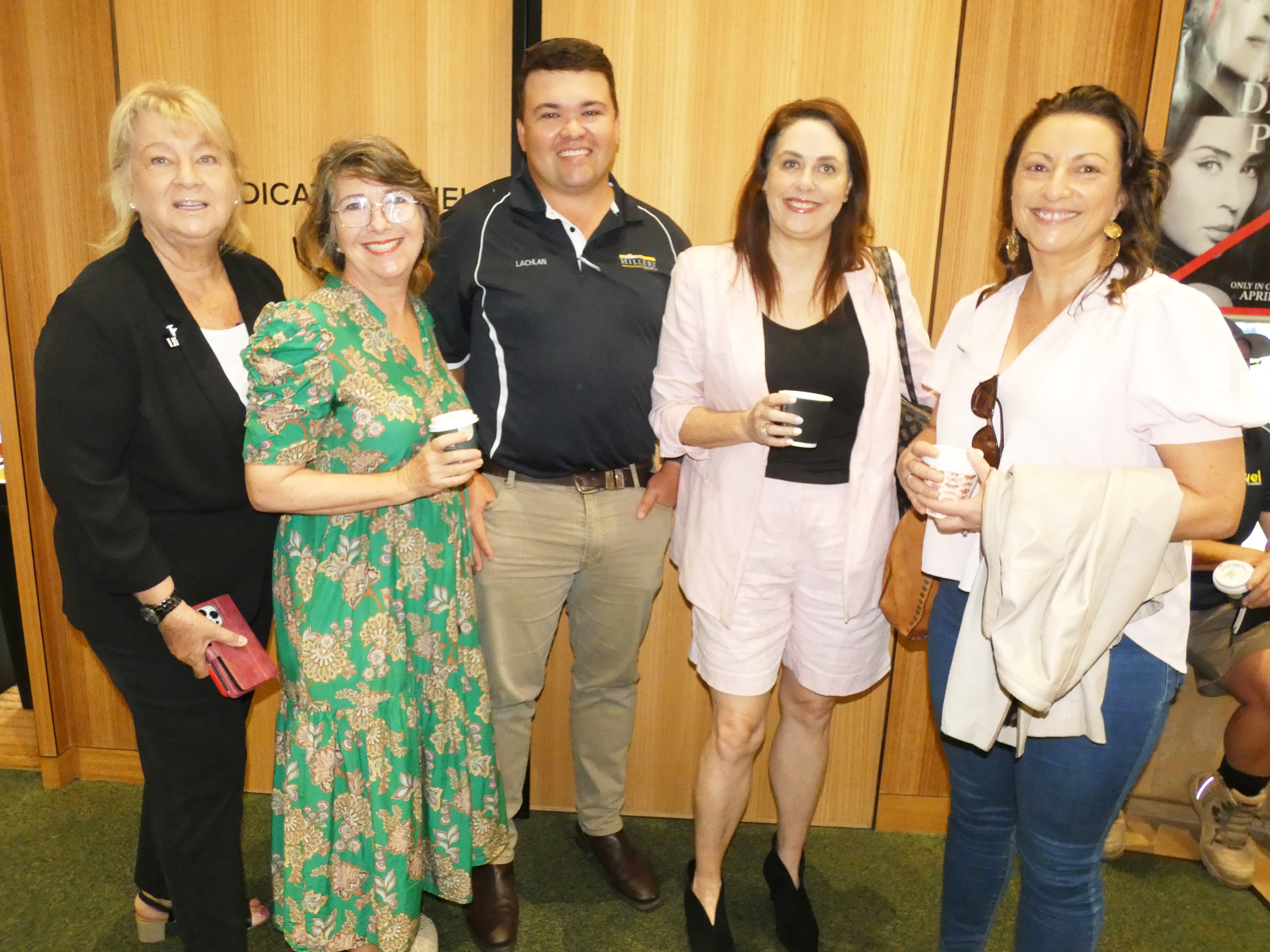
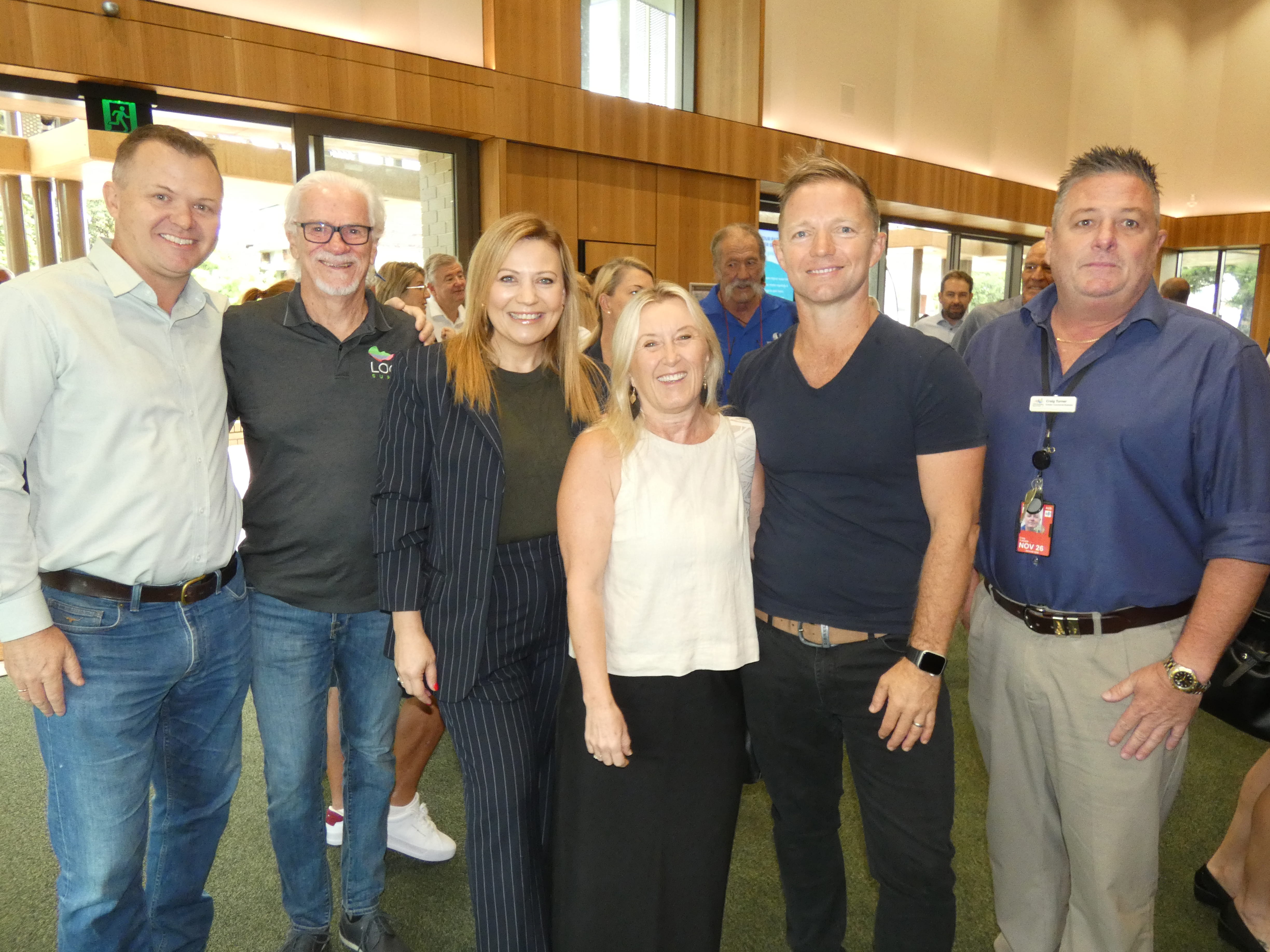
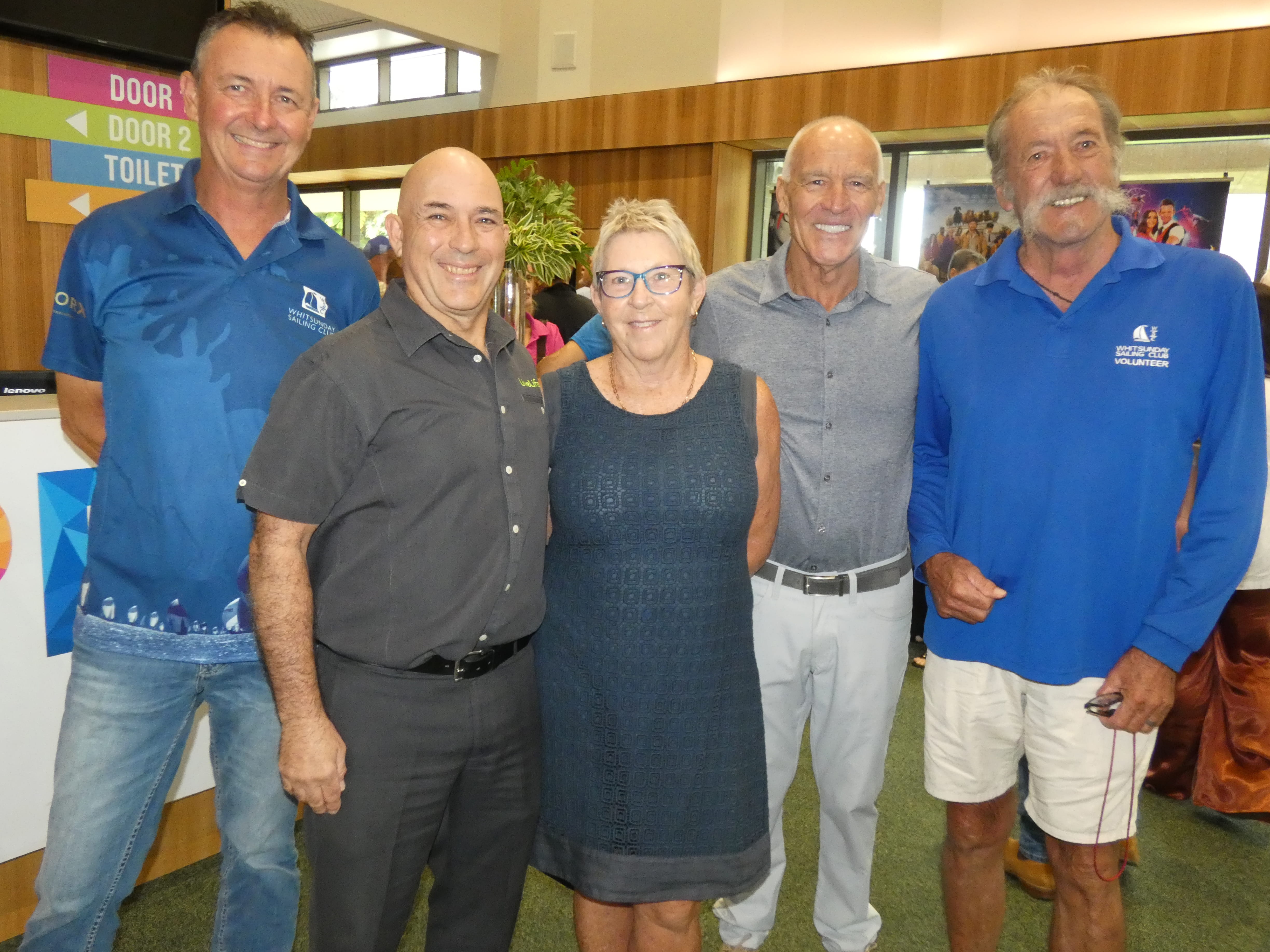
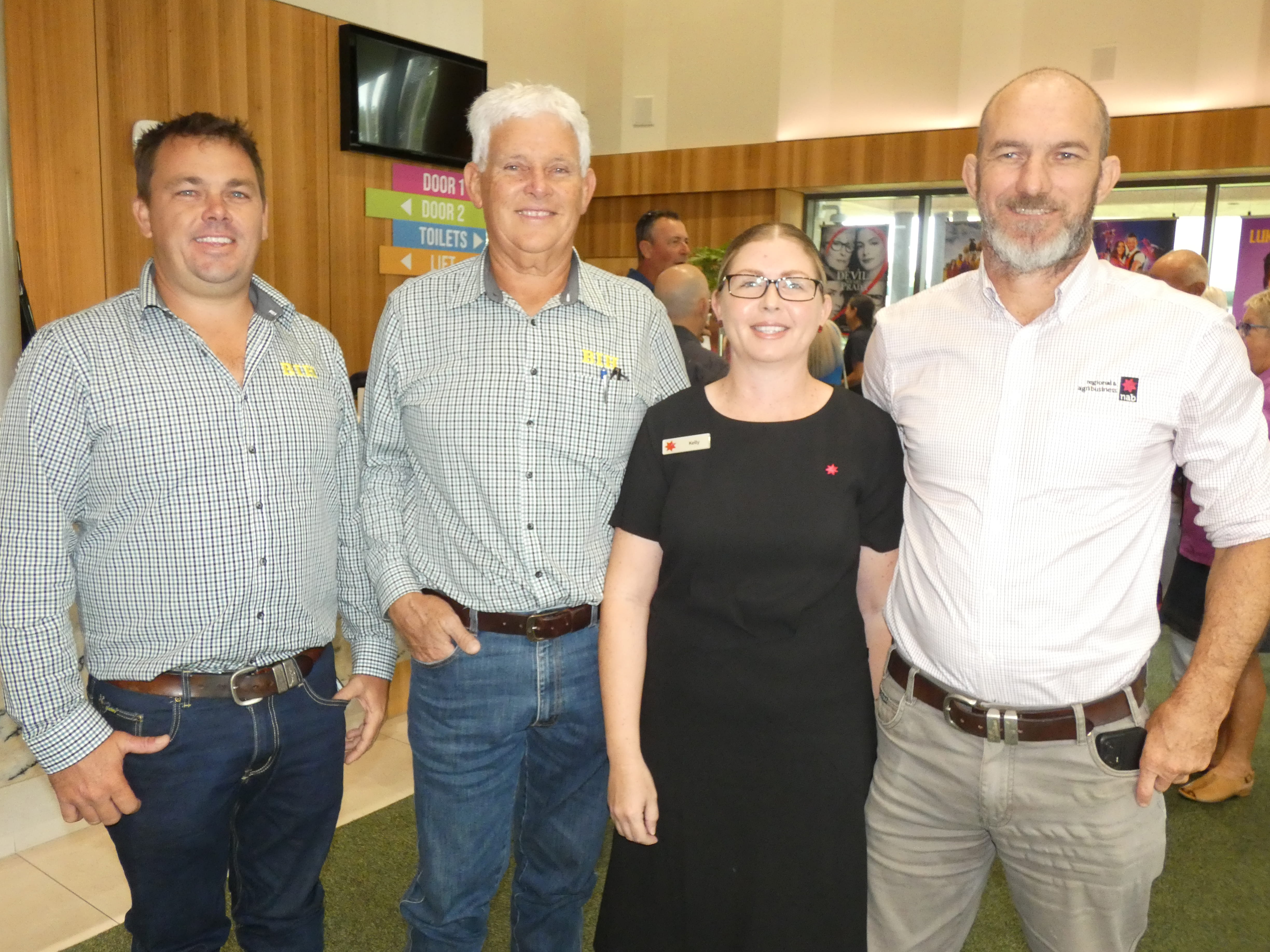
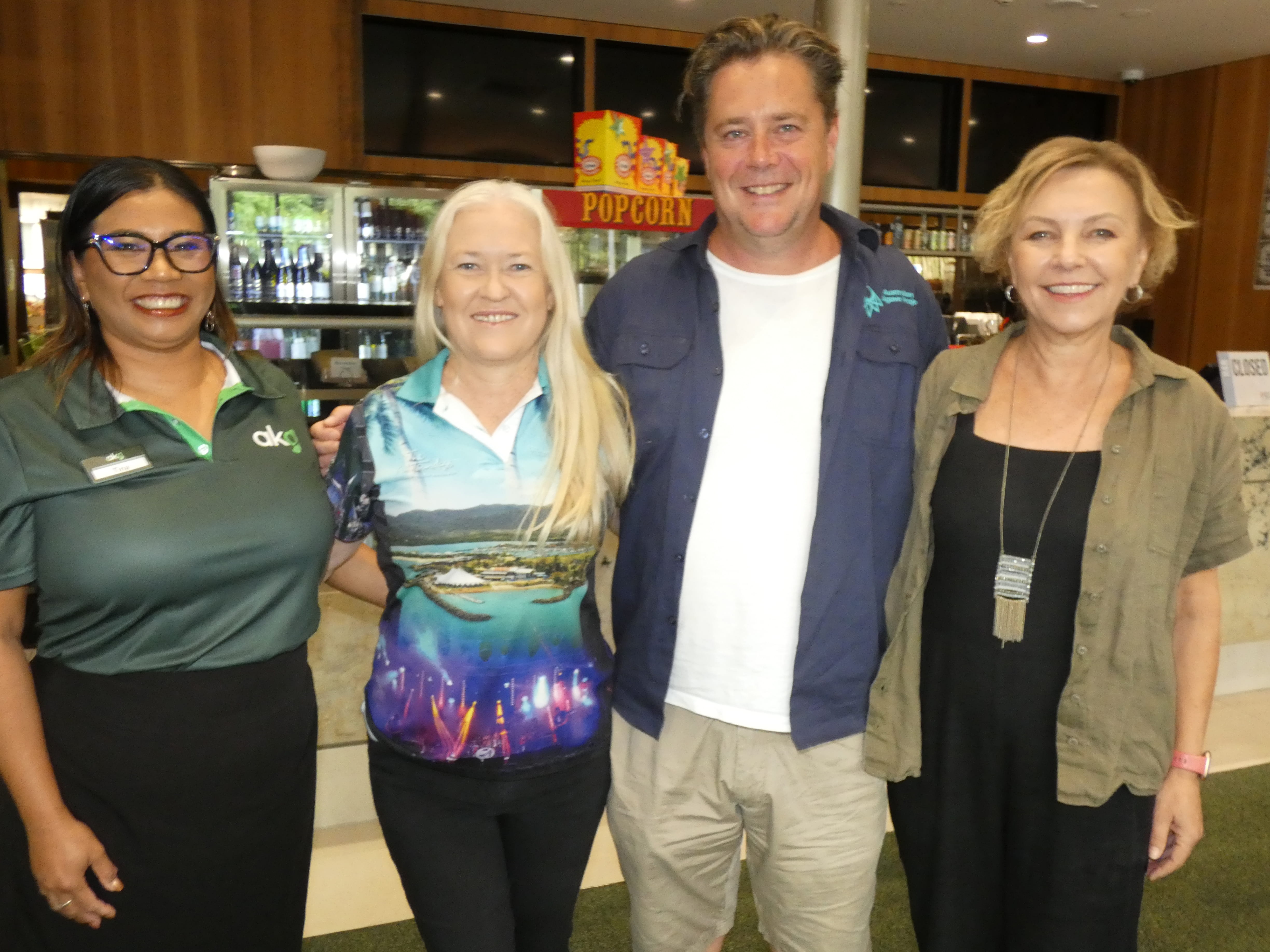
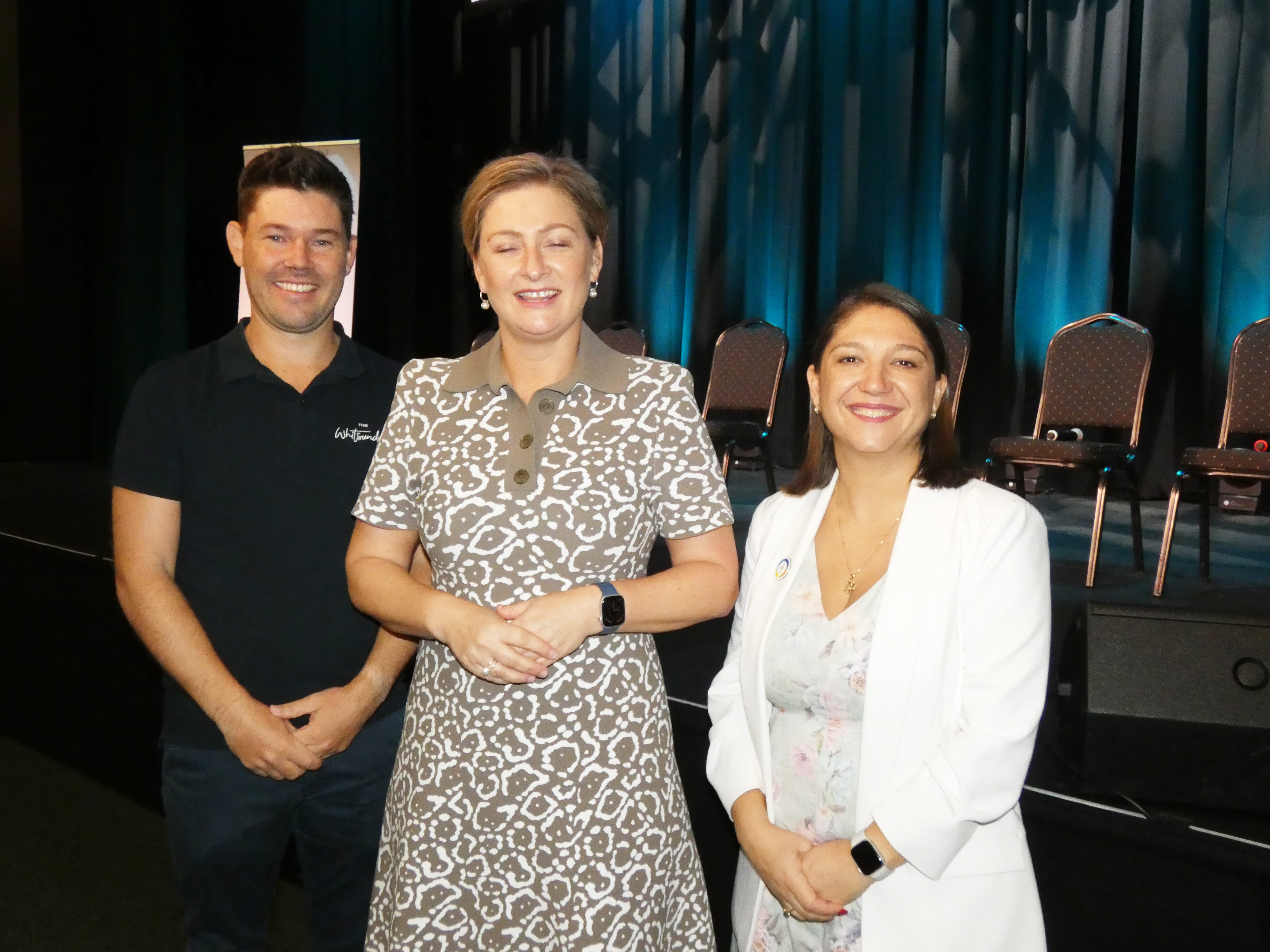
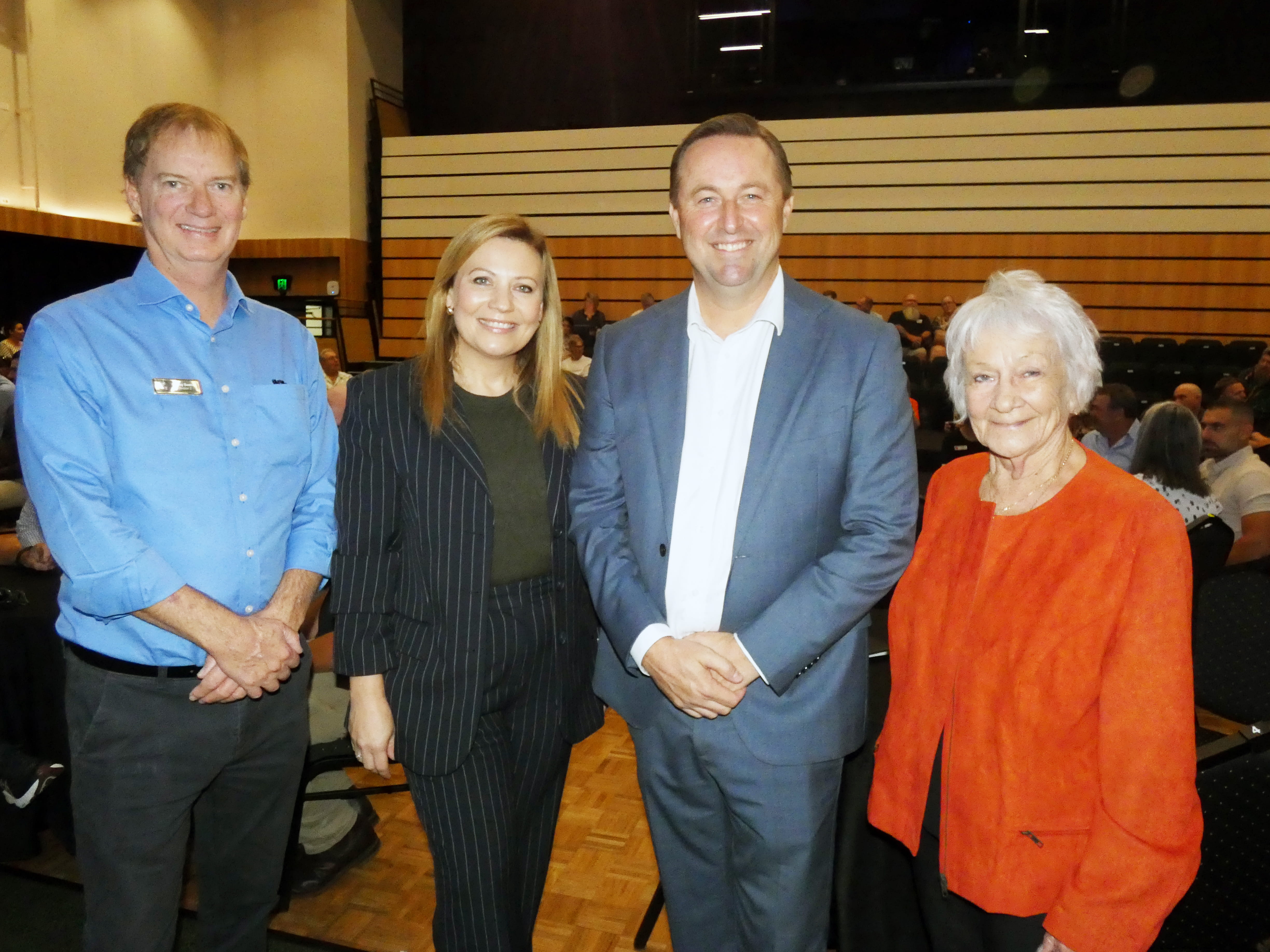
Photo credit: Rachael Smith
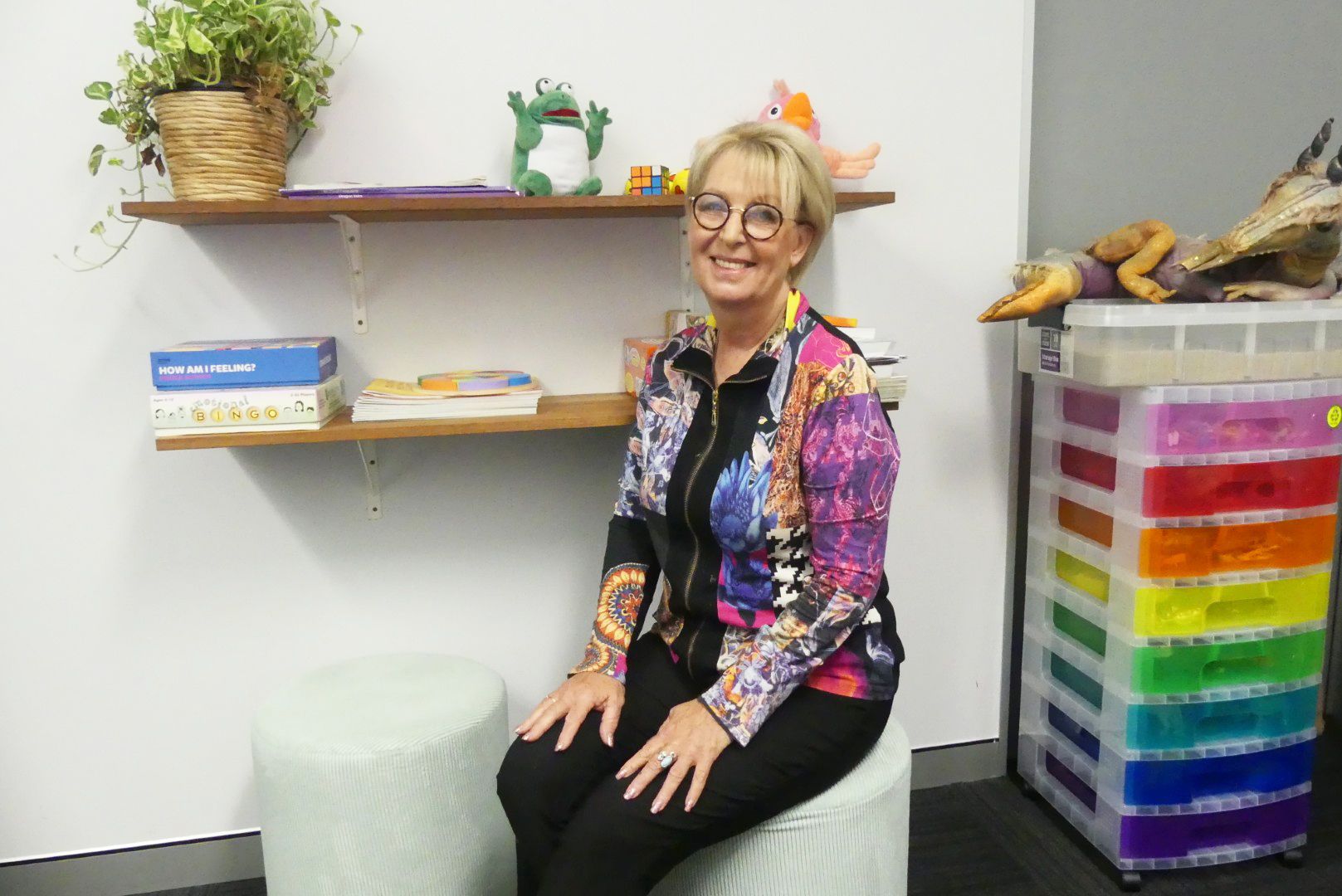
Sharon Ashman
When we talk about helping children and adolescents thrive, we often focus on academic success. Yet, it’s the everyday skills, such as how they manage emotions, make decisions, and connect with others, that shape their long-term wellbeing.
Life skills are the practical, social, and emotional abilities that allow individuals to navigate challenges, build relationships, and respond to life with flexibility. These include self-awareness, empathy, problem-solving, communication, and stress management. Together, they form the foundation for resilience.
For many young people, these skills don’t develop automatically. They are shaped through experience, guidance, and opportunities to practice in safe, supportive environments. Those who can recognise when they feel overwhelmed, pause, and ask for help are already building a protective factor against future mental health difficulties.
Importantly, life skills are not about being “perfect” or always making the right choice. They are about learning how to reflect, adjust, and try again. This is especially relevant in today’s world, where young people are navigating social pressures, digital environments, and increasing expectations.
Providing opportunities to build life skills early creates lasting benefits: it builds confidence in expressing themselves, adaptability when things don’t go to plan, and increased capacity to form healthy relationships. These are not just “nice to have” skills—they are essential for wellbeing, independence, and a meaningful life. See next fortnight for practical tips in building life skills
“If you’d like more support, visit my website https://www.personaltransitions.com.au/ or give me a call 0418708214.”NDIS FRIENDLY
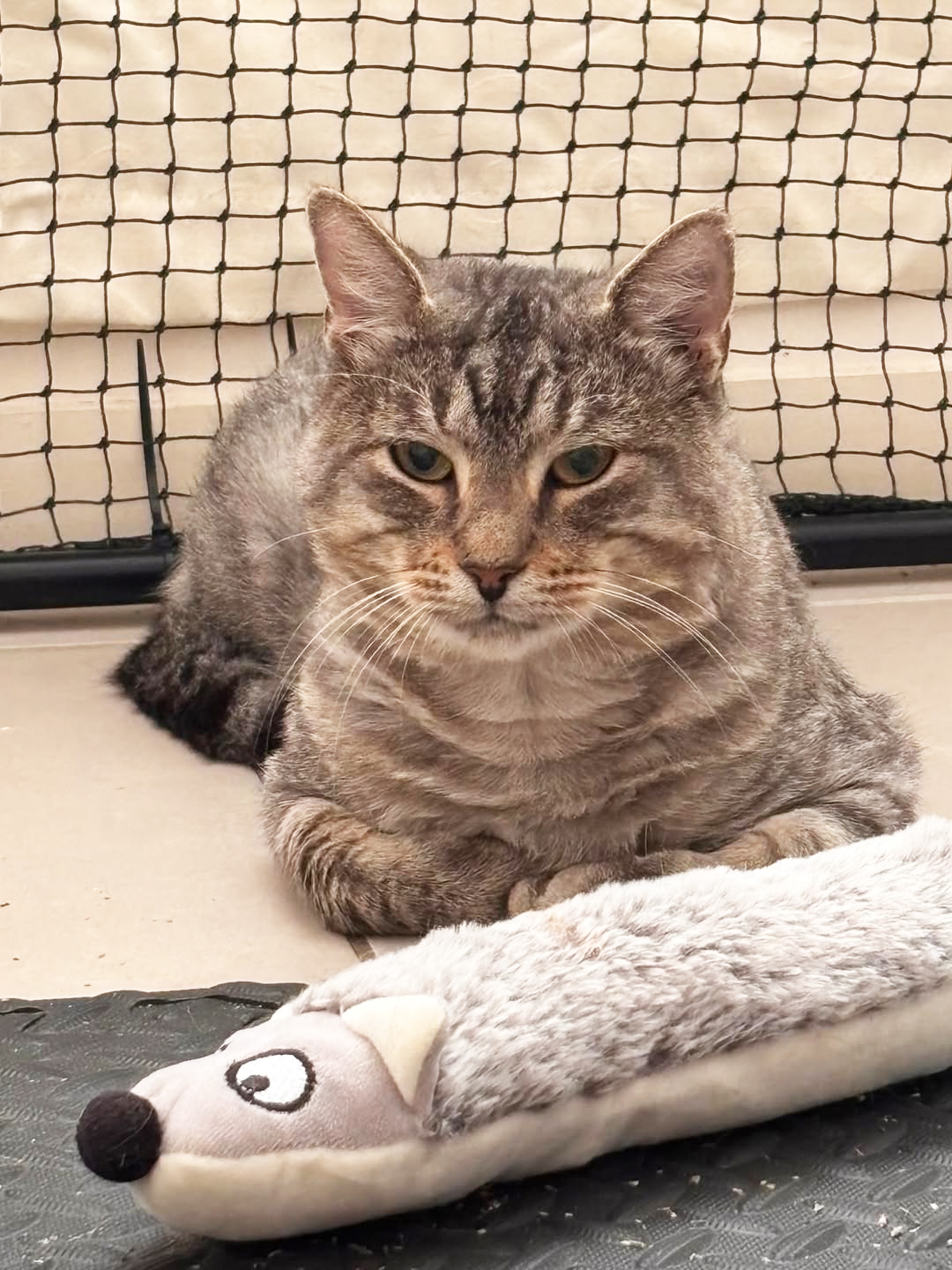
Three-year-old Oscar is searching for a calm and caring forever home where he can finally relax and enjoy the comforts of indoor life.
This handsome domestic short hair male spent the first few years of his life surviving on the streets before being taken into care after appearing injured. Since then, Oscar has been learning that people can be kind, and with patience, soft blankets and regular meals, his gentle personality is beginning to shine through.
While still a little shy, Oscar is making steady progress and would suit a quiet adult household willing to give him the time and space he needs to settle in. Rescue carers say he is best suited to someone experienced with cats who understands that trust takes time.
Oscar is a medium-sized cat with a low-to-medium energy level. He is not suited to homes with children, while his compatibility with other cats and dogs has not yet been tested.
He has been desexed, vaccinated and microchipped, and is ready to begin the next chapter of his life with a patient and loving owner.
Oscar’s adoption fee is $190.
If interested, please contact Bowen Collinsville Pet Rescue Inc.
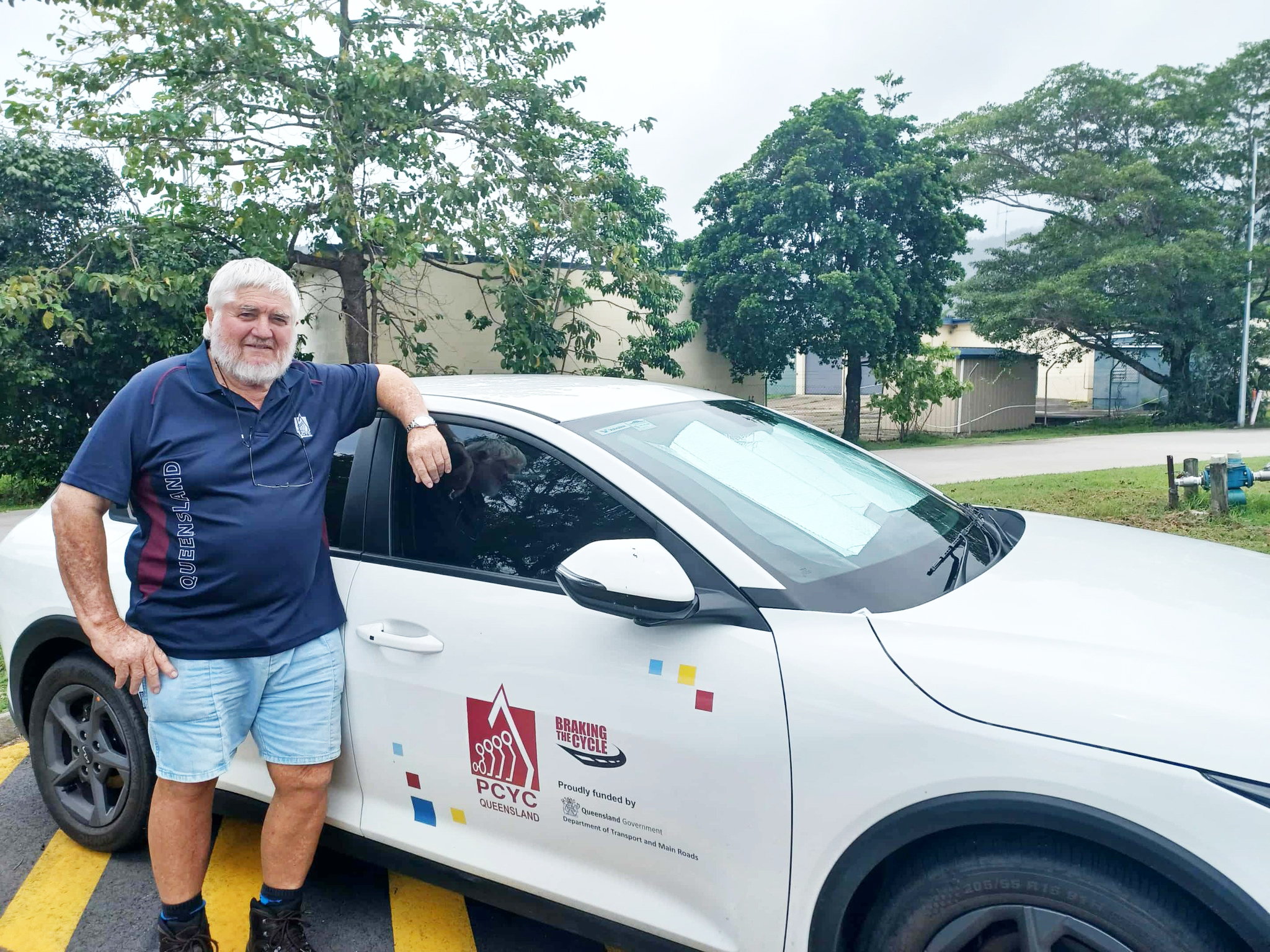
Make a difference as a volunteer with the PCYC Whitsunday Braking the Cycle program Photo source: Facebook
PCYC Whitsunday have put out a call for volunteer driver mentors to participate in their ‘Braking the Cycle’ program.
Braking the Cycle is a program that aims to support learner drivers who do not have access to a supervisor or registered vehicle to complete their logbook hours.
Participants are matched with volunteer mentors who provide driving instruction to facilitate learner drivers obtaining their license.
The Braking the Cycle Program currently operates across 53 locations including the Whitsundays and Bowen and to date has conducted over 43,000 driving sessions with over 3000 learner drivers.
Support for learner drivers who may lack access to resources required to obtain their license is vital. Having a driver’s license helps to provide young people with increased employment opportunities and community connection.
If you are interested in becoming a mentor, you will need:
PCYC are able to assist volunteers in obtaining a Queensland Blue Card (also known as a working with children’s check) which is required to become a mentor.
Mentorship is not just about driving instruction – it is a means of providing guidance, encouragement and improving self-esteem.
If you are interested, do not hesitate to contact PCYC Whitsunday via phone – 044849377 or email – whitsunday@pcyc.org.au.

Michael and Angus believe it is important to make the most of the opportunities provided by school. Photo supplied
Year 7 scholarship recipients Angus Dunn and Michael Groves sat down with Principal Mr Harris and answered some questions regarding their experiences at school so far. Here’s what they had to say:
What’s it like being in Year 7 at Bowen State High School?
Michael: It’s fun, it can be challenging, it’s exciting, its different than primary school, which isn’t a bad thing.
Angus: It’s new and larger than my primary school. But I like it a lot.
What are you enjoying the most about Secondary School?
Michael: All the extra activities that we have, for example, the Academy, the flight simulators, and the Tournament of Minds.
Angus: I really like my Year 7 Academy class, where we are currently learning coding through Spike Lego.
What opportunities have you had at school already this year?
Michael: Academy Class, The Regional Forum in Bowen and the State of the Region Forum in Proserpine where I got to meet Cate Campbell.
Angus: I was fortunate to meet Olympians at the State of the Region forum last week and also met important people in Bowen, including the Mayor.
What’s the hardest thing about coming to high school?
Michael: Adjusting from Primary School to High School. It is a bigger school with more classrooms.
Angus: Definitely waking up earlier. Because it is a bigger school, you have to adjust to the different lessons.
What supports are available for students at Bowen High?
Michael: We have a Student Services, for any needs or worries, and there’s Bibigoo Yumba, for if you’ve forgotten your lunch or just to hang around with friends.
Angus: Bibigoo Yumba and Student Services are places for students to go if they need to talk to someone or get support. There are a lot of people to talk to for support.
If you could be Principal for one day, what would you like to see changed at Bowen High?
Michael: If I was Principal for one day I would want to get the Flight Simulators back up and running.
Angus: I would like to see improvements to the school toilets for everyone to enjoy.
What is one piece of advice you would give to Year 6 students who are coming to High school next year?
Michael: Come to school happy. Don’t think ‘This is going to be hard; I don’t want to come to school today.’ Because at the end of the day, school is as fun as you make it.
Angus: Be confident and have a great time. Enjoy all your subjects as they are different to primary school.
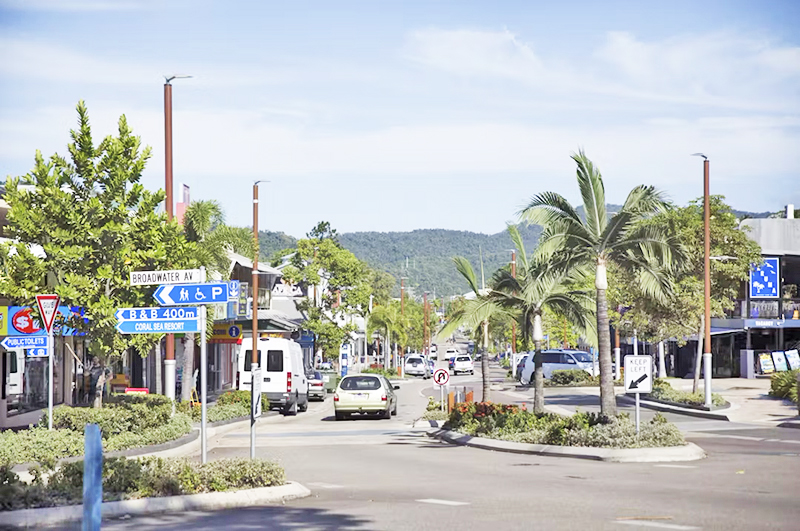
Whitsundays business leaders say rising costs, workforce shortages, transport challenges and regulatory pressures are continuing to impact small and family businesses across the region during Queensland Small Business Month. Photo credit: Mackay and Whitsunday Life
May marks Queensland Small Business Month, a government-led initiative established to celebrate and support the more than 508,000 small and family businesses that help strengthen local communities and drive the State’s economy.
In the Whitsunday Shire, however, business leaders say many operators are continuing to face mounting pressures, from rising costs and workforce shortages to transport challenges and regulatory complexity.
Whitsundays Chamber of Commerce and Industry Executive Officer Dr Julia Evans said regional businesses are often operating with fewer resources while navigating increasingly difficult conditions.
“All local businesses are facing a combination of immediate pressures and long-standing structural challenges that are now being amplified,” explained Dr Evans.
“At a practical level, rising fuel costs and reduced aviation access are impacting visitor numbers, freight, and the cost of doing business. Fewer flights into the region, higher transport costs, and shifting consumer confidence are making it harder to attract visitors and service the community, while also affecting supply chains and day-to-day operations.”
Dr Evans said businesses were also continuing to grapple with red tape and regulatory complexity, making it harder to adapt quickly in changing economic conditions. She said regional infrastructure gaps, particularly around transport connectivity, housing availability and essential services, were also constraining growth and workforce stability, while attracting and retaining skilled staff remained a significant challenge in a high-cost regional environment.
Access to fair and flexible finance was another growing concern, particularly for small operators managing rising expenses and uncertain trading conditions.
At the same time, Dr Evans said many businesses were eager to grow through export markets, digital capability and national expansion, but required stronger support systems to make that possible.
“Recent events have reinforced the need for stronger business interruption support and resilience planning, particularly in the face of natural disasters and ongoing disruptions,” she said
“At the same time, there is increasing pressure — and opportunity — to adopt sustainable practices, both to manage costs and meet evolving visitor expectations.
“In short, the Whitsundays business community is not facing a single issue — they are managing a complex environment where cost pressures, access, workforce, infrastructure, and confidence all intersect. Addressing these challenges requires coordinated action across all levels of government, with a clear focus on regional conditions and opportunities.”
Dr Evans said support that helped businesses cut through red tape, streamline compliance and access trusted business advice was “not just valued — it’s essential.”
In recognition of current circumstances, this year’s Queensland Small Business Month campaign is focused on providing practical support to help businesses build resilience and identify new opportunities, with more than 180 events and a suite of digital resources are being rolled out statewide.
Queensland Small Business Commissioner Nicolle Kelly said feedback from regional and remote businesses was already shaping conversations at the highest levels of government.
“Unsurprisingly, one issue that has been consistently raised is fuel supply and price volatility,” she said.
“This challenge is having a tangible impact, particularly on businesses in regional and remote communities, influencing factors such as transport costs and customer demand. We’re currently gathering feedback from stakeholders to develop a comprehensive understanding of what’s happening on the ground, and I encourage you to continue to send examples and information to us.”
More information about Queensland Small Business Month events and resources is available via www.business.qld.gov.au/running-business/support-services/business-events/qsbm.
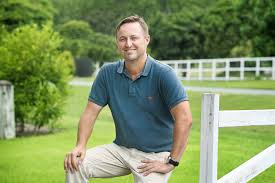
Last week’s State of the Region event was an absolute ripper and without doubt one of the strongest signals yet that the Whitsundays is thinking bigger, aiming higher and shaping its own future.
More than 200 business, industry and community leaders came together at the
Proserpine Entertainment Centre for Council’s third annual event, and the energy in the room was something special.
This wasn’t just another talk fest. It was about bringing the right people together, building partnerships, creating confidence and making sure the Whitsundays is firmly in the conversation when it comes to regional growth, investment and Brisbane Olympics 2032 opportunities.
The theme was simple — thinking big and that’s exactly what our region is doing.
From economic development and new investment opportunities to our bold push to position the Whitsundays as the Home of Olympic Sailing for the 2032 Games, the message was clear: this region is not waiting for the future, we are actively shaping it.
It was fantastic to welcome Minister Amanda Camm, Minister Dale Last, Small Business Commissioner Dominique Lamb, Olympic champions and industry leaders to the event.
Hearing firsthand that the Whitsundays is already ahead of many others in embracing the Olympic opportunity was incredibly encouraging and reinforces that our region is on the right track.
Just as importantly, we also brought almost 100 student leaders into the conversation, ensuring our next generation is part of shaping what comes next.
That future focus continued the following day when Council helped coordinate a special swim clinic with four-time Olympic gold medallist Cate Campbell at the Proserpine Pool.
Seeing around 80 young local swimmers inspired by one of Australia’s great athletes was a fantastic reminder that big dreams start in regional communities like ours.
Council is committed to backing our young people, our sporting future and our broader regional growth.
The Whitsundays is on the rise.
We’ve got momentum, vision and opportunity and if last week proved anything, it’s that this region is ready to think big and deliver.
Budget Season Is Approaching — What Can Regional Businesses Expect?
From Whitsundays Chamber of Commerce and Industry President Allan Milostic
As federal, state, and local governments prepare to hand down their annual budgets, attention is turning to what the next 12 months could mean for regional businesses, infrastructure, workforce development, and economic growth.
For the Whitsundays, this year’s budget season arrives at a time of increasing pressure on businesses facing rising operating costs, workforce shortages, housing constraints, fuel uncertainty impacts, and shifting consumer confidence. At the same time, the region continues to experience strong population growth, major private investment, and expanding demand across tourism, construction, health, and services.
So what can regional businesses expect?
Cost of Living and Cost of Doing Business Relief
Across all levels of government, the Chamber anticipates continued focus on cost-of-living measures. However, regional businesses will be looking closely at whether support also addresses the growing cost of doing business — including energy, insurance, freight, workforce, and fuel pressures.
There is likely to be increasing discussion around regional resilience and supply chain security, particularly following recent fuel concerns and natural disaster impacts across Queensland.
Infrastructure Investment Will Remain a Priority
Regional infrastructure is expected to remain high on the agenda, particularly projects linked to transport connectivity, housing, community infrastructure, and public services.
For the Whitsundays, investment in roads, aviation connectivity, workforce accommodation, health services, and digital infrastructure will remain critical to supporting both economic growth and liveability.
Businesses will also be watching for commitments that improve freight efficiency and strengthen regional supply chains.
Workforce and Skills Pressures Continue
Workforce attraction and retention will likely remain one of the strongest themes across upcoming budgets.
Governments are expected to continue investing in skills, apprenticeships, training pathways, and workforce participation initiatives. For regional areas, the challenge remains not only attracting workers, but ensuring there is adequate housing, transport, childcare, and community infrastructure to support long-term workforce stability.
Support for Small and Family Business
With Queensland Small Business Month underway, there is growing recognition of the role small and family businesses play in regional economies.
Businesses will be hoping to see practical measures that reduce red tape, simplify compliance, improve access to finance, support digital capability, and long-term sustainability.
The effectiveness of these measures will ultimately depend on how accessible and regionally relevant programs and resources are for businesses on the ground.
Regional Advocacy Matters
Budget season is also a reminder of the importance of strong regional advocacy.
Funding and policy decisions are shaped by the issues raised consistently and collectively by regional communities, industry groups, and business organisations. Ensuring the Whitsundays’ priorities remain visible at all levels of government is critical to securing investment and support that reflects the realities of doing business in regional Queensland.
While budgets cannot solve every challenge overnight, they do provide an important indication of government priorities, economic confidence, and where future opportunities may emerge for regional communities like the Whitsundays.
Contributed with thanks to Allan Milostic, President of Whitsundays Chamber of Commerce & Industry
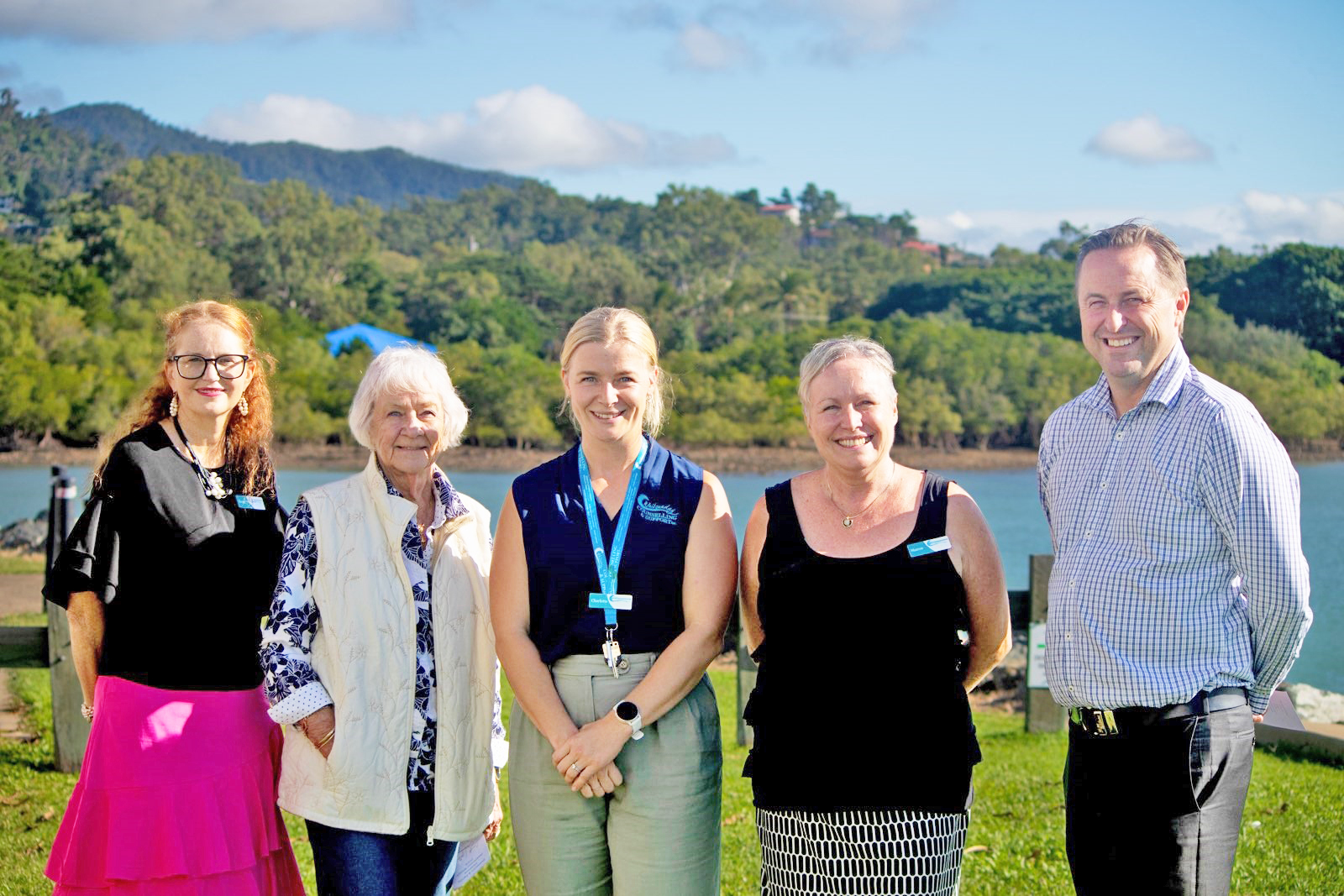
The Whitsunday Counselling and Support team with Mayor Ry Collins and Councillor Jan Clifford.
Last week the Whitsunday Counselling and Support organisation hosted their annual Candle Lighting Ceremony in Cannonvale to mark the beginning of Domestic and Family Violence Prevention month.
Each May, the annual initiative aims to raise awareness of domestic and family violence and coercive control. The theme for 2026’s DFV month is: Together Queenslanders can prevent domestic and family violence.
The event saw attendance from Mayor Ry Collins, Cr Jan Clifford and representatives from the Whitsunday Police Station and Whitsunday Counselling and Support.
An acknowledgement of country was provided by Vicky Brimble (Koa Banburi) with music performed by Nicke Di Gregorio.
Manager of Counselling Services at Whitsunday Counselling and Support Sharon Parker presented a powerful speech as she memorialised those lost, and put forward a call to action.
“In our commemoration today, I would ask you to not just think about these deaths as statistics, but to reflect on the people behind the statistics,” Sharon said.
“These were real people, with lives that mattered. They mattered.”

Clothes were displayed to mark the individuals who tragically lost their lives to domestic violence. A list was provided of individuals across Australia who had lost their lives to domestic and family violence over the past two years, with many of the cases still ongoing.
“This is not a comfortable thing to do,” Sharon said.
“I know that whilst compiling this list I got emotional thinking about the victims. However, commemoration is important, as without discomfort, we are rarely moved enough emotionally to make change.”
Sharon defined domestic and family violence, to improve awareness across the region.
“Domestic and family violence is behaviour that occurs between people who are, or have been, in a domestic or family relationship. It is not just physical violence. It can include abuse that is emotional, financial or sexual. Tragically, it can have fatal consequences.”
The speech touched on societal factors that contribute to domestic and family violence.

“We did not arrive here suddenly. This harm has been shaped over time by gender inequality, rigid power structures and attitudes that have normalised control, silence and excuse making,” Sharon shared.
“Misogynistic beliefs and patriarchal standards – when left unchallenged – can normalise control, silence and violence, particularly within homes and relationships.
“Such attitudes can affect women’s safety both at home and in public. Many women live with the risk of domestic and family violence and often are making constant decisions with behaviour, routine or clothes – just to feel safe.”
Sharon has also addressed the impacts of patriarchy and misogyny on men.
“For men it is also harmful. It creates pressure to fit into narrow ideas of masculinity which may discourage men from expressing feelings, showing vulnerability or asking for help. These expectations can negatively affect men’s mental health, relationships and wellbeing. Patriarchy can also limit men’s freedom take on caring roles, seek support or live in ways that don’t fit traditional gender stereotypes.”
Sharon then put forward a call to action, advising community members on how they could show their support.
“Each of us has a role to play. Speaking up matters. We must all challenge sexist or violent language. Refusing to make excuses matters. Listening, believing and supporting survivors matters. Changes comes when individuals choose to reject attitudes that devalue, dismiss or endanger others.
“So today, I challenge you with this call to action. I challenge you to reflect on how you view domestic and family. I challenge you to examine everyday behaviours, attitudes and conversations – and to choose to do better. Real change happens when individuals are willing to challenge what feels familiar and take responsibility for creating safer, more respectful relationships and communities.”
On Thursday, a roundtable was led by the DFV Prevention Council at Shute Harbour Marine Terminal. The stakeholder roundtable focused on domestic and family violence (DFV) primary prevention, with a strong emphasis on community-led approaches and collaboration across the region.
The session brought together a range of local leaders and stakeholders, including representatives from council, police, community services and state agencies, to discuss opportunities for strengthening prevention efforts across communities including Airlie Beach/Cannonvale, Proserpine and Bowen.
The focus was to identify local drivers of DFV, map community strengths and resources and explore practical, place-based solutions to help prevent violence before it starts.
If you or someone you know is in a dangerous or life-threatening situation, call Triple Zero (000). If you don’t want to speak to the police you can also call DV Connect on 1800 811 811 or 1800 RESPECT on 1800 737 732 (24 hours, 7 days a week). You can also go to the Domestic and Family Violence Prevention Month website for more details and support.

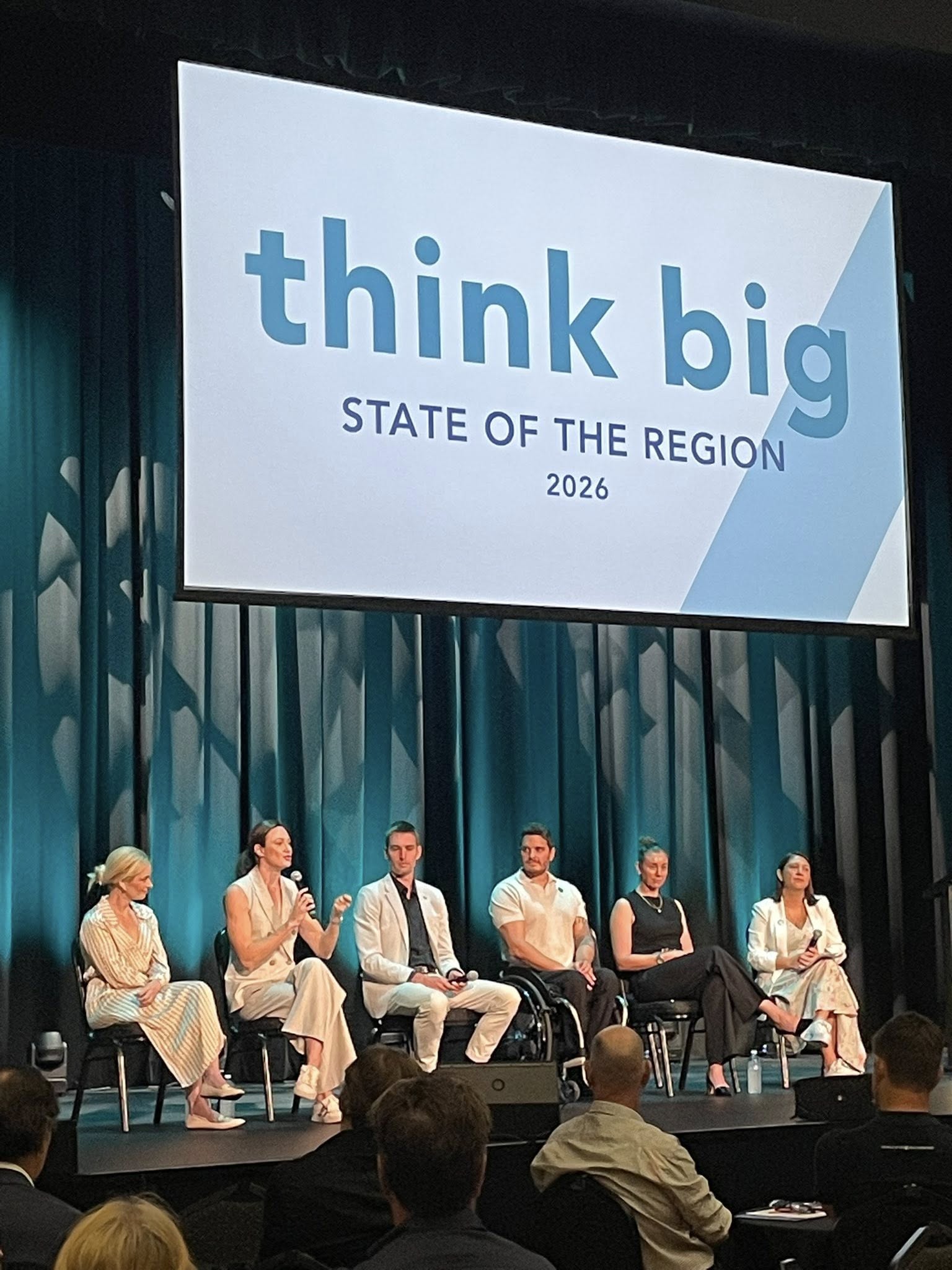
The event featured the region’s most influential leaders and business owners, who all came together to discuss the Whitsunday’s future. Photo supplied
The Whitsundays’ vision for growth, investment and opportunity took centre stage at Council’s State of the Region 2026 Think Big event, held at the Proserpine Entertainment Centre on Friday 8th May.
More than 200 business, industry and community leaders attended, joined by local students and regional decision-makers for a full day of discussion focused on the future of the region. The event was emceed by Queensland Tourism Industry Council CEO Natassia Wheeler and hosted by Whitsunday Regional Council Mayor Ry Collins, who said the strong attendance reflected growing confidence and ambition across the community.
“The Whitsundays is in a strong position, and what we saw in the room was a genuine appetite to think big about where we’re heading,” Mayor Collins said. “From economic growth and investment to major infrastructure and Brisbane 2032 opportunities, there is real momentum building across our region.”
The program featured a series of panel discussions bringing together leaders from sport, government, tourism and industry. Among the key speakers was Dominique Lamb, Director of Community Affairs for the Brisbane 2032 Olympic and Paralympic Games, alongside Olympic and Paralympic representatives and elite athletes who shared insights on high performance, resilience and long-term opportunity.
Local Members of Parliament Minister Amanda Camm MP and Minister Dale Last MP also attended, contributing to discussions around regional investment, workforce development and the infrastructure required to support continued growth.
A major focus of the day was the opportunity presented by the Brisbane 2032 Olympic and Paralympic Games, with particular emphasis on tourism demand, supply chain participation, procurement pathways and workforce readiness. Council’s long-term vision to position the Whitsundays as the “Home of Olympic Sailing” was also highlighted as a potential legacy-defining opportunity for the region.
Following the main sessions, almost 100 students from Whitsunday schools participated in a dedicated youth workshop and panel discussion with Olympic athletes. Students engaged directly with speakers on topics including goal setting, resilience, and how young people can help shape the future of the region.
Mayor Collins said the student session was a standout moment of the day.
“Bringing young people into these conversations is essential. Their ideas, combined with the lived experience of elite athletes, show that ambition and opportunity start right here in the Whitsundays,” he said.
Council said the State of the Region 2026 event forms part of its ongoing commitment to economic development, collaboration and strategic planning, ensuring the Whitsundays continues to grow with confidence, purpose and a shared vision for the future.
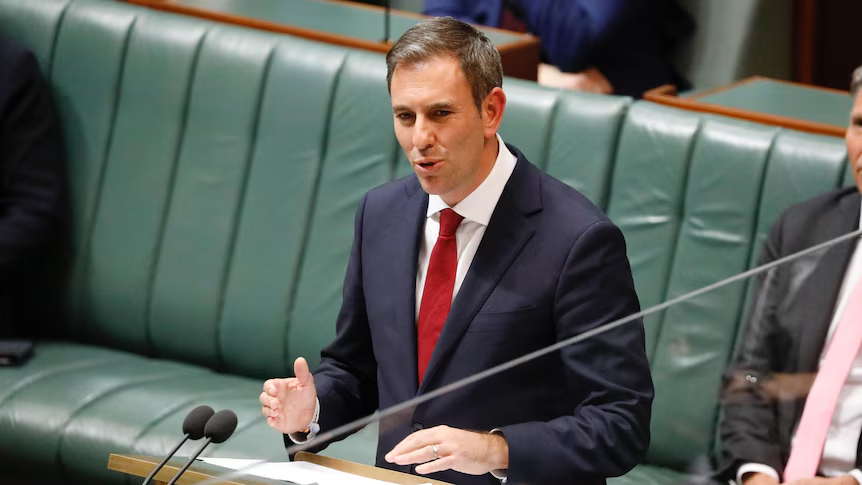
Federal Member For Dawson Andrew Willcox called the 2026 Federal Budget a ‘slap in the face.’ Photo supplied

The Federal Government has committed almost $92 million towards protecting and restoring the Great Barrier Reef in Tuesday night’s Federal Budget, in a move expected to deliver flow-on benefits for tourism communities across the Whitsundays, Mackay and North Queensland.
The Budget includes $91.8 million over two years from 2026–27 for reef protection and restoration activities, including funding for reef restoration projects, sustainability initiatives and tourism stewardship programs.
Funding allocations include:
The measure extends previous Reef 2050 sustainability and reef restoration funding programs announced in earlier Federal Budgets and election commitments.
Budget papers showed additional environmental funding measures across the Climate Change, Energy, Environment and Water portfolio, including:
Additional funding for reef protection through the Great Barrier Reef Marine Park Authority includes $20.3 million in 2026–27 and $14.6 million in 2027–28.
The Federal Government said the funding would continue activities aimed at protecting reef ecosystems while supporting long-term tourism sustainability.
The announcement is expected to be welcomed by tourism operators across the Whitsundays, where the reef remains a major economic driver supporting marine tourism, hospitality and local jobs.
Alongside environmental spending, the Federal Government said the Budget focused heavily on cost-of-living relief, fuel security, housing affordability and productivity reforms amid ongoing global economic pressures.
Prime Minister Anthony Albanese said the Budget was aimed at helping Australians manage rising costs while building long-term economic resilience.
“This is a responsible Budget that is all about resilience and reform,” Mr Albanese said.
“It’s all about getting Australians through the global oil shock and building an economy that works for more people.”
Among the headline national measures announced were new tax relief for workers through a $250 Working Australians Tax Offset, a $1,000 instant tax deduction, temporary fuel excise relief, housing supply initiatives and expanded healthcare access.
The Government also unveiled a $14.8 billion fuel resilience package, including a $7.5 billion Fuel and Fertiliser Security Facility and a $3.2 billion Australian Fuel Security Reserve.
However, while reef funding featured prominently, there was little direct infrastructure spending announced specifically for the Mackay or Whitsunday regions in the Budget papers released Tuesday night.
One of the largest Queensland transport commitments announced was $812.5 million for Stage 2 of the Bruce Highway upgrade between the Gateway Motorway and Dohles Rocks Road in South East Queensland.
The absence of major new Bruce Highway commitments for regional North Queensland is likely to fuel ongoing concerns around road safety, freight reliability and flood resilience on northern sections of the highway frequently used by Mackay and Whitsunday residents.
The Budget also included $1 million over two years from 2026–27 for the Australian Securities and Investments Commission to maintain the North Queensland home insurance comparison website, aimed at helping residents navigate rising insurance premiums across cyclone-prone regions.
Additional funding measures announced for Far North Queensland included $1.1 million in 2026–27 to Cape and Torres Health Commissioning Ltd to continue providing culturally appropriate healthcare services for First Nations people in Far North Queensland.
The Government will also extend the delivery timeframe of the Preventive Health Programs in Far North Queensland election commitment by one year to 30 June 2027, to finalise delivery of locally tailored preventive health services in Cairns and Far North Queensland.
Federal Member for Dawson Andrew Willcox criticised the Budget, describing it as a “budget of broken promises and cuts” that failed regional Queensland.
“Regional Australians in Dawson are the innocent victims of Labor’s all-out assault on aspiration,” Mr Willcox said.
He described the Budget as a “high-tax, high-spending blueprint” that abandoned regional Australians.
“Labor is attempting to distract families with a $250 tax benefit that most people won’t even see in their bank accounts until 2028,” he said.
“This is a slap in the face, it doesn't even cover the promised $275 power bill reduction that Anthony Albanese failed to deliver.”
Across the Budget, Mr Willcox claimed regional Australians faced more than $11 billion in cuts, including:
Mr Willcox also criticised the Government’s renewable energy and migration policies.
“This Budget reveals that Labor will spend another $18.2 billion on net zero,” he said.
“Labor’s net zero spending now equals at least $80 billion. Labor plans for almost 300,000 people to migrate to Australia next financial year.
“Labor has flown the white flag on trying to increase the wealth of Australians. This Budget does not invest in new roads, new dams and new mines to increase Australia’s economy.”
Treasurer Jim Chalmers described the budget as "the most important and ambitious in decades”, delivering "a fairer tax system for workers, first home buyers and future generations”.
According to Mr Chalmers the plan focuses on ‘reform’, to ‘level the playing field for first home buyers’, and support workers through "the most meaningful, permanent increase to the effective tax-free threshold since Labor last increased it more than a decade ago.”
In his speech Mr Chalmers also highlighted that the budget delivers the largest savings package "on record", with $63.8 billion in savings.
Further details on regional funding allocations and project delivery are expected to emerge in coming days as councils, tourism bodies, industry groups and Federal MPs continue analysing the Budget’s impact on Mackay, the Whitsundays and wider North Queensland.

BIG4 Adventure Whitsunday is contributing $11 million in private investment into its upgrades, along with the $3 million allocated by the State Government. Photo supplied
Discussion has emerged online this week following the announcement of $3 million in State Government funding for the privately owned BIG4 Adventure Whitsunday Resort.
The conversation followed comments made by Member for Whitsunday Amanda Camm MP at the State of the Region forum held at the Proserpine Entertainment Centre last Friday morning.
The announcement outlined how part of the State Government’s $80 million Tourism Icons Investment Fund, under the Destination 2045 strategy, would be allocated within the Whitsundays region.
Speaking to an audience of approximately 200 local business owners and community leaders, Ms Camm said the funding would support upgrades and expansion at the resort.
“This is a fantastic investment in one of the Whitsundays’ most loved family destinations, supporting a local operator to expand and enhance what they offer visitors,” Ms Camm said.
“By growing capacity and adding new experiences, we’re encouraging holidaymakers to stay longer, explore more of our region and invest in our local economy.”
In addition to the $3 million State Government funding BIG4 Adventure Whitsunday are contributing a further $11 million in private investment into the project.
The project is expected to include 10 additional three-bedroom cabins, a café and restaurant, a new pool with swim-up bar, an outdoor cinema and a waterslide precinct.
Supporters of the investment say tourism-focused funding can generate broader economic benefits for the region through increased visitation, local spending and job creation.
Others within the community have questioned whether public funding would be better directed toward publicly accessible infrastructure projects.
“I fully support investment into the Whitsundays and local tourism, but I struggle to understand why public money is being directed toward a privately owned business that is already extremely successful and profitable on its own,” said local Josh Leppard on Whitsunday Chat.
“I believe taxpayer funding should be focused on projects and infrastructure that genuinely benefit the wider community, not subsidising large private businesses that are already operating successfully and charging the public premium prices to use their facilities.”
Mr Leppard also claimed Whitsunday Regional Council applied for the same funding stream to invest in infrastructure for the Airlie Beach Lagoon but was unsuccessful. This claim, however, is unconfirmed.
BIG4 Adventure Whitsunday released a statement reaffirming the company’s best intentions.
“BIG4 Adventure Whitsunday Resort is a Queensland family-owned and operated business that the McKinnon family has built from the ground up over more than 30 years.
“This project is a $14 million tourism infrastructure investment, with the McKinnon family contributing $11 million privately alongside the Queensland Government’s $3 million Tourism Infrastructure Investment Fund contribution,” they stated.
“The funding program is specifically designed to support projects that increase regional tourism capacity, encourage longer visitor stays and deliver broader economic benefits for local communities through tourism growth, construction activity and ongoing employment opportunities.
“As proud Queenslanders, the McKinnon family are delighted to be bringing this project to life in conjunction with the Queensland Government to deliver an experience that will benefit both visitors and the local community.”

To celebrate Mother’s Day last weekend, $1000 was left behind the coffee bar for any mums visiting Espresso and Bloom in Cannonvale, giving them a well-deserved treat on a day recognising all the labour and love that goes into motherhood.
The donation was made by Martin Bettin on behalf of GRB Mining.
The surprise sparked gratitude and joy, with a local mum taking to Facebook to express her thanks.
“Bought a coffee at Espresso and Bloom today only to be told it was free,” she said.
“Thank you very much. This was a great surprise and made my day.”
The gesture served as a heartfelt reminder that even small acts of generosity can make people feel truly valued – inspiring others to bring greater recognition to the care, strength and quiet dedication that mothers bring to their families and communities every day.
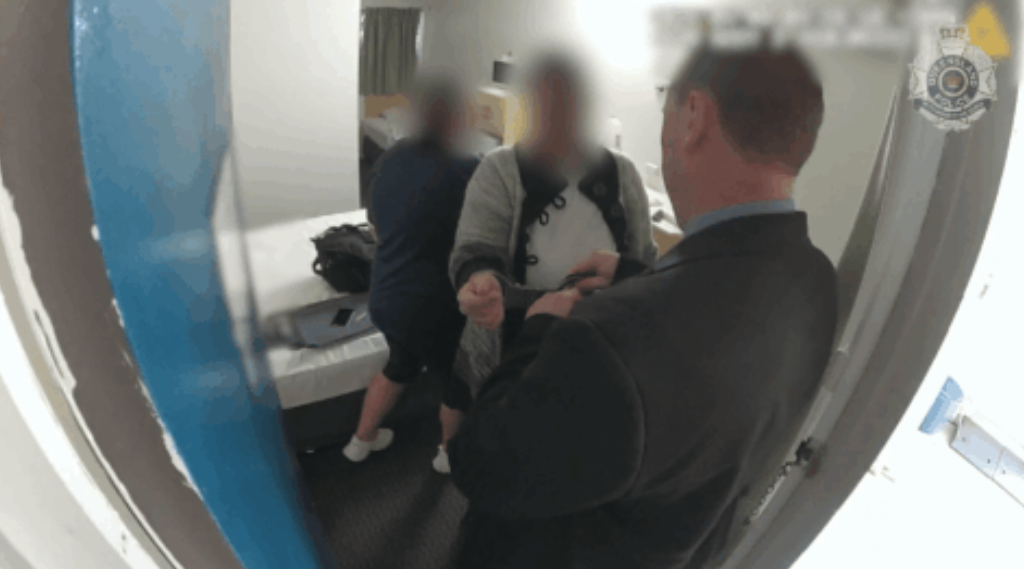
Police have released vision of a 46-year-old woman arrested today with the murder of a 71-year-old man following his reported disappearance from Mackay in November 2025. Photo source: QPS
A Mackay woman has been charged with murder following an extensive police investigation into the suspicious disappearance of a 71-year-old man last year.
Detectives from the Queensland Police Service Mackay Criminal Investigation Branch and Homicide Investigation Unit arrested the 46-year-old woman in Mackay at approximately 9:30am on Thursday, 8 May.
Police allege the woman was known to the missing man, who was last reported missing in November 2025.
Investigations into the man’s disappearance began after concerns were raised when he had not contacted family or acquaintances and had not been seen for several weeks. Detectives later formed the belief the disappearance was suspicious.
The woman has since been charged with one count each of murder and interference with a corpse.
She was expected to appear before the Mackay Magistrates Court later on Thursday.
Police have also released vision relating to the arrest as investigations continue.
Anyone with information is urged to quote the reference number: QP2502035864 and contact Policelink via www.police.qld.gov.au/reporting or Crime Stoppers Queensland via calling 1800 333 000 or reporting online at www.crimestoppersqld.com.au.
The investigation remains ongoing.
Video Link: r2.mypolice.qld.gov.au/uploads/2026/05/08/033610_update-3-suspicious-disappearance-mackay-v2.mp4

Isaac small businesses can now apply for up to $15,000 in recovery grants to help cover costs and rebuild after recent severe weather disruptions. Photo source: Shutterstock
Small businesses across the Isaac region can now access fresh financial support, with new disaster recovery grants opening to help operators get back on their feet after a tough wet season.
The Small Business Recovery Assistance Grants, funded by the Albanese and Crisafulli Governments, offer up to $15,000 for eligible businesses indirectly impacted by recent severe weather through isolation, supply chain disruptions and limited access.
Part of a $990,000 package, the funding can be used for essential costs such as wages, rent, replacing damaged or spoiled stock, and marketing to rebuild customer bases.
To qualify, businesses must have been unable to trade or experienced at least a 70 per cent drop in revenue compared to the same period last year.
Federal Minister for Emergency Management Kristy McBain said the funding recognises the long road to recovery.
“Recovery is so much more than what happens in the days and weeks following a disaster and I hope this latest support reinforces to people that the Albanese Government is are still there with them,” Minister McBain said.
“Small businesses are part of the heart and soul of communities, especially those in rural and remote areas, and by helping local business we are helping the whole community remain healthy and strong.”
Queensland Minister for Small and Family Business Steve Minnikin said the grants were designed to support those feeling the ripple effects of disasters.
“We are helping small businesses bounce back so they can continue to do what they do best, driving our economy forward,” Minister Minnikin said.
“The Small Business Recovery Assistance Grants are set up for small businesses who may not have been directly hit by severe weather or flooding, but experienced significant financial loss due to the disasters.”
The funding adds to existing disaster support measures already rolled out across Queensland, as communities continue to recover from a string of severe weather events.
Isaac businesses can apply now, with more information available via the Queensland Government’s business and disaster assistance websites; www.disasterassist.gov.au or www.qra.qld.gov.au.
Publishers Indemnity. Any individual or entity that places advertising, supplies copy material, or submits editorial content to Core Life Publishing agrees and undertakes to ensure that all such material:- Does not infringe upon any copyright, trademark, or other intellectual property rights;- Is free from any content that could be considered defamatory, libelous, or slanderous;- Does not infringe upon any rights related to privacy or breach of confidence;- Contains no obscene, indecent, or otherwise unlawful material;- Complies fully with the Trade Practices Act and all other applicable laws, regulations, or statutes.Furthermore, by submitting or placing such material, these individuals or entities agree to indemnify and hold harmless the publisher, Core Publishing and Events Pty Ltd, and/or its agents from and against any and all investigations, claims, demands, liabilities, damages, costs, or judgments arising out of or in connection with the material provided. All material is believed to be accurate at the time of printing and remains the copyright of Core Publishing and Events Pty Ltd.
© 2026 Mackay and Whitsunday Life Pty Ltd.
