
Independently Owned, Locally Grown, Community Loved

OPINION PIECE from the office of Federal Member for Dawson Andrew Willcox There is no question that immigration into Australia is out of control. The government’s numbers are too high, and standards are too low. A sustainable migration program must consider our capacity to provide housing, healthcare, infrastructure and the essential services everyone relies on, and Australians must come first. But Labor’s decision to target Working Holiday Makers Visa holders is not the answer. These people filling vital gaps in our workforce are not the cause of Australia’s housing crisis. In many cases, they are living in accommodation provided by the very businesses that employ them. The National Farmers’ Federation has made the point that Working Holiday Makers generally stay in hostels, caravan parks or purpose-built on-farm accommodation. Resorts usually have on-site staff quarters. They are not the source of Australia’s housing shortage. So why is Labor making it harder for them to come here, when these workers fill genuine jobs that regional Australia holds? Working Holiday Makers fill approximately one in seven farm jobs nationally and are particularly important during peak agricultural periods, which for Dawson, it is right now! Farmers rely on these workers to plant, pick, pack and harvest the produce that ends up on Australian supermarket shelves. Having run one of Australia’s largest tomato farms, at times Working Holiday Makers made up more than 50 per cent of my workforce. Without them, much of our crop simply would not have been picked in time and rotted in the paddock. Some may say, why not employ the Australians who don’t have a job and are on “the dole”? Can I say, this does not work. Most farmers will employ Aussies over travelling backpackers, but many either don’t want to do the work or don’t turn up after the first day. Who picks the fruit or veggies then? Farmers are already warning that visa delays are leaving them without workers. The NFF says approvals that once took days are now facing processing times of up to three months, and this time frame can be the difference between harvesting a crop or losing it. That should concern every Australian already feeling the pressure at the supermarket checkout. The same problem is playing out in tourism. Across Dawson, Working Holiday Makers are an important part of the workforce supporting tourism and hospitality, particularly in the Whitsundays. They help fill shifts, work in hotels and restaurants, support tour operators and keep businesses running through their busiest periods. They also contribute to the local economy. They spend money on food, fuel, attractions and tours, supporting the small businesses that depend on a strong visitor economy. That is why tourism and business leaders across North Queensland are raising the alarm. They understand what happens when a regional business cannot get enough staff: opening hours are reduced, and services are cut, creating a downward spiral. We do need to reduce migration to sustainable levels. We need stronger integrity measures, and we need to crack down on rorts. But responsible migration policy means understanding which parts of the system are creating pressure and which parts are helping Australia function. Working Holiday Makers are not the problem. They are part of the workforce solution for regional. Australia. People have had a gutful of watching their standard of living go backwards. Groceries, fuel, housing and everyday expenses are already putting enormous pressure on families. The last thing Australians need is another reckless policy that makes it harder to produce food, harder to run regional businesses and harder for tourism operators to find the workers they need.
Read the full storySomeone sold a house in Sydney last week for $9 million less than they bought it for four or five years ago. The sellers had bought the property in Sydney’s eastern suburbs for $29 million and sold it for $20 million in a sale forced by their bank. I imagine the sellers are a little disappointed by the government’s decisions on negative gearing and capital gains tax and feeling pretty hurt by the increased interest rates. Australia’s interest rates are on the rise and are now sitting at levels not seen since 2011. Increased cost of living is hurting people around the country and interest rates are playing into that. But the impact of interest rates is not felt evenly around the country. The far-higher property prices mean people in the major cities suffer much more than regional areas with the rates increase. That is certainly not to say people in Mackay are unaffected by the cost of living; it’s just that the impact of interest rates increase on a $400,000 mortgage is much less than the impact on a $1m mortgage. There are other Mackay-specific factors that are in play when discussing the current housing market. The big factor is the role of coal in our economy. Most of the coal extracted and exported from our region is coking coal, which is used to make steel. The price of coking coal is around $280 a tonne, which is about 50 per cent up. Good activity in the coal market translates to good news for the Mackay economy, as it is an economic engine that other cities and regions just don’t have. Good activity in Bowen Basin flows throughout the Mackay economy; Paget workshops, transport, suppliers and related businesses all benefit. But so do other, non-mining-related businesses as they benefit from the general confidence and spending that goes on. The strong mining activity also means mines need to keep their staff levels up and that means more people moving to Mackay. Of course, Mackay is much more than a coal mining town but if the coal sector is going well those other areas definitely benefit. It is a confidence boost for Mackay people looking to get into the housing market and those wanting to upgrade or downsize. It also means continuing strong demand from people wanting to rent a property and it will be interesting to see what sort of activity that creates from investors. Investors have walked away from the big-city markets because they can no longer use negative gearing on established properties that do not have a sufficient yield to be positively geared. Negative gearing has never been a big thing in Mackay because our prices are lower and rental returns continue to be strong so many investors have a positively geared property. Around the country everyone is nervous about the state of play and the probability of more interest rate rises. But strong coal prices and an economy that is performing well mean Mackay might just be presenting an opportunity for buyers and sellers that doesn’t exist in other parts. I remember when national confidence was flying high and Mackay prices were going up significantly that many buyers were saying “I wish we had bought a while ago when the market wasn’t so hot”. I’m not armed with a crystal ball so I’m not here to tell you what is going to happen but I suspect there is a very good buying window right now for those looking for an opportunity.
Read the full story
A local Mackay and Sarina based model has created a dress out of newspapers, including Mackay Life, for her upcoming pageant, representing her region and hometown on the runway as she vies for Miss Diamond International in Brisbane. Zoe Place will be competing this weekend in the three-day event, beginning this Friday 2nd October and ending on Sunday 4th October. The young model spent around a month creating her eco-fashion outfit, using old newspapers as the main material and transforming them into a bodice, skirt and flowers. Red elements were also incorporated into the design to give the dress a bold and glamorous pageant feel. Zoe said, “The entire concept was really about taking something that would normally be thrown away and turning it into something beautiful and meaningful.” Her eco-fashion creation will form part of a busy weekend in Brisbane, with the Miss Diamond International event including photo shoots, interviews, an eco-fashion show and the final pageant. Zoe has been preparing for the event by practising her strut and walking, preparing for interviews and getting comfortable in the different outfits she will wear throughout the weekend. Alongside her love of modelling, pageantry has also provided Zoe with a platform to raise awareness about causes close to her heart, including mental health, while fundraising for Beyond Blue. “Pageantry has given me more of a platform to combine my love for modelling with something that is really important to me.” “When I first started, I was more nervous about putting myself out there and worried about what others would think about me – but I’ve changed a lot through my journey in pageantry.” “Pageantry has also taught me that it’s not about how you look on stage. It’s about the person you are when you step off it.” “Every woman has their own unique journey and that journey is something we should all be really proud of.” “To me, it represents confidence, empowerment, kindness, and using your voice to make a difference.” Zoe said she was looking forward to meeting the other contestants, making new connections and creating memories. “I’m definitely looking forward to meeting all the new contestants and making new connections and creating memories that I will carry with me for a lifetime.” While Zoe hopes to eventually move to the city, her sights are set even further afield, with a dream of one day walking in New York Fashion Week. Mackay and Sarina local Zoe Place has created an eco-fashion dress from recycled newspapers, including Mackay Life, ahead of her Miss Diamond International pageant in Brisbane. Photos supplied
Read the full story
Trends, reels and the endless cycle of always wanting more has quietly bombarded the minds of countless social media users of all ages, but one former Mackay local has made it her mission to help others understand the effects of social media and find practical ways to break free from online addiction. Alexis Zahner is in Mackay over the next week to teach upcoming generations about social media and the effects it can have on the mind, particularly on identity, self-discovery, as well as the marketing strategies that get viewers hooked and influence their decisions. It is something Alexis knows first-hand can be a useful tool, but also a great disruption to authenticity and the world as we see and experience it. Alexis will hold a free meet and greet and book launch today, Friday 2nd October, at 5.30pm at the Mackay Surf Lifesaving Club, where she will give a talk and answer questions relating to her debut book, Real: Reconnecting to Yourself in a World of Likes and Lies. A former Mackay girl, Alexis spent the past 15 years working across business psychology, marketing and media, with her interest in social media influence beginning during her university studies at James Cook University in Townsville. Her own experience as a social media user, travel blogger and influencer eventually led her to question how much of her identity, decisions and values were being shaped by what she saw online. “The tipping point came for me about 3 years ago when I had this feeling that I couldn't separate influence from my own personal decision making,” she said. “I couldn't separate my own likes, dislikes, values, relationships from what I was being exposed to and being influenced by online.” “I found that I needed to take some time away from social media to recalibrate what was important to me and sort of reconnect and come back to myself.” Alexis said she understood the feeling of questioning who you are outside of social media. “I know what it feels like to live a life under the influence of social media and have that existential crisis of thinking to yourself, who am I? What do I like? What's the kind of life I want to live? and struggling to separate myself from influence.” Alexis is particularly passionate about reaching teenagers, who she says are in an important stage of identity development, and will share this message with Mackay high school students during her upcoming school talks. “Teenagers are really easily influenced by social media. So it's a really important age where we start educating them – not just on the mental health repercussions of things like social media and how it shortens their attention span, but how it actually influences who they become.” “If you're asking yourself these questions, it's not your fault. Social media is actually geared to create this impact on you.” Alexis encourages people of all ages to “start expanding beyond what you see on the platform.” “Dare to indulge in the things that you've always been curious about or things you used to love,” she said. “Don't be afraid to put the phone down to let yourself be curious and have fun.” What: Alexis Zahner's 'Real' Book launch When: 5.30pm Friday 2nd October 2026 Where: Mackay Surf Lifesaving Club Former Mackay local and author Alexis Zahner is returning home to share her experiences with social media and her debut book, Real. Photo supplied
Read the full story

This year’s pre-season crop estimate for the Wilmar group is up on last year’s total throughput. Photo supplied
Wilmar Sugar and Renewables has locked in its 2026 pre-season crop estimate at 15.19M tonnes for the Wilmar group.
General Manager Cane Supply and Grower Relations Dave Zeller said the pre-season estimate was about 960,000 tonnes up on last year's total throughput of 14.23M tonnes.
The estimated crop is also above the Wilmar group's five-year average of 14.95M tonnes.
The regional crop estimates are:
· Herbert - 4.1M tonnes
· Burdekin - 7.97M tonnes
· Proserpine - 1.67M tonnes
· Plane Creek - 1.45M tonnes
Mr Zeller said start dates for Wilmar’s eight sugar factories would be announced after his team consulted with grower representatives in each region.

Central Queensland grain growers, including those in the Isaac region, will receive support through a $1.75 million program aimed at improving productivity while reducing soil erosion and protecting waterways and the Great Barrier Reef. Photos supplied
Grain growers across Central Queensland, including the Isaac region, are set to benefit from new funding support aimed at strengthening sustainable farming practices and protecting the Great Barrier Reef.
The Crisafulli Government has announced a $1.75 million Grain Sediment Reduction Program, designed to assist producers in improving on-farm productivity while reducing soil erosion and sediment runoff into waterways.
Member for Mirani, Glen Kelly MP, said the initiative is a practical investment in the future of regional agriculture.
“Central Queensland’s grain growers are significant part of our region’s economy, and this program is about backing them with real support to improve their operations,” Mr Kelly said.
“Eligible growers can now access grants of up to $100,000 to invest in on-farm infrastructure that reduces soil erosion and sediment runoff into our waterways.”
Mr Kelly said the program recognises the link between strong agricultural production and environmental care.
“No farmer wants to see their topsoil wash away. These grants will help landholders put practical measures in place to protect their soil, improve ground cover, and ultimately boost productivity,” he said.
“And if those actions also help protect the Great Barrier Reef, that’s a win for everyone.”
He highlighted the importance of the industry locally, noting: “In the 2024–25 financial year alone, more than 244,917 tonnes of grain passed through the Port of Mackay, which shows just how significant this industry is to Central Queensland.”

Funded projects may include contour bank construction and repair, erosion control structures such as grassed buffer strips and waterways, adoption of controlled traffic farming through GPS and guidance technology, and upgrades to planting equipment supporting zero or minimal tillage.
The program is open to eligible producers across the Isaac Regional Council area, along with other Central Queensland local government regions.
Funded projects will focus on proven erosion control and land management practices, including:
The Grain Sediment Reduction Program is open to dryland and broadacre grain and forage cropping producers across eligible local government areas, including:

Mackay residents living with neurological conditions are set to benefit from improved access to care, with the region named as one of eight locations for a new Neuro Wellness Hub under a statewide rollout.
The hubs form part of the Government’s $10.45 million investment in neurological healthcare, aimed at delivering more accessible, community-based support services across regional Queensland.
Mackay will join centres including Townsville, Rockhampton and the Wide Bay region in hosting one of the new hubs, which are designed to complement existing care provided by specialists and general practitioners.
The initiative is expected to benefit more than 1.3 million Queenslanders, providing easier access to support services, information and tailored care closer to home.
Each hub will offer personalised therapies and peer support groups, with services tailored to meet the specific needs of local communities. The model focuses on creating a central, community-based space where people can access a range of supports in one location.
Locations were selected following a detailed needs assessment, taking into account hospitalisation rates, demand for services, the prevalence of neurological conditions and gaps in access to allied health and neurorehabilitation services.
Procurement for the Mackay hub and other locations is set to begin mid-year, with contracts expected to be awarded by the end of June. The hubs are scheduled to be delivered in 2027.
Minister for Health and Ambulance Services Tim Nicholls said the rollout would make it easier for Queenslanders to access the care they need.
“The Government is getting on with the job of delivering these Neuro Wellness Hubs while ensuring support is targeted to where it is needed most,” Minister Nicholls said.
“These Hubs will provide a central space for people living with neurological conditions to access the right support, information and services, when they need them.
“By partnering with community organisations, we’re building a more connected system that better responds to the needs of Queenslanders living with a neurological condition.”

The pre-dawn darkness at Finch Hatton carried a weight that was impossible to ignore. Guided by dim streetlights and the distant flash of emergency vehicles marking road closures, a quiet procession of people moved toward the cenotaph. There was no chatter, no distraction, only the steady rhythm of footsteps and a shared understanding of why we had gathered. In that silence, the significance of the dawn service spoke louder than any words could.
When the service began, the stillness gave way to reflection. The words spoken were powerful, grounded in remembrance and respect. To lay a wreath on behalf of the Mackay Regional Council was an honour, made more meaningful by the setting away from the familiarity of the Mackay precinct and into a smaller, deeply connected community. It was a reminder that Anzac Day is not confined to large ceremonies; its spirit thrives just as strongly in quiet regional towns.
What followed was perhaps the most profound part of the morning. Conversations sparked among strangers who, within moments, felt like old friends. Stories were exchanged – some light, some heavy. I recall my conversations with people like Buzz and Bevan, whose openness captured the essence of the day. These were not rehearsed interactions, but genuine human connections formed through shared respect and collective memory. Over an early breakfast at the Criterion Hotel, those conversations continued, unforced and deeply engaging.
It was only afterward, sitting alone, that the emotional weight truly settled. There was an unexpected sense of reluctance to leave, as though departing meant abandoning something meaningful. That feeling, difficult to articulate at first, soon became clear: it was patriotism in its truest form. Not the loud or performative kind, but a quiet, enduring bond, standing shoulder to shoulder with others in remembrance of sacrifice, loyalty and mateship.
Later in Mackay, the scale of the main service reinforced that same sentiment. With a record number of marchers, including more than 7000 children, and crowds lining the streets, the idea that Anzac Day is fading could not have been further from the truth. The presence of Major General Paul Kenny added to the significance, but it was the community itself that defined the day.
From children waving flags in prams to elderly attendees sharing memories of years gone by, the spirit of Anzac Day was unmistakable. It lives on not just in ceremony, but in connection. In the stories told, the friendships formed and the collective act of remembering
Let’s Chat – Council Connect
Residents can catch up with councillors in person at upcoming Let’s Chat - Council Connect sessions held across the region. The next session will be held at Eton Hotel from 5pm on May 5, 2026.
Further details can be found on the Connecting Mackay website.
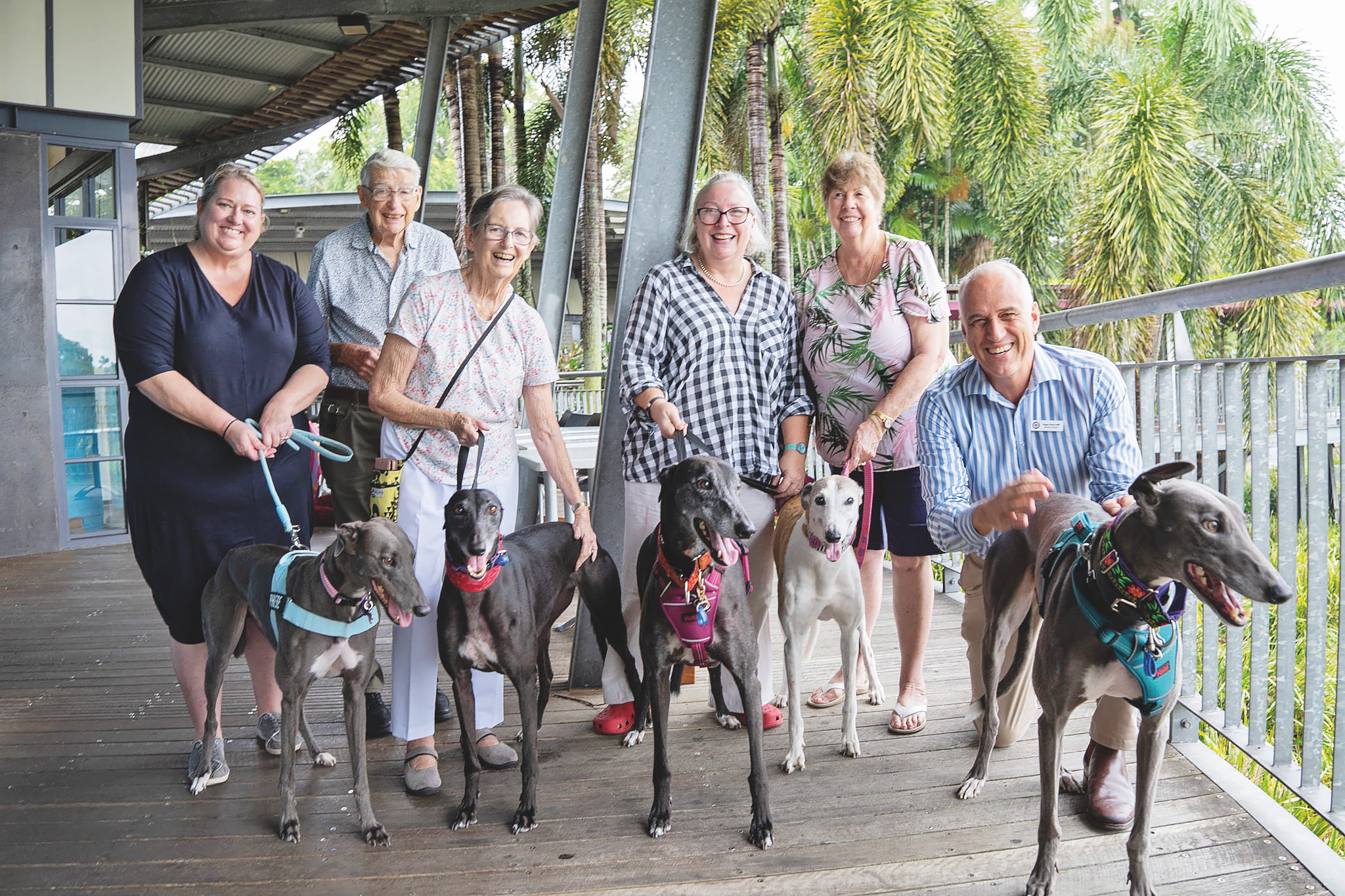
Greyhound owners and their beloved pets gathered with Nigel Dalton, Member for Mackay, to discuss Queensland’s muzzle laws. Reilly, with Keith and Anne McCollim, Higgins and Liam with Kate Chiconi, Lotti with Lyn Harris, and Pheobe with Lisa Veney. Photo credit: Hannah McNamara
A group of passionate greyhound owners from the Happy Greys Social Club recently met with Nigel Dalton, Member for Mackay, to advocate for a review of Queensland’s requirement that greyhounds must wear muzzles in public.
The gathering brought together several owners and their dogs, providing supporters an opportunity to demonstrate the gentle temperament that they say defines the breed.
Under current Queensland legislation, greyhounds are generally required to wear a muzzle in public unless they are recognised through the Queensland Greyhound Adoption Program (GAP) and identified by the program’s green collar. Where council local laws permit, this collar allows GAP greyhounds to be walked muzzle free.
Queensland is widely considered the only Australian state where a broad public muzzling requirement for greyhounds still applies.
Co-founder of Happy Greys Social Club in Mackay, Kate Chiconi explained the group reached out directly to Mr Dalton to begin the conversation.
“Lyn and I are co-founders of the Happy Greys Social Club and between us we wrote a letter and sent it to Nigel Daltons office.”
She said the meeting allowed the Member for Mackay to see the dogs up close.
Ms Chiconi, who owns retired racing greyhounds Higgins and Liam, said the breed is often misunderstood.
“People who know anything about greyhounds know that they are inherently not aggressive dogs,” she said.
“They’ve been trained to chase, not attack.”
She described greyhounds as calm and affectionate companions.

“They are gentle, they’re quiet, they rarely bark, they’re calm, they’re great with kids and good with each other,” she said.
“They absolutely don’t need to wear a muzzle outside.”
Fellow club co-founder Lyn Harris attended with her dog Lotti, who she said came into her life after a difficult start.
“She came from the pound after being dumped in the bush,” Ms Harris said.
“We’ve had her for about five years now and she’s around seven. It’s wonderful that she landed on her feet with us. She’s such a good dog.”
Ms Harris said greyhounds are known for their funny and relaxed nature.
“They do all the quirky things like lying on their back with their legs in the air. They call it ‘roaching’,” she said.
“They sleep for about 18 hours a day after half an hour of exercise,”
She, along with other group members believe the muzzle requirement sends the wrong message about the breed.
“They’re not a dangerous or aggressive breed of dog,” Ms Harris said. “They deserve to be living their best life, muzzle free.”
Mr Dalton said he is now looking into the background of the legislation and whether it remains justified.
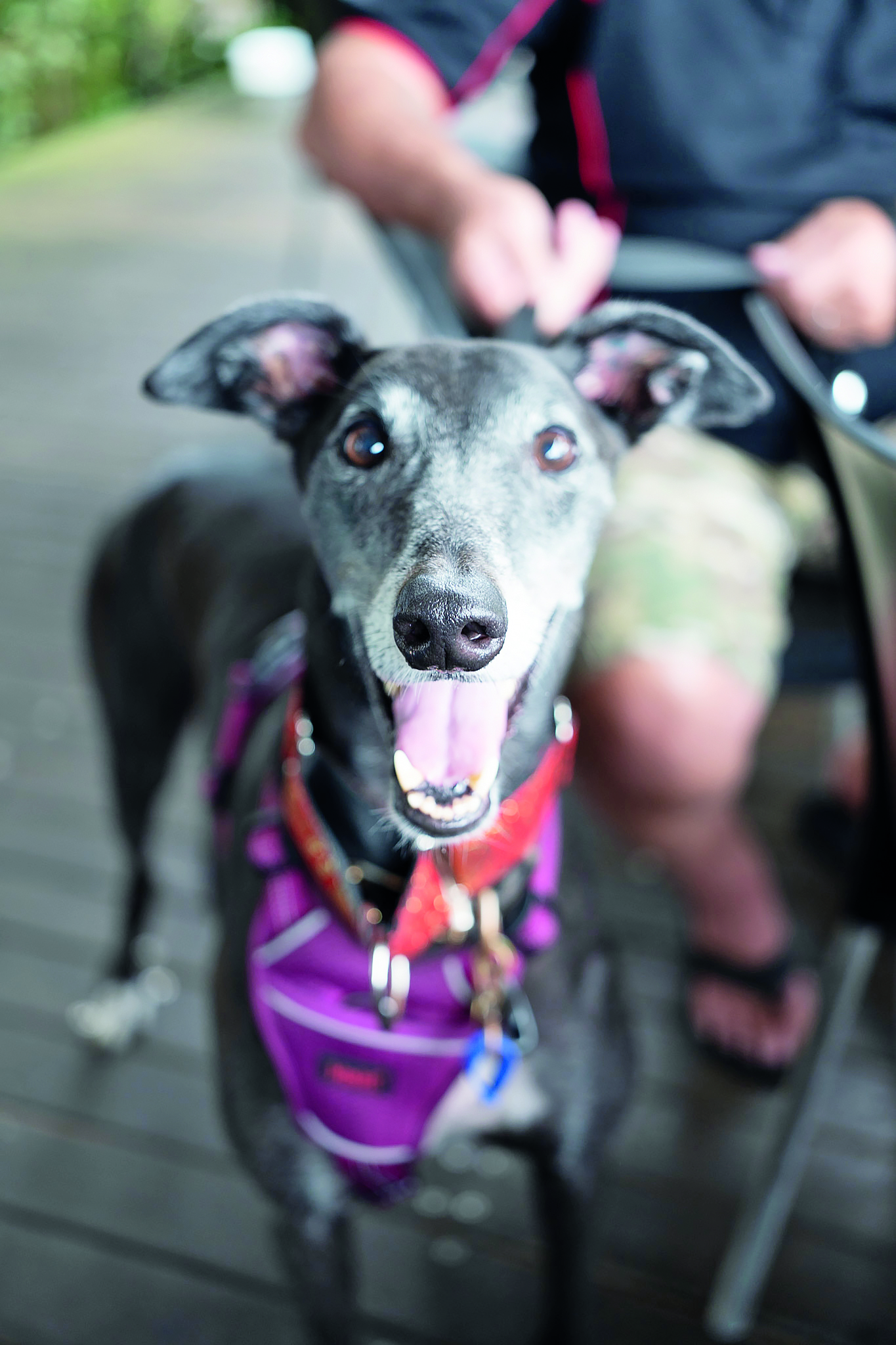
“At this stage we’re doing research into why we have these laws in Queensland which say that a greyhound that has raced before has to wear a muzzle in public,” he said.
“I don’t think greyhounds should have that stigma.”
He said dangerous behaviour should be addressed regardless of breed.
“A dangerous dog is a dangerous dog and they should be dealt with under the legislation,” Mr Dalton said.
“But a dangerous dog could be any breed. Why are we just focusing on one particular breed?”
Mr Dalton said the next step is to examine the evidence.
“I want to examine the evidence behind it and see whether or not it’s something we can change,” he said.
While no immediate changes have been proposed, the conversation has prompted fresh discussion around whether greyhounds, often known as gentle giants, should be required to wear muzzles in public after retiring from racing in Queensland.
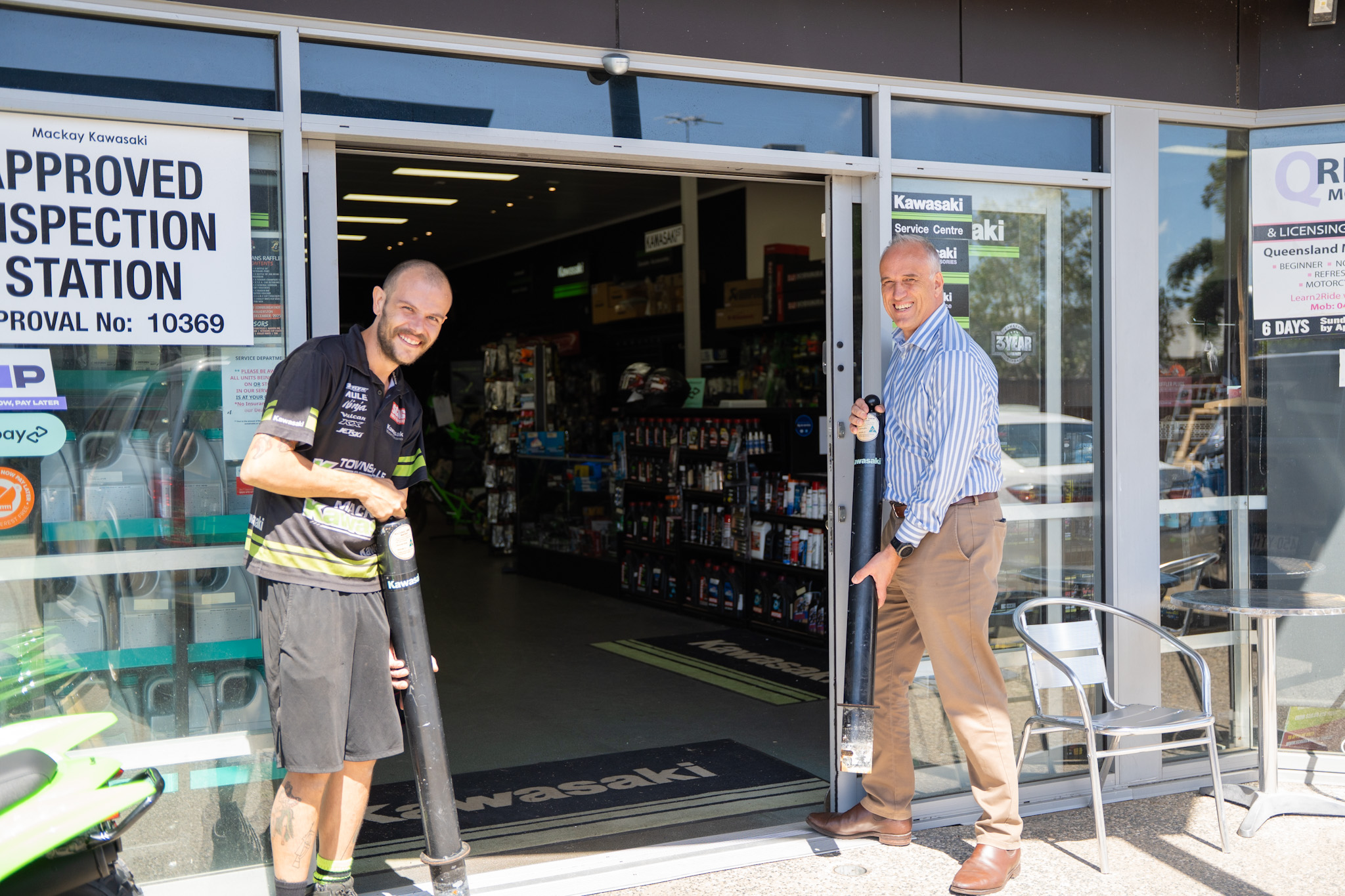
Tough new laws targeting crime and antisocial behaviour will expand police powers in Mackay’s CBD precincts to help protect local businesses and improve community safety. Photo credit: Hannah McNamara
A suite of new laws aimed at tackling youth crime, drug offences and antisocial behaviour is set to roll out across Queensland, with Mackay identified as a key focus area.
The Government has passed the Expanding Adult Crime, Adult Time and Taking a Strong Stance on Drugs and Antisocial Behaviour Bill 2026, introducing tougher penalties for serious offences and expanded powers for police.
Under the changes, 12 new offences have been added to the Adult Crime, Adult Time framework, bringing the total number of applicable offences to 45. The legislation also includes significant drug reforms and the introduction of Designated Business and Community Precincts, designed to help police better manage antisocial behaviour in high-risk areas.
Mackay is one of four priority locations selected for the new precincts, which will allow police to move on offenders and provide greater protection for local businesses, workers and families.
Member for Mackay Nigel Dalton said the reforms would deliver much-needed support to the region.
“These laws are about restoring safety in Mackay and backing our local businesses who have been doing it tough,” Mr Dalton said.
“For too long, businesses across Mackay have been targets of repeat offending and antisocial behaviour, and that has real impacts on jobs, confidence and our local economy.
“Businesses like Kawasaki have unfortunately been frequent targets in the past, and that’s why these stronger police powers and tougher laws are so important.
“Our community deserves to feel safe when they go to work, shop in the CBD, or spend time with their families, and these laws will help make that happen.
“The Government is delivering exactly what we promised — stronger laws, better support for police, and real action to turn the tide on youth crime.”
The expanded list of offences under Adult Crime, Adult Time includes serious crimes such as aggravated assault occasioning bodily harm, conspiring to murder, unlawful stalking and intimidation, riot, indecent treatment of a child under 16, choking or strangulation in a domestic setting, and administering poison with intent to harm.
Alongside tougher penalties, the legislation introduces a new Illicit Drug Enforcement and Diversion Framework, which aims to balance enforcement with rehabilitation by ensuring offenders face consequences while offering support pathways for low-risk cases.
The government says the reforms are already contributing to a decline in crime, with a reported 7.2 per cent drop in the number of victims in 2025, and expects the new measures to further strengthen community safety across Queensland.
With enhanced police powers set to be implemented in Mackay’s CBD and surrounding precincts, the changes are intended to deter repeat offenders, reduce antisocial behaviour and restore confidence for businesses and the wider community.

Photo source: Queensland Police Service
Dysart Police are appealing for public assistance following an incident involving wilful damage and the unlawful use of a motor vehicle at two local businesses on Murphy Street, Dysart, between 1.28am and 2.35am on 19 April.
Police are investigating the circumstances surrounding the incident and have released information in relation to the matter, including an image they believe may assist with inquiries. Members of the public who recognise the person or have any information are urged to contact police as soon as possible.
Officers are also reminding residents to remain vigilant and report any suspicious behaviour immediately, regardless of the time of day, as early reporting can assist in preventing further offending and support timely investigations.
A 20-year-old Sarina man has had his driver licence suspended after being allegedly detected travelling at 191km/h in a 100km/h zone during speed enforcement patrols on the Bruce Highway at Alligator Creek.
It will be alleged the motorist was intercepted at approximately 7.20am on 24 April while travelling northbound, exceeding the posted speed limit by 91km/h.
The driver was issued a traffic infringement notice totalling $1,919, resulting in the loss of eight demerit points and a six-month licence suspension.

Police have reiterated their focus on road safety across the Mackay Whitsunday district, including remote and high-risk areas, through ongoing enforcement operations targeting dangerous driving behaviour.
Senior Constable Donna Hill, from the Mackay Crime Prevention Unit, said in some cases vehicles linked to high-speed offences may also be subject to impoundment.

The junior playground at the Mackay Regional Botanic Gardens will be temporarily closed from Wednesday, April 29 until approximately May 9 to allow for scheduled improvement works.
Mackay Regional Council will install a new water sand play unit and a new excavator as part of the upgrade, enhancing play opportunities for younger visitors at the popular riverside parkland precinct.
The closure will ensure works can be completed safely and efficiently, with access to the area restricted during the construction period. Council has advised the public that all other areas of the Botanic Gardens remain open for use during this time.
Once installation is complete and safety checks have been finalised, the playground will be reopened to the community. Council will provide an update when the works are finished and the space is ready for use.
Council has thanked the community for its patience and understanding while the improvements are carried out, noting the short-term closure will support longer-term benefits for park users.
Residents are encouraged to plan alternative play options during the closure period.

Coal haulage between the Vulcan and Moranbah North mines will resume temporarily, with Isaac Regional Council granting short-term approval for Anglo American to transport approximately 20,000 tonnes. Photo source: ABC News
Isaac Regional Council has temporarily reinstated approval for the road haulage of coal from the Vulcan Mine to Moranbah North Mine near Moranbah over an estimated three-week period commencing 27th April 2026.
The original haulage permits were suspended in February 2026 following the Vitrinite companies entering receivership and administration. Isaac Regional Council’s previous decision related specifically to the Vitrinite companies and the suspension of their approvals while the future of the business and its assets was being determined.
Council has now granted a request from Anglo American to retrieve approximately 20,000 tonnes of coal purchased from the Receiver of the Vitrinite companies and currently located at the Vulcan Mine site.
This temporary approval is for haulage to Anglo American only for short period of weeks. It does not reinstate any other approvals, nor does it authorise any ongoing operations by the Vitrinite companies.
Mayor Kelly Vea Vea said Council’s decision reflects that the coal is being removed for a different company.
This is an approval for Anglo American to remove coal it has acquired from the Receiver.
“Council has made it clear to both Vitrinite and Anglo that the same conditions that applied previously will continue to apply, including the payment of road haulage fees.”
The approval restores the conditions of the suspended permits, including approved haulage routes, operational requirements and the payment of road haulage fees to Council.
Council will continue to monitor the haulage operation during the temporary three-week period.
%20Dan%20Peters%20with%20his%20eldest%20son.JPG)
Dan Peters with his son on ANZAC day. Photos supplied
An Australian Army veteran who served across East Timor, the Solomon Islands and Afghanistan has reflected on his military career shaped by discipline, hardship, mateship and the long, often unseen aftermath of war.
Dan Peters enlisted in 1999 at the age of 19, shortly after finishing high school, driven by a longstanding interest in the military and aviation. He began in the infantry before transferring into the Royal Australian Electrical and Mechanical Engineers, working as a helicopter mechanic after completing trade training and specialist aviation courses in Australia and the United States.
His service took him into some of Australia’s most significant deployments, including Timor in 1999 and again in 2001 to 2002, the Solomon Islands in 2003 and Afghanistan in 2011.
He described his first deployment to Timor as confronting yet influential, marked by both destruction and connection.
“We took time to get to know the community and show compassion on the people of Timor.”
“They were very happy for us to be there and liberate them as an independent country, especially the children,” he said.
%20The%20infamous%20house%20in%20Balibo.jpg)
Amid the intensity, he said it was often the smallest interactions that carried the deepest meaning, including engagement with locals and moments of lightness such as servicemen racing children on karts.
“The mateship is the biggest thing that you get from the military.”
Mr Peters has remained closely involved in veteran wellbeing and RSL initiatives across Central Queensland, particularly within the Walkerston Pleystowe RSL sub branch, including leadership roles as Secretary and participation in commemorative and peer connection programs.
He said the transition from military to civilian life can be disorienting, but not impossible with the right support.
“The military is awesome at breaking a civilian down and building them back up again… but when we leave… we don’t know how to adjust back.”
“We just leave and we put on civilian clothes, but we’re still a military person.”
%20Timorese%20villagers%2C%20particularly%20children%2C%20looked%20.jpg)
A significant part of his ongoing advocacy focuses on veteran mental health and recovery programs that use shared experience as a pathway to healing. These initiatives often return veterans to Timor, combining reflection at historical sites with group discussion and storytelling.
“There’s a lot of emotion, a lot of tears, a lot of stories… but people come back feeling refreshed.”
“It’s like they’ve got a whole new outlook on life.”
At the centre of that process is forgiveness, not as erasure, but as a form of inner solace.
“It’s not about forgetting, but more about forgiving… so they heal inside and learn to deal with anger and resentment.”
%20Dan%20Peters%20in%20uniform.%20.jpg)
Mr Peters said remembrance and honour must extend beyond just one day per year to acknowledge the invisible burden carried by those who return.
“I think we need to remember all service men and women more than once a year.
“A lot of times we remember those who didn’t make it home, but we sometimes forget to acknowledge and appreciate the people that fought and still came home alive, and the scars they still go through because of it.”
Now, Mr Peters spends his days alongside his wife and three children, carving out time for his sons’ cricket matches and continuing his commitment to the Walkerston Pleystowe RSL Sub Branch as Secretary.
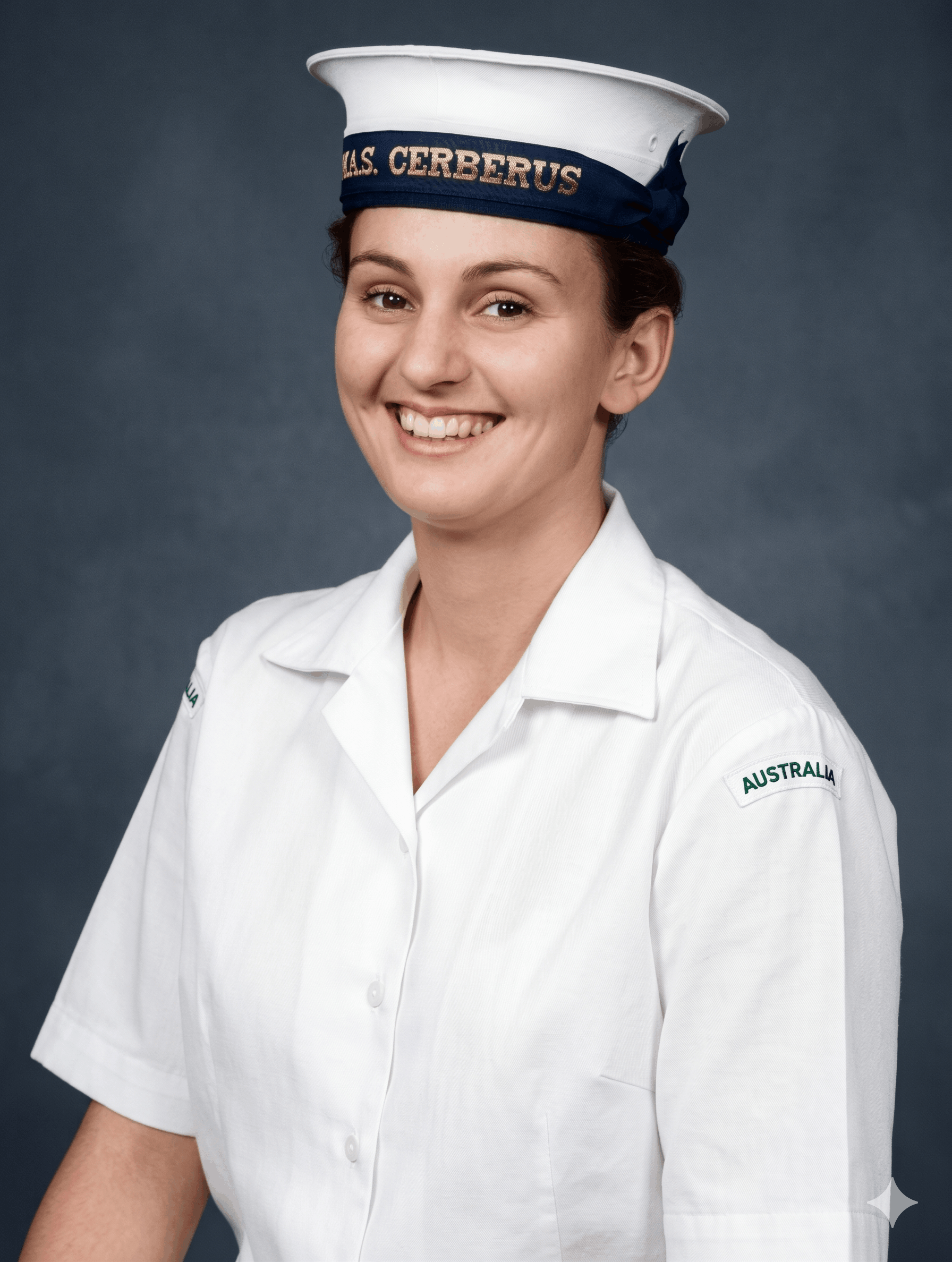
Just ten days after her seventeenth birthday, on April 10th 1995 Linda Elliott officially joined the Navy.
Growing up between Mackay and Moranbah, Linda was drawn to the idea of seeing the world beyond regional Queensland. Her introduction to naval life began through a cadet program, where she developed an early understanding of the structure and expectations of military life.
“I was a Navy cadet beforehand… so I had a bit of a background and I knew people that had already served.”
Her early role placed her in close proximity to officers, working in a steward capacity where she supported their daily needs and operations during deployments.
“I was a steward, so my main job was to look after the officers.”
But life at sea rarely meant doing just one job. Sailors were expected to step into multiple responsibilities depending on operational demands.
Linda took part in boarding parties, emergency response training, medical assistance teams and firefighting drills, while also completing chemical warfare training.
“When you’re at sea, you’ve got more than one job.”
Her time in uniform was marked by contrast. Some days followed routine and structure, while others demanded resilience and quick thinking.
“Some days were really good… but other days could be really bad, so you just had to take each day as it came.”
Life onboard ship also created strong bonds between those who served. Living in tight quarters, often sharing bunk beds and limited personal space, meant crew members relied heavily on one another.
“It turns into a family.”
Linda says many of those friendships have endured to this day.
“We still stay in touch.”
“You might not see them for months or years, but as soon as you see them, it’s like we’re family again.”
Completing the demanding twelve weeks of recruit training stands out as one of her proudest milestones, and the discipline developed during those years continues to shape her life today.
Linda also hopes to broaden public understanding of who veterans are.
“People think of a veteran and they think of an elderly man or a Vietnam vet… but there are younger women out there that have served as well.”
Today, she balances life as a mother of three while remaining connected to the Walkerston-Pleystowe RSL Sub-Branch.
One of her daughters has recently decided to join the Navy, following in her footsteps, while her young son has begun taking an interest in the stories of her service.
She encourages younger generations considering military service to approach it with confidence.
“Just believe in yourself.”
“You’ve got to believe that you can do it.”
And just as importantly, she hopes fellow veterans know support is available.
Linda now hopes to be that source of support for others. After navigating her own recovery through rehabilitation and a veteran’s program she speaks highly of, she is committed to giving back to a cause that remains close to her heart.
“Like many other veterans, it’s taken a lot of years for me to be able to speak about things I’ve seen, and what’s happened.”
“So many of our veterans go without help… but it doesn’t have to be like that.”
“I just want people to know that there is help out there for veterans… please just reach out.”
Former Navy sailor Linda Elliott, who enlisted at 17, reflects on a life shaped by resilience, service at sea and motherhood, while encouraging veterans and young women to believe in themselves and seek support. Photos supplied
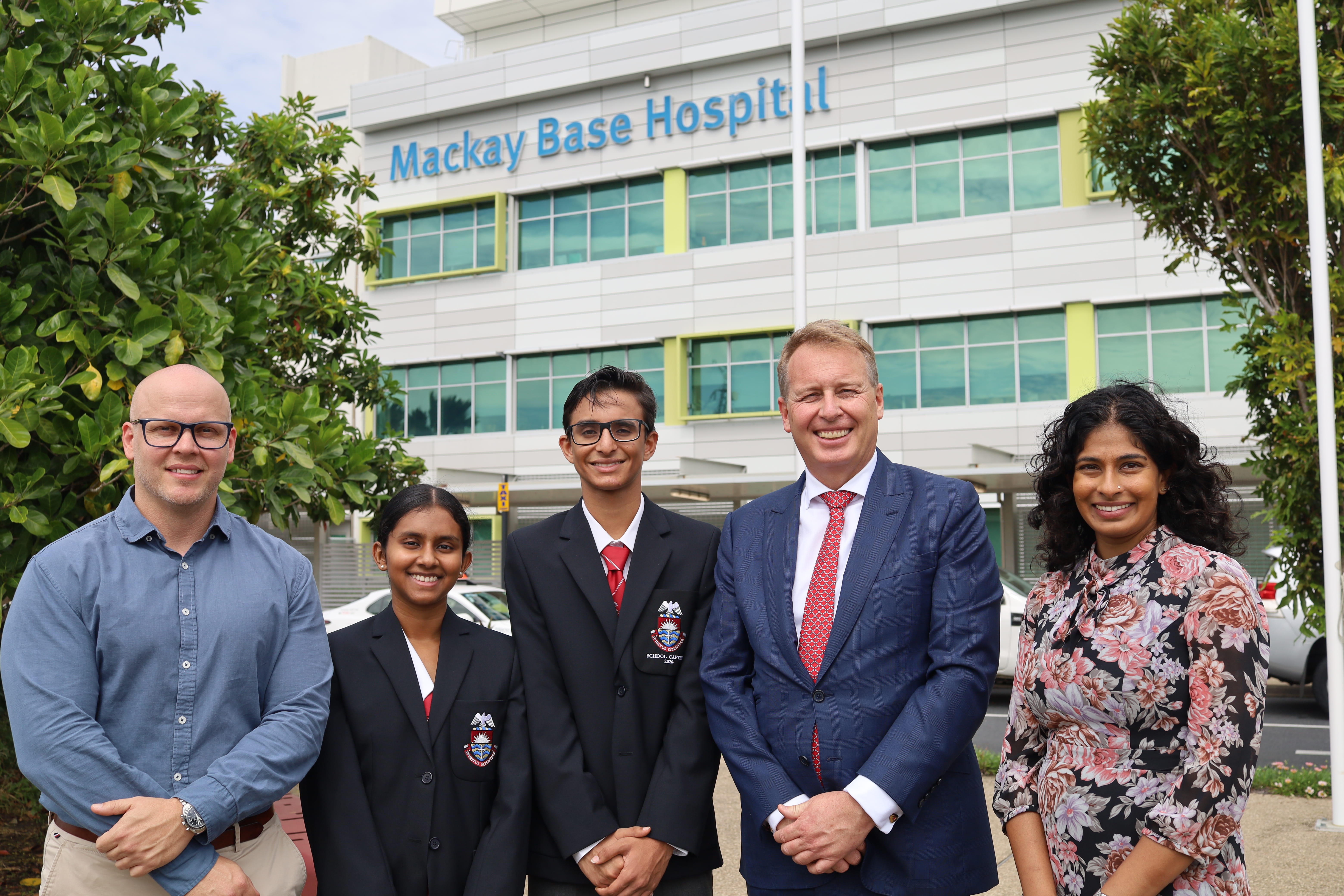
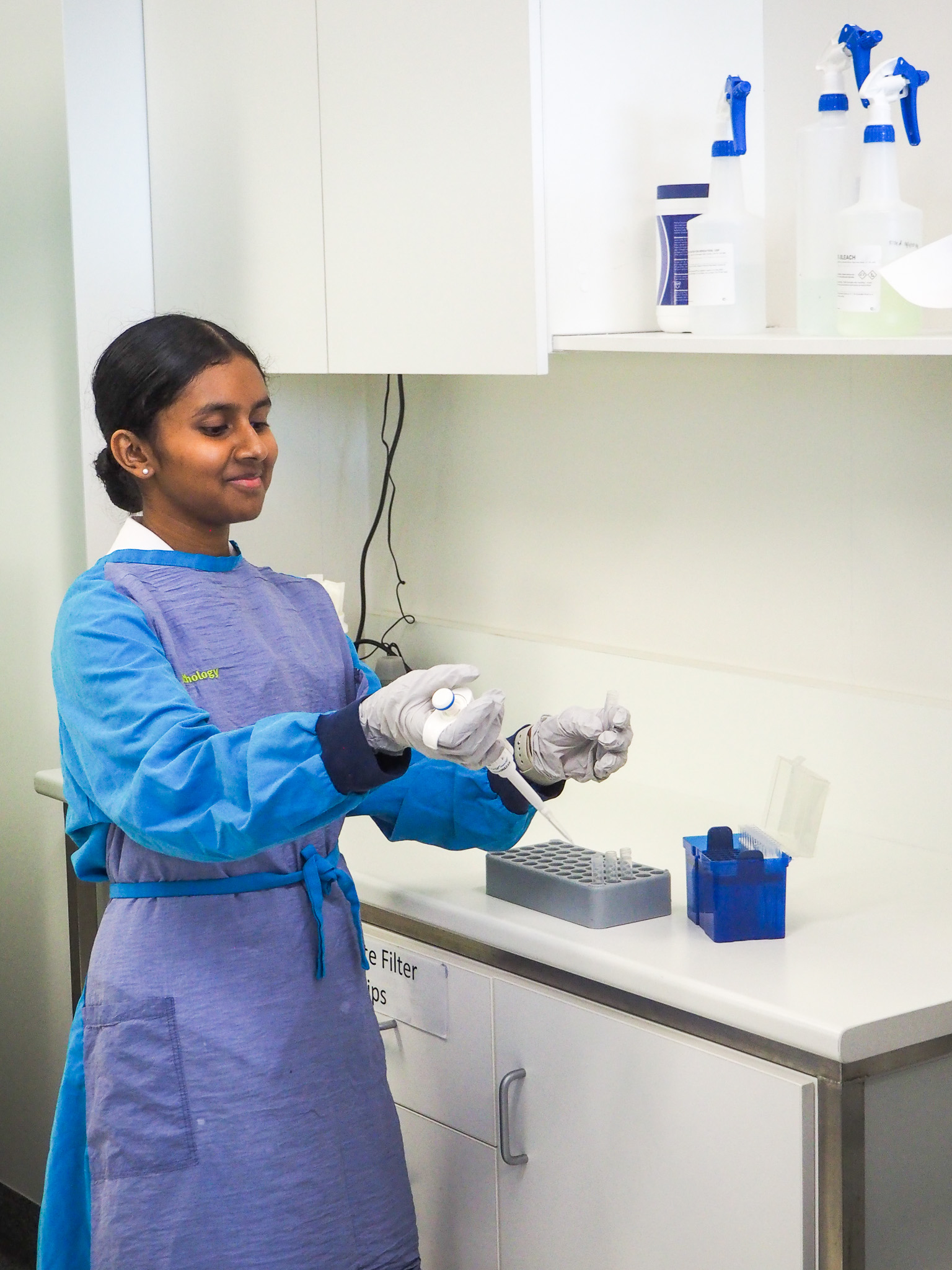
Whitsunday Anglican School launches Medical Pathways research partnership with MHHS. L-R: Dr Matthew Hiskens, Mackay HHS Principal Research Fellow, Senara Wasalthilaka, Student, Soham Rana, Student, Andrew Wheaton, Principal, and Dr Ashwita Venkatesh, Director of Medical Pathways. Photo supplied
Whitsunday Anglican School is proud to announce an exciting new partnership with Mackay Hospital and Health Service (HHS) which will offer students a unique opportunity to experience real-world medical research.
As part of the school’s expanding Medical Pathways programme, two students each term will have the opportunity to undertake a research placement with the Mackay Institute of Research and Innovation (MIRI) which is the research arm of Mackay HHS. The placements will occur during school holidays and run for over three to four days, providing students with valuable insight into clinical research and innovation.
During the placement, students will work alongside research fellows, research translation staff and innovation teams, gaining experience in research planning, protocol design, project management, data analysis and writing for publication. They will also have the opportunity toassist with processing clinical samples, contribute to research communication through poster design with the communications team, attend Friday Hospital Grand Rounds, and engage in discussions with principal investigators of clinical trials.
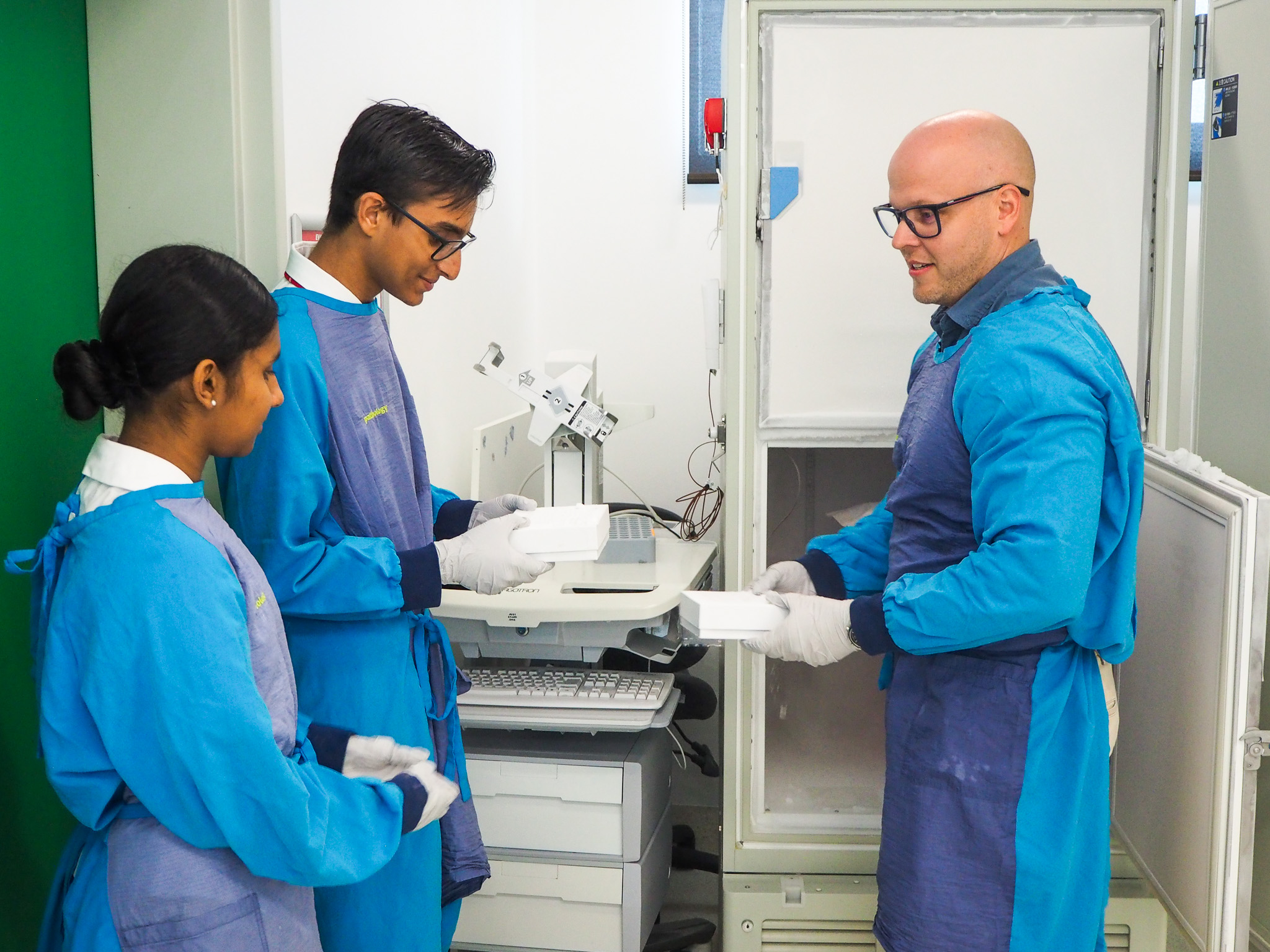
While students will not have direct patient contact, the experience is carefully designed to ensure confidentiality and uphold the highest ethical standards.
This initiative will provide a broader cohort of students with exposure to research environments, career pathways, and the diverse roles within health and medical innovation.
Director of Medical Pathways at Whitsunday Anglican School, Dr Ashwita Venkatesh, said the programme will provide students with an authentic and meaningful introduction to translational research.
“Experiences such as attending Grand Rounds and contributing to research communication will help them better understand the connection between scientific discovery and patient outcomes,” Dr Venkatesh said.
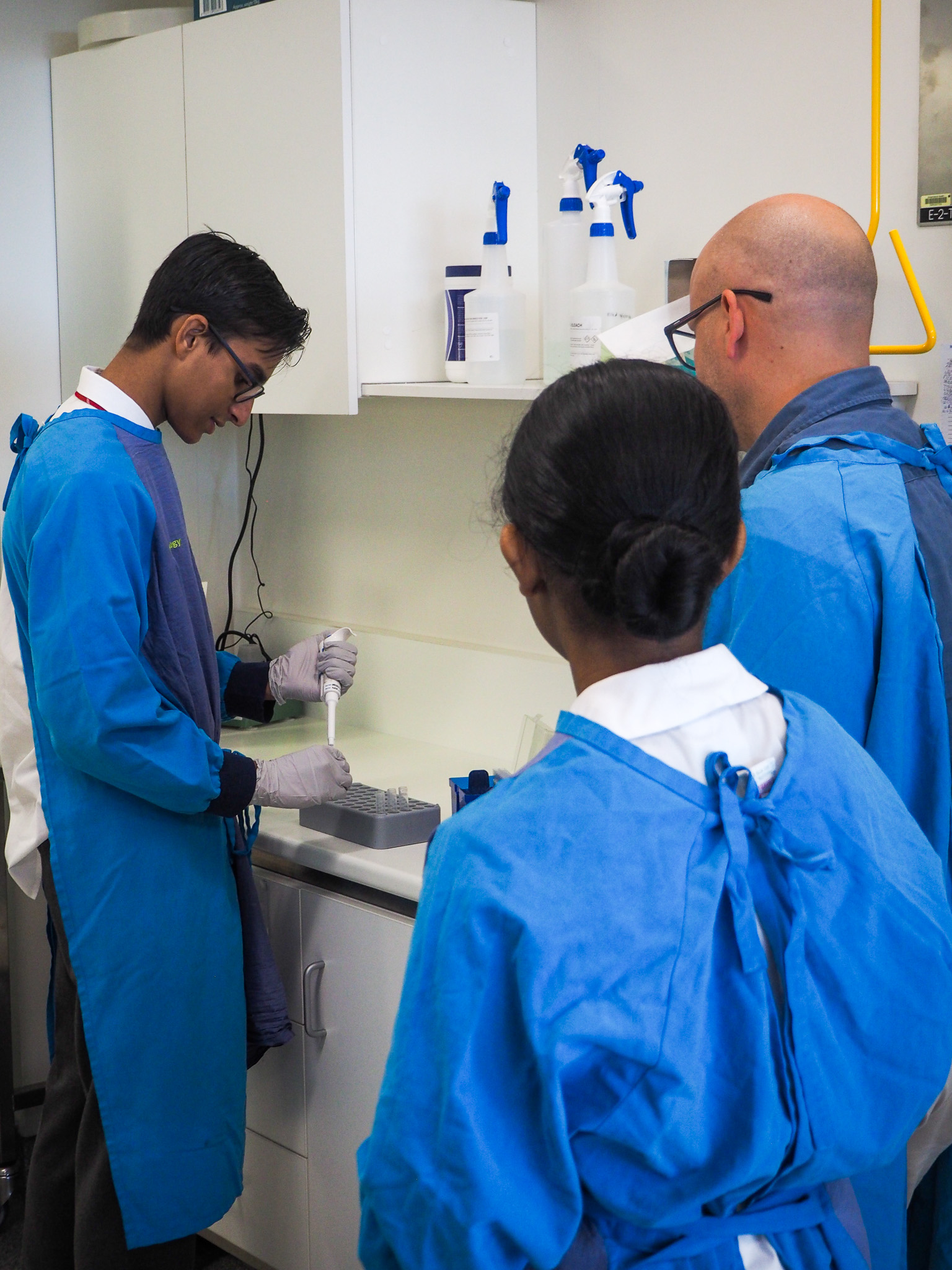
“We are particularly pleased to be working collaboratively on the ethics component of the programme. Introducing students to key principles such as professionalism, non-maleficence, autonomy and confidentiality will provide a strong foundation for any future pathway in medicine or health research.”
Principal of Whitsunday Anglican School, Mr Andrew Wheaton, said the partnership reflects the school’s commitment to providing meaningful, future-focused learning opportunities.
“We are delighted to be working alongside MHHS to bring these opportunities to life,” Mr Wheaton said.
Mackay HHS Principal Research Fellow, Dr Matthew Hiskens said it’s important for students planning their career path to have knowledge of local opportunities available.
“It’s great to highlight opportunities for the next generation of the medical workforce, and to show students that rewarding careers in health and research can happen right here in the Mackay region,”
“After high school, what drew me to research was the chance to explore unknown questions, and I hope this experience gives the students an insight into research career paths.” Dr Hiskens said.

Photo source: Mackay Hospital and Health Service
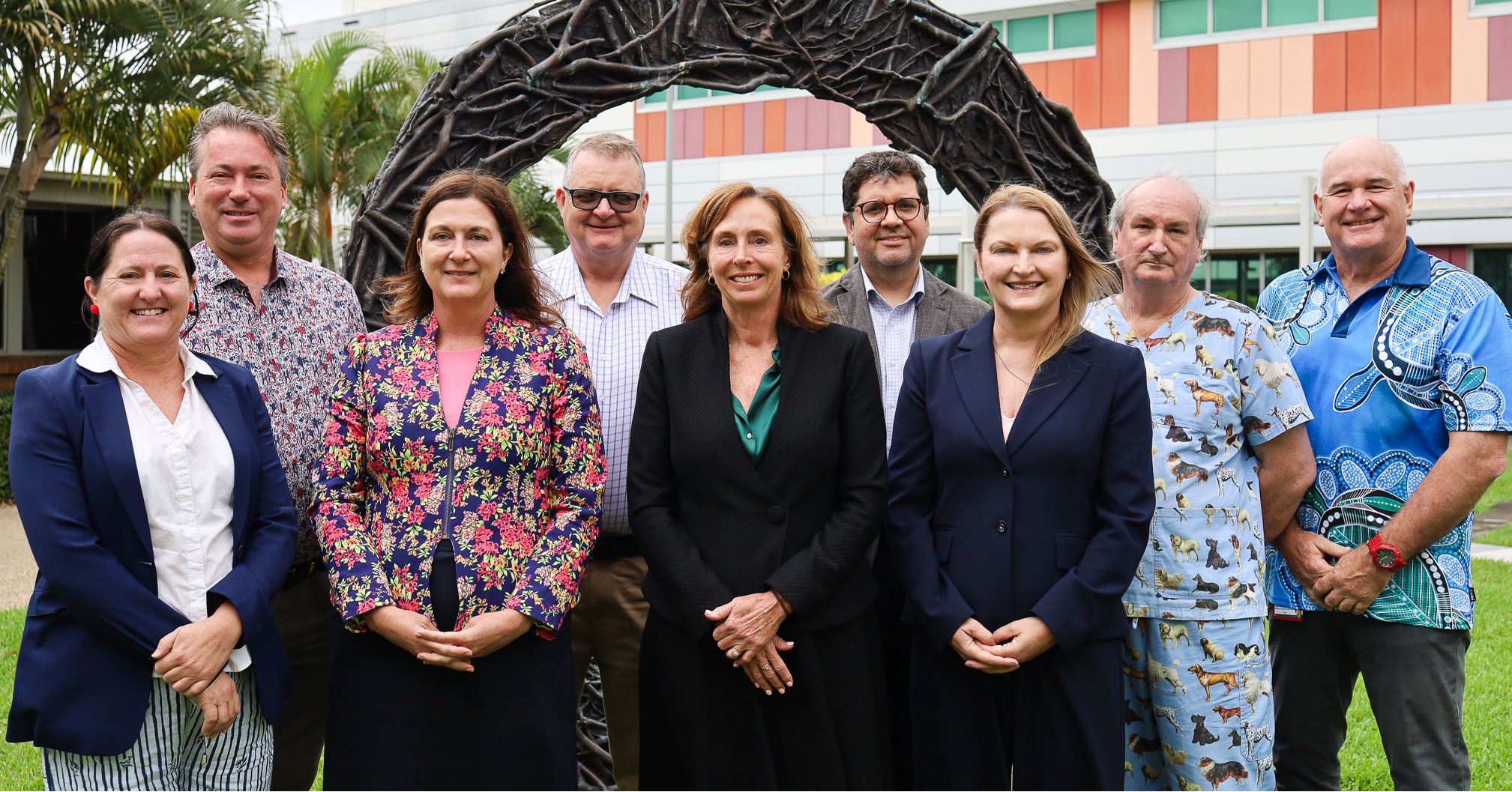
A smoking ceremony, Welcome to Country and Torres Strait Islander prayer marked a significant beginning for the newly appointed Mackay Hospital and Health Board, as it convened for its first official meeting at Mackay Base Hospital.
Yuwi Elder Philip Kemp conducted the Welcome to Country and smoking ceremony, while Seba Kaigey delivered the Torres Strait Islander prayer.

Following the cultural protocols, Board members, Mackay Hospital and Health Service Executive Leadership Team Chief Executive Sean Birgan, staff and attendees were invited to walk through the smoke or waft it over themselves, symbolising cleansing of spirit and body.

The ceremonies established the tone for the board’s work moving forward, reflecting a commitment to partnership with community, cultural respect and holistic approaches to care. The moment also served to connect the hospital’s physical environment with broader principles of healing and wellbeing for the community it serves.

The newly appointed Board is led by reappointed Chair Monica McKendry and includes five new members: Deputy Chair David Nebauer, Ron Nightingale, Dr Peter Malouf, Alana Moller and Lynn Smart. Reappointed members Associate Professor Luke Lawton and Andrea Ranson continue in their current terms.


Federal Member for Dawson, Andrew Willcox, says the Coalition’s plan to more than double our national fuel reserves is about one thing: ensuring that when global shocks hit, our farmers, transport operators, and families are not left running on empty. Photo supplied
The Coalition will more than double Australia’s minimum fuel reserves to 60 days and deliver at least 1 billion litres of new storage through an $800 million Australian Fuel Security Facility, building long-term resilience against future supply shocks in Dawson.
Under the plan, the threshold amount of fuel held by industry in Australia’s fuel reserves through the Minimum Stockholding Obligation would be lifted over time to increase stocks of gasoline, jet fuel and diesel. Currently, industry is required to hold around 30 days’ worth of reserves for each fuel type.
In addition to raising the threshold, a dedicated $800 million program will be established to invest in new large-scale fuel storage projects across the nation, significantly boosting the capacity of industry to hold more fuel onshore.
Leader of the Opposition Angus Taylor said Australians expect their country to keep running, but in a crisis the Prime Minister is always last to lead.
“This is a plan the Prime Minister should pick up today. No excuses, no delays,” Mr Taylor said.
“If fuel stops, Australia stops. It’s that simple. Trucks don’t move, supermarkets don’t stock, businesses shut their doors.”
“We are putting forward a practical plan to make sure that never happens. More fuel in reserve, more storage on the ground, and a country that can stand on its own two feet.”
Leader of The Nationals Matt Canavan said families and businesses needed confidence that fuel would be there when they needed it.
“This plan is just common sense. Keep more fuel here in Australia so we are not relying on overseas supply lines that can be cut overnight,” Senator Canavan said.
“We cannot keep hoping for the best. We need to be ready, and this plan gets us there.”
Shadow Minister for Energy and Emissions Reduction Dan Tehan said the Coalition’s plan delivered a clear pathway to stronger fuel security.
“The Coalition understands that fuel security is national security: in government, we legislated the Minimum Stockholding Obligation, funded new fuel storage, and backed our refineries,” Mr Tehan said.
“This stands in stark contrast to the Albanese Labor Government, which has cut funding for fuel storage projects over three federal budgets.”
Andrew Willcox, Federal Member for Dawson, said the national fuel crisis had exposed critical fuel storage gaps in our agricultural sector.
“This crisis has exposed Australia’s vulnerability to global supply shocks of critical liquid fuels, including in Dawson,” Mr Willcox said.
“The Coalition’s fuel security package will more than double our fuel reserves and deliver a new wave of vital storage projects – it's about locking in our long-term resilience so Australia can stand on its own two feet.
“We must protect our economic foundations by scrapping the Safeguard Mechanism costs on refineries and lifting the minimum stockholding obligation. This is the only way to ensure that during global disruptions, our tractors keep moving and our supermarket shelves stay stocked.
“I urge the federal government to back our plan and, importantly, commit to increasing our minimum fuel threshold on 1 January 2027 as a positive first step towards locking in our fuel security.”
Contributed with thanks to the office of Federal Member for Dawson, Andrew Willcox

A dry and hot winter has been forecast, with water scarcity and rising fuel loads at the front of mind in planning for the season ahead. Photo source: Pixabay
The upcoming 2026 El Niño has been forecast to be among the strongest on record, bringing hotter, drier weather in the coming weeks.
With already drier-than-average conditions recorded in early 2026, farmers are bracing for a challenging season as worsening soil moisture deficits and water scarcity raise concerns.
Mackay Regional Council Mayor Greg Williamson said he’s not overly concerned about the forecast El Niño conditions, noting Council works closely with the Queensland Fire Department to proactively manage and mitigate risks ahead of the dry season.
“The Rural Fire Service is very active at the moment clearing roadside vegetation, maintaining fire breaks and undertaking fuel reduction operations in rural areas,” Mayor Williamson said.
“The main message we have for the community is to be prepared. Knowing your local bushfire risk helps you make informed decisions before the season starts. Every household should have a clear bushfire survival plan that suits their family and property. Simple steps like clearing gutters and managing vegetation can greatly reduce bushfire risk.”
Residents are being reminded that taking simple steps now could make a significant difference, rather than waiting until the dry season has taken effect.
Advice includes trimming trees, mowing grass, removing flammable materials around homes and clearing vegetation; particularly on properties bordering bushland.
Rural Fire Service Queensland said volunteers are already active in communities, supporting preparedness efforts and working alongside partner agencies to carry out hazard reduction burns where conditions permit, ahead of the higher-risk bushfire season.
Publishers Indemnity. Any individual or entity that places advertising, supplies copy material, or submits editorial content to Core Life Publishing agrees and undertakes to ensure that all such material:- Does not infringe upon any copyright, trademark, or other intellectual property rights;- Is free from any content that could be considered defamatory, libelous, or slanderous;- Does not infringe upon any rights related to privacy or breach of confidence;- Contains no obscene, indecent, or otherwise unlawful material;- Complies fully with the Trade Practices Act and all other applicable laws, regulations, or statutes.Furthermore, by submitting or placing such material, these individuals or entities agree to indemnify and hold harmless the publisher, Core Publishing and Events Pty Ltd, and/or its agents from and against any and all investigations, claims, demands, liabilities, damages, costs, or judgments arising out of or in connection with the material provided. All material is believed to be accurate at the time of printing and remains the copyright of Core Publishing and Events Pty Ltd.
© 2026 Mackay and Whitsunday Life Pty Ltd.
