
Independently Owned, Locally Grown, Community Loved
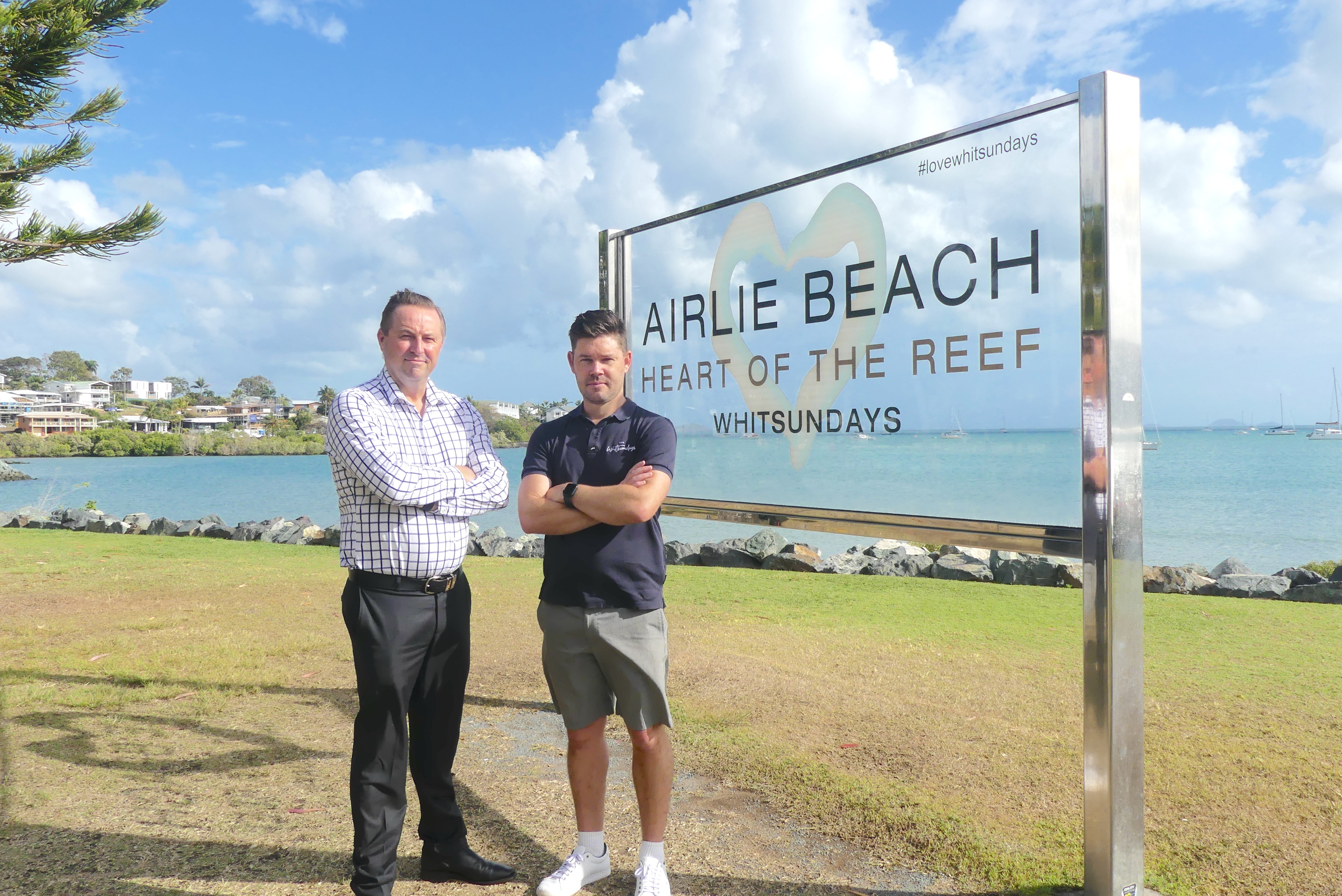
Local tourism operators are expressing concern toward troubling times ahead, with the federal government’s new visa restrictions set to shrink the backpacker workforce that drives seasonal operations. The Federal Government’s proposed cuts to Working Holiday Visas have raised concerns across two of the Whitsundays’ biggest industries. Bowen farmers warned that fewer backpackers could leave crops unpicked, and now tourism leaders in Airlie Beach have added that the same cuts could leave local businesses scrambling to find workers that aren’t there. At Airlie Beach’s Heart of the Great Barrier Reef sign, Tourism Whitsundays CEO Tim Booth and Whitsunday Mayor Ry Collins spoke about what the proposed changes could mean for a region that relies heavily on tourism. “We can't have Airlie Beach named Australia's top tourism town in the small category and then have the knees cut out from us by federal policy,” Tim said. The proposed changes form part of the Federal Government’s effort to reduce migration, a topic that has been of hot debate by all three parties that Mayor Ry Collins believes the working holiday visas should be separated from. “Obviously the federal government is really coming in with broad brushstrokes to try and address the publicly perceived issue around net overseas migration (NOM),” said Mayor Collins. “Some of the dialogue I heard last week in Canberra was actually taking that working holiday maker class completely out of the NOM calculation. “I think that's a fair and reasonable way that they can make the numbers look as good as they want but it won't affect the actual number of workers that are here to support our industries.” The new restrictions look to cut the second-year extension on Working Holiday Visas from 57,000 to 45,000 slots, and 3rd year extension from 31,000 to just 5,000. According to Tourism Whitsundays, the Whitsundays hosts about 3,500 backpacker workers at any given time of the year. “I think for regions like the Whitsunday’s unemployment rate is lower than the national average by 0.9%, so at a 3.5% unemployment rate, we just don't have the workforce there that can pick up these roles that the working holidaymaker delivers for our communities,” Tim said. According to figures released by Tourism Whitsundays, in the year ending March 2026, domestic visitors spent $959.1 million in the region and international visitors spent a further $271.8 million. This spending was made possible by the abundance of workers delivering those experiences. “[Working holidaymakers] do a terrific job already in delivering world-class experiences, particularly here in the Whitsundays,” said Mayor Collins. “We do see working holidaymakers really take up that mantle, particularly in areas like customer service roles, hospitality roles, housekeeping roles... “What we're asking for is that we can stay strong as an entire tourism industry.” Having just returned from Canberra, the pair said raising regional and statewide voices is crucial to persuading the Federal Government to reconsider how the proposed restrictions would apply. “And then at a federal level, obviously through our federal member Andrew Wilcox, but we've also engaged with the members of the Labor Party around that as well. “But unfortunately it's starting to feel like a number of issues that we're campaigning on…along with things like disaster recovery funding arrangements which was one we linked into last week.” Photo caption: Whitsunday Mayor Ry Collins and CEO of Tourism Whitsundays, Tim Booth. Photo credit: Zach Houtenville
Read the full story
In this world of AI and other technological advancements, you don’t want to be the person who wanders around the office like a big old clumsy Tyrannosaurus Rex bumping into all the youngsters and stepping on their laptops and other devices. It’s one of the challenges of our times; getting the balance right in business in a world that is increasingly controlled by AI, robotics and a rapidly changing IT environment. I remember, some years ago now, when older family members had refused to embrace computer technology and mobile phones etc. They were really left behind and felt excluded in a world that had moved ahead without them. I’ve got a 19-year-old son who doesn’t have to think about it. Current and evolving technology is part of his life and, like others in his age group, he is completely at ease with something that is just part of his make-up and comprehension of the world around him. The trap you can fall into is letting the kids do all the IT stuff for you. My son set up our old TV with all the streaming services etc, which was the easy option for me, but I find it’s important to get involved and do it yourself otherwise everything will move ahead and you won’t be able to do things for yourself. But I am still stuck in some of the old ways. If I am ordering a takeaway meal I still ring the restaurant and go and pick it up. The old T-Rex wanders into the Thai or Indian joint and picks up his plastic bag of goodies, pays, and drives home. There aren’t many of us left. Uber Eats baby. Everyone has embraced it. My wife and daughter were having dinner together in Brisbane recently and my daughter noticed that her stockings or tights had “run” or a ladder in them. My wife suggested she jump in the car and drive to a nearby supermarket and get another pair. But my daughter ordered a new pair to be delivered to the restaurant by Uber. They were there in a jiffy and the night continued without the pesky interruption of having to leave the restaurant to buy them. It’s a great example of the modern world making things easier and how many of us need to ensure we are adjusting and understanding how things can now be done. There is another side to the coin, however. People have told me that I should get AI to write my columns. They say I could give it some examples of columns I have written and give it an idea for a new column and tell it to knock out 600 words on my chosen topic in my style of writing. It’s something I would never do. Apart from the fact that it would somehow seem like I was cheating, it would also not be authentic. I feel that however boring or pedestrian my stories and comments are, at least they are mine. They have come from my noggin, my experiences. It is my take on the world, not something that has been cobbled together by artificial intelligence. It’s similar in the world of real estate and, I’m sure, business generally. You need to embrace the technology, use it when it creates a better service, a superior experience for buyers and a better result for sellers. But there is still a place for picking up the phone and calling buyers, following up from open homes, doing the hard work that needs to be done as an agent. In a world of AI, robotics and Uber Everything the human element, the person-to-person connection still needs to happen to deliver good service and create the best result for clients.
Read the full story
Maisy is a beautiful little soul who seems to understand that the very best place in the world is right beside someone she loves. She is affectionate, gentle, social and wonderfully trusting. She loves curling up on a welcoming lap, snuggling into your arms and settling close enough to make you feel as though you have always belonged together. Maisy is generous with her purrs, her cuddles and her sweet little air biscuits. She even places her paw in your hand as if to say, “I choose you.” But this gorgeous girl is not only a champion snuggler. Maisy is playful, curious and full of kitten joy. She loves exploring her toys, chasing anything that moves and turning ordinary moments into entertainment. She will happily amuse herself, but everything is even more fun when her favourite person joins in. She has that perfect combination of affection and personality, soft and loving when it is time to cuddle, and playful and bright when it is time for fun. Maisy will bring warmth to your home, companionship to your days and a little paw to hold whenever you need it. If you are looking for a kitten who will play with you, curl up with you and love being part of your life, Maisy may be the girl you have been waiting for. Maisy has been desexed, microchipped, received her first vaccination, been wormed and is litter trained. She is ready to begin her beautiful new life as a much-loved indoor companion. To arrange a meet and greet with Maisy, please call Ros on 0403 814 318.
Read the full story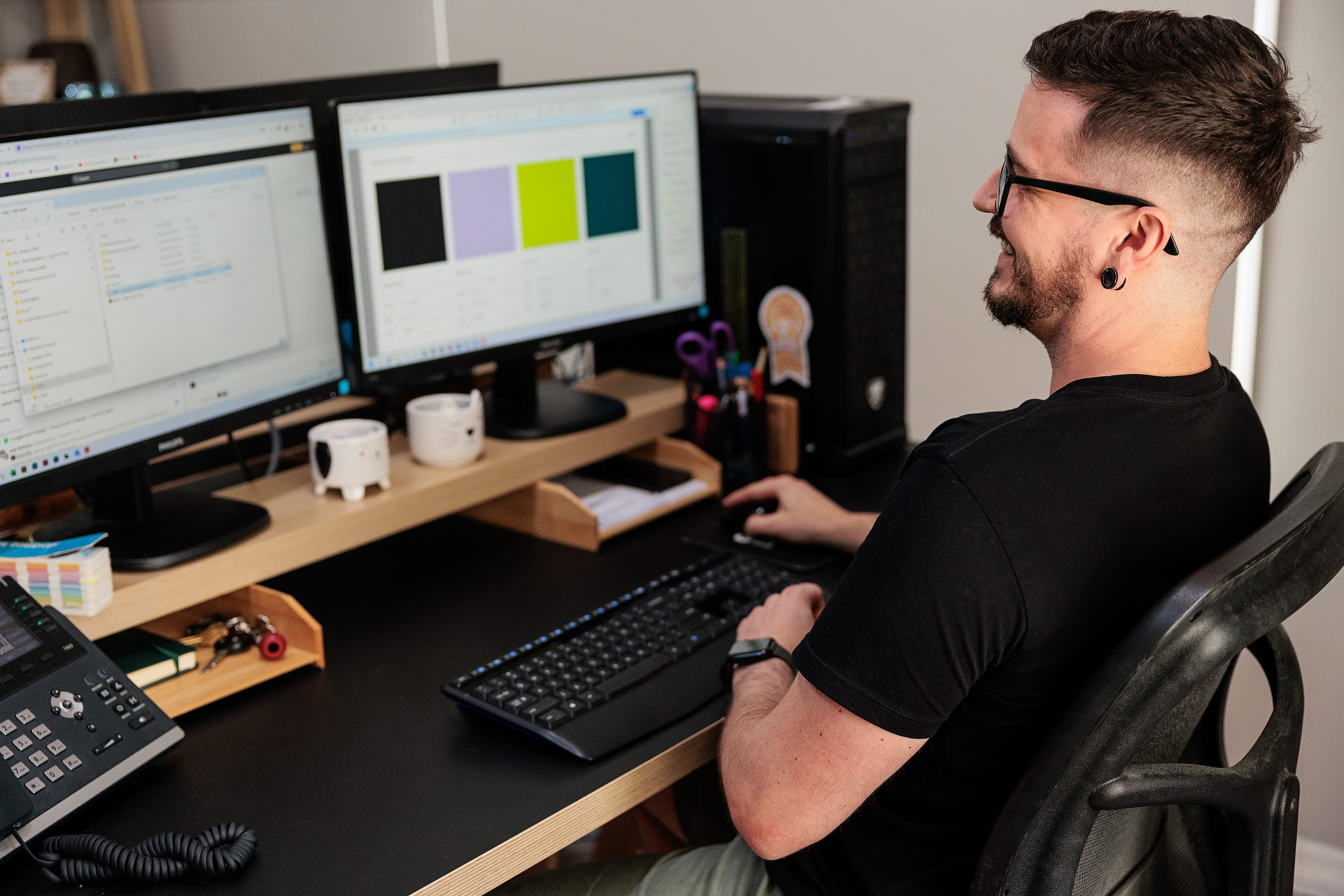
Tarren McAuley, Web Director and Co-Owner I remember when those AI posters started popping up – the first one looked kinda different. By the end of the week, when I’d seen 30 of them, I was much less enamoured + actively scrolled past anything that had that telltale paint smear style font. It’s not that the quality had gotten any worse between me seeing that first one + when I was sick of them by the 30th. But it was no longer novel or original. I think AI is especially susceptible to this because as soon as someone discovers a winning formula, everyone else jumps on the bandwagon, but because everyone is getting similar outputs, it gets old – quick. I think brands can fall into a similar trap. Humans are always looking for inspiration + when seeking it out, where better to look than the other players in your field. If you’re a tech company, you’re going to look at Samsung, Apple + the like. But when that happens too much, you get a feedback loop of samey-ness. For me, this is best exemplified by airline logos. Look at Qantas + Virgin, probably the two biggest brands in Australia. Both use a red plane-like icon, w/ their logo in big letters next to it. Bit cherry picked but even the other big players’ logos are similar - Emirates uses mainly red + shakes it up by having a slightly more exotic font. Jetstar ditches the red for orange + has their icon at the end but it has similar visual markers. This isn’t unique to logos, like w/ the poster example earlier – it could be your social tiles, your website or even your company email sig. Whatever it is, if you wake up one day + notice that the other businesses around you are looking a bit too similar, that should be your sign to start looking at a rebrand to shake off the rust + re-establish your unique identity. You know, until the cycle repeats again!
Read the full story
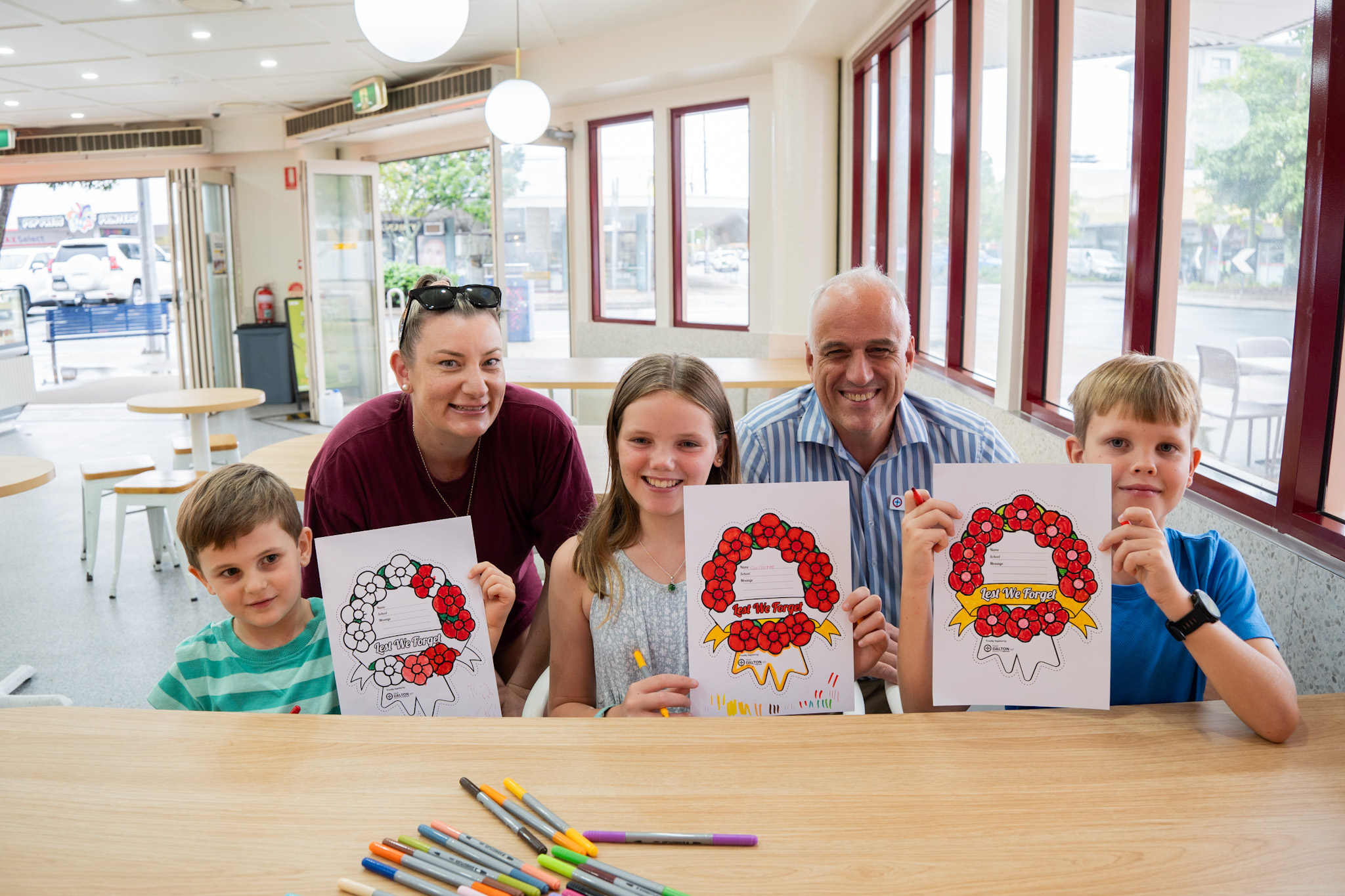
Three students, Morgan, Charlotte and Oscar, took part in the colouring activity alongside Nigel Dalton and Georgia-Lee Ricketts. Photo credit: Hannah McNamara
As ANZAC Day approaches, school students across the region are being invited to take part in a simple but meaningful commemorative initiative designed to help them reflect on service, sacrifice and national identity.
Member for Mackay Nigel Dalton said the idea was created to help young people connect personally with ANZAC remembrance in a way that was accessible and reflective, rather than competitive.
“Anzac Day is such an important day in our calendar, but young people are going to be the people who carry it on into the future,” he said. “Engaging with the RSL with Anzac Day events are so important.”
Dalton said the colouring-in activity was designed to encourage personal reflection rather than competition, with simple wreath templates being distributed to schools.
“I didn’t want it to be a competition. It’s something which is personal. It’s a commemoration of maybe a relative who didn’t come back, or maybe somebody who’s still with them,” he said.
“These simple wreaths are going to be given out to the schools. That means nobody has to go and buy anything… you just need a few texters to colour it in.”
He said the completed wreaths could then be used by students on ANZAC Day itself.
“On Anzac Day, if you’re in the parade, you can carry it, or you can just put it in your house, and remember why we have such a beautiful place to live in.”
Secretary of the Mackay Sub Branch RSL, Georgia-Lee Ricketts, said ANZAC Day remained a vital opportunity for young people to understand the sacrifices behind Australia’s freedoms.
“We’re very lucky to live in a country where young people can attend school and go about their daily lives with freedom,” she said. “We have to remember why we’re so lucky to be in this country.”
“It’s because of those before us that fought those wars to make sure that Australia is a safe place to live in, and that’s why we come together on Anzac Day and we show our respects, both young and old.”
Mrs Ricketts said even simple activities such as colouring-in played an important role in education and remembrance.
“Whether you go to a dawn service or you colour in a picture, I think it’s just extremely important and beneficial to learn why we are so lucky to be Australians,” she said.
“Young men and women went off and they died… some never came back to their families, so we must remember them, and always be grateful that we can live this beautiful life with our families now.”
Mrs Ricketts said the RSL would be visiting schools across the region in the lead-up to ANZAC Day to continue engaging students. The initiative also provided an opportunity for students to learn about the different branches of Australia’s Defence Force, with informal discussions helping to build early awareness and understanding.

The High Mariner left the Port of Mackay after completing its petroleum discharge, beginning its 13-day journey to Ulsan, South Korea. Photo source: ABC
The departure of an international fuel tanker from the Port of Mackay has highlighted the global supply chains underpinning local industry, as Mackay Regional Council grapples with rising costs linked to international market pressures.
The vessel High Mariner departed the Port of Mackay after unloading petroleum and is now en route to Ulsan in South Korea, where it is expected to arrive on 2 May to reload. The Liberian-flagged chemical and oil products tanker, built in 2017, services one of the world’s largest refining hubs, with the SK Energy refinery in Ulsan capable of processing up to 840,000 barrels of crude oil per day.
The shipment comes at a time when global oil markets are under strain, with flow-on effects being felt locally.
Mackay Regional Council has established a dedicated taskforce to address escalating fuel and material costs, as well as supply challenges, with the development of the 2026–27 budget shaping up to be one of the most difficult in the organisation’s history.
Mayor Greg Williamson said global instability, including the ongoing conflict in Iran, was having a direct impact on council operations.
“It is a key input into many of the everyday materials council uses, including plastic pipes, road construction products and a wide range of maintenance and operational supplies required to deliver essential services,” Mayor Williamson said.
“These global pressures are already being felt locally, and they are affecting almost every part of council’s operations.”
Rising prices have already impacted council finances, with increased costs recorded across March and April in fuel, construction materials and operational inputs.
“We are facing real and immediate cost increases across our contracts and day-to-day operations,” Mayor Williamson said.
“With current market conditions pointing to further escalation in the months ahead, we are taking a disciplined, informed approach. This week, council met with the Queensland Treasury Corporation’s Chief Economist to better anticipate what is likely and plan accordingly.”
At the same time, council is managing reduced State Government funding tied to changes in the waste levy framework.
“The cuts to State Government funding through the waste levy have removed a critical revenue stream for councils,” Mayor Williamson said.
“This is happening while our costs are rising rapidly, creating challenges for local government budgets."
Despite the challenges, council remains committed to maintaining essential services and ensuring long-term financial sustainability for the region.
“We want the community to understand that this is not business as usual,” Mayor Williamson said.
“Every area of expenditure is being carefully reviewed, and difficult decisions will be required as part of the 2026-27 budget.
“Council is committed to being open and transparent with our community about the challenges we face and the choices that lie ahead.”
Living in Australia is a hard-won privilege; however, under the Albanese Labor Government, the migration system has been left in a state of chaos where numbers are too high and standards are far too low. The Coalition is drawing a line in the sand with the launch of the Australian Values Migration Plan: a decisive package designed to ensure that those seeking to call our nation home actually share the values, laws, and freedoms that make Australia great.
This initial package forms the first stage of a comprehensive plan to strengthen Australia’s borders, with further measures to be developed and announced throughout the term. These policies are designed to shut the door on those who abuse the system and show a red light to radicals who do not share the Australian way of life.
Federal Member for Dawson, Andrew Willcox, said the Coalition is committed to protecting the Australian way of life and restoring confidence in the nation’s migration program.
“Since Labor took office, the migration program has lacked direction: numbers have soared while standards have plummeted,” Mr Willcox said.
“The Coalition’s plan will restore integrity and ensure our migration system serves the national interest.
“Living in Australia is a privilege, not a right: those who come here must respect our laws, share our values, and contribute to our nation.
“We are pursuing a values-based system that puts Australia first; this means closing the door to those who do not respect our country or who attempt to exploit our legal system to stay here illegally.
”The first instalment of the Coalition’s Australian Values Migration Plan includes three key measures:
2. Shutting the Door to System Abuse The Coalition will implement decisive measures to deter unfounded claims and enforce Australian law. This includes:
3. Showing a Red Light to Radicals The Coalition will strengthen screening processes to prevent extremists and security risks from entering the country. This includes:
Further measures under the Australian Values Migration Plan will be announced in the months ahead.
Contributed with thanks to the office of Federal Member for Dawson Andrew Willcox

Police urge care, after Operation Yankee cracked down on unsafe driving behaviour over Easter Break. Photo source: Queensland Police Service
As students across Mackay and Far North Queensland settle back into the new school term, the Queensland Police Service is reminding motorists to slow down and stay alert for vulnerable road users.
The return to school coincided with the final week of Operation Yankee Easter Break, with officers maintaining a strong presence on roads during the busy post-holiday travel period.
The statewide operation, which began on April 3rd, focused on high-visibility patrols and enforcement targeting unsafe driving behaviours including speeding, distracted driving, fatigue and impaired driving.
Across Queensland during the Easter school holidays, police issued more than 10,600 traffic infringement notices, with around 4,000 related to speeding offences. Officers also conducted more than 75,500 roadside breath tests and 1,800 roadside drug tests, detecting more than 1,200 impaired drivers.
In the Far Northern policing region, officers conducted 2,547 roadside breath tests and issued 909 traffic infringements, including 426 for speeding. Police also detected 37 drug drivers from 59 roadside drug tests.
With school zones once again active across the region, police are urging drivers to remain focused and cautious, particularly with more children, cyclists and pedestrians using local roads as the school term continues.
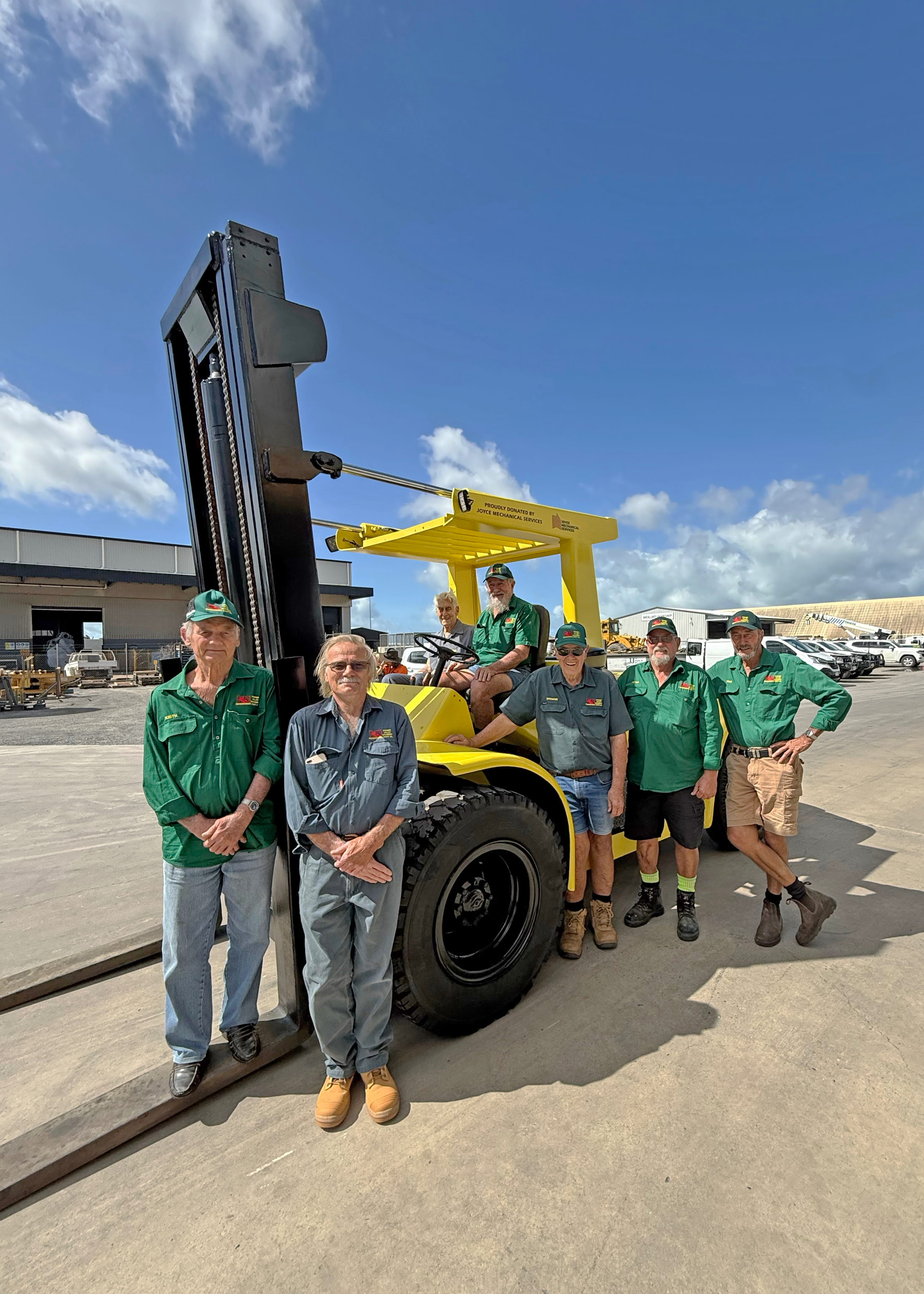
A generous donation is set to strengthen the work of a passionate group dedicated to preserving the region’s mechanical history.
The Pioneer Valley Machinery Preservationists Society Inc. has received an 8-tonne forklift, more than 50 years old, restored and donated by Joyce Mechanical Service.
The forklift was donated by Adam Joyce of Joyce Mechanical Service, along with business partner Charlie Watts and Adam’s wife Rachel Joyce, in a gesture that Mr Joyce said would greatly support the club’s ongoing work.
The valuable addition will allow the volunteer group to safely move and restore heavy machinery that was previously beyond their capacity.
Club president Terry Joyce said the donation, made by his son and the team at Joyce Mechanical Service, would make a significant difference to the group’s work.
“My son donated it and I received it on behalf of the club,” Mr Joyce said. “It’s awesome and we’re very proud of it.”
The society has about 43 members and has been operating for roughly 25 years, bringing together enthusiasts who restore and preserve antique engines, tractors, trucks and other historic machinery. Their headquarters is currently based at the former CWA building at North Eton.
Mr Joyce said the forklift would play an important role as the club continues to grow and prepares for future projects.
“We preserve, repair and display equipment that’s been donated to the club,” he said. “This forklift will be a huge help in handling that sort of gear.”
The club is made up of volunteers of all ages, including its oldest active member, 95-year-old Ken, whose decades of experience represent the abundance of knowledge shared within the group.
“There’s a real wealth of experience among our members,” Mr Joyce said.
“We’re just incredibly grateful for this donation.”
New members, particularly younger people interested in learning about historic machinery, are always welcome to join the society. For more information, contact Terry on 0407991062

Pet registration fees help fund vital services, from reuniting lost animals with owners to supporting the care of stray pets and keeping the community safe. Photo source: Shutterstock
Mackay Regional Council is reminding residents that annual pet registration fees play a vital role in supporting animal welfare and community safety, as the region’s registration amnesty period draws to a close.
The council says registration is one of the most important responsibilities of pet ownership, helping to quickly reunite lost animals with their owners if they end up at the Animal Management Centre.
Fees collected through registration also contribute to the day-to-day running of the centre, which provides care for lost, stray and abandoned animals across the region.
In addition, the funding supports Local Laws officers, who are responsible for managing issues involving stray, dangerous or uncontrolled animals and helping maintain safety across the community.
Council is currently offering a pet registration amnesty throughout April, giving owners the opportunity to register their animals without paying pro-rata fees for the remainder of the current registration period. The amnesty applies to new registrations only and excludes declared or dangerous dogs.
With the deadline approaching at the end of the month, residents are being encouraged to take advantage of the initiative and ensure their pets are properly registered.
Council says responsible pet ownership is essential to maintaining a safe and harmonious community, and registering pets is a simple but important step that makes a meaningful difference.

Police are investigating a vessel fire that broke out on the Pioneer River in Mackay late on 16 April.
Emergency services were called to the River Street boat ramp about 11 pm after reports that a yacht, moored in the middle of the river, had caught fire.
Crews responded to the scene, where the vessel was found alight. There were no reported injuries as a result of the incident.
Authorities are now working to determine the cause of the fire, with investigations continuing.
Police are urging anyone who may have information to come forward. Reports can be made to Policelink online at police.qld.gov.au/reporting or by calling 131 444. Anonymous information can also be provided via Crime Stoppers on 1800 333 000 or online, quoting reference number QP2600740268.
No arrests have been made or charges laid, and investigations remain ongoing.
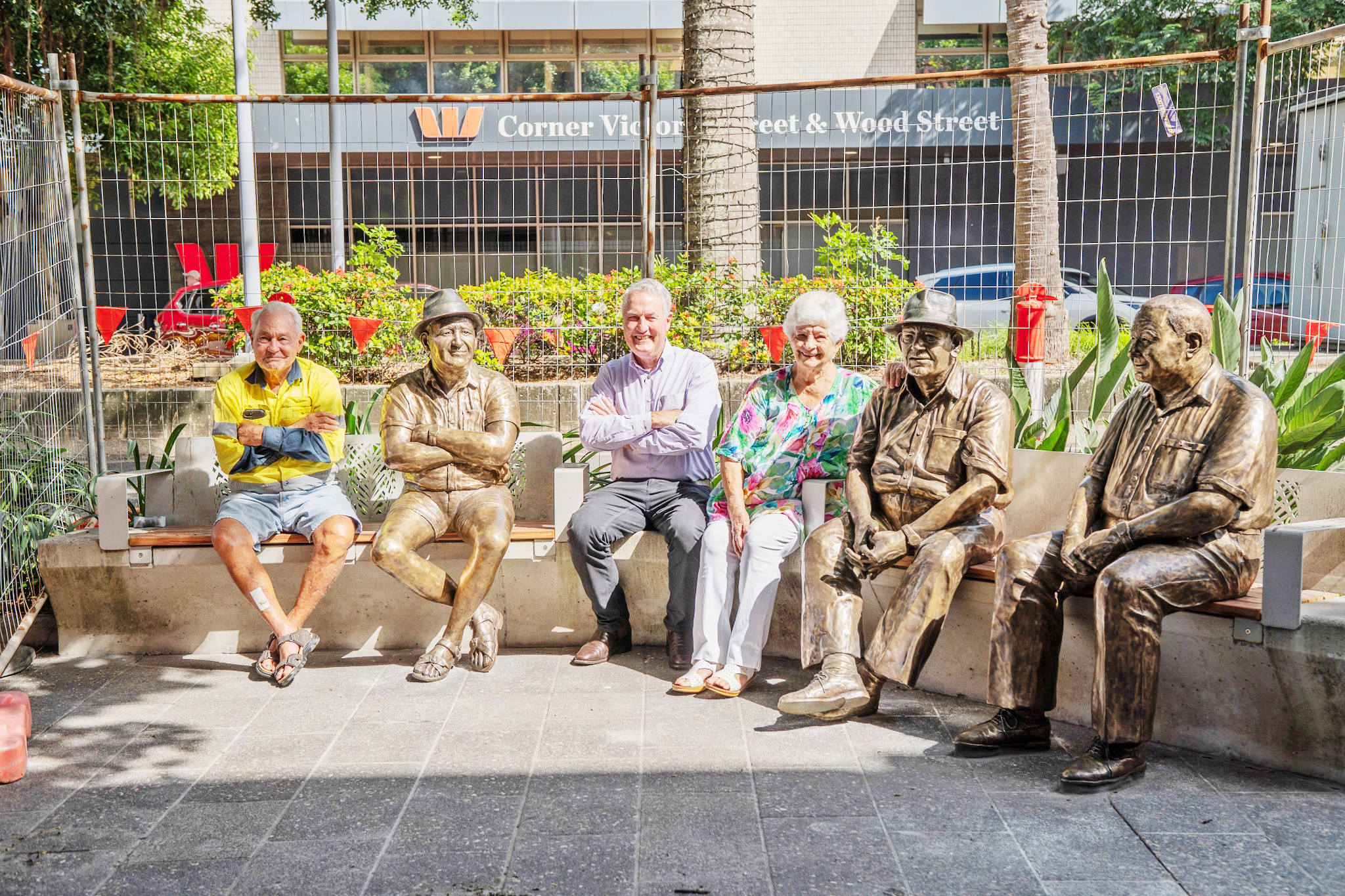
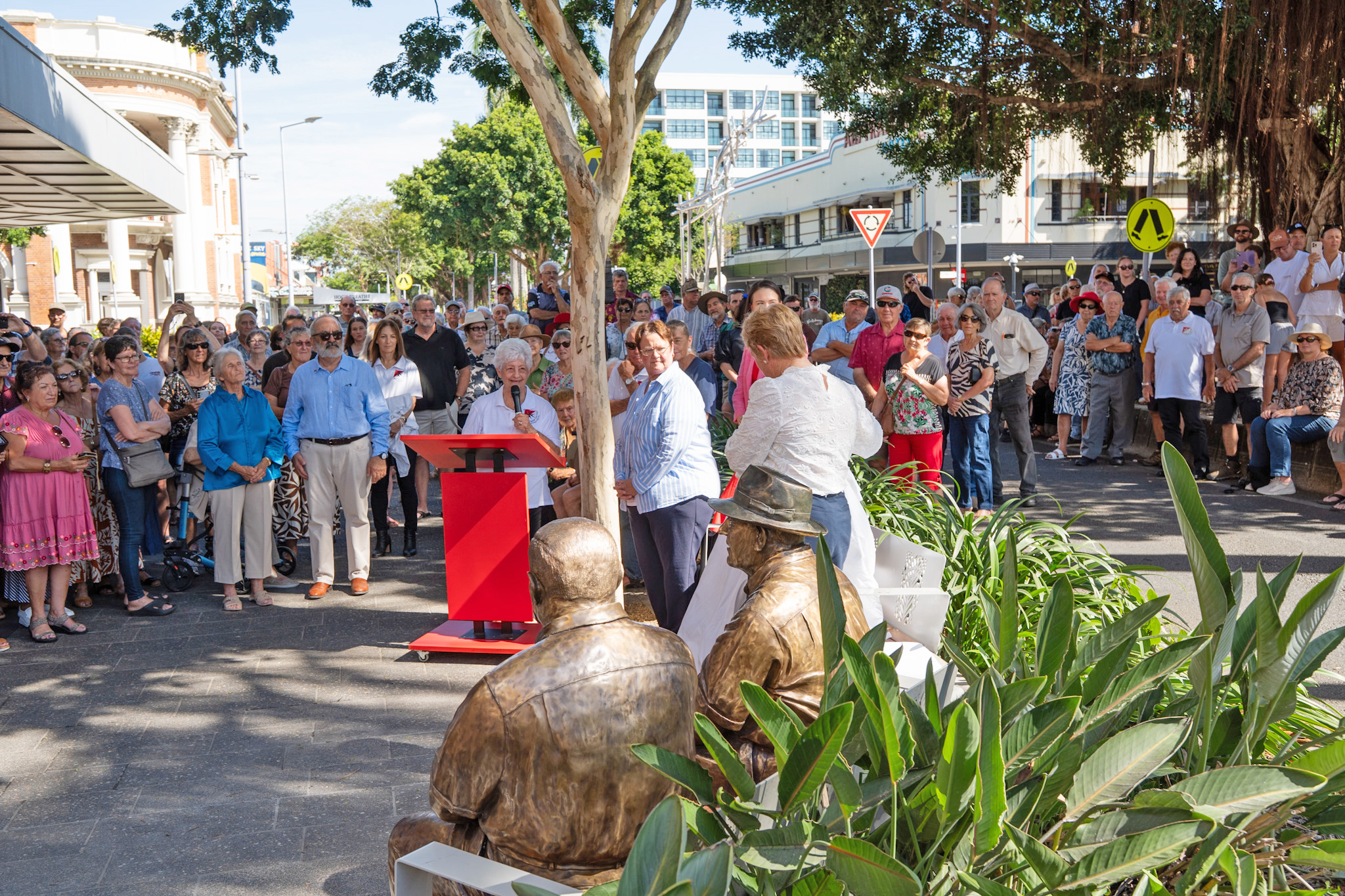
Mayor Greg Williamson attends the unveiling of the bronze statues of the Maltese pioneers
Hundreds gathered in Mackay’s city heart on Saturday to witness the unveiling of three life-sized bronze statues honouring Maltese pioneers who helped shape the region.
Positioned on the iconic “Maltese Corner” at Wood and Victoria streets, the figures of Emmanuel Grech, Sam Bezzina and John Vassallo pay tribute to a generation of migrants whose spirit of mateship and enterprise helped build the local community.
Inspired by a historic photograph, the installation recognises decades of contribution to Mackay’s identity and economy, while creating a lasting space for reflection on the stories, sacrifices and connections that continue to define the region today.
Hundreds of community members gathered in Mackay’s city centre on Saturday for the official unveiling of three life-sized bronze statues honouring Maltese pioneers who helped shape the region’s history.
The statues of Emmanuel Camilleri, Sam Bezzina and John Vassallo now stand proudly on the corner of Wood and Victoria streets – a location long known locally as “Maltese Corner”, where migrant businessmen would regularly gather to talk, support one another and build their futures in Mackay.
The project, delivered by the Maltese Corner Fundraising Group Inc, recreates a historic photograph capturing the men meeting at the site, symbolising the spirit of collaboration that helped generations of migrants establish themselves in the region.
On Friday, 17th April, a day prior to the official unveiling, Mackay Mayor Greg Williamson said the statues recognise the enduring contribution of Maltese migrants to the region’s identity and economy.
“Tomorrow we are unveiling three magnificent statues here on the corner of Victoria and Wood Streets,” he said ahead of the event.
“This particular corner was where the Maltese guys sat around, just like a little piazza in Malta. They sat here waiting for the banks to open – probably waiting for the pub to open as well – while their wives went shopping and they did their business.”
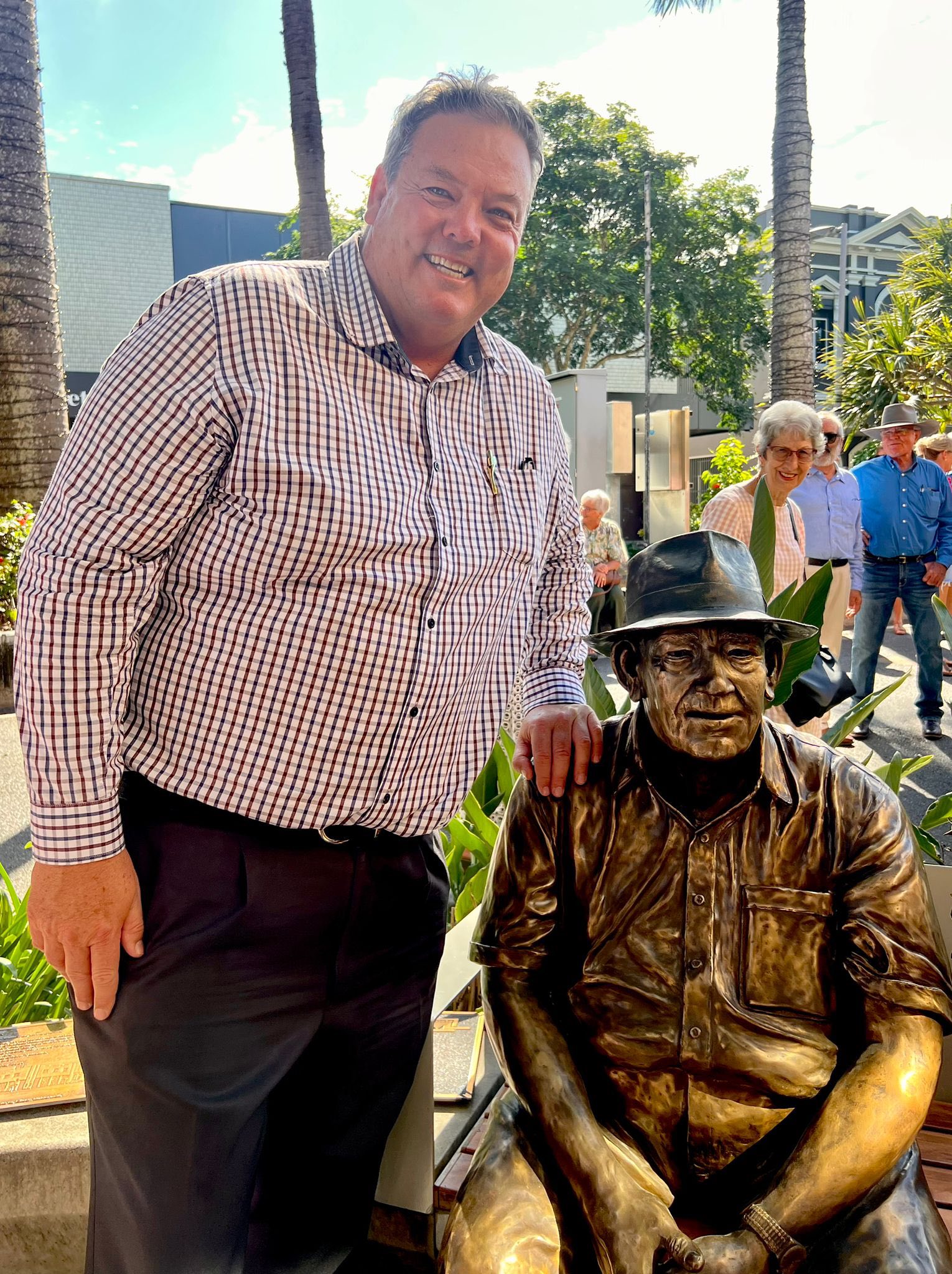
Mayor Williamson said the tribute reflected Mackay’s long-standing connection with Maltese settlement.
“Mackay is recognised as the heart of Maltese settlement in Australia,” he said.
“The Maltese have done a fantastic job in our community for decades and decades, and this is a tribute to those who helped build our sugar industry and our region.”
The project has been largely community-funded, with the Maltese Association raising more than $250,000 towards the statues, supported by about $45,000 in council grants.
For Carmel Baretta, president of the Maltese Corner Fundraising Group, the unveiling marks a rather emotional sentiment.
“In 2001, a friend and I published a book on the Maltese pioneers of Mackay,” Ms Baretta said.
“While we were working on that book, I was aware of Maltese Corner and asked a photographer to quietly capture a photograph of the men meeting here because they gathered regularly.”
That image later became the inspiration for the statues.
Ms Baretta said the corner held significant historical meaning for the community.
“The greatest significance is that these people helped others become established,” she said.
“And it wasn’t only Maltese helping Maltese,” Ms Baretta said.
“Some Italians were involved, some returned soldiers were helped, and some local people from Mackay as well.”
The initiative also honours the legacy of the Mosta Building Society, established in 1966 as a result of the cooperative financial support that began on the corner.
The statues themselves were created by local sculptor Kay Payton, chosen after extensive research into bronze works across North Queensland.
“We decided Kay Payton was the ideal person, primarily because she was local and because she is so gifted,” Ms Baretta said.
“She was just absolutely fantastic to work with.”
With the statues now permanently installed, organisers hope the site will encourage residents and visitors alike to pause, reflect and learn more about the community stories that helped build Mackay.
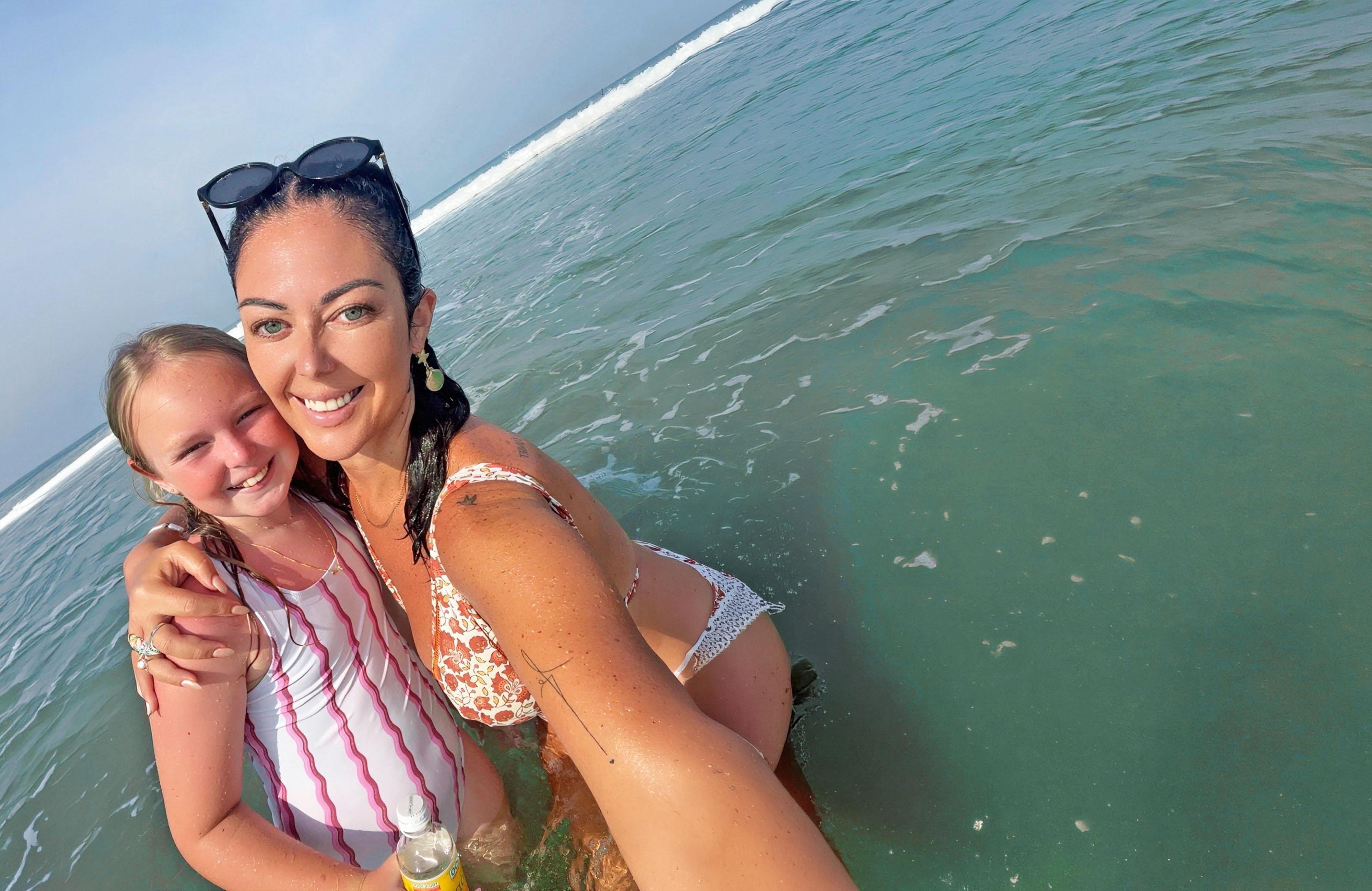
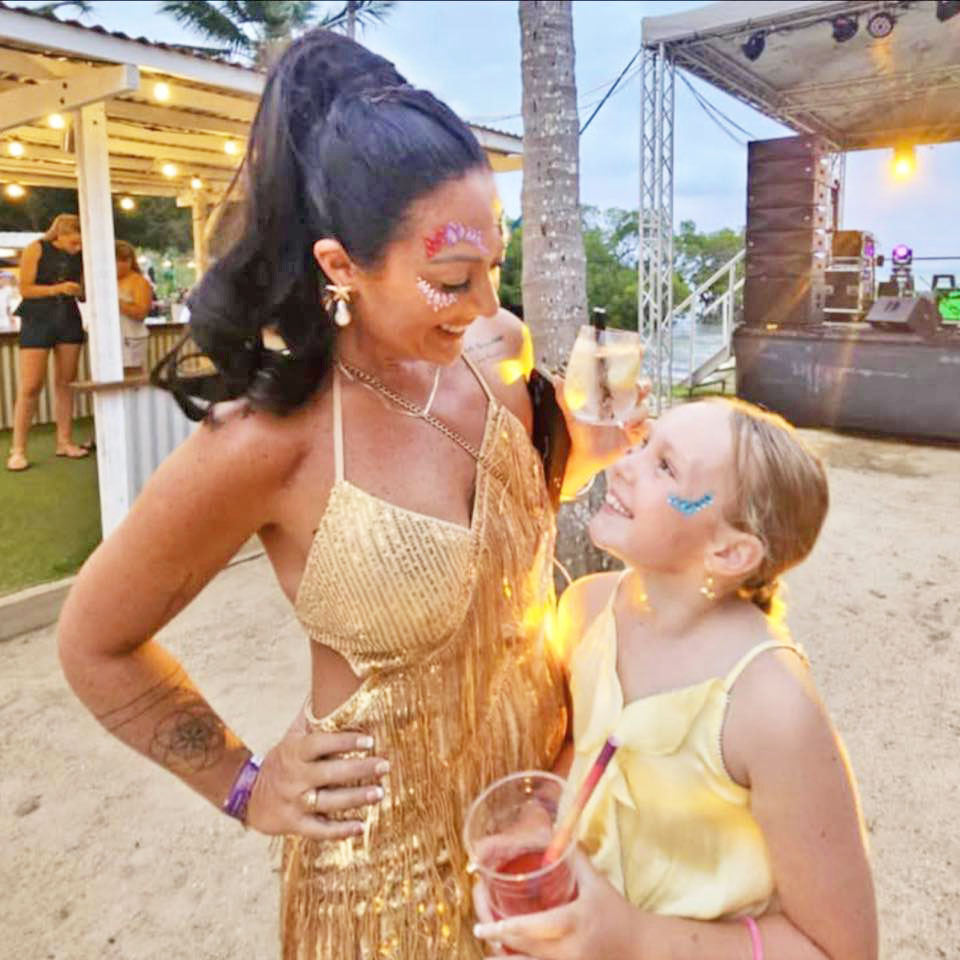
Fern with her daughter Zali, who she says is the reason she keeps fighting despite recent cancer re-diagnosis. Photo supplied
A much-loved Whitsundays mother is once again facing an unthinkable battle after learning her cancer has returned, this time incurable.
After nearly two years of remission, Fern Wilson is confronting a devastating diagnosis while continuing to care for her young daughter, Zali.
Known for her warmth and resilience, she is now navigating the fight of her life with courage and determination.
As she seeks new treatment pathways and holds tight to hope, the Cannonvale community is rallying behind her, organising a morning tea fundraiser to show support and help her continue this difficult journey ahead.
A vibrant local single mum is at the centre of the community’s thoughts and prayers this week following news that her cancer has returned after almost two years in remission.
Fern Wilson explains that she was first diagnosed with stage 3C ER/PR-positive, HER2-negative breast cancer in 2023, when a 13-centimetre tumour was discovered. At the time, she was given 12 months to live without treatment, so she underwent an intense treatment plan that included chemotherapy, radiotherapy, and a mastectomy.
“It was one of the hardest periods of my life physically, emotionally, and mentally, but I kept fighting because my daughter gave me every reason to stay strong,” she shared.
“Recovery was not just physical - it was emotional and spiritual as well. I had to learn how to reconnect with myself after so much loss and change.
“My daughter Zali was my greatest strength and staying focused on being present for her helped me through the darkest days.
“Support from close friends, family, and my community meant everything. I also focused on healing my nervous system, mindset, and finding peace where I could.”
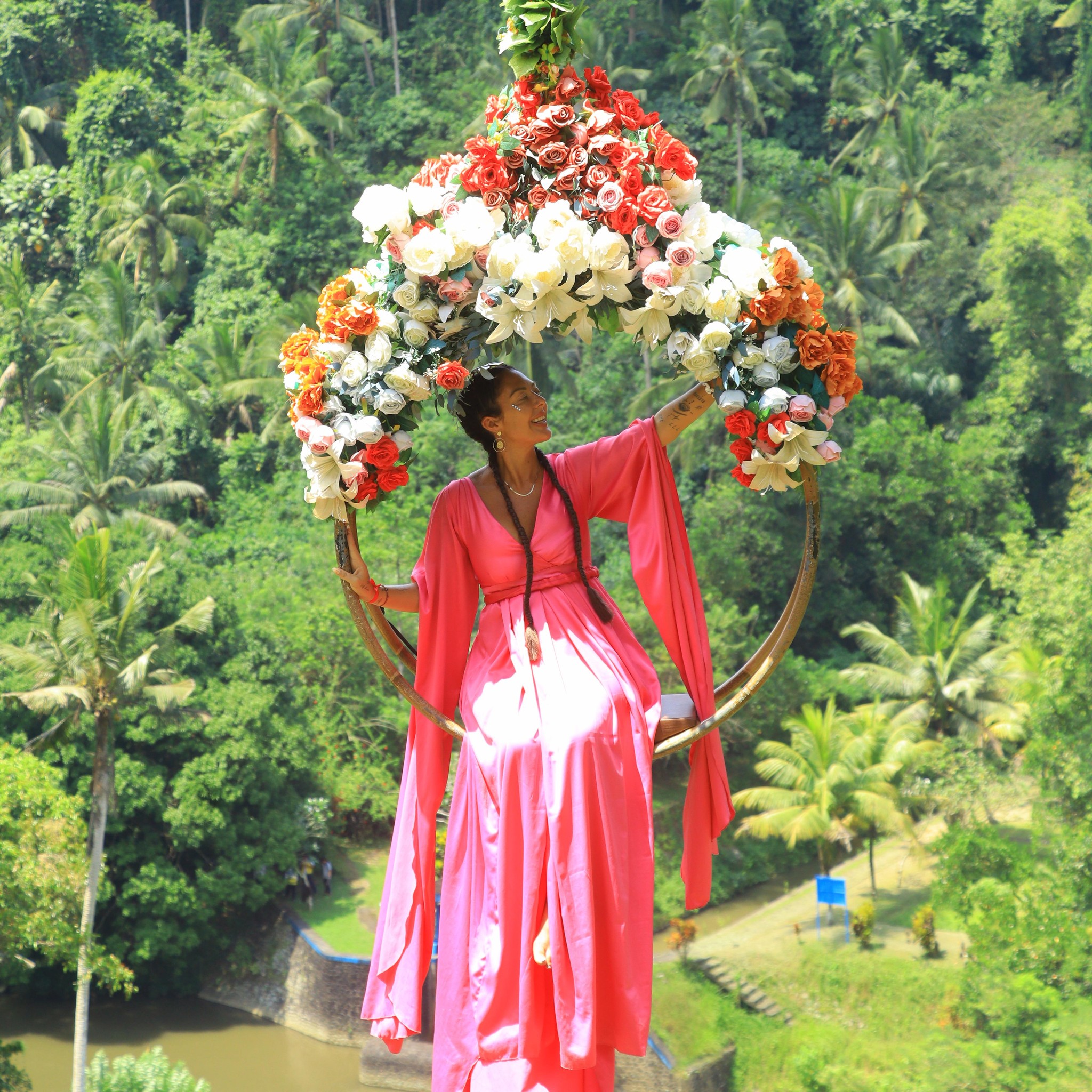
During this time, Fern travelled to Bali, where she began her journey with integrative natural health, working alongside traditional medicine.
Returning to the Whitsundays after receiving news she was now cancer-free, Fern has spent the last two years embracing a healthy lifestyle, establishing herself in the local Cannonvale community, and enjoying time with her young daughter.
Receiving news earlier this year that the cancer had returned shattered the idyllic life she had worked so hard to create.
The tragic turn of events began when Fern started experiencing some bone pain from treatment, and further scans confirmed the worst. This time, however, the cancer is stage 4, metastatic and incurable, with a prognosis of 12 months left to live.
“Hearing those words was devastating,” said Fern.
“For a moment, everything went dark. The fear, the shock, and the uncertainty were overwhelming, and as a mother, your mind immediately goes to your child and their future.”
Fern said her oncologist explained that surgery would not make a difference, and treatment options in Australia were no longer available, being mainly focused on management rather than healing.
“I was also faced with difficult conversations around a scary 12 months prognosis, which completely changed everything for me as a mother,” she expressed.
Feeling overwhelmed and in total despair, Fern made the brave decision to fly back to Bali, a place where she had found peace and healing during her last battle.
Taking her daughter, Zali, with her, Fern has embarked on an integrative healing journey and, for the first time since the devastating news, feels hope.
“I chose to return to Bali because I wanted access to integrative and supportive treatments that were not readily available to me in Australia,” she said.
“Here, I am receiving therapies focused on supporting my immune system, improving quality of life, and helping my body as a whole.
“This includes treatments such as high-dose intravenous Vitamin C, ozone therapy, nutrient IV therapies, and other supportive natural therapies.

“Bali has also given me peace, healing, and the chance to be present with my daughter in a calmer environment while I continue fighting.
“Cancer changes everything, but it also reminds you what truly matters—time, love, connection, and the people who stand beside you.
“My greatest focus is my daughter and making sure she feels safe, loved, and supported no matter what happens.”
A morning tea is being held in Fern’s honour, giving the community an opportunity to come together, raise money, and support this inspiring local woman in the battle of her life.
Fern says she “does not have enough words to thank everyone” involved in bringing this morning together.
“The kindness, generosity, and love from the Whitsundays’ community has been overwhelming.
“To everyone donating prizes, attending the morning tea, reaching out, and supporting Zali and me—thank you from the bottom of my heart.
“In times like this, community means everything, and knowing we are not alone gives me strength to keep going.
“I also want to sincerely thank Zali’s father and his family for supporting me throughout my treatment journey. During some of the hardest moments, their support and care helped me keep going, and I will always be grateful for that.
“I want people to know that even in the hardest moments, hope still exists. I am still fighting, and I am deeply grateful for every person helping us through this journey.”
What: A Morning For Fern
When: Sunday 17th May
Time: 9am – 12pm
Where: Belle Property Whitsundays
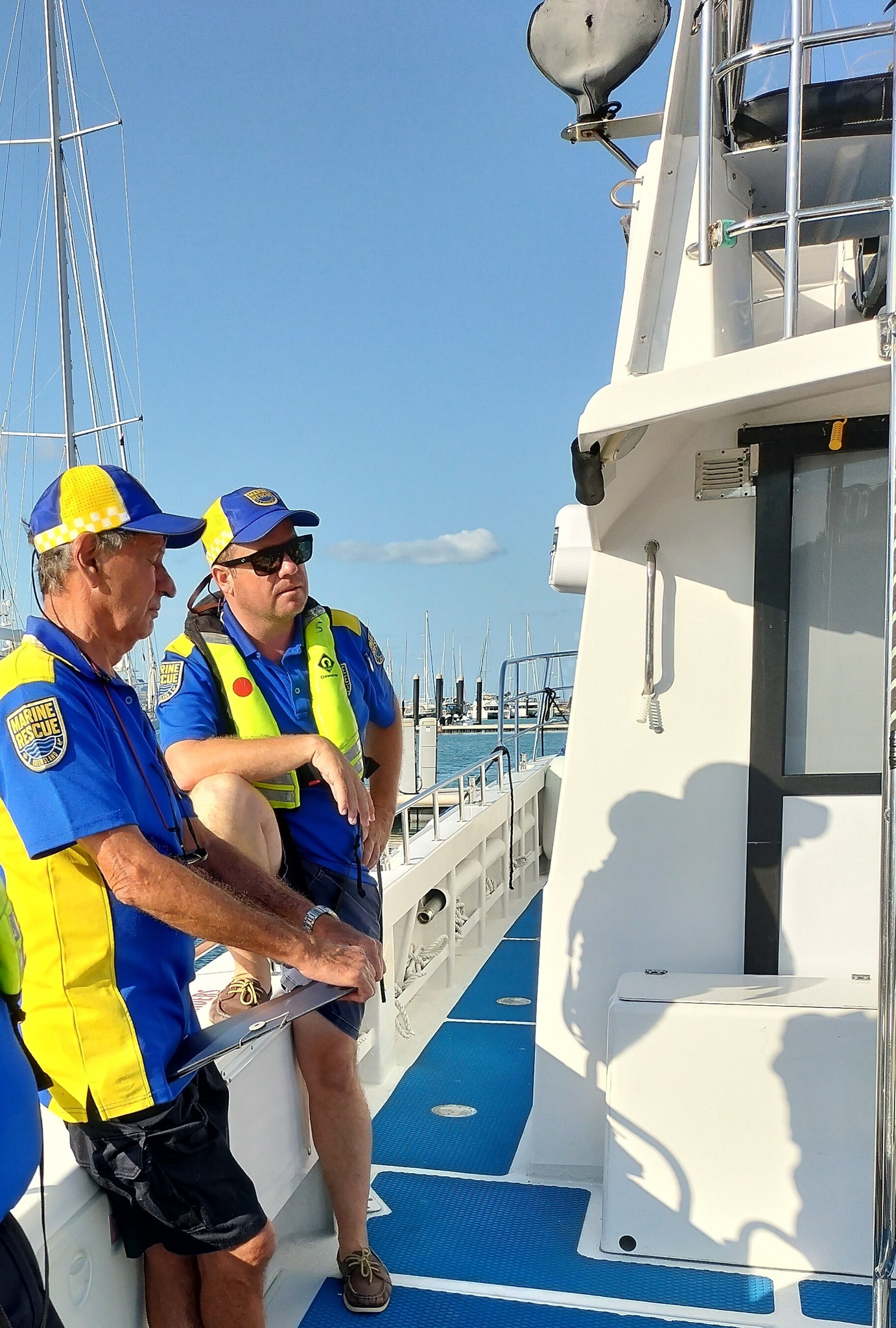
Photo source: Facebook
On a beautiful Sunday afternoon reports came in that a hire boat 2nm north of Deloraine Island had suffered a mechanical problem. Although the engine was going, the propeller was not. This spurred MRQ Whitsunday to action.
With pre-tasks completed, the team motored off towards Hook Passage, soaking in the scenery as ventured out into the sea.
“We had vessel coordinates from a telephone, so we needed to convert them from the Degree Decimal format favoured by the telco giants to our more usual Degrees and Minutes,” shared MRQ Whitsunday.
After emerging from Hook Passage, WS11 was directed to where the vessel was believed to be.
“Lo and behold, there was a whit vessel on the horizon. This was going to be easy!”

The team continued motoring and spotted the target 4nm away – “just where they said they would be.” The team approached the boat cautiously as there were beams on the waves.
“I was about to request the crew to get ready with fenders and lines when, looking over the side, they were already set up. Great work team!”
The crew set the towing hook and returned to Coral Sea Marina at a gentle 17 knots. The vessel was taken close to their berth.
“Thanks again to the crew for making it easy.”
The team were able to handle the situation with efficiency and professionalism that allowed them to enjoy the blissful afternoon weather as they conducted their task.
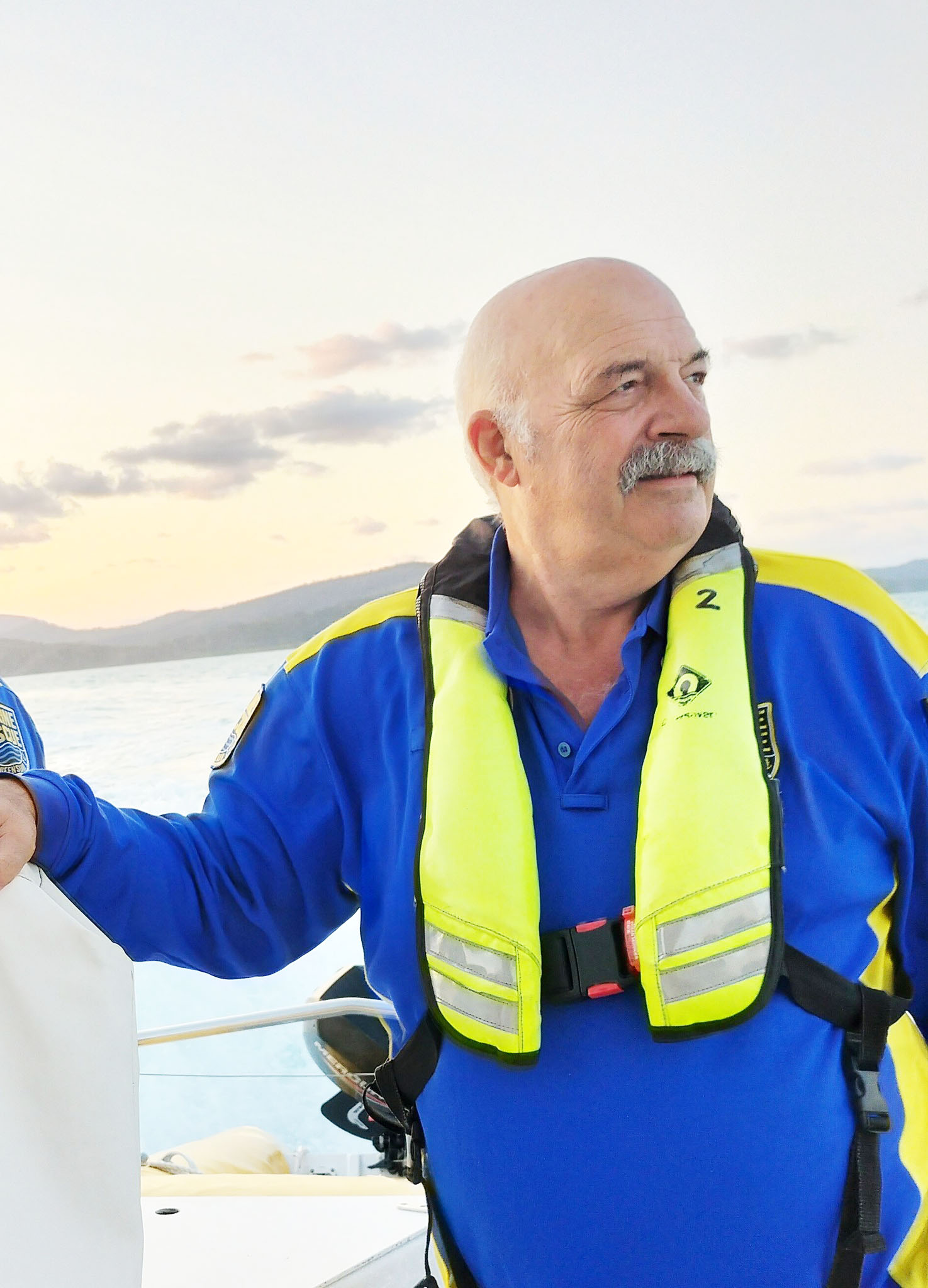
Crew: Ray L, Nat R, Bob W
Skipper: Bill H
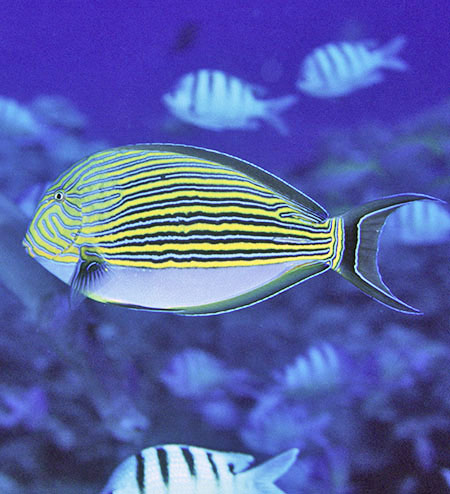
Surgeonfish Photo supplied
Everyone who has visited the Great Barrier Reef has a favourite fish. With more than 1,600 species weaving through its coral gardens, the Reef is a living kaleidoscope of colour and motion. But if the question shifts from “favourite” to “most important,” the answer becomes less about beauty and more about function.
So which fish matter most to the Reef’s long-term health?
While there is no single winner in such a complex ecosystem, one group stands out above the rest: herbivorous fish. These unassuming grazers are the quiet custodians of the Reef, performing a vital role that keeps coral ecosystems alive.
On the Great Barrier Reef, there is a constant battle for space. Fast-growing algae are always ready to overtake the slower-growing corals. Without intervention, algae can quickly smother coral, blocking sunlight and preventing new coral larvae from settling. This is where herbivorous fish step in. By feeding on algae, they maintain the delicate balance between coral-dominated and algae-dominated habitats.
Among the most important of these are parrotfish, surgeonfish and rabbitfish—species that act as the Reef’s lawnmowers.
Parrotfish are perhaps the most well-known. Often called “reef cleaners,” they spend up to 90 per cent of their day grazing on algae that coats coral surfaces. In doing so, they prevent algae from overwhelming living corals and help create space for new coral growth. Their feeding also has another remarkable benefit: sand production. Using their powerful, beak-like teeth, parrotfish scrape algae from coral and rock, ingesting bits of coral skeleton in the process. After digesting the organic material, they excrete the remaining calcium carbonate as fine sand. A single parrotfish can produce up to 90 kilograms of sand each year—quite literally helping to build tropical beaches.
Surgeonfish play an equally critical role. Acting as efficient grazers, they feed on turf algae and can make up a significant proportion of the Reef’s herbivore biomass. In some areas, they account for the majority of algae removal, helping prevent ecosystems from tipping into algal dominance.
Rabbitfish, though less conspicuous, are just as important. They complement the work of other herbivores by consuming different types of algae, adding resilience to the system. This diversity of feeding behaviours ensures that no single type of algae gains the upper hand.
Of course, the Great Barrier Reef is an intricate web of life, and no species exists in isolation. Every organism—from microscopic plankton to apex predators—plays a role in maintaining balance. But without herbivorous fish, that balance would quickly unravel.
In many ways, these fish are the unsung heroes of the Reef—quietly working each day to keep one of the world’s greatest natural wonders alive.
Contributed with thanks to Whitsunday Conservation Council

If you’ve been exploring the local property market lately, you may have come across a new and enthusiastic name: Nick Ianni. Recently stepping into the real estate industry as Sales Assistant to Rob Taylor at Taylor’s Property Specialists, Nick is already making an impression with his approachable style and genuine commitment to helping people.
Nick brings with him a diverse background spanning sales, customer service, and hands-on rural work. Originally from Forbes in regional New South Wales, he grew up on the land, developing a strong work ethic, reliability, and a deep appreciation for community—qualities that now shape his approach to real estate.
Now proudly calling the Whitsundays home, Nick says the move was an easy decision. “The lifestyle, the people, and the coastline—it just felt right straight away,” he shares. Settling into the region has only strengthened his passion for helping both locals and newcomers navigate the property market with confidence.
Working closely with experienced agents Rob Taylor and Alex Swan, Nick is learning the ins and outs of the industry while contributing fresh energy to the team. His goal is simple: to make the buying or selling process smooth, enjoyable, and stress-free.
“I want people to feel supported every step of the way,” Nick says. “Whether they’re ready to make a move or just exploring their options, I’m here to provide clear guidance and a friendly, down-to-earth experience.”
With his strong values, enthusiasm, and dedication to personal service, Nick Ianni is a welcome addition to the Whitsundays real estate scene—and certainly one to watch as he builds his career in the region.
For enquiries, Nick can be reached on 0472 675 428 or via email at nick@tpsre.com.au.
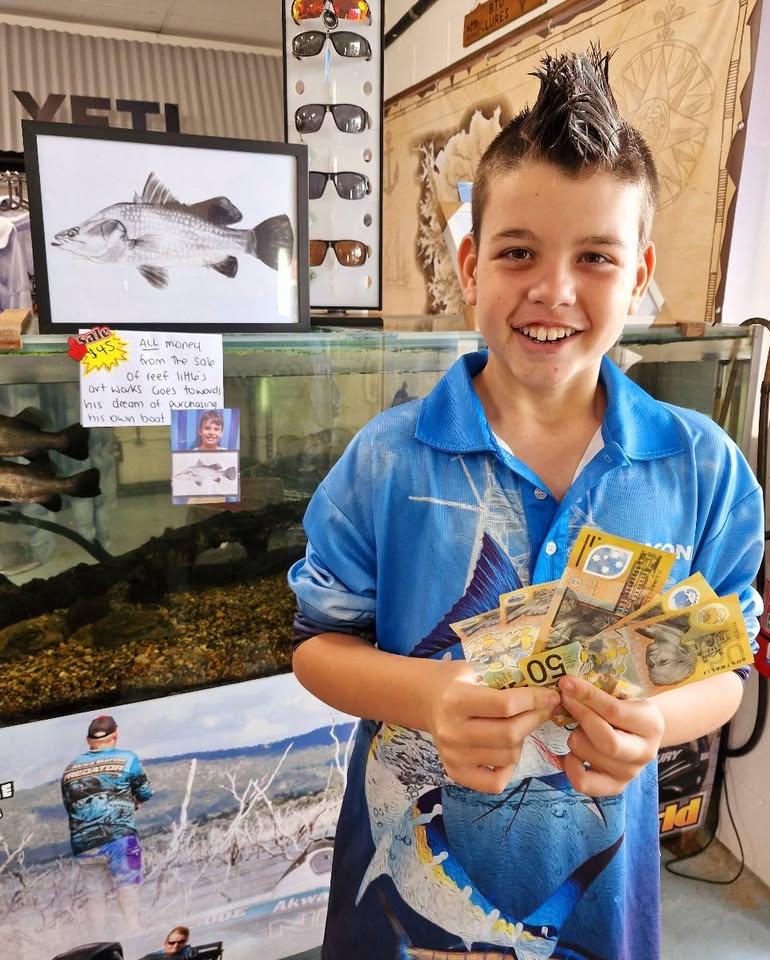
Reef has been creating marine art and selling copies to the community. Photo source: Facebook
A talented young local boy named Reef has been selling copies of his framed marine-themed artwork at Barra World in Proserpine, following his dreams of owning his very own boat.
Reef mainly paints fish, with extraordinary detail and perspective – demonstrating an artistic ability well beyond his years. His subjects include a sweet little clown fish, and an expertly depicted silver marlon.
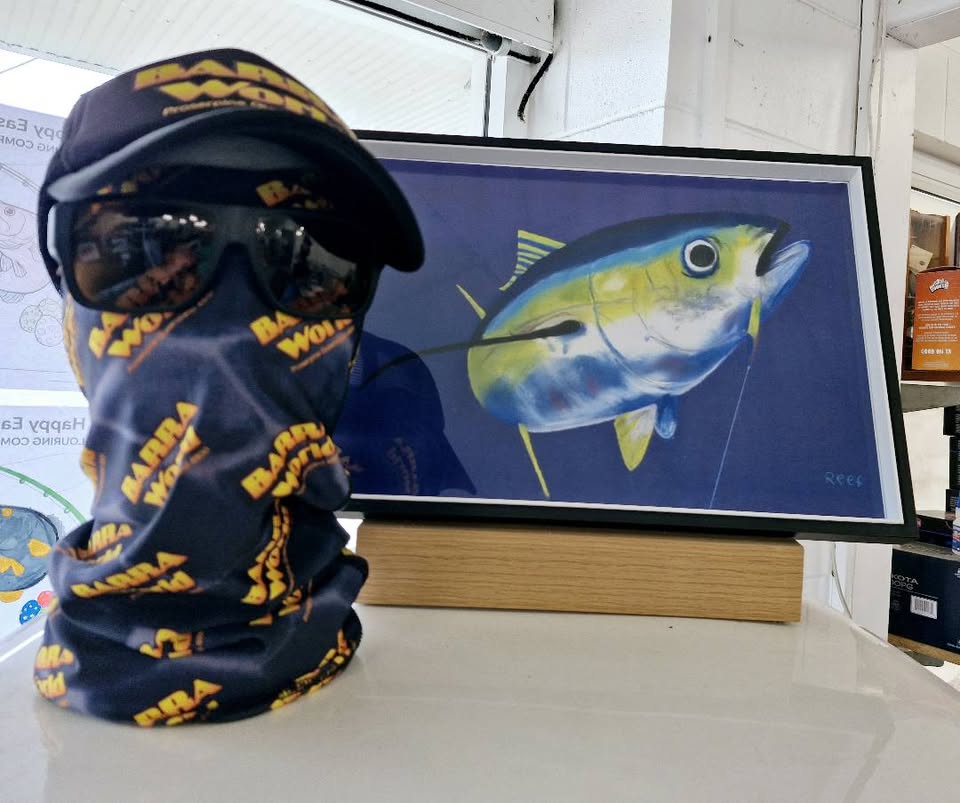
Led by his love of fishing and the ocean, Reef will be using the money from his sold copies to save up for his first boat, dreaming of a tinny that will allow him to pursue his hobbies out on the water.
“I’d like to thank everyone that has purchased one of Reef’s prints as he really appreciates it,” shared Reef’s Mum, Nadine Little.
“He really appreciates it and gets so happy when I hand him cash and tell him he’s sold another copy.”
Reef’s mum and dad will be matching the funds raised by the paintings to help him on his way. The community looks forward to seeing what he produces next.
%20Lyn%20laying%20wreath.jpg)
Lyn Burke laying the wreath.
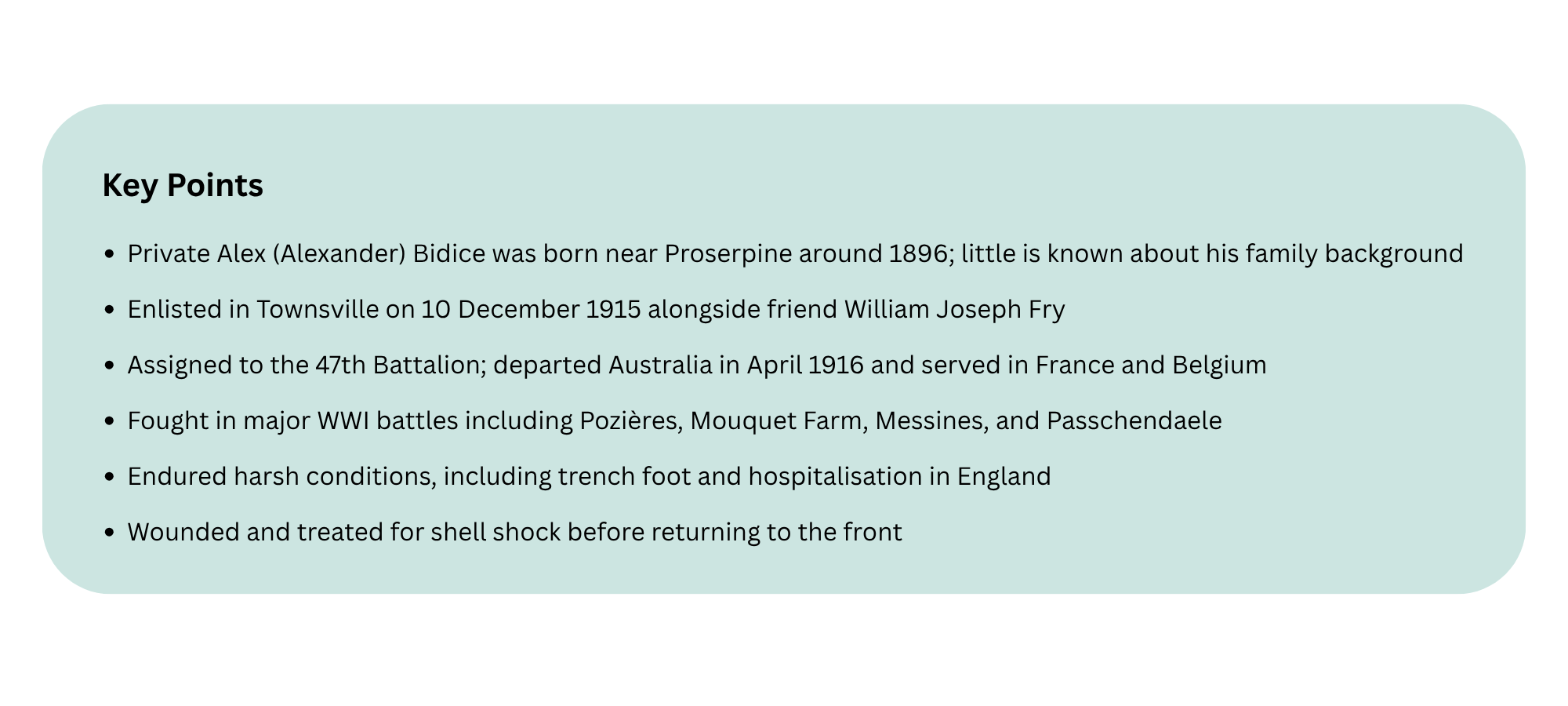
Private Alex (Alexander) Bidice was born near Proserpine, Queensland about 1896. Sadly, it is not known who his parents were although it is believed his mother was part aboriginal. Alex enlisted in Townville 10 December 1915 alongside friend, William Joseph Fry, their enlistment papers revealing almost identical answers. He did not give any next of kin, however later a note stating ‘Reports to Mr J Fry, Victoria St Mackay Qld’ was added.
Alex Bidice was assigned to the 2nd reinforcements of the 47th Battalion leaving Sydney 20 April 1916 on the troopship, Hawkes Bay. By 3 June 1916, the 47th sailed from Alexandria to Marseilles then marched into Outterstsene and Merris, continuing their training there.
Early in August 1916, the 47th Battalion took up positions at Pozieres where they came under heavy bombardment. On 8 September 1916, Alex was transferred to the 12th Training Battalion in England before returning to France on 25 September 1916.
Having survived the carnage of Pozieres and Mouquet Farm, Alex went on to endure the bitterly cold winter of 1916 –17. Like many, he developed trench foot and was evacuated to England for treatment. He wrote to the Fry family from hospital to let them know he was “getting on alright”.
Alex went on to serve in Belgium and was wounded at Messines in June 1917. He was taken to a nearby casualty clearing station and treated for shellshock, returning to his unit in time to take part in the attack at Passchendaele Ridge.
Private Alex Bidice was killed at Passchendaele on 12 October 1917, aged 21. On that day, the 47th Battalion lost 13 officers and 292 men from other ranks.
Alex never saw his friend, William Fry, again. Assigned to the 52nd Battalion, Fry had been killed in action at the battle of Messines Ridge. Their bodies were never recovered, and today, their names are listed on the Menin Gate Memorial to the Missing in Ypres, along with the names of more than 50,000 others who have no known grave.
%20Alex%27s%20name.jpg)
The army advertised in the local paper for any relation of Alex to come forward. Alex had left a will leaving everything to his friend’s sister, May Fry, Banana Pocket, Proserpine but that did not satisfy the army so all of his possessions and medals were returned to store and marked as untraceable. In July 1955, Sarah Alexandra May Lilly (nee Fry) applied to the AIF through Macrossan & Amiet, Solicitors, Mackay in an attempt to collect his personal effects and medals – but without success.
On 4 April 1920, John Fry of Mackay (listed as Alex’s next of kin) filled out a Roll of Honour circular for him, attaching a note advising the army of what he knew about Alex. In part he stated, ‘that he (Alex) hardly remembered his mother as she left him when very young as she was a half caste aboriginal but we have no knowledge of the father.’
Thanks to the Fry family, Alex’s name was included on the wall at the memorial in Canberra. This year, his name will be projected onto the exterior wall of the Hall of Memory on April 30 10.57pm; June 7 10.07pm; October 1 3.07am and December 22 10.03am.
More than a century after the deaths of Alex Bidice and William Fry, local historian, Lyn Burke, travelled to the Australian War Memorial in 2022 to lay a wreath in their honour at a Last Post Ceremony commemorating Pte Alex Bidice, one of more than 1200 Indigenous Australians who enlisted during World War One.
Today, Private Alex Bidice’s name is also now listed on our local cenotaph, alongside that of his friend, William Fry.
This year, Alex Bidice’s name will be projected onto the exterior wall of the Hall of Memory at these times: -
April 30 10.57pm; June 7 10.07pm; October 1 3.07am and December 22 10.03am.
Lest we Forget
Story courtesy Proserpine Historical Museum. Information sourced from Lyn Burke. Photos sourced from Australian War Memorial.

The photo of the week winner is Elise Dunckis for the theme ‘Off the Beaten Track’. Elise’s photo is of a night under the stars which, was taken in Morgan, South Australia.
Next week’s theme is ‘Vintage’. Budding Photographers can enter by joining the Whitsunday’s Amateur Photographers group on Facebook.
Contributed by Whitsunday Amateur Photographers
Publishers Indemnity. Any individual or entity that places advertising, supplies copy material, or submits editorial content to Core Life Publishing agrees and undertakes to ensure that all such material:- Does not infringe upon any copyright, trademark, or other intellectual property rights;- Is free from any content that could be considered defamatory, libelous, or slanderous;- Does not infringe upon any rights related to privacy or breach of confidence;- Contains no obscene, indecent, or otherwise unlawful material;- Complies fully with the Trade Practices Act and all other applicable laws, regulations, or statutes.Furthermore, by submitting or placing such material, these individuals or entities agree to indemnify and hold harmless the publisher, Core Publishing and Events Pty Ltd, and/or its agents from and against any and all investigations, claims, demands, liabilities, damages, costs, or judgments arising out of or in connection with the material provided. All material is believed to be accurate at the time of printing and remains the copyright of Core Publishing and Events Pty Ltd.
© 2026 Mackay and Whitsunday Life Pty Ltd.
