
Independently Owned, Locally Grown, Community Loved

OPINION PIECE from the office of Federal Member for Dawson Andrew Willcox There is no question that immigration into Australia is out of control. The government’s numbers are too high, and standards are too low. A sustainable migration program must consider our capacity to provide housing, healthcare, infrastructure and the essential services everyone relies on, and Australians must come first. But Labor’s decision to target Working Holiday Makers Visa holders is not the answer. These people filling vital gaps in our workforce are not the cause of Australia’s housing crisis. In many cases, they are living in accommodation provided by the very businesses that employ them. The National Farmers’ Federation has made the point that Working Holiday Makers generally stay in hostels, caravan parks or purpose-built on-farm accommodation. Resorts usually have on-site staff quarters. They are not the source of Australia’s housing shortage. So why is Labor making it harder for them to come here, when these workers fill genuine jobs that regional Australia holds? Working Holiday Makers fill approximately one in seven farm jobs nationally and are particularly important during peak agricultural periods, which for Dawson, it is right now! Farmers rely on these workers to plant, pick, pack and harvest the produce that ends up on Australian supermarket shelves. Having run one of Australia’s largest tomato farms, at times Working Holiday Makers made up more than 50 per cent of my workforce. Without them, much of our crop simply would not have been picked in time and rotted in the paddock. Some may say, why not employ the Australians who don’t have a job and are on “the dole”? Can I say, this does not work. Most farmers will employ Aussies over travelling backpackers, but many either don’t want to do the work or don’t turn up after the first day. Who picks the fruit or veggies then? Farmers are already warning that visa delays are leaving them without workers. The NFF says approvals that once took days are now facing processing times of up to three months, and this time frame can be the difference between harvesting a crop or losing it. That should concern every Australian already feeling the pressure at the supermarket checkout. The same problem is playing out in tourism. Across Dawson, Working Holiday Makers are an important part of the workforce supporting tourism and hospitality, particularly in the Whitsundays. They help fill shifts, work in hotels and restaurants, support tour operators and keep businesses running through their busiest periods. They also contribute to the local economy. They spend money on food, fuel, attractions and tours, supporting the small businesses that depend on a strong visitor economy. That is why tourism and business leaders across North Queensland are raising the alarm. They understand what happens when a regional business cannot get enough staff: opening hours are reduced, and services are cut, creating a downward spiral. We do need to reduce migration to sustainable levels. We need stronger integrity measures, and we need to crack down on rorts. But responsible migration policy means understanding which parts of the system are creating pressure and which parts are helping Australia function. Working Holiday Makers are not the problem. They are part of the workforce solution for regional. Australia. People have had a gutful of watching their standard of living go backwards. Groceries, fuel, housing and everyday expenses are already putting enormous pressure on families. The last thing Australians need is another reckless policy that makes it harder to produce food, harder to run regional businesses and harder for tourism operators to find the workers they need.
Read the full storySomeone sold a house in Sydney last week for $9 million less than they bought it for four or five years ago. The sellers had bought the property in Sydney’s eastern suburbs for $29 million and sold it for $20 million in a sale forced by their bank. I imagine the sellers are a little disappointed by the government’s decisions on negative gearing and capital gains tax and feeling pretty hurt by the increased interest rates. Australia’s interest rates are on the rise and are now sitting at levels not seen since 2011. Increased cost of living is hurting people around the country and interest rates are playing into that. But the impact of interest rates is not felt evenly around the country. The far-higher property prices mean people in the major cities suffer much more than regional areas with the rates increase. That is certainly not to say people in Mackay are unaffected by the cost of living; it’s just that the impact of interest rates increase on a $400,000 mortgage is much less than the impact on a $1m mortgage. There are other Mackay-specific factors that are in play when discussing the current housing market. The big factor is the role of coal in our economy. Most of the coal extracted and exported from our region is coking coal, which is used to make steel. The price of coking coal is around $280 a tonne, which is about 50 per cent up. Good activity in the coal market translates to good news for the Mackay economy, as it is an economic engine that other cities and regions just don’t have. Good activity in Bowen Basin flows throughout the Mackay economy; Paget workshops, transport, suppliers and related businesses all benefit. But so do other, non-mining-related businesses as they benefit from the general confidence and spending that goes on. The strong mining activity also means mines need to keep their staff levels up and that means more people moving to Mackay. Of course, Mackay is much more than a coal mining town but if the coal sector is going well those other areas definitely benefit. It is a confidence boost for Mackay people looking to get into the housing market and those wanting to upgrade or downsize. It also means continuing strong demand from people wanting to rent a property and it will be interesting to see what sort of activity that creates from investors. Investors have walked away from the big-city markets because they can no longer use negative gearing on established properties that do not have a sufficient yield to be positively geared. Negative gearing has never been a big thing in Mackay because our prices are lower and rental returns continue to be strong so many investors have a positively geared property. Around the country everyone is nervous about the state of play and the probability of more interest rate rises. But strong coal prices and an economy that is performing well mean Mackay might just be presenting an opportunity for buyers and sellers that doesn’t exist in other parts. I remember when national confidence was flying high and Mackay prices were going up significantly that many buyers were saying “I wish we had bought a while ago when the market wasn’t so hot”. I’m not armed with a crystal ball so I’m not here to tell you what is going to happen but I suspect there is a very good buying window right now for those looking for an opportunity.
Read the full story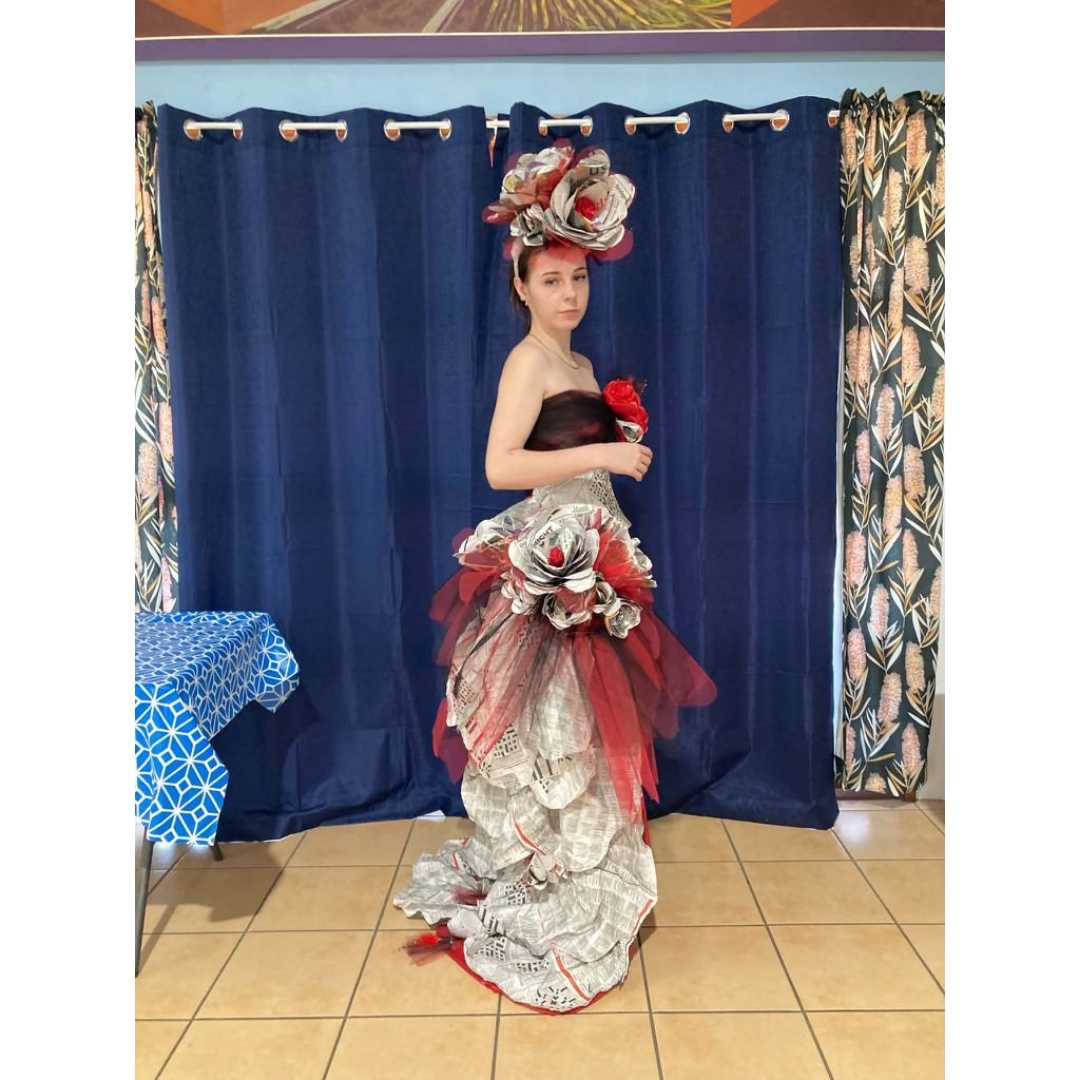
A local Mackay and Sarina based model has created a dress out of newspapers, including Mackay Life, for her upcoming pageant, representing her region and hometown on the runway as she vies for Miss Diamond International in Brisbane. Zoe Place will be competing this weekend in the three-day event, beginning this Friday 2nd October and ending on Sunday 4th October. The young model spent around a month creating her eco-fashion outfit, using old newspapers as the main material and transforming them into a bodice, skirt and flowers. Red elements were also incorporated into the design to give the dress a bold and glamorous pageant feel. Zoe said, “The entire concept was really about taking something that would normally be thrown away and turning it into something beautiful and meaningful.” Her eco-fashion creation will form part of a busy weekend in Brisbane, with the Miss Diamond International event including photo shoots, interviews, an eco-fashion show and the final pageant. Zoe has been preparing for the event by practising her strut and walking, preparing for interviews and getting comfortable in the different outfits she will wear throughout the weekend. Alongside her love of modelling, pageantry has also provided Zoe with a platform to raise awareness about causes close to her heart, including mental health, while fundraising for Beyond Blue. “Pageantry has given me more of a platform to combine my love for modelling with something that is really important to me.” “When I first started, I was more nervous about putting myself out there and worried about what others would think about me – but I’ve changed a lot through my journey in pageantry.” “Pageantry has also taught me that it’s not about how you look on stage. It’s about the person you are when you step off it.” “Every woman has their own unique journey and that journey is something we should all be really proud of.” “To me, it represents confidence, empowerment, kindness, and using your voice to make a difference.” Zoe said she was looking forward to meeting the other contestants, making new connections and creating memories. “I’m definitely looking forward to meeting all the new contestants and making new connections and creating memories that I will carry with me for a lifetime.” While Zoe hopes to eventually move to the city, her sights are set even further afield, with a dream of one day walking in New York Fashion Week. Mackay and Sarina local Zoe Place has created an eco-fashion dress from recycled newspapers, including Mackay Life, ahead of her Miss Diamond International pageant in Brisbane. Photos supplied
Read the full story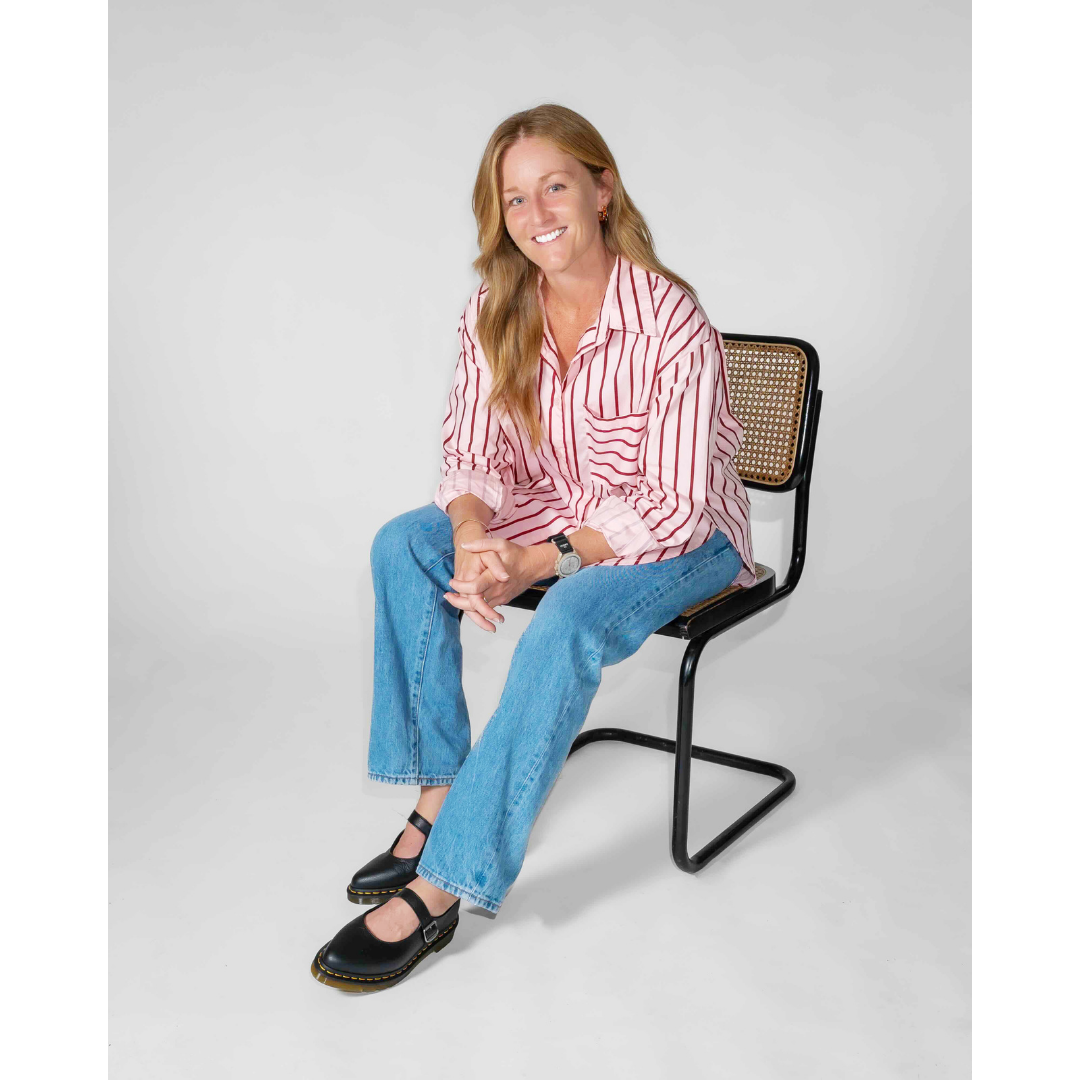
Trends, reels and the endless cycle of always wanting more has quietly bombarded the minds of countless social media users of all ages, but one former Mackay local has made it her mission to help others understand the effects of social media and find practical ways to break free from online addiction. Alexis Zahner is in Mackay over the next week to teach upcoming generations about social media and the effects it can have on the mind, particularly on identity, self-discovery, as well as the marketing strategies that get viewers hooked and influence their decisions. It is something Alexis knows first-hand can be a useful tool, but also a great disruption to authenticity and the world as we see and experience it. Alexis will hold a free meet and greet and book launch today, Friday 2nd October, at 5.30pm at the Mackay Surf Lifesaving Club, where she will give a talk and answer questions relating to her debut book, Real: Reconnecting to Yourself in a World of Likes and Lies. A former Mackay girl, Alexis spent the past 15 years working across business psychology, marketing and media, with her interest in social media influence beginning during her university studies at James Cook University in Townsville. Her own experience as a social media user, travel blogger and influencer eventually led her to question how much of her identity, decisions and values were being shaped by what she saw online. “The tipping point came for me about 3 years ago when I had this feeling that I couldn't separate influence from my own personal decision making,” she said. “I couldn't separate my own likes, dislikes, values, relationships from what I was being exposed to and being influenced by online.” “I found that I needed to take some time away from social media to recalibrate what was important to me and sort of reconnect and come back to myself.” Alexis said she understood the feeling of questioning who you are outside of social media. “I know what it feels like to live a life under the influence of social media and have that existential crisis of thinking to yourself, who am I? What do I like? What's the kind of life I want to live? and struggling to separate myself from influence.” Alexis is particularly passionate about reaching teenagers, who she says are in an important stage of identity development, and will share this message with Mackay high school students during her upcoming school talks. “Teenagers are really easily influenced by social media. So it's a really important age where we start educating them – not just on the mental health repercussions of things like social media and how it shortens their attention span, but how it actually influences who they become.” “If you're asking yourself these questions, it's not your fault. Social media is actually geared to create this impact on you.” Alexis encourages people of all ages to “start expanding beyond what you see on the platform.” “Dare to indulge in the things that you've always been curious about or things you used to love,” she said. “Don't be afraid to put the phone down to let yourself be curious and have fun.” What: Alexis Zahner's 'Real' Book launch When: 5.30pm Friday 2nd October 2026 Where: Mackay Surf Lifesaving Club Former Mackay local and author Alexis Zahner is returning home to share her experiences with social media and her debut book, Real. Photo supplied
Read the full story
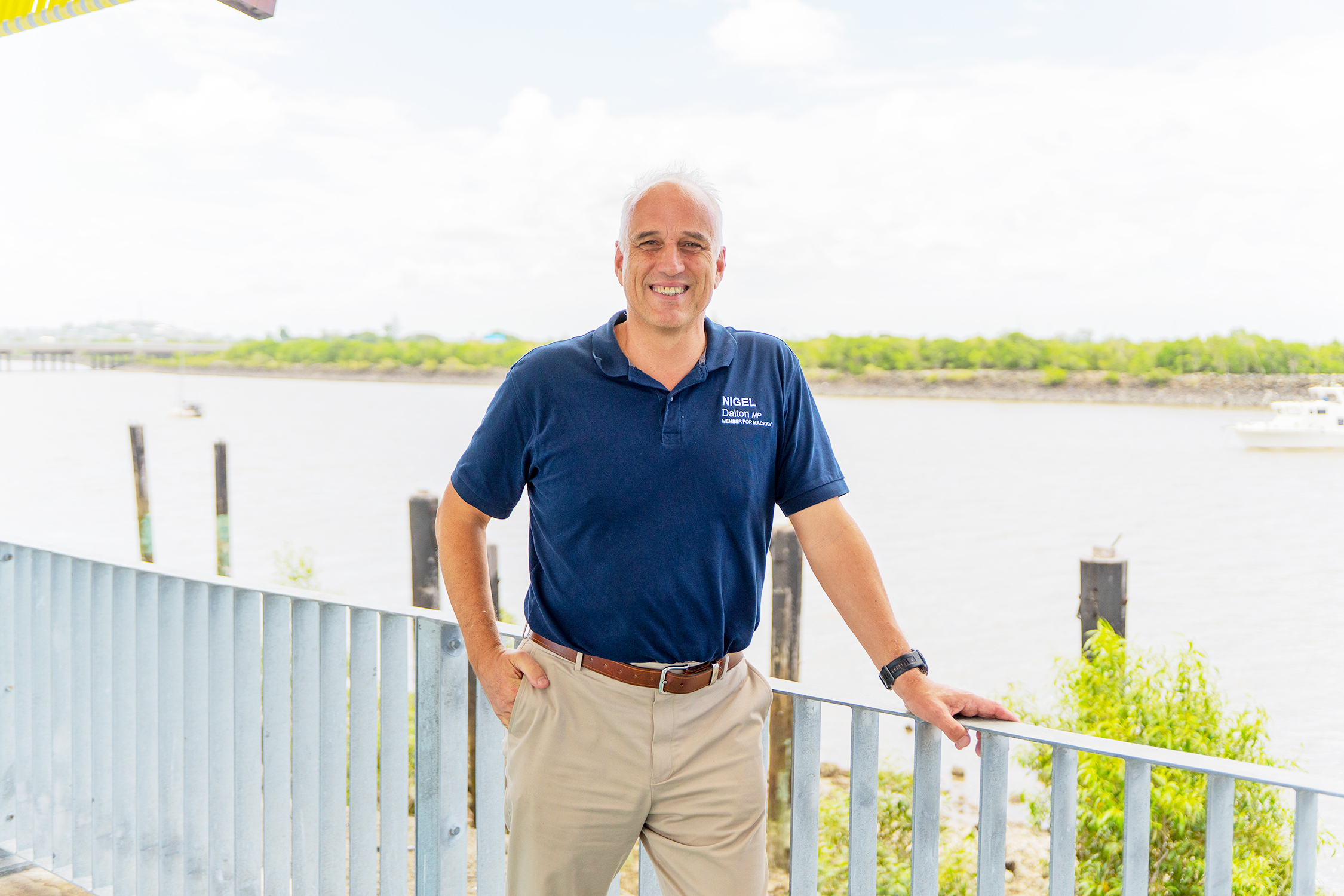
Nigel Dalton Champions Mackay’s Riverfront Renewal
Efforts are underway to revitalise Mackay’s beloved Bluewater Quay, with local leaders and community organisations working together to create a welcoming space for families, residents, and visitors along the Pioneer River.
Mackay Regional Council, alongside Member for Mackay Mr Nigel Dalton, has taken a compassionate approach to support those sleeping rough, ensuring access to local housing and support services. Mr Dalton further noted that the focus is on assistance, rather than displacement, helping people navigate financial, health, or substance-related challenges.
Mr Dalton highlighted the collaborative work that’s already unfolded in the revitalisation.
“We’ve been working with housing, we’ve been working with health, we’ve been working with council, and we’ve been working with community organisations around here to make sure that we can help everybody who needed help,” he said.
“This was not a matter of going into an area and arresting people, or getting rid of them. They all had complex needs and we came down here with a compassionate heart to make sure that everybody who wanted some help could get it.”
The improvements are part of a broader plan to activate the waterfront and create a vibrant community hub. Mr Dalton praised the council staff, saying, “I want to congratulate Mackay Regional Council because they have done a huge amount of work… what they’re doing is amazingly good for all of our community.”
The revitalisation of Mackay’s Bluewater Quay is underway, with Mr Nigel Dalton and local leaders working together over the past few months to create a welcoming waterfront space that supports those in need while bringing the community together. Photo credit: Hannah McNamara
The River Reimagined
Mackay’s Voices Reimagined In Public Art
A new public art project is inviting locals and visitors to share their stories, memories, and reflections of the Pioneer River – contributions that will be transformed into an eye-catching installation hanging in one of the river side pavilions on the Blue Water trail, adjacent to the Pioneer Promenade parkland.
Titled The River Reimagined, the project will feature handwritten “Story Strips” suspended from the roof of a river side pavilion, creating a canopy of voices contributed by the Mackay Community. Each strip will carry a short reflection submitted through an online survey or at in-person writing sessions, capturing the spirit, history and personal connections that define our region.
In a vibrant collaboration with Mackay’s Yarn Bombers, the installation will also be adorned with textile elements, adding colour, texture and warmth to the final display.
“This is about more than art – it’s about storytelling, identity, and place,” said project artist Bonnie McCarthy.
“We want to reflect the heart of Mackay through the voices of those who live here and those who pass through.”
The installation will be unveiled as part of the upcoming River of Life Festival in 2026, celebrating the cultural and environmental significance of the Pioneer River. Community members are encouraged to participate by submitting a short story and optional image via the online form or QR code.
An indicative image of what the complete Installation will look like. Image supplied

Mackay shoppers were reminded of the kindness of strangers recently when a local mother shared a heart-warming story about her daughters.
While doing the groceries, her daughters ran into a small hiccup at Target as the card on their phone wouldn’t work.
But, in a touching act of generosity, a stranger stepped in.
The mother wrote on social media: “To the absolute beautiful human that paid for my daughters shopping in Target this morning, thank you, I hope you see this! … Some gorgeous earth angel stepped in and tapped her card and disappeared.”
Her daughters were equally thrilled by the experience.
“Mum, a lady helped us,” they exclaimed, their excitement evident when they reunited with their mother.
The gesture, while small in action, made a lasting impression.
“Please, if you read this, know you made not only their day but mine too,” the mother said, expressing gratitude for the stranger’s thoughtfulness.
She added, “I would also like to pay you back! Thank you so much.”
The incident has sparked smiles across Mackay, serving as a simple but powerful reminder of the everyday acts of kindness that strengthen community connections.
If you have a good deed story of your own that you’d like to share, please email hannah@lifepublishinggroup.com

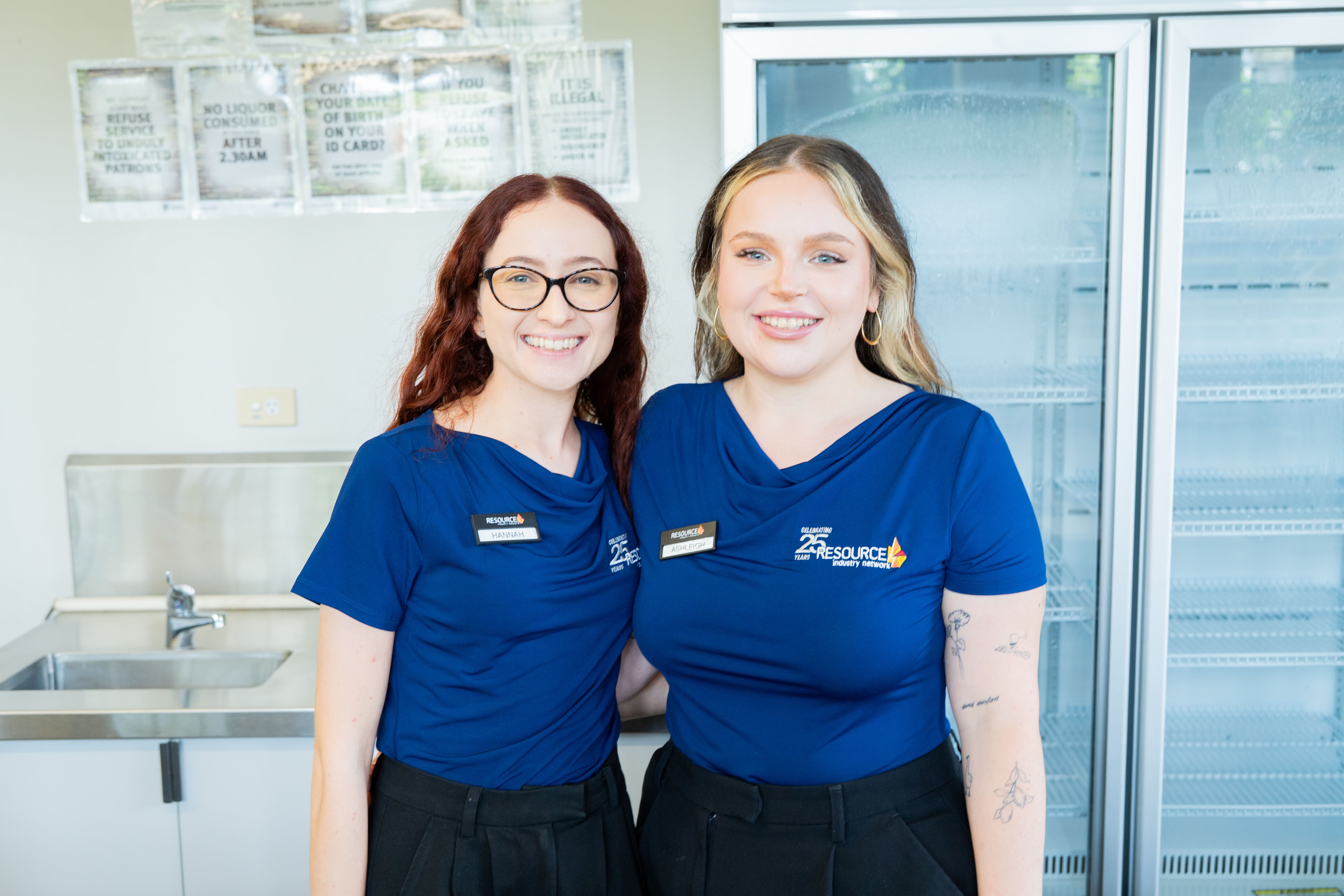
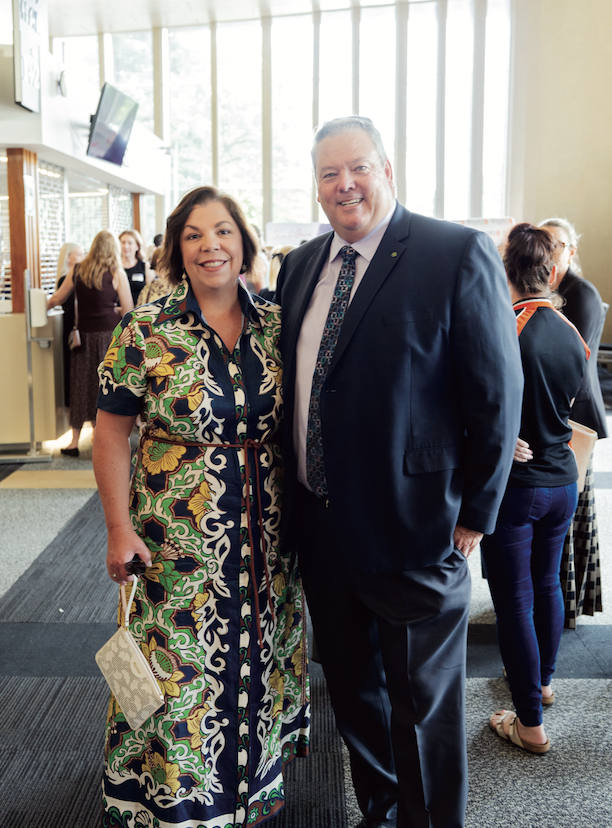
Hundreds of inspiring women came together at the MECC to celebrate the Resource Industry Network International Women’s Day Business Lunch, with nearly 600 people filling the room for one of the region’s most uplifting events of the year.
Leaders, professionals and community members gathered to share stories, celebrate achievements and champion the strength and influence of women across the region. A powerful keynote address and engaging panel discussion sparked thoughtful conversations around leadership, resilience and opportunity.
The atmosphere was vibrant and empowering, with many describing the event as both motivating and memorable.
Photo credit: Hannah McNamara
Resource Industry Network International Women’s Day Business Lunch 2026!
Nearly 600 people gathered at the MECC for the International Women’s Day Business Lunch, creating a vibrant and inspiring atmosphere for the region’s annual celebration. The event featured a standout keynote speaker and an engaging panel discussion, with powerful stories and insights shared throughout the afternoon. Attendees embraced the opportunity to connect, celebrate achievements and reflect on the importance of empowering women across the community. The energy in the room was widely praised, with many describing the day as both uplifting and memorable. Celebrations continued afterwards at The Dispensary Mackay, rounding out a successful and inspiring International Women’s Day event.
Photo credit: Hannah McNamara




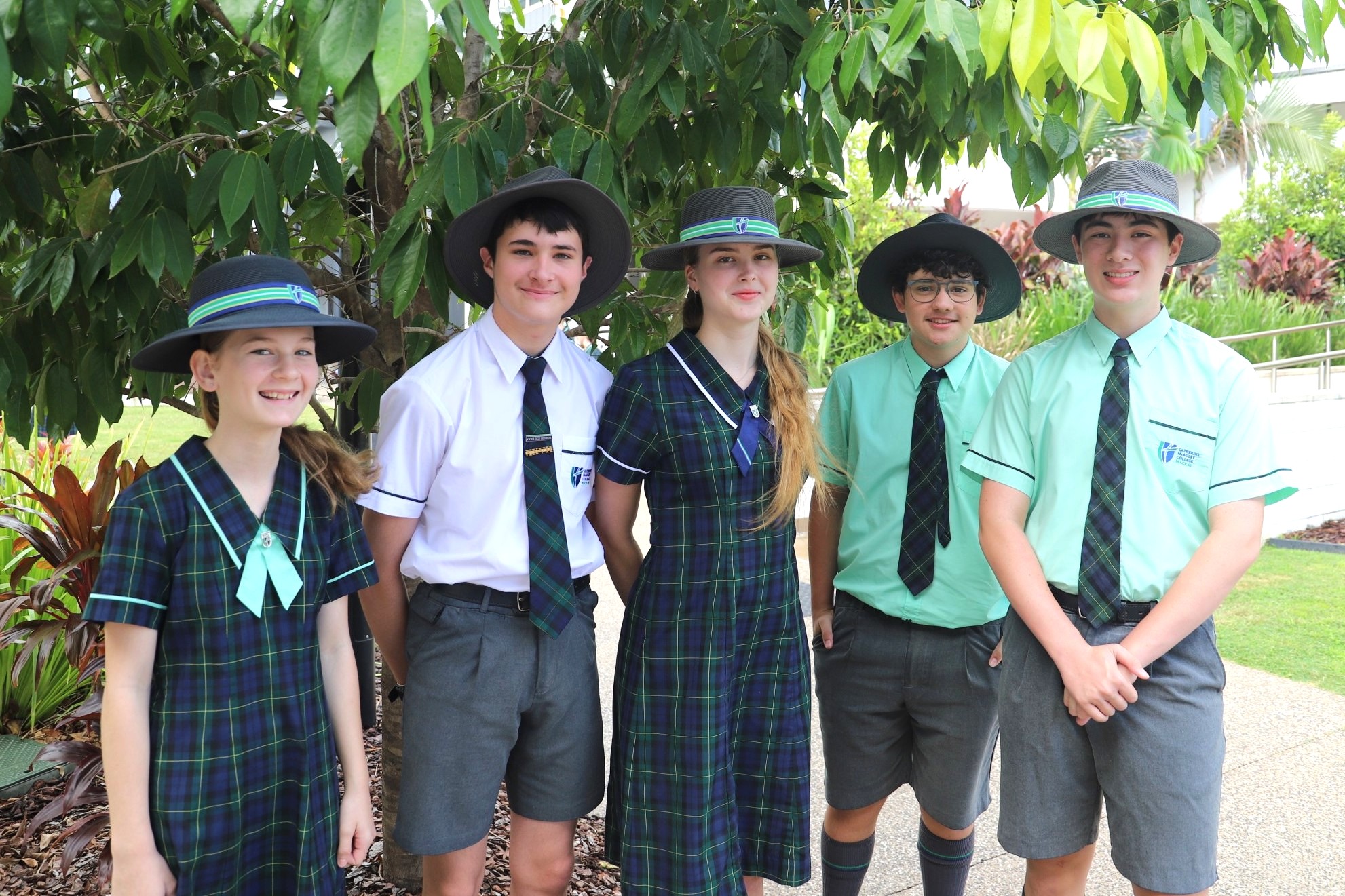
Families across the Mackay region now have the opportunity to secure a place for their children in one of the area’s three Catholic secondary colleges, with enrolments for the 2027 school year officially open.
Catholic Secondary Education in Mackay continues to offer families a rich choice of faith-based learning environments, supported by three well-established colleges: Holy Spirit College, Mount Pleasant; St Patrick’s College, Mackay; and Catherine McAuley College, Mackay. Each college maintains a strong commitment to delivering high-quality teaching and learning, supported by values grounded in the Catholic
tradition.
Together, the colleges form a dynamic network focused on nurturing the academic, spiritual, and personal growth of every student entrusted to their care. Their shared mission emphasises excellence, compassion, inclusivity, and service values increasingly sought by families looking for holistic and future-focused education.
As the Mackay region grows, demand for Catholic secondary schooling remains strong. The opening of 2027 enrolments provides families with the chance to explore the unique offerings of each college and secure a place early.
Parents and caregivers are encouraged to visit the colleges’ websites or contact each college for further information about tours, interviews, and transition pathways.
Catherine McAuley College, 239 Nebo Road West Mackay Enrol online via the college website https://cmcmrok.catholic.edu.au/ Open Evening 4.00pm to 6.30pm Thursday 12 March for more information call 4994 9200
St Patrick’s College 2 Gregory Street Mackay Open Night Tuesday 17 March at the Mercy Campus in Penn Street, Mackay from 4.00pm to 7.00pm. For more information, please visit the college website www.stpats.qld.edu.au or call 4994 8700.
Holy Spirit College 35 – 39 Baxter Drive Mount Pleasant Enrol online via www.hsc.qld.edu.au/enrolments Information Evening Tuesday 28 April, 5.30pm to 7.30pm. For further information email enrolments@hsc.qld.edu.au or call 4994 8600
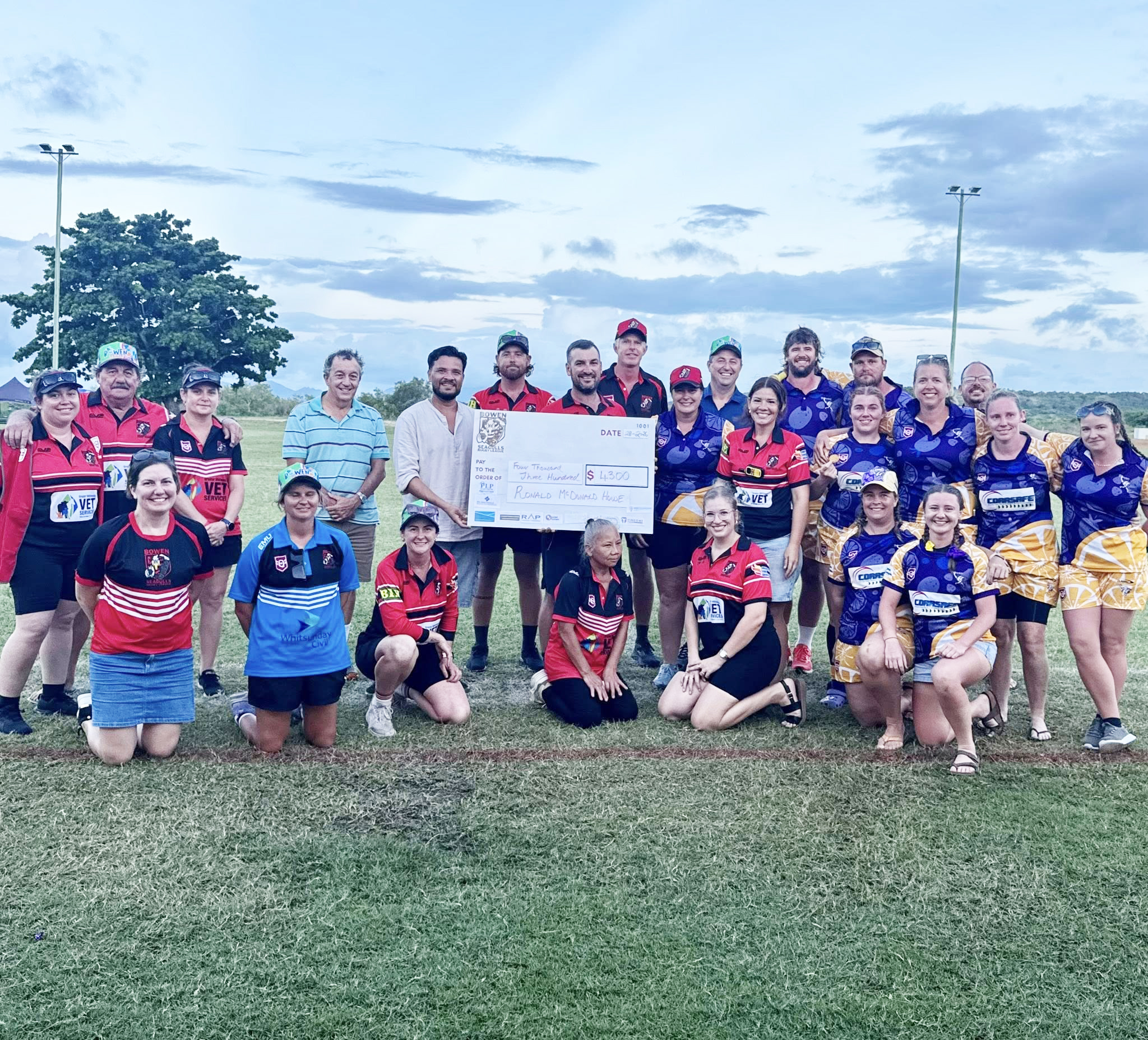
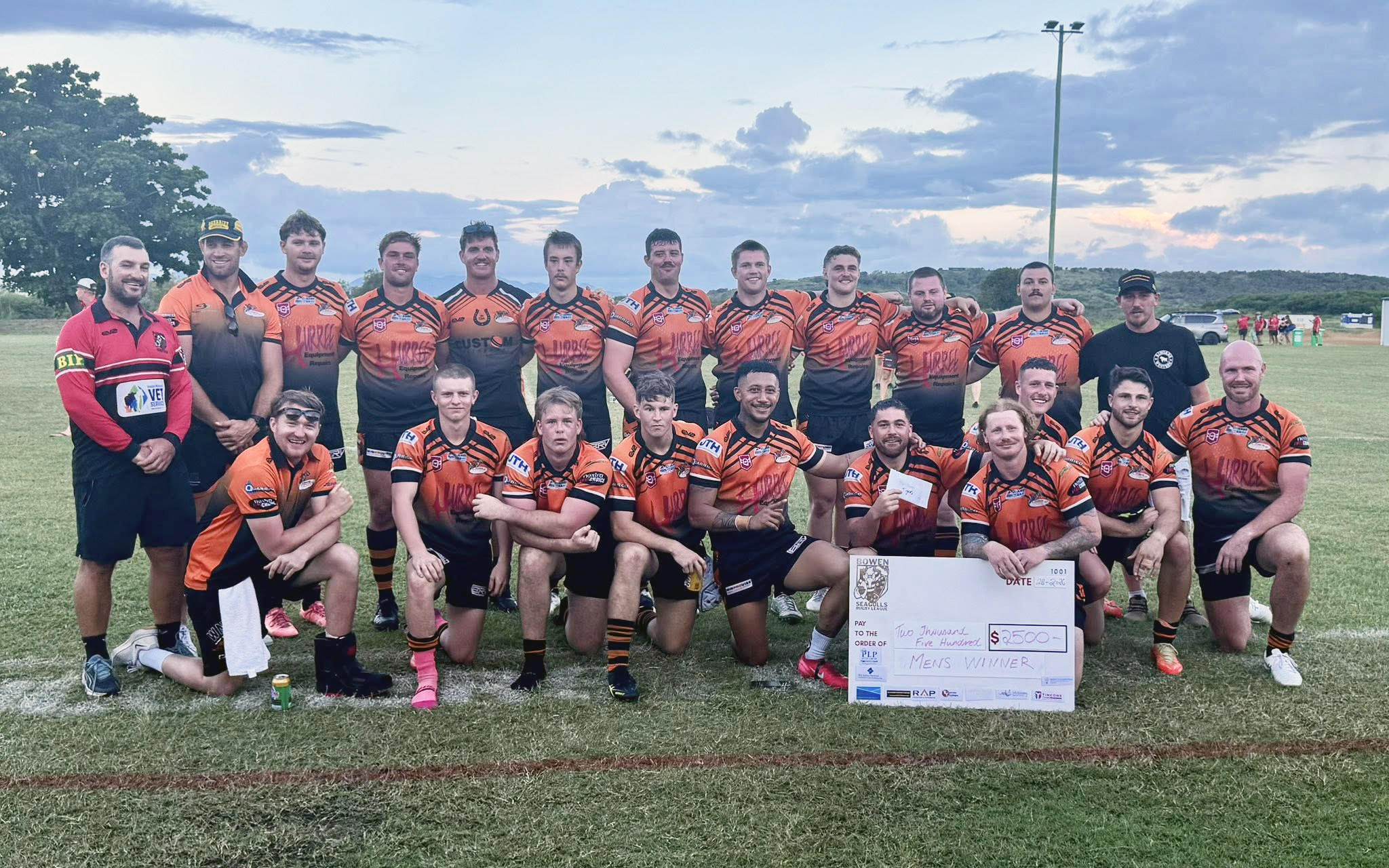
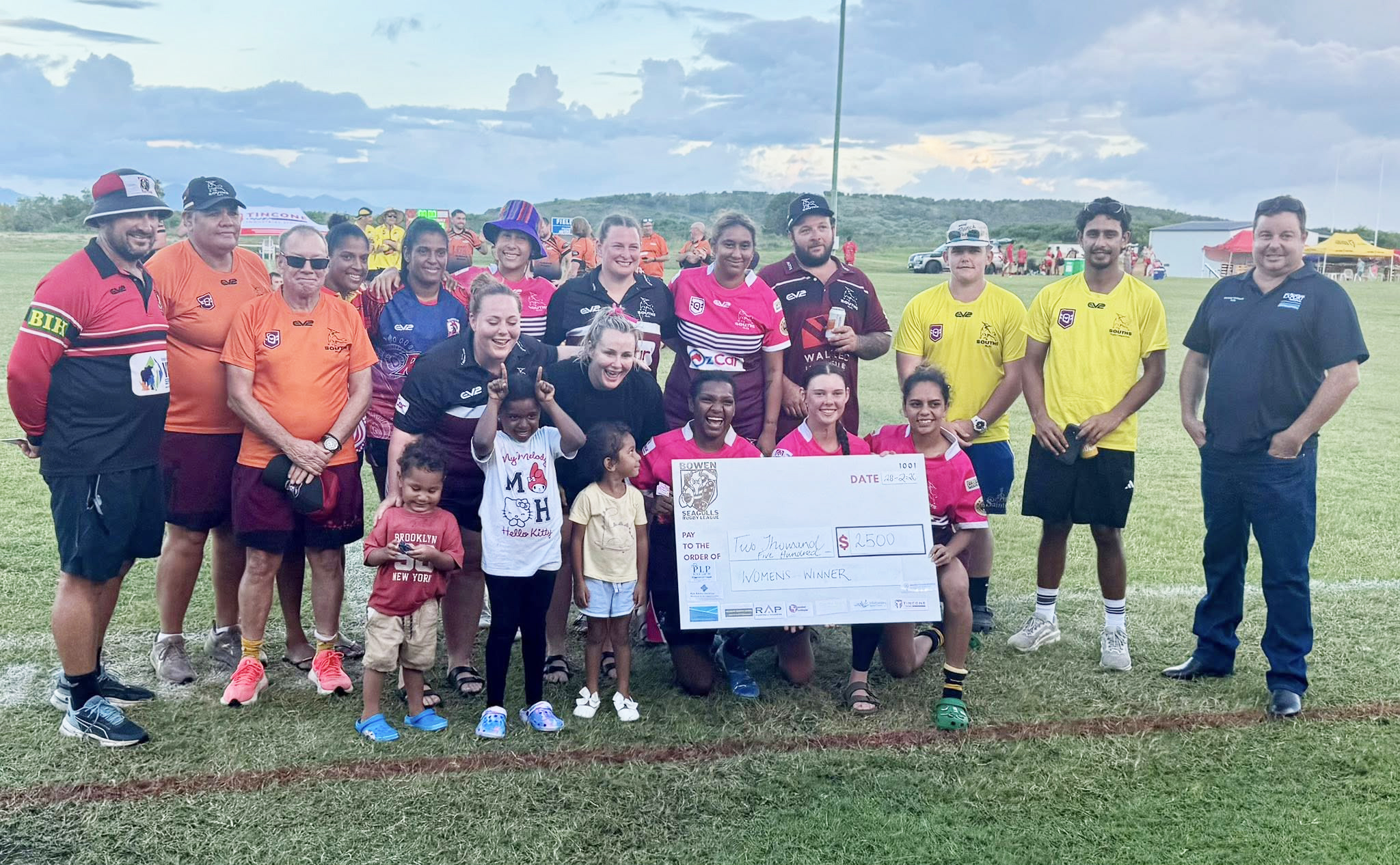
Under glorious summer skies, more than 500 spectators gathered at Denison Park to witness the very best of grassroots rugby league at the Bowen Summer 10’s. With 20 teams, 110 bags of ice and plenty of hot chips fuelling the day, the event delivered not only quality football but a powerful reminder of what community sport is all about.
Teams travelled from across North Queensland to take part, setting the tone for an exciting season ahead. The men’s title was claimed by the Wests Tigers, while the women’s honours went to the Souths Rugby League Club Bulls. Their success was well earned, but the true victory belonged to every player who took the field and every volunteer who worked tirelessly behind the scenes.
The event, hosted by Bowen Seagulls Rugby League, showcased the strength and spirit of the local sporting community. From early morning set up to the final whistle, organisers, referees, canteen volunteers and supporters combined to create a welcoming atmosphere for families and visitors alike.
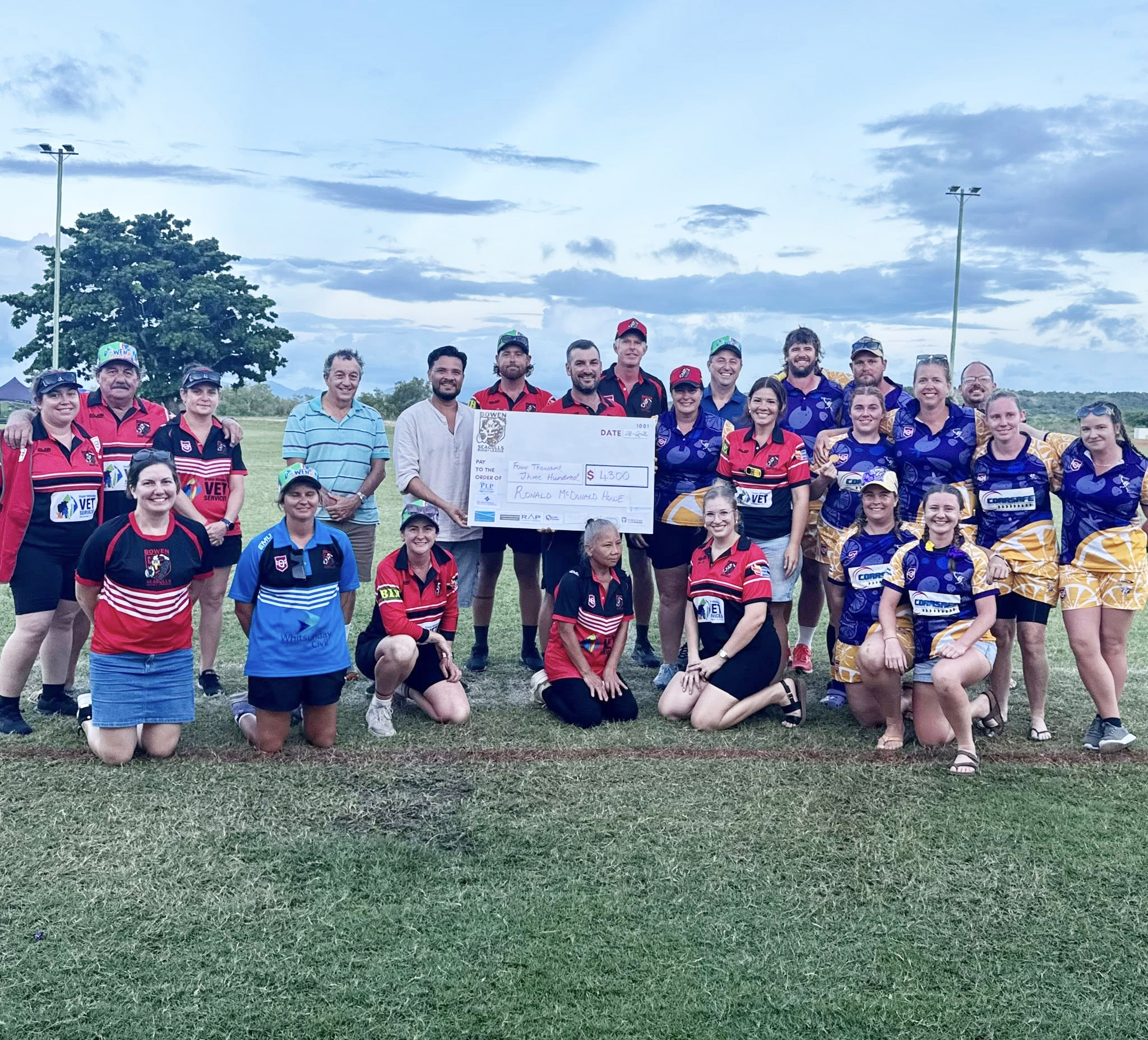
Importantly, the day extended beyond sport. An outstanding $4,300 was raised for Ronald McDonald House Charities Australia, reinforcing the generosity that defines this region. In towns like Bowen and across the Whitsundays, community events such as these strengthen local ties and highlight the positive role sport plays in bringing people together.
The Bowen Summer 10’s was more than a tournament. It was a celebration of teamwork, volunteerism and local pride. As the new footy season approaches, the energy and unity on display at Denison Park offer every reason to be excited about what lies ahead.
Captions
Photo source: Facebook

In every small town, certain places become part of the community’s heartbeat, where stories are shared, laughter drifts onto the footpath and people leave feeling a little more confident than when they arrived. On our main street, that place is Shear Pleasure.
For 21 years, the salon has been proudly owned and operated by Jodi Lorraway. Her dedication, warmth and vision have shaped Shear Pleasure into the welcoming hub it is today. Two decades in business is no small achievement in a regional town, and that longevity reflects the trust, loyalty and genuine relationships built within the community.
More than a hairdressing salon, Shear Pleasure represents connection, creativity and community spirit. Inside, clients are greeted with warm smiles, lush tropical indoor plants and the hum of friendly conversation. Even four-legged visitors are welcome, with Esmay the dachshund a much-loved part of the salon’s charm.
The strength of Shear Pleasure lies in its team. Senior stylists and an enthusiastic apprentice work alongside Jodi to create a space where professionalism and fun go hand in hand. Clients are invited to relax and enjoy the experience, a reminder that hairdressing is about wellbeing as well as style.
By stocking exclusively Australian owned and made haircare products and actively supporting local initiatives across Proserpine and the Whitsundays, Shear Pleasure continues to give back. After 21 years, it remains a cornerstone of the community, built on pride, friendship and helping people look and feel their best.

On Sunday, 1st March, the Whitsundays community came together for Clean Up Australia Day, despite challenging weather conditions. Heavy rains hit the region, but volunteers remained committed to clearing the area’s foreshores and beaches.
At Coral Sea Marina, 23 volunteers collected 130 kilograms of litter over two hours. The debris ranged from small plastic waste to larger items like car parts and carpet pieces, many of which had been discarded in the mangroves.
On the other side of Airlie Beach, Eco Barge Clean Seas Inc. partnered with the Whitsunday Sailing Club to host another clean-up event. Thirty volunteers removed approximately 180 kilograms of waste from the Whitsunday Sailing Club area, Boathaven Beach, the Airlie Beach foreshore, and as far as Mandalay. The volunteers worked in both land and water areas, demonstrating their commitment to cleaning the region’s coastline despite the weather.
“We’re grateful to the volunteers, especially the kids, who joined us despite the rain. Their engagement shows how important protecting our environment is to future generations,” said Joscelyn O’Keefe of Coral Sea Marina.
After the clean-up, the Whitsunday Sailing Club hosted a sausage sizzle to thank the volunteers, fostering a sense of community and appreciation. Pamela Rusin, Events Coordinator for the Whitsunday Sailing Club, expressed her gratitude: “Because of you, Airlie Beach stays cleaner, protecting our oceans and preserving the coastline’s natural beauty.”
The event concluded with a special moment at Boathaven Beach. “Tina,” a green sea turtle rehabilitated at the Whitsunday Turtle Rescue Centre, was released back into the wild after recovering from barnacle and algae growth. Volunteers cheered as she returned to the ocean, marking a positive outcome from their environmental efforts.
In total, more than 310 kilograms of litter was removed from the Whitsundays region. Despite the harsh weather, the community’s collective action demonstrated the importance of preserving the environment.
The success of this clean-up proves that local efforts play a crucial role in protecting the region’s globally significant marine ecosystem, rain, hail, or shine.
Captions


Photos 1-3, Photo credit: Sebastian Conidi
Photos 4-7, Photos supplied

Congratulations to Mary Murphy (her friends call her Maz), for being the first to publicly submit a poem to the paper. A reminder that my inbox is always open for great poetry that I know the region can offer. Don’t hesitate to email sebastian@lifepublishinggroup.com. Maz’s poem is entitled ‘The Consequences’. Enjoy,
The Consequences
You never had it easy
But you’ve got one more thing of mine
Your hardship is your beauty
It’s all your pride that makes you blind
Like the heart of a man
A woman has stolen away
Wondering why everything is lost
With all she has to say
& then when you let me down
When it shouldn’t all have been
Taken all for granted
Never to be seen
There is a truth
That is passed around
& that something you’ve got of mine
Will come to stable ground
There is always something that has been lost
The consequences will take us
At any cost

Are we’re back with the creative corner. This week I finished the memoir ‘Just Kids’ by Patti Smith, a musician mainly known for her hit ‘Because the Night’. The book focuses on her move to New York as an aspiring artist in the late 60’s and chronicles her complicated yet deep relationship with photographer Robert Mapplethorpe.
What really inspired me about the book, was how many creative things Patti Smith did. Although she’s mainly known for her music, Smith wrote poetry, screenplays and plays – created art and even acted in avant-garde theatre. In a modern world that is incredibly fast-paced and busy – it can be easy to get boxed into one creative identity. Are you a musician? A painter? A writer?
What Patti Smith shows is that creativity transcends an identity or label. It is not a vocation or job title – it is a state of being. We can create many different types of things and they all inform each other. Creativity is not one path you choose or just a way of making money, it is a muscle that must be exercised and it can be exercised in many different ways.
This week I would encourage you to reflect on your creativity. If you’re known by one creative label, how about trying another? If you’re mainly a musician – why not try writing a screenplay? If you’re mainly an artist – why not try some poetry? You may find ways of expression you weren’t previously aware of.

This week’s winner is Alissa Tomlinson who submitted this photo titled ‘Engagement at Hydeaway Bay’, for the theme ‘New Beginnings.’
Next week’s theme will be “Fun”. Send your submissions to Whitsundays Amateur Photographers Group on Facebook.
These photographs are contributed by the Whitsundays Amateur Photographers Group

Madalene Gray was an astute businesswoman and tourism stalwart who was awarded Australia Day Citizen of the Year in 1992 in acknowledgement of her support of sporting clubs and organisations in the community.
But Madalene was much more than this. She was the matriarch of a happy family of nine children, eighteen grandchildren and fifteen great grandchildren as well as “Mum” to many others. Madalene was known for her hospitality, with her Telford Street home always welcoming guests and serving plenty of good food.
Before marrying Edward Gray in Brisbane in 1935, she worked as a clerk for the Gray family in their Brisbane operation manufacturing louvres. Madalene confessed to crying all the way on their journey to live in Proserpine but quickly settled into life in the country town and immersed herself into community life.
Initially, she and Eddie lived in Main Street behind the family’s furniture shop which was where Cherrie Baby is now located and they raised a family of nine children, including twins.
In 1936, Madalene and Eddie commenced their very successful sawmilling business. With a family of six children by this time, Madalene managed the office. Renowned for her knowledge of timber and her ability to run the timber yard, she could tell at a glance if an order was incomplete.
Keen for a change, in 1956, Madalene opened a dress salon called Jo Anne’s. She and her daughter Edna owned the shop when it was on Main Street, where Shoe Biz now stands.
In 1958, the Grays sold the sawmilling business and entered the tourism industry purchasing an ex-navy vessel, “Fairmile”, which they converted into a 32-berth tourist launch named “Esmeralda”. They became pioneers in overnight cruising in the Whitsundays, staying at sea five days every week. Madalene was hostess, barmaid, maitre’d, nurse and cleaner – with a family of nine children by this time. She was also “Mum” to the crew on the boat as well. When Shute Harbour was opened in 1961, the official luncheon was held on the “Esmeralda”. In 1963, the Grays sold “Esmeralda” and repurchased the sawmill.
Despite leading a very busy working life and family life, Madalene still found time to involve herself in the community. She was Life Member and Patron of Whitsunday Sailing Club. The Whitsunday Sailing Club believes that Madalene and Eddie Gray's generosity and active participation were essential to its development and success. They particularly supported junior sabot sailing and helped to establish the Learn to Sail school. As a measure of the regard within which they were held, in 1992, “Sabot Week” was dedicated to the Gray family.
She was also Life Member of the Proserpine Show Society and Patron of the Uniting Church Flower Show as well as being actively involved in all aspects of the Uniting Church. Madalene also supported many other community and sporting organisations and made costumes for the local theatre group.
Madalene Gray passed away on April 19, 1998, having lived a rich and full life, dedicating herself to both her family and her community.
Story and photo courtesy Proserpine Historical Museum
Caption
Madalene Gray

Tourism Whitsundays has entered a new chapter with the appointment of Katelyn Aslett as Chair, marking an important leadership transition for the region’s peak tourism body. Professionally known as Katelyn Aslett, Mrs Collins steps into the role with a breadth of experience that spans export development, aviation, strategic marketing, philanthropy and frontline regional tourism operations.
Currently the owner-operator of hospitality, bar and retail outlets at Whitsunday Coast Airport, Kate is directly involved in shaping visitor experiences at the region’s primary gateway. Her day-to-day engagement with travellers provides practical insight into the expectations of today’s domestic and international markets, as well as the opportunities and pressures facing local operators.
Kate said she was honoured to accept the position, describing the Whitsundays as one of Australia’s most iconic destinations and acknowledging the responsibility that comes with helping guide its future. She has committed to working collaboratively with operators, stakeholders and government to strengthen and grow the visitor economy in a way that is sustainable, strategic and inclusive.
Her career reflects a consistent focus on innovation and commercial leadership. As an independent fashion designer, manufacturer and retailer, she achieved national recognition for export excellence and secured an Australian Export Development Grant to support international market expansion. She represented Australian enterprise at major global trade and promotional events, including G’Day USA and international fashion weeks in Milan and Singapore. These experiences laid the foundation for a strong understanding of global markets and brand positioning.
Kate later served as Business Development and Marketing Manager for Adagold Aviation, a leading private jet operator involved in luxury tourism travel and government contract aviation. In that role, she worked extensively across Europe, the United States and South East Asia, building strategic commercial partnerships and navigating high level government relationships. The position required a careful balance of commercial acumen and diplomatic engagement, skills that will be valuable in destination advocacy and regional planning.
The Chair role carries significant responsibility. It involves strategic marketing oversight, government engagement, industry representation and long term planning to ensure the Whitsundays remain competitive in a rapidly evolving tourism landscape. Kate has signalled that unity, transparency and measurable outcomes will be central to her approach.
She has also acknowledged the broader footprint of tourism across the region. While visitor activity is concentrated in Airlie Beach and the islands, the economic benefits extend to Bowen, Collinsville and Proserpine. Tourism supports local businesses, families and jobs well beyond the coastline, reinforcing its status as the region’s economic engine. Ensuring every community connected to the visitor economy feels included and supported will be a priority.
Kate succeeds outgoing Chair Julie Telford, who has led the board since 2020. During a period defined by COVID-19 disruption and recovery, Julie provided steady leadership and helped strengthen partnerships across the industry. Chief Executive Officer Tim Booth paid tribute to her strategic insight and commitment, thanking her for guiding the organisation through challenging times and positioning the region for continued growth.
With her appointment taking effect immediately, Kate steps into the role at a time of opportunity and responsibility for one of Australia’s most celebrated destinations.

Easter in Australia is more than just chocolate eggs and long weekends—it’s an opportunity to gather family and friends around the table and celebrate with memorable meals. From the sunny southern states to tropical Queensland, the holiday inspires a variety of seasonal dishes that reflect both tradition and local flavours.
No Easter table is complete without a show-stopping roast. Australians often opt for a juicy leg of lamb, seasoned with rosemary, garlic, and a hint of lemon, paired with roasted vegetables and golden potatoes. For those seeking lighter fare, fresh seafood, such as prawns and barramundi, offers a refreshing alternative, especially in warmer coastal regions.
Sweet treats also play a starring role. Hot cross buns, a symbol of Easter tradition, are enjoyed across the country, whether plain, spiced, or studded with chocolate chips. Modern twists include versions with tangy orange glaze or caramelised pecans. For dessert, pavlova adorned with fresh berries and passionfruit brings a distinctly Australian flair, combining crisp meringue with creamy topping and tropical fruits.
For families, DIY chocolate nests and carrot cakes remain popular, doubling as a fun activity and a delicious finale. Local ingredients—from macadamias to native wattleseed—add unique flavours that make Easter meals truly special.
Easter is a time to indulge, share, and experiment in the kitchen. These recipes are not just about sustenance—they are a celebration of community, seasonality, and Australian culinary creativity. Whether you stick to tradition or innovate with modern flavours, there’s no better time to make your Easter table unforgettable.
Captions
Photo source: Shutterstock
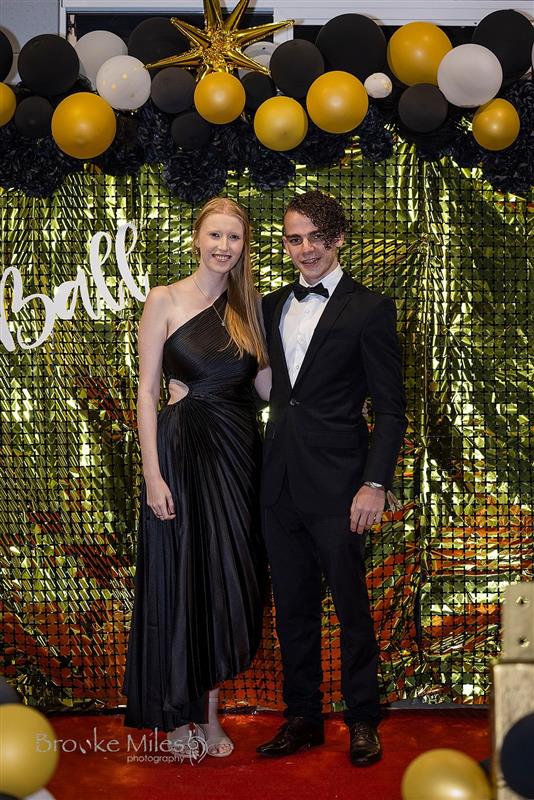
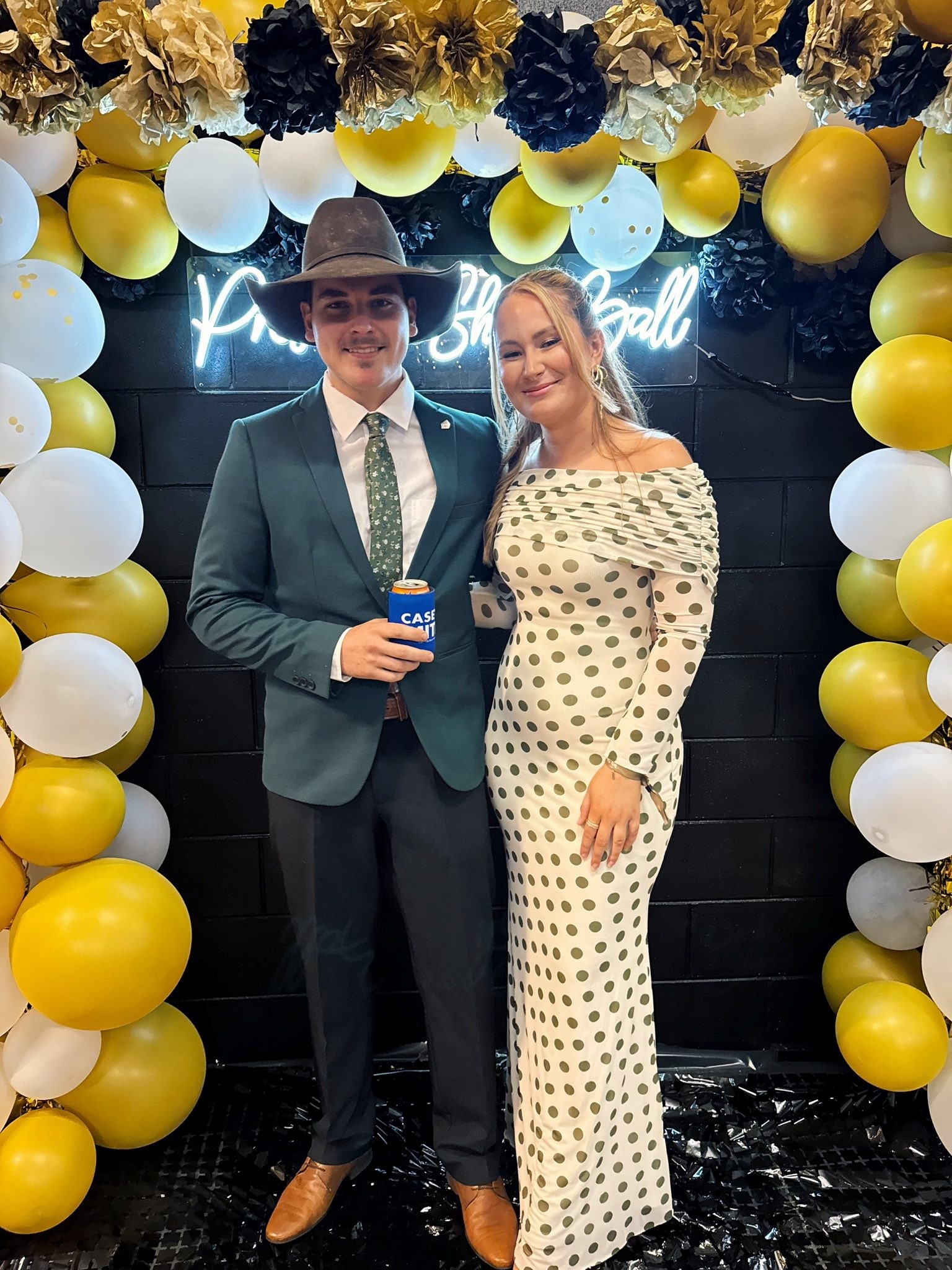
Whitsunday Law is proud to be a Platinum Sponsor of this year’s Proserpine Show Ball, and even prouder to support an event that brings our local community together in true country style.
With this year’s theme “Pretty in the Paddock”, we’re looking forward to a night of boots, ball gowns, great company and celebrating everything that makes our region special.
And yes we've already got our tickets... the entire Whitsunday Law team will be there!
So if you see us frocked up (or attempting to be), please come and say hello. We love supporting local events, and we love catching up with familiar faces even more.
At Whitsunday Law, community matters. Whether we’re assisting with property, Wills and estates, business matters or life’s unexpected curveballs, we’re proud to stand alongside the people and organisations that make the Whitsundays what it is.
We can’t wait to celebrate with you.
See you at the Ball.
Whitsunday Law
Practical. Trusted. Local.
Captions
Photo source: Facebook

The Garden Bar sits right on the edge of Coral Sea Marina, where island views, sea breezes and relaxed coastal elegance shape the way guests dine, drink and unwind.
At the heart of the experience is our team - warm, welcoming and passionate about bringing a little “island ease” to every plate. In the kitchen our trio of dedicated chefs from around the globe each bring their own heritage, techniques and love of fresh, honest cooking. Their diverse backgrounds bring depth, colour and creativity to every menu evolution.
This upcoming season, we’re excited to showcase a refreshed menu featuring both new favourites and elevated classics. Expect Tempura Vegetables with a crisp, delicate finish; a silky Deconstructed Cheesecake that’s light yet indulgent; a rotating Fish of the Daypaired with seasonal produce; and vibrant salad and vegetarian options crafted for warm Whitsunday days.
The venue itself offers a choice of beautiful spaces - each with its own charm. Our lush garden area is a favourite for long, relaxed lunches under the cassia tree; the undercover deck is ideal for warm afternoons and soft-lit evenings; and everywhere you sit, you’re surrounded by marina and island views that shift beautifully with every sunset.
Guests can also enjoy live acoustic music every Sunday from 1:30pm, creating the perfect soundtrack for an easy afternoon by the water. For celebrations, we offer a dedicated functions menu, including handcrafted function cocktails and specialty grazing platters designed to elevate any event.
Whether you’re joining us for a casual afternoon bite, sunset cocktails or a special celebration, you’ll find an inviting, effortless coastal atmosphere that keeps both locals and visitors returning.


Publishers Indemnity. Any individual or entity that places advertising, supplies copy material, or submits editorial content to Core Life Publishing agrees and undertakes to ensure that all such material:- Does not infringe upon any copyright, trademark, or other intellectual property rights;- Is free from any content that could be considered defamatory, libelous, or slanderous;- Does not infringe upon any rights related to privacy or breach of confidence;- Contains no obscene, indecent, or otherwise unlawful material;- Complies fully with the Trade Practices Act and all other applicable laws, regulations, or statutes.Furthermore, by submitting or placing such material, these individuals or entities agree to indemnify and hold harmless the publisher, Core Publishing and Events Pty Ltd, and/or its agents from and against any and all investigations, claims, demands, liabilities, damages, costs, or judgments arising out of or in connection with the material provided. All material is believed to be accurate at the time of printing and remains the copyright of Core Publishing and Events Pty Ltd.
© 2026 Mackay and Whitsunday Life Pty Ltd.
