
Independently Owned, Locally Grown, Community Loved

There are new things to consider when buying real estate in Australia. Up until last month, people buying real estate in Sydney really only considered the capital growth they were expecting to create within just a few years of making their purchase. Paying $1.2 million for an inner-city two-bedroom apartment didn’t matter so much if it was going to be worth $1.5 million two years later. It didn’t really matter that the crap rental returns you got for that price didn’t go anywhere near covering the mortgage because the old negative gearing benefit meant you could claim the losses on your tax. Things have changed. Negative gearing has gone and prices are dropping in Sydney … so that $1.2 million apartment doesn’t look so enticing any more, even though it’s now $1.1 million. Other cities have also been hit hard. Melbourne is now one of the cheapest cities in Australia to buy real estate. Although there are special Victorian reasons that come into play in that state. Victorians were bullied during COVID in a way that impacted small businesses in a disastrous way. The state’s debt is exorbitant, and no one seems to know how it gets paid back. Tobacco shops keep getting blown up by some underworld gang thing that the Government can’t control. They have metal boxes where people can hand in their machetes and that doesn’t appear to instil peace of mind in anyone. Terrible Governments end up having an impact and it definitely has had one on property prices in Victoria. A quick scan of on-line property sites shows you that you can pick up a decent two-bedroom unit in an inner-city suburbs like St Kilda and Collingwood in the $400,000s. I saw a three-bedder in St Kilda advertised in the $500,000s. While those prices might seem like great value, there are reasons the market is so low. People don’t trust the state Government and its management of the economy and the obvious concern would be that even though the prices might be low, there is no guarantee of capital growth. Capital growth has offered a warm embrace for investors in Australian real estate over many years. There has been an expectation that prices will go up. Obviously they will go up again but the questions is: Where will they go up, when and by how much? Unfortunately I don’t have the answer to that but I do find that when things get a bit blurry and uncertain, it’s good to stick to what you know … which, for me, is Mackay. We have several advantages over many other markets. Our median price for houses, in the $600,000s, is a lot lower than bigger cities so more affordable for local people who, by the way, still need somewhere to live. And, with the end of negative gearing and the banning of borrowing for property out of self-managed super funds, lower prices and strong rental returns should become a key factor in real estate investment. Yes, investors want capital growth but I feel the focus will probably shift more to rental yield and the monthly return on investment. Mackay’s rental returns are good and the purchase prices relatively low compared to other markets so there seems to me a good chance that our market will continue to be buoyed by those wanting to take advantage of that. Meanwhile the Mackay economy seems to be going well, driven by that crucial resource that is dug out of the ground and exported to countries that make steel. I got strong offers on three properties this week so there is a feeling that while there has certainly been a change driven by national political factors, our market is moving through it, adjusting to the new information and still bubbling along. The only thing I would say is that if any of you bump into David Crisafulli tell him to dump those high-level coal royalties.
Read the full story
Queensland’s top real estate professionals and agencies are being called to step into the spotlight, with nominations now open for the Real Estate Institute of Queensland’s (REIQ) 2026 Awards for Excellence. REIQ CEO Antonia Mercorella said the awards remained the state’s highest professional recognition in real estate and continued to adapt alongside the profession itself. “The REIQ Awards for Excellence are the pinnacle of professional recognition in Queensland real estate, and each year we ensure the program remains contemporary, inclusive and reflective of the full scope of our profession,” Ms Mercorella said. “This year, we’re delighted to add a new Multi-Office Network of the Year category, recognising real estate agencies that operate as a unified multi-office network. “It’s a category our members asked for, and it’s a great example of how the awards continue to evolve alongside the structure and sophistication of Queensland real estate businesses.” Ms Mercorella said there was even more incentive for members to nominate this year, with a pathway from the outset to national recognition in eligible categories through the Real Estate Institute of Australia’s (REIA) National Awards for Excellence (NAFE). The REIQ Awards for Excellence span individual and agency categories, with some split into regional and SEQ areas, across residential and commercial sales, property management, buyer’s agency, auctioneering, business broking, multimedia, innovation and community contribution. Ms Mercorella said real estate professionals throughout Queensland could now start preparing and polishing their award nominations with the clock now ticking down. It’s time to shine! Nominations close on Sunday 12th July 2026, with the winners announced at a spectacular awards gala on Saturday 31st October 2026 at The Star Brisbane. Nominate now via awards.reiq.com
Read the full story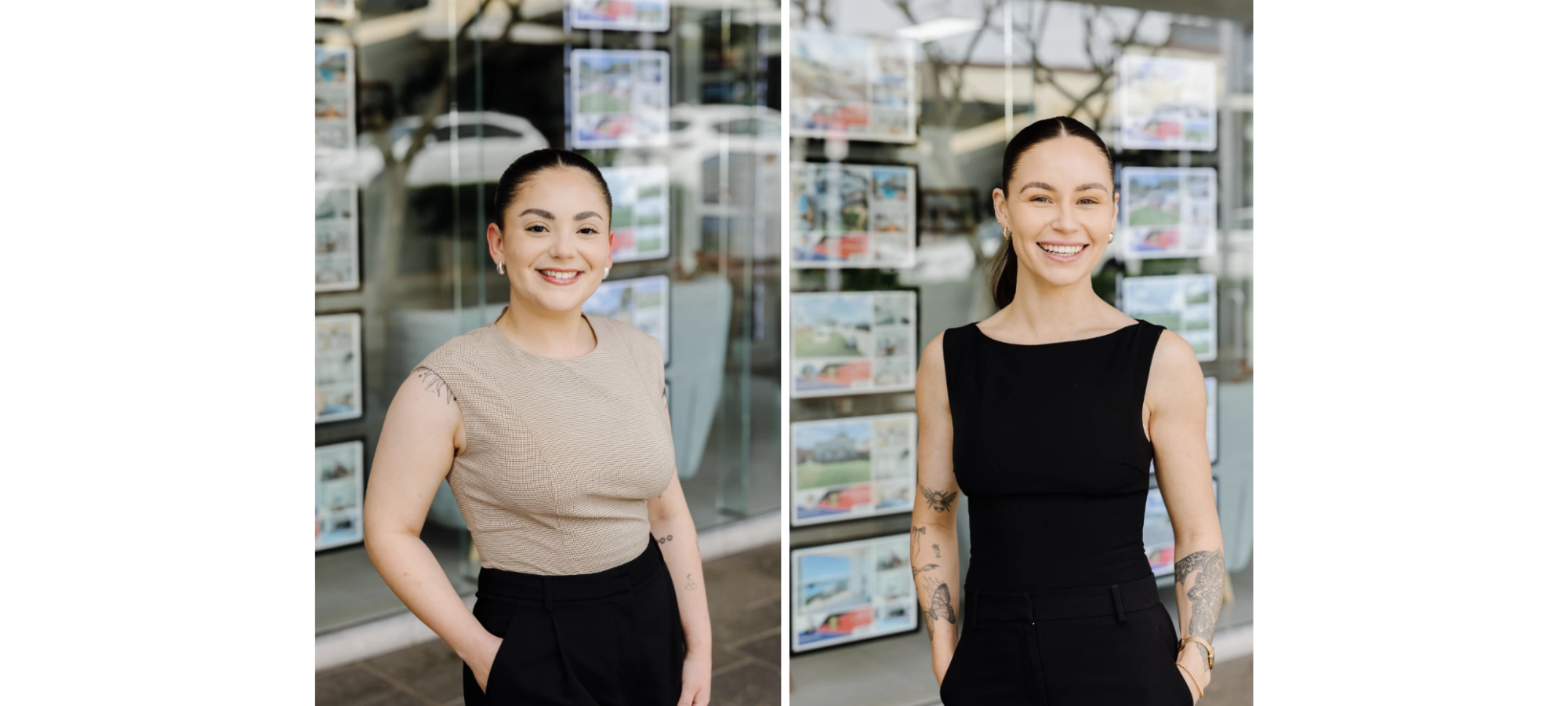
Makayla Groves and Bianca O'Brien are part of the commercial property team at Blacks Real Estate, supporting landlords, tenants and business owners across the Mackay region. Working as Commercial Property Managers, Makayla and Bianca assist with the day-to-day management of commercial properties, helping clients navigate leasing and property management requirements across retail, office and industrial spaces. Based at the agency’s Wood Street office, the pair work closely with business clients throughout the region as part of Blacks Real Estate’s commercial division. Makayla Groves can be contacted on 07 4963 2522, while Bianca O’Brien can be contacted on 07 4963 2525. CAPTION: Bianca O'Brien works with Blacks Real Estate as a Commercial Property Manager. Photo supplied Makayla Groves works as a Commercial Property Manager with Blacks Real Estate. Photo supplied
Read the full story
The Coalition has pledged to make the Northern Australia Infrastructure Facility (NAIF) a permanent institution, arguing the move would provide long-term certainty for regional investment, infrastructure and jobs across Northern Australia, including Mackay. The announcement follows the Federal Government's decision to extend the NAIF for a further 10 years, rather than permanently removing its sunset clause. Leader of The Nationals Matt Canavan said while the Coalition would support Labor's legislation, it believed the independent review's recommendation to make the facility permanent should be adopted. “The Developing Northern Australia is a proud LNP achievement,” Senator Canavan said. “Despite naysayers at the time, Northern Australia has remained on the agenda ever since. I am personally proud to have introduced the original Northern Australia legislation in 2016, with the policy built on the work that was done by LNP Members of Parliaments such as former Senator Ian Macdonald and former MP Warren Entsch. “Unfortunately, Labor is now kicking the can down the road. Northern Australia shouldn’t have to fight every decade to prove it is worthy of investment. “The independent review recommended making the NAIF permanent because it works. The Coalition established the NAIF in 2016, and we will make it permanent because Northern Australia should have long-term certainty for investment, jobs and economic growth.” Since its creation, the NAIF has supported 33 projects with $4.3 billion in finance commitments, helping deliver more than 18,000 jobs and an estimated $33 billion in public benefit across Northern Australia. Those investments include upgrades to airports in Darwin, Alice Springs, Townsville, Cairns and Mackay, along with projects supporting agriculture, mining and manufacturing. Shadow Minister for Northern Australia Senator Susan McDonald said permanent funding would continue to drive regional development. “Labor talks about Northern Australia, but the Coalition backs it with lasting investment,” Senator McDonald said. “The NAIF has transformed communities, unlocked private investment and created jobs across the North. Making it permanent sends a clear message that the Coalition believes in Northern Australia’s future and won’t treat its development as a temporary priority.” “Governments come and go, but Northern Australia’s importance will never diminish,” she said.
Read the full story

The Whitsunday region is set to sparkle this festive season, with a fantastic line-up of community Christmas events on offer. These Council-supported celebrations are bringing festive cheer to towns right across the region, giving locals plenty of opportunities to come together and enjoy the spirit of the season.
In Bowen, celebrations begin with the Bowen Community Christmas Carols on Friday 28 November at the Sound Shell on the Bowen Foreshore from 6:30pm to 8:30pm. Families can enjoy Christmas carols, delicious food and a sparkling fireworks display, creating a warm and welcoming night for the whole community.
Collinsville keeps the festive spirit going on Saturday 6 December, with the Collinsville Youth Coalition hosting its annual Christmas Carnival at the CYC Grounds from 6:30pm to 9:30pm. This much-loved event brings locals together for an evening of fun, connection and Christmas cheer.
On Friday 12 December, Bowen locals can enjoy the Bowen Locals 4 Locals Street Party at the PCYC on Hay Street from 5pm to 9pm. Expect market stalls, free face painting, live performances, food and a visit from Santa! It’s Christmas fun for all ages.
Also on Friday 12 December, Proserpine’s Main Street will come alive for the Twilight Christmas Fair from 5pm to 8pm. The evening will feature market stalls, live music, kids’ activities, Santa photos, delicious food and plenty of festive vibes for the whole family, supported by Amanda Camm MP.
With so many Council-supported community events to choose from, residents are encouraged to get out and enjoy the celebrations. Whether you love singing along to carols, wandering through markets, watching a Christmas movie under the stars or simply soaking up the atmosphere, these events are a wonderful way to feel connected and embrace the magic of the season.
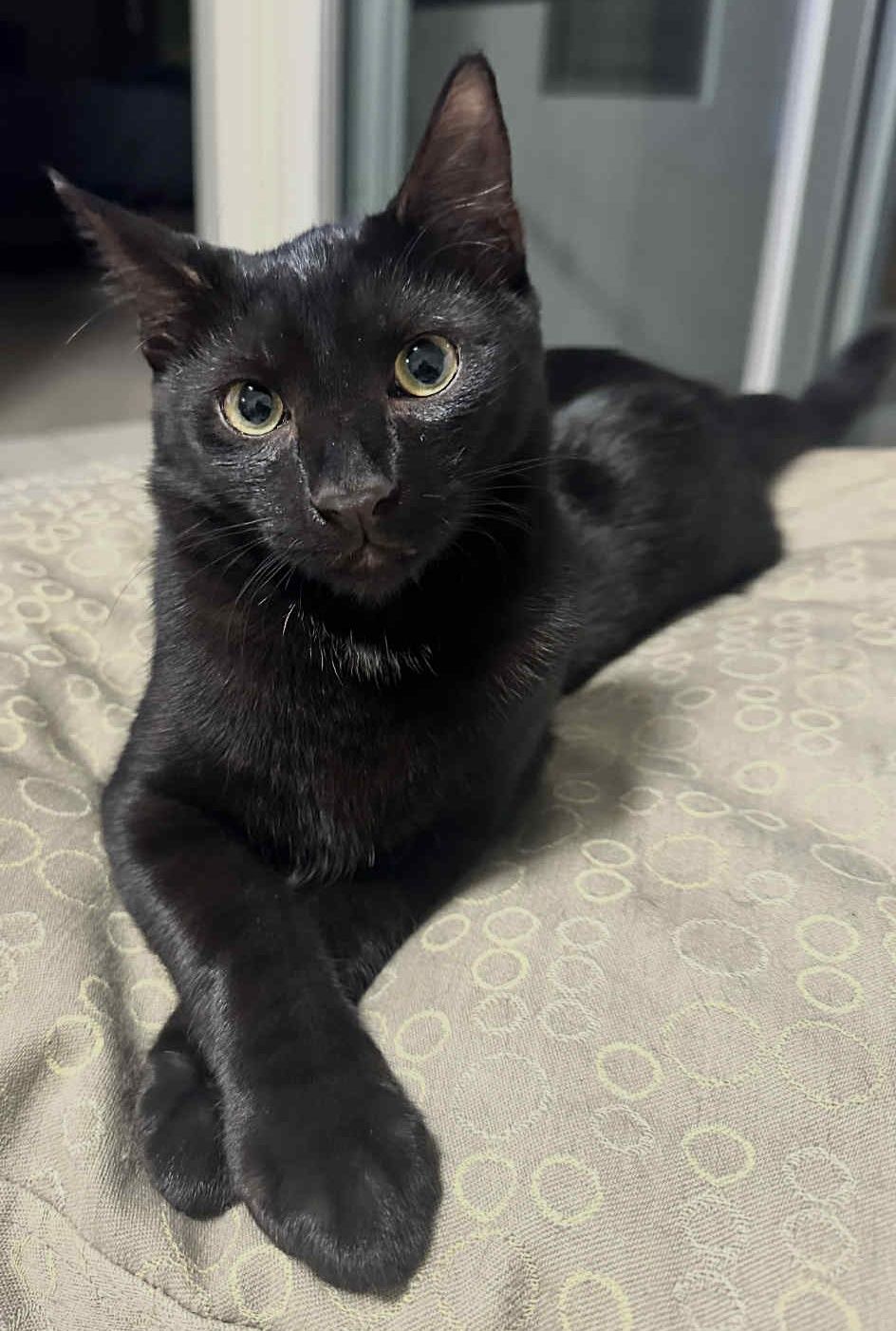
Say hello to Antonio, a beautiful black Tom cat who’s been loved and cared for since the day he was born. Now around 6 months old, this handsome boy is ready to find his forever home — and he’s sure to steal your heart the moment you meet him.
Antonio is the perfect mix of playful, cuddly, and full of personality. He’s curious, affectionate, and has a charming habit that makes everyone smile... he actually plays fetch!
Whether he’s chasing his favourite toy or curling up for cuddles, Antonio’s gentle nature and big heart shine through.
He’s been raised indoors since birth, so he’s well-adjusted to home life and loves being around people. Antonio deserves a family who will give him plenty of attention, playtime, and all the love he’s grown up surrounded by.
About Antonio:
Antonio is more than just a cat — he’s a companion, a comedian, and a cuddle buddy rolled into one.
If you’re ready for endless love (and a few games of fetch!), email Bowen Collinsville Pet Rescue Inc. on bcpri.adoptions@gmail.com today to learn more or arrange a meet-and-greet!

Lenard Winch Roberts was a member of the crew of the ill-fated HMAS “Sydney” - but Len was meant to live. This is his story …
Lenard Winch Roberts was born in Cardiff, Wales, on November 16, 1920, and, with his family, moved to Western Australia when he was only a boy. As World War II approached, Len enlisted with the Royal Australian Navy on June 9, 1939, and after doing his initial training aboard HMAS “Cerberus”, he was transferred to HMAS “Sydney”. Serving in the Mediterranean, they were in one major engagement in which one Italian cruiser was damaged and another sunk.
In 1941, after HMAS “Sydney” returned to Australia and was stationed in Perth, Len and a mate were staying at his mother’s place the night before the ‘Sydney” was due to leave port. A faulty alarm clock caused them to sleep in and miss the ship as she left on patrol for the Dutch East Indies. They spent some time in Fremantle Jail at his Majesty’s pleasure for missing the ship - a small price to pay considering the misfortune of so many others. On November 19, 1941, HMAS “Sydney”, the pride of the Australian Navy, was sunk by the German raider HSK “Kormoran”, posing as a Dutch trading ship. The entire 645 crew members of “Sydney” were lost though the reason the ship went down with all hands on board still remains a mystery.
When Japan entered the war soon after, Len and his mate were placed in charge of Chinese Stokers on a coal fired tugboat towing a damaged British ship to Melbourne. During this trip across the Great Australian Bight, they complained about the food and conditions. The British Captain pulled his revolver and told them he could shoot them for mutiny. Around this same time, Len’s brother, Roy, was posted missing after HMAS “Perth” was sunk. Roy spent the rest of the war as a Prisoner of War in Japan.
While posted to HMAS “Magnetic” in Townsville, Len met and married a Proserpine girl, Doreen Muller, in 1944. He then served on the heavy cruiser HMAS “Shropshire” taking part in the Battle of Leyte Gulf in the Philippines. In the Surigao Strait, “Shropshire” was instrumental in sinking the Japanese battleship “Yamashiro”. On another occasion, a mine jammed in the ship’s clearing gear and started bumping on the side of the ship. Len described that being locked up at action stations in the engine room and hearing the mine hitting the side of the ship until it was cleared and destroyed, was one of the most frightening moments he experienced.
Len served on other ships, namely HMAS “Madang” from 1945 – 1946 in New Guinea; a Corvette HMAS “Gladstone” until 1947; “HMAS” Leeuwin: until 1950 and HMAS “Australia”, a heavy cruiser. Also, the “Penguin”, “Ping Wo” and ‘Moreton”.
Upon his discharge on June 8, 1951, Len returned to Proserpine and worked at the Proserpine Sugar Mill as a steam loco driver and later he cut cane in the Lethebrook and Conway areas. He also worked as a driver for AW Rasmussen and Filby’s before becoming a linesman with the PMG (later Telecom). Len and Doreen had eight children - four sons and four daughters - and lived at Cannonvale Beach until his death on February 19, 1994.
Lenard Roberts was indeed meant to live, in fact 53 years longer than his crew mates from HMAS “Sydney”. Who would have thought that a humble alarm clock would mean the difference between life and death - something on which Len no doubt often dwelled during his many years after the wartime disaster.
LEST WE FORGET
Story and photo sourced from Proserpine Historical Museum Society Military Archives.
Photo supplied.
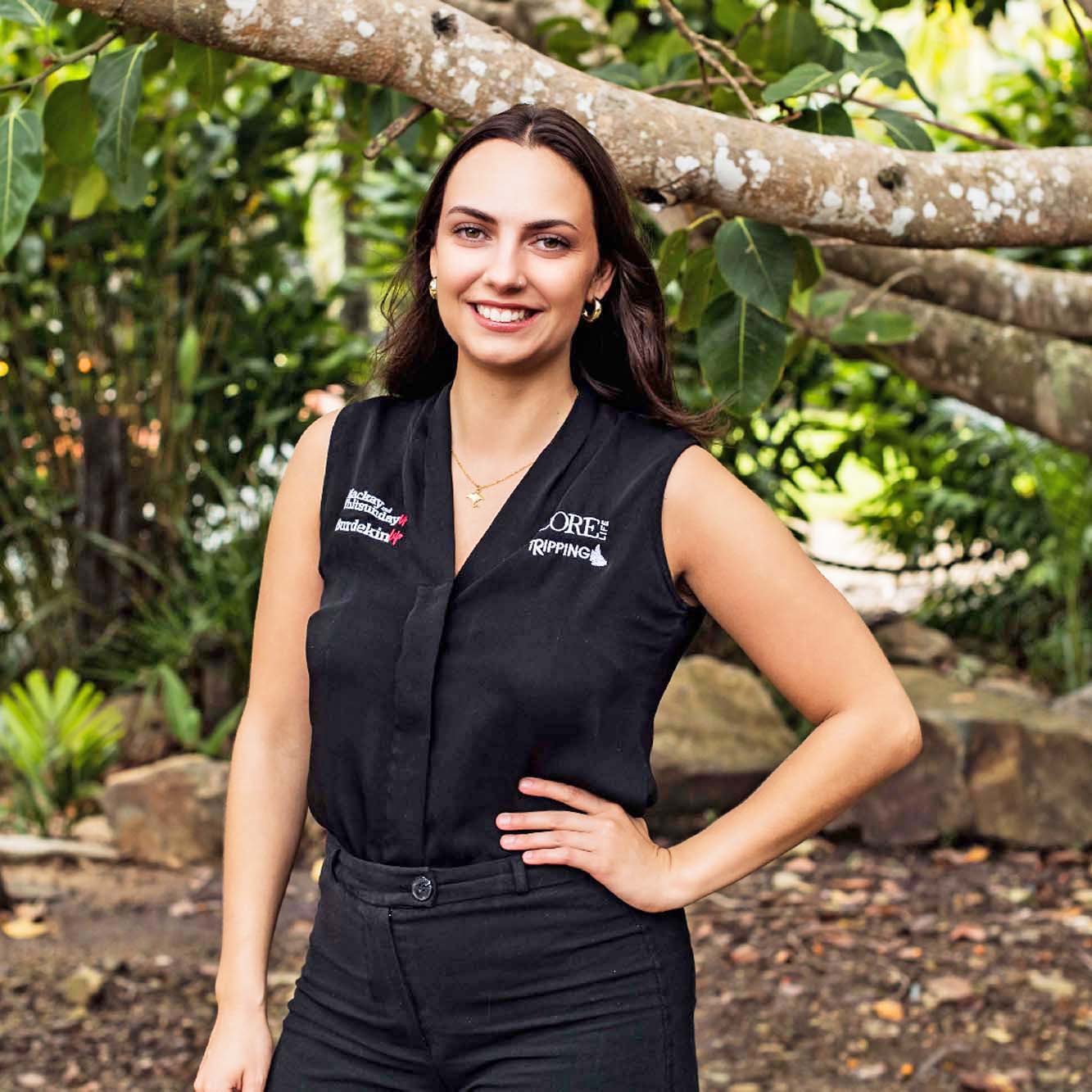
Hi Everyone!
Last weekend, I had a fantastic time in the Conway National Park, where I went for a little photography walk in hopes of capturing some of the diverse Fauna we have here in the Whitsundays. I was lucky enough to be joined by my friend and her dad, who is a National Park ranger, and he was able to point out different species of trees, birds and other reptiles.
The most exciting part, however, was when he pointed out a vibrant little Kingfisher to me. I soon found out it was going to be a lot harder to capture than I first thought. Kingfishers are very quick and flighty, and I was only able to capture a slightly blurry picture of one. Disappointed with my photography abilities, I felt immediately disheartened. However, after a while, I realised that sometimes things are best enjoyed in the moment.
Having said that, I will definitely be heading back with renewed determination to capture one, and I can assure you I will write a story about them as soon as I do!
Happy reading!
Ruth
"Be where you are; otherwise you will miss your life." - Buddha
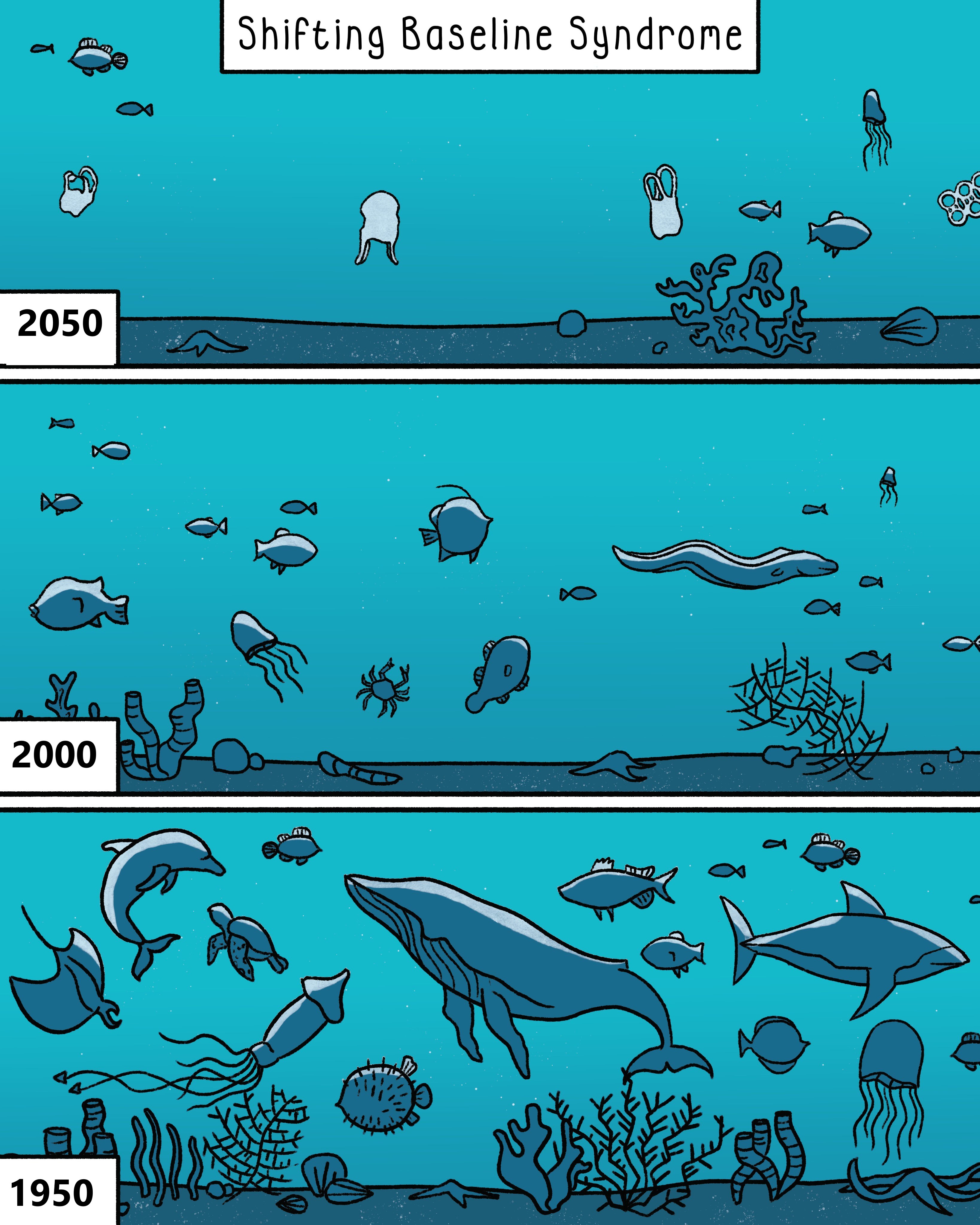
Imagine visiting the Great Barrier Reef 50 years ago. The colours were brighter, the fish more abundant, and the coral gardens stretched endlessly beneath the waves. Fast forward to today, and although the Reef is still a world wonder, science tells us it has undergone significant changes caused by multiple environmental factors.
Over time, and in many areas, the reef appears different today compared to what it was decades ago. Without a clear memory of earlier conditions, it’s easy for us to view the Reef we see now as the norm, even when it varies from its historical state.
This is the essence of shifting baseline syndrome, a gradual and often unnoticed shift in our expectations of what a healthy environment should look like.
Over generations, each new group of visitors, divers, and scientists may come to see a different version of nature as “standard.” This subtle shift can influence how we perceive change and what we believe is possible for the future. When it comes to the Great Barrier Reef, being aware of this helps ensure our goals remain ambitious and forward-looking.
A helpful example of shifting baselines can be found half a world away in the Florida Keys, USA. This 354-kilometre chain of 1,700 islands once supported one of the most spectacular reef ecosystems in the Western Hemisphere. For decades, its corals and marine life dazzled divers and snorkelers alike. But over the past 40 years, the Florida Keys have lost more than 90% of their live coral due to poor water quality and the impacts of climate change.
Today, snorkelers explore the area and often find it beautiful, noticing the fish and patches of coral and assuming that’s what the reef has always looked like. This reflects how naturally our perceptions can shift over time.
Is there hope? Or could this be the future of the Great Barrier Reef?
To protect the Reef, we need both hindsight and foresight. Recognising shifting baselines helps us avoid becoming too comfortable with the status quo and encourages us to aim high, to “turn back the clock” where possible and support recovery.
Fortunately, Australia is better positioned than most. Since the 1980s, the Australian Institute of Marine Science (AIMS) has been conducting long-term monitoring of the Great Barrier Reef. This invaluable record provides a reliable baseline to track coral cover and health over time, offering scientists a clearer picture of how the Reef is changing and why.
Beyond scientific surveys, historical information also plays a crucial role. Old photographs, early dive logs, oral histories, and even stories from local communities can help reconstruct what the Reef once looked like. Citizen science projects are contributing to this growing body of evidence, filling in gaps and providing a more comprehensive picture of the Reef’s past.
By combining modern science with these historical insights, we can establish a more accurate and meaningful baseline—one that reflects the Reef’s true potential. This knowledge can guide more ambitious conservation goals. If we accept today’s Reef as “normal,” we risk losing sight of what it could be. But by remembering its past, we can better shape its future.
The Great Barrier Reef’s story is still being written. With knowledge, determination, and an awareness of shifting baselines, we can help ensure that future generations experience a Reef as vibrant and full of life as it once was.
Contributed with thanks to Whitsunday Conservation Council.
Shifting baselines. Photo supplied by Whitsunday Conservation Council.

By Ruth Puddefoot
During a walk in the Whitsundays, as you meander through the strangler, sandpaper, and cluster figs, you might catch sight of a small, lizard-like shadow darting across the footpath, rustling through the bushes, or clinging to a tree trunk. If you do, there’s a good chance you’ve spotted a Lace Monitor, also known as a Goanna.
While Goanas are often encountered on most bush walks, they are actually subject to habitat loss, from development, land clearing and road mortality. Another significant and growing danger is the increasing spread of non-native Cane Toads. Lace Monitors, with their diet of birds, carrion, eggs, small mammals, and other reptiles, often consume Cane Toads, which are toxic, leading to their death from poisoning. Cane Toads, in conjunction with habitat degradation, are putting increasing strain on Lace Monitor populations.
Things you can do right now to help protect these marvellous animals:
• Report any sightings of goannas, dead or alive to Fauna Rescue Whitsundays (07 4947 3389)
• Protect native vegetation and termite mounds in your local area, which is where Lace Monitors lay their eggs.
• Be a responsible pet owner by keeping pet cats indoors and dogs on a lead.
• Leave valuable habitat like fallen trees, logs and smaller timber in the bush and on grazing land.
• When driving, slow down for goannas to let them cross roads safely (and be especially mindful around road kill, which may attract goannas onto the road).
• Get involved in local restoration and revegetation programs to help increase habitat and
connect remnant bushland.
Did you know?
The Lace Monitor can grow up to 2M long, making it the second-largest lizard on the continent.
Whitsundays Lace Monitor showing off its climbing skills. Photo credit: Ruth Puddefoot.

Health experts are urging Queenslanders to rely on proven medical advice, not social media myths, when it comes to sun safety, as the state continues to record the highest melanoma rates in the world.
Dermatologist Associate Professor Erin McMeniman, from Princess Alexandra Hospital and the University of Queensland’s School of Medicine, says misinformation about sunscreen is spreading online at an alarming rate.
“Particularly in Queensland, most people receive enough sun exposure to produce vitamin D simply through their daily incidental activities, such as hanging out the washing or checking the letterbox,” she said.
She warns that unprotected sun exposure remains the leading cause of melanoma and other skin cancers, with 4,085 Queenslanders diagnosed in 2021 and 385 losing their lives.
“Skin damage can occur after 10 minutes exposure when the UV index is at 3 or above. In Queensland, the UV index is 3 or above all year round, even in winter,” she said.
In recent weeks, UV levels have reached 14 and 15—classified as “extreme”—further emphasising the need for regular sun protection.
Despite these well-established risks, a range of myths persist online, including claims that sunscreen causes cancer, that tans prevent sunburn, or that darker-skinned people cannot get skin cancer. Assoc Prof McMeniman says these claims are not only false, but dangerous.
“There is no evidence there is any proven harm from using sunscreen,” she said.
“Unprotected sun exposure has been proven to cause cancer.”
She adds that sunscreen found in make-up is rarely strong enough to provide real protection.
“You need SPF30 or higher rating to be protected against sun exposure,” she said.
“If it’s not SPF30 or above, you should be wearing additional sunscreen under your makeup when you’re in the sun for an extended period.”
Assoc Prof McMeniman says one of the biggest concerns is the rising number of Queensland children experiencing sunburn, with nearly half reporting at least one burn in the past year.
“Sunburn in childhood, frequent sunburn and sunburn that blisters the skin all increase a person’s susceptibility to UV-related cancers,” she said.
Adults over 60 remain the most at-risk group due to limited sun safety education when they were young. However, she says younger generations are benefiting from decades of awareness campaigns, with melanoma rates now slightly declining in those under 40.
As Queensland heads into another Summer of intense UV levels, the message from experts remains clear: slip, slop, slap and slide, every day.
Health experts statewide are encouraging Queenslanders to slip, slop, slap & slide every day to protect against intense UV levels (Photo Source: Unsplash)

The Christmas season often arrives with excitement and pressure. From gift shopping to family gatherings, many people feel stretched thin trying to meet expectations. Financial strain, social commitments, and the desire to make everything “perfect” can lead to heightened stress and exhaustion.
Prioritising rest, setting realistic expectations, and creating moments of calm can make a significant difference. Focus on connection rather than perfection, whether that’s sharing a meal, sending a thoughtful message, or simply taking time to breathe.
Practising mindfulness, limiting comparisons (especially on social media), and maintaining regular routines can help regulate mood and energy. If stress becomes overwhelming, reaching out to friends, family, or mental health professionals can be a decisive step. Sometimes, the best gift we can offer ourselves and others is kindness and acceptance. Be your own best friend. Tell yourself whatever is happening is only temporary
If you’d like more support in managing holiday stress for yourself or your family, visit my website https://www.personaltransitions.com.au/ or give me a call 0418708214.

Warm conditions and the occasional cooling breeze set the scene for another successful week of golf at Proserpine Golf Club, with players across all divisions turning in impressive results.
Tuesday’s Single Stroke event delivered excellent scores, with Brad Fleet leading the men’s field on 66 nett, closely followed by Peter Lindsay on 67. In the ladies’ division, Jacqui Wall claimed the win with 69 nett ahead of Leanne Alexander. The Vets competitions also produced strong numbers, with Allison McCarthy taking the ladies’ title on 65 nett, while Peter Lindsay backed up his form with a 67 nett win in the men’s.
On Wednesday, the ladies contested a Stableford round, where Karen Oni posted a steady 37 points to take the win. Thursday’s men’s Stableford brought standout performances across both grades, including a brilliant 42-point round from B Grade winner Bradley Wilkinson.
Friday’s 9-hole run, sponsored by the Metropole Hotel, saw Kerrie Johannesen top the leaderboard with 25 points, while the popular Putt for Cash jackpot—now up to $1050—came agonisingly close to going off, with Sherri Meade’s putt skimming the edge of the cup.
Saturday’s Haymans Electrical Stableford competition delivered some of the week’s strongest scoring. In A Grade, Lloyd Kingston returned a superb 42 points, with Steve Hickey close behind. In B Grade, Mark Richards took the win with 37 points. The ladies’ field was equally competitive, with Toni Clauss winning on a countback from Ann Gardel.
The week wrapped up on Sunday with the Medley Single Stableford, where Brad Fleet claimed his second win of the week, finishing with an impressive 42 points.
With high scoring and growing excitement around Friday’s jackpot, it’s shaping up to be another big week ahead at Proserpine Golf Club.
Contributed with thanks to Tiina Randmae

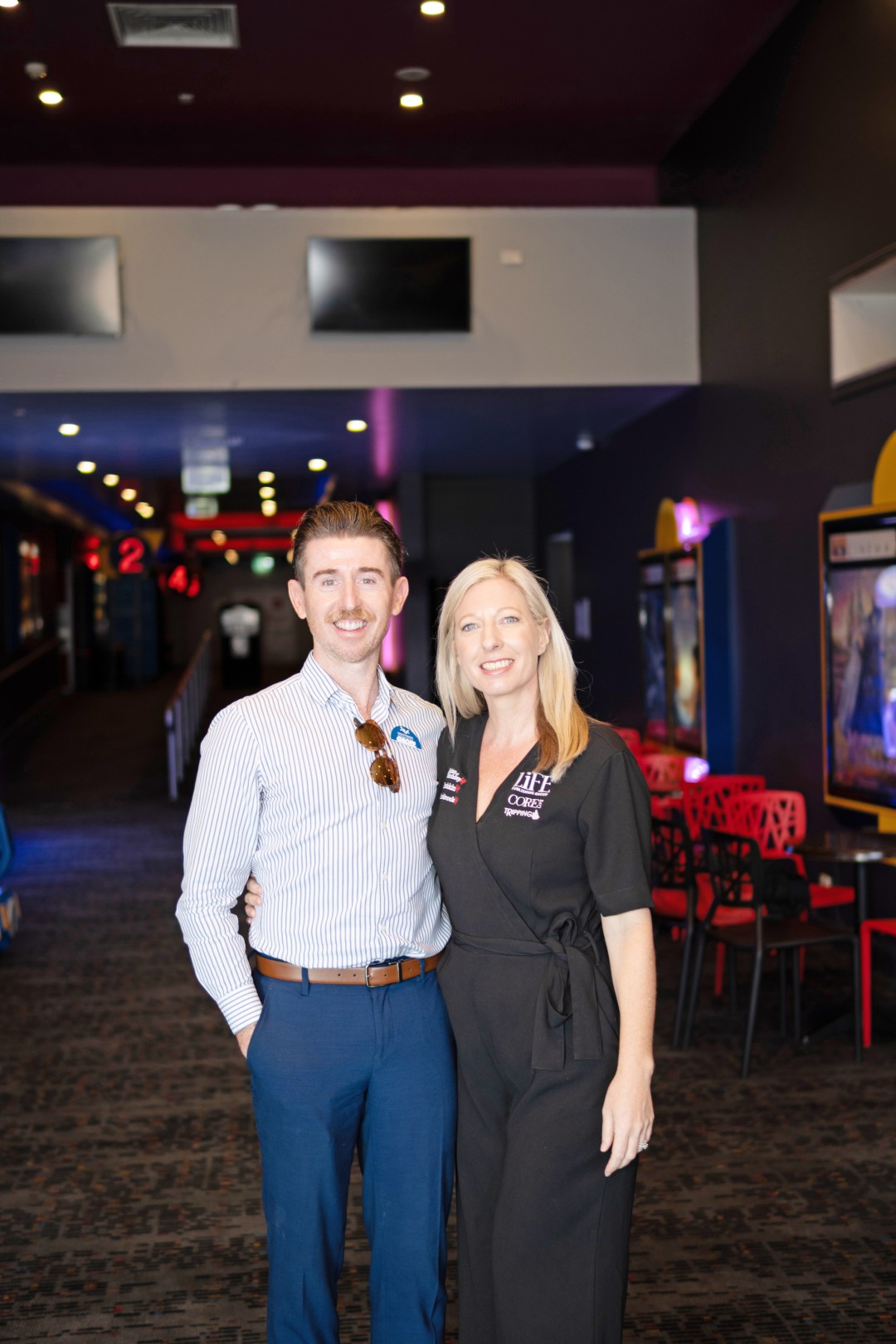
Life Publishing Group, producers of Mackay and Whitsunday Life Newspaper, would like to extend a massive thank you to Event Cinemas Mount Pleasant and the Mackay Region Chamber of Commerce for hosting a fantastic B2B Brews event earlier this week, where the team proudly unveiled their exciting new rebrand.
More than 100 local business owners and team members came together on Tuesday to network, connect and share ideas at the vibrant gathering. The Mackay Life Newspaper team officially revealed its fresh new look, complete with specially branded popcorn boxes showcasing the bold new colours and style.
Mackay Life Journalist Hannah McNamara, Life Publishing Editor in Chief Rachael Smith, Anita Craig from Events Cinema Mount Pleasant and Mackay Sales Manager Jessica Clark. Photo credit: Trish Jandt
Hi Everyone,
It was an absolute honour to host our rebrand launch at the Mackay Region Chamber of Commerce B2B Brews event on Tuesday. Held at Event Cinemas Mount Pleasant, it was wonderful to escape the morning humidity, connect with new people, and network in the lively main foyer before venturing into Cinema 6, where I had the privilege of presenting.
During my speech, I took the opportunity to give the broader business community an update on who we are, what we do, and to formally introduce myself.
I’ve been with Life Publishing Group for more than 10 years now, beginning my journey with owner Bec Douthwaite when it was just a small team working from a tiny home office. A lot has changed since then, but one thing has always remained the same — we are proudly independently owned and believe every region deserves its own free voice in print. That’s one of the key reasons we expanded into newspapers five years ago. I became the Whitsunday Editor, while Amanda Wright took on the Mackay Editor role.
Since then, we’ve grown to include Burdekin Life and Hinchinbrook Life Newspapers, but our heart and foundations remain firmly in Mackay.
A few weeks ago, we farewelled Amanda as she launched into an exciting new chapter as Andrew Willcox’s Media Adviser. Since then, it has been an absolute privilege to watch Journalist Hannah McNamara shine.
With an exceptional work ethic, consistency, and genuine passion for her craft, Hannah has stepped into her new role with grace, kindness, and calm. She brings compassion to every conversation and professionalism to every story.
Thank you, Hannah, for all that you do for the Mackay region — you are doing an incredible job!
Rach
Quote of the Week: "A bird does not sing because it has an answer. It sings because it has a song" (Chinese Proverb)

A local resident’s difficult day took an unexpected turn thanks to the kindness of a KFC staff member at Northern Beaches. After experiencing the loss of a family member, the customer had gone without food and decided to order through Menulog. What was meant to be a simple meal quickly became a frustrating ordeal.
“I hadn’t eaten all day, I decided to order Menulog at KFC. I had a driver at the restaurant for about 30 minutes… I messaged them with no response,” the customer shared on social media. After repeated attempts to contact the delivery service and the restaurant, she was close to breaking point.
Her call to KFC one final time, however, proved to be a turning point. “A lovely young man answered, I explained what was going on and he said to call back if I hadn’t been able to get a hold of them and he would help me.” When she returned to the store, the worker went above and beyond, offering a refund, a box full of extra chicken, and two mousse cups on the house.
“At this point I started to cry, I was at breaking point… He was the sweetest person. He gave me a refund and was so understanding, we were both apologetic to each other! He had no reason to apologise.”
The customer urged the community to acknowledge the young man, describing him as having “orange hair and facial piercings,” and thanked him for a gesture that brightened an otherwise heartbreaking day.
Council is pleased to announce work is about to start on a local road project which will help to ease congestion on Mackay-Bucasia Road during peak traffic periods.
The project will also help to accelerate housing development in the area, to meet the housing requirements of one of our region’s fastest growing areas.
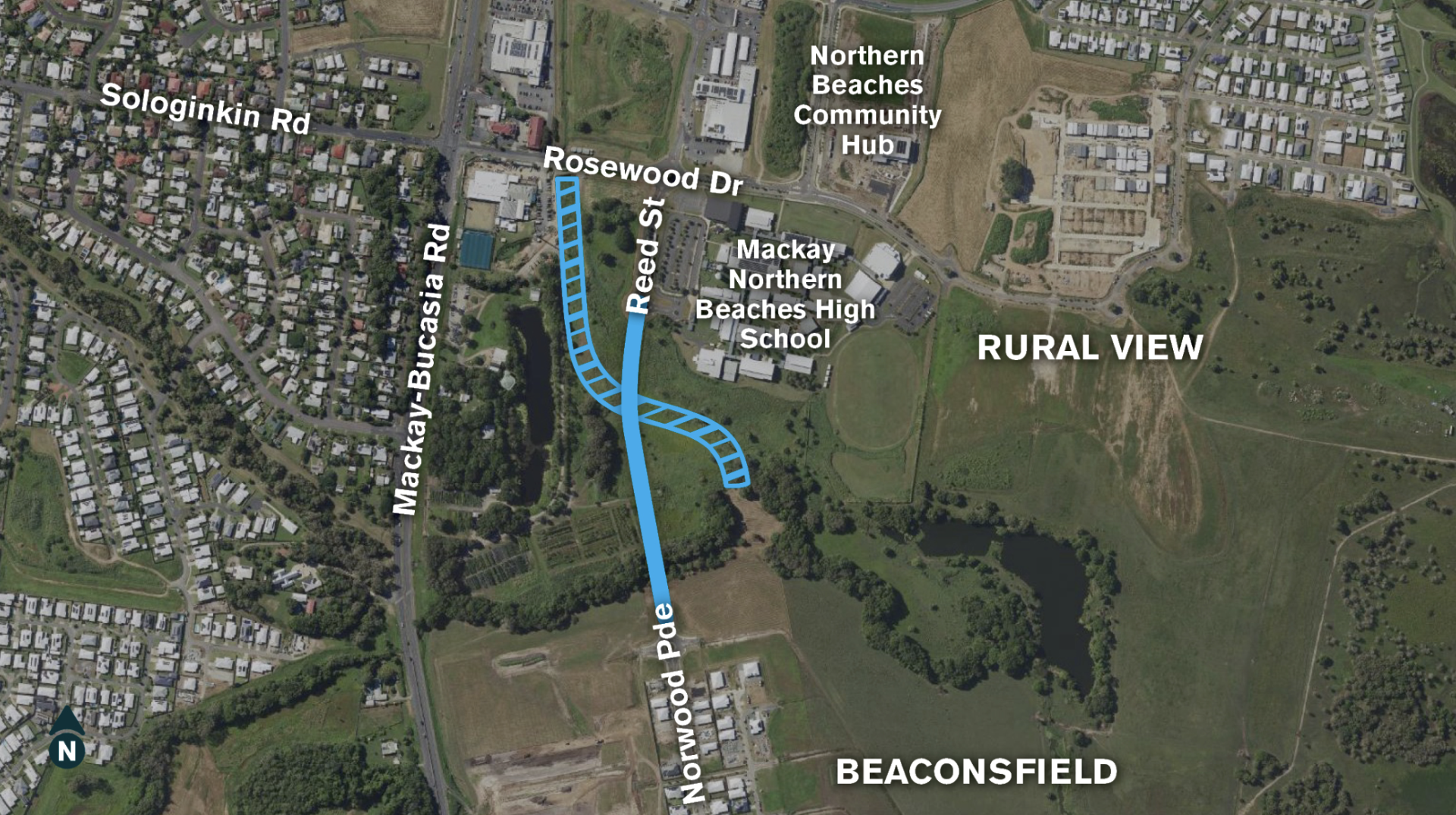
The project, which includes funding from the State Government’s Residential Activation Fund, will see Reed Street extended through to Norwood Parade in Kerrisdale Estate.
The works will begin on Monday, November 17, 2025, weather permitting, and are expected to be completed by late-May 2027.
It will create a vital north-south connection that will reduce congestion, improve connectivity and help facilitate the construction of additional homes in the Northern Beaches area.
The new road connection will provide a direct link between the growing residential estate of Kerrisdale and a nearby commercial centre, school and other community services at Rural View.
With development approvals in place for a further 127 lots in the Kerrisdale Estate, this project will help to fast track the growth of that estate.
By taking pressure off the congested Mackay-Bucasia Road, this project will also support accelerated housing development in other growing estates in the Northern Beaches.
Mayor Greg Williamson said Mackay-Bucasia Road was a state-controlled road and council could only advocate to the State Government for its upgrade.
“This project is a way for council to develop an alternative-parallel connection to improve connectivity and reduce reliance on that road,” Mayor Williamson said.
“The Northern Beaches is one of our fastest growing areas and we know that residents are concerned with accessing the Northern Beaches Community Hub and essential community facilities, like the cyclone shelter at Mackay Northern Beaches State High School,” he said.
The project is also expected to enhance public safety by improving traffic distribution across key residential and school zones, as well as providing a key pedestrian and active transport link to such facilities.
Reduced speed limits will be in place during construction, and a 50km/h speed limit will be in place once construction is complete.
The Reed Street connection project will be jointly funded by the State Government and council, with the state contributing $7.58 million towards the total cost of about $10.5 million.
Mayor Williamson said the project was part of council’s key advocacy campaign prior to the State and Federal Elections.
He said that council would continue to advocate for funding for a second parallel access link between Dawson Boulevard and Mackay-Habana Road.
It forms part of council’s broader commitment to delivering infrastructure that meets the needs of a growing population.
This project is proudly funded by the Queensland Government’s Residential Activation Fund in association with Mackay Regional Council.
For updates and more information, visit Connecting Mackay.
Image supplied by Mackay Regional Council

A Mackay father who went into cardiac arrest at home has reunited with three police officers who saved his life in what doctors described as a remarkable recovery.
Andrew was at home when he collapsed and became unresponsive. His braveeight-year-old son immediately called Triple Zero (000), unaware of the weight this brave decision would impact.
Constables Joel, Liz and Travis from the Queensland Police Service were the first to arrive. They found Andrew without a pulse and not breathing, and immediately began CPR, continuing until Queensland Ambulance Service paramedics reached the scene.
Together, police and paramedics worked to revive Andrew, who was transported to Mackay Base Hospital once his pulse returned.
A Queensland Police Service spokesperson said Andrew’s doctor later revealed he had no pulse for 12 minutes.
“He had no pulse for 12 minutes, and without the incredible CPR performed by the attending officers, he wouldn’t have survived.
“Our three officers reunited with Andrew, whose life they helped save during a critical emergency. Andrew has since made an incredible recovery and says he owes his life to his three heroes
The Queensland Police Service also commended Andrew’s young son for his composure during the emergency and praised the teamwork between first responders.
Andrew said he is deeply grateful to the three officers who refused to give up and gave him a second chance at life.
Photo source: Queensland Police Service
OPINION PIECE
Federal Member for Dawson and Shadow Assistant Minister for Manufacturing and Sovereign Capability, Andrew Willcox, says Labor’s plan to drop regional speed limits leaves regional Australia stuck in the slow lane.
The ‘roadblock to regional progress’ proposal would reduce the default speed limit on unsigned roads outside of built-up areas, which is currently 100 km/h, down to as low as 70 km/h.
“Slashing speed limits isn’t road safety reform, it’s a lazy fix. Instead of patching potholes, Labor wants to punish the people who drive on them,” Mr Willcox said.
Mr Willcox said Dawson communities are firmly opposed to the Government’s plan, describing it as a “Canberra solution to a regional problem.”
“Country people want the Government to invest in fixing our roads, not let them deteriorate to the point where speed limits have to be reduced, and later forcing councils and state governments to pick up the tab when proper investment could prevent this.”
Since coming to office, the Albanese Government has cancelled, cut, or delayed more than $30 billion in infrastructure funding, leaving many regional projects in limbo.
Mr Willcox said the Government’s claims of restoring the 80:20 funding split for regional road upgrades were misleading.
“People think the 80:20 funding model has been restored, but that’s just smoke and mirrors. It only applies to the money pledged to the Bruce Highway, and we haven’t seen those funds flow to regional areas either,” he said.
“The Prime Minister has targeted regional roads for spending cuts, reducing the Commonwealth’s contribution from 80 per cent under the Coalition to just 50 per cent for many upgrade projects.”
Mr Willcox said the proposal would only hurt regional productivity and safety.“Out here, roads aren’t a luxury, they’re lifelines for farmers, truckies, and small businesses.
Lowering speed limits just slows regional Australia down,” he said.
“Locals don’t want slower roads, they want safer ones.
“Fund the repairs, back our councils, and stop treating regional Australia as an afterthought.”
He said Labor’s plan had even drawn criticism from within its own ranks. Labor Senator Glenn Sterle told ABC Radio:
“Absolutely no way do I support this. It is a nonsense. It is just a nonsense that we would even entertain or put up something like this.”
“If the Government won’t even listen to one of its own senators, why would we believe it will listen to feedback from rural communities?” Mr Willcox said.
“It’s time to make it clear, this plan must be scrapped.”
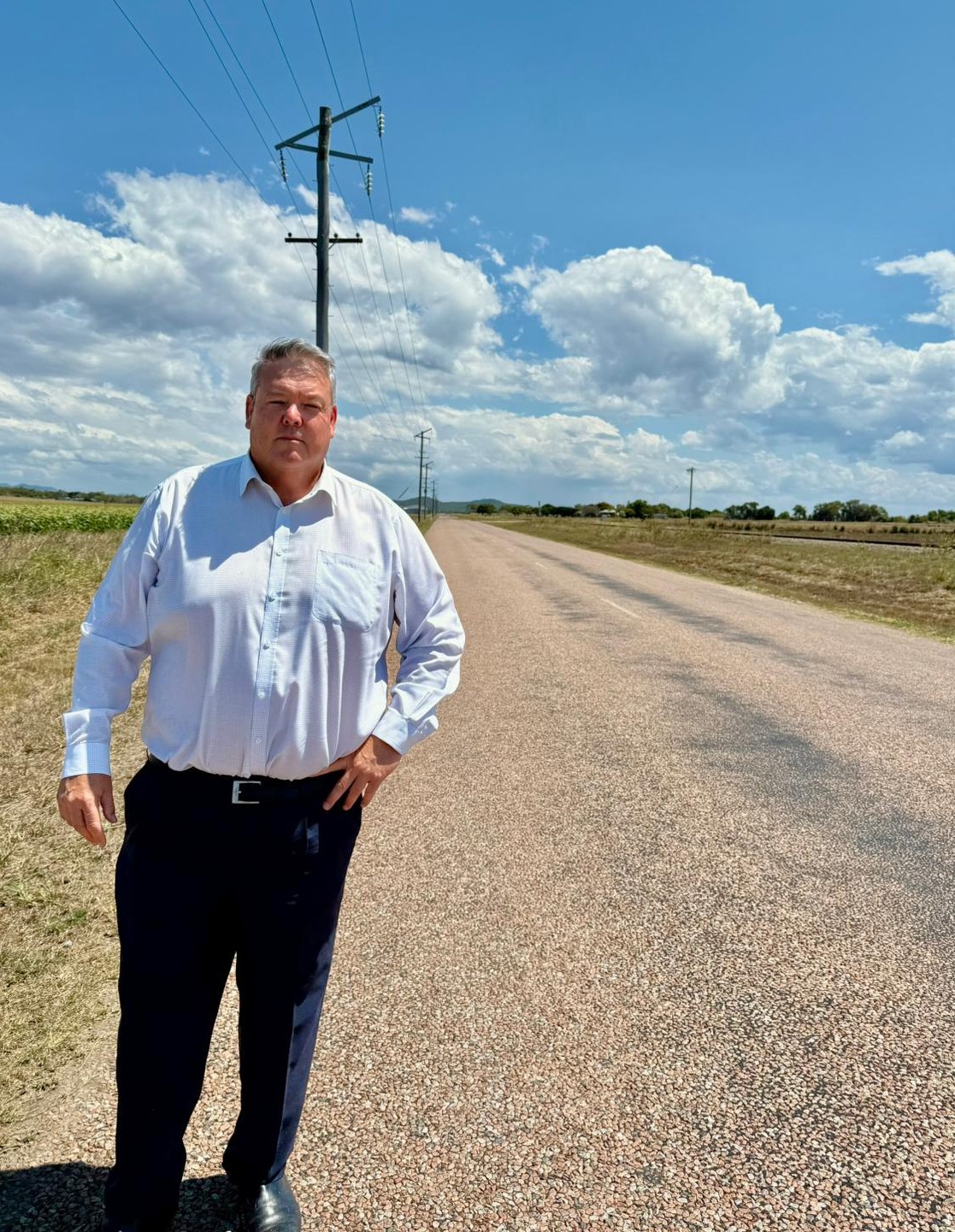
Member for Dawson Andrew Willcox urges the Government to fix deteriorating regional roads in Dawson rather than imposing a 70 km/h speed limit. Photo supplied
Publishers Indemnity. Any individual or entity that places advertising, supplies copy material, or submits editorial content to Core Life Publishing agrees and undertakes to ensure that all such material:- Does not infringe upon any copyright, trademark, or other intellectual property rights;- Is free from any content that could be considered defamatory, libelous, or slanderous;- Does not infringe upon any rights related to privacy or breach of confidence;- Contains no obscene, indecent, or otherwise unlawful material;- Complies fully with the Trade Practices Act and all other applicable laws, regulations, or statutes.Furthermore, by submitting or placing such material, these individuals or entities agree to indemnify and hold harmless the publisher, Core Publishing and Events Pty Ltd, and/or its agents from and against any and all investigations, claims, demands, liabilities, damages, costs, or judgments arising out of or in connection with the material provided. All material is believed to be accurate at the time of printing and remains the copyright of Core Publishing and Events Pty Ltd.
© 2026 Mackay and Whitsunday Life Pty Ltd.
