Independently Owned, Locally Grown, Community Loved

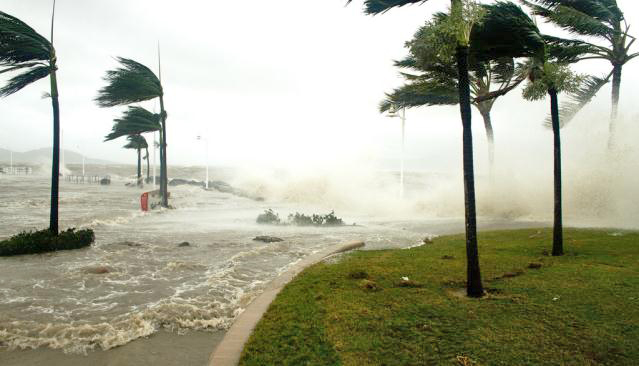
Fifteen years ago today, the Whitsundays held its breath as Cyclone Yasi tore into North Queensland, leaving a lasting imprint on the region despite sparing it the worst.
As Cyclone Yasi carved a destructive path across the coast in the early hours of 3 February 2011, the Whitsundays watched and waited, and although the region was spared the worst of the wind’s fury, it was forever changed by the sheer scale, force and consequences of one of Australia’s most powerful tropical cyclones.
Yasi made landfall near Mission Beach as a Category 5 system, unleashing wind gusts of up to 285 kilometres per hour and impacting a vast stretch of coastline between Cairns and Townsville. While communities such as Tully, Cardwell and Mission Beach bore the brunt of the devastation, the Whitsundays felt the ripple effects of the cyclone long after the winds subsided.
Offshore, the cyclone’s immense wave energy reshaped parts of the marine environment. Surveys of inner shelf reefs between Townsville and the Whitsundays later recorded relatively low levels of direct reef damage, a small mercy in an otherwise devastating event. However, commercial fishers reported the emergence of new cays and large rubble banks offshore from Bowen; a powerful reminder of the raw force Yasi generated even south of the cyclone’s destructive wind boundary.
The Great Barrier Reef did suffer significant damage overall, though reefs in key tourism regions, including the Whitsunday Islands, were among the 94 per cent of reef areas that escaped major impact. For a tourism-dependent region, this proved critical to recovery, allowing the Whitsundays to rebuild its visitor economy far sooner than many feared.
On land, the economic shockwaves were profound. Agriculture across North Queensland suffered an estimated $300 million in losses, with sugarcane growers and primary producers facing months, and in some cases years, of recovery. Insured losses from the cyclone reached approximately $1.4 billion, surpassing the damage caused by Cyclone Larry just five years earlier.
In response, unprecedented recovery assistance was rolled out. Concessional interest rate loans of up to $250,000 were made available to small businesses and primary producers across affected local government areas, including Whitsundays, while charitable and not-for-profit organisations could access loans of up to $100,000. Freight subsidies, clean-up grants of up to $20,000 and the Category C Community Recovery Package were also introduced to help communities get back on their feet.
The Whitsundays, like much of North Queensland, leaned heavily on this support. From restoring essential public assets to assisting small operators and community organisations, recovery was not just about rebuilding infrastructure, it was about restoring confidence, livelihoods and a sense of normalcy.
Fifteen years on, Cyclone Yasi remains a benchmark event, not only for its size and strength, but for the lessons it taught. While the Whitsundays were fortunate to avoid catastrophic destruction, the cyclone left an indelible mark on the region’s environment, economy and collective memory.
Tidal surges across the coastline ravaged communities. Photo source: Australian Geographic
Authorities were dispatched to communities in need. Photo source: QPS
Beaches were left littered with debris and shorelines were forever changed. Photo source: Australian Geographic
Publishers Indemnity. Any individual or entity that places advertising, supplies copy material, or submits editorial content to Core Life Publishing agrees and undertakes to ensure that all such material:- Does not infringe upon any copyright, trademark, or other intellectual property rights;- Is free from any content that could be considered defamatory, libelous, or slanderous;- Does not infringe upon any rights related to privacy or breach of confidence;- Contains no obscene, indecent, or otherwise unlawful material;- Complies fully with the Trade Practices Act and all other applicable laws, regulations, or statutes.Furthermore, by submitting or placing such material, these individuals or entities agree to indemnify and hold harmless the publisher, Core Publishing and Events Pty Ltd, and/or its agents from and against any and all investigations, claims, demands, liabilities, damages, costs, or judgments arising out of or in connection with the material provided. All material is believed to be accurate at the time of printing and remains the copyright of Core Publishing and Events Pty Ltd.
© 2026 Mackay and Whitsunday Life Pty Ltd.