Independently Owned, Locally Grown, Community Loved

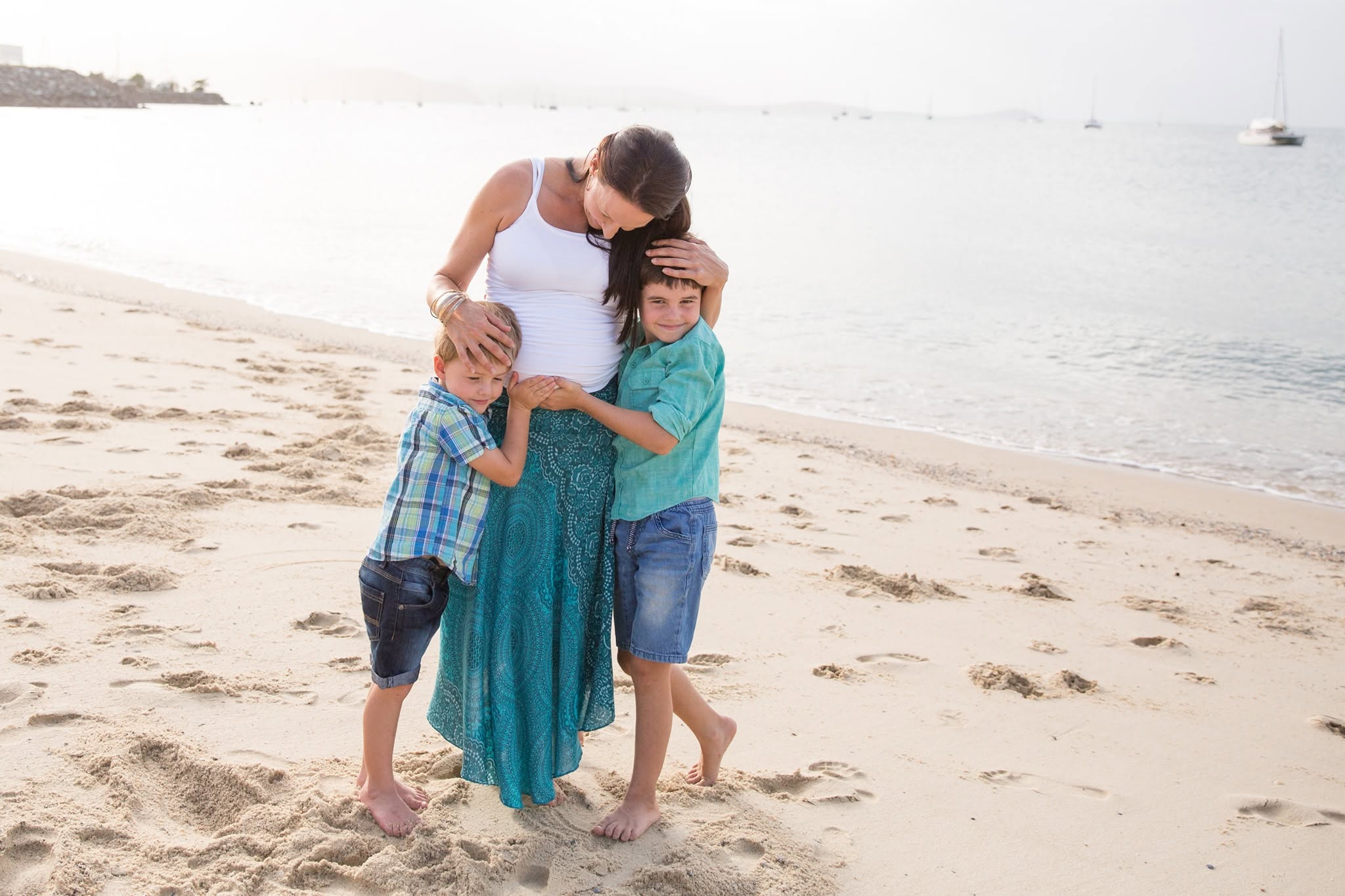
Whitsunday author, educator and Motherhood & Matrescence founder Amanda Jackson is helping reshape conversations around motherhood while advocating for greater maternal wellbeing and support. Photo source: Motherhood & Matrescence
By Chelsea Ravizza
Author, educator, coach, founder of Motherhood and Matrescence, and Whitsunday Regional Council 2026 Citizen of the Year nominee Amanda Jackson has become a leading voice in reshaping the conversation around motherhood, dedicating her career to supporting women through the profound emotional, psychological and identity shifts that come with becoming a mother.
While humbled by the recognition, Ms Jackson said her Citizen of the Year nomination represented more than a personal achievement; it reflected growing recognition of the importance of maternal wellbeing and bringing conversations around motherhood into the public spotlight.
"Much of the work I do sits in spaces that are traditionally invisible: motherhood, matrescence, maternal wellbeing, [and] to have that work recognised at a community level helps to illuminate the necessity of this work, especially in rural areas. And on a personal level, it was really special that my kids got to see their mum nominated for something which is all about building community capacity,” said Ms Jackson.
Published in April 2025, Ms Jackson's book Motherhood & Matrescence explores the often-overlooked realities of motherhood, challenging unrealistic societal expectations that can leave women feeling invisible, inadequate or disconnected from their sense of self.
"I started Motherhood & Matrescence because the statistics around maternal mental health are deeply concerning — it's now recognised by the World Health Organization as a global priority. But it was also personal," Ms Jackson said.
"Becoming a mum was much harder than I anticipated. Perhaps it was naive, but I genuinely thought I'd have a baby, and they'd fit into my life — not completely rearrange it. I didn't expect all the gendered social expectations and 'shoulds,' and I certainly didn't expect to undergo an enormous transformation myself."

Drawing on both personal experience and research, Ms Jackson presents motherhood not as something to simply survive, but as a transformative life stage. She encourages women to embrace matrescence; the physical, emotional and psychological transition into motherhood, as an opportunity for growth, self-discovery and renewal.
"It wasn't that I saw a gap — I set out writing my book because I just didn't want other mothers to feel alone. I wanted to capture the threads that so many of us feel but don't openly articulate," she said.
"There is a gap, though. Support for mothers beyond that magical six-week mark is limited, and many programs are baby-focused. But what about the mum? She is going through an extraordinary physical, spiritual, social and psychological change too. And not just mums of bubs — mums of all ages and stages deserve support and to understand how becoming a mother changes them."
Through practical insights and compassionate guidance, Motherhood & Matrescence examines the pressures that contribute to maternal guilt and burnout while encouraging mothers to reconnect with themselves, strengthen the bond with their children and approach motherhood with greater confidence and self-understanding.
Central to Ms Jackson's advocacy is challenging the expectation that mothers should disappear into self-sacrifice, arguing that their health, identity and wellbeing matter just as much as anyone else's.
“Here's the thing, though — reminding mothers that they matter isn't just about self-care so they can keep on caring for everyone else,” she said.
“That framing still makes her worth conditional on what she gives. Her health matters. Her enjoyment matters. Her hopes, dreams, talents and hobbies matter — full stop, not because they make her a better mother."
Ms Jackson explains that while many mothers share similar experiences, those living in regional communities, like the Whitsunday Shire, often face additional barriers, including limited access to childcare, family supports, and mental health services.
“One of the most common struggles is that quiet, constant feeling of not being enough — as a mother, as a partner, and in the workplace. The impact of gendered social expectations is huge — they shape a woman's self-esteem and how confident and competent she feels as a mother,” she explained.
“Mothers are stretched thin juggling invisible loads. We love our children deeply — but these loads and expectations can leave us feeling depleted in what is meant to be the most wonderful time of our lives.”
Although she believes there is still a long way to go to improve maternal care, Ms Jackson said she has witnessed encouraging progress with the growing global recognition of matrescence helping to bring what was once an overlooked topic into the mainstream.
Through her Masterclass for Mums, she has watched women embrace their own transformation, often realising that the struggles they believed were personal failings were, in fact, shared systemic issues.
"This sparks change and reacquaints you with your own agency. It's one mother telling another, I hear you, and it's not just you. That's powerful — and it seeds change,” Ms Jackson said.
"Do we need to talk about it more? Absolutely. Change is slow — but it's happening."
Ms Jackson said hearing mothers realise they are not alone continues to reinforce why her work matters.
"What reminds me how important this work is, is how many mums tell me they thought it was just them. It never is. These aren't personal failings — they're structural problems. And adding language around this is often the first moment a mother exhales, and begins to see things differently."
Ms Jackson hopes more local mothers will seek out opportunities that nurture their wellbeing, believing strong communities play a vital role in supporting women. She said her deep connection to the Whitsundays continues to inspire her advocacy.
"It's where I grew up, where I returned to raise my kids, and where my passion for advocacy began. But just like mothering, this work can't be done alone, [and] no mother in the Whitsundays should ever feel she has to figure this out alone,” she said.
“My hope is that we can put the Whitsundays on the map as a leader in maternal wellbeing, and that we can bring education about the transition to motherhood — and fatherhood — into our community, into conversations around the kitchen table and into workplace training. Because when families thrive, communities thrive.”
Publishers Indemnity. Any individual or entity that places advertising, supplies copy material, or submits editorial content to Core Life Publishing agrees and undertakes to ensure that all such material:- Does not infringe upon any copyright, trademark, or other intellectual property rights;- Is free from any content that could be considered defamatory, libelous, or slanderous;- Does not infringe upon any rights related to privacy or breach of confidence;- Contains no obscene, indecent, or otherwise unlawful material;- Complies fully with the Trade Practices Act and all other applicable laws, regulations, or statutes.Furthermore, by submitting or placing such material, these individuals or entities agree to indemnify and hold harmless the publisher, Core Publishing and Events Pty Ltd, and/or its agents from and against any and all investigations, claims, demands, liabilities, damages, costs, or judgments arising out of or in connection with the material provided. All material is believed to be accurate at the time of printing and remains the copyright of Core Publishing and Events Pty Ltd.
© 2026 Mackay and Whitsunday Life Pty Ltd.